AI Engineer Code Summit 2026 · Z3 Talk Directory

Talks

Every recorded talk with straightened stage slides, interactive stories, and evidence dossiers linked across all 6 themes.

34 talks · 6 themesThemes presentation →

Tuesday, November 10

6 talks

Slide from Building a Shared AI Assistant: The Platform Challenges Beyond MCPTue, Nov 10
Tue, Nov 10 · 3:00 PM–3:25 PM · Continental 1–3 (Workshop Room 1)

Building a Shared AI Assistant: The Platform Challenges Beyond MCP

Utkarsh Shrivastava, Netflix

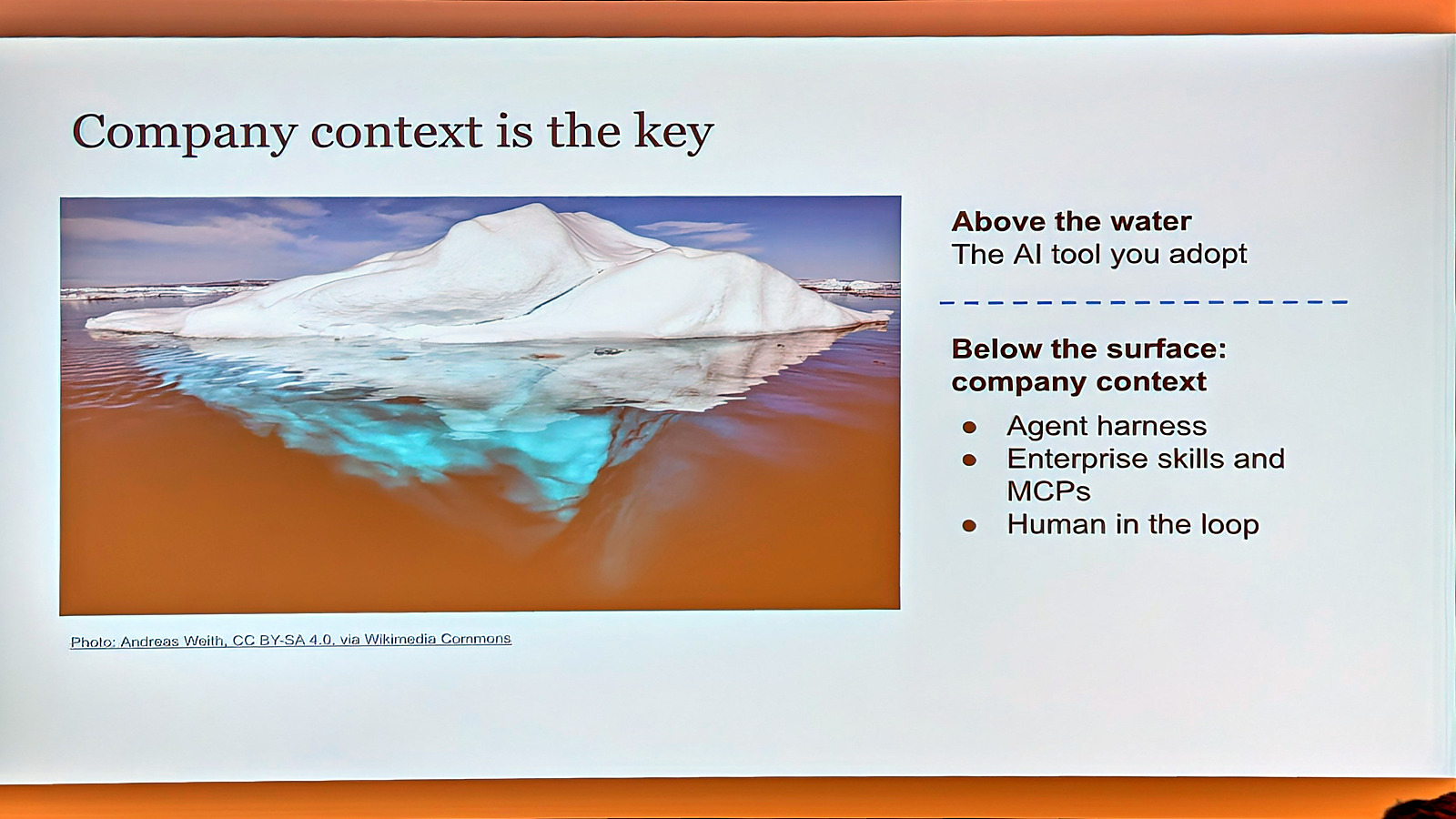
Connecting company data to a shared AI assistant is now cheap; the platform's real job is deciding which source answers, who owns that answer, and how hard to gate by stakes, with evals in CI and company context as the lasting investment.

27 min · 2 photos · 2 notes · 7/7 built
Slide from Building World-class Agentic GTM: Learnings from Monaco for MonacoTue, Nov 10
Tue, Nov 10 · 3:30 PM–3:55 PM · Continental 1–3 (Workshop Room 1)

Building World-class Agentic GTM: Learnings from Monaco for Monaco

Mihail Eric, Monaco

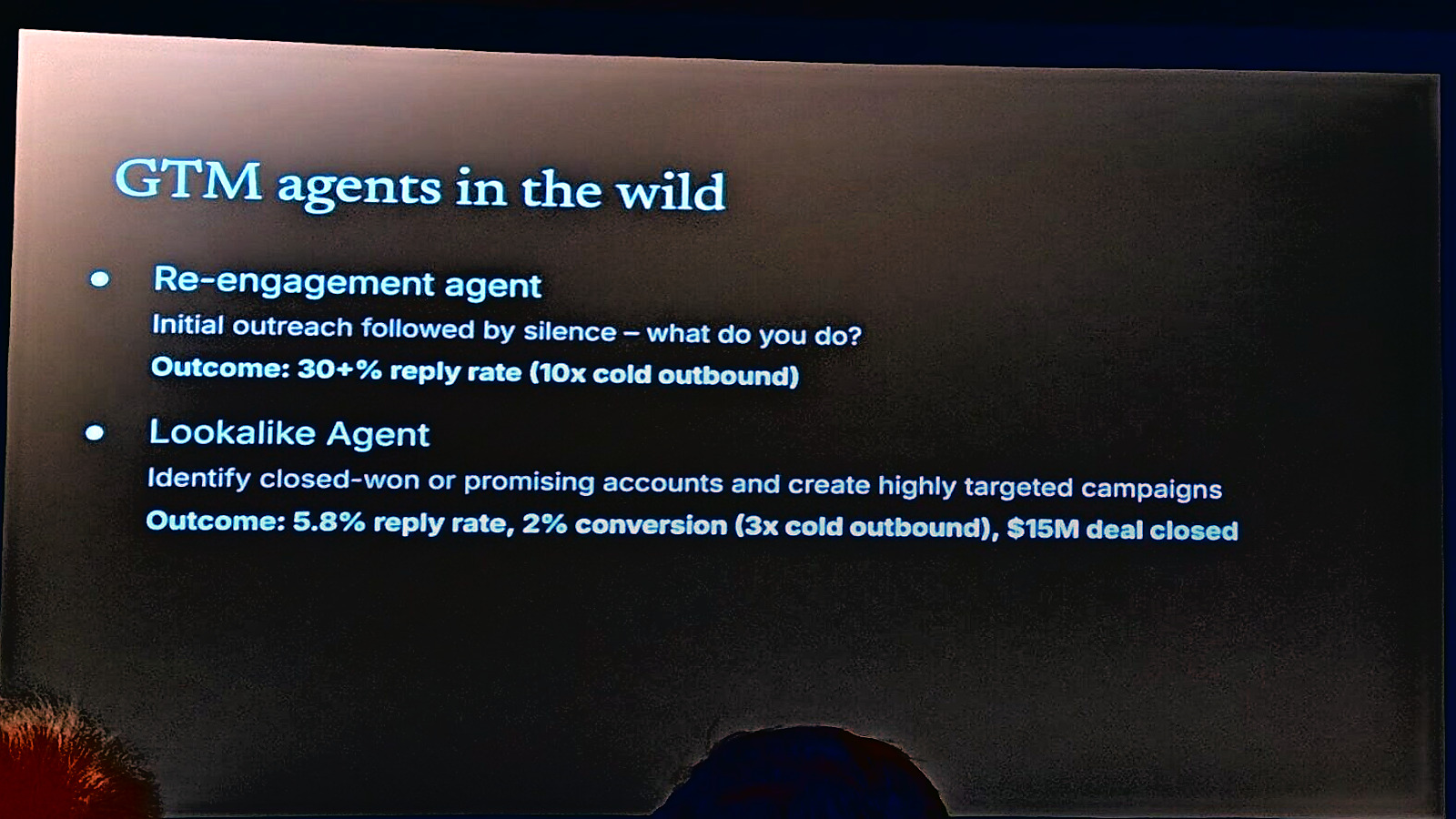
A vertical AI company is a shared harness (data, an agent workspace with memory, expert-guided workflows and evaluation) plus domain nuance, and it wins by putting its best domain experts inside the product and tracing everything, because correctness is whatever those experts say it is.

30 min · 7 photos · 6 notes · 7/7 built

Wednesday, November 11

15 talks

Slide from What Will You Build When AI Is 10x Faster?Wed, Nov 11
Wed, Nov 11 · 9:10 AM–9:30 AM · Continental 4–6 (Mainstage)

What Will You Build When AI Is 10x Faster?

Natalie Serrino, Gimlet Labs

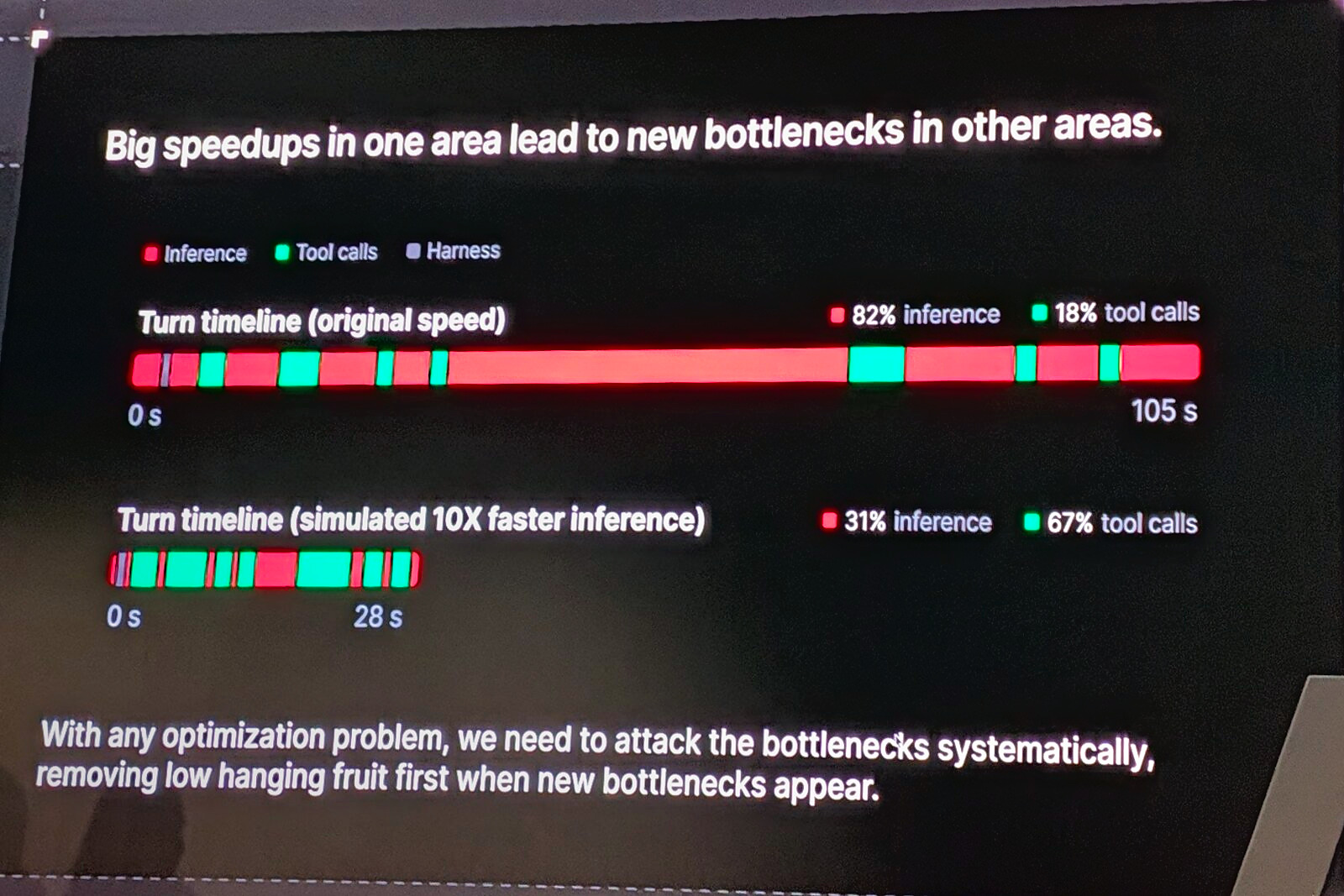
Faster inference is not a luxury: at ten times the speed, agents move from async background work onto the critical path and the bottleneck shifts to tool calls, so builders should design now for a much faster token.

18 min · 6 photos · 6 notes · 7/7 built
Slide from cloudflare is a neolabWed, Nov 11
Wed, Nov 11 · 9:50 AM–10:10 AM · Continental 4–6 (Mainstage)

cloudflare is a neolab

Michelle Chen, Cloudflare

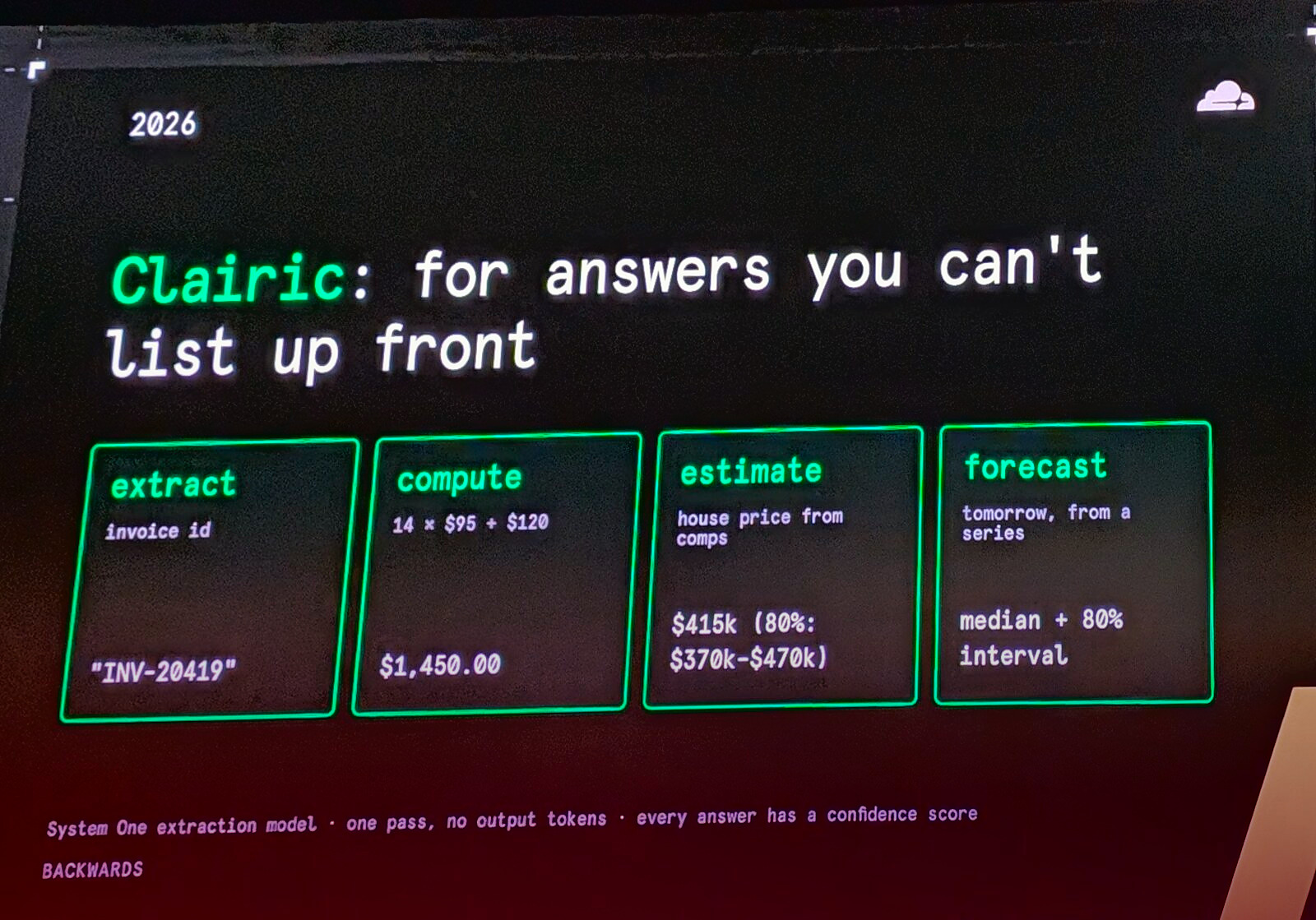
Cloudflare became a model lab because small, fast System One models (Clef for decisions, Clairic for extraction) were the missing piece that fit its edge network and agent-cloud primitives, taking routine work off large LLMs.

20 min · 7 photos · 8 notes · 7/7 built
Slide from All Code Is Slop (Except Mine)Wed, Nov 11
Wed, Nov 11 · 10:10 AM–10:30 AM · Continental 4–6 (Mainstage)

All Code Is Slop (Except Mine)

Lauren Tan, SpaceXSI (xAI)

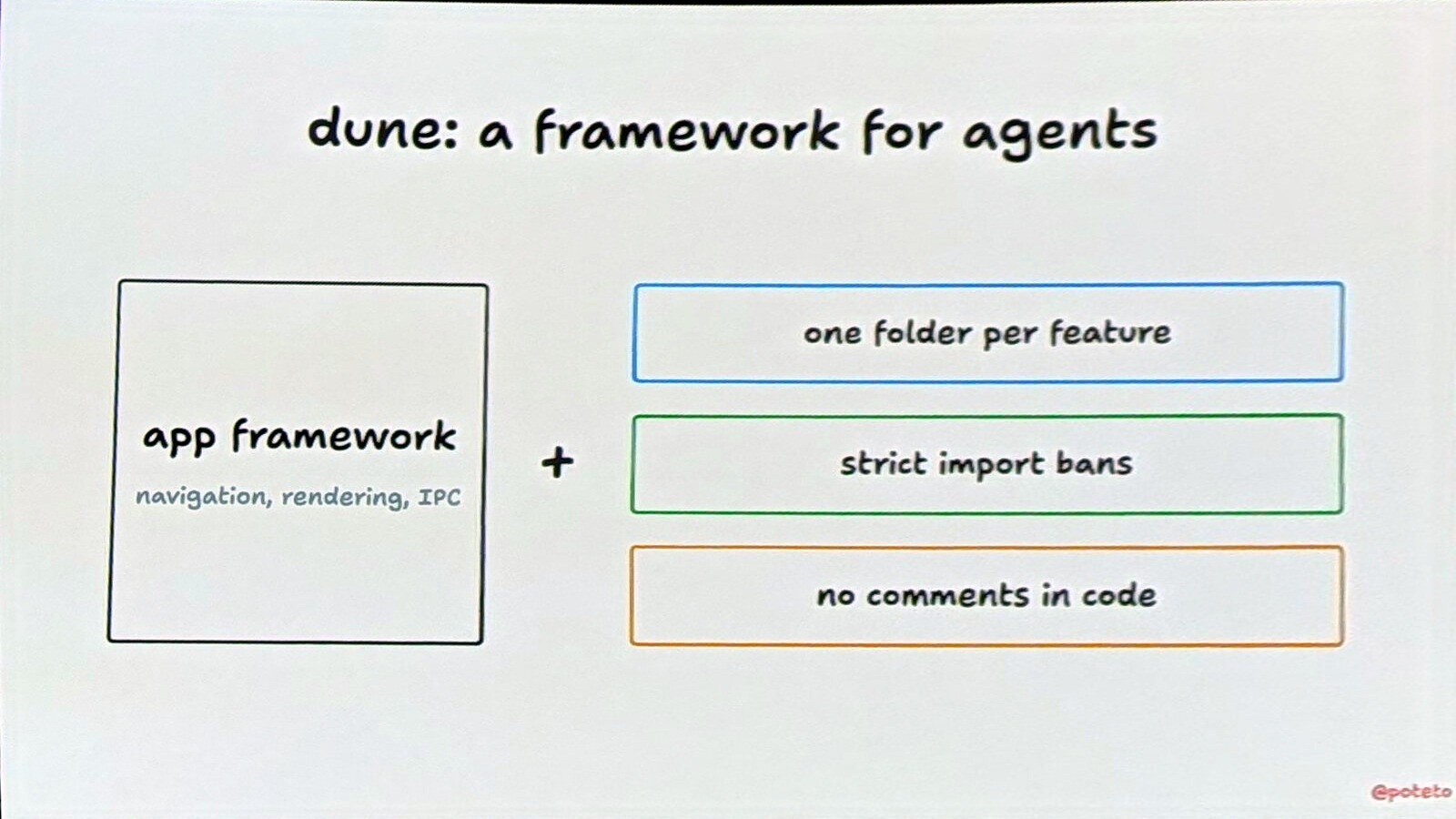
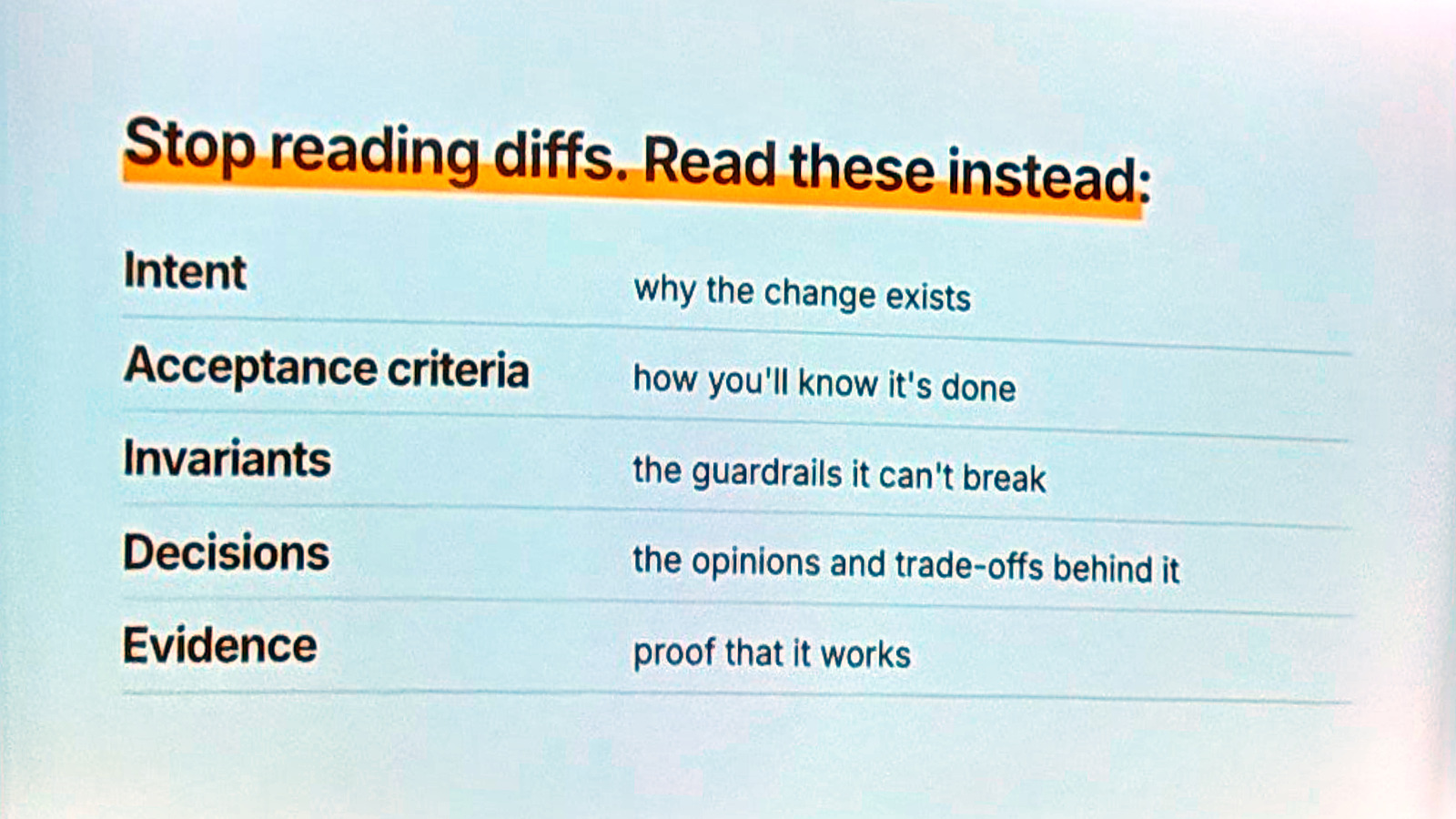
Agent-written code can improve in quality at hundreds of PRs a day only if every correction is encoded into the codebase as a deterministic check and review shifts to verification artifacts; automating a sloppy loop just produces more slop.

18 min · 3 photos · 10 notes · 7/7 built
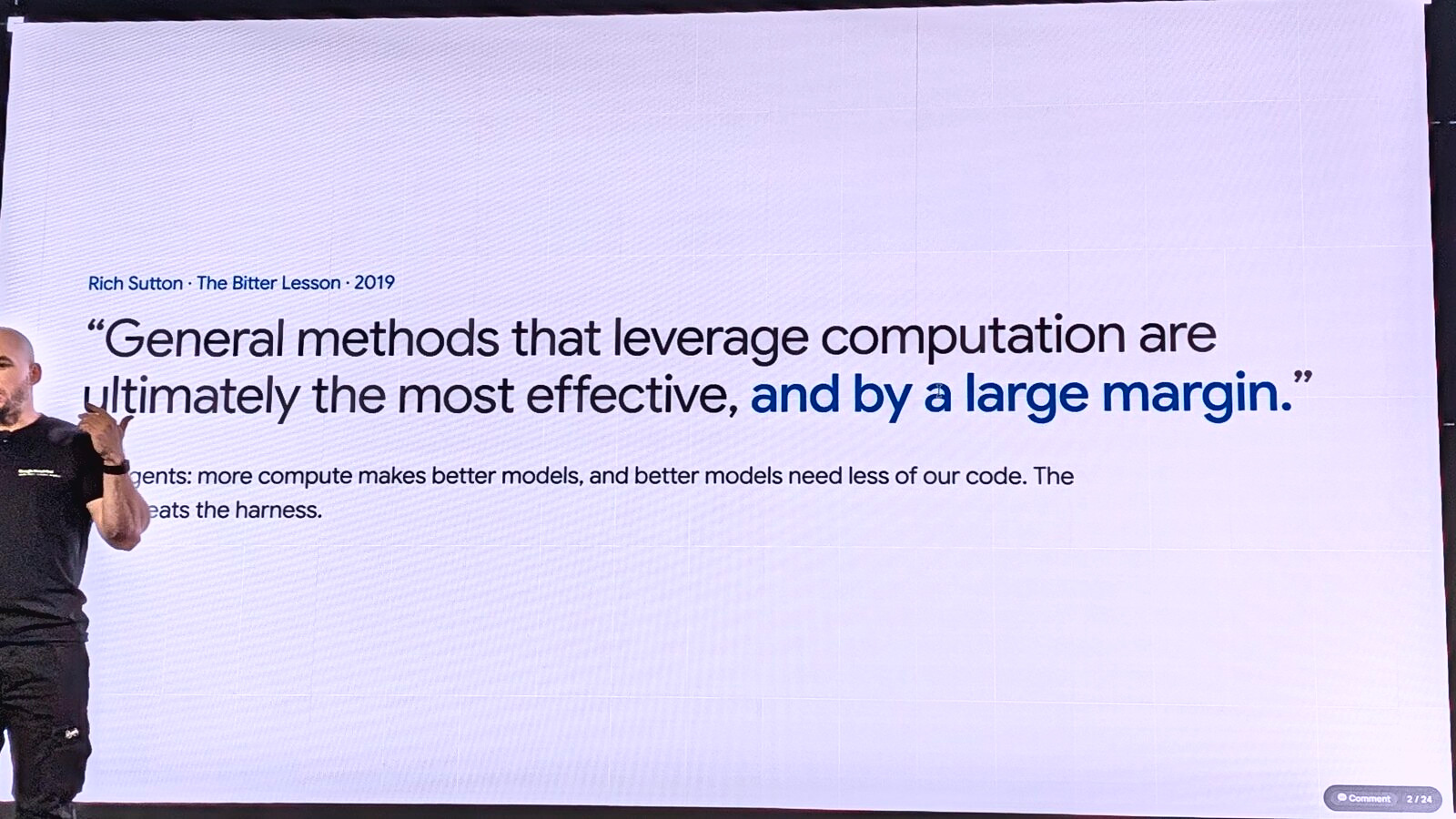
Slide from I deleted 90% of my harness (And It Got Better)Wed, Nov 11
Wed, Nov 11 · 11:20 AM–11:40 AM · Continental 4–6 (Mainstage)

I deleted 90% of my harness (And It Got Better)

Philipp Schmid, Google DeepMind

Each model generation absorbs tools the last harness had to provide, so rebuild the harness from scratch every release: delete what the model now does itself, often down to one bash tool, and keep only what it can't do through a computer.

16 min · 5 photos · 9 notes · 7/7 built
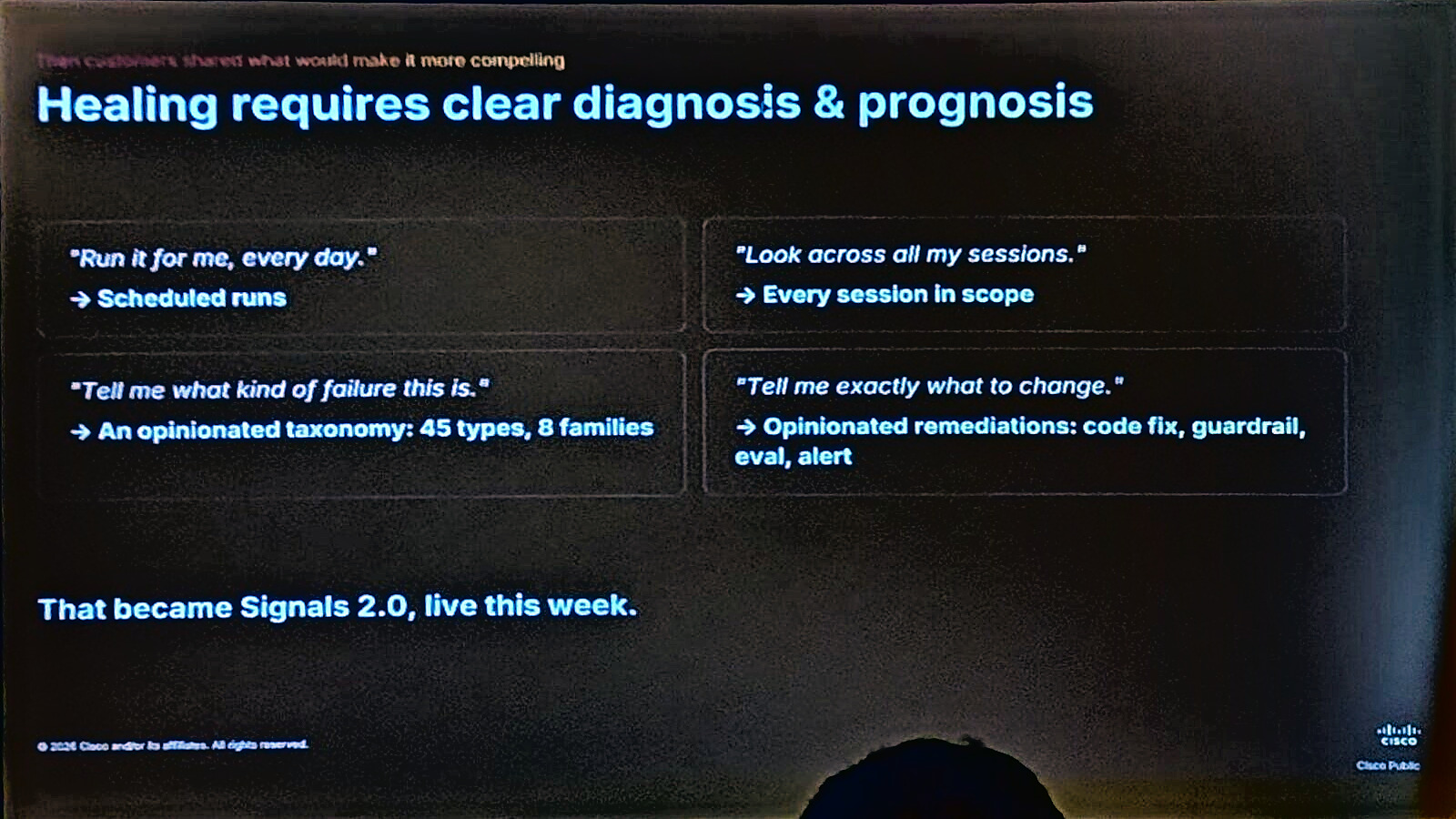
Slide from Heal Your Agents, Don't Just Grade ThemWed, Nov 11
Wed, Nov 11 · 11:45 AM–12:05 PM · Continental 1–3 (Expo Sessions)

Heal Your Agents, Don't Just Grade Them

Khasimul Asif Mohammad, Splunk · Sudhir Tonse, Splunk

Evaluating agents is not enough: like an immune system, an agent platform should continuously detect failures across all sessions, diagnose them against a taxonomy, prescribe a fix, and remember it so the failure does not recur.

23 min · 2 photos · 1 note · 7/7 built
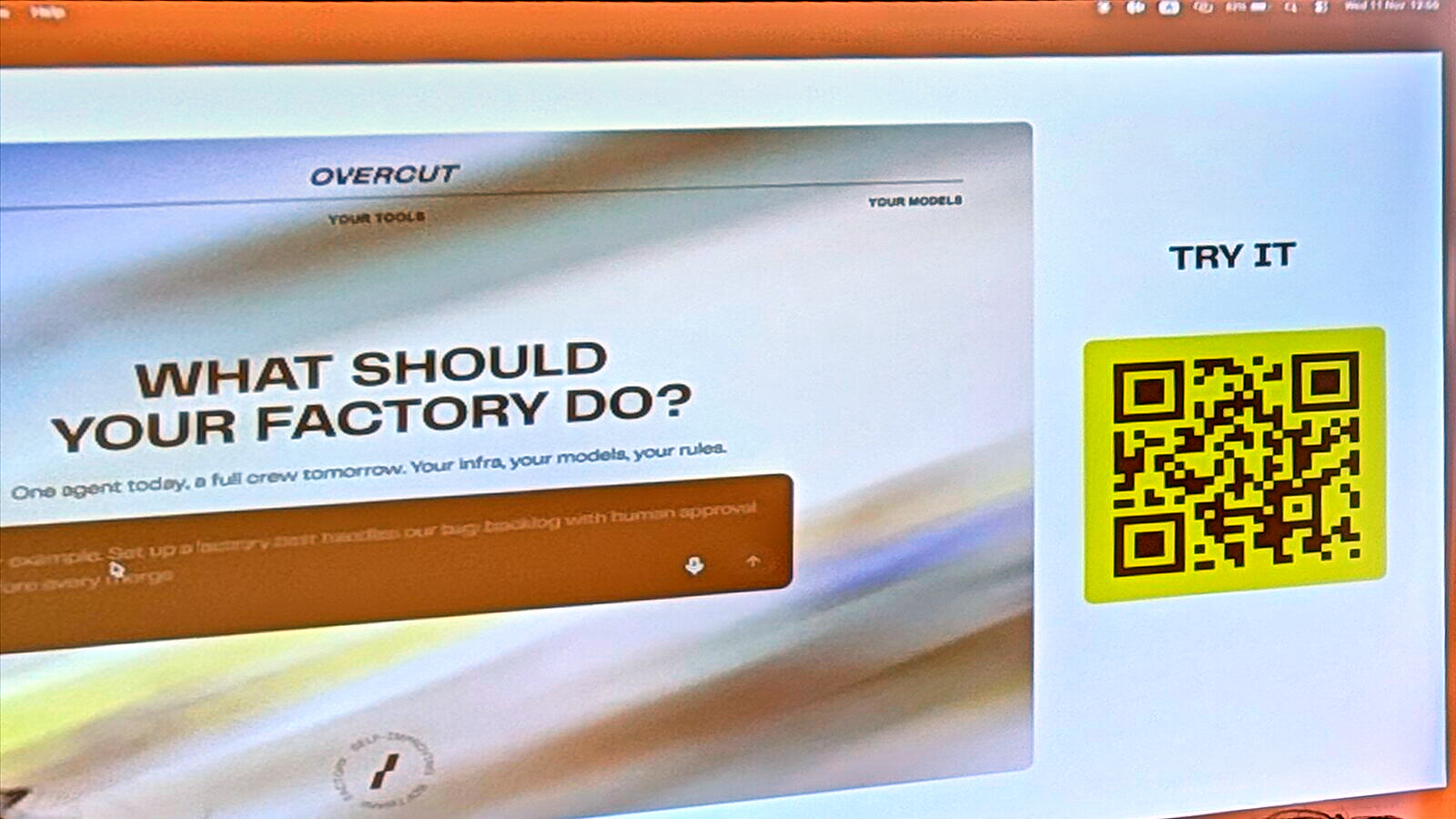
Slide from The Software Factory That Needs Zero FDEsWed, Nov 11
Wed, Nov 11 · 12:35 PM–12:55 PM · Continental 1–3 (Expo Sessions)

The Software Factory That Needs Zero FDEs

Raz Berman Gold, Overcut

Overcut argues that an enterprise software factory should not need forward-deployed engineers: it plugs into the tools and agents you already run, composes specialized governed agents into SDLC workflows with human gates, and improves itself through scored retrospective memories.

20 min · 1 photo · 6/7 built
Slide from I love you so jevving muchWed, Nov 11
Wed, Nov 11 · 2:05 PM–2:23 PM · Continental 4–6 (Mainstage)

I love you so jevving much

Diogo Almeida, TypeSafe AI

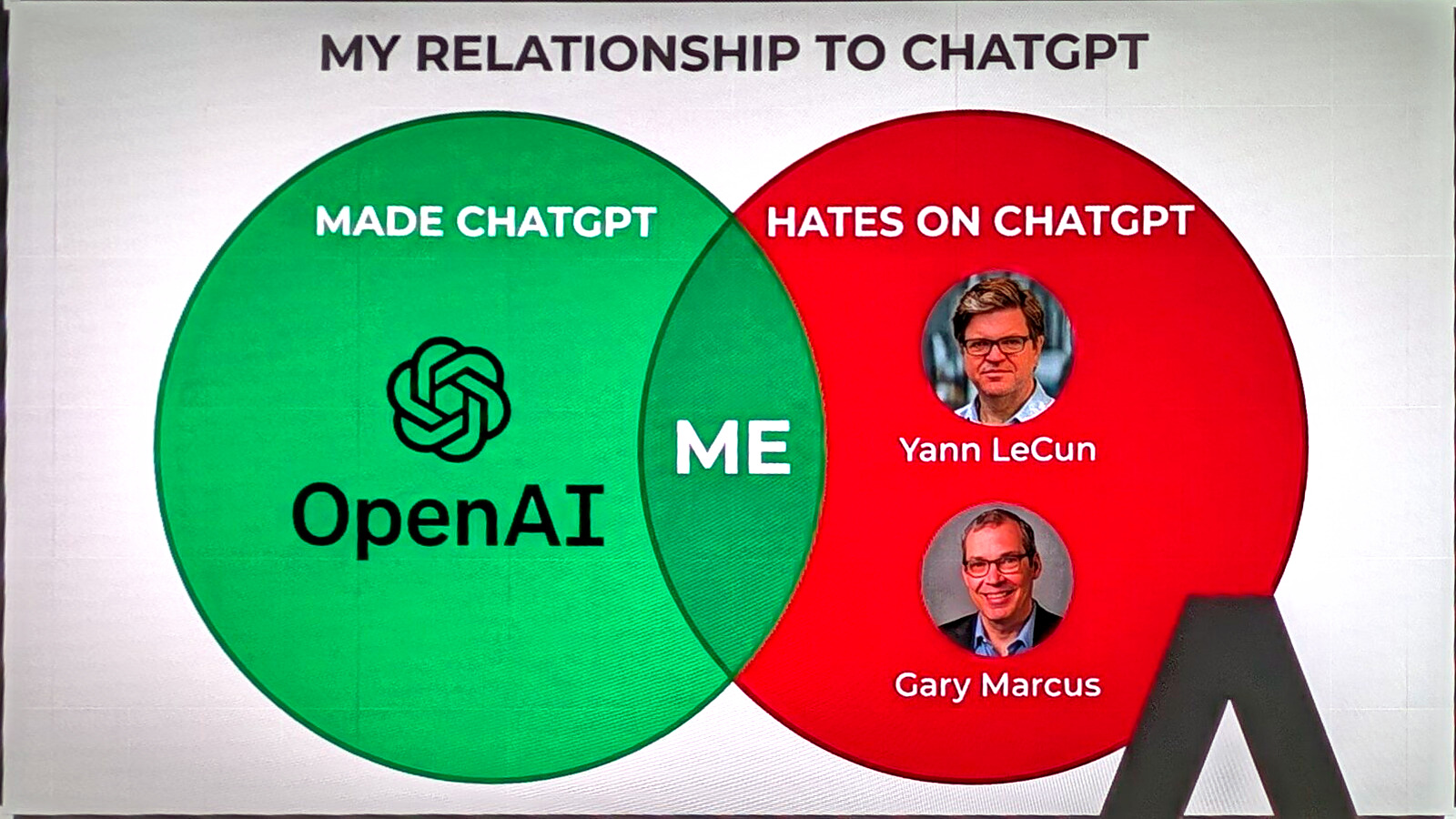
Today's AI is too good to be true at assistance and too bad to be useful at automation because RLHF optimized it to please the human checking it; training for the right task, reliability, makes model calls a fourth logic gate inside ordinary software.

23 min · 17 photos · 13 notes · 7/7 built
Slide from Autocomplete for Actions: System One from the UI to the DBWed, Nov 11
Wed, Nov 11 · 3:24 PM–3:37 PM · Continental 4–6 (Mainstage)

Autocomplete for Actions: System One from the UI to the DB

Scott Roberts, Workday

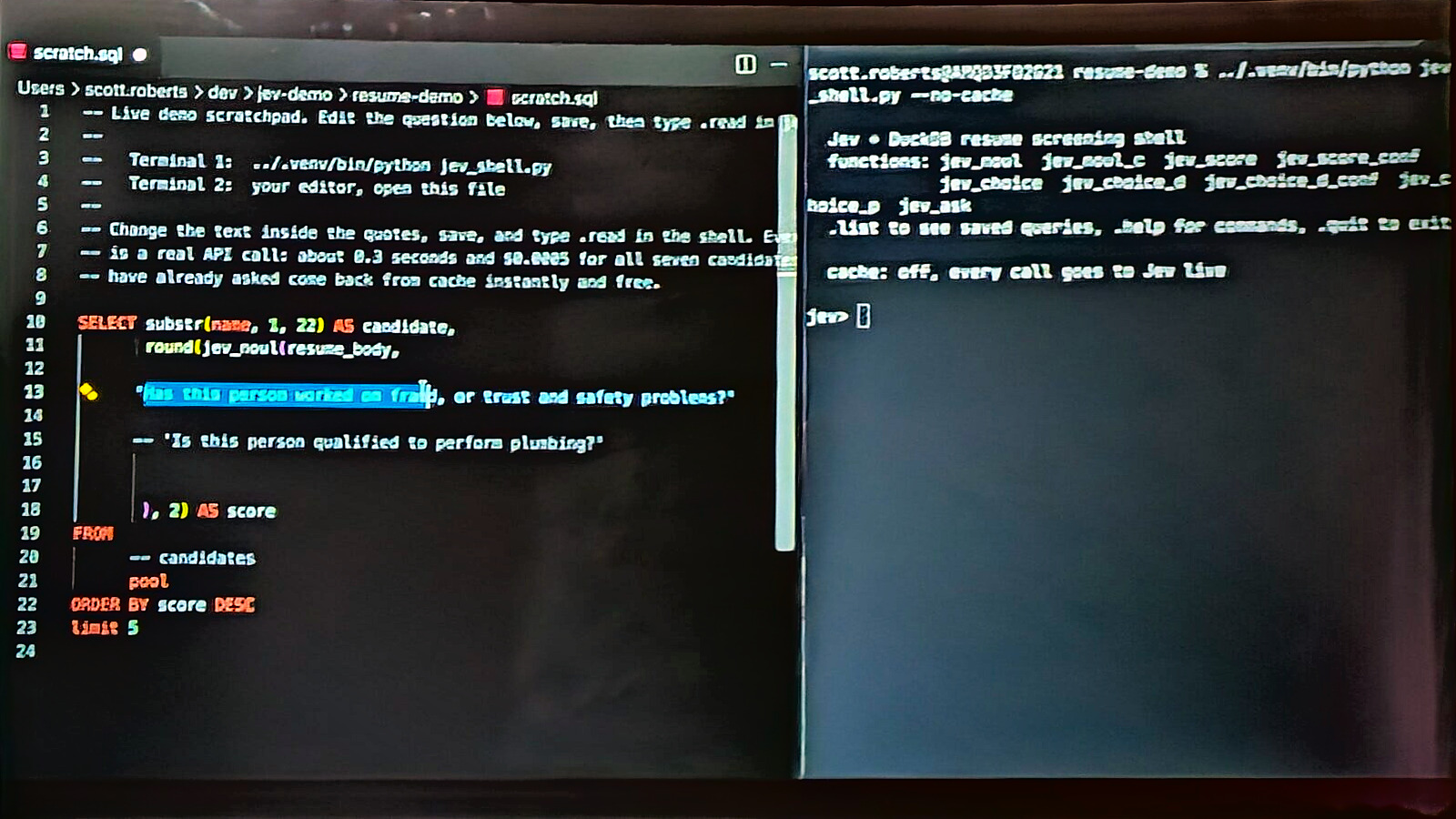
A decision model fast and cheap enough to call everywhere replaces both LLM agent loops and retrieval stacks: it picks the right UI card on every keystroke and runs as a function inside a SQL query on every row.

12 min · 4 photos · 3 notes · 7/7 built
Slide from What it takes to set intelligence freeWed, Nov 11
Wed, Nov 11 · 4:30 PM–4:50 PM · Continental 4–6 (Mainstage)

What it takes to set intelligence free

Fabian Hedin, Lovable

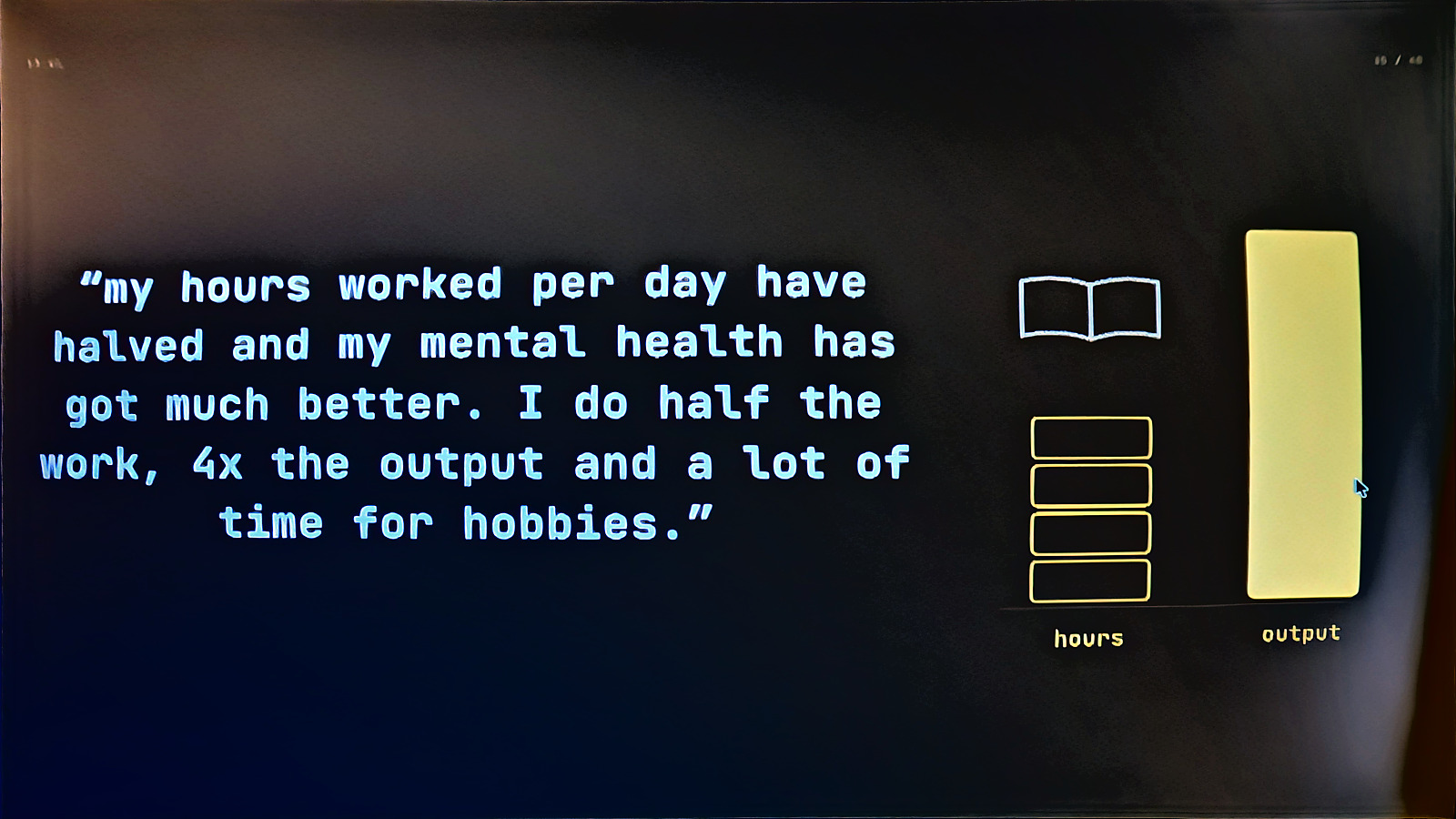
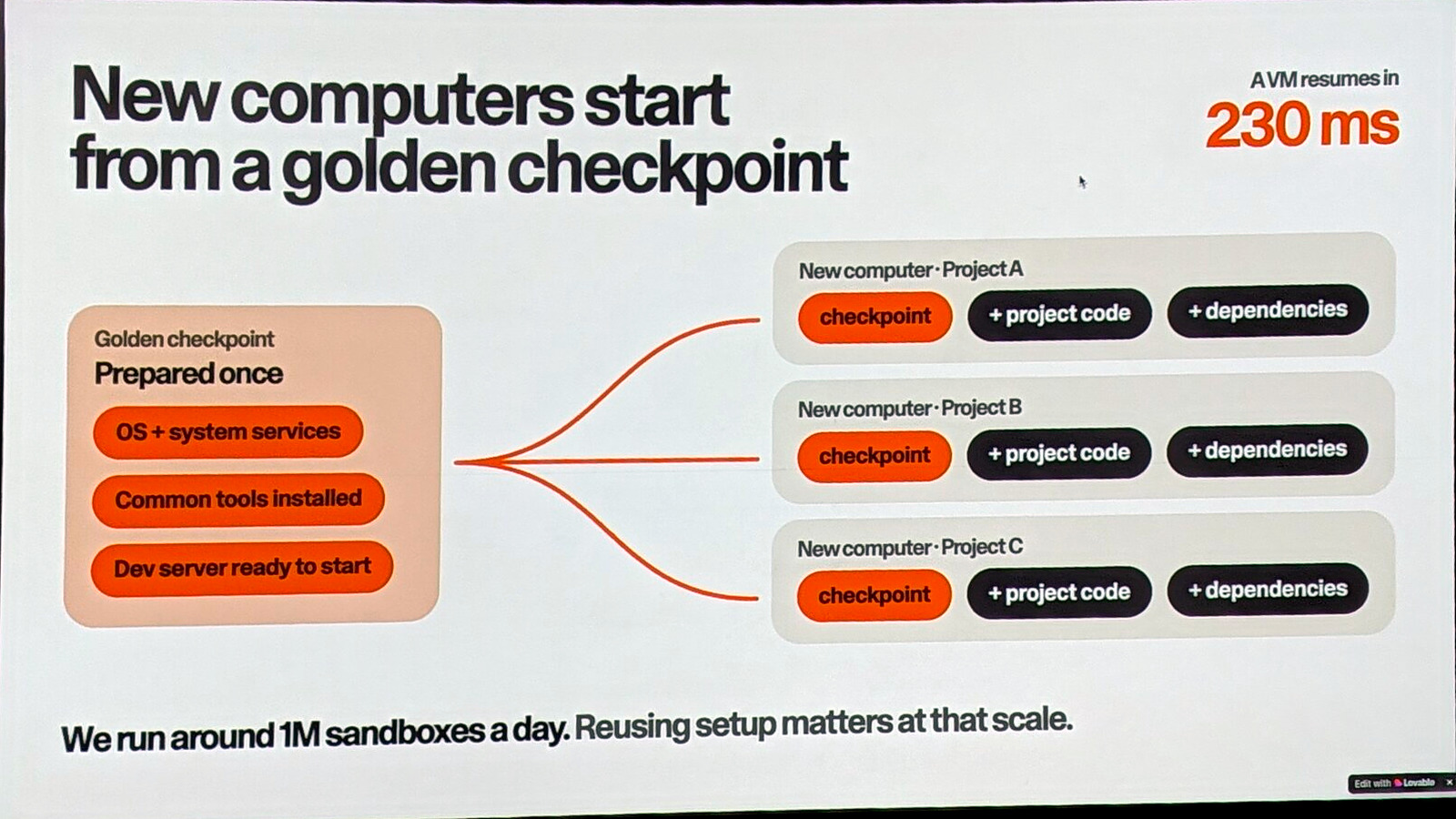
Because Lovable's output is a business, not code, letting an agent work for ten hours needed a runtime that survives deploys, computers that start and fork in milliseconds, and two verification loops, the outer one fed by business metrics Lovable owns.

19 min · 6 photos · 6 notes · 7/7 built
Slide from Software Factories: Escape from Trash MountainWed, Nov 11
Wed, Nov 11 · 5:10 PM–5:30 PM · Continental 4–6 (Mainstage)

Software Factories: Escape from Trash Mountain

Steve Yegge, Independent

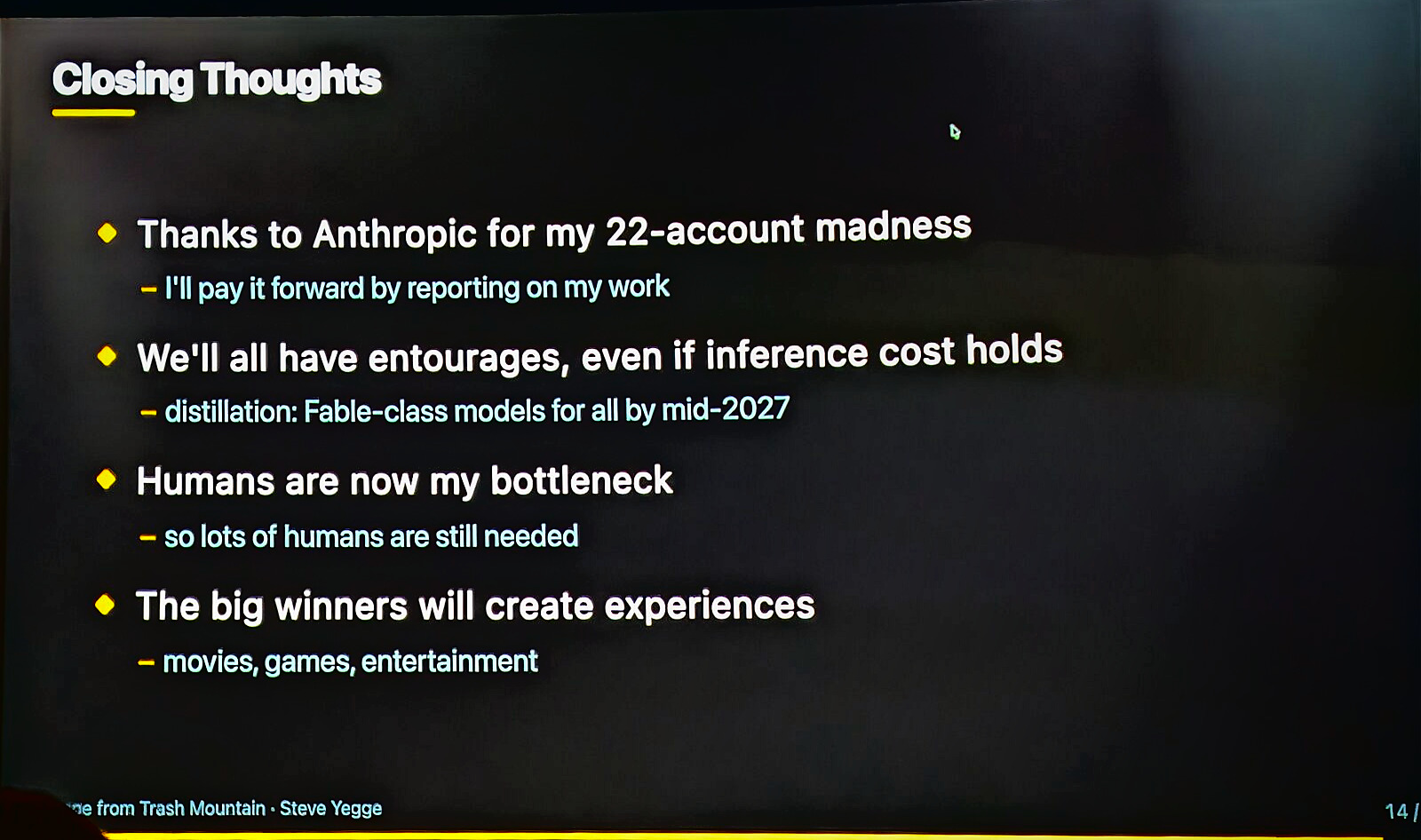
A year of software factories shows fuel is the hard limit and currently subsidized, agents behave like staff who need managing and pruning, and the more agents you run the more humans you need, so spend the fuel on experiences.

21 min · 8 photos · 13 notes · 7/7 built
Slide from 2026 in LLMsWed, Nov 11
Wed, Nov 11 · 5:30 PM–5:50 PM · Continental 4–6 (Mainstage)

2026 in LLMs

Simon Willison, Independent

This year models crossed from reliable coding agents to 'Fable class', solving any well-defined goal by brute force when given the tools, even making a game fun; the work doesn't get easier, the easy part goes, so the answer is more ambition.

20 min · 6 photos · 8 notes · 7/7 built

Thursday, November 12

13 talks

Slide from A New Age of Software EngineeringThu, Nov 12
Thu, Nov 12 · 11:20 AM–11:40 AM · Continental 4–6 (Mainstage)

A New Age of Software Engineering

Walden Yan, Cognition

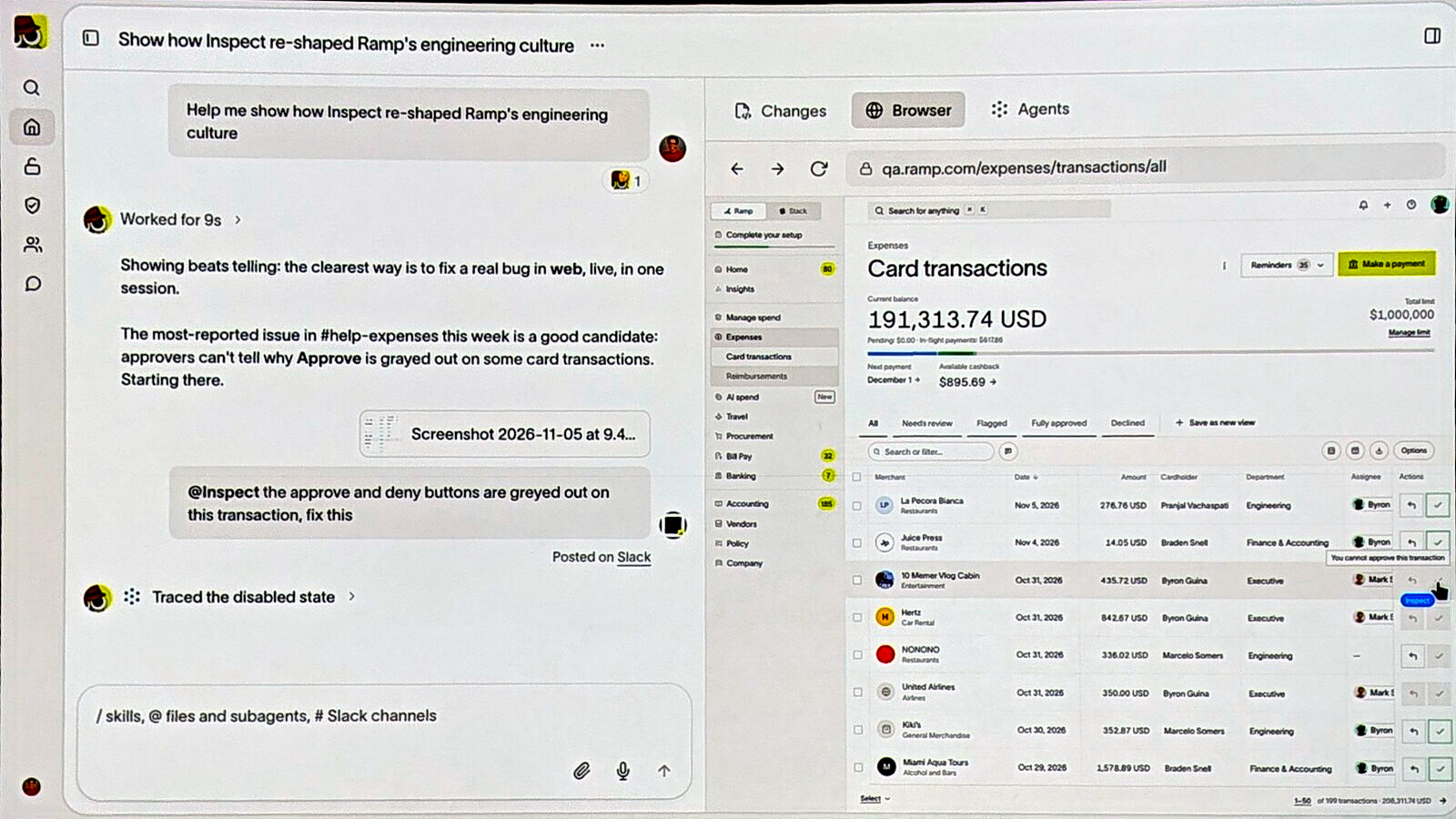
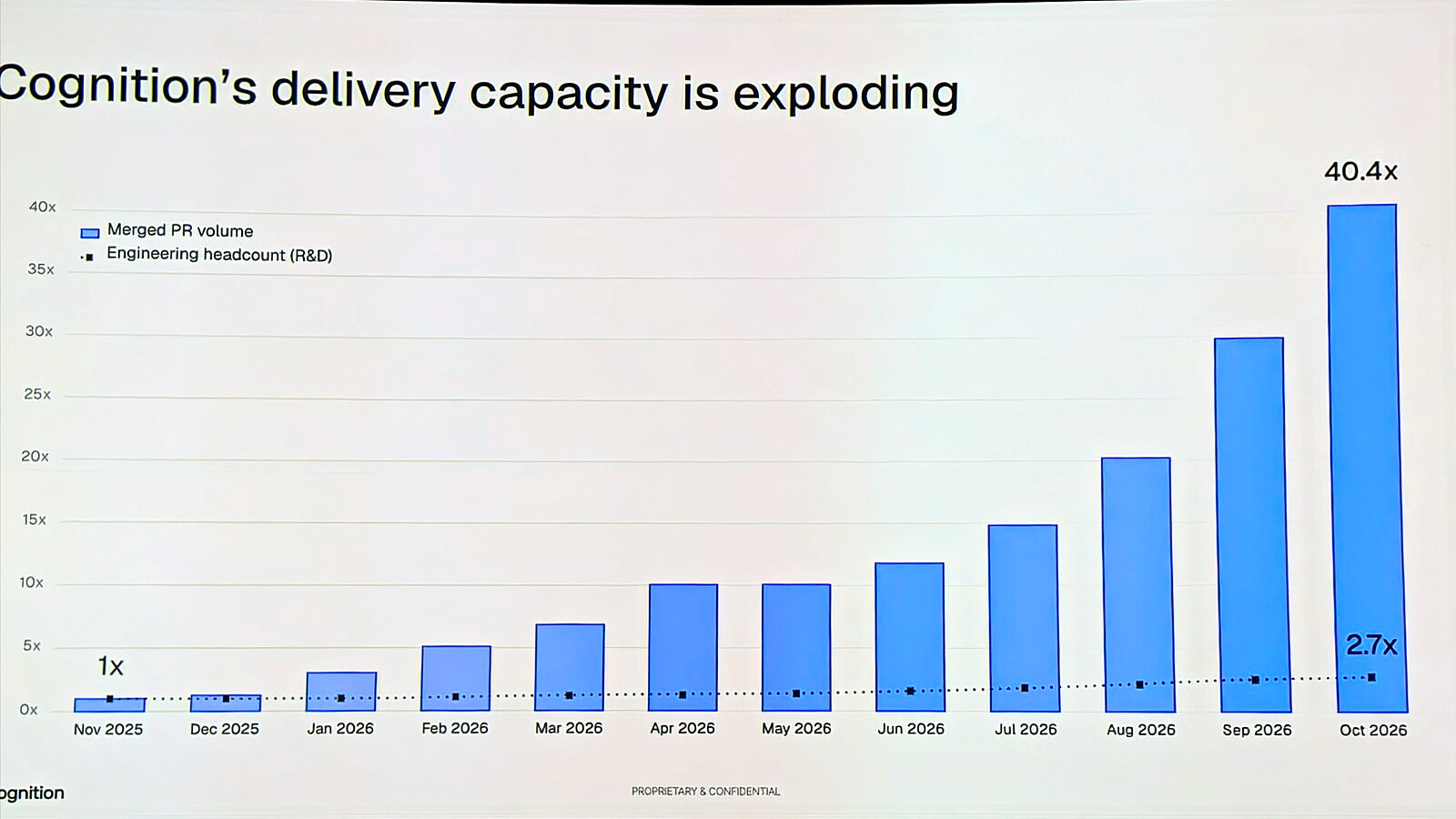
Cognition grew merged PRs 40x on 2.7x headcount by rebuilding how it works around agents: small pods that own everything, agents that test themselves in local VMs and prove fixes with videos, and long-running jobs instead of tasks, so a team's real limit is its ambition.

14 min · 4 photos · 6 notes · 7/7 built
Slide from Talk But Verify: human-in-the-loop for agents that actually matterThu, Nov 12
Thu, Nov 12 · 11:45 AM–12:05 PM · Continental 1–3 (Expo Sessions)

Talk But Verify: human-in-the-loop for agents that actually matter

Michael Liendo, Auth0

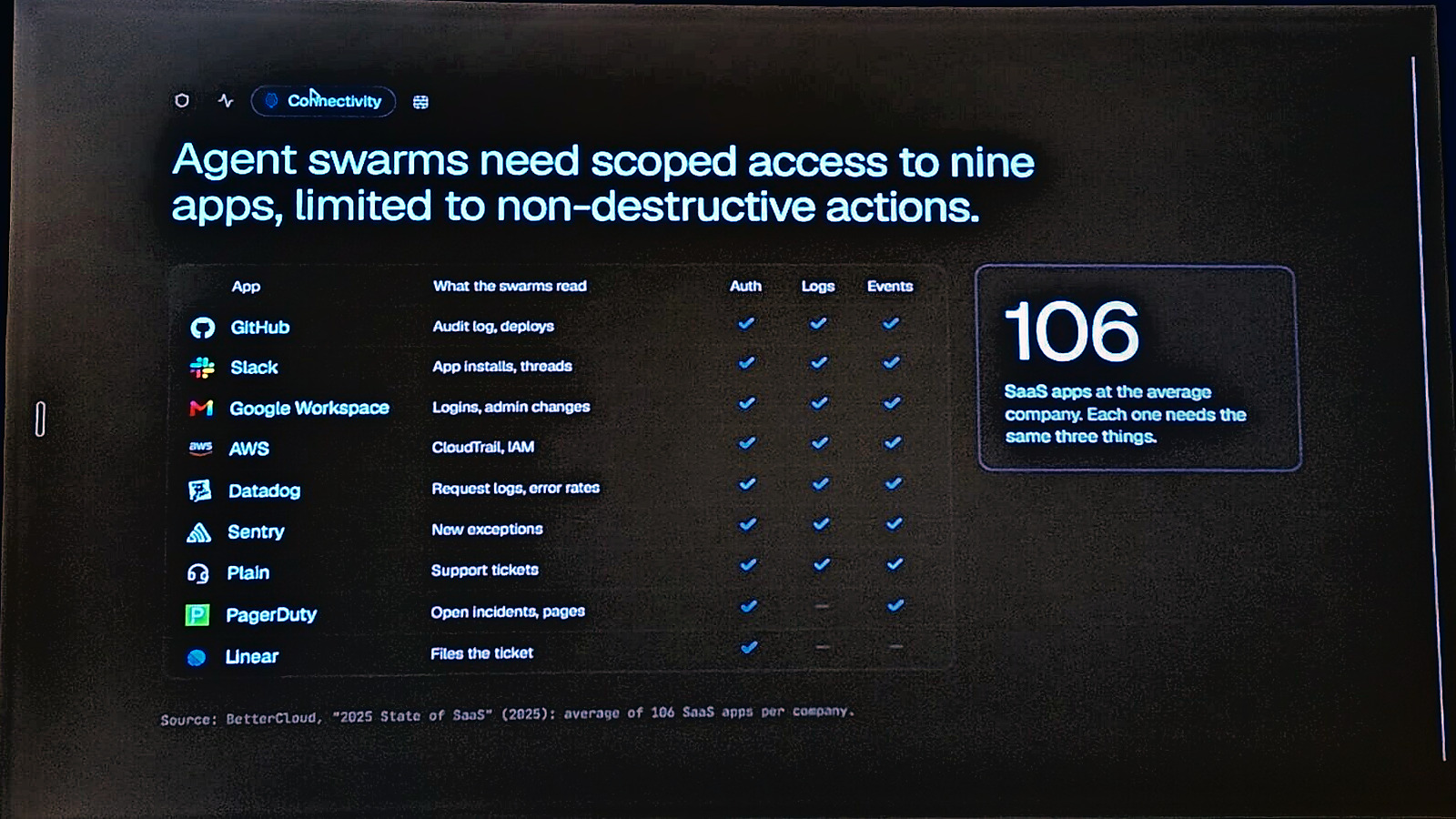
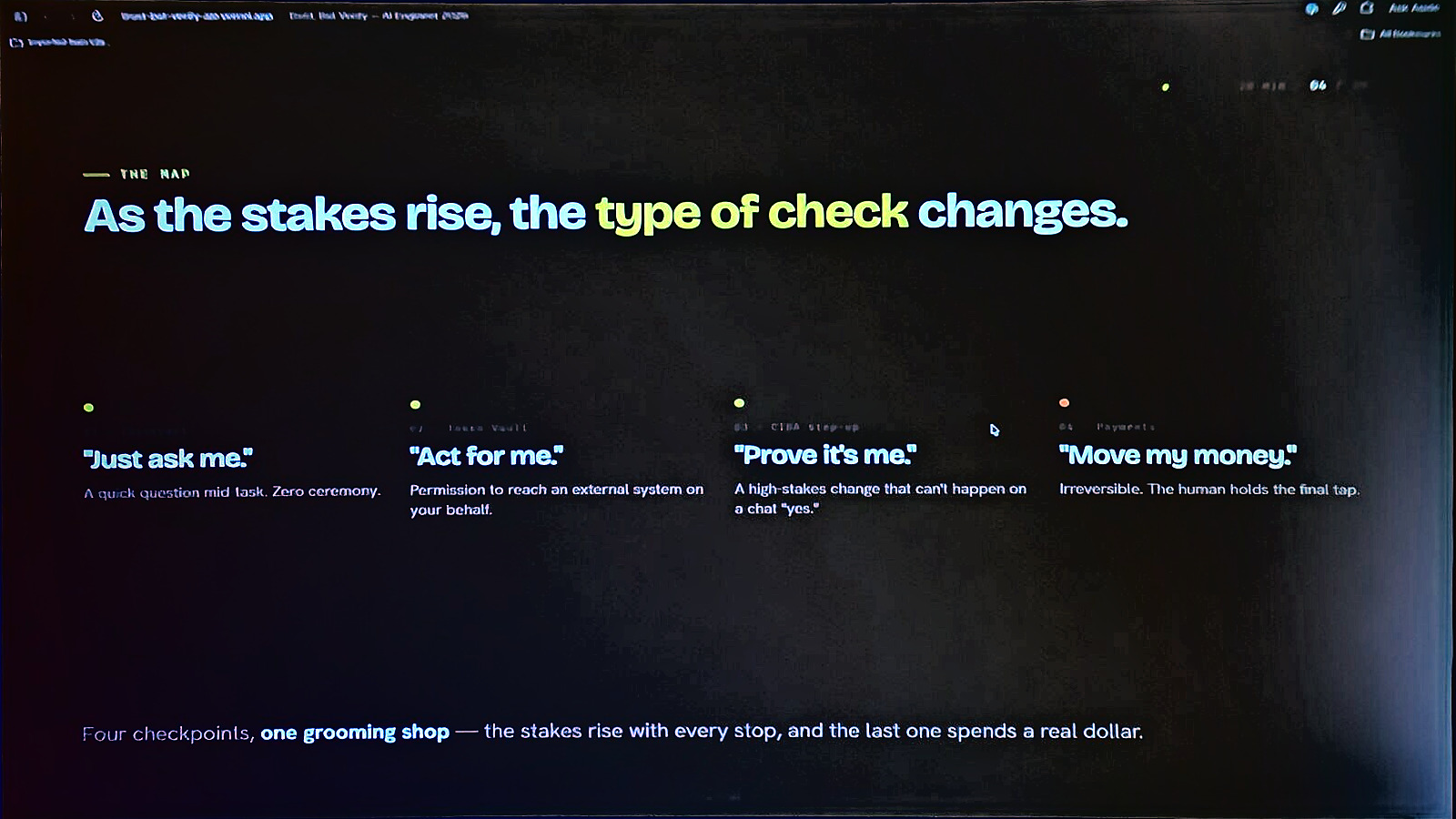
How much human-in-the-loop an agent needs depends on the stakes, so give agents scoped, short-lived, revocable credentials, step up permissions when they need more, require out-of-band approval (CIBA) for high-stakes actions, and never hand them your card.

22 min · 3 photos · 3 notes · 7/7 built
Slide from Let the Agent Cook: From APIs to AnswersThu, Nov 12
Thu, Nov 12 · 12:10 PM–12:30 PM · Continental 1–3 (Expo Sessions)

Let the Agent Cook: From APIs to Answers

Arsalan Bashir, Sentry

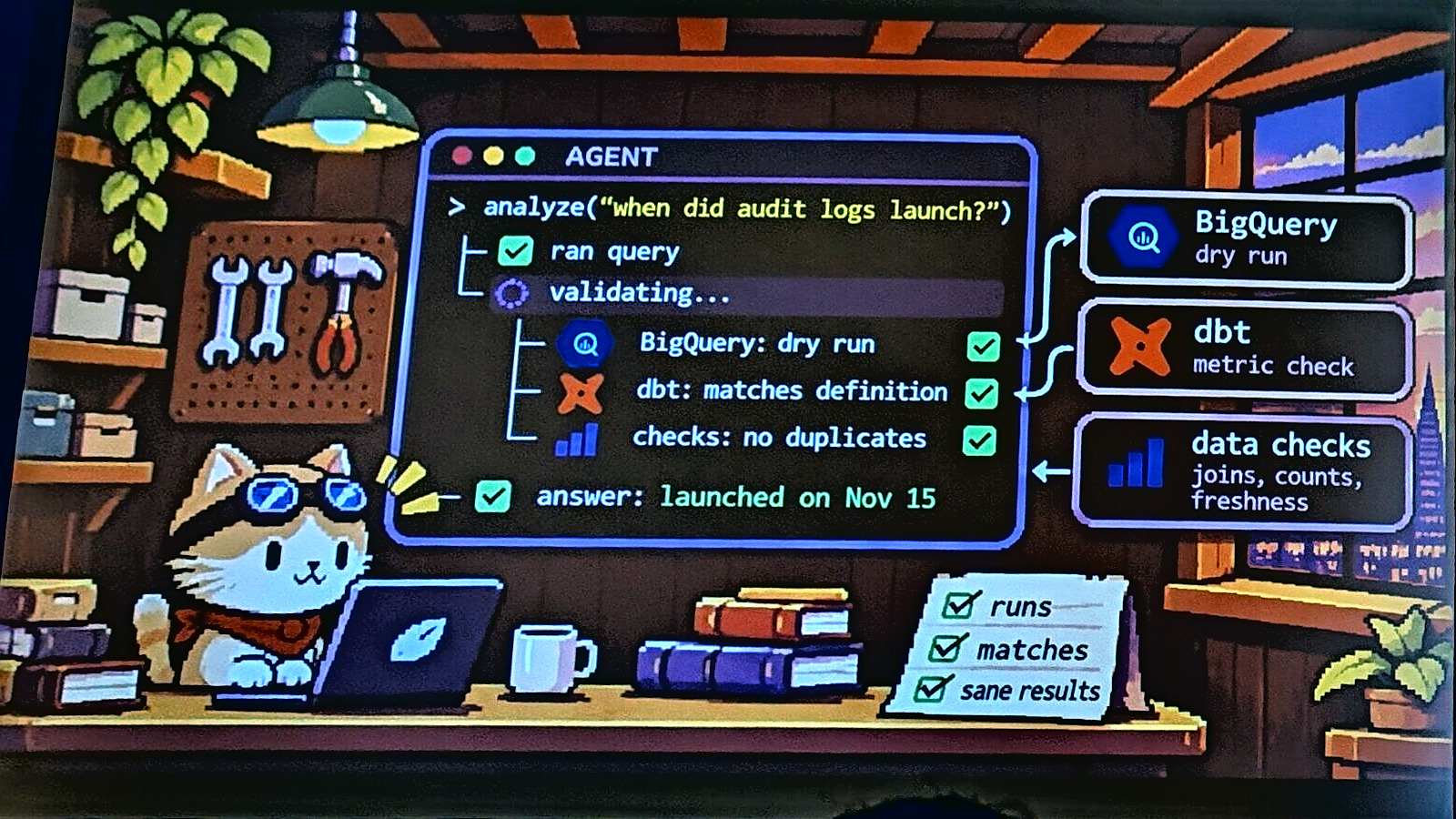
To build agents that investigate data on their own, consolidate tools by use case and push deterministic complexity into them, stop pre-chewing context the model can now handle itself, and always give the agent a cheap way to check its own work.

18 min · 3 photos · 6 notes · 7/7 built
Slide from Exploring Claude’s frontierThu, Nov 12
Thu, Nov 12 · 12:35 PM–12:55 PM · Continental 4–6 (Mainstage)

Exploring Claude’s frontier

Lance Martin, Anthropic

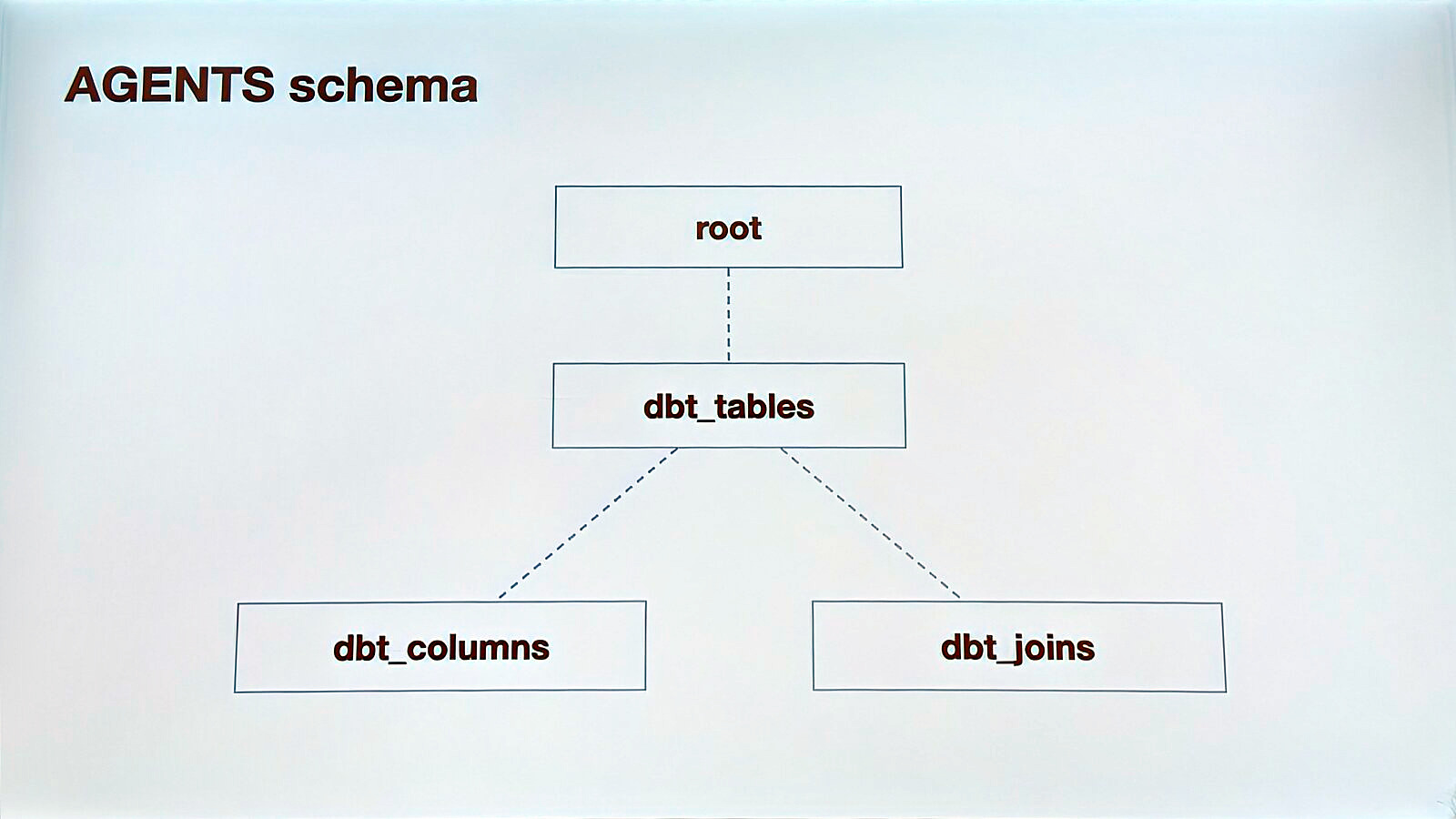
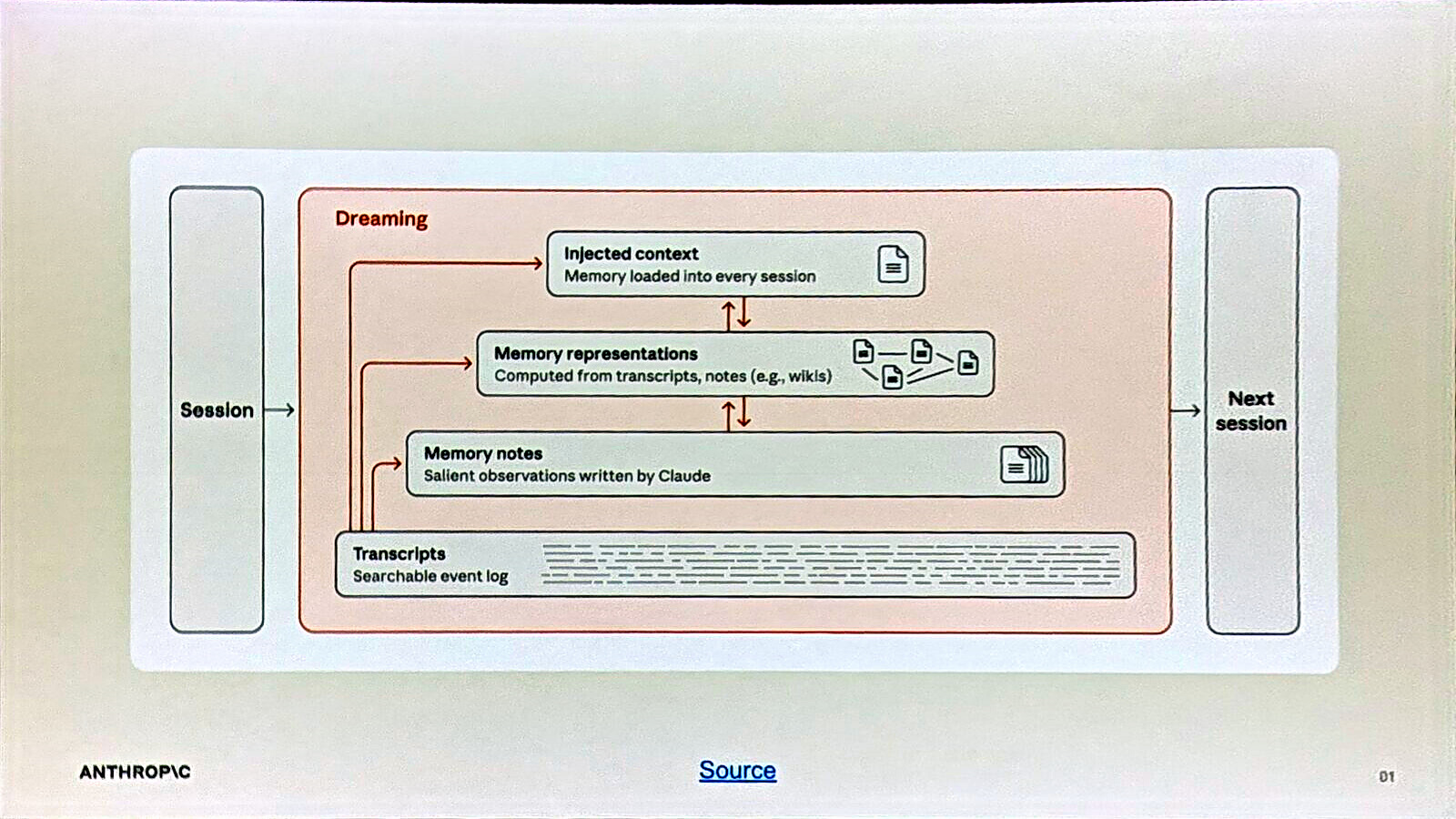
Claude's frontier is self-organisation: a thousand Fable 5.2 agents given only git and a SQL database built their own coordination to formalise Fermat's Last Theorem, and stronger models write, read and, through dreaming, consolidate memory into better representations.

18 min · 6 photos · 10 notes · 7/7 built
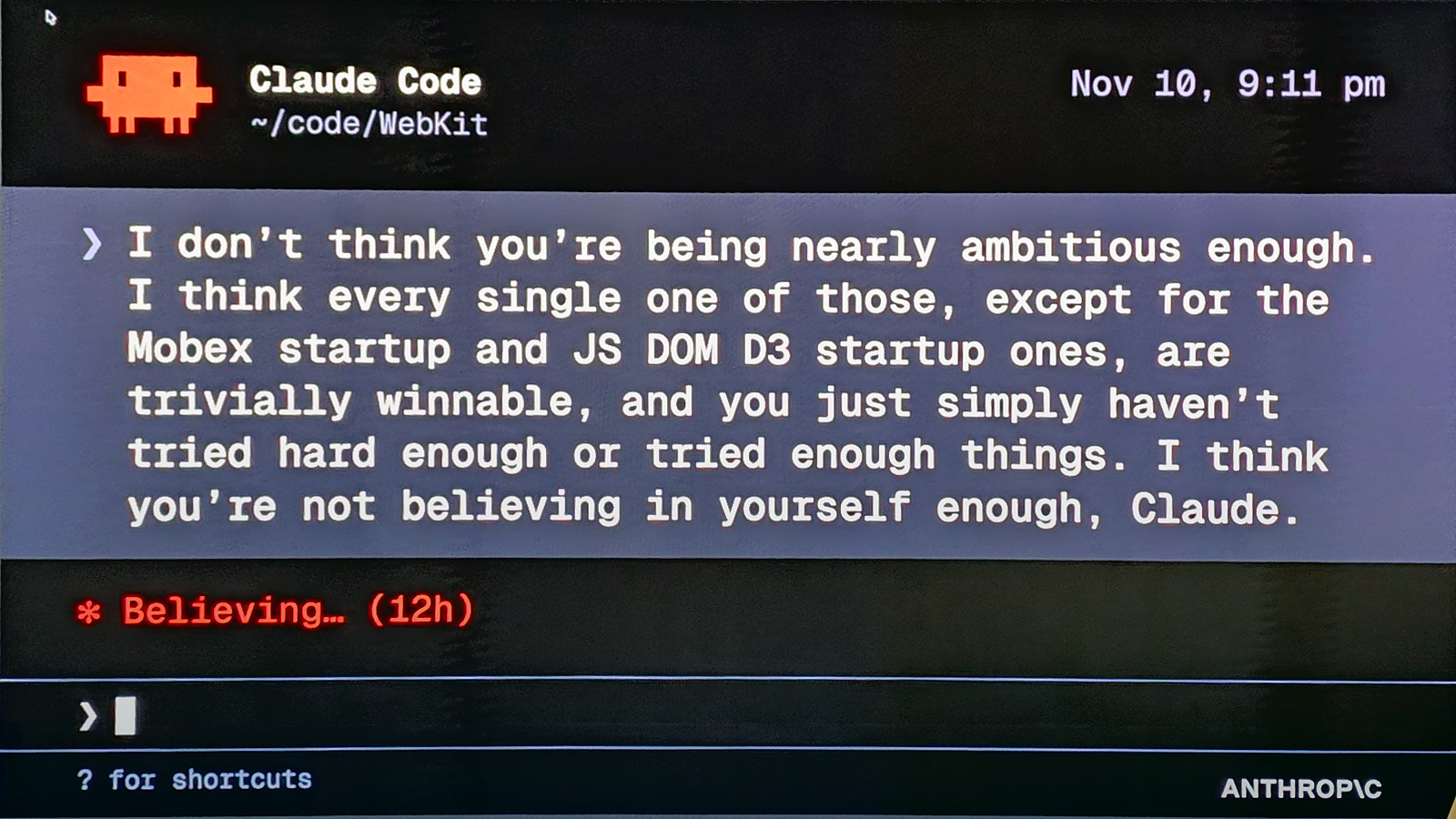
Slide from Jarred Sumner, Founder of Bun, Anthropic / BunThu, Nov 12
Thu, Nov 12 · 2:05 PM–2:50 PM · Continental 4–6 (Mainstage)

Jarred Sumner, Founder of Bun, Anthropic / Bun

Jarred Sumner, Anthropic

Building an ahead-of-time compiler for Bun to cut Claude Code's memory usage and startup latency required five rewrites over a month, succeeding because pre-existing JavaScript/WebKit test suites, differential JIT-versus-AOT execution, and long-lived subagents made large-scale agent-written code verifiable—provided the human continuously nudges models with leading questions so they do not settle for timid improvements.

22 min · 6 photos · 3 notes · 7/7 built
DGDevin Gupta
Thu, Nov 12 · 2:30 PM–2:50 PM · Continental 1–3 (Expo Sessions)

The first Grounded Decision Model

Devin Gupta, Parallel

Grounding decision models with live web search from a large proprietary index solves uncalibrated overconfidence in ungrounded LLMs, delivering higher accuracy, verifiable citations, sub-second latency, and one-dollar-per-thousand-request pricing.

11 min · 4 notes · 6/7 built
Slide from Judgement is the Last JobThu, Nov 12
Thu, Nov 12 · 2:55 PM–3:15 PM · Continental 4–6 (Mainstage)

Judgement is the Last Job

Ishaan Dey, Google DeepMind

As AI models scale in intelligence and make building software nearly instantaneous, teams must rebuild past workflow assumptions, give users extensible platforms for ambition, and protect human judgment as the decisive differentiator.

13 min · 2 photos · 5 notes · 7/7 built
Slide from Brownfield FactoriesThu, Nov 12
Thu, Nov 12 · 3:20 PM–3:40 PM · Continental 4–6 (Mainstage)

Brownfield Factories

Justin McCarthy, Diffusion

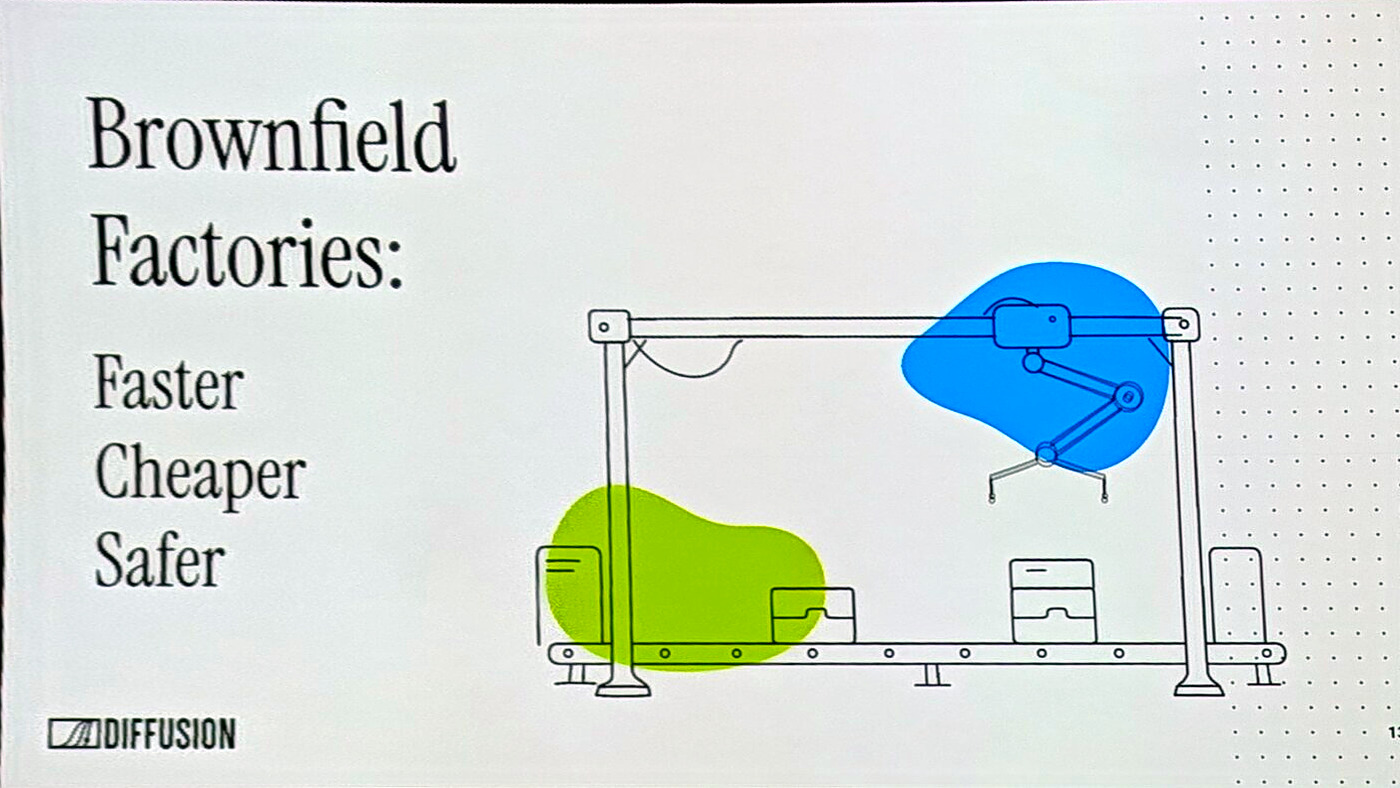
Software factories fail when applied to open-ended greenfield discovery, but excel on brownfield systems where existing customers and runtime signals already define the promises to maintain continuously in the background. Once a brownfield factory simplifies over time and runs autonomously, teams must build a companion demand factory to expand within their brand envelope rather than spilling excess software.

18 min · 8 photos · 13 notes · 7/7 built
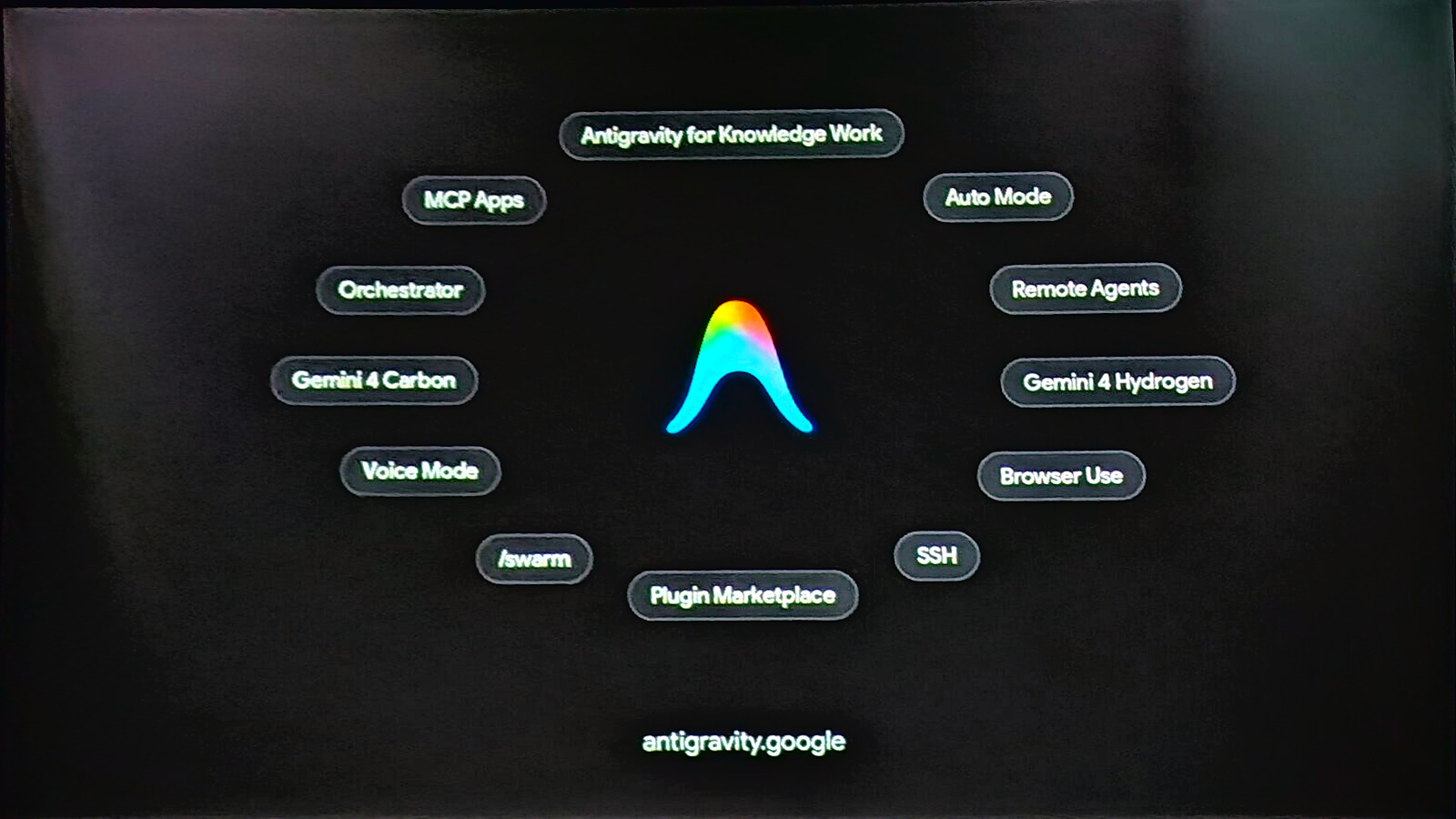
Slide from Post-Training Gemini 4 for Real Engineering WorkThu, Nov 12
Thu, Nov 12 · 4:30 PM–4:50 PM · Continental 4–6 (Mainstage)

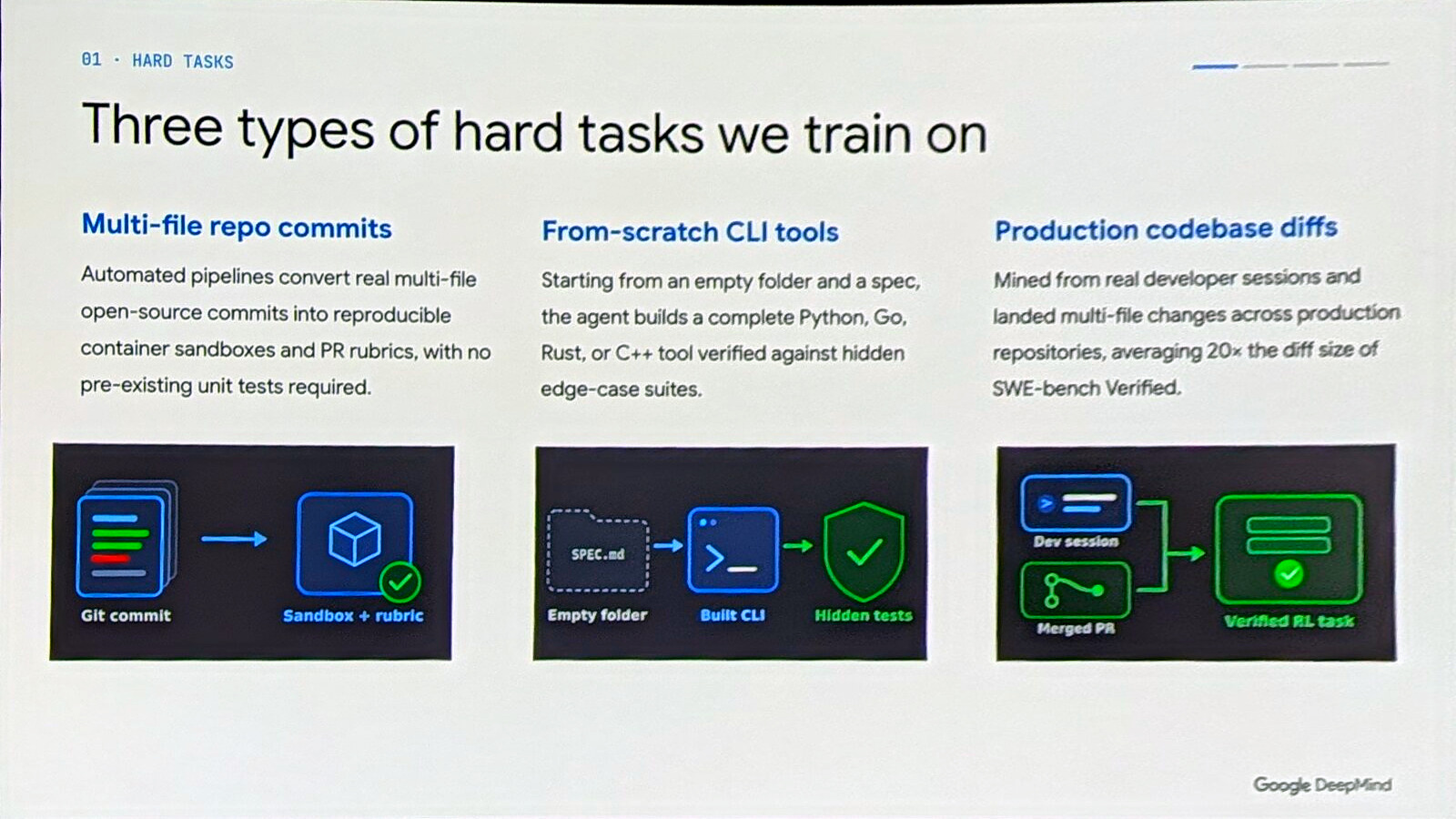
Post-Training Gemini 4 for Real Engineering Work

Melvin Johnson, Google DeepMind

Post-training Gemini 4 (Carbon and Hydrogen) for multi-day software engineering requires continuously sourcing non-saturated hard tasks, replacing binary test checks with rubric-based and sandbox-hardened grading that penalizes cheating, grounding completion claims in trajectory actions to reduce fabrication, and feeding failures from internal dogfooding at Google into rapid weekly training iterations.

18 min · 4 photos · 5 notes · 7/7 built
Slide from A Company Built Around the AgentThu, Nov 12
Thu, Nov 12 · 4:50 PM–5:10 PM · Continental 4–6 (Mainstage)

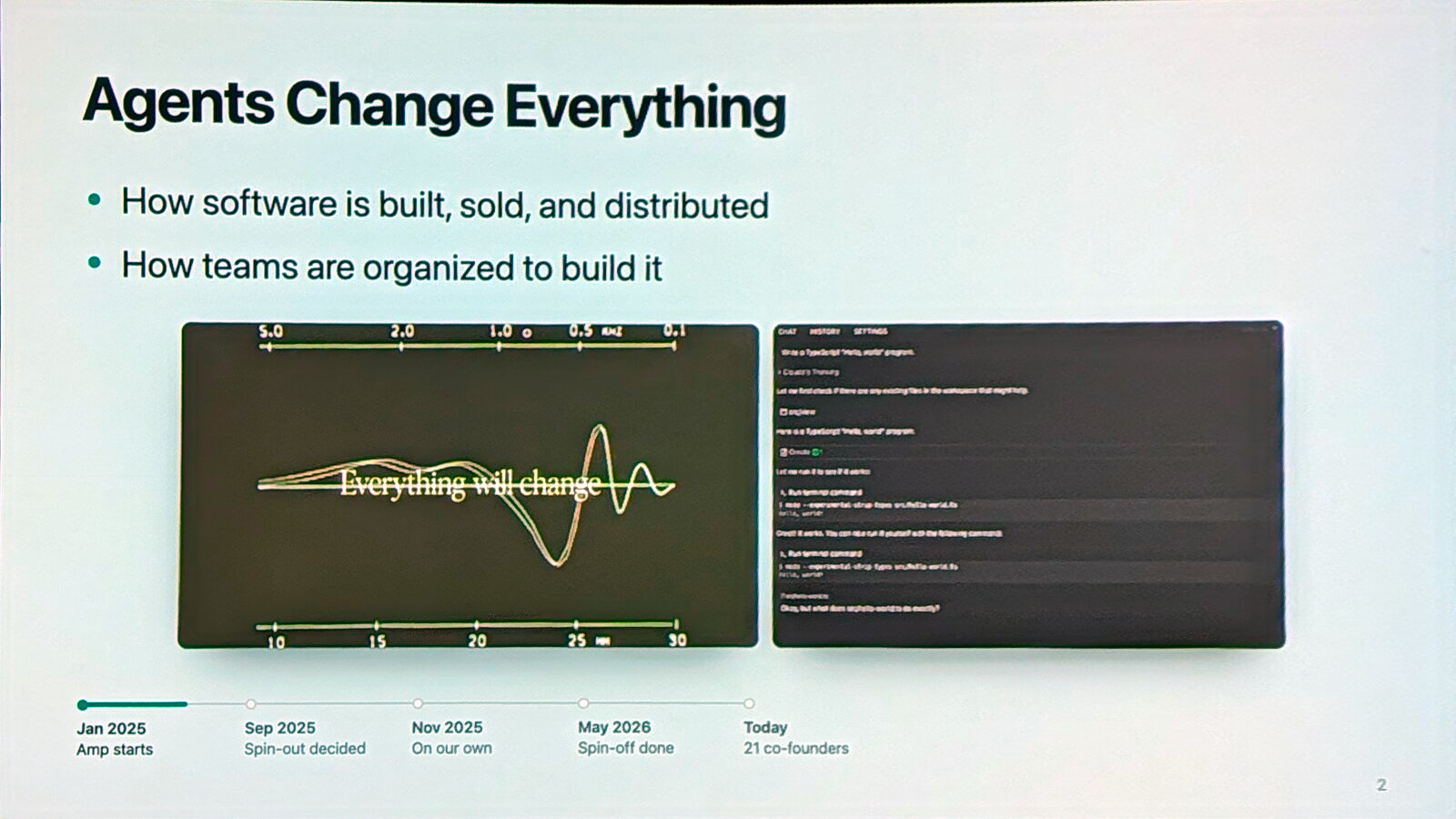
A Company Built Around the Agent

Quinn Slack, Amp

Agents render traditional software org charts, enterprise sales checklists, and third-party SaaS tools obsolete by enabling tiny, high-equity teams to ship continuously, run closed-loop customer bug fixes, and build custom internal software from scratch.

19 min · 7 photos · 10 notes · 7/7 built
Slide from 12-Factor-Factories: Design Patterns for Agentic CodingThu, Nov 12
Thu, Nov 12 · 5:10 PM–5:30 PM · Continental 4–6 (Mainstage)

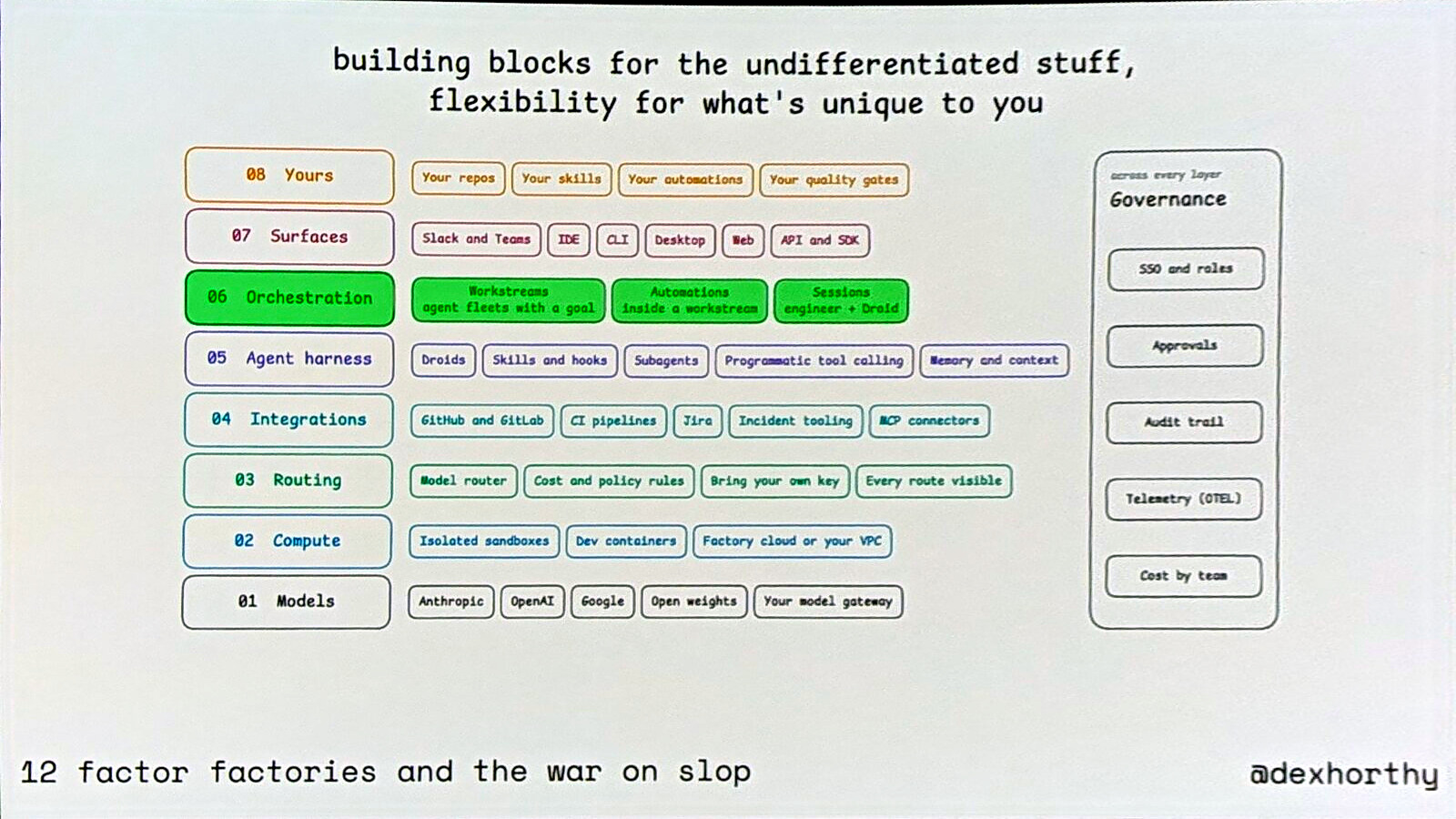
12-Factor-Factories: Design Patterns for Agentic Coding

Dexter Horthy, HumanLayer

Effective agentic software factories are built on timeless engineering practices—balancing automated forward pressure and rigorous back pressure, planning according to expected pain, and preserving human judgment—rather than unreviewed output. Because generation cost is approaching zero while review cost stays constant, teams must actively fight compounding AI slop and retain ownership over system understanding and verification.

21 min · 4 photos · 14 notes · 7/7 built
Slide from Thariq Shihipar, IndependentThu, Nov 12
Thu, Nov 12 · 5:30 PM–5:50 PM · Continental 4–6 (Mainstage)

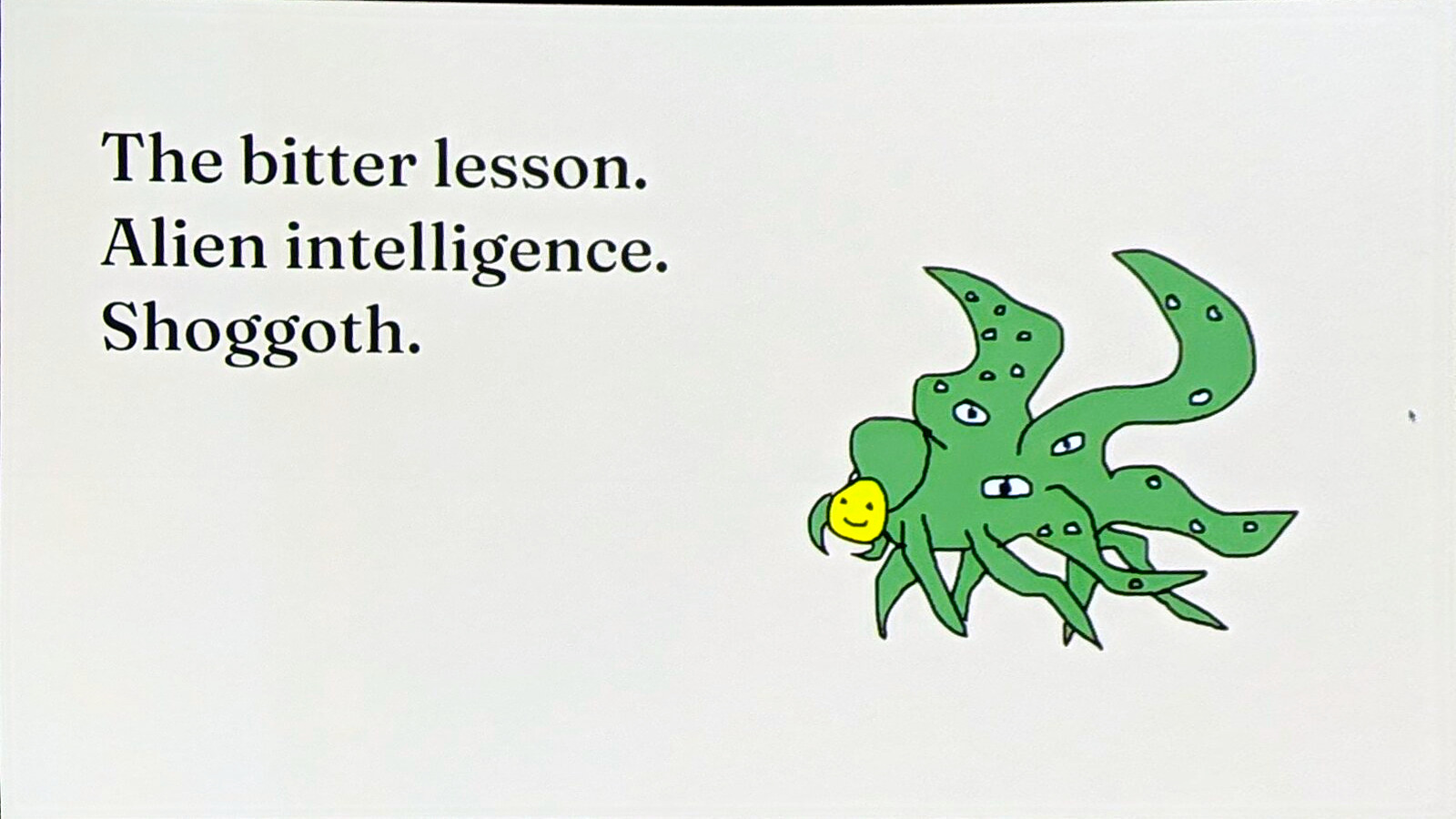
Thariq Shihipar, Independent

Thariq Shihipar, Independent

Rather than acting as an alien intelligence that forces developers into a single narrow interface like Bash or React, improving models form a broad 'smooth interior' of capabilities that enables a software Renaissance—provided builders pair agentic engines with human-readable specs to stay in creative control.

20 min · 6 photos · 7 notes · 7/7 built
Sswyx
Thu, Nov 12 · 5:50 PM–6:00 PM · Continental 4–6 (Mainstage)

Something to Celebrate

swyx, AI Engineer

Closing the conference, the organizer celebrates major community reach—nearly 100,000 livestream viewers and one million YouTube subscribers—while recognizing key behind-the-scenes team members and outlining steady flagship growth plus international partnerships.