The recording starts as the speaker begins; the MC's introduction is not captured. Audience
questions start at 00:08:43. Conversation beside the recorder runs through the Q&A (for
example 00:14:04–00:15:46) and after the talk from 00:19:13; it is kept as transcribed.
Transcribed locally with Qwen3-ASR 1.7B (timings per ~5 s segment), prompted with the
speaker names of overlapping sessions. "Aamir Shakir" at 00:09:39 and "Sonar" at 00:10:59
come from that prompt, not the audio (the speaker is describing an evaluation judge). The
company name "Overcut" may too: the Voice Memos transcript renders it "motorpack",
"overback" and "overpack". The Voice Memos transcript is kept beside it as transcript.txt.
00:00:00 — What Overcut is
I'm sure you still are packing the homes on one suits and are in our boots downstairs. So let's start with Overcut. What Overcut is? So Overcut is the enterprise. Software factory that's helping governments. Software factory, the only one that needs zero FDEs.
00:00:19 — The FDE problem
So let's talk about it a little bit. How those offerings look like, right? Like you're getting an offering. Your homemade, your soft factory, and then it comes with FDI, and FDI has become part. So much time to see value, and you know there is something strange about the fact that. You need to buy a product that automate your. Workflows, software development, but actually you need a human to integrate.
So, how important is overcapacity in a minute?
00:00:56 — Built on what you already run
So it's built on the stuff that we already run. Which is really nice because you don't need to start from zero. We have a lot of things that. You can read any model. You can reach any tool, any harness. So we know how to get your existing tools and skills, and agents that you already built. And put them into the service. We run on private clouds on-prem, totally isolated.
Or as a sub service, according to your needs, and you enjoy from the no vendor lock-in.
00:01:31 — Governance in one place
So let's start and see how it looks like. So this is Overcut, and you see here all. Governance. Everything is centralized in one place. On the organization level, you see the execution, the talking, consumptions. You can see the impact, like the VR cycle time. The first time to review, and also the talking consumption, as we just discussed.
00:01:56 — Configuration and integrations
So how it works? This is the promise I will show you now. How we bring a software factory that needs. Zero fds. So starting from configurations. If we go to the worst-case settings. You can see that we integrate with the services that you're already working with. GitHub, Jira. Slag, big bucket, and many, many more. Then you can connect your own LLM model. You can work with multiple other providers.
You have different projects for different purposes. With different conditions, let's say one project have those repositories, and the second one have. Different channels and repositories access to. You have security to define the roles in the system for audit trail in all the enterprise packets.
00:02:42 — Building blocks and agents
So, starting from the building blocks of building AI workflow, you have MCD to the battery. Just plug and play. Here you can use, and also you can add your own customized MCB. We know how to scan the skills from your repo automatically, and then we can build the agents. So an agent in Overcut has its own identity. You have full governance, and you have the. Specific amount of tools that this agent will use.
The secrets, the MCP, the skills. So in Overcut, we believe that agents should be specialized in what they do. You don't need an agent to do a lot of different missions. Any agent who has the access and the permission that it needs, invests this way. It will be. Would provide much more quality results and also be more efficient in time and in token.
00:03:36 — Workflows and playbooks
And now we get to the fun part. We can build workflows. So we have a full library of playbooks for the SBLC process. As you can see, we can where you can just plug and play. You have the auto ticket triage, quality review, technical design review, and many, many more. Let's just take a look at one of them to see how it looks like. So every workflow is designed with steps.
It starts from a trigger. Trigger can be the ticket was opened in Jira, or a pull request was assigned to someone. Maybe a Slack channel about alerting production, then. You can define the steps, deterministic steps, and identical steps. To define your workflow, for example, you prefer then the review plan, then do the code review. Here in the end, you can see multi-agent steps doing this a bit of the comments.
00:04:32 — Ticket to PR
And after that, if you want to build. Something bigger, taking the entire process from end to end. Let's take ticket to PR. So how it looks like? You can see a trigger every time the ticket is open. Here is a place where I can define my goal and instruction, and explain. Plain words. How I'm working in my organization. So now the time of the workers that are part of.
Of this workflow, and I will describe. So, whenever a ticket is open, we assign an auto ticket triage. If it's about running workflows analysis, if it's not about if it's a requirement for a new feature, Libre. Requirements. If it's something complicated, not a small change. Please run a technical design review, and after that, you can create VR. From those technical designs, and are you gonna say, hey, this is too much for agents?
To take all the way by itself, so we provide games for human in the loop. You can define pausing, deterministic stop, where the agent will stop. And ask for your approval before it continues. You can do it wherever you want, and you can see here that we decided to pause every time before agents start to run.
00:05:49 — A run, step by step
Write code. Everything overcut is super observed, and now I will show you how a round like this looks like. So we go to the logs. You can see that we have some running in the in process. And now I will search for one of the shikitee's triage. Just here, you can see active. So we can see that it started with a ticket triage. It executed the workflow.
We can see in the summary here that he decided to label this as a. Requirement for new feature. Then we decided to run the generate requirement and not the root cause analysis. Now, if you want to see how a developer will do about it, you can see here a ticket that was open two hours ago. By my teammate, with an issue, real issue in our production. And then automatically overcut run and auto ticket triage and label it as a bug.
Following that, they even decided to run a root cause analysis. The Google analysis suggested a fix. Here it is in the ticket, and then he paused and said. Proposed next step is create the art from the design. Please reply, approve, reject, or suggest. So whenever you reply right here in the comment, oh, I see you just replied approve. So we continue to create pull requests from design.
But if you would reject and say, "Hey, I think you missed the security aspect in the root cause analysis," please edit. So the orchestra, we know how to go back to the world's analysis with that specific. Feedback and run it again, so we allow this loop to run.
00:07:30 — Retrospectives and memory
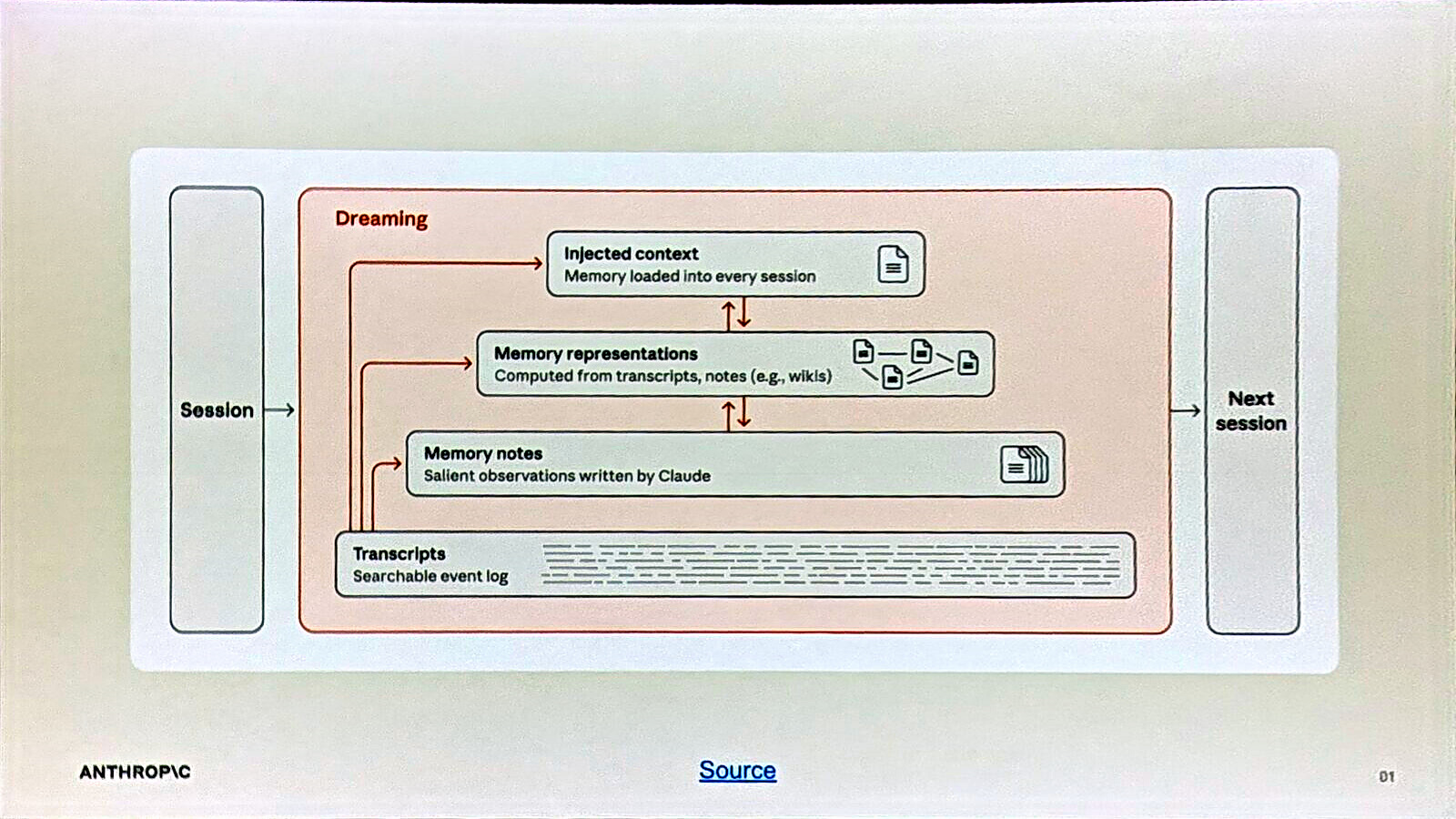
Now I want to show you. That this system is self-improving, and how I will show you just now. So every time we are running a workshop, there is a background process. Called retrospective, that we run. On top of your workflow, we check all, let's say, the code reviews that ran for the last week. And now we check the results, so we can see here if we go and scroll down.
That we have once per day, and we see sixty-one percent of the comments. That overcut provides you the pull request more address. Thirty-nine with another verse, and then we create memory layers. Out of it, so the next time a court review will run. It will also improve over time. And those memories will be added as context to every code module that is running. Not only that, we also scoring those memories. So over time, to make sure there is no drift.
We are scoring them, so the next run we run only on top of the memories that have the highest score.
00:08:43 — Q&A: scoring memories
So up till now, any questions from the audience? Yeah. So this is the scoring system that we provide. So anytime we add a memory layer. In the next wave perspective, we check how effective was it. Sometimes it was not effective because we checked the actual comments and if they were in English. Or they were addressed or not, and then you know how to provide those laws. So it will not happen the next time.
So we test, and this is totally considered by the customers. So we check multiple runs at one time. And the random evaluations on top of that, I just didn't mention. Then we have evaluation inside our product. So the evaluation. This is what giving us the ability to provide a score. And make sure that the.
00:10:03 — Q&A: orchestration and memories
Any other questions? Yes. Did I understand it right that a workflow can call other methods? Yes. Sure. We have the orchestration. The orchestration is a reasoning layer and a genetic layer. That can activate different workflows between each other, so not only agents can discuss one each other within a workflow. Workflow can trigger other workflows, so we can have a totally end-to-end process in your organization. Yes. So, if I understand correctly, your Workflows have agents and agents.
Are very specific and trying to do only one thing, but your reflection is. Creating memories that are for a workflow, or are they for the agent? So this is a great question. The memories are perigentic. That will then work for, okay. So why not improve the agent itself? We should definitely include data itself, and the fact that Sonar. All the objectivity and all the memories allow you to do it really easily.
But even if you don't touch the system. You just configure the agent. You just configure the workflow. You don't touch it anymore. It will auto include. But we always very obedient. Fine tuning is like you know best practice.
00:11:25 — Q&A: evaluation, sharing and permissions
Yes. I'm just curious, what kind of scoring and evaluations? Can you be more specific? So we have Aamir Shakir as a judge as an internal. Operation designing in the background is part of our retrospective. Yes, it's an agency I work for that consumes the funds. Yes. Can the room be shared? Yes, totally. If I will show you right here. So we have the workspace library. Where you use a location where you can define MCPs, secret workflows, orchestrations.
Integrate them across all the projects that are defining the in the. What if the user has different permissions in terms of like the data access? Yeah. So it has its own provision. Like library permissions are totally different from project permission and from MCP permission. You have this granular. Any other questions?
00:12:45 — Q&A: governance, limits and audit
Yes, for the memory. Is it like total agent? Initiated an agent lead on which should go to the forever memory. Or do you guys have? Like governance workarounds on the courtship for solving the problems. So actually, by design, we have a very high level of governance and guardrails because. They don't have much context except what you define them exactly. And for the memories, the way we produce the memories is also agentic, but also deterministic.
So it's a combination of this. Oh, I'm so happy that you asked. So, in the workspace. Settings. We have this feature called limits. So we have the ability to create limits. A of times of number of executions. Per workflow, over a level that you disconnected. Over a project. What's wrong with him? Yes. I just need my second hug. So our works are laying on foundations. I mean, I do know a lot of girls like that.
So it's not a person that triggered this workflow. It's the way you define it around the country, but anyway. In Cornwall, there is a woman who is making shoes, and when you look at her Instagram, she kind of looks like Julia. So in case there's an explosion. Like when I saw this picture, I was like, Oh. And you also have a limit per day, per month. Right? And she lives next to us. Actually, these are her jeans.
But those memories must be costly, at least over time, because they're being recalled every time they go through time. But we have the scoring, so only the memories with the highest scores are taking into consideration. And the more you go far, the more it's being used in a long time. Like when you talk to her, she doesn't look like that. When you see the pictures, it's like.
This. So I think that every you have the permissions here in the system. Oh, okay. You have those who can ride it, and obviously they have a full audio trail. Eric's brother has a car. And you see here. If I just say or here, Alex Morgan just did this. That I can see exactly when and the changes. So everything is here, and also in the war space level, you have the audio trail.
And you can export them to Prometheus or wherever you want. They are making the changes in the systems that you already use to work with GitHub, Gira, Slack. So they do work because we allow them to do work, and we want them to do the work. And we believe that software park will be part of any company in the very near future. But the fact is, if you have a very high governance and very high observability on the flows.
Allowing to be more simple. It supports those menus.
00:16:53 — Q&A: remediation
What are my remediation steps? Would I have to restart the workflow from scratch? So it depends on you. You have all the flexibility. You can just. Figure it from where it failed. If you, but the fact that it failed. You can check the logs. You can see exactly what happened in the agent session. And then decide how to proceed.
00:17:17 — Build your own factory
Okay, so. For credibility, we created something for you. So, please scan this barcode. And here you have a place where you can just describe by words. What do you want to have in your software factory? And we will show you how we created just for you. And I'll give you an example. Let's say that you have alerts coming to Slack. And then you want to make sure this alert is new, or maybe it's already duplicated.
Then you want to make sure that if it's something new that you open a Gmail ticket for it. And the third thing that we want to issue another workflow that fixes the other issue. And after that, if the pitch is not too complicated. Maybe you can also automate it to production. It's just you can write it down. And what you'll have, you will have a board space. I'll stand up for you.
And you will see, and he will guide you step by step what you need to do in order. Who have this workload have to grind for you. So please try it out because it's really amazing. And you can think workflows and orchestration and agents specific to the regions that you ask. Just wait for you in your email.
00:18:41 — Closing and after the talk
Okay. Any last questions? So. Thank you very much. I was really happy. Connect via LinkedIn and place small. And hear more about the journey of Kai. Then you have your own company. And also here in the overcut barcode, you can see the factory that I just showed you. Once, like before, and now. For the Formula One Lego. So number four, five. That guy looks like he can build it. He can build it. Yeah, I'm sure.
My two-year-old's still on Duplo. That seems legit. Recently, she's decided that.