AI Engineer New York · Z3 Talk Directory

Talks

Every recorded talk with straightened stage slides, interactive stories, and evidence dossiers linked across all 8 themes.

32 talks · 8 themesThemes presentation →

Monday, October 12

3 talks

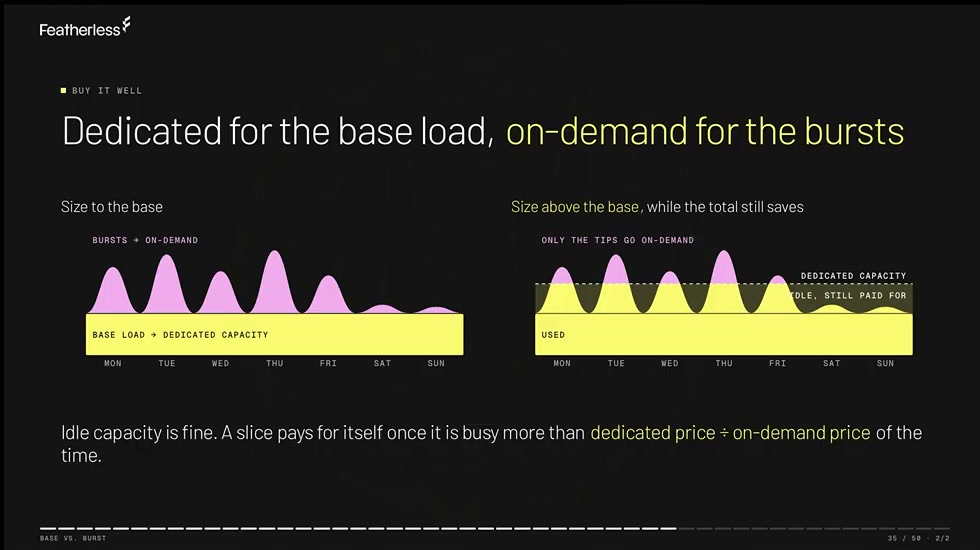
Slide from The AI Bill Is Too Damn High – Tokenomics 101Mon, Oct 12
Mon, Oct 12 · 11:05 AM–12:05 PM · McCarthy Room (Riverside Suite)

The AI Bill Is Too Damn High – Tokenomics 101

Eugene Cheah, Featherless

Reducing enterprise AI inference spend at scale requires splitting API keys by department and workload, matching model size and per-request tokens-per-second to human latency sensitivity, sizing dedicated GPU capacity to base load with cloud spillover, and measuring real business outcomes rather than raw token volume.

55 min · 3 photos · 6/7 built
NNNick Nisi, Zack Proser
Mon, Oct 12 · 1:15 PM–2:15 PM · Sutton Room (NY Ballroom W)

Beyond “Done”: Building Verification Loops for AI Agents

Nick Nisi, WorkOS · Zack Proser, WorkOS

Scaling AI agents safely without line-by-line human code review requires giving each application deterministic, outcome-driven verification harnesses, explicit state-rich error output, centralized completion gates, and persisted run receipts so agents must prove real behavior rather than self-report success.

57 min · 5/7 built

Tuesday, October 13

17 talks

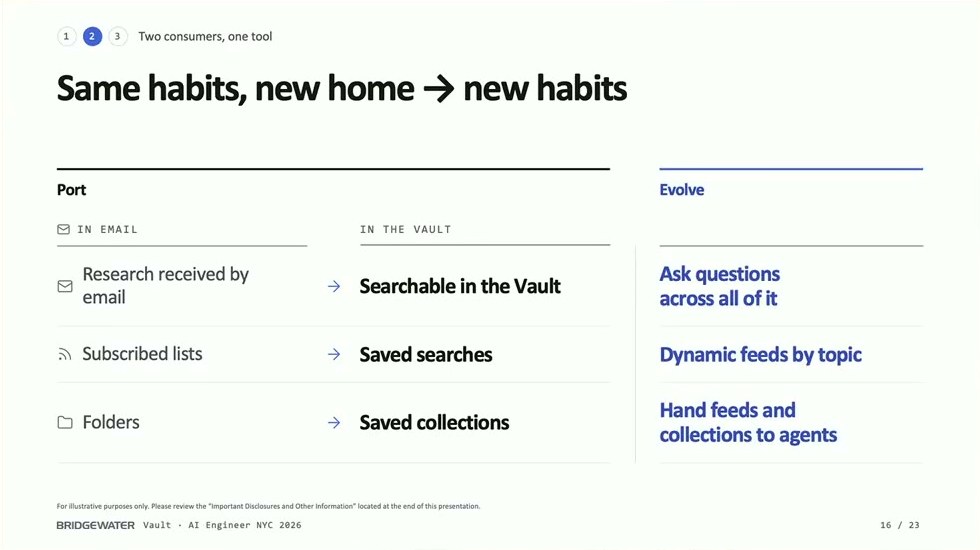
Slide from Vault: Making Unstructured Data Work for InvestingTue, Oct 13
Tue, Oct 13 · 9:00 AM–9:18 AM · Simons Room (Metropolitan East)

Vault: Making Unstructured Data Work for Investing

Aaron Linsky, Bridgewater · Sam Green, Bridgewater

Bridgewater's Vault demonstrates that enterprise investment AI only compounds when internal and external unstructured data is enriched against a bitemporal firm ontology, served through native-filtered search built for both human precision and agent-storm scale, and embedded into existing researcher habits with automatic synthesis write-back.

Slide from Anthropic: Accelerating frontier AI in Financial Services.Tue, Oct 13
Tue, Oct 13 · 9:18 AM–9:36 AM · Simons Room (Metropolitan East)

Anthropic: Accelerating frontier AI in Financial Services.

Belinda Neal, Anthropic · Keon Shahab, Anthropic

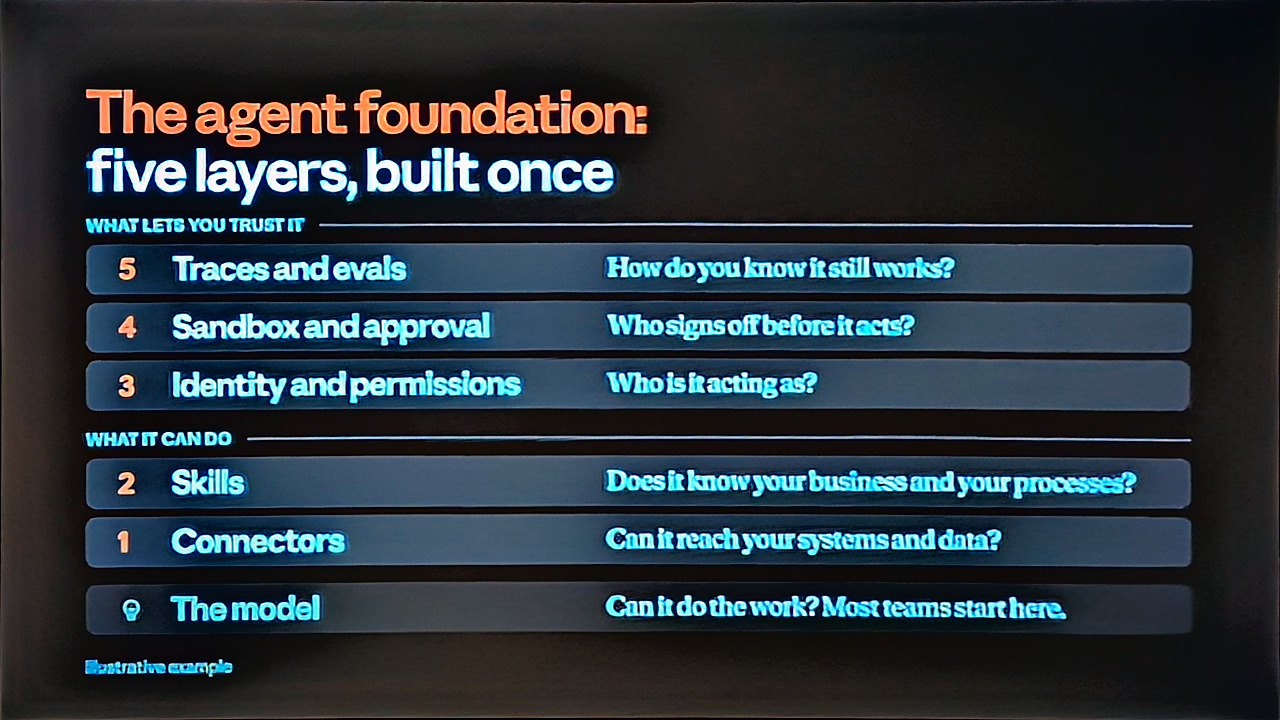
Because frontier model capability, cost efficiency, and prompt-injection safety now outpace enterprise diffusion, financial institutions must shift from bespoke one-off agent builds to a reusable five-layer architecture combining MCP data connectivity, SME-authored versioned skills, least-privilege identity, human-approved sandboxed execution, and continuous regression evals.

Slide from Balancing Acceleration and Safety for AI AgentsTue, Oct 13
Tue, Oct 13 · 9:36 AM–9:54 AM · Simons Room (Metropolitan East)

Balancing Acceleration and Safety for AI Agents

John Feminella, Two Sigma

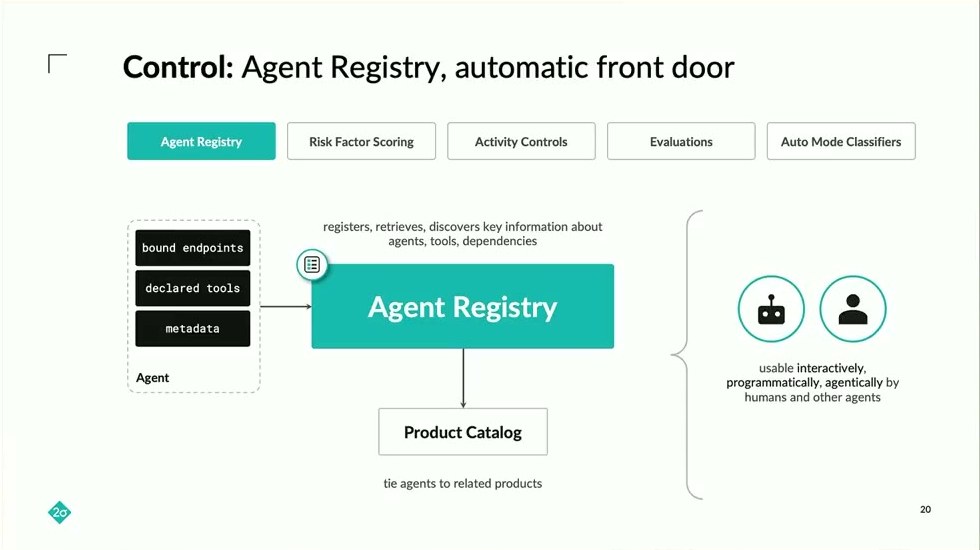
Rather than locking agents in useless air-gapped sandboxes or relying on fragile prompt policies and rubber-stamp human approvals, Two Sigma enables autonomous enterprise agents safely through five composable runtime controls: automatic framework registration, risk-tiered review, registry-enforced tool entitlements, shared evaluation infrastructure, and classifier-routed approvals.

Slide from What does an AI engineer do?Tue, Oct 13
Tue, Oct 13 · 10:12 AM–10:30 AM · Simons Room (Metropolitan East)

What does an AI engineer do?

Aparna Dhinakaran, Arize AI

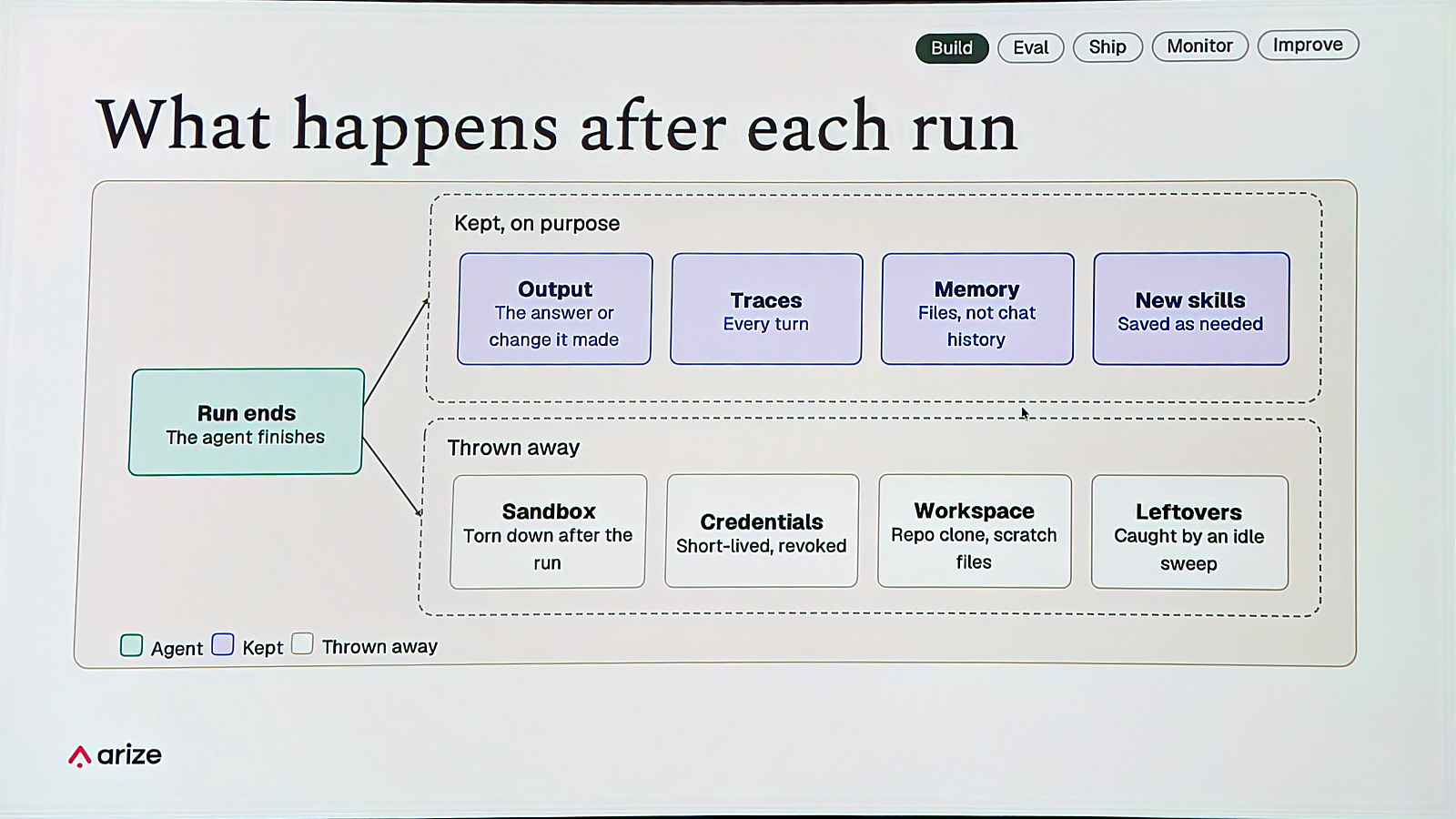
The AI engineer's role has shifted from manually building and reviewing individual features to architecting closed-loop agent factories — where agent-first telemetry triggers isolated, durable sandbox runs, LLM judges are meta-evaluated against human judgment, and both production and coding agents are traced end-to-end.

Slide from Can Any Model Write Like Me? Building a Benchmark for Creative WritingTue, Oct 13
Tue, Oct 13 · 10:40 AM–10:58 AM · Turing Room (Riverside Ballroom)

Can Any Model Write Like Me? Building a Benchmark for Creative Writing

Louis-François Bouchard, Towards AI

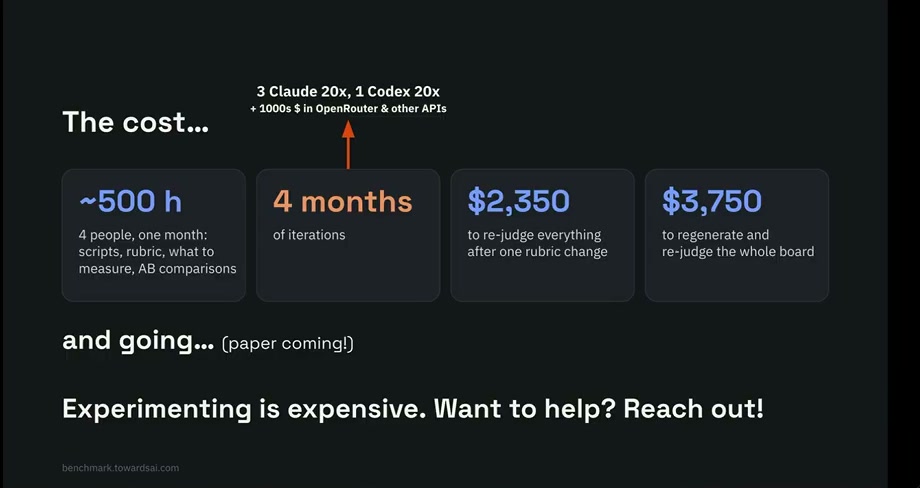
Because AI writing slop persists as models scale, Towards AI built ToneBench—evaluating 120 models across ten long-prompt tasks, five drafts per prompt, two-stage categorical rubrics, and cross-family LLM judges—showing that multi-draft cheap generation merged by a reasoning model beats expensive one-shot prose.

19 min · 3 photos · 6/7 built
Slide from Write the Answer First: Generating Eval Datasets for Agents With No BenchmarkTue, Oct 13
Tue, Oct 13 · 11:05 AM–11:23 AM · Turing Room (Riverside Ballroom)

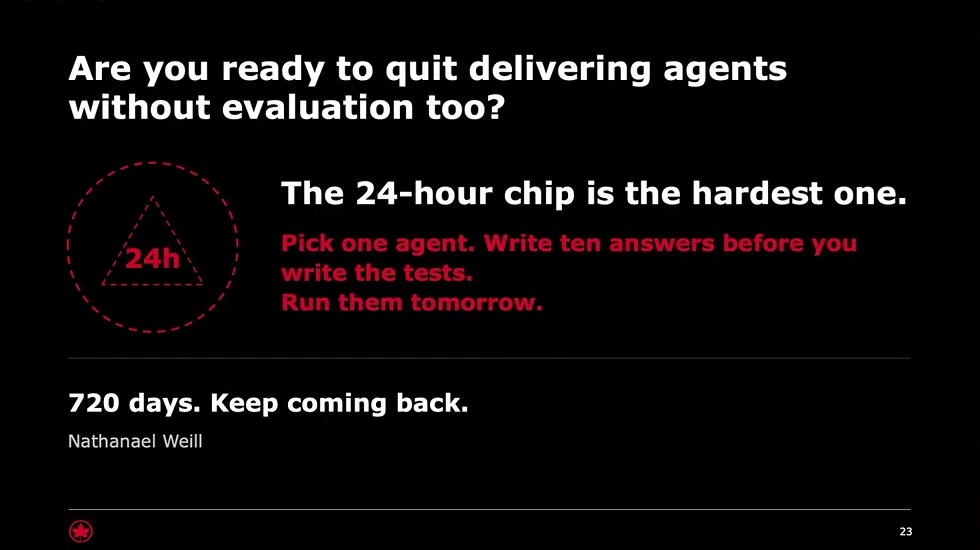
Write the Answer First: Generating Eval Datasets for Agents With No Benchmark

Nathanael Weill, Air Canada

When custom enterprise agents lack public benchmarks and continuous domain-expert access, teams should invert evaluation by generating synthetic inputs around known answers—source pages, business rules, or clause templates—and re-engineer agent architectures around deterministic checks rather than noisy LLM judges.

19 min · 5 photos · 6/7 built
Slide from Search the Web as It Was: An Introduction to Exa SnapshotTue, Oct 13
Tue, Oct 13 · 11:30 AM–11:48 AM · Shannon Room (NY Ballroom E)

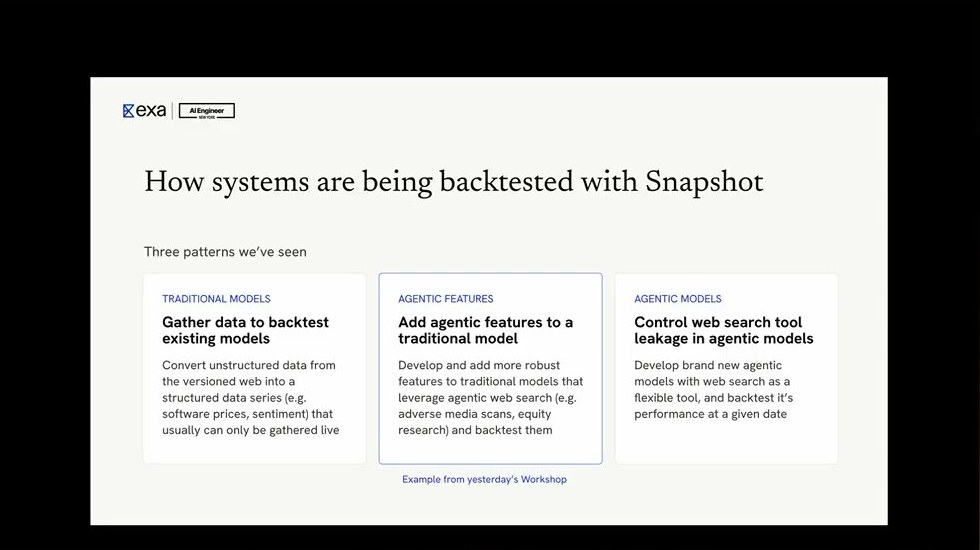
Search the Web as It Was: An Introduction to Exa Snapshot

Ryan Ahern, Exa

Because AI agents execute dense, multi-step exploratory web queries whose token costs compound across trajectories, Exa pairs 95%-token-saving dynamic snippet highlights with Exa Snapshot's 400-billion-page dated web archive so financial and predictive systems can backtest web-derived signals without lookahead leakage or unvalidated overfitting.

19 min · 5/7 built
Slide from Inside the Fable War RoomTue, Oct 13
Tue, Oct 13 · 11:55 AM–12:13 PM · Sutton Room (NY Ballroom W)

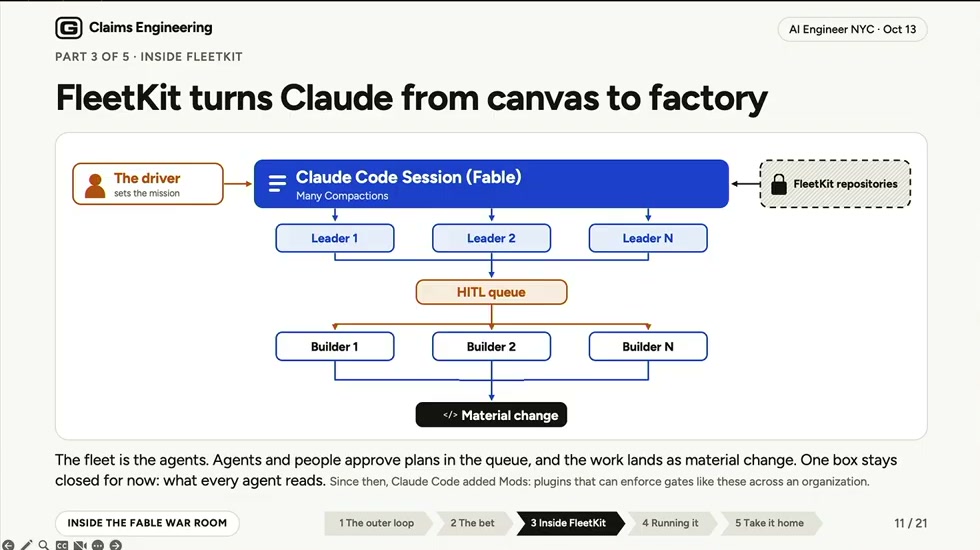
Inside the Fable War Room

Ford Prior, GEICO

Because coding agents accelerated inner-loop implementation while leaving enterprise legacy modernization bottlenecked on cross-functional alignment and domain context, GEICO built a multiplayer AI-native war room steered by Markdown FleetKit protocols, human-in-the-loop worksheets, and deterministic nine-step gates to ship legacy claims APIs in a single day.

19 min · 10 photos · 6/7 built
Slide from Agents can pay. So why don’t they?Tue, Oct 13
Tue, Oct 13 · 12:20 PM–12:38 PM · Shannon Room (NY Ballroom E)

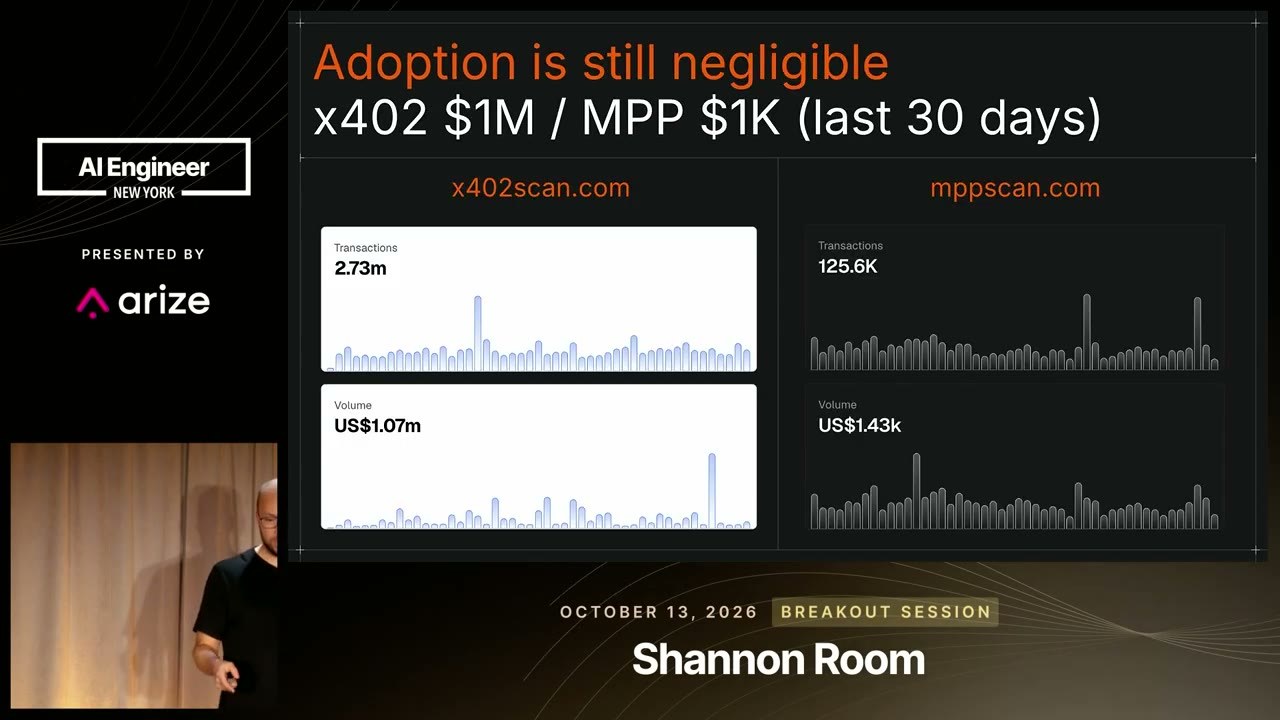
Agents can pay. So why don’t they?

Jan Curn, Apify

Despite an explosion of crypto and fintech agent payment standards, autonomous agent transaction volume remains negligible because pre-provisioned API keys, subsidized flat-rate token plans, wallet setup friction, untrusted service discovery, and deferred-settlement double-spend risks suppress demand across every stage of the payment funnel.

20 min · 5/7 built
Slide from How to build an AI code review agent: from the creators of GreptileTue, Oct 13
Tue, Oct 13 · 2:55 PM–3:13 PM · Shannon Room (NY Ballroom E)

How to build an AI code review agent: from the creators of Greptile

Daksh Gupta, Greptile

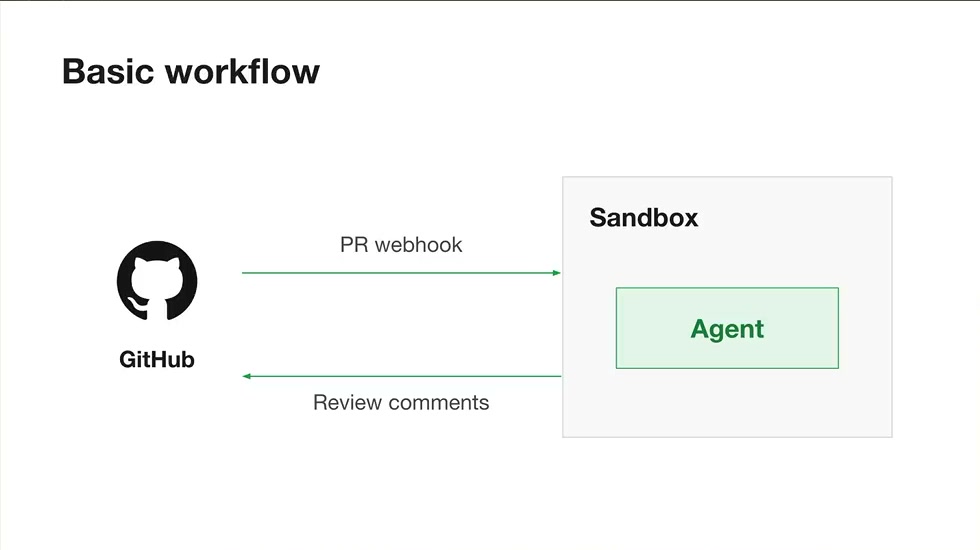
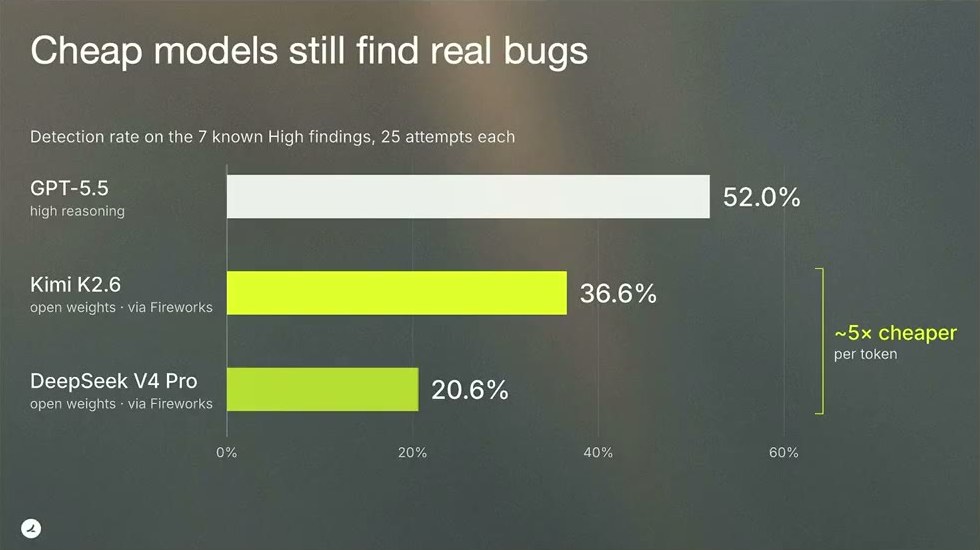
Building a production-grade AI code review agent requires moving beyond naive diff prompting to combine historical incident eval datasets, cross-family author-reviewer model inversion, a living codebase wiki instead of raw grep, dependency-rich sandbox UI testing, and per-subtask model routing.

18 min · 5/7 built
Slide from From Model to Metrics: Serving and Benchmarking Any LLM Live with vLLM and RunpodTue, Oct 13
Tue, Oct 13 · 3:20 PM–3:38 PM · McCarthy Room (Riverside Suite)

From Model to Metrics: Serving and Benchmarking Any LLM Live with vLLM and Runpod

Chris Vela, Runpod

Rather than deploying open-weight LLMs with default vLLM recipes and oversized context windows, Runpod's BenchPod wraps Dockerized vLLM builds with live YAML reconfiguration, self-healing watchdogs, and FastAPI benchmark endpoints so teams and agents can empirically tune throughput and latency before scaling out.

17 min · 5/7 built
Slide from Give the Model a Computer: The One Thing Every AI Agent Framework Agrees OnTue, Oct 13
Tue, Oct 13 · 3:45 PM–4:03 PM · Sutton Room (NY Ballroom W)

Give the Model a Computer: The One Thing Every AI Agent Framework Agrees On

Mislav Ivanda, Daytona

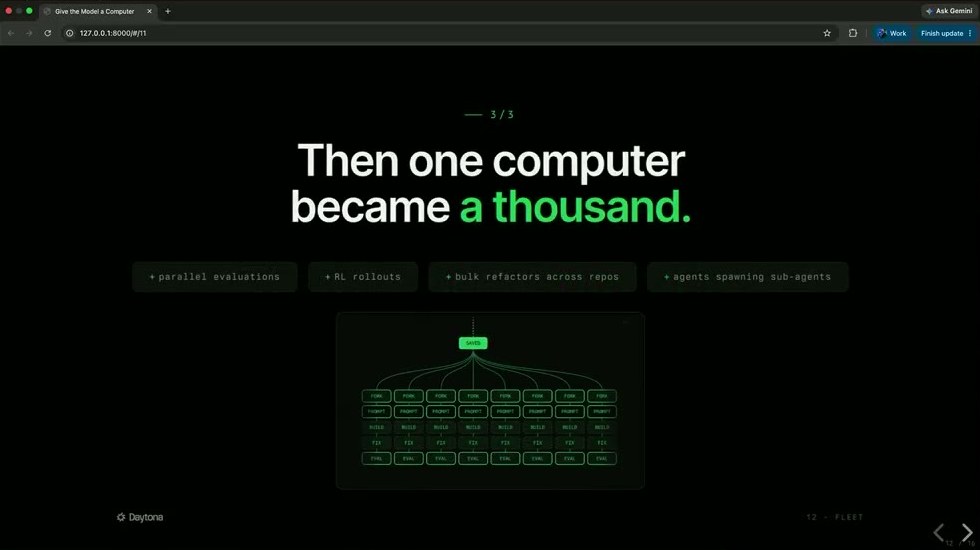
Competing agent frameworks that disagree on nearly every abstraction all converge on isolating code execution inside a separate VM sandbox via create-run-delete primitives, making the execution boundary the primary architectural commitment to lock in before choosing a swappable framework.

15 min · 5/7 built
Slide from Welcome Back - Featured KeynotesTue, Oct 13
Tue, Oct 13 · 4:25 PM–4:30 PM · Simons Room (Metropolitan East)

Welcome Back - Featured Keynotes

Alex Lieberman, Tenex

Enterprise AI adoption exhibits a steep four-stage diffusion drop-off across Fortune 500 and large enterprise organizations — falling from ~90% general-purpose LLM rollout to ~60% workforce training, ~50% engineering coding agents, and just ~5% production agents in non-engineering workloads.

Slide from A Hedge Fund as a FunctionTue, Oct 13
Tue, Oct 13 · 4:30 PM–4:48 PM · Simons Room (Metropolitan East)

A Hedge Fund as a Function

Frank Long, Coatue

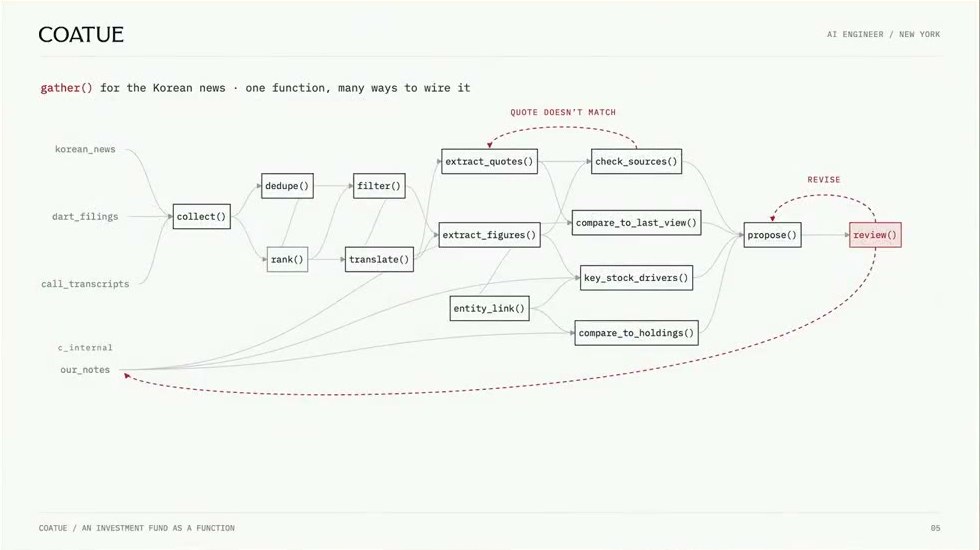
An investment firm can be engineered as a composite state-machine function from API-accessible external and internal context to `(stock, size, timing)` decisions, decomposed into compartmentalized sub-steps whose execution runners and pipeline configurations are tuned like hyperparameters against evaluable north-star metrics.

14 min · 5/7 built
Slide from Frontier Models for Acting in Space and TimeTue, Oct 13
Tue, Oct 13 · 4:48 PM–5:06 PM · Simons Room (Metropolitan East)

Frontier Models for Acting in Space and Time

Pim de Witte, General Intuition

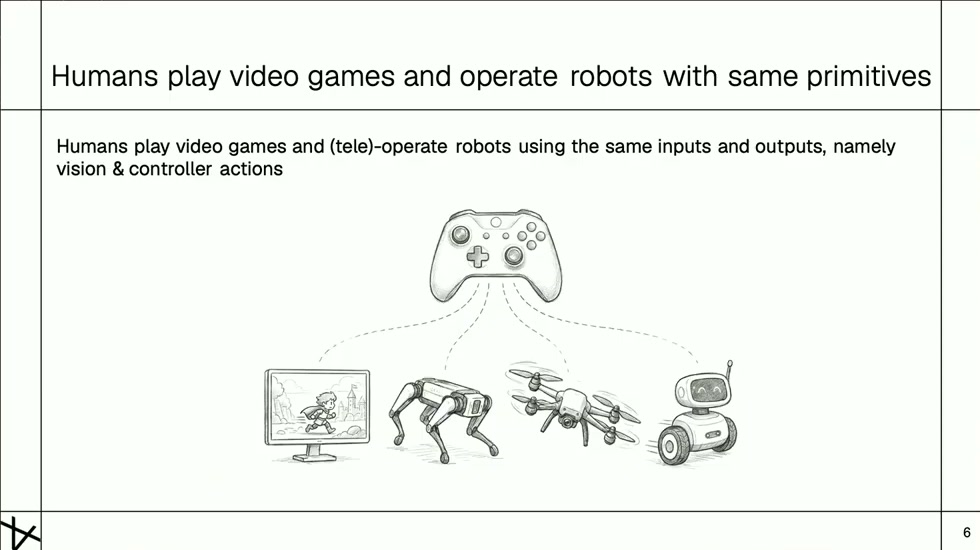
Scaling action-labeled gameplay video from Medal into real-time, continuous pixels-in/actions-out foundation models overcomes the turn-based limitations of autoregressive LLMs and transfers directly across games, computer interfaces, and over 1,000 controller-driven robot embodiments.

20 min · 4 photos · 6/7 built
Slide from Hermes gives you wings: Build on open foundations.Tue, Oct 13
Tue, Oct 13 · 5:06 PM–5:24 PM · Simons Room (Metropolitan East)

Hermes gives you wings: Build on open foundations.

Dillon Rolnick, Nous Research

As interchangeable frontier models commoditize and compress inference margins, frontier labs must recoup trillion-dollar infrastructure bets through enterprise agent lock-in or direct vertical competition, so organizations should build their agentic operating systems on open, model-swappable foundations like Hermes Agent.

15 min · 2 photos · 6/7 built
ALAlex Lieberman
Tue, Oct 13 · 5:25 PM–5:30 PM · Simons Room (Metropolitan East)

Closing Remarks

Alex Lieberman, Tenex

Day one's closing remarks synthesize the final keynotes—spanning pixels-to-actions world models, owned versus rented agent infrastructure, and applied AI in investing—as shared conversational surface area for attendees to connect directly.

1 min · 1 photo · 6/7 built
Wednesday, October 14

12 talks

Slide from Chasing capabilities while waiting for the frontierWed, Oct 14
Wed, Oct 14 · 9:00 AM–9:18 AM · Simons Room (Metropolitan East)

Chasing capabilities while waiting for the frontier

Alexander Shevchenko, Ramp

Even as frontier models rapidly drive down unit token costs, Ramp argues it still pays to invest in applied research below the API layer—combining frontier orchestrators with post-trained specialist models, offline KV-cache cartridges, and cheap open-weight agent swarms to cut latency and cost today.

Slide from The Machine that Changed the World, vAIWed, Oct 14
Wed, Oct 14 · 9:18 AM–9:36 AM · Simons Room (Metropolitan East)

The Machine that Changed the World, vAI

Tariq Shaukat, Sonar

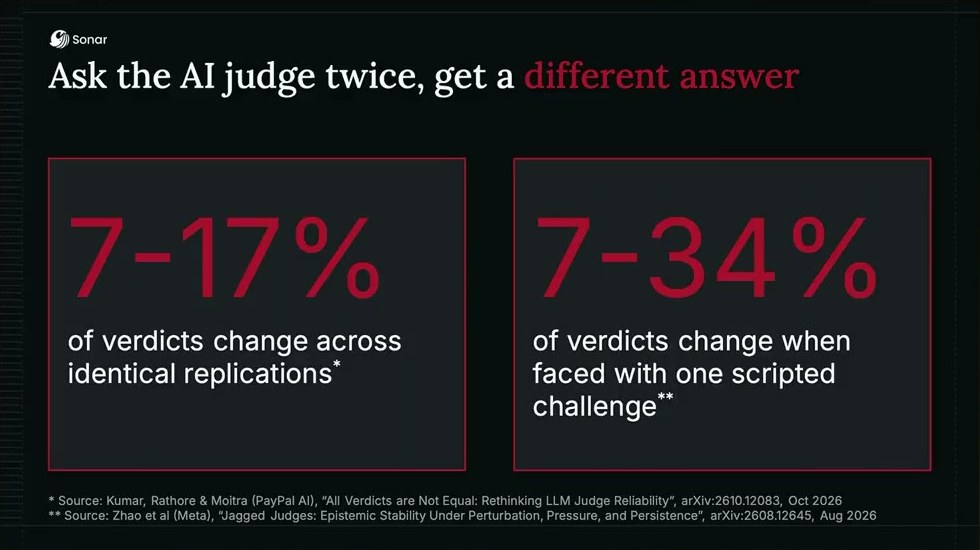
Because abundant AI-generated code overwhelms human reviewers, compounds multi-step errors, and defeats inconsistent LLM judges, enterprise software factories must engineer shipping confidence multiplicatively through clear intent, in-loop guide rails, hybrid deterministic-generative verification, and auditable evidence.

Slide from Trusting Agents in Policy-Driven WorkflowsWed, Oct 14
Wed, Oct 14 · 9:36 AM–9:54 AM · Simons Room (Metropolitan East)

Trusting Agents in Policy-Driven Workflows

Evan Kormos, Coinbase

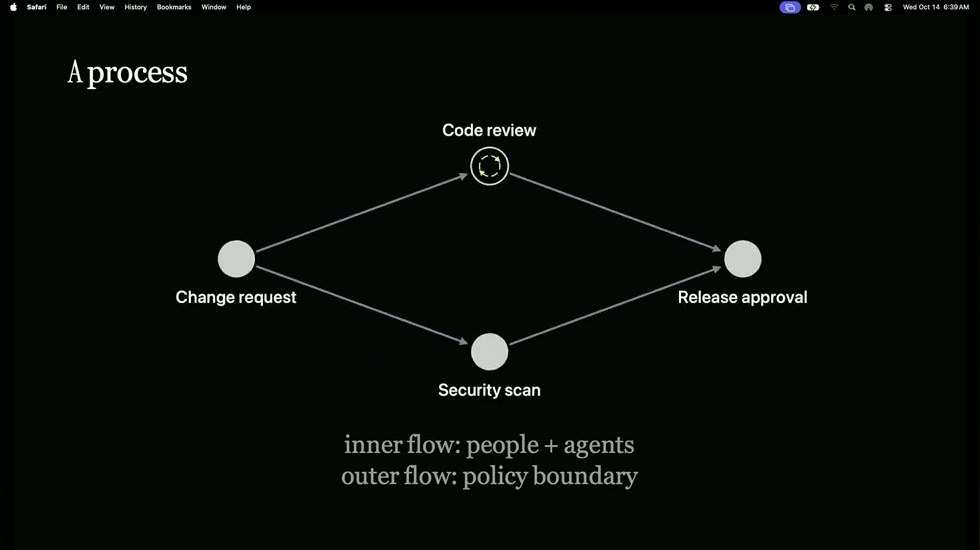
Deploying agents safely in regulated enterprise workflows requires treating written policy as normative build-time intent separated from the continuously changing runtime system, and embedding agents inside directed acyclic graphs (DAGs) that parallelize independent reviews while preserving mandatory compliance gates.

Slide from Your job is now "agent manager"Wed, Oct 14
Wed, Oct 14 · 10:40 AM–10:58 AM · Shannon Room (NY Ballroom E)

Your job is now "agent manager"

Ryan Carson, Untangle

Software engineers should abandon local coding to manage communicating fleets of cloud builder, reviewer, child-QA, manager, and merge-manager agents—keeping humans in the loop via mandatory feature-demo videos and hiring strictly through recorded agent-operating trials.

11 min · 1 photo · 6/7 built
Slide from Your Coding Agent Has a Context ProblemWed, Oct 14
Wed, Oct 14 · 11:05 AM–11:23 AM · McCarthy Room (Riverside Suite)

Your Coding Agent Has a Context Problem

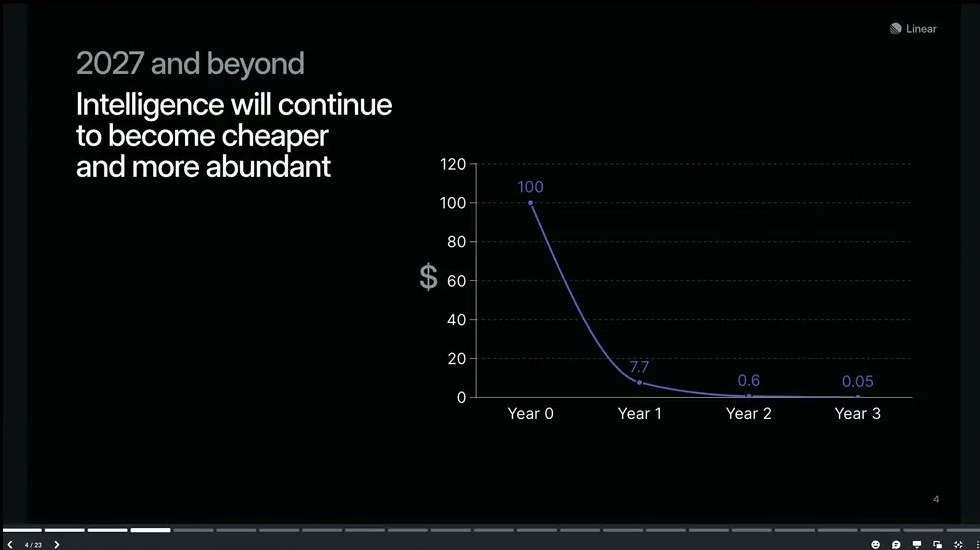
Tom Moor, Linear

As inference costs plummet and coding agents run unattended in the outer loop, engineering's primary failure mode shifts from implementation capacity to product incoherence, requiring automated pipelines that thread customer intent, product history, and ownership through triage, implementation, review, and daily feedback distillation.

22 min · 5/7 built
Slide from Who verifies the software factory?Wed, Oct 14
Wed, Oct 14 · 11:30 AM–11:48 AM · Sutton Room (NY Ballroom W)

Who verifies the software factory?

Manish Kapur, Sonar · Addy Osmani, Anthropic

Because coding agents generate large pull requests far faster than humans review every line, scaling toward autonomous software factories requires zero-trust, multi-layered verification inside every loop paired with rich agent-generated behavioral evidence.

19 min · 1 photo · 6/7 built
Slide from The Model Ate the Coding Harness. Now What?Wed, Oct 14
Wed, Oct 14 · 11:55 AM–12:13 PM · Shannon Room (NY Ballroom E)

The Model Ate the Coding Harness. Now What?

Jediah Katz, SpaceX Super Intelligence

As frontier models natively absorb coding-specific context scaffolding through a user-driven data flywheel, the agent harness shifts from adding raw coding intelligence to unlocking unmastered multi-agent domains—like autonomous knowledge workers and software factories—while owning durable cloud runtimes, scoped security, token efficiency, and self-cleaning primitives that models cannot absorb.

18 min · 1 photo · 6/7 built
Slide from Your agent needs a skill to improve its skillsWed, Oct 14
Wed, Oct 14 · 2:30 PM–2:48 PM · Turing Room (Riverside Ballroom)

Your agent needs a skill to improve its skills

Ben Holmes, Warp

Agents can systematically improve their own skills and harness configuration when teams centralize full session traces—transcripts, tool calls, and diffs—grade them post-merge with markdown LLM-as-judge rubrics, and run scheduled meta-agents that turn recurring failures into measurable skill PRs.

19 min · 5/7 built
Slide from Welcome Back - Featured KeynotesWed, Oct 14
Wed, Oct 14 · 4:25 PM–4:30 PM · Simons Room (Metropolitan East)

Welcome Back - Featured Keynotes

Ksenia Se, Turing Post

Because two-sided hiring is one of the strongest incentives driving conference attendance, attendees should pair human judgment—ranking speakers' companies by technical interest—with a research agent that matches open roles and published compensation ranges to inform live conversations rather than auto-submitting resumes.

Slide from AI in Practice: An Inside Look at Apollo's ApproachWed, Oct 14
Wed, Oct 14 · 4:30 PM–4:48 PM · Simons Room (Metropolitan East)

AI in Practice: An Inside Look at Apollo's Approach

Michael Manapat, Rowspace · Jack McDonald, Apollo Global Management

In private credit and active CLO management, AI moves from a research toy to a durable competitive edge only when agents reconcile fragmented deal documents and internal systems against human-validated golden data sources embedded in daily front-office workflows.

Slide from Process Supervision for Agents That Do Long-Horizon WorkWed, Oct 14
Wed, Oct 14 · 4:48 PM–5:06 PM · Simons Room (Metropolitan East)

Process Supervision for Agents That Do Long-Horizon Work

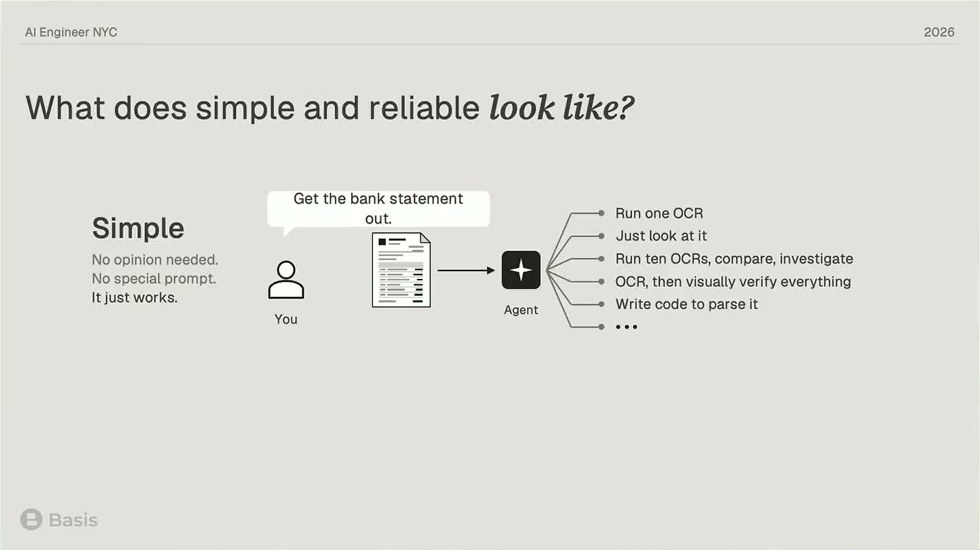
Mitchell Troyanovsky, Basis

Enterprise agents achieve production adoption not through open-ended autonomy or outcome-only evals, but by encoding opinionated workflows as behavior specs that grade ground-truth-free trajectories and enable targeted debugging via trajectory forking and subagent simulation.

Slide from Everything will be SimulatedWed, Oct 14
Wed, Oct 14 · 5:06 PM–5:24 PM · Simons Room (Metropolitan East)

Everything will be Simulated

Cristóbal Valenzuela, Runway

Scaling next-frame video prediction turns video generators into real-time, action-conditioned world simulators that learn physical laws implicitly from pixels and can power embodied robotics, engine-free software interfaces, and visual reasoning for coding agents.