What Is Quantum Computing? 3 Types, Real Use Cases, and Why NVIDIA's NVQ Link Matters
What Is Quantum Computing? 3 Types, Real Use Cases, and Why NVIDIA’s NVQ Link Matters
Summary
This video provides an accessible introduction to quantum computing, explaining fundamental concepts like superposition and entanglement through intuitive analogies. The host, Ksenia from Turing Post, breaks down how quantum computers differ from classical binary systems by using the physics of atoms that can exist in multiple states simultaneously, unlike traditional switches that are simply on or off.
The video features an interview with Pranav Gokhale, CTO of Infleqtion, who demonstrates their neutral-atom quantum computer at a conference. Gokhale explains how quantum computers violate the Extended Church-Turing Thesis by being fundamentally faster than classical computers, not just incrementally faster like GPUs compared to CPUs. He discusses the three main modalities of quantum computing: neutral-atom (Infleqtion), superconducting (Rigetti, IBM), and trapped-ion (Quantinuum) systems.
The discussion covers practical aspects including costs ($10-50 million per system), software stacks like Superstack (inspired by CUDA), and current use cases. While quantum computing for general computation is still developing, quantum sensing is already here in everyday applications like GPS atomic clocks. The 100 logical qubit milestone is identified as the key inflection point for unlocking major applications in material science, drug discovery, and AI. Ksenia predicts it will take another 12-15 years for quantum computing to reach widespread commercial viability across diverse use cases.
Highlights
”Quantum computers break that paradigm”
Clip command
yt-dlp --download-sections "*5:23-6:15" "https://www.youtube.com/watch?v=u8zYKDtaihA" --force-keyframes-at-cuts --merge-output-format mp4 -o "u8zYKDtaihA-5m23s.mp4"“Quantum computers are violations of the Extended Church-Turing Thesis which basically said that every computer is at this one level the exact same. GPU is the same as CPU. Granted, it’s a lot faster, but it’s 10,000x faster. It’s not infinite faster. This quantum computer here actually breaks that paradigm.” — Pranav Gokhale, 5:23
”The irony is they need to co-process with GPU”
Clip command
yt-dlp --download-sections "*6:13-7:00" "https://www.youtube.com/watch?v=u8zYKDtaihA" --force-keyframes-at-cuts --merge-output-format mp4 -o "u8zYKDtaihA-6m13s.mp4"“The irony is even though quantum computers go beyond CPU and GPU and TPU etc., to get there, they need to co-process with GPU in parallel.” — Pranav Gokhale, 6:17
”Quantum computing is actually already here for sensing”
Clip command
yt-dlp --download-sections "*7:49-8:40" "https://www.youtube.com/watch?v=u8zYKDtaihA" --force-keyframes-at-cuts --merge-output-format mp4 -o "u8zYKDtaihA-7m49s.mp4"“We talk about computing as the next big thing but it’s actually already here for quantum sensing. Atomic clocks pervade our daily life. We use them anytime we use GPS. That’s really an atomic clock system and that’s a quantum system.” — Pranav Gokhale, 7:52
”Atoms are very indecisive by nature”
Clip command
yt-dlp --download-sections "*1:13-2:00" "https://www.youtube.com/watch?v=u8zYKDtaihA" --force-keyframes-at-cuts --merge-output-format mp4 -o "u8zYKDtaihA-1m13s.mp4"“And atoms are very indecisive by nature. Such naughty creatures those atoms are. They want to have different possibilities, different options at the same time. They want to have yes and no at the same moment. I love them.” — Ksenia, 1:13
”It overturns eight decades of how people thought about computing”
Clip command
yt-dlp --download-sections "*11:00-11:40" "https://www.youtube.com/watch?v=u8zYKDtaihA" --force-keyframes-at-cuts --merge-output-format mp4 -o "u8zYKDtaihA-11m00s.mp4"“The amazing and beautiful thing about quantum computing is that it overturns eight decades of how people traditionally thought about computing.” — Pranav Gokhale, 11:08
Key Points
- Extended Church-Turing Thesis Violation (5:23) - Quantum computers break the paradigm that all computers are fundamentally equivalent, showing there’s a model of computation that is fundamentally faster, not just incrementally faster
- Classical vs Quantum Computing (0:42) - Traditional computers use binary switches (0 or 1) while quantum computers use the physics of atoms that can exist in multiple states simultaneously
- Superposition Explained (1:37) - Like a coin spinning in the air that is both heads and tails at once, qubits can exist in multiple states until measured
- Entanglement (4:05) - When qubits become entangled, changing one instantly affects the entire qubit network, like dice that always land in patterns that make sense together
- NVQ Link Introduction (3:45) - NVIDIA introduced NVQ Link, the “plumbing” that connects quantum processing units (QPUs) to classical GPUs/CPUs for co-processing
- 1600 Qubit Record (6:07) - Infleqtion’s neutral-atom system set the record for the largest number of qubits ever in a system
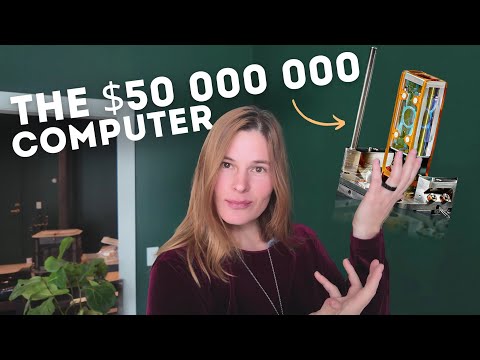
- Quantum Computer Cost (6:45) - Systems cost between $10-50 million including R&D and operational expenses
- 100 Logical Qubits Milestone (7:00) - When achieved, will enable better material science, drug discovery, chemistry, and expanded AI context windows
- Superstack Software (7:17) - Infleqtion’s software stack inspired by CUDA, allowing Python programmers to write optimized quantum code
- Quantum Sensing Already Here (7:52) - Atomic clocks (used in GPS) are quantum systems already pervading daily life
- GPU Parallel for 2012 AI (8:08) - Quantum computing today is similar to where GPUs were in 2012 when NVIDIA approached AI researchers
- Three Systems Sold (8:23) - Infleqtion has sold three quantum computer systems to researchers developing new use cases
- Three Modalities (9:27) - Neutral-atom (room temperature, scalable to thousands of qubits), superconducting (requires refrigeration), and trapped-ion (high gate quality but scaling challenges)
- Neutral-Atom Advantages (9:53) - Operates at room temperature unlike superconducting systems, and scales easily to thousands of qubits
- 12 Logical Qubits Achieved (9:10) - Infleqtion hit 12 logical qubits recently, up from first-ever 2 logical qubits with NVIDIA in 2024
- Cryptographic Implications (11:25) - Quantum machines can break codes, making cryptographic implications interesting for security
- GenAI Accelerating Quantum (12:11) - Compiler stacks for quantum are embracing the GenAI revolution, accelerating progress
- 12-15 Year Prediction (4:57) - Host predicts quantum computing will need 12-15 more years to be useful across a vast range of use cases
Mentions
Companies
- NVIDIA (3:45) - Introduced NVQ Link for quantum-classical co-processing; collaborated with Infleqtion on first logical qubits
- Infleqtion (6:01) - Neutral-atom quantum computing company that set the 1600 qubit record, headquartered in Colorado
- Rigetti (10:30) - Makes superconducting quantum computers (the chandelier design)
- IBM (mentioned in description) - Works on superconducting quantum systems
- Quantinuum (10:45) - Makes trapped-ion quantum computers in Colorado, known for high gate quality
Products & Technologies
- NVQ Link (3:48) - NVIDIA’s new connection between classical and quantum computers, described as “plumbing for the system”
- Superstack (7:21) - Infleqtion’s software stack for quantum computing, inspired by CUDA
- CUDA (7:27) - NVIDIA’s GPU software that inspired Superstack’s design philosophy
- QPUs (Quantum Processing Units) (3:39) - Quantum processors that need to be connected to GPUs or CPUs
- Ultra High Vacuum Glass Cell (5:59) - The orange glass chamber at the center of Infleqtion’s quantum computer
People
- Ksenia (0:00) - Host, founder of Turing Post, has been explaining ML and AI for 6 years
- Pranav Gokhale (2:55) - CTO of Infleqtion, quantum software engineer interviewed in the video
- Jensen Huang (8:10) - NVIDIA CEO, mentioned in context of taking GPUs to AI researchers in 2012
- Yoshua Bengio (8:13) - AI researcher at Berkeley who NVIDIA approached with GPUs for AI
- Alan Turing (5:20) - Referenced regarding the Extended Church-Turing Thesis and what he would think of quantum computers
Surprising Quotes
“Quantum computers are violations of the Extended Church-Turing Thesis which basically said that every computer is at this one level the exact same. GPU is the same as CPU. Granted, it’s a lot faster, but it’s 10,000x faster. It’s not infinite faster. This quantum computer here actually breaks that paradigm.” — 5:23
“The irony is even though quantum computers go beyond CPU and GPU and TPU etc., to get there, they need to co-process with GPU in parallel.” — 6:17
“We talk about computing as the next big thing but it’s actually already here for quantum sensing. Atomic clocks pervade our daily life. We use them anytime we use GPS. That’s really an atomic clock system and that’s a quantum system.” — 7:52
“Superposition gives quantum computers range and entanglement gives them coordination. Together they make a machine that can explore an enormous number of possibilities at the same time in parallel.” — 4:30
“The amazing and beautiful thing about quantum computing is that it overturns eight decades of how people traditionally thought about computing.” — 11:08
Transcript
0:00 Hello everyone. Today we’re going to discuss a super fascinating topic quantum computing. I just came from the conference where a lot of people told me I don’t understand how it works. What is quantum computing? What are qubits? So I’m going to try to explain it to you in simpler terms, introduce you to three modalities of quantum computing and ask a very important question. Is quantum computing there yet? And what are the use cases for that? Because surprisingly not even that many quantum researchers…
0:42 We used to think about computers as things that follow the rules. We used to think about our laptops, our phones, even about supercomputers as the same species, binary systems. They use either a zero or one. It’s like a switch. It’s either yes or no. This is how they store the information. This is how the computers make decisions. Tiny electrical switches that can be either off or on either zero or one. But quantum computer works very differently because it uses the physics of atoms.
1:13 And atoms are very indecisive by nature. Such naughty creatures those atoms are. They want to have different possibilities, different options at the same time. They want to have yes and no at the same moment. I love them. Inside an atom, things are not like switches. Atoms behave like waves.
1:37 To understand better what is superposition, what is this both zero and one at once? I’ll give you two examples. One example is quite common. It’s a coin in the air. If you flip a coin and it’s spinning in the air, you cannot tell if it’s a head or tail. It’s both things at once because moving so fast. So this is what is called superposition. Head and tail at the same time.
2:00 Another example to imagine a wave is if you hit a string on a cello, it gives you a variety of sounds. It gives you different vibrations. That’s how the wave works. This is the nature of atom. This is the wave. This is the same different vibrations at the same time. So qubits can exist in several states at the same time until you look at them. That’s what quantum really means. A world where something can hold more than one possibility at the same time.
2:30 The problem is that this superposition, this state is super fragile. You cannot look at them. You cannot use different temperature, different vibe. It’s so fragile. And this is one of the biggest problems. That’s why when you think about quantum computer, you imagine this huge chandelier in the fridge. There are different modalities. There are different types of quantum computers and we will see them later in the video where I talk to quantum software engineer CTO of a company who builds quantum computers.
2:59 He was kind enough to answer all my random questions about quantum computers. And it’s very interesting how he explains it. But why are we talking about it? Because one problem is to create this infrastructure around qubits to keep their superposition intact before we want them to make a decision. Before we want them to land on zero or one, we want them to perceive all these different possibilities at a super speed. So they can explore all the possibilities at once.
3:27 So this is one problem. The second problem is that quantum computers do not live in vacuum. They cannot survive on their own. They need to be connected to regular computer. QPUs, quantum processing units needs to be connected to GPUs or CPUs. And that’s why we’re talking about it today because last week NVIDIA introduced this interesting NVQ Link which is basically if you think about is just a plumbing for the system. It’s a pipe that connects regular computer and quantum computer allowing it to communicate and allowing us to get results.
4:02 We discussed superposition. Another term that you might want to know is how qubits get entangled. And if you have a few qubits, and we will hear about that in this video, they can become entangled. Meaning that if you make a change in one qubit, instantly it affects the whole qubit network. It’s like throwing a dice that always land in patterns that makes sense together. It’s quite crazy, not really explained yet, but this is how it works.
4:28 Superposition gives quantum computers range and entanglement gives them coordination. Together they make a machine that can explore an enormous number of possibilities at the same time in parallel and going a little bit ahead of the video that we will going to watch right now. Are the computers, other quantum computers there yet?
4:49 If you imagine GPUs were invented for video gaming that was their task. Now we know how to use GPUs many different use cases. So I think it will take another 12 to 15 years and this is my bet. This is my prediction for quantum computing. We will need another 12 to 15 years to be able to use them on a very vast range of use cases. We will find them then. Now watch the video. It’s full of insights. It’s full of great explanations and you will see three different modalities of computers and you will be able to imagine what Alan Turing would say about quantum computers.
5:23 Because your channel is the Turing Post, maybe I can mention quantum computers. What’s so exciting about this is that they are violations of the Extended Church-Turing Thesis which basically said that every computer is at this one level the exact same. GPU is the same as CPU. Granted, it’s a lot faster, but it’s 10,000x faster. It’s not infinite faster. This quantum computer here actually breaks that paradigm and it shows that there’s one model of computation that is fundamentally faster than every other model that comes before it and that’s this quantum computer.
5:53 So what you’re seeing here is in the very center in between those two black lenses there’s an orange glass chamber that’s called an ultra high vacuum glass cell. We manufacture in Colorado at our headquarters and that device there is actually set the record for the biggest number of quantum bits or qubits ever in a system: 1600.
6:13 And what’s really exciting about that is now we’re co-processing with this quantum computer and GPU and the irony is even though quantum computers go beyond CPU and GPU and TPU etc. To get there, they need to co-process with GPU in parallel. And so that’s what this announcement has been around. Everything around those qubits is lasers that control our actual qubits. Each qubit in our case is an atom. And the way to control that and to repair errors that come about as we run this machine are going to be guided by GPU. And so that’s a big part of what we’ve done this week.
6:45 How much does this computer cost? You can think of somewhere between the $10 to $50 million range for the cost of the system including the R&D expense, the operational expense, etc. that goes into it. But the exciting thing is also the value that the end users are going to be getting out of this.
7:00 When we have about 100 logical qubits, which means error corrected qubits that Jensen talked about yesterday. That means better material science, better drug discovery, better chemistry, even things like expanding the context windows for modern AI. So it’s expensive but it delivers incredible exciting things for compute in general.
7:17 What software does it use? We have a little plate about the software stack that underpins this called Superstack. So Superstack is inspired in many ways by the CUDA software that NVIDIA wrote for GPU. As you know GPU programmers they write in Python but they don’t really think about the underlying instruction set or the architecture of GPU. That’s what the CUDA software stack does. Superstack is the same for our hardware. It makes it so that Python programmers can come in and write code that is optimized for this hardware and I was working on that. So that’s the piece that I’m personally passionate about.
7:49 So would you say quantum computing is here? We talk about computing as the next big thing but it’s actually already here for quantum sensing. Atomic clocks pervade our daily life. We use them anytime we use GPS. That’s really an atomic clock system and that’s a quantum system.
8:04 It is not useful in the sense that GPUs and CPUs are useful today. But I think it’s very similar to where GPUs were say in 2012 when Jensen and NVIDIA took their GPUs to Yoshua Bengio and Berkeley etc. and said hey can you throw this at AI and 10 years later 12 years later here we are today with the entire field of AI powered by GPU.
8:22 So we have now researchers who are purchasing these systems. We’ve sold three of them. They’re developing new use cases, new algorithms and we’re soon at that cusp of it becoming commercially attractive to buy a quantum computer, not just a research project.
8:36 The GPU breakthrough was enabled by a massive data set like ImageNet. What would it take to enable a similar breakthrough here? Data is absolutely one of the pieces and actually back to your question. One piece of quantum that is very much here and now is quantum sensing. Quantum sensing is getting radio frequency signals, inertial signals with quantum devices. And that is very much here now. We have a whole parallel quantum sensing portfolio of products that looks somewhat like this but is used for sensing. So that provides a lot of the data that we would need for certain quantum applications.
9:08 But the other piece that really is the inflection point is the 100 logical qubits milestone. We’ve now hit 12 at Infleqtion as of last month. The first time we ever hit any in first ever in the field almost was with NVIDIA in 2024. We collaborated to hit two logical qubits. When we get to 100, that’s the tipping point to really exciting things.
9:25 What are three modalities of quantum computing? So just like your laptop has many different ways of storing bits. You can have flash memory and you can have magnetic storage in your hard drive. There’s different ways of building qubits called modalities. And there’s actually three modalities shown at this conference. We are the neutral atom modality.
9:43 At a personal level, I actually used to work on these two modalities. My first science experience was with trapped ions. Then I went to the superconducting world for a little bit. I got really excited about this one for a couple reasons. One is that it operates at room temperature. The superconducting technology, the chandelier that people think of actually lives in a gigantic refrigerator and so that really limits its deployability and fieldability. This is just at room temperature.
10:06 And the other thing I liked about this one was the scalability. We’ve set the record for largest number of qubits and that’s because these neutral atoms can easily scale to thousands of qubits. That’s very challenging for other modalities. They have other advantages to be clear, but this is the new kid on the block. It didn’t really arrive on the world of quantum computing until about 2019 seriously. And since then, it’s gone from a dark horse to at the forefront of our field.
10:30 So, this is Rigetti’s superconducting quantum computer. It is a chandelier with different layers. And every layer of the cake, as you get smaller and smaller, it gets colder and colder. And this usually lives in a refrigerator. So, this is they’re showing when you take the refrigerator out.
10:43 And then out there is the trapped ion machine. This is a very impressive piece of technology from Quantinuum, which is one of our friends in Colorado. And this one is well known for its high quality of gates but has challenges in scaling up in terms of number of qubits. I think this one achieves about 40 or so.
11:00 What do you think Alan Turing would say if you saw this? I think he’d be really excited going back to this the Extended Church-Turing Thesis. The amazing and beautiful thing about quantum computing is that it overturns eight decades of how people traditionally thought about computing. And he was a big thinker. So I think he would have been thrilled to see something like this happen that the entire foundation of computing the fabric is overturned by a new type of physics.
11:23 Especially and of course he was working on code breaking there’s a really interesting aspect of these quantum machines that they can break codes so the cryptographic implications are quite interesting I think to him too.
11:35 What are other use cases for quantum computers? One of them is the development of new error correction libraries. Whenever you use Wi-Fi or 5G you’re getting data that has packets that get dropped, packets that get lost and yet you get a pristine signal on the other side. That’s called error correction and we’re doing the same thing on quantum. That field has progressed dramatically and expanded and accelerated dramatically.
11:56 And then the second thing I’ll point out is a lot of that is thanks to GPU. We 10 years ago were planning on building these quantum computers coupled with CPUs which have exciting things but limitations too. GPUs accelerated how we’re working.
12:08 Maybe the third thing is we’re now embracing GenAI and our coding tooling. Even compiler stacks for quantum are embracing the GenAI revolution and that is accelerating progress.
12:19 And then maybe I’ll leave you with one fourth concluding one is that quantum we talk about computing as the next big thing but it’s actually already here for quantum sensing. Atomic clocks pervade our daily life. We use them anytime we use GPS. That’s really an atomic clock system and that’s a quantum system. So I’m excited for more of the convergence of quantum sensing and quantum computing. The same way our normal computers process traditional data from sensors. Quantum computers will work very closely with quantum sensors.
12:44 A quick intro for people who are new on this channel. My name is Ksenia. I’m the founder of Turing Post and I’ve been explaining things about machine learning and artificial intelligence for the last 6 years. I love to explain hard things in much simpler terms. Join me.