What Everyone is Missing About Anthropic's Mythos and Project Glasswing
What Everyone is Missing About Anthropic’s Mythos and Project Glasswing
Summary
In this episode of Attention Span, host Ksenia Se argues that the louder takes about Anthropic’s Project Glasswing and the Claude Mythos Preview model — ranging from “private frontier models are now dramatically ahead” to “cyber apocalypse” to “safety-branded power move” — all miss the more grounded story underneath. Anthropic launched Glasswing as a limited defensive initiative with roughly 50 partners (AWS, Apple, Broadcom, Cisco, CrowdStrike, Google, JPMorgan Chase, the Linux Foundation, Microsoft, Nvidia, and Palo Alto Networks, notably without OpenAI) to use Mythos — a model that can reportedly find and exploit software vulnerabilities better than all but the most skilled human experts — to harden critical software before the capability is available more broadly.
Ksenia Se applauds this as an “incredibly elegant and effective decision.” She frames it as a “collective head start” for defenders, given that software maintenance is weak, patching is slow, and open source maintainers are overwhelmed. She also acknowledges the move serves Anthropic strategically: compute and serving constraints likely make a public launch infeasible (the preview is priced at $25 per million input tokens and $125 per million output tokens), and the partnership posture lets the company reposition itself as the responsible “adult in the room” after months of public, governmental, and business pressure. She credits Daniela Amodei — not Dario — as the likely architect of this grounded posture, pointing to Daniela’s early safety push at OpenAI and her unusually visible LinkedIn post about Glasswing.
Her central tension: short-term, Anthropic is probably right to slow down and patch first, but long-term, an “access regime” where the strongest systems permanently belong to a small circle of hyperscalers, banks, governments, and strategically favored institutions is unstable and will trigger pushback. She wants the head start to remain temporary — ideally pivoting toward an open source push — and points to Anthropic’s promised 90-day report as the moment when harder questions about long-term strategy should begin.
Highlights
”Anxiety Theater on Twitter”
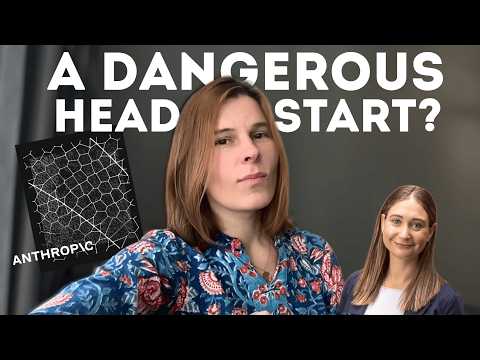
“Twitter, such an anxiety theater. And those reactions and overreactions — understandable, but they miss a very significant story sitting underneath.” — Ksenia Se, 0:42
Clip command
yt-dlp --download-sections "*0:42-1:21" "https://www.youtube.com/watch?v=e8R53UkYDzA" --force-keyframes-at-cuts --merge-output-format mp4 -o "anxiety-theater-twitter.mp4"”A Chance to Fix Software That’s Controlling Our Life”
“In a world where software ate the world, Mephis plus enough compute on Anthropic’s side simply means clearing up some mess. It might take days, months, maybe years, but it is a chance to actually fix some of our software that is controlling our life.” — Ksenia Se, 2:24
Clip command
yt-dlp --download-sections "*2:24-3:00" "https://www.youtube.com/watch?v=e8R53UkYDzA" --force-keyframes-at-cuts --merge-output-format mp4 -o "chance-to-fix-software.mp4"”The Person to Thank Is Not Dario”
“And I think there is one person to thank for it. No, it’s not Dario Amodei. Daniela Amodei was one of the people who started raising questions about safety back when she and Dario were still at OpenAI.” — Ksenia Se, 3:49
Clip command
yt-dlp --download-sections "*3:49-4:42" "https://www.youtube.com/watch?v=e8R53UkYDzA" --force-keyframes-at-cuts --merge-output-format mp4 -o "thank-daniela-not-dario.mp4"”Not a Consumer Scale Story”
“At the moment, this is just not a consumer scale story. This is a scarce, expensive, strategically deployed capability. And let’s be honest, how more capable model do you need to be to work with your emails?” — Ksenia Se, 6:00
Clip command
yt-dlp --download-sections "*6:00-6:42" "https://www.youtube.com/watch?v=e8R53UkYDzA" --force-keyframes-at-cuts --merge-output-format mp4 -o "not-consumer-scale-story.mp4"”This Is an Access Regime”
“You cannot build a healthy technological order around the idea that the strongest systems always belong first and maybe forever to a small circle of hyperscalers, major banks, giant corporations, governments and strategically favored institutions. This is not a stable settlement. This is an access regime.” — Ksenia Se, 7:38
Clip command
yt-dlp --download-sections "*7:38-8:31" "https://www.youtube.com/watch?v=e8R53UkYDzA" --force-keyframes-at-cuts --merge-output-format mp4 -o "this-is-access-regime.mp4"”Collective Head Start”
“But sooner rather than later, we should make it an open source push. A temporary symmetry that gives some of the people maintaining important systems stronger tools before everyone else gets them, it is defensible, but only if it’s temporary.” — Ksenia Se, 8:31
Clip command
yt-dlp --download-sections "*8:31-9:09" "https://www.youtube.com/watch?v=e8R53UkYDzA" --force-keyframes-at-cuts --merge-output-format mp4 -o "collective-head-start.mp4"Key Points
- Applauding Anthropic’s decision (0:07) - Ksenia Se opens by saying she actually wants to applaud Anthropic for “an incredibly elegant and effective decision” given their constraints, breaking from her recent critical posture
- Three loud Twitter takes (0:29) - Mythos was treated alternately as proof private models are dramatically ahead, a safety-branded power move, or a step toward cyber apocalypse — all reactions miss the underlying story
- Project Glasswing partners (0:58) - Anthropic launched Glasswing with AWS, Apple, Broadcom, Cisco, CrowdStrike, Google, Nvidia, Linux Foundation, Microsoft, JPMorgan Chase, and Palo Alto Networks; notably OpenAI is not included
- Mythos capability claim (1:21) - The model reportedly finds and exploits software vulnerabilities better than all but the most skilled human experts and has already surfaced thousands of high-severity vulnerabilities
- Compute is the real constraint (1:42) - Anthropic is “constrained by compute and most likely are not physically capable of launching Mephis publicly at scale”
- About 50 partners (2:00) - Roughly 50 high-paying or subsidized partners were chosen, and the ones in Anthropic’s video sounded grounded rather than hype-driven
- Microsoft’s grounded framing (2:12) - Igor Tsyganskiy from Microsoft frames Mythos as roughly as good as a professional human at finding bugs, useful for finding and fixing more vulnerabilities sooner
- Repositioning after pressure (3:00) - Anthropic has been under simultaneous public, governmental, and business pressure; Glasswing helps them re-occupy the responsible-adult-in-the-room role
- Daniela Amodei as architect (3:49) - Ksenia Se credits Daniela Amodei (not Dario) for shaping the grounded posture, citing her early safety push at OpenAI and her LinkedIn post about Glasswing
- System card not accessible (4:58) - Anthropic published a large system card with benchmarks; Ksenia Se could not open it and chooses not to discuss benchmarks in the video
- Independent testing missing (5:41) - Without independent testing, it is hard to tell what is exaggerated by framing and what simply looks better inside Anthropic’s preferred examples
- Mythos Preview pricing (6:00) - The preview is priced at $25 per million input tokens and $125 per million output tokens — expensive to run, expensive to supervise, and risky
- Three-month review window (6:42) - Anthropic set a 3-month timeframe to evaluate how the program goes, after which next-round questions should begin
- Why slowing down is good short term (7:04) - Software maintenance is weak, patching is slow, open source maintainers are overwhelmed, and enterprise software is full of unexamined code — all reasons to take time to fix things
- The long-term tension (7:38) - You cannot permanently structure technology so the strongest systems belong to a small circle of hyperscalers, banks, corporations, governments, and favored institutions
- Collective head start framing (8:03) - Short term Anthropic is probably right; long term this logic becomes dangerous if it hardens into a permanent structure
- Open source push next (8:31) - The temporary symmetry is defensible only if it actually pivots into an open source push sooner rather than later
- All things can be true (8:44) - Glasswing can be a real collective head start and also benefit Anthropic itself; both readings can hold simultaneously
- Chinese model distillation concern (9:49) - Ksenia Se acknowledges Anthropic also doesn’t want Chinese models distilling Mythos, and three months is enough to observe whether other Chinese and American labs progress without access
- 90-day report as next checkpoint (9:31) - Within 90 days Anthropic says it will report what it has learned — the moment the long-term-strategy questions should begin
Mentions
Companies
- Anthropic (0:58) - Central subject; launched Project Glasswing and the Claude Mythos Preview
- AWS (0:58) - Glasswing partner
- Apple (0:58) - Glasswing partner
- Broadcom (0:58) - Glasswing partner
- Cisco (0:58) - Glasswing partner
- CrowdStrike (0:58) - Glasswing partner
- Google (0:58) - Glasswing partner
- Nvidia (0:58) - Glasswing partner
- Linux Foundation (0:58) - Glasswing partner
- Microsoft (0:58) - Glasswing partner; Igor Tsyganskiy speaks in Anthropic’s partner video
- JPMorgan Chase (0:58) - Glasswing partner
- Palo Alto Networks (0:58) - Glasswing partner
- OpenAI (0:58) - Notably absent from the Glasswing partner list; Daniela and Dario Amodei previously worked there
Products & Technologies
- Project Glasswing (0:58) - Anthropic’s limited defensive initiative for using frontier cyber capability with select infrastructure partners
- Claude Mythos Preview (Mythos / “Mephis” / “Mifos”) (0:22) - The model behind Glasswing; reportedly finds and exploits vulnerabilities better than all but the most skilled human experts
- Mythos system card (4:58) - Published documentation with benchmarks; Ksenia Se notes she couldn’t open it
- Twitter / X (0:29) - Where the loud reactions to Mythos played out — the “anxiety theater” she’s pushing back against
People
- Ksenia Se (0:00) - Host of Attention Span; provides the analysis throughout
- Daniela Amodei (3:56) - Co-founder of Anthropic; credited as the likely architect of the grounded Glasswing posture and was one of the first to post publicly about it
- Dario Amodei (3:49) - CEO of Anthropic; Ksenia Se explicitly says he is not the person to thank for this move
- Igor Tsyganskiy (2:00) - Microsoft executive featured in Anthropic’s partner video framing Mythos as a working tool roughly as good as a professional human at bug-finding
Concepts
- Collective head start (8:03) - The framing both Anthropic and Ksenia Se use for Glasswing’s purpose: defenders get a temporary lead before broader access
- Access regime (7:38) - The unstable structure where the strongest AI systems are restricted to a small circle of hyperscalers, banks, governments, and favored institutions
- Effective Altruism / safety-first culture (4:05) - Ksenia Se traces Anthropic’s grounding in safety to Daniela Amodei’s early push when she and Dario were still at OpenAI
Surprising Quotes
“I actually want to applaud them for an incredibly elegant and effective decision with all the constraints they have.” — Ksenia Se, 0:07
“Twitter, such an anxiety theater.” — Ksenia Se, 0:42
“And I think there is one person to thank for it. No, it’s not Dario Amodei.” — Ksenia Se, 3:49
“And let’s be honest, how more capable model do you need to be to work with your emails?” — Ksenia Se, 6:00
“Short term, Anthropic is probably right. Long term, this logic becomes dangerous if it hardens into a permanent structure.” — Ksenia Se, 8:03
Transcript
Ksenia Se: 0:00 Just think a little. Public conversations always go towards louder and simpler stories first. But we at Attention Span, we are here to stay grounded. And you might think I’ll be criticizing Anthropic as you accused me of doing before, but I actually want to applaud them for an incredibly elegant and effective decision with all the constraints they have.
Ksenia Se: 0:22 So Mephis. Some people treated Mephis — a wonderful name, right? Just prone to create myths around it. And a lot of people on Twitter treated Mephis as proof that private frontier models are now dramatically ahead of anything the public can touch. Others treated it as a safety-branded power move. Others went straight to cyber apocalypse.
Ksenia Se: 0:42 Twitter, such an anxiety theater. And those reactions and overreactions — understandable, but they miss a very significant story sitting underneath.
Ksenia Se: 0:58 So, as you might have heard, Anthropic launched Project Glasswing as a limited defensive initiative with partners like AWS, Apple, Broadcom, Cisco, CrowdStrike, Google, Nvidia, Linux Foundation, Microsoft, JPMorgan Chase, and Palo Alto Networks. Please notice that OpenAI is not among the partners.
Ksenia Se: 1:21 And if it is true that Mephis preview can find and exploit software vulnerabilities better than all but the most skilled human experts, and that it has already found thousands of high-severity vulnerabilities, then Anthropic just gave us an opportunity to slow down and fix a few things. What’s wrong with that?
Ksenia Se: 1:42 Well, nothing is wrong with that. The only thing is that it works in the short term for Anthropic as well. Right now they are constrained by compute and most likely are not physically capable of launching Mephis publicly at scale.
Ksenia Se: 2:00 So they chose about 50 high-paying or subsidized partners, and all of them, at least the ones who spoke in Anthropic’s video, sounded amazingly grounded and in no way supportive of hype or panic. Watch, for example, Igor Tsyganskiy from Microsoft.
Ksenia Se: 2:12 The model they’re experimenting with is by and large as good as a professional human identifying bugs. That’s good for us because we can find more vulnerabilities sooner and we can fix them.
Ksenia Se: 2:24 For him, this is a working tool. And in a world where software ate the world, Mephis plus enough compute on Anthropic’s side simply means clearing up some mess. It might take days, months, maybe years, but it is a chance to actually fix some of our software that is controlling our life.
Ksenia Se: 2:44 And that to me is already a much more useful starting point than all the mythology around the dangerous unreleased model.
Ksenia Se: 2:53 Yes, this also works well for Anthropic. Of course it does. They’re super smart people. The last few months have not exactly… quite a nice ride for them. The company has been under public pressure, governmental pressure, and business pressure all at once.
Ksenia Se: 3:08 So yes, Glasswing helps Anthropic to remind the government and to position themselves again as serious, responsible, infrastructure-minded, governance-aware, and safety-above-all company.
Ksenia Se: 3:22 It truly lets them occupy a very useful role, the lab that slows down, warns early, and presents itself as the adult in the room.
Ksenia Se: 3:33 After a massive few months when they were not exactly adults in the room or they were posing themselves too much, this move with Mythos and the partners and slowing down to fix and clean up the mess, that’s a very good place to stand.
Ksenia Se: 3:49 And I think there is one person to thank for it. No, it’s not Dario Amodei. Daniela Amodei was one of the people who started raising questions about safety back when she and Dario were still at OpenAI.
Ksenia Se: 4:05 And I believe that it’s thanks to that push that the decision was made to build the company grounded in safety from the start.
Ksenia Se: 4:12 So my gut feeling is that after all the roller coasters around Dario over the last few months, Daniela kind of had to step in and start making more decisions. Or at least shaping more of the tone around the company’s public posture. She was one of the first to post about Glasswing.
Ksenia Se: 4:28 And I would not try to build a whole internal management theory out of one public post, but I also do not think that this kind of message is random, coming from a person who does not publish very often.
Ksenia Se: 4:42 I think this project is very dear to her. My read is that in many ways, this is kind of her project. Safety and partnerships, institution building rather than theater, soft skills, strategic judgment, and patience, all showing up at the same time.
Ksenia Se: 4:58 So now let’s talk a little bit about the model itself. We don’t know much. They published a huge system card that unfortunately I could not open because it didn’t work. And they put a bunch of benchmarks there, but I’m not going to talk about benchmarks in this video.
Ksenia Se: 5:14 They are very impressive on paper. If you want, you should watch the short video that they posted with all the partners, the way they use the model.
Ksenia Se: 5:22 What I liked about this video is that it’s super grounded. There is no panic or super magic god-like model. No. All these people are thinking about cybersecurity, they listing out how they using it. That’s actually a good video to watch to understand what are they going to work on in the next couple of months.
Ksenia Se: 5:41 What I wanted to notice is that the benchmarks are for sure impressive on paper, but without independent testing, it’s hard to tell exactly what is exaggerated by framing and what simply looks better inside a company’s own preferred examples.
Ksenia Se: 5:54 What matters here, I think, is price. The preview on the model…
Ksenia Se: 6:00 So, that is geared to selected participants is priced at $25 per million input tokens and $125 per million output tokens is an expensive model. It’s expensive to run, it’s expensive to supervise, and it can be very risky. So yes, compute or serving constraints may be part of the background picture. We don’t know exactly, they didn’t say it openly, but it sounds logical.
Ksenia Se: 6:27 At the moment, this is just not a consumer scale story. This is a scarce, expensive, strategically deployed capability. And let’s be honest, how more capable model do you need to be to work with your emails?
Ksenia Se: 6:42 I do hope that eventually Anthropic will invite more independent developers and researchers to try the model. But we’ll see. They set up three months’ time to check how the problem goes. And this is where another point I want to make, why slowing down is good in the short term and might be bad in the long term.
Ksenia Se: 7:04 This is for me a real tension. As I said, in the short term, slowing down is good. It is good because software maintenance is weak. It is good because patching is slow. It is good because open source maintainers are overwhelmed. It’s good to have some time to fix things.
Ksenia Se: 7:22 It’s good because enterprise software is full of things nobody has looked at carefully in years. It’s good because if models like Mythos really compress vulnerability discovery, then defenders need some kind of head start, however imperfect. And that’s how they call Mythos in this video, Mythos is a head start. I agree with that.
Ksenia Se: 7:38 And this is short-term logic. It is solid. But in the long term, this cannot become the permanent model. You cannot build a healthy technological order around the idea that the strongest systems always belong first and maybe forever to a small circle of hyperscalers, major banks, giant corporations, governments and strategically favored institutions. This is not a stable settlement. This is an access regime.
Ksenia Se: 8:03 And sooner or later, people will push back very hard against it. And for good reason. So the way I see it is simple. Short term, Anthropic is probably right. Long term, this logic becomes dangerous if it hardens into a permanent structure. This is why the phrase I keep coming back is collective head start. I think as a start, it’s great.
Ksenia Se: 8:31 But sooner rather than later, we should make it an open source push. A temporary symmetry that gives some of the people maintaining important systems stronger tools before everyone else gets them, it is defensible, but only if it’s temporary.
Ksenia Se: 8:44 So, this is kind of my point, and it’s simple. Anthropic may well be creating a collective head start here. It also benefits Anthropic itself. All things can be true.
Ksenia Se: 8:57 So, this is where I want to end this episode. Calm down enough to resist apocalypse theater, calm down enough to resist.
Ksenia Se: 9:00 Opposite lazy take that this is all branding and fear marketing. The grounded reading is simpler and in some ways more serious.
Ksenia Se: 9:09 Anthropic appears to have a model with materially stronger cyber capability than the public has been allowed to touch. It’s trying to use that lead to buy defenders time, build safeguards, update disclosure and patching practices, and learn how to deploy this class of system without immediately widening the attack surface for everyone else.
Ksenia Se: 9:30 That is responsible. And within 90 days, Anthropic says it will report what it has learned.
Ksenia Se: 9:37 And I think that is when the next round of judgment should begin. Maybe not judgment, judgment is not a good word, asking questions. That’s when we need to ask all these questions about the long term strategy.
Ksenia Se: 9:49 I understand that Anthropic also doesn’t want Chinese models to distill its most powerful model. And three months is enough for all of us to see if Chinese and American models from other labs are progressing and how they’re progressing without access to Mifos.
Ksenia Se: 10:05 Thank you for watching, Mifos happened kind of suddenly. I am at the conference in San Francisco and I just had so many feelings and thoughts and read so many information on Twitter.
Ksenia Se: 10:21 I just wanted to bring this grounded and calm view at the things happening. Thank you for watching. Leave me your thoughts, I’m always eager to have a good discussion.