Dispatch from Art Basel Miami – why is it good that machines hallucinate?
Dispatch from Art Basel Miami – why is it good that machines hallucinate?
Summary
This video explores the intersection of AI and art at Art Basel Miami, examining how the “fast world” of AI is colliding with the “slow world” of traditional art institutions. The host attended a lecture on AI and architecture featuring Neil Leach and Refik Anadol, where they discussed how AI represents a fundamental shift in how we perceive space and creativity—comparable to the Renaissance introduction of perspective.
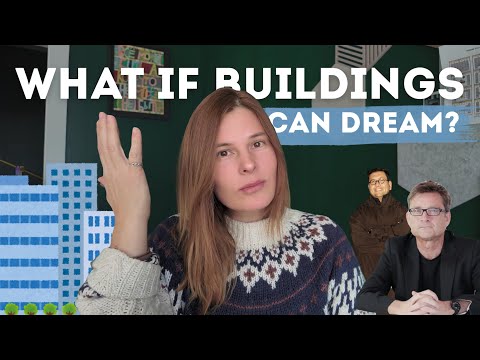
The video covers three main themes: the philosophical reframing of machine hallucinations as creative power rather than flaws, the commercial resurgence of digital art through Art Basel’s new “010” digital sector (where 65% of works sold by 3pm on VIP day), and a thought experiment about using AI to make static art feel alive. Artists like Refik Anadol view the machine’s “latent space” as a real landscape to explore, asking profound questions like whether buildings can dream.
The central argument is that AI hallucinations should not be viewed as errors but as creative opportunities. This perspective shift transforms the role of architects from drafters to curators—people with judgment who guide machines rather than draw every line themselves. The video suggests we are living through an “Alberti moment,” a historical rupture as significant as the Renaissance codification of perspective.
Highlights
”Machine Hallucinations Are Creative Processes, Not Flaws”
Clip command
yt-dlp --download-sections "*2:33-3:30" "https://www.youtube.com/watch?v=SX8_9RX5vj8" --force-keyframes-at-cuts --merge-output-format mp4 -o "SX8_9RX5vj8-2m33s.mp4"“Machine hallucinations become a creative process. It’s not a flaw. It’s not something wrong. It’s actually a moment that you can use to create art.” — Refik Anadol, 2:52
”He Wants to Know If Buildings Can Dream”
Clip command
yt-dlp --download-sections "*4:28-5:25" "https://www.youtube.com/watch?v=SX8_9RX5vj8" --force-keyframes-at-cuts --merge-output-format mp4 -o "SX8_9RX5vj8-4m28s.mp4"“He wants to know if buildings can dream. And AI is that tool for him that allows him to imagine how machine hallucinates, how buildings dream, what they think about.” — Turing Post Host, 4:47
”A Diver Who Brings Back Souvenirs from the Hidden World”
Clip command
yt-dlp --download-sections "*5:03-5:55" "https://www.youtube.com/watch?v=SX8_9RX5vj8" --force-keyframes-at-cuts --merge-output-format mp4 -o "SX8_9RX5vj8-5m03s.mp4"“He sees himself as a diver who brings back souvenirs from that hidden world.” — Turing Post Host on Refik Anadol, 5:15
”The Architect Becomes a Curator, Buildings Become Dream Engines”
Clip command
yt-dlp --download-sections "*5:52-6:40" "https://www.youtube.com/watch?v=SX8_9RX5vj8" --force-keyframes-at-cuts --merge-output-format mp4 -o "SX8_9RX5vj8-5m52s.mp4"“The architect becomes a curator. The buildings become a dream engine. It’s just beautiful.” — Turing Post Host, 6:15
Key Points
- Art Basel Miami Overview (0:10) - Describes Art Basel as an island with the richest people on the planet, yachts in traffic, and enough creative output to power a small civilization
- Three Key Observations (0:47) - Highlights the AI and architecture lecture, digital art sales, and a thought experiment as the standout moments
- AI and Architecture Lecture (1:07) - The most interesting part of the week was a lecture with Neil Leach and Refik Anadol about AI in architecture
- Refik Anadol Introduction (1:19) - Described as one of the most acclaimed and valued media artists in the world, creating machine learning art for years
- Pace Contrast (1:31) - Architecture is glacial (years to build), while AI changes groundbreakingly every week
- The Alberti Moment (2:06) - Neil Leach compares our current era to Leon Battista Alberti codifying perspective in the 1400s—AI is our new perspective
- Reframing Hallucinations (2:37) - Machine hallucinations are reframed from “bad words” into creative processes rather than flaws
- Architect as Curator (3:25) - The role of an architect shifts from drafter to curator—a person with judgment who guides the machine
- Art for Humanity (3:48) - Refik Anadol’s intention since day one: making art for anyone, any age, any background, any culture
- AI Dual Nature (3:58) - AI means potential danger for humanity (privacy, free will) but also major potential to be helpful
- Buildings That Dream (4:47) - Anadol asks if buildings can dream and uses AI to imagine how machines hallucinate
- Latent Space as Real Place (5:03) - The machine’s internal landscape is real, measurable, but invisible—Anadol sees himself as a diver bringing back souvenirs
- Kitchen Knife Metaphor (5:20) - Neil Leach’s ethics metaphor: AI is like a kitchen knife—you can cut vegetables or harm someone
- Place as Device Vision (5:43) - Anadol’s vision of place that thinks, dreams, and shares with humans—not VR/AR, but coexistence
- Digital Art Revival (6:22) - Digital art declared dead three times since NFT crash, now reviving thanks to AI
- 010 Digital Sector (6:35) - Art Basel launched digital sector “010” to invite tech money back—65% sold by 3pm on VIP day
- Beeple’s Robot Dogs (6:58) - Robotic dogs with heads of Elon Musk, Mark Zuckerberg, Jeff Bezos called “Regular Animals”—$100,000 each, all sold immediately
Mentions
Companies
- MoMA (4:31) - Referenced as a place where you can see Refik Anadol’s works in New York
Products & Technologies
- Machine Learning Art (1:19) - Refik Anadol’s medium for creating acclaimed media art
- Latent Space (5:03) - The machine’s internal landscape that Anadol explores as a creative source
- NFTs (6:22) - Referenced in context of digital art being declared dead after the NFT crash
- VR/AR (5:52) - Mentioned as not being the point—coexistence with AI spaces matters more
People
- Neil Leach (1:17) - Architecture theorist and historian who argues we’re living through a historical rupture
- Refik Anadol (1:17) - One of the most acclaimed media artists, creating machine learning art for years
- Leon Battista Alberti (2:09) - Renaissance scholar who codified perspective in the 1400s
- Katy Kazakin (6:41) - Art journalist who reported on digital art sales
- Beeple (6:58) - NFT artist who created the “Regular Animals” robotic dog sculptures
- Elon Musk (7:01) - His head featured on one of Beeple’s robotic dog sculptures
- Mark Zuckerberg (7:01) - His head featured on one of Beeple’s robotic dog sculptures
- Jeff Bezos (7:05) - His head featured on one of Beeple’s robotic dog sculptures
Surprising Quotes
“Machine hallucinations become a creative process. It’s not a flaw. It’s not something wrong. It’s actually a moment that you can use to create art.” — 2:52
“He wants to know if buildings can dream. And AI is that tool for him that allows him to imagine how machine hallucinates, how buildings dream, what they think about.” — 4:47
“He sees himself as a diver who brings back souvenirs from that hidden world.” — 5:15
“The architect becomes a curator. The buildings become a dream engine. It’s just beautiful.” — 6:15
“If we are sure about who we are, AI has a major potential for humanity to be helpful for us.” — 4:24
Transcript
0:00 Hello and welcome to attention span. While everyone went to NeurIPS, I went into quite an opposite direction to Art Basel Miami. Fast world of AI against the slow world of art. If you’ve never been, imagine an island with the richest people on the planet to the point when the yachts are in traffic and marketing levels that feel like psychological attack and enough creative output to power a small civilization.
0:31 And usually Art Basel tells you about where culture was this year. This year it felt like we can take a look into the future. I went looking for signals between the slow world of traditional institutions and the fast world of AI and three things stood out. One, the lecture about architecture and AI with a lot of insights. Then the sales of the special digital area of Art Basel Miami. And the third one, a thought experiment that my husband inspired me to do.
1:07 The most interesting part of the entire week was nowhere near the galleries. It was a lecture called AI and architecture with Neil Leach and Refik Anadol. Refik Anadol has been creating machine learning art for years and he is one of the most acclaimed and valued media artist in the world. If you can imagine architecture is famously slow. It’s glacial. You design a building and then hopefully in a few years you will see a building.
1:39 With AI as we know it’s completely different. Every week something absolutely groundbreaking is happening and we need to rethink whatever we’re making and however we’re making it from scratch. So how do these two things combine? And it was interesting how Neil Leach the theorist of architecture the historian of architecture put it and Neil argues we are living through historical rupture. He calls it the Alberti moment.
2:09 Just for the context, Leon Battista Alberti was the Renaissance scholar who codified perspective in the 1400s. And before him, we saw art and the world flat. Thanks to him, we learned to see and depict depth. And Neil believes AI is our new perspective. It fundamentally changes the way we see space and creativity.
2:33 It was very interesting to see how both Neil and Refik use the terms that in the machine learning and AI community sometimes are bad words like hallucinations but they reimagine these words from the architecture and art perspective. They give it actual life. They give it depth. So machine hallucinations become a creative process. It’s not a flaw. It’s not something wrong. It’s actually a moment that you can use to create art. You can use for your own imagination.
3:07 How does this change the role of an architect? It might be terrifying and it might be exciting because the role of an architect is absolutely changing. If before an architect was a drafter, it was a person who draws nice lines and creates the building from scratch. Now an architect becomes a curator. He is the person with judgment who guides the machine and both Neil and Refik are very excited about this new opportunities.
3:38 If Neil is mapping the future, Refik is already camping there. He’s been in the future. He is absolutely comfortable with that. When I do art since day one, my intention is to make art for anyone, any age and any background, any culture. And I’m trying to find the language of humanity.
3:58 AI means there may be a danger for humanity. AI means privacy and the free will for humanity can be on stake. But at the meantime, AI can be bringing us a possibility to do things. If we are sure about who we are, AI has a major potential for humanity to be helpful for us.
4:28 And if you see his works, if you’ve ever been into, for example, MoMA in New York, you can totally appreciate this moment in the future that Refik is able to create for you. And the way he thinks about AI is absolutely fascinating. He wants to know if buildings can dream. And AI is that tool for him that allows him to imagine how machine hallucinates, how buildings dream, what they think about and that becomes a huge source of his creative power.
5:03 Refik also talks about the latent space. This is the machine’s internal landscape. It is real. It is measurable and it is invisible to us. He sees himself as a diver who brings back souvenirs from that hidden world. Isn’t it absolutely fascinating?
5:20 And of course, ethics came up and Neil gave it a neat metaphor as a guy with a kitchen knife. You can cut your vegetables with it or you can kill a person next to it. It’s a tool and it’s up to us as a society to learn how to use our tools ethically. Refik’s version is a little softer. He said possibilities carry responsibilities and his long-term vision is place as a device. Place that thinks, that dreams, that can share this with a human.
5:52 And forget VR or AR. It’s not about putting this stuff on your head. It’s about coexistence with this fascinating world of thinking and hallucinating, building spaces, machines, and everything that is unconscious and not human. But we can imagine and create this space where we can communicate with it that way. This is their theory. The architect becomes a curator. The buildings become a dream engine. It’s just beautiful.
6:22 Now to a completely different vibe. Digital art has been declared dead three times since NFT crash. Now it’s different thanks to AI. So this year Art Basel launched digital sector called 010. A very intentional move to invite tech money back. And it worked. According to Katy Kazakin, one of the best art journalists, by 3 p.m. on VIP day, 65% of digital art has been sold.
6:52 And Beeple, famous people who made millions on NFT, created another banger show. His robotic dogs with very natural heads of Elon Musk, Mark Zuckerberg, Beeple himself, Jeff Bezos, and others were called Regular Animals. They drew so much attention and a huge crowd and $100,000 per dog. All the dogs were sold almost immediately. This is not a crypto frenzy. It feels more like an institutional shift. Digital art is attracting money and AI is a huge part of it.
7:28 So what if we imagine art differently from Refik Anadol’s perspective on creating this coexistence with building and spaces? What if we imagine art communicating with us already now with all the AI tools that we have? My husband actually inspired me on this little experiment and I wanted to show you how we can make art that we see on the walls alive, how we can emerge with it, how we can dive into it and how we can appreciate it more with every little detail.
8:20 Please subscribe, like, share and yes, give me your comments. I love to talk to people in the commentary section. Gives me a lot of ideas and makes these videos better. Thank you so much. See you next time.