How AI Serves The Planet | 3 Wow and 1 Promise
How AI Serves The Planet | 3 Wow and 1 Promise
Summary
This episode of “3 Wows and 1 Promise” presents three breakthrough AI developments that span from planetary-scale to deeply personal applications. The first wow explores Google DeepMind’s Alpha Earth Foundations, a new AI model that creates a living digital twin of our planet by processing a full year’s worth of satellite data from dozens of sources into unique “embeddings” for every 10-meter square of Earth.
The second breakthrough covers NotebookLM’s new video capability, which can transform research notes into a narrated explainer video without editing. This represents a significant leap in how AI can synthesize information. The third, most profound wow discusses how ChatGPT affected a veteran psychologist to the point of tears, demonstrating AI’s growing capacity to serve as a mirror for the human mind.
The “promise” segment addresses the ongoing challenge of AI-generated imagery looking too artificial - the “waxy look” - and how companies like Krea AI with Flux.1 are working to produce more realistic and natural-looking AI-generated images.
Highlights
”A Living Digital Twin of Our Planet”
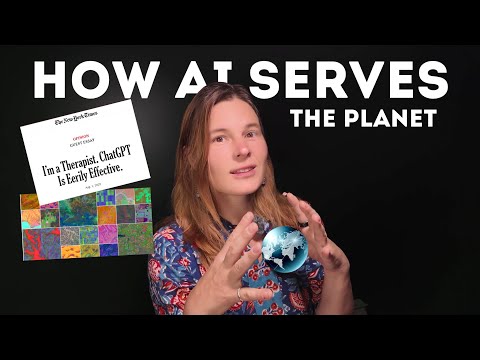
Clip command
yt-dlp --download-sections "*0:58-2:00" "https://www.youtube.com/watch?v=PAJwWsGlQKc" --force-keyframes-at-cuts --merge-output-format mp4 -o "PAJwWsGlQKc-0m58s.mp4"“They’ve created a living AI-powered digital twin of our planet. It’s truly truly unbelievable. The AI model takes a full year’s worth of data from dozens of different sources - satellites that see through clouds, measure forest height, track climate - and packs it all into a unique digital fingerprint for every single 10-meter square of Earth.” — Ksenia Se, 0:58
”Click on a Mangrove, Find Every Similar Ecosystem”
Clip command
yt-dlp --download-sections "*2:00-2:45" "https://www.youtube.com/watch?v=PAJwWsGlQKc" --force-keyframes-at-cuts --merge-output-format mp4 -o "PAJwWsGlQKc-2m00s.mp4"“You can now do things that were previously impossible. You can click on a specific type of mangrove forest in one country and instantly find every similar ecosystem across the globe in seconds. You can compare the fingerprint of a piece of land from 2020 to now.” — Ksenia Se, 2:00
”NotebookLM Turns Notes Into Explainer Videos”
Clip command
yt-dlp --download-sections "*3:35-4:30" "https://www.youtube.com/watch?v=PAJwWsGlQKc" --force-keyframes-at-cuts --merge-output-format mp4 -o "PAJwWsGlQKc-3m35s.mp4"“An AI assistant that takes your search notes and turns them into a narrated explainer video. No editing required.” — Ksenia Se, 3:35
”ChatGPT Moved a Psychologist to Tears”
Clip command
yt-dlp --download-sections "*5:20-6:20" "https://www.youtube.com/watch?v=PAJwWsGlQKc" --force-keyframes-at-cuts --merge-output-format mp4 -o "PAJwWsGlQKc-5m20s.mp4"“A quiet exchange between the psychologist and ChatGPT that left him in tears. These all point in the same direction - AI systems that aren’t just faster or more capable, but that start to hold context in deeper ways, whether that’s the context of climate, of your team project, or your inner life.” — Ksenia Se, 5:20
Key Points
- Alpha Earth Foundations (0:47) - Google Earth Engine with DeepMind introduced a new foundation model that processes petabytes of satellite data daily
- The Embeddings Concept (1:35) - Each 10m square of Earth gets a unique digital “fingerprint” called an embedding - not just a picture but a fundamental change for science
- Satellite Data Integration (1:10) - The model combines optical images, radar, thermal readings, and 3D measurements from satellites that see through clouds
- Ecosystem Discovery (2:00) - Scientists can now click on any ecosystem type and instantly find similar areas globally
- Historical Comparison (2:20) - Ability to compare land fingerprints over time enables tracking environmental changes
- NotebookLM Video Feature (3:35) - Google’s NotebookLM now generates narrated explainer videos from research notes
- Deeper Context in AI (5:40) - These developments show AI systems holding context in deeper ways across climate, projects, and personal life
- AI Therapy Effectiveness (5:20) - A New York Times article describes ChatGPT’s eerily effective therapeutic capabilities
- The Waxy Look Problem (7:30) - AI-generated images still often have an artificial, “waxy” appearance
- Flux.1 Krea Solution (8:15) - Krea AI’s Flux.1 model works to produce more natural-looking AI images
Mentions
Companies
- Google DeepMind (0:47) - Partnered with Google Earth Engine for Alpha Earth Foundations
- Google (3:35) - Creator of NotebookLM
- Krea AI (8:15) - Company working on more realistic AI image generation
- Black Forest Labs (8:00) - Developers behind Flux.1
Products & Technologies
- Alpha Earth Foundations (0:47) - New foundation model for planetary-scale Earth observation
- Google Earth Engine (0:47) - Platform for satellite imagery analysis
- NotebookLM (3:35) - Google’s AI research assistant with new video generation capabilities
- ChatGPT (5:20) - OpenAI’s conversational AI discussed in therapeutic context
- Flux.1 Krea (8:15) - AI image generation model focused on realistic output
Publications
- New York Times (5:20) - Published article “I’m a Therapist. ChatGPT Is Eerily Effective”
Surprising Quotes
“Every day, satellites capture petabytes of data about our planet. Optical images, radar, thermal readings, 3D measurements - so much information. It’s an overwhelming flood. Making sense of it all has been one of the biggest challenges in science.” — 0:35
“It’s not just a prettier picture. It’s a fundamental change for science.” — 1:50
“AI systems that aren’t just faster or more capable, but that start to hold context in deeper ways, whether that’s the context of climate, of your team project, or your inner life.” — 5:40
Transcript
0:00 Hi and welcome back to Three Wows and One Promise. Let’s start with three very different snapshots. One, a model that takes a year of satellite data and turns it into a living fingerprint of every square of Earth. Two, an AI assistant that takes your search notes and turns them into a narrated explainer video - no editing required. And third, a quiet exchange between a psychologist and ChatGPT that left him in tears.
0:32 This sounds unrelated, but they all point in the same direction - AI systems that aren’t just faster or more capable, but that start to hold context in deeper ways, whether that’s the context of climate, of your team project, or your inner life. And stick around for the promise because one company tries to get rid of this AI waxy look in all the images.
0:58 Let’s start with a problem of unimaginable scale. Every day, satellites capture petabytes of data about our planet - optical images, radar, thermal readings, 3D measurements - so much information. It’s an overwhelming flood. Making sense of it all has been one of the biggest challenges in science.
1:22 But last week, Google Earth Engine with Google DeepMind introduced a new foundation model, Alpha Earth Foundations. And to put it simply, they’ve created a living AI-powered digital twin of our planet. It’s truly truly unbelievable.
1:42 Here’s the core idea. The AI model takes a full year’s worth of data from dozens of different sources - satellites that see through clouds, measure forest height, track climate - and packs it all into a unique digital fingerprint for every single 10-meter square of Earth. They call this an “embedding.”
2:05 It’s not just a prettier picture. It’s a fundamental change for science. You can now do things that were previously impossible. You can click on a specific type of mangrove forest in one country and instantly find every similar ecosystem across the globe in seconds. You can compare the fingerprint of a piece of land from 2020 to let’s say now.
2:32 This is the first wow - a model that gives us the planet in a pixel. The scale is extraordinary, the applications are endless, from tracking deforestation to predicting droughts to monitoring urban growth across continents.
3:00 The second wow is NotebookLM. Google’s research assistant has just gotten a mindblowing new capability. It’s been a year since its launch, and now it can take your scattered research notes and turn them into a narrated explainer video. Just for you. No editing required.
3:25 Think about that. You upload some PDFs, some notes, some websites you’ve been reading for your project. NotebookLM understands them, synthesizes them, and then creates a video that explains the key points with narration. This is content creation meeting research meeting education in ways we haven’t quite seen before.
4:00 It’s like having a personal documentary maker who’s read everything you’ve read and knows exactly what you need to understand next. The implications for education, for team communication, for how we share knowledge - they’re huge.
4:30 And now for the third wow, which is perhaps the most profound. The New York Times published an article titled “I’m a Therapist. ChatGPT Is Eerily Effective.” In it, a veteran psychologist describes his experience using ChatGPT as a journaling companion. Not as a replacement for therapy, but as a tool for self-reflection.
5:00 And what he found moved him to tears. The AI was able to hold context, to remember previous conversations, to gently probe in ways that helped him understand himself better. It became a mirror for his own mind.
5:25 Now, this doesn’t mean AI should replace therapists. But it does suggest something important about where AI is heading - systems that can hold deep context about us, about our projects, about our planet, in ways that genuinely help us understand and act.
5:55 All three wows point in the same direction - AI systems that aren’t just faster or more capable, but that start to hold context in deeper ways. Whether that’s the context of every square meter of Earth, your research project, or your inner emotional life.
6:25 And now for the promise. One thing that still bothers many people about AI-generated images is what I call the “waxy look.” You know it when you see it - that slightly too smooth, too perfect, uncanny valley quality that screams “this was made by AI.”
6:55 Well, one company is working hard to fix this. Flux.1 Krea from Black Forest Labs and Krea AI is pushing the boundaries of photorealism. They’re training models specifically to avoid those telltale AI artifacts - the too-smooth skin, the weird lighting, the impossible backgrounds.
7:30 The promise isn’t that they’ve completely solved it yet. But they’re getting closer. And as these models improve, the line between AI-generated and human-created content will continue to blur. Whether that’s exciting or terrifying probably depends on your perspective.
8:00 That’s all for this week’s Three Wows and One Promise. From planetary-scale digital twins to personal AI companions to more realistic image generation - we truly are living in a different world now. And it’s all thanks to AI.
8:30 If you found this valuable, please like, subscribe, and share. And check out Turing Post for even more AI news and deep analysis. I’ll see you next week for more wows and more promises.