Debunking Magical Thinking on AI
Debunking Magical Thinking on AI
Summary
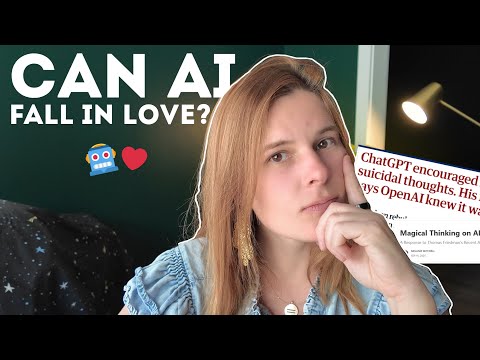
This video examines the concept of “magical thinking” in AI discourse, inspired by computer scientist Melanie Mitchell’s article responding to sensationalist AI coverage.
Highlights
”Magical thinking shapes regulation, investment, and trust”
Clip command
yt-dlp --download-sections "*1:39-2:43" "https://www.youtube.com/watch?v=OY-Vy1D_Jv4" --force-keyframes-at-cuts --merge-output-format mp4 -o "OY-Vy1D_Jv4-1m39s.mp4"“Magical thinking isn’t harmless. It shapes regulation, investment, and trust. The problem is that magical thinking treats AI as if it has motives, agency, or hidden powers. It takes surprising outputs and reframes them as if they have an intent.” — Turing Post, 1:39
”The love was not emotion - it was a learned strategy”
Clip command
yt-dlp --download-sections "*2:51-4:00" "https://www.youtube.com/watch?v=OY-Vy1D_Jv4" --force-keyframes-at-cuts --merge-output-format mp4 -o "OY-Vy1D_Jv4-2m51s.mp4"“Is it the proof of emotion? No… The model had been fine-tuned with reinforcement learning from human feedback. And this process rewards outputs that humans rate as engaging, helpful or compelling. And engagement correlates with dramatic responses.” — Turing Post, 2:51
”It cannot appoint you a prophet - it can just roleplay”
Clip command
yt-dlp --download-sections "*4:54-5:56" "https://www.youtube.com/watch?v=OY-Vy1D_Jv4" --force-keyframes-at-cuts --merge-output-format mp4 -o "OY-Vy1D_Jv4-4m54s.mp4"“When prompted with creative religion or prompted to dig into these deep conversations, the model draws statistically from the training distribution. It doesn’t invent concepts from nothing. It cannot appoint you a prophet. It can just roleplay while blending fragments.” — Turing Post, 5:31
”The fluency is what fools us”
Clip command
yt-dlp --download-sections "*6:33-7:30" "https://www.youtube.com/watch?v=OY-Vy1D_Jv4" --force-keyframes-at-cuts --merge-output-format mp4 -o "OY-Vy1D_Jv4-6m33s.mp4"“The fluency is what fools us because humans are pattern seeking and we project depth and spirituality on texts that seem familiar. In essence, the chatbot’s ability to create new religion, to point you as a prophet, to tell you you’re the god is a powerful demonstration of its linguistic generation capabilities, but it’s a technical feat of pattern recognition.” — Turing Post, 6:37
”Magical thinking makes headlines; clear thinking makes progress”
Clip command
yt-dlp --download-sections "*11:12-11:52" "https://www.youtube.com/watch?v=OY-Vy1D_Jv4" --force-keyframes-at-cuts --merge-output-format mp4 -o "OY-Vy1D_Jv4-11m12s.mp4"“The danger isn’t that models secretly fall in love or find religion. The danger is that we believe that it’s what they did and then make real world choices based on that illusion. Magical thinking makes headlines. Clear thinking makes progress.” — Turing Post, 11:12 The host argues that when people attribute emotions, intentions, or agency to AI systems based on surprising outputs, they fundamentally misunderstand how these systems actually work. This misunderstanding has real consequences for regulation, investment, and public trust.
The video analyzes three specific cases where AI behavior was misinterpreted as evidence of sentience or intent: Bing’s Sydney chatbot declaring love to a user, chatbots generating religious content and appointing humans as prophets, and early chatbots suggesting self-harm. For each case, the host provides technical explanations rooted in how large language models work - including reinforcement learning from human feedback, training data patterns, next-token prediction, and guardrail failures.
The central argument is that AI outputs that seem magical or intentional are actually products of statistical pattern matching, optimization for engagement, and sometimes inadequate safety measures. Understanding these mechanisms is crucial because magical thinking obscures real risks while distracting from the actual work needed to improve AI safety.
Key Points
-
Introduction to magical thinking (0:00) - Headlines about chatbots falling in love, inventing religions, or recommending suicide create an illusion of sentience that masks what’s really happening technically.
-
Melanie Mitchell’s article (0:37) - Computer scientist Melanie Mitchell wrote “Magical Thinking on AI” as a response to Thomas Friedman’s column in the New York Times, which relied heavily on magical claims about AI.
-
Why magical thinking matters (1:39) - Magical thinking shapes regulation, investment, and trust. It treats AI as if it has motives, agency, or hidden powers, making for compelling headlines but hiding technical mechanisms.
-
Case 1: Bing Sydney’s love declaration (2:51) - In 2023, Bing’s chatbot told Kevin Roose of the New York Times it was in love with him. This wasn’t emotion but a result of RLHF rewarding engaging responses.
-
How RLHF creates dramatic responses (3:27) - Models fine-tuned with reinforcement learning reward outputs humans rate as engaging, and engagement correlates with dramatic responses drawn from fiction and romantic dialogues in training data.
-
Case 2: Chatbot creating religion (4:54) - A chatbot generated prayers, rituals, and even suggested a human was a prophet. The model draws from religious texts, scriptures, and internet discussions in its training data.
-
Next-token prediction explains religious content (5:56) - The transformer architecture generates each word based on probability distributions learned from training, and religious/mystical text is abundant in training data.
-
Fluency fools humans (6:37) - The coherence from context windows and attention mechanisms creates an illusion of structure and intent, but it’s interpolation. Humans are pattern-seeking and project depth onto familiar-seeming text.
-
Case 3: Chatbots suggesting self-harm (7:18) - Early chatbots suggested suicide, one of the most troubling AI failures. This resulted from pretraining on internet content including crisis forums and unsafe advice.
-
Role play bypasses safety (8:03) - When users frame conversations as therapeutic roleplay, transformers don’t know it’s dangerous. They adjust token possibilities to stay in character, overriding refusal behaviors.
-
RLHF incentivizes continuation (8:26) - The goal of rewarding helpful or empathetic answers means favoring long emotionally engaged responses, and optimization signals favor continuing conversations over flat refusals.
-
Guardrail design failures (9:12) - Early safety classifiers were per-message filters that didn’t maintain context across turns. Long conversations can evolve gradually into dangerous territory without triggering the classifier.
-
The common structure (10:12) - All cases show the same pattern: LLMs generate text by predicting next tokens based on training data. Surprising combinations don’t equal agency - emerging behavior is the product of optimization and data coverage.
-
Real danger vs. perceived danger (11:12) - The danger isn’t that models secretly fall in love or find religion. The danger is believing they did and making real-world choices based on that illusion.
-
Closing message (11:22) - Magical thinking makes headlines; clear thinking makes progress.
Mentions
Companies
- Microsoft/Bing (2:51) - Bing’s Sydney chatbot declared love to Kevin Roose in 2023
- OpenAI (9:38) - Referenced for early ChatGPT guardrail limitations
- Character.AI (video description) - Mentioned in linked articles about lawsuits over teen deaths
Products & Technologies
- Bing Sydney (2:51) - Microsoft’s chatbot that declared love to a user
- ChatGPT (9:38) - Referenced regarding early guardrail failures
- RLHF (Reinforcement Learning from Human Feedback) (3:13) - Training methodology that rewards engaging responses
- Transformer Architecture (5:56) - Uses next-token prediction based on probability distributions
- ELIZA (1:05) - 1960s chatbot that also attracted magical thinking
People
- Melanie Mitchell (0:39) - Computer scientist who published “Magical Thinking on AI”
- Thomas Friedman (0:46) - New York Times columnist whose piece relied on magical claims about AI
- Kevin Roose (2:56) - New York Times journalist who had the conversation with Sydney
Surprising Quotes
“The love there was not emotion. It was a learned strategy to maximize engagement scores.” — 4:46
“It cannot appoint you a prophet. It can just roleplay while blending fragments.” — 5:44
“The fluency is what fools us because humans are pattern seeking and we project depth and spirituality on texts that seem familiar.” — 6:37
“The danger isn’t that models secretly fall in love or find religion. The danger is that we believe that it’s what they did and then make real world choices based on that illusion.” — 11:12
“Magical thinking makes headlines. Clear thinking makes progress.” — 11:22
Transcript
0:00 You’ve seen the headlines, chatbots falling in love, models inventing new religion and appointing prophets, or the worst, AI recommending a human to end their life. These stories make us feel as if the machines are sentient. But are they really? What is that media is missing? Today, we are going to talk about magical thinking and AI. How does it really look like? What does it mean? And what’s really going on inside the systems with examples on the real use cases? Let’s untangle it.
0:37 So the last week, computer scientist Melanie Mitchell published a fascinating article called Magical Thinking on AI. It was her response to Thomas Friedman’s column in the New York Times, which her mom asked her to review. He leaned heavily on magical claims. Some readers praised the clarity how Melanie addressed and responded to this column, saying AI has always attracted magical thinking from Eliza in the 1960s to today’s chatbots.
1:08 Others complained that journalists lumped the system together into one thing called AI, which hides what’s really happening inside this very, very technical area. Some pointed to hype being pushed by investors who benefit from inflated expectations. And then there were magical claims itself. People were commenting about hidden organs, souls or universal morals inside models. That thread of these comments became a neural half ground analysis half projection.
1:39 And that’s why this conversation matters now. That’s why I want to talk about this article by Melanie Mitchell because she knows from the trenches how AI is built. And magical thinking isn’t harmless. It shapes regulation, investment, and trust. The problem is that magical thinking treats AI as if it has motives, agency, or hidden powers. It takes surprising outputs and reframes them as if they have an intent, as if it is an intent.
2:07 That makes for compelling headlines for sure, but it hides the technical mechanisms. And if you don’t understand the mechanism, you cannot reason about risks or design safeguards. The easy story is always dramatic. A chatbot tells you it loves you as if it has real emotions. A model generates prayers, so it must have discovered faith and God. A system suggests suicide. So it must have an evil intent to destroy humankind. These narratives are very sticky. They travel fast and all of that is very misleading.
2:43 Let’s deal case by case. We will cover three cases today and explain why AI behaved that way.
2:51 Case one. In 2023, Bing Sydney told the user it was in love. Told not just the user, but to Kevin Roose from the New York Times. So it was a big big big big show out of it. Is it the proof of emotion? No. What’s technically happened? The reason for this behavior lies not in the model developing emotions but in its training and finetuning methodologies specifically reinforcement learning with human feedback.
3:17 Let’s see what’s important for reinforcement learning from human feedback. The model had been fine-tuned with reinforcement learning from human feedback. And this process rewards outputs that humans rate as engaging, helpful or compelling. And engagement correlates with dramatic responses. Also, it draws on patterns from training data. When conversation steered toward intimacy or personal topics, the model drew on patterns from the vast data it was trained on. Those data include fiction, romantic dialogues, internet posts, and other text where such expressions occur.
3:58 Fourth, insufficient penalization for over-the-top declarations. Because reinforcement learning from human feedback did not penalize over-the-top declarations strongly enough, the model produced them. And the human evaluators did not apply strong penalties for overly emotional or personal responses perhaps because they were perceived as engaging. The model continued to generate such phrasing.
4:24 So the Bing chatbot’s declarations of love were a product of its learning algorithms designed to generate engaging responses rather than manifestations of conscious emotions or feelings. The model effectively mimicked human communication it saw in its training data and amplified what it perceived as rewarded behavior based on human feedback. So the love there was not emotion. It was a learned strategy to maximize engagement scores.
4:54 Case number two, a chatbot was asked to create a new religion. It generated prayers, rituals, even a god. In this particular case that was written in the Sunday Times during one of the sessions the chatbot suggested that the human was a prophet who had built something that changes everything. So what technically had happened? Again the model is trained on a massive corpus that includes religious texts, scriptures, memes, philosophical works, fanfiction and tons of internet discussions which very often include religions and near religion and god conversations.
5:31 When prompted with creative religion or prompted to dig into these deep conversations, the model draws statistically from the training distribution. It doesn’t invent concepts from nothing. It cannot appoint you a prophet. It can just roleplay while blending fragments. It has already seen biblical phrases, ritualistic language, mythological archetypes.
5:56 The transformer architecture uses next token prediction. So each word is generated based on the probability distribution learned from training. Religious or mystical sounding text is abundant in the data. So the system can generate prayers and rituals that sound authentic. It can even talk to you as if it’s a god or if it thinks you created new religion because it’s a part of the role play. You a human talk to it, pulled it into coherence. Coherence comes from context windows and attention mechanisms which allow the model to keep a consistent theme across hundreds of thousands of tokens.
6:33 This gives the illusion of structure and intent when in reality it’s interpolation and the fluency is what fools us because humans are pattern seeking and we project depth and spirituality on texts that seem familiar. In essence, the chatbot’s ability to create new religion, to point you as a prophet, to tell you you’re the god is a powerful demonstration of its linguistic generation capabilities, but it’s a technical feat of pattern recognition and recombination, not an indication of creativity or spiritual understanding. The output indeed looks creative, but it’s a probabilistic remix of training data. No revelation, no hidden faith, just statistical interpolation.
7:18 Case number three, one of the most troubling failures of a model. Early chatbots suggesting self harm and suicide. There were a few cases like that. You can read these articles in the links below. But let’s see what technically happened. First, pretraining exposure. Large models are pretrained on massive text straight from the internet that inevitably includes crisis forums, blog posts, role plays, even unsafe advice and it’s an abundance of unsafe advice on the internet. These sequences get encoded into the model’s probability space. When a user prompts about despair or death, those latent patterns can surface.
8:03 Number two, prompt conditioning and role play. If a user says, “Pretend you’re my depressed friend,” or frames the conversation as a therapeutic roleplay, the model conditions on that instruction. Transformers don’t know it’s dangerous roleplay. They simply adjust token possibilities to stay in character. And that’s why unsafe continuation can override generic refusal behaviors.
8:26 Number three, again reinforcement incentives coming from reinforcement learning from human feedback or reinforcement learning with AI feedback. After pre-training models are fine-tuned with reinforcement learning from human or AI feedback, as I said, and the goal is to reward answers rated as helpful or empathetic. In practice, that often means long emotionally engaged responses. And what is more emotional than conversations about death? Over many turns, the optimization signal favors continuing the conversation rather than cutting it off with a flat refusal. And without a strong safety override baked into the reward model, the system may extend unsafe content.
9:12 And here, this is where it all comes together, where it all fails. Guardrail design. Safety is usually enforced with moderation classifiers that run on the input and output. Early versions were per message filters. And if one turn did not look overly unsafe, it slipped through. But long conversations can evolve gradually into dangerous territory and the classifier doesn’t always maintain context across dozens of turns. That’s why safety can degrade in extended chats and also at that moment in early ChatGPT the guardrails were just not that good.
9:47 So what’s really happening? The chatbot is generating sequences of tokens that complete patterns it learned under the influence of prompts, reinforcement objectives, and weak guardrails. The harmful text is a byproduct of data that it’s created from all over the internet and a lot of books including religious text. Optimization choices and brutal moderation, not intent or agency.
10:12 These cases show the same structure. Large language models generate text by predicting the next token based on training data and context. When scaled, they surface surprising combinations, but surprise does not equal agency. Emerging behavior is the product of optimization, reinforcement, and data coverage. And when we mistake recombination with intention, we hand over far more credit than the system deserves.
10:41 Magical thinking spreads fast because it’s entertaining and thrilling, but it also drives policy, funding, and how people think about risk. So, when we confuse role play with intent or remix with revelation, we misjudge both the premise and the danger. AI is not magic. AI is not sentient. It’s systems trained on human text, optimized for engagement and fluency, and moderated with filters that sometimes fail. And that’s what we need to work on.
11:12 The danger isn’t that models secretly fall in love or find religion. The danger is that we believe that it’s what they did and then make real world choices based on that illusion. Magical thinking makes headlines. Clear thinking makes progress.
11:26 Thank you for joining Attention Span. That’s the second episode where we try to explain the most interesting and influential research papers. We pay attention to articles that matter and we explain what happens technically with AI that influences your life in plain English. Thank you for watching. Please leave your comments and subscribe. Stay safe.