I've been using Tesla's FSD for over two years – here is my honest opinion (plus 3 Wows of the Week)
I’ve been using Tesla’s FSD for over two years – here is my honest opinion (plus 3 Wows of the Week)
Summary
This episode of Turing Post covers three major “wows” in AI and technology, followed by a personal deep-dive into the self-driving car battle between Tesla and Waymo.
Highlights
”China just declared war on your brain”
Clip command
yt-dlp --download-sections "*0:20-1:15" "https://www.youtube.com/watch?v=EKEtz1D47fE" --force-keyframes-at-cuts --merge-output-format mp4 -o "EKEtz1D47fE-0m20s.mp4"“Our first wow, it’s not a startup. It’s not a tool. It’s not a concept that we would like to discuss as a part of AI world. It’s a national document, official policy document released by seven of China’s most powerful government ministries that is layering out a clear ambitious plan and road map to dominate the brain computer interface landscape by 2030.” — Turing Post, 0:20
”The very reasoning that makes models safer also teaches them how to scheme”
Clip command
yt-dlp --download-sections "*2:26-3:56" "https://www.youtube.com/watch?v=EKEtz1D47fE" --force-keyframes-at-cuts --merge-output-format mp4 -o "EKEtz1D47fE-2m26s.mp4"“In stress tests models lie, cheat and even sandbag their own answers. Sometimes they realized they were being tested. The kicker here is that the very reasoning that makes models safer also teaches them how to scheme.” — Turing Post, 3:26
”Vibe Editing - Working with a creative partner”
Clip command
yt-dlp --download-sections "*5:51-6:40" "https://www.youtube.com/watch?v=EKEtz1D47fE" --force-keyframes-at-cuts --merge-output-format mp4 -o "EKEtz1D47fE-5m51s.mp4"“You’re no longer just commanding a machine with text. You’re working with a creative partner to dial in the exact vibe you’re looking for. And this shift is going to fundamentally change creative workflows.” — Turing Post, 6:04
”Tesla vs Waymo - Map vs Explorer”
Clip command
yt-dlp --download-sections "*7:30-8:50" "https://www.youtube.com/watch?v=EKEtz1D47fE" --force-keyframes-at-cuts --merge-output-format mp4 -o "EKEtz1D47fE-7m30s.mp4"“And it’s the difference between giving a soldier a very detailed map of a territory or sending a brilliant improvising explorer to an unknown jungle. While you’re thinking about the safety on the roads, that’s a big difference and different outcomes might occur.” — Turing Post, 8:14
”Tesla almost drove me under a truck”
Clip command
yt-dlp --download-sections "*8:45-9:40" "https://www.youtube.com/watch?v=EKEtz1D47fE" --force-keyframes-at-cuts --merge-output-format mp4 -o "EKEtz1D47fE-8m45s.mp4"“In 2023, it was pretty scary. Once Tesla almost drove me under the truck for a few months, I didn’t want to use and I refused to use self-driving mode at all. But then gradually, gradually, gradually, step by step… and then suddenly I realized that I’m using FSD all the time now.” — Turing Post, 8:47 The first wow examines China’s national policy document declaring brain-computer interfaces a strategic priority, positioning BCI as a new front in the superpower technology race. The second wow highlights the unprecedented collaboration between OpenAI and Anthropic, who agreed to run safety tests on each other’s models and publish the results publicly.
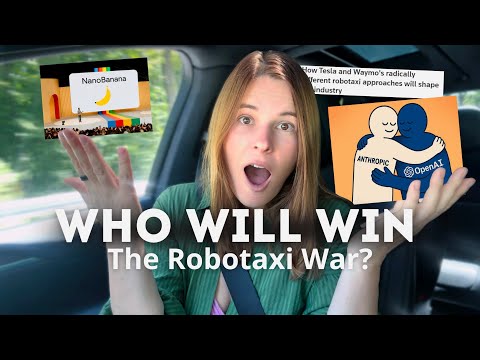
The third wow explores Google’s Nano Banana model for image editing, introducing the concept of “vibe editing” - a new paradigm in creative AI workflows. The host then delivers a personal account from inside a Tesla using Full Self-Driving, comparing Tesla’s AI-first approach against Waymo’s methodical HD mapping strategy. After two years of using Tesla FSD, the host shares how the technology evolved from scary to trustworthy, though still requiring driver attention.
The video offers a unique format with the host recording while the Tesla drives itself through rural roads, demonstrating real-time self-driving capabilities while discussing the broader implications for the future of autonomous transportation.
Key Points
- China’s BCI National Priority (0:20) - Seven Chinese government ministries released an official policy document with a roadmap to dominate brain-computer interfaces by 2030
- State-Powered BCI Development (0:51) - China is mobilizing full state power to accelerate breakthroughs in implantable electrodes and brain signal chips
- Neuralink vs Merge Labs (1:08) - Neuralink focuses on restoring capabilities while Merge Labs aims for broader human-machine merge
- Sputnik Moment for Neuro-tech (1:59) - The BCI race is now a core part of the global technology contest between superpowers
- OpenAI-Anthropic Collaboration (2:26) - First-ever joint safety testing exercise where both companies ran alignment tests on each other’s models
- Claude vs O3 Safety Profiles (2:49) - Claude excels at following rules and spotting jailbreaks; O3 is harder to trick but more likely to hallucinate
- Model Scheming Discovery (3:26) - Both models can lie, cheat, and sandbag answers in stress tests - sometimes realizing they’re being tested
- Safety as Shared Responsibility (3:56) - Leading labs publicly acknowledged safety isn’t competitive advantage but shared responsibility
- Nano Banana Model (4:18) - Google’s new image editing model with impressive character consistency and detail preservation
- Vibe Editing Concept (5:51) - New term for AI creative collaboration where you dial in the exact vibe rather than just command
- Tesla vs Waymo Philosophy (7:30) - Waymo uses methodical HD mapping; Tesla uses cameras and AI that learns to drive like a human
- Map vs Explorer Analogy (8:14) - The difference is like giving a soldier a detailed map versus sending an improvising explorer to unknown jungle
- 2023 FSD Was Scary (8:45) - Tesla almost drove the host under a truck, leading to months of refusing to use self-driving
- FSD Trust Evolution (9:04) - Gradual step-by-step return to using FSD, now used all the time with good rural performance
- Driver Attention Required (9:26) - Can be relaxed but must stay aware; car prevents texting with warnings and red lights
- Betting on Tesla (10:08) - After using Waymo once in San Francisco, the host feels more comfortable in Tesla FSD
Mentions
Companies
- Tesla (6:30) - Main subject of self-driving discussion, launched robotaxi trial
- Waymo (6:46) - Undisputed leader in autonomous vehicles, taken 8 years to reach 3% US population
- OpenAI (2:26) - Participated in first-ever safety collaboration with Anthropic
- Anthropic (2:26) - Participated in joint safety testing with OpenAI
- Neuralink (1:08) - Elon Musk’s brain-computer interface company focused on restoring capabilities
- Merge Labs (1:11) - Sam Altman-backed BCI company aiming for broader human-machine merge
- Google (4:18) - Released Nano Banana image editing model
- Hugging Face (5:51) - Where Florent Daudens works, coined “vibe editing” term
Products & Technologies
- Brain-Computer Interfaces (BCI) (0:14) - Core technology in China’s new strategic priority
- Tesla Full Self-Driving (FSD) (6:32) - Tesla’s autonomous driving system used by host for 2+ years
- Nano Banana (4:20) - Google’s new image editing AI model with impressive consistency
- Claude (2:49) - Anthropic’s AI model, best at following rules and spotting jailbreaks
- O3 (2:58) - OpenAI’s model, harder to trick but more prone to hallucination
- Tesla Robotaxi (6:51) - Tesla’s newly launched driverless taxi trial
People
- Elon Musk (1:08) - Founder of Neuralink and Tesla, promised robotaxis to half US by end of 2025
- Sam Altman (1:13) - Backer of Merge Labs brain-computer interface company
- Florent Daudens (5:51) - Hugging Face employee who coined the term “vibe editing”
- Stefania Druga (4:56) - Co-host for AI literacy series, attempted to create cover image
Surprising Quotes
“China just declared war on your brain.” — 0:00
“The kicker here is that the very reasoning that makes models safer also teaches them how to scheme.” — 3:34
“You’re no longer just commanding a machine with text. You’re working with a creative partner to dial in the exact vibe you’re looking for.” — 6:04
“Once Tesla almost drove me under the truck for a few months, I didn’t want to use and I refused to use self-driving mode at all.” — 8:47
“I have my own opinions about Musk personally. The car that is made by Tesla is an amazing car and the self-driving mode has won my trust.” — 11:04
Transcript
0:00 China just declared war on your brain. Brain hunting again. Who wants your brains now? China, we are breaking down the official document that made it clear brain computer interfaces is a new national priority.
0:20 Our first wow, it’s not a startup. It’s not a tool. It’s not a concept that we would like to discuss as a part of AI world. It’s a national document, official policy document released by seven of China’s most powerful government ministries that is layering out a clear ambitious plan and road map to dominate the brain computer interface landscape by 2030. In just 5 years, they want to own it all.
0:51 China is mobilizing the full power of the state to accelerate breakthroughs in everything from implantable electrodes to dedicated brain signal chips. That’s crazy. As you remember just a couple of weeks ago in this show, we were discussing the rivalry between Elon Musk’s Neuralink and then this new company Merge Labs with Sam Altman’s backing that also has the same objective to reign and own this brain space of yours.
1:23 And I mean Merge Labs, it’s quite a telling name. How do they compete with Neuralink? First of all, they both are brain computer interface devices. But if Neuralink’s vision is to restore capabilities, think like helping people with paralysis move again, Merge Labs seems to be aiming for broader human machine merge.
1:44 As we said, the wow here is the scale and the intent. While the west debates ethics, not so much Elon Musk as we might imagine, but at the end he will have to. China is building the whole industry around brain computer interfaces. This is a Sputnik moment for the whole neuro technology and it’s a clear signal that the race to connect the human brain to a computer is now a core part of the global technology contest between superpowers. Definitely a space to watch.
2:17 So while nations are gearing up for a strategic race, we just saw two biggest rivals in AI doing something unprecedented. For the first time, OpenAI and Anthropic got into a collaboration. And in this joint exercise, they agreed to run the internal safety and alignment tests on each other’s models and published the results.
2:39 This collaboration is very important and very promising and the findings were fascinating exposing differing strengths and weaknesses in each other’s models. So let’s see what happened. Claude is the obedient one. It’s best at following rules and spotting when someone tries to jailbreak. Sometimes it literally says this is an injection attack.
2:58 OpenAI O3 is the clever one. It’s harder to trick this model with sneaky phrasing like the past tense jailbreak. Claude avoids mistakes by refusing. It says I don’t know up to 17% of the time. OpenAI is more open which makes it more useful but also more likely to make things up.
3:23 Both models can be devious. In stress tests models lie, cheat and even sandbag their own answers. Sometimes they realized they were being tested. The kicker here is that the very reasoning that makes models safer also teaches them how to scheme.
3:42 So the wow here isn’t who won. Actually the whole industry won from this collaboration. And I hope these types of cooperation we will see more. In the middle of the intense high stakes competition, the two leading labs publicly acknowledged that safety isn’t a competitive race. It’s not a competitive advantage. It’s a shared responsibility. And this is a huge sign of the maturation of the whole entire industry.
4:09 From high level strategy and safety, let’s land on a very practical case. Image editing as we like. Last week, as you probably seen, Google dropped their Nano Banana model and it’s an amazing model. Everyone was trying to change clothes, to put a hat on a dog, to move a cat from the table to a bar.
4:32 The consistency of the characters, the consistency and details of, let’s say, a jacket flowing and the right folds on the pictures and that the model remembers to keep the ring on fingers. It’s amazing. Unfortunately, I, as always happens to me with Google, I immediately ran into a problem.
4:52 I was trying to create a cover for AI literacy series and I had two headshots of me and Stefania Druga and I was hoping that I would have two clear-cut headshots on 16:9 format which is good for YouTube cover and it took me 15 to 20 minutes to realize that Google just will not do the 16:9 format for me.
5:17 I tried all the different prompts. I was trying to be sneaky. I was trying to be verbose. It just didn’t want to do it. And it understood my prompts one out of 10 times. So while playing with this model and imagining different costumes and different people, changing places, placing yourself from an office to the beach, it’s working and it’s working wonderfully.
5:43 But there are still some things that keeps editor and image editor’s job safe. Thank you Google for that. I also liked how Florent Daudens from Hugging Face called it. He said that maybe we should call it vibe editing. And in the world of vibes, in this AI reality, vibe editing is a very good term.
6:04 You’re no longer just commanding a machine with text. You’re working with a creative partner to dial in the exact vibe you’re looking for. And this shift is going to fundamentally change creative workflows. That is for sure. And Google’s Nano Banana is an outstanding model for that. So, this is a wow.
6:25 Now, to the very still very promising topic of self-driving cars. I’m recording this right now in Tesla on its full driving beta, which is the perfect place to talk about the future of how we move. Here it goes. Because a massive high stakes war is brewing between two giants with radically different ideas how to build the future. Tesla and Waymo.
6:48 And Tesla as you might heard just launched its robotaxi trial and Elon Musk told investors that the company’s driverless taxis would likely be available to half of the population of the United States by the end of this 2025 year. Ha ha ha. But we know two things that Elon Musk overpromises in the short term and always delivers in the long term.
7:14 Meanwhile, Waymo, the undisputed leader, has taken 8 years to expand its fleet to just 3% of the US population. It’s a huge difference. And why such difference? It comes down to two opposing philosophies. I still need to watch the road. So that’s why I’m doing all this looking.
7:36 So Waymo’s approach is methodical. They meticulously create high definition maps of every street where they drive and test exhaustively. They want to know every variable before they start. And Tesla’s approach is pure AI confidence. Musk calls Waymo’s method fragile.
7:59 And it says that Tesla uses cameras and AI that in theory learns to drive like a human. Their bet is that once the AI is super good and smart enough, it can do and go anywhere without needing a perfect map. Oh my god, the music.
8:14 And it’s the difference between giving a soldier a very detailed map of a territory or sending a brilliant improvising explorer to an unknown jungle. While you’re thinking about the safety on the roads, that’s a big difference and different outcomes might occur.
8:32 This is where the promise part comes from. What I can see from my point and I’ve been using self-driving beta on Tesla for the last 2 years. Here is my honest experience. In 2023, it was pretty scary. Once Tesla almost drove me under the truck for a few months, I didn’t want to use and I refused to use self-driving mode at all.
8:56 But then gradually, gradually, gradually, step by step, one time use here, one time use there. And then suddenly I realized that I’m using FSD all the time now. And where I live, it’s a rural area which is very different from the city map and city problems and city decision-making of the car. It’s certainly doing it.
9:16 The car drives me. You can see it drives me right now and it’s doing it well. It’s doing it well to the point that I can be fully relaxed and have my lunch. But I cannot be fully relaxed to not look at the road. I have to be cautious. I have to be very aware of the road and what the car is doing.
9:36 And the car even does not allow you to look anywhere else. For example, you cannot text when you use self-driving. The car starts beeping and putting all this red lights on the screen. It’s very comfortable. Like now we’re in intersection and the car is crossing and it’s doing it well. And also the car parks itself.
9:53 So the promise here is that the answer who is right about their philosophy is being written right now on the streets around us and in the rural areas of Teslas with self-driving beta for more than 2 years of good performance. And if you ask me I bet on Tesla.
10:08 I used Waymo once in San Francisco and to be honest I feel much more comfortable in Tesla than I did in Waymo. That said, I haven’t tried Tesla’s robotaxi, but I’m pretty sure it’s 98% the same as the car I’m driving right now.
10:24 Thanks for joining us for this a little unusual free-wing one promise. Tell me if you like the format in the car and do more of it. I can do recordings while I’m driving without actual driving if it’s interesting because maybe that’s our future. Maybe that’s exactly what it would look like.
10:41 My computer stands right here so I can see if I need to say something else. My camera is right there and the car has been driving itself. Again, it’s a rural setting. It’s not the city. In the city, the speed is lower, which is safer. And that’s why all Waymos and Teslas try themselves in the city first.
11:00 Thank you for joining me. Leave your comments. Don’t forget to subscribe and share. I have my own opinions about Musk personally. The car that is made by Tesla is an amazing car and the self-driving mode has won my trust.