From Visual Recall to AGI: New AI Breakthrough | 3 Wow and 1 Promise
From Visual Recall to AGI: New AI Breakthrough | 3 Wow and 1 Promise
Summary
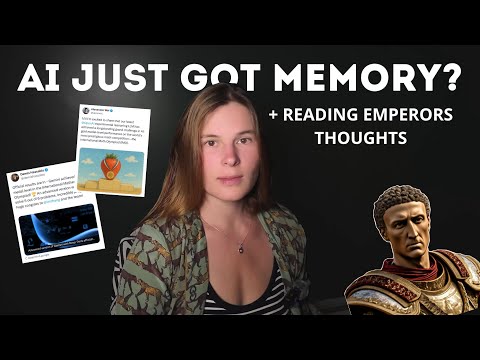
This episode of “3 Wow and 1 Promise” explores three breakthroughs that feel pulled straight from the future. The first wow covers Memories.ai, a startup that built the world’s first large visual memory model inspired by how human brains reconstruct memories - representing a shift from stateless AI to systems that can draw on past visual experiences. The second wow showcases Google DeepMind’s “Ian” model that helps historians contextualize ancient Latin inscriptions by restoring damaged text, predicting origins and dates, and finding parallels across 176,000 inscriptions.
The third and most personal wow features Audrey Cruz, a Neuralink patient sharing her raw, unfiltered journey on social media as she regains the ability to control a cursor and write her name through pure thought. This represents brain-computer interfaces moving from futuristic concept to tangible reality.
The “promise” section addresses OpenAI and Google both achieving gold medal scores at the International Math Olympiad - a genuine breakthrough in AI reasoning. However, the host argues the real story isn’t who won but the drama around the announcements, which became more about PR battles and talent recruiting than pure capability measurement. The competition between these giants is what’s accelerating the entire field forward.
Highlights
”AI that has a past”
Clip command
yt-dlp --download-sections "*2:12-2:40" "https://www.youtube.com/watch?v=52NIr_joGMw" --force-keyframes-at-cuts --merge-output-format mp4 -o "52NIr_joGMw-2m12s.mp4"“The real wow here is the conceptual leap. We’re moving from AI as a stateless tool that only knows the present moment to an AI that has a past. An AI that can draw on a vast library of visual experiences to reason and answer questions. This is a foundational step towards something that can genuinely learn from experience.” — Ksenia Se, 2:12
”The combination outperforms either alone”
Clip command
yt-dlp --download-sections "*4:14-4:48" "https://www.youtube.com/watch?v=52NIr_joGMw" --force-keyframes-at-cuts --merge-output-format mp4 -o "52NIr_joGMw-4m14s.mp4"“Google ran a study where they pitted historians against Ian and then had them work together. The results were clear - the combination of historian and AI far outperformed either one alone. This wow is the partnership between AI and humans. This is AI in service of the humanities.” — Ksenia Se, 4:14
”A person regaining agency one keystroke at a time”
Clip command
yt-dlp --download-sections "*5:48-6:20" "https://www.youtube.com/watch?v=52NIr_joGMw" --force-keyframes-at-cuts --merge-output-format mp4 -o "52NIr_joGMw-5m48s.mp4"“The wow here is the raw humanity of it. This isn’t a lab experiment anymore. It’s a person regaining agency one keystroke, one letter at a time, and sharing their journey with all of us. It’s the visceral, undeniable proof of concept for brain computer interfaces.” — Ksenia Se, 5:48
”The real story isn’t who won”
Clip command
yt-dlp --download-sections "*8:38-9:10" "https://www.youtube.com/watch?v=52NIr_joGMw" --force-keyframes-at-cuts --merge-output-format mp4 -o "52NIr_joGMw-8m38s.mp4"“The real crucial takeaway is not who got the gold medal - it’s that both of them did. The race is now neck and neck. Don’t get distracted by who won on any given day. The intense competition, this relentless race for talent, for funding, for the perception of being number one is what is accelerating the entire field forward.” — Ksenia Se, 8:38
Key Points
- Large Visual Memory Model (1:30) - Memories.ai built the first model designed for virtually limitless visual recall, inspired by human memory reconstruction
- Memory works in stages (1:57) - Uses query model, retrieval model, and selection/reconstruction model - just like human brains
- From stateless to stateful (2:12) - A foundational step toward AI that can genuinely learn from experience
- Ian for inscriptions (3:12) - Google DeepMind’s multimodal model helps historians contextualize ancient texts
- Three capabilities (3:34) - Ian restores damaged text, predicts origin/date, and finds parallels across 176,000 Latin inscriptions
- Human-AI partnership (4:14) - Historian + AI combination outperformed either working alone in Google’s study
- AI for humanities (4:35) - Using state-of-the-art technology to understand our past, not just build the future
- Neuralink patient journey (5:12) - Audrey Cruz sharing raw, unfiltered progress on social media
- Writing with thought (5:32) - Photos of attempting to write her name for the first time through pure thought
- Brain-computer interfaces (6:00) - Moving from futuristic idea to tangible reality of one person’s life
- IMO gold medals (6:30) - Both OpenAI and Google achieved gold medal scores at International Math Olympiad
- Informal proofs (6:58) - First time systems understood questions and generated proofs in natural language
- Creative reasoning (7:20) - Proves models can tackle ambiguous multi-step problems requiring creativity
- Announcement drama (7:45) - Google accused OpenAI of announcing prematurely without official grading
- PR vs capability (8:20) - Benchmarks becoming more about public relations and recruiting than pure measurement
- Competition accelerates (8:50) - The race for talent, funding, and perception is driving the entire field forward
Mentions
Companies
- Memories.ai (1:33) - Startup that built the world’s first large visual memory model
- Google DeepMind (3:12) - Unveiled Ian model for ancient inscriptions
- Neuralink (5:12) - Brain-computer interface company with patient Audrey Cruz
- OpenAI (6:30) - Achieved gold medal score at IMO
- Google (6:30) - Also achieved gold medal score at IMO
Products & Technologies
- Ian (3:12) - Google DeepMind’s multimodal AI for ancient inscriptions
- Large Visual Memory Model (1:33) - Brain-inspired visual recall system
People
- Audrey Cruz (5:12) - Neuralink patient sharing her journey on social media
Surprising Quotes
“For centuries, historians have faced a monumental task piecing together history from withered, broken, and deliberately defaced inscriptions etched in stone and metal. It is a slow, painstaking process that relies on deep expertise and a bit of luck. Maybe a large piece of luck.” — 2:50
“It finds contextual parallels across a database of over 176,000 Latin inscriptions, revealing deep connections historians might have missed. That makes me tingle. Just like instant goosebumps.” — 3:55
“A lot of top researchers come from competitive math. So winning at the IMO is about attracting the best talent.” — 8:32
Transcript
0:00 What if an AI could remember everything it’s ever seen? What if it could help us read the minds of Roman emperors from shattered stones? And what if it could give a person back the ability to move their own hand with just a thought? On the show today, we’re breaking down three breakthroughs that feel like they’re pulled straight from the future.
0:21 First, we’re looking at the AI that just got a long-term memory inspired by the way your brain works. Then we’ll show you how Google is using AI to become a partner for historians deciphering the secrets of the ancient world. And you have to see the raw unfiltered footage of a person using Neuralink that changes everything.
0:43 And stick around for our promise because while OpenAI and Google were busy fighting over a gold medal in a math competition, they accidentally revealed the real secret of the AI race. And trust me, it’s not about who won. This is our three wows and one promise.
1:02 Let’s start with a very human experience. That frustrating feeling when a memory is right on the tip of your tongue - a name, a face, a moment from a movie. You know it’s in there, but you can’t quite pull it up. We think of memory as just playing back a recording. But neuroscience tells us it’s a dynamic process of reconstruction. Our brain takes a cue, does a rough search, finds fragments, and pieces them all together.
1:30 Our first wow this week comes from a new startup, Memories.ai, which has built the world’s first large visual memory model, inspired by this exact human process. And that’s mind-blowing. This isn’t just another model that can identify objects in a video. This is a fundamental shift. The model is designed to give any AI the ability for virtually limitless visual recall.
1:57 It works in stages just like our brains. It uses a query model to understand the cue, a retrieval model for a core search, and then a selection and reconstruction model to piece together relevant visual fragments into a coherent answer.
2:12 The real wow here is the conceptual leap. We’re moving from AI as a stateless tool that only knows the present moment to an AI that has a past. An AI that can draw on a vast library of visual experiences to reason and answer questions. This is a foundational step towards something that can genuinely learn from experience. A crucial building block for any true general intelligence if it’s possible.
2:41 From an AI that remembers the recent past. Our second wow takes us to one that helps us understand the ancient history, the ancient past. This is truly my passion. For centuries, historians have faced a monumental task piecing together history from withered, broken, and deliberately defaced inscriptions etched in stone and metal. It is a slow, painstaking process that relies on deep expertise and a bit of luck. Maybe a large piece of luck.
3:12 This week, Google DeepMind unveiled Ian, the first AI model designed specifically to help historians contextualize ancient inscriptions. Ian is remarkable because it’s multimodal. It doesn’t just read the text. Imagine - it analyzes images of the inscriptions themselves. This allows it to do three incredible things.
3:34 First, it can restore damaged text even when the length of the missing gap is unknown. It’s a huge challenge. Only this first thing would be groundbreaking. But second, it also can predict an inscription’s origin and date with startling accuracy. And third, most importantly, it finds contextual parallels across a database of over 176,000 Latin inscriptions, revealing deep connections historians might have missed. That makes me tingle. Just like instant goosebumps.
4:14 But the real connection to draw here is that this isn’t about replacing the expert. It’s not. Google ran a study where they pitted historians against Ian and then had them work together. The results were clear. The combination of historian and AI far outperformed either one alone.
4:35 This wow is the partnership between AI and humans. This is AI in service of the humanities. It’s using state-of-the-art technology not just to build the future, but to help us understand our past with more clarity and confidence than ever before. It’s just amazing.
4:50 We’ve talked about AI with memory and AI for history. For our final wow, I want to bring it down from the grand abstract scale and make it very deeply personal and human because for all the talk about models and benchmarks, the ultimate goal is to improve lives, right?
5:12 This week we saw a profound example of this from Audrey Cruz, a patient with Neuralink’s brain computer interface. On her social media that she just started, she began sharing her journey - no fancy press releases, no curated demos, just raw unfiltered progress. We see videos of her through pure thought working on her accuracy and speed in moving a cursor.
5:32 We see a photo of her attempting to write her own name for the first time with just her thought. She shares pictures of the small healed implant site captioned “before unwrapping and after.” It’s an intimate moment by moment look at what the technology actually means for a person.
5:48 The wow here is the raw humanity of it. This isn’t a lab experiment anymore. It’s a person regaining agency one keystroke, one letter at a time, and sharing their journey with all of us. It’s the visceral, undeniable proof of concept for brain computer interfaces. Moving from a futuristic idea to the tangible reality of one person’s life. It’s a powerful reminder of the ultimate why behind all this innovation.
6:19 This week, the big headline in the AI race was that both OpenAI and Google announced their AI models had achieved a gold medal score at the International Math Olympiad or IMO. This is one of the world’s most difficult high school math competitions, a place where only the absolute brightest minds excel. On the surface, this is a monumental achievement and it is.
6:48 So what does it mean actually to win gold at the IMO with an AI? And why is it both incredibly important and at the same time maybe not the most important story? For the first time, these systems were informal, meaning they could understand questions and generate proofs in natural language without a human translating for them. This is a huge leap in AI reasoning.
7:15 It proves these models can tackle ambiguous multi-step problems that require creativity. This kind of thinking only the top few percent of human students can do. This is a massive milestone because you probably remember how much discussion there is about creativity of AI and if it’s really possible for AI to be creative. Well, that gold medal in IMO proved that models can act creative.
7:45 But here is why it might not be as important as it seems. The real story this week wasn’t that they won, but the drama around how they announced it. As TechCrunch reported, a squabble erupted. Google accused OpenAI of announcing prematurely and not having their results officially graded by IMO. OpenAI said they used third-party IMO medalists as evaluators. Google emphasized they went for the official process with the IMO’s blessing. It became a battle over process, respect for the student competitors, and ultimately a battle for perception.
8:20 And that leads us to the promise. My promise to you is to look past these headlines. These benchmarks are becoming less about the pure measure of capability and more about the public relations and recruiting battles between these giants. A lot of top researchers come from competitive math. So winning at the IMO is about attracting the best talent.
8:50 The real crucial takeaway is not who got the gold medal - it’s that both of them did. The race is now neck and neck. The promise is this: Don’t get distracted by who won on any given day. The important truth is that the intense competition, this relentless race for talent, for funding, for the perception of being number one is what is accelerating the entire field forward at this breakneck pace. And that’s the real story to watch.
9:18 Thank you for joining me today for our three wows and one promise. See you next week and please don’t forget to share, like, comment, and of course, hit the subscribe button.