Why quantum has been "10 years away" for 30 years | E2316
Why quantum has been “10 years away” for 30 years | E2316
Summary
Broadcasting from Founder University in Tokyo, Jason Calacanis sits down with Kazuhiro Nakashoji (“Kazu”), founder and CEO of Kyoto-based quantum hardware startup Yakumo, to answer the episode’s title question head-on: why has quantum computing been perpetually “5 to 10 years away” for three decades? Kazu’s answer centers on hardware, not hype — quantum computers can’t simply out-run GPUs at general tasks, they only apply to specific problem classes (combinatorics, RSA-style cryptography), and the qubit count once thought necessary for useful work has collapsed roughly 100x, from an estimated one million qubits five years ago to closer to 10,000 today, converging with real hardware progress (one US university has already demonstrated 6,000 physical qubits) toward a projected breakthrough around 2030. Along the way Kazu walks through quantum error correction (QEC) — the current Achilles’ heel, where roughly 1 in 100-1,000 calculations error out — and compares today’s fragile qubits to 1980s computers that needed constant rebooting.
The conversation then turns to Yakumo itself: a 15-month-old, ~70-person spinout of Kyoto University and the Institute for Molecular Science, using neutral atom (ytterbium) qubits rather than the superconducting approach favored by Google and IBM — a bet Kazu frames as a “Toyota of quantum” strategy, integrating best-in-class components (like high-fidelity lasers from Hamamatsu Photonics and its Danish subsidiary NKT Photonics) rather than building everything in-house. He details Yakumo’s funding path — a Kyoto University-affiliated CVC (Kyoto iCap) opening the door to Omni Ventures’ first-ever Japan investment and French quantum specialist Quantonation’s first Japan bet — and the practical realities of running a hardware deep-tech startup on 18-month runway cycles.
The back half covers the AI-quantum feedback loop (AI is already essential for today’s error correction; quantum may eventually generate training data classical computers can’t, making AI models “even smarter”), quantum’s surprisingly low energy footprint versus classical compute, and the “harvest now, decrypt later” cryptography threat — nation-states allegedly stockpiling RSA-encrypted data today to crack once quantum matures, with Kazu estimating a 5-10 year window before RSA falls. A closing audience Q&A brings up Yakumo’s business model (academia sales now, fault-tolerant “FTQC” data-center racks after 2030, Quantum-as-a-Service after 2035) and a detailed technical exchange on quantum cost economics and AES key-length defenses. (Note: the interview-transcriber was only seeded with Jason Calacanis and Kazuhiro Nakashoji as speakers, so it mislabeled the unseeded third voice — an audience member who identifies himself as Kartik, founder of Glovzero Labs — as “Jason Calacanis” for his entire Q&A turn starting around 40:28, and briefly mislabeled Jason’s own “go ahead” as Kazuhiro at 42:59. Both are corrected by context in the transcript below.)
Highlights
”Quantum computing has been 5 to 10 years away for the past 30 years”
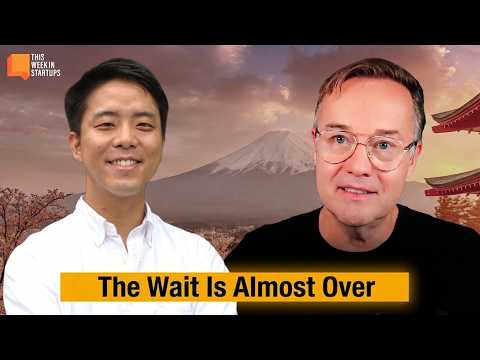
“Hardware is very hard. Quantum computing has been 5 to 10 years away for the past 30 years. Why is it taking so long?” — Jason Calacanis, 2:06
Clip command
yt-dlp --download-sections "*2:06-2:56" "https://www.youtube.com/watch?v=aSa9AE_ebvA" --force-keyframes-at-cuts --merge-output-format mp4 -o "quantum-10-years-away.mp4"”Just one percent of what we had expected ten years ago”
“Just one percent of what we had expected ten years ago, for example. Since we updated some softwares, algorithms, or some other like schemes… Looking back for example 10 years ago we only have maybe 1 to 10 qubit.” — Kazuhiro Nakashoji, 5:51
Clip command
yt-dlp --download-sections "*5:51-6:41" "https://www.youtube.com/watch?v=aSa9AE_ebvA" --force-keyframes-at-cuts --merge-output-format mp4 -o "qubit-requirement-collapse.mp4"”70. Whoa! We just launched this company 15 months ago.”
“70. Whoa! We just launched this company 15 months ago.” — Kazuhiro Nakashoji, 22:32
Clip command
yt-dlp --download-sections "*22:32-23:29" "https://www.youtube.com/watch?v=aSa9AE_ebvA" --force-keyframes-at-cuts --merge-output-format mp4 -o "yakumo-70-people-15-months.mp4"”We tried to become the quantum computer company something like Toyota”
“I believe that our neutral atom quantum computer is something like car, automotive industry. And we tried to become the quantum computer company something like Toyota.” — Kazuhiro Nakashoji, 27:07
Clip command
yt-dlp --download-sections "*27:07-27:41" "https://www.youtube.com/watch?v=aSa9AE_ebvA" --force-keyframes-at-cuts --merge-output-format mp4 -o "toyota-of-quantum.mp4"”No worry. It’s time to sell your Bitcoin.”
“So some research works already prove that if we reach to certain amount of the size of the QPU, we can solve RSA cryptography. But it won’t be happen next 2 years for example. No worry. It’s time to sell your Bitcoin.” — Kazuhiro Nakashoji, 36:57
Clip command
yt-dlp --download-sections "*36:00-37:00" "https://www.youtube.com/watch?v=aSa9AE_ebvA" --force-keyframes-at-cuts --merge-output-format mp4 -o "sell-your-bitcoin.mp4"”One physical qubit cost close to one million USD”
“He mentioned that one physical qubit cost close to one million USD. It’s way expensive… But we use neutral atoms and if you think about the price of qubit, maybe it’s, it’s maybe a hundred times cheaper or one thousand times more affordable.” — Kazuhiro Nakashoji, 41:15
Clip command
yt-dlp --download-sections "*41:15-42:00" "https://www.youtube.com/watch?v=aSa9AE_ebvA" --force-keyframes-at-cuts --merge-output-format mp4 -o "million-dollar-qubit.mp4"Key Points
- Founder University Tokyo & TWiST programs (0:00) - Jason opens live from Founder University Tokyo, plugging Angel University, Founder University, Launch Accelerator, and TheSyndicate.com.
- Guest intro: Kazuhiro Nakashoji of Yakumo (1:52) - Kyoto-based quantum hardware startup builder joins for a deep dive into quantum computing fundamentals.
- The “faster than GPUs” misconception (3:30) - Kazu corrects a common myth: quantum computers aren’t generally faster, they only apply to specific problem classes like combinatorics and RSA cryptography.
- Qubit requirement collapsed ~100x (5:35) - What once required an estimated 1 million qubits now needs closer to 10,000, thanks to algorithm and software improvements.
- Quantum computers already in university data centers (6:52) - Kazu cites University of Tokyo as one example already running installed quantum hardware.
- Quantum Error Correction (QEC) explained (7:21) - Calculations currently error out roughly 1 in 100-1,000 times; QEC protects qubit information to make hardware scalable and robust.
- Competing hardware bets: superconducting vs. ion vs. neutral atom (10:07) - Google and IBM use superconducting qubits requiring deep refrigeration; others use charged ions; Yakumo uses neutral (uncharged) atoms like ytterbium.
- How university IP spins out into deep-tech startups in Japan (12:56) - Japan lacks a mature playbook for university tech transfer compared to the US; negotiations over equity/royalties with the university can be tough.
- Runway planning for a hardware deep-tech startup (15:23) - Yakumo targets 18 months of runway per funding round rather than the 12-18 month software-startup norm.
- Raising Yakumo’s seed extension: Omni Ventures + Quantonation (15:53) - Kyoto University-affiliated CVC Kyoto iCap connected Kazu to Omni Ventures (its first-ever Japan investment) and French quantum specialist VC Quantonation (also its first Japan bet).
- Headcount: ~70 people, 15 months after founding (22:21) - About 50 are technical (engineers, scientists, mathematicians); 20-30% of tech staff is non-Japanese, including division heads from Sydney and Turkey.
- Kyoto University + IMS research pedigree (24:36) - Yakumo unites two renowned research groups: Professor Yoshiro Takahashi’s 30-year ytterbium research at Kyoto University and Kenji Ohmori’s Institute for Molecular Science team.
- “Toyota of quantum” integrator strategy (26:44) - Rather than manufacturing every component, Yakumo assembles best-in-class parts (lasers, vacuum chambers) like Toyota integrates tires and engines it doesn’t make itself.
- International laser supply chain: Hamamatsu Photonics + NKT Photonics (27:41) - High-fidelity lasers come from Japan’s Hamamatsu Photonics and its Danish subsidiary NKT Photonics, formalized via a recent Japan-Denmark MOU.
- AI for quantum vs. quantum for AI (30:26) - AI/LLMs are already essential for quantum error correction today; the reverse (quantum boosting AI) isn’t practical yet but MIT research points to it arriving.
- Quantum results could make AI models “even smarter” (32:50) - Data from quantum-only calculations (e.g. fluid dynamics) could be used to differentiate and improve AI models in ways classical compute can’t replicate.
- Quantum computers use far less energy than classical equivalents (33:46) - At ~40-50 qubits, one paper found quantum energy use for certain problems already undercuts classical computers, with CO2 implications.
- Hybrid quantum-classical computing, not full replacement (35:15) - Kazu frames quantum as an accelerator sharing workloads with GPUs/CPUs (“a hybrid Toyota Prius”), with early hybrid demonstrations already happening in Tsukuba, Japan.
- RSA cryptography timeline: 5-10 years (36:04) - Survey data from quantum researchers puts the RSA-breaking threshold roughly 5-10 years out, though not within the next 2 years.
- “Harvest now, decrypt later” (37:26) - Nation-states may already be stockpiling RSA-encrypted top-secret data today, planning to decrypt it once quantum computers mature.
- Government engagement on dual-use quantum tech (38:05) - Yakumo proactively talks with government regulators; the US has announced a goal of a “very useful” quantum computer by 2028.
- Audience Q&A: quantum cost economics (40:28) - Audience member Kartik (Glovzero Labs) presses on today’s high quantum rental costs (Toshiba SQBM ~$90/hr, IBM ~$3,000/hr) and whether Yakumo will partner with AWS/Microsoft to bring costs down.
- Qubit cost: neutral atoms ~100-1,000x cheaper (41:15) - A colleague’s superconducting-qubit venture reportedly costs ~$1M per physical qubit; Yakumo’s neutral-atom approach is far more financially scalable.
- Business model roadmap: academia now, FTQC racks by 2030, QaaS after 2035 (42:12) - Yakumo plans to sell to academic researchers for the next five years, then bulk data-center racks post-2030, then Quantum-as-a-Service (echoing Scale AI’s data-selling model) after 2035.
- Beyond cryptography: quantum chemistry as the real target market (43:32) - Kazu stresses cryptography is just one dangerous application; Yakumo is equally focused on quantum chemistry, which could open entirely new markets.
Mentions
Companies
- Yakumo (Yaqumo) (1:52) - Kazu’s Kyoto-based neutral-atom quantum computer hardware startup, ~70 people, founded April 2023.
- Google / IBM (11:00) - Cited as the large players building QPUs via superconducting qubits, which require deep refrigeration.
- QuEra (9:56) - Jason references this neutral-atom quantum computing competitor while asking about Yakumo’s materials approach.
- Kyoto University (12:56) - The research university Yakumo spun out of; also the source of ytterbium researcher Yoshiro Takahashi.
- Institute for Molecular Science (IMS) (25:23) - Aichi-prefecture research institute co-founding Yakumo alongside Kyoto University, led by Kenji Ohmori.
- Kyoto iCap (16:01) - Kyoto University-affiliated CVC that led Yakumo’s seed round and connected it to Omni Ventures.
- Omni Ventures (15:53) - US venture firm whose investment in Yakumo was its first-ever investment in Japan.
- Quantonation (17:01) - French VC specializing in quantum computer hardware; Yakumo was also its first Japan investment.
- Hamamatsu Photonics (27:54) - Japanese supplier of the high-fidelity, low-noise lasers central to Yakumo’s neutral-atom qubits.
- NKT Photonics (28:17) - Hamamatsu’s Copenhagen-based subsidiary; recently signed an MOU with Yakumo for specialized laser devices.
- Meta / Scale AI (42:38) - Referenced by both Jason and Kazu as the analogy for Yakumo’s eventual “Quantum-as-a-Service” data-selling business model.
- Toshiba / IBM (SQBM, quantum rental costs) (40:28) - Audience member Kartik cites current quantum rental pricing (~$90/hr Toshiba SQBM, ~$3,000/hr IBM) in his cost-economics question.
- Glovzero Labs (40:28) - Startup building a cryptographic authorization layer for AI agents, founded by audience questioner Kartik.
Products & Technologies
- QPU (Quantum Processing Unit) (2:37) - The quantum analog to a CPU; Yakumo’s core hardware product.
- Neutral atom qubits (ytterbium) (11:34) - Yakumo’s chosen qubit architecture — uncharged atoms arrayed in a vacuum chamber, as opposed to superconducting or ion-based approaches.
- Quantum Error Correction (QEC) (7:45) - The error-protection methodology needed to make quantum hardware scalable and robust.
- Fault-Tolerant Quantum Computer (FTQC) (42:12) - The post-2030 hardware milestone Yakumo is targeting for data-center-scale sales.
- RSA cryptography (3:59) - The encryption standard quantum computers are expected to eventually break, discussed throughout as both a target application and a security risk.
- AES-256 (43:02) - Encryption standard used by Visa/Mastercard; Kartik asks whether scaling key length (to AES-2048/4096) could buy defensive time against quantum attacks.
People
- Kazuhiro Nakashoji (“Kazu”) (1:52) - Guest; founder and CEO of Yakumo.
- Yoshiro Takahashi (24:44) - Kyoto University professor who has studied neutral atom ytterbium for 30+ years; discovered 60-70% of its fundamental scientific study; Yakumo advisor.
- Kenji Ohmori (25:32) - Head of the Institute for Molecular Science; co-founding research pedigree behind Yakumo alongside Takahashi; Yakumo advisor.
- Niels Bohr (28:07) - Referenced by Kazu explaining why Denmark (via NKT Photonics) has deep physics capability.
- Kartik (40:28) - Audience member and founder of Glovzero Labs who asks the closing Q&A questions on quantum cost economics and post-quantum cryptography defenses. (Diarization note: mislabeled “Jason Calacanis” in the raw transcript; corrected here by context — see Summary.)
Surprising Quotes
“Just one percent of what we had expected ten years ago, for example… Looking back for example 10 years ago we only have maybe 1 to 10 qubit.” — Kazuhiro Nakashoji, 5:51
“No worry. It’s time to sell your Bitcoin.” — Kazuhiro Nakashoji, 36:57
“Some country already collected top secret which is already protected by RSA cryptography, but they already has that, isn’t it?” — Kazuhiro Nakashoji, 37:26
“Aha. So take now, solve later. Oh wow. So get the hard drive now, crack it later. Put it on a shelf. That’s very dangerous.” — Jason Calacanis, 37:41
“One physical qubit cost close to one million USD. It’s way expensive… we use neutral atoms and… maybe a hundred times cheaper or one thousand times more affordable.” — Kazuhiro Nakashoji, 41:15
Transcript
Jason Calacanis: 0:00 All right, everybody, welcome back. It’s this week in startups from Tokyo. Yes, we’re at Founder University. I’m back in Tokyo. I go twice a year. I go in the summer, it’s 96 degrees and 100% humidity. It’s the exact opposite of what happens in January when I come here to do Founder University and ski for a week. But I love coming to Japan. If you’re a founder or an investor and you’re in the This Week in Startups or the Launch or Syndicate family, you can join us for Angel University. You can apply for that. We do that twice a year here in Tokyo. If you’re a founder, you can apply for founder.university website. You’ll see Japan, you’ll see Riyadh and Saudi Arabia, and then you’ll see the US edition. You can come to any of those editions. You can apply. It’s a bit competitive to get in. We like to look for teams of two or three founders for Founder University. You don’t even have to be incorporated yet, but you should have a project, a product in market, maybe one customer, a pilot. And then for our Launch Accelerator, you need to have a couple of customers, and that’s where we invest in companies. And finally, we have thesyndicate.com, where if you’re an angel investor, you can join, and twice a month or so, we share one of the deals we’re investing in with you. And as an angel investor, you can put as little as $5,000 or $10,000 into a deal, well below the cap or the minimum that most founders charge. So join us for any of those programs, and make sure you subscribe to This Week in Startups as well on your podcast player. When I’m in Japan, my team looks for the most successful, the most inspiring founders for me to meet while I’m here. And we’re very lucky today. We have Kazu Nakashoji. Nakashoji?
Kazuhiro Nakashoji: 1:52 Yeah, absolutely.
Jason Calacanis: 1:53 Oh, I got it. And you’re with a company, Yakumo. Yakumo, which is spelled Y-A-K-U-M-O, and you’re building quantum computers.
Kazuhiro Nakashoji: 2:04 Hardware.
Jason Calacanis: 2:04 Yes, hardware. And hardware is…
Kazuhiro Nakashoji: 2:05 Hard. Yeah, of course.
Jason Calacanis: 2:06 Hardware is very hard. Quantum computing has been 5 to 10 years away for the past 30 years. Why is it taking so long?
Kazuhiro Nakashoji: 2:22 Um, that’s a good question. And most of the difficulty is coming from hardware itself.
Jason Calacanis: 2:32 Ah.
Kazuhiro Nakashoji: 2:33 Yes. So, um, we try to generate very special calculating units, QPU, quantum processing units.
Jason Calacanis: 2:37 Quantum processing units.
Kazuhiro Nakashoji: 2:39 Yeah, that’s why you call it QPU instead of CPU. Got it. Right. But it’s really hard to create those kinds of things as hardware. And we have to make it a bunch of number of QPU to do very useful calculation.
Jason Calacanis: 2:50 And from my understanding of qubits, this is instead of one or zero, you get to have one… Zero, or neither?
Kazuhiro Nakashoji: 3:01 One or zero.
Jason Calacanis: 3:02 At the same time.
Kazuhiro Nakashoji: 3:03 At the same time. Yes, superpositions.
Jason Calacanis: 3:05 So you could have each of those positions simultaneously.
Kazuhiro Nakashoji: 3:10 Technically, yes.
Jason Calacanis: 3:11 Technically, yes. Yes. So, explain to, you know, founders and technology who use GPUs and CPUs all day long, why is this the white whale? Why is this the holy grail of computing? Why is this the next paradigm? Why is it so powerful?
Kazuhiro Nakashoji: 3:30 Thank you very much. So, first of all, I think there is some big misconception about quantum computer.
Jason Calacanis: 3:39 Okay.
Kazuhiro Nakashoji: 3:40 Once we use quantum computers, maybe people believe that, oh, maybe we can do more nice, very fast calculation compared to CPU or GPU. But this is, first of all, it’s not correct.
Jason Calacanis: 3:54 Ah.
Kazuhiro Nakashoji: 3:55 Yes, we can apply quantum computer for particular questions or problems. For example, combinations, or like an RSA crypto.
Jason Calacanis: 4:05 Yes.
Kazuhiro Nakashoji: 4:06 Those kinds of difficult question. We can only use, we can apply those kind of problems to quantum computer or quantum calculation.
Jason Calacanis: 4:13 And we saw Google and Microsoft and some other quantum computer companies went public over the last maybe two or three years.
Kazuhiro Nakashoji: 4:21 Exactly.
Jason Calacanis: 4:22 Lots of excitement.
Kazuhiro Nakashoji: 4:23 Of course.
Jason Calacanis: 4:24 And we had this same wave of excitement five or ten years ago, but it seems like it’s getting closer and closer to having an application in the real world. When will we see a company, a startup that uses a quantum computer to solve a problem in the world, as opposed to all these companies spending billions of dollars trying to get a quantum computer to work?
Kazuhiro Nakashoji: 4:52 Yes.
Jason Calacanis: 4:53 So when do they have enough power and enough software, and maybe the compilers and the tools have to be built as well, I understand, to actually make it accessible to founders at startup university—at startups at Founder University?
Kazuhiro Nakashoji: 5:08 Yeah, of course. Of course. So, that is really, really important question. So, there’s two ways to understand this circumstances, or at the same time. So, first of all, if you looking at question or some kind of problems that quantum computer going to solve. In the past, for example, five years ago, people believing that we need one million qubit, QPU, to solve some certain problems.
Jason Calacanis: 5:44 Hmm.
Kazuhiro Nakashoji: 5:45 But recently, that number is drastically decreased.
Jason Calacanis: 5:47 Oh, okay.
Kazuhiro Nakashoji: 5:48 Yeah, close to, for example, 10,000 qubit.
Jason Calacanis: 5:50 Got it.
Kazuhiro Nakashoji: 5:51 Just one percent of what we had expected ten years ago, for example. Since we updated some softwares, algorithms, or some other like schemes, for example, besides in terms of the hardware… Looking back for example 10 years ago we only have maybe 1 to 10 qubit.
Jason Calacanis: 6:07 Wow. That’s super tiny. That’s it. Super tiny.
Kazuhiro Nakashoji: 6:10 But recently…
Jason Calacanis: 6:12 It’s less than like a punch card from an old computer.
Kazuhiro Nakashoji: 6:14 Exactly. Exactly. But recently for example one of the United States university demonstrated 6,000 physical qubit.
Jason Calacanis: 6:24 Wow. It’s amazing.
Kazuhiro Nakashoji: 6:26 So what I mean is like the number we need for doing actual calculation is decreasing and the number of the physical qubit is close to that numbers. So we believe that we reach to like two of them meet each other close to 2030 for example in next 4 to 5 years.
Jason Calacanis: 6:41 Got it. So we’ll be sitting here in five years and there’ll be companies who have quantum computers in their data center using them?
Kazuhiro Nakashoji: 6:52 Of course. We can imagine that. And some of the quantum computer already installed into data center already. For example in Japan University of Tokyo. There’s one there.
Jason Calacanis: 7:00 Yeah? Of course. Got it. And it’s being used for what? Just doing simple math calculations now and just trying to make it work because my other understanding is it’s not consistent yet. It has, it’s a maybe fragile or brittle.
Kazuhiro Nakashoji: 7:21 Yes. Thank you very much for questions. So once we do quantum calculations, they made a lot of error. For example every 1,000 times, every 100 times, they make error.
Jason Calacanis: 7:34 Oh. Yeah, it’s a problem.
Kazuhiro Nakashoji: 7:36 It’s problem, right? And this is big problem. So we have to correct this error. So called we call it quantum error corrections.
Jason Calacanis: 7:43 Ah. Quantum error correction.
Kazuhiro Nakashoji: 7:45 Exactly. So we call it QEC. And by doing so we have to protect the information that qubit has. So by doing so we can create very scalable, very robust quantum computer. So this is recent approach the human being try to take.
Jason Calacanis: 8:04 Did you ever notice how you spend hours shopping online, then pause before you actually hit buy now? That tiny hesitation, when you wonder if this is trustworthy, can make or break a sale. And with AI changing how we discover and compare things, that split-second trust question matters more than ever. That’s exactly where PayPal comes in. For more than 25 years, PayPal has been a leader in online payments. And now, they’re at the forefront of agentic commerce, making it work for business while letting them maintain control of their brand and the customer relationship. So even as the way we shop changes, the moment that matters most feels familiar and deeply dependable. Built for payments, growth, and agentic. PayPal Open. Built for all business. Visit paypalopen.com to get started. And we had these in the early days of computers. The hard drive or a floppy disk, the memory tape, or the memory in the computer would go bad or it would, you know… So, uh, have to be rebooted and you’d have to clear all the memory out and start over. And you maybe sometimes I’ll have somebody who’s having a problem with their laptop and I say when’s the last time you rebooted and they’re like, ‘I never, I’ve never rebooted my computer, I’ve had it for a year.’ And I say, ‘Oh, I’m from the 1980s.’ In the 1980s you would reboot your computer every two hours to make sure you didn’t have memory leaks or problems and the hard drive was working okay because you wanted the software to—the operating system to be fresh and it would run faster. And then by the end of the day your computer would be sluggish, memory leaks, and you have to unload one program to run the other. It reminds me of what you’re going through right now.
Kazuhiro Nakashoji: 9:43 Yeah, that’s true, that’s true, yeah. Definitely right to probably what we expected—oh, experienced—like 60 or 50 years ago for classical computer, yes. We experience in the quantum computer at this moment.
Jason Calacanis: 9:56 Now you’re doing something different at QuEra with the chemicals or the material science, yeah?
Kazuhiro Nakashoji: 10:07 So you’re talking about application or hardware?
Jason Calacanis: 10:09 No, the hardware itself is slightly different or it’s advanced and they’re using different materials now, I understand.
Kazuhiro Nakashoji: 10:17 Ah, yeah, thank you very much for asking that. So I think there’s a couple of methodologies to do quantum calculations. For example, if we looking back the history of classical computers, let’s say if you using this kind of CPU, this is like most of the CPUs created by silicon, right? But maybe 60 or 50 years ago, I don’t know, uh, we tried to use vacuum chamber to do calculation, isn’t it? For classical computations. Same. So at this moment, quantum computer market try to test which kind of QPU is the best for quantum calculation.
Jason Calacanis: 10:58 The quantum processing unit?
Kazuhiro Nakashoji: 11:00 QPU, exactly. So for example Google or IBM, these kind of large, amazing company try to create QPU by using superconducting qubit.
Jason Calacanis: 11:11 Superconducting qubit. Yeah, that’s why they have to put those kind of chips into huge refrigerator to make it super, super chilled.
Kazuhiro Nakashoji: 11:15 Right, it has to be super chilled.
Jason Calacanis: 11:18 Absolutely. Yeah.
Kazuhiro Nakashoji: 11:22 And some people are try to use ions, which have charge, like plus.
Jason Calacanis: 11:29 Ions, yeah, like plasma.
Kazuhiro Nakashoji: 11:34 Yeah, uh yeah, and they have charge. And we using atoms, neutral atoms, we don’t have any charge.
Jason Calacanis: 11:41 Ah.
Kazuhiro Nakashoji: 11:42 We try to configurate or try to create array of the atoms in the vacuum chamber to use one atom, an atom as a qubit.
Jason Calacanis: 11:50 Got it.
Kazuhiro Nakashoji: 11:52 Yeah, and some people try to use photons or semiconductors to do quantum calculation at same time. But there’s so many very severe, like you know, competition landscape happen at this moment.
Jason Calacanis: 12:00 So let’s talk about, this is your first startup, company building. Hardware’s hard. Unless you… You’ve picked the hardest of the hardware because you have a, you know, five-year window to commercialization maybe. And you came out of a university.
Kazuhiro Nakashoji: 12:06 Yes.
Jason Calacanis: 12:08 We have some hardware startups here, hard—
Kazuhiro Nakashoji: 12:11 Yes.
Jason Calacanis: 12:12 And your company’s based in Kyoto.
Kazuhiro Nakashoji: 12:13 Yes.
Jason Calacanis: 12:14 So you get to have a beautiful life, a beautiful city, and all that talent from Kyoto University, yeah?
Kazuhiro Nakashoji: 12:21 Oh, some of them, yes.
Jason Calacanis: 12:22 Yeah. So you came out of the university. Explain to us how technology in a university, how they do the IP transfer into a commercial organization, not just at Kyoto, not just your company, but just generally how that happens. Because some venture capitalists, and Stanford does this, and some venture capitalists specialize or investors specialize in going to universities and saying, “What are the students working on? What are the professors working on? Is there anything we can spin out?” I think they will generally say a spin out, yeah?
Kazuhiro Nakashoji: 12:56 Yeah, of course.
Jason Calacanis: 12:57 Or is there a term for taking IP out of the university, like a technical term or a term of art? Do you know one?
Kazuhiro Nakashoji: 13:03 Probably. I’m not super familiar with the situation in the United States. But compared to overseas, Japan, or Japanese university have not so much experience to use IP as a startup, as a spin out.
Jason Calacanis: 13:19 Got it. Yeah, so it’s pretty new here.
Kazuhiro Nakashoji: 13:21 I would say, so normally we call it deep tech startup. Deep tech startup, yeah, in Japan, which is using IP coming out from university. Right. And at this moment there’s not very solid methodology how to use IP from university to startup. Some people choose stock options, pay for university.
Jason Calacanis: 13:48 Got it. Ah, so the university can get some equity. Exactly. Or in the United States, sometimes we hear about a royalty for some number of years and… yeah, this is, or maybe even a cash payment, I guess people could pay to take it out. But the university wants… the university’s motivation is to recoup some money that they invested, yeah? In the research, so you were there for some number of years. They spent some money on you and maybe gave you some resources. And then also maybe they could make a profit, some kind of profit that then helps the university invest in the next set of… re-investment, yeah?
Kazuhiro Nakashoji: 14:24 I hope so. Yeah. And this is a negotiation that occurs between the university and the founder yourself, yeah? Exactly, yeah. Tough negotiation, to be honest.
Jason Calacanis: 14:35 Oh, is it a tough negotiation?
Kazuhiro Nakashoji: 14:37 Sometimes it’s not easy.
Jason Calacanis: 14:39 Yeah, yeah. So they want to make sure they get a good deal and you have to get a good deal or you can just leave and not take the IP.
Kazuhiro Nakashoji: 14:43 Of course.
Jason Calacanis: 14:44 Yeah, so it’s a… let’s talk a little bit about how you… you’ve raised over 10 million, I think, for the company. You’ve got some grants, you have some venture capital, you’ve done a seed round. How do you think about runway? Most companies here, if they’re building software or maybe consumer hardware, they can think about 12 months… months of runway, 18 months of runway. Maybe getting to their first dollar of revenue in six months, three months, nine months, depending on the company type. How do you think about runway and when you have to make money and how you keep pushing the team to get to revenue even though it might take you years to commercialize?
Kazuhiro Nakashoji: 15:23 Thank you very much. So that’s pretty subject to the type of the startup, of course, hardware startup, software startup. Uh, but for case, we expected, for example, 18 months runway after we, out we just completed our seed extension round.
Jason Calacanis: 15:41 Oh, congratulations.
Kazuhiro Nakashoji: 15:42 Just last month, uh, we have been invested by Omni Ventures from United States.
Jason Calacanis: 15:45 Which one?
Kazuhiro Nakashoji: 15:46 Omni Ventures. Oh, great. Yeah, yeah, yeah. And that was, to be honest, that was their first investment to Japan.
Jason Calacanis: 15:53 Oh, wow. How did you meet an American VC and convince them to invest in a company in Japan? Tell us the story.
Kazuhiro Nakashoji: 16:01 Thank you very much. So, uh, we split the round into two pieces, uh, seed round and seed extension round. So seed round, this company is spin out from Kyoto University. So that’s why we have been invested by Kyoto iCap. It’s sort of CVC coming from Kyoto University. And they have bunch of network in EU or United States. So they nicely connect me to Omni Ventures.
Jason Calacanis: 16:18 Oh, so there was a group that was able to put you in touch with them and that venture firm had shown interest already or they cold called them?
Kazuhiro Nakashoji: 16:24 Oh yeah, they have like soft connection to Omni Ventures and they kindly connected me to the Omni Ventures. Ah.
Jason Calacanis: 16:31 Are you a Japanese company or do you file as an American company or both? For the venture capitalists in America to invest, usually they have to be a Delaware company or something. Yeah, yeah, yeah, yeah.
Kazuhiro Nakashoji: 16:45 So we base in Japan. Based in Japan.
Jason Calacanis: 16:47 Based in Japan.
Kazuhiro Nakashoji: 16:48 Based in Japan. Yes. There is no branch in overseas.
Jason Calacanis: 16:51 So you don’t have a corporate entity in the United States?
Kazuhiro Nakashoji: 16:55 No. No, okay.
Jason Calacanis: 16:56 So you have to be here. So was that, that wasn’t a blocker for the venture firm? They figured out how to do it?
Kazuhiro Nakashoji: 17:01 Oh, I don’t think so. It’s, it’s kind of, it can be super, super big deal. Uh, got it. Yeah, I guess so. And we also have investment from, uh, the VC named Quantonation. As you can see from the name of this VC, this is a top VC for quantum computer hardware from all world. So they are coming from France. That also their first investment to Japan at the same time.
Jason Calacanis: 17:22 Got it. And do the venture capitalists come visit you for the board meetings and they get to come to Japan a couple times a year?
Kazuhiro Nakashoji: 17:40 No, no, no. It’s like we talk online basis, online basis. But I’ve been to Paris.
Jason Calacanis: 17:44 Oh, okay. See, that’s the opposite of me. When JETRO and Japan said we want to do Founder University with you, I said, “Oh, I get to come to Japan twice a year? I’ll do it.” That’s why I’m doing it. Also to meet great founders, but I was coming anyway for skiing in January. So… Every time we see a revolution in how software is built and used, one company ends up owning the infrastructure that everyone else depends on. The next great platform is being built right now. That company is DigitalOcean, and they just launched their AI-native cloud. This is not just another place to rent GPUs or a hyperscaler overwhelming you with features and services, but leaving you on your own to patch it all together. No, we’re talking about a full-stack platform that comes pre-assembled and that sends you just one bill at the end of the month. Workato runs a trillion automated workflows on DigitalOcean with 67% lower inference costs, 79% lower latency, and it’s two times faster to production. If you want to understand what building on a true AI-native platform looks like, go to do.co/twist. That’s do.co/twist. Start building on the DigitalOcean AI-native cloud today and cut your AI workload cost by up to 50%. That’s do.co/twist.
Kazuhiro Nakashoji: 19:00 Even in Niseko, for example?
Jason Calacanis: 19:01 Uh, they go to Niseko.
Kazuhiro Nakashoji: 19:02 Oh, that’s beautiful.
Jason Calacanis: 19:03 I like to go cat skiing.
Kazuhiro Nakashoji: 19:05 Okay.
Jason Calacanis: 19:06 You know the tractor that goes up the mountain?
Kazuhiro Nakashoji: 19:07 Oh, yeah.
Jason Calacanis: 19:08 So there’s an abandoned ski resort. I won’t say the name anymore, because when I say the name on the podcast, they sell out all the seats.
Kazuhiro Nakashoji: 19:14 Okay got it.
Jason Calacanis: 19:15 And then people get disappointed. But there’s an abandoned ski resort.
Kazuhiro Nakashoji: 19:18 Really?
Jason Calacanis: 19:19 There’s many.
Kazuhiro Nakashoji: 19:20 Really? Many?
Jason Calacanis: 19:21 They used to be 1,000 ski resorts. Now there’s maybe 300 or 400 active ones.
Kazuhiro Nakashoji: 19:27 Wow.
Jason Calacanis: 19:28 Because there was many more children,
Kazuhiro Nakashoji: 19:31 Mm.
Jason Calacanis: 19:32 and a bigger population, and so it’s come down a little bit. So a lot of those small resorts, and people move to the city,
Kazuhiro Nakashoji: 19:38 Mm.
Jason Calacanis: 19:39 so in those local resorts, some of them shut down.
Kazuhiro Nakashoji: 19:41 Oh.
Jason Calacanis: 19:42 So an American fell in love with this resort outside of Niseko. It’s a good story.
Kazuhiro Nakashoji: 19:46 Mm.
Jason Calacanis: 19:47 And he asked them every year, “can I have this resort?”
Kazuhiro Nakashoji: 19:52 Why don’t you make businesses there?
Jason Calacanis: 19:54 I might need to.
Kazuhiro Nakashoji: 19:55 Oh yeah.
Jason Calacanis: 19:55 And he said, he said it took him four years. Every year he went to the city council, to the elders, and said, “Hey, I would like to do this.”
Kazuhiro Nakashoji: 20:03 Okay.
Jason Calacanis: 20:04 They said, “Oh, tell us your plan.” They said, “Okay, yeah. Maybe next season.” And then he came back, “I’d like to do this. I’d like to.” And when I went to see the ski resort,
Kazuhiro Nakashoji: 20:14 Mm.
Jason Calacanis: 20:15 half of the lifts were broken down.
Kazuhiro Nakashoji: 20:18 Oh yeah.
Jason Calacanis: 20:18 The cables were down, the ski lifts were down. And he cleaned it up and he left one run perfect. And all the local people get to have a ski ticket for maybe $50 for the season if they live there. And they ski that one run, and then they make very good katsu curry and nice ramen. And then they have two cats with eight seats in each, so 16 people come from around the world,
Kazuhiro Nakashoji: 20:44 Oh.
Jason Calacanis: 20:45 and they drive you up the other eight runs.
Kazuhiro Nakashoji: 20:48 Okay.
Jason Calacanis: 20:49 So one run for the locals, the other runs are broken down. They drive you up, it takes 15 minutes to go up,
Kazuhiro Nakashoji: 20:54 Okay.
Jason Calacanis: 20:55 and then it takes 10 minutes to go down. And you do eight runs in one day. $1,000 a day. $100 a run maybe.
Kazuhiro Nakashoji: 21:01 Oh, wow.
Jason Calacanis: 21:02 Okay, okay. But it’s worth it because every run is fresh powder, J-pow, Japanese powder. J-pow.
Kazuhiro Nakashoji: 21:12 Is this so?
Jason Calacanis: 21:13 Oh, no worry. Oh, beautiful. Oh, right, right. Do you ski or snowboard or neither?
Kazuhiro Nakashoji: 21:17 I was born in Bangkok. I was raised in Malaysia, so maybe I’m not super, super familiar with those kind of things.
Jason Calacanis: 21:23 Yeah. Anyway, it’s a dream and then unfortunately years ago I talked about it on the podcast and then other people talked about it on social media and just like Tokyo, all the great restaurants have too many Americans coming to take pictures and if you really like the ramen at this place, somebody puts it on TikTok and then no locals get to go anymore. So now some of the locals are not putting them- they don’t put an English name on the restaurant and they hide the address more so only locals. And some of them have signs now ‘Only local’. But in Japan, in Niseko, there’s- now at Niseko, the actual resort is too many- too crowded. So I go to the other ones.
Kazuhiro Nakashoji: 22:00 Oh, you know Japan more than me, I guess. Yeah.
Jason Calacanis: 22:03 Yeah. So talk about this hiring of talent here and the work expectation and then building a company and building talent and culture in Kyoto, where it’s very beautiful, but maybe do people work hard? And do they want to be in the office for 10-12 hours a day grinding? How do you build a culture here in Japan and even in, you know, Kyoto?
Kazuhiro Nakashoji: 22:21 Yeah, so that is really, really important question as a startup. At this moment, the size of the company is close to 70.
Jason Calacanis: 22:31 70!
Kazuhiro Nakashoji: 22:32 70. Whoa! We just launched this company 15 months ago.
Jason Calacanis: 22:37 Whoa!
Kazuhiro Nakashoji: 22:38 So 2023 April. And most of them are tech side, I mean engineers, scientists. We are also hiring mathematicians who is like, you know, very capable.
Jason Calacanis: 22:46 So one to two hires per week?
Kazuhiro Nakashoji: 22:48 Oh yeah, sort of. Yeah, yeah. That’s the biggest job for me, to be honest, hiring the people.
Jason Calacanis: 22:54 Got it. And how many of the 70 are Japanese or recruited to come to Japan?
Kazuhiro Nakashoji: 22:59 Yeah, so I think there is close to 50 tech people and I guess 20 to 30 percent of them is non-Japanese.
Jason Calacanis: 23:07 Non-Japanese. Oh.
Kazuhiro Nakashoji: 23:08 Non-Japanese. And interesting point is that there’s three divisions under the CTO who is managing, of course, tech side. Two of them, the head of three divisions, are non-Japanese.
Jason Calacanis: 23:18 Got it.
Kazuhiro Nakashoji: 23:19 Yeah, so one of them coming from Sydney.
Jason Calacanis: 23:21 From Sydney? Oh, beautiful.
Kazuhiro Nakashoji: 23:23 Yeah, he’s very talented. I really wanted to work with him.
Jason Calacanis: 23:26 I been to Sydney. I need excuses to go to that beautiful city.
Kazuhiro Nakashoji: 23:28 It’s great. Yeah.
Jason Calacanis: 23:29 Yeah. City’s one of my favorite cities.
Kazuhiro Nakashoji: 24:00 Yes, it’s so beautiful. So beautiful. And the other, another guy is coming from Turkey.
Jason Calacanis: 24:05 In Turkey?
Kazuhiro Nakashoji: 24:05 Turkey, yeah.
Jason Calacanis: 24:06 Yeah, so it’s a very international organization.
Kazuhiro Nakashoji: 24:07 I would say.
Jason Calacanis: 24:08 What’s the selling pitch to say leave Turkey, leave Sydney, beautiful city, and come live in Kyoto? Another beautiful city, but this is a culture change for them, yeah?
Kazuhiro Nakashoji: 24:19 Yeah, we use this bit of rock, paper, scissors.
Jason Calacanis: 24:20 Rock, paper, scissors? Yes, no, no, anyway.
Kazuhiro Nakashoji: 24:21 No, it’s just joking, but… I think Kyoto have a very great advantages, in terms of the beauty of the city, very chill, and we are a spinoff from Kyoto University. And Kyoto University have a very profound research background of history. We use neutral atoms…
Jason Calacanis: 24:43 Yeah.
Kazuhiro Nakashoji: 24:44 …but one of the professors coming from Kyoto University, his name is Yoshiro Takahashi.
Jason Calacanis: 24:48 Uh-huh.
Kazuhiro Nakashoji: 24:49 He study neutral atoms, for example, ytterbium, YB, that’s one of the species in neutral atoms, by the way. He studies that species more than 30 years.
Jason Calacanis: 24:58 Mm-hmm.
Kazuhiro Nakashoji: 24:59 And he discover, I would say 60 to 70 percent of the fundamental scientific study of ytterbium.
Jason Calacanis: 25:08 Wow, incredible.
Kazuhiro Nakashoji: 25:09 Yeah, so that professor is very famous and at the same time, interesting point, selling point of this company is that I, we try to integrate two entities, research output.
Jason Calacanis: 25:21 Mm-hmm.
Kazuhiro Nakashoji: 25:23 One is Kyoto University, one is coming from IMS. IMS stands for Institute for Molecular Science in the Aichi prefecture.
Jason Calacanis: 25:31 Mm-hmm.
Kazuhiro Nakashoji: 25:32 Whose name is Kenji Ohmori. He’s the head of that institute. And two professor, two top, try to create independent startup, similar startup. But if you thinking about the competitive landscape over the world, ‘Oh, why don’t we make one startup with these two extraordinary professors, researchers, scientists?’
Jason Calacanis: 25:53 Extraordinary professors, researchers, scientists?
Kazuhiro Nakashoji: 25:55 Yes, exactly.
Jason Calacanis: 25:56 So now you’ve incorporated them into the startup, they’re advisors, board members?
Kazuhiro Nakashoji: 26:02 Advisors, advisors, yeah.
Jason Calacanis: 26:03 Got it.
Kazuhiro Nakashoji: 26:04 So this is one of the great history behind this company. And many people knows that these two professors co-worked together in past.
Jason Calacanis: 26:11 So they’re rockstars and that draws talent.
Kazuhiro Nakashoji: 26:13 Yeah, yeah, very talented two professors. So we closely work with two entities, Kyoto University and IMS. And I would say this company is spinoff from Kyoto University and IMS. Yeah, so this is another good selling point since from day zero, we have a large scale of research entities as a startup. That is another good point.
Jason Calacanis: 26:33 And so is your intent to build the entire computer or be part of working with other companies building computers and empower them as a provider to them?
Kazuhiro Nakashoji: 26:44 Very, very good, very, very good question. Very, very good question. So I believe that our neutral atom quantum computer is something like car, automotive industry. And we tried to become the quantum computer company something like Toyota.
Jason Calacanis: 27:07 Hmm.
Kazuhiro Nakashoji: 27:08 So if you’re thinking about a Toyota, they don’t create tires.
Jason Calacanis: 27:11 No.
Kazuhiro Nakashoji: 27:12 They don’t create engines.
Jason Calacanis: 27:13 No.
Kazuhiro Nakashoji: 27:14 They design everything, integrate everything to one and sell that car.
Jason Calacanis: 27:20 Got it.
Kazuhiro Nakashoji: 27:21 Into the market. See? So we are the quantum computer company try to assemble the lasers, vacuum chambers, computer’s whatever.
Jason Calacanis: 27:32 So there are many people building these components now?
Kazuhiro Nakashoji: 27:35 Exactly, co-work together.
Jason Calacanis: 27:37 Where- where are they all based and are they also centered around universities?
Kazuhiro Nakashoji: 27:41 You’re always asking very, very good questions. So, we use neutral atoms.
Jason Calacanis: 27:43 Uh-huh.
Kazuhiro Nakashoji: 27:45 And most important device for this quantum computer is laser.
Jason Calacanis: 27:48 Ah.
Kazuhiro Nakashoji: 27:49 Very high-power laser, very not- less noise lasers.
Jason Calacanis: 27:52 So high fidelity?
Kazuhiro Nakashoji: 27:54 Exactly, I like that word very much. High-fidelity lasers. And this is coming from Hamamatsu Photonics in the Hamamatsu Japanese company. And they also have a amazing subsidiary company in Copenhagen in Denmark.
Jason Calacanis: 28:04 In Denmark.
Kazuhiro Nakashoji: 28:05 In Denmark.
Jason Calacanis: 28:06 Of all places.
Kazuhiro Nakashoji: 28:07 Yeah, but it’s like no wonder since Niels Bohr, one of the like an amazing physicist from Denmark.
Jason Calacanis: 28:09 Hmm.
Kazuhiro Nakashoji: 28:10 And Denmark is very, very strong capability in terms of physics. And that company name is NKT Photonics.
Jason Calacanis: 28:19 Hmm.
Kazuhiro Nakashoji: 28:21 They creating amazing high-power lasers. And recently, our company and Hamamatsu Photonics and NKT Photonics did nice MOU in between Denmark and Japan, try to create special devices for neutral atom basis quantum computer. I mean this kind of supply chain is very crucial for industrialization of quantum.
Jason Calacanis: 28:41 Which is fascinating. Most AI tools can give you business insights, but they can’t actually do anything about it. That’s the difference between AI that talks and AI that acts. But Rippling AI is built differently. It’s the only AI built on your live global workforce data. So HR, IT and finance are connected from day one. That means it’s not just surfacing insights, but you can actually take actions across your entire organization. Let’s say you want to focus on talent retention. Just ask Rippling AI, ‘Who are my top performers this year?’ You’ll instantly get a workforce report. Comp ratios, performance reviews, engagement metrics, all the data you need. Then Rippling AI will recommend a retention strategy, including a 10% spot bonus for your top performers. So don’t settle for AI that’s all talk. Head to rippling.com/ai/twist and get the only AI built to give you full visibility across your startup and take complex actions across your entire organization. That’s R-I-P-P-L-I-N-G.ai/twist. Sign up for exclusive access today. That so many different people around the world are working together to try to hit this vision is something happened in the time you were starting this company and quantum computing has been working towards this very ambitious goal, which is large language models, artificial intelligence, GPUs have become very powerful. So how has the advances in AI impacted what you’re building and how you’re building it?
Kazuhiro Nakashoji: 30:26 Yeah, thank you very much. So so-called we call it AI for quantum and vice versa, quantum for AI.
Jason Calacanis: 30:43 Explain both.
Kazuhiro Nakashoji: 30:44 Yeah, sure. So AI for quantum. This is very, very powerful. So for example, this is very, very interesting story behind quantum calculations. But if you use quantum computer, as I mentioned, error happens. And we have to estimate what kind of error happen by using classical computer, a GPU for example, or CPU. So they help us, I mean us means quantum computer, to identify or estimate what kind of error to what extent is going to happen and try to correct through classical computation. So through this kind of activities, we definitely use, we already use a lot of AI, LLM, transformer for example, to do quantum error correction. So this is something very tangible example of the AI for quantum.
Jason Calacanis: 31:34 Got it. Right. Just doing that error correction and stuff. That is like most… and it’s so powerful now.
Kazuhiro Nakashoji: 31:38 Very, very powerful because of the AI.
Jason Calacanis: 31:42 And opposite side?
Kazuhiro Nakashoji: 31:46 So quantum for AI. So at this moment, there’s no practical or tangible example about quantum for AI since the power of quantum computer is not enough.
Jason Calacanis: 31:59 Not enough yet.
Kazuhiro Nakashoji: 32:00 Not enough yet. However, recently the researchers coming from MIT wrote beautiful papers about how quantum for AI happens. We believe the future is not super, super far away.
Jason Calacanis: 32:15 And so would it be used for inference or model training, both? And then if it does work, let’s say we go five years into the future, maybe even 10 years into the future, what impact could that have on either of those two practices? And obviously there’ll be other jobs to be done and new modalities are being created. But using the current paradigm of the language model and the building of the language model or inference, the customer, you know, getting their query answered, what impact could quantum have on that?
Kazuhiro Nakashoji: 32:50 Yeah. So for example, very, very interesting example is that after we do calculation of, by using quantum computer, result comes- …from them. For example, if we do fluid dynamics calculation by using quantum computer, that data or result is not normally coming from the classical computer, isn’t it? This is only coming from quantum computers. Why don’t we use this data to make AI even smarter? We can differentiate the model by doing so.
Jason Calacanis: 33:22 Got it. So the models become more powerful.
Kazuhiro Nakashoji: 33:23 I guess so.
Jason Calacanis: 33:24 Yeah, this is going to be very interesting for us.
Kazuhiro Nakashoji: 33:26 Very interesting. I believe quantum for AI. Once this kind of happens, quantum computer company makes tons of money.
Jason Calacanis: 33:33 Yes. And it could be like the answer to many problems. Do these quantum computers, are they as power hungry or more power hungry than their equivalent GPU or CPU type computer? What’s the energy consumption like?
Kazuhiro Nakashoji: 33:46 Very less, let’s say. Very, very less.
Jason Calacanis: 33:49 Really? Interesting.
Kazuhiro Nakashoji: 33:51 Yes. Um, recently, one paper’s talking about, we find out one paper’s talking about the comparison in between classical computers and quantum computers as a function of the consumption, the energy as a function of the number of the qubits. And they mentioned that the number of the qubit is close to 40 or 50 something. Then we do a particular problem solving, the energy that quantum computer use is even, even less than classical computers. So in the context of, let’s say, CO2, less energy, we definitely believe that quantum computer contributing to the AI.
Jason Calacanis: 34:40 Are they always going to be very large data center computers or will we ever see the, you know, desktop revolution equivalent of quantum computing? I know it’s a silly question maybe, but I’m just curious.
Kazuhiro Nakashoji: 34:54 Yeah, exactly. I would say again, I cannot say that quantum computers take over all the position of the classical computers. Just one part of it. But I believe quantum computer could be the very, very great accelerator to make classical computer even smarter.
Jason Calacanis: 35:15 So they would be a hybrid computer with both? Like a hybrid Toyota Prius?
Kazuhiro Nakashoji: 35:19 Yes, yes.
Jason Calacanis: 35:20 So some jobs go to the quantum processing unit and maybe some other parts of the job go to the GPU and CPU?
Kazuhiro Nakashoji: 35:29 Yes, they share the loads.
Jason Calacanis: 35:30 Wow. And they could share the memory.
Kazuhiro Nakashoji: 35:31 Yes, so there’s kind of primary research work happened already in Japan. For example, in Tsukuba, and there is many way to do demonstration of hybrid system in between quantum and classical.
Jason Calacanis: 35:45 Fascinating. Okay, final question. Everybody’s a bit nervous about cryptography and that someday quantum starts up and all of our phones are hacked and everybody sees our bank account and you take all my Bitcoin. When will you be taking all of my Bitcoin?
Kazuhiro Nakashoji: 36:04 Yeah, that is really a big question. At least in our some survey revealed that how quantum calculation researchers think about those kinds of decryptive happens. And they mentioned that in next 5 to 10 years, we have to be very, very be careful about it.
Jason Calacanis: 36:24 And it’s true, yeah? I think it’s true. Sometimes technologists are a little bit hyperbolic. They get a little bit excited like we saw with AI. So but it’s true, yeah?
Kazuhiro Nakashoji: 36:36 Yeah, it’s true. So some research works already prove that if we reach to certain amount of the size of the QPU, we can solve RSA cryptography. But it won’t be happen next 2 years for example. No worry. It’s time to sell your Bitcoin.
Jason Calacanis: 36:57 No, plenty of time.
Kazuhiro Nakashoji: 36:59 Yeah, yeah, yeah. So but the point is that maybe not only for Bitcoin, but for for example some like can I say top secret coming from Japan, United States.
Jason Calacanis: 37:26 Yes, military application.
Kazuhiro Nakashoji: 37:28 Absolutely, those kinds of dual use cases are very, very crucial. And for example, some country already collected top secret which is already protected by RSA cryptography, but they already has that, isn’t it?
Jason Calacanis: 37:34 They have the data, they just haven’t cracked it.
Kazuhiro Nakashoji: 37:38 Yeah, and once they create quantum computer…
Jason Calacanis: 37:41 Aha. So take now, solve later. Oh wow. So get the hard drive now, crack it later. Put it on a shelf. That’s very dangerous.
Kazuhiro Nakashoji: 37:47 Exactly, yes, yes, exactly.
Jason Calacanis: 37:51 And so is there an international body or has the government gotten involved and created a regulatory body that’s in any way monitoring your progress? And do you get a knock on the door that says, hey, you know, we need to have a conversation.
Kazuhiro Nakashoji: 38:05 Yeah, that that is really really important like topics that this kind of dual use or like you know quantum computer based deep tech startup. That is really important topic. We talk with government people very carefully. And for example, United States recently announced that they try to launch or they want to have a very useful quantum computer by 2028.
Jason Calacanis: 38:31 Hmm. Aggressive. Pretty aggressive.
Kazuhiro Nakashoji: 38:35 And so in order to nicely communicate with government people, we are very happy to disclose or we want to like talk transparently with government people how to use it, how to protect the technologies. Yeah, that is very important.
Jason Calacanis: 38:46 It’s so very important. The world is very dynamic. It’s a very dynamic world, it’s constantly changing. And as a technologist, we can’t take it for granted that everybody has good intent. There are some… …on the world who have bad intent, and so we have to be thoughtful. We have to get there first, yeah. Is China making progress on quantum? Do you see big progress from China?
Kazuhiro Nakashoji: 39:11 They, they doing very, very well. So I think one of the top country is China, United States, of course EU, Japan. I believe these two, like, area is pretty, pretty aggressive in terms of quantum. Yeah.
Jason Calacanis: 39:27 And do they share their progress in papers?
Kazuhiro Nakashoji: 39:29 No, no.
Jason Calacanis: 39:30 They just read ours.
Kazuhiro Nakashoji: 39:31 Yeah, so they, of course they post their scientific activity by papers, some of them, but I don’t think they share everything. Yeah.
Jason Calacanis: 39:41 Very close to the vest.
Kazuhiro Nakashoji: 39:43 Exactly.
Jason Calacanis: 39:43 Yeah, it’s a very interesting moment in time. Kazu, thank you so much for sharing with the audience. Big round of applause for Kazu. I don’t know if there’s any crypto and quantum heads in the audience who have a question? Does anybody have a question? Oh, you do? Okay, come and ask a question. We have one question. You don’t have to have a question about quantum computers. I’m fascinated by, and this is like such a treat for us to see around the corner at what you’re building. This is like, this conversation is literally like talking to OpenAI, DeepMind ten years ago, right? Okay, question.
Kartik (audience member, Glovzero Labs): 40:28 Hey, that’s a great presentation and a great interview. I’m Kartik. We’re building Glovzero Labs. What we’re doing is we’re building the cryptographic authorization layer for AI agents. And my question is probably two parts. One is right now, because I’ve done a lot of work in quantum for the last year and a half before starting my company, and current cost of quantum is really high. Like if you look at SQBM from Toshiba, it costs like ninety dollars an hour. IBM, I think if you want to rent it, you have to pay like three thousand dollars an hour. So whatever you’re building at Yakumo, what, how is it going to move the needle? Like is it going to bring the cost of that down? Or how are you thinking about it from a business model perspective? Like do you want to sell quantum clouds like through a partnership with AWS or Microsoft to bring it down?
Kazuhiro Nakashoji: 41:15 Good question. Yeah, of course. So recently one of my colleagues in Japan, he’s not in Yakumo, but sorry, he’s not in Yakumo, he’s creating one of the type of quantum computer superconducting qubit. So he mentioned that one physical qubit cost close to one million USD. It’s way expensive. Yeah, it is. But we use neutral atoms and if you think about the, like, you know, the price of qubit, maybe it’s, it’s maybe a hundred times cheaper or one thousand times more affordable. So we believe this methodology is pretty scalable in terms of the financial aspects. Yeah. And if you think about our business model as a startup, there’s couple way of thinking, however, we thinking about selling our… …for quantum computers next five years.
Jason Calacanis: 42:03 Got it.
Kazuhiro Nakashoji: 42:04 This is not for commercial use cases, it’s only and mainly for academia who try to use quantum computer as a research works. And after 2030, we believe that we can create very useful quantum computers so-called FTQC, fault-tolerant quantum computers. And we try to sell this quantum computer to data center, for example. In that case we don’t have to sell the quantum computer one by one, maybe one by one.
Jason Calacanis: 42:27 You just sell racks?
Kazuhiro Nakashoji: 42:28 Yeah, exactly. As a bulk. And next five years after 2035, for example, it’s time to think about how to use this quantum computer as a data.
Jason Calacanis: 42:33 Yeah, you can sell quantum-as-a-service, you can do all that stuff. Just like Scale AI. Quantum-as-a-service.
Kazuhiro Nakashoji: 42:38 Yeah, for example. Or for example, there is one great company that have been like M&A by Meta, uh like you know Scale AI.
Jason Calacanis: 42:44 Yeah.
Kazuhiro Nakashoji: 42:47 They sell data sets for AI.
Jason Calacanis: 42:49 Yeah. That’s quantum data and quantum-as-a-service.
Kazuhiro Nakashoji: 42:53 Exactly. So we might expect those kind of things.
Kartik (audience member, Glovzero Labs): 42:55 Got it. That’s actually a part of stuff that I’m working on as well. The second part of the question, do I have time or…?
Jason Calacanis: 42:59 Yeah, definitely. Why don’t we do this and then…
Kartik (audience member, Glovzero Labs): 43:01 Okay. So you mentioned that RSA is going to be broken, right? But the most of the world including Visa, Mastercard, all these guys use AES-256. Of course like hack now decrypt later is going to happen, but wouldn’t it be useful if you just blow up the key bit from 256, if you make it AES-256 to like AES-2048 or 4096, you can buy time to let the hackers linger on the network and then use the same quantum computer to like trace them out and figure out what keys they’re using to enter your system, right? Like what are your thoughts on that?
Kazuhiro Nakashoji: 43:32 Yeah, so that’s the reason why we believe that cryptography is one of not just one of the applications. Um for example, I’m very very, Kumo’s very very keen on to the other application, for example, like you know, quantum chemistry which going to create new market.
Jason Calacanis: 43:47 Yeah.
Kazuhiro Nakashoji: 43:49 So that is something we are thinking about. So like you know cryptography is just one like you know very very dangerous, but as a quantum computer company we think about other things.
Jason Calacanis: 43:54 It’s matter more. Yeah, you could also end up building like virtual cells and cell models and revolutionize biology and everything.
Kazuhiro Nakashoji: 44:02 Makes sense.
Jason Calacanis: 44:04 All right. Thank you very much.
Kazuhiro Nakashoji: 44:05 Thank you.
Jason Calacanis: 44:07 Very exciting. Thank you. All right. Let’s thank Kazu for sharing with us for an hour.
Kazuhiro Nakashoji: 44:12 Thank you very much.
Jason Calacanis: 44:13 Oh my God! So brave. Thank you so much for coming. I appreciate you taking the time.