With other cultivated meat companies are collapsing, this one turned a profit | E2317
With other cultivated meat companies are collapsing, this one turned a profit | E2317
Summary
This is Episode 3 of “TWiST from Tokyo,” taped live in front of the second Founder University Japan cohort. Jason Calacanis solo-hosts and interviews Dr. Yuki Hanyu, an Oxford-trained chemist who founded IntegriCulture, Japan’s first cell-cultured protein company. The conversation opens with a survey of why cultivated meat has stalled commercially — Upside Foods, the now-defunct Believer Meats, and Wildtype’s cell-cultured salmon have all struggled with the same core problem: current bioreactor technology produces a “slurry of cells” that can be flavored to taste like meat but lacks real muscle tissue’s texture and fiber structure, capping current cultivated meat at roughly 70% verisimilitude.
Hanyu’s answer to the industry’s cash-burn problem is a “waypoint” strategy inspired explicitly by rejecting VC pressure to “focus.” IntegriCulture began as Shojinmeat Project, a DIY open-source cultured-meat hobbyist movement Hanyu started in 2014 by distributing home cell-culture manuals at Comic Market (Japan’s giant comics convention) — copies are apparently still stocked in an Akihabara zine shop and the London Science Museum. That grew into a three-part ecosystem: Shojinmeat Project (open source, visionary), the nonprofit Cellular Agriculture Institute of the Commons (regulatory and academic relations), and for-profit IntegriCulture (proprietary physical infrastructure and scaling). Rather than betting everything on cultivated meat, IntegriCulture repositioned itself as a broader “cell agriculture” company and found an early beachhead market in cell-cultured cosmetics ingredients — an ethically and logistically cleaner alternative to imported human-cell-derived placenta serum, a staple of Japanese and East Asian skincare. That cosmetics revenue, flowing since day one, is why IntegriCulture turned profitable last year even as better-funded Western peers collapsed.
The back half covers the industry’s road to price parity — Hanyu argues chicken nuggets are the hardest target (cheap commodity meat needs a large-scale factory the industry doesn’t have the technology to build yet), while niche “stunt products” like cultivated duck liver (foie gras) or Vow Foods’ cultivated quail can hit parity much sooner because they were never benchmarked against an existing commodity price. He also reveals that a Japanese government space-agriculture program (the Cabinet Office’s “Stardust” project) helped IntegriCulture land a prestigious regenerative-medicine advisor and secure its 2018 seed round from Japanese VCs and a sovereign-backed fund, followed by a 2020 Series A from AgFunder and Venture University Partners. The episode closes with a live Founder University Q&A on open-source-to-commercial transitions, VC attitudes toward IP, and space-grown protein.
(Editorial note: the interview-transcriber was seeded with only two speakers, Jason Calacanis and Yuki Hanyu, since the episode description doesn’t name any other participants. During the live Q&A starting around 35:25, three different Founder University attendees asked questions from a shared microphone — introducing themselves as “Natty” (35:25), “Richard from Nakatomi” (37:25), and “Howard from LFVA OS” (39:36) — but the diarization defaulted all three to “Jason Calacanis” since it had no other speaker to assign them to. Those three segments have been relabeled “Audience Member (name)” below based on their self-introductions; all other speaker labels and all timestamps are taken directly from the transcriber’s JSON output.)
Highlights
”It’s not making steak, it’s making like slurry of cells”
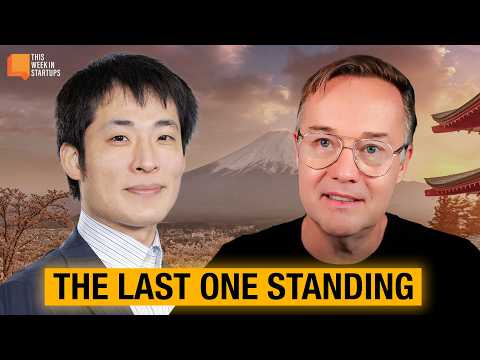
“I would say, I think as of now, the 70 is like the maximum and the reason is, like right now, the cell cultured meat, what they say, is made in like large stirred tank bioreactors and it’s not making steak, it’s making like slurry of cells.” — Yuki Hanyu, 6:43
Clip command
yt-dlp --download-sections "*6:43-7:47" "https://www.youtube.com/watch?v=Yjieo-rT9SU" --force-keyframes-at-cuts --merge-output-format mp4 -o "slurry-of-cells.mp4"Handing out DIY lab-grown meat manuals at Comic Market
“Yeah, and I was basically distributing this manual in Comic Market.” — Yuki Hanyu, 9:59
Clip command
yt-dlp --download-sections "*9:24-10:14" "https://www.youtube.com/watch?v=Yjieo-rT9SU" --force-keyframes-at-cuts --merge-output-format mp4 -o "diy-meat-manual-comic-market.mp4"”That’s actually one of the reasons why a lot of our better funded peers are collapsing”
“Yeah. So that’s actually one of the reasons why a lot of our better funded, uh, better funded peers are collapsing whilst, like, we’re totally healthy. We actually turned profitable last year.” — Yuki Hanyu, 27:47
Clip command
yt-dlp --download-sections "*27:15-28:06" "https://www.youtube.com/watch?v=Yjieo-rT9SU" --force-keyframes-at-cuts --merge-output-format mp4 -o "turned-profitable-last-year.mp4"Why VC “focus” advice is a trap
“That- that’s a trick, because, well, or rather, I would better say, a trap. Because a lot of venture capitalists, when they invest, they basically tell you to focus on something. Which goes against that sort of strategy.” — Yuki Hanyu, 28:41
Clip command
yt-dlp --download-sections "*28:22-29:18" "https://www.youtube.com/watch?v=Yjieo-rT9SU" --force-keyframes-at-cuts --merge-output-format mp4 -o "vc-focus-trap.mp4"Why chicken nuggets are the hardest problem in cultivated meat
“Cheap you have to- you probably have to go with a large-scale factory or something. Yeah, which even if the technology’s ready, you know how many years it takes to build a nuclear power station?” — Yuki Hanyu, 24:00
Clip command
yt-dlp --download-sections "*23:53-24:32" "https://www.youtube.com/watch?v=Yjieo-rT9SU" --force-keyframes-at-cuts --merge-output-format mp4 -o "chicken-nuggets-hardest-problem.mp4"Growing protein in space helped land the seed round
“Oh yeah, so the very short succinct answer would be yes. Like more specifically like the cabinet office Moonshot… not Moonshot, the other one, Stardust project, and this potential application in space is also what led us to get into seed round funding.” — Yuki Hanyu, 37:49
Clip command
yt-dlp --download-sections "*37:25-38:20" "https://www.youtube.com/watch?v=Yjieo-rT9SU" --force-keyframes-at-cuts --merge-output-format mp4 -o "growing-protein-in-space.mp4"Key Points
- Founder University Japan intro (0:13) - Jason opens live from Tokyo with the second Founder University Japan cohort before introducing Dr. Yuki Hanyu of IntegriCulture.
- The cultivated meat landscape (2:04) - Upside Foods, the now-defunct Believer Meats, and Wildtype (cell-cultured salmon) are cited as the major players outside plant-based alternatives.
- Why it hasn’t gone mainstream (2:51) - Hanyu says the core blocker is scaling and unit economics, not consumer demand, which can’t really be tested until sufficient quantity exists.
- Fetal Bovine Serum (FBS) is too expensive to commercialize (4:33) - FBS has only ever been viable for lab-scale research and regenerative medicine, never a commercial food product.
- Current tech tops out around 70% “meat-like” (6:43) - Bioreactor-grown cell slurry can be flavored and textured to approximate meat but isn’t real muscle tissue.
- Craft Essen: IntegriCulture isn’t aiming to be “meat” (8:04) - Their trademarked product is cell-cultured duck liver on a cellular scaffold — chemically the same cells as foie gras.
- Origin story: the Shojinmeat Project (9:24) - Hanyu started a DIY open-source cultured-meat hobbyist movement in 2014, distributing home cell-culture manuals at Comic Market.
- A high schooler’s viral cell culture led to seed funding (11:37) - A Shojinmeat Project participant’s home cell-culture experiment was filmed by Japanese broadcaster NHK, which helped lead to IntegriCulture’s seed funding.
- The three-part ecosystem strategy (12:53) - Open-source Shojinmeat Project, nonprofit Cellular Agriculture Institute of the Commons, and for-profit IntegriCulture divide visionary work, regulatory relations, and proprietary infrastructure.
- Vow Foods’ cultivated quail as a “stunt product” (16:02) - By launching a meat never sold in supermarkets, Vow avoided any existing price benchmark and could charge a premium.
- The industry is in its “stunt phase” (17:19) - Hanyu frames market maturity as stunt products → niche products → mainstream, with the industry currently at stage one.
- Japan’s regulatory framework is close (20:27) - Industry association contacts expect Japan’s Consumer Affairs Agency framework for cell-cultured food by late summer or early autumn 2026.
- Cultivated meat has become part of the US culture war (21:01) - Referencing state-level bans in places like Texas and Florida, tied to broader “anti-woke” politics rather than food safety.
- The market is “0.001%” of the existing meat industry (22:09) - Hanyu argues cultivated meat poses no real economic threat to traditional meat producers despite the political backlash.
- Chicken nuggets are the hardest commodity target (23:59) - Cheap, high-volume products need large-scale factory infrastructure that doesn’t exist yet for cultivated protein.
- Repositioning as a “cell agriculture” company (24:32) - IntegriCulture frames itself broadly to include cosmetics, leather, and biopharma applications, not just cultivated meat.
- Cosmetics as the profitable “waypoint” market (25:38) - Cell-cultured placenta-alternative serum offers a safer, more ethical, more supply-chain-stable alternative to imported human-cell serum.
- Total raised: $15-20M, far below Western peers (27:15) - A fraction of what US and European cultivated-meat competitors have raised.
- Turned profitable last year (27:47) - Cosmetics revenue from day one is why IntegriCulture is healthy while better-funded peers collapse.
- Vision drawn from science fiction, anime, and manga (32:16) - Hanyu says his “polar star” vision for the company, including hand-drawn concept art, comes from a Doraemon-style utopian future.
- Cultural differences in building trust (33:41) - Jason contrasts the US “deal first, friendship maybe” model with Japan’s relationship-first business culture.
- The “Stardust” space project helped secure the seed round (37:49) - A Japanese Cabinet Office space-agriculture initiative connected IntegriCulture to a prestigious regenerative-medicine advisor and helped land seed funding.
- Funding history (39:00) - 2018 seed round from Japanese VCs plus a government-backed sovereign fund; 2020 Series A from AgFunder and Venture University Partners.
Mentions
Companies
- IntegriCulture (4:05) - Yuki Hanyu’s Japanese cell-cultured protein and cell agriculture company.
- Upside Foods (2:04) - US cultivated meat company cited as a major industry player.
- Believer Meats (2:04) - Cited as a now-defunct cultivated meat company, part of the industry’s recent collapse.
- Wildtype (2:15) - Maker of cell-cultured salmon.
- Vow Foods (15:37) - Australian company that launched cultivated quail meat as a “stunt product” with no existing price benchmark.
- Gourmey (18:02) - French company making cell-cultured foie gras, cleared for sale in Singapore.
- Shojinmeat Project (9:24) - The open-source DIY cultured-meat movement Hanyu started in 2014; IntegriCulture’s origin.
- Cellular Agriculture Institute of the Commons (CAIC) (12:53) - Nonprofit arm handling regulatory and academic relations for the ecosystem.
- AgFunder (39:24) - Led IntegriCulture’s 2020 Series A round.
- Venture University Partners (39:32) - Co-investor in IntegriCulture’s Series A.
- Founder University (0:13) - Jason’s founder accelerator program, running cohorts in Tokyo, Riyadh, and the US.
- Every.io (10:26) - Show sponsor; all-in-one back-office platform for incorporation, banking, and payroll.
- MongoDB (21:06) - Show sponsor; pitched for AI-native data modeling.
- Agree.com (30:00) - Show sponsor; contract-to-cash workflow automation, 50% off for TWiST listeners.
Products & Technologies
- Craft Essen (8:04) - IntegriCulture’s trademarked cell-cultured duck liver product on a cellular scaffold.
- Fetal Bovine Serum (FBS) (4:17) - The traditional, prohibitively expensive lab-scale cell-culture medium derived from unborn calves.
- Stardust project (37:49) - A Japanese Cabinet Office space-agriculture initiative that helped connect IntegriCulture to advisors and seed funding.
People
- Dr. Yuki Hanyu (0:13) - Guest; Oxford-trained chemist and founder of IntegriCulture.
- Jason Calacanis (0:00) - Host; solo-hosts this Founder University Japan taping and delivers the Every.io, MongoDB, and Agree.com ad reads.
- Professor Shimizu (37:49) - Regenerative-medicine expert and space enthusiast at Tokyo Women’s Medical University who became a prestigious advisor to IntegriCulture.
- Matt Mullenweg (36:36) - Referenced by Jason as the WordPress creator, as an analogy for open-source-to-commercial transitions.
Surprising Quotes
“The scale is so tiny that it’s - I think it’s 0.001% or even less compared to the existing meat industry. So it’s not even a dent to their industry, but uh it’s just too woke.” — Yuki Hanyu, 22:09
“I would say stunt phase.” — Yuki Hanyu, 17:23
“Yeah, because the reason why I started working on cell culture media is because of science fiction, anime, manga, and video games.” — Yuki Hanyu, 32:16
“You could try for K-pop star then.” — Yuki Hanyu, 42:44
“Some of the copies is still in Comic-Zin in Akihabara still… But also in London Science Museum.” — Yuki Hanyu, 10:14
Transcript
Jason Calacanis: 0:00 Let me drink a hot cup of tea. Sho, that didn’t get picked up on the mic, did it? How’s it going Sho? You okay? Okay everybody, welcome back to This Week in Startups in Japan! It’s great, great to be back in my favorite city in all the world, after my hometown of New York, my new hometown of Austin, that’s Tokyo. Man, I love coming here, it’s always so inspiring. If you’re a founder, if you’re an investor and you haven’t come to Japan, I highly recommend coming because you get to see people building and working with extreme pride and trying to get better at building their product or service every day of their life. It’s called Kaizen, is the art of constant improvement. The founders here in our second cohort of Founder University have been incredible. I was telling my team the first cohort we had so many great companies but very raw, we were just getting started, and the second cohort we saw a lot more companies that were ready to go global and that were- had their company formation in the United States. So I think we’re actually going to find some really great investments or candidates to come to our accelerator. If you want to find out about this Founder University program, we run it twice a year in Tokyo, twice a year in Riyadh, Saudi Arabia, and then twice a year in the United States. founder.university is the web page where you can see all three programs. The sun never sets on Founder University and you don’t even need to be incorporated. It could be you and two of your friends, you’ve built a project, you’ve got a prototype, you vibe coded something in Lovable or Claude Code or Grok or Perplexity Computer, we want to see it all. We love to work with founders in year zero. And I’m super excited today because we have Dr. Yuki Hanyu and he is making cultivated meat. And you’re doing this in a different way than some of the cultured meats that we got to experience in America. I think Impossible Meat was one?
Yuki Hanyu: 1:57 Uh, that is actually plant-based meat.
Jason Calacanis: 1:59 That’s plant-based meat. And then what was the next one that did chicken in America?
Yuki Hanyu: 2:04 Oh, you mean Upside Foods? Ah yes. Yes, so there are major companies in this field is like Upside Foods, Believer Meats, now defunct, but yeah there’s like Wildtype with the cell-cultured salmon.
Jason Calacanis: 2:15 Ah, yes. What was the salmon one called?
Yuki Hanyu: 2:17 Wildtype.
Jason Calacanis: 2:18 Yeah, so this has been around for a couple of years and between the veggie, the fake chicken, fake fish, or mock, I think is the term, it’s gotten some fans in America but it hasn’t broken out yet. Why? Why hasn’t it become very mainstream or has it?
Yuki Hanyu: 2:51 I would say it’s just the technology just not being there because it- the issue has always been the- the scaling and unit price. And also on the other side, lots on the other side, that will be the unit economic stuff that’s not quite working yet.
Jason Calacanis: 3:04 Got it. So, consumers have shown they want it, correct?
Yuki Hanyu: 3:09 Well, that’s another, because unless you have sufficient quantity, you can’t even test for real to the consumers, and until then it will be all, or fantasy, to be honest.
Jason Calacanis: 3:23 There hasn’t been enough scale for a large amount of customers to try it, so it’s hard to understand demand.
Yuki Hanyu: 3:30 Hmm.
Jason Calacanis: 3:30 But I know from my friend group in San Francisco—
Yuki Hanyu: 3:33 Yeah, you can always ask. But what consumers say and what they actually buy are always very different, as you know.
Jason Calacanis: 3:41 Yes, as Steve Jobs taught us, right? If he asked people what they wanted in an iPhone, it would not be beautiful, elegant, and I guess when it comes to food, if you were to ask a chef, or the chef were to ask you what you wanted, it would not be as delicious as omakase and, yeah, correct?
Yuki Hanyu: 3:59 Yeah, I go for like half price or 30% off, things like that.
Jason Calacanis: 4:03 Yes. You want to really have a… so your company, IntegriCulture, is working on a new way to create this food, yes?
Yuki Hanyu: 4:13 Yes, I would say protein. Whether we call our product as meat, that’s a different story.
Jason Calacanis: 4:17 Got it. So for protein. And it’s going to get a little graphic, so people be prepared, if we’re talking about meat. But the ingredients and the process for creating mock meat previously, this was using FBS, in some cases?
Yuki Hanyu: 4:33 Not really. Because if… I would say FBS has been only for laboratory-scale tests, for regenerative medicine, cell culture, those things, and no one has actually made any commercial product with FBS. Too expensive anyway.
Jason Calacanis: 4:54 Too expensive. And this is, of course, Fetal Bovine Serum. That’s the blood of unborn calves. And that’s going to be used for organs in our body, maybe?
Yuki Hanyu: 5:05 Uh, maybe. But even within that field, because such quality control of FBS is really difficult—as you can imagine, how would you control the exact chemical composition of if it’s made that kind of way? So the industry is going to, I mean, medicine, pharma, biopharma, they’re going to chemically defined ones, but very expensive. But it’s medicine anyway.
Jason Calacanis: 5:30 How are some of the other companies built the mock fish—I’m going to say mock fish and mock chicken. How did they make it taste? For me, I tasted the chicken and when they put it in sauce, I didn’t taste very different. It tasted a little different, but I would say maybe it was 70% as good as real chicken to me. So what was the strategy they used for those products?
Yuki Hanyu: 6:00 …specific verticals. So, obviously there’s like, different levels of, I would say imitation level or completeness for cell cultured, cell cultured meat.
Jason Calacanis: 6:10 Cell cultured meat, yes.
Yuki Hanyu: 6:12 Yeah. So, if we are talking about, it’s 100% cell cultured is a little bit hypothetical, but if that is, there is one, that’s kind of like synthetic diamond versus natural diamond. So it’s basically talking about chemically the same thing. So, that’s why, so no wonder it tastes just like chicken.
Jason Calacanis: 6:28 Yes.
Yuki Hanyu: 6:29 And as of now, because of the state of the technology, it’s not 100%, 100% imitation. Somewhere like, say 70%, let’s say.
Jason Calacanis: 6:41 What do you think it’s at now? If you were to pick?
Yuki Hanyu: 6:43 I would say, I think as of now, the 70 is like the maximum and the reason is, like right now, the cell cultured meat, what they say, is made in like large stirred tank bioreactors and it’s not making steak, it’s making like slurry of cells.
Jason Calacanis: 7:05 Yes.
Yuki Hanyu: 7:07 So you have to modify the slurry of cells to taste and look and taste like meat, but it’s not quite the actual muscle tissue.
Jason Calacanis: 7:10 Got it. So right now, anybody who’s a vegetarian’s turned off the podcast, that’s okay. But for us who do like meat, it makes a slurry which has the chemical composition, but now it doesn’t have texture. So it doesn’t have the fabric of meat that we like in the different cut of steak, different cut of chicken. You might like the chicken breast, I might like the chicken wing. The fibers and the structure is another piece of this. Some people were making a 3D printed one or other techniques, but essentially, current state of the art is making this in a big giant vat with chemicals in order to get activated and then you make the slurry and then you put it into chunks, I guess, or different formats.
Yuki Hanyu: 7:54 Well chemicals, but exactly speaking things like glucose, amino acids, which is like something we eat everyday anyway, so yeah.
Jason Calacanis: 8:01 Okay. So you have a different technique for this that you’re pursuing. Tell us about it.
Yuki Hanyu: 8:04 Oh, yeah. So, first of all, we are not aiming, we are not aiming for meat. So, we’re making something, it’s trademarked as Craft Essen. Sounds a little bit German, but it’s just the, well Japanese people sometimes do that kind of thing, just taking any loanwords without even knowing the world, the origin of the word. But anyway.
Jason Calacanis: 8:24 Yeah. I have seen this, sometimes you’ll go to a cafe and it has a name that doesn’t, for the American mind, make a lot of sense, but so tell us the German word you’re using.
Yuki Hanyu: 8:34 Ah, yeah. Craft Essen. So basically craft food.
Jason Calacanis: 8:40 Craft food.
Yuki Hanyu: 8:41 Yeah. So that is basically cell cultured duck liver cells on cellular scaffold that actually looks like this.
Jason Calacanis: 8:47 Got it. So you’re going to make duck liver like pâté?
Yuki Hanyu: 8:51 Uh, yeah. So it’s actually the same cells as foie gras.
Jason Calacanis: 8:53 I love foie gras, but I feel guilty eating it.
Yuki Hanyu: 8:58 Well, if you don’t need to, if it’s… Cell culture?
Jason Calacanis: 9:01 Yes, then I can eat foie gras every day.
Yuki Hanyu: 9:04 Make sure you get enough vegetables as well.
Jason Calacanis: 9:06 Okay, yes. Um, so the first product you’re making is going to be foie gras-ish.
Yuki Hanyu: 9:12 Foie… well, if we decide to go with that marketing strategy, but probably not.
Jason Calacanis: 9:18 Yeah, this is a very niche market. What is the technique you’re using and what’s unique about your technique?
Yuki Hanyu: 9:24 Oh, yeah. So we have a number of ways, but it traces back to our origin as a company. So originally we were not even a company or even a for-profit entity. We were more like an open source cultured meat project. We do DIY cell cultured meat, making cell cultured meat at home, and the manual is right here, by the way.
Jason Calacanis: 9:43 Wow, so there are nerds, that’s a technical word in America, there are nerds who want to do this at home as a hobby?
Yuki Hanyu: 9:51 Oh, yeah.
Jason Calacanis: 9:52 You’re one of them.
Yuki Hanyu: 9:53 Oh, yeah, because I thought it was funny.
Jason Calacanis: 9:57 You thought it was funny to make meat at home?
Yuki Hanyu: 9:59 Yeah, and I was basically distributing this manual in Comic Market.
Jason Calacanis: 10:05 So I would go to a comic store and you have the manual here, I’m holding it up, that has all the different tools you need to make your own meat at home.
Yuki Hanyu: 10:14 Yes, I think some of the copies is still in Comic-Zin in Akihabara still.
Jason Calacanis: 10:18 In Akihabara.
Yuki Hanyu: 10:19 But also in London Science Museum.
Jason Calacanis: 10:21 In the London Science Museum. Hilarious. Um, how many years ago did you start this hobby? One of the most important things you can do as a busy founder is stay focused. You need to prioritize the decisions and workflows that are going to move your company forward, not get lost in extraneous details and minutiae. That’s why the best decision you can make for your business is signing up with Every. Every is the all-in-one platform for incorporation, banking, payroll, benefits, taxes, basically your entire back office. They’re going to keep up with all the bookkeeping and paperwork so you can stay laser-focused on your next big product or hiring features, customers, all that important stuff. If you’re just getting started, they’re going to handle your Delaware C Corp and getting yourself a registered agent all with no legal fees and no delays. And Every has worked with over 1,000 startups already. That’s the kind of know-how and experience you can rely on. So, head over to every.io and stop wasting time on stuff that isn’t growing your company. That’s E-V-E-R-Y dot I-O.
Yuki Hanyu: 11:23 Ah, let’s see. We started back in 2014, it’s called Shojinmeat Project, still ongoing.
Jason Calacanis: 11:29 Okay, so 10 years ago, over 10 years ago you start this open source project and how did that grow and who joined it?
Yuki Hanyu: 11:37 Ah, yeah, all sorts of random people, including high school students. It was actually one of the high school students who did the DIY cell culture at home and NHK came to film her growing cells in her room and that got televised nationwide and that sort of led to the seed funding of IntegriCulture. IntegriCulture, which is a direct spin-off from this Shojinmeat Project, this DIY movement.
Jason Calacanis: 12:07 Got it. So there’s the DIY open source movement created your company. And how many people participated and actually made lab-grown meat at home over the last 10 years?
Yuki Hanyu: 12:18 We haven’t been counting actually because we at least we have…
Jason Calacanis: 12:22 Hundreds? Thousands?
Yuki Hanyu: 12:23 I would say including those who did cell culture in schools after following the teacher’s instructions and the teacher being educated by- trained by the Shojinmeat Project workshop, I just don’t know the number.
Jason Calacanis: 12:36 But maybe thousands even.
Yuki Hanyu: 12:37 Potentially, I don’t know.
Jason Calacanis: 12:39 Yeah. And so this technique, maybe you have- you can show us some of the items you have here, but you’ve got a technique for doing this that’s open source and then you’re going to go to market with it and you’ve raised a seed round, yeah?
Yuki Hanyu: 12:53 Ah yeah, so the- but when- in the early phase, what our worry was that so this cell cultured meat could change the world, but it could also easily get into the GMO situation, like being politicized… some like… basically, if we just let capitalism take this, things go bad. So we need a cleverer way. So what we came up with was to build an ecosystem. So Shojinmeat Project is open source, they do the more visionary stuff like in this like latest zine. Yeah. And then there’s Cellular Agriculture Institute of the Commons, non-profit, they speak with the governments, regulators, and maybe like established industry association. Then there’s IntegriCulture company that builds the physical infrastructure. Yeah, and anyone who wanna develop cell cultured meat could use IntegriCulture company’s capabilities, these like materials, equipment, and in the future, probably production capability.
Jason Calacanis: 13:53 Got it. So you’re starting with the products you need to do it at home or a business if you wanted to start a startup, and then eventually they’ll be able to come and you might have a factory to do this on behalf of some other entrepreneur.
Yuki Hanyu: 14:08 Ah yeah, if things- things go well, what we are gonna get is some hobbyist developing novel sort of cell cultured meat. It could be like pork muscle, tuna fat, healthy meat, something like that. And if it’s- if it’s good, and they wanna- he or she wants to expand, they could come to IntegriCulture company to expand. So that way how to make is open source, how to scale on the business.
Jason Calacanis: 14:33 Got it. It’s almost I think they call it contract manufacturing in the United States.
Yuki Hanyu: 14:39 CDMO, yeah.
Jason Calacanis: 14:40 Yes, so you come up with your formula and then somebody else packages it for you and then there’s distributors after that. You mentioned two different meats together. This is I think something people don’t understand. We’re comparing it to things that we’ve put in our mouth before and flavors that we understand. So I understand tuna, chotoro… Otoro had all these great flavors, seared Toro. Then I also understand Wagyu Miyazaki beef 5A5, a New York strip, Australian beef, different profiles. But somebody could take these two concepts and build a flavor profile that somehow incorporates Toro, Yuzu flavor, and maybe steak, yeah?
Yuki Hanyu: 15:24 Uh, yeah. So if it’s cell cultured, you can design that like meat or better say food in any way you want.
Jason Calacanis: 15:31 So has anybody done anything interesting that you’ve tasted?
Yuki Hanyu: 15:37 Vow Foods is an Australian company, they did like quail meat.
Jason Calacanis: 15:44 Quail.
Yuki Hanyu: 15:44 Yeah, quail.
Jason Calacanis: 15:45 Yes, this little, little bird.
Yuki Hanyu: 15:46 Yeah, yeah.
Jason Calacanis: 15:47 Yes.
Yuki Hanyu: 15:47 Which which has never been on the supermarket as a in the packaged quail has the quail meat.
Jason Calacanis: 15:50 Yes.
Yuki Hanyu: 15:51 And by setting the initial product as the quail meat, they cannot benchmark against any existing category. So they can put the and whatever price they want and also it shows the possibility of this technology.
Jason Calacanis: 16:01 Right.
Yuki Hanyu: 16:02 So there have been some stunts like mammoth meat, but a bit more on the realistic side when it comes to the when they actually distribute stuff, they went with quail.
Jason Calacanis: 16:09 Well, and it’s somewhat controversial and so I’ll be delicate, but in certain cultures, the idea of killing a cow, you know, in some countries is considered a sin and just terrible. Other cultures, you know, in Alaska, seal meat, dolphin meat, whale meat, like is part of the culture, history and then in other cultures it’s looked at as a very big controversy between the West and in fact Japan and in Nordic countries, we don’t, we consider, oh my god, how could you kill a whale or how could you kill a dolphin is very strange. First time I, one of the first times I came to Japan, I went to this Tsukiji fish market before it was popular and I saw this beautiful meat in bricks.
Yuki Hanyu: 16:47 Hmm.
Jason Calacanis: 16:48 And I said, oh it must be this beautiful tuna and then I got closer and closer and it was whale. Beautiful cuts of whale and I was like, whoa, I’ve never seen that before. So sometimes things that maybe are either extinct or maybe controversial.
Yuki Hanyu: 16:54 Yeah, yeah.
Jason Calacanis: 16:55 You can’t sell whale meat in America, it’s not allowed. It’s contraband, just like in some countries now in some places foie gras is considered too cruel to create and they don’t let people do it. So have people started to think about that? You know, dolphin meat, whale meat, etc. These are things that people are just not able to access, let’s say.
Yuki Hanyu: 17:01 Yeah. So those things are on the possibility as a niche market. So the market has to develop. It starts with some like stunt products.
Jason Calacanis: 17:10 Yes.
Yuki Hanyu: 17:11 Then niche products, then something a bit more mainstream before going to the actual mainstream. So the industry has to like take each steps to reach the mainstream.
Jason Calacanis: 17:19 What’s where what stage are we in now? Are we in the stunt phase?
Yuki Hanyu: 17:23 I would say stunt phase.
Jason Calacanis: 17:24 Got it. So are you able to… Is it possible to buy many of these stunt meats in supermarkets now?
Yuki Hanyu: 18:02 Well, right now in Japan because the food regulation is not ready yet, so it’s not there. In Singapore, some, yes, with Vow Foods and Gourmey, which is a French company that makes cell-cultured foie gras, they’ve got the clearance, regulatory clearance, but I don’t think they have put it on the market yet.
Jason Calacanis: 18:23 Have you—oh, you haven’t tried it yet or have you tried it?
Yuki Hanyu: 18:25 Vow Foods’ quail meat, yes.
Jason Calacanis: 18:27 How was it?
Yuki Hanyu: 18:28 Well, I enjoyed it, although because it’s a stunt meat, would I eat it every day or regularly? Probably not, because it’s expensive.
Jason Calacanis: 18:36 Ah, yeah. What is it per pound versus real quail?
Yuki Hanyu: 18:43 I don’t know the price of real quail, but anyway, so that’s the whole point. But anyway, it’s multiple times the cost of poultry or chicken and partially because it was in a fancy restaurant.
Jason Calacanis: 18:57 Ah. Yeah, so it was a good experience. Yes. It’s also interesting, maybe you wouldn’t normally use a larger quantity or a different format. For example, to use A5 incredible Kobe beef or Wagyu meat, Miyazaki beef in a hotdog or for like a bacon or some common meat, or you know, to make corn beef hash, you would never use it. It’s too high quality. It’d be offensive to use it. So you could have maybe more accessibility. You could have a hotdog that’s a Wagyu hotdog. This might be the best idea ever. Maybe I should contract manufacture this.
Yuki Hanyu: 19:24 But actually, when it comes to those stunt products, it doesn’t have to be just food that you are selling. It could be part of a bigger experience. Like, for example, have you heard of a video game called Cyberpunk 2077?
Jason Calacanis: 19:45 Yeah, of course.
Yuki Hanyu: 19:47 Yeah, so basically if there’s some sort of special event of Cyberpunk 2077, and as part of the event is this cell-cultured meat. So basically, you’re selling not just the cell-cultured stuff itself, but you’re selling the whole experience.
Jason Calacanis: 19:58 Got it.
Yuki Hanyu: 19:59 So that’s the sort of the approach we have to take for these like stunt market.
Jason Calacanis: 20:04 When will the regulatory framework make it possible to put these in more supermarkets and more restaurants?
Yuki Hanyu: 20:13 Ah, yeah. So you mean in Japan, right?
Jason Calacanis: 20:16 Yeah.
Yuki Hanyu: 20:17 Ah, yeah. So that depends on what Consumer Affairs Agency say, but they’ve at least had the hearing session to consumer groups already.
Jason Calacanis: 20:26 Okay.
Yuki Hanyu: 20:27 And so the industry association people says, end of this summer, or maybe beginning of autumn. So it’s like very close, I would hope.
Jason Calacanis: 20:37 Yeah. In America, and maybe you know about this more than I do, there were some places like Florida or Texas that wanted to ban these things, yes?
Yuki Hanyu: 20:47 Yeah, yeah.
Jason Calacanis: 20:48 I don’t know if those have passed or those are controversial. social I think.
Yuki Hanyu: 21:01 Yeah, because it’s - it has become a part of the culture war in the US.
Jason Calacanis: 21:05 Ah. The founders I’m talking to are shipping code faster than ever thanks to AI. But one big important question remains: if every feature you write and ship has to slow down for an overwhelming database, what’s the point? But fear not, the solution is MongoDB. Instead of wrestling with rigid schemas and painfully reworking antiquated data structures and formats, MongoDB’s native data model perfectly mirrors the language LLMs are already speaking. MongoDB gives you the flexibility to ship at the speed of AI. The ACID compliance guarantees you actually get to sleep at night while it scales to handle massive Fortune 500 workloads. And the best part is, developers swear by it. Literally. I can’t use the actual words they said in this ad, so let’s just call it a really great database. Start building at mongodb.com/ai. Because it seems woke to have mock meat.
Yuki Hanyu: 21:58 Yeah.
Jason Calacanis: 21:59 As opposed to it might taste better or it might be more interesting or it might be more luxury product. It could be framed as those, but people are trying to protect the cattle industry maybe.
Yuki Hanyu: 22:09 Uh, well, to be honest though, the - well I talked about the scale scale earlier. And the scale is so tiny that it’s - I think it’s 0.001% or even less compared to the existing meat industry. So it’s not even a dent to their industry, but uh it’s just too woke.
Jason Calacanis: 22:32 How many cycles do we need to do, sprints, to get it to be the same price as the equivalent product today, do you think?
Yuki Hanyu: 22:43 Uh, yeah. So, sprints…
Jason Calacanis: 22:45 Or years. You know, how many, you know, revisions do you still need? You know, do you have to do maybe 10 revisions, 5 revisions every six months and, you know, two or three years from now, it’ll be same price for a steak or chicken breast? Yeah.
Yuki Hanyu: 22:59 Uh, yeah. So actually what could happen is that because - because the existing meat price is also a moving target because of all the climate change and geopolitical this and that and yeah, so…
Jason Calacanis: 23:11 Well let’s assume meat prices, you know, continue to go up maybe 5% a year. So it’s, you know, going to double every 10 years, I think is what it’s done previously. Yeah.
Yuki Hanyu: 23:22 Certain meat categories like eel, foie gras, I think the price parity is close. And when it comes to like regular beef, if we’re talking about Wagyu beef, things like that, it - it also depends on the texture, but I would say like 10 years or so, but it also depends on the - the branding, actually.
Jason Calacanis: 23:44 Ah.
Yuki Hanyu: 23:45 Yeah, because it’s actually a - paying for the brand rather than the meat itself when it comes to Wagyu and those like ex - expensive beef.
Jason Calacanis: 23:51 Right. Let’s just go with - let’s go with chicken.
Yuki Hanyu: 23:53 Yeah.
Jason Calacanis: 23:54 So chicken’s a commodity, you know, people make chicken salad, they make chicken breast, they make chicken nuggets.
Yuki Hanyu: 23:59 That’s the hardest one. So it could be…
Jason Calacanis: 24:00 Why is it the hardest one?
Yuki Hanyu: 24:00 Cheap you have to- you probably have to go with a large-scale factory or something. Yeah, which even if the technology’s ready, you know how many years it takes to build a nuclear power station? Ah, because it’s cheap. So you have to meet it…
Jason Calacanis: 24:11 Yeah.
Yuki Hanyu: 24:12 Yeah, so you- you would be talking about that kind of things.
Jason Calacanis: 24:14 Like a decade.
Yuki Hanyu: 24:15 Yeah, yeah.
Jason Calacanis: 24:16 Uh or two maybe.
Yuki Hanyu: 24:17 And we don’t have that technology yet.
Jason Calacanis: 24:18 Hmm. So when do you as the startup, you’ve raised the seed round. Yeah, yeah. How do you stay in business long enough to, you know, uh get there? Cuz obviously you’re enabling other people, so you’re selling the tools, yeah, and the system?
Yuki Hanyu: 24:32 So uh by- by- by making ourselves a cell agriculture company rather than cell-cultured food or cell-cultured meat company.
Jason Calacanis: 24:44 Got it.
Yuki Hanyu: 24:44 Yeah, so uh there’s this kind of like n- nested uh like um fields of ideas. So cell-cultured meat is a future form of cell-cultured cell- cell-cultured food. And outside this cell-cultured food, we have cell-cultured cosmetics, cell-cultured leather maybe, like- like uh- well this is plastic but anyway. And even outside that, uh we have regenerative medicine um and other like biopharma stuff. So we are a cell agriculture company rather than cell-cultured food or even cell-cultured meat.
Jason Calacanis: 25:21 Got it. And leather could be really interesting, yeah. And beauty.
Yuki Hanyu: 25:24 And cell-cultured cosmetics.
Jason Calacanis: 25:25 Uh-huh. Yeah, that’s one- one of the ways of like keeping us alive. Tell me about the cosmetics. Is it a better product, a cheaper product? Are you making things that can’t be made or to- today and you’re gonna have breakthrough products?
Yuki Hanyu: 25:38 Um, yeah. So- so- so it’s also resonates with- with what we discussed a little bit earlier about this previously impossible sort of food. So uh when it- when it comes to cell culture, we can make uh- some of the- yeah, one of the most common um beauty ingredients is like placenta, in- in Japan and East Asia. Um but that’s- that alone, like safety’s one, um ethical side is another. Um but if it’s cell culture, it’s basically solves all these problems. And another is that like um- becoming more important but uh supply chain stability is another. It is in competition to uh so-called stem cell serum, a lot imported from Korea.
Jason Calacanis: 26:22 Got it. So this is something for your face or something or this ingredient would go into another product.
Yuki Hanyu: 26:28 Uh, or to our clients.
Jason Calacanis: 26:30 To your client’s product.
Yuki Hanyu: 26:31 Yeah. And that one’s more supply chain stable because we don’t- we don’t need to import from Korea. And the existing stem cell serum is human cells. But that one’s like vaccine-grade eggs, placenta cells, so safer.
Jason Calacanis: 26:46 Yes. Uh-huh. So better supply chain, more ethical, less controversy, safer. So many things to navigate.
Yuki Hanyu: 26:57 Yeah, just with this particular um brand alone.
Jason Calacanis: 26:59 Right. And we could develop-
Yuki Hanyu: 27:00 all sorts of other products using different cells.
Jason Calacanis: 27:03 You can make something better.
Yuki Hanyu: 27:05 Yeah.
Jason Calacanis: 27:06 Fascinating.
Yuki Hanyu: 27:07 Yeah.
Jason Calacanis: 27:08 And so how much money have you raised so far? Who’s the investors? Is it venture capital yet? Or just crazy seed investors, crazy angel investors?
Yuki Hanyu: 27:15 Yeah. So so far, our fundraise so far have been something like, uh, somewhere between fifteen to twenty million USD, which is far, uh, smaller compared to our, like, industry peers in the US or, like, in Europe.
Jason Calacanis: 27:31 Yeah. But that’s still a big amount of money for Japan. Um, yeah, yeah. And you have how many years to figure all this out? Two years to make it work? Or—
Yuki Hanyu: 27:41 Initially we, like, uh, we have been doing cosmetics from day one.
Jason Calacanis: 27:44 Oh, so you have revenue now.
Yuki Hanyu: 27:46 Oh, yeah, yeah.
Jason Calacanis: 27:47 Oh, amazing.
Yuki Hanyu: 27:47 Yeah. So that’s actually one of the reasons why a lot of our better funded, uh, better funded peers are collapsing whilst, like, we’re totally healthy. We actually turned profitable last year.
Jason Calacanis: 27:58 Oh, congratulations. That’s fantastic because you picked a good beachhead market. You have a good first market, ideal customer.
Yuki Hanyu: 28:06 Mm, yeah.
Jason Calacanis: 28:08 And then you wait for the other things to show up. And also the contract manufacturing and building the tools, a little bit in the future, but—
Yuki Hanyu: 28:14 Yes, we already provide the tools, but still—
Jason Calacanis: 28:17 Yes. And that business could be big too, yeah?
Yuki Hanyu: 28:21 Ah, yes.
Jason Calacanis: 28:22 Excellent. So this is an important lesson for a lot of founders. We talked earlier, like, sometimes you have a big vision, we have one founder here who wants to put robots for elder care, you know, and the robots aren’t going to be ready for one, or he thinks one year, I think two, maybe reality’s three. What can you do before the future’s ready, right? Before the technology’s ready? You have to find really good ideas.
Yuki Hanyu: 28:41 That- that’s a trick, because, well, or rather, I would better say, a trap. Because a lot of venture capitalists, when they invest, they basically tell you to focus on something. Which goes against that sort of strategy.
Jason Calacanis: 28:54 Right. Only focus on one thing as opposed to have a series of, what I call, waypoints, a series of islands you can stop at before you get to the New World. Yeah.
Yuki Hanyu: 29:04 Yeah. So, like, in early days, like if they say 2020 or something, like, we— there has been, like, even from within the company, to focus on meat rather than doing cosmetics.
Jason Calacanis: 29:18 Ah. So you had to, as the founder, get everybody around the right idea that can generate revenue today.
Yuki Hanyu: 29:24 Uh, yeah, because there will be this hype cycle stuff. There will be hype crash. Yeah. So we need to be ready by then.
Jason Calacanis: 29:30 Got it. Yeah. And is this your first company? Your first startup?
Yuki Hanyu: 29:34 Oh, yeah.
Jason Calacanis: 29:34 Okay. What have you learned? And then we’ll open up to questions. If you have questions, you can line up at the microphone. What- what have you learned? What mistakes have you made that you’ve corrected in terms of company building, raising capital, you know, and, uh, getting product-market fit? Or mistakes. Painful. Our show is filled with helpful and practical advice for founders, but there’s another reason to become a regular Twist— Listener, amazing deals on essential products to help you run your company more effectively. So I’m super excited to announce our new deal with agree.com, the all-in-one contract-to-cash flow workflow. Go right now to agree.com, sign up and tell them you’re a J-Cal listener, and they’ll give you 50% off for life. Agree is the number one fastest way to go from contract to cash. That means gathering e-signatures, invoicing, billing, payments, and revenue recovery. No more jumping between four or five different platforms just to write out a contract, get it signed, then set up billing and start sending out invoices. 99.64% of all invoices on the entire platform are paid within just 10 days. So, if you want to stop chasing invoices, go right now to agree.com, and if you tell them Jason sent you, you’re going to get 50% off for life.
Yuki Hanyu: 30:51 Team building really matters. That’s one. And team building starts from day zero of like, okay, let’s do something. Within yourself, decide to do something, which could be a startup, could be a nonprofit or whatever. And but doing it alone, so-called solopreneur, possible, but eventually you need to find like someone else to work with.
Jason Calacanis: 31:05 Yes. And you have to get it right. If you get it wrong, you have to correct very quickly.
Yuki Hanyu: 31:10 Quick iteration is everything.
Jason Calacanis: 31:13 Quick iterations. Yeah.
Yuki Hanyu: 31:15 Yeah. And even with quick iteration, I would say something like some I would say the polar star or whatever is like the general direction.
Jason Calacanis: 31:27 Yes.
Yuki Hanyu: 31:28 Yeah. I think that’s something you call a vision. Yeah. For us it was easy because I could do it like like I also do like computer graphics. So I basically showed all these images that I made for fun and that’s where we’re going to and
Jason Calacanis: 31:46 Right. Like Elon says we’re going to Mars, but before Mars, we have to get a rocket and put some stuff in space and then we can have Starlink to help solve a problem with the rocket. That generates revenue.
Yuki Hanyu: 32:04 Yeah, by drawing this kind of things, it actually gives you an idea of okay, that’s the future. What component technologies do we actually need?
Jason Calacanis: 32:12 So working backwards from science fiction in a crazy vision.
Yuki Hanyu: 32:16 Yeah, because the reason why I started working on cell culture media is because of science fiction, anime, manga, and video games.
Jason Calacanis: 32:22 Oh, really? Because you were scared about the future? Like or the nightmare future was in it or a positive future?
Yuki Hanyu: 32:27 Positive future. Got it. Utopian future. Yeah, like in Doraemon.
Jason Calacanis: 32:30 Yeah. Very nice. Okay, so some questions. So tell me about how you get to product market fit while we wait for the questions.
Yuki Hanyu: 32:36 Yeah, to be honest, when it comes to food, it’s not in product market fit yet because we cannot even put product on the market yet. So, that’s a work in progress. But when it comes to cosmetics, then like it’s lots of like asking conversations, trust building and it’s not at all something like someone with an with an MBA do some something smart and then there’s a deal, it doesn’t work that way. It just takes lots of trust building and asking people like maybe sometimes drinking together and you know that kind of thing.
Jason Calacanis: 33:11 Ah, from the beauty company and you have to go to the beauty company explain what you’re doing and then listen to them and build a trusted relationship.
Yuki Hanyu: 33:19 Yeah, yeah and it’s all go they all go in parallel.
Jason Calacanis: 33:22 Yes, I think it’s very important.
Yuki Hanyu: 33:24 Yeah, and then what we figured out is that when it comes to this kind of beauty products then it’s actually the sales the this hard-earned sales channel is what matters and it’s not actually the patent on the ingredients itself or things like that.
Jason Calacanis: 33:41 Ah, they have worked hard to build a brand, have distribution, and they’ve built trust on their side of the business. You build trust with them then they can take what you’ve done and give it to their customers. But they have to trust you first. I’ve learned this lesson you know also in the Middle East when I first started going to the Middle East they said it’s a very family dynamic and people want to build a relationship then do business. In America you do business, you do a deal, and then you decide if you want to be friends. And I think in Japan you become friends as you’re doing business. It’s three different cultures, it’s all slightly different. You know in America everybody fights to be an investor in your company, we become investors and then maybe we become friends or not. Maybe I’ll just be very distant and you have some venture capitalists who are just you know put money in and they send you emails and talk about the business but no friendship, no no birthday card. You know and then others they send you when you have a baby, baby clothes with the name of the venture capital firm that backed you. Sequoia would send a onesie. So when my we had our baby they sent a cute onesie with the Sequoia Capital logo on it. I thought it was very cute, very fun. Um but I think we now have a framework. Do a deal, build a relationship, that’s America. Build a relationship as you’re building a business together and then maybe in the Middle East in Saudi, UAE, it’s get to know each other then build the business. Very interesting, you know different in each case. Uh I don’t know about Europe, I don’t think they’re building businesses there anymore. Okay so tell us your question, your name, your company and your question please.
Audience Member (Natty): 35:25 Hi, I’m Natty, building Playpin so we make anyone easy to build robots. So I actually have two questions that I’m quite curious about because we also do open source community. So one is how did the open source community react to your company’s commercialization?
Jason Calacanis: 35:40 Oh good question, yes. So you had the open source community for 10 years plus and then you made a for-profit, how did they respond?
Yuki Hanyu: 35:47 From the early phase we had this like overall framework of how things should be, like this open source community doing like all the bio art and visionary vision-earing. And then we have this non-profit… profit organization, talking with academia and maybe the government, then there’s this for-profit entity that does the physical infrastructure, therefore, like IP, how to make open, how to scale proprietary, and we had all this kind of overall framework already like shown from early phase, so a lot of the members, it wasn’t a surprise for most of the members.
Jason Calacanis: 36:26 Got it. So good communication. Okay, next question. You had a clear vision, in a way.
Yuki Hanyu: 36:31 Very clear, yeah.
Jason Calacanis: 36:32 What was the impact of the open source angle when you were raising from VCs?
Yuki Hanyu: 36:36 They didn’t really care, to be honest. Yeah, so because it’s not the, they knew that it’s not this initial IP that really matters. It would be more about the IP to be generated as the company operates.
Jason Calacanis: 36:51 Yes. Yeah, I think we’ve seen that many times. Open source project, WordPress powers a lot of the web, my friend Matt Mullenweg created it, and everybody was using it, but he made the commercial version and hosted version. And so VCs were like, yeah, if a bunch of open source people want to go through the trouble of forking it or standing it up themselves, okay, fine. But the businesses don’t want to do that. They want to, you know, have a partner who they can trust, right? Back to trust. So great questions, awesome. Yeah. Okay, we’ll take another question.
Audience Member (Richard): 37:25 Hello, Richard from Nakatomi a cyber security company. My question is around like are you working with organizations like NASA or JAXA to do this type of like culture in space because that would be actually a really great use case because getting protein to the astronauts especially if they’re on the moon.
Jason Calacanis: 37:45 Such a good question. Yeah, cause you can’t bring cows to space yet.
Yuki Hanyu: 37:49 Oh yeah, so the very short succinct answer would be yes. Like more specifically like the cabinet office Moonshot… not Moonshot, the other one, Stardust project, and this potential application in space is also what led us to get into seed round funding. Mainly as an open source project, I was pitching for this potential space application of this technology and that made it to like television broadcast. And a professor in Tokyo Women’s Medical University, Professor Shimizu, and he’s a… himself being an expert in regenerative medicine, he’s also an like space enthusiast. And he decides to call us in to Tokyo Women’s Medical University. We got there and basically we agreed to work together. So we now have a very like prestigious advisor working with us.
Jason Calacanis: 38:46 Fantastic. Yeah.
Yuki Hanyu: 38:48 And that basically led to the seed round.
Jason Calacanis: 38:50 Great. So you built up your credibility
Yuki Hanyu: 38:53 Yeah.
Jason Calacanis: 38:54 and then were able to raise. Did you raise from American VCs, Japanese based VCs or both?
Yuki Hanyu: 38:59 In 2018 In the seed round, we raised on the Japanese VCs and even the government-backed VC as well, sovereign VC, I would say.
Jason Calacanis: 39:08 Sure.
Yuki Hanyu: 39:09 Yeah. And because of our own administrative capability shortcomings, we couldn’t take international ones. Although one of the international VCs said yes, but was kind of oversubscribed.
Jason Calacanis: 39:23 Ah.
Yuki Hanyu: 39:24 Yeah. So but in the series A, in the next one in 2020, we got AgFunder on board…
Jason Calacanis: 39:31 Nice.
Yuki Hanyu: 39:32 …and also Venture University Partners.
Jason Calacanis: 39:33 Great. Awesome. All right, one more question.
Audience Member (Howard): 39:36 Hello, I’m Howard from LFVA OS. We build the student recruiter for tutoring agencies. My question is that in traditional meat or even for processed meat, there’s a certain hierarchy that is based on both cost and also public perception. Do you think this hierarchy would exist for like cultivated or lab-processed meat and what do you make of this trend?
Yuki Hanyu: 39:56 Ah, yeah. So it will be more of a future stuff because we’ll be talking about all the mainstream phase. So I have to admit that it will be a bit of a fantasy that I’m gonna say, but I think it will be a separate category. At least those existing brand owners don’t want cell-cultured presence to come get into their field. So it would inevitably, cell-cultured meat would be outside the existing hierarchy. And then comes the questions like, should we call our product even meat? It’s actually another, and as of now Ministry of Agriculture, Forestry and Fisheries, or MAFF in Japan, they are refraining from calling it meat. They call it cell-cultured food.
Jason Calacanis: 40:46 Got it. So that’s great question. Yeah, I think we had in America, I think it was Burger King, somebody can look it up, Bianca. I think it might have been Burger King that had either Beyond Meat or the Impossible Burger. Maybe you know.
Yuki Hanyu: 41:04 Hmm.
Jason Calacanis: 41:05 It was Impossible Burger. And do they still do it? I wonder. Yes. They do. Yeah. I think it’s been successful. Hamburger, I think, is the Holy Grail. If you can make a great hamburger…
Yuki Hanyu: 41:18 Yeah.
Jason Calacanis: 41:19 …that’s going to be…
Yuki Hanyu: 41:20 Yeah.
Jason Calacanis: 41:21 Amazing. Maybe 10 years?
Yuki Hanyu: 41:23 Yeah, so because it will be a commodity product, so it takes time to get to the price point, but that is the Holy Grail, yes.
Jason Calacanis: 41:32 And it could be healthier.
Yuki Hanyu: 41:33 Yeah.
Jason Calacanis: 41:34 And it could be designed to be very healthy. There’s a product in Japan only…
Yuki Hanyu: 41:40 Hmm.
Jason Calacanis: 41:41 …it’s Coca-Cola…
Yuki Hanyu: 41:43 Yeah.
Jason Calacanis: 41:44 …that helps you lose weight.
Yuki Hanyu: 41:46 Hmm.
Jason Calacanis: 41:47 What’s it called? Coca-Cola Special? Coca-Cola Plus. I just got it at 7-Eleven. I’m sure that someone in America has decided to dope Coke with GLP-1 or something.
Yuki Hanyu: 41:55 Yeah.
Jason Calacanis: 41:56 No, this is Coca-Cola though with fiber in it. Somebody look it up and tell me the name. The Impossible Whopper is one of their most successful. Coca-Cola Plus. Has anybody tried it? Raise your hand if you have. Wow, incredible. So we just heard the Impossible Whopper is one of their most successful. It’s in a white label, this Coca-Cola, Coca-Cola Plus. You have. What do you think?
Yuki Hanyu: 42:05 Just like Coke.
Jason Calacanis: 42:07 It’s incredible. I had it, and it—Coke Zero tastes like better than Coke, Diet Coke. It’s like more syrupy and delicious. And then Coke—what’s this one called? Plus. Coca-Cola Plus has I think fiber in it and no calories. And you lose weight from it. I drank it, I was working last night, it was a little bit late and I had a Coca-Cola Plus on ice. And I said, ‘Oh, if they had this in America, I would be even slimmer, like a model, like a fashion model slim. I would be like runway slim.’
Yuki Hanyu: 42:44 You could try for K-pop star then.
Jason Calacanis: 42:47 Like K-pop, I could be—we could start a K-pop band together. We’ll be incredible. Yeah.
Yuki Hanyu: 42:53 Yeah.
Jason Calacanis: 42:54 You could be the nerdy, I could be sporty K-pop member. We just need—how many members do we need? Three more?
Yuki Hanyu: 42:58 You need five, right?
Jason Calacanis: 43:00 Oh, possibly.
Yuki Hanyu: 43:01 Possibly five.
Jason Calacanis: 43:02 Possibly five. We could be like the old entrepreneurial K-pop band. All right, listen, this has been a pleasure. I wish you great success. Let’s give a round of applause to Dr. Yuki.
Yuki Hanyu: 43:09 Thank you.
Jason Calacanis: 43:10 Okay. And we’ll see you next time on This Week in Startups from Japan.