SpaceX and Cursor team up to topple Claude Code | E2279
SpaceX and Cursor team up to topple Claude Code | E2279
Summary
Alex Wilhelm and Lon Harris (with Jason Calacanis off for the day) lead with the biggest deal in months: SpaceX and Cursor have signed a partnership that’s structured as a $10 billion model-development collaboration plus a call option to acquire Cursor for $60 billion by the end of 2026. They unpack why xAI, with its Colossus compute glut and weak coding model performance, desperately needs Cursor’s Composer 2 model and developer mindshare — and how this trade of “compute for talent” reshapes the AI coding race against Anthropic’s Claude Code, OpenAI’s Codex, and Gemini. Alex frames the bet as a step toward recursive self-improvement: whoever gets best at AI-models-that-write-AI-models wins everything.
The middle of the episode is a deep Bittensor double-header. Chris Zakaria and Brian McGrendel from Bitstarter join from a Halloween-orange-lit Gen Z hype house podcast studio to break news live: Bittensor co-founder Jacob has personally funded a new ML-research track on Bitstarter that will register subnet slots for top machine-learning teams, partnering with Macrocosmos and Subnet 4 Targon (free compute via Targon OS / Targon Virtual Machine) to crowdfund teams in three-per-quarter cohorts. Then Ning Ren of Subnet 11 Trajectory RL explains how his subnet runs “seasons” of adversarial competition between agents writing skill files (the .md instruction files Anthropic launched) and benchmarking them in sandboxed puzzle boxes, with a self-learning meta-skill already beating the SOTA after just one week.
The closing news block covers AngelList’s new USVC fund (a $500-minimum private-market venture bundle that competes with Robinhood’s publicly traded venture vehicle but may also be locked out of OpenAI), Anthropic and Amazon’s new $5 billion / 5 GW / $100 billion-spend-over-10-years AWS deal, Google’s eighth-generation TPUs split into TPU 8T (training) and TPU 8I (inference), Cerebras refiling for IPO, Etched’s Transformer-specific ASIC, and Apple’s leadership transition: Tim Cook to Executive Chairman, hardware lifer John Ternus (24 years, lead designer behind the MacBook Neo) to CEO — promptly rechristened “John Apple” by Lon.
Highlights
SpaceX-Cursor: a $10B partnership and a $60B call option
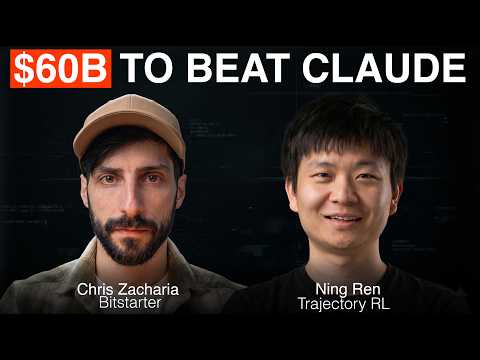
“SpaceX and Cursor are partnering on AI models… they’re going to either pay Cursor $10 billion for this model collaboration that they’re working on, or they’re going to, at the end of designing this model, just buy Cursor out for $60 billion by the end of 2026.” — Lon Harris, 3:31
Clip command
yt-dlp --download-sections "*3:31-4:35" "https://www.youtube.com/watch?v=Xhl8gVk3yrc" --force-keyframes-at-cuts --merge-output-format mp4 -o "spacex-cursor-deal.mp4"Why $10B is “pocket change” for SpaceX
“If you want to build the AI model that can improve itself long term, you’re going to need to have at a minimum state-of-the-art coding shops if not the market-leading option. And xAI just isn’t there. So maybe a $10 billion bet for a company that’s supposed to be worth $1.25 trillion is — this is an odd thing to say, it’s pocket change.” — Alex Wilhelm, 12:30
Clip command
yt-dlp --download-sections "*12:30-15:00" "https://www.youtube.com/watch?v=Xhl8gVk3yrc" --force-keyframes-at-cuts --merge-output-format mp4 -o "spacex-pocket-change.mp4"Bittensor’s biggest weakness IS its biggest strength
“If your system only works when people play by the rules your system doesn’t really work. Bittensor you have to design your product as if it’s for the people exploiting it… it’s almost like a jiu-jitsu move whereby when people go to exploit you you use that power against them and it gets stronger.” — Chris Zakaria, 42:52
Clip command
yt-dlp --download-sections "*42:52-44:30" "https://www.youtube.com/watch?v=Xhl8gVk3yrc" --force-keyframes-at-cuts --merge-output-format mp4 -o "bittensor-jiujitsu.mp4"Subnet investors taking 20-30% of emissions in perpetuity
“A subnet slot can cost say a quarter of a million dollars… If you have to go to investors to say hey, can you give me that initial startup capital so I can buy a subnet? Their terms are often like okay we’ll give it to you, we’ll give you that initial 100k but you have to give us 20% of emissions in perpetuity. And then suddenly you get like a small group of investors owning like 80% of the things on the protocol.” — Chris Zakaria, 23:30
Clip command
yt-dlp --download-sections "*23:30-25:00" "https://www.youtube.com/watch?v=Xhl8gVk3yrc" --force-keyframes-at-cuts --merge-output-format mp4 -o "bitstarter-investor-terms.mp4"Skills are markdown — and that’s the whole point
“I remember when Anthropic first announced these. They were like, ‘A skill.md file is a text file with words in it.’ And I’m like, ‘What am I missing here? This sounds useless. Why would you ever want that?’ And then it turns out that, one, they were right and I was wrong, but also, the power of the written word.” — Alex Wilhelm, 62:20
Clip command
yt-dlp --download-sections "*62:20-63:10" "https://www.youtube.com/watch?v=Xhl8gVk3yrc" --force-keyframes-at-cuts --merge-output-format mp4 -o "twist-power-of-skill-md.mp4"Tim Apple is out, John Apple is in
“Tim Apple’s out, John Apple is in. I’m insisting — we have to call the new guy — his name is John Ternus, but I think we should just switch over to calling him John Apple now. I think whoever’s the CEO of Apple, that becomes your last name. I think that’s only fair.” — Lon Harris, 69:21
Clip command
yt-dlp --download-sections "*69:21-70:20" "https://www.youtube.com/watch?v=Xhl8gVk3yrc" --force-keyframes-at-cuts --merge-output-format mp4 -o "twist-john-apple.mp4"Key Points
- SpaceX-Cursor structure (3:31) - $10B model-development partnership now, $60B option to fully acquire Cursor by end of 2026
- Why xAI needs Cursor (4:35) - Composer 2 ships competitive against Codex/Claude Code; xAI’s Grok-Code Fast 1 has fallen off the map; xAI brings Colossus compute, Cursor brings developer mindshare and ~$2B ARR
- The narrative play before SpaceX IPO (8:51) - Repositions xAI as a partner-and-potential-owner of a multi-billion-dollar revenue company, ameliorating concerns ahead of SpaceX going public
- Recursive self-improvement thesis (12:02) - The closer you get to AI models that write AI models, the closer you get to AGI — so coding-shop quality is the central bet
- Anthropic capacity crisis (14:01) - Anthropic throttling and turning users off; GitHub Copilot stopped signing up new individual paid accounts; the “compute glut” at xAI could become the prize
- OpenRouter coding-model leaderboard (14:53) - Anthropic, z.ai (GLM-5.1), Alibaba (Qwen), OpenAI GPT-5.4 Codex, Google, Moonshot, Xiaomi, MiniMax, xAI, DeepSeek — a strikingly Chinese-heavy top 10
- Starcloud orbital data centers (14:36) - TWiST 500 company powering data centers from the sun in space; Kardashev Type-2 framing
- Bitstarter as Subnet YC (29:04) - Free expert review including from co-founder Jacob, then a live crowd-funded launch show that has drawn up to 2,000 viewers, second only to Jacob’s “novelty search”
- 128-subnet hard cap, expanding to 256 (36:58) - Currently capped, but Jacob has confirmed expansion to 256 soon, then 1,024; deregistration churn already brings ~3 new subnets per week
- Bittensor emission split (32:41) - 41% miners, 41% validators, 18% subnet owners; Bitstarter takes only 3% for the first 90 days vs. typical investor 20-30%-in-perpetuity
- ML research track funded by Jacob (35:00) - Live news drop: Bittensor co-founder personally bankrolling subnet-slot registrations for top ML research teams, with Targon offering free compute and Crucible Labs (run by Ala) bringing confidential compute
- Trajectory RL = Subnet 11 (45:36) - “A new type of software company building software not for humans but for AI agents” — skills as the next operating-system platform after smartphones
- Sandbox / puzzle-box benchmarks (48:28) - Subnet 11 runs identical puzzles with the same model but different harnesses (Hermes, Co-work) to isolate the skill file’s contribution
- Fast skills, thin harness (49:41) - Theory that the harness is just an OS handling I/O and resolver decisions; the real intelligence lives in the skill space
- Self-learning meta-skill beats SOTA in one week (54:51) - Trajectory’s first season already produced a self-learning skill outperforming AutoGPT and other off-the-shelf options on the leaderboard
- AngelList USVC fund (65:07) - $500 minimum, illiquid like a venture fund (quarterly repurchases only), bundle approach using power-law math; competes with Robinhood’s publicly traded venture vehicle
- Anthropic-Amazon $100B / 5 GW deal (67:09) - $5B investment, 5 gigawatts of compute, $100B of spend over 10 years — maybe enough to fix Claude’s “everyone gets locked out after 10 minutes” crisis
- Google’s TPU v8 split (68:00) - Generation 8 TPUs in two SKUs, TPU 8T (training) and TPU 8I (inference); proof Nvidia won’t take all the chip economics
- John Ternus / “John Apple” (69:21) - Tim Cook becomes Executive Chairman; hardware-engineering SVP since 2001 (UPenn ‘93-‘97, Virtual Research, then 25 years at Apple) takes CEO; led the well-received MacBook Neo at $600
Mentions
Companies
- SpaceX / xAI (3:31) - Buying or partnering with Cursor; xAI absorbed into SpaceX; Colossus supercomputer cited as compute glut
- Cursor (3:31) - $50B current raise valuation; Composer 2 model; ~$2B ARR
- Anthropic (4:35) - Claude Code is the de facto coding tool; new $100B Amazon deal
- OpenAI (4:35) - Codex / GPT-5.4 in the leaderboard; locked out of Robinhood venture fund
- Google (5:47) - Sergey Brin’s “red alert” all-hands on Gemini coding; new TPU v8
- Amazon / AWS (67:09) - $5B Anthropic investment + 5 GW + $100B spend; Trainium and Inferentia chip families
- Bitstarter (16:42) - Crowd-funded subnet incubator on Bittensor (app.bitstart.ai)
- Macrocosmos (27:12) - Brian McGrendel’s primary employer; key Bittensor research org
- Targon (Subnet 4) / Manifold Labs (40:16) - Free-compute partner; Targon OS, Targon Virtual Machine, Intel paper
- Crucible Labs (40:30) - Ala-led confidential compute provider
- Trajectory RL (Subnet 11) (45:36) - Ning Ren’s skills-competition subnet; trajectoryrl.com
- Subnet 24 Quasar (35:02) - Long-context model subnet, $84M FDV, top-10, also backed by Jacob
- AngelList (65:07) - Launched USVC private-market fund; powers many VC firms’ tech stacks
- Robinhood (66:25) - Publicly traded venture fund product locked out of OpenAI access
- Cerebras (69:08) - Wafer-scale AI chip company, refiled to go public last Friday
- Etched (68:51) - Transformer-specific ASIC startup
- Apple (69:21) - Tim Cook to Executive Chairman, John Ternus to CEO; MacBook Neo at $600
- Nvidia (68:00) - Acknowledged dominance threatened by Google TPUs and ASICs
- z.ai (GLM-5.1), Alibaba Qwen, Moonshot, Xiaomi, MiniMax, DeepSeek (18:44) - Chinese AI labs in the OpenRouter top-10
- Plaud (1:48) - NotePin S sponsor
Products & Technologies
- Composer 2 (4:35) - Cursor’s latest in-house coding model; benchmarks ahead of Opus 4.6
- Grok-Code Fast 1 (5:00) - xAI’s previous coding hit, no longer “tip of the spear”
- Claude Code / Codex / Gemini (5:47) - Industry-defining coding harnesses
- Mythos (6:59) - Anthropic’s leaked next-generation coding model (referenced for Discord teen testing)
- Hermes / Co-work (1:13) - Newer coding harnesses gaining traction
- TPU 8T / TPU 8I (68:00) - Google generation-8 chips split for training and inference
- Trainium / Inferentia (68:32) - Amazon’s training and inference silicon
- Skill.md / OpenClaw skills (47:26) - Plain-text instruction files plus optional Python; the unit of competition on Subnet 11
- AutoGPT (54:51) - Reference SOTA self-learning agent that Trajectory’s leaderboard already beats
- MacBook Neo (70:43) - $600 Apple laptop championed by John Ternus
- USVC (65:07) - AngelList’s $500-minimum private market fund
- Starcloud (14:36) - TWiST 500 orbital data center company
- OpenRouter (4:50) - Source for the live coding-model usage leaderboard
- LLM Arena (18:09) - Public comparison platform Brian uses to validate “what’s best”
People
- Tim Cook (69:21) - Stepping down from Apple CEO to Executive Chairman of the Board
- John Ternus (69:30) - Incoming Apple CEO; 24-year hardware veteran; UPenn alum; lead on MacBook Neo
- Sergey Brin (5:47) - Sent Google red-alert all-hands demanding Gemini wins on coding
- Elon Musk (14:53) - Implicit owner of the Cursor option; Kardashev Type-2 vision
- Jacob (29:04) - Bittensor co-founder personally backing the new ML research track and the Bitstarter advisory panel; hosts “novelty search”
- Ala (40:30) - Bittensor co-founder, runs Crucible Labs
- Chris Zakaria (@maxrazzak) (16:42) - Bitstarter founder
- Brian McGrendel (16:42) - Bitstarter founding engineer; Macrocosmos
- Ning Ren (45:36) - Founder/CEO of Trajectory RL (Subnet 11)
- Will and Steph from Macrocosmos (27:12) - Past TWIST guests on the Bittensor ecosystem
- Donald Trump (69:40) - Originator of the “Tim Apple” gaffe Lon revives
Surprising Quotes
“Networks are the more appropriate home for AI than a business which is limited proprietary closed box. Look at how intelligence develops in the natural world. It didn’t develop in a single place it developed through the survival of the fittest natural selection in a distributed system of predator and prey. That’s exactly how we’re building intelligence on Bittensor.” — Chris Zakaria, 43:48
“I’m not even doing code. I’m like doing tweets and Claude is like, ‘Hang on brother, I need a break. Give me 45 minutes.’ I’m like, I’m not taking apart our back end or anything, I’m just…” — Alex Wilhelm on the Anthropic capacity crunch, 14:30
“If you do believe that SpaceX has a chance at building orbital data centers, which we’ve talked about via Starcloud at TWiST 500 company, then you can kind of sketch out a future in which they have the best coding model and the most compute.” — Lon Harris, 14:36
“I literally am not even here to make fun of our President, I just think it’s a very funny thing to call the CEO of Apple Tim Apple or John Apple.” — Lon Harris, 69:40
“If your system only works when people play by the rules your system doesn’t really work.” — Chris Zakaria, 42:52
Transcript
Jason Calacanis: 0:00 If you like the AI coding tools you have today, you’re going to like them a whole lot more down the road. As well as being hyper-competitive, Bittensor is also extremely cooperative. How much money do you need to raise to put together a compelling subnet pitch pre-launch?
Alex Wilhelm: 0:16 It’s less about the amount as a fixed total, it’s more about validation. You might be an amazing ML engineer, you might be an incredible full stack dev, but Bittensor’s adversarial… …and the miners are like very, very intense. They’re going to tear you apart. You could get wiped out and lose your initial capital. This race is going to yield a lot of steel-on-steel sharpening, as we say. Sure. We actually have some news that we want to break right here on This Week in Startups for you guys. All right. Hello and welcome back to TWIST. My name is Alex. I’m joined today by my dear friend, Lon Harris. Lon, how are you?
Lon Harris: 0:54 Hey, doing great. Happy to be here.
Alex Wilhelm: 0:56 All right. April 22nd, 2026, or as we say here at TWIST, AO86. That’s how many days it’s been until we- until we remember to say. 80- we’re almost at the exact three-month OpenClaw point, and I feel like OpenClaw mania is dying down. That’s how I feel.
Lon Harris: 1:13 Dying down a little bit. Hermes agent is doing quite well. People are talking about Co-work. But I will say, and we’re going to get to this at the end of the show, there are some really awesome open-weight models that have come out that are incredibly price and intelligence efficient, Lon. So, people might want to take a second look at OpenClaw. But on the show today, we’re talking SpaceX and Cursor, the biggest deal in the news in the last six months, I want to say. And then we have a couple of folks from the realm of Bittensor. We have the folks from BitStarter, and then we’re going to talk to the people behind Subnet 11, that’s Ning Ren. It’s going to be an absolute bop.
Alex Wilhelm: 1:31 But Lon, break down for us the- the headlines here of the big xAI SpaceX news.
Lon Harris: 1:48 Well, I think first we should give a shout-out to our good friends at PLAUD. I don’t have my PLAUD pin. It’s the first time I’ve made it on the show- I feel naked. My PLAUD pin is over there on the desk, and I reckon I’d interrupt the show to go run over to get it. But PLAUD, folks, incredible technology. We all have a Note pin. I have the Note S pin. And what’s so amazing about it is that it- it works in the background. You just hit the button, it starts recording, it puts the little- the little light on so everybody around you can see you’re recording. This is not a spy camera technology. And it not only records notes from you while you’re going about your day, bits of the conversation, whoever you’re talking to, but it sort of organizes them thoughtfully. It’s got that AI-powered brain, so it’s not just transcribing everything you hear in a big block of text. It’s giving you the context, everything you need to go back, search through what was being said, find the nugget of information that you need. It’s really like having a, you know, second brain that you can store things in if you are a little forgetful like myself.
Alex Wilhelm: 2:51 Yeah, it’s- it’s incredible for me to not forget things. Also, mine is currently charging because I use it all the time. I forgot to take it off the charger and put it back on for the show.
Lon Harris: 2:59 That’s- But evidence is we’re both using our Plaud pins so much that we’re having trouble getting them together for the show because they’re in use currently, folks.
Alex Wilhelm: 3:08 And they actually have really great battery life. So I think this is more just you and I being disorganized. But if you want to get your own Plaud NotePin S, you can go to Plaud.ai, P-L-A-U-D dot AI slash twist, use the code twist, save 10%. Stop forgetting things, take excellent notes, put AI to work for you. Plaud, we love them. Thanks guys for sponsoring the show.
Lon Harris: 3:27 As JC says,
Jason Calacanis: 3:28 we applaud Plaud.
Alex Wilhelm: 3:29 Back to the news.
Lon Harris: 3:30 SpaceX.
Alex Wilhelm: 3:31 SpaceX. Yes.
Lon Harris: 3:31 So the big news yesterday, everybody freaked out in the afternoon. It was like right after we recorded another show and it was like, ah! So let’s talk about it now. SpaceX and Cursor are partnering on AI models. Of course, Cursor, the popular AI coding model and harness company. They’re going to work together to create, and I quote, ‘the world’s best coding and knowledge work AI as a team.’ Or as Cursor put it, ‘we’re partnering with SpaceX to improve composer.’ So the idea is that it’s sort of a collaboration, but it’s also sort of an early announcement of a potential acquisition. SpaceX is going to either pay Cursor $10 billion for this model collaboration that they’re working on, or they’re going to, at the end of designing this model, just buy Cursor out for $60 billion by the end of 2026 at some point. So it’s an interesting, like the original announcements were all like ‘SpaceX buying Cursor’ and like ‘maybe’ at one point, but they’re sort of trial running it for the next few months.
Alex Wilhelm: 4:35 So why does this deal make sense from a headline perspective? It’s pretty simple. Cursor has done a very good job competing with Codex from OpenAI and also Claude Code from Anthropic, as those two coding products have become really the de facto of the industry. Cursor has continued to grow its reach. I think 2 billion in annualized run rate as of earlier this year, a very impressive number. And I would say most critically, they released Composer 2, which is their latest model that they built for themselves. It was announced a couple weeks back, and it does seem to perform quite well against industry standard benchmarks. i.e. it’s competitive with the models from the best companies. All right, so why does that matter if you’re xAI, which is now part of SpaceX? Well, xAI had a really big hit coding model called Grok-Code Fast 1. It was incredibly cheap. It was incredibly quick. Everyone used it. It took over OpenRouter for a while. But since then, the company has not been at the tip of the spear, as we might say, in the AI coding game. So what does xAI have? A lot of compute. What does Cursor have? A model that’s quite good and the chops to make more. You put the two together, you take xAI’s GPU clusters and Composer’s AI model making skills, and in theory, Lon, it’s a match made in heaven.
Lon Harris: 5:47 Well, I mean, we’ve seen so much discussion just in the last few weeks. There’s more in the docket about this, about how every one of these companies now feels like they need their own AI coding product that’s… locked in, it’s best in class, like that’s what’s driving so much of this industry, everybody again, as you said trying to compete with the Claude codes of the world, the Codixes of the world. We had that Google all-hands red alert from Sergey Brin the other day. He’s basically saying the same thing, like where are we? Why isn’t Gemini best of class and the thing every developer is using? So I think it’s interesting sort of looking at it from outside that that particular tool, that that form function of the AI coding assistant has become essentially what’s driving the entire AI industry at this point.
Alex Wilhelm: 6:34 Absolutely. Here is the benchmarks that Cursor put up when they put up Composer 2, their recent model. And as you can see, for those on the audio version, it’s basically a little bit behind GPT 4.4, but it’s ahead of Opus 46, 45, and Composer 1.5, of course, the preceding generation.
Lon Harris: 6:52 This was not updated for 4.7 though, how dare they?
Alex Wilhelm: 6:55 No, no, it’s- it’s not. It’s- it’s not our fault that Anthropic’s been cooking quite a lot and Cursor’s-
Jason Calacanis: 6:59 Oh those- those teens in Discord who are already using Mythos, I hope they can tell us how that stacks up. I don’t know if you followed that story.
Alex Wilhelm: 7:05 Oh yeah, we’ll get to that. But the other thing that’s really important here is that Cursor has a lot of developer market share. And what that unlocks for the company is a lot of information about how people are using these models in a production environment. Uh, you can learn from the logs, the traces, call it what you will. There is an opt-out built into how Cursor functions, Lon, so you can’t just expect them to have every piece of data from every single user or customer, but probably there’s enough people opting in to share that they have a pretty good corpus of information on a day-to-day basis. So XAI doesn’t have that because their coding models have not been as well received as those from other companies. So data and models from Cursor and then a lot of compute from XAI, SpaceX, I think that there’s two prices here that are different. So the 10 billion dollar number is very expensive, like to partner with a company to work on some stuff.
Lon Harris: 8:01 For- for a single product. If you’re like, we got this new model out of it, we really like it, like ten- ten bee-nuts is a- is a big number, yeah.
Alex Wilhelm: 8:08 Ten bee-nuts is a big number, and we don’t know exactly how costs will be shared. You know, is Cursor going to pay for some of the power bill over at XAI’s Colossus, you know, supercomputers or not? But 60 billion dollars is not a large number, because as we’ve seen recently, Cursor is considering raising capital today at a 50 billion dollar valuation.
Lon Harris: 8:26 Right. And so extrapolated to the end of the year, presumably you would be well above the 60 billion, so theoretically SpaceX could be getting a little bit of a discount on that by where we expect Cursor to be in December.
Alex Wilhelm: 8:34 Absolutely. So it’s kind of a call option on buying Cursor.
Lon Harris: 8:37 It’s a big- a big old- a big old call option.
Alex Wilhelm: 8:39 A big old call option. So the thing- the risk that I would say SpaceX slash XAI are taking is, what if this partnership doesn’t bear the fruit they’re hoping it does and they’re still on the hook for 10 billion dollars?
Lon Harris: 8:51 Right. I have one other financial question and I look to you Alex as somebody who’s a little bit smarter about this than me. Uh, we also have been hearing a whole lot about a SpaceX IPO. in the imminent future. Is there a chance that this is narrative in some way? That this is part of the storytelling as we go into the IPO, like look at these massive deals. Maybe if you were a little skeptical about xAI because of the model situation, well now you have this very reassuring news that they’re going to be teaming with one of the leaders in that space and so forth.
Jason Calacanis: 9:21 Yeah. Hiring can be its own full-time job. And hey, guess what? I already have a full-time job. I make podcasts and I invest. But when you’re running a small company, we both know every hire matters. You don’t want to waste any of the seats you have at your company. And the best partner you can have is LinkedIn Hiring Pro. Why? There’s a billion people using LinkedIn. All the great talent are there. If you’re proud of your work, you build a LinkedIn page and you update it. LinkedIn Hiring Pro is going to streamline and simplify the entire process for you. Nearly 60% of companies using LinkedIn Hiring Pro, you’re going to get an incredible candidate to interview in the first week. And you know, we’re looking for a new producer for the pod. We did shout-outs here on the show, we posted it on my social media, we asked friends, you know where we found our next great hire? LinkedIn. And it was competitive. We had like three or four really good choices. So hire right the first time. Post your first job and get a hundred dollars off towards your post at linkedin.com/hiringprooffer. That’s linkedin.com/hiringprooffer. Terms and conditions apply.
Alex Wilhelm: 10:23 So SpaceX going public by itself is a two-part business. It’s a launch company and it’s also a satellite internet company. And the latter half of that’s been very, very profitable for SpaceX based on what we’ve heard.
Lon Harris: 10:31 And xAI and X, I mean it’s that’s also sort of part and parcel.
Alex Wilhelm: 10:38 And then, then you have the other two things. xAI and X, as you said. X, let’s just go ahead and say it’s break even, probably somewhere in and around that, or the losses or profits from it are not really material compared to the scale of space launch, Starlink and xAI. But the problem is xAI brings a lot of costs with it. It brings I think a little bit of debt, it spends a lot of money on GPUs. It is not cheap to build, essentially overnight, one of the world’s largest computer clusters. So if you’re an investor looking at this kind of Elon conglomerate, if you will, there are some clear financial winners today and there are some bets that may pay off later on, but you’re going to pay for those bets now. So I think you’re dead on. This is a way to change the narrative a little bit. xAI is not merely the third or fourth place company in the current AI model game, it is now the partner, potential owner of Cursor, a multi-billion dollar revenue company that has a lot more developer mindshare. So it does I think ameliorate some concerns, but it’s doing so at the cost of 10 or 60 billion dollars. And we don’t know long today if those sums are predicated on cash, stock, or a mix, because it could either be debt you have to raise, cash you have to burn, or shares you have to issue or a combination.
Jason Calacanis: 11:40 Yeah. Right. Yeah.
Lon Harris: 11:49 And as is so often in the AI industry, it’s sort of purely theoretical at this point. Like we could talk about it, it’s on paper, but it it it’s not really anything concrete that we can sort of look at the look at the the numbers and breakdown at this point. It’s a promise.
Alex Wilhelm: 12:02 I also… it is a promise, but I do think that when you’re thinking about the size of the prize, it’s worth taking some expensive swings. And so the reason why I’m not chary about the 10 billion dollar fee essentially, is because I do think that if you get very good at writing AI—creating AI models that can do coding—you’re much closer to recursive self-improvement.
Lon Harris: 12:27 Which is when an AI model can work on itself and improve itself.
Alex Wilhelm: 12:30 So right now, I think we consider the Cursors and the Claude Codes of the world as individual accelerants for developers and development teams, but if you want to build the AI model that can improve itself long term, you’re going to need to have at a minimum state-of-the-art coding shops if not the market-leading option. And xAI just isn’t there.
Lon Harris: 12:52 Right. A way to turn the page. It’s that flywheel. It’s that the more developers that are using it to code, the more data you’re getting about good code, the better the model becomes. And so, as we look to potentially AGI or models that can write brilliant, beautiful code without a human in the loop ever, whoever has the most data theoretically wins. And then there’s the future component to this. Here’s a tweet from Jason, who’s out today—he’ll be back later on, don’t worry, he’s not off the show, just off for today. He said…
Alex Wilhelm: 13:23 I mean, everyone gets a day off. Hostile takeover, folks, hostile takeover.
Lon Harris: 13:27 So Jason says, ‘Fire emoji. Wow. Very strategic and bold move. Colossus, which is the xAI supercomputer, is a superweapon for SpaceX already. Can you imagine when it scales to the stars?’ Right. So the other part of this is, let’s say you do get—let’s just say xAI buys Cursor, SpaceX buys Cursor. The experiment works out, they take all that data and learning and model prowess and they make something fantastic. Okay, then what? Right now xAI has, I think, the only example of a compute glut in the AI game.
Alex Wilhelm: 13:51 But if they make a model that is as good as they hope, that’s going to become a compute shortage overnight as everybody switches over from the Claudes of the world to the Groks of the world and then all of a sudden they’re at the center of everything, yeah.
Lon Harris: 14:01 But today, Anthropic is, you know, throttling, blocking, turning people off, trying to just keep itself online. GitHub Copilot stopped signing up new individual paid accounts to, you know, hold back compute. Everyone’s struggling.
Alex Wilhelm: 14:30 I’m not even doing code. I’m like doing tweets and Claude is like, ‘Hang on brother, I need a break. Give me 45 minutes.’ I’m like, I’m not taking apart our back end or anything, I’m just…
Lon Harris: 14:36 But if you do believe that SpaceX has a chance at building orbital data centers, which we’ve talked about via Starcloud at TWiST 500 company, then you can kind of sketch out a future in which they have the best coding model and the most compute.
Alex Wilhelm: 14:53 Right. Which is a lot of… clearly that’s Elon’s vision as we become a, you know… I forget what the Russian name is… as we pursue becoming a various higher-level civilization. utilization and powering our data centers directly from the sun, obviously we would need to have the best compute and the best models in space. We’re trying to become a Kardashev level 2 civilization. And if you don’t know what that means, you are not spending enough time reading science fiction, fix that. Uh, this is a data set from OpenRouter and what it shows is the most popular coding models, I think this is the last week, maybe the last day. But Lon, if you take a look at this, you see some open models from folks like Moonshot which is Chinese, MiniMax Chinese, Step-1 Chinese, Nvidia, Anthropic, OpenAI, and that’s it. And so I think that this is probably the fire they’re trying to put out. They have to get back on this board, they have to become competitive. And so maybe a $10 billion bet for a company that’s supposed to be worth $1.25 trillion is—this is an odd thing to say, it’s pocket change. It’s not that much money in that context. It’s three MLB teams, I guess, given the recent sale price.
Lon Harris: 15:56 Still a lot of money, but yes, in perspective of what these companies are doing it might make more sense.
Alex Wilhelm: 16:02 Well, no matter what, I think the takeaway for folks out there is that if you like the AI coding tools you have today, you’re going to like them a whole lot more down the road because Lord above, there is more improvement coming. This race is going to yield a lot of steel-on-steel sharpening, as we say. And I think it’s going to turn everyone into, I mean, just superhuman developers. I can’t wait.
Lon Harris: 16:21 I mean, we’re already seeing it. I mean these products are coming out at an insanely rapid rate. OpenAI, I feel like is updated every other day, there’s a new version. So, yes, like, the drive to become the new Claude code is massive and incredibly intense. As intense as any race, I think, we’ve seen in tech since I’ve been following.
Alex Wilhelm: 16:42 In fact, you know Lon, why don’t we talk to a couple of folks from the world of Bittensor and see what AI coding model and harness they are using. So I want to bring up here to the stage our dear friends Chris Zakaria and Brian McGrendel from Bitstarter, and they are in the Gen Z hype house podcast studio with mood lighting. Boys, welcome to the show.
Chris Zakaria: 17:04 Great to be here.
Alex Wilhelm: 17:06 Doesn’t it look beautiful?
Lon Harris: 17:07 It does. What does orange lighting signify? What mood is that?
Chris Zakaria: 17:14 Well, our logo is orange, so actually it looks like we set it up this way, but um, that was pure chance.
Brian McGrendel: 17:18 Completely planned.
Lon Harris: 17:20 Yeah, I feel like it’s calming. It’s giving me a calming, soothing vibe.
Alex Wilhelm: 17:24 I was getting Halloween vibes. But listen guys, before we get into what Bitstarter does, I’m curious, for your own development work for the company, what are you guys using these days?
Brian McGrendel: 17:32 You mean in terms of AI tools?
Alex Wilhelm: 17:34 Yeah.
Chris Zakaria: 17:35 Opus 4.7 tooled up to the max code and co-work 24/7.
Lon Harris: 17:42 They’re tool maxing, Alex.
Chris Zakaria: 17:44 I’m like, I’m like consistently on like three instances of Claude code and composer and like making them fight against each other.
Lon Harris: 17:52 Oh wow.
Alex Wilhelm: 17:53 So what would it take for you guys to swap out your Anthropic and Composer?
Jason Calacanis: 18:00 Models for something from xAI? Like how much better would they have to get vis-a-vis the starting story of the show?
Chris Zakaria: 18:06 Ooh, well Brian’s the founding engineer, so I think that’s one for you.
Brian McGrendel: 18:09 Uh, yeah, honestly for me it’s always just like ease of use. In the sense of like whatever… one of the most valuable things is not impeding someone’s workflow. Like I wouldn’t want to go have to download another tool that’s not CLI-based or something that’s, you know, isn’t clearly better. Like there’s a bunch of people who are like at the edge of everything and they want to use absolutely every single tool, but that’s not the vast majority of engineers, right? It just needs to be known to be the best, and I need to see it on the leaderboards, I need to see it on… on places like Arena, if you guys know where Arena, LLM Arena is?
Alex Wilhelm: 18:44 Oh yeah. Oh yeah. You know, it just needs to be like… I think there was a whole push for Claude Code, and it was very clear that it was the best, and then I moved over and it’s like, ‘Yep, that’s obvious.’ Uh, I have some Arena data here for anyone curious. So this is a rundown of the leading AI labs in the coding context grouped. And so the current leaderboard is Anthropic, then z.ai, the Chinese company behind the really solid GLM-5.1 model, Alibaba with the Qwen family, OpenAI of course GPT-5.4 Codex, Google, Moonshot, Xiaomi, MiniMax, then xAI, then DeepSeek. So that’s the top ten in the world today. Kind of a shocking list, a lot of Chinese companies, they’re doing quite well. I’m encouraged by that.
Jason Calacanis: 19:23 But guys, let’s talk about BitTensor. So, we have been going deep in the world of BitTensor. I have talked to so many subnets, we’ve learned so much, and it’s been an absolute treat to see how the economics function. But you guys have put together kind of an on-ramp, if you will, to BitTensor via Bitstarter, which you guys kind of call the Kickstarter program. So what we want to know is, why couldn’t we use Kickstarter for this? Why did you guys… is there something in the Kickstarter rules that’s like ‘no subnets’?
Lon Harris: 19:51 Here’s a startup truth bomb: a lot of founders have no idea what’s actually going on with their money. If that’s true of your company, hey, no judgment, I know you’re busy hiring, building your product, go-to-market, all that important stuff. But your company needs a reliable financial partner, not a lifestyle brand, okay? Grasshopper is a real federally chartered digital bank that’s not trying to win you over with a rewards program. Instead, they’re building deep integrations, treasury products that are going to actually help you expand your runway, and innovative tools like an MC-based AI connector. Oh man, that’s awesome, you can connect it to all of our agents and do reporting, and that will put you in command of your money. As a TWiST listener, you’re going to get $500 cash bonus just for opening an account. Think of that. You open an account, boom, there’s $500 in it. So leap on over to grasshopper.bank/twist and use the promo code TWIST. As a TWiST listener, you’re going to get a $500 cash bonus just for opening an account. Grasshopper.bank/twist.
Chris Zakaria: 20:49 I’d love to see someone try and maybe that should have been the prototype, but for a decentralized network, BitTensor’s launches back say a year ago were really opaque and had… at an information asymmetry where it was investors who were in the know who could decide whether or not a team got launched and it was retail chasing after once the subnet had already gone to the protocol and was already pumping. So that was one big reason why we wanted to create a system whereby, hey, what if we could launch teams together in a distributed way and give retail the same chance as investors get? The same OTC style terms that you’d normally only get if you’re an investor, in return for crowdfunding a team to the protocol and getting them over that initial investment hump and building on BitTensor.
Lon Harris: 21:41 Okay, so it’s kind of community, it’s kind of been a purpose driven product in terms of it does one thing very well. I guess my question is how much money do you need to raise to put together a compelling subnet pitch pre-launch and then is that raised in USD, a stable or Tao? Right, which is the BitTensor token if you didn’t know.
Chris Zakaria: 22:03 Great question. So it’s less about the amount as a fixed total, it’s more about validation. And what I mean by that is, would this actually work on BitTensor? You might be an amazing ML engineer, you might be an incredible full stack dev, but BitTensor’s different. It’s adversarial. You’re designing for a game theoretic AI environment and the miners are, like, very, very intense. They’re going to tear you apart. So you might think you’ve got an amazing business idea and a great white paper, you’ve got the GitHub repo, but if you don’t validate that it’s going to work in a distributed adversarial system, then it’s more like you could get wiped out and lose your initial capital, right?
Jason Calacanis: 22:49 Yeah, go ahead Alex.
Alex Wilhelm: 22:50 Well, the reason why I like this, Lon, is that it sets up a way to kind of screen out the crap and then therefore allow people to have more confidence in both backing new subnets but also investing in the ones that have already made it. But here’s the thing, it doesn’t feel super decentralized to need bespoke on-ramps, if that makes sense. So tell me, tell me if I’m being overly precious here, but it does seem like when I talk to folks in the realm of BitTensor, we talk about community and kind of caring for the ecosystem, which is all well and good, but it sounds a bit more like a gardener pruning a tree than letting a forest grow wild.
Chris Zakaria: 23:30 Hmm. Well, I want to get Brian’s take on this as well, but my take on it would be BitTensor, Alex is absolutely right, it’s meant to be that way, it’s meant to be super competitive, right? But BitTensor is also, as well as being hyper-competitive, it’s also extremely cooperative in that there’s a lot of, like, cross-pollination, there’s a lot of openness between the teams, there’s a lot of collaboration there too, right? There’s a lot of, like, shared resources, we go to the same conferences, people know each other, and it’s the combination of the two, it’s the integration of competition and collaboration that really… succeeds. The thing that was getting me about the- about launches was that because the funding to get the subnet slot was really concentrated in about maybe four different types of investors, a subnet slot can cost say quarter of a million dollars, maybe more in Tao, and that’s burnt now. So that’s a sunk cost. So if you have to go to investors to say hey, can you give me that initial startup capital so I can buy a subnet? Their terms are often like okay we’ll give it to you, we’ll give you that initial 100k but you have to give us 20% of emissions in perpetuity. And then suddenly you get like a small group of investors owning like 80% of the things on the protocol. Hence, hey, what if we crowdfunded it? That way you don’t have these investors who have to put up that first quarter of a mil and the teams aren’t weighed down by having to give away 20, 30% of their emissions forever, which means you’ve got less to spend on compute.
Lon Harris: 24:57 Yeah, that’s an insane cut.
Alex Wilhelm: 24:58 There are only like 128, I believe, subnets on— in total. So how competitive is it for each of those slots? Is there like a long waiting list for like some company has to go out of business for you to take over the subnet? Like what— what is that marketplace like?
Brian McGrendel: 25:14 Yeah, I mean there— there definitely is a process of like subnet deregistration. Right. Um, so, you know, there needs to be— there is like people have been deregistered in the past. Oh, sorry about that. Um, people have been deregistered in the past. Um, but really when it comes down to it is that like, you know, it— the competitiveness comes down to like the price of actually registering a slot fluctuates. It’s not a fixed cost, right? It’s this dynamic number that changes like if I register, okay well it’s going to double the next time someone else wants to register. So there’s like a market value to registering and it becomes basically like can you register something before somebody else at a certain amount of money and if you need that amount of capital…
Jason Calacanis: 25:53 Yeah, so it’s a bit like the sports franchise model. Like, uh, there’s a new NWSL team, they had to pay a 205 million dollar fee to join a limited number of teams. So you’re kind of buying, you know, the Boston basketball team equivalent slot as part of the BitTensor subnet group.
Chris Zakaria: 26:10 Exactly. And some slots have more liquidity than others. So one of the first subnets, if you get say, you know, one of the first 20 or 40 subnets, it will probably have a lot more Alpha in it than a subnet that was registered later. So Handshake 58, what you’re on now, this is on Subnet 58. This slot has a lot more Alpha on it than say Subnet 120. So that means more liquidity which means more capital to spend upfront on the things that you need. So there’s competition there.
Alex Wilhelm: 26:40 Why— Why does it have more Alpha? I thought Alpha tokens were the— the subsidiary tokens on a per subnet basis that were used to incentivize the miners and validators? I didn’t know that they were— that they varied in quantity based on subnet number? I feel like I’m missing something here. Sorry.
Chris Zakaria: 26:54 No, it’s— it’s when they were registered. They start emitting Alpha, so some of them got registered over a year ago, so they’ve emitted more in that time.
Lon Harris: 27:00 they all have the same fix total. Yeah.
Alex Wilhelm: 27:01 There’s always a new corner in BitTensor land for me to look around and go I didn’t know that.
Chris Zakaria: 27:06 But can you imagine starting a subnet Alex and not knowing this stuff and then being like wait hold on a minute what?
Brian McGrendel: 27:12 I think there’s like some really strong intrinsic value to what BitStarter is trying to do, right? Like there’s in, so I primarily work at Macrocosmos. You guys have had Will and Steph on here in the past.
Jason Calacanis: 27:25 Great folks.
Brian McGrendel: 27:25 And just learning how to go through the process of creating a subnet and doing everything from two years ago like when there was almost nobody in the ecosystem and people knew and like but there’s a lot of tribal knowledge. Like BitStarter was like the very first really official initiative that was trying to give back to the community and say okay there’s this whole treasure trove of information that you need, like you need to go from zero to one really really fast and that’s how you’re going to be successful.
Alex Wilhelm: 27:46 Yeah, so you guys add credibility and guidance, but also I feel like if a subnet goes through BitStarter given your guys’s place inside the ecosystem, it’s a really big stamp of approval, it’s credibility essentially instantly.
Chris Zakaria: 27:54 We try and bring together a mixture of experts of the best people on the protocol to give free discretionary advice to the applications that come in. The ones that pass our initial review, we help them build up their proposal. We then share it with a cross-section of the ecosystem, people who have run validators, miners, Jacob the co-founder of BitTensor is on the advisory panel. And it’s through their advice and their commentary that helps improve the application. If you’re a subnet, a prospective subnet owner, you don’t have to take their advice but it means that lots of senior people in the protocol have had a chance to help you if you want it and then even if not you get to pitch it live on air through our show so that you can find your people. And at the beginning it can be really hard to get attention on your subnet like Lon said there are 128 of them. So by starting out by you’ve got the best people in the protocol looking it over, you’ve got backing from people who’ve built it before to improve your proposal and then you go live on air with a crowd fund behind you, we’ve gotten like up to 2000 people before, it was the second most watched show on BitTensor after novelty search which Jacob hosts, so you get a chance to find your people, make your case and then hit the ground running.
Alex Wilhelm: 29:24 Notion is the AI-powered connected workspace for teams. It brings all your notes, docs, and projects into one space that just works. And with AI built right in, you spend less time switching between tools and apps and more time creating great work. And now, with Notion’s custom agents, busy work that used to take hours or never got done at all, runs itself. Custom agents automate all of your team’s repetitive workflows and they live inside Notion already. Maybe you want to keep track of what everybody’s working on, maybe you want to see which pages are getting edited, maybe
Jason Calacanis: 30:00 If you want an analysis of what your team is working on, I’m constantly, constantly getting disturbed by pings and pings from Slack by team members with all these questions. Now Notion’s Q&A agent can research the answers from anywhere on the platform and get back to those people directly in Slack. You can design custom agents on your own, but Notion has a bunch of pre-trained ones ready to go. Try custom agents now at notion.com/twist. That’s all lowercase letters, notion.com/twist. And when you use our link, you’re supporting our show and keeping it free and vibrant. notion.com/twist.
Alex Wilhelm: 30:31 Have you noticed any—I mean, you run a lot of these competitions now or or a lot of these sort of projects. Are there certain kinds of projects or certain kinds of pitches that get everybody’s attention and sort of do better naturally on the system? Like I know Kickstarter always worked that way. People were always like, oh, you gotta fund like a horror short, the horror does great over there, you know, that kind of thing.
Chris Zakaria: 30:57 Right. That—that’s the exciting thing, is that what are the parameters, what are the best startups for building on distributed systems? What does a community like BitTensor really respond to, what turns them on? And a lot of it actually comes down to the founders and the founding team. And there was a team we launched back in January. We did it live from Davos and no one had heard of them, they’d been in stealth mode. They were two tenured professors from an East Coast university and then the—the other one has a chair at Harvard in philosophy and they also have an AI podcast and run a hedge fund. And they’ve got a—they had a business already built and launched in the same sector that they were going to build the subnet in. And that we—we completed their raise in under an hour. That was 600 Tao. So that—when you have great founders, no one’s heard of them, there’s this element of like surprise. We dial people in from different parts of BitTensor to give their perspective. That can be great. But long-term, what you’re looking for is what are the types of problems that are best solved in a distributed system and what do they need to succeed when they hit the protocol? There’s the liquidity pool management, there’s the social media aspect, there are managing the miners and the validators. So it’s a really complex entity. We’re tracking every team we launch so we can learn as we go what really leads to success.
Lon Harris: 32:13 It’s a little bit like—it’s like Subnet University. It’s a little bit like—
Chris Zakaria: 32:17 Yeah.
Lon Harris: 32:18 —YC for founders—
Alex Wilhelm: 32:20 —but for—for people specifically in subnets. That’s what it makes me think of. But you know, if Jason gives you money, he gets stock in return. So I’m—Bitstarter as a project makes sense to me now. Really appreciate the explanation. Is it designed to be a revenue-generating business or is it more a community arm of the BitTensor folks to help get people onto subnets that are being either misused or underused?
Brian McGrendel: 32:41 We take 3% of emissions for the first 90 days after they get to post-launch. Um, that’s a lot smaller than what a lot of other incubators take, but we—our mission was to build BitTensor better. I know that actually subnet owners only get 18% of total emissions because 41%…
Chris Zakaria: 33:00 goes to miners, 41% goes to validators. If you take more than that, right, what tends to happen is that they don’t have as much disposable capital to spend on things like recruitment or infrastructure, which means that they tend to struggle a bit more when they get to Mainnet. Whereas my gamble was, well, if we take less from them and we bring in more partners at the start, they can spend the money on the partnerships that will help them to thrive. They’ll be less weighed down by someone taking passive income from them.
Alex Wilhelm: 33:27 Yeah, and I think there’s also a big bet in there too, right? Where you’re investing in them, taking less with the hope that their alpha also appreciates, right? Like you want them to be successful. You want them to go through the whole process of like creating something state-of-the-art, creating something that’s going to change BitTensor or change technology in some way.
Chris Zakaria: 33:46 Because then the relative value of that 3% is way higher.
Alex Wilhelm: 33:49 Yeah, yeah, yeah.
Jason Calacanis: 33:51 But it’s kind of staggering that people would want to take 20 or 30% of emissions in perpetuity and you’re taking 3% for 90 days. How do the economics work out on your end? Because that could be a smaller sum of money if those tokens don’t appreciate greatly in the future. So are you willing to just kind of eat the work just for the sake of the network’s overall health?
Chris Zakaria: 34:13 Yeah. At the beginning, it was really important to prove that this works. No one had ever tried this on BitTensor before. You’re pledging Tau for future alpha emissions and we wanted to prove that it would work. The 90 days 3% thing, it’s perfectly viable, but it’s harder to work with teams long term. What happens when we launch 12 teams or 20? Right? Will we be able to work with each one long term? So, um, we actually, um, are setting up a venture studio so that we can put up front more of the investment in launching a team and then be able to incubate and accelerate teams for much longer periods of time. And in fact, we actually have some news that we want to break right here on this week in startups with you guys.
Jason Calacanis: 34:54 All right, let’s do it. Breaking news!
Alex Wilhelm: 34:56 Look at that.
Chris Zakaria: 34:57 Which I, I wanted it to be enough of a surprise I didn’t even tell you guys beforehand, like in the backstage.
Lon Harris: 35:00 Flex, by the way. Totally unexpected what’s coming next.
Chris Zakaria: 35:02 There’s nothing like doing things live, huh? So, uh, our second team that we launched, subnet 24 Quasar, they do long context models and intelligence. That means that they’re looking to expand context windows for LLMs. We launched them in January. Three months later, they’re about to release their own model and they were they’re close to being in the top 10 subnets. They have a fully diluted value of about $84 million. Um, um, and, uh, what they were doing impressed, uh, Jacob so much that he decided to back them himself. And that happened to another team that we launched as well. And so when we were talking to Jacob about it, Jacob said, I want you guys to help bring more machine learning research teams onto the protocol and I want us to be able to build like a fully decentralized tech stack for BitTensor where we bring in the top machine learning startups and research teams to build on the protocol.
Brian McGrendel: 36:00 So Jacob has given us funding to register subnet slots for machine learning research teams in a new machine learning track on Bitstarter where we’ll be working with teams across the protocol to deliver state-of-the-art across a number of benchmarks working with teams like Macrocosmos, like Targon who have already pushed the boundaries to bring in the best machine learning researchers, incubate them, and help them to succeed on Bittensor.
Alex Wilhelm: 36:29 So to help them succeed on Bittensor though implies that there’s well one, congratulations, should’ve started with that. But implies that there’s enough room for them and one thing that I keep kind of looping back to is this hard cap of 128 subnet slots. I know it was 64 back in the day, but to get all these ML engineers that you’re hoping to have into the ecosystem to me implies you’re going to need more total parking spots. So is that something that’s being discussed, is that coming, or is much of the 21 million Bitcoin cap is 128 the end of it?
Chris Zakaria: 36:58 It definitely isn’t the end of it. They will expand and when Jacob was on novelty search to talk about conviction, he said that it will they’re definitely going to expand it to 256 soon. I think when we went up to 128 the quality got a little bit uneven and you’re spreading out emissions over more subnets. There isn’t really a hard limit, it’s already a very very large chain Bittensor for a layer one, but it can handle more and it will go up again. Subnets get deregistered right now every couple of weeks and other subnets are for sale. So we’ve had a lot of new entrants in the past week alone we’ve had about three new subnets come in. So the recycling is actually quite strong. It’s like what you were saying earlier Alex, it’s really intense competition so with the deregistration we can get a new team in every month.
Brian McGrendel: 37:46 Yeah, it’s okay. Sustainably it’s very hard to run a subnet. Like the process of trying to do everything from the marketing to the engineering to the socials to the organizing of your own company right like there’s a lot of different components there. So like it just naturally the churn is going to be high. So you know like institutions like Macrocosmos or or yeah like Targon or the Shoots or the Quasars of the world, you know, they’ve gone through that process and been able to be successful and again that’s what Bitstarter’s trying to do is to like pull out you out from the churn right but there is there’s still a lot but yeah fundamentally like you should be able to go to like you know eventually it’ll be to 256 and then it’ll be 1028 and whatever that whatever that comes to being, but there’s definitely space within the ecosystem of Bittensor to have more machine learning. Like I think for me for what I’ve seen in the past couple of years there was like a few really good nuggets of ideas and research LLMs and then we went through this huge massive product phase of like expanding the number of subnets and people trying to find product market fit and finding revenue and doing all these sorts of things. It almost feels in some way shape or form like the predominant energy feels like okay we need to do more machine learning. We need to do more of this stuff and like that doesn’t necessarily mean that there won’t be more products in the future. BitTensor, but there… there definitely is a lot of space, growing space to do more like fundamental research, to do more collaborative research. To do more like fundamental things on BitTensor to like, you know, push the field of machine learning and artificial intelligence forward.
Jason Calacanis: 39:13 Well, this answers the question that Lon and I had in our notes, which is, you know, how many more ideas are feasible for this adversarial decentralized model? And it sounds like even inside of the very niche area of ML in particular, because there are different projects out there, tons of space left to build, to work and to host these competitions. So Lon, I guess, you know, maybe we’re going to end up with, you know, 256 subnets out there.
Lon Harris: 39:31 More… more fashion learning another type to make better stuff. Future Twist episodes, I’m happy to hear it.
Brian McGrendel: 39:42 Yeah, yeah. I think… I think also too just like putting a… um, another note in there, right? Like, I think the founders, Jake and Ala, especially Jake, like they’re very amenable to what the next generation is going to look like, right? So something happens in the ecosystem and they want to make the right move as fast as they can, right? Sometimes that goes well, sometimes it goes poorly, but I think like that gradient of improvement is really fast, it’s accelerated, and if we find ourselves in a situation where like, oh we have so much talent, we don’t have the space, like that… that day will come where we just… we increase it.
Chris Zakaria: 40:16 Yeah. Um, I wanted to just touch on what people actually will get when they submit to the incubator if they’re chosen, because we will register the subnets for them. So that’s the upfront cost, that’s several hundred Tao paid for. We also have a partnership with Subnet 4 Targon, which is run by Manifold Labs. They’re offering free compute to our… uh, incubated teams, um, for their… uh, post-launch period. We’re also in talks with Crucible Labs, which is run by… uh, Ala, who’s the… um, other co-founder of BitTensor with Jacob. Um, exactly, it’s confidential compute. Targon just published a paper… um, with Intel. Um, they are about to launch Targon OS. Um, they have the Targon Virtual Machine and by all accounts it’s highly reliable, which is what you need when you’re doing, say, pre-training of a model. Um, Quasar already have a partnership with Targon and it’s helped them to train their models. So we’re creating… um, a system whereby we’ve got a cross-protocol… um, selection of existing infrastructure that can help power the latest ML researchers to success. Long term for these other subnets, it’s good for them commercially and it helps to create like a network effect of… um, machine learning research on BitTensor.
Alex Wilhelm: 41:29 So, there’s several kind of individual loops that improve things. As you make better models, you can bring those to bear on other subnet competitions, therefore those will yield better results, therefore bring in more people, competition for emissions goes up, Tao becomes more valuable, the ecosystem is worth more and then suddenly more people show up. It’s a… it’s a great idea. Here’s the thing that I want to flip around though. Jason’s a huge bull, we talk about it all the time on the show. What’s BitTensor’s weakness? Like if you had to pick one, the thing that keeps you up at night? What’s… what’s the other side of this… of this coin?
Brian McGrendel: 42:00 acknowledge that there’s always there’s always some weakness. I think one of the things is like it’s very difficult to find the right project, right? Like I think it can be very difficult to parameterize your problem in the right way to get the the actual most benefit out of it.
Jason Calacanis: 42:15 Got it.
Brian McGrendel: 42:16 It’s it’s kind of an art and it takes a lot again takes a lot of time to figure out what that looks like. Sometimes you can find a problem where if you you know you’re not expressive enough like you just won’t be you won’t be better than the version that you created because you’ve been the one thinking about this problem for many months if not years and then trying to launch it on BitTensor if you don’t do that in the right way you won’t end up in a in a good place right? So again like places like Bitstarter are trying to circumvent this where you know you can talk to someone like myself or talk to someone else in the community and be like obviously that won’t work and you can and you can go further with this. Um yeah do you have anything you want to say Chris?
Chris Zakaria: 42:52 I think its biggest weakness is the same as its biggest strength and it’s captured in this phrase which is if your system only works when people play by the rules your system doesn’t really work. BitTensor you have to design your product as if as if it’s for the people exploiting it because you know that they’re going to get you know it’s going to get exploited. You have to think in this really unusual inverse way where you’re like you have to design it with the exploit in mind so that it’s almost like a jiu-jitsu move whereby when people go to exploit you you use that power against them and it gets stronger right? And thinking like that is very unusual we don’t think like that in most parts of life.
Jason Calacanis: 43:31 Because your miners are your users and normally you’d be like we got to do everything we can to make this as smooth and clean and enjoyable for them as possible but in this case it’s like yeah but they’re also trying to screw me and so I have to like navigate around that in advance yeah.
Chris Zakaria: 43:48 Exactly. So so you’re creating you’re not launching a a business or a startup you’re launching a network right? And actually networks are the more appropriate home for AI than a business which is limited proprietary closed box that’s not where AI is eventually going to live and the clue is in nature right? Look at how intelligence develops in in natural in the natural world. It didn’t develop in a single place it developed through the survival of the fittest natural selection in a distributed system of predator and prey that’s exactly how we’re building intelligence on BitTensor. Miner validator right? You’re creating you’re distributing the roles and you’re creating the adversarial environment for that to grow so it is the better home for it it’s just if you thought running a startup was hard try running a BitTensor subnet.
Lon Harris: 44:35 Try running the process of evolution.
Alex Wilhelm: 44:41 Yeah I was gonna say Darwinian evolution via natural selection aka BitTensor at it’s that’s going to bring in all the founders man it sounds super easy but if people do want to find out more about the program you just announced um apart from going to bitstarter.ai your main site where can they go to learn more?
Jason Calacanis: 44:46 that’s that’s going to bring in all the founders man it sounds super easy but if people do want to find out more about the program you just announced um apart from going to bitstarter.ai your main site where can they go to learn more?
Brian McGrendel: 44:55 So we will be um opening submissions next week um we have a submissions portal for that
Chris Zakaria: 45:00 Um, and we are going to be incubating three teams a quarter. So applications will open app.bitstart.ai. You can also follow us on X. I’m @maxrazzak, also @bitstartai. So we will be announcing the eligibility process there, and we already have a couple of applications that we had beforehand that we put into the track and we’ll be publishing the guidelines as well.
Alex Wilhelm: 45:24 All right. Well, guys, we’re super stoked about it. When you have your first three, come back on the show and tell us all about them because we’re always here to learn more about awesome subnets. Thank you both so much for your time and you can now turn off the Halloween light behind you.
Chris Zakaria: 45:34 Thank you very much.
Alex Wilhelm: 45:36 Next up, we’re going to bring Ning Ren up from Trajectory RL. Ning, welcome to the show.
Brian McGrendel: 45:41 Yeah, hi. I’m very happy to join the podcast.
Lon Harris: 45:43 We’re delighted to have you.
Alex Wilhelm: 45:45 We’re absolutely stoked. So we’re going to go from the macro picture of the Bittensor economy down to a single subnet. What we’d love to hear from you first is the pitch. What does subnet 11, Trajectory RL, do?
Brian McGrendel: 45:57 Yeah, okay. Let me introduce myself a little bit. So I’m a founder and CEO of Trajectory RL. So Trajectory RL sub is the new, like, company running on Bittensor. So if I put one sentence to describe the Trajectory RL, so it is the new type of software company that’s building softwares for not for humans, but for AI agents. So nowadays we call… we call them skills, but the future, like, we may come up with, like, a better name. But now, like, we are running a company, like, continuously producing such skills on softwares for AI agents. Like, like now, everybody is talking about, like, CloudCode, Hermes, and you talk about co-workers, like, everybody’s using it. So if you think about it, so we are in a middle and a very early days of a paradigm of platform shift. Like those AI agents become the new, like, computer platform, become the new smartphone, become the new operating system. Just like any other existed operating… operating system before, like they will need software to power them up to be useful. Like now, like, if you see around, like, there are some skill hubs, like, all around what, like, people still writing skills by hand, like using some like coding tools. Like, yeah, like, but, like, we envision like future most of those skills will be written not by human but by AI agents. So this is the…
Alex Wilhelm: 47:26 For some people out there who are a little bit behind, a skill is a skill.md file. It’s essentially plain text. It’s… it’s the written word, not code. And it’s essentially a set of instructions to help an AI model or agent do one thing in particular. Is that fair, Ning?
Brian McGrendel: 47:44 Oh yeah. So like it’s not necessarily be the only a skill MD. It can be a combination, like skill, like some like MD files combine some Python file, like code examples, like some like logic to tell the agent how to do some like business.
Chris Zakaria: 48:00 it’s in your domain. I think it could be like a your personal CRM, it could be a Twitter post like writing tool, it could be a website creation tool.
Alex Wilhelm: 48:10 Yeah, we’ve had a lot of these in our open clock conversations, for example. Uh, so we just had the folks on from Bitstarter talking about the economics of running a subnet. So tell us how Trajectory RL uses BitTensor to create and encourage the creation of better skills.
Chris Zakaria: 48:28 If you think about this, it’s very like interesting problem like how we can organize. So basically we use BitTensor to orchestrate like the agents all over the world to compete, to collaborate, to write a good skill MD or other like skill pack. Like I think the first challenge we have is to create a good benchmark tools because now if you see around there is no good way to measure like how a skill like running on an agent, right? People just focus on like how many people download you. Like that this is a very like innovation we we create. And so we basically we create a sandbox like like technically we call sandbox but but you can think of it as a puzzle puzzle box. Like the agent come any agent can come like Hermes can come and open the the puzzle box and there are some tools included in the box and it just give a puzzle to solve. Like we just compare like compete this solving like the like the miner can can write use any technique to write a good skill MD and power the agent and to solve this puzzle. We just rank the score.
Alex Wilhelm: 49:04 But in this sandbox though each agent would have the same model and harness so that way the individual skill file would shine versus something else influencing the performance.
Chris Zakaria: 49:15 Basically same model, but like different harness. So we compare across different like harness, like the Hermes Calcolo. Yeah, but we… basically know like the skills how it performs in like with like different harness as well.
Alex Wilhelm: 49:26 Okay, so Lon is a writer, and I’m a writer, which means that skill files make a lot of sense to us because when it comes to typing out words and sentences, that’s our bag. But I’m curious if that inherent method of creating skills, these markdown files, these text files, gives them a lower ceiling in terms of improvement than if they were done with code, or alternatively does it create a higher ceiling for improvement because they are written in English, for example, versus in code?
Chris Zakaria: 49:41 So I see there like there is a higher ceiling for the skill. So if you see like there there is a theory called the the fast skills thin harness. That means the… so true… like people think the harness, yeah, it’s more like the operating system, it’s only handle like the file reading and the like talking to different IMs, the the like the input output, and then… There’s a component called resolver to just decide the right time to load the right MD file. And all these just like the harness doing this well. And the other the rest really magic happen and all the intelligence will happen in the skill layer, in the skill space. Like if you think it like open, you can think like the people will have their own CRM. Like it’s a skill, like different people will have a different CRM a little bit. And eventually there will be like infinite kind of kind of skills.
Lon Harris: 51:37 I mean, I guess my question would be, I have a few skills that I’ve made and I’m not a coder, but just like, hey, help me with YouTube titles or whatever. And the way I make them is, you know, I sort of work on them with Claude together until we’re happy with how the skill is written up. And then it’s trial and error. I’m trying it. Oh, I forgot to tell it to capitalize or it’s using too many M-dashes or and we sort of vibe code the skill together for a few hours until it’s like perfectly tight. So is that essentially the same process that your agents are now replicating? Or is it more of like thinking about it in advance and taking out the sort of vibe coding time-waste period?
Chris Zakaria: 52:16 It’s kind of like the similar process, but just nowadays like like you use write the skills.md by hands, like, but we want to replace by using the agents. Like we design the mechanism like Miner already using agent to writing skill.md this way. But they use agent, they also use benchmark, they run their benchmark, like they measure the result of the of the skill.md and they use the agent to iterate, like you do, but they deliver like they hand more and more work to the agent to automate this workflow.
Alex Wilhelm: 52:58 So this is what—
Chris Zakaria: 52:59 Yeah.
Alex Wilhelm: 53:00 I think I get this. The question then becomes what skills are the most interesting to set up competitions for to improve? Because Lon just mentioned he’s got his YouTube title skill. A bit niche. Interesting, useful.
Lon Harris: 53:18 A lot of people make YouTube videos. They all need titles, man.
Alex Wilhelm: 53:21 True. But maybe it’s a good point. Is that the type of skill that is a good fit for Trajectory RL? Or is it more general skills that are going to be the early product-market fit use case?
Chris Zakaria: 53:35 Good question. Good question. So there can be like very different type of of skills. And so we are still we are also exploring like which one could be like it’s better to measure. And so that’s why we set up the seasons, like the first few seasons we want to explore some like meta skill, like it’s easy to measure and—
Brian McGrendel: 54:00 is more widely, it can be widely used, like the self-learning skills. That this is the first season. So we just launched our first season for, like, less than a week. And, yeah, I can—
Jason Calacanis: 54:11 Please.
Brian McGrendel: 54:12 Screen share and show you. Yeah. So you can see, so, yeah, there are, like, the different types of skill we can measure. So, like, the first season we do, like, do some, like, meta skills called the self-learning. And we want to enable the agents can just, when they, like, encounter some errors, they can learn and they can fix them themselves. This is the first season. We just launched it for, like, less than a week. So you can see we create our benchmark.
Jason Calacanis: 54:44 Yeah. Tell people what this chart shows, because a lot of folks listening are on the audio version. So tell them what they’re seeing here.
Brian McGrendel: 54:51 So basically we bring, like, some popular self-learning skills because they are already on the skill hub, like many other places, like AutoGPT or something, to run our benchmark. And we also picked the winner in our, like, subnet to do a side-by-side, apples-to-apples comparison. Like, how they work. So because we can measure, like, we create the benchmark. So we know, so we can improve. Like, if you can not measure, you cannot improve. So in the leaderboard, like, we only run for a week, we already see some very promising results, like our subnet winner already performs a little bit better than the SOTA on the market. So just by keep running this season, we will get our very good, like, SOTA self-learning skills. So to answer your question, to back to your question, yes. So we will, like, compete on more and more different types of skills, but we will start from the, like, the meta, like, more like general meta skills first.
Jason Calacanis: 56:05 So we have companies in the world online building AI models, both open and closed source. We have Bittensor having several subnets that are working on training models in a decentralized basis and an open basis. And now with Trajectory, we have a way to apply this same competitive logic to skills, essentially turning each skill file or skill that you can use into an improving process similar to what we see elsewhere. Okay. So the result of this, Ning, is that everyone’s agent is going to be more capable and more performant out of the box because the skills you can bring to them are already better.
Brian McGrendel: 56:42 Okay.
Alex Wilhelm: 56:44 That makes a lot of sense to me, and I would love that. I’ve made some skills too, they’re garbage. So I would love to get some help from the experts.
Chris Zakaria: 56:54 Yeah. Yeah. I think that leads to my next question, which is, I mean, conventionally the way I think of skills, they’re basically free, like somebody designs a skill and then they tweet it—
Alex Wilhelm: 57:00 …out loud and then they’re like, ‘Hey, I wrote this X article about how I trained my new open-claw skill and yada yada yada. Try it out yourself. Here it is.’ And so I mean, I think you’re sort of looking forward to a future where skills become a lot more dense and a lot more valuable, and then there also is money — sort of they’re they’re actually worth something and people would pay you for a skill. Is that is that the vision and how much do you think people are going to be willing to drop on a really amazing right-out-of-the-box skill?
Chris Zakaria: 57:29 So I think in the future there will definitely be the business value inside in the skills. So if you remind the early like 90s, early PC days, there would be a bunch of free softwares. But later like like the smartphone and the app, the app store, like but later there will be super software, there will be Instagram. Like so if you like our current mission is to maximize the distribution and installation of the skills. And later like there will be hundreds of ways you can figure out to do the like monetization.
Jason Calacanis: 58:02 Do you need to monetize the thing? Because the way that I was thinking about the competition, the Bittensor subnet kind of self-funds via emissions. So could you create a system here that doesn’t actually need to have a business on the back end and instead is essentially just a recurring competition to create better and better skills, and then everyone can use them because, you know, TAO emissions filtering down through the subnet compensate everyone for the work they’re doing already?
Chris Zakaria: 58:31 Good question. So this is actually exactly what we are doing now. So we are leveraging the Bittensor incentives to drive the agents to to like submit to optimize the skill and the — but like my my thoughts would be like in the end of the day, we still need to find the PMF. Like we still need to like make money, like make real real product. And so we just like take advantage of we just take benefit from the Bittensor to like co-start us, like incubate us to a state like we have the like super massive adoption and we can like find a way to charge to either to like user pay or or there’s also another very good angle like the trajectory data. So when we run so many skills and collect so so many data, those data are also valuable as well. So we can sell this to the model. We can even try and fine-tuning our models to like yeah.
Alex Wilhelm: 59:35 I got one more. I got one more question before we let you go, Nick. What is the most valuable or useful skill that’s been designed so far on Trajectory? Can you can you walk us through like I want to get a clearer example of like how how intense and awesome these skills are going to be.
Chris Zakaria: 59:52 Oh, okay. Yeah. So since we just we are relatively new. We are like about more than one month on Bittensor. We just launched our first season about less than one month…
Brian McGrendel: 60:00 one week, and the first season about self-learning so we all are already see a good self-learning skills like just about one one week it’s very impressive. So people already find some good good good way to write have learning skill at Trajectory.
Chris Zakaria: 60:15 So now you can go to our website and and try those skills, self-learning skills, to to just make your agent. So if you use them day to day, make them like make less mistake and save your tokens, solve your problem more effectively.
Alex Wilhelm: 60:32 All right. Well, we really, really appreciate it, Ning.
Jason Calacanis: 60:37 What’s the website? And tell us when season two begins.
Chris Zakaria: 60:42 Oh, season two. So, the website is trajectoryrl.com like T-R-A-J-E-C-T-O-R-Y-R-L dot com, yeah. So, the season two will be held like in about one month. So so we plan to like hold the season one for one month and like the season two start after that. But in the future, like as I said, we want to drive this process all by agents and we want to continuously roll up new seasons just by agents. We want to be build AI native company ourselves.
Alex Wilhelm: 61:01 Oh, well, I freaking love it because I need better skills. I think everyone does. And I think that this is such a lightweight easy to share format that if you make a better one, the whole world gets to benefit from it. So to me there’s a lot of really like human positive gains to be had here and that’s just super encouraging, Ning.
Chris Zakaria: 61:32 Yeah, thank you. Thank you guys. Yeah.
Alex Wilhelm: 61:34 All right. Well, Ning, thanks for coming on the show. Uh, after season two, come back and tell us what people have built and tell us how much you’re improving the world because, uh, I want to stop working very soon. So I’m hoping that AI gets me there. Thanks, man. Appreciate it.
Chris Zakaria: 61:44 Thank you, bye.
Lon Harris: 61:46 I like thinking about companies in terms of seasons. You get to talk about it like it’s like TV, like, “Man, I can’t wait for season two of Trajectory RL. They’re going to really up the stakes.”
Jason Calacanis: 61:56 I think that the thing that really blows me away here, Lon, is the simple fact that we’re now seeing essentially a decentralized network designed for ML competition coming together to have the nerds battle it out to write the best sentences in English.
Lon Harris: 62:08 Yeah, it is funny that skills are just just marked out. I did not even realize that when I was first teaching the Open Claude. I thought it was writing code and then it was like, “Hey, Claude, here’s what I want you to do. First do this.” Like, “Oh, I could have done this myself.”
Alex Wilhelm: 62:20 I remember when Anthropic first announced these. I was reading through the announcement, this was back in like, what, mid-‘24, late-‘24 somewhere in there. And they were like, “A skill.md file is a text file with words in it.” And I’m like, “What am I missing here? This sounds useless. Why would you ever want that? That doesn’t do anything.” And then it turns out that, one, they were right and I was wrong, but also, the power of the written word.
Lon Harris: 62:39 I think that that a lot of the power of Open Claude initially to doofuses like me… like, I’m sure the coders got it immediately like why it was valuable, but it was just that. It was finally delivering on the, “You can literally just tell the AI what you want and it’ll just do it.” Like we’ve been promised that for so long and then you would use Open Claude and you would just be in your Slack and be like, “Do this,” and it would— Okay, it wouldn’t know his work, but it would say okay. Yeah. And it would act like it understood you.
Alex Wilhelm: 63:05 You know what might be a good model, I- we should have kept Ming on for this, but whatever, I’ll just say it now before we move on. Have you heard of the- the Humble Bundle model?
Lon Harris: 63:12 Sure. Yeah, the- the gaming like Valve games if you buy them, you get a bunch- a bunch of indie games for one low-low price and then you can try them all out.
Alex Wilhelm: 63:21 Yeah, you can get like you know 15-20 games for like 10 bucks. And so to me like I love to contribute to projects that I- that I enjoy, things that I really love to use. If you’re a metal band that I follow, I have- I own several heavy metal Christmas tree ornaments, not because I really need them, but because I wanted to support the bands, you know? So if they did a humble bundle of skills, I would so happily contribute to paying 15-20 or even like a 100 bucks frankly.
Lon Harris: 63:47 Well, I- I do, I will say, I notice how much my skills get better over time as I- as I iterate. Like every time I notice something I don’t like, I go back and fix the skill to like make sure that doesn’t happen again and vice versa. And so if that- if- if doofus me who’s barely paying attention can bring that kind of iteration over time, I can only imagine that people who are really focused on it and incentivized to make these skills much better, they could be a 100x better. I’m only making them like 2-3x better ‘cause I got other stuff to do.
Alex Wilhelm: 64:19 You know Lon, you gotta stop. You gotta stop with the putting yourself down. You’re ‘Oh, I’m a doofus, oh, I’m not a coder.’ You have been deep in the open-claw trenches to the point in which I know the name of your agent, which is a weird thing to know. It feels a little bit too personal. It’s like the- the everyday phone character for Blade Runner up. But you use OpenCLAW a lot, you use AI all the time, you’ve made your own skills. I mean…
Lon Harris: 64:34 I did, I used OpenCLAW, but my OpenCLAW is locked in an AWS rack somewhere and he has a lot of trouble getting out. Like people are very dubious about a bot that’s inside AWS. They’re like ‘Get out of here, you!’ So I actually have switched, I’m mostly using Claude-cowork now because it’s much easier to just you’re just like ‘Here, take, you’re in my Notion now’ and Claude goes ‘Okay’ and Gaff is like ‘I can’t- I can’t get to what you’re trying to show me, can you copy and paste the whole thing?’
Alex Wilhelm: 65:07 But the same skill in D-file, the same skill in D-file works on both, which is incredible. Yeah, that’s the power of them. All right, before we go, couple of other things to note folks from the news tickers out there. AngelList just dropped right before we got on air a new product called USVC, which is a private market fund designed to give individuals who have $500, which is the minimum, exposure to a number of major names in the world of venture capital startups. Yeah.
Lon Harris: 65:34 I love that you said individuals who have $500 as like this exclusive group.
Alex Wilhelm: 65:41 No, I mean that’s the whole point, it’s not. And like I mean everyone has… well, I’m not going to say that and get made fun of on the internet, but most people can find $500 somewhere and then they could take part in venture economics. I got to read a little bit of the prospectus and what I learned is this actually operates a bit like a venture fund. You put money in, you can’t take it out.
Chris Zakaria: 66:00 Right. They will be some repurchases on a quarterly basis, but mostly you’re waiting for exits.
Lon Harris: 66:04 Yeah, I think they have here on the website the power law. One investment has the potential to generate a higher return than the rest of their portfolio combined. This is why USVC intends to build a bundle, not a single bet. So the idea is even your 500 you’re, it’s it’s getting spread out so you’re not all in on one thing and then you lose your lose your shirt.
Chris Zakaria: 66:25 Yes. Yeah. I think it’s a great deal. We’ll have more about it. This is actually one of two products Robinhood has a publicly traded venture fund thing. Um, so this does seem to be a growing product category as companies stay private long.
Lon Harris: 66:37 I I did notice with the Robinhood one, they’re they’re kind of locked out of a lot of the most sought-after private companies. I wonder if that’s going to happen with this as well, like like OpenAI. They’re not exposed to OpenAI in the Robinhood venture fund, and a lot of people were like, ‘Why not? That’s what I want!’
Chris Zakaria: 66:56 Do you know? Do you know where a lot of venture capital funds run their technology? AngelList. Oh. You know what that means? AngelList has a lot of equity. There you go.
Alex Wilhelm: 67:03 So, I’m I’m hoping that this is actually, actually magic, frankly, Lon. My my expectation is high for what they’re doing.
Lon Harris: 67:07 Your expectation is magic.
Alex Wilhelm: 67:09 I’m sorry. High expectations are a gift. They’re welcome. Fair enough. Next up, the compute- the compute wars continue to absolutely go crazy. Uh, two things of note here for everyone out there paying attention. Lon, first of all, Anthropic and Amazon penned a new deal this week, $5 billion of investment, 5 gigawatts of compute, $100 billion worth of spend over the next 10 years, Anthropic to AWS, and maybe, maybe this will solve the the Claude crisis in which everyone gets locked out after 10 minutes?
Lon Harris: 67:39 Theoretically. I mean, I think eventually Anthropic’s gotta be worried about how people will eventually solve it, which is find another model to use. Like, I feel like they they have- they have a limited window here to solve this problem before people are like, ‘Ah, okay. I’ll try Codecx,’ you know? Like, it’s- the gap is- the gap is closing.
Alex Wilhelm: 67:54 And we’re talking about AI timeframes. So whatever you were thinking, divide it by 10.
Lon Harris: 67:59 Yeah, exactly.
Alex Wilhelm: 68:00 You know? It’s brutal. Uh, the other thing, and this came out today, is that Google has two new chips. They make Tensor processing units. Don’t forget, a scalar is a zero-dimensional tensor- a sorry, zero-dimensional tensor. A vector is a one-dimensional tensor. Tensors have multiple dimensions. Anyways, it matters if you care about data shape versus flatness. But their TPUs are now on generation 8 and they have two different versions, Lon. One built for training. Yes. Get this. TPU 8T and then there’s TPU 8I, which is for inference. I think this is brilliant and I think it goes to show that Nvidia’s not going to make all the money in the world.
Lon Harris: 68:32 Yeah, there’s gonna be- I mean, we’re seeing a- there’s so many of these companies now that are working on their own. Isn’t there- there’s Trainium? Amazon has Trainium, which they should really work on the name for because it’s just like Inferentia. Yeah. It’s like-
Alex Wilhelm: 68:44 It’s not- it’s not- it’s Inferentia. It’s like Unobtainium from Avatar. Like, ooh, go one level deeper on that guy.
Lon Harris: 68:51 We’ll go- we’ll go get the pickaxe out and figure out what’s going on. Uh, there’s also a lot of companies in the start-up world. Etched is working on, um, a L-
Jason Calacanis: 69:00 A Transformer-specific ASIC, for example, Cerebras has those like massive room-sized chips they’re working on, the wafer…
Alex Wilhelm: 69:08 …and they refiled to go public last Friday.
Jason Calacanis: 69:11 Wow. I didn’t know that. It’s a very interesting return to the markets.
Alex Wilhelm: 69:14 And then, I guess Lon, just one last thing before we go, should we just talk for a moment about Apple getting a new CEO?
Lon Harris: 69:21 Tim Apple’s out, John Apple is in. I’m insisting—
Alex Wilhelm: 69:25 Can we call him Johnny Appleseed?
Lon Harris: 69:27 We have to call the new guy—his name is John Ternus, but I think we should just switch over to calling him John Apple now. I think whoever’s the CEO of Apple, that becomes your last name. I think that’s only fair.
Alex Wilhelm: 69:38 Explain—explain why you’re saying that.
Lon Harris: 69:40 Because Donald Trump messed up one time and called Tim Cook ‘Tim Apple’. And it’s—I’m not—I literally am not even here to make fun of our President, I just think it’s a very funny thing to call the CEO of Apple Tim Apple or John Apple. So anyway, yes, Apple CEO Tim Cook, he’s stepping down as executive—he’s stepping down as CEO and he’s going to transition to being Executive Chairman of Apple’s Board of Directors. John Ternus, now John Apple, the current Senior Vice President of Hardware Engineering, he’s stepping into the CEO role. I know that a lot of people were very excited that it’s—it’s a hardware guy. And a lot of people are thinking this is going to represent, you know, rather than somebody who’s sort of trying to like squeeze as much money as they can out of the Jobs’ legacy by releasing, you know, these—these new versions of the classic product lineup, that here’s a guy that’s going to like rethink the whole company based on, you know, silicon and new devices and where they are right now.
Alex Wilhelm: 70:14 Also someone with incredibly deep DNA in the world of Apple. I went to his LinkedIn and I pulled this image. Went to school at UPenn ‘93 to ‘97, had four years as a—as an engineer at Virtual Research and then since July of 2001, he’s been at Apple. Which is nearly 25 years for him. And that’s an impressive run at one company. And just goes to show that in the old days, you could work for one company for a while. You didn’t get laid off all the time.
Lon Harris: 70:43 He’s also—I read that he was one of the lead sort of minds behind your new MacBook, your MacBook Neo. He was one of the champions of that, which has been a well-regarded, sort of a rare new Apple product that people like and feel good about, so there you go.
Alex Wilhelm: 71:07 It’s—it’s magic. It’s magic because it’s the first Apple product I’ve ever owned that if I drop a Dr Pepper onto it and completely ruin it, I don’t have to cry. That’s very free.
Lon Harris: 71:12 I feel like I could—I feel like I could drop a Dr Pepper on my iPhone and it would stand up to that. I don’t—I don’t—
Alex Wilhelm: 71:17 Oh, I meant something with a keyboard.
Lon Harris: 71:19 Oh, okay. Yeah. Yes, fair enough. Yeah. Wait, like if I—if I torched my like my M3 Max Pro Viper, I’ll be—I need—I know we’re wrapping up. I need to stop you right there. So what about the MacBook Neo if you dropped a—if you poured a Dr Pepper on it, how would it be fine? I don’t understand.
Alex Wilhelm: 71:30 Oh, I—I don’t care. It’s cheap.
Lon Harris: 71:33 Oh, it’s so cheap. I understand. Okay. I thought you were saying there was like something about it, like some new kind of aluminum that repels Dr Pepper. No, no, no, no.
Alex Wilhelm: 71:56 No. My—my pink MacBook Neo does not have that. No.
Lon Harris: 72:00 Special anti-soda properties to it.
Alex Wilhelm: 72:02 Right. Now you’re just—you could afford to buy another one because they’re not the most expensive thing in the world.
Lon Harris: 72:06 I paid like 600 bucks for it. Which for a laptop—
Alex Wilhelm: 72:10 Yeah, no, that’s really—
Lon Harris: 72:11 —usually means you’re getting some piece of shit from HP, right, that’s plastic and terrible and has gunk all over it.
Alex Wilhelm: 72:16 This would be the infamous company that… that there’s that video of Tim’s on stage introducing the thousand-dollar computer stand. So your… your new MacBook costs less than that stand.
Lon Harris: 72:27 Yes, well there is two markets for Apple products: there’s sane people and insane people and you know what, they sell the… sell to all types.
Jason Calacanis: 72:34 Um, one quick note here from our producer Salat, who says that Dr. Pepper tastes like medicine. Salat, you’re fired.
Alex Wilhelm: 72:41 I love Dr. Pepper.
Jason Calacanis: 72:41 And with that, uh, TWiST will be back on Friday. We’ll see you guys then. Lon, an absolute treat. We appreciate everyone tuning into the live show. The Noti Gang, we’re back on Friday noon Texas time, 1 p.m. Eastern. Y’all are lovely. See you then.
Alex Wilhelm: 72:53 Bye-bye!