Why J-Cal Invested 200K in a former Employee | E2249
Why J-Cal Invested 200K in a former Employee | E2249
Summary
Jason Calacanis interviews two founders on this episode of TWiST. First up is Presh Dineshkumar, a former employee who Jason invested $200K in when he left to start The Wellness Company. Presh demos his latest product, Tempo, an AI-driven health platform that aggregates wearable data and lab results into a unified “healthspan score” with personalized protocols. Jason coaches Presh on building community features, connecting the app to real-world experiences, and turning health tracking into a movement similar to Whoop or Function Health.
The second founder is Peter Cetale, co-founder of Sourcerer, which went through Andreessen Horowitz’s Speedrun accelerator. Sourcerer uses AI agents to automate industrial procurement, helping mid-market companies source materials like steel and aluminum globally. The platform aggregates demand from multiple buyers to negotiate volume discounts and can pivot supply chains instantly in response to shifting tariffs — a critical advantage in 2026’s volatile trade environment.
Throughout both interviews, Jason emphasizes the importance of product velocity, world-class design, and missionary founders. A recurring theme is how AI is reshaping startups: smaller engineering teams can accomplish more, software development consulting is collapsing, and the real moat is no longer code but execution speed and real-world network effects.
Highlights
”I gave him 200,000 dollars to leave”
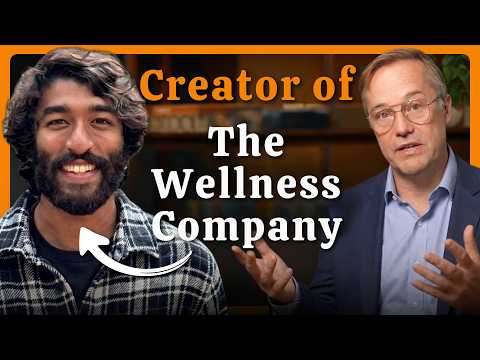
“I gave him 200,000 dollars to leave. This is what it is, I can’t fire people, I give them 200k to leave to start a company.” — Jason Calacanis, 0:42
Clip command
yt-dlp --download-sections "*0:42-1:30" "https://www.youtube.com/watch?v=SfVnhMLO2UY" --force-keyframes-at-cuts --merge-output-format mp4 -o "jcal-200k-investment.mp4"”Product velocity and world-class design”
“Number one, are they competent? And how is competent, if you were an angel investor, how do you determine competence? The quickest way to determine competence is look at product velocity, to look at the quality of the product, to look at the reviews of the product.” — Jason Calacanis, 14:12
Clip command
yt-dlp --download-sections "*14:12-15:00" "https://www.youtube.com/watch?v=SfVnhMLO2UY" --force-keyframes-at-cuts --merge-output-format mp4 -o "product-velocity-design.mp4"”Real customers, not letters of nothing”
“So those are real customers, real purchase orders, not letters of intent, not, or as we call them here at our firm, letters of nothing.” — Jason Calacanis, 25:32
Clip command
yt-dlp --download-sections "*25:32-26:14" "https://www.youtube.com/watch?v=SfVnhMLO2UY" --force-keyframes-at-cuts --merge-output-format mp4 -o "letters-of-nothing.mp4"”AI agents negotiate with every steel mill in the world”
“And so our agents do the full back and forth negotiation, background checks on the factories, as well as also comparing real time…” — Peter Cetale, 19:34
Clip command
yt-dlp --download-sections "*19:34-20:38" "https://www.youtube.com/watch?v=SfVnhMLO2UY" --force-keyframes-at-cuts --merge-output-format mp4 -o "ai-agents-negotiate.mp4"”Startups will keep getting leaner”
“For us, we don’t need to hire, you know, 10, 20 engineers. We can work fine with a smaller team of about two or three. And so I think the main thing is that for what I’ve seen at least for the tech startups here in the Bay is that you’re still going to be hiring engineers, but you just don’t need as many.” — Peter Cetale, 36:07
Clip command
yt-dlp --download-sections "*36:07-37:43" "https://www.youtube.com/watch?v=SfVnhMLO2UY" --force-keyframes-at-cuts --merge-output-format mp4 -o "startups-leaner.mp4"Key Points
- Jason’s investment thesis (0:42) - Jason invested $200K in former employee Presh Dineshkumar because of his product velocity, world-class design skills, and obsession with health tech
- Tempo healthspan score (3:19) - Tempo aggregates wearable and lab data into four pillars: cardio-respiratory, metabolic, recovery sleep, and lifestyle behavior, referenced to age and sex
- Compliance is the key (7:03) - The real value of health apps is in keeping people consistently doing small things over time, which adds years of quality life
- Community and social features (9:00) - Jason recommends adding group features with 4-5 person accountability groups to make the app stickier
- URL to IRL connection (11:41) - The app should connect digital health tracking to real-world activities like run clubs and cold plunge sessions
- Austin as wellness hub (13:43) - Austin, Salt Lake City, and New York emerge as top cities for health-focused app users
- 14 categories for evaluating founders (14:12) - Jason’s firm Launch uses 14 categories including product velocity, world-class design, serial founder status, and obsession with the space
- Sourcerer’s AI procurement (19:06) - Sourcerer automates global sourcing using AI agents that negotiate via email, WeChat, and WhatsApp with factories worldwide
- Demand aggregation model (23:02) - By combining multiple buyers’ orders, Sourcerer can get 20-50% price reductions from factories
- $500K GMV and growing (25:13) - Sourcerer has $500K in real purchase orders and aims for $10M/month GMV by year-end
- A16Z Speedrun experience (26:14) - Peter describes Speedrun’s full-service marketing, PR, and talent recruiting through the A16Z ecosystem
- Tariff chaos as tailwind (31:57) - Volatile tariff environment drives demand for Sourcerer’s ability to quickly pivot supply chains across countries
- Software consulting collapse (36:07) - Software development consulting firms are seeing business stall as AI tools reduce the need for large engineering teams
- Developers no longer the blocker (37:43) - The startup world has shifted from “we need more developers” to focusing on go-to-market, growth, and PR
Mentions
Companies
- The Wellness Company (0:59) - Presh Dineshkumar’s health and wellness app company building iOS apps including GoPolar, SunSeek, and Tempo
- Sourcerer (19:06) - Peter Cetale’s AI-powered procurement platform for industrial sourcing
- Andreessen Horowitz (a16z) (26:14) - VC firm whose Speedrun accelerator Peter went through
- Whoop (3:31) - Wearable fitness tracker mentioned as data source for Tempo
- Oura (3:31) - Smart ring mentioned as data source
- 8 Sleep (3:31) - Sleep technology company mentioned as data source
- Function Health (3:31) - Health testing company mentioned as potential lab partner
- Alibaba / Made-in-China / IndiaMART (21:31) - Marketplace platforms Sourcerer pulls data from
- Madrona / Pioneer Fund (27:59) - Investors in Sourcerer’s seed round
Products & Technologies
- Tempo (3:19) - The Wellness Company’s new flagship health aggregation app with healthspan score
- GoPolar (0:59) - App for tracking cold plunge and sauna sessions
- SunSeek (0:59) - App for tracking vitamin D and morning light exposure
- Apple Health (3:46) - Data integration source for Tempo
People
- Presh Dineshkumar (0:00) - Founder of The Wellness Company, former employee of Jason Calacanis at Launch
- Peter Cetale (18:43) - Co-founder and CEO of Sourcerer, went through a16z Speedrun
- Andrew Chen (26:14) - A16Z partner who worked with Peter on marketplace strategy
- Bryan Johnson (16:19) - Health optimization figure mentioned as example of missionary approach
Surprising Quotes
“I can’t fire people, I give them 200k to leave to start a company.” — Jason Calacanis, 0:42
“If you find a missionary founder who is also a product founder who can ship product with velocity and win a design award, that is a lethal combination in my mind.” — Jason Calacanis, 15:00
“I mean, for us, we don’t need to hire, you know, 10, 20 engineers. We can work fine with a smaller team of about two or three.” — Peter Cetale, 36:07
“If you go to a factory and say, ‘I’m going to double your volume,’ they’ll drop the price 20 to 30 percent just by doubling it.” — Peter Cetale, 34:03
“More regulatory changes, more tariff changes drives people to look for more resiliency in their supply chain, which increases fragmentation or geographic fragmentation, which then makes your software and your platform more valuable.” — Presh Dineshkumar, 33:00
Transcript
Jason Calacanis: 0:00 All right everybody, welcome back to this week in startups. Presh Dineshkumar worked for me for many years. How did I meet Presh? Presh was a fan of this very podcast. And he emailed me when he was in college, I think he was 18 years old. And he said, ‘Hey, I want to come work for you.’ I said, ‘Okay, that’s nice.’ And then he said, ‘Oh no, seriously, I’m serious.’ And he wouldn’t stop emailing me. So I said, ‘What are your skills?’ And then I looked, and he was great at doing social media. I said, ‘Okay kid, come to California, you work for me now. Come to the Blade Runner 2049 screening.’ And we met, started to work for me, crushed it for me for five, six years. Then he said, ‘I want to do my own company, boss.’ I said, ‘Okay, get the hell out of here.’ And I gave him… I don’t know, what did I give you, 250?
Presh Dineshkumar: 0:41 200.
Jason Calacanis: 0:42 I gave him 200,000 dollars to leave. This is what it is, I can’t fire people, I give them 200k to leave to start a company. Presh, I want you to tell everybody all about the company and the amazing progress you’ve made. There’s a lot of lessons here for founders. So, either show me or tell me a little bit about your company.
Presh Dineshkumar: 0:59 Yeah, do a quick explainer and then I have a demo of our newest product that I’d love to show you as a product guy yourself. So, yeah, I run the Wellness Company. We build health and wellness apps, iPhone apps, all on iOS in the Apple ecosystem right now. And they all do niche things. So we have three apps, three or four apps that we built and launched last year. One of them is called GoPolar, it’s an app to track your cold plunge and your sauna sessions. Very niche, but a niche passionate community. And then we have a sun app called SunSeek that tracks your vitamin D and also your morning light exposure for mood and circadian health. And then we have a posture app which uses your iPhone camera and processes, uses some AI to process what your posture is and gives you a report and gives you some workouts that are chiro-physio backed to help correct any imbalances you have. Those are the three main apps that we launched. And then now we’re working on a new product called Tempo, and that’s where I think the bigger vision of the Wellness Company happens.
Jason Calacanis: 1:59 And you know for background, why did I invest? Well, we thought Presh is smart, he’s going to figure it out. He’s great at building product, he can, you know, build products on the cheap. He’s not going to spend a lot of money, but he’s going to get product velocity. So we have a founder we trust who has product velocity, who has great product chops, who has world-class design. That was enough for us to make the bet, frankly. And we also had seen Tonebase, a musical app, Steezy, a dance app, YouSician, another music app, but not classical like Tonebase.
Jason Calacanis: 2:30 And of course Calm and Fitbod. We had seen five different health apps do really well, or education apps, and Brilliant.org, six. So we had had six winners in this space, or six really high-quality companies, you know, remains to be seen how big of the wins they are. Calm obviously a huge one, Brilliant a huge one, Fitbod a huge one. You know, it’s a really tough space to be in, education and apps. But we thought, hey, this could work. So Presh, show us your latest product.
Jason Calacanis: 3:00 Please. And remember, most people in the audience are listening, not watching. But for the audience members who are just listening, this is one of the chances you have to go to youtube.com and visit This Week in Startups and click subscribe and put the alert bell on.
Peter Cetale: 3:19 What you’re seeing here is the Tempo dashboard. And so Tempo as a product brings in all your wearable and health data and your labs and puts it into one place as a centralized location. That’s level one.
Jason Calacanis: 3:31 So those products would be Whoop, Oura on one side, 8 Sleep. And on the other side would be Superpower, Function Health, or Function I think it’s called, or even if you just got your blood work done from a doctor. Yeah.
Peter Cetale: 3:46 Show you exactly what that looks like. But you basically ingest all this data and you can get it very easily through Apple Health, for example. So Apple Health or you do a upload a lab test, etc. But we give you a score. And so you have this, let’s say we call it the healthspan score. And the healthspan score is derived of these four pillars that we classified: cardio-respiratory, metabolic, recovery sleep, and lifestyle behavior. And this is all referenced to your age and sex. And so everyone’s score is going to be different based on who they are. And we know that because they go through the onboarding. But you can see the metrics that matter is what we call it. So metrics that matter for cardio-respiratory that we can get from wearable devices ends up being your zone two minutes, your VO2, your resting HR. And then from there we give it a score, all kind of referenced to the latest science and science-backed research, right? And so that’s the kind of healthspan score concept pull from your wearable data. But really we want that to be useful, not just the dashboard and not just information, right? And so that’s where protocols come in. And protocols is the main core of the app. So protocols are designed to help you achieve your goal. And so what does that look like in the app? So right now we have this protocol section. You can select a generalized protocol. These are templated, but they still use AI…
Jason Calacanis: 5:07 So I see one of them is general healthspan. Healthspan is, hey, when you get older, how healthy are you in your 60s, 70s, and 80s? I was skiing this morning with a 76-year-old woman and two 74-year-old men. I shouldn’t say I was skiing, I was on the lift with them. I didn’t ski with them. But healthspan is really what it’s all about. We don’t know that we’re going to get people to live to 150, but we know that if they live to 80, what if you could ski to 80 years old? Today, in the year of our Lord 2026, I’m seeing people skiing in their 70s. My goal: ski in my 80s. Keep going, Peter.
Peter Cetale: 5:44 Love it. Yes, my goal like run in my 80s. So same same idea. Quality of of life, right? So general healthspan, if I were to click this protocol, it’s going to go through and it knows my health data and it knows my labs. It even knows, you know, what I eat, which we’ll get into.
Peter Cetale: 6:00 …through that it’s going to give me a list of protocols that is going to just tell me what I want or what to do based on the outcome that I want. And so the app knows right now I want to live and I want to run until I’m 80. Um, so naturally it’s going to tend to having good cardio-respiratory, having good muscles to be able to, you know, support the activities that I want to do. And so it’s going to give me this list of items to basically checklist. And so that’s what you see on screen here. So I’ve spent 15 minutes outdoors. If I can tap into that and I can see why, you know, why this matters to me and for my protocol essentially. Um, but I can go and add different protocols. So the interesting thing here is like do physio mobility stretches that you see here. So I had a shoulder injury, I went to my physiotherapist, he gave me, and how it works is they just tell you what to do and assume that you do it and most people forget after a week and go back with very little progress, right? So where this gets interesting is like, okay, yes, I can go and enter this in and add it to my protocol and it’s going to go and keep track of that over time.
Jason Calacanis: 7:03 And this is compliance is such an important issue when it comes to health. Can you consistently do this work? Can you consistently sleep well? Can you consistently get to the same bedtime? Can you consistently stop drinking caffeine after 12:00 PM? Whatever it happens to be that you’re focused on. Yeah, this is great.
Peter Cetale: 7:23 Exactly. And to that point there’s just a research study that went out and it was like essentially talking about spending a couple minutes doing the more intentional eating, more intentional like five minutes of extra sleep, um, going outside in the morning, very small things but doing that consistently over time, that ends up adding years to your life, um, and quality years, right? So very simple things but just doing them tends to be like…
Jason Calacanis: 7:49 And this is kind of gamified. So if I went out and I did my five minutes of sun exposure in the morning, I don’t know if 10 or 5 is the goal, but I do that every morning. I try to go out with the dogs on the ranch, you know, just take my coffee outside instead of having it inside, very simple. I’ll sit on the porch or I’ll go walk up, take a walk around the ranch, you know, get a thousand, 2,000 steps in, have my coffee and walk the dogs and get my sun exposure. And then I just take my shirt off to increase my sun exposure because you know, it’s not a pleasant sight at this point, but it’s better than it was two years ago, I’ll tell you that. Um, getting, getting there, getting there. Um, so how much does this cost and what’s the business here?
Peter Cetale: 8:18 Yeah, so right now it’s consumer subscription. That’s how we do all of our apps. There’s another angle that we will explore over time, um, which ends up being like, okay, if we facilitate a lab test for example. You see here I’ve got my labs and this is a couple years old, but you know, I can import that in here. We don’t have this feature yet, but you know, take a test. So that’s like an interesting angle where maybe we partner with, you know, a function, a superpower, etc. and just direct get a test ordered to them.
Presh Dineshkumar: 8:53 Yeah, I think they all have affiliate programs. So if you just put in there, ‘these are our approved partners’ and or ‘our preferred partners’…
Jason Calacanis: 9:00 And you just have to be clear, you know, that you’re getting a commission in some cases and just list your preferred ones and say hey, these are the ones that we think are pretty good. That’s a great way to be in there. Any family dynamics or group dynamics here to make it more motivating? I’m in a group on Whoop with a team of friends, we were back in the day we were in Fitbod groups, those all made the app more sticky. So what do you think?
Peter Cetale: 9:24 Groups I think are huge for accountability and consistency, right? And so we will add groups as well and more so like intimate, so groups of four to five. In our other app, for example, GoPolar, just throw it up here since I have it, we added a small community piece, right? And that really ended up being groups of like two to five people, which were just families.
Jason Calacanis: 10:58 What about reading people? You know, if one of the things with dating and friendship is it’s hard for people, but if you find people who are also into health, people who are into this health thing are going to have a much better relationship because, you know, if one person wants to go out drinking and smoking sigs and, you know, smoking weed and, you know, staying out all night, and they’re with somebody like me or you who wants to go to bed by 10, get up at six, hit the cold plunge, you know, do the sauna, man, that’s just going to be… it’s not going to work. It would be great for people to meet people who also like to cold plunge and are focused on their healthspan. Have you thought about that dynamic?
Peter Cetale: 11:41 It’s a great question, great insight and that’s I think where the product actually evolves into. Right now there’s many people working on like the dashboard, the information, that ends up being commoditized. I think where the interesting piece is when you can bring that URL to IRL connection.
Presh Dineshkumar: 12:00 Ultimately your Tempo knows your health intimately and can bring you into the real world with like facilitating or or even booking for you like a cold plunge sauna session at the end of the week, knowing your recovery metrics.
Jason Calacanis: 12:12 There’s a franchise company that is doing this cold plunge. I know there’s one near us, or there’s a couple of them in Austin, and you just pay 25 bucks to go use the cold plunge, the sauna, the shower, whatever, and there’s all these health clubs. So I think, you know, respectfully, as a, you know, hopefully I’ve been a good mentor to you, Presh, you’ve got this incredible foundation. You’ve got a great, great roadmap. And I want to just give you permission to even think bigger. I wonder if there is a way to, you know, even get this real-world component going. Uh, you know, I wonder if, you know, I opened the app one day and said, hey, you know the density, right? So you know where people are. And if Austin is like, maybe if you got really focused on Austin and you said, hey, on Sunday, we’re doing run club and we’re going to jump after the run club in the, you know, Lady Bird Lake or Lake Austin, whatever it is, whatever cold plunge, meet us at this point for the walk around the lake, run, jog, and then we’re going to go here. It could be kind of a movement and being, paying 50 bucks or 100 dollars a year or 10 dollars a month to be part of a community. Man, that value is unbelievable, right? So I’m giving you permission to kind of explore that if, or just think about that, connecting it to the real world.
Presh Dineshkumar: 13:29 Connecting to the real world. I think that ends up being like the real moat of the health and wellness business.
Jason Calacanis: 13:31 Think about the cities where the most healthy people are. Like what cities does Go Polar and everything have the most users?
Peter Cetale: 13:43 Right now it’s, Austin is definitely one. Salt Lake as well. New York. A lot of like European countries actually for Go Polar specifically just because obviously hot and cold activities.
Jason Calacanis: 13:52 Got it. Okay, so I think Austin’s the winner there. All right, listen, great job. It’s, uh, you’re off to a great start. Things I love about founders, for people who are listening, you know, after doing 600 investments, you start to get some signaling. Number one, are they competent? And how is competent, if you were an angel investor, how do you determine competence? The quickest way to determine competence is look at product velocity, to look at the quality of the product, to look at the reviews of the product. So is the product improving on a consistent basis? That’s called product velocity inside of our venture firm Launch and our syndicate, thesyndicate.com. So we love to see product velocity. One of the other 14 categories we have is world-class design. World-class design isn’t an accident. When you look at Presh, he’s got product velocity, he’s got world-class design. Then you also want somebody who is a serial founder, has had an exit before. Presh isn’t that, but he has worked for me, so he’s got a good pedigree. Uh, then you also want a founder who’s got a particular obsession with…
Peter Cetale: 15:00 The product, the service, etc. So if you were to look at somebody like Elon Musk, he’s obviously been obsessed with space since he was a kid and electric cars, he talked about them a lot in college. So there was a mission there. If you find a missionary founder who is also a product founder who can ship product with velocity and win a design award, that is a lethal combination in my mind. They just have to, you know, keep grinding and then they figure something out. So all these different apps you’ve created, fantastic, they’re interesting funnels, but Tempo’s obviously the winner and you’re probably going to need to say, ‘Hey, let’s get super focused on Tempo and let’s put 90% and have that relentless focus and get a flywheel going there.’ What’s the flywheel? You also need to have founders who have that quality of knowing how to acquire customers, knowing how to do marketing. I feel you know how to acquire customers really well, I think your marketing is strong. So there’s a… there’s room for improvement in both of those, but you’re very solid in both of those. I would give you like a rating of a seven or eight, not a nine or ten. So there’s like a really good opportunity for you to add to your skill set, the ability to get press and the ability to do marketing and go to market. Is my assessment of you correct?
Presh Dineshkumar: 16:14 Yeah, I agree with this assessment’s good. And just no sevens, so.
Jason Calacanis: 16:19 I think you got to get make this into a movement, right? Make it into a movement. I think if you look at Function Health or Whoop or Eight Sleep, they all became kind of movements. Those people have a very evangelistic won’t shut up about it, kind of like vegans or vegetarians, Bryan Johnson. Like, you got to get a little bit missionary here and I think that comes through building communities. I don’t think you have to be as out there as Bryan Johnson, but I do think building up groups of people who really are passionate about Tempo. And I think the social aspects of Tempo are where the big win will be. A lot of people going after a long tail of niches here from cold plunges to, you know, heartbeats, HRV. This can just be tons of competition, sleep data, whatever. But being the place that pulls together the community and the advice and compliance, those dynamics could be really, really interesting. Great job, Presh. Where can people learn more?
Presh Dineshkumar: 17:14 thewellness.company has all of our apps, so thewellness.company or just search up Tempo Healthspan and we’ll appear on Google.
Jason Calacanis: 17:21 All right, thanks for coming on Twist.
Jason Calacanis: 18:41 All right, next up, we’ve got a founder. Alex?
Presh Dineshkumar: 18:43 We do. Please welcome Peter Cetale to the show. He is the co-founder over at Sorcerer. It’s a company that helps source, price, and arrange delivery for material products and inputs, all using the power of AI to ensure that everyone gets the best price. But Jason, what’s really interesting here is that they’re not just helping you connect to someone else, in fact, they want to become your supplier.
Jason Calacanis: 19:02 Peter, where the hell did you get the idea for this? I love it.
Peter Cetale: 19:06 Yeah, well, thank you first off for having me on the podcast. I really appreciate it. And I came up with the idea when I was actually running an import business back in 2020. And so my co-founder and I both have ran import-export trading firms, and so we saw firsthand how laborious the whole process is. And so we said there has to be a way to make this more efficient, and so that’s how we came up with the idea.
Jason Calacanis: 19:31 So how does it work? Or you could show us, you could do a demo, but show us how it works and why it’s important.
Peter Cetale: 19:34 Yeah, so I’ll give you a quick run-through. So in terms of a lot of the manual processes within procurement, there’s purchase order aspects and other manual processes, and so at Sorcerer what we’re doing is we’re automating all that processes. And so today, if we look at a lot of the workflow automation tools, they’re all focused on reducing labor costs. But if we look at for larger scale distributors, so a lot of the ones that we work with, they’re doing a significant amount of volume, but their procurement team is only about 2.5 to 5 million a year on spend. And so if you’re spending 5 to 10 million dollars a year on your procurement team, they’re spending tens of billions of dollars on spend. And so at Sorcerer what we’re focused on is actually reducing the cost of goods sold and be able to do that more effectively. And so we have a end-to-end process. So let’s say, for example, you’re interested in importing metal rebar, we’ll go in and find every single factory in the world that produces steel rebar. And so our agents do the full back and forth negotiation, background checks on the factories, as well as also comparing real time…
Jason Calacanis: 20:35 And these are AI agents, just to be clear, not human agents.
Peter Cetale: 20:38 Yes, yes, so AI agents. And so this process, if you’re let’s say a construction company, I mean to do this entire process end-to-end in real time would just be impossible. And so for us being able to do it in real time, getting up to date pricing and comparing the freight and tariffs, it gives them the most competitive advantage and directly impacts the bottom line and so it goes all the way until delivery for our end customers.
Jason Calacanis: 21:05 Does the agent sourcing go and do like an 11 Labs call to the person and say I’m an agent from Sourcery and, you know, I want to, you know, get this or does it email? How does it actually mechanically do that?
Presh Dineshkumar: 21:31 Sure. So first of all there’s a couple different main marketplace platforms that are available like there’s Alibaba, Made-in-China, IndiaMART and so we’re able to pull a lot of information from those and be able to correspond directly on those platforms. But even on top of that we’re going in and finding export records and so there’s export records that are publicly available from China or Vietnam and so we can go ahead and see every single exporter from China for example. And so what that does is that we’re able to aggregate our own proprietary database of all the different for example in this case steel mills in the world. But in terms of the communication process the way that we’re structuring today is that we’re going in on email, WeChat, WhatsApp and be able to do that correspondence all through AI agents and so the way that I look at it longer term for the business is if we’re able to get this in real time we can consistently get all these factories to bid against each other. And so if you’re doing hundreds of millions of dollars even if you can help them save five and 10% and we have a customer of ours that does about 250 million a year in spend, we could consistently help them save about 10% on their cost on aluminum. And so on a grand scale of things we have a lot of potential to be able to solve what the customers actually care about which is reduction of their spend.
Jason Calacanis: 22:49 Are you pulling demand here to make this happen to get these discounts? Because I just, you know, Peter, if I’m a company spending, you know, a quarter billion dollars a year on aluminum, I would presume that I’m already getting a pretty darn good price.
Peter Cetale: 23:02 Yeah, so there’s a couple things on that end. The way that we look at it and our focus on the mid market, $250 million that’s our largest customers but for some of the ones that we’re working with that are smaller like 50 to 100 million a year in spend they’re probably only doing on a quarterly order for let’s say steel rebar about 10 million. And so if you can go in and aggregate that demand right away it does create about just by that alone about 10% in savings but for us running this whole bid process that’s where we get that additional aspect of savings.
Jason Calacanis: 23:47 All right cool. Keep going. Thank you.
Peter Cetale: 23:50 So the way that we operate this business, which is different than the standard AI agents workflow, is that what we do is we take a cut of the transaction. And so usually how it works is we give our customers, two-thirds of the savings, and then we’re able to get one-third of the savings. And so we’re able to go in and keep that consistent revenue. One other aspect that we’ve seen in this business is for those who’ve tried it in the past, if you reveal the factory name, then more than likely they’ll circumvent and go direct. And so we keep everything done as a blind escrow marketplace. There’s other areas that we look into in terms of offering other aspects with insurance and credit terms for our customers, but I think what’s very interesting in particular, because our main focus is on metals and commodities, is that if in real time we’re going in and talking to every single steel mill in the world, for example, or other types of commodities, this data is very valuable for hedge funds because we’re getting directly up to date to the source. And so we’ll understand very quickly what’s happening with freight and everything like that. And so I think that’s an area that’s also very exciting for us on expansion of the business.
Jason Calacanis: 24:56 So you got to go through Speedrun I see, and you’ve got some GMV and some purchase commitments. Yeah, tell us a little bit about the status of the startup.
Presh Dineshkumar: 25:13 So right now we’re sitting at about 500,000 in GMV and we hope to bring that up to about 10 mil a month in GMV by end of the year.
Jason Calacanis: 25:21 When you say sitting on, what does that mean?
Presh Dineshkumar: 25:23 So we have purchase orders for 500,000 in orders, and then we’re right now already placed the orders with with the factory, and then now they’re already starting production.
Jason Calacanis: 25:32 So those are real customers, real purchase orders, not letters of intent, not, or as we call them here at our firm, letters of nothing. This is real GMV that’s going to be executed in the next 30 days, 60 days. What’s your vision here?
Presh Dineshkumar: 25:46 Well, right now there’s like China New Year right now, so there’s going to be a little bit of a waiting period, but it’d be about 60 to 90 days when that’s realized. That’s how that works.
Jason Calacanis: 25:56 Yeah, I’m always aware of Lunar New Year because when I go skiing in Japan, you want to avoid that week because everybody who’s off in China just invades Niseko and it’s chaos. All right, so you got a great pipeline, got a lot of commitments, and you went through Speedrun. How was Speedrun?
Peter Cetale: 26:14 Yeah, it was great. I mean, the resources that Andreessen Horowitz provides is just top-notch. I mean, they’re going in and they have full service on the marketing team that they have. So anything PR related, they handle. They also go in and they have a full-service talent recruiting team, so they pull from across their entire ecosystem. And so we have a couple of engineers that we’re sending offers to that we got connected through the A16Z talent network. And then working directly with the partners was a really strong experience, and working with people like Andrew Chen, who wrote the book with aspects on marketplaces and things with Uber and things like that, yeah.
Jason Calacanis: 27:00 And recruiting talent, two of the great functions over there. I remember Sequoia started with, they were like the first fund I think that had a dedicated recruiting team. And then doing PR and comms, uh, you can get some good press. So I wonder how they do that with so many startups though.
Presh Dineshkumar: 27:26 Jason, I’m not gonna lie, uh, as the world’s worst reader of email, I, uh, I can’t answer that because I didn’t read any of it. Jokes aside, I mean, venture firms often used individual partner relationships to reach out to journalists. So they essentially have the short circuit to the reporter, journalist, writer, content creator in question. And I think that’s the real power.
Jason Calacanis: 27:54 They can jump over the inbox. Yeah, go directly to the journalist. Genius. Okay, keep going on the deck. Yeah, any more slides?
Peter Cetale: 27:59 So, one of the things that I think is, with how AI agents continue to become more and more relevant and I think there’s going to be longer term, and this is why we did the business model like this, a lowering of the margin for a lot of these AI agent companies where they’re going in and doing, I mean we’ve seen it already with stuff like sales development rep agents, where it’s just kind of a race to the bottom. And so the way that we look at it on the defensibility side of why would a customer go ahead and purchase from us is that by us doing the work, and so we have AI agents not only doing that supply side, but we’re also through export records finding other buyers of the same type of product. And so aggregate the demand and basically even if they went to the factory directly, we’d get a better price because of the volume that we’re doing. And so that’s what I would say is the main area that I see for us on how we’re differentiated versus a lot of the competitors and we just raised our seed round with a couple other very strong investors like Madrona, Pioneer Fund and a couple other funds and so right now our main focus is just continue to hire up on engineering side and go full steam ahead on the waitlist and expand from there.
Presh Dineshkumar: 30:22 Peter, I have a question. When I think about an API, what they do is abstract away complexity from the person who needs the service, and it seems like what you guys have done is build a really great system to get people what they need quickly and hopefully at a discount. Do you guys handle tariffs as well? Because those can be really tricky, and I’m curious if that’s also abstracted away inside the product.
Peter Cetale: 30:43 So, with the whole tariff situation, there’s been a huge surplus of demand. In particular, we have one of our customers who does metal imports of squeegees, so they do they’re a car wash distributor. It’s an early-stage pilot that we were able to help, but for them, the tariffs just went through the roof. And so their business would have completely collapsed if they were to get it from China. And so we were able to find them another option that was outside China and be able to do that process very, very quickly. And so being able to on a dime be able to switch factories and be able to adjust is a huge advantage.
Jason Calacanis: 31:40 That’s a good place to double click on though, just how has the tariff chaos, insanity, constant changes, how has that affected your ability to sort of build this business, if at all?
Peter Cetale: 31:57 I think the main thing is that it’s no longer China is the main game in town. And so everyone’s now looking for outside factors, different locations. And then historically people were thinking, okay, India’s going to be the next frontier, but then there’s been huge tariffs against India. And so I think the main thing that I would stress on this point here is that the whole global ecosystem is completely changing in real time. And so you need to have clear-cut, very quick systems in place. And so what I’ve seen on this end is like we’re going in and every time there’s a new tariff that’s announced, we’re able to scrape that directly and be able to instantly see if there’s any customers that would be impacted by that.
Presh Dineshkumar: 33:00 Speed is the name of the game for this. So more fragmentation pushes people — or more regulatory changes, more tariff changes drives people to look for more resiliency in their supply chain, which increases fragmentation or geographic fragmentation, which then makes your software and your platform more valuable, because if they just were like, ‘Hey, I’ve got two or three suppliers, it’s rock solid, I don’t really need to make changes,’ there’d be less need to have a software platform in some ways, yeah?
Peter Cetale: 33:28 That’s correct. Yes. But there’s still the aspect there of the group purchasing as well that I would add on, that even if they were buying it from, let’s say, there was no tariff from China, we could still go in and help them get a better deal by going in and finding other buyers of the exact same type of spec, and be able to aggregate that all together.
Jason Calacanis: 33:52 Peter, wouldn’t you need a very large customer base though to aggregate enough demand to really get the discount?
Peter Cetale: 34:03 I’d say for example there’s other types of products, and so like metal squeegees for example, where for like our customer for example, they do about 20 containers a year of metal squeegees. And so if we can go in and find another distributor that does, let’s say, 20 themselves, by us just doubling — if you go to a factory and say, ‘I’m going to double your volume,’ they’ll drop the price 20 to 30 percent just by doubling it. And so if you could do this process, like if we went and got for that one product category 100 containers a month, they would probably drop it 50 percent.
Presh Dineshkumar: 34:57 Now, you guys are based in the Bay Area right now, yeah?
Peter Cetale: 35:01 Yes, in San Francisco. And then we went through Speedrun in — Speedrun was in LA, was the thing, but they now brought it back to San Francisco.
Jason Calacanis: 35:11 Well, I think they were — the idea for Speedrun is that they started with video games, I think, and then they were like, ‘Yeah, maybe do everything.’ So what impact is, if at all, these AI agents and these new platforms coming out — Open Cloud, I’m sure you’ve played with or seen it — and what — how is that going to change how you run the startup, you know, this year and next year in terms of developers?
Peter Cetale: 36:07 Yeah, so I think there’s a couple ways to look at it. I think the main thing is that, at least what I think is that the models and everything will continue to get better and better. And so I really think that for those that are trying to play the game where you charge a $50 monthly fee or something like that, and obviously there’s other different ways of pricing it, I think it’s going to be a race to the bottom. And so that’s why I think we have to look at it almost like all the prices across the board will just continue to collapse. And obviously if this happens, and I know Jason, you’ve always talked about it on your podcast about the jobs. I mean, we’re already seeing a huge amount of impact along the lines for people that are new grads trying to go and get new jobs and on the engineering side, it’s completely correct, right? I mean, for us, we don’t need to hire, you know, 10, 20 engineers. We can work fine with a smaller team of about two or three. And so I think the main thing is that for what I’ve seen at least for the tech startups here in the Bay is that you’re still going to be hiring engineers, but you just don’t need as many. And for those that are the top level, the salaries will go up. But what happens to the rest of the, you know, the engineers that maybe are not the super, super top level? And that’s where I think it’s going to be really severely negatively impacted.
Jason Calacanis: 37:43 Yeah, very strange world we’re moving to where adding developers isn’t the goal, just making the developers more focused and getting them the tools is the goal. And this is counter to startup’s number one problem, Alex, but three or four years ago, which was, we need more developers, that’s our blocker, we need more developers. And now it’s like, we don’t need more developers. So we’re focusing on go-to-market strategies, growth, whatever, PR, etc. Peter, great job and I’m really fascinated by your business and can’t wait to get more involved.
Peter Cetale: 38:32 Our website is sourcerai.com and my email is peter@sourcerai.com. And thank you very much, both of you, for having me on. I really appreciate it.
Jason Calacanis: 38:41 Thanks for coming Peter. Alright, we’ll see you all next time. Bye-bye.