The project SpaceX's first employee raised $500M for
The project SpaceX’s first employee raised $500M for
Summary
Alex Wilhelm hosts a double-header on space and purpose-built robotics. First up is Tom Mueller, SpaceX’s first employee and now founder/CEO of Impulse Space. He walks through Mira (their in-orbit highly propulsive spacecraft already flying CubeSats and doing rendezvous with Starfish Space) and Helios — “a rocket on top of a rocket” — a third stage that bolts onto Falcon 9 and beats Falcon Heavy on price by about 3x while quadrupling moon payload mass. Tom also discusses why Impulse is staying private despite SpaceX’s IPO filing creating a Cambrian explosion of space talent and why the moon — not Mars — matters in the near term (raw materials for megastructures and orbital data centers). He’s blunt about why vertical integration matters: the cost-plus space industrial complex builds parts that are too expensive, too late, and “look like Soviet quality.”
The second half is Tessa Lau of Dusty Robotics, building wheeled construction robots that print Revit floor plans directly on concrete at 10-17x the speed of a manual layout crew. Dusty is in 150+ deployed robots, working on hospitals and data centers, with a subscription model and a Dusty Academy certification program for operators. Tessa makes a sharp pitch versus the humanoid robotics craze: she says Dusty does more revenue than all humanoids combined, while VCs throw hundreds of millions at companies that haven’t shipped. She closes by openly stating her dream of taking Dusty public.
Highlights
”Helios is a rocket on top of a rocket”
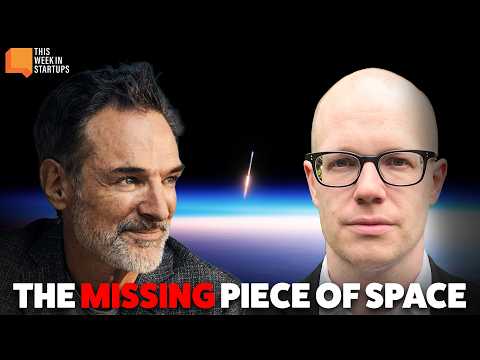
“Helios is a rocket on top of a rocket. It’s basically a third stage that we would add to like on our first flights on Falcon 9. It has, you know, a big tank, a big aluminum tank that holds 12 tons of propellant.” — Tom Mueller, 7:21
Clip command
yt-dlp --download-sections "*07:21-08:30" "https://www.youtube.com/watch?v=IUyJFSzTdeQ" --force-keyframes-at-cuts --merge-output-format mp4 -o "helios-rocket-on-rocket.mp4"Beating Falcon Heavy on Price by 3x
“We can increase the payload to the moon on a Falcon 9 by about a factor of four in our calculations… 70 to 100 million. So you’re getting five times the payload for only $25 million more, only for like one quarter of your total launch cost. It’s such a compelling product.” — Tom Mueller, 11:09
Clip command
yt-dlp --download-sections "*11:09-12:23" "https://www.youtube.com/watch?v=IUyJFSzTdeQ" --force-keyframes-at-cuts --merge-output-format mp4 -o "helios-beats-falcon-heavy.mp4"Why the Moon Matters: Megastructures and Data Centers in Space
“In the near term, the moon is more important because the moon has anything, everything that we would need to build mega structures in space. And what kind of mega structures would we want to build in space?” — Tom Mueller, 21:00
Clip command
yt-dlp --download-sections "*20:59-22:10" "https://www.youtube.com/watch?v=IUyJFSzTdeQ" --force-keyframes-at-cuts --merge-output-format mp4 -o "moon-megastructures.mp4"Cost-Plus Contracting Built a “Soviet Quality” Space Industrial Complex
“It’s, you know, it’s because the primes don’t care. It’s cost-plus contracting. It just builds up this whole environment, the space industrial complex that’s just has this really expensive, really pricey stuff.” — Tom Mueller, 24:22
Clip command
yt-dlp --download-sections "*24:22-25:29" "https://www.youtube.com/watch?v=IUyJFSzTdeQ" --force-keyframes-at-cuts --merge-output-format mp4 -o "cost-plus-soviet-quality.mp4"Dusty Robotics Does More Revenue Than All Humanoid Robotics Companies Combined
“We built the most accurate mobile robot on the planet. And what it does is, uh, we are revolutionizing construction by printing floor plans on the floor of construction sites.” — Tessa Lau, 32:13
Clip command
yt-dlp --download-sections "*32:13-33:00" "https://www.youtube.com/watch?v=IUyJFSzTdeQ" --force-keyframes-at-cuts --merge-output-format mp4 -o "dusty-most-accurate-mobile-robot.mp4"10-17x Faster Than a Manual Layout Crew
“We are tracking at roughly 10 to 17x the speed of a manual layout crew, which typically means that we can do the same job in about a day that would normally take that crew several weeks.” — Tessa Lau, 34:33
Clip command
yt-dlp --download-sections "*34:33-35:33" "https://www.youtube.com/watch?v=IUyJFSzTdeQ" --force-keyframes-at-cuts --merge-output-format mp4 -o "dusty-10-17x-faster.mp4"Key Points
- SpaceX files to go public (0:05) - Headline news framing the Impulse Space conversation
- Impulse oversubscribed on every round (1:13) - Not capital constrained, just raised $500M+
- What Mira does (2:37) - Storable propellants, precision maneuvering, can stay on orbit for years
- Starfish Space rendezvous (3:15) - Mira’s rendezvous proximity ops mission with Starfish
- Mira as a pickup truck (4:21) - Affordable, get to a specific spot in space if Transporter dropped you off wrong
- SaFE engine thrust upped for VAST (5:34) - Engine thrust raised from 5 to 6 lbs for VAST space station propulsion
- Mira can’t go LEO to GEO (6:09) - Only 300 km to 1200 km within LEO
- Delta V naming origin (6:52) - “Impulse” = adding Delta V to spacecraft
- Helios beats Falcon Heavy on price (7:21) - $25M extra for 5x the payload to GEO/moon
- Reusability and propellant depots (13:46) - Helios isn’t reusable yet; cryogenic propellants don’t store
- Landers and the moon base (15:24) - Impulse working on landers, eyeing the moon
- Mega Helios speculation (16:50) - A third stage on Starship: ~50 tons of propellant, ~30 tons to moon
- SES Helios contract (18:00) - SES flying a four-ton single payload on Helios
- NSSL onboarding required for govt work (18:41) - National Space Launch lanes are highly contested
- Megastructures and orbital data centers (21:00) - Moon as material source; Star Cloud and orbital data centers
- Vertical integration imperative (23:44) - Where $1B in capital goes — controlling cost, schedule, quality
- Cost-plus contracting problem (24:22) - Why the space industrial complex builds expensive, late stuff
- SpaceX talent recruitment (25:29) - Harder to recruit now, “Tom Muellers” are rarer
- GEO rideshares are pathetic (29:02) - Only ~20 things go to GEO per year — should be 2,000
- Dusty introduction (31:43) - Not humanoid, but actually shipping in volume
- Concrete-color spray paint for mistakes (34:15) - “White-out for the construction industry”
- Autodesk Revit standard (36:13) - Industry de facto, plus AutoCAD plugins
- Field Printer 2 launched (38:55) - Incorporates lessons from real-world deployments
- Dusty Academy certification (42:00) - Operator certification program; “bonus points if you’re a gamer”
- COVID supply chain learnings (43:43) - Why Dusty stocks up on long-lead parts
- Layout as construction’s linchpin (46:44) - The orchestration layer for future construction robotics
- 150 deployed robots (55:21) - Across US and Canada, doubled in a year, targeting 200 by EOY
- Tessa’s IPO ambitions (59:47) - “My dream is to take this company public”
Mentions
Companies
- Impulse Space (1:00) - Tom Mueller’s company; in-space propulsion
- SpaceX (0:05) - Filed to go public; Tom was first employee
- Blue Origin (0:05) - Recently exploded a rocket; expecting to fly again this year
- Starfish Space (3:15) - Worked with Impulse on rendezvous proximity ops
- VAST (5:34) - Space station company using Impulse propulsion
- SES (18:00) - One of largest commercial satellite companies; flying on Helios
- Viasat (27:30) - Example of GEO rideshare customer
- Falcon Heavy (7:03) - Helios competes with this on price
- Starship (15:53) - Helios could fly 3 at a time on Starship
- Star Cloud (22:10) - Orbital data center company; mentioned via Philip
- Dusty Robotics (31:43) - Tessa Lau’s construction robotics company
- Autodesk (36:13) - Revit and AutoCAD; Dusty’s input format
- Sentry (9:33) - Sponsor; bug monitoring
- Every.io (19:41) - Sponsor; back-office administration
- Northwest Registered Agent (29:40) - Sponsor; company formation
Products & Technologies
- Mira (2:37) - Impulse’s in-orbit propulsive spacecraft
- Helios (7:21) - Third stage to attach to Falcon 9 launches
- SaFE engine (5:27) - Impulse’s engine, 5-6 lbs thrust
- CubeSats (3:00) - Deployed by all three flown Mira spacecraft
- NSSL (18:41) - National Space Launch Services lanes
- Field Printer 2 (38:55) - Dusty’s current generation robot
- Autodesk Revit (36:13) - BIM software standard
- Dusty Academy (42:00) - Operator certification program
- Delta V / Specific Impulse (ISP) (6:52) - Core space propulsion concepts
People
- Tom Mueller (1:00) - Founder/CEO of Impulse Space, ex-SpaceX first employee
- Tessa Lau (14:45) - CEO of Dusty Robotics
- Alex Wilhelm (0:05) - Host of this episode
- Philip (Star Cloud) (22:10) - Orbital data center founder
Surprising Quotes
“Mira can’t go from LEO to GEO.” — Tom Mueller, 6:09
“It’s actually selling pretty well for something we haven’t flown yet.” — Tom Mueller, 12:23
“20 things to Geo per year sounds pathetic to me. Is that all we’ve pulled off as a species? We should, it should be at least 2,000.” — Alex Wilhelm, 29:02
“Bonus points if you’re a gamer.” — Tessa Lau, 43:31
“My dream is to take this company public. I don’t have a crystal ball so I can’t tell you exactly when, but we are well on our way.” — Tessa Lau, 59:47
Transcript
Jason Calacanis: 0:00 I want to ask you a few questions. Why is it dark at night? Why do we dream?
Alex Wilhelm: 0:05 All over the news, SpaceX has filed to go public, bringing the world’s leading space launch and connectivity company to the public markets at last. Blue Origin is in the news for accidentally exploding a rocket… [introduces Tom Mueller of Impulse Space]
Tom Mueller: 1:00 Great, great to be here, Alex.
Alex Wilhelm: 1:01 I’m so excited that space companies are raising enormous amounts of money. It seemed for a long time that it was going to be three AI companies and literally no one else.
Tom Mueller: 1:13 Yeah, well, fortunately for us, we’ve had a pretty good time, pretty good experience raising money. We were oversubscribed on all of our rounds, even since the seed round. This one also, insiders really wanted to write the round.
Alex Wilhelm: 1:54 I’m just reading between the lines there. It sounds like Impulse is absolutely not capital constrained at this point in time.
Tom Mueller: 1:59 That would be true, yeah.
Alex Wilhelm: 2:00 Is that perhaps an understatement based on your reaction to my comment?
Tom Mueller: 2:04 Possibly.
Alex Wilhelm: 2:06 Well, I mean, it’s not a bad place to be. You’re working on some pretty hard stuff and, you know, I don’t mean to be negative about any company’s struggles, Blue Origin, but like sometimes things don’t go as planned.
Tom Mueller: 2:37 So Mira is our highly propulsive spacecraft that can do precision maneuvering, and it has storable propellants, not cryogenic propellants, so it can stay on orbit for years. It does very fine pointing. All three of our spacecraft that have gone up so far have all deployed CubeSats. It can do a rendezvous and proximity ops, we call RPO, which means it can go up to another spacecraft. We did that last year.
Alex Wilhelm: 3:15 And wasn’t that with Starfish Space?
Tom Mueller: 3:17 Starfish was the kit on board and they were commanding us to rendezvous up with our other spacecraft. So, really cool.
Alex Wilhelm: 3:26 Yeah, I saw that. It’s fantastic. So in terms of what people are using Mira for, I know you’ve had a couple of missions, but when people talk about the core use cases for it…
Tom Mueller: 3:42 It was when I first designed it, when we just started the company, it was just our first product. It was to go up on a Transporter and eventually hopefully on Starship and be a versatile spacecraft.
Alex Wilhelm: 4:21 Yeah. Um, so it’s kind of like a pickup truck essentially. It’s functional. It can go anywhere.
Tom Mueller: 4:28 Yeah, it’s very affordable. It’s, um, like we always tell people, if you want to go to a specific spot in space, you know, that where Transporter brought you, we can take you somewhere else.
Alex Wilhelm: 5:27 And that’s predicated on the updated SaFE engines that have more thrust, I believe?
Tom Mueller: 5:34 Um, we upped the SaFE, sorry, SaFE, sorry, SaFE, up the thrust on SaFE, from five pounds to six for VAST basically, for the VAST space station. We provided the propulsion system for the VAST space station.
Alex Wilhelm: 6:00 I’m confused there’s not more commercial demand for it because to me the ability to go from LEO to GEO is just seems like a thing that would happen pretty frequently. What am I missing in the market?
Tom Mueller: 6:09 Mira can’t go from LEO to GEO.
Alex Wilhelm: 6:12 Oh, it’s more limited than that.
Tom Mueller: 6:14 Yeah, it can move like it could go from the bottom of LEO to the top of LEO, say from 300 kilometers to 1200 kilometers. It can do that, probably up and back. That’s… once you’re in the orbital plane.
Alex Wilhelm: 6:37 Okay.
Tom Mueller: 6:38 That would be Helios that can do that.
Alex Wilhelm: 6:41 We’re going to get to Helios in a second. But for folks who are curious why we’re talking about speeds and not height, to make a piece of space object go higher, you make it go faster, essentially.
Tom Mueller: 6:52 We talk in terms of Delta V. That’s how you move around space is you add Delta V. You basically you add impulse. Literally impulse is adding Delta V. That’s the name of our company is adding Rocket Impulse.
Alex Wilhelm: 7:03 I thought it was very apt. Okay, so that’s Mira, that’s been probably what people know about Impulse if they’ve been tracking the company for a while. Which brings us to Helios.
Tom Mueller: 7:21 Helios is a rocket on top of a rocket. It’s basically a third stage that we would add to like on our first flights on Falcon 9. It has a big aluminum tank that holds 12 tons of propellant.
Alex Wilhelm: 8:08 I have to just plead ignorance on, I think you said ICP? What does that acronym mean?
Tom Mueller: 8:13 ISP.
Alex Wilhelm: 8:14 ISP, sorry. Yes, what is that?
Tom Mueller: 8:15 Specific impulse, which is the basically the measure of the rocket engine’s efficiency.
Jason Calacanis: 8:18 No, I knew the term, not the acronym.
Tom Mueller: 8:20 Specific impulse. It’s gas mileage for rockets.
Alex Wilhelm: 8:21 Yeah. Okay, so we’re gonna have these up, I think you guys said in 2027, is that right?
Tom Mueller: 8:26 Yes.
Alex Wilhelm: 8:27 And talk me through the use cases for this and maybe if you could Tom, explain why Helios can do stuff that’s more exciting than what Mira could do.
Tom Mueller: 8:40 So it was designed to take a four-ton satellite, which is kind of the GEO market sweet spot, four tons directly from LEO to GEO on a Falcon 9. They use onboard electric propulsion and take up to 10 months to actually get to the final orbit.
Alex Wilhelm: 9:08 Because electric propulsion doesn’t push very hard.
Tom Mueller: 9:11 Right, right. It takes a lot. You’re using the energy from the sun.
Tom Mueller: 9:20 So we do it in a day because we burn all of this propellant in like 15 minutes and in two burns. So basically does what Falcon Heavy does for tens of millions of dollars less.
Jason Calacanis: 9:33 [Sentry sponsor read]
Alex Wilhelm: 10:38 So I was reading through you guys’ discussion about why Helios is going to help us get to the moon. And I think you said something like you can get three or four tons there for something like 10x less.
Tom Mueller: 11:09 Most launch vehicles have a lot of flights to LEO, so all modern launch vehicles have optimized to two stages. In the past there were three-stage vehicles. The Russians, the Proton…
Tom Mueller: 11:32 So we see a need to get to high energy orbits. We can increase the payload to the moon on a Falcon 9 by about a factor of four in our calculations.
Tom Mueller: 12:00 70 to 100 million. So you’re getting five times the payload for only $25 million more, only for like one quarter of your total launch cost. It’s such a compelling product.
Alex Wilhelm: 12:12 It’s like the Falcon 9 moment, but for post-launch in-space movement. It’s the GPT-3 moment for getting stuff to high orbits and other places.
Tom Mueller: 12:23 It’s actually selling pretty well for something we haven’t flown yet.
Alex Wilhelm: 12:28 Normally, I wouldn’t ask a space CEO this question, but let’s do this. How confident are you that it’s going to work the first time?
Tom Mueller: 12:36 This is a premium product. That’s why we’re just taking our time to make sure it’s right.
Alex Wilhelm: 12:52 Rockets, rockets are hard.
Tom Mueller: 12:53 So we want to not blow up the pad. We want to make it right.
Alex Wilhelm: 12:58 In Blue Origin’s defense, it was an amazing audio-visual moment. You know, I was very disappointed as someone who really wants to go up to space, so the more, you know, large-capacity launch vehicles the better.
Jason Calacanis: 13:17 I’ll agree.
Lon Harris: 13:17 To hear that they expect to fly again this year though, that would be a good recovery.
Alex Wilhelm: 13:20 That would be incredibly impressive given all the photos we saw of what was left of their launch facility. Now, with Helios though, I have a question about reusability.
Tom Mueller: 13:46 Yes, yeah. Like I mentioned, it’s cryogenic, you know, liquid oxygen and liquid methane, so it won’t store very long on this stage. There’s no reason that it couldn’t be reusable, I would love to reuse it.
Jason Calacanis: 14:23 How far are we? For the volumes that you’re talking about here?
Tom Mueller: 14:26 Well, SpaceX needs to do tankers in order to go to the moon. And hopefully they’ll eventually do propellant depots.
Tessa Lau: 14:45 I ask because I was just trying to get my head around what you guys are building. I kind of like the pickup truck analogy.
Alex Wilhelm: 15:00 …thing, the vehicles that are going to get us around once we leave our gravity well, or if you’re building the transportation network.
Tom Mueller: 15:24 I haven’t thought about that too much, like the gas stations in space yet. I don’t think that will be us, but it could be. But one of the things we work on is landers. We started a lander.
Alex Wilhelm: 15:53 And Helios can get stuff to the moon, quite a lot of it. Does the Helios product, once it’s out and flying, does that change dramatically the economics of humans building/living on the moon?
Tom Mueller: 16:13 I think it can increase the payload from like 200 kilograms to like 1,000 kilograms on a Falcon 9, or get you to like three or more times more.
Alex Wilhelm: 16:50 I at no point in prepping for this chat did I read the words Mega Helios. So you’re going to have to explain to me how big this bad boy is going to be.
Tom Mueller: 16:57 Well, we’ve looked at if we put a third stage on Starship, it would- I’m trying to remember the numbers. Something like 50 tons of propellant.
Alex Wilhelm: 17:35 30 tons to the moon. That’s- you could even start bringing liquid water at that point.
Tom Mueller: 17:42 But this was just an exercise. We’re not working with SpaceX on this. They want to do it their way anyway.
Tom Mueller: 18:00 Yeah, well, we’ve announced SES, who’s probably the biggest com satellite company in the world, flying on a large single payload like the four ton.
Alex Wilhelm: 18:01 Well, no, I’m glad. Helios starts to fly next year.
Jason Calacanis: 18:31 So not, with Mira you mentioned that the Space Force really liked it, so this is more in terms of Helios we’re seeing more private market demand.
Tom Mueller: 18:41 Yeah, well, in order to do government stuff, we have to be onboarded through NSSL, the National Space Launch lanes, which is highly contested. This was the thing that SpaceX sued to get into.
Jason Calacanis: 19:25 For now. Have you seen our debt? Uh, yeah, sorry, that’s an intrusive thought there that I had about the economy. I’m like yeah we are right now but I mean in ten years I don’t know it could be France 100% of GDP debt soon.
Jason Calacanis: 19:41 [Every.io sponsor read]
Jason Calacanis: 20:38 So, you mentioned before we started chatting that the Moon’s very important to you, and I am curious why that’s the case.
Tom Mueller: 21:00 In the near term, the moon is more important because the moon has anything, everything that we would need to build mega structures in space. And what kind of mega structures would we want to build in space?
Alex Wilhelm: 22:10 So on the subject of data centers in space, perhaps on the moon, perhaps in orbit, I was talking to Philip from Star Cloud before this became a more common topic.
Tom Mueller: 23:01 It works great with Falcon 9. We would love to fly on Starship. I think that could greatly lower our costs. We could fly three Helios at a time on Starship.
Alex Wilhelm: 23:07 Oh wow.
Tom Mueller: 23:08 on Starship. So if even if Starship was selling at Falcon 9 cost, it would cut our launch costs by a third.
Alex Wilhelm: 23:22 Okay. And now one thing I saw you guys are working on is engines for landing vehicles. What’s the benefit of vertical integration?
Tom Mueller: 23:44 We are extremely vertically integrated. You asked, you know, we raised a billion dollars, where does that money go? Mostly to become vertically integrated.
Tom Mueller: 24:00 To become vertically integrated, you have the power. You have the control over your cost, your schedule, and your quality.
Jason Calacanis: 24:18 Why is that? Is that just a lack of competition amongst those vendors?
Tom Mueller: 24:22 It’s because the primes don’t care. It’s cost-plus contracting. It just builds up this whole environment, the space industrial complex that has this really expensive, really pricey stuff.
Alex Wilhelm: 24:45 No, nor do you want the price that they’re going to charge you for that part.
Tom Mueller: 24:49 Price, the schedule, like it’s already like a preview of what you got here. Like, no.
Alex Wilhelm: 24:53 Well, on this subject, a data point that caught my eye. I forget if this was in Ars Technica or SpaceNews, but I think it was your president said that you guys don’t need new manufacturing footprint.
Tom Mueller: 25:29 Absolutely. We see it. It’s a little harder to recruit now. Thankfully we still do it, we’re still doing a great job. I think we’re a pretty exciting company.
Alex Wilhelm: 26:04 Yep.
Jason Calacanis: 26:05 Yep.
Tom Mueller: 26:06 I mean and then they’re grabbing all their buddies. So it’s become rarer to get the truly, you know, like the Tom Muellers out there.
Alex Wilhelm: 26:09 So, the last thing I want to do is bang on about someone else’s IPO, but I am curious if you foresee a future in which after SpaceX does list, that people become a little bit less attached to the mothership.
Tom Mueller: 26:27 Yeah, I think so. We’ll see.
Alex Wilhelm: 26:29 I mean, I’m going to call you about that, because I’m really curious, because I’m hoping, you know, fingers crossed, that we end up with a post-PayPal IPO Cambrian explosion of talent.
Tom Mueller: 26:49 Oh, please. Well, I was just going to say we’ve already seen, the SpaceX mafia, all these companies like in El Segundo here in this area.
Tom Mueller: 27:00 All these companies popped. Some space companies, robotic companies, all kinds of companies. It’s just been supercharged now with the IPO.
Alex Wilhelm: 27:06 Yeah. Well, I just, I hope that we get even more because I hate driving. I want to go to space. And I hate waiting for commercial flights.
Tom Mueller: 27:30 Yeah. It’s so hard to get to Geo that it’s really rare to get a ride share to Geo. Sometimes some companies like Viasat…
Alex Wilhelm: 28:23 Yeah, your first actual mission has already been sold out.
Tom Mueller: 28:27 Yeah, and we’re filling the second one.
Alex Wilhelm: 28:29 Oh, wow. Okay. And then how frequently will you run these? Is this something that’s going to become like a monthly cadence to Geo?
Tom Mueller: 28:39 It’ll be a while before we get to one a month. I think there’s a market of, you know, there’s probably 20 things going to Geo a year right now.
Alex Wilhelm: 29:02 20 things to Geo per year sounds pathetic to me. Is that all we’ve pulled off as a species? We should, it should be at least 2,000.
Tom Mueller: 29:11 Well, remember, you can have, you can cover the whole Earth with three satellites from Geo. That’s the whole point of Geo. You don’t need thousands of them like when you’re in LEO.
Lon Harris: 29:40 [Northwest Registered Agent sponsor read]
Lon Harris: 30:31 How much of a problem is going to be crowding in the various tranches of orbit around the planet?
Tom Mueller: 31:00 I think it’s going to be less than 100 years where it’s going to require more active management. Certainly the people putting up large LEO constellations are going to have to manage that.
Alex Wilhelm: 31:16 Yeah, I’m not going to list those out just to annoy your PR team. Tom, an absolute pleasure. Thank you so much for coming on.
Tom Mueller: 31:39 Absolutely. Thanks Alex.
Alex Wilhelm: 31:41 Alright, thanks Tom.
Alex Wilhelm: 31:43 Today we are not going to talk about humanoid robotics. No, no humanoid robots. They get all the headlines, they get all the money, but today we’re going to talk to a company with a product actually in market.
Tessa Lau: 32:13 We built the most accurate mobile robot on the planet. And what it does is, we are revolutionizing construction by printing floor plans on the floor of construction sites.
Lon Harris: 32:56 Now there’s a multi-trade element to this because when you’re marking out stuff on a…
Alex Wilhelm: 33:00 For laying you’re not just putting walls in, I presume there’s electricity inputs and all sorts of other materials. So what can your robot actually write down on, I presume mostly concrete?
Tessa Lau: 33:11 Mm-hmm. So if you’ve ever built a house or remodeled your house, your architect has probably handed you this huge sheaf of papers. In that sheaf of papers, there’s a sheet for every single trade.
Alex Wilhelm: 33:52 Clearly using a tape measure or a chalk line to lay out designs on a foundation seems to be incredibly risky because humans aren’t particularly precise. But is there an element of ‘Oops, now we need to redo it’?
Tessa Lau: 34:15 We do the exact same thing that they did before we had Dusty, which is they buy a case of concrete-colored spray paint and then do it again.
Alex Wilhelm: 34:21 So literally it’s white-out for the construction industry. That’s amazing.
Tessa Lau: 34:33 Mmm. So we are tracking at roughly 10 to 17x the speed of a manual layout crew, which typically means that we can do the same job in about a day that would normally take that crew several weeks.
Alex Wilhelm: 34:54 And what would the cost of that crew be? How many people are we talking about?
Tessa Lau: 35:05 So it depends on the scale of the building. Dusty’s being used on everything from single-family homes all the way up to huge data centers.
Alex Wilhelm: 35:33 So as we discuss at both the national and global level, getting to be able to build things faster, here is a place we could actually go onto essentially any site from a single family home to a data center.
Tessa Lau: 35:55 Exactly right.
Alex Wilhelm: 35:57 It seems like a massive acceleration. So I guess then one more question about how this works in practice. BIM software, there’s many different varieties out there. Do you guys support all of the options?
Tessa Lau: 36:13 So the de facto standard in the industry is Autodesk Revit. So it’s pretty much the only solution out there right now.
Alex Wilhelm: 36:30 Okay. So actually not a hard standards question then. Pretty much all the customers will come to you with a file that you can quickly read.
Tessa Lau: 36:51 So the process that we’ve developed actually has plugins for Revit and AutoCAD. And so wherever that design is being created, we have a plugin that sits right there next to you.
Alex Wilhelm: 37:26 And then from there, it goes to the robot. Tessa, are you telling me that before everyone submits their designs to your portal, they haven’t been layered on top of each other yet?
Tessa Lau: 37:34 They have. There’s two types of coordination. The first type of coordination is design coordination. This happens in software.
Alex Wilhelm: 38:27 Okay. So it’s not that this hasn’t been layered before, it’s that you’re taking those initial ideas and you’re applying them more to the real world environment before they go out in the robot.
Tessa Lau: 38:55 Mm-hm. We might’ve been 2023, we should check that because I’m pretty sure it was last year. So our Field Printer 2 incorporates all of the learnings that we’ve made to date.
Alex Wilhelm: 39:32 Wow.
Tessa Lau: 39:33 That’s lifetime to date with all of our products. But that number is growing. It’s accelerating fast.
Alex Wilhelm: 39:41 I’m curious how quickly. You know, I talk to a lot of people that are building software, and that’s a thing that I can call people up and ask how they’re using it.
Tessa Lau: 39:56 Our sweet spot is really large, complex projects, things like data centers and hospitals. But as I said, we’ve worked on everything down to single-family homes.
Alex Wilhelm: 40:22 Which is, I think, everyone’s absolute goal right now. I saw a stat that only that 60% of data centers earmarked for 2027 aren’t under construction yet.
Tessa Lau: 40:47 We are currently renting the device. So you can think of it as we sell robot subscriptions. And when you purchase a robot subscription, you get, it’s like leasing a car, you get access to all of the equipment.
Alex Wilhelm: 41:05 Okay. And I know you guys have a series of, that would come with the iPad app, included. Is there a services component to this?
Tessa Lau: 41:23 Yeah. So we actually have a services team that trains our customers. A new customer would pay for an implementation, which includes both the online training and on-site.
Alex Wilhelm: 41:57 Yeah, I’m so glad you brought up the Dusty certification thing. I didn’t realize you guys had this. Oh, here it is, Dusty Academy.
Tessa Lau: 42:09 My philosophy is all about removing adoption friction. How do we make it as easy to use this thing as possible?
Alex Wilhelm: 42:51 Has anyone tried that and not been able to pull it off?
Tessa Lau: 43:00 There’s a lot of tech-savvy people in the construction industry, especially the new generation who are coming into construction. They’re used to technology. They grew up with smartphones.
Alex Wilhelm: 43:21 So what you’re telling me is that if journalism doesn’t work out in the end, I can come be a Dusty Robotics operator.
Tessa Lau: 43:31 Bonus points if you’re a gamer.
Alex Wilhelm: 43:33 Basically I’m the CEO now is what you just tell me, so fantastic. I do want to go back though to the hardware point because I love companies that build hardware.
Tessa Lau: 43:43 So we had the fortune or misfortune, depending, of living through COVID, which was the first wave of massive supply chain disruptions. We’ve managed… [continues on supply chain]
Alex Wilhelm: 43:55 Using similarish technology in other parts of the construction process apart from just doing layouts on flat surfaces, because I think you guys can do some stuff on walls as well.
Tessa Lau: 44:04 Yeah, so it turns out that 99% of construction layout actually happens on the floor first before it gets transferred up.
Tom Mueller: 45:00 [speaker tag may be misattributed by transcriber - context is Tessa] want to install an outlet right here, 18 inches above finished floor level. And so we will make those annotations on the floor.
Alex Wilhelm: 45:20 When this is all rolled out and people see it in action for the first time, do they give you guys high fives for turning what was an artisanal hand-done process into something that’s dependable, repeatable?
Tom Mueller: 45:29 [misattributed - actually Tessa] One of our earliest jobs was on a hospital project in San Jose, and this was during COVID, so everyone was wearing face masks, even outside on the job site.
Alex Wilhelm: 46:00 Well, I mean, it gives everyone the exact same sort of source of truth, right? You can’t have discrepancies, debates.
Tom Mueller: 46:44 [misattributed - actually Tessa] So the interesting thing about layout is that it sits right at the center of construction. We call it the linchpin.
Alex Wilhelm: 48:00 So you are the scribe for all future robots? Future robots that they’ll read instructions off of to do work as we see an expansion of robotics inside of the physical labor element of construction itself.
Tessa Lau: 48:09 We call it the orchestration layer.
Alex Wilhelm: 48:10 I think this is the first time I don’t object to that phrasing. Because usually it’s like we’re doing enterprise agentic orchestration blah blah blah and I’m like, really, are you?
Tessa Lau: 48:51 So I alluded to this earlier, we’re calling it field coordination.
Alex Wilhelm: 49:31 What?
Tessa Lau: 49:33 No.
Alex Wilhelm: 49:33 Buy them a hat, send them out there, give them a shovel for a week.
Tessa Lau: 49:34 Well, they’ve never actually like held a hammer and tried to build. This is why superintendents are so valuable.
Alex Wilhelm: 50:16 If you were going to go out onto a construction site and find out that the concrete was an inch short or that a pillar was in a slightly different location, to me that requires something like lidar.
Tessa Lau: 50:43 So there are existing scanner tools out there, and so we’re not going to reinvent the wheel. What we are seeing is we have a service partner network now.
Tessa Lau: 51:00 Together into a value-add service that really solves that entire problem for our customers.
Alex Wilhelm: 51:17 Are the margins when you’re working with partners as attractive to Dusty itself or do you lose some economics in exchange for distribution there?
Tessa Lau: 51:25 Well, what we’re finding because our partners are actually bundling together all these different services, they can actually charge significantly more.
Alex Wilhelm: 51:33 Oh, so it’s a net positive both in distribution and revenue terms.
Alex Wilhelm: 51:40 Well, that brings me to a question about capital. I joked at the top that, you know, everyone’s freaking out about humanoid robots and throwing hundreds of millions of dollars at companies that haven’t shipped.
Tessa Lau: 51:58 That’s what we’ve publicly announced, yes.
Alex Wilhelm: 52:01 Okay, good. So I was curious, earlier you mentioned, you know, you stock up on long lead parts, that’s not cheap.
Tessa Lau: 52:26 I think that there’s probably, I mean, the VC world is very, I would say, faddish and tends to chase the new hot thing. Right now, I think AI is sucking up a lot of dollars in venture capital.
Alex Wilhelm: 52:43 So I’m blown away by that fact, actually.
Tessa Lau: 52:45 Yeah, exactly.
Tessa Lau: 52:47 And so I think a lot of people are chasing AI companies and AI returns. In the meantime, like we’re here solidly building a company that’s got useful product.
Alex Wilhelm: 53:12 I agree with that. But when you say ‘that’s what we’ve publicly announced’ regarding how much money you’ve raised, that implies to me that you’ve raised money that I don’t know about.
Tessa Lau: 53:23 I can neither confirm nor deny that.
Alex Wilhelm: 53:25 I’m going to take that as a yes, we have, no I won’t tell you, but don’t blink twice.
Alex Wilhelm: 53:27 Okay, I want to wrap up with data centers. Because I’m curious what you’re seeing in the market.
Tessa Lau: 54:00 So we follow the data center construction world really closely because a lot of our customers are using Dusty to build data centers. What we’re seeing is that because of the improvements…
Jason Calacanis: 54:41 Is that because they want to go faster or because they want to be more accurate?
Tessa Lau: 54:46 It’s all the same. It all boils down to time and money. If you save time then you save money and if you eliminate rework then you save time which means you save money.
Jason Calacanis: 54:57 That’s fascinating to me. So it seems like you’re having a really good kind of market pull moment. Have you had to build like new fleets of the actual field printer robots to meet this demand?
Tessa Lau: 55:09 Hmm. So it’s the same robot, it’s the same platform that gets used in data centers versus anywhere else.
Jason Calacanis: 55:17 I meant sorry, I phrased that terribly. Have you had to make more of them?
Tessa Lau: 55:21 Yeah. We’re now about 150 deployed robots all across the US and Canada, which is up I think over 100% since last year.
Jason Calacanis: 55:31 And where do you think that number will be in this time next year?
Tessa Lau: 55:35 This time next year, we’re planning to have around 200 by the end of the year, and then probably even more mid next year.
Jason Calacanis: 55:46 Are you seeing rising utilization on a per robot basis as your number of units scales?
Tessa Lau: 55:54 The utilization’s actually pretty constant. Although we are actually building new features that actually allow us to increase utilization.
Tessa Lau: 57:00 Using Dusty on a larger variety of jobs which is going to increase utilization.
Alex Wilhelm: 57:03 A larger variety of jobs some of which are smaller. Now, one thing I pulled into my notes before we jumped on the mic was that you guys can print as close as one and three-quarters inch from any obstacle.
Tessa Lau: 57:29 It’s not about getting closer to stuff because our robot already is the leading robot on the market in terms of being able to get close to stuff. What we’ve actually done… flexible control…
Alex Wilhelm: 58:32 Would be a little silly. Yeah.
Tessa Lau: 58:34 It’s a little silly, exactly, so it doesn’t happen. And so our customers can’t use Dusty in those situations until now.
Alex Wilhelm: 58:58 That’s super super cool. What’s the smallest thing you could lay out with Dusty that is still construction viable?
Tessa Lau: 59:08 That would be a very pampered dog. You could if you wanted to.
Alex Wilhelm: 59:12 I take good care of my dogs.
Tessa Lau: 59:14 Yeah, so what we’re seeing is you know we joke about the bathroom remodel being kind of like the smallest use case for Dusty. It’d have to be a pretty fancy bathroom, but yeah.
Alex Wilhelm: 59:24 Cause an OR, if people don’t know, is probably 5 to 700 square feet.
Tessa Lau: 59:32 Mhm.
Alex Wilhelm: 59:33 Yeah. Okay. Well fantastic. I’m really excited about your company because I think that it’s the most like real-world application that I’ve seen from what I would call the cutting-edge of robotics.
Tessa Lau: 59:47 My dream is to take this company public. I don’t have a crystal ball so I can’t tell you exactly when, but we are well on our way.
Alex Wilhelm: 59:57 In terms of scale, maturity as a business…
Alex Wilhelm: 1:00:00 Organization, already have a CFO place. What’s the vector that you’re describing there for readiness?
Tessa Lau: 1:00:05 I mean all of the above. You know, we’ve figured out go-to-market, we know how to sell, we’ve created the most recognizable brand in construction tech already. It’s the eyes on the robot.
Alex Wilhelm: 1:00:19 Just to explain, if you’re not watching the video version of this that has b-roll attached to it, their robot has two enormous eyes on its front plate, and it’s incredibly adorable.
Tessa Lau: 1:00:33 Yep. Exactly. So, we’ve created all of this amazing momentum.
Alex Wilhelm: 1:00:41 Well, you couldn’t have picked a better time to reach full scale than the current data center buildout. You have just years of tailwinds behind you. So, Tessa, all the best.
Tessa Lau: 1:01:00 Fantastic. Thanks Alex.
Alex Wilhelm: 1:01:02 Thank you.