The hottest running app has nothing to do with speed | E2303
The hottest running app has nothing to do with speed | E2303
Summary
This double-header episode of This Week in Startups pairs two founders using data and technology to change how people move and how medicine gets made. In the first half, Jason Calacanis and Lon Harris talk to Louis Phillips, the Melbourne-based founder of INTVL (Interval), a gamified running app that turns a jog around the block into a global game of turf wars. Users claim territory on a live map, and anyone inside a claimed zone gets a notification that their land has just been stolen. Crucially, the app ignores speed entirely — the grandmother next door can walk the block and steal your territory — which opens competition to casual walkers and serious runners alike. Phillips explains how a lean team of five reached over a million downloads and 100,000 Instagram followers with no paid media at first, then layered on a predictable Meta-ads acquisition model at roughly $12 per trial start against a ~$60/year subscription.
The second half features Alice Zhang, CEO of Verge Labs (recently rebranded from Verge Genomics), interviewed by Alex Wilhelm. After a decade spent building one of the field’s largest proprietary brain datasets — over 12,000 human brains from 6,000 patients across 24+ tissue banks — Verge has pivoted from developing its own drugs to selling AI infrastructure to the whole pharmaceutical industry. Zhang describes a transformer-based “world model” that fuses blood, genetics, brain imaging and brain tissue into a single 512-dimensional patient fingerprint, enabling a “virtual biopsy” of the living brain from just a blood draw. She calls brain tissue “the LiDAR of neuroscience” — the molecular ground truth other companies chasing easier data don’t have.
Across both interviews, a shared theme emerges: the winning edge is doing the unglamorous work others avoid. For INTVL that means being willing to “suck publicly” on camera to earn organic reach; for Verge it means ten years of collecting hard-to-get tissue that becomes a durable data moat. Both founders also stress leaner, cheaper operations in the AI era — building products and drug pipelines that once demanded far larger teams and far more capital.
Highlights
”The grandma who lives next door can capture that territory off me”
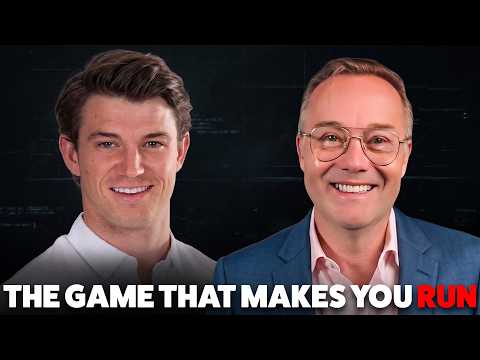
“If I did a run around my local block, the grandma who lives next door to me can technically go and walk around the block in whatever pace she wants to capture that territory off me. And what it’s done is it just brings in this element of anyone can compete against anyone.” — Louis Phillips, 10:25
Clip command
yt-dlp --download-sections "*10:25-11:16" "https://www.youtube.com/watch?v=3whganNt-AA" --force-keyframes-at-cuts --merge-output-format mp4 -o "grandma-steals-territory.mp4"”You’re doing gamification for good”
“You’re doing gamification for good. You’re taking the competitive spirit, you’re taking the slot machine nature of apps and smartphones and you’re using it for good.” — Jason Calacanis, 15:33
Clip command
yt-dlp --download-sections "*15:33-16:25" "https://www.youtube.com/watch?v=3whganNt-AA" --force-keyframes-at-cuts --merge-output-format mp4 -o "gamification-for-good.mp4"A Million Downloads With No Paid Ads
“Jordan building it from the ground up, we got to profitability, which was pretty cool. And then I was doing the marketing side just through social media without any paid media. And we grew that to about a million downloads and about 100,000 followers on Instagram.” — Louis Phillips, 18:04
Clip command
yt-dlp --download-sections "*18:04-18:51" "https://www.youtube.com/watch?v=3whganNt-AA" --force-keyframes-at-cuts --merge-output-format mp4 -o "million-downloads-no-ads.mp4"”You’ve got to prepare to suck publicly”
“The biggest thing with social media is you’ve got to prepare to suck, and you’ve got to prepare to suck publicly. I’ve found a lot of founders particularly in Australia are not willing to fail publicly and look like an idiot online.” — Louis Phillips, 20:26
Clip command
yt-dlp --download-sections "*20:26-21:00" "https://www.youtube.com/watch?v=3whganNt-AA" --force-keyframes-at-cuts --merge-output-format mp4 -o "prepare-to-suck-publicly.mp4"”Selling the lottery tickets instead of scratching them ourselves”
“I’ve never heard a startup founder come on the show and say, ‘You know what we’re doing now? We’re selling the lottery tickets instead of scratching them ourselves.’” — Jason Calacanis, 29:22
Clip command
yt-dlp --download-sections "*29:22-30:00" "https://www.youtube.com/watch?v=3whganNt-AA" --force-keyframes-at-cuts --merge-output-format mp4 -o "selling-lottery-tickets.mp4"Brain Tissue Is “the LiDAR of Neuroscience”
“That’s why I say brain tissue is like the lidar of neuroscience in that it’s just the molecular ground truth of disease. And for the model to work you need that anchor to be able to anchor the relationships between blood, between your brain images and to actually what’s happening in the brain.” — Alice Zhang, 35:56
Clip command
yt-dlp --download-sections "*35:56-37:00" "https://www.youtube.com/watch?v=3whganNt-AA" --force-keyframes-at-cuts --merge-output-format mp4 -o "brain-tissue-lidar.mp4"83% of AI-Discovered Targets Validated in the Lab
“Going into the partnership, Lilly had said to us, even if 20% of these targets validate in the lab, that would far surpass our expectations. And we actually found at the end of that partnership that 83% of those targets actually validated in wet lab experiments.” — Alice Zhang, 45:28
Clip command
yt-dlp --download-sections "*45:28-46:01" "https://www.youtube.com/watch?v=3whganNt-AA" --force-keyframes-at-cuts --merge-output-format mp4 -o "83-percent-validated.mp4"Key Points
- What INTVL is (7:04) - A gamified running app where you run around the block, claim territory on a live global map, and everyone inside your zone is notified their territory was stolen.
- Speed is intentionally ignored (9:20) - Louis found he could never beat “Olympians” on Strava, so Interval rewards volume and consistency instead of pace.
- The retention problem (11:29) - Lon presses on whether reclaiming territory feels too ephemeral; Louis points to leaderboards, local battles and an “onion skin” level system.
- Arenas for pace (12:51) - A forthcoming “arenas” mode adds daily speed-based leaderboards (e.g. fastest lap of Central Park) alongside the volume map.
- Foursquare and Pokémon GO parallels (13:43) - Lon compares the mechanic to becoming the “mayor” on Foursquare and to location-based play, warning it must stay fresh.
- Gamification for good (15:33) - Jason contrasts Interval with Strava speed runs that led to injuries and a fatality, praising the non-speed design.
- Expansion ideas (16:43) - Jason pitches skiing/biking/kayaking versions based on completeness (percentage of a mountain covered) rather than dangerous speed.
- Lean team, profitable build (18:04) - Five people total, three developers; co-founder Jordan built it to profitability, with a UI/UX overhaul and bike mode launching in 30 days.
- Talking-head content strategy (20:26) - Explaining the game on camera with overlays drove growth to 100k followers; founders must be willing to fail publicly.
- Competitive intel via Meta Ad Library (21:30) - Jason demos how anyone can inspect INTVL’s live ads and study what creative works.
- Ad economics (22:31) - ~$12 cost per trial start on Meta, ~17-month average customer lifetime; ads added predictability after volatile organic months.
- Outsourced ad ops (23:38) - INTVL uses a third party called Scale on a spend-scaling fee to run its paid campaigns.
- LTV math (24:08) - Jason walks the ROAS/CAC calculation he ran with Calm, Fitbod and Tonebase, showing the flywheel when the numbers work.
- TWiST Australia revival (25:15) - Jason floats bringing Founder University and the Launch Accelerator to Perth, Sydney, Melbourne and Brisbane on a rotation.
- Verge’s rebrand and pivot (27:42) - After 10 years and a hard-won lesson, Verge shifts from developing its own drugs to predicting which patients respond to any drug.
- Where the brains come from (31:57) - Tissue is from deceased donors via 24+ tissue banks; you can’t biopsy a living brain, unlike a cancer tumor.
- Virtual biopsy from a blood draw (33:29) - A world model reconstructs what’s happening in a living patient’s brain from a single blood draw.
- Transformer architecture with multimodal encoders (39:45) - Each data type gets its own encoder mapped to a shared space, fused into a 512-dimensional “patient fingerprint,” with contrastive multimodal learning.
- Emergent tasks via masking (41:27) - By hiding a data modality during training, the model learns to reconstruct brain activity from blood alone — a task it was never explicitly trained on.
- Three ways pharma engages (42:39) - Run targets against a problem, license found targets/insights, or license the data and models directly.
- Deal structure (43:35) - Eli Lilly and AstraZeneca/Alexion partnerships were $25-42M upfront with $700-800M in milestones each; Lilly optioned two targets into its ALS pipeline.
- Data as the moat (52:12) - The real edge is ten years of “blood, sweat and tears” building end-to-end tissue infrastructure that big pharma hasn’t replicated.
- Why drugs cost $5B (55:39) - Most of the ~$5B average drug cost is spent on failures; better prediction of success could cut costs by orders of magnitude.
- Don’t generalize from one failure (57:30) - Zhang’s biggest worry is a “human” risk: losing faith in AI-for-health after a single setback rather than iterating.
Mentions
Companies
- INTVL (Interval) (7:04) - Louis Phillips’ gamified running app, the subject of the first interview.
- Strava (9:20) - Reference point for elite-speed running competition and, per Jason, past speed-run safety issues.
- Foursquare (13:43) - Lon’s analogy for location-based “mayor” gamification.
- Pokémon GO (13:43) - Location-based game Lon references from a European trip.
- Meta (21:30) - Platform for INTVL’s ads and its public Ad Library for competitive intelligence.
- Scale (23:38) - Third-party agency running INTVL’s paid ads on a spend-scaling fee.
- Calm / Fitbod / Tonebase / Yousician / Steezy (24:08) - Subscription apps Jason cites when explaining ad economics and flywheels.
- Blackstone (5:08) - Private equity firm that bought Hamilton Island for ~AU$1.2B in December 2021.
- Verge Labs (formerly Verge Genomics) (27:22) - Alice Zhang’s AI-driven drug-discovery company, subject of the second interview.
- Eli Lilly (43:35) - Verge partner; optioned two AI-derived targets into its ALS pipeline in 2024.
- AstraZeneca / Alexion (43:35) - Verge target-discovery partner.
- Chai and Noetik (43:35) - Peer bio-AI companies that have done multi-year model licenses with pharma.
- Waymo / Tesla / Wave / Waabi (35:56) - Self-driving references for world models, camera-only vs. LiDAR sensor fusion.
- Anthropic / OpenAI (1:00:02) - Frontier AI labs Jason cites when discussing competition for research talent.
Products & Technologies
- Turf-war territory mechanic (7:31) - Claim land by running a perimeter and finishing within 200m of the start; “stolen territory” push notifications.
- INTVL “arenas” and bike mode (12:51) - Upcoming daily speed leaderboards and a bike mode launching within 30 days.
- Meta Ad Library (21:30) - Public tool to inspect any advertiser’s live creative.
- World models / transformers (38:43) - Internal representation of “how the world works,” here applied to the patient rather than a road.
- Virtual biopsy / patient fingerprint (33:29) - Reconstructed brain state from a blood draw, encoded as a 512-dimensional vector.
- Contrastive multimodal learning (39:45) - ~18-month-old architecture keeping blood signal, brain signal, and their synergy.
- ChatGPT / Claude (39:45) - Cited as the transformer lineage Verge’s model shares.
People
- Louis Phillips (0:42) - Founder of INTVL, calling in from Melbourne.
- Jordan (18:04) - Louis’ co-founder who built the app to profitability.
- Max (21:55) - INTVL’s head of content, featured in the ads.
- Michael (7:31) - INTVL power user shown capturing much of Austin on a 67km run.
- Alice Zhang (27:19) - CEO of Verge Labs.
- Scott Ryan (2:16) - Creator/star of the Australian series “Mr. Inbetween,” in Lon and Jason’s tangent.
- Mark Pesce (25:15) - Former host of This Week in Startups Australia.
- Jeff Bezos (5:22) - Jason jokes he should have bought Hamilton Island.
Surprising Quotes
“You’re taking the competitive spirit, you’re taking the slot machine nature of apps and smartphones, and you’re using it for good.” — Jason Calacanis, 0:17
“Flat white or fuck off is basically… Pretty much. If you want a cappuccino, go back to Italy or New Jersey.” — Jason Calacanis, 6:54
“Instead of just buying a lottery ticket and developing a drug ourselves, can we actually make a better machine that sells those lottery tickets?” — Alice Zhang, 27:42
“Our model with high accuracy can actually accurately reconstruct brain activity from blood alone, and that’s actually not a task that it was asked to do, it’s just a simply emergent property of this training task.” — Alice Zhang, 42:00
“The vast majority of that five billion is getting spent on failures. It’s because nine out of the ten attempts fail at the last stage in the most expensive stage.” — Alice Zhang, 55:39
Transcript
Louis Phillips: 0:00 We created Interval, which is a gamified running app. You run around the block and you claim territory on a live global map. People are just so much more motivated to go out and do that activity when they get a notification that their territory has just been stolen.
Lon Harris: 0:15 Sure.
Louis Phillips: 0:16 It becomes quite personal.
Jason Calacanis: 0:17 You’re taking the competitive spirit, you’re taking the slot machine nature of apps and smartphones, and you’re using it for good.
Lon Harris: 0:24 All right everybody welcome back to TWIST. We’re talking to the founder of Interval, it is a running app that’s gamified Jason so you don’t just do your daily run, you claim the territory around which you’ve run and so it turns it into sort of a social community feature. Let’s meet the founder Louis Phillips.
Jason Calacanis: 0:42 Louie! Louie, how are you?
Louis Phillips: 0:47 Very well, thanks. Thanks so much for having me on. Really excited.
Jason Calacanis: 0:52 Very cool. Great studio there.
Lon Harris: 0:53 Louis is in Australia, Jason, so it is the middle of the night for him.
Jason Calacanis: 0:58 Hold on, let me hear the accent. Say ‘the quick brown fox jumped over the lazy dog.’
Lon Harris: 1:01 Go ahead, let me hear it.
Louis Phillips: 1:02 The quick brown fox jumped over the lazy dog.
Jason Calacanis: 1:06 Louis seems kind of tough. Yeah, so I was going to go with Melbourne…
Lon Harris: 1:09 But he’s not that tough.
Jason Calacanis: 1:11 He seems kind of nice.
Lon Harris: 1:13 More like a Brisbane guy, you’re thinking now?
Jason Calacanis: 1:15 No, it’s the Sydney guys are a little softer on the edge. So I’m going to go Sydney. Where are you from?
Louis Phillips: 1:20 I’m from Melbourne. I’m calling, calling in from Melbourne over late.
Jason Calacanis: 1:24 Okay. So you’re performative right now. You’re being a little professional, but you talk how you actually talk.
Louis Phillips: 1:32 Exactly. No, this is… this is it. This is how I actually talk. Maybe it’s just the time of day.
Jason Calacanis: 1:41 Am I… if I said ‘Hey mate, can you get the fuck out of the way and let me get to the bathroom,’ what would you say?
Louis Phillips: 1:46 Yeah, I feel like I’m home. I feel like I’m home. I was actually born in Western Australia, which is…
Lon Harris: 1:55 Wow, you notice the difference? You hear him now?
Jason Calacanis: 1:57 I did, yeah, a little bit.
Lon Harris: 1:59 Slightly. You see? He let it down.
Jason Calacanis: 2:01 This is a Melbourne guy trying to sound fancy like the Sydney guys. You should just embrace your Melbourne.
Lon Harris: 2:06 Ever see this… Mr. Inbetween?
Louis Phillips: 2:08 I haven’t, no.
Lon Harris: 2:09 Are you talking about Mr. Nobody or Mr. Inbetween?
Jason Calacanis: 2:11 The guy who’s like a hitman gangster.
Lon Harris: 2:13 Wasn’t that Mr. Inbetween? I think that’s the Australian series. Yeah. Scott Ryan, I’m pretty sure that’s what you’re thinking. Because you told me to watch it. You were like, ‘Lon, you gotta see Mr. Inbetween.’ Look at this guy. This is the classic Melbourne guy.
Louis Phillips: 2:23 Yeah, nice. I have… I’ve seen shorts of him on… on TikTok. That’s… that’s parts of Melbourne for sure.
Jason Calacanis: 2:28 No, this… this is your classic Melbourne. Scott Ryan. He shaved your head…
Lon Harris: 2:33 And this guy stopped doing it! He’s got the greatest character of all time. This character is literally the level of Tony Soprano or Walter White in Breaking Bad.
Louis Phillips: 2:45 Wow, high praise.
Lon Harris: 2:46 High praise. Or the guy in The Shield. What’s the guy from The Shield? Oh, oh god, Vic something…
Jason Calacanis: 2:54 Vic Mackey.
Lon Harris: 2:56 Vic Mackey, of course. How could I forget Vic Mackey? If you want a canonical tough guy anti-hero, this guy is so good.
Jason Calacanis: 3:00 Tough.
Lon Harris: 3:01 They need to make a crossover between him and Walter White for a series where like one’s trying to get…
Jason Calacanis: 3:07 Walter White’s dead though. Breaking Bad spoilers, folks.
Lon Harris: 3:11 Maybe. Or, you know, maybe you could do an integration.
Jason Calacanis: 3:13 All right. All right. Louis, we’ve- a little- that’s just a little Australian shenanigans. I miss Australia. You know, we used to have a great partnership with Sydney. Yeah. And we would do Launch Festival there. And I’m considering bringing Foundry University back to Australia or New Zealand or something.
Louis Phillips: 3:30 Yes.
Jason Calacanis: 3:30 Because I just love going there.
Lon Harris: 3:32 I’ve never been. I’ve never been.
Jason Calacanis: 3:33 Hamilton Island, Great Barrier Reef… Oh man. How great is that, man.
Louis Phillips: 3:38 You’re in some good spots there. Oh man. Have you been up there, Cairns? I’ve never been to Cairns. I’ve been to Hamilton Island though, and that’s- that’s pretty quintessential.
Jason Calacanis: 3:47 Tell them about- tell them about Hamilton Island. Just briefly.
Louis Phillips: 3:49 Yeah, Hamilton Island is a beautiful island off the kind of coast of Queensland… And so it’s in the Pacific Ocean and it is absolutely stunning. It’s just classic kind of Australian tropical kind of beachy. It’s the ultimate relaxation spot. I think they just got acquired by-
Jason Calacanis: 4:04 They did.
Louis Phillips: 4:05 Yeah, didn’t they? I don’t know who bought it. I don’t think it went through for it to go through.
Lon Harris: 4:06 It was private equity, I’m pretty sure.
Jason Calacanis: 4:10 So it was owned by a family- some family owned this island. And I went there on vacation one time when I was in Sydney for Launch Festival, and we went there and I rented a little boat and we did a little scuba diving trip and we brought like eight of us on a- like overnight thing. But Hamilton Island has the Whitsunday Beaches. Whitsundays! If you pull up Whitsundays, Whitsundays Beaches is the most beautiful beach on planet Earth, according to the people who go out and gallivant around the world. Incredible. Have you hit the Whitsundays?
Louis Phillips: 4:31 Yeah. Well, I mean, that’s- it’s kind of in the Whitsundays, but yeah, I’ve- I’ve been there. The other one is, you know, I was born there, but Western Australia, I’d say that is like peak Australian kind of postcard. If you- if you ever get a chance, I’d recommend heading across. It’s a long flight, but worth it.
Jason Calacanis: 4:54 What is it, six hours, seven hours to get from the East to the West?
Louis Phillips: 4:57 It’s like four and a half on the way there, three and a half on the way back because you’ve got the wind behind you.
Jason Calacanis: 5:02 Okay, so it’s basically like going from California to New York, something like that.
Louis Phillips: 5:06 Exactly. Yeah, yeah. I’d recommend it.
Lon Harris: 5:08 Alright, thanks for tuning into this week in Australia. Blackstone, the private equity firm, they bought Hamilton Island in December 2021 for 1.2 billion Australian dollars, it’s about 804 million US.
Jason Calacanis: 5:22 I mean, I kind of think Bezos should have bought it. If that’s the price, I would have-
Lon Harris: 5:26 He could afford it, why not?
Jason Calacanis: 5:28 That- I mean, it’s unbelievable when you go there. Beautiful. But I want to go to the West because that’s like raw, right?
Louis Phillips: 5:35 Yeah, that’s- red dirt. That’s proper Australia. That’s where you’ll see, you know, the types that we spoke about before in that TV show. That’s- that’s proper.
Jason Calacanis: 5:45 Proper. In other words, if you were part of the penal colony, that’s kind of where you stayed. You didn’t go to the East.
Louis Phillips: 6:00 fancy dancy cities to get your flat white.
Jason Calacanis: 6:03 Exactly. You’re right, Kangaroo. And your bowl. Get a flat white in a bowl. Bowl culture. You know about bowl culture, Lon?
Lon Harris: 6:10 I don’t. I don’t know what you’re talking about.
Louis Phillips: 6:12 So Australians started like bowl culture. You go for breakfast or lunch, they have bowls. The bowl’s got a little quinoa, it’s got a little salmon, it’s got a little this, a little of that. Everybody likes to eat a bowl. You know, we have sandwich culture and sammie culture here in the United States. It’s the opposite of bowl culture.
Lon Harris: 6:27 I mean, I feel like we also kind of have a bowl. There’s a lot of…
Jason Calacanis: 6:30 We cribbed it. Poké bowls and, you know…
Louis Phillips: 6:33 We cribbed it from Australia. They’ve been doing this for 20 years.
Jason Calacanis: 6:36 I didn’t realize. Am I correct? Louis, where’s your favorite flat white, where’s your favorite bowl?
Louis Phillips: 6:41 Yeah, yeah. Well, acai bowls is big here. It’s kind of like that breakfasty. Yeah, and then favorite spot… I mean, we just have the best coffee here in Melbourne. That’s what we’re known for. So any coffee shop, you can’t beat it. We love a flat white, yeah.
Jason Calacanis: 6:54 Flat white or fuck off is basically…
Lon Harris: 6:57 Their motto?
Jason Calacanis: 6:58 Pretty much. If you want a cappuccino, go back to Italy or New Jersey. All right, show us what you built.
Louis Phillips: 7:04 Sure, sure, absolutely. I’ll share my screen and I can kind of walk us through it. So we created Interval, which is a gamified running app. It’s essentially a game where you run around the block and you claim territory on a live global map. For example, we are here in Austin for those that are watching…
Jason Calacanis: 7:29 Love it. And there’s the lake.
Louis Phillips: 7:31 And all those different colors are different people’s territories. So we can see here if we click on this specific run, Michael has gone for a 67 km run. I think that’s around like 40 miles.
Jason Calacanis: 7:45 Yeah, wow.
Louis Phillips: 7:47 And he’s captured a lot of Austin. So what happens is Michael went out for his run in the morning and he aimed to do 40 miles. He ran around a perimeter wherever he decided to run and then finished his run within 200 meters of where he started. After he pressed stop, he claimed that territory. So everyone inside of his territory gets notified that their territory has just been stolen. So a pretty simple concept, a global game of turf wars. As you can see, we’ve also got kind of leaderboards where the goal is to climb the leaderboards. Michael is obviously the king of the area in Austin with a fair few following as well. On top of that, we have a complete like community feed where people kind of upload, you know, different posts and stuff. There’s some very funny ones. You can chuck things like like, comments on them, and so on. So a pretty simple concept that seems to work really well. And the reason we brought it to market was we found that no one else has done this concept as well as what we could have done. We found the types of people who tend to do it were kind of into medieval games and different kind of, you know, very computer game-esque, where we wanted to take that Strava-level UI and UX and implement that into a cool game time that people can use day-to-day, uh which has led us to Interval.
Jason Calacanis: 9:03 So do I win by making a longer run and encircling him at plus 10k kilometers, or can I just do another circle within his and beat his speed maybe? Because there are multiple vectors for running, one is distance, one is speed.
Louis Phillips: 9:20 Absolutely. So right now there is nothing for speed inside Interval, which was intentional.
Jason Calacanis: 9:25 (Ad read — Agree) We love an exclusive here on the pod, and I have an amazing deal to announce that’s just for Twist listeners. Go right now to agree.com, sign up for their easy-to-use all-in-one contract-to-cash stack, and if you tell them Jason sent you, you’re going to get 50% off for life. The average time from contract sent to signature is under seven hours using agree.com and the median time from invoice sent to invoice paid is just 36 hours. So, if you want to stop chasing invoices, go right now to agree.com.
Louis Phillips: 10:25 So I’ve found, you know, I’m a runner myself, not a very good runner, but I can run. And I found on Strava, I just I cannot ever compete with people because it’s essentially Olympians at this point. What I can do though is I can go out and I can run, you know, in a volume, like I can do multiple runs a week, I can run slowly, I can run and kind of be more committed than people in general. So Interval is not based on speed, you run around the block and you claim land, but other people can steal small bits of your territory. So for example, if I did a run around my local block, the grandma who lives next door to me can technically go and walk around the block in whatever pace she wants to capture that territory off me. Uh and what it’s done is it just brings in this element of anyone can compete against anyone, uh and and it’s a lot of fun.
Jason Calacanis: 11:16 So Lon can go and beat this guy’s ass just walking and lollygagging with his dog as he is wont to do.
Lon Harris: 11:19 Yeah. Dripping sweat. I did have a question though. Uh I actually have two. I have two questions for Louis if you’ll if you’ll allow me. The first one, uh it feels to me like if if it’s just whoever ran the most recently, like how how do you keep that sort of interesting in an ongoing gamified sort of way? Like if I run around my three blocks and then somebody takes a run an hour after me and they claim those three blocks, like well now it’s theirs not mine. Like am I motivated to go back and reclaim that territory the next day? It just it feels a little ephemeral in some ways.
Louis Phillips: 11:57 Yeah, for sure. So I mean initially it is it is… The game is literally just you go out, capture territory, and then someone captures it back off you. And then we have kind of leaderboards and different kind of local battles where you’re competing against that specific individual—
Lon Harris: 12:11 Right.
Louis Phillips: 12:12 —to make it fun and exciting.
Lon Harris: 12:14 Yeah.
Louis Phillips: 12:15 We do have things for solving that. So right now there is a… the game is fun at a specific level of density. And we’ve pretty much got that particularly in Melbourne, Australia. I’ll… I’ll go across to Melbourne, you can see we’re pretty popular here. Particularly in Melbourne, like, there is a lot of density. So if you go for a run and then you come back, your run… some of it might already be captured. What we want to do with that is creating, like, an onion skin around the globe where you can climb up the levels by capturing more and more territory.
Lon Harris: 12:48 Very good. Yes, yes.
Louis Phillips: 12:51 On top of that, we do have a solve for the pace element. So… Oh, sorry. We do have a solve for the pace element. So what we’re going to create and what is in… in works at the moment is something called arenas where to capture a certain really, you know, active spot, let’s say it’s Central Park in New York, you need to be the fastest around that spot on that day. And then you get the, you know, the yellow jersey, or you… you get that territory for that day. We’ll have specific leaderboards for that that are based on time. And then we’ll also have a volume-based leaderboard as well. So if you want to capture territory by, you know, walking or just going about your day, then the rest of the territory map is for that. Whereas if you want to really lock in and… and run at a fast pace… this will be resetting every single day… then go to one of the arenas.
Lon Harris: 13:43 I like that too, because I think… one thing this made me think of right away was Foursquare. You guys remember? Like, where you’d become the mayor. You would check in at your favorite coffee shop or arcade or whatever, bar. And you could become, like, the mayor of that place if you checked in the most. And for… like, there was a summer or two there where I… everybody I knew was, like, obsessed with becoming the mayor of their favorite sandwich shop or whatever. And then… and then it sort of burned out. So I think there’s a huge opportunity here, but you do have to be, like… You’ve got to keep it fresh and new and exciting for people. My… my other thought was having just been on… I went… I went to Europe with a friend, and she’s a big Pokémon GO fan. And every time we went to a new place, like a new landmark, she’d have to pull up her phone and check, “What are the Pokémon GO things happening around here?” That’s a little—
Jason Calacanis: 14:29 That’s a bit annoying, I think. How… how long did it take her to check in, Lon? And then, what is… Is this a special friend that I’m unaware of?
Lon Harris: 14:41 It’s just a friend.
Jason Calacanis: 14:41 A companion?
Lon Harris: 14:43 A traveling buddy that I went to Europe with. But… but… but, you know, like, I feel like there’s an element there where you’re visiting somewhere different. If you want to, like, do a run in Rome and claim Rome as separate from your home, like, I think there’s an interesting element there, too, like, of getting… encouraging travel and checking in wherever you go, I think is something sticky.
Louis Phillips: 15:00 Absolutely. And adventure is the whole point of Interval. We don’t want people just doing their average out and back runs every single day. The idea is that you go out and go and explore new areas. A big thing for us as well is we’ve found that people are just so much more motivated to go out and do that activity when they get a notification that their territory has just been stolen. Yeah.
Jason Calacanis: 15:19 Sure.
Louis Phillips: 15:20 So you’re like so much more likely if you get told oh you’ve just been stolen and then you have like an individual’s name and face put to that territory. It becomes quite personal.
Jason Calacanis: 15:30 Right.
Louis Phillips: 15:31 So, yeah, we’ve we’ve grown it out in a group.
Jason Calacanis: 15:33 Yeah. You know what this is? You’re doing gamification for good. You’re taking the competitive spirit, you’re taking the slot machine nature of apps and smartphones and you’re using it for good. Fantastic. You know, Strava has a little bit of an issue with speed runs and people getting hurt and they’ve had to be a little bit careful because people started bombing and running red lights and they crashed into people and tragically literally in San Francisco somebody died. A bicycle- I believe, this is 20 years ago, 15 years ago I think now. Yours is not encouraging people to like do a lap in an ungodly amount of time and run red lights in order to accomplish that, so great. And I’m not blaming the people at Strava for what their users do. It’s just the nature of competition people who are competitive. Um, and we- there’s just a great TV show on right now, the Dark Wizard, about free climbing and free soloing and and just the competitive nature of that and people dying or you know risking their lives. I think a really interesting way for you to expand this would be, um, to do, uh, say skiing or biking or, you know, other- kayaking, whatever it happens to be and let people claim the water, the mountain, etc. And then you could also do it based on- I like not doing speed, because again speed equals death in in a lot of these pursuits, like skiing. But you could do completeness. And so, you know, when I- you ski a certain mountain, let’s say there’s 50 runs, how many of the runs- and this might include some element of speed, but just how comprehensive are you? How many times have you done the run? You know, not speed, just percentage of the mountain you covered. And, okay, so today I did 80% of the mountain, Lon did 82% he wins today. Tomorrow I do 85, he does 75. Boom. Wonderful. Um, and these become viable, these apps, in the days of AI and low-code/no-code. This app would take a company of 12 people but 5 or 10 years ago. If you were going to seed invest in a company like this, you’d say 12 people to build the app, two platforms…
Lon Harris: 17:44 Customer support.
Jason Calacanis: 17:46 marketing…
Lon Harris: 17:47 Design, UX.
Jason Calacanis: 17:48 Administrative, yeah, yeah. At a minimum of 12, which means you gotta raise about 3 to 5 million dollars to do this. So Louis, give us an idea of in the age of AI what it costs to to stand up this app and get to revenue… charging for this, I’m assuming you charge 50 or 100 bucks a year is my guess.
Louis Phillips: 18:04 Yeah, yeah, yeah. So we’ve got a team of five of us total, three developers. My co-founder built this from the ground up, pretty much to what you see the app is right now and what I just showed you. In 30 days we’re launching a complete UI/UX overhaul and also launching bike mode, which will be our biggest launch yet. Um, with that, the the team we’ve got on, so two extra engineers uh has just meant our our speed is is so much faster obviously. But we’ve managed to keep it pretty lean. Like Jordan building it from the ground up, we got to profitability, which was pretty cool. And then I was doing the marketing side just through social media without any paid media. Um, and we grew that to about a million downloads and about 100,000 followers on Instagram.
Lon Harris: 18:51 Wow. Wow.
Jason Calacanis: 18:51 I heard that your uh I heard your uh paid and social game is strong. That’s what my producers tell me. Maybe you can talk a little bit about tactically what’s worked in terms of acquiring customers.
Lon Harris: 19:03 Producer Jacob actually saw an Instagram ad for this product and that’s how Louis got booked on our show today.
Jason Calacanis: 19:12 Yeah, so tell us a little bit about that because uh most people in the app business are like, oh my god, I can’t make it work. The it’s too expensive to do a paid motion in the world.
Jason Calacanis: 19:23 (Ad read — Quo) Any new company needs to focus on their customer pipeline. That funnel is the lifeblood of your business. That’s why today’s episode is brought to you by Quo, Q-U-O, the smarter way to run your business communication. Quo is the number one top-rated business phone system on G2 and it’s trusted by more than 90,000 businesses. Their AI automatically logs calls and it generates summaries and it even recommends next steps. Try Quo for free plus get 20% off your first six months when you go to quo.com/twist.
Louis Phillips: 20:26 It is, yeah, yeah. Well so for us, I think the biggest thing with social media is you’ve got to prepare to suck, and you’ve got to prepare to suck publicly. And I think I’ve found a lot of founders particularly in Australia are not willing to fail publicly and look like an idiot online. Whereas I I don’t really like I obviously care about my image online, but I’ve been doing social media for about four five years now and I’m not too worried about looking like an idiot. So getting on on camera, getting in front of camera was huge for our our growth. And you know, if you can get prolific with social media, you essentially get free marketing. So, for us, the kind of content that worked was game explanations. It’s a little bit like complicated to understand if it’s just a video without anyone talking. So I would literally jump in this studio or back at my house and explain the game with some overlays above my head. And that in itself got us to 100,000 followers pretty quickly. So just that like talking head style of content really helped.
Jason Calacanis: 21:30 And for a little tactical practical tip for folks, you know, everybody tunes in here for tactical practical. Meta has an ad library, and here’s Interval, and here’s their ads. So anybody can do competitive intelligence on other people’s ads and, uh, you can see here a range of ads, Lon. What type of ads work for you in combination? Like, there’s the one with the meme. See that one with the woman with the blonde hair, second one over? Like, go ahead and play that one. This ad seems to have worked, or not, I don’t know, I can’t see the stats there, but, uh, yeah. Is that you? Or is that your partner?
Louis Phillips: 21:55 That’s… that’s me. No, that’s Max. He’s head of content.
Jason Calacanis: 22:00 And look, he just did the Austin route. And that’s probably what my guy saw, and there it is. And like, this is a beautiful, it’s your same studio, it matters, so you do a podcast studio, you show these 3D graphics, really cool.
Louis Phillips: 22:21 Yeah. And it makes it look fun. You’re like, ‘Oh, okay, I get it, it’s a game, you run around, I get to claim territory.’ Like, it’s very immediate.
Lon Harris: 22:28 Do these ads work yet? What is the cost of acquiring a free user, a paid user? What’s the economics here?
Louis Phillips: 22:31 Yeah, absolutely. So the ads has been great because it take… it adds a level of predictability into our… into our business. Previously, with organic content, we’re just solely reliant on hitting the algorithm. And it meant that we had months which were astronomical and we couldn’t believe we could, you know, get this many downloads and subsequently make money, versus other months which were just absolute flops and it’s kind of crickets, you can’t get anyone to download the app. So ads really iron that out for us. Um, and the cost per trial start for us currently is about $12, um, on Meta. And then, yeah, we’re… we’re seeing, you know, an average customer lifetime is about 17 months. Um, the app changes a lot, so it’s… it’s hard to get really ironed-out metrics on that. But we’re… the ads side has just been, yeah, revolutionary for us. Um, and we’ve got a good ads team that helps… helps things out as well.
Lon Harris: 23:26 You’re doing it all internal or using external consultants to help you with it? Or you believe inside your company you need to have this expertise? What’s your philosophy, Louis?
Louis Phillips: 23:38 Yeah, so we’re actually using a third party. It’s called Scale, um, and they have just been incredible. We essentially pay them a monthly fee and they handle all the ads.
Lon Harris: 23:47 A flat rate or on top of your spend? Like a percentage of spend?
Louis Phillips: 23:51 It… it scales with the… with the spend, yeah.
Lon Harris: 23:54 Got it. And they can’t charge you more than your economics make work, right?
Jason Calacanis: 24:00 And so $12 to start a trial, the product on average costs 50 bucks a year, is that about right?
Louis Phillips: 24:06 Yeah, about 60, 60 US a year.
Jason Calacanis: 24:08 Perfect. Yeah. So I went through this with Calm, so that means if you get one in five people to convert, uh, you know, five times 12, uh, you hit that $60 and you said they last for 17 months, which means on average they make you $90 or $85 so you can… and then maybe they tell a friend about it if it has an internal feature line so you can maybe add a factor of like one in five add a friend, which you would divide the 17 months by five, you get another three months and each month costs $5 so you get an extra $15 in value. So there’s all kinds of return on ad spend, ROAS, and cost per install, and it’s a really interesting science. Um, and there are funds that can help you. I went through all this with Calm, Fitbod. Um, we have a great company called Tonebase, uh, that does music, Yousician, that does music, Steezy that does dance, and it just becomes really hard to get this right, but if you do get it right, you can have an incredible flywheel and build an incredible brand like Calm and Fitbod did and Tonebase. Steezy didn’t work out exactly for, that was a harder one to make work, dance. Um, but yeah, continued success, Louis, and thank you so much for sharing all your secrets.
Lon Harris: 24:58 Yeah, thanks Louis, great to have you too. Continued success.
Jason Calacanis: 25:00 I’ll see you when I’m down under.
Louis Phillips: 25:02 Sounds good. Jason, talk to you soon.
Lon Harris: 25:03 I’m joining for that one. I’m coming along on the Australia trip.
Jason Calacanis: 25:04 Yes you are. Yes you are. That’s absolute. Well, you know what I’d like to do is there’s four cities there: Perth, Sydney, Melbourne, what’s the other one that always competes for startups?
Lon Harris: 25:14 Brisbane.
Jason Calacanis: 25:15 Brisbane. So there’s like four centers of excellence. Um, so what I want to try to do is get, you know, two or three or all four of them to join forces to bring my stack to Australia. Um, so I want to fire up This Week in Startups Australia again, Mark Pesce used to do it, uh, for me, we did like 12 seasons of it.
Lon Harris: 26:08 Many years ago we started doing that, yeah.
Jason Calacanis: 26:09 So it’d be great to get that fired up again, to bring Founder University there and to bring the Launch Accelerator there, and then my vision for it would be to get those three cities to collaborate, chop up the cost of doing this.
Lon Harris: 26:22 Oh, sure.
Jason Calacanis: 26:23 And then rotate it. So Founder University is in Perth, then it’s in Sydney, then it’s in Australia, then it’s in Brisbane, and it just rotates so we do two a year.
Lon Harris: 26:37 Canberra too maybe, Canberra also?
Jason Calacanis: 26:38 Whoever wants to, you know, chip in to get the flywheel going, I just want to have an excuse to go there frankly with my family once or twice.
Lon Harris: 26:41 Hey everybody, welcome back to TWiST, this is Alex. Now, AI is having a moment. People are mad about data centers, people are mad about Anthropic, people that like Anthropic are mad about OpenAI. Space XAI is suddenly a hyperscaler, job loss is either huge, here, or never coming, and AI regulation is becoming a battlefield. Are you tired of all the negativity? Well, something that many AI believers love…
Jason Calacanis: 27:00 To try to trot out is that AI is going to cure cancer, bro. And the thing is, maybe. That’s why I wanted to get Alice Zhang from Verge Labs on the show to tell us about the state of using AI to discover new drugs to tackle our most intractable species-level diseases and maladies. So please join me in welcoming to the show, it’s Alice. Hey, how you doing?
Alice Zhang: 27:19 Good, thank you for having me on the show Alex.
Jason Calacanis: 27:22 I’m so glad you’re here. We’re also talking to you mere days after the company rebranded from Verge Genomics, the name that I’ve always known it under, to Verge Labs. So one, congratulations on the rebrand, and two, from a very high level, why was this the right moment to kind of change the name of the company and redirect in a new direction?
Alice Zhang: 27:42 So we started 10 years ago really with the mission that drug discovery could really be turned from a guess-and-check problem to really a prediction problem, and that the missing piece was really missing data. So we over the last decade have built one of the field’s largest brain datasets directly from patients—over 12,000 human brains and 6,000 patients. And we initially used that to develop our own drugs. And we went through that experience, which was really useful, but that experience really taught us the importance of an even kind of more valuable problem, which is once you’ve developed the drug, how do you actually predict what patient will respond to that drug, which is something we did not originally foresee. So the first thing is that we learned this really hard lesson about this very valuable problem, and we also had the datasets that were necessary to really solve that problem. The second is that the architectures in AI have finally gotten to a point where they can actually solve one of the key challenges that actually prevented us from solving that problem in the first place, which is the kind of incomplete and fragmented state of most patient data datasets. So it was really that kind of intersection of the fact that our data actually achieved this scale we needed, and the model architectures were advancing to the point where we could actually make use of these datasets that let us see this much larger opportunity, which is instead of just buying a lottery ticket and developing a drug ourselves, can we actually make a better machine that sells those lottery tickets? And that’s really what drove the shift, is this kind of culmination of all of the above.
Jason Calacanis: 29:22 I’ve never heard a startup founder come on the show and say, “You know what we’re doing now? We’re selling the lottery tickets instead of scratching them ourselves.” You can invest right here. No, I really appreciate that summary. I now want to go through that in a bit slower pace just to let people know what’s changed and how technology has kind of brought you to this point because I think it’s a very important story. So in the earlier days of Verge Genomics, you guys were working on Converge 1, which actually helped you select a candidate drug that you then took into testing, if I’m right. And I’m curious about the process to getting Converge 1 built and how surprised or not surprised were you when you took it to the real world with this drug you put together, the results didn’t quite match what you were hoping for.
Alice Zhang: 29:57 Most AI tools are…
Lon Harris: 30:00 (Ad read — Superhuman) Friction, not making your life simpler. What you really want is one system that’s going to make you more efficient and save you time every single time you do work. That’s why I love Superhuman Go from the amazing team behind Grammarly. It’s an AI chat that lives on the side of your browser. It’s always there. No new tabs, no starting from scratch, no context switching. Superhuman Go has the context of everything you’re working on. You can try many of Superhuman Go’s features for free. Find out more: superhuman.com.
Alice Zhang: 30:59 Yeah, so what we built Verge originally is what we call it’s called a target discovery engine. So it’s how do you actually find the proteins to go after that cause disease and then design drugs around them. So to do that, we started accumulating this very large data set, which is that instead of starting with a mouse or cell, which is how most researchers start, we asked why not actually go directly to the source, which is the brain, for neurological diseases because that’s where it happens. And so we started sequencing these brains. We paired them with multimodal data, like their clinical records, how they progressed in the disease.
Jason Calacanis: 31:38 Alice, can I ask a question about that just because I’m really curious? Uh, my brain’s inside of my skull and hasn’t ever, to my knowledge, left. Um, so when you’re talking about getting brain samples, a number of patients, number of brains, how much tissue are you getting? Are these from politely living people? Are these the recently deceased? I don’t know, and I just thought I’d ask for everyone out there who’s curious.
Alice Zhang: 31:57 So they’re from deceased patients. This is why it’s actually so hard is because, you know, in cancer, the problem of how do we actually find the right patient and match them to the right drug has been partly solved because you can actually take a tumor right from a living person. You can profile it and analyze it and then you can match it to the therapy that you want that patient to be on. In the brain, you know, you can’t take a brain from a living person, right, in neurological disease. And so you can only take it from autopsy patients. And so that is what we have done is that we’ve partnered with more than 24 different tissue banks, hospitals, academic centers across the world that have thousands and thousands of patient brains from people that have passed away from disease and donated their bodies for research. And then we’ve built an end-to-end infrastructure that can actually ingest these samples, quality control them, dissect them for data consistency, quality and traceability, and then we essentially digitize them, which means that we sequence system, so we capture the behavior of all 30,000 genes in the genome at multiple levels from the DNA to RNA to protein.
Louis Phillips: 33:08 Okay, that’s super cool, but I think when you guys were working on Converge 1, the first iteration of this engine, there was a mismatch between the samples of data that you could collect from the, I guess tissue banks of the world and maybe the brain of someone who had a particular disease you were going after trying to fix. And there was a bit of a gap between the two?
Alice Zhang: 33:29 Yeah, what you can—right now you can only get brains from deceased individuals. And one of the challenges is that when you actually go into clinical trials, right, you’re actually going into a living person. So how do you actually measure what’s happening in that person’s brain, which is the really only window into what is happening with disease. And so what we’ve developed in the last year is a world model of disease that can ingest all of this brain tissue that we’ve collected, combine that with patient data from living patients and essentially create what we call a virtual biopsy of the brain. So that’s essentially a reconstructed picture of what’s happening in your brain that can be built from just a single blood draw. And so that allows us in a living patient to actually say, hey, what stage is your disease at and how might you actually respond to a given therapy.
Louis Phillips: 34:23 So with the information you have from the deceased and these tissue banks, and some information about living patients, you can kind of bring the two halves together using AI, which is what’s changed since you started the company, and therefore kind of close the gap using I guess the power of generative AI.
Alice Zhang: 34:41 Yeah, and that’s what the power of what these models have brought in the last few years is if you look at traditional deep learning or machine learning models, they’ve really had—required every patient to have every single measurement. So you have to have the brain, the blood, the clinical treatment data all in one, but that’s not how it happens in the real world. In the real world, you might have a patient that goes into a clinical trial and you might have a different patient that gives their blood, and then you might have yet a different patient that donates their brain tissue. And the power of these transformer-based architectures is that it allows you to actually piece together missing data and infer missing data from what you have. So you can start creating a unified representation of what a patient looks like and start filling in missing data modalities.
Louis Phillips: 35:28 Now, you guys said that brain tissue is the LiDAR of neuroscience, applying the kind of world models we’ve heard about from self-driving companies like Wave and I think also Waabi and so forth are working on that. And you think that brain tissue’s going to help your world model have high fidelity and high accuracy. Are people out there trying to build similar world models for similar tasks without using actual brain tissue as part of the data grounding for that work?
Alice Zhang: 35:56 Yeah, so we are using world models, the very kind of— same models that some of the self-driving cars are because it allows you to not just pattern match based on observational data like it doesn’t just pattern match how previous driving scenarios happened but it can predict a new person in the road and similarly that’s what we’re doing with our world models. um there are world models in oncology because that’s a much easier space to get data in fact that’s kind of a pattern you see in the space that AI companies get just simply built because of where it’s easiest to get data sets but we’ve kind of taken the opposite approach as we’ve actually asked what’s the biggest problem right now and then how do we actually do the hard work of collecting the right data so with neuroscience most of the data um it’s not that there are people building world models with the proxy data it’s just that that’s where most of the data is today so it’s quite tempting to go there first um but the issue with the proxy data and when I say proxy data I mean things like blood, you know, brain imaging, you know, spinal fluid that can easily be collected from a living person is that they’re all just downstream consequences of the disease they’re like shadows of the disease, right? so uh in order to really understand what is happening in the disease you need to go into the brain where it’s happening and so the reason it’s a bit like lidar is it’s like thinking about self-driving if you were to build a model only on just camera data alone like kind of Tesla has you have limited information but we saw that when Waymo integrated cameras with lidar which is an actual direct reading of 3D depth that could vastly increase the speed at which they could get accuracy in self-driving and so in a very similar way that’s why I say brain tissue is like the lidar of neuroscience in that it’s just the molecular ground truth of disease and for the model to work you need that anchor to be able to anchor the relationships between blood, between your brain images and to actually what’s happening in the brain.
Louis Phillips: 37:56 Okay, so some people are spinning up drug discovery companies using AI and they’re going to where there’s a lot of data because everyone knows if you can bring a lot of data in you can fine-tune a model you can therefore do a lot of work with it but, you know, honestly Alice, if everyone’s gonna go just to where there’s easy data it seems like they’re all going to be competing kind of along the same vector whereas you guys having done years of data collection that’s special and unique will have a different approach.
Jason Calacanis: 38:16 Okay, that makes good sense to me.
Louis Phillips: 38:18 now when it comes to world models for this work I’m a little bit confused because when I think about a world model in the self-driving context I almost imagine like a video game if you will like a place where there is, you know, physics and people moving around and interactions and so forth when you’re doing world models for brains what does that look like or does it actually look like anything or is it just code?
Alice Zhang: 38:43 So it’s uh what a world model looks like is that so in the self-driving world instead of pattern matching on a previous scenario it creates an internal representation of how the world works you know so that it can anticipate new scenarios so similarly Really, you know, instead of a road, our road is essentially the patient or the human. Exactly. But what we do is that we take all of these inputs ranging from your genetics, from your blood, your brain images, and your brain tissue, and we fuse those into a single internal representation of each patient. So actually each patient is represented essentially as a 512-dimensional vector.
Jason Calacanis: 39:26 Oh okay, so this boils down to a series of numbers in a list or a array. Okay.
Alice Zhang: 39:33 Exactly.
Lon Harris: 39:33 Exactly, it’s a lot like the kind of current large language model architectures.
Louis Phillips: 39:36 Not to be a total brat, but vectors are I think one-dimensional tensors. Do you actually use vectors or do you use higher-dimensional tensors?
Alice Zhang: 39:45 So the actual model architecture is at the kind of core is a transformer in the same vein as ChatGPT, Claude, and other LLMs, so leverages the flexibility of those transformers but it has several innovations that are unique in the bio. The first is that each data actually gets its own encoder, each data type. So it’s multimodal, and that maps it to this shared kind of mathematical space. So blood, brain, and genetics can all kind of live in the same kind of mathematical language. And then we fuse all the data layers into a single unified vector that represents each patient. And the way to think about it is essentially like a patient fingerprint. Right? And then the last thing we do is we use what we call contrastive alignment. So this is actually a new architecture. We use a form of it that’s a new architecture that’s only been developed in the last 18 months, um, which is called contrastive multimodal learning. So unlike your kind of classic contrastive alignment, which, you know, image models often use and that only keeps two types of the kind of data that two types of data agree on, ours keeps three things, which is, you know, what the blood knows on its own, what the brain knows on its own, and then what’s the synergy between both that combines them. And in biology, the synergy is huge because it’s where kind of real signal hides where no kind of single measurement can capture. And so lastly, once we have that fingerprint, then we freeze it and we can build a bunch of task heads on top of it that answer specific biological questions like who is going to respond to this drug, what does their brain look like? And what is cool is that this form of training because we’re using masking actually starts to learn tasks that it was never explicitly trained on.
Louis Phillips: 41:24 Can you explain masking for me in that context?
Alice Zhang: 41:27 It’s a bit similar to um kind of how AI does masking, right? Which is that um so in large language models, AIs do masking by actually, you know, hiding a word and then predicting what that word is. For us, we have all types of data, you know, blood, genetics, brain. And what we do is that we can hide one type of data and the model trains by learning what data type um is missing and how to fill that in. So as a result, it can start learning tasks that it wasn’t taught. So we have seen that our own model with high accuracy can actually… accurately reconstruct brain activity from blood alone, and that’s actually not a task that it was asked to do, it’s just a simply emergent property of this training task.
Jason Calacanis: 42:10 I love AI. It always finds some new way to delight me and make me excited about the world. Okay, so you went from the first iteration of the company, Verge Genomics, we’re going to identify candidate drugs and test them and bring them to market, and now you’ve realized that your technology is probably a better tool for other people to go out there and do the very expensive guessing and trials work, which makes a lot of sense to me. Who is the target customer for this new iteration of Verge?
Alice Zhang: 42:39 So it’s really anyone that’s developing a drug, right? It’s the whole pharmaceutical business. Companies can work with us essentially three ways. They can first come to us with a specific problem and we can run our targets against it. We can also directly license insights or targets that we’ve already found. Or we can license the data and models directly. So for example, if you’re a company with a phase two drug in schizophrenia and you’re like, holy cow, there’s my drug is behaving differently in every patient, you can come to us and we can help you pick out which patients to roll in your next trial that actually respond to your drug and let you design a much smaller and cheaper clinical trial.
Jason Calacanis: 43:21 That’s so—so many ways to make money, and companies that you’re going to have as customers are famously large and frankly quite wealthy, which is good for you guys. Do you charge for this on like a per case basis? It sounds a little bit custom on the pricing side if that makes sense.
Alice Zhang: 43:35 Um, so we have, you know, we’ve done two major partnerships already actually with Eli Lilly and AstraZeneca Alexion. Um, those are target discovery partnerships which are more traditionally structured. So it’s, in those cases, it was a 25 to 42 million upfront with then milestones that total up to anywhere between 700 to 800 million dollars each. That’s a very traditional therapeutic structure. Now we’ve opened up new platform models as well that allow you to engage with it more kind of how you might be used to engaging with kind of a direct model license, right? So, um, you know, companies like, you know, in the space like Chai and Noatech have done kind of these multi-year licenses to pharma companies. We also work with smaller biotechs as well in a kind of platform as a service format where they have actually a specific question, they can come to us and we can kind of answer on a question-by-question basis.
Jason Calacanis: 44:40 The deals you’re talking about, back when you raised your series B in, I think it was late 21, you said that the company had announced a 706 million dollar partnership with Lilly to, quote, develop new treatments for, oh hell, oh, ALS, there you go, using its platform. So how did that contract go? Did the milestones come in? Because one thing I noticed, Alice, is that you guys haven’t raised money in a while, which is fine, but also may imply that there was some revenue along the way.
Alice Zhang: 44:59 We did. Well, we have— And announced publicly any additional funding, but we have done those two, actually a few major deals, and we’ve raised some unannounced funding in between. Those partnerships also did provide some milestones. So Lilly, actually in 2024, announced that they actually optioned two of those targets into their internal ALS pipeline. So it’s actually the first AI-derived targets that were actually internalized into their ALS pipeline, which we’re quite proud of.
Jason Calacanis: 45:27 Well done.
Alice Zhang: 45:28 Um, and one thing that was actually quite striking from that partnership was going into the partnership, Lilly had said to us, you know, even if 20% of these targets validate in the lab, we would be very, that would far surpass our expectations. And we actually found at the end of that partnership that 83% of those targets actually validated in wet lab experiments. So that kind of far surpassed even our own internal expectations and starts to create this kind of surplus bullpen of targets that we can continue licensing.
Louis Phillips: 46:01 And by targets we’re talking about, uh, ideas for drugs that might solve—
Alice Zhang: 46:04 Okay, cool. Sorry. So there’s—it’s actually like, what are the proteins to go after with a drug that might cause disease?
Lon Harris: 46:13 The target proteins to go after to help either reduce or resolve ALS in this case.
Alice Zhang: 46:21 Yeah, exactly, yeah.
Lon Harris: 46:22 Uh, okay. So you guys are focused on the brain, which I think is fantastic because I’m a big fan of having my brain and working and all those good things. And also I would like to live for a long time with my mental faculties. Um, but I’m curious about the idea of taking in people’s information, tissue samples and applying AI to them. Does that work in a similar way, for example, in my liver? Or is this more of a system that is set up because the brain works a certain way and it wouldn’t be applicable to other organs in my body?
Alice Zhang: 46:46 Yeah, absolutely. And there are other companies that are doing something similar, um, in cancer. Um, the reason it is such a big problem and so hard in the brain though is because the brain is the hardest organ to access. So pretty much in any other disease, in cancer, in fact, it’s standard of care to get your tumor kind of taken out, to get it analyzed. In IBD, you often do that. That most tissues you can actually go and take a sample of that tissue and the patient can continue living. With the brain, you simply can’t do that. So being able to accurately reconstruct what’s happening in the brain has been one of the field’s longest-standing challenges. And it’s why I think, you know, neuroscience is long behind cancer by 10, 20 years. And it’s really honestly probably the biggest driver of mortalities in the next generation as we get all get older. It will really be Alzheimer’s disease and dementias.
Lon Harris: 47:43 Yeah. No, I’m, I mean, I’m at the age now and my parents are in their mid-70s and you start to have thoughts and fears about how they’re going to do and what we can do for them and how to care for them. So this is very apropos to, you know, things that are near and dear to my heart.
Jason Calacanis: 48:00 AI-ish CEO that I’ve spoken to and I include you in that bucket, of course, is that if they have more compute and they have more data, they can do a much better job over time. This kind of standard kind of path that direction. Does that same relationship apply to the second version of Verge and also like understanding which proteins in the brain we want to go after or is there a limit that is different from other applications of AI in that context?
Alice Zhang: 48:27 Yeah, so I think what we have found so far, we have actually not deliberately chased parameter counts yet because the biggest gains we’ve seen have actually come from scaling data and modalities. So it’s not about making the AI bigger, it’s about feeding it the right pair of data. But you kind of point to something interesting between kind of text models and bio models are, of course, in text models, scaling just works. You have this kind of everyone believes that if you just make it bigger and it gets better. But you know, the reason why that is in text, and I don’t think most people realize why, is because when you’re actually training a text model, you’re predicting the next word in a sentence and that task inherently forces the model to learn everything about reasoning. For example, reasoning, code, tone, everything. But when you interact with the real world like biology, self-driving, robotics, it’s much, much harder because first of all, there’s no single task where predicting the next thing can teach you whether or not a drug works, in which patients, whether it’ll be toxic. Most biological data are actually proxies, so they’re kind of shadows of what’s happening. And most biological data is observational, but you’re actually wanting to ask counterfactual questions like what if I take this drug, what will happen? And kind of analogous is kind of self-driving again because, you know, Waymo didn’t solve self-driving by collecting just simply more and more camera footage. They fused sensors, cameras, lidar, radar, maps, etc. And so biology’s the same, you really need to fuse modalities rather than just scaling one. And but it’s even harder because you don’t have a perfect geometric representation of the world like lidar does. Biology doesn’t have that kind of same sensor. So the takeaway in biology is that scale really only matters when it’s pointed in the right data and the right direction. Um, so it’s not to say that scaling doesn’t matter, but it’s I think in the beginning the gains will come from kind of combining the right data sets and scaling the right data.
Jason Calacanis: 50:27 So then would a major unlock for the company then being able to access more brain tissue samples to expand your underlying data?
Alice Zhang: 50:34 Yeah, and that’s what we’re doing, not just more brain tissue but more modalities. So on the roadmap for us next is bringing in imaging, bringing in proteomics, bringing in even longitudinal data so that we can not only predict a snapshot of the brain, but we can actually create a virtual model of the patient in time where we can actually run forward each person, see when they’ll get the disease, how the disease will progress.
Louis Phillips: 51:00 Wait, no, I don’t like but don’t no. Wait a minute. You everything you’ve said up to this point has been fantastic. But then you just told me you’re gonna tell me when I’m gonna die and I I don’t know, Alice, if I’m on board for that one.
Alice Zhang: 51:11 My for knowledge is power.
Louis Phillips: 51:13 Is it though? I sometimes ignorance really is bliss. Uh okay, but if if I’m being serious, if you were to tell me you are at risk of getting Alzheimer’s or whatever, dementia early, then I presume that I could take at least some steps to limit that risk and manage it. Okay, that that makes a lot of sense.
Alice Zhang: 51:36 And Alzheimer’s disease, a lot of people think it’s actually not even just finding the right drug, it’s actually being able to intervene early enough to change your trajectory. So that becomes even more important.
Louis Phillips: 51:44 But I want to go back to the the the data point. So scaling parameters is not that important, having the right data very important. Is there a when it comes to text, you can scan books, right? It’s a little bit easier to talk about than deceased people’s brains. But is there a a good pipeline of fresh deceased brains that you can, if you wanted to, actually access, collect more, and then expand your datasets over time as you learn more and tune your own models?
Alice Zhang: 52:12 I mean, that’s really what we’ve spent the kind of last 10 years building is that end-to-end infrastructure. And it really took us 10 years. So people always ask, you know, why aren’t just big pharma companies doing this themselves? Yeah, I mean the real answer, it’s not impossible, but it will just simply take a very long time and it’s very hard. And so it’s really the kind of unsexy blood, sweat, and tears that we’ve put in over the last 10 years that have created the moat for us. Yeah. And it’s how we’ll continue scaling these datasets. And what’s exciting is that we are seeing scaling laws in our data, right? Where we’re and they’re non-linear and increase as we add samples and we haven’t even started working on scaling the the compute and the parameters yet. So there’s still massive headroom for growth.
Louis Phillips: 52:49 Okay, so basically you’ve done all the hard work to have a pipeline of of useful brain tissue samples. Other companies don’t have that. So not only are you ahead of the game in your particular species but also you have a unique advantage of having more data. Okay, I want to spin the clock and look ahead a bit. Like, like not this year, not next year, but a couple years down down the road. Uh I think some people have been impatient, uh incorrectly, but impatient with the pace of medical progress in the AI era. Uh I think people have been seeing coding agents do so well and say, hey, why aren’t we there with uh drug discovery and health yet? So if you could take a like like a 50% confidence interval guess about where both Verge is and any other companies in the bio-AI space, where are we in five years? What have we unlocked? And are we gonna feel that difference in our kind of lived medical reality?
Alice Zhang: 53:41 Yeah, I mean, I think even with some of the text models, right, that progress all happened very quickly, uh and there was also ongoing, you know, work that was going on behind the scenes that enabled this. I think with every technology, it’s always a process of iteration and learning and facing setbacks and the learning from them and then once things start clicking, right, progress gets made exponentially. Right now, I think that what’s really exciting is just some of these transformer-based models and these world models are just performing in ways that we didn’t expect. Even with us, we’re starting to see, you know, performance on tasks like brain prediction directly from blood that it wasn’t trained on, that are far exceeding current clinical tools. We’re seeing, you know, prediction of responders. And so what I see in five years is really, I think AI will come into the pipeline at multiple points from multiple different models, right? I think you’ll have models that are able to, you know, predict, hey, what patients will respond to what drugs? And I think the future vision for that is you can have a continuous monitoring of your health state, right? You can figure out, you know, when you’re going to get disease, when you want to intervene. And that really brings us to a world of true personalized medicine where we’re no longer just thinking of Alzheimer’s disease as one disease, but we’re thinking of a hundreds of diseases where you might just have one form of a disease and you can really then seek a therapy that perfectly matches to the specific disease that you have as Alex or that I have as Alice. And that’s really the way to start extending, you know, health span and age span, is really by being able to address these chronic diseases.
Jason Calacanis: 55:14 So, when we sequence the human genome, it cost like a bajillion dollars and took a while. Now we can do it for like four dollars or something crazy. What you’re describing to me sounds fantastic, but I’m curious about the price curve and if you think it’s going to become something that is accessible to people, let’s say on Medicaid versus with all of our friends and their concierge doctors will get it first, but will it make it down to the people that are less resourced?
Alice Zhang: 55:39 Well, so, in terms of pricing, the thing I always think about is why are drugs so expensive now? It’s expensive because it costs five billion dollars on average, all-in, to develop a single drug, right? And so that’s reflected in the price. Why does it cost five billion dollars? Actually, the vast majority of that five billion is getting spent on failures. It’s because nine out of the ten attempts fail at the last stage in the most expensive stage. So if you can actually be able to reduce that even by a small amount, that has huge implications for how much is saved. And that ultimately is going to be the thing that drives down the cost of prices sustainably is actually being able to be much more efficient at how you develop drugs. So that’s really what I see as the long-term solution is if you can perfectly with accuracy predict, you know, which drug will succeed, it goes from five billion to really, you know, tens, tens of millions to really get a drug all the way through and so you can see orders of magnitude reduction kind of then get pulled through to actual, you know, what the average consumer will see in how much they pay for drugs.
Jason Calacanis: 56:30 So as we have better software selection of possible drugs will have a lower failure rate, therefore will spend less money spinning our wheels, spend less time wasting there. We can therefore offer better, more targeted drugs at a lower price point, keeping this in everyone’s medicine cabinet, to use an analogy I suppose. That’s fantastically good news. I’m pretty excited about all this. Is there anything that you’re worried about that might not work out? Because this all feels like you have the tools, you have technology, you have the data, and off to work you go. But are there any science risks left?
Alice Zhang: 57:30 I mean, I think the biggest thing I always like to warn people about is that, you know, technology, people always like to be very reductionist about how they view technologies. You know, they always like to say, ‘oh, you know, this drug has failed in clinical trial. AI doesn’t work at all,’ right? And rarely in the case of any transformational technology has the first attempt ever been the blockbuster success. In fact, actually, transformational technologies get built because people continue to learn from setbacks. They feed that back into their platforms, and then they improve from those. And so I think the biggest risk is more of a soft like a human one, which is that we kind of lose interest in AI or in the application of AI in healthcare just because we kind of face one setback and we generalize that about the promise of the whole technology. But I think that technology is built through iteration and transformation and kind of continued persistence.
Jason Calacanis: 58:28 Yeah, I hope that no one takes an early failure as an indication that things don’t work. I mean, if we believed that, we would never be in rockets, for example, as a species. Because if you go back to the early days of rockets, it wasn’t exactly like they were coming off the assembly line going straight up. They were not. So, takes a lot of time.
Alice Zhang: 58:42 Exactly. And in pharma, there’s this tendency when you have a clinical trial failure to essentially just look away and just move on to the next thing. And that’s why when we had our clinical trial, which didn’t pan out, instead of looking away, we published the details and results in detail. We took all that data and we fed it back into the platform and we said, ‘hey, this taught us a really hard-won lesson about what’s important in this space.’ It gave us all the data to be able to address that challenge. Now let’s feed it in, make the next version actually address what we missed, and then actually build an even better kind of tool on top of that.
Jason Calacanis: 59:16 Well, you have me feeling both optimistic and excited, because I’m starting to reach the age in which my body gets dings and scrapes and nicks and needs a little bit of help here and there. So I’m really glad that you’re working on this problem and other companies are working on cancers and so forth. Because who doesn’t want to live forever, Alice? You know? All right, for folks who want to know more, it’s no longer Verge Genomics, it’s Verge Labs. What’s the URL and is there a job you want to shout out to the audience in case the right candidate is tuned in?
Alice Zhang: 59:50 Vergelabs.com. V-E-R-G-E labs.com. And we are always looking for great AI research talent. So if you are interested in AI and biology, give us a shout.
Jason Calacanis: 59:56 How hard is it to hire right now in that particular space?
Alice Zhang: 1:00:00 I know, it’s crazy.
Jason Calacanis: 1:00:02 No, I’m actually - I’m actually curious. Because I’m not sure if the people that are going to work for Anthropic are interested in the same problem space. So I’m kind of curious if your focus gives you access to talent that might otherwise be absorbed by the major labs.
Alice Zhang: 1:00:14 Yeah, it’s kind of in the space, what is hard is finding the intersection of - you kind of have to ask: do you want AI or do you want biology expertise? Because there’s kind of folks from the frontier AI labs and then there’s folks with kind of biology training that have developed foundation models. We kind of sit in between both. So it’s actually more about finding the unicorns that like are interested in both. So it’s either people that have had deep frontier AI experience that may have had a personal experience really with one of these diseases. And so actually what we find that once we find those individuals, it’s actually quite easy to recruit them because there’s such a strong mission alignment and it’s so kind of what we’re doing is so differentiated from a lot of the other companies out there. But it’s actually about finding those people that have both.
Jason Calacanis: 1:00:58 If you’re curious founders, what people mean when they say mission, that is mission, not improving barber shop’s CMS phone call cold outreach response rates. All right, Alice, an absolute treat. Please come back on in six or eight months when you have more news. I really want to keep track of what you’re doing because I think it’s fantastic. Thank you.
Alice Zhang: 1:01:14 Thank you so much, Jason.
Lon Harris: 1:01:16 (Outro read) Thanks for watching This Week in Startups. If you’re a startup founder, Founder University cohort 13 kicks off this fall — a 12-week program on building your product, launching to real customers, and pitching to investors, with top startups receiving $25,000 or $125,000 in investment. Apply at founder.university/twist. Already have traction? The Launch Accelerator invests $125,000 and connects you with 500+ investors. Apply at launchaccelerator.co. Accredited investors can apply for Jason’s Angel Syndicate at thesyndicate.com. Check out This Week in AI at thisweekinai.ai and the Twist Ticker daily newsletter at thisweekinstartups.com/ticker. This Week in Startups publishes Monday, Wednesday, and Friday at 5:00 PM Central Time.