I Tried To Make Something In America.
I Tried To Make Something In America.
Summary
Michael Kristy of The Iron Snail recounts a near-catastrophic attempt to manufacture high-quality wool sweaters in the United States. After sending 1,000 pounds of raw wool to a domestic spinner in May 2024, the resulting yarn was rejected by two knitting partners — it was torquing, snapping, and taking 9-10 times longer than normal to work with. When Michael requested a refund, the spinner (“Mr. Buck Wild”) fired back a ferociously angry midnight email mocking the knitters’ analysis and telling Michael he needed to pivot as a businessman.
The personal crisis becomes a broader meditation on the decline of U.S. textile manufacturing. While Japan and Italy invested in luxury technology and government-backed supply chains, the U.S. industry — once protected by tariffs — got smashed at both the low-cost and luxury ends when those walls came down. Today, surviving American manufacturers largely depend on Department of Defense contracts via the Berry Amendment, leaving small consumer brands like Iron Snail to absorb all the supply-chain risk themselves: paying 50% deposits up front, then waiting 6-18 months for delivery while their cash sits locked up.
To stop the bleeding, Michael brought in supply-chain expert Courtney and launched “Operation Gumby,” a four-part survival plan: fill manufacturing gaps with international partners when domestic ones fail, slash domestic orders by 75% but place them quarterly for consistency, send all materials to NC State’s Wilson College of Textiles for R&D, and eventually build a “hub” that runs ready-made fabrics to stabilize manufacturers. The yarn was ultimately rescued by Japanese spinners who applied the two simple finishing treatments Mr. Buck Wild had skipped — and the Buckwild Beanie was born.
Highlights
”I tried to make this sweater in the US and it almost bankrupted the company”
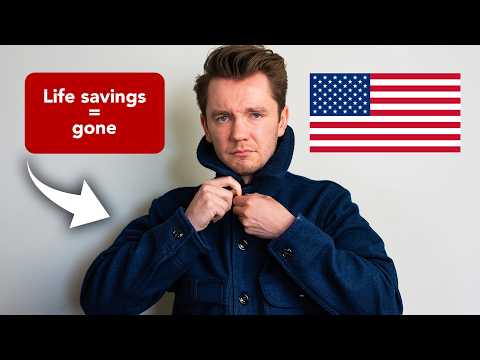
“Hello, I tried to make this sweater in the US and it almost bankrupted the company and cost me my entire life savings.” — Michael Kristy, 0:00
Clip command
yt-dlp --download-sections "*00:00-00:45" "https://www.youtube.com/watch?v=yw_dT1WgQQg" --force-keyframes-at-cuts --merge-output-format mp4 -o "almost-bankrupted-the-company.mp4"”I received a ferociously angry email”
“I sent that email at 5:00 PM. And at midnight that same day, I was getting all cozy-wozy right here and I was watching Norwegian craft traditions with Arnie and Carlos… And at that moment, I received a ferociously angry email.” — Michael Kristy, 1:19
Clip command
yt-dlp --download-sections "*01:19-02:18" "https://www.youtube.com/watch?v=yw_dT1WgQQg" --force-keyframes-at-cuts --merge-output-format mp4 -o "ferociously-angry-email.mp4"”The US really does not have any lifelines or support systems”
“The US really does not have any lifelines or support systems for the average manufacturer trying to make consumer goods. What they do have is the Berry Amendment.” — Michael Kristy, 7:19
Clip command
yt-dlp --download-sections "*07:19-07:59" "https://www.youtube.com/watch?v=yw_dT1WgQQg" --force-keyframes-at-cuts --merge-output-format mp4 -o "no-lifelines-berry-amendment.mp4"”Output beats hard work”
“Output beats hard work. Not saying that you shouldn’t work hard, but just hard work is nothing. That doesn’t exist. You can’t give me a plate of nothing and say, well, what I was going to make you was going to be the best thing you’ve ever had in your life, and I worked really hard on it, but it’s not done yet.” — Taylor, 13:34
Clip command
yt-dlp --download-sections "*13:34-14:04" "https://www.youtube.com/watch?v=yw_dT1WgQQg" --force-keyframes-at-cuts --merge-output-format mp4 -o "output-beats-hard-work.mp4"”I didn’t come this far to just go bankrupt trying to make some clothes”
“To try and start a life that I was really proud of, I would get so tired that I thought I would fall out of my body and die on certain days while being in New York. I didn’t come this far to just go bankrupt trying to make some clothes. We had to figure it out.” — Michael Kristy, 15:00
Clip command
yt-dlp --download-sections "*15:00-15:37" "https://www.youtube.com/watch?v=yw_dT1WgQQg" --force-keyframes-at-cuts --merge-output-format mp4 -o "didnt-come-this-far.mp4"”Operation Gumby, our plan to never have this 18-alarm fire again”
“Operation Gumby, our plan to never have this 18-alarm fire again. It’s a four-part strategy that I think is foolproof. Step number one: fill the gaps… Output is better than hard work that yields nothing. Always.” — Michael Kristy, 16:51
Clip command
yt-dlp --download-sections "*16:51-18:00" "https://www.youtube.com/watch?v=yw_dT1WgQQg" --force-keyframes-at-cuts --merge-output-format mp4 -o "operation-gumby.mp4"Key Points
- The disaster setup (0:23) - 1,000 pounds of raw wool sent to spinners in May 2024, supposed to be ready in October.
- Five-month delay was “not bad” (0:30) - Yarn finished February 2025; some Iron Snail projects are on month 18.
- Yarn rejected by both knitters (0:46) - Torquing, twisting, snapping, taking 9-10x longer than normal per sweater.
- Mr. Buck Wild’s midnight email (1:19) - Spinner refused refund, blamed Michael, mocked the knitters, called the email “deeply offensive.”
- Third-party testing showdown (2:34) - Michael shipped yarn to one of the best testing labs on the planet, then to Japan.
- Why US textile manufacturing collapsed (4:50) - Other countries provide subsidies, R&D, training; US only had tariff walls until they came down.
- Italy and Japan’s luxury pivot (5:47) - Couldn’t compete on cost, so competed on luxury, technology, and breakthrough fabrics.
- Surviving US heritage manufacturers (6:21) - Russell Moccasin, Maine leather houses, Horween survived because few competed in their niche.
- The Berry Amendment (7:34) - DoD purchases must be 100% made in America; many manufacturers survive on military contracts.
- The deposit-driven recipe for disaster (7:59) - Three simultaneous deposits (Billy Goats, denim, mammoth) locked up all funds.
- Japanese supply chain dominance (8:32) - 70 swatches of bespoke fabrics shipped next-day; ready-made fabric immediately available.
- The risky bespoke US supply cycle (10:21) - 50% deposit funds raw materials; brand absorbs every supply-chain risk.
- Boom-and-bust danger (12:08) - Bigger orders compound risk for both brand and manufacturer.
- The breaking point (12:51) - “I think we’re dead… I haven’t paid myself… I may have really set Taylor and I back.”
- Bringing in Courtney (15:24) - Supply chain expert who suggested moving overseas before agreeing to the rescue plan.
- Operation Firestorm vs Operation Gumby (15:50) - Firestorm = stop the bleeding via denim; Gumby = prevent it ever happening again.
- NC State partnership (16:51) - Sending materials to Wilson College of Textiles for R&D under “University Denim” line.
- The technical answer (19:13) - Yarn itself was good; two finishing treatments (anti-friction and stability) were skipped.
- Japan saved the yarn (19:27) - Japanese spinners agreed to properly treat the cones; never spoke to Mr. Buck Wild again.
- The Buckwild Beanie (21:00) - Newest member of the snail lineup, “specifically designed for hot heads.”
Mentions
Companies
- The Iron Snail (0:00) - Michael Kristy’s clothing brand at the center of the story.
- Unbound Merino (3:14) - Sponsor; wool t-shirts, turtlenecks, long-sleeves.
- Russell Moccasin (6:21) - US hand-sewn boot maker; upcoming Iron Snail collaboration.
- Horween (6:44) - US leather house cited as a survivor of the 80s/90s manufacturing collapse.
Products & Technologies
- The Mammoth (8:12) - Iron Snail wool jacket, the big year-end mammoth order.
- Billy Goats (8:12) - Iron Snail sweater product line that funded subsequent orders.
- Iron Snail denim (8:32) - Denim project intended to be the stabilizing middle step.
- University Denim (17:30) - New line developed via NC State R&D partnership.
- The Buckwild Beanie (21:00) - New Iron Snail beanie, “for hot heads.”
- Merino wool t-shirts (4:12) - 190 GSM, 17.5 micron Unbound Merino flagship.
- Berry Amendment (7:34) - Federal law requiring DoD textiles to be 100% American-made.
- NCSU Wilson College of Textiles (17:09) - North Carolina State textile research program.
People
- Michael Kristy (0:00) - Founder of The Iron Snail, narrator.
- Taylor (3:12) - Michael’s partner, co-host on the video.
- Mr. Buck Wild (2:18) - Pseudonym for the angry US spinner who refused the refund.
- Courtney (15:24) - Supply chain expert brought in to rescue the business.
- Arnie and Carlos (1:19) - Hosts of “Norwegian craft traditions” video Michael was watching when the angry email arrived.
- Michael’s dad (14:22) - Commercial fisherman; modeled relentless work ethic.
Surprising Quotes
“He finished the email by listing off a few different ways that I can become a better businessman and told me that I needed to pivot.” — Michael Kristy, 1:55
“The US used to do something like this, but a little different. They prevented all the other countries from importing stuff into the US for a cheap price.” — Michael Kristy, 5:12
“So many manufacturers I go to, they’re like, ‘Yep, this is the military section, and this little tiny one-inch box is where we’re going to make your stuff.’” — Michael Kristy, 7:34
“There’s no one person that’s going to fix it besides you and your team, and you have to keep pushing and pushing and pushing to figure it out.” — Taylor, 13:26
“My dad’s dream was to be a fisherman. He was a commercial fisherman for many decades… Sometimes my mom and I would have to bring him food to the boat because he didn’t have time to come home and the lights would cast on him and turn his skin green.” — Michael Kristy, 14:22
Transcript
Michael Kristy: 0:00 Hello, I tried to make this sweater in the US and it almost bankrupted the company and cost me my entire life savings. This is a 20-plus email thread of a man screaming at me. This is a thread with some lawyers that I had to hire. And this is the subject of all the hooting and hollering.
Michael Kristy: 0:23 May 14th, 2024, I sent a thousand pounds of raw wool to the spinners. It was supposed to be ready in October. The yarn was done in February of 2025, a five-month delay, which actually is not that bad at all. We have some things that are still not done and we’re on month 18. So I really wasn’t worried too much about the delay. I was just happy that the yarn was ready and I sent it to our knitting partners, of which we had two.
Michael Kristy: 0:46 They sent me a few rounds of test sweaters and they all looked fine, but there was always something off and the measurements didn’t match up and it was just it took a really long time. And essentially they said the yarn was not behaving, it was torquing and twisting a lot so they couldn’t get consistent sizes and ratios. It was also snapping a lot and in general it was taking them nine to 10 times longer to make one sweater, so our yarn was rejected.
Michael Kristy: 1:03 Both knitters said, Michael, not that big of a deal, you need to write to the spinner and ask them for a refund. This has happened millions of times before, shouldn’t be a problem. So I wrote an email and in that email I provided all the tests, analytics, pictures, photos that I got from both knitters and said I would like to request a refund.
Michael Kristy: 1:19 I sent that email at 5:00 PM. And at midnight that same day, I was getting all cozy-wozy right here and I was watching Norwegian craft traditions with Arnie and Carlos, episode six, the story of the iconic Luse sweater from Setesdal. Like your third, your mother’s cousin’s third aunt once removed. It’s very confusing, everything, something like that. And at that moment, I received a ferociously angry email.
Michael Kristy: 1:55 The first thing he said was my order was small and that they had already moved on. The second thing they said was that I was trying to blame my mistakes on them. The third thing was that our knitters didn’t know how to use yarn correctly and the knitter’s analysis made him laugh. And the fourth thing he said is that me emailing him was deeply offensive. He finished the email by listing off a few different ways that I can become a better businessman and told me that I needed to pivot.
Michael Kristy: 2:18 It was at that moment I said to the knitters, you know what, uh, might have to wait a little bit before we get this project going again. Our spinners just went buck wild. So I said to Mr. Buck Wild, here’s what we can do.
Michael Kristy: 2:34 I will send some of the yarn to a third party testing lab, one of the best on the entire planet. If they say the yarn is faulty, I want a refund. But if it’s not, I owe you an apology and I don’t know, I owe you or something like that, but it’d be very embarrassing and I’m sorry.
Michael Kristy: 2:49 And so, like two little hobbits, these yarns had to go on an incredibly long and arduous journey. They went to a testing center and then they went to Japan. And obviously… Play it back to me. It’s on, Mr. Buck Wild Man. It’s on. Just say whatever you want.
Taylor: 3:12 Whatever I want?
Michael Kristy: 3:14 This video is sponsored by Unbound Merino. It’s wool time, baby. Not that long ago, we did a full video on wool t-shirts and how cool they are. Anti-odor, stretchy, extremely lightweight, and can absorb up to 30% of its own weight in moisture. Just tell us about your fit.
Taylor: 3:28 No, but I just want to say…
Michael Kristy: 3:30 I didn’t know you had that much of a…
Taylor: 3:32 I love… I wear Unbound every single day.
Michael Kristy: 3:34 I’ve successfully got the love of my life, Taylor, on wool as well. It’s nature’s natural performance fiber, and I know everybody says that these days, but you have to think about what does the fiber do? Wool fiber’s job is to keep a sheep alive, so on you, it’s really comfortable and really great in a bunch of different environments.
Taylor: 3:51 My Unbound grey sweater that literally has not pilled once.
Michael Kristy: 3:55 But also, we can use wool to do things that sheep could only dream of doing, like traveling and going on airplanes and not smelling when you’re in a hotel for a very long time.
Taylor: 4:03 And underneath that, I have a thin Unbound turtleneck that is also incredible. I wear it every day almost.
Michael Kristy: 4:12 Their t-shirts are their flagship products. 190 GSM in weight, very light, 17.5 micron, incredibly soft, and because Merino is getting finer and stronger, they’re pretty darn durable now, which is fantastic. My Unbound Merino shirt is going on eight or nine months, I just wash it regularly and I’ve dried it a few times, holding up very well. And I use their long-sleeve shirts as a base layer. So whatever climate you’re currently in or traveling to, wool is probably going to make you feel that much more comfortable. So thank you very much, Unbound Merino, for sponsoring this video. Very much appreciated. Taylor’s your biggest fan.
Taylor: 4:41 Wait wait wait, I’ll show them something really cool. Okay, just look at this, look at this.
Michael Kristy: 4:45 You’re really using up all your air time.
Michael Kristy: 4:50 If we look at all the countries today that are known for making a ton of clothing, almost all, if not all of the manufacturers in those countries have the country helping them out in some way. There’s subsidies, there’s country-funded research laboratories, country-funded marketing, new programs to train new workers. A ton of stuff, all helping people in those countries are kind of putting their hand on the back of the company and saying, ‘We got you. Take a risk, go as hard as you possibly can, we’re all trying to make sure it works.’
Michael Kristy: 5:12 The US used to do something like this, but a little different. They prevented all the other countries from importing stuff into the US for a cheap price. So if you’re debating between a t-shirt made in the US and China, you probably went with the US because it was cheaper. And because the US was putting a wall around itself, essentially what was happening was all the manufacturers were focusing on efficiency in volume.
Michael Kristy: 5:30 When those walls went down, three main things happened. One, there were just a bunch of countries that had a lower cost of living, so they could make goods cheaper anyways. Two, entire countries were like, ‘Oh my gosh, we can sell to the Americans and they will buy it. Go now! We will support you as much as we possibly can, companies. It’s going to be crazy.’ But at the same time, countries that didn’t have a lower cost of living, like Italy and Japan, they spent…
Taylor: 6:00 Decades saying, well, we can’t compete with the American companies on cost, so we have to compete with the American companies on luxury, on technology, on breakthrough fabrics, all this stuff. So when the walls dropped, the US got smashed on the low-price end, but at the same time, the luxury department in the US was not that robust, so they got smashed on that end by places like Japan and Italy.
Michael Kristy: 6:21 It’s not totally why and I couldn’t really find a lot of papers on it, but I surmise that is why all these years later, specific sectors of the US industry that are heritage-styled, like hand-sewn Russell Moccasin boots or something, this is the Iron Snail Russell Moccasin collaboration coming out later this year. These guys stuck around because this is not something a lot of countries are trying to compete on.
Michael Kristy: 6:44 Russell Moccasin, the entire state of Maine, all the really specialized luxury leather houses in the US, or just really nice leather houses in the US like Horween, in the 80s and 90s when all this was happening, they were kind of doing their own thing and no one was really trying to bash these guys. You can’t stop them at this rate.
Michael Kristy: 7:01 And I’m not saying the only reason these companies from abroad succeeded is because the country had their back and was trying to push them forward, but that really gave them runway to take risks, to hit that price point, to develop something and say this is going to be great in the future, but we need to start it now and we need to start it really aggressively.
Michael Kristy: 7:19 And when the whole country’s doing that, you’re not going to beat them unless your entire country is trying to do the same thing. And the US really does not have any lifelines or support systems for the average manufacturer trying to make consumer goods. What they do have is the Berry Amendment.
Michael Kristy: 7:34 The Berry Amendment basically says, hey, if the Department of Defense is using it, it needs to be 100% made in America. And a lot of manufacturers live and die by that contract. So many manufacturers I go to, they’re like, ‘Yep, this is the military section, and this little tiny one-inch box is where we’re going to make your stuff.’ And I don’t blame them at all, that is how they are keeping their business going.
Michael Kristy: 7:59 And here is a layout of my recipe for disaster that I did not know was a recipe for disaster. The plan was to make and sell the Billy Goats, carry those funds over to denim, then carry those funds over to the big huge giant mammoth order at the end of the year. And they were going to release throughout the year and be nice and balanced. To get everything started, I needed to send out a deposit for Billy Goats, a deposit for denim, and a deposit for mammoth. This decision was ultimately the start of my downfall.
Michael Kristy: 8:32 A lot of the times when you’re buying denim or anything, you go to a manufacturer that makes that thing and they show you what they have. Typically, what they’re showing you is a running fabric of something they already have. So you say, ‘I want this wool,’ they say, ‘Okay, great. We have 3,000 yards of that. There’s more coming in April,’ or ‘We don’t have a ton of that, there’s more coming at this month.’ But you’re buying the actual fabric and that is yours. Ideally, everybody is taking on some risk. The spinners are holding a lot of fiber and then the weavers are holding a lot of yarn…
Taylor: 9:00 yarn and a lot of fabric or just a lot of yarn so they can make things really quick.
Michael Kristy: 9:03 For example, I found this website that just represents a ton of Japanese textile mills from all over Japan and you can look at all the fabrics that they have and you can select a swatch and I just kept going through the entire site and selecting all the swatches that I want and I selected 70 swatches and I thought for sure they were going to say, ‘Hey, that’s ridiculous. We’re not sending that.’ Nope. Next day, boom, shipment went out.
Taylor: 9:27 And these are not just regular run-of-the-mill fabrics, these are the craziest fabrics that I could find on the site. Find a cool one to show you. This is an extremely tight high gauge knit that looks and feels like a woven denim. Almost, little stretch here. This fabric is knit so finely and without flaw, I can’t see the texture of the knit. This is an improved version of US military sateen from the 60s.
Michael Kristy: 9:52 But the craziest part is really just the total supply chain dominance because these are all very atypical fabrics. It’s hard to source the fibers and stuff going inside of them and when I email these people and say, ‘When can I get this?’ they say, ‘It’s ready now and there’s more than you could ever want. It’s ready immediately.’ Some manufacturers in the US do that, the ones usually in the more robust industries. Others, more specific ones and a lot of the ones we work with don’t work like that because the situation is just too precarious, too inconsistent. There’s too many unknowns and there’s not really a big support structure to say, ‘Hey, take that risk and make a bunch of fabric or have a lot of running fabrics,’ so they don’t and all the risk transfers to you to get something made. It’s a lot more bespoke.
Taylor: 10:14 The only way we could possibly explain this is if I go get a cookie. Or morning bun, which is my new favorite baked good.
Michael Kristy: 10:21 They say, ‘Alright, we can make these cookies, but you need to give us a 50% deposit and we’re going to use that money to buy the flour, the sugar, hire the employees, get everything going and then we’ll get one of these to you in six to eight months.’
Taylor: 10:31 So now, you yourself are taking on the risk of the entire supply chain because you’re funding everything and you’re locking all of your funds up, but at the same time, you’re also causing every single step of that supply chain to fire off and it has to fire off successfully and sequentially because no step along the way already has what they need. So this giant risky style of the supply chain may take two months, two months, two months, but it also may take two months with a two-month delay, then a four-month delay, then another four-month delay on top of those two months and take 16 months total.
Michael Kristy: 10:59 If the manufacturer has the ready-made fabric on hand, it might just take two months or even less, just the time of shipping to do a cycle of your project.
Taylor: 11:07 You can run this cycle eight times for every one time you have to run this cycle and as this cycle is running, your funds are locked up.
Michael Kristy: 11:18 And that is exactly what happened to us. Every single supply chain halted, got stuck, and had insane delays and all of the snail’s money was tied up in them so we were completely locked and couldn’t move. And when that happens…
Michael Kristy: 12:00 what’s happening there’s more things happening around it that costs more money so you’re not being able to make anything but also having to pay more things to keep things going.
Michael Kristy: 12:08 And then what I also realized is that starts a boom and bust cycle. So it’s May now and we’re still working on releasing wool jackets. But we need to get the next order going for the next wool jackets, which we can’t. So the delay is going to keep going down through the entire cycle. But also, if people really like the mammoths, you want to make a bigger and bigger and bigger order and you start to do this, which is incredibly dangerous. Big order, then nothing, followed by an even bigger order, then an even bigger order, then an even bigger order, and each time that risk is going up like crazy because you’re doing boom, bust, boom, bust. So if there’s a mistake or something goes wrong, it’s really bad for us, but it’s also really bad for the manufacturer if they’re trying to plan what’s going to happen next.
Michael Kristy: 12:51 So, it was at this point where I was like, I think we’re dead. I think we’re totally locked up. No income has come in. I haven’t paid myself. I may have really, really set Taylor and I back in terms of trying to start our life together. My accountant is calling me all the time, and the other half of the deposits is going to hit this month. And it finally got to the point where I thought, okay, there’s only one more lever to pull, and that is to spend even more money even faster.
Taylor: 13:13 There was a moment where the knitters and I were going through every single possible thing that could be wrong with the yarn. Is it because of this? Is it because of this? Did you try that? Did you try this? And all of a sudden, the knitters were like, hey, I don’t know. We tried. We have to move on. Sorry. I was like, okay, realization number one, there is no guardrail or support. There’s no one person that’s going to fix it besides you and your team, and you have to keep pushing and pushing and pushing to figure it out.
Taylor: 13:34 The second realization is one that I still really struggle with all the time, and that is the idea that output beats hard work. Not saying that you shouldn’t work hard, but just hard work is nothing. That doesn’t exist. You can’t give me a plate of nothing and say, well, what I was going to make you was going to be the best thing you’ve ever had in your life, and I worked really hard on it, but it’s not done yet. I don’t have it.
Taylor: 13:52 And the third and final realization that I had was Let’s go Sammy! He’s into the bucket! No foul! No foul! One coming!
Michael Kristy: 14:22 My dad’s dream was to be a fisherman. He was a commercial fisherman for many decades. He used to get home at 8 o’clock at night. I would help him switch the boat over for a different type of fishing and he would go back out at midnight. Sometimes my mom and I would have to bring him food to the boat because he didn’t have time to come home and the lights would cast on him and turn his skin green.
Michael Kristy: 14:40 My mom worked 24/7. They never gave up. The only way out was through. I basically gave up my entire 20s to work, to focus, to save money…
Michael Kristy: 15:00 To try and start a life that I was really proud of, I would get so tired that I thought I would fall out of my body and die on certain days while being in New York. I didn’t come this far to just go bankrupt trying to make some clothes. We had to figure it out.
Michael Kristy: 15:14 It was time to bring in the big guns and admit that I could not do this by myself. As Taylor said, turns out one man can’t completely revolutionize the American supply chain. Yep, wish she would have said that a little earlier.
Michael Kristy: 15:24 I asked all the contacts that I knew, who would you recommend to help get me out of this mess? They all said Courtney. Courtney joined the team. First thing that Courtney said that made me feel a lot better is I ran her through everything, all the delays, where things got held up, what we had to redo, and she just sighed and said:
Taylor: 15:37 This is a very difficult way to run a business. Have you ever considered moving overseas?
Michael Kristy: 15:43 To which I say, no. Yeah, no, not totally. Operation Gumby.
Taylor: 15:49 What?
Michael Kristy: 15:50 And I said, let me introduce you in the video first, then I’ll explain Operation Gumby. So Courtney did a full analysis, got everything ready, redid all of our tech packs, updated all of our timelines, informed all of the manufacturers, got shipping ready, and had everybody prep. The only way to finish this was to go through it and her job was to make sure the tip of our spear was as sharp as possible. My job was just to keep us funded long enough where we could stop the bleeding and not die. The mammoth fabric was not done yet, it was still delayed. The thing that we could work on though was denim. That would stop the bleeding, stabilize us, and get us on the right track. That mission was called Operation Firestorm. Throwing every single thing we have at the problem, trying to make sure we don’t die. But at the same time, I was forming what we call now Operation Gumby, our plan to never have this 18-alarm fire again.
Taylor: 16:43 Two plus two plus four plus four plus six plus five plus six plus two plus three.
Michael Kristy: 16:47 Two plus two plus four plus four plus six plus five plus six plus two plus three.
Michael Kristy: 16:51 Operation Gumby, our plan to never have this 18-alarm fire again. It’s a four-part strategy that I think is foolproof. Step number one: fill the gaps. At our size and with the resources we have, we can’t fix something. Output is better than hard work that yields nothing. Always. If we have a gem of a partner, we keep them. If we don’t, we have to go international. Step number two: all domestic orders are being slashed by 75%, but we are now going to start placing them quarterly, so it will be 25% four times. Consistency for both the manufacturer and us, and we can build things slowly instead of boom and bust. Number three: I want to do a lot of input on research and development. So we’re sending all of our garments, all of our yarn, everything we have to a university program. AKA, we’re sending them to NCSU’s Wilson State College of Textiles, whatever, one of the best textile research places on the entire planet. It’s in North Carolina. So the next yarn and weave and everything like that that we make for American Denim will be called University Denim, and that will be the building blocks of the new supply line that we will eventually have be our main goal. And number four, and I am completely aware that we are not even remotely close to this and this is a pie-in-the-sky idea…
Taylor: 18:00 is called the hub if we can successfully have a bunch of things graduate the university program we’re making consistent denim we have robust supply lines i would like to start running fabrics with factories that we can then try and spread out and send to different companies and say hey do you want this we have a thousand yards available and make all of the manufacturers as robust as possible and get them out of that boom bust kind of cycle thing going on why not if we get to that level try it
Michael Kristy: 18:29 Do we measure from collar to wrist?
Taylor: 18:30 Shoulder to wrist.
Michael Kristy: 18:31 Shoulder to wrist?
Taylor: 18:31 Yeah.
Michael Kristy: 18:32 Okay, cool, that’s perfect. That makes things really easy. That’s definitely shoulder to…
Taylor: 18:43 The time had come, Mr. Buckwild, to see who was right. A little important detail is when I told Mr. Buckwild the plan and said if the tests come back in my favor, I want a refund; if they’re in your favor, whatever, that’s the end of the game. He basically said, ‘No, whatever the tests say, I’m standing by what I said.’ And I was like, ‘Okay, that’s a bit of an impasse we’ll get to if I’m right, I suppose.’ And I was right. There’s two treatments when you’re making yarn that’s going to go in machines that basically has to happen on almost every single yarn ever. One is to help deal with the yarn going through the machines to make sure it doesn’t snap and helps deal with friction. And the other is just to make the yarn a little bit more stable so it doesn’t go crazy when you make a sweater out of it.
Taylor: 19:13 The answer was those two tiny steps. The yarn itself was good. Those two tiny steps were never done. Confirmed.
Taylor: 19:22 But I’d never got a refund and I actually never told Mr. Buckwild or spoke to him again. I just didn’t want to. There’s no real crazy story. I just never wanted to talk to Mr. Buckwild again and I kind of already wrote off that I thought we lost the entire yarn batch. So I was like, you know what, what’s he going to do? I know he can’t even do one of the two things that we need, so what’s the point? Also, I don’t even really trust him to touch the yarn ever again. Luckily though, I did meet some wonderful spinners in Japan and I took a moonshot. I would just ask them if they would treat the yarn for us because I really trusted them and they said yeah. So this is one of two cones that is actually processed the correct way.
Taylor: 19:46 Okay, here we go. One minute.
Michael Kristy: 19:48 Oh man.
Taylor: 19:50 You guys are calm.
Taylor: 19:52 In all the while while we were waiting for the test to come back and the cones to get treated and everything like that, the knitters said, hey, you know what? We can do one thing, well, two things: beanies and scarves. Do you have any interest? So we sampled one beanie, gave it a name, made the logo, got everything ready, and then I was like, actually wait a second, let’s just, if the yarn comes back and it’s good when we test that yarn when I send it to the knitters after this video and we can finish development of these sweaters and make them, let’s make the Billy Goats and then we can also introduce the beanies with them and we don’t have to make like 4,000 of them to use all of our yarn. So I’d like to introduce you to the newest unexpected member of the snail team that does need to go through some more samples.
Michael Kristy: 21:00 sampling and development, the Buckwild Beanie, specifically designed for hot heads.
Taylor: 21:06 Okay.
Michael Kristy: 21:06 391 people, woah, I’m actually gonna throw up. Oh my god.
Taylor: 21:10 Help! People are buying the belt, Aaron will be happy.
Michael Kristy: 21:13 Oh wow.
Taylor: 21:14 What?
Michael Kristy: 21:14 Check that number. That number is…
Taylor: 21:16 800 people on…