Why Japan Loves a Tiny English Sneaker Brand.
Why Japan Loves a Tiny English Sneaker Brand.
Summary
This video explores Crown Northampton, a 116-year-old family-owned fifth-generation shoemaking business based in Northampton, England. The host Michael interviews Chris Woodford, the great-great-grandson of Ernest Woodford of E. Woodford and Sons, to understand what makes their sneakers special.
The video reveals how the COVID-19 pandemic actually shaped their flagship Harlston sneaker. When factory workers couldn’t gather closely, Chris remembered his childhood watching his father collect hand-sewn moccasin uppers from workers’ homes. He adapted this approach, sending half his employees home to hand-sew uppers, creating a unique construction method that connects to Victorian-era shoemaking techniques passed down through five generations.
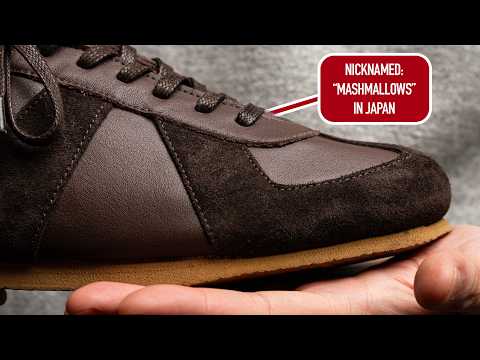
Crown Northampton is defined by four pillars: premium materials, obscene softness and comfort, whole cut construction, and simplicity. The video examines several sneaker models including the Jazz collection (nicknamed “marshmallows” by Japanese customers), the Harlston ($800), the shell cordovan models, the Abby with its unique semi-split leather construction, and the Everan Rambler boot.
Highlights
”Without the Unfailing Barrage of Boots, We Could Have Never Shattered the German Lines”
Clip command
yt-dlp --download-sections "*2:32-3:30" "https://www.youtube.com/watch?v=Th9rFZSbMHM" --force-keyframes-at-cuts --merge-output-format mp4 -o "Th9rFZSbMHM-2m32s.mp4"“Without the unfailing barrage of boots Northampton put over for all of the Allied armies we could have never shattered the German lines.” — Editor of the Northampton Independent, 1922, 2:36
”Shell Cordovan is Buried Inside of a Horse’s Butt”
Clip command
yt-dlp --download-sections "*10:04-11:00" "https://www.youtube.com/watch?v=Th9rFZSbMHM" --force-keyframes-at-cuts --merge-output-format mp4 -o "Th9rFZSbMHM-10m04s.mp4"“Shell cordovan is buried inside of a horse’s butt to be frank, and although horses do have large butts they’re not huge so you only get two shells per horse.” — Michael, 10:10
”Chris Is Not a Savvy Businessman, He’s an Artist”
Clip command
yt-dlp --download-sections "*1:28-2:25" "https://www.youtube.com/watch?v=Th9rFZSbMHM" --force-keyframes-at-cuts --merge-output-format mp4 -o "Th9rFZSbMHM-1m28s.mp4"“Chris is not a savvy businessman, he’s an artist… if we’re going to do this really slow process it’s going to make these sneakers super expensive, let’s not leave something in the gas tank and cheap out here.” — Michael, 1:42
”Chris Said ‘I’m Going to Use That in 25 Years’”
Clip command
yt-dlp --download-sections "*12:28-13:30" "https://www.youtube.com/watch?v=Th9rFZSbMHM" --force-keyframes-at-cuts --merge-output-format mp4 -o "Th9rFZSbMHM-12m28s.mp4"“Chris looked at that and said ‘whoa, I’m going to use that in 25 years’ and he did on the Abby.” — Michael, 12:50
”Whole Cut Bespoke Welted Shoes Were Made to Show Off Skills 100 Years Ago”
Clip command
yt-dlp --download-sections "*13:55-14:55" "https://www.youtube.com/watch?v=Th9rFZSbMHM" --force-keyframes-at-cuts --merge-output-format mp4 -o "Th9rFZSbMHM-13m55s.mp4"“Whole cut bespoke welted shoes were being made to show off my great-grandfather’s skills 100 years ago.” — Chris Woodford, 14:09
Key Points
-
COVID-19 Design Origin (0:00) - The Harlston sneaker’s distinctive stitches exist because Chris Woodford adapted hand-sewn moccasin techniques to keep his business running during the pandemic when workers couldn’t gather closely.
-
Fifth Generation Shoemaker (0:21) - Chris Woodford is the great-great-grandson of Ernest Woodford, running a 116-year-old family-owned shoemaking business in Northampton, England.
-
Premium Materials (1:54) - The sneakers use baby calf Italian vegetable tanned leather for uppers, French handbag-quality leather for lining, and Lactae Hevea rubber soles.
-
Victorian Era Construction (2:11) - The construction methods reference what Chris’s great-great-grandfather used in Victorian era England shoemaking competitions.
-
Northampton’s Shoemaking History (2:32) - Northampton produced 50 million of the UK’s 70 million boots during World War I, making it one of the greatest shoe hubs in the world for 900 years.
-
Jazz Collection - “Marshmallows” (4:10) - The first collection Chris made for Crown Northampton, nicknamed “marshmallows” by Japanese customers for their softness, featuring whole cut construction and cork footbeds.
-
Four Pillars of Crown Northampton (4:46) - Premium materials, obscene softness and comfort, whole cut construction, and simplicity.
-
Lactae Hevea Soles (7:12) - UNESCO-protected as intangible cultural heritage, these natural latex soles are hand-poured into molds with no machines involved, made from rubber tree sap collected by hand.
-
J and FJ Bakers Lining Leather (8:41) - The UK’s only remaining traditional oak bark tannery, unchanged for generations, supplies the lining leather as a nod to heritage.
-
Shell Cordovan (10:04) - Made from horse leather buried in the horse’s hindquarters, you only get two shells per horse. It has a very tight grain structure that rolls instead of creases.
-
Dearborn Leather and Semi-Split Construction (11:56) - The Abby sneaker uses Dearborn leather (emulates deer but stronger) with a unique semi-split construction Chris remembered from seeing a leather splitting machine 25 years ago.
-
Whole Cut Construction (13:55) - One perfect cut of leather wrapped completely around the last with a single seam in the back, used to show off shoemaker skills 100 years ago.
-
Everan Rambler Boot (13:55) - Boot version of a sneaker with vulcanized Vibram sole, D-rings and speed hooks, maintaining the whole cut construction heritage.
Mentions
Companies
- Crown Northampton (0:21) - The 116-year-old English sneaker brand featured in the video
- E. Woodford and Sons (0:25) - The $5,000 shoe division of Crown Northampton
- J and FJ Bakers and Company (8:41) - UK’s only remaining traditional oak bark tannery
- Horwin (10:32) - Famous tannery known for shell cordovan, mentioned as “peanut butter and jelly” with shell cordovan
- Asket (5:20) - Swedish brand sponsor focused on functional minimalism and sustainability
- Danner (15:00) - Boot brand mentioned for comparison
- Red Wing (15:07) - Boot brand mentioned for comparison
Products & Technologies
- Harlston Sneaker (2:07) - $800 sneaker designed during COVID with hand-sewn construction
- Jazz Collection (4:10) - Crown Northampton’s first collection, called “marshmallows” by Japanese customers
- Lactae Hevea Soles (7:12) - UNESCO-protected hand-poured natural rubber soles
- Shell Cordovan (10:04) - Premium horse leather from the hindquarters
- Dearborn Leather (11:56) - Leather that emulates deer but is stronger for footwear
- Everan Rambler (13:55) - Boot version of the Everan sneaker with Vibram sole
People
- Chris Woodford (0:21) - Fifth generation shoemaker, great-great-grandson of Ernest Woodford
- Ernest Woodford (0:25) - Founder of E. Woodford and Sons
- Nick at Stridewise (10:32) - Content creator who made a video about shell cordovan at Horwin
- Skip Horwin (10:41) - Owner of Horwin tannery interviewed by Stridewise
Surprising Quotes
“Without the unfailing barrage of boots Northampton put over for all of the Allied armies we could have never shattered the German lines.” — 2:36 (Editor of the Northampton Independent, 1922)
“Chris is not a savvy businessman, he’s an artist… if we’re going to do this really slow process it’s going to make these sneakers super expensive, let’s not leave something in the gas tank and cheap out here.” — 1:42
“Shell cordovan is buried inside of a horse’s butt to be frank, and although horses do have large butts they’re not huge so you only get two shells per horse.” — 10:10
“Chris looked at that and said ‘whoa, I’m going to use that in 25 years’ and he did on the Abby.” — 12:50
“Whole cut bespoke welted shoes were being made to show off my great-grandfather’s skills 100 years ago.” — 14:09
Transcript
0:00 This stitch and this stitch are on the sneaker because of the COVID-19 pandemic. I know that’s a weird intro, just bear with me though for a second. In fact, this entire sneaker was designed to prevent a company from going out of business during the pandemic. Also this is so I don’t get shot because I’m dressed strikingly like a deer today.
0:18 Why were these stitches and why was this sneaker designed for the COVID-19 pandemic? I asked Chris Woodford, the great-great-grandson of Ernest Woodford of E. Woodford and Sons, a 116-year-old family-owned fifth generation shoemaking business based in Northampton, England.
0:36 COVID-19 happened and at the time Chris’s factory was making sneakers just like this one. Sneakers like this one require a lot of people to be in a room together very closely. So to put it very simply, Chris realizes if you can’t have people in the factory, can’t make sneakers, can’t sell sneakers, goes out of business.
0:51 But Chris is a fifth generation shoemaker and thinks back to a time where he was in the back of his dad’s car driving around his town picking up pre-sewn uppers. The entire shoe wasn’t put together yet but the top part was put together. Those shoes that like 8-year-old Chris and his father were picking up were actually hand-sewn moccasin.
1:10 And the beauty of hand-sewn is that you can sew them at home because you don’t need a big giant sewing machine to put everything together. So Chris sent half of his employees home so they could hand-sew the uppers of these sneakers, then he drove around and picked up all of the hand-sewn uppers, brought those back to the factory where the other half of his employees were now all spaced apart and they were made into sneakers.
1:28 Although there is one big problem - making a sneaker this way is much slower. So what does that do? It brings the total price of the sneaker up. If you’re a savvy businessman you’re probably thinking no problem Michael, we can mitigate the cost of labor by using cheaper materials.
1:42 Well guess what, Chris is not a savvy businessman, he’s an artist. Just kidding Chris. Well, I guess I set myself up for failure there. Chris said hey, if we’re going to do this really slow process it’s going to make these sneakers super expensive, let’s not leave something in the gas tank and cheap out here.
1:54 So the bottom of the sneaker is made out of pure virgin Hevea milk. This is baby calf Italian vegetable tanned leather and the inside of the sneaker is the same leather used on very fancy French handbags.
2:07 So mush everything together and you get this - the Harlston, a sneaker designed from a memory in the back of Chris’s dad’s car. But also this boot uses the same construction methods that Chris’s great-great-grandfather used in Victorian era England shoemaking competitions.
2:21 Chris is referencing what he learned from his dad who learned from his dad who learned from his dad who learned from his dad who probably learned from some master shoemakers in Northampton. Because if you don’t know about Northampton, England, it’s one of the greatest shoe hubs in the entire world in the past 900 years, definitively.
2:36 The editor of the Northampton Independent in 1922 wrote: “Without the unfailing barrage of boots Northampton put over for all of the Allied armies, we could have never shattered the German lines.” The UK put out 70 million boots in World War I. Northampton put out 50 million of those 70 million.
2:52 What’s up everybody, it’s Michael and welcome back to episode two of The World’s Most Fantastic, a program dedicated to the world’s greatest manufacturers and figuring out what they do and exactly how they do it and why they do it.
3:03 The original plan for this video was we were just going to focus on what made the Harlston sneaker special, but after talking with Chris I realized that what made it special was Chris Woodford, a fifth generation shoemaker. For example, I asked Chris a little bit about this leather and he sent me an 11-page Word document that he wrote up on the spot about why he chose this exact leather.
3:21 The Harlston is still going to be our main focus for the video, but each sneaker from Crown Northampton kind of contributes to what goes into the Harlston and tells you more about the brand. And they’re also super weird - this sneaker for example Chris’s Japanese customers call marshmallows. So why not learn about them?
3:37 Also on the screen right now is a little disclaimer really just saying that I didn’t get paid by Crown Northampton. Chris never reached out to me, I reached out to them.
3:45 Anyways, what’s up Michael, welcome back to Maine for the first time ever in your life. This is what the Maine woods look like. Two quick things before this video starts: one, I meant to say everyone, my name is Michael, but two, I got the Kelly coat, very voluminous. I feel like I’m wearing a cardboard box but I love it.
4:05 Other thing is uh, I am sick, sick as a dog you could say. So if I say anything weird, uh, sorry.
4:10 Okay let’s start off with the weirdest marshmallow first. This is the Regent and something that shows me Chris is an A1 footwear nerd. The Jazz collection from Crown Northampton is integral to the entire brand. That is the first thing that Chris made for Crown Northampton, very popular in the Japanese market.
4:23 That is why it’s called marshmallows, because they are soft like marshmallows. They became really popular because they’re so comfortable, they’re so stylish, they have this really nice dainty look. And when you’re looking at these especially, you know from these pictures and stuff, they do have a dainty look to them. But if you kind of hide all of that in a German Army trainer, they look normal.
4:40 This is where Crown Northampton is born and you could see all the DNA and Chris’s first designs throughout the brand.
4:46 So these are the things that we need to actually focus on - the four things that define Crown Northampton: premium materials, obscene softness and comfort, whole cut construction, and simplicity. So each one of those points is going to have its own sneaker that highlights a specific feature of Crown Northampton.
5:00 But think of the Jazz collection as the center of all of that. This beautiful whole cut construction, insane materials, but this is really a highlight of comfort. The Jazz collection is insanely comfortable, it feels like you’re walking around with slippers, practically wearing nothing. But the fact that we still have cork on this footbed and we’re using insanely premium materials makes it that much more interesting and kind of has the Crown Northampton spirit.
5:20 This video is brought to you by Asket, the unofficial winner of my t-shirts ranking video. I spoke with August, the co-founder of Asket, to learn more about the brand. Their focus is on high quality simple designs, versatile fits, extreme sustainability in a reasonable price point. Essentially they want one capsule collection, that is it.
5:36 Today we’re looking at their raw denim. Although I did wash it once just so we could see, but I’m showing off the regular fit and the loose fit. They also have a slim fit if you like that too. They use a 13oz organic Japanese raw non-selvedge denim.
5:50 Selvedge looms are slower and they use more electricity, and also selvedge denim is narrower so it’s less efficient to cut with and make jeans out of, it uses more denim. So all in all it is less sustainable to use, so they use non-selvedge denim.
6:04 And speaking of sustainability, you’ll notice that these jeans do not have a pocket watch pocket or rivets. There are no rivets, just bar tacks which are just as effective as rivets. The jeans are cut and sewn in Italy because Asket is based in Sweden and they focus on European nearshore manufacturing.
6:18 I took plenty of notes while I was on the phone with August to figure out what the brand Asket was all about. And to tell you, the whole brand is about functional minimalism - keep some heritage aspects of the garment but remove things that don’t have a real function. If you’re into that, you’ll be into Asket. Thank you so much for sponsoring this video.
6:38 This sweatshirt is definitely going to make it on the next internet’s favorite sweatshirts because it’s quite good.
6:43 And the Regent over there brings us to this - the Harlston. It’s like a $450 sneaker, this is an $800 sneaker. So the Harlston is really just an exploration into what insane materials Crown Northampton is using to hit these prices.
6:51 First we have these uppers, aka the white top part of the sneaker. This is vegetable tanned baby calf leather from Italy. By vegetable tan: one, it patinas and ages beautifully, and two, it holds structure better so it gives Harlston’s more of a definite shape. You can mold it and have it keep its shape for longer.
7:12 These soles may be my favorite thing about the shoes. Obviously the sneakers are built just fantastically, but protected by like three organizations in France, they’re a living tangible… well, let me just… the Lactae Hevea soles are safeguarded by UNESCO, the United Nations Educational, Scientific and Cultural Organization, as an intangible cultural heritage, and it’s awarded the label of Living Heritage Company by the French State.
7:28 These are a big deal. These are made by the rubber tree. This is not a rubber tree, but for example, someone that is harvesting the sap from a rubber tree, they are slicing the tree in spirals. Basically the tears of the tree are very valuable. You have to collect the tears of the tree, it drips into a little cup, you put all those cups in a big thing and then you make it into natural latex.
7:51 And if you… yeah, there are no machines involved in making these soles, which is obviously a weird thing to say about anything in 2024, but that’s what’s so crazy about them. They are hand-poured into molds, then dry in those molds. Then this is so delicate before it’s fully cured or dried that it has to cure or dry in water, otherwise if it’s placed on a flat surface the sole will deform.
8:12 These soles will get 99% of people through most things, but if you are a smoke jumper or something like that, you know, don’t go with a $450 sneaker using Lactae Hevea soles.
8:21 Okay, onto the lining leather. By the way, I just moved to Maine and I feel like a freak because I’m on… I didn’t know this is a very popular like morning trail where like a bunch of girls run by with their dogs and stuff and I’m just walking with like a shepherd’s coat, a giant bag and a camera and I’m like “good morning, good morning, good morning, I have had oats for breakfast.”
8:41 These sneakers are so grand and use such lavish materials that the inside of these sneakers, the guts that most brands use the cheapest form of leather for because you’ll never see it, have a story unto themselves. They specifically go to J and FJ Bakers and Company in England who get this specific leather.
8:58 Northampton became the monster shoemaking capital of the world, especially during World War I and everything like that, because of where they are located. They are located near a lot of cattle so they could use that leather for shoes. They are located near a lot of water so they could tan that leather. They’re also not too far from cities so people coming through could buy stuff.
9:17 Most importantly, they are near… there’s none here, that’s why we’re not Northampton, but they are near a lot of oak trees. J and FJ Bakers and Company are the UK’s only remaining traditional oak bark tannery left. They didn’t change a single thing, which is insane.
9:28 You can add, you know, some chemicals, some additives to speed up the tanning process. You could agitate the leather in the tannin so that way it goes a little bit faster. They don’t even do that.
9:38 And instead of me saying why Chris uses it, we can just use Chris’s words. So he says: “The quality has to match the outside uppers. You don’t want the inside of your shoes to break down and the outside to be pristine.” True.
9:48 Second, this is the important one: “A nod to heritage and to keeping this type of craft alive. Businesses like this survive only because of the people that truly care about quality and heritage.” It has to be that combination. And that’s something that, you know, that’s kind of what the whole channel is about, because I think that’s what makes things really special.
10:04 And then finally we get to shell cordovan, what many believe to be the greatest leather on planet Earth. It’s very hard to find a video about shell cordovan where the presenter is not wearing a beautiful suit.
10:14 Shell cordovan is buried inside of a horse’s butt, to be frank. And although horses do have large butts, they’re not huge, so you only get two shells per horse, and those make about one piece of footwear each. So one butt cheek, two butt cheeks.
10:25 The process of making shell cordovan is actually very intense. So once again I recommend you check out the video that Nick at Stridewise did on shell cordovan. They go to Horwin where this is made, and Horwin and shell cordovan are kind of like peanut butter and jelly. So if someone knows cordovan, it is Horwin. And Nick is interviewing Skip Horwin, so very cool video.
10:44 But either way, it’s fantastic leather. But what makes it fantastic? First things first that we can’t ignore is obviously this is a very expensive leather so it does have a natural allure to it because of that. Right from the start, people want to see the most expensive leather, so that’s one thing.
10:55 What’s cool about cordovan though, this is not cordovan, is it has a very tight grain structure. So you’ll see if I go like this on the blucher zone for example, there are wrinkles on the leather. Cordovan on the other hand, and this is because of the very tight grain structure and because there’s not grain layers at all, it doesn’t wrinkle or crease, it rolls.
11:11 See how this is a roll instead of like bunched up little hairline creases? That’s what’s very special about it.
11:17 Shell cordovan also patinas really really beautifully over time. It darkens to be very very rich. It’s incredibly durable. It has this beautiful shine that’s very easy to maintain. You really just need to brush this and it will come back to looking new.
11:28 And when you combine all of that - great durability, easy to shine up, easy to buff scratches out of, patinas beautifully - you get a leather that looks fantastic on day one, but also 100 years later looks fantastic and still looks like a functional piece of footwear or bag or wallet. It doesn’t look like it’s broken down and kind of breaking apart.
11:44 That’s why shell cordovan has a really strong cult following, mixed in with the allure of it being incredibly expensive and having this amazing process behind it and all of that. That is shell cordovan.
11:56 Now we have the weirdest sneaker that we’re talking about today, both because this upper feels like pizza dough and also because I’ve never seen a sneaker constructed like this before.
12:03 Dearborn leather is a very… watch this… Dearborn leather is very fascinating leather from Horwin because it’s supposed to emulate the feel of deer leather but not be as weak. I guess “weak” is not the best way of saying it, but just to be stronger and to hold up to heavier use.
12:17 The interesting thing about these sneakers is that Dearborn leather is not per Crown Northampton, not something that is meant to be put on footwear. But also it has to be unlined in order for you to get the benefits of Dearborn leather.
12:28 You need different thicknesses of leather for purposes. The lining of leather shoes and stuff like that is very thin, other leathers very thick. But 25 years ago when I was 3 years old, Chris was off to buy a leather splitting machine. And the guy that was showing him how the machine works, usually you split leather like this - two different pieces, there you go, that’s how the machine works.
12:46 Instead, this guy split the leather and stopped before it was totally split. So this part of the leather was still one piece and you can’t really peel it open or anything like that, it needs to be split. Chris looked at that and said “whoa, I’m going to use that in 25 years” and he did on the Abby.
12:59 The sneaker needs stiffeners in general, otherwise it’s just going to be a very floppy piece of leather. Like over my toe specifically, this wouldn’t be here, this would just kind of fall over my feet and be like pizza dough like I said.
13:11 So usually with sneakers there is the upper, the outside, and there’s a lining, and in between that there is a stiffener that keeps the shape. But what’s interesting is if you semi-split this leather so it’s like this, you have the bottom of the leather and the top of the leather, and you can slip a little something something in between there and close it up and you didn’t need to add a lining. And that is what the Abby is doing.
13:29 And it’s things like that - that’s where you only get that if you’ve been working in the trade for a long time, if by chance you saw a leather splitter 25 years ago that did something that surprised you, that stuck with you, you design the Abby. And that’s what I really like about Crown Northampton.
13:42 So to finish this video up we actually need to go back to my apartment because I forgot the Rambler boot there. But we need to touch on a pillar of E. Woodford and Sons, not just Crown Northampton, and that is whole cut construction.
13:55 This is the Everan Rambler, basically the same thing as the Everan sneaker except now we have a vulcanized Vibram sole, D-rings and speed hooks at the top. It’s the boot version of a sneaker.
14:05 I think this is on Crown Northampton’s site, but Chris says: “Whole cut bespoke welted shoes were being made to show off my great-grandfather’s skills 100 years ago.”
14:14 I think it’s best to go over whole cut construction by looking at E. Woodford and Sons, the very fancy-dancy $5,000 shoe division of Crown Northampton. If you look at a shoe like this, you can understand why whole cut construction is top tier level of elegance, what is supposed to show off the skill of a shoemaker or something like that.
14:31 To make a whole cut piece of footwear, it’s hard to cut, it’s hard to pattern, it’s hard to make into a shoe in general. So it’s a flex. You’re taking one perfect cut of leather with no flaws or anything like that and you’re wrapping it completely around the last and you have a single seam in the back.
14:45 I’m very sorry for the mess, I moved the entire Snail Empire to Maine and then I immediately got sick and couldn’t readjust everything.
14:52 But my favorite thing I think about this boot is that it’s the… it’s Crown Northampton specifically. It’s not someone copying. He didn’t just copy Italian hiking boots. Even though this is Danner, it’s also a whole cut construction, similar. He didn’t just make a random made-to-order boot because he wanted to make a boot. This is Red Wing by the way.
15:08 Oh, but you know what, I have been meaning to show you - I’m working on a collaboration with one of the greatest American boot companies of all time. Also working on a hiking sneaker collaboration with a brand based in Sheffield, England.
15:18 Anyways, what I’m saying is I like that Crown Northampton does their own thing. If I asked a fifth generation shoemaker to make a boot to walk his dog, I’m imagining he would use a tan buffalo leather in a whole cut construction with hand-sewn details on the back and to hold the tongue up, because that is his history, that is his heritage, and that’s all baked into this boot.
15:38 And it also just fits in with the brand as a whole and you could see the history in every piece based off what piece it is. And frankly, I just… I thought the way Crown Northampton runs their business, how they go about designing things, is all very cool. Seems like a very modern way to appreciate old world things and keep them around and make sure people still want to buy them and they’re accessible. It’s very cool.
15:58 Also, that’s what we’re talking about next video. Anyways, that is about it. Thank you so much for watching. I will see you all very soon. I’m going to take a nap and get better for Thanksgiving. Happy Thanksgiving or whatever you’re doing on.