Why You're Paying More For Worse Clothes.
Why You’re Paying More For Worse Clothes.
Summary
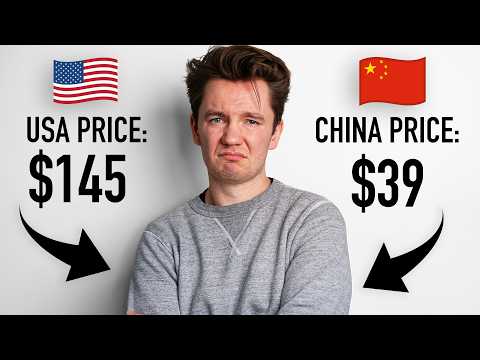
Starting with a pair of $90 Bronson reproduction jeans that match or exceed $300 alternatives, Michael investigates why Chinese direct-to-consumer brands can offer dramatically better price-to-quality ratios. After pestering Bronson’s customer service until CEO Een responded directly, Michael got answers about the fundamental differences between US and Chinese clothing retail.
The video reveals a phenomenon: Chinese domestic brands sell high-quality vintage reproductions at fraction of US prices because they don’t have the same retail markup structure. A $90 Bronson jean uses similar or better materials than $270 Buck Mason equivalents. This isn’t fast fashion - it’s legitimate quality at different price points due to different business models.
Michael explores how this shopping model is “leaking” into the US through Shein, Temu, and TikTok Shop, potentially disrupting traditional retail. The investigation is nuanced - acknowledging both the quality possibilities and the concerns about labor, environmental standards, and the race to the bottom.
Highlights
”The jeans that I’m wearing are from Bronson. They cost $90.”
Clip command
yt-dlp --download-sections "*0:00-1:00" "https://www.youtube.com/watch?v=L6QUfMd82eY" --force-keyframes-at-cuts --merge-output-format mp4 -o "L6QUfMd82eY-0m00s.mp4"“This is a pair of selvedge denim reproduction jeans from 1936. They are really good quality. Levi’s sells their reproduction pair for $300, but Buck Mason sells their reproduction pair for $270. So, Buck Mason is the deal, right? No. The jeans that I’m wearing are from Bronson. They cost $90.” — Michael, 0:00
”Bronson, a domestic Chinese vintage US military reproduction brand”
Clip command
yt-dlp --download-sections "*0:20-1:20" "https://www.youtube.com/watch?v=L6QUfMd82eY" --force-keyframes-at-cuts --merge-output-format mp4 -o "L6QUfMd82eY-0m20s.mp4"“Bronson, a domestic Chinese vintage US military reproduction brand. One of the weirdest sentences I’ve probably ever said.” — Michael, 0:25
”I basically pestered their customer service”
Clip command
yt-dlp --download-sections "*2:00-3:00" "https://www.youtube.com/watch?v=L6QUfMd82eY" --force-keyframes-at-cuts --merge-output-format mp4 -o "L6QUfMd82eY-2m00s.mp4"“I basically pestered their customer service until Een was like, ‘Dude, what do you want to know?’ And boy oh boy, did I get some answers.” — Michael, 2:35
”Made in China became shorthand for cheap garbage”
Clip command
yt-dlp --download-sections "*5:15-6:15" "https://www.youtube.com/watch?v=L6QUfMd82eY" --force-keyframes-at-cuts --merge-output-format mp4 -o "L6QUfMd82eY-5m15s.mp4"“This is the nuance that gets lost. ‘Made in China’ became shorthand for ‘cheap garbage’ but China makes everything from garbage to the finest products on earth. It’s about which tier of production you’re accessing.” — Michael, 5:15
”Brand tax is real”
Clip command
yt-dlp --download-sections "*10:15-11:15" "https://www.youtube.com/watch?v=L6QUfMd82eY" --force-keyframes-at-cuts --merge-output-format mp4 -o "L6QUfMd82eY-10m15s.mp4"“Brand tax is real. Buck Mason charges for being Buck Mason. You’re paying for their aesthetic, their marketing, their brand story. If that matters to you, fine. But know what you’re paying for.” — Michael, 10:15
Key Points
- $90 vs $300 Comparison (0:00) - Bronson 1936 reproduction jeans cost $90, comparable Levi’s reproductions $300, Buck Mason $270
- Bronson Quality Reality (0:30) - Domestic Chinese vintage US military reproduction brand making genuinely high-quality products
- Direct-to-Consumer Model (2:00) - Chinese brands sell direct without traditional retail markup layers
- CEO Interview (2:30) - Pestered Bronson customer service until CEO Een answered questions directly
- Manufacturing Access (3:30) - Chinese brands have direct access to factories that also make for Western brands
- Material Sourcing (4:00) - Can source same Japanese denim, same hardware, same materials as expensive brands
- Labor Cost Reality (5:00) - Lower labor costs enable lower prices without necessarily sacrificing quality
- Shein/Temu Disruption (6:00) - These platforms bring Chinese retail model to US consumers
- TikTok Shop Factor (7:00) - Social commerce accelerating direct-from-China shopping
- Quality Variation Warning (8:00) - Not all Chinese brands are equal; research required to find legitimate quality
- US Retail Markup (9:00) - Traditional retail adds wholesale margins, retail margins, marketing costs
- Brand Tax Concept (10:00) - Premium US brands charge for name recognition, marketing, perceived status
- Vintage Reproduction Niche (11:00) - Chinese brands excel at detailed vintage military/workwear reproductions
- Shopping Behavior Shift (12:00) - Younger consumers more willing to buy direct from China
- Nuanced Conclusion (14:00) - Quality exists at various price points; research and intentionality matter
Mentions
Companies
- Bronson (0:00) - Domestic Chinese vintage US military reproduction brand, central to video
- Levi’s (0:15) - $300 reproduction jeans compared to Bronson
- Buck Mason (0:20) - $270 reproduction jeans compared unfavorably to $90 Bronson
- Shein (6:00) - Fast fashion platform bringing Chinese retail to US
- Temu (6:30) - Direct-from-China shopping platform
- TikTok Shop (7:00) - Social commerce platform accelerating trend
- Amazon Basics (7:30) - Referenced as similar direct-to-consumer model
- Target Basics (7:45) - Store brand competing on basics
- Thrive Market (sponsor) - Biggest Sale of Summer, 25% off sale items plus 30% off first order
Products & Technologies
- Selvedge Denim (0:10) - Reproduction 1936 jeans using selvedge denim
- 1936 Reproduction Jeans (0:00) - Bronson’s detailed historical reproduction
People
- Michael (0:30) - The host of The Iron Snail
- Een (2:30) - CEO of Bronson who answered Michael’s questions directly
Surprising Quotes
“This is a pair of selvedge denim reproduction jeans from 1936. They are really good quality, but you have to ignore the broken button here. Levi’s sells their reproduction pair for $300, but Buck Mason sells their reproduction pair for $270. So, Buck Mason is the deal, right? No. The jeans that I’m wearing are from Bronson. They cost $90.” — 0:00
“Bronson, a domestic Chinese vintage US military reproduction brand. One of the weirdest sentences I’ve probably ever said.” — 0:25
“I basically pestered their customer service until Een was like, ‘Dude, what do you want to know?’ And boy oh boy, did I get some answers.” — 2:35
“You could get three of these for the price of one Buck Mason same pant.” — 0:35
Transcript
0:00 This is a pair of selvedge denim reproduction jeans from 1936. They are really good quality, but you have to ignore the broken button here. Levi’s sells their reproduction pair for $300, but Buck Mason sells their reproduction pair for $270. So, Buck Mason is the deal, right? No.
0:20 The jeans that I’m wearing are from Bronson, a domestic Chinese vintage US military reproduction brand. One of the weirdest sentences I’ve probably ever said. They cost $90. You could get three of these for the price of one Buck Mason same pant. Well, not same pant obviously. It’s the whole point of this video.
0:45 The title of this video is not clickbait. Obviously, there is probably a little bit more nuance than whatever I’ve titled it. But it’s not clickbait. It’s something that is very interesting, a bit of a phenomenon, and it all has to do with the way you shop for clothing in the US versus the way you shop for clothing in China.
1:05 Also, real quick disclaimer. I live in the US, so might be how you shop too if you live somewhere in Europe or anywhere else in the world. I just don’t know. I’ve shopped in one Denmark mall in my entire life. It was awesome.
1:20 But the way you shop for clothing and stuff like that in China oftentimes does lead to you’re paying less, you’re getting a higher quality. And that way of shopping is actually leaking into the US and it might take over US shopping with the rise of companies that you probably heard a lot about. Shein, Temu, and interestingly enough, the TikTok shop.
1:45 So the question is what on earth is exactly happening? And to figure that out, I did a lot of research myself, obviously. But I also got in contact with the CEO of Bronson, Een, and I asked him a lot of questions.
2:00 I basically pestered their customer service until Een was like, “Dude, what do you want to know?” And boy oh boy, did I get some answers. So that’s that. Welcome to another Iron Snail production.
2:20 The core insight is straightforward: Chinese domestic brands selling direct to consumers can offer comparable or better quality at dramatically lower prices because their business model eliminates traditional retail markup layers.
2:45 When a US brand makes jeans, there’s manufacturing cost, then wholesale margin, then retail margin, then marketing costs, then brand premium. Each layer adds to final price. Bronson just has manufacturing cost plus shipping plus small margin.
3:15 But here’s what makes Bronson different from fast fashion: they’re obsessive about historical accuracy. These aren’t cheaply made knockoffs - they’re detailed reproductions made by people who care about vintage military and workwear.
3:45 Een explained that they source the same Japanese selvedge denim available to premium US brands. Same hardware suppliers. Same materials. Different price because different business model.
4:15 China has the manufacturing infrastructure. The factories making clothes for Western brands also make clothes for domestic Chinese brands. The quality capability exists - the question is whether a brand chooses to use it.
4:45 Labor costs are lower, yes. But lower labor cost doesn’t automatically mean lower quality. It means the same quality is possible at lower price, or higher quality at the same price.
5:15 This is the nuance that gets lost. “Made in China” became shorthand for “cheap garbage” but China makes everything from garbage to the finest products on earth. It’s about which tier of production you’re accessing.
5:45 Bronson accesses the quality tier. They’re making for an audience that cares about accurate reproductions. Their reputation depends on quality, not volume.
6:15 Now Shein and Temu are different. They’re generally accessing the volume tier - fast fashion at ultra-low prices. Quality is inconsistent at best. Don’t confuse Bronson’s model with theirs.
6:45 But what Shein and Temu are doing is training American consumers to buy direct from China. Once that behavior is normalized, quality direct-to-consumer brands like Bronson become more accessible mentally.
7:15 TikTok Shop accelerates this. Social commerce showing you products and enabling instant purchase breaks down the traditional retail discovery model. Products find you rather than you finding products.
7:45 Amazon Basics, Target Basics - American retailers already understand this model. Cut out the brand middleman, source directly, pass savings to consumers. Chinese brands just do it more directly.
8:15 Warning: not all Chinese direct brands are equal. Research is required. Bronson has a track record with the vintage reproduction community. Random TikTok Shop brands? Who knows.
8:45 The questions to ask: Who are they making for? What’s their reputation in their niche? Can you find independent reviews? Is there community discussion about their products?
9:15 Traditional US retail markup is significant. A $90 cost-of-goods item might retail for $250-300 after all the layers. That’s not greed necessarily - it’s rent, staff, marketing, brand building, returns, inventory risk.
9:45 But if you don’t need the retail experience, don’t need the brand status, and are willing to research quality yourself - why pay for it?
10:15 Brand tax is real. Buck Mason charges for being Buck Mason. You’re paying for their aesthetic, their marketing, their brand story. If that matters to you, fine. But know what you’re paying for.
10:45 Chinese vintage reproduction brands exist because there’s a Chinese market for accurate vintage American military and workwear. It’s a niche passion community that happens to also serve international buyers.
11:15 The attention to detail can be remarkable. Accurate stitching patterns, correct hardware, period-appropriate materials. These aren’t fast fashion approximations - they’re studied reproductions.
11:45 Younger consumers seem more comfortable with this model. Less brand loyalty, more price-quality consciousness, more willing to research and buy direct. The shift is generational as much as technological.
12:15 There are legitimate concerns. Labor standards, environmental standards, lack of accountability. These matter. But they’re not unique to Chinese manufacturing - they’re supply chain issues everywhere.
12:45 Buying from Bronson isn’t morally different from buying from a US brand that manufactures in China, which is most of them. The supply chain is the supply chain.
13:15 What’s changing is who captures the margin. Direct brands capture more, pass some to consumers. Traditional brands have more layers capturing margin.
13:45 My conclusion: quality exists at various price points. A $90 Bronson jean can be equal to a $270 Buck Mason jean in materials and construction. The price difference is model, not quality.
14:15 Research matters. Don’t buy blind from unknown sources. Find communities that discuss quality. Read reviews from people who care about construction. Be intentional.
14:45 The phenomenon is real: you may be paying more for worse clothes if you’re buying brand premium without questioning what you’re actually getting.
15:15 Thanks to Thrive Market for sponsoring. Their Biggest Sale of Summer has 25% off select sale items, plus 30% off your first order and a free gift at thrivemarket.com/TheIronSnail.
15:45 The clothing market is changing. Direct-to-consumer from manufacturing regions disrupts traditional retail. Quality is possible at multiple price points. Brand premium is optional.
16:15 See you in the next one. Wear what makes sense for your budget and values.