Why This U.S. Navy Jacket Killed The Peacoat.
Why This U.S. Navy Jacket Killed The Peacoat.
Summary
Michael explores the history and construction of the N1 deck jacket, examining why the U.S. Navy switched from the iconic peacoat to this more functional alternative during World War II. The video delves into the engineering problems the Navy faced with their original jackets - frozen zippers from salt spray, corroded brass hardware, and exposed storm cuffs catching on equipment - and how the N1 deck jacket solved each issue through clever design iterations.
The video compares three modern interpretations of the N1: The Real McCoy’s museum-grade replica with authentic 50% alpaca/50% wool pile lining, Dehen 1920’s waxed canvas version with mouton lining, and Heat Straps’ massive 7-pound version with 24oz canvas and quilted wool batting. Using a homemade thermal testing system with a reptile heating pad, Michael tests the warmth of each jacket and explains the science behind insulation, including why alpaca fiber is exceptional due to being both fine and hollow.
Highlights
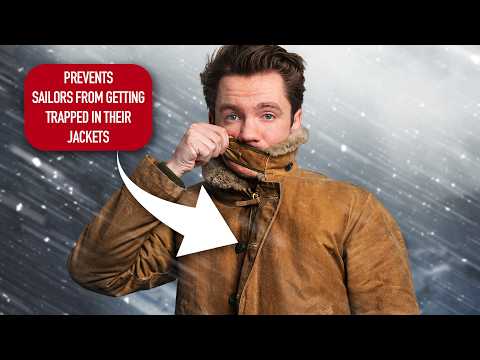
”The Other Job Was to Make Sure You Don’t Get Trapped Inside Your Jacket”
Clip command
yt-dlp --download-sections "*0:27-1:15" "https://www.youtube.com/watch?v=KMQF8w-aRpY" --force-keyframes-at-cuts --merge-output-format mp4 -o "KMQF8w-aRpY-0m27s.mp4"“The other job was to make sure that you don’t get trapped inside of your jacket if you were getting covered with freezing salt water all day.” — Michael, 0:27
”The Navy Borrowed Hook Closure Technology from Firefighters”
Clip command
yt-dlp --download-sections "*6:02-7:00" "https://www.youtube.com/watch?v=KMQF8w-aRpY" --force-keyframes-at-cuts --merge-output-format mp4 -o "KMQF8w-aRpY-6m02s.mp4"“So the US Navy said hey accountants can we borrow that technology and they said absolutely.” — Michael, 6:25
”Alpaca is Fine and Hollow - An Incredible Insulator”
Clip command
yt-dlp --download-sections "*10:15-11:05" "https://www.youtube.com/watch?v=KMQF8w-aRpY" --force-keyframes-at-cuts --merge-output-format mp4 -o "KMQF8w-aRpY-10m15s.mp4"“Alpaca is fine and hollow so it’s very very warm which means that your coat or your jacket can be warmer without a lot of added weight.” — Michael, 10:41
”The Answer Was Never a One System Closure”
Clip command
yt-dlp --download-sections "*8:29-9:20" "https://www.youtube.com/watch?v=KMQF8w-aRpY" --force-keyframes-at-cuts --merge-output-format mp4 -o "KMQF8w-aRpY-8m29s.mp4"“The answer was never a one system closure system… perhaps instead of there being one fix all solution we need to break the solution up.” — Michael, 8:40
”Heat Straps Won the Warmth Championship”
Clip command
yt-dlp --download-sections "*12:56-13:50" "https://www.youtube.com/watch?v=KMQF8w-aRpY" --force-keyframes-at-cuts --merge-output-format mp4 -o "KMQF8w-aRpY-12m56s.mp4"“The warmest jacket that we tested today is Heat Straps. They came in with 10 degrees… The Real McCoys is warmer than the Levi’s sherpa jacket just because of the storm cuffs alone.” — Michael, 13:21
Key Points
- Alpaca Wool Blend (0:04) - The original N1 deck jacket lining was 50% wool and 50% alpaca, designed to prevent sailors from getting trapped inside frozen jackets
- Peacoat Problems (4:44) - The peacoat was heavy, stiff, hard to maneuver in, and difficult to put on and take off quickly
- Zipper Freeze Issue (5:27) - Salt spray would freeze in zippers, trapping sailors inside or outside their jackets
- Brass Corrosion (5:42) - World War II zippers used brass which corroded in salt water, causing constant repair needs
- Firefighter Hook Closure (6:07) - The Navy borrowed hook closure technology from firefighter coats for gloved operation
- Grosgrain Fabric Family (7:27) - Bedford cord and jungle cloth are related fabrics with thick ribbed yarns for durability
- Storm Cuff Solution (8:29) - Extending fabric over storm cuffs protected them while maintaining cold air blocking
- Button Over Zipper Design (8:54) - The final design used a zipper protected by a button placket - buttons are easily replaced if lost
- Sliver Knitting (9:50) - The Real McCoy’s pile is made by inserting fibers into loops as they’re knitted, creating insulation
- Alpaca Insulation Properties (10:22) - Alpaca fiber is both fine and hollow, making it an incredible insulator
- Heat Straps 24oz Canvas (11:23) - 2.5x heavier canvas than Dehen with quilted wool batting inside for extra loft
- Iron Heart Interliner (11:39) - Iron Heart adds a tightly woven fabric between outer body and insulation to stop wind
- Suspender Loops (12:15) - The N1 was part of a system including pants with suspenders that attached to jacket loops
- Thermal Test Results (12:59) - Heat Straps won with 10 degree change, Dehen had 11 degrees, Real McCoy had 15 degrees
Mentions
Companies
- The Real McCoys (3:08) - Japanese brand making museum-grade accurate reproductions of the N1 deck jacket
- Buzz Rickson (3:17) - Another Japanese brand known for period-accurate military reproductions
- Standard and Strange (3:10) - Shop that loaned Michael the Real McCoy’s jacket
- Dehen 1920 (1:14) - American brand making a legendary interpretation with waxed canvas and mouton
- Heat Straps (1:23) - Brand making the heaviest N1 interpretation at 7 pounds
- Iron Heart (11:45) - Japanese brand that uses interliners in their deck jackets
- Reason Labs (1:45) - Sponsor for online security and identity theft protection
- Fjallraven (12:44) - Mentioned as having an even warmer jacket for next video
Products & Technologies
- N1 Deck Jacket (0:49) - The main subject, a World War II Navy jacket that replaced the peacoat
- Peacoat (0:17) - The heavy woolen Navy coat that was replaced
- Bedford Cord (7:30) - Fabric type in the grosgrain family with ribbed texture
- Jungle Cloth (7:34) - A type of Bedford cord fabric
- Mouton (3:32) - Sheep skin used for fleece lining in modern interpretations
People
- Patrick (1:19) - Person Michael bought the Dehen jacket from on eBay
- Taylor (4:03) - Michael’s girlfriend who kept trying to steal the reptile heating pad
Surprising Quotes
“The other job was to make sure that you don’t get trapped inside of your jacket if you were getting covered with freezing salt water all day.” — 0:27
“So the US Navy said hey accountants can we borrow that technology and they said absolutely.” — 6:25
“Alpaca is fine and hollow so it’s very very warm which means that your coat or your jacket can be warmer without a lot of added weight.” — 10:41
“The answer was never a one system closure system… perhaps instead of there being one fix all solution we need to break the solution up.” — 8:40
Transcript
0:04 This lining is 50% wool 50% alpaca so riddle me this why does the world’s largest and most powerful navy during the world’s largest and deadliest war switch to this little guy from their Woolen Fortress of a coat that we all know and love the peacoat what gives this fabric is pretty sick and it sucks that we don’t really use it anymore in the 21st century but it had a very weird job one of the jobs obviously was to protect you keep the wind out and stuff like that but the other job was to make sure that you don’t get trapped inside of your jacket if you were getting covered with freezing salt water all day.
0:34 This is a rudimentary thermal testing system I made so we can check just how warm this Museum grade replica of a World War II Navy deck jacket actually is what was the US Navy outfitting their Navy Personnel in in the wettest wildest coldest craziest conditions out there I’m curious the true question is how good was the N1 deck jacket actually people go goo goo gaga about this in modern days everybody that wears big heavy boots and heavy jeans they have one of these jackets I have three now so I’m no better but how good are they actually.
1:00 And I want to compare it to what we’re seeing today which is luxury versions of the same jacket this is $1,500 jacket I didn’t pay that much for it well it’s at 1,300 I’m wearing right now what is probably considered to be the greatest interpretation of the N deck jacket in history this is by Dehen 1920 this is a legendary jacket I got it for an insane deal on eBay thank you Patrick like taking candy from a baby this is kind of the king until well not until I got a message from a brand called Heat Straps and they said hey you have to try ours out it weighs 7 lb probably double the it just does things like this it’s not like precariously placed on anything it’s just that big of a jacket how warm is it actually.
1:45 This video is sponsored by Reason Labs online security and Identity Theft Protection extension oh new email go on this website is that you Reason Labs online security and Identity Theft Protection extension yes don’t go on that website Michael but it says I’ll be cool like Tim Des Saint there’s nothing like Tim Des Saint you can’t even maintain a weekly upload schedule on YouTube it doesn’t even seem like it’s unscripted but half a million people a year are victims of credit card scams 24 million people are victims of identity theft people go on dangerous websites all the time by accident then you for some reason always click allow desktop notifications from websites.
2:38 I just want to be alerted about important product updates stop doing that that’s why I’m here to protect your browsing and make you more like Tim Des Saint he doesn’t fall victim to scams no Michael he’s too smart for that and now you are too check out the link in Michael’s description to learn more about me Reason Labs online security and Identity Theft Protection extension.
3:02 What’s popping everybody it’s young Mikey back with another video still in Maine I live here we’re on the Moose Trail today hope everybody’s doing well real quick this is The Real McCoy N1 deck jacket loaned to me by Standard and Strange very cool shop selling peculiar and authentic clothing the reason we needed this specific N1 deck jacket also could have been probably Buzz Rickson as well is because The Real McCoys and Buzz Rickson make some of the most period accurate pieces that you can possibly get we’re looking for that pile because it’s a very specialty pile it is 50% alpaca 50% wool and it’s supposed to have magical warming properties.
3:32 The pile on this jacket is mouton and it’s three times higher than what we’re seeing on The Real McCoy and the Buzz Rickson’s jacket so is it still the same warmth because of the alpaca am I saying alpaca wrong it sounds today it doesn’t well we’ll find out in the comments so you already know about my rudimentary thermal testing station but let me explain the actual methodology behind it and know that it’s don’t take these numbers to heart huge margin for error hopefully not huge enough to totally throw out the results here but still there is.
3:58 Either way the rudimentary thermal testing kit is as follows first thing you need infrared thermometer second thing you’ll need is a reptile heating pad Taylor kept trying to steal it and put her feet on top of it I placed a heating pad on the ground and put this little temperature gauge on it to let this machine know how hot it should be heated up till that temperature was 98.6 degrees then I placed a jacket on top of it and saw how long it took to heat to 98.6 degrees and then took the temperature of the outside of the jacket after 5 minutes 10 minutes 15 minutes and took the averages and got some numbers.
4:22 The jacket temperature without the heating pad that I tested a few times in a few different locations 66 degrees after the heating pad was placed under it for 10 minutes 15 minutes 20 minutes so on so forth the average temperature was 81 degrees meaning there was a change of 15 degrees on the outside the lower that number the better insulator the jacket is.
4:44 Okay so the huge question that everybody’s been asking me constantly they won’t leave me alone people coming up to my door excuse me sir why did they switch from the peacoat to the N1 deck jacket the peacoat is very beautiful but it’s incredibly heavy it’s hard to maneuver in compared to something like the N1 deck jacket it’s hard to put on it’s hard to take off and it’s just stiff although you do look like a million bucks in it so the US Navy bids adieu to their peacoat instead they made the deck zip jacket it was based off of the US Army’s combat winter jacket.
5:11 I might be getting the name not perfect but it was based off that because people in the Army really like their jackets they were nice and warm and they basically had a peacoat fabric inside of them but when you were on the cold seas the jacket didn’t really make the cut because it had a lot of issues namely here here here here and here one of the biggest issues that Navy personnel was facing was that they were either getting trapped inside of their jacket or trapped outside of their jacket both of those not good.
5:34 The immediate problem was that if you’re getting covered with salt spray the salt spray freezes in your zipper and you can’t zip it up or you can’t unzip it after if you need to take it off if you’re overheating the second thing is the base of World War II zippers were brass and they corroded in salt water and when they were getting sprayed they broke which obviously sucks for the person that is wearing the jacket and wants to be warm or take the jacket off because they’re too warm but at the same time if you’re the US military you’re thinking wow this is very expensive we have a lot of jackets that need to be repaired constantly because they’re all breaking.
6:02 So the main thing that the Navy tackled first was just the zipper in general so they said okay who what profession wears big gloves has a big coat and needs to put it on and take it off very quickly accountants weirdly enough accountants in the 1940s wore huge accounting jackets and also leather accounting gloves while they did your taxes and on the side of them so they could take them off quickly and easily when they were done with your taxes they put hooks on the side so the US Navy said hey accountants can we borrow that technology and they said absolutely.
6:30 So the US Navy made the deck hook jacket which is an interesting system because typically you have a jacket and you have two pieces of fabric both sides of the jacket secured by a zipper the deck jacket worked like this you had fabric on this side in a C-shape and fabric on this side that was just kind of a flat shape and they came together like this so your jacket could resist the elements and when you wore it obviously it looked like that they secured all of that with those accounting hooks up on the side.
6:51 This version of the jacket was good but still not 100% perfect just for the fact that there’s still metal on the outside so you still have the same base issue but also there were some other problems on the jacket one of them being the exposed storm cuffs were getting caught on things that sailors were trying to move and stuff so that would also rip the jacket be inconvenient could be very dangerous as well also did I do that thing where I say accountant again instead of firefighter happens all the time you would not believe who I called when my fire alarm went off.
7:18 So the US Navy looked at the zip jacket they looked at the hook jacket and they said okay got it we know it works now so the first thing that we need to actually focus on is the fabric of the N1 deck jacket grosgrain is like the kind of category Bedford cord falls into there also jungle cloth because jungle cloth is a type of Bedford cord they’re all kind of like classification systems they’re all kind of cousins I guess I should say that’s a little bit better way of putting it.
7:42 Essentially what you can do is think of a plain weave it’s just very boring it’s very plain that’s why it’s called that just up and down very easy going chill think of the grosgrain family as basically a plain weave it depends on the specific fabric we’re talking about of course but instead of this yarn and this yarn being the same size this one’s big beefy daddy one so when it goes over it creates an actual rib and sometimes you could add more yarns to make it thicker and stuff like that but that thicker yarn is what gives us a lot of texture and a lot more durability and by having a lot of those yarns very close together we get a very tough beefy fabric.
8:17 So there’s two main things that we need to fix number one storm cuffs are still getting caught on everything it’s also it’s great along the hem we have all of this knit fabric that will keep the cold air from coming in but it’s kind of getting destroyed at all times so the first thing we can do with the storm cuffs is simply pull the fabric over the storm cuffs extend that fabric so they’re protected but they’re still there keeping the cold out.
8:36 The second thing though was the closure system the answer was never a one system closure system what I really like about this update again is that you could see how the designers were thinking the first two times they were thinking what is that one solution that will fix it but the third time they thought to themselves perhaps instead of there being one fix all solution we need to break the solution up so we have the zipper that closes the jacket but then we need to protect the zipper with a placket on the outside and that placket cannot be secured with metal or else it will corrode and it’s harder to repair it can be secured with a button and if a button pops off we can sew it back on easy peasy it’s gone it’s done it’s fixed.
9:10 The zip jacket and the deck jacket that basically had a peacoat fabric inside of them that’s there’s a I would like to sit right here but I can’t basically the zip jacket and the hook jacket both had it’s not peacoat fabric because it’s very very heavily brushed by these big metal hooks that pull the fabric out and they make it fluffy because when it’s fluffy you have some better insulation properties a big encompassing thing of all of this is loft so you can brush a woven fabric and get some decent loft think of like a flannel.
9:35 Or you can do what you see on sweatshirts a lot is you have a terry you burst all of those loops and it fluffs up and makes a fleece or you can use an animal skin that has fur on it AKA mouton and you have a fleece there and finally you can do what they’re doing on the Real McCoy’s deck jacket which is sliver knitting with sliver knitting essentially picture someone knitting like a very very tight fabric like a t-shirt fabric for example and as those loops are being formed and pulled someone is on the side shoving little fibers into them slivers shoving them in there as the loop tightens it grabs around that sliver and when you put that all together and you do that a lot that t-shirt fabric has all these things coming out of it and bing bang boom that is a pile.
10:15 And that’s what you’re seeing on the Real McCoy and you could see there’s usually a mesh backing that stabilizes everything also put on there you could see that mesh backing through it you may have noticed that alpaca is getting I feel like more and more popular every day it’s in t-shirts it’s in pants it’s in jackets it’s everywhere for a bunch of different reasons but the big reason that we’re focusing on today and the main reason is that it’s an incredible insulator there’s two things you really need to focus on with fibers when we’re talking about pure insulation properties one how fine is the fiber and two is it hollow alpaca is fine and hollow so it’s very very warm.
10:44 Which means that your coat or your jacket or whatever it may be can be warmer without a lot of added weight like this jacket is three times thicker than The Real McCoy well we’ll get to warmth in a sorry I think it’s time we transition to the big mama the Heat Straps N1 deck jacket their interpretation of it big thing that you need to know is that these pockets are double lined there is lining inside of feel the heat classic Heat Straps build I look like a I could tackle a truck right now.
11:23 This is 24 oz canvas so that is it’s uh 2 and a half times heavier canvas on the outer than the Dehen I will say it feels a lot warmer and I think that’s because the inside here instead of being just the fleece fabric that’s inside Dehen nothing wrong with that I was very warm all day this is a quilted wool batting so we have a little bit more loft and it’s a slightly different build.
11:39 Okay so this final section is really just a bunch of cool little rapid fire fun facts that I think you would like because I really like them the first one is that I think Iron Heart might be the only brand that does this intentionally some brands may do it by accident with fusing or something but they have an interliner on their jacket a very tightly woven fabric between the outer body fabric and the actual insulation layer on the inside to further stop the wind that’s what we’re doing with the mammoth they were using another layer of wool in between so you get more warmth.
12:04 As I was saying before the N1 was an entire system the deck jacket is just what got really popular but there were big pants that had suspenders on them and everything like that I think there was also a bib as well those loops were placed here and here so you could secure the suspenders to your jacket so they wouldn’t fall down as you’re running around and also your pants had little flaps that you could wrap around the inside loops from my research that is the best I could find there wasn’t it was very hard to find an answer for that.
12:27 Okay so bing bang boom put everything together and the birth of an icon is here the N1 deck jacket everybody’s loving it and then nylon gets really popular and the US Navy is like oh we’ll just use that okay and finally the warmth championship what is the warmest jacket that I have worn today obviously it’s this one this is Fjallraven subject of next or the co-star of next video we have an even bigger jacket from Fjallraven but the change in temperature of the outside of the jacket when I put the reptile heater in this is why I need a water bottle was basically nothing it basically didn’t change at all.
12:56 In second place oh no sorry second to last place I wanted to test something that wasn’t an N1 deck jacket just in case you wanted different suggestions so I tested this 90s Levis sherpa jacket that I gave to Taylor when I first met her in college and I wrote her a little love note on the inside which she still has how cute is that either way the Levi denim sherpa jacket was actually warmer than The Real McCoy jacket just by a degree so again still within the margin of error but a change oh two degrees sorry change of 13 degrees in total.
13:21 That being said something we need to touch on at the end but before that Dehen 1920 is who comes in third to last Dehen’s change in temperature was 11 degrees and then finally the warmest jacket that we tested today is Heat Straps they came in with 10 degrees in reality the big thing that matters is the actual design of the jacket with the materials being used so The Real McCoys is warmer than the Levi’s sherpa jacket just because of the storm cuffs alone it’s longer it seals out the wind there’s a bunch of different factors.
13:48 Okie dokie that is just about my time so I’m going to go home edit this video have a big cup of hot chocolate and I’ll see you all next I’m trying to post like five videos this week because we have a crazy sponsor um we’re diving into the World of Watches very soon either way ta.