Why Forest Rangers Still Wear This 75-Year-Old Boot.
Why Forest Rangers Still Wear This 75-Year-Old Boot.
Summary
Michael Kristy travels to Intervale, New Hampshire to meet Adam, Chris, and the team behind Limmer Boots — a Bavarian-American boot maker often cited by industry icons (including Merrell founder Randy Merrell) as the gold standard hiking boot. Limmer’s reputation rests on a unique single-piece-of-leather upper, a side seam relocated from the back of the heel for a more sculpted fit, and an “overbuilt” stack of three leather layers that totals five US quarters thick around the heel. The brand operates on two parallel tracks: a German-made “stock” program (run by Chris) and a custom New Hampshire program (run by Adam, who left a banking career and trained for years under Peter Limmer at less than minimum wage to take over the shop).
The narrative core of the video is Rob — an 80-year-old trail maintainer who first saw a pair of Limmers in the 1950s and waited nearly 70 years to own one. Michael surprises Rob with a custom pair, then watches as Rob suffers a stroke mid-process, recovers, complains the boots are punishingly stiff during break-in, and then bombs down a wet New Hampshire trail passing hikers four and five decades younger than him because he was “just having too much fun to stop.”
The video’s wider thesis is that Limmer’s longevity comes from refusing to scale: every previous offer to buy the company was turned down by the family, until Peter Limmer found an apprentice (Adam) and a steward (Chris) who shared the obsession. Adam still pulls JD Salinger’s, Ansel Adams’s, and Yvon Chouinard’s foot tracings out of archive boxes for grandchildren who walk into the shop, and the team quietly outfits “Gopher children” trail-building kids who can’t afford boots of their own. The closing gesture: Rob agreed that when he hangs up his hat, his Limmers will be willed back to the shop and re-gifted to a young trail builder.
Highlights
”I wanted a pair for 68 years”
“He said, ‘I saw my first pair of Limmers in the 1950s and I wanted a pair for 68 years. And when I was young, I couldn’t afford them. And when I could afford them, I was too old.’” — Michael Kristy, 4:21
Clip command
yt-dlp --download-sections "*4:21-5:00" "https://www.youtube.com/watch?v=FbAkrx4mzg0" --force-keyframes-at-cuts --merge-output-format mp4 -o "rob-68-year-wait.mp4"”Five US quarters of leather around your heel”
“The first thing that goes around the last is a 2.2 millimeter thick leather lining. Then there is a 3.6 millimeter thick leather heel counter to lock your heel in place… Then after all of that, there is a 3.2 millimeter leather outer put on. At its thickest point, that is five US quarters of leather around your heel. A freaking monster.” — Michael Kristy, 13:31
Clip command
yt-dlp --download-sections "*13:31-14:05" "https://www.youtube.com/watch?v=FbAkrx4mzg0" --force-keyframes-at-cuts --merge-output-format mp4 -o "limmer-leather-stack.mp4"”He’s practically water skiing past all of these people”
“He passes a group of hikers 40 years younger than him. He passes a group of hikers 50 years younger than him… He’s practically water skiing past all of these people… But to also quote Rob exactly again, he was just having too much fun to stop.” — Michael Kristy, 21:48
Clip command
yt-dlp --download-sections "*21:39-22:21" "https://www.youtube.com/watch?v=FbAkrx4mzg0" --force-keyframes-at-cuts --merge-output-format mp4 -o "rob-passing-hikers.mp4"”It seems inconvenient to Limmer that their boots cost money”
“Adam walked up to the Gopher children and asked them what size boots they wore and explained that they could probably take care of them at the shop if they couldn’t afford boots of their own… I wrote down in my notes, ‘it seems inconvenient to Limmer that their boots cost money.’ And I very much mean that.” — Michael Kristy, 24:00
Clip command
yt-dlp --download-sections "*24:00-24:50" "https://www.youtube.com/watch?v=FbAkrx4mzg0" --force-keyframes-at-cuts --merge-output-format mp4 -o "limmer-gopher-children.mp4"”If you want to see what Limmer is, look at Chris and Adam”
“When they realized, hey, this is it, we got to sell, they didn’t sell to a Merrell or Wolverine or big boot brand that was just going to make them go sky high. They sold to a guy who left his bank job to work for minimum wage for however long it took, and a ranger who was a huge fan of the brand for 25 years. If you want to see what Limmer could have been, look at Merrell. But if you want to see what Limmer is, look at Chris and Adam.” — Michael Kristy, 24:35
Clip command
yt-dlp --download-sections "*24:35-25:21" "https://www.youtube.com/watch?v=FbAkrx4mzg0" --force-keyframes-at-cuts --merge-output-format mp4 -o "limmer-vs-merrell.mp4"Key Points
- One-piece leather upper, six side stitches (0:51) - Limmer relocates the main seam from the back of the heel to the inside, allowing a sculpted heel fit, hidden seam from rock scuffs, and added rigidity under load.
- Built for New Hampshire Fish and Game search-and-rescue (1:46) - Two flagship models: the “Standard” and the lighter “Lightweight,” used by trail builders, SAR officers, and rangers.
- Customer education baked in (1:23) - Limmer often has to teach customers how boots should fit and re-teach them how to lace and tie correctly.
- Bavarian roots, Jamaica Plain start (6:51) - Founder Peter Limmer Sr. (b. 1895) trained as a master boot maker in Bavaria, emigrated to Jamaica Plain, MA, and patented the first US ski boot in 1939.
- Limmer–Meindl partnership (8:44) - Peter Limmer’s lifelong friendship with Lucas Meindl Sr. led to the modern Bavaria-made stock program now run by Chris.
- Custom tracings archive going back a century (13:06) - Boxes contain foot tracings of every customer including J.D. Salinger, Ansel Adams, and Yvon Chouinard.
- The “handshake” fit (17:09) - Foam locks the heel in, the rest of the boot is meant to “hug” the foot snugly so laces don’t have to run all the way to the toe.
- Adam’s career change (12:24) - Adam left banking, took below-minimum-wage pay for five years to apprentice under Peter Limmer and become custom-shop steward.
- Chris’s obsession (15:00) - Stock-side owner and former Philmont Scout Ranch ranger; flooded Michael with hundreds of archival photos when asked about Limmer history.
- Multiple acquisition offers refused (12:11) - Every Limmer family member rejected sale offers from larger boot brands until they found the right successors.
- Rob’s stroke during the build (10:52) - Rob developed a flu, then a stroke, and a thrombectomy was started before the clot cleared on its own.
- Break-in is brutal on purpose (19:38) - Rob emails the chain that wearing the boots in the house is “making me grumpy” and wonders aloud if Limmer could even start a business today.
- Rangers, scientists, judges, photographers (2:24) - Wearers include Yvon Chouinard, J.D. Salinger, Supreme Court justices, and (via Ansel Adams photographs) the Limmer mythos in early outdoor culture.
- The Gopher children moment (23:21) - Adam offers free boots to dirt-covered teenage trail builders working on the same trail Rob maintains.
- The willed-back agreement (27:13) - Rob agreed his Limmers will return to the shop after he retires, to be passed to a young trail builder.
Mentions
Companies & Brands
- Limmer Boots (0:00) - Subject of the video; Bavarian-American hiking boot maker in Intervale, NH.
- Meindl Boots (7:15) - One of Germany’s oldest shoemaking families; produces Limmer’s stock program.
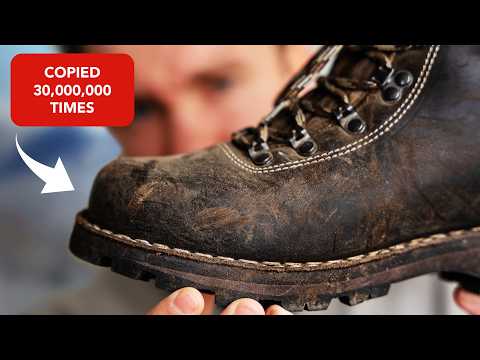
- Merrell (0:10) - Founder Randy Merrell credits Limmer’s Bavarian style as the template; sold over 30 million pairs.
- Russell Moccasin (4:05) - Michael’s prior favorite boot brand; Rob waved it off when Michael tried to talk it up.
- Wolverine (24:48) - Cited as the kind of large brand Limmer refused to sell to.
- Vibram (20:42) - Joked about as the kind of “new sole” Rob could have preferred over the Limmers.
- Darn Tough (19:00) - Rob’s sock brand; honored a lifetime warranty mid-project, dragging Michael into the email chain.
- Vinted (3:00) - Sponsor; Michael lists 10 personal items including jackets and prototypes.
- Patagonia (2:55) - Mentioned in passing during studio tour (“Patagonia’s T-shirts and mittens”).
- Komarowski (5:29) - Fellow YouTuber who Michael invited to film a parallel Limmer video.
People
- Rob (0:36) - 80-year-old trail maintainer; subject of Michael’s surprise gift; the emotional spine of the video.
- Adam (11:35) - Custom-side owner who left banking to apprentice under Peter Limmer.
- Chris (6:35) - Stock-side owner; former Philmont Scout Ranch ranger; superfan-archivist.
- Karl (10:00) - Part of the Limmer crew, joins the meeting where Rob’s boots are planned.
- Pat (20:11) - Limmer staffer along on the final hike with Rob.
- Zeta / Zada (1:46) - Limmer employee who tied Michael’s boots and re-taught him how it should feel.
- Peter Limmer Sr. (6:51) - Founder; Bavarian master boot maker; patented first US ski boot in 1939.
- Peter Limmer III (“Pete”) (11:35) - Last family owner; trained Adam to take over.
- Carl Limmer (24:48) - Family steward who kept the company alive across generations.
- Lucas Meindl Sr. (7:15) - Bavarian boot-making contemporary of Peter Limmer Sr.
- Randy Merrell (0:10) - Merrell co-founder; quoted calling Limmer the boot “to which all hiking boots will forever be compared.”
- Yvon Chouinard (2:24) - Patagonia founder; long-time Limmer customer.
- J.D. Salinger (2:24) - Author; Limmer customer.
- Ansel Adams (2:35) - Photographer; documented Limmers and was a customer.
- Suzanne (Darn Tough) (19:00) - Darn Tough rep accidentally cc’d Michael on Rob’s warranty thread.
Products & Technologies
- Limmer “Standard” (1:46) - The heavy stock model used by NH Fish and Game search and rescue.
- Limmer “Lightweight” (1:46) - Easier-on-the-feet stock model Michael wears.
- Custom Limmer (New Hampshire) (6:42) - Hand-built custom boots, longer wait, made by Adam’s team.
- Stock Limmer (Bavaria) (6:35) - Faster delivery, cheaper, German-made via Meindl partnership.
- 2.2mm leather lining + 3.6mm heel counter + 3.2mm outer (13:31) - The triple-leather heel stack (“five US quarters thick”).
- Single-piece leather upper with relocated side seam (0:51) - The signature construction detail.
Places
- Intervale, New Hampshire / White Mountains (6:16) - Limmer’s American home; described as Bavaria-by-way-of-NH.
- Bavaria (6:51) - Birthplace of Peter Limmer Sr. and the source of Bavarian boot tradition.
- Jamaica Plain, MA (7:03) - Peter Limmer Sr.’s first US shop.
- Philmont Scout Ranch (16:13) - Where Chris worked as a ranger and search-and-rescue admin.
- Peak Mountain (6:00) - The afternoon hike Michael cuts close to dusk while filming.
- Ellis Island (27:05) - Site of Limmer’s planned 100-year anniversary celebration.
Surprising Quotes
“This is considered to be one of the greatest hiking boots of all time. The hiking boot to which all hiking boots will forever be compared to. And I’m not overreacting.” — Michael Kristy, 0:00
“Of all the hundreds and hundreds of hiking boots I’ve made, they’ve all been because of the Limmer Bavarian style.” — Randy Merrell, paraphrased — Michael Kristy, 0:10
“Limmer is so obsessive and precise with what they do that they often have to, one, teach a customer how boots should actually fit, and two, re-teach a customer how to actually tie their boots.” — Michael Kristy, 1:23
“If Peter Limmer were starting his company today, I wonder if he could make it work. People were tougher back then.” — Michael Kristy (quoting Rob), 5:58
“Adam is one with the boots. Adam is the most centered, calm man that I’ve ever met. Every time he spoke, he was like, yeah, this is how it should go. This is how it should be. And this is why it is this way.” — Michael Kristy, 12:46
“It felt like in that moment, I was there. Their grandfather walked out the door five minutes ago, and everything was right there. All of the notes, all the tracings, everything.” — Michael Kristy, 26:14
Transcript
Michael Kristy: 0:00 This is considered to be one of the greatest hiking boots of all time. The hiking boot to which all hiking boots will forever be compared to. And I’m not overreacting. Of all the hundreds and hundreds of hiking boots I’ve made, they’ve all been because of the Limmer Bavarian style. Randy Merrell said that. If you’re not familiar with Merrell, they’ve sold over 30 million pairs of boots. All because of these guys, New Hampshire, Bavaria, and the very windy White Mountains.
Michael Kristy: 0:27 The question is though, as always, what’s so great about them? Why are you basing everything off of these god boots? And also who’s this guy? And why does he want a pair of Limmers for over 70 years? That’s Rob. More on Rob in a second. I also just broke the camera. Dang it, just started filming. I just bought this filter too as very excited about it. But either way, if we want to figure out why Limmer is so good, let’s start with one specific detail.
Michael Kristy: 0:51 The outside of this boot is made from one single piece of leather, which we’ve seen before. What we haven’t seen, a boot with six stitches right here where the leather joins. Why do they do that? Usually, the main connecting seam is right here along the back. But if you remove it from there, you can sculpt the boot to the shape of the heel better and get a way more secure fit. But you can also use this seam to add rigidity to the boot when you’re putting weight down on it. And you put it on the inside, so it doesn’t scuff up against rocks as much.
Michael Kristy: 1:23 The boot brand is Limmer and much of their brilliance comes out of that little shop right there. Limmer is so obsessive and precise with what they do that they often have to, one, teach a customer how boots should actually fit, and two, re-teach a customer how to actually tie their boots. And I thought no way, I know how to tie my boots. Then Zeta, who just walked in the side, she tied my boots and I was like wow, what the heck was that.
Michael Kristy: 1:46 My big bad boot here is called the Lightweight. And this is the Standard. These bad boys are built for New Hampshire Fish and Game officers and they use them among many things, but on search and rescue missions so they can’t fail. And they don’t fail. One time I was hiking up a mountain and this big dude flew by me wearing a neon green shirt yet a Timex Weekender that was melted to his wrist. Clearly going to help someone or rescue someone or something, and he was just floating up the mountain weightless and he turned to me and said, beautiful day for a hike isn’t it? And then poof. That guy wears the Standard.
Michael Kristy: 2:24 And I wear the Lightweights because they’re much easier on my tootsies. Trail builders, hikers, search and rescue, Yvon Chouinard, JD Salinger, Supreme Court judges, Rob, all wore Limmers. Also, is it too late to add that we just found out Ansel Adams photographed Limmers? But in that list of crazy names, I snuck in a man named Rob. The story of Rob will return after this brief ad.
Michael Kristy: 2:49 Well, well, welcome to my dungeon. This is where you’ll be staying. Not very insulated. Patagonia’s T-shirts and mittens. Things I’ll be donating. Jackets, yarns, jackets, jacket, jacket, jackets, thousands of dollars worth of inventory. The fabric samples, a lot of prototypes and I’m going to be selling a lot of this stuff for very cheap on Vinted, the sponsor of today’s video. Vinted is a way to make your old items new again. Basically everything that we talk about here is meant to last you for a lifetime, so why not sell it when you’re done with it and give someone else 95 more years with it. This is a V2 size large. Put that on Vinted. Selling on Vinted is very easy. Just bing, bap, boom, bap, bam. Take pictures of everything you want. Next, sell it, done. For this sponsorship, I’ll be listing 10 pieces total on Vinted. I don’t know what it will be yet. That stuff, maybe some boots I have upstairs, I have to look. Apparently Vinted has been a big thing in Europe for a while now and the US is getting on the trend super late, but glad to be here, hopefully leading the charge, put some cool stuff on the site and I very much hope you like it. Everything is in the description below. Hopefully you’re a size small but there are some size larges in there too that I obviously don’t fit in anymore.
Michael Kristy: 3:53 Rob is 80 years old. I met him when he was 78 years old and something interesting happened the day that I met him. I was making a video on one of my favorite boot brands of all time, Russell Moccasin, and I wanted to tell Rob about it. Even though I was incredibly excited to tell Rob about Russell Moccasin and I was trying to blow his mind, I was like, “These are the first ever boots to hike the Appalachian trail.” He didn’t want to hear it. He actually didn’t want to hear it at all because he had one boot brand in mind. First thing that he said to me was, “You gotta get a pair of Limmers.”
Michael Kristy: 4:21 And then he said something very interesting. He said, “I saw my first pair of Limmers in the 1950s and I wanted a pair for 68 years. And when I was young, I couldn’t afford them. And when I could afford them, I was too old.” Ow, and I hate the concept of getting too old, so—
Michael Kristy: 4:45 Hi Michael. Rob, how’s it going? You’re a photographer. Yeah, I’m a YouTuber. A YouTuber. You said you always wanted to try out Limmer, and since you said that, I one, researched the brand, but two, I was like, you know what, one day I will get Limmer boots and I will get a pair for Rob. So that is this day. No! Whoa! That’s… oh, very nice. Okay. I mean you… how long did we talk?
Michael Kristy: 5:19 In just about three years later, my master plan was finished and Rob turned 80 and almost died. But we got him the boots. I went to the workshop, I met Adam, I met Chris, I called Komarowski, I say “Hey Komarowski, I really liked your videos, maybe we should do one together because I know you’re doing one on Limmer, so just come over when I’m coming over.” So there’s another video done by Komarowski on Limmer if you want more Limmer. But I did all that because I was trying to figure out honestly, what is great about this brand? And why has Rob waited 70 years to get a pair? And also, 70 years later, is it worth it to Rob?
Michael Kristy: 5:53 And then, Rob hits me with this: “If Peter Limmer were starting his company today, I wonder if he could make it work. People were tougher back then.” Make it to the top of Peak Mountain for this video for the grand finale. It’s gonna be a close call. It’s 4:00 PM, but we’re still gonna try. So if I don’t make it, let’s just pretend. But I’m gonna be very sweaty and out of breath during this video. Please excuse that. I’m running. Uh oh. Also I’m trying to—
Michael Kristy: 6:16 Now, you can’t understand Limmer if you don’t understand the area that I’m hiking in today. This right here is Limmer, New Hampshire, the White Mountains, Intervale, Bavarian chocolates, Story Land, and Peter Limmer. But it’s also important to note there are two sides to Limmer that are the same Limmer. We have the stock boot program that I’m wearing right now, owned by Chris. Faster to get, cheaper, made in Bavaria, aka Germany. We also have the custom boot program: expensive, longer wait time, made in New Hampshire by Adam and crew. These are both through and through Limmer DNA because…
Michael Kristy: 6:51 Peter Limmer Senior, the founder of Limmer, was born in 1895 in the free state of Bavaria. Although at the time it was not a free state, it was the King’s state of Bavaria. It was in Bavaria that Peter Limmer Senior was certified as a master boot maker. Then he got on a boat and headed to the United States of America, specifically Jamaica Plain, Massachusetts. Or JP, if you’re from there. And back home in Bavaria, his friend Lucas Meindl Senior started up his empire: Meindl Boots. Meindl Boots is one of the most powerful boot making companies in Germany, and the Meindl family is one of the oldest shoemaking families in Germany ever.
Michael Kristy: 7:31 So by this point, it’s 1939. Peter Limmer Senior and Lucas Meindl Senior’s relationship is getting closer and closer together. Also in 1939, Peter Limmer Senior patented the first ever ski boot in the United States of America. And at the same time, you may know the year 1939 because of a small little war called World War II. And in World War II, Peter Limmer decides, “Hey, it’s time to move from Jamaica Plain to the White Mountains because I miss the Alps.”
Michael Kristy: 8:00 When Peter Limmer Senior got here, New Hampshire was looking very different. A lot of people from Bavaria and Austria fled Bavaria and Austria and came here to the White Mountains. Those people really liked to ski and they taught skiing and they made those mountains their business, a tourist destination. Every year, more and more folks become devotees of the fast growing sport of skiing. And the ski instructors and everybody that made the White Mountains their business brought their culture along with it. How do the buildings look? How do the songs sound? How do the signs look? Boom. New Hampshire feels kind of like Bavaria. Bavarian chocolates, Story Land, very Bavarian.
Michael Kristy: 8:44 And this new destination and the hiking culture and the mountains and everything made Peter Limmer so busy that he needed some help. So he called on his friend Lucas Meindl Senior and said, “Hey, let’s tag team this. Let’s make boots together.” So boom, the partnership is born. However, before the Limmer and Meindl partnership, there was little baby Rob. Some adult was skiing next to him in a pair of Limmers and Rob said, “Holy crap, I’m gonna get one of those in 70 years. Can’t wait for that.” So it’s my honor to tell you about Rob.
Michael Kristy: 9:00 Rob, well, we meet again. We do. How are you? Pleasure. I’m good, how about yourself Michael? Can’t complain at all. Good. Rob has been involved in trail maintenance since 1989 when he was on a trail and he saw some trash kind of off to the side. He climbed down the side, picked up the trash and said, I’m going to make sure this trail is clean. And he’s been doing it ever since.
Michael Kristy: 9:23 This is Rob. I obviously didn’t know Rob when he was that age, but let me tell you, by knowing him now, I know exactly what he was like when he was that age because he’s the exact same person. Rob told me his one true passion was being a water ski instructor. And he did that for 12 years and he just really liked when a kid was super shy and didn’t know how to ski and he finally got to the moment where they learned and stood up right for the first time and he showed them and he saw that confidence come in. And you teach that kid to ski, and you’ve really done something for that kid’s ability, for their self-esteem. He says that still to this day was his favorite thing ever.
Michael Kristy: 9:57 So I was really happy that Rob was not a psycho and was really excited to talk to Limmer and I connected him to Chris, Adam, and Karl. Hello everyone, I think everyone’s here. I think can everybody hear me? And everyone was really excited and I was talking to Rob all the time. We are, it’s really excited to build you a pair of boots. Oh… got to pinch myself.
Michael Kristy: 10:21 We were planning a visit and then I lost Rob. I couldn’t get in contact with him and I was like whatever, no offense Rob, you are 80, didn’t know how good you were with the phone. And then we hit a point where I really couldn’t get in contact with Rob. I was calling him, texting him, emailing him, trying desperately to make sure everything was okay and it wasn’t. And I told the Limmer guys, I called them and was like, uh, I don’t even know what to say about what may have just happened.
Michael Kristy: 10:52 I did, I did have a medical emergency then actually. I went into the hospital with a terrible case of flu and a week later I had a stroke. They began a thrombectomy where they stick a wire in your femoral artery. They run it up and by the time they got to the carotid artery before the brain, the clots cleared from the drug they gave me. Boop, Rob texted me. He’s back, all good. Good God man, you can’t say you’re too old for Limmers and then be too old for Limmers. We had to get you a pair. So anyways, we had Rob back and it was time to get to work.
Michael Kristy: 11:27 Roberto’s Limmers were specifically designed for him and hand-built by the Limmer team in Intervale, New Hampshire. Adam is the man behind custom Limmers these days. He was working in banking when Pete Limmer, Peter Limmer the third but not the third, walked into the bank and was one of Adam’s clients. One day Pete Limmer forgot to take the tape measure off from around his neck, so Adam said, hey Pete, what do you do? And Pete said, well I’m Peter Limmer and I own Limmer Boots, I make boots. And Adam was like, that is most… changing thing I have ever heard in my life and Pete, if you’ve ever liked to sell the company, I’m your guy. And Pete was like, well, no, I don’t want to.
Michael Kristy: 12:11 And that has happened every single time someone has tried to buy Limmer from a Limmer. One of the Limmers said no. It doesn’t matter how big the company was, Limmer said no, and that’s very important. But if you met Adam and you know Adam, you would know why Pete Limmer walked back in one day and said, hey Adam, are you serious about that? Would you actually want to buy a Limmer? And Adam said, I’ll do whatever it takes. So Adam dropped his banking pen or his corner, whatever you have when you’re a banker. He walked into Limmer, made less per hour than the minimum wage in every single state that I’ve ever lived in for five years, and he trained under Pete Limmer to become Mr. Limmer. Not Mr. Limmer, I guess Mr. Adam, but still to own Limmer.
Michael Kristy: 12:46 Adam is one with the boots. Adam is the most centered, calm man that I’ve ever met. Every time he spoke, he was like, yeah, this is how it should go. This is how it should be. And this is why it is this way. The process begins with Adam taking a tracing of Rob’s foot and getting the shape and getting the depth, getting all the dimensions he needs. But really, that hasn’t changed since the foundation of Limmer. And if you look at this archive, all those boxes are all the tracings done by Adam and Pete Limmer and Peter Limmer the second and Peter Limmer Senior, the first. I probably mess up their names, but it’s all right there and it really hasn’t changed that much. J.D. Salinger, Ansel Adams, Yvon Chouinard, all of their foot tracings are right there, and now Rob’s is there.
Michael Kristy: 13:26 And just to read off the formula of a standard boot so you can see how insane the boot actually is. Here we go. The first thing that goes around the last is a 2.2 millimeter thick leather lining. Then there is a 3.6 millimeter thick leather heel counter to lock your heel in place on the boot. Then after all of that, there is a 3.2 millimeter leather outer put on. At its thickest point, that is five US quarters of leather around your heel. A freaking monster. It is very hard to break in. And obviously while that boot is very cool, it’s beautiful to look at, that’s not really what Rob is after. So they changed it specifically for him and made it lighter.
Michael Kristy: 14:00 In this day and age, a lot of people may think that is you’re just doing that because you can make a heavy boot. You don’t actually have to make it that heavy. And that’s true for most people, but Limmers are specifically designed for trail builders, people holding massive amounts of weight that need support that are on uneven terrain all day. So you’re using the stiffness of the boot, as Chris shows you here, to get a lot more stability. And when you have a lot of weight, you want these to hold you up. You want them to take stress off of your feet. But the main thing I was worried about was that when I gave the boots to Rob, it had been 70 years and he’d never worn a pair of Limmers and boots changed a lot in 70 years.
Michael Kristy: 15:00 Chris owns the stock side of Limmer, the Meindl relationship, but at the same time, Chris is probably the biggest fan of Limmer ever on the planet, in history, and no one compares. Power from the top of the hip and also from the back of the heel. Whenever Karl and I would ask him a question, he would send me hundreds and hundreds of pictures of documents all on Limmer. I don’t know how many you can see, I’m asking Chris questions about Limmer and he’s just flooding me with pictures. You have a ton of torque out of the back of the heel. He would fly across the country to visit people that he thought historically wore Limmers to get their opinion on them. Chris sleeps standing up. There’s no heel cup, it’s just the heel counter. It’s a heel counter, which that holds your foot in place. This is Chris’s Instagram. If we scroll down all the way to when he started posting, and before he owned Limmer, his first post said, Limmer boots make my feet feel good. The power that you get out of the top of the hip, back of the heel. It’s frankly the most impressive thing I’ve ever seen. The fire in Chris’s soul for Limmer is unbelievable.
Michael Kristy: 16:03 Oh, yeah! We did it! We made it! I really didn’t think that we’d do it. Well, we’re almost at the end now, I just gotta go down. Woo! Okay! Chris worked as a Ranger and later as an administrator on Philmont Scout Ranch, and there he was doing search and rescue. He was moving really heavy propane tanks and rocks and everything. We had less capacity with mules. So he really appreciated the stiffness of Limmers. When you have 100 pounds, 80 pounds, whatever you’re carrying, 50 pounds, you can really tell a difference in the stability.
Michael Kristy: 16:34 When you put on a pair of Limmers, you slam your heel back and you’re trying to lock your heel in the back of the boot. And the rest of the boot’s job is to hold your foot in place and stabilize it as good as possible. So Chris and Adam both say, often times when they’re sizing you for Limmers, you’re gonna think the boots are too small. Now I understand why. If you look on the inside of these boots, you’ll see a huge bit of foam right here. That foam stops when you get to the heel. But what that does is allow your heel to plop in and then the foam locks it in place so it doesn’t move. And then this area is meant to hug your foot and Chris calls it a handshake. It should be very, very snug. And because of that snugness, you don’t have to run laces all the way to the toe and you’ll still get the same amount of stability, but you’ll get a lot more comfort because you don’t have eyelets going all the way down, so you’re alleviating hot spots and still having a great fit.
Michael Kristy: 17:30 Okay, we made it, but I’m a little worried that the sun is going to set pretty fast. So I’m going to try and haul down the mountain right now. I’ll see you in a second. Whew! Oh my god! I have to go back to Maine, so we’re going to pick up tomorrow when I can pry the broken filter off of this, so I’ll see you then. That works. Let’s go to the woods.
Michael Kristy: 17:51 The stiffness of the boots, combined with how Limmer sizes the boots pretty tight to your foot, combined with how a Limmer employee will tie your boots, basically just crank them down. Tied tighter than you could ever expect. I think I have the shot where a Limmer employee, Zada, tied my boots for the first time and I accidentally audibly went ‘uh’ the first time she did it. Literally tied them so tight against my feet that my head expanded a little bit because there’s no room down there. You may be able to see why I was starting to get very worried about Rob and these boots. Especially because when Rob walked into Limmer for the first time, the big ceremonial fitting session and everything, he was wearing incredibly lightweight approach shoes. Basically the complete opposite of these giant boots. And everybody in the store went…
Michael Kristy: 18:32 Obviously though, we had a little bit of time because Rob’s shoes had to be built. But Chris walked over and said, “Hey Rob, while you’re waiting for your boots, try on a pair of stock boots. Here are the lightweights.” And Rob put them on and his face was not what I was hoping for. He kind of just jumped around in them for a while, walked around a certain area of the shop, and then when everybody walked away he was like, “Jeez Mike, these are… these are stiff boots. I’m 80 years old you know.” And I was like, oh my God.
Michael Kristy: 19:00 But after that, Adam had all the foot information he needed from Rob, so he started building the boot, sent them to me, I filmed them, and then they got sent to Rob where Rob said, “I’m going to break them in and I’ll keep you updated.” And then I got an email. It’s from Rob. It says, “Hi Suzanne, thanks so much for reaching out. I have indeed received the warranty credit and appreciate it very much. It’s crazy wonderful to have a company like Darn Tough that goes so above and beyond to honor its promise of a lifetime warranty.” I was like, “What the heck is happening? I don’t know how I got caught up in Rob’s warranty claim with his socks, but I’m very glad to hear that you’re happy Rob. Darn Tough is a good sock brand.”
Michael Kristy: 19:38 But he also sent me this email. “In so begins the break-in. Wearing them in my house even as I write this. Over three hours in three separate intervals. Wearing them around the house this way is making me grumpy.” And then Rob hits me with this: “If Peter Limmer were starting his company today, I wonder if he could make it work. People were tougher back then.” Luckily he put everybody that I was talking to on the email chain for that email and I was like, “Oh crap.” There’s a note. I’ll open that later. And a letter. And… oooh! There they are. They’re much lighter than I expected. They’re also smaller than I expected.
Michael Kristy: 20:11 And finally, the faithful day had arrived. It was Chris, Adam, Pat, Rob, and myself on a trail that Rob maintained, where he immediately just started picking up garbage. Rob, it’s not time for that. It’s time for an interview, we’ll get that later. And it was at this point where I planned to say to Rob, “Hey Rob, after 70 years of wanting the Limmers, do you think it was worth it?” But instead I was super nervous of what he was going to say so I just gently looped around the question.
Michael Kristy: 20:42 The worst, the worst possible thing could have been 70 years later, we do this whole video, you put the boots on and you’re like ‘ugh’. You’re like ‘you should see these new Vibram soles they got on the other boots. What what are we talking about?’ Are you asking me ‘Was it worth it?’ This whole thing? Rob could have just been like ‘Yep, all good. Boots feel nice on my feet.’ He could have also said, ‘Limmer boots make my feet feel good.’ And I would have said ‘That, wow.’ Wow, that was a really great callback you just made right there. But he didn’t. Instead, he told a story of when he was descending that trail and it was a rainy wet day.
Michael Kristy: 21:09 And I started off cautiously. And he was noticing as he was going down the trail, “Hey, I got pretty good grip and traction on these boots.” Not only do they have traction on the wet rock, but when you’re stepping on something that’s sharp or it’s ridgy or angled, it gives you a solid platform. And actually the stiffness of them makes them feel pretty good over the rocks. I’m feeling really stable and as he was looking down and thinking about that, boom! And I started moving faster and faster, all the time saying, “Rob, what are you nuts? Slow down, you’re freaking 80 years old.” He passed someone 20 years younger than him. And I’m passing him and I’m just really having a lot of fun. He passes a group of hikers 40 years younger than him. He passes a group of hikers 50 years younger than him. Here I am, 50 years older than most of them. He’s practically water skiing past all of these people. I’m freaking passing them. But to also quote Rob exactly again, he was just having too much fun to stop. But I was just having too much fun.
Michael Kristy: 22:13 And to me, that doesn’t sound like somebody that’s too old for a pair of Limmer’s. That sounds exactly like how Rob would have went down the mountain if he was 10 years old. Worth it? Of course. Yeah! We got him. Take that, Rob. If you’re not old, then I’m not old at all. We’re both young. Okay? It’s fine. We have time.
Michael Kristy: 22:34 But still, something was bugging Rob. Although the folks at Limmer and I strongly disagree, Rob thinks that maybe one day he won’t be able to bound up a mountain anymore. He will hang up his hat, maybe take up water skiing again since he loved it so much, and it doesn’t feel right that he would have a dusty pair of Limmer’s just hanging out on the shelf. And that actually echoed something Chris said to me the first time we spoke. “We don’t really like to do any advertising at Limmer at all. That being said, we’re hoping we can sell a lot more boots so we don’t have to raise prices. But we want to make sure if a boot is sold, it is worn and used for a very long time. How do you suppose we do that?” To which I said, “Oh Chris, that’s easy. I’ll just implant a microchip into the viewer’s brain.” But then, after that hike with Rob and the crew, I understood what he was saying.
Michael Kristy: 23:21 When Rob, Adam, Chris, Pat, and myself were hiking down the trail, we came across these literal kids building trails and they were just the dirtiest people that I have ever seen in my entire life. They were like gophers. Safety glasses, one kid had a giant firefighter’s jacket on and I was like, “it’s really not safe to wear firefighter’s jacket.” Another kid was walking around smashing rocks in sneakers that looked like they literally just exploded and there were hammocks right next to the trail that they were building that they all got into while laughing and chatting and they slept there, got up and did the whole thing again. And they built the trails that I love so much and that I’m walking on every single day. My friend Robbie said…
Michael Kristy: 24:00 As they call us, people not doing something similar, spreadsheet people. Adam walked up to the Gopher children and asked them what size boots they wore and explained that they could probably take care of them at the shop if they couldn’t afford boots of their own. And after meeting the Limmer staff at HQ and then seeing what Adam kept doing on the trail, I wrote down in my notes, it seems inconvenient to Limmer that their boots cost money. And I very much mean that. And if you don’t believe me, you can believe the words of Randy Merrill. They made incredible boots, but not very many. They had sort of an attitude of how many beers can one man drink, how many shirts can one man wear?
Michael Kristy: 24:35 Twelve. Well, actually, Mr. Merrill, I can wear quite a few shirts. Limmer is the boot of the White Mountains, not a boot of the White Mountains. Peter Limmer and then Peter Limmer and then Peter Limmer and Carl Limmer kept something alive continuously for a hundred years. And when they realized, hey, this is it, we got to sell, they didn’t sell to a Merrill or Wolverine or big boot brand that was just going to make them go sky high. They sold to a guy who left his bank job to work for minimum wage for however long it took, and a ranger who was a huge fan of the brand for 25 years. If you want to see what Limmer could have been, look at Merrill. But if you want to see what Limmer is, look at Chris and Adam.
Michael Kristy: 25:21 Beautiful day. You guys picked a good one. I hike it every day. Oh, then you know it. Yeah. I also saw a little bit of magic that Adam could do that made some people tear up. People would come into the shop and say, hey, I just, my grandfather wore Limmers 60 years ago. Yeah, I can remember going into the shop back in like the mid-70s when I was like 16 years old. And I saw the pair and I was in the area, so just wanted to see what the place was all about. And Adam would be like, wait one second, and he’d go to the back to the archives. He’d ask them their last name. Morris. That was Morris. Okay. Yep. Pull out this box, put it down, and pull out the exact tracing of their grandfather’s foot. I bet we can find their original measurements and information from way back whenever their boots were made. And we’ll send that along. Oh my God. That’s—that would be amazing.
Michael Kristy: 26:14 And it felt like in that moment, I was there. Their grandfather walked out the door five minutes ago, and everything was right there. All of the notes, all the tracings, everything. Yeah. You guys definitely have yourselves a beautiful day down there. All right. Thanks a lot. Yeah. Right on. Love you, man. Talk soon.
Michael Kristy: 26:33 And yeah, I sent Chris and Adam my notes and I said, hey, is there anything that I missed? And Adam, in all of his wisdom, said that, you know, people tend to glorify the past and what was happening 50, 60 years ago and how everything was. But if you went there 50 years ago and then you came in today, pretty much the same thing would be happening. And I’m very lucky to be here. It was all happenstance. And I hope people know it was just a series of things that I walked into and I’m grateful for. And I was like whoa, you know what I’m going to put here? Your son working on a boot. That’s so cool. And then Chris rewrote most of my notes, added more dates, sent me a thousand pictures, invited me to Ellis Island for Limmer’s 100 year anniversary, and asked me if I was visiting anytime soon.
Michael Kristy: 27:13 So, after all of that, after meeting the Limmer team, seeing the workshop, and knowing that Limmers are meant to die on the trail, smashing a rock over your foot, it was agreed upon that if Rob were to ever retire from hiking and trail maintenance, he or his wife would will his pair of Limmers back to the shop for Chris and Adam to give to one of the Gopher children. May that not be for many decades.
Michael Kristy: 27:41 Rob. Great to meet you.
Rob: 27:42 You too, Michael. And thank you, especially you who made this all happen.
Michael Kristy: 27:46 Yeah, of course.