Why New Balance Spent 43 Years On 1 Sneaker.
Why New Balance Spent 43 Years On 1 Sneaker.
Summary
Michael investigates New Balance’s obsessive 43-year development of the 990 series, from its revolutionary 1982 debut as the most expensive running shoe ever ($100 at the time) to the current 990v6. The video explores why a brand would spend over four decades refining a single sneaker design - and why nobody actually runs in them anymore.
The story begins with New Balance’s audacious 1982 gamble: while competitors sold flashy, colorful running shoes, New Balance released a bleak gray sneaker at unprecedented prices, betting everything on technology and comfort over aesthetics. The result became an icon adopted by orthopedic needs, dads, and eventually Steve Jobs.
Michael traces the evolution through each version (990, 990v2, 990v3, etc.), the relationship to other models like the 991 and 993, and explains New Balance’s unique position as the last major sneaker brand still manufacturing in the USA and England. The investigation reveals that the 990 became a victim of its own success - so comfortable that it stopped being a running shoe and became a lifestyle icon.
Highlights
”The most expensive running shoe on the market ever”
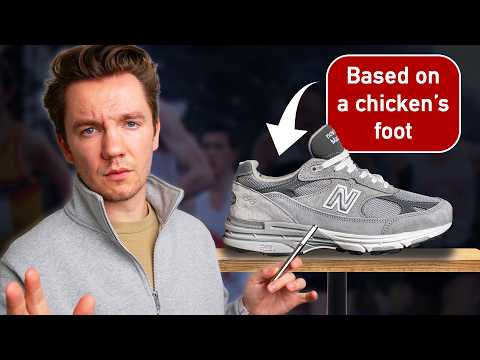
Clip command
yt-dlp --download-sections "*0:10-1:10" "https://www.youtube.com/watch?v=7CiUfsviMGI" --force-keyframes-at-cuts --merge-output-format mp4 -o "7CiUfsviMGI-0m10s.mp4"“In 1982, New Balance blew the doors off of the running world. They released the pinnacle of running technology with a mind-numbing price of $100, the most expensive running shoe on the market ever at that time.” — Michael, 0:10
”Not New Balance. They chose bleak, dull, gray.”
Clip command
yt-dlp --download-sections "*0:35-1:35" "https://www.youtube.com/watch?v=7CiUfsviMGI" --force-keyframes-at-cuts --merge-output-format mp4 -o "7CiUfsviMGI-0m35s.mp4"“Everybody’s trying to make their sneakers look like they’re on fire. You’re going super fast. Not New Balance. They chose bleak, dull, gray. I do like it though.” — Michael, 0:35
”Nobody wears these sneakers to run anymore”
Clip command
yt-dlp --download-sections "*0:45-1:45" "https://www.youtube.com/watch?v=7CiUfsviMGI" --force-keyframes-at-cuts --merge-output-format mp4 -o "7CiUfsviMGI-0m45s.mp4"“And this is the result of 43 years of obsessive engineering that same running sneaker. But you may have noticed one thing. Nobody wears these sneakers to run anymore. Why? Where in the formula did New Balance royally screw up?” — Michael, 0:45
”New Balance was the original dad shoe”
Clip command
yt-dlp --download-sections "*10:00-11:00" "https://www.youtube.com/watch?v=7CiUfsviMGI" --force-keyframes-at-cuts --merge-output-format mp4 -o "7CiUfsviMGI-10m00s.mp4"“New Balance was the original dad shoe. Comfortable, practical, aggressively unfashionable. Dads wore them because they worked, not because they looked good. Then looking good became looking like you didn’t care about looking good.” — Michael, 10:00
”Except the moon. Didn’t get to the moon, did you Rolex?”
Clip command
yt-dlp --download-sections "*9:00-10:00" "https://www.youtube.com/watch?v=7CiUfsviMGI" --force-keyframes-at-cuts --merge-output-format mp4 -o "7CiUfsviMGI-9m00s.mp4"“Steve Jobs wearing New Balance 991s and 993s didn’t hurt. The most influential tech figure of his era choosing the dorkiest sneaker brand legitimized them in a specific way. Silicon Valley adopted them.” — Michael, 9:00
Key Points
- 1982 Revolutionary Launch (0:00) - New Balance released the 990 at $100, most expensive running shoe ever at that time, when competitors sold for $40-60
- Gray Color Rebellion (0:30) - While competitors used flashy colors suggesting speed, New Balance chose bleak gray for their flagship
- Orthopedic Origins (2:00) - New Balance started as an arch support company in 1906, orthopedic DNA runs through all designs
- Width Options (3:00) - Unlike most brands with one width, New Balance offers multiple width options for proper fit
- Made in USA/England (4:00) - Last major sneaker brand still manufacturing in USA and UK, not just assembling
- 990 to 990v6 Evolution (5:00) - 43 years of incremental improvements to the same fundamental design philosophy
- Why 991 Exists (7:00) - The 991 was a UK-designed variant, now both lines continue with different character
- 993 Cult Status (8:00) - Particular version that achieved iconic status, sought after by collectors
- Steve Jobs Connection (9:00) - Jobs famously wore New Balance 991/993, cementing their tech-world status
- Dad Shoe Before Dad Shoes (10:00) - New Balance was the original “dad shoe” - comfortable, practical, unfashionable until it became fashionable
- 574 Entry Point (11:00) - More affordable model that shares design DNA but different manufacturing
- Running to Lifestyle Transition (12:00) - Nobody runs in 990s anymore because they evolved beyond running into comfort-first lifestyle
- 43 Years of Research (13:00) - Each iteration incorporates new materials, cushioning technology, and fit refinements
- Price Justification (14:00) - USA/UK manufacturing, quality materials, and development investment justify premium pricing
Mentions
Companies
- New Balance (0:00) - Boston-based sneaker company, subject of entire video
- Nike (0:15) - Competitor mentioned in 1980s running shoe context
- Brooks (0:15) - Running shoe competitor from the 1980s
- Saucony (0:15) - Running shoe competitor
- ASICS (0:15) - Running shoe competitor
- Caldera + Lab (sponsor) - 20% off first order with code IRONSNAIL
Products & Technologies
- 990 (0:00) - Original 1982 revolutionary running shoe
- 990v6 (0:45) - Current version, 43 years of development
- 993 (8:00) - Cult classic version, Steve Jobs’ choice
- 991v2 (7:00) - UK-designed variant, different character
- 574 (11:00) - More affordable entry point to New Balance aesthetic
- ENCAP Cushioning (5:30) - New Balance midsole technology
- Made in USA Line (4:00) - Premium domestically manufactured models
- Made in England Line (4:30) - UK-manufactured premium models
People
- Michael (0:00) - The host of The Iron Snail
- Steve Jobs (9:00) - Apple founder, famous New Balance wearer
Surprising Quotes
“In 1982, New Balance blew the doors off of the running world. They released the pinnacle of running technology with a mind-numbing price of $100, the most expensive running shoe on the market ever at that time.” — 0:10
“Everybody’s trying to make their sneakers look like they’re on fire. You’re going super fast. Not New Balance. They chose bleak, dull, gray.” — 0:35
“And this is the result of 43 years of obsessive engineering that same running sneaker. But you may have noticed one thing. Nobody wears these sneakers to run anymore. Why? Where in the formula did New Balance royally screw up?” — 0:45
“Their goal was simple. No matter the time it took or the money it cost, they’d make the most technologically advanced running shoe on the planet.” — 0:20
Transcript
0:00 Picture this. It’s the 1980s and you’re looking for a new running sneaker to buy. Normally, you’d be looking at Nike, Brooks, Saucony, ASICS, The Works. They all look similar. They all cost a similar amount and they’re all great, except if…
0:15 In 1982, New Balance blew the doors off of the running world. They released the pinnacle of running technology with a mind-numbing price of $100. The most expensive running shoe on the market ever at that time. And their goal was simple. No matter the time it took or the money it cost, they’d make the most technologically advanced running shoe on the planet.
0:35 The undisputable diabolical screaming mimi of footwear and rebellion. Personally, I think they should have put flames on the side of it. That’s very good for rebellion. It had revolutionary features, iconic styling, unreal comfort, and one more thing that most brands weren’t and still aren’t willing to do. Make their flagship running sneaker gray.
0:50 Speed sells in this industry. Everybody’s trying to make their sneakers look like they’re on fire. You’re going super fast. Not New Balance. They chose bleak, dull, gray. I do like it though.
1:00 And this is the result of 43 years of obsessive engineering that same running sneaker. But you may have noticed one thing. Nobody wears these sneakers to run anymore. Why? Where in the formula did New Balance royally screw up?
1:15 What’s up YouTube? The Iron Snail here. Hope everybody’s doing well. Welcome to the pride of Portland, Maine, George E. Martin Memorial Field. Tell you the truth, I filmed at a much better field earlier.
1:30 Today’s agenda. Number one, let’s try and figure out why is New Balance so obsessed with one sneaker that they’ve worked on it for 43 years. What is going on? Two, after 43 years of obsessive research and development on one sneaker, this is what you get. Why? What does this sneaker do that’s worth 43 years of research and development?
2:00 New Balance started in 1906 not as a sneaker company but as an arch support company. They made orthopedic inserts. This DNA runs through everything they do. The focus on foot health, proper fit, width options - it all traces back to their orthopedic origins.
2:30 When they transitioned to making shoes, that orthopedic focus came with them. While other brands optimized for looking fast, New Balance optimized for feeling good. Different priorities, different outcomes.
3:00 Width options are a big deal. Most sneaker brands offer one width. New Balance offers multiple. This seems minor until you have feet that don’t fit standard widths. Then it’s revolutionary.
3:30 The 990 embodied all of this. Premium materials, orthopedic comfort, proper fit options, at a price that said “we’re not messing around.” $100 in 1982 was a statement.
4:00 Here’s something remarkable: New Balance still manufactures in the USA and England. Not just assembling imported parts - actually manufacturing. They’re the last major sneaker brand doing this.
4:30 The Made in USA and Made in England lines cost more but represent genuine domestic manufacturing with associated labor costs and quality control. You’re paying for where and how it’s made.
5:00 Now the evolution. From the original 990 to the current 990v6, each version refined the formula. New cushioning technologies, updated materials, improved fit - but always the same fundamental design philosophy.
5:30 ENCAP cushioning was a major innovation. Foam encased in polyurethane for durability and consistent comfort. Each version of the 990 incorporated the latest cushioning tech available.
6:00 The 990v2 refined the upper. The 990v3 updated the midsole. The 990v4 modernized the profile. v5 and v6 continued the cycle. 43 years of incremental improvement.
6:30 Why not start over? Because the core design worked. When you’ve got something that works - orthopedically sound, comfortable, durable - you refine rather than reinvent.
7:00 The 991 exists as a UK variant. Designed and made in England, it has a different character while sharing the same philosophy. The 991v2 continues that line with European sensibility.
7:30 Having both USA and UK design teams means two perspectives on the same core concept. American and British interpretations of comfort-first footwear.
8:00 The 993 achieved cult status. Something about that particular version resonated. Collectors hunt for them. Reissues sell out instantly. The 993 transcended sneaker to icon.
8:30 Part of it was timing. The 993 arrived when dad shoes started becoming ironic fashion, then actual fashion. New Balance was perfectly positioned without trying to be.
9:00 Steve Jobs wearing New Balance 991s and 993s didn’t hurt. The most influential tech figure of his era choosing the dorkiest sneaker brand legitimized them in a specific way. Silicon Valley adopted them.
9:30 The Jobs connection matters because it wasn’t endorsement - he just wore them. Authentic preference for comfort over style that ironically became stylish.
10:00 New Balance was the original dad shoe. Comfortable, practical, aggressively unfashionable. Dads wore them because they worked, not because they looked good. Then looking good became looking like you didn’t care about looking good.
10:30 Fashion is weird. The thing worn specifically because it wasn’t fashionable becomes fashionable for being unfashionable. New Balance rode this wave without engineering it.
11:00 The 574 serves as entry point. More affordable, similar aesthetic, different manufacturing. If you want the New Balance look without Made in USA prices, the 574 works.
11:30 But the 574 isn’t the 990. Different construction, different materials, different feel. The price difference reflects real differences, not just branding.
12:00 Here’s the thing: nobody runs in 990s anymore. They evolved beyond running into pure comfort-first lifestyle shoes. Too heavy, too comfortable, too stable for modern running technique.
12:30 Modern running shoes are minimalist, lightweight, designed for specific running styles. The 990’s orthopedic tank approach doesn’t match how running shoes have evolved.
13:00 So New Balance royally screwed up by making their running shoe so comfortable that people stopped running in it? That’s a weird kind of success.
13:30 The 990 became something else - a comfort shoe for standing all day, walking, living. The running heritage gives it credibility, but the function shifted.
14:00 Pricing makes more sense with this understanding. You’re paying for Made in USA manufacturing, premium materials, 43 years of comfort engineering. For daily wear over years, the cost-per-use becomes reasonable.
14:30 The 990v6 represents the current state of that 43-year journey. Will there be a v7? Almost certainly. The obsession continues.
15:00 Models we looked at today: the 574, the 990v6, the 993, the 991v2. Each serves different needs but shares the comfort-first philosophy.
15:30 My recommendation: if you want to understand what New Balance is about, try any Made in USA or Made in England model. The difference from their imported lines is noticeable.
16:00 Thanks to Caldera + Lab for sponsoring. Get 20% off first order at calderalab.com/IRONSNAIL or use code IRONSNAIL at checkout.
16:30 New Balance spent 43 years on one sneaker because the philosophy worked. Comfort over speed. Function over flash. Gray over fire. And somehow that became cool.
17:00 Follow The Iron Snail for more deep dives into why things are the way they are. See you in the next one.