The Greatest World Conquerors In History | Ben Wilson
The Greatest World Conquerors In History | Ben Wilson
Summary
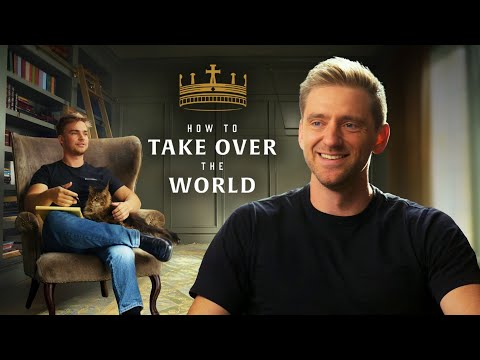
Ben Wilson, creator of the “How to Take Over the World” podcast, joins this conversation to explore the psychology and strategies of history’s greatest conquerors and how those lessons apply to modern entrepreneurship. The discussion covers how historical figures like Napoleon, Caesar, and Vanderbilt operated, drawing parallels to contemporary business leaders like Elon Musk, Jeff Bezos, and Brian Chesky.
The conversation delves into why great leaders are fundamentally “addicts” driven by an all-consuming passion, how they create and thrive in chaos, the importance of long-term vision versus short-term gratification, and why repetition of core messages is essential for leadership. Wilson argues that the greatest resource lacking in the modern world is vision, as constant digital stimulation has eliminated the boredom that historically sparked ambitious long-term projects.
Highlights
”Every great person is fundamentally an addict”
Clip command
yt-dlp --download-sections "*0:02-1:00" "https://www.youtube.com/watch?v=pFmYF-20jbY" --force-keyframes-at-cuts --merge-output-format mp4 -o "pFmYF-20jbY-0m02s.mp4"“Every great person is fundamentally an addict. So what’s your internal monologue when an addict is doing meth or heroin? There’s nothing other than the addiction. That’s how Thomas Edison felt about inventing. How Steve Jobs felt about designing. How Napoleon felt about conquering.” — Ben Wilson, 0:02
”I’m a shark who smells blood”
Clip command
yt-dlp --download-sections "*0:20-1:00" "https://www.youtube.com/watch?v=pFmYF-20jbY" --force-keyframes-at-cuts --merge-output-format mp4 -o "pFmYF-20jbY-0m20s.mp4"“It’s literally like I’m a shark who smells blood and you’re asking me about my childhood. You know what I mean? Like I smell blood. Like I got to go eat.” — Ben Wilson, 0:20
”The number one job of a leader is to provide certainty”
Clip command
yt-dlp --download-sections "*48:26-49:30" "https://www.youtube.com/watch?v=pFmYF-20jbY" --force-keyframes-at-cuts --merge-output-format mp4 -o "pFmYF-20jbY-48m26s.mp4"“World conquerors live with uncertainty. In fact, uncertainty is the medium in which they thrive. While everyone else freaks out and is paralyzed by uncertainty, they embrace it. And yet at the same time, their number one job for those who follow them is to provide certainty. You provide certainty in an uncertain world.” — Ben Wilson, 48:26
”Caesar took on half a billion dollars in personal debt”
Clip command
yt-dlp --download-sections "*50:59-52:10" "https://www.youtube.com/watch?v=pFmYF-20jbY" --force-keyframes-at-cuts --merge-output-format mp4 -o "pFmYF-20jbY-50m59s.mp4"“Caesar very famously takes out a ridiculous amount of debt - in the equivalent it’s like half a billion dollars in debt or something. Ridiculous. But personal debt. He goes from the most in debt man that Rome has ever seen to the wealthiest man that Rome has, maybe even the entire world has ever seen.” — Ben Wilson, 50:59
”Nothing great is created by committee”
Clip command
yt-dlp --download-sections "*58:49-59:50" "https://www.youtube.com/watch?v=pFmYF-20jbY" --force-keyframes-at-cuts --merge-output-format mp4 -o "pFmYF-20jbY-58m49s.mp4"“I think the optimal form of the world is you have the government that is not a dictatorship. But then you have on a small scale individual companies as dictatorships. Nothing great is created by committee. Like almost anywhere. Which means that you have to have on a small scale dictatorships on a company scale.” — Ben Wilson, 58:49
”The greatest resource lack in the world is vision”
Clip command
yt-dlp --download-sections "*67:21-68:20" "https://www.youtube.com/watch?v=pFmYF-20jbY" --force-keyframes-at-cuts --merge-output-format mp4 -o "pFmYF-20jbY-67m21s.mp4"“The greatest resource lack that we have in the world is not energy, it’s not carbon, it’s not oil, it’s vision. And I think that there is a tremendous lack of vision in the world and there’s never been less vision because it’s so easy to be distracted.” — Ben Wilson, 1:07:21
”Great achievers eliminate optionality”
Clip command
yt-dlp --download-sections "*73:38-74:40" "https://www.youtube.com/watch?v=pFmYF-20jbY" --force-keyframes-at-cuts --merge-output-format mp4 -o "pFmYF-20jbY-73m38s.mp4"“Great achievers eliminate optionality. The flip side of having lots of options is you’re not going all in on anything. And great achievers go all in. They burn the boats. And it’s not even a strategic decision for them often. It’s just who they are.” — Ben Wilson, 1:13:38
Key Points
-
Napoleons of Today (0:37) - Napoleon’s descendants and the Duke of Wellington’s descendants both now work in private equity, representing where “great warriors” channel their energy today
-
No Peacetime CEOs (5:22) - Great leaders create chaos rather than just managing it; peacetime execution is inherently different from wartime leadership
-
MrBeast Comparison (6:29) - MrBeast operates more like a historical conqueror than a typical modern entrepreneur, constantly pushing boundaries
-
Creating Chaos (7:58) - Great founders intentionally create volatility because they know they can outperform competitors in uncertain environments
-
Never Debase Yourself (14:05) - Historical lesson about not having enemies below your station; it’s important who you choose to engage with
-
Who Will Be Remembered (17:32) - Discussion of which modern figures will be remembered 500 years from now, potentially Elon Musk
-
The Lindy Effect (20:13) - Things that have survived for a long time are likely to continue surviving; applies to ideas, institutions, and practices
-
Caesar’s Sacrifice (23:03) - Julius Caesar made the ultimate sacrifice by taking on massive personal debt (equivalent to half a billion dollars) to achieve his goals
-
Rothschilds’ Reputation (25:25) - How the Rothschild family built lasting reputation through consistent behavior over generations
-
Scale Economies Shared (31:29) - Discussion of selective irrationality and sharing economies of scale as strategic advantages
-
Timelessness (39:00) - Why some ideas and organizations persist while others fade; the importance of building for permanence
-
Why Great Stories Last (42:11) - The elements that make narratives endure across centuries and cultures
-
Studying the Greats (45:48) - The value of deeply studying historical figures to extract actionable lessons for today
-
Living with Uncertainty (48:26) - World conquerors embrace uncertainty while providing certainty to their followers; the number one job of a leader is to provide certainty in an uncertain world
-
Caesar’s $500M Debt (50:59) - Caesar took on unprecedented debt and became “too big to fail,” then executed at a scale no one had seen before
-
Venture Capital as Modern Caesar (54:22) - The VC model of taking on debt and delaying payoff until a big win is Caesar’s strategy institutionalized
-
Repeating the Same Mantra (54:22) - Great leaders like Bezos repeat core messages endlessly because they’re preaching to a “moving parade” not a standing army
-
Learning Lessons Too Well (55:31) - The US oscillated between weak central government (Articles of Confederation) and strong presidency, showing how nations can overcorrect
-
Companies as Dictatorships (58:33) - Nothing great is created by committee; companies need dictatorial leadership even within democratic societies
-
Operating in Gray Areas (1:03:21) - Travis Kalanick’s “Operation Grayball” and Vanderbilt’s tactics show how great entrepreneurs operate in legal gray zones
-
Lack of Vision (1:07:00) - The greatest resource lack in the world is not energy or carbon but vision; constant stimulation has killed the boredom that breeds ambition
-
Elon and Mars (1:10:19) - Discussion of whether Elon will get to Mars in his lifetime and his willingness to pursue multi-generational projects
-
Eliminating Optionality (1:13:38) - Great achievers go all-in rather than keeping options open; they burn the boats
-
Ernest Shackleton (1:17:13) - Example of extraordinary leadership under extreme adversity in Antarctic exploration
-
Designing Enjoyable Life (1:21:25) - The importance of building a life you actually want to live while pursuing ambitious goals
-
Being Willing to Look Wrong (1:26:25) - Great achievers accept looking foolish for extended periods before vindication
-
Addictive Nature of Greatness (1:32:20) - Every great person is fundamentally an addict; they experience their calling like addiction, unable to stop pursuing it
Mentions
Companies
- Private Equity Firms (0:55) - Where Napoleon’s and Wellington’s descendants now work
- Amazon (55:02) - Example of Bezos repeating customer experience message
- Uber (1:03:57) - Travis Kalanick’s Operation Grayball to evade local government
- SpaceX (1:10:30) - Discussion of Mars mission timeline
- Airbnb (54:50) - Brian Chesky repeating the same mission story 2,000+ times
People
- Napoleon Bonaparte (0:37) - Historical conqueror whose descendants work in private equity
- Julius Caesar (50:59) - Took on half billion equivalent in personal debt
- Augustus Caesar (52:25) - Possibly richest person to ever live by % of global GDP
- Duke of Wellington (0:59) - Napoleon’s opponent whose descendant also in private equity
- Thomas Edison (0:08) - Example of addictive approach to inventing
- Steve Jobs (0:11) - Example of addictive approach to designing
- Jeff Bezos (55:02) - Master of repeating core customer message
- Brian Chesky (54:50) - Repeated same mission story 2,000+ times
- Peter Thiel (53:34) - Zero to One’s ideas became common wisdom
- Elon Musk (58:49) - Modern embodiment of historical conqueror archetype
- George Washington (56:43) - Could have been king but refused
- Alexander Hamilton (57:12) - Proposed making Washington king
- Thomas Jefferson (57:43) - Third president who pushed back on strong central government
- FDR (58:12) - Last president who was truly in charge of US government
- Cornelius Vanderbilt (1:04:21) - Killed someone who confiscated his ships
- Travis Kalanick (1:03:57) - Created Operation Grayball at Uber
- George Soros (1:06:03) - Studied for his political impact through local judges/DAs
- David Sacks (53:55) - Said best Peter Thiel would repeat Zero to One forever
- Alexander Graham Bell (1:08:45) - Canadian inventor mentioned as counterexample
- Ernest Shackleton (1:17:13) - Antarctic explorer as leadership example
- Mike Tyson (50:23) - “Everyone has a plan until you get punched in the face”
Products & Technologies
- Zero to One (53:34) - Peter Thiel’s book that became common wisdom
Surprising Quotes
“Every great person is fundamentally an addict. So what’s your internal monologue when an addict is doing meth or heroin? There’s nothing other than the addiction. That’s how Thomas Edison felt about inventing. How Steve Jobs felt about designing. How Napoleon felt about conquering.” — 0:02
“It’s literally like I’m a shark who smells blood and you’re asking me about my childhood. You know what I mean? Like I smell blood. Like I got to go eat.” — 0:20
“You provide certainty in an uncertain world. That is like the number one job of a leader.” — 51:01
“The greatest resource lack that we have in the world is not energy, it’s not carbon, it’s not oil, it’s vision.” — 1:07:21
“Nothing great is created by committee. Like almost anywhere. Which means that you have to have on a small scale dictatorships on a company scale.” — 59:21
Transcript
0:02 Every great person is fundamentally an addict. So what’s your internal monologue when an addict is doing meth or heroin? There’s nothing other than the addiction. That’s how Thomas Edison felt about inventing. How Steve Jobs felt about designing. How Napoleon felt about conquering. A lot of them have traumatic childhoods. It’s so interesting the way in which they won’t answer questions about them. It’s not like it’s so traumatic I can’t think about it. It’s literally like I’m a shark who smells blood and you’re asking me about my childhood. You know what I mean? Like I smell blood. Like I got to go eat.
0:30 Today I have the pleasure of sitting down with Ben Wilson. He is the creator of How to Take Over the World, which is a podcast about awesome world builders and the best company builders in history. I’ve kind of thought about a question for a while, which is basically where are the Napoleons of today?
0:55 Well, objectively speaking, they’re in private equity. So you know someone went and found a descendant of Napoleon and because he had you know his only legitimate son died young but he had an illegitimate son with this like Polish countess, as one does, and his illegitimate you know great great grandson works for a private equity firm in London and then his greatest opponent was the Duke of Wellington and someone found his descendant and he also works for a private equity firm. So it’s like this is the great warriors of our generation. This is where their energies are being focused is into further financialization of the economy. So you know you might think that’s better than warfare. I think many people probably do. I don’t.
2:02 To me it kind of feels like the whole you know there’s one person that builds the entire lineage and then you know three or four or five generations in the future they’ve kind of squandered it, right? And I think a lot of the like really wealthy families have basically gone down that path. Yes. So reversion to the mean. Yes, lots of reversion to the mean.
3:15 But you know I think that the Napoleons of today, the next Julius Caesars, they’re going to be the great tech founders. That is what I think. I think that like the great um company builders in tech have the potential to like shape things going forward more than any political leader or any general. And that’s who I really look to in today’s world for the modern day examples.
5:22 There are no peacetime CEOs. I think the great leaders, I was talking about this with someone else, is they they create chaos. And so you know whether the the market is is a bear market or bull market, whether if it was war time or peace time, they would have created chaos anyway. You know Napoleon lived in a chaotic era. That’s when he came up. But the chaos was also of his making, right?
7:58 I think there’s a kind of a like almost hubris of like if the market is uncertain, if things are chaotic and turbulent, that’s great for me because I know I can outperform other people. And so, like, founders who love volatility, founders who love chaos, they know, look, everyone is getting their punch in the face. Everyone’s getting disrupted. But I’m going to execute better than everyone else so I want this. I don’t want things to be stable and predictable because my competitors can then also predict and be stable. Right.
14:05 Never debase yourself by having an enemy that’s below you. It’s this Napoleonic maxim of like be very careful who you choose as your enemies. And there’s a sense in which yeah like choosing your enemies is such an important thing and like it’s often the mistake of people in this generation that they’ll choose trivial enemies.
17:32 Who will be remembered 500 years from now? People might not know Steve Jobs. They might not know the Beatles. They might not know Obama. But I think they’ll know Elon Musk. And the reason is Mars. If humans get to Mars, they’re going to know who was the person that was instrumental in achieving that. And if we never get to Mars, they’ll still know about the guy who tried to get us to Mars.
20:13 There’s this thing called the Lindy effect which is the idea that the longer something has survived, the longer it will continue to survive. And so like books that have lasted 500 years, those are the books that will still be around another 500 years from now.
48:26 World conquerors live with uncertainty. In fact, uncertainty is the medium in which they thrive. While everyone else freaks out and is paralyzed by uncertainty, they embrace it. And yet at the same time, their number one job for those who follow them is to provide certainty. You provide certainty in an uncertain world. That is like the number one job of a leader.
50:59 Caesar very famously takes out a ridiculous amount of debt - in the equivalent it’s like half a billion dollars in debt or something. Ridiculous. But personal debt. And he just keeps going because that’s what everyone did essentially in Rome, right? I take on some debt and then I win the consulship or whatever elected office and then I go get a governorship and once I’m a governor, then basically I just screw over everyone in my governorship and take all their money and then pay off all my debts and get fabulously wealthy.
51:48 There’s a playbook and Caesar’s doing that playbook, but he’s just doing it on a scale that no one has ever done it before. He goes from the most in debt man that Rome has ever seen to the wealthiest man that Rome has, maybe even the entire world has ever seen.
53:34 You know it’s funny like you go read really great writing and you read something like Zero to One by Peter Thiel and there’s a level on which you read it and you’re like, yeah, yeah, yeah, yeah. And you know why? It’s because at the time it was revolutionary and he was so right that it has become common wisdom and everyone believes it and everyone repeats it.
54:22 Venture capital is kind of the same thing as Caesar, but it’s just turned into an industry and it seems banal to us now because now we have an entire industry around it. But if you think about it, it’s kind of Caesar done repetitively, of like we’re going to take on all this debt. We’ve got all these shareholders who are expecting recompense and there’s a good chance that we just go bust.
55:02 Bezos is a very good example of repeating the same mantra. You control F for customer experience through his shareholder letters and it’s like, yeah, yeah, yeah. It’s like it’s been a decade. You think people got it by now, but they don’t get it. Well, it’s the whole you aren’t preaching to a standing army. You’re preaching to a moving parade, I think, is the line.
55:31 One of the things of every great leader, of every great communicator, is the ability to just reiterate past the point where if you’ve got someone who’s locked in, who’s listening to every single thing that you’re saying, they are bored and they are saying, “Do you have to keep repeating this?” But the answer is yes, I do because there’s a fresh audience and human nature is so fickle. People forget. We’re literally just forgetting machines.
56:25 The United States gets really fed up with the so-called tyranny of King George III. And so we come up with a system, we win our independence and we come up with a system called the Articles of Confederation which is completely anti-monarchical and has no central control whatsoever. And then you get rebellion you get all these problems that come from having essentially no one in charge.
58:12 FDR was essentially a dictator. That was 80 years ago. That was the last president who was truly in charge of the government of the United States. And so, I think we learned that lesson a little too well. And now we’re once again waiting on someone who can be in charge again and cut through some of this red tape and get things done.
58:49 I think the optimal form of the world is you have the government that is not a dictatorship. But then you have on a small scale individual companies as dictatorships. And I think a lot of people especially in government today in the US see Elon and they see that he basically has dictatorial power over his companies and they’re like this is somehow wrong. But if you actually look, nothing great is created by committee.
1:00:12 There’s this temptation which is if we could just get the Constitution just right, human forever. If human incentives weren’t the way that they are and like if everyone wasn’t corrupt. The United States Constitution has been so successful that we as Americans have this obsession with what does the Constitution really mean. But government form perhaps matters far less than we would like to think.
1:03:57 If you look at Travis Kalanick at Uber, he at one point during Uber’s growth builds Operation Grayball where he knows that the city governments are going to fight the adoption of Uber. And so what he does is he basically creates a database of all of the local government employees and then creates a fake phantom app which doesn’t allow them to use the platform. It pretends that rides are coming and then they just disappear.
1:04:21 Vanderbilt at one point has someone confiscate some of his ships. At first he asks for them back. The guy doesn’t give them back. Then he tries to pay for them. Doesn’t give them back. Then he goes to the US government and says you guys need to get my ships back. They don’t step in. Then he goes down there and just kills them, kills the guy.
1:05:36 People are just less tough now than they were back then. More precious about life and the loss of life. So yeah, I think there’s probably less happening than there was at Vanderbilt’s time, but there’s also more happening than we know about at any given time.
1:06:03 I think more people should study George Soros. He’s done a remarkable job. I think it’s been very destructive but it’s been remarkably successful in achieving what he’s wanted to. I’ll say this about George Soros. If I had personally lived through the Holocaust, I think once you realize what he has lived through, I think his viewpoint becomes much more understandable.
1:07:21 The greatest resource lack that we have in the world is not energy, it’s not carbon, it’s not oil, it’s vision. And I think that there is a tremendous lack of vision in the world and there’s never been less vision because it’s so easy to be distracted. A lot of great vision comes from these moments of just longing that often comes during boredom. And we’re never bored anymore.
1:09:02 Look at movies today. Go watch a movie from like the 80s and they’re so sexual. Like you’re kind of amazed at like the amount of sex that was in these movies. And we have the most sterile, least sexual, least sensual, least erotic generation. And why? Because we’re flooded by pornography. There’s so many ways to cheaply satisfy all these human motivations that we no longer have these great visions for projects that take decades or hundreds or thousands of years.
1:10:19 One of the things that makes Elon so special is look, he’s probably not going to get to Mars in his lifetime. But he’s still working on it. That is so rare. Very few people work on projects that will last beyond their own lifetime and that I think is what humanity needs to recover.
1:13:38 Great achievers eliminate optionality. The flip side of having lots of options is you’re not going all in on anything. And great achievers go all in. They burn the boats. And it’s not even a strategic decision for them often. It’s just who they are. They can’t help but be all in.
1:26:25 Being willing to look wrong for a very long time is a superpower. Most people can’t handle the social pressure of looking foolish. Great achievers are willing to look crazy for years or even decades before they’re vindicated.
1:32:20 Every great person is fundamentally an addict. The way they experience their calling, their mission, their craft, is indistinguishable from addiction. They wake up and there’s nothing else. It’s not a choice. It’s not discipline. It’s compulsion. And that’s what it takes to change the world.