The Manufacturing Startup That's Outcompeting China | Jim Belosic, SendCutSend
The Manufacturing Startup That’s Outcompeting China | Jim Belosic, SendCutSend
Summary
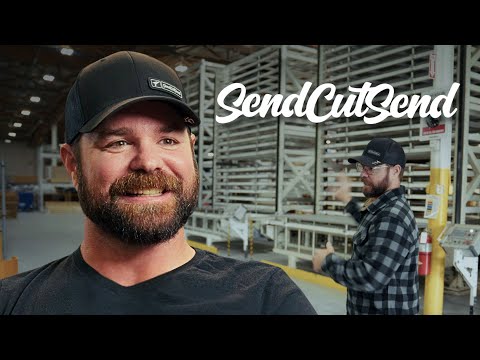
Jim Belosic, founder and CEO of SendCutSend, shares his journey building a manufacturing company in Reno, Nevada that has grown to serve over 300,000 customers since 2018. The company provides custom laser cutting and metal fabrication services with a focus on exceptional customer experience, fast turnaround, and American manufacturing. Jim discusses how he started the company out of personal need for parts, financed equipment creatively when banks wouldn’t lend, and built a culture centered on generosity, trust, and taking care of employees and vendors.
The conversation covers SendCutSend’s unconventional approach to business including “fun coupons” (cash bonuses for good service), a “secret menu” for testing new capabilities, and the philosophy of “don’t save money” - investing in customer experience rather than cutting corners. Jim explains how hiring customers, paying employees well, and building genuine relationships with vendors creates a self-reinforcing ecosystem of quality and growth. He draws inspiration from Sam Walton and Les Schwab, emphasizing simple, practical business wisdom over complex strategies.
Highlights
”I’m told I’m taking risks. I don’t see it that way - this is what it takes to move forward”
Clip command
yt-dlp --download-sections "*0:00-1:00" "https://www.youtube.com/watch?v=mTnv9b0xDV8" --force-keyframes-at-cuts --merge-output-format mp4 -o "mTnv9b0xDV8-0m00s.mp4"“I am often told that I’m taking risks. And I don’t see it that way. I’m just like, no, this is what it’s going to take to move forward. Manufacturing is infinite. This place will never ever ever be perfect. We’ll never have enough capacity. So this can keep me busy for the foreseeable future.” — Jim Belosic, 0:00
”I’ve never been wronged with generosity”
Clip command
yt-dlp --download-sections "*6:53-7:55" "https://www.youtube.com/watch?v=mTnv9b0xDV8" --force-keyframes-at-cuts --merge-output-format mp4 -o "mTnv9b0xDV8-6m53s.mp4"“I’ve never been wronged with generosity. If I’m overly generous and it doesn’t reciprocate, it’s still fine. We’ve had FedEx guys that put on chains in snow to make their one delivery here because they love us and we take good care of them.” — Jim Belosic, 7:25
”Don’t save money - the more we spend on experience, the more customers we get”
Clip command
yt-dlp --download-sections "*9:54-11:00" "https://www.youtube.com/watch?v=mTnv9b0xDV8" --force-keyframes-at-cuts --merge-output-format mp4 -o "mTnv9b0xDV8-9m54s.mp4"“Don’t save money. Go for that good experience. Oftentimes we find that the more we spend, the better that experience is, the more customers we get, the longer lifetime value we have. There’s a difference between being frugal and being cheap.” — Jim Belosic, 9:54
”If you say nobody wants to work anymore, they don’t want to work for you”
Clip command
yt-dlp --download-sections "*100:00-101:05" "https://www.youtube.com/watch?v=mTnv9b0xDV8" --force-keyframes-at-cuts --merge-output-format mp4 -o "mTnv9b0xDV8-100m00s.mp4"“If you say nobody wants to work anymore, they don’t want to work for you. They don’t want to work for your pay, your hours, your conditions. Everybody wants to work. They just don’t want to work somewhere crappy.” — Jim Belosic, 1:40:00
”I hire problem solvers, not sheet metal guys”
Clip command
yt-dlp --download-sections "*89:06-90:15" "https://www.youtube.com/watch?v=mTnv9b0xDV8" --force-keyframes-at-cuts --merge-output-format mp4 -o "mTnv9b0xDV8-89m06s.mp4"“I’m not hiring sheet metal guys. I’m hiring people that are problem solvers. We’ve got rocket scientists, biologists, aerospace engineers. If you hire a bunch of sheet metal guys, they’re going to try and solve sheet metal problems using sheet metal tools.” — Jim Belosic, 1:29:06
”We give out ‘fun coupons’ - cash bonuses for going above and beyond”
Clip command
yt-dlp --download-sections "*5:59-7:05" "https://www.youtube.com/watch?v=mTnv9b0xDV8" --force-keyframes-at-cuts --merge-output-format mp4 -o "mTnv9b0xDV8-5m59s.mp4"“We call them fun coupons. We get paid in cash from one of our recyclers and redistribute that into the org. If a FedEx driver stayed a little late because we were slow loading the truck - hey, here’s a fun coupon, $100 bill. We use those to lubricate the ecosystem.” — Jim Belosic, 5:59
Key Points
- Manufacturing resurgence (0:44) - Manufacturing in the US is making a comeback; it’s now popular to make things in America again after decades of offshoring
- Started from personal need (1:33) - Jim started SendCutSend because he needed parts made and decided to make them himself - a common origin for manufacturers
- Finding suppliers the old way (3:07) - Many great manufacturers aren’t online; finding them requires knocking on doors at industrial parks and getting referrals
- The beer test for vendors (5:28) - Would you want to have a beer with a vendor? If not, find a different one - relationships matter more than contracts
- Fun coupons (5:59) - Cash bonuses given to FedEx drivers, vendors, and employees for going above and beyond; lubricates the ecosystem
- Generosity pays back (7:25) - FedEx drivers put on chains in snow to make deliveries because SendCutSend treats them well
- Hobbyist became rocket company referral (8:39) - A small order rushed for a hobbyist led to 200-300 engineers at a major aerospace company becoming customers
- Don’t save money (9:54) - The company motto - invest in great experiences rather than cutting corners on packaging, shipping speed, or quality
- Frugal not cheap (10:20) - Buy the best equipment even if it costs triple; being cheap on quality costs more in maintenance and downtime
- Jim math (11:38) - Running the business on gut feel - overnight shipping when someone needs parts for a wedding, hand-carrying items on planes
- Marketing through experience (14:39) - Spent millions on Google ads but best growth comes from word of mouth driven by exceptional customer experience
- Bootstrap growth (16:02) - Started in 2018 with creative equipment financing from Amada (70% down on a $750K laser) when banks wouldn’t lend
- Negotiating terms not price (21:05) - Got favorable payment terms from equipment vendors who believed in the company when traditional financing wasn’t available
- Competing with China through experience (27:51) - Can’t compete on price alone; win through quality, speed, customer service, and being easy to work with
- Walking the factory floor (32:58) - See business evolution by walking the floor regularly with fresh eyes; pick up debris, notice inefficiencies
- Chaotic customers (36:55) - High-mix manufacturing means thousands of unique parts daily; requires flexible systems unlike traditional manufacturing
- Hiring customers (40:35) - Best employees often come from passionate customers who already understand and love the product
- Secret menu (52:05) - New capabilities tested with select customers before public launch; like a restaurant soft opening
- Learning from other industries (56:08) - Tour dog food factories and cosmetics shows, not sheet metal competitors; cross-industry ideas create innovation
- Sam Walton and Les Schwab influence (58:35) - Admires their simple, practical wisdom; fifth-grade vocabulary explaining basic principles done extremely well
- Focus on what you can control (1:01:24) - External problems are still your problem; build redundancy and backups rather than making excuses
- Never run out of inventory (1:05:52) - Running out is incredibly expensive in opportunity cost and emergency orders; carry surplus despite cash impact
- Vendor next door (1:10:15) - Sold building to aluminum supplier at a discount to have vendor literally next door for emergency deliveries
- What can Jim do? (1:12:32) - Focus on things only the founder can do; delegate everything else to maintain fresh perspective
- Risk perception (1:17:29) - Often told he takes risks but doesn’t see it that way; just doing what it takes to move forward
- Self-funding philosophy (1:26:09) - Bootstrapped without VC money; slower growth but maintains control and builds sustainable business
- Hire problem solvers (1:29:06) - Don’t hire sheet metal experts; hire diverse problem solvers from rocket scientists to biologists
- Proof of work over credentials (1:30:55) - Never looked at GPA; hired software engineer because he showed an app he built, not his classes
- Bacon robot story (1:32:15) - Hired engineer who built robot to check bacon quality at Starbucks factory because his job was boring
- Pay people well (1:37:18) - Higher wages mean employees care about equipment and customers; saves money through reduced turnover and better quality
- Nobody wants to work for you (1:40:00) - When people say nobody wants to work, they mean nobody wants to work for them and their poor conditions
Mentions
Companies
- SendCutSend (0:30) - Jim’s manufacturing company providing custom laser cutting and fabrication
- Amada (17:00) - Laser manufacturer that provided flexible financing when banks wouldn’t
- Amazon (14:50) - Jeff Bezos example of warning customers about duplicate purchases
- Wells Fargo (17:15) - Refused equipment loan despite Jim banking with them since age 18
- FedEx (6:05) - Shipping partner whose drivers receive fun coupons for great service
- McMaster (8:05) - Industrial supplier used for emergency orders
- Coast Aluminum (1:09:45) - Vendor who bought SendCutSend’s old building and is now next door
- Walmart/Sam Walton (58:35) - Role model for practical business wisdom
- Les Schwab Tires (58:35) - Another role model for taking care of employees and customers
- Lockheed (1:38:52) - Jim’s grandfather worked on SR-71 program
- Aero Electronics (55:50) - Amazing facility toured in Reno
- Starbucks (1:32:15) - Context for bacon robot story
Products & Technologies
- Laser cutting (0:30) - Primary technology for SendCutSend’s fabrication
- CNC machining (52:55) - Capability on the secret menu being refined
- Press brake (1:28:05) - Bending equipment for sheet metal
People
- Jim Belosic (0:30) - Founder and CEO of SendCutSend
- Ti Morse (0:27) - Host of Relentless podcast
- Sam Walton (58:35) - Walmart founder, business role model
- Les Schwab (58:35) - Tire company founder, business role model
- Jeff Bezos (12:25) - Amazon founder, example of long-term customer thinking
- Cody Callahan (1:30:55) - Software engineer hired at job fair based on app he built
Surprising Quotes
“I am often told that I’m taking risks. And I don’t see it that way. I’m just like, no, this is what it’s going to take to move forward.” — 0:06
“Don’t save money. Go for that good experience. And oftentimes, we find that the more we spend, the better that experience is, the more customers we get, the longer lifetime that we have.” — 11:09
“I’ve never been wronged with generosity. If I’m overly generous and it doesn’t reciprocate, it’s still fine.” — 7:25
“If you say nobody wants to work anymore, they don’t want to work for you.” — 1:40:24
“I’m not hiring sheet metal guys. I’m hiring people that are problem solvers… If you hire a bunch of sheet metal guys, they’re going to try and solve sheet metal problems using sheet metal tools.” — 1:29:51
Transcript
0:00 If you take a quantity of risk, it’ll be seen differently by 10 different people. I am often told that I’m taking risks. And I don’t see it that way. I’m just like, no, this is what it’s going to take to move forward. Manufacturing is infinite. This place will never ever ever be perfect. We’ll never have enough capacity. We can never offer enough materials and enough processes or whatever. So, this can keep me busy for the foreseeable future.
0:27 I am here in Reno, Nevada with the founder and CEO of SendCutSend, Jim Belosic. And he is crushing building massive factories. Do you want to just talk about manufacturing in America in general, over the past like few years and where you kind of see like things evolving?
0:44 Yeah. Manufacturing in the US especially like what you hear on social media and on the internet, it’s making a huge resurgence. It’s popular to make in America again. There’s a lot of momentum behind it. People are excited. There’s conferences and stuff around like hey instead of outsourcing everything we need to make it in the US. I didn’t hear a lot of that in the early 2000s or anything. It was like how fast can I offshore something so that I can make some more profit. So, I wish that I could say that we timed it so that we were right on the leading edge of that wave. I’m not that smart. We’re just kind of lucky I guess.
1:27 Serendipity in what you actually wanted to focus on.
1:30 Totally. This whole thing was started out of a selfish need anyway. I needed parts and so I decided to make them myself. Which is that’s how a lot of manufacturers have started. So, I think that there’s a lot of momentum. People are making cool stuff in the US. Again, for a long time, it was focused on aerospace and robotics and like ITAR controlled stuff, but the thing that I’m most excited now is people are making the basics here again. You know, people are making cutlery, people are making washers and screws and nuts and bolts and like steel. They’re making the foundational stuff again.
2:16 It’s exciting, but I also think that it’s also been happening for a long time. It’s just people haven’t seen it. Like you said earlier, the marketing is basically just not there.
2:21 Yeah. I don’t want to say that we’re, you know, oh man, we’re leading the charge with making stuff in America. Guys have been doing that for 100 years. You know, I think about all the companies that we deal with these like legacy second or third generation suppliers and maybe they started the company in the 70s or the 80s or something like that. They had a handful of customers that they’ve had for the entire time and they’re not good at the Google. They’re not good at Instagram. They don’t know what social media is.
2:52 So, there’s this new crop of engineers who need stuff made. And they go online, they’re like, “Oh my god, no one manufactures this anymore, or this can’t be done, or we forgot how to make this.” My argument is you haven’t looked hard enough. You know, back in the old days in 1995, if I needed a part made for my go-kart, you know, I’d have to beg my dad for a ride to the industrial park and then I’d knock on doors until I got enough referrals to find like old Joe, you know, at the machine shop who would make me something. That’s how a lot of manufacturing is done.
3:29 Now like we’re in that new generation where we have the manufacturing capability but then we also are leveraging with accessibility and marketing and exposure. So that’s a trend that I see is that’s really encouraging just getting people to know that hey not only are we doing new things in manufacturing but there’s also some exposure to stuff that’s been here for 40 years that you may not have known about.
3:50 Yeah. I think one of the best things is or the best way to do business is like really trusting the people that you’re working with and building that trust. And you talked a little bit earlier about, you know, showing up and if you want to go work with some factory and it’s like 2,000 square feet or whatever, the right way to do that is not by looking online. It’s by just showing up in person or like sending a letter or an email or calling or whatever. How do you think about that?
4:17 Yeah, I’m part of the, you know, the Oregon Trail generation, basically where I grew up a period of my life where there was no internet, you know, or cell phones and then, you know, we got internet and cell phones. So, I can kind of have a leg in either side. So, if I can’t find something online that is not a deterrent, you know, I’m like, how can I make some calls? There’s a part of town that I can go to that has a bunch of industrial space, I’m going to go knock on doors or whatever.
4:48 So, in order to find really good suppliers, the newer generation is online. You can read their reviews and stuff, but really it’s going to be based on referral. It’s going to be based on going there, shaking a hand, you know, talking to them, seeing what they can do. And then building that trust. And I think a lot of people treat suppliers as like indentured servants. And, you know, we have a contract, you better do this.
5:13 I see it as more of like an employee and we take really good care of our employees and we see our vendors or our drivers or delivery guys no different than our employees. So, we want to make sure that they want to work with us and we want to work with them. One of our tests is like, would we want to have a beer together? And nine times out of 10, the answer is yes. But if you’re at some vendor and you’re like, I would never sit next to this guy at lunch, like go find a different one. It’ll make your working relationship so much better if it’s just a cool guy.
5:48 Yeah. And the reason that I came out here and was so interested to come out here was because I ran into so many companies that like use SendCutSend parts and buy from you guys and everyone loves it. Like everyone loves SendCutSend. You mentioned when you are interacting with some FedEx guy or an employee and they’re doing well, you try to like kind of let them know that they’re doing well.
6:11 Yeah, we call them fun coupons. So we recycle a lot of metal. I hope our accounting team isn’t listening to this. Anyway, Ivana, I need you to like log off right now. Anyway, we get paid in cash from one of our recyclers and I don’t really want to know too much about his business model, but anyway, he really likes cash. So, we get cash, but we redistribute that into the org. So, if that’s a FedEx driver, you know, who stayed a little late cuz we were slow loading the truck, hey, here’s a fun coupon, you know, $100 bill or whatever. But we use those to lubricate the ecosystem and show people that they’re doing a good job.
6:53 Employees are always eligible for spot bonuses, you know, if they’re doing something super cool going above and beyond. But same thing with vendors. Like, a lot of times people get invited to like golf tournaments or whatever. They get a bottle of wine from a vendor. We try and do the preemptive strike. I’m like, “Hey, I want to, you know, give you guys a hotel room at a really cool place or I want to show thank you with a bottle of champagne or whatever.” And it’s because I don’t know. I’ve never been wronged with generosity.
7:25 If I’m overly generous and it doesn’t reciprocate, it’s still fine. People have a good impression of us and the company. But oftentimes that generosity, it pays back, too. We’ve had FedEx guys that have put on chains, you know, to come and do their one delivery here because they were like, I’m not on the road today, but I put on chains because I love you guys and you guys take good care of me.
7:54 We’re not the only ones doing that either. There’s a lot of manufacturers and just really cool companies in the world that you’re never going to hear about. But they’re just cool guys. They just haven’t scaled up to a certain size because it’s difficult to scale that.
8:09 Yeah. Do you want to talk about like what has been the biggest moment where you were just kind of putting that first foot forward and expressing generosity and all that stuff and it just came back in a very serendipitous way.
8:24 So one example of you know I guess you could call it generosity but it’s also kind of blended with having a good product. One of our early customers, he was just a dude in his garage, you know, needed a quantity of one or something and everyone else told him to, you know, pound sand. We’re not going to do quantity one. But for us, that’s our entire business model. I’ll do quantity one, quantity a million. I don’t really care.
8:46 And he’s like, “Hey, I’m kind of in a rush. You know, I work on this on the weekends, so if there’s any way that I could get it by Friday, you know, please, that’d be amazing.” So, we’re like, “Okay, no problem.” So, we put a little bit of a rush on it. We know he’s a hobbyist and you know that’s how I run my hobbies. I need everything at my doorstep on Friday cuz I have like three hours on Saturday that I can use it.
9:08 So we get him his parts and Sunday night comes and he emails us and he’s like, “Dude, you guys were awesome. I got my project done. You know, he’s making like an electric skateboard. I got my project done. I’m going to tell the guys at work about you.” I was like, “Oh, awesome. Thanks.” And we didn’t really think twice about it. Well, like a week goes by and we’re getting onboarding letters from a very large rocket ship company and they’re like, “Hey, so and so told us about you. You have this cool product.” And I was like, “Okay, thank you.” So then all of a sudden there’s 200 or 300 engineers that are using us within this company from like a little bit of generosity, but really it’s just trying to like a day earlier or a little bit smoother.
9:49 Yes. So the more you can do that, it’s not about saving money, you know, it’s an investment. And, you know, that’s that was one of our early mottos is don’t save money.
9:58 Don’t save money. Yeah. We had it, laser engraved on a piece of stainless. I’ll have to find it. But don’t save money.
10:04 In what ways did you kind of like implement that because obviously you are trying to be, you know, you said in another thing where you mentioned you want to be frugal, not cheap.
10:15 Yes. Frugal not cheap. That’s tied into don’t save money. Meaning if you need a piece of equipment and you can cheap out and get the one that’s half the price or it’s used or whatever, that’s being cheap cuz you’re cutting off your nose to spite your face. You know, you’re trying to save some money, but you’re going to pay for it in maintenance or downtime or whatever. So, we’re like, be frugal, be smart about your purchase, but if the best purchase happens to be triple the cost, that is still the best purchase. It’s the most frugal, you know.
10:52 You can be wasteful and just buy the Ferrari because you like the colors or something stupid like we don’t do that. You’re being thoughtful about how you’re spending money kind of thing. So, don’t save money is about like, hey, if we don’t put a piece of candy in this package, it’ll save us seven cents, you know, or hey, we don’t include a sticker or something like that. It’s going to save us a little money. If we ship it a day slower, you know, saves us $4. Don’t save money. Go for that good experience.
11:14 And oftentimes, we find that the more we spend, the better that experience is, the more customers we get, the longer lifetime that we have. So, I don’t know. We don’t have a CFO right now because that probably helps. Yeah, we run the company based on Jim math and Jim math is you do what feels right and it feels right to overnight stuff when you know they need it before their wedding or something like that, you know.
11:55 It makes sense to hand carry something on a plane because it has to get there otherwise this guy’s going to get fired or you know it makes sense to invest in the absolute best tools so that they don’t break and we have no downtime. So I think from the outside it looks like we’re blowing a lot of money and when we could save a little bit here and there. But my argument is, you know, the more we spend on cool stuff like that, the more it comes back.
12:23 The way that I think about that is Jeff Bezos had this line where early on in Amazon, they basically implemented something where if a customer had already purchased a like item, let’s say a book, sometimes people just, you know, they’re busy, their lives are busy, and so they’ll forget that they ordered the thing. And so what they implemented was basically this automatic thing where it would tell a customer if they had already ordered it and like did you mean to try are you trying to reorder it?
12:49 And a lot of executives and stuff inside of Amazon pushed back and were like that will at least short term burn money. And Jeff was like, “No, what happens is, yes, we do lose 10, 20, $30 or $50 or $100 today, but over the long term, we’re building this customer relationship, and them having this magical kind of like experience like Amazon’s looking out for you is worth it.”
13:14 Yep. Yeah, I agree. Which I don’t think they’re doing that anymore because I’ve ordered like the same thing like 50 times. I have a pile of them.
13:21 Andy Jassy is now in charge. Yeah. I often do, I don’t know if you’d call it like a race condition, like if I need a part or a nut or bolt or whatever, I’ll order it from like five different vendors or I’ll order it on Amazon from like six of their vendors and then McMaster and then whoever else I can. Whoever gets here first wins and then I have good intentions of returning it and I never do.
13:46 But yeah, the investment in the magical experience is something that it needs to be ingrained in the culture. And actually, I love that we have a lot of people who are skeptical of it. Especially at first, they’re like, “Hey man, we’re spending too much money on this.” And I’m like, “Good. I’m glad that you’re not just like blowing stuff. You’re not just like ordering crazy Snap-On tools when Craftsman will work just as good.”
14:16 But then they get to see what happens and they get to see the magic, you know, especially after you’re here for like a year or two and you start to hear the stories and see the feedback that we get. It makes you want to double down on it. You’re like, what else can we do? You basically, it’s kind of like gone all in. Ironically, you’re doing the marketing online and stuff, but really, if you’re just making someone’s life much better, they just magically will start telling people about you.
14:41 Yeah. Well, yeah, marketing sucks, dude. We’ve spent so much. My head marketing is sitting across from me. She’s not super happy about that statement. But we’ve spent millions and millions of dollars on Google ads and all kinds of different stuff when really if you invest in that really cool experience or just reinvest in product that’s all you need.
15:07 It takes longer. It’s not VC backable like you’re not going to have this you know crazy hockey stick growth from investing in Google ads or you know DTOC marketing or whatever but it pays off ultra ultra long term. And then, you know, the best advertising is word of mouth. And that’s a million percent true.
15:27 And I think that’s why a lot of these legacy manufacturers are in business without being on the internet. They’ve never had a website. They don’t know how to use email or they’re like, “Hey, it’s Jim and Aaron at AOL.com.” You know, I’ve seen that from vendors. Those guys never had to do additional marketing or whatever because they had a really great product, a really great customer experience that was like handshake based and they’ve been able to do it for 40 years except now they’re retiring and not everyone, you know, they don’t have a son or a daughter or whatever that’s taking their place.
16:05 Yeah, and I want to go back now to kind of like the start. There’s very few businesses that I know of that have kind of bootstrapped. I think you started SendCutSend in 2018. Yeah. And now you are doing millions and millions and millions of dollars in orders to I don’t know how many customers like tens of thousands of customers.
16:22 Yeah, I think it’s 250 or 300,000 customers. 250-300,000 customers. Take me back to like when you started the company. I know you initially spent like, you know, $750,000 on a laser. How much, you know, how did you make that decision?
16:39 The thing is like I didn’t spend 750 grand on a laser. I bought the laser that was worth that. But, you know, 70% down. Oh, how’d that happen? Financing, man. So when no one’s going to lend you money, you have to get creative.
16:57 And so, you know, Amada makes our lasers. They’re amazing. There are other great manufacturers out there. But Amada was the ones who like believed in us and they had flexible payment terms. They offer financing in-house. So, you go to Wells Fargo, like Wells Fargo, I banked with them since I was 18 or whatever, and when I really needed them, like, “Hey guys, you know, can I get an equipment loan?” They’re like, “No, how long have you been in business?” “Well, I haven’t. I’m starting a business.” So, they’re like, “Get out.”
17:24 The right equipment vendor who has a program where they lend in house or they believe in you, they’ll go to bat for you. And so, yeah, I didn’t have to come up with 750,000 cash. I just had to come up with a down and then hope and pray that I could make it work.
52:13 We just started a podcast and to interview cool customers and staff and stuff and just like a little behind the scenes. So, if we don’t have cool lighting or anything, our podcast that’s getting better, though. You got to start somewhere. You got to start by doing the first. That’s the thing. You just have to do it. So, the first three episodes we threw away. The next five episodes, no one has seen because we’re not telling anybody about it cuz I’m not proud of it yet. Once we become like we’re proud and we start to talk about it and advertise it, it’ll be episode 30 and they’ll be like, “Oh my god, I didn’t know you had a podcast.” Like, where have you been, man?
53:10 So, same thing with CNC, with new materials, with new capabilities, we run it secret menu. You have an entire secret menu of things that you can do but don’t tell anyone about. Yes. It’s a hell of a menu. And, you know, we have select customers that are vocal both positive and negative. We keep them into a couple different buckets. So, if you’re watching this and you get asked to test secret menu stuff, you’re in one of the buckets. You’re either in there because we love your positive feedback or you’re in there because we love your negative feedback. Just love your feedback.
53:47 So we let them test it. We refine. We refine. Years ago I was like, I think I want to start a restaurant and I started researching how to start a restaurant and everything. And one of the big takeaways was you don’t just say grand opening. You open and you invite like a couple buddies and then their families and then a few people off the street. And so you have this like slow launch that happens and by the time there’s a grand opening sign out there, your waitresses are trained, your chefs know, everyone knows the process. So that’s the same thing we do here.
56:08 My favorite thing to do though is you don’t tour if you’re a sheet metal manufacturer, you don’t tour other sheet metal manufacturers. It doesn’t matter. Go tour something that’s super weird. Go tour like food processing or like flower distribution, cold chain stuff. You’ll always pick up something that you could apply to your industry. And then now that secret sauce.
56:36 So, if you’re looking at what’s been done, like if you go to trade shows, you like Fabtech, Fabtech is a huge trade show in the fabrication industry, you go there and you learn more about like your own industry and it’s kind of like preaching to the choir. But if you go to like a cosmetics trade show, it’s wild. You’re going to see like weird marketing techniques that you’ve never seen. You’re going to hear about like packaging equipment that you didn’t know existed. Like our packaging equipment, it’s for food. Like it’s to keep like steaks fresh.
57:09 So the weirder industry that you can explore and borrow from like that’s how you get innovation in your own industry.
58:19 Yeah. I know when we were talking yesterday you said that the two people that you have like learned a lot from and I think there’s probably others but it’s like Les Schwab and Sam Walton. And Sam Walton would, you know, whenever he would go to, you know, I think he took his family on a lot of trips. Yeah. And almost every single day that they were out on a trip, he would be basically just touring the different like retail locations and like supermarkets and all the different things.
58:50 And his kids knew that he would just, you know, go to some supermarket in like Argentina and then go lay on the floor to see how, you know, wide the aisles were and they’d like go talk with the staff and ask about, you know, all these different things. How have you kind of chosen your role models and what have you like learned from them?
59:12 The reason I like Sam Walton and Les Schwab especially, is because their reading level or their writing level is right at my reading level, like fifth grade. They use vocabulary that I’m familiar with. You know, I grew up in rural Nevada. I didn’t go to school or well I went to high school but I did like six weeks at UNR.
59:40 You know on X there’s a lot of people what they call them word cells or something but they’re using crazy terminology to explain something that’s like really freaking basic. I think Sam Walton, Les Schwab were confident enough in their abilities of just doing it like a blue collar method and just making stuff work. They didn’t have to use crazy vocabulary or try and impress people with, you know, I can’t even think of any words to use an example.
1:00:12 Yeah, I feel the same way, by the way. It’s just basic. Do the basics really really well. Maybe you’re not going to impress people at a high society party or, you know, god forbid I go to Silicon Valley to some, you know, cocktail party. Because I’m going to be wearing jeans and my flannel or whatever. But I have a good business and I have good customers.
1:00:35 And I think those guys knew it, too. They took good care of their employees. They weren’t there for an exit. They were there for a legacy. They were there to make America better. They were there to make sure that their employees could buy homes and cars and have babies. And that’s exactly what I’m doing. And I’m like, dude, do I need to write a book or something so that people will respect my stupid approach because they’re like Sam Walton is doing, you know, all kinds of awesome stuff and he wrote a book.
1:01:07 He wrote the book at the end of his life. And yeah he did an incredible job. So, I’m like, “I guess I got to just wait until I’m dead and then people will be like, ‘Oh, dude, the Jim Belosic method like actually works.’” There might have been some special sauce there. Yeah. So, I’ll just wait until I’m dead and then maybe they’ll like teach this in business school. I don’t know. It just feels like I’m doing the right thing.
1:01:27 Yeah. So, when you’re thinking about, you know, there’s things that you can kind of control inside of the four walls of your warehouse or your factory. But especially with, you know, customers, you’re relying on a lot of other people’s supply chains to make everything work.
1:01:45 And you know, I know and again with Sam Walton, like he would go to like he would talk with the supermarket people, the people that were in charge of his stores and other people’s stores, but then he would also to get like the best source of real-time information on a whole bunch of different stores at once. He would basically go to some distribution center where they have a whole bunch of different trucks going to a whole bunch of different stores at once. And then he would just bring a bag of donuts or like a box of donuts, I believe, at like 5:00 a.m. before everyone shipped out. And he would just talk with these guys that were truck drivers and you’d be able to get a pulse on, you know, 15 stores at once. How have you kind of thought about what you can control and then for the things that you can’t control, how do you make that work?
1:02:25 Yeah, I kind of lit up when you said, “Oh, you focus on stuff that you can control.” That’s a million percent our motto. It’s focus on our constraints. Our constraints are what we can control. If it’s outside of our control, it’s still our problem. And we can mitigate like catastrophes a little bit by having you know backup vendors or redundancy or whatever but really our focus needs to be on what do we do best and we don’t spend any time thinking about oh what could have been or you know we would have should have could have.
1:02:58 I often say I don’t have a time machine. That went sideways that was super screwed up but I can’t go back in time so what should we do moving forward. Our constraints. One of the things that we talk about is is it our problem or their problem? Meaning our customers. And you know we can’t do a certain type of bending geometry or whatever. Is it their problem that we can’t do that? No, it’s our problem. So we always have to look inward and like challenge ourselves to be better. Like we’ll add tooling, we’ll add process, we’ll add technique in order to make sure that it’s not their problem. It’s our problem. We’ll solve it.
1:03:41 When it comes to things outside of our control, we look at weather, you know, we’re in northern Nevada, we’re 30 minutes from Lake Tahoe. Winter weather is a real thing. First couple years it bit us in the ass. So, that was actually a big reason that we expanded, you know, to different facilities across the country so that we can…
1:04:01 You have one in Kentucky and Texas now. Yeah, one in Paris, Kentucky, and one in Arlington, Texas. And then we have a fourth facility that’s on the secret menu right now. No one really knows about it. Is that your like lab the special stuff? No, it’ll be a full facility. Yeah, it’s just not online yet.
1:04:21 So anyway, we’re trying to expand so that we have better control on the things that are outside of our control, whether lead times from raw material vendors, you know. Memphis got hit with an ice storm or something like that a couple years ago. And that’s like the FedEx hub. And if you have all your eggs in the FedEx basket and Memphis goes down, like you are screwed for weeks.
1:04:44 So that ice storm shut down the hub. So they started putting stuff on intermodal rail and then all the rail got like backlogged and trucks were lost. Anyway, it was all kinds of issues. So we can’t control everything outside of our control, but we can have backups on backups on backups. We can have redundancies. So yes, we ship UPS, we’ll ship DHL, we’ll ship whatever we can in order to mitigate carrier issues, weather issues.
1:05:14 Suppliers for every material that we have. We have at least three suppliers. We always have favorites, you know, based on price or lead time or whatever. But stuff happens, you know, during COVID, like they’d be like, “We’re shut down. All of our guys are sick for 10 days.” It’s like, well, I can’t allow you to shut me down. So, it’s expensive. It’s time consuming, but once you start to get used to it, it’s a huge…
1:05:41 You get a little better. You build a muscle of like working on the fly and figuring stuff out. Yeah.
1:05:49 For the amount of like inventory that you have, you know, I think you talked about basically having like seven days of metal pretty much, in the factory at any given time. How are you thinking about basically guaranteeing that assuming not everything goes right, you can still deliver on time and like all that sort of thing? Like how much inventory do you want?
1:06:13 Well, this is actually where a CFO would really help because I learned that having millions of dollars of inventory on the floor impacts cash. Didn’t really know that. I was like, how come we have no cash? What is a capital cycle? Yeah. I was like, that’s weird. Also I learned a lot about like net terms. I was like, oh, we’re making all kinds of money, but then it doesn’t come in for a little while. I was like, oh we have no cash.
1:06:40 So anyway, we’re trying to be smarter about how much inventory we carry. If it’s a long lead time material, we may have to carry a year’s supply. You know, some of our non-metals are kind of exotic and it might take us three months to get a supply. So, you got to be basically expecting assume for the worst. You need to make sure that you have that on hand plus a spike.
1:07:12 That’s the other issue. We’re kind of like a contract manufacturer. We’re kind of a job shop, but on steroids. A contract manufacturer is usually going to say like, “Hey, I need a million units over the next 12 months. Deliver me, you know, 100,000 a month or whatever.” We have no idea what’s going to happen at any given moment.
1:07:31 So, if you have this material that’s three month lead time, you’re like, okay, I need to carry enough for 3 months plus 3 months to replenish. But then what if a company what if an aerospace company comes to you and it’s like, hey, I need 10,000 units of that. So, you have to have surge capacity, too, which sucks for cash.
1:07:52 But actually not having a CFO has allowed us to do that because I’m like I just don’t want to run out. Like that’s the number one order that we give to our procurement staff and our supply chain staff. Don’t run out. Just stop running out for the love of God. It’s so expensive to run out. There’s opportunity cost. There’s you have to make it right, you know? So maybe you have to overnight a bunch of stuff. You’re ordering raw material from McMaster, which is wildly expensive. So just don’t run out.
1:08:26 And that’s something that when you’re running the business on a spreadsheet, it’s really hard. You don’t see the same. Yeah.
1:29:06 Would I want to have a beer with them? Also hire customers. I’m a huge fan of diversity. Like we were talking about earlier, you don’t tour sheet metal shops. You tour a dog food factory or a place where they’re making nail polish or something and you try and take things from other industries and apply them to your own.
1:29:31 So, I’m not hiring sheet metal guys. I’m not hiring a lot of CNC machinists. I’m hiring people that are problem solvers. People that come from, you know, an array of different backgrounds and it works. We’re a pirate ship. You know, I’m the captain of a pirate ship, but we’re all wildly different, wildly different in backgrounds, but together it’s like we have all these skills.
1:30:02 If you hire a bunch of sheet metal guys, they’re going to try and solve sheet metal problems using sheet metal tools. But if you have, you know, an ex rocket scientist and then a biologist and a psychologist or whatever, you come up with like novel solutions, you know, stuff that’s never happened.
1:30:21 We hire based on what you’ve done. Like proof of work. Yeah. I just told my daughter the other day she was worried about her GPA. I was like, I have never looked at someone’s GPA when I’ve hired him. But I will look at what you’ve done.
1:30:38 And even our software engineers uh Cody Callahan, I hired him at a job fair at the university. Didn’t even care what classes he was taking or whatever because he pulled out his iPhone and he was like, “Check out this app that I built.” And I was like, “This is amazing. You know, come work for us.” That was a decade ago.
1:30:58 So you’re looking for like those experimentalists that are actually getting out getting their hands dirty with whatever they are passionate about and people that are chasing like tangible things like projects that you can show off versus like awards and credentials.
1:31:16 There’s nothing worse than seeing on someone’s resume they have like all these three-letter terms. I don’t even know what the hell they are. You’re looking for the people with the inner scorecard. Yeah. What are you proud that you accomplished? What stuff have you done that shows that you’ve tried and you failed? And you tried again and you got it to work.
1:31:43 Another one of our engineers, he worked at a factory that was making the breakfast sandwiches for Starbucks and his job was to like monitor if the bacon was cooked accurately or not. And he was like, “This is a crap job.” So he built a little robot that would snap a picture of the bacon and then compare it against like good bacon and so he didn’t have to stand on the line next to the bacon. I was like, “Holy crap you are working for me now.”
1:32:16 When we see those opportunities, we grab them. Also, we have passionate customers. Like the really cool thing about the business at this point of our lifetime is we have a little bit of brand recognition. So people are like, “Hey, I use you. I’m a huge fan. If you have any job openings, you know, I’ve used you as a customer for x number of years.” We can go back in their account and see what they’ve ordered.
1:32:45 And I have to imagine that’s like an incredible source because it’s not only are they using you, but it means that they were building stuff. Yeah. But at the beginning, no one knows what the hell SendCutSend is. They don’t understand what we’re doing. So, you have to suffer. You have to convince a lot of people at the beginning. Every startup founder knows that. You have to force them to drink the Kool-Aid. And you’re like, “Come on, man. Like, we’re doing this awesome thing. Believe in it.” So, you do a lot of cheerleading.
1:33:15 Then something happens where all of a sudden you’re on the other side and they’re cheerleading for you. They’re coming and saying, “Hey, I’ve used you forever. I think I could add this cool skill to your skill set. What do you think?” So oftentimes like when we post a job, we have hundreds of applicants for a single role. And we get to kind of cherry-pick the best of the best, but that comes from seven years of building brand and culture and everything else.
1:33:57 So hire your customers if you can. Hire the best in the field if you can. You know, I said that we don’t really hire machinists and we don’t hire sheet metal guys because everything we do is weird. If you’re a press brake operator for the last 20 years and you come and get a job at SendCutSend, like it’s worthless. The way that we approach it is completely different. And so that 20 years of skill set is not very valuable to us.
1:34:29 We’d rather have someone that is able to adapt and come up with novel solutions that you know approach something in a way that’s never been done. If you know too much about something, it can hold you back. It’s one of the reasons like I try not to know too much about any machine or any process here. So I can still have like a little bit of first day experience every time I walk through the shop. I’m like whoa I’ve never seen it do that before. Can we make it do that? You want to be thinking about it from fresh eyes as much as possible.
1:37:07 So, I think that there’s kind of this cultural zeitgeist or the general feeling that a lot of like younger people have is the world is not necessarily set out to work for them and they can’t really build a life and career in the same way that they maybe could have 50 years ago. How are you thinking about that and kind of inspiring young people to get after it and do meaningful things?
1:37:40 Yeah, I think the talk right now is like hey in the 50s you know single income you can buy a house you know you can raise seven kids. You know my grandfather yeah I think there was five kids single income forever they had a house with a pool and you know they had two cars and everything and that was fine on his income. He actually worked at Lockheed on the SR-71 program.
1:38:09 So, that was totally possible back then. Now people think it’s only possible if you’re a software engineer, somebody making $400,000 a year. Yeah. A total comp, you know, 500k or whatever.
1:38:26 In machining, in sheet metal, in the trades, in manufacturing, that used to be the case that you could make good money and then it kind of went away because it was a race to the bottom. People were competing, you know, with offshore or whatever.
1:38:43 And I don’t think it has to be that way. We pay our people well because, well, at first we started with because we’re weird, we have to train people how to do things our way. If we invest all this training in them, I want them to stay. If they stay, they’re extremely valuable.
1:39:01 Like, if you are turning people out constantly, it’s incredibly expensive. You know, you put all this time in onboarding and training and then they leave to go somewhere else, you have to start all over again. There’s massive opportunity costs. So, we’re like, hey, let’s pay well.
1:39:17 Also, I think it’s right like if you build all your models to allow for a, you know, well compensated employee, it makes a better product, it makes better customers, etc. So, they’re not going to be looking out over their shoulder trying to figure out what is the next leap where I can actually build this future that I am excited about.
1:39:40 Well, let’s provide growth from within. Let’s take good care of these people so that they care about the product, they care about the equipment. Dude, if you grab someone off the street for like 13 bucks an hour and you’re like, hey, run this million-dollar machine, if that thing starts smoking or making a terrible noise, they’re not going to care. They’re like, I don’t know. My job is to hit the green button.
1:40:01 You pay the guy 40 bucks an hour, he’s pretty happy for that job. He knows that that machine takes care of him and his buddies. Exactly. So you have better equipment uptime and it just pays for itself over and over again.
1:40:17 That generosity isn’t for not, you know, you work it back. But I hear, you know, oh, nobody wants to work anymore. You know, these kids, they don’t want to work anymore. No, they don’t want to work for you. They don’t want to work for this, you know, 70-year-old guy that started out making $2.25 an hour and he thinks that $20 an hour is like you should be jumping up and down for that, especially in a dark, dirty, you know, gross place. And it, you know, there’s no AC or whatever.
1:40:48 No, no. If you say nobody wants to work anymore, they don’t want to work for you. And you’ve created an environment that’s just not exciting.
1:40:58 Well, the thing is too is, you know, you’re spending a lot of time and money and thoughtfulness on trying to create an environment where someone you can go hire that guy for $40 an hour and they’re excited, you know, they’re looking forward and trying to figure out like problems and solutions. You said 350 employees. If you do the right job, you have 350 people that are all independently looking out for ways to improve the business. And improve how the thing works and make customers happier.
1:41:33 Yeah, they actually care. When you’re making minimum wage or you’re getting taken advantage of, the main thing that you’re doing on all your breaks and on your lunch is looking for a new place. And if your buddy leaves and finds a better place, you’re going to go with him, you know.
1:41:52 One of the things I’m most proud of is when we get, you know, we’ll get one new guy and then he’s like, “Ooh, this place is awesome.” And he’ll grab like two of his buddies from his old job. People that he knows are the best. So we have little pockets of this. We have families, you know, we have like most of the Andres work here. We have all kind lighteners. We have like six lighteners or something that work here. So we have husbands and wives and sons and daughters and whatever.
1:42:17 And that’s really cool. But then we also have these guys that oh hey, we all used to work at X and then you know they work here now. So I hear talk that in order to be competitive in manufacturing, we have to automate. We have to have dark factories. You know, manufacturing can’t afford to pay people, you know, living wages.
1:42:42 I’m proving the opposite. We’re profitable. We pay our staff well. If you pay them well, they care about the product. It actually saves you money. And we see it time and time again. Difference again being frugal and cheap. Yeah. A million percent.
1:42:59 Final question. What’s the hardest thing you’ve overcome? The hardest thing that I’ve overcome? That’s a tough question because it’s just like a series of challenges constantly every single day. I’ve been really lucky. You know, I’ve been with my wife for over 20 years. You know, my kids are great. I’ve been punched in the face a lot in business. We’ve had highs and lows, but that’s just part of it.
1:43:32 I overcome little challenges every minute. Sitting here with you is a challenge. I’m like, “Oh my god, do I look okay? Am I sitting up straight? Am I sweating through my shirt?” And then I’ll go on to the next one. The next one I don’t remember a whole lot because I’m moving on to the next thing. It’s like women in childbirth. You’re forgetting as much as you can all the time.
1:43:54 Pushing that kid out, they’re like, “I’m never doing this again.” And then a week later, they’re like, “Oh, I’d love another one.” You know, so they forget. I have that same problem. I don’t know. I love challenges. I love a challenge when you’re working within constraints.
1:44:14 If you put me in a grocery store and said, “Make me something for dinner.” You would never know. No, dude. I’m like, “Oh, fish with chicken on top of steak and rice and noodles.” But if you give me constraint, you know, you’re like, “Hey, dude. Here’s a can of chili and some graham crackers.” I’ll be like, “All right, dude. We’re going to whip something up. It’s going to be great.”
1:44:39 So, I don’t know. People have overcome way bigger challenges than I’ll ever face. You know, they’ve gone through cancer, they’ve gone through the loss of a child or a loved one or whatever. I haven’t had those things happen. So, anything that happens in business is just a challenge. You get punched in the face, you bounce back up. And I’m having a good enough time to where I keep getting in the ring every day to get punched in the face.