The Tesla of Boats | Mitch Lee, Arc
The Tesla of Boats | Mitch Lee, Arc
Summary
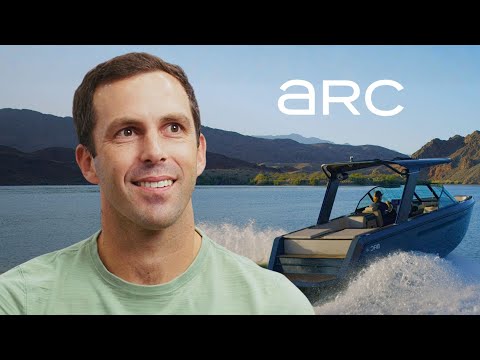
Mitch Lee, co-founder and CEO of Arc Boats, discusses building an electric boat company in Los Angeles. Lee emphasizes how far behind the marine industry is compared to automotive, comparing gas boat engines not to gas cars but to gas lawnmowers and leaf blowers in terms of technology. Arc was able to build and ship their first boat within two years of founding by borrowing proven technology from the automotive industry and repackaging it for marine applications, taking execution risk rather than technology risk.
The conversation covers Arc’s strategy of starting in the premium market segment (similar to Tesla’s roadster-first approach) where customers value the electric experience and can afford the price premium. Lee explains the surprising advantages of electric boats: instant torque that makes the boat feel faster than its horsepower suggests, elimination of dangerous fumes, no need to winterize engines, and a vastly better ownership experience. The interview also discusses the challenges of scaling production, the decision to avoid vertical integration where possible by using off-the-shelf automotive components, and the opportunity to electrify larger vessels like cargo ships and ferries using hybrid-electric systems.
Highlights
”Don’t think gas cars. Think gas lawnmowers and leaf blowers”
Clip command
yt-dlp --download-sections "*0:00-1:00" "https://www.youtube.com/watch?v=bLEaYgyGvWg" --force-keyframes-at-cuts --merge-output-format mp4 -o "bLEaYgyGvWg-0m00s.mp4"“It’s truly hard to convey how far behind the marine industry is. Don’t think of gas cars. Think of gas lawnmowers, gas leaf blowers. We are not taking market risk and we’re not taking technology risk cuz automotive has solved this. What we are taking is execution risk.” — Mitch Lee, 0:00
”Boat fumes lower your IQ by 10 points every time you go out”
Clip command
yt-dlp --download-sections "*8:46-9:50" "https://www.youtube.com/watch?v=bLEaYgyGvWg" --force-keyframes-at-cuts --merge-output-format mp4 -o "bLEaYgyGvWg-8m46s.mp4"“Gas boats suck at what they do. They are very loud, there’s no sound dampening. They’ve got these fumes coming off of them. You’re just like surrounding yourself with fumes that lower your IQ by 10 points every time you go out.” — Mitch Lee, 8:46
”The two best days of boat ownership are the day you buy it and the day you sell it”
Clip command
yt-dlp --download-sections "*9:47-10:50" "https://www.youtube.com/watch?v=bLEaYgyGvWg" --force-keyframes-at-cuts --merge-output-format mp4 -o "bLEaYgyGvWg-9m47s.mp4"“There’s very few redeeming qualities about owning a boat which is why in the industry you get these sayings like the two best days of boat ownership are the day you buy it and the day you sell it.” — Mitch Lee, 9:47
”The fuel gauge goes like this because the fuel’s sloshing around”
Clip command
yt-dlp --download-sections "*11:52-12:55" "https://www.youtube.com/watch?v=bLEaYgyGvWg" --force-keyframes-at-cuts --merge-output-format mp4 -o "bLEaYgyGvWg-11m52s.mp4"“Then you get out on the water and you’re like, great. Well, I’m on a gas boat and my fuel gauge goes like this because the fuel’s sloshing around. I don’t actually know how long I can go on this thing. They haven’t even solved that.” — Mitch Lee, 11:52
”The windshield went from $30,000 to $1,200”
Clip command
yt-dlp --download-sections "*26:28-27:30" "https://www.youtube.com/watch?v=bLEaYgyGvWg" --force-keyframes-at-cuts --merge-output-format mp4 -o "bLEaYgyGvWg-26m28s.mp4"“We didn’t know what we were doing when we were designing the windshield. You look at the Ark1, it’s probably a $30,000 windshield. You look at the Ark Sport, it’s a $1,200 windshield. Huge difference that comes from learning how to actually go do this.” — Mitch Lee, 26:59
”Cargo ships can go hybrid electric even if you never plug them in”
Clip command
yt-dlp --download-sections "*32:44-33:50" "https://www.youtube.com/watch?v=bLEaYgyGvWg" --force-keyframes-at-cuts --merge-output-format mp4 -o "bLEaYgyGvWg-32m44s.mp4"“Your average power consumption when you blend my loitering speeds with my high power speeds is only 1,000 horsepower. So I can just run those generators at their peak efficiency when I need them to. Even if you only use a hybrid model and never ever plug it in, it is still more efficient.” — Mitch Lee, 32:44
Key Points
-
Marine industry is far behind (0:00) - Don’t compare to gas cars; think gas lawnmowers and leaf blowers - that’s how primitive marine engines are
-
First boat in two years (0:30) - Arc shipped their first customer-ready boat within two years of founding by borrowing automotive tech
-
Execution risk vs tech risk (0:00) - Not taking market or technology risk since automotive has solved electric powertrains; focus is on execution
-
V0.1 prototype (3:34) - First prototype was an aluminum rowboat with a battery pack dropped in for early validation
-
Team from aerospace (1:33) - Initial team of 5-6 people came from aerospace backgrounds
-
Tesla master plan approach (4:40) - Following Tesla’s strategy of starting at high-end premium market then moving down
-
Premium market advantage (5:42) - Premium market has highest margins and buyers who value experience over pure economics
-
Personal passion for boats (6:43) - Mitch grew up on the water with a family that loved boating
-
Cofounder Brian (7:13) - Met talented cofounder through previous work experiences in aerospace
-
Gas boats vs gas cars (8:15) - Gas cars are refined; gas boats have fumes, manual winterizing, and many annoyances
-
IQ drops from fumes (9:16) - Joke that boat fumes lower your IQ by 10 points every time you go out
-
Factory tours for customers (13:30) - Showing customers around the factory helps build trust and close sales
-
Three boats a week (15:57) - Scaling to produce three boats per week at their LA facility
-
Production hell (20:24) - The intense challenges of ramping up manufacturing production
-
Avoiding vertical integration (23:16) - Actively choosing to buy off-the-shelf automotive components rather than making everything
-
Hybrid-electric for cargo ships (28:55) - Large vessels like cargo ships and cruise ships should be hybrid-electric for efficiency
-
Iterating while building (36:30) - Continuously improving the product while also improving the manufacturing process
-
Great cofounder relationship (41:59) - The importance of having a strong, complementary cofounder
Mentions
Companies
- Arc Boats (0:00) - Mitch’s electric boat startup in LA
- Tesla (4:40) - Referenced for their premium-first market strategy and Model Y/Model 3 success
- SpaceX (implied through aerospace team backgrounds)
Products & Technologies
- Electric boat powertrain (0:00) - Borrowing automotive electric tech for marine
- 800V battery systems (3:08) - High voltage systems from automotive
- DCDC converters (3:08) - Off-the-shelf components to step down voltage
- Model Y (8:46) - Best-selling car in the world, referenced as competition benchmark
- Model 3 (5:11) - Tesla’s mass market vehicle
People
- Mitch Lee (0:30) - Co-founder and CEO of Arc Boats
- Brian (7:13) - Mitch’s co-founder, met through aerospace work
Surprising Quotes
“It’s truly hard to convey how far behind the marine industry is. Don’t think of gas cars. Think of gas lawnmowers, gas leaf blowers.” — 0:00
“We are not taking market risk and we’re not taking technology risk because automotive has solved this. What we are taking is execution risk.” — 0:00
“There’s very few redeeming qualities about owning a boat which is why in the industry you get these sayings like ‘the two best days of boat ownership are the day you buy it and the day you sell it.’” — 9:47
“You’re just like surrounding yourself with fumes that lower your IQ by 10 points every time you go out.” — 9:16
Transcript
0:00 It’s truly hard to convey how far behind the marine industry is. Don’t think of gas cars. Think of gas lawnmowers, gas leaf blowers. You look at the electric version of that. It’s a very simple system. We are not taking market risk and we’re not taking technology risk cuz automotive has solved this. What we are taking is execution risk. We need to actually go put these pieces together and that is really hard. This is uh Mitch Lee and he is the co-founder and CEO of Ark, which is an
0:30 electric boat startup here in LA. Do you want to just talk about you said you basically got the first boat finished and like shipped within the first two years of founding the company? How did you do that? It’s a fair question. Uh I mean if if you break the problem down of electric boats, well actually let me take one step back and just say electric boats are a very obvious idea. So all of our focus is just on executing that very obvious idea. We’re making better boats. We’re borrowing technology from the automotive industry. We just need to
1:00 repackage that for the marine industry. When we first started, we’re like, “Okay, step one, build a battery pack.” That’s kind of like the the foundation of what we’re doing. But then you’re like, “All right, well, these battery packs are pretty big, uh pretty heavy, pretty expensive. In order to compensate for that, you need to actually build a boat around the battery pack.” So that unlocks a second order problem. We’re like, “All right, now we’ve got to build the boat and the battery pack.” And then you’re like, “Okay, well, how do we do that?” Well, we need to go get the team for it. So, a
1:33 lot of our team was X Aerospace. Uh, and crewed that team, and it was just five or six people. We built this very quick and dirty boat that we called V0.1. It was just like an aluminum rowboat almost. Yeah. dropped a battery pack in it, did a lot of the early validation on that and that was within months of starting the company and then we built on that and continued to expand the team, continue to work on how do we refine that into something that’s a little more polished into something that looks a little more
2:04 customer ready and it’s just focusing on really fast feedback cycles. So again, like how do you break those problems down into their component parts? Yeah. How do you take it one small problem at a time and just do that as fast as possible, as many times as possible? And two years later, we delivered the first Ark1 to a customer. Yeah. Is this one of those things like I know when you know Tesla was started like the lithium-ion batteries weren’t nearly as good as they are today. Is this one of those things like you started this in 2021. Could this have not been started even like a few years earlier?
2:35 Exactly. This is I mean if you if you tried to start this even a few years earlier you would almost necessarily have to do your battery packs inhouse down to the cell level. It would be a massive upfront expense. A good example of this is when we started Arc there’s this we we wanted to run an 800vt system really important because boats consume a lot of power and so you want as high of a voltage as possible. That was cutting edge at the time. Now a lot of automotive companies have started shifting to 800 volt systems up from 400 volts. But at the time it was cutting
3:08 edge. There was one component that we could buy off the shelf that would take 800 volts and step it down to a lower voltage system, a DCDC converter. Now there are 25 options if not more. And that’s the amount of progress that you’ve seen over just the past 5 years. But again, had you rewound three or four years, that one component wouldn’t have existed, you would have had to build that thing in house. That would be a multi-million dollar project alone just for that DCDC converter. So going from like the V0000, which is
3:39 just the aluminum on the outside, to like actually the first Shabol product, like how did you think through that? We just broke it down into its component parts. So again, step one is make something that floats, that is lightweight and strong. Step two is propel that boat with electric propulsion, with electric power, like battery packs and electric motors. Step three is go layer the software in to actually control all of that. And then step four is make it aesthetically pleasing. Make it something that
4:10 somebody is willing to spend hundreds of thousands of dollars on. That last step is actually probably one of the bigger challenges we’ve faced cuz we’ve got a bunch of insanely talented engineers, none of whom have made really nice fit and finish products before. They have all worked with strong lightweight structures and electric systems and high voltage power electronics and those sorts of things and and not upholstery. Yeah. And I did you have the same situation where like I think you’ve been
4:40 trying to kind of follow the same Tesla master plan of start you know at the high end with the roadster and then kind of go downwards the there are parallels but I the marine industry is different. One of the ways it’s different is if you look at automotive where like take the sedan market, right? You’ve got your Honda Accords, your Nissan Ultimas, this like economy class of sedan and then you also have this Mercedes S-Class, the Tesla Model S like premium sedan. Tesla
5:11 started in that premium sedan category which is a smaller volume and then they moved down market into the larger volume into the model 3 the model Y. Marine is different. Marine is you know the people buying boats are people that have lakeous or live on the water. So by volume like you take the wakesport market by volume the premium boats are uh a larger portion of the market than your entry starting starting out high as
5:42 just like the general market kind of thing. Yeah. So when we are entering the premium market it is not only the highest price point but it’s also the highest volume. There’s not a huge incentive for us to go down market from there. Instead what we’re doing is going laterally. So we’re going across all these different markets. So, starting with premium wakeport boats, now we’re going after premium center console boats. We might in the future go after premium, you know, other consumer boats. Uh, don’t want to reveal too much. And then taking that same technology and
6:13 actually going up a power curve, going from a 500 horsepower system up to a,00 horsepower system up to multiple thousands of horsepower. Let’s just get into like why did you start a boat company in the first place? Yeah. Like what what brings someone to start an electric boat company in the first place? Well, for one, you need to be naively optimistic. Uh you need to look at this problem, say this is a very obvious idea, and we could do it. And then you get into it and it turns out to be a lot harder than you ever imagined it to be.
6:43 Uh no, it comes back to I I have a personal passion for boats. I grew up on the water to a family that loved being out on the water. My parents took us out every weekend over the summer to first learn how to kneeboard, then water ski, then wakeboard, and ultimately into wake surfing. That’s kind of one part of it. And then the other part of it is I have a degree in mechanical engineering. Then I pivoted over to software. And so I’ve got this blend of experience across both software and hardware. And over the
7:13 course of my career, I’ve been lucky enough to work with some insanely talented people. My co-founder being one of them, Brian And when you look at a obvious problem like this, when you know you’ve been in a Tesla before and said, “Wow, this makes a lot of sense.” And, “Oh, by the way, it makes even more sense to go do this for boats. It solves even more of these acute ownership problems for boats. Somebody just needs to go do the hard work to like bring all the pieces together.” Then you look around at that
7:44 network and you’re like, “Well, hey, I I know somebody that’s incredibly talented at structures and uh you know, engineering, like systems engineering.” And I also know somebody that’s incredibly talented at software engineering and like you start putting these pieces together and Yeah, I know. I know. For like uh me, especially with like trucks, I’m so happy that diesel is going to be kind of phased out using electric. Is this the same situation with boats where it just smells [ __ ] horrible? It makes so much more sense than automotive. I really try to break the
8:15 analogy with automotive because it’s like gas cars are very good at what they do. They’re quiet, they’re fuel efficient, they’re low cost, they’re reliable, they can last hundreds of thousands of miles. They are the byproduct of a a century of investment by worldclass automotive companies like GM and Ford. Electric is a better option there. It’s got better software. You know, it’s Tesla has really proven that I mean
8:46 there’s a reason the Model Y is the best selling car in the world, but it’s up against stiff competition. Now, you look at the boating side of this. Gas boats suck at what they do. They are like the analogy I give is like don’t think of gas cars, think of gas lawnmowers, gas leaf blowers, these things that are very loud cuz you’re you’re exposed to these big combustion engines. So, they’re very loud. There’s no like sound dampening that there’s no enclosed cabin around you. They are uh
9:16 they’ve got these fumes coming off of them. Again, same thing. You’re just like surrounding lowers your IQ by 10 points every time you take a boat ride. Yeah. Like all of these boats come with carbon monoxide poisoning stickers on the back because you’re just exposed to those fumes directly. They’re unreliable because they’re sitting in a highly corrosive environment. Then you’ve got to winterize them because you can’t just have fuel sitting for long periods of time uh or it starts to separate and then you have these huge maintenance burdens against them. Huge reliability
9:47 concerns with them. Like there’s very few redeeming qualities about owning a boat which is why in the industry you get these sayings like the best days of a boat owner’s life or the day you buy it and the day you sell it. Yeah. Now you look at the electric version of that. It’s a very simple system. You’ve got an electric motor, a hermetically sealed battery pack. That’s about it. And when you’re out on the water, is it basically just completely silent? It’s quiet. Yeah. What what you end up starting to hear is the wind in the water, like the noise of the propeller
10:19 in the water or the wind kind of rushing by your face. That’s a much more enjoyable experience. And you could hold a conversation at 35 or 40 miles an hour, whereas on a gas boat, you could hardly hear yourself think at that speed. So you get that and then there’s no fumes and you could talk to the people surfing behind the boat and the reliability goes way up and the cost of operating it goes down because your electricity is, you know, better. Cost of electricity is better.
10:51 Way lower. I know that for like a yacht I think it’s some ridiculous like tens of thousands a day or some crazy amount for fuel cost. Yeah. I mean these larger boats go through thousands of gallons. Yeah. It’s they actually get boats are closer to planes than they are to cars. When you get above a certain size, they start measuring in how many gallons per hour you’re consuming rather than miles per gallon because it starts getting into like small fractions of like, you know, you might go 0.1 mile to the gallon sort of thing. Uh so they’re very
11:22 fuel consumptive and then in even non-intuitive ways it starts making more sense. A good example of this is boats. A lot of boats are like point A to point A. They start and finish at the same spot. Which means that you can plug them in and every morning you just wake up and they’re ready to go. And that’s a way to drive to a marina, burn a bunch of fuel on the way there, pay $8, $9 a gallon at that marina for
11:52 hundreds of gallons, or lugging gas cans down to a dock if you’re talking about a smaller boat and you, you know, have to go out to a gas station, fill up these gas cans, then carry them down, then fill up your boat versus, you know, just again plugging it in. A lot of marinas already have power. Docks already have power to them. So, even the charging problem is way easier. Then you get out on the water and you’re like, great. Well, I’m on a gas boat and my fuel gauge goes like this because the fuel’s slloshing around. I don’t actually know how long I
12:24 can go on this thing. They haven’t even solved that. No, this is like this is the opportunity. When I say that we are not taking market risk, it’s because what we are delivering to the market is a fundamentally superior technology, a fundamentally superior product. Yeah. And we’re not taking technology risk because automotive has solved this thanks to these worldass, you know, automotive manufacturers that are putting 10% or more of their revenues back into research and development, establishing these supply chains. What we are taking is execution risk. We need
12:55 to actually go put these pieces together. And that is really hard. Like we’ve been at this for four and a half years. Yeah. Recruited this insanely talent dense team. We work around the clock like with with an intensity that is hard to match. And we’re still just kind of at the starting point of this company in terms of the the potential in front of us. We’ve got we’re scaling production of a of a Wigsport boat. We’ve announced our expansion into center console markets. We’ve announced uh and have started making strides on the commercial space.
13:27 So, I mean, we’re we’re just at the early innings here, but that’s 4 and a half years in. Yeah, I know. I know. When I was uh just arrived this morning, one of your sales guys said that he was actually going to take one of the customers that was going to come buy a boat just around the factory to see how everything works. Did you for the initial sales, did you just like bring people to where you were building these things and just show them everything that you were doing? How did you do that? One of the biggest problems that we have still to this date is we are massively constrained by the number of boats that we are making. Yeah.
13:58 So we’ve got more demand than we can supply with boats. And also our sales team is like, hey, I want to be able to show people the product. We’re like, great. Well, you’re in competition with customers who have bought the boat. And and so we’re just kind of everything funnels back to we need to build boats faster. Yeah. That’s uh now we get creative in the interimm by bringing customers by for the factory and we’ll have them sit on a boat in the factory that’s you know nearly complete about to go to a customer or something and it
14:29 it’s just getting creative to solve that that supply constraint and and how did you actually get the first few customers? Did you like bring them out on the rickety little thing uh you know out on the water? There’s kind of the standard wave of adoption. So the very first customers we had just wanted the coolest new technology. They were willing to buy almost sight unseen. Like they were just like that sounds awesome. Just some rich guy that wants a boat. Yeah. Then that you phase out of that group pretty quickly and then people are like look I’m I’m willing to spend up to
15:00 get something new. I like the fact that this is new and cutting edge technology. And then you phase out of that pretty quickly into a group of people that are like, I’m looking at a gas boat versus your boat and it needs to compete on merits. They need to be the same price and your boat needs to be better performance, higher reliability, like all these things that I really care about. It needs to throw a really great wake. If we’re talking about the RX Sport, so and and we’re at that stage where we are competing on the merits of the product. You don’t need to know that this is an electric boat. You need to know that
15:30 it’s lower maintenance. It’s cheaper to operate. It’s more reliable. Uh you’re not going to run out of fuel out on the water because you can you could go hundreds of miles at low speeds on an electric boat. Like you need to know all of these things. The software capabilities are I mean just light years ahead of where the industry it’s a little bit like the Tesla versus like Mercedes where the map doesn’t even work. Exactly. Like where you’ve kind of got this small little GPS unit and then suddenly you come along and you’re like wait this thing kind of drives itself. That’s pretty cool. You’re basically doing one boat a week. We want to be doing a couple boats a
16:02 week pretty quickly. Um, what is the like biggest constraint to actually doing that? Is that just like the tribal knowledge of people understanding how to do this? Is it like factory space? What’s the issue? We started this year at basically zero boats a week and Oh, wow. And we’ve been slowly ramping up. So maybe it was a a boat a month at the start of this year and we’ve been pretty quickly ramping that up. Now, the way that you ramp production in in marine, at least the way we want to ramp production, looks different than what you do in automotive. Automotive turns
16:32 on production at a much faster rate because it’s a lot of robotic assembly. The downside of that is you have to spend an insane amount of money to go be able to turn on production at multiple vehicles a day sort of thing. The the labor side of that looks very different as well. It’s, like I said, a very robotic assembly line. So, if you’re Tesla, you’re making a car in, call it 15 to 20 hours of labor for this super complex vehicle. And it’s cuz
17:03 robots do the rest. In marine, you’re talking about hundreds of hours of labor per vehicle. Now, what what that means is it’s again very labor intensive. In order to ramp production, you then have two options. You either staff up a lot so you have a lot of labor or you make that labor a lot more efficient. We want to make our labor a lot more efficient because that has two effects. First, it speeds up production. The second is it increases your margin over time.
17:35 That has been really the the rate limiting factor of our production ramp is we’re not just going to throw more people at this. We are going to make every person we have twice or three times as productive. So, how have you actually done that? like what is what are those efficiencies? Yeah, it it comes down to tooling. So better well actually let me let me take a a more approachable example here. Imagine production as an IKEA like assembly process. You go buy IKEA furniture. You open a box. You have a bunch of parts. There’s some instructions associated with it. Now if
18:07 you think about how do you start getting better at IKEA furniture assembly? One is you actually just like do it a few different times. And the third time you assemble that same piece of furniture, you’re going to be more efficient at it. You kind of understand what’s going on. But the other part of it is like the instructions for assembling that furniture need to be good, need to make sense so that you’re not accidentally putting the wrong screw into the wrong place or you know assembling something backwards. So that comes down to work instructions.
18:38 The the third is you start specializing a little, you know, as you as you try to think about assembling that IKEA furniture and you’re now trying to get to, hey, I I’m assembling one by myself to I need to be assembling like 10 a day or 100 a day. You start specializing and you’re like, I’m only responsible for this one step. Same thing has happened with us. We have specialists now doing composits and specialists doing final integration and specialists, you know, in all these different parts. Then you start building tools and you’re like, “All right, well, this thing is
19:11 super annoying because like I have to like lift this thing manually and uh have to drill this part or whatever.” So, you build a special tool that makes that fast. So, it it it’s those same sorts of problems and it’s it’s the accumulation of all of these little things that that happen that that make you better and better. The last and final thing that is incredibly important is if you are changing things a bunch, imagine assembling that same IKEA furniture and every single time you slightly different would be such a
19:42 massive pain in the ass. It’d be a huge pain and super inefficient. So at some point you also just need to finish designs so that you could lock those designs in and start optimizing a process behind it. Um, so I guess coming back to the original question, we started about a boat a month. Uh, we passed through a boat a week. We’re we’re past that now. By the end of this year, we want to be at three boats a week. Wow. And and then, you know, continue to ramp from there. Again, doing that while I
20:12 mean, we’ve we’ve expanded margins dramatically over that same period of time. So, it’s not just that we have 6xed production or 8x production. each boat has become like way more profitable. Exactly. Exactly. Okay. So like this this is a very rare case where you are actually like ramping I I haven’t talked with very many founders that are genuinely ramping production of like a massive you know piece of equipment thing. Um how what what have been the biggest like production hell experiences going from like no boats in January to like one
20:43 boat you know one boat a month to like three boats a week at the end of December? Going back to that same IKEA people think they’ll ask this question of like, “Hey, what makes production hard?” And the answer is, “It’s no one thing. It’s a thousand small things.” So, you go back to that IKEA example and you’re like, “All right, I got everything assembled.” I’m like, you’re going to reach for that last screw. And if that last screw is not there, Yeah. everything stops and you can’t finish the assembly. And like that is so frustrating because you’ve got thousands
21:15 of parts on this boat. It’s this giant piece of like complex machinery and if one part is missing or one part is not in the right place at the right time, it could stall everything. Yeah. Elon talked about this where he basically said like with a car you have to have there’s like 10,000 different parts in the car and if any one of those parts is like doesn’t happen at the right time, it’s the bottleneck and suddenly it stops production of everything. And and so getting that entire system going where you can like every single part is in the right place at the right time without being
21:46 massively overstocked without also saying all right I’m going to go have to buy like all of these parts way in advance because that also destroys the business is really hard. It’s a incredibly hard orchestration problem and it’s no one problem along the way. It’s again it’s the thousand small ones. Yeah. And I think uh do you know Jim Bosik from Sinasend? Uh yes. Okay. So he he talked about basically like there’s there’s different kinds of materials. Um and some sometimes it’s basically planning for these like unforeseen where someone will ask for something and suddenly you know you have
22:18 to not only plan for what the expected production is going to be. It’s also like the spikes and stuff. Do you also have that some some kind of thing where you’re keeping much more you know inventory at least in the early days before you have a ramped production? We’re fortunate in that we operate with a pretty heavy demand backlog. So the only thing we need to be concerned about is how quickly can we ramp up production right now. At some point you every production system needs to enter a pole base. Meaning demand is pulling on production is setting the forecast for
22:49 production to go hit. Right now that’s just demand. The demand signal to our production system is go produce as many boats as you can because we’ve got the demand for it. At some point that will flip and and you’ll say like, “Hey, what does demand actually look like?” Maybe there’s some seasonality impact. Maybe there’s like some supply shock that we want to be uh careful of because we’re sole supplied on this and so you’ve got to carry more of that. Today, we don’t have any of that. It’s just go build boats as fast as you can. Are you trying to like minimize the
23:20 number of suppliers and stuff that you have where you’re trying to like vertically integrate a whole lot or how are you thinking about that? We don’t vertically integrate for vertical integration sake. There needs to be a business case for it. Our goal is actually almost the opposite. We don’t want to bring things in house because then we get to tap into a supply chain that already exists. We get to move a lot faster. You can compete those suppliers against each other. There’s a lot of value in grabbing something off the shelf. The reason that you vertically integrate is
23:53 if you need to because the capability is not available off the shelf or you need to because it is such a big cost driver for you that like you need to take those margins and bring them in house uh or you need to because it’s it is necessary in order to get the vertical integration you need to deliver the capability that you want to the market. So we vertically integrate the software and firmware because that’s tightly coupled with with the core of the value we’re delivering to the
24:24 market. Uh we try not to vertically integrate upholstery because that’s you don’t want to do that part. Um so you’re basically you’re basically trying to do as little as possible while ramping the production. Yes. Now what what ends up happening is you start outpacing suppliers and you’re like all right these people can’t keep up with us. we actually have to bring it in house to be able to do this ourselves. What what what experiences have you been like with with that in particular? I mean this isn’t an exact analogy but like wire harnessing for example. We do our
24:55 own wire harnessing in house today. That’s because it’s so process intensive and the turnaround time that you need like it tends to drive a lot of rate for you. So you really want to own that in house. You could do re revisions really quickly on them. That’s a good example of something that we have in house. We also kind of want to dual source it. So, we’ll we’ll out vend wire harnesses as the design stabilizes and we’ll continue to do the R&D or early harness builds in in house. Um,
25:27 you know, at some point some of the like primary structures will need to come back in house or not even primary structures but some of the structural components will need to come back in house. How did you think through I think uh you’re working on like the third iteration or your like third product right now. How did you think about going into like creating that first version of of the boat? Um and I what what what was that first version? By the way, when we started Arc again we had this very obvious idea and it was how do you execute on this which comes down to how
25:58 do you break the problem down into more manageable steps. The Ark one was that first kind of milestone where we’re like, what is a product that we could deliver to the market that would be exciting to customers without being overly complex. It’s kind of like that Tesla Roadster where you have something that’s exciting for the performance, something that’s exciting for kind of the technology that exists within it without having all the bells and whistles that you might find on some some other boats. We celebrated the
26:28 simplicity of that product and that was a really good first kind of milestone for us. We also decided very deliberately to cap the production of that because we knew we were going to make a bunch of mistakes on the way. We knew we were going to cause ourselves a lot of pain. The windshield for example on the RK1 is a massively complex unexpectedly uh not by design a complex piece of the boat. And why is that? because of the curvature of it and we didn’t know what
26:59 we were doing when we were building the like designing this windshield. Now we’ve gotten a lot better at it. So you look at the Ark1, it’s probably a $30,000 windshield. You look at the Ark Sport, it’s a $1,200 windshield. Whoa. Okay. Huge difference that comes from, hey, you know, we’re we’re learning how to actually go do this. That’s that’s why we start with the Ark1. So we called it a limited edition luxury cruiser. It’s a very simple layout, a very simple design. We then took all those learnings and applied it
27:31 to the Arc Sport and layered in more complexity now that we have gotten better at at building boats, now that we know more about how to design holes, more about how to design windshields, more about how to design the electrical system, optimize the electrical system. The ARK1’s still an awesome product, but the AR4 takes it more mainstream. In both of the cases where what we’re doing is we’re basically starting with these premium high margin segments of the consumer space that were right at the cutting edge of where technology was
28:03 when we started the company and we’re using those to fund a lot of the R&D. We’re using them to bootstrap the scale up process, bootstrap the start of our production system, the development of that IP, the acquisition of our of our team, you know, growing our team over time, like building the muscle memory for actually building things. Exactly. doing all the building while while again using the proceeds from selling these high margin high cost boats to continue to fund that engine
28:33 and then take that technology that we’re developing and just apply it to more and more things and in our case it’s not again about going down market it’s about going across markets and going up the power curve so now that we are better at power trains that are able to provide 500 horsepower to a wakeport we feel comfortable going up to, you know, commercial vessels that demand a thousand to a few thousand horsepower. Do you think that there’s like a opportunity? Uh I know that like cruise ships are just a huge thing where
29:04 they’re just they’re burning insane amounts of fuel to operate those boats. How big do you think the boats can get in the limit uh for a powered, you know, an electric boat? This is one of my favorite questions cuz people are like, “Ah, you know, cargo ships can never be electric.” What they the reason that they think of that is because they think in terms of pure battery electric systems. They think batteries aren’t capable of they’re like not dense enough. Yeah. Not dense enough to get an entire cargo ship across the Atlantic or
29:36 Pacific Ocean. But that’s kind of the wrong mental model. Think about this in terms of hybrid electric systems. Electric propulsion is fundamentally superior for water. It’s a simpler technology. It scales linearly with power. Whereas diesel engines, combustion engines tend to scale in price exponentially as you go up that power curve. Meaning a 500 horsepower diesel engine pretty inexpensive. A 5,000 horsepower engine.
30:07 Extremely expensive. What what’s like the cost difference for people just I mean by the time you get into the thousands of horsepower, you talking millions of dollars for for kind of these diesel main engines. So it I mean it just and it it starts climbing precipitously. Now again your electric system scales linearly which is you know the difference between 1 megatt hour battery versus 8 megawatt hours is just kind of an 8x multiple. Uh same thing on on the electric motor side.
30:40 So that’s already a good starting place. But a lot of these vessels tend to operate at loitering speeds. You take like a tugboat for example, they run these short predefined mission profiles. So they’re docked. They’re just kind of waiting around for a job. They get a call. Cargo ships says, “We’re coming in. We need support.” They go out for a couple hours. They pull that tug or cargo ship back in. They dock it. And then they’re done again. They charge up. And then they they charge up. Now all that time that they’re at low speeds, those diesel engines are running at a
31:11 very inefficient power. Diesel engines or combustion engines generally speaking have a very narrow power range that they’re efficient at. This is why gearboxes exist. It’s because they’re you’re trying to just get this diesel engine to run at a very specific power output. Electric engines are or motors are like, you know, they’re across the stack across the whole stack. So when you’re going 5 miles an hour, your electric motor is perfectly happy to do that. Your diesel engine is just literally lighting money on fire.
31:42 Not literally, but you know, figuratively. Actually, it kind of is. Yeah. It’s It’s It’s just running super inefficiently and just burning a bunch of fuel. Exactly. Yeah. And you know, you have these big tugboats that have hoteling loads, so you’re running dishwashers on board. You’re running uh your lights and electricity, your uh software systems, whatever that in order to run that, you’re you tend to be running these like large engines to just power your your low voltage system. You think of the electric version of this, you could just
32:13 use your battery packs on board and not have to run these engines. So going hybrid electric makes a ton of sense because now you have the thing that’s providing power is a much more efficient system that’s more efficient across a broader range of power that is is happy to operate at that broad range of power. Can support hoteling loads very easily. is better suited to a water environment that’s more corrosive because it’s just a simpler system
32:44 scales linearly with with your power needs. All of that makes a lot more sense. You then plug it into the hybrid side of this so you get some, you know, diesel generators like, well, hey, I actually only need 500 horsepower, 1000 horsepower diesel generators because my average power consumption when you blend my loitering speeds with my high power speeds is only 1,000 horsepower. So I can just run those generators at their peak efficiency when I need them to and be will make it way more efficient. Even if you only use part like a hybrid model,
33:16 you never ever plug it in, it is still more efficient. Wow. Which is crazy. So going back to that cargo ship example. Well, you could go hybrid electric. You stop thinking in terms of like how I need to have everything be operated only on batteries. think I just need some batteries on board and that’ll power it when it’s operating at low speeds or whatever and then you pair that with some sort of other form of power generation. Today that’s diesel. In the future it might be a small modular reactor like you know there are other
33:46 things that you could plug in here. Maybe it’s hydrogen, maybe it’s you know other forms of of like supplying power to that. So the electric the electric side would basically eliminate the most inefficient moments for a boat’s operation sort of thing. And then and then make it future proof because now you can plug it into any source of fuel that you want. And again, those diesel generators can at some point get swapped out for some other more efficient form of of fuel generation. The proof point here is that these giant cruise ships, the ones that
34:17 you know everyone goes and parties on, many of those are actually already hybrid electric in the sense that they have electric propulsion and then some sort of power plant on board that just supplies the electric propulsion. Those things are some of the biggest boats in the world. So that has already validated that these systems make sense at even the highest highest end like end. Yeah. And the question is just how do you scale the technology to all these in between levels? Those are massively expensive systems which is why cruise
34:48 ships can afford to do it. Cargo ships you got to get the price down and and you need to in order to get the price down you have to scale up from automotive rather than scale down from these insanely expensive cruise ship systems. And that’s exactly what we’re doing. We’re starting with automotive technology and just scaling it up to be able to power the rest of this. So, how are you how are you thinking about that? Like on on the kind of like critical path to taking over the world sort of situation, how are you thinking about going from just doing a small little boat that costs, you know, a few hundred grand to actually powering one of these
35:18 massive ships? Yeah, I mean, it’s ambitious. This is it’s it’s the type of ambition that stems from spending years in the industry and learning just going through all these iteration cycles that we’ve developed a lot of the core technology. We’ve developed more importantly a lot of the core competency that you need to go after more and more ambitious problems like that. And again, we’re using the consumer foothold as a foothold to to launch ourselves into the
35:48 commercial space. Not all of the technology carries over. We can’t just say, “Hey, we’re going to string together 20 arcs battery packs and now we have a commercial product.” You actually need to switch up some of the architecture to make that viable. But we run an 800vt system on the arcport. We run a thousand volt system on our commercial product. Those are very similar voltage levels. We have a lot of the same experience in terms of dealing with that high of voltage. So that that competency carries over. the software and firmware competency. Honestly, some
36:20 of it just maps directly over, but it it’s still regardless that launching off point that the thing that gives us so much confidence to pursue the commercial opportunity and scale the power levels up and up is what we’ve done on the consumer side. on the like iteration side, do you I know that you want to kind of have a very clear idea of here’s exactly the steps that go into making one of these things, but you also want to be constantly like improving the product to make it better uh over, you know, week over week over week. And so, how are you thinking about like going
36:52 through that iteration process and like creating an environment where the teams can kind of rapidly make the boat better even while you’re building kind of the same product more efficiently? Everything comes down to feedback and iteration cycles. This is core to what we do at Arc. How do we learn and iterate as fast as possible because that creates compounding and we just want to compound value over time as quickly as Oh,
37:22 if you are a competitor, you need to go attract a team as talented as ours, raise the type of capital that we’ve raised and execute the way that we’ve executed over the span of years in order to get to where we are today. And meanwhile, we are going to be sprinting forward by focusing on these iteration cycles. So if you take a program like the Arc Sport, we are not satisfied by the product today. It is a fantastic product. I think it’s the best wakeport
37:53 boat in the industry and that is not good enough for us. We want to continue to compound that advantage. We want every single Wakeport boat sold to be an Arc Sport. How do we do that? Well, we learn from customers. We collect that feedback from them. Uh make it very easy for them to give feedback. We flow that back through our system. We marry in feedback from the manufacturing system of you know how do we make every step of this manufacturing process more
38:23 efficient cost less so that margins continue to expand. You just continue doing both of these things and and it all comes down to how do you collect feedback and then how do you iterate it on as fast as possible. Like a good example of what I mean by iterate as fast as possible, we have a a setup over here called um boat on a bench or or sport on a bench. It’s all the internals of the boat sitting on a test bench. So when we think about software
38:53 iteration, for example, we’ve got a team of software engineers that sit at test right over there. They’ll program locally, they’ll test locally, they’ll test in the cloud, then they push it over to this the hardware side, the hardware side. And you can literally just go test like immediately. They walk out the door, they go sit down. It’s got a helm. It’s got a throttle steering wheel, touchscreen displays. Uh they say, you know, I just pushed some functionality that I’m expecting the boat to behave in this way. I’m expecting the motor to spin or to back off or this uh you know, control
39:24 surface to deploy when I hit this speed. And they go test it on the actual hardware. Then they take that same software, they deploy it to our our test fleet that’s already out in the wild. They go validate it on the water and then it goes to our demo fleet. That demo goes and accumulates hours against the new software. Once that software has accumulated enough hours, it goes to customers. That whole process takes two to three weeks. Meaning, if you’re a customer and you give some piece of feedback, our software team can run it
39:54 through an automotive level of like quality and get it back onto your boat just weeks later. And how reinforcing is that as a customer to say, not only is my feedback being heard, but it’s showing back up the next month. Like that is an insane velocity. So the same situation with the Tesla where you buy this car and then suddenly it’s just getting better and better and better month over month. That only happens with ArcBoss. Yeah. There are no other boats on the market that get this type of better over time
40:25 because our software integration is so deep. We It’s not about, oh, hey, the map gets updated. It’s the way the throttle behaves gets different. The cooling system gets more efficient or unlocks better performance on the boat. The uh I mean, one of the recent features we’re rolling out is it used to be the case that you could see cameras on board. We’ve got three integrated cameras. Well, now you could record off of those cameras and you could export those onto your phone. So, you have a friend that is wakeboarding
40:56 and lands a cool jump or something. They could grab that video and post it to Instagram. Then it’s, okay, well, how do we take that even a step further? Oh, I wasn’t recording, but my friend just wiped out and I really wish I got that on on film. You hit a button and it says, “Oh, go grab the last 30 seconds of video. Now export that.” And it just keeps getting better like this. That type of potential does not exist on any other marine applications. You go over to the commercial space, the same things applies. Like all of these
41:27 vessels are decades old. They run on these analog gauges. I mean, it it it’s truly hard to convey how far behind automotive the marine industry is. And by bringing a more modern like software approach here, commercial operators lives get way better. The visibility they get into vessel performance gets better. the uh convenience and safety aspect of having video cameras all over the vessel that you could kind of monitor easily gets better. Every part of this gets better.
41:58 I know that your co-founder uh worked at SpaceX before this, you know, company. Um did you take anything from SpaceX and like those learnings on how they built the rockets and engines and their test cycles and everything? Absolutely. To be clear, a lot of what I have talked about stems from my co-founder and the team that he brought over. Would this have not been possible without him? Absolutely not. Yeah. I would not have had the ambition to go after an idea without the confidence and conviction that he brought to the equation.
42:30 A lot of the DNA of this company stems back from my co-founder Ryan. I mean, he’s a a fantastic systems thinker. He a lot, you know, breaking those problems down. That is that’s him. That’s how do you and and again, not just him. It’s the team that we’ve recruited and and he deserves credit for recruiting a lot of that early team. It’s it’s a bunch of his colleagues from SpaceX that that we kind of brought over. So that DNA runs deep. And when I talk about these really fast learning
43:02 cycles, that is kind of that culture kind of brought over mentality. And also reasoning for first principles. Yeah. People say this a lot. It really just means make sure you understand why things are the way they are and start with the fundamental physics of a problem and work your way towards a solution rather than starting from well this is what the industry has always done and so we’re just going to start there and and do micro optimizations on top of that because especially with how
43:34 much time has advanced, how much technology has advanced, you the the same problems that people solved using method A 30 years ago might be way better solved using method B today. So if you start from first principles, if you start from you know like what are the fundamental physics here, you might end up at a very different more efficient solution, a much much better