Why There's A Housing Crisis In The US | Alexis Rivas, Cover
Why There’s A Housing Crisis In The US | Alexis Rivas, Cover
Summary
Alexis Rivas, co-founder and CEO of Cover, discusses the massive housing shortage in the United States (estimated at 5-10 million homes) and how his company is revolutionizing home construction through vertical integration and factory-built panel systems. Unlike traditional prefab companies that developed reputations for low quality, Cover deliberately started in the high-end Southern California market to prove that factory-built homes can match or exceed multi-million dollar custom home quality.
The conversation explores Cover’s iterative approach to product development, starting with ADUs to optimize learning before scaling to larger single-family homes. Rivas explains how conventional construction is incredibly fragmented with dozens of consultants and subcontractors, while Cover controls the entire process from design through permitting to on-site assembly. He shares insights on the regulatory challenges in California, where more than half of their fastest build time (104 days) was spent on permits and inspections rather than actual construction.
Highlights
”Homes should be 10x cheaper than cars on a cost per square foot basis - but they’re not”
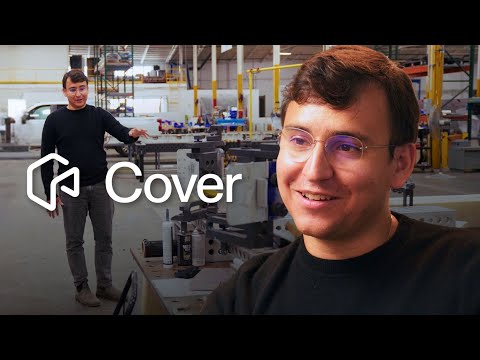
Clip command
yt-dlp --download-sections "*0:00-1:05" "https://www.youtube.com/watch?v=Wg_cFRjPQQo" --force-keyframes-at-cuts --merge-output-format mp4 -o "Wg_cFRjPQQo-0m00s.mp4"“The home should be 10 times cheaper than the car on a cost per square foot standpoint, but it’s not. If you look at how those two things are made, it’s night and day. The only way to make homes better, faster, higher quality at scale is vertical integration.” — Alexis Rivas, 0:00
”It took longer to do the paperwork than to build the home”
Clip command
yt-dlp --download-sections "*19:34-20:40" "https://www.youtube.com/watch?v=Wg_cFRjPQQo" --force-keyframes-at-cuts --merge-output-format mp4 -o "Wg_cFRjPQQo-19m34s.mp4"“Our fastest build ever was 104 days from permit submission to certificate of occupancy. It took longer to do the paperwork to build a home than to actually build a home. More than half was regulatory paperwork, not construction.” — Alexis Rivas, 19:34
”Tesla employees were commuting 3 hours each way to the factory”
Clip command
yt-dlp --download-sections "*2:21-3:25" "https://www.youtube.com/watch?v=Wg_cFRjPQQo" --force-keyframes-at-cuts --merge-output-format mp4 -o "Wg_cFRjPQQo-2m21s.mp4"“We did 9 months in the Bay Area before moving to Southern California. Factory space was insanely expensive and Tesla engineers were commuting 3 hours each way to the factory. That’s insane and not sustainable.” — Alexis Rivas, 2:21
”Prefab has been tried for 100 years - we started high-end to prove it’s a better way to build”
Clip command
yt-dlp --download-sections "*3:05-4:10" "https://www.youtube.com/watch?v=Wg_cFRjPQQo" --force-keyframes-at-cuts --merge-output-format mp4 -o "Wg_cFRjPQQo-3m05s.mp4"“Building homes in a factory has been around for 100 years. Most people developed a reputation for low quality, associated with mobile homes. We started high-end in Southern California to prove to the world this is a better way to build first.” — Alexis Rivas, 3:05
”We built a one-bedroom home in 8 days - unsustainably long days”
Clip command
yt-dlp --download-sections "*11:35-12:40" "https://www.youtube.com/watch?v=Wg_cFRjPQQo" --force-keyframes-at-cuts --merge-output-format mp4 -o "Wg_cFRjPQQo-11m35s.mp4"“The third version, we built the home - a one-bedroom with kitchen and bathroom - in 8 days. That was 8 unsustainably long days. A lot of burning the 3AM oil. If we’re looking at hours, probably 3 weeks worth in 8 days. But people are living in those.” — Alexis Rivas, 11:35
”85% of homes are custom floor plans - but unique end result doesn’t mean every part is unique”
Clip command
yt-dlp --download-sections "*35:23-36:35" "https://www.youtube.com/watch?v=Wg_cFRjPQQo" --force-keyframes-at-cuts --merge-output-format mp4 -o "Wg_cFRjPQQo-35m23s.mp4"“85% of our homes are custom floor plans. But unique end result doesn’t mean every part is unique. Finite standardized Lego blocks - wall panels, floor panels, roof panels - combine in practically infinite configurations to create unique homes.” — Alexis Rivas, 35:23
Key Points
- Housing Shortage Scale (0:47) - There’s a 5-10 million home shortage in the US, and housing isn’t fungible - abandoned homes elsewhere don’t solve shortages where people want to live
- Why Southern California (2:21) - Started in Bay Area for 9 months but moved to LA because factory space was insanely expensive and Tesla employees commuted 3 hours each way
- Overcoming Prefab Stigma (3:28) - Building homes in factories has been tried for 100 years but developed reputation for low quality and mobile homes; Cover started high-end to prove it’s a better way to build
- Fragmented Construction (5:29) - Conventional custom homes require architects, engineers, surveyors, permitting expediters, arborists, geotech engineers, civil engineers, general contractors, and many subcontractors
- Vertical Integration (6:30) - The only way to make homes better, faster, and higher quality at scale is vertical integration - you have to own the full stack
- Three Iterations to Success (7:52) - First prototype rushed too fast; second was directionally correct but bespoke; third built a one-bedroom home in 8 days (unsustainably long days)
- ADU Strategy (11:18) - Deliberately constrained to ADUs to optimize learning rate - you learn more building five 500 sq ft units than one 2500 sq ft home
- Now Building Full Homes (12:44) - Currently building 2,300 sq ft home with 800 sq ft guest house; have 4,000+ sq ft homes in permitting
- Factory vs Site Assembly (14:37) - Factory can produce more panels than they’re installing; the on-site assembly is currently the bottleneck being optimized
- Goal: Home Assembly in Days (15:53) - Want to build homes where materials move to the right spot and click together like Legos; some parts work this way today, others don’t yet
- Permitting Nightmare (19:34) - Fastest build ever was 104 days from permit submission to certificate of occupancy; more than half was regulatory paperwork, not construction
- Regulatory Unpredictability (21:03) - Can’t predict which department will be slow; sometimes 7 of 8 departments respond in a month but the 8th has a 4-month backlog
- California Zoning Reform (28:44) - All California zoning codes must now be objective (measurable) - can limit height or color but can’t require “neighborhood character”
- 80+ Cities in LA County (30:18) - Each city has different zoning codes, each with multiple districts - easily 1000+ pages of regulations to understand
- Common Failure Modes (21:48) - Other prefab companies failed from lack of focus, going too big too quickly, or spreading thin geographically
- Lego Block System (35:23) - Wall panels, floor panels, roof panels that combine in practically infinite configurations; 85% of homes are custom floor plans
- Mass Customization (36:34) - Unique end result doesn’t mean every part is unique; finite standardized Lego blocks combine to create unique homes
- Compounding Quality (37:30) - By standardizing kit of parts, they can iterate and improve each component - getting compounding benefits in a space that historically had none
- Cars vs Homes (41:08) - Toyota Camry costs ~$280/sq ft; homes should be 10x cheaper on cost per square foot but aren’t
- Team Building (44:43) - Mix people from construction industry (Apple campus structural engineer) with people from Tesla, SpaceX, Ferrari who understand manufacturing
- Information Problem (47:52) - Biggest underestimated challenge was information management - making sure right parts are in right place at right time to build
- Scaling to 100K+ Homes (52:40) - Path is: prove it works at current scale, build big automated factory doing tens of thousands/year, then further cut costs through automation
Mentions
Companies
- Cover (0:28) - The company being profiled, building factory-built homes in Southern California
- Tesla (2:45) - Referenced for their employees’ long commutes to the factory; Cover hires from Tesla
- SpaceX (44:43) - Source of manufacturing talent for Cover’s team
- Ferrari (45:23) - Source of manufacturing talent for Cover’s team
- Apple (44:56) - Cover’s head of product engineering was lead structural engineer on Apple Campus in Cupertino
- Amazon (24:00) - Referenced for how startup costs have dropped from millions to $250 with Stripe Atlas
- Stripe (24:11) - Used as example of how cheap it is to start a business today
- Mercury (24:16) - Banking service for startups
Products & Technologies
- ADUs (11:18) - Accessory Dwelling Units; Cover’s initial focus to optimize learning
- Wall/Floor/Roof Panels (35:23) - The modular components that make up Cover’s building system
People
- Alexis Rivas (0:25) - Co-founder and CEO of Cover, studied architecture
- Thomas (9:22) - Leads design at Cover, went to architecture school with Alexis
Places
- Gardena (3:16) - Cover’s location in the South Bay, close to Manhattan Beach
- Southern California (4:31) - The best place in the world to build high-end homes, where Cover focuses
- Bay Area (2:31) - Where Cover spent first 9 months before moving to LA
Surprising Quotes
“The home should be 10 times cheaper than the car on a cost per square foot standpoint, but it’s not. If you look at like how those two things are made, it’s night and day.” — 0:00
“It took longer to do the paperwork to build a home than to build a home.” — 19:42
“If you think about a car, in some ways it is actually very similar to a home. People go inside of them. They have air conditioning. They have to be structurally sound… There’s a lot of similarities between automotive and construction.” — 41:14
“Less than 10% of the permitting process time is safety critical stuff.” — 27:13
“85% of the homes are custom floor plans.” — 36:07
Transcript
0:00 The home should be 10 times cheaper than the car on a cost per square foot standpoint, but it’s not. If you look at like how those two things are made, it’s night and day. A lot of the constraints around how homes are made and how long it takes is because it’s an incredibly fragmented way of building. We saw very early on that big change was needed to make homes better, faster, higher quality at scale. The only way to do that is vertical integration.
0:25 This is Alexis Rivas and he is the co-founder and CEO of Cover, which is building a bunch of houses now. Do you want to just start off with the general situation with housing in America? I think that there’s millions of unmet housing demand right now. It’s a huge huge market.
0:42 Yeah, for sure. Well, we’re we’re in one of them right now, right? I mean, there’s something like depending on measures between 5 and 10 million home shortage in the United States, right? And that’s just the US and this is not purely a US problem, though it is pretty bad here. Housing is not fungible, right? There’s hundreds of thousands or millions of abandoned homes in the US. That doesn’t mean they’re in places people want to live, right? Or they’re in a shape that they can be lived in.
1:13 So there’s this dynamic thing, right? If you kind of zoom out and you look at a multi-decade lens where people need want to live and where there’s a need for homes does evolve. Right. And so there’s a need to respond to that and to build homes where people want to live. And so there’s a huge shortage in a lot of places. I mean, we’re in Los Angeles right now. Huge shortage of housing in all of California, especially Southern California near LA and around also the Bay Area. Massive housing shortage. But it is not just a problem here. It’s a big problem.
1:52 Yeah. And did you actually make the decision cuz I’ve talked with a few other housing founders and they are trying to go where the regulation and the city is much more willing to want to build new housing. I think that Nevada, there’s a lot of places in Nevada where they’re trying to build new housing. Like Austin’s really happy to put up new houses. San Francisco and I think LA are both very very difficult. So why did you choose to be here?
2:21 Yeah. So kind of looked at the, there’s a little bit of how we got started and that leads into why we chose to start here. We actually did 9 months in the Bay Area before we decided to come to Southern California. Part of the reason was the cost of housing and factories. A factory space would have been insanely expensive in the Bay Area. And we were talking to Tesla engineers and the Tesla staff at the time who, like people commute three 3 hours each way to get to the Tesla factory. I mean that’s insane. That is not sustainable, I mean they made it work and kudos to them for doing so but that’s really tough on your staff.
3:05 And that was a while ago. I think the problem has gotten worse since then. And so started off nine months in the Bay Area and then moved down to LA. So we’re in Gardena right now, just in the South Bay close to Manhattan Beach. And the reason for starting off in California and in Southern California is this is a problem that has been tried to solve many times before, right? Like building homes in a factory is not a new idea. This idea has been around for like a hundred years.
3:38 But most, it’s been tried. Many companies have failed trying to do this. Most people approach it like, let’s just build lots of homes cheaply, fast, right, which is all good. But then they develop a reputation for being low quality, something people don’t want, and they associate them with mobile homes, right? Like a lot of people when they think manufactured homes, the image that comes to mind is a mobile home park.
4:01 Yeah. That’s something that’s kind of like shitty that you live in only if you have to. Exactly. And that’s unfortunately the perception, right? And this perception has been around for a long time. And so when we were starting the company, we said one of the major things we had to overcome to become successful and flip the model and make most homes be built this way is prove to the world that this is a better way to build first. And for us, that meant starting off in the high end of the market. And the best place probably in the world to build high-end homes is Southern California.
4:43 When we were talking a few days ago, you mentioned that you’re just going and figuring out how to build houses that people didn’t even realize they could build. People are spending like $60,000 or whatever to figure out how to get some plot of land and make it work. Whereas you’re just doing a fully full stack. You just come in build a house on someone’s land and make it work. Do you want to talk about how you got the first few customers and how you’re thinking about that?
5:09 So the way that homes are built conventionally, there’s kind of like two main buckets. There’s you buy a home. You’re not building as a homeowner. You’re not building a home. You’re just buying a home from a real estate developer. And that’s actually how most people buy homes. They just buy a home that someone happens to already be built. That’s like the majority, right?
5:29 When it comes to custom homes, it’s an extremely fragmented process. You have a whole group of consultants before you even break ground, right? You’ve got your architect, you’ve got your engineer, you’ve got your surveyor, often times you have to loop in specialty permitting expediters and arborists sometimes and geotechnical reports, a geotech engineer, surveyors, all these civil for drainage especially, hopefully doesn’t happen but environmental reports and all this other stuff. So it’s a very fragmented process.
6:13 I studied architecture. I helped family and friends build a home when I was 14. I saw the process up close and I also interned at some architecture firms and saw the process from that of things. And what I realized was a lot of the constraints around how homes are made and how long it takes is because it’s an incredibly fragmented way of building, right? You have all these consultants, that’s just before you break ground. When you break ground, you still have your general contractor. They usually don’t have a big staff in house. They usually have all their subcontractors, their electrician, their framer, their painter. It’s usually different companies, right?
6:52 And so you have this extremely fragmented approach to building. And if you want to change something, you kind of have to either change it all, right? And you own that full stack and you say, I’m just going to do things differently and make it work better, right? Or you have to change it in like very minor ways that integrates with the existing system. And we saw very early on that big change was needed to make homes better, faster, higher quality at scale. And the only way to do that is vertical integration. You have to.
7:24 How did you think about going from just starting a company to actually building the first home and then from there figuring out how to build this factory so that you can build much more at a higher scale? The approach was always like start small and optimize for learning, right? And this is a problem like as a problem. People need homes. That’s not going to change, right? So there is a market, right? If you can build a better home, I’d say even at the same speed, at the same cost, you’re going to win, right? If you can build a better home faster and at lower cost, you’re really going to win.
8:00 But doing that is actually very hard, right? So this isn’t the kind of problem where you have to chase revenue growth super early on. It’s like figuring out the process, the factory is the main hard part. Figuring out the product and the process and how they work together and making something that people really want and is high quality at that better price point, creating that value, that’s the hard part.
8:30 I’d like to talk about like you said you’re targeting the Roadster version of this. You want something that’s super high quality from day zero. How have you thought about the design? You went to design school. How did you kind of come up with this design and go through that process?
8:48 So, from the very beginning, the goal was to deliver at a quality that you normally only see like multi-million dollar homes, right? And kind of systematize that and bring that to more people. Yeah, went to architecture school. Thomas, who leads design here, went to school with me. And from the beginning it was like simple design choices but executed very well. Lots of glass, right? Big windows. Turns out when you have really big windows, in order to be energy efficient and comfortable, you need to have really high performance, right? Good insulation, air tightness, right? All of these things actually become even more important because you’re making up for the energy loss through the windows.
9:38 So in many ways the design also drove the engineering of the product too. Yeah we have way more glass than your average home. Every Cover home that has what we would consider less glass has a lot more glass than your average home. Are you optimizing for natural light? It’s natural light, views to greenery outside. For sure. And it makes a huge difference in just how a space, you wake up in a space and it’s bright and that’s nice. Obviously blackout curtains are also good.
10:07 And let’s talk through like you said that there was three separate iterations before you had something that was really really good that people actually wanted to live in. Do you want to walk through what that first one, what the second one and what the third one was like and what you learned?
10:27 So we went to building very fast cuz the approach was let’s just build and we’ll learn by building, right? Optimize for learning. So, we had an idea and we just started building it. And the first one just didn’t work well. Why was that? I mean, that was almost like we went to building it too quickly. There were basic things that you would have caught if you had done a full model and full sets of drawings. We just really rushed to build. We were kind of designing as we were building. Nobody was living in that one. And you learned what a tolerance stackup was and these very basic things.
11:02 Then the second iteration was directionally correct but the execution wasn’t good. It ended up actually being a beautiful home and it got published in magazines. The end result was good because we took a lot of pride in our work and we made it good but it wasn’t good in a way that scales well. It was something that you can make once but it’s not going to… it was bespoke architecture, right? That was trying to be efficient but it wasn’t.
11:35 And then the third one, we actually built the home, a one-bedroom home with a kitchen and bathroom in 8 days. Wow. And that was like eight unsustainably long days. A little bit of burning the 3AM oil. Yeah. Like a lot of that actually. It was not sustainable, so it’s not really 8 days but if we’re looking at hours it would probably be like 3 weeks worth of hours in 8 days at least. But still like that’s pretty efficient. And that version we ended up actually building a lot. We continued to iterate and improve. Something you could actually build and ship. But yeah we started shipping that one and people are living in those.
12:20 And then last year we rolled in another kind of major change after building a lot of those, seeing the data points of where we could make things better. And a lot of these changes are not necessarily the things the customer sees. It’s a lot of how things come together, the tolerance stack up, the precision required, and the tooling, the process behind how to make the parts. You’re optimizing the factory. And then of course to do that you have to make product changes. That was the third one which is what we’re in right now.
12:54 Was that third one just initially a more smaller ADU situation where you want to just get the reps in for building it? The ADU thing was a deliberate choice. We actually didn’t know at the beginning when we started Cover that we wanted to build ADUs. Our mission at Cover from the very beginning was and continues to be make thoughtfully designed and well-built homes for everyone. And the focus was how do you optimize for rate of learning? And you can learn a lot more by building five 500 foot units or small homes than one 2500 foot home. You’re getting the process. You get more reps in. You can iterate between them, fix mistakes you made on the one on the next one.
13:38 So the ADU thing was a choice in order to optimize the rate of learning. The entire system from day one was designed with scaling to larger homes in mind. And even the ADUs we built, we built one of the earliest structures, a single family home. It was named the coolest Airbnb in California by Conde Nast and it was in the middle of the desert. What happened when that happened? It was cool. It was like, “Oh, wow. We didn’t even like, the owner pushed for that PR. We just saw it and it was great.” That was a cool moment. But yeah, the system from day one was designed with full-size homes in mind. We just intentionally constrained ourselves to learn faster and iterate faster.
14:24 At what stage are you going to be trying to build like multi-million dollar style houses that are much bigger, multifamily kind of situations versus just doing this? How much learning do you want to do in between now and then? We are doing homes now. We’re not doing multifamily. So we’re not doing apartment buildings. But we are doing full-size homes, multi-million dollar homes. We’re building one that’s 2,300 square feet right now. And that’s a 2300 foot home with an 800 foot guest house. So it’s a big project. And then we’ve got another one in the permitting process and that one’s over 4,000 square feet. There’s big homes in the pipeline. And there’s a few that are over 3,000 square feet. We’ve shifted - we are doing ADUs and full-size homes now.
15:15 If you want to build the best product, you kind of have to be very close to it and you have to be either living in it or going and seeing the processes. The factory is one thing, but then you also have to actually see the production process. How does that work? How are you deciding where do you focus your time when you could be here trying to make more panels or you could be out in the field with engineers that are actually putting these things together?
15:43 You have to do both. It kind of depends on where the problem is, right? Where’s the biggest fire? You kind of go to what’s the biggest thing gating the company from achieving the mission, right? Go work on that or help whoever’s working on that accelerate. But the one that we built in 8 days, I was helping build it physically, right? And I’ve done that since then as well multiple times. Build parts in the production line, occasionally jump into the design process and test out our design software and systems, go through the process of designing a cover home and giving feedback to the software team. Talking to clients, getting their feedback. It’s constantly changing.
16:32 Where do you think the biggest fire is right now? We’ve got a lot to build. And we’re ramping hard and we’re seeing where the processes start to break. We’re growing the on-site assembly teams, right? The teams that take the panels that we make in the factory and then turn them into a home. And with that comes a lot of new training. So that’s a big area right now. The factory actually could produce a lot more than we’re building right now and it is producing at a faster rate than we’re installing. And so fixing that install problem, going even faster on the on-site assembly is where a lot of the focus is right now.
17:11 And I know you mentioned when we were walking around you said that you’re trying to get that down to basically like 28 days. It depends on the size of the home, right? It’ll depend if it’s like 2,000 square feet versus 4,000. Yeah. This place we’ve built in less than a month before, right? And we’re trying to get that basically at the limit of what is physically possible. So, we’re talking about like moving materials to the right spot and then it just clicks together like Legos. Some parts work like that today and then some parts are supposed to work like that today, but they don’t.
17:47 Outside of manufacturing, what’s the hardest thing that’s stopping you from moving faster? It’s not… I wouldn’t even really consider that a manufacturing problem because if you consider the on-site assembly to be a general assembly process, then yeah, that’s a manufacturing problem. That’s the hardest part right now is just figuring out the onsite assembly and then scaling those teams, right? Finding the right people, scaling, attracting the right talent, getting them onboarded, all of that.
18:20 And so when you were putting together the first assembly team, what were you trying to optimize for versus today? The first few homes were built by a mixture of the technicians and the engineers. We were one team and we would design and then we would build. So a big part of what we’ve done is moved most of the complexity into the factory so that what happens on site doesn’t really look like conventional construction. You don’t necessarily need an expert plumber, an electrician, mill work carpenter. You don’t necessarily need all of those trades. You do need people who are willing to work hard, can follow instruction well, can be aware of moving things around and not breaking stuff.
19:01 It sounds simple but there’s a lot of stuff going on on an assembly site. Moving stuff around. You’ve got to be aware of what’s going on and paying attention. And it’s hard work. But it’s also incredibly rewarding because normally if you’re working in construction, you show up at a job site, you do your part, you never even see the finished product unless you’re the painter. With our crew, they get to show up on site from start to finish. They show up and there’s just a foundation and then by the time they leave it’s ready to move into and they did that. So it’s incredibly motivating. It’s not an easy role but it’s an incredibly rewarding motivating feeling.
19:40 We’re trying to bring people from outside of the construction industry also into building these homes with us and a lot of people don’t have prior construction experience. Some do, not all of them.
19:53 What? Tell me about like there’s been a number of companies that have tried to do mass manufactured homes and I think this is kind of the right model where you’re starting with the high-end, making something that’s beautiful and amazing and that people actually want to live in and then you’re trying to figure out how to scale that process in production. What has kind of been the biggest pitfall for other companies that have tried to tackle this problem because it’s a massive problem? There are millions of unmet housing demand. And if you can just make houses great and efficiently, then you have a huge market, but for some reason, people just haven’t been able to pull it off significantly. Why is that?
20:32 It takes doing a lot of things, right. And then I think because it’s such a big opportunity, there’s a desire to go big quickly. And there’s a lot of failure modes. I think some of the common ones are lack of focus and going too big too quickly. I’ve seen companies that actually figured it out and they were doing something and it was working and they were around for a while. And then they just chased the wrong growth and then that did it.
21:00 Another common failure mode I see is spreading yourself thin geographically. I’ll see companies like they come up with a cool product or they had a cool product, but they were trying to roll it out nationwide. The Southern California construction residential construction market is a multi-billion dollar market. If we’ve got something that’s working well, we can scale it quite a bit just in Southern California. That’s what we’re doing. Today we’re serving Southern California.
21:32 So it’s that discipline to say we’re going to focus and get really really good at this narrower subset of the market. And yes, we want to become huge and tackle all of these things. We want to build across the entire sun belt and across the entire country. And do multifamily as well and our system actually scales pretty well up to four to six stories. We’ll get there. But starting off and basically doing almost 10 years focused on ADUs and then saying okay this is working well enough let’s do single family homes too. And now we’re doing that and we’re going to do that for a while and then we’re going to do multi family. It’s that discipline to say this is actually a hard problem and we need to get really really good at it before expanding the scope.
22:15 Because if you combine too big of a problem without enough focus you just run a bunch of different directions and nothing actually works. Nothing, you don’t make real progress, right? You’re just trying to solve a bunch of hard problems and you don’t solve them. So that’s been a common failure mode I’ve seen.
22:33 Yeah. And so right now you’re just basically laser focused on figuring out how to scale up this site in California, even just LA, and make sure that you can build houses at a meaningful pace with a number of hands. Yes. And getting really really efficient and delivering an incredible experience to the customer, right? Like they’re not only impressed by the speed and the experience, but they walk in and they’re happy with it. They’re very happy with it. And delivering at a level that would not be possible conventionally.
23:08 Do you want to just walk me through the process of what is the process from someone knocking on your door or saying I want a Cover house to actually having something on the ground? So, first most people reach out either phone, email, something like that. Talk to us, get a sense that this is something that they’re at least interested in. Then we do a design study basically. You’re not entirely sure you want to build with us but you at least want to explore what that would look like. So we meet with you on your property. Our design team will give you a proposal based on what you want.
23:43 So it’s very bespoke. We go into detail about what you’re looking for, your views, right? You want to keep this tree. Okay, cool. We’ll design around that. The nice thing is it’s like Lego blocks, right? So this is actually another thing going back to the failure modes. A lot of prefab companies take this approach where it’s model based. They have five models or maybe 10 models or 20 models but it’s models. And from the very beginning we said that doesn’t work. There’s just too much variance in the shapes and sizes of properties and zoning restrictions. There’s all this complexity in the physical world that construction adapts to.
24:22 And so we said we’re going to develop a very versatile system that allows basically mass customization. It’s really like Legos for real homes. Wall panels, floor panels, roof panels. So going back, we’ll design something specific to that customer and what they’re looking for. Show them what that looks like on their property and present price for that. And there’s usually a little bit of iteration and then they say, “Okay, yep. Let’s move forward, sign a contract, and then we take care of the entire permitting process as well.”
24:58 So how does that work? Cuz that must be a nightmare. Yeah, that was a big learning curve. And is this one of those things where you’re really happy that you started small and started just with one to figure out that process? Yeah. Absolutely. We’ve permitted over 50 homes, right? And we still run into edge cases. So yeah, definitely complex. But the basics of it is you put together your engineering set for the building and your drawings. You submit that to the city and then they put you through a bunch of forms and questions and maybe you got to clarify a few things and eventually you get a permit.
25:36 It’s way oversimplified. Others have mapped out this process with extensive flowcharts and conditionals and it is annoyingly complex. And this is something that I think we really need to change as a society. We need to get better at building things and make it easier to build.
25:54 It’s kind of funny, even with startups in general, I think when Amazon first started, it costs over a million dollars just to put a website online or have all that infrastructure ready to go so that customers could actually order something on a page. And today it’s like $250. You might not even need to incorporate, but you can do $250 on Stripe Atlas. And then you set up Stripe and the banking for Mercury and Stripe pretty much same day and you’re in business. It’s like do you have a product that you want to sell and do people want to buy it?
26:26 Whereas today with housing, how much of the time, you say like 28 days spent on site putting a thing together. How much time is spent in the background before you can even get on site to do that? So the fastest home that we’ve ever built: 104 days from permit submission to certificate of occupancy. Certificate of occupancy is like you’re done and the city says you’re done and you can move in. That’s the fastest we’ve ever done. More than half of that was regulatory, right? So either inspections at the end, like 50 days of just that. And of course the permitting process in the beginning. It took longer to do the paperwork to build a home than to build a home. That’s nuts.
27:14 SpaceX, I believe it was during 2022 or 2023, they ran into an issue where they were pouring potable drinking water on the ground under one of their launch pads when they were doing the Starship. And they got fined like $158,000 for doing that. And it wasn’t even dangerous. The FAA didn’t think there was any issue, but they were just like, “You’re pouring water on the ground, so unless you pay this fine, you don’t get to launch any more starships.” Is that kind of the situation that we’re in right now where the people that are deciding how to regulate, how to permit are not really focused on trying to get more housing built?
28:01 Okay. So we are able to get permits consistently. How long it takes, there’s definitely variance there. I wish we could say this type of permit will take exactly… I wish it would be like 48 hours or something. I wish I could even say this will take two months. But sometimes it’s 3 months and sometimes it’s a year. And there might be new things that the city requires or some department, sometimes you have like eight different departments involved that need to sign off on a project. So seven of those eight departments might be responding within a month and that last department has a big backlog and it’s going to take 4 months. This has happened before.
28:46 And which department is slow honestly changes over time. That’s the other thing that we’ve seen. It’s not the same. Two years ago it’s different from what it is now. So you can’t even predict where it’s going to go slow sometimes. So we’ve gotten really good at this and our approach to permitting is just try to get everything as fast as possible. Prepare documentation that’s really comprehensive upfront so that there’s very few excuses that they can give to deny or ask for clarification and then just repeated follow-up.
29:20 And we do escalate the situation with city council members or staff or people in the governor’s office. And I think there’s a general awareness this is a problem and there’s talk and some genuine desire to fix it from some places. But the problem is really bad and it requires a shift in priorities and a real willpower to fix it. There’s an incremental mentality and this needs a like we’re going to start from a blank slate. Like open heart surgery. Yeah, it needs open heart surgery. We need to go back to where we were with permits probably 50 to 80 years ago.
29:58 From a safety standpoint, keep all of the advances that we’ve made. We should definitely be taking advantage of everything we’ve learned about earthquakes and everything we learned about safety and using those things. But from a process standpoint, we just need to simplify things. And some of it has to do with just capacity, the capacity for these different departments to review everything. And I think there’s a question like do they need to review everything? And if the answer is yes, at least using technology to accelerate that process, that’s definitely an opportunity.
30:34 But you don’t need AI review permit reviews to go faster. You just need to say this department doesn’t need to check this, right? And just say this is not necessary and it is more important that we build more homes than that everyone is able to check all their boxes. At some point we’ve just got to make a decision like what is more important to us as a society.
30:58 What do you think the percentage of the boxes that have to be checked before you can start building, what percentage of those things probably don’t even need to exist and just happen to be there because someone had to create like they have a job and their job is to create basically hurdles? I don’t think you can look at certain things and say okay this is totally stupid. But if you really go into it there’s a reason it’s there and someone, there was some problem that it was trying to solve or avoid.
31:32 But the result is there are some things that are just stupid. But they’re kind of rare. The bigger problem is you have this system that every little thing was well-intentioned, had a good intention mostly, but then the result is that you just have this broken machine. If you kind of zoom out and say how many of the things that are part of the permitting process are safety critical, it’s less than 10% of the time is safety critical stuff. So if that’s the lens…
32:08 So for your company, one of the major things is going to be basically figuring out, if it takes 100 days, let’s say that you can’t hit that typical or the fastest time, which is 104 days, let’s say that you’re doing that for every single house. How do you build the systems and processes so that you can run through those permitting steps faster so you can actually get houses built?
32:33 So there was a point in time earlier this year where permits was the bottleneck, the biggest, I was working on it every day. And we’ve gotten out of that point in time and I hope to stay out of that point in time. How did you get out of that? Just accelerating the process for the permits that we had in review and escalating it to elected officials, state level, city level, county level. Having those conversations and they were helpful. And then also just moving faster on getting more permits submitted faster so that you could wait. Basically accepting that it’s going to take time and then we’re just going to have a big enough buffer that it’s going to be fine.
33:18 So you’re trying to bake in like an extra 65 or 75 days on every single build. Yeah. You just submit early enough that it’s not a problem anymore and you’re constantly feeding the factory.
33:33 This is what’s bonkers to me is that the people that have the most impact on many of these hardware companies, especially in housing, are people that have no stake in you actually succeeding. And so if they move faster or there’s extra regulation, they don’t get any benefit from it. Or there’s less regulation, you move faster, they don’t get any benefit from it. They’re not the people actually getting the houses and they don’t get a bonus for you building a lot of houses. And I just think it’s incredibly difficult to motivate people when the incentives are messed up.
34:06 I do think especially in California, you’re seeing this, people are leaving California because there are not enough homes and housing is too expensive. And I think there’s been a shift in at least the talk around these things in the last three years in a good way. And we’ve seen a lot of state laws get passed that streamline certain aspects of zoning and building. For example, all zoning codes in California have to be objective. Now there cannot be subjective requirements in zoning.
34:38 What does that mean? You can limit height, right? That’s something you can measure. You can say all the homes have to be white. You can measure that. You can put a maximum size. You can’t say they have to match the neighborhood character. You can’t measure neighborhood character. So that’s good. That’s a shift in the right direction. At least you know what hoops you have to jump through. Yeah. In the past you basically had to design, spend a bunch of money, design a home and then talk to the city and maybe try to convince them. Convince them that you’re within the right vibe of what they want.
35:15 But you don’t know the vibe that they want before you start actually. You might know the vibe, but it’s a vibe. It’s not a concrete thing. It’s not a specific thing that you can design to. And so yeah, that’s a good shift. And we need way more of that. Frankly there should be a page limit. Your zoning code should only be x number of pages of font size 10 minimum. You should not be able to have a 300-page zoning code.
35:43 Is that what it is right now? It’s a lot. And isn’t each different zoning code like… Each city has its own regulations which means you can figure out one process really well but then you go to another. You go from LA to, is there even different parts of LA that have different zoning codes themselves? Yes. So you have different districts. You’ll have like R1 or R2 districts within LA city. And then LA city has a different zoning code from Santa Monica City or Culver City or Beverly Hills.
36:16 So you look at Southern California, I ran these numbers. I forget the exact number, but it was something like there’s 80 cities within LA County, something like that. And each of those cities probably has at least five zoning codes. So you’re looking at hundreds of zoning codes. Each of those districts is like 10 pages. So you’re looking at to know how to build in LA County, in every city, in every neighborhood, you’re looking at a minimum thousand pages.
36:50 How much of your time is spent doing things that you genuinely enjoy and feel like outside of the whole regulation stuff? How much of your time is spent doing stuff that you enjoy and you feel like you’re genuinely pulling a lever to push the company forward versus just time suck because of stuff that you have to do? There’s a lot of things that pull a company forward that I don’t enjoy, but I enjoy pulling the company forward, if that makes sense. So it’s still actually rewarding to solve. But yeah, I wish I’d never had to read zoning code ever and it wasn’t a problem. That’d be nice.
37:30 There’s a number of startups that are really trying to do manufactured housing where you’re building everything in a single location and then you’re shipping it out. What’s been the process for building this and making it work and actually output panels that you can go ship to a site?
37:50 So we started off in a much smaller factory than this. This is 80,000 square feet. We started off in 10,000 square feet. A big part of rolling the design in, going from concept and a prototype to building it repeatedly is wrangling first that information problem and making sure that the right parts are in the right place at the right time so that you can even build it. That alone is hard. And then it’s building it well. Training your technicians, helping them with better tooling, more ergonomic tooling, better tooling, faster tooling, easier tooling, changing the design to make it easier to build.
38:34 It’s this constant feedback loop where you got your engineering team on the line watching the process, seeing the thing that you thought was going to be hard, sometimes it’s actually really easy, and then there’s this other thing you didn’t even think of. That’s the hard part of the process. Can you go into what that’s been like?
38:55 For our walls for example, we have insulated foam walls. Turns out once you iron out the timing and the material movement, getting the foam in place was pretty easy and to the right specs consistently. You’ve got to have temperature control and all these things that we have. But once you get there it’s easy. You can do it repeatedly. Creating the chases for your plumbing and electrical actually turned out to be the most labor intensive part of that process. Why? Because you’re cutting it out and it’s messy.
39:32 And so we actually ended up, our engineer built a new tool so that the chases were just built into every panel when you made the foam part to begin with and there was, you just delete the step. Right. And that saved a ton of time cuz we didn’t think that it was going to be as time-consuming as it ended up being. And so we just made the extra investment in the tooling and made it work. So that’s a big improvement we brought the last couple months.
40:05 What have been the biggest learnings so far going from just the first few houses built to now having built many many houses? What have been the biggest things where you would not have expected them to be problems but they just turned out to be problems? And then also I guess on the factory side, actually building the panels isn’t that hard but putting them all together correctly in a relatively fast time frame on site is very difficult.
40:38 How important the information side of this is. I underestimated that. Because you see videos of tours of factories, and you see the automation, you’re like, “Wow, that’s cool.” Or you see the production line, you’re like, “Okay, that looks hard to set up. Setting up a production line with good throughput is hard.” The information part of the problem, you don’t really see it. You see the results of it. A stopped line. But you don’t, it’s less tangible. But it’s incredibly important to a factory running well and the whole operation running well.
41:18 When you’re building a car or you’re buying a car, you’re pretty much buying the same car as the next guy and maybe you do a wrap or something afterwards and it’s a different color. For this sort of thing, I think most people generally want a very customized house. And I think for every single house that you’ve built so far, it’s customized to what the person actually wants. 85% of the homes are custom floor plans. And then within that there’s variations, right? Different floor options, different appliance options, different storage materials. Do you want your awnings or not? If you’re facing south, you probably want awnings for energy efficiency. Bug screens. There’s configuration options, but then that’s just within the same layout. We talk about customizing layout. I mean, it’s practically infinite. The number of configurations of a home that you can build with the Cover Lego blocks is for all practical purposes infinite.
42:18 So when you’re thinking about scaling up something where every single house is going to be custom, how do you do that efficiently? It has to be a true system. Where you do have a finite set of Lego blocks, right? Parts and those parts are made in a standardized way and then combine to create the unique thing. But being really clear around, okay, the end result is unique. That doesn’t mean every single part has to be unique. And that’s what we’re doing. That’s super key to making it scale.
42:55 We have but you don’t notice it. If someone comes to us and describes their home that they want, we can get really really close to what they want. And those, some people might say that they’re limitations. But it also breeds a level of efficiency and focus on quality. By not doing anything, the things that we do, we get really good at.
43:20 That’s the other thing when you compare with conventional construction. It’s a shame because you have these multi-million dollar homes where people spend years of their lives designing and engineering them, coming up with really clever ways to build something that looks and functions great. And then that never gets done again. And so you have this, there’s a beauty to that and there’s a role for that in society. We should be building cathedrals. And incredible works of architecture. Every home doesn’t need to be that.
43:55 And so by standardizing the kit of parts, the Lego blocks, you can make those Lego blocks much better because you can build it once, learn from it, and iterate. And you’re getting compounding in a space that historically didn’t have it from a quality and product standpoint.
44:18 And is the reason why the assembly, the on-site assembly is such a challenge, is it because every single one even though it may be the same kit of parts, it’s a different house every single time? And so figuring out the process for creating that specific structure is a unique thing every single time?
44:38 I mean, we still build homes. It’s much easier than putting together a conventional home. We’ve made it a lot easier. It’s just it’s not as easy as it needs to be. Our standard for that, where we’re trying to get to is very high. We want to be building a home like the one that we’re in in less than a week. With normal hours, not pulling 22-hour days for 7 days straight.
45:10 Because we think that’s key to scaling because there is a labor shortage of skilled construction trades. So there’s a labor shortage. And that’s kind of a big driver here. So we need to make it really easy and really scalable so that you’ve got production lines running with robots that are building homes extremely efficiently. Building the panels for homes extremely efficiently. And then those panels get shipped on a regular flatbed truck, can get assembled without all this heavy machinery on site by people who didn’t necessarily spend 20 years apprenticing on how to be the best craftsperson in this area. Which we need those people. There’s just not enough of them.
45:58 And then it comes together, it just assembles super easily. That’s where we’re going to. And that assembly process for us today, we’ve made a ton of progress. We took it down from 120 days down to a month and then 3 weeks. And we’re making progress on that. But we’ve got a high bar for ourselves for how efficiently we want to get that process.
46:27 So when you think of the massive housing companies right now that are building a few hundred thousand houses a year, why are they not doing something like this? A lot of them are very interested in this because they are seeing a shortage of trades. They have the same problems. In some places the problems are so extreme that even though there’s a demand for homes, they just can’t build there because there aren’t enough people to build the homes.
46:58 So they’re very interested in this. Some of them have even made investments in companies doing this because it’s a very real problem. One of the challenges is that the construction supply chain is actually relatively efficient because everyone does things a certain way. And so for some things we use conventional suppliers and materials. Other things we do things differently. And for those things where we do things differently, our approach has to be so much more efficient that it overcomes the scale that the entire construction industry has.
47:40 It’s a little bit like the energy industry where you just have trillions of dollars worth of infrastructure already there, pipelines built, that sort of thing, that the alternative has to overcome. And also subsidies. How do you actually get this company to a point where it’s building 100 plus thousand homes a year? What is the road map to get there?
48:10 First scale up. This is pilot production where you’re testing out the system and scaling it. So scale it up. Get the product and process working. And then go to some real scale with automation, a big factory. And at that point, you’re doing at least thousands of homes, probably tens of thousands of homes a year. And you’re close to the median price point that homes are being built at at that point. And then from there, further investing in manufacturing and in product development to cut down on the material cost but also the labor that it takes to put all this together and bring it down to below what it takes to build a house.
48:55 So there’s a couple of steps to get there, but the first step is prove to the world that this is a better way to build. And show that it works and track the key technical KPIs behind it that prove that scalability.
49:15 How are you thinking about designing your team in order to rally a group of people around this idea? How are you finding amazing talent? We’ve got an incredible team. A big part of that is getting people that have a very wide range of experience. So we have some people from within the construction industry. Our head of product engineering was the structural engineer behind the Apple campus in Cupertino for example. He was the lead structural engineer on that project. And so he’s seen the cutting edge of structural engineering. He built a hospital on the fault line in Riverside. He built a stadium. So really knows how to push the bounds on structural engineering and what’s possible there.
50:03 So it’s getting the best from within the industry but then also pairing those people with people from outside of the construction world. So we’ve got people from manufacturing that have worked at Tesla, SpaceX, that have built automated warehouses and production lines. Ferrari. And it’s putting those people together to solve the problem cuz the solution doesn’t come from doing construction really well, if that makes sense. We’re not just trying to build homes really well, but it’s taking things that other industries are much better at: manufacturing, rapid assembly, design for manufacturability, and bringing those things into an industry that hasn’t seen much of that.
50:50 When I went and interviewed Jim Blascak, he said that he doesn’t actually like to tour manufacturing like a normal sheet metal or something factory. What he wants to tour is the people that are making cosmetics or the people that are making apparel or other things so you can kind of understand how other people have done things and then bring that into his own company. Are you thinking about it the same way?
51:18 Yeah, for sure. I love touring all factories. If there’s another factory building homes, I also like to tour those too. But I think the most fascinating factories I’ve seen are automotive factories for example. That’s kind of the pinnacle of engineering and manufacturing today. It’s incredible, the scale and efficiency and repeatability and quality of automotive is insane. It’s one of the only mass manufactured huge products in the United States I think.
51:53 And if you think about a car, in some ways it is actually very similar to a home. People go inside of them. They have air conditioning. They have to be structurally sound. In this case for impacts, but it’s not that different. You have earthquakes, you have wind, you have dynamic loads for cars, but there’s a structural component to it. There’s a design component, the look and feel and fit and finish of the car and the home. You’ve got moving parts, a lot more moving parts than a home. There’s fire safety. There’s actually a lot of similarities between automotive and construction and homes.
52:36 And so I think the fact that you can buy a Toyota Camry for like I think it’s like $280 a square foot, something like that. You would find it very difficult to build a home in LA today as a solo person for that. And that’s kind of crazy that a car which is so complex, like 10,000 parts, insanely complex, motorized windows, all these things you take for granted, is cheaper than a home, which is all flat surfaces, 90 degree angles. In theory it should be incredibly simple to build.
53:18 The home should be 10 times cheaper than the car on a cost per square foot standpoint, but it’s not. And if you look at how those two things are made, it is night and day. They’re opposites. And that was actually one of the big inspirations for Cover was looking at cars and just seeing the level of efficiency that they’re built at and the quality.
53:42 Final question. What’s the hardest thing you overcome? I don’t know. I tend to block out a lot of the pain. Many people do. I try to remember the lessons but not remember the pain. Or I don’t know if it’s subconscious. I don’t remember as much the pain. There’s been a lot of hard stuff. Technical problems, nontechnical problems, getting people to work together well. Sometimes that doesn’t work. It’s really hard to just pinpoint one thing. It’s hard.
54:20 It’s just generally getting up in the morning and doing the thing and then doing it again and again and again. That part’s not hard. This is a very important problem to solve that I want to solve and so I’m not going to stop.