Sam Altman - How to Start a Startup
Sam Altman - How to Start a Startup
Summary
Ti Morse sits down with Sam Altman, co-founder and CEO of OpenAI, revisiting the classic “How to Start a Startup” theme a decade after Altman first gave that talk at Stanford. Altman argues AI has compressed startup timelines so dramatically that a ten-week-old company today can ship what used to take a year, and that success now requires “trusting exponentials” — building for the smarter, cheaper models that will exist in two to four years rather than optimizing for what’s available today. He traces the same instinct to how he evaluates founders and describes operating in chaos as a purely learnable, not teachable, emotional skill — contrasting his own hard-won ability to sit with company-threatening problems against the panic he used to see in first-time YC founders during office hours.
The middle of the conversation moves through OpenAI’s mission and structure: making intelligence abundant, cheap, and decentralized as a hedge against “AI authoritarianism”; the invention of the joint-stock company as the root technology behind capitalism’s compounding gains; why he doesn’t think the best CEOs he knows are sociopaths; and why OpenAI surviving past 2019 without Google “running away with it” was, in Jeff Bezos’s phrase, a “business miracle.” Altman walks through his 2023 world tour — 28 countries in 35 days, advised by Brian Chesky — texting 300-400 people a day for short-term context, and the moment a million ChatGPT users in five days made him realize the company’s “nice, quiet life” was “about to go through a cannon.”
The last third covers execution and personal habits: killing Sora and the browser to focus compute and people on Codex, betting on Codex as a “kamikaze mission” against Claude Code’s head start and winning, badly undershooting on compute investment because he “got psyched out by the financial markets,” deleting TikTok after deliberately getting addicted to it while researching consumer app design, working with Jony Ive on OpenAI’s device, and his framework for telling real trends from fake ones — “is there real deep enduring usage?” He closes on fatherhood as the most painful part of the last year, his admiration for Masayoshi Son as “an n of 1” character, and why most startup playbooks from ten years ago are now wrong.
Highlights
”We are now like in the singularity.”
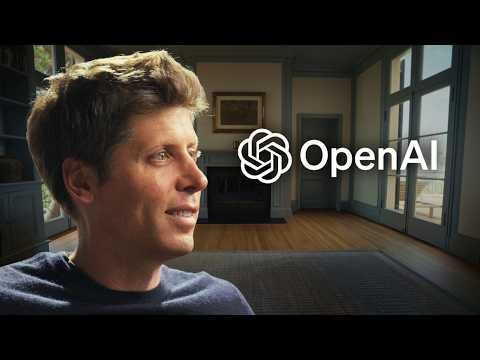
“The thing that drives me the most is like this is the most interesting important thing I can imagine doing and we are now like in the singularity. Like this is the moment. For the last 10 years ago, this was like a kind of far off dream at best, seemed very improbable. And now we’re like actually in the moment that we used to like talk about at the lunch table in a very not serious way.” — Sam Altman, 16:58
Clip command
yt-dlp --download-sections "*16:58-18:00" "https://www.youtube.com/watch?v=Vv3CEAS_w34" --force-keyframes-at-cuts --merge-output-format mp4 -o "we-are-in-the-singularity.mp4"”Are we going to head to a world of AI authoritarianism or liberty?”
“I think the fight of the current moment is are we going to head to a world of AI authoritarianism or liberty? Are we going to decide that… we want one single model to be the machine god or the company associated to do that, or are we going to say… every time that humanity has traded off its liberty for safety, it’s been a long-term net loss. And so we are going to put this in the hands of people, we are going to empower them.” — Sam Altman, 18:14
Clip command
yt-dlp --download-sections "*18:14-19:26" "https://www.youtube.com/watch?v=Vv3CEAS_w34" --force-keyframes-at-cuts --merge-output-format mp4 -o "ai-authoritarianism-vs-liberty.mp4"”Google should have just run away with it.”
“But then by 2019, certainly by 2020, we shouldn’t have really gotten to exist. Google should have just run away with it.” — Sam Altman, 35:19
Clip command
yt-dlp --download-sections "*35:19-36:25" "https://www.youtube.com/watch?v=Vv3CEAS_w34" --force-keyframes-at-cuts --merge-output-format mp4 -o "google-should-have-run-away-with-it.mp4"”It’s about to, like, kind of go through a cannon.”
“I came home, and Ollie was like, oh, I saw that you crossed a million users, congratulations. I was like, you have no idea how bad this is. You have no idea what’s about to happen. It’s not just bad for me, it’s bad for you too. Like, we have this nice, quiet life, you know, it’s really wonderful, it’s about to, like, kind of go through a cannon.” — Sam Altman, 39:39
Clip command
yt-dlp --download-sections "*39:39-40:17" "https://www.youtube.com/watch?v=Vv3CEAS_w34" --force-keyframes-at-cuts --merge-output-format mp4 -o "shot-out-of-a-cannon.mp4"”It seemed like a kind of crazy kamikaze mission to try to beat them with a coding app.”
“We were way behind Cloud Code, and it seemed like a kind of crazy kamikaze mission to try to beat them with a coding app… the consensus is that this kind of thing never works and you just move on to the next one… But we decided we thought it was really important. We asked a team to do it. They performed a legitimate, like, unbelievable, very rare in the history of business thing. And now, it is the product that most of the best coders that I know use.” — Sam Altman, 52:12
Clip command
yt-dlp --download-sections "*52:12-53:12" "https://www.youtube.com/watch?v=Vv3CEAS_w34" --force-keyframes-at-cuts --merge-output-format mp4 -o "codex-kamikaze-mission.mp4"”I made myself get addicted to TikTok.”
“So here’s a crazy thing that happened. When we were building our app, I made myself get addicted to TikTok because I wanted to just like learn, I guess… I loved it. I loved TikTok. I really thought it was great… And then it was like an hour one night. And then some Saturday afternoon I was on the couch for like three hours. And I was like, this is like really not what I thought the iPhone was supposed to be about.” — Sam Altman, 59:38
Clip command
yt-dlp --download-sections "*59:38-60:41" "https://www.youtube.com/watch?v=Vv3CEAS_w34" --force-keyframes-at-cuts --merge-output-format mp4 -o "sam-altman-tiktok-addiction.mp4"Key Points
- AI has compressed startup timelines (0:15) - A ten-week-old startup today can look like a year’s worth of work from a few years ago.
- Startups have the biggest edge when the ground is shifting fastest (1:22) - Falling costs and shrinking cycle times give startups a massive inherent advantage right now.
- “Trust in exponentials” is the most important founder mindset (3:58) - Build for the smarter, cheaper models of two to four years out, not just what’s available today.
- Operating in chaos is learnable, not teachable (5:04) - It takes “reps” to reach emotional peace with not yet knowing how you’ll solve a problem.
- The opposite of a bad experience is no experience (6:45) - Citing Naval Ravikant’s “fast-forward button” idea, Altman says he finds it easy to be grateful for bad days.
- OpenAI’s biggest current risk: “AI authoritarianism” (9:00) - The mission is to make intelligence extremely abundant, cheap, and decentralized rather than controlled by a few.
- Biggest bottleneck to scaling: transistors, then electrons (11:21) - In that order.
- Keeping suppliers on OpenAI’s timeline means selling the mission, not just the deadline (11:46) - Show them the upcoming model and why it matters, then align incentives.
- The joint-stock corporation, not any single technology, drove the Industrial Revolution (12:22) - It solved incentive alignment and let capital pool for speculative bets, correlating with the fall of extreme poverty.
- The best CEOs he knows aren’t sociopaths (15:45) - Though he knows plenty of very high-ego ones.
- “We are now like in the singularity” (16:58) - What used to be a far-off dream discussed casually at the lunch table is now the actual moment.
- The fight of the current moment: AI authoritarianism vs. liberty (18:14) - Every trade of liberty for safety has historically been a long-term net loss.
- Texts 300-400 people a day for short-term context (19:45) - He calls this “actually a bad habit,” but says it lets him make different, sometimes better, decisions.
- Plans forward from a small number of deep convictions (21:00) - Rather than a rigid worldview, he stays flexible on everything except a handful of core beliefs.
- “Get on planes in marginal situations” — the 2023 world tour (24:11) - 28 countries in 35 days after GPT-4 launched and world leaders started asking to meet, advised by Brian Chesky’s Airbnb playbook.
- Jet lag “cures” are bullshit (26:04) - By the end of the trip he was half-waking convinced he was in his childhood bed.
- Was always high-conviction on buying massive amounts of compute (28:17) - Cited as an example of a decision that looked risky to others but wasn’t to him.
- OpenAI surviving to 2020 was a “business miracle” (35:19) - Google should have run away with it; comparable to Bezos’s description of AWS facing no serious competition for seven years.
- A million ChatGPT users in five days: “about to go through a cannon” (39:39) - The moment it hit him that OpenAI’s quiet life was over.
- Persistent agents / “chiefs of staff” are the next big growth wave (41:49) - After chatbots and coding agents, the third form factor is coming “pretty soon.”
- The “Death Star” tweet (42:19) - Posted late at night scrolling Twitter for fun; in hindsight, “not a great tweet to be honest.”
- Badly undershot compute investment (48:04) - “I got like psyched out by the financial markets or something.”
- Codex was a “kamikaze mission” against Claude Code’s head start (52:12) - Now it’s the tool most of the best coders he knows use.
- Killed Sora and the browser to refocus on Codex (55:30) - The hardest calls come when something is already working well but a bigger opportunity needs the same compute and people.
- Design lesson from Jony Ive: understand the problem before the solution (58:21) - Great design is much more about deeply understanding the problem than a flash of insight.
- Deliberately got addicted to TikTok, then deleted it (59:38) - He forced himself to use it while researching consumer app design, loved it, lost control of it, then cut it entirely.
- Get better at your strengths, not your weaknesses (63:00) - Obsessing over things you’re not good at and never will be is “a huge trap.”
- The most painful thing of the last year: fatherhood while working relentlessly (65:36) - “Having kids and working really hard at the same time is brutal.”
- Masayoshi Son (“Masa”) is “an n of 1” character (66:44) - Unmatched conviction and comfort with scale; predicts he’ll be one of the decade’s wildest successes.
- Real trend vs. fake trend test: “is there real deep enduring usage?” (68:40) - The same principle he learned watching YC startup data separates lasting products from hype.
Mentions
Companies
- OpenAI (0:15) - The subject of the entire conversation; Altman is co-founder and CEO.
- Y Combinator (YC) (6:45) - Where Altman held office hours and first noticed how new founders react to chaos differently than veterans.
- Airbnb (24:11) - Brian Chesky’s earlier eight-city world tour was the model Altman scaled up to 28 countries.
- Google (35:19) - Had DeepMind and, in Altman’s view, should have out-competed OpenAI outright.
- Microsoft (36:25) - Funded OpenAI because it lacked its own AI bet the way Google had DeepMind; Altman estimates OpenAI added a trillion-plus dollars of market cap.
- Amazon / AWS (35:30) - Referenced via Jeff Bezos’s “business miracle” comparison to OpenAI’s uncontested run.
- Claude Code (Anthropic) (52:12) - Rendered in the transcript audio as “Cloud Code”; the coding-tool competitor Codex had to catch up to and beat.
- TikTok (59:37) - Altman deliberately got addicted to it for product research, then deleted it.
Products & Technologies
- ChatGPT (38:41) - Crossed a million users within five days of launch, the moment Altman realized OpenAI was “about to become a company.”
- GPT-4 (24:11) - Had just launched when world leaders started asking to meet, prompting the world tour.
- GPT-3 (55:30) - Its breakout led OpenAI to shut down robotics work to focus compute and people on it.
- Codex (52:12) - OpenAI’s coding agent; described as a “kamikaze mission” against an established competitor that’s now the tool top coders use.
- Sora (56:21) - Shut down (in terms of compute/focus) even though it “would have been super successful,” to prioritize Codex.
- Claude (44:09) - Cited by Ti Morse as having helped disprove a long-standing math conjecture within days.
- iPhone (58:21) - “The greatest piece of technology humanity has collectively yet made,” though Altman turned off nearly all its notifications.
People
- Ti Morse (0:00) - Host of Relentless.
- Sam Altman (0:00) - Guest; co-founder and CEO of OpenAI.
- Naval Ravikant (6:45) - His “fast-forward button” analogy underpins Altman’s gratitude for hard days.
- Charlie Munger (12:10) - Cited on the power of incentives, and later on studying market bubbles.
- Brian Chesky (24:11) - Advised Altman’s world tour; also cited for his habit of shamelessly seeking out experts.
- Jeff Bezos (35:30) - Coined “business miracle” for AWS’s uncontested run, which Ti Morse applies to OpenAI.
- Patrick Collison (19:26) - Referenced re: an onstage conversation where Altman mentioned texting 300-400 people daily.
- John Collison (57:45) - His “universe of passion projects” line frames the design-stakes discussion.
- Greg Brockman (54:22) - OpenAI’s first ten to twelve people started out of his apartment.
- Ollie (39:39) - Altman’s husband, on the receiving end of the “cannon” line when ChatGPT crossed a million users.
- Steve Jobs (32:44) - Referenced re: motivational technique, and later as the reference point for high-stakes product design.
- Jony Ive (58:21) - Working with Altman on OpenAI’s device; taught him that great design starts with deeply understanding the problem.
- Masayoshi Son (“Masa”) (65:57) - Described as “an n of 1” character with unmatched conviction and comfort with scale.
Surprising Quotes
“I text more people than anybody else I know. I don’t think this is like a good thing. I think this is actually a like a bad habit.” — Sam Altman, 19:45
“Truly, running the research lab was the coolest, most fun, most amazing job and lifestyle setup I could possibly have imagined.” — Sam Altman, 40:47
“I definitely badly undershot on the compute investments… I got like psyched out by the financial markets or something. I don’t know. That was clearly a mistake.” — Sam Altman, 48:04
“Having kids and working really hard at the same time is brutal. It’s just extremely painful.” — Sam Altman, 65:36
“I think Masa is like an n of 1 character.” — Sam Altman, 66:44
Transcript
Ti Morse: 0:00 Today, I’m sitting down with Sam Altman, the co-founder of OpenAI. A long time ago, you talked or did a talk at Stanford focused on how to start a startup. What is the biggest thing that has kind of shifted over the past like 10 years since you initially did those talks?
Sam Altman: 0:15 Clearly AI. Uh, and what is possible to do now with a small team of people has changed. And the speed with which you can do it. Uh, and also, not only what’s possible, but like what you have to do to be competitive given how much the world has shifted, uh, feels totally different. Um, it is amazing to me what a 10-week-old startup now can look like. Um, and also if you look like a 10-week-old startup from 10 years ago, you sort of are in bad shape.
Ti Morse: 0:30 If you think of the 10-week-old startup in your mind today, what is the one that is the best example of a startup that moved extremely quickly?
Sam Altman: 0:42 I don’t even know what they’re called, but I met a what will be a startup that is like two weeks old, something like that, that has an entirely redone, um, sort of office productivity suite, whatever, all made for, like, a world where AI has got to be able to use documents, presentations, spreadsheets, whatever, as a first-class consumer. And, um, I don’t know, it felt like it would have been a year’s worth of work for a startup pretty recently.
Ti Morse: 1:13 I would assume that if the, like, barriers to starting startups and the, like, tools out there become more proliferated and all this stuff, you’d assume that, like, harder startups are easier to start.
Sam Altman: 1:22 What it means to be a hard startup is changing so incredibly quickly that I don’t think I have a perfect mental model for what, over the many years that it takes to build a very successful company, what are going to be the really hard and really valuable things. Like, you know, I’ve heard a lot of people say, ‘well, anything in the physical world is extra valuable right now because software is going to become free,’ but, you know, it won’t be that long until robots get really good, and a lot of the expectations of, you know, ‘it’s really difficult to make rockets’ or whatever, that may change, like, quite dramatically. I love times like this. I think startups are, they have the biggest edge when the ground is shifting the most. Um, and when costs are coming down rapidly and cycle times are coming down rapidly, that’s when startups really, I think, just have a, a massive inherent advantage. And that’s happening in so many places at once right now that it seems like a great time to be doing startups. And yet, most startups are like, ‘I’m going to go build AI agents for enterprise vertical X.’ Now, that actually will work in a lot of cases. It’ll be very competitive, and it might not be like, in fact, I’d say it probably won’t be like the most successful defining startups of that era, um, but it will work. But, but given how much the landscape is in flux, I am surprised there are not more people doing the like, ‘I’m going to go take on the crazy, the crazy thing’ with this completely… set of tools, and also being willing to truly internalize the fact that scaling laws are going to continue and planning for the things that are not possible or economical this month, but will be possible in two years, four years, whatever. So, it seems like an unbelievable time to be starting startups and there’s very fertile ground, but there’s also, and I no judgment if this is what people go for, there’s this incredible temptation to just like go apply today’s agents to the easy wins and I get it.
Ti Morse: 3:29 One thing that you’ve said throughout the years is you basically try to whenever you meet someone new, you try to like plot where they are on your mental model of who they are as a person and then the next time that you meet them, you basically want to figure out how far or how fast that they progressed. Did that sort of thing and like doing this across maybe thousands of people impact your ability to kind of say, okay, the model is this intelligent today. It’s this intelligent three months later. Suddenly you can like plot this out and it makes it easy to believe in the growth.
Sam Altman: 3:58 I think there’s like a general thing behind both of those, which is I just like I developed a great trust in exponentials in people or companies or models. I don’t I don’t think that subjectively, at least, it doesn’t feel like watching model progress is the same as like watching a founder develop, but I think the underlying belief system about the world is is the same. If I were still advising startup founders, this is the most important thing I would try to get them to wrap their heads around and it is evidently hard for the same reason that there’s like free money left in the market for betting on high growth young founders and and it’s like one of the market has still not adapted enough for that. Um, I think the market has also still not adapted enough for like the exponential of model progress is going to continue and it is okay to start working on things now that require smarter or cheaper models.
Ti Morse: 4:58 This idea of constantly shifting chaos. How do you get good at it? How do you get good at operating in a chaotic environment?
Sam Altman: 5:04 I think it’s just practice. There are a handful of things that I think no matter how much you intellectually understand, take a lot of reps to like emotionally be able to handle. And operating in a lot of chaos and trusting that you’ll figure it out and it’ll be okay and like this is not going to be the thing that kills you and you don’t quite yet know how you’re going to solve it, but you’re figure it out. This seems to me to be something that you can only learn by going through it. Um, and I actually think this is a real weakness of young founders is that they have not had the career experience of getting to emotional peace with this and so they have a very hard time with it in the early days and then and then they eventually learn it, but at, you know, great pain and cost and unforced errors. Sort of impactful job, you will definitely learn how to deal with chaos and function very well through it, at least most people will, but I don’t think it’s teachable, I think it’s only learnable.
Ti Morse: 6:13 You had a interesting thing that you said a long time ago, which is basically like the first time that you experience this company-killing event, it feels like the world’s falling apart and then you make it through it and then by the 10th time, it’s not nearly as bad and you’re like well I survived the first nine, this one’s probably not that bad. You also had this other idea where you said at some point I think it was like a year or two ago, you came to the conclusion that shit was always going to be going wrong and so you kind of had to like internalize the enjoyment of experiencing pain or like not great things happening. Uh, how’d you make that transition?
Sam Altman: 6:45 I was reflecting earlier when you were saying this about how when I would do office hours at YC, I could always tell who the new founders were because of the way that they reacted to stuff going horribly wrong versus the found- because I often didn’t know like how new a company was but I could tell if it was like a founder in the batch versus a founder that’d been doing this for a couple of years by their like emotional state when they talked about a problem. Um, I think most people think about the opposite of a bad experience as a good experience and they would rather have the good experience, um, because it seems like more fun or more pleasant or whatever. But if you think about like the opposite of a bad experience is no experience and at some point in the not-too-distant future you’ll be in no-experience land, um, then you know you can be grateful for the bad experience too. Naval Ravikant used to say this thing that I loved, which is if you had like a fast-forward button on a remote for your life, your life would be over. And so like the boring parts, the bad parts, it’s like much better than no experience. It’s all part of the like interestingness of and the kind of like emotional depth and range and I don’t know I find it like fairly easy to be grateful for the bad days.
Ti Morse: 7:51 When you think about like hard problems and like what rallies people to get excited to go work on hard problems, how do you decide like internally at the company which things to go tackle and when and like when you want to like focus on just your core competencies versus like expanding the scope?
Sam Altman: 8:05 I think like a clear mission and then a deep understanding of the problem together do a fairly good job of pointing to what you should do. You won’t get it all right, you’ll still like at some points overly expand or not be ambitious enough. Um, but we are, we are like very focused on this is going to massively empower people, it’s going to be you know choppy but wonderful, and it’s extremely important to us that power in the world get more decentralized and more spread out. And in fact like one of the biggest AI… The risks I am worried right now as is like AI authoritarianism and you know a small number of people or companies thinking they need to control the world that’d be very very bad. Um, but given this mission we feel like we need to figure out how to make AI extremely abundant, extremely cheap, extremely high quality, put it in everyone’s hands and like have a lot of it to get to use. And as we look at what’s in the way of that, there’s a whole bunch of new constraints like chips and energy and data centers and robots and all the pieces need to come together to build this platform so that we can like enable this mission. Now there’s a bunch of things you can build on top of that platform, like you can go build every vertical, every startup, we have no desire to do that, like that I think a decentralized economy is important and good and I would like us to just be really great about producing these units of intelligence and make the world like man this is just you know incredibly capable and incredibly great deal and we’re going to imbue it in every product and service. And so I think that’s very instructive to us about what we have to go do. My interestingly the kind of key inputs to like extraordinarily abundant high quality low cost intelligence, a lot of those things like energy, like robots are also things that you really want in a world of abundant intelligence. If ideas are plentiful and there’s all this great stuff we still live like in a physical world and we still want stuff to happen so you know we need to be able to make stuff happen in that world. And I have wondered if like the fact that energy and robots are going to be so important to stay in on this this intelligence infrastructure ramp and also the things that you need immediately after it are energy and robots says anything deep at all or is just like the most boring obvious thing which is like to produce anything intelligence included you need to manipulate matter. But it is kind of interesting that we need these new areas so much for what we’re doing now and then so much more immediately after.
Ti Morse: 11:13 What do you think your biggest bottleneck is? If you just say like we want this to continue scaling unabated, what is the biggest bottleneck that you can see?
Sam Altman: 11:21 Transistors and then electrons in that order.
Ti Morse: 11:24 So let’s say you know you take someone like Jensen where he’s like incredibly good at aligning all his suppliers towards you know his vision for the future. I think you’re also extremely good at this, how do you kind of think about not only keeping OpenAI on the OpenAI timelines but also keep the rest of the world on OpenAI timelines as well?
Sam Altman: 11:46 You talk to them a lot. You have to and you don’t just say like I need you to like deliver this turbine or this chip on this date um because you know people will say yeah okay whatever they have a bunch of other priorities. You really have to like show them here is the upcoming model, here’s what it enables, here is our research, like we for our core suppliers we really show them a lot about what we’re doing, why we believe what we believe, what it’s going to enable um and you know… You figure out, I mean, the most important thing is to like get them to believe in the mission and why they need to prioritize it, but you also try to figure out how to align their incentives with yours as much as you can.
Ti Morse: 12:10 Charlie Munger has this awesome line where he’s like every time I’ve thought that I’ve understood the power of incentives, I’ve like underestimated them. How do you like successfully align all the incentives of the different partners as well as the people inside of OpenAI?
Sam Altman: 12:22 Well, companies are amazing vehicles for this to start. The, you know as a kid I was like very fascinated by industrial revolution. And I understood it as a bunch of technologies that happened to come around the same time and for some puzzling reason happened to scale at around the same time. And, you know I would like talk to my friends or my parents or whatever about whether it was like this technology was the most important invention or this one or that one. And my read of it from my current lens as like someone who has now spent more time thinking about business is that the the important invention was the joint stock corporation. And before that was invented and, you know you had these like kind of family businesses that ran on trust and you had to know everyone and you didn’t have the idea of a corporation, you didn’t have the idea of like stockholders really. And then all of a sudden this new thing was invented, countries like the sovereigns of the world granted this sort of a new kind of status really, a thing that didn’t exist before, this very powerful thing that we’re going to let these new entities emerge. And not give them the power of a state, but give them like much more than the power of a person. And fundamentally this was about, you know, incentive alignment, liability protection which is another kind of incentive alignment, the ability to like amass capital, and all of a sudden you could do things beyond what a family business could do. And that environment let people raise money to develop technologies of a very speculative nature, pool capital, figure out ways to get different companies to sort of specialize in different ways and interact with each other, serious financial systems and new kinds of instruments. It really was an incredible thing. And the idea of a company has done a huge amount to align incentives of very large groups of people. Now, you know millions of people can be shareholders of a company. There’s a bunch of other things we do, but I don’t want to diminish what has been this incredible invention and like the the just ridiculous overperformance of capitalism in human society. Like a chart that I think people should look at much more than they do is the like fall of extreme poverty over the last 100 years.
Ti Morse: 14:50 Like infant mortality and all the other things.
Sam Altman: 14:52 Any of them that you want, any of the associated things. Uh, you know, if you like kind of look back at that that’s like the most zoomed-in view of it. last 100 years. But if you look back at kind of economic growth, quality of life improvements, all of these things and you just like drew out all of human history and you put the line when like the company was invented, you would see, like, a really quite interesting change in the shape of that curve after it. Beyond that, ah, I think we have a mission that transcends any amount of economic power anything else could ever do, uh, and that’s probably more important.
Ti Morse: 15:31 One of the things that I’ve thought is the most interesting is have you ever seen what those stats where it’s like I don’t know what percentage of like CEOs are sociopaths and psychopaths? It’s like very very high.
Sam Altman: 15:43 I’ve heard people talk about this.
Ti Morse: 15:45 So, I I wonder if capitalism is the first system that allowed these people that are like super kind of self-serving to like their incentives are realigned with society’s and just create great products and then suddenly you help society but you also win.
Sam Altman: 15:56 Um, I definitely know a lot of sociopathic CEOs, but I would say the best ones I know, I would not put in that category. There’s a lot of very high ego CEOs, uh, people just like incredibly high opinions of themselves in a way that maybe like would have been just like purely annoying but now because people can like, you know, buy their shares maybe you like tolerate their annoyance and antics a little more. So there’s definitely some aligning thing there. I don’t know, I think there are a lot of CEOs of very large companies that I would not put in the sociopath category at all.
Ti Morse: 16:26 What do you think drives those people?
Sam Altman: 16:28 I mean it’s different for different ones of them, like definitely seen how good they can get at the game or like how much they can get better than themselves every year, I think is a huge part of it. You know, it’s like intellectually quite stimulating. Uh, for all of the other problems like you’re kind of playing the most interesting strategic game and that can be fun.
Ti Morse: 16:47 If you had to think about the way that you operate today versus the way that you would have operated 10 years ago if placed in the exact same position that you are currently, what are the biggest differences between those two people?
Sam Altman: 16:58 Well, on the to the previous question, the thing that drives me the most is like this is the most interesting important thing I can imagine doing and we are now like in the singularity. Like this is the moment. For the last 10 years ago, this was like a kind of far off dream at best, um, seemed very improbable. And now we’re like actually in the moment that we used to like talk about at the lunch table in a very not serious way. Um, and so the thing that drives me is I’ve been waiting for this my whole life and I think it’s going to be incredible, hugely positive, awesome for the world. Um, I’m excited to get to work on that. I also think some of the alternative visions painted by other companies are like quite terrifying, want to make sure that gets pushed against and is not what happens. Um, but the main thing of what’s different than 10 years ago is like, we’re actually in it. Like this is the real… I think it is both true that it is all one crazy exponential and any one moment is not like the… pinpoint and also that we are somehow in another one of those decisive periods where the curve can go one way or another like it was when we started 10 years ago.
Ti Morse: 18:10 What do you think the biggest impacts are on getting this part of the curve right?
Sam Altman: 18:14 I think like, there are still major AI alignment issues to solve and safety issues, and there are still major economic issues, future of jobs, all that kind of stuff. But I think the fight of the current moment is are we going to head to a world of AI authoritarianism or liberty? Are we going to decide that because of the very real safety issues and economic issues that, you know, we want one single model to be the machine god or the company associated to do that, or are we going to say like, you know what, it’s going to be, it may be a little messy, but every time that humanity has traded off its liberty for safety, it’s been a long-term net loss. And so we are going to put this in the hands of people, we are going to empower them, we are going to let society express its ideas and use this technology in the way they want, of course according to some guardrails, with some guardrails, but you know, with a lot of power and potential, uh, and I really care that we do it that way.
Ti Morse: 19:26 When you were talking with Patrick Collison on stage, must have been like a couple months ago, there was this fascinating thing that you said, which is basically like you will talk or text with 300 to 400 people a day internally.
Sam Altman: 19:45 I text more people than anybody else I know. I don’t think this is like a good thing. I think this is actually a like a bad habit.
Ti Morse: 19:52 Why?
Sam Altman: 19:53 Um, because it takes up like most of my time and I get into, I have a very short attention span now.
Ti Morse: 19:58 Interesting. What does that enable you to do that like otherwise you couldn’t?
Sam Altman: 20:04 Well, I have a huge amount of context. I mean, I’m like a AI model that’s not that smart but just has a huge amount of like a short-term context on like whatever’s happening right now and then forget.
Ti Morse: 20:12 Does that enable you to make decisions that other people wouldn’t have? Like what company decisions would you normally, I don’t know.
Sam Altman: 20:18 I mean, I hope they’re better, but I don’t know. I mean, it lets me make different decisions than other people would.
Ti Morse: 20:22 What different decisions would you, have you made in the last like 12 months that you wouldn’t have made if you didn’t have so much context?
Sam Altman: 20:28 I don’t know if I have like a specific one I can share publicly, but there’s like a lot of things where, you know, because I know about some random research breakthrough impending that is going to like affect some customer or some supplier or whatever, I can make a slight different decision in the moment and if I hadn’t known that that morning, I would have made a different decision and it would have been worse.
Ti Morse: 20:48 One of the things that I think you are the best at is kind of like long-term thinking, and yet it also seems like things are moving so quickly and the world is changing so fast that planning 20 years out and then like looking backwards, I don’t even know if that makes sense. Um, how do you think about this? How is, is your time horizon shortening?
Sam Altman: 21:00 headed towards. But then I try to like plan forwards from the current state about like what can we do now, what can we do this year, and sometimes you do have to like plan a few things on a, you know, five or ten-year horizon. But I try to plan forward guided to a small number of beliefs about the future. I think there are a lot of people who have way too many beliefs about the future and a kind of rigid worldview that they try to fit and then but what happens is they end up like chasing. You know you see like space companies turn into AI companies or whatever. Um, and like having just a small number of things that you deeply believe about the future and being very flexible on the rest, um, and staying very true to the core is, is helpful. I, I actually don’t try to plan backwards. I try to have like a small number of strongly held convictions about the future that are like directional.
Ti Morse: 21:43 One of the people that I know that’s top, you know, company core values is just critical path and just focusing on the critical path and like staying focused on the key drivers of whatever the biggest roadblock is, just unfuck that and then go to the next one and do that again. How do you think about critical path in your own life when you’re kind of like trying to make these decisions?
Sam Altman: 21:58 I mean for so long now I have felt focused on this singular goal of abundant intelligence and a belief that like incredible human prosperity will come from that as long as we don’t have a weird power concentration and kind of a new kind of authoritarianism. It has been fairly clear to me at any given time what’s on the critical path to get there, and I have not been tempted by, you know, should I reconsider the goal or should I think about these other things. I have been thinking about that a little bit more recently of like, okay, if we really are close to superintelligence, what’s next? But, but it’s this, that’s kind of how I subjectively feel we are close, is this the first time in like more than a decade I’ve thought about what is the next thing.
Ti Morse: 22:41 And is it the ranch?
Sam Altman: 22:43 Uh, I mean eventually. There might be some a few more things on the way, but that is, yes, that is the eventual plan.
Ti Morse: 22:48 If you had to like try to guess, what else does Sam want to accomplish before he ranches?
Sam Altman: 22:54 Um, look, AI, superintelligence is gonna get built. Like that, you know, not done, but like gonna, we are on the glide path to get there, is very clear. Um, abundance and decentralization and like wide access to it and making sure that it ends up with like broadly shared prosperity, I’d really like to accomplish that. So maybe that, that’s the thing that I’ve been like thinking about as the next thing, like how does technologically we’re gonna accomplish our mission. I think a lot of our worldview and a lot of our beliefs about safety and the impact this is going to have have also we’ve gotten those things done too, um, but, you know, very broadly shared prosperity and a real focus on enabling the world here, um, that seems very important.
Ti Morse: 23:39 I’ve heard you say again and again this idea of get on planes in marginal situations. I’ve done this a huge number of times at this company.
Sam Altman: 23:46 How’s it worked out for you?
Ti Morse: 23:47 Uh, so far it’s working pretty well. I think it’s very—
Sam Altman: 23:50 Good. I think it’s, I think it’s very solid advice.
Ti Morse: 23:52 When was the last time that you got on a plane in a marginal situation?
Sam Altman: 23:54 Well, I can’t say what for, but very recently, and it worked out.
Ti Morse: 23:59 Congratulations.
Sam Altman: 24:00 Thank you. And I really didn’t want to. It was like a very inconvenient two overnights. Didn’t want to do it. New baby, whole mess. But I did.
Ti Morse: 24:06 Okay, actually, take me into your, like, mental process for deciding to do this world tour. That is just, I mean, it’s—
Sam Altman: 24:11 It—again, it’s like hard to rewind three years because now, like, it feels like AI has been here forever. But three years ago, we had just launched GPT-4. The world was melting down. Everybody was freaking out. Um, everybody was just like, oh man. And no one knew what to think, and I could just feel these like storm clouds brewing. And like every—
Ti Morse: 24:41 Like people just getting angry? Or—
Sam Altman: 24:42 Um, it was like world leaders were like, do we need to like take control and shut things down? Like, is this thing waking up and—? It was a weird time. And because it had all happened so fast, people had not had time to like wrap their head around, go through this process, whatever. Uh, so, you know, we were like getting all of this escalating stuff, and all these like world leaders were like, will you come meet us? We’re like thinking about doing this and that. And I was like, uh, I think if I or someone from the company—but at the time, company was not very big, so I was like probably going to have to be me—does not go like show up and talk to people, I had a sense this was about to go very badly. And I was thinking about doing like a bunch of short trips, but I hate long flights, I hate jet lag, I had a whole thing. So I was like, I’m just going to like get this over with in a short period of time. Uh, Brian Chesky advised me to do it. He had done something similar for Airbnb, but he had done like eight cities or something.
Ti Morse: 25:24 And you’re like, fuck it, we ball, let’s just do 30?
Sam Altman: 25:26 I think we did 28 countries, 35 days. Uh, I like lived on an airplane. It was a very strange—
Ti Morse: 25:31 Did you have a bed?
Sam Altman: 25:32 I had like a yeah, I stayed—it was comfortable, but yeah, I had a bed.
Ti Morse: 25:37 I fly coach, so it’s a little bit different.
Sam Altman: 25:39 This is better than that, right? This is a lot better than that. But like, you know, it’s like travel still sucks. Like, you can make it as comfortable as you want, and you still like miss your own bed and your own time zone and your office and whatever. One thing that I’ve learned is no matter how many people have like these cures for jet lag, it’s—they’re all bullshit. Like, it just sucks. Your brain doesn’t like it. I never in—because I went to so many places, I think my biggest time zone change was four hours the whole trip. And mostly it was like a one hour at a time hop. So I wasn’t that jet lagged. I was just like exhausted. And it was very strange. It was kind of cool to get to see the world so quickly because you really do get a sense for like cultural differences that are very subtle when you go from place to place. But by the end of it, like, the last few days, I started—it was one of these weird, you know, half-asleep, half-awake, kind of somewhat dreams, but I started having this like vision, feeling, whatever, of being in my childhood bed. Which I never had before or since. But I would sort of like vaguely wake up and I would think I was in my childhood bed in my childhood room. And it was very strange. I was like, okay, this is some like deep, it’s time to go home thing.
Ti Morse: 27:04 Your like subconscious is fighting back or something?
Sam Altman: 27:06 Something like that.
Ti Morse: 27:07 Interesting. When you’re in zombie mode and you’re kind of like trying to function, I think, or goblin mode, whatever you prefer. How do you change? Like, what is different about you? How do you decide to keep on going?
Sam Altman: 27:19 I definitely got to this point near the end where I was like counting down the days so I could be home. Um, I was just like I because each day was like was like, you know, 14 hours of like nonstop and I’m like not a extroverted person. You know, meeting like hundreds of people a day in some cases. Um, and like tensions lowered by the end of it, but at the beginning, like the world was like very nervous. And and then like, you know, I think once it just like it did calm down. I I think one thing that helped is it was clear that like I knew when I was going to get home. And I knew I wasn’t going to have to do it again for a while. Um, I’ve done some smaller ones since I probably do like something like that once or twice a year. But as I was going to say, like a thing I learned is that I would much rather put a bunch of international travel together in like a seven or 10 day chunk than a bunch of one-day trips spread out. So I always do try to do it that way now.
Ti Morse: 28:00 I think a lot of people overestimate the like risk involved in making most actions. Like, there is a lot of risk if you’re just, you know, buying a bunch of call options on Robinhood, but there’s probably a lot less risk on getting on planes and stuff. What have been the best examples of times where you basically did something that seemed really risky to other people, but you knew wasn’t or you believed wasn’t?
Sam Altman: 28:17 I guess the obvious example would be like I I was always extremely high conviction on us buying a lot of compute.
Ti Morse: 28:21 Have you ever seen the meme, everything’s high risk if you’re a pussy?
Sam Altman: 28:25 No. Good meme. Um, I spend a lot of time trying to talk to people about why they think a specific decision is high risk or low risk. And I have found that just getting people to speak about it out loud will often at least get through their intellectual blocks in either direction because people are usually wrong in one way or the other. Not always the emotional part of it, but sometimes also.
Ti Morse: 28:42 If you had to think through one of these meetings where someone is like firmly against some decision that you want to do, what is the most effective way to kind of help them see what you see?
Sam Altman: 28:54 I don’t think I’m very good at this to be honest. I think like the right answer is to spend a lot of time really trying to explain it and get people there. And I actually think I used to be better at that and as life has gotten so busy, I’m more just like I get upset or frustrated or say this is what we’re going to do and I don’t I don’t think it’s like a positive trait and I would like to get back to more of the like let’s really talk it through.
Ti Morse: 29:22 You said that you used to be much harder to work with at I don’t know, 2008, 9, 10, somewhere around there than you are now. …you are today?
Sam Altman: 30:01 I don’t know if people describe me as fun to work with. I like interesting to work with, like effective, ambition-raising, like very mission-focused. But like day-to-day, like really fun to work with, I don’t think I’m like a particularly fun person in general.
Ti Morse: 30:19 I feel like if you are having a good time, it tends to be infectious. And I think if you are generally working on things that you want to work on, it is having a good time. Maybe I’m wrong.
Sam Altman: 30:32 I mean, you could go ask a bunch of people I work with. I’m not, I don’t, I don’t think you would get like a resounding fun to work with. Maybe not that language. I think people would say stuff like creative solutions to problems, new insights, like very high level of ambition, like got me to do something I didn’t think I could do, that kind of thing.
Ti Morse: 30:52 What does it typically look like when you go into a meeting with someone and you realize that they are not ambitious enough and you need to try to help them become more ambitious?
Sam Altman: 31:02 The the version of this that comes to mind when you were saying that was like first office hours I would have with new YC founders. And you take average person who’s worked in corporate America or you know, at a big tech company for a few years. And the level of ambition, scaled thinking, self-belief, whatever, it’s just catastrophically low. Horrible, horrible. And you realize that like this person has never not had a boss in their life. They have never not had a parent or a teacher or a manager or whatever that kind of would tell them what to do or what they were allowed to do or whatever. And they also kind of got punished for being too creative or wanting too much or thinking too big or too ambitious, whatever. Like the most countries or cultures have some sort of phrase for being too ambitious basically.
Ti Morse: 32:08 Tall poppy syndrome, that kind of thing.
Sam Altman: 32:10 That’s one. Um, and you realize like how deep this is in people and that they like heard it and their parents said it to them, their teachers said it to them, friends said it to them, whatever from when they were like quite little. And getting people to just like not think that way takes some real time.
Ti Morse: 32:26 What’s the most effective path to get someone from not believing in themselves to believing in themselves?
Sam Altman: 32:30 I think small repeated wins. Like you do something you didn’t think you could do or you kind of try something that felt, you know, too ambitious or too high expectation and it works and you say, okay, I’ll try it again.
Ti Morse: 32:44 What is it typically look like, do you do anything like Steve Jobs where he would like, if someone was worried, he would like stare into their eyes and get-
Sam Altman: 32:49 No, nothing like that. I don’t think so. It’s like, ‘you can do it’. I I I don’t- I’m not like an insp- I don’t do inspirational speeches. I don’t don’t do like the hard stare, none of that.
Ti Morse: 32:57 What’s your favorite strategy game?
Sam Altman: 33:00 I have not I haven’t played a game other than like my poker night with friends in so long. Uh, I wish I had. I guess I’ll have to say poker. But I, uh… I miss like great board games.
Ti Morse: 33:13 What was your favorite board game?
Sam Altman: 33:15 There’s like no one board game where I’d be like I want to play that like again and again. I don’t have like a, like I’m not like someone who’s like Catan is the best board game of all time or whatever. But they’re all fun. And they’re fun because they’re like new and you have to like figure out a new set of challenges and rules and everything else.
Ti Morse: 33:29 When you’re thinking about the business world, I think you build your company differently than almost anyone else is able to build a company, is willing to build a company. What allows you to do that?
Sam Altman: 33:41 Actually every big company is pretty different. I don’t think this is a unique thing. I think just like if you make a list of the 20 biggest tech companies or whatever, they’re all like shockingly different from each other in terms of their strategy and how they operate and their culture. I think we are quite different than everybody else, but that’s not a deep insight.
Ti Morse: 34:00 What do you think your superpower is?
Sam Altman: 34:04 I think we did a really good job of a principled conviction on something that no one else believed even though it was the obvious thing one should believe. And then putting together all of the pieces and the talent around that to sort of make it happen.
Ti Morse: 34:18 What allowed you to kind of have that conviction that where other people just didn’t?
Sam Altman: 34:23 Uh, I have thought about this a lot. I do not know. It seemed so clearly obvious to all of us that I was more worried that we were drinking our own Kool-Aid than everybody else was wrong. But with the benefit of hindsight, we were clearly right. And I don’t understand the like deep mental block and lack of conviction from everybody else. It’s very strange. I have spent a lot of time trying to understand this.
Ti Morse: 34:50 Did you find any explanation in your, you know, man’s search for why or no?
Sam Altman: 34:54 Um. I mean there’s all the obvious stuff about like groupthink and like the big transformations just come, don’t come along that often and exponential curves don’t stay powerful for so long, for so often. But like, you know, maybe between 2016 and 2018, we had to get really lucky and it required like a lot of great belief. But then by 2019, certainly by 2020, we shouldn’t have really gotten to exist. Google should have just run away with it.
Ti Morse: 35:30 Yeah, I think Jeff Bezos called it like a business miracle that they built AWS and then didn’t have any serious competition for like seven years. And I feel like OpenAI is like another business miracle.
Sam Altman: 35:45 There’s clearly something here about why big companies get sclerotic and set in their ways and it helps them in a lot of ways too. Uh, but this is like, I mean this is wonderful. I think it’s great that… The big companies don’t stay the only dominant forces forever. That’d be really bad. Um, but there’s clearly something where these business miracles happen and they shouldn’t.
Ti Morse: 36:08 Is that right? Or should they?
Sam Altman: 36:10 Well, I think it’s great for the world that they do, right? But to go back and explain in 2019 why OpenAI was like allowed by the giants with huge amounts of capital and talent and everything else to do what we’ve done, it’s like hard to explain.
Ti Morse: 36:25 Why did Microsoft give you the money?
Sam Altman: 36:28 Um, that I think is easier to explain, which is Google had DeepMind and Microsoft did not have an AI bet and, you know, big companies feel like they should have something in play in all of the major areas of technology.
Ti Morse: 36:41 Was it kind of like they think it’s going to be big but then underestimated how big it would be?
Sam Altman: 36:46 I mean, I think it’s been like great for them. I don’t know how much we added, one trillion or two trillion or whatever of market cap to Microsoft, but I think it’s been a lot. Um, and I think they have gotten incredible technology and cloud growth and will continue to. So, yeah, I’m sure it’s bigger than they thought it was going to be, but I think they made a good bet and have done super well with it, and I’m very happy about that.
Ti Morse: 37:05 There’s been different versions of OpenAI. The first one was the research lab. Next one was the product company, and you kind of said like you bolted on the product company onto the research lab, which is the exact opposite of what most companies do. And now you’re basically going to be like a massive infrastructure company and like almost all the value from OpenAI is just going to come from this like low-margin infrastructure. And then you also said that basically in order to transition into the next phase of this business, it’s not necessarily something the way that your brain works is naturally like designed to operate in, that kind of model. What do you have to change and like what is that next phase of the business?
Sam Altman: 37:38 I don’t answer this because I don’t, like I think this is now getting into like a, like a thing we’re not quite ready to talk about. But, uh, I am very excited for the next phase and I think I have figured out how to align something that I am very good at and very passionate about with what will be the next like 10 or 100x of our growth. So,
Ti Morse: 37:57 How did the transition of Sam the research lab head to Sam the product company head, like what was that? What were the biggest transitions for you on that?
Sam Altman: 38:05 I mean, the whole thing was just extremely different. Like it has felt like two almost completely unrelated jobs. And it’s not quite to say like I did one and now I do the other because I also still am responsible for the research lab. Uh, but they are almost separate things and definitely running the research lab did not prepare me for running the product company in really any way.
Ti Morse: 38:30 Did the YC experience prepare you?
Sam Altman: 38:33 More, uh, like I had watched a lot of people have to scale big companies.
Ti Morse: 38:37 Was it fun to kind of like finally get in the driver’s seat?
Sam Altman: 38:41 No, um, I the fifth day after ChatGPT launch was the day we crossed a million users and I had like watched it go up the first day and then come down in the afternoon and then go up the second day to a higher peak and then come down and go up the third day to a higher peak and then come down. And each of these days the researchers were like, oh, that was some crazy flash in the pan PR thing, this is like over and, you know, that’s not going to happen. And I had seen enough at YC that I knew that when something was growing like that, completely organically, this had all of the spectral signature to me of something that is, like, was going to happen. And then on the fifth day, it crossed a million users. And I came home, and that was when it really hit me that, like, we were about to become a company, and it was going to go very fast, and it was going to be a crazy, like, like we were just going to turn into, like, a big company real quick. And I had watched what these founders went through. And I came home, and Ollie was like, oh, I saw that you crossed a million users, congratulations. I was like, you have no idea how bad this is. You have no idea what’s about to happen. It’s not just bad for me, it’s bad for you too. Like, we have this nice, quiet life, you know, it’s really wonderful, it’s about to, like, kind of go through a cannon. And that is what happened, but it was like a very abrupt transition. I knew it was going to come, and I had watched other people go through it, and I knew that it was like not a pleasant experience. But I was like, well, we’re being shot out of a cannon, here we go.
Ti Morse: 40:17 Were you, like, subconsciously just, like, preparing yourself for years? If you know that this is eventually going to happen and the intelligence is going to get good enough where, like, there will be a magical product.
Sam Altman: 40:28 My take on it is that I intellectually knew it was going to happen at some point. I had no idea when, I didn’t know that was going to be the moment, of course. Um, but that I had decided to pretend to myself, and I had successfully deluded myself into a sort of acting like it wasn’t going to happen. Truly, running the research lab was the coolest, most fun, most amazing job and lifestyle setup I could possibly have imagined.
Ti Morse: 40:56 How so?
Sam Altman: 40:57 I mean, it was like not stressful at all. Uh, it was intellectually incredibly satisfying. It was the smartest group of people with probably the most important work that has happened in, like, the last century, maybe longer, I don’t know, and I had this, like, front row seat. And, like, that was a once in many generations moment. It was unbelievable. It was the coolest thing.
Ti Morse: 41:26 Are you guys experiencing that same kind of growth? You know, I keep on seeing T-Bo post on Twitter that basically, here’s another reset, here’s another reset. Are you seeing that same, like, ChatGPT-esque experience again?
Sam Altman: 41:37 We are. Totally. Um, I think there have been two giant form factors and associated growth so far. There was the sort of chatbots and then the coding agents, and the coding agents are just going totally nuts. There will be a third one soon, I think, which will be this idea of this sort of persistent agents, chiefs of staff, coworkers, colleagues, whatever we call them. And that’ll and, you know, I think that’ll come pretty soon, so we’re going to go through it again. Through like, the third of these ways pretty fast.
Ti Morse: 42:03 So, a long time ago, apparently in August last year, I saw you tweet something and I thought to myself, this is not gonna help the reputation. Um…
Sam Altman: 42:12 Let’s see.
Ti Morse: 42:13 Why? Why did you do that?
Sam Altman: 42:19 Um, well first of all, I love that scene from the movie, like the Death Star’s coming out of hyperspace and there’s this dramatic music and it’s like a great, it’s like a great scene. Um, I thought it was a funny… like I was, it was like, you know, I was scrolling Twitter, I think it was late at night, I don’t really remember.
Ti Morse: 42:38 This is where the conspiracy theories happen, like you’re, you’re like, you’re feeding the fire here.
Sam Altman: 42:45 I just thought it was fun, it amused me at the time. There was like, I don’t know. It was not a great tweet to be honest, to be clear.
Ti Morse: 42:54 No, I actually thought it was great. I thought it was funny. I think I thought it was funny. Yeah. Um, I do feel like this is more and more what the world feels like.
Sam Altman: 43:07 Yes? Um, yes. Okay. Yes. That’s a good, that’s a good meme. The way that somebody explained kind of the marketing challenge for OpenAI and the industry in general is, number one, we are close to creating, what we need to explain to the world, number one, we are close to creating a genie that can grant any wish. Number two, we are going to make sure that our first wish is broadly benefit humanity and that we kind of get the world to a place where a lot more people get to have a lot more wishes. And number three, the space of what you can wish for is incredibly big and creative and it’ll be quite exciting to like, figure that out with real sort of human values and preferences.
Ti Morse: 43:55 But, but I think there’s a fourth thing too, which is…
Sam Altman: 43:58 Exactly that. You start making these wishes, the computer grants them, and then you’re like, I didn’t think that was going to work. Yeah. What now? It’s a weird feeling.
Ti Morse: 44:09 Yeah, it’s just like the problem where I guess, you know, people spent like 100 years trying to disprove some, what was it, Jacobian? Yeah, this thing, and then some guy just asked Claude and it was like, I don’t know, within a few days or something like this.
Sam Altman: 44:25 So I’m, I’m… I think there’s going to be lots of great jobs in the future. I really do. I think we’re going to have lots of intellectual fulfillment and I think most jobs are going to adapt more than it seems like they should. But math, I think is a very important example of something for us to study very closely right now, of something that may not go that way. In fact, I’d say probably won’t go that way.
Ti Morse: 44:48 It seems like even as the systems get better and better, the people that I know that, like, no one is less busy. Everyone is more busy. Everyone’s just doing more stuff, except for the people that are like, ‘Oh, I see…’
Sam Altman: 45:00 a trillion tokens, and like, I love this thing that I saw where someone said like I spent, you know, ungodly number of tokens, and then someone said why aren’t you more successful? You know, technology for a long time has been promising people that they’re going to work less and they’re going to have all this leisure. And it has gone in that direction. I think people do have more time for leisure than they had at many previous points in history and a higher quality of life in many ways. But somehow we never get the promise of the four-hour work week at mass scale in society and I don’t expect AI to change that. Clearly, society is not working for a lot of people and more productivity gains that actually accrue to people would be a great thing. And I suspect they will, I suspect that will happen. But I think that I really admire about people is our expectations go up, we always want more, we think of new things to do, to create for each other, to want for ourselves and we, you know, it’s like a relative gain. People are like very focused on how they’re doing relative to other people. And so the competition that drives the economy and the kind of, I think the very wonderful desires about wanting to be useful to other people and create something and be of service and that whole cluster, I expect that to keep going and I think we’re all going to be much busier than we thought we were supposed to be in a post-super intelligence world and we’re still going to complain about it but secretly we’re going to be happy.
Ti Morse: 46:31 How do you think the status games change as less and less of our direct input is correlated with like value creation?
Sam Altman: 46:41 I don’t think it will feel at all like our direct like the things that we value I suspect will be things that are like very human.
Ti Morse: 46:54 Well, like one thing is like cooking for people. You’re not like creating a bunch of value in the world, but it like shows love.
Sam Altman: 46:58 You are creating value in that it’s like those are the experiences that- you’re not creating like economic value in the maybe traditional sense. Cooking for people is a great example. I suspect that people cooking and eating together will remain important long after robots can do a great job cooking food.
Ti Morse: 47:12 Do you think that a good heuristic would almost be like the greatest works of- the longest surviving works? So let’s say the Bible, for example, odds are it’s still going to be impactful like a thousand years from now because it’s been impactful for the past 2000 years so far. Do you think that if you had to like extrapolate out what are the things that humans are still going to care about? It’s like what is the most primal earliest thing? You know, we love adventure, we love a good quest, we love cooking, we love…
Sam Altman: 47:49 Yeah, I think betting against evolutionary biology is like usually a bad bet. And so I would assume those things continue.
Ti Morse: 47:58 When was the last time that you realize you weren’t like being ambitious enough.
Sam Altman: 48:04 I mean I definitely badly undershot on the compute investments.
Ti Morse: 48:08 Could you have known going in? Like with the right mental model to make that bet?
Sam Altman: 48:12 Yes, but I got like psyched out by the financial markets or something. I don’t know. That was clearly a mistake.
Ti Morse: 48:19 How do you correct that in the future?
Sam Altman: 48:22 Uh well I mean hopefully I learn from it and I’ll make some new mistakes but I won’t make that one again.
Ti Morse: 48:26 On the compute side, this is kind of like the biggest infrastructure project of all time or is about to be. Yeah. Are you going to try and like vertically integrate under OpenAI’s hood everything from like power generation to like token generation to you know serving some person in ChatGPT or Codex or something like that? Or are you going to try and have a bunch of partners?
Sam Altman: 48:46 We’re not literally going to try to do it all inside of OpenAI obviously, but we will try to do a better job of a well-functioning supply chain than we have done so far. Like, you know, we have brought chip design and model design together and that’s been good. I don’t think we need to bring like electron production together in the same way because that’s more of a commodity. Uh however, I am when you really think about the whole supply chain that has to come together to produce intelligence, I would say there is relatively too much focus on algorithms that create better algorithms and not enough focus on data centers that can create more data centers. Which in a world of robots and a truly automated supply chain, you can totally imagine doing. You can like spend a data center’s thinking power to drive a fleet of robots to make more copies of the data center and that’s probably a very wonderful thing to do uh relative to other uses of that compute if we’re right about what that additional compute will eventually unlock.
Ti Morse: 49:58 How much of your time is spent thinking about how to like successfully design that fully robot end-to-end future where intelligence can just produce more intelligence?
Sam Altman: 50:07 Almost no time spent thinking about, almost all goes into like execution. Like the idea that’s a very obvious idea it’s very easy you can like kind of relatively quickly say here’s the pieces that need to come together. But then to like get that whole machinery and all those companies working together, uh that that, you know, none of the glory of the big idea and trying to like think the big thoughts but like a lot of grinding.
Ti Morse: 50:27 When you think of like execution, what does it typically mean for you?
Sam Altman: 50:32 Not… there’s no typical there. Like the… I mean to the degree that there is it’s that you just like do whatever step is required in the problem and figure out how to make it happen. But you know figuring out how to like finance new fab buildout is very different than figuring out how to get a great chip design team together and then get them to work with the research team and then actually get the supply chain running well, like… Each of those is like a very different approach.
Ti Morse: 51:03 One thing that I know that Brian Chesky does, uh, is he talks about, like, shamelessly trying to find whoever the expert is in any given thing and then basically just go ask them whatever question he has if he’s, like, trying to come up to speed on something. What is your process for doing something like that if it’s something new that you need to become good at in a very rapid period of time?
Sam Altman: 51:23 Definitely finding the experts and talking to them, reading as much as I can. Uh, I don’t have a lot of, like, great stra— I don’t have a lot of, like, novel strategies here. I’ve always been really grateful and pleasantly surprised by how much experts are willing to help people if they ask. Uh, it’s, like, a very nice thing about humanity.
Ti Morse: 51:46 One thing I’ve heard you say is you should always ask for what you want, uh, because not all the time you get it, but sometimes you do. And when you do, amazing things can happen. When was the last time that you asked for something that would seem absolutely insane to someone else and you got it?
Sam Altman: 52:02 Actually, it was this recent time I got in a plane that I still can’t talk about, but it— it did work. They don’t always work.
Ti Morse: 52:07 Okay, go back one more. Go back one more that you can talk about.
Sam Altman: 52:12 I mean, in some sense, Codex was an example of this. Like, this is not the most recent one, but it was one that I think is instructive. Um, we were way behind Cloud Code, and it seemed like a kind of crazy kamikaze mission to try to beat them with a coding app. And, you know, the, like, the consensus is that this kind of thing never works and you just move on to the next one, but, you know, it’s, like, a fool’s errand to try to, like, win when someone else already has momentum in a particular product category. But we decided we thought it was really important. We asked a team to do it. They performed a legitimate, like, unbelievable, very rare in the history of business thing. And now, it is the product that most of and model that most of the best coders that I know use. Um, and that felt like an impossible thing, but if we hadn’t asked the team, like, ‘Hey, we have a really important but extremely hard mission for you,’ just wouldn’t have happened.
Ti Morse: 53:10 Why’d you make that decision? Why didn’t you just give up?
Sam Altman: 53:12 Because it felt like one of these few very strategic areas that was going to happen very quickly. And coding is so important to AGI, to say nothing of the economic value, that we just didn’t— it didn’t feel like one we could give up on.
Ti Morse: 53:29 At YC, you basically had the most distilled version of what the mission was, is just trying to increase the amount of innovation in the world. My hunch is that if you actually, like, thought about why did you decide to go work on OpenAI instead of YC, you could almost make the argument that you could just have a bigger impact on increasing the amount of innovation in the world through working on…
Sam Altman: 53:52 It wasn’t that intellectualized at the time. It was just like, I kind of knew that… the life I went to work on at OpenAI and I kind of knew that it would be the most important thing I could ever touch like for me it was like my passion. I just and I did think it’d be really important but I just wanted to do it.
Ti Morse: 54:11 What were those first few weeks like? I know that there was this I don’t know if you’d describe it as a camp but people just basically like all got together on some sort of retreat and it wasn’t even like meant to be a company at the time I think. It was just like…
Sam Altman: 54:22 Oh, oh like the first few weeks once we started. No, we were in Greg Brockman’s apartment. Yes, and there were maybe like 10 of us, 12 of us and you know it had been all of this work to get it going and then we showed up one day the first day, was like January 4th something like that and it was like, so here we are. What are we gonna do? We should get a whiteboard. We should start talking about ideas. Maybe we should write papers and I had this like oh fuck what have we done? Like it was a really crazy moment.
Ti Morse: 54:58 Had you already like committed to the world and a whole bunch of other people were doing this?
Sam Altman: 55:01 Yeah, but it took a couple of years to like really get our groove and figure out what we’re going to do. We knew that we wanted to like figure out how to build AI but beyond that, man, really unclear.
Ti Morse: 55:16 When you’re in the like stumbling through the woods phase of this type of, you know Manhattan project, how do you most efficiently just stumble through the trees to rapidly figure out what not to work on?
Sam Altman: 55:30 I mean if something’s not working and you run out of ideas, you can kill it. That’s kind of easier. The really hard thing is when something is working super well, when do you decide to kill the other things to make it work even better? So there have been a lot of quite important moments in OpenAI’s history where one thing started to really work and we killed other good things to make the best thing work better. So when GPT-3 started to work, we shut down things like robotics, stuff that we were really excited about, to really focus on this. And then when code agents started to work recently, we shut down things like Sora that we were also really excited about and the browser to really work on this. And that is difficult to do.
Ti Morse: 55:57 Let’s say you invest a billion dollars into some new business like Sora. How do you decide whether or not that business is going to like become a you know OpenAI pillar or just like kill it completely?
Sam Altman: 56:21 Oh it would have been no no it would have been super successful. It was just like it was more important to put the compute and the energy into code agents.
Ti Morse: 56:31 Take me into one of those meetings. Like imagine you’re in that meeting, I guess maybe you were in that meeting where you are saying we’ve spent a year plus on this thing, huge amounts of money, huge amounts of compute, lots of people and resources, a lot of momentum into it, people use it, they love it, and then you decide we’re going to pull the plug. Like how do you make that call?
Sam Altman: 56:52 Yeah it’s not like it’s not a one-meeting thing. It’s like a I think it’s a somewhat gradual realization that there is a more important use of… this compute, these people, um, you know, this product direction, and we’re going to make a very painful decision to get there.
Ti Morse: 57:11 How do you realign people once you do have to like kind of kill their baby to move them to another baby?
Sam Altman: 57:18 People kind of understand the mission and the stakes and the need to reorient to get there. So even if they’re like unhappy in the moment, sometimes they’re very happy. Sometimes they’re like, ‘yeah, this is the right thing for the mission.’ But even if they’re unhappy in the moment, they’re like, ‘I get why we’re doing this’ and the kind of continuing refocus towards super intelligence is like a good thing.
Ti Morse: 57:39 Do you think that there’s going to be projects currently that are going to get killed in order to pursue, yeah?
Sam Altman: 57:44 I assume so, yeah.
Ti Morse: 57:45 There’s this amazing line from John Collison where he said basically everything in the world if you just look around, it’s like so difficult to make things happen, even like getting a park bench built. It’s incredibly difficult. And so when you look around, you can kind of think of the world as like a universe of passion projects. And I think that if you are in like Steve Jobs-esque position where you’re going to like create something where a billion people might interact with it every single day for like hours, you have to like think deeply about how do I like design something that people are going to love and ideally not be unhappy about. How do you think about design?
Sam Altman: 58:21 I feel super lucky to get to work with Jony Ive on designing beautiful things. And I have learned so much from him about how he really studies a problem before trying to get to the solution and not even letting him think too much about the solution until he really designed—really understands the problem. And I think this is a key that I didn’t appreciate before. Like really great design is way more about understanding the problem than the flash of insight, and if you try to rush towards the thing or lock yourself too much into the thing, um, you will not do as good of a job. I think the iPhone is the greatest piece of technology humanity has collectively yet made. It is an incredible thing. But I don’t like love my relationship with it anymore. I turned off my notifications so I actually like it much better now.
Ti Morse: 59:05 Yeah, I keep myself on do not disturb.
Sam Altman: 59:08 That wasn’t even enough. I just like I turned off notifications for everything except a very small number of things. Um, and I never have them on because I just, you know, I can like look at it if I want to look at it.
Ti Morse: 59:29 Even messages apps?
Sam Altman: 59:30 Even messages apps. That was like a big life upgrade. And I deleted TikTok because it was just like too powerful.
Ti Morse: 59:37 You were addicted to TikTok?
Sam Altman: 59:38 You know, I… so here’s a crazy thing that happened. When we were building our app, I made myself get addicted to TikTok because I wanted to just like learn, I guess. I was like, you know, I had never really used it before. I mean, I had like people would send me a TikTok or whatever, but I’d never got sucked into it. And I was like, I really don’t want to build something that is going to have the kind of thing… absorb people’s time but not provide value. I loved it. I loved TikTok. I really thought it was great. Um, and then I thought I could like control it. I was like, oh, you know, it’s actually kind of fun, but I only use it for like 10 minutes to wind down before bed and I’m like totally in control of it. And then it was like an hour one night. And then some Saturday afternoon I was on the couch for like three hours. And I was like, this is like really not what I thought the iPhone was supposed to be about. Now, I’m really enjoying the moment like a drug, but I can tell it’s bad for me. And then I like briefly got it back under control and I was down to like five, ten minutes a night, whatever, you know, like a little wind down before bed. And then I was just like, enough. I think the iPhone is amazing. And yet I did not feel like I had enough self-control to keep that app. Or I did not feel like the notifications on messaging apps were like a net good thing for me. And I’m sure we will make an incredible, beautiful, like really helpful, empowering set of devices. And I’m also sure that people will misuse them and it’ll make people’s lives worse in ways we can’t imagine, and we’ll adapt. But this is a thing about powerful technology.
Ti Morse: 60:48 You’re inventing a new device, what is that process of exploration through the problem space like if you’re Johnny?
Sam Altman: 60:54 I don’t answer on his behalf. Um, but
Ti Morse: 60:57 Okay.
Sam Altman: 60:58 he has like talked about this before somewhat, but it’s like his process. You know, when he’s doing the car, he will like go study all the history of motorsport and then like the different typefaces that people use for the text in the cabin of a car and the materials and why and like the different sounds that engines have made over time and why some have appealed to him. He’ll write literal books of all of his explorations of all of these like unbelievably detailed small components.
Ti Morse: 61:21 Did you guys basically take those books and like try to like use them as training data to make like a Johnny model?
Sam Altman: 61:24 Um, no, but that would be a great thing to try. There, there is definitely a part of his process that I don’t understand. Like I understand the studying. I understand the refinement of a very new concept into something great. But there is like a middle step, the inspiration that comes from understanding the problem really well to the like very novel idea kind of that seems to me to happen all at once and I don’t understand that.
Ti Morse: 61:45 When you’re thinking about designing something, ha, what goes through your mind?
Sam Altman: 61:48 I’m not a designer in any way. I would, I would not… I, I try to be like pretty good about realizing what I’m not good at and I wouldn’t try to have a strong opinion there.
Ti Morse: 61:58 What are you the worst at on the business building side?
Sam Altman: 62:00 Maybe product?
Ti Morse: 62:02 Really?
Sam Altman: 62:03 Maybe.
Ti Morse: 62:05 Okay, how do you find great product people if you’re bad at product?
Sam Altman: 62:10 This is a thing that I’ve never quite agreed with people on. There’s like a, there’s like a business meme that you can only hire people in things that you deeply understand. I think it’s just clearly not true. I don’t understand design either. I know Jony’s great at design… like there’s lots of things I can point to and you talk to him for 30 minutes, it’s very obvious.
Ti Morse: 62:26 Which things do you try to actively get better at and then which things do you just try to outsource and understand that you’re just never going to be one of the best?
Sam Altman: 63:00 I am a big believer in you should try to get better at your strengths and the whole like obsession with I’m gonna get better at the things that I’m just not good at and never going to be good at… huge trap.
Ti Morse: 63:11 Super good at your strengths. Okay, what are your biggest strengths? If you had to like force rank.
Sam Altman: 63:15 I hate this question. I don’t hate this from a false modesty perspective. I think it’s like very hard to say anything insightful about your own strengths.
Ti Morse: 63:22 You’re clearly good at really rallying people around some objective.
Sam Altman: 63:27 Sure, but I don’t… I don’t think I could teach someone who isn’t good at that how to be good at that. I think the things that come super naturally to someone are very hard to… I don’t know, at least in my own case, I don’t deeply understand why I’m good at that or what to do about it. Although I think we talked about earlier like this category of things that you can learn but you can’t teach. I think this is quite important to understand and like if you want to get good at something like that, asking someone to explain it to you, in my experience, never works. Really studying them and like sitting with them in meetings and just trying to observe it and learn it yourself, that does work. Um, but and like when there has been something that I do want to get better at, I have tried to just be around someone who’s great at it and really deeply study it. But I don’t think they would have been able to explain it to me. I don’t think they could have like taught it to me by talking to me about it.
Ti Morse: 64:22 I think that’s totally right. If you look at like the way that the best people in the world learn video games, if you’re playing like CS:GO, you like play some CS:GO so you have like the basic game dynamics and then you just go watch a pro and like see how they interact on the map at different points in the game and stuff.
Sam Altman: 64:32 100%.
Ti Morse: 64:34 When you think about like organization pace, you know, there’s like ambition, all these other things. But like you ideally over time want your organization, you obviously don’t want it to slow down, but ideally it even moves faster. How do you like bake that in?
Sam Altman: 64:47 I think it’s like 90% the people you put in leadership roles.
Ti Morse: 64:52 Okay.
Sam Altman: 64:53 There’s like other things you can do. People have all these different sort of operating rhythms and how they try to run the company and this management technique and that one. And I think it mostly just comes down to the people. Definitely something I think about with everybody in a role like that is like are they a fast mover or a slow mover?
Ti Morse: 65:08 How do you measure that without actually having worked with them in the past?
Sam Altman: 65:12 Well, ideally you have worked with them in the past. I think most of the time executives at a company should be promoted internally, not hired externally.
Ti Morse: 65:20 Okay.
Sam Altman: 65:21 But when you do need to hire someone externally, you spend a lot of time talking to them, you spend a lot of time reference check, you try to like work together in some kind of casual way, slightly different…
Ti Morse: 65:33 Now what was the most painful thing that happened in the last 12 months?
Sam Altman: 65:36 Honestly, having kids and working really hard at the same time is brutal. It’s just extremely painful. Like you like know you’re… and I think I’m like a very present dad, relative… like I don’t do anything but work and hang out with my family really at this point. But I still feel like I’m missing so much of this like one-time thing. It’s very painful.
Ti Morse: 65:57 When you think of someone like Masa, for example… What about like his brain and the way that he sees the world is so different?
Sam Altman: 66:05 I think he will end up being like one of the wildest successes of this decade.
Ti Morse: 66:11 Wow, yeah.
Sam Altman: 66:12 Incredible person. Dear friend, incredible person, massive conviction and belief and not afraid at all of big numbers and scale and it’s great. Uh, there are not many Masa-like people in the world and we should be very grateful for them.
Ti Morse: 66:27 What made him? Like what what I I don’t know if you’ve like talked with him, but…
Sam Altman: 66:33 Uh, I mean, as far as I can tell he was like always like this.
Ti Morse: 66:38 Do you also have the same sort of just you like no con like no ceiling concept of scale?
Sam Altman: 66:44 Not… I think Masa is like an n of 1 character.
Ti Morse: 66:48 Do you kind of view OpenAI as a little bit like the golden goose?
Sam Altman: 66:52 In what way?
Ti Morse: 66:53 Um, spawning a bunch of very valuable things over time and just building like a core competency of increasing intelligence in the world.
Sam Altman: 67:03 Not really how I think of it. I get I get what you’re saying, but it it doesn’t feel like we’re just like spitting out golden eggs. It feels like we’re building this kind of compounding thing.
Ti Morse: 67:13 I think one of the my favorite mental models that I’ve taken from you is this idea of real trends versus fake trends.
Sam Altman: 67:21 Oh yeah, this is this is an important thing.
Ti Morse: 67:23 Like whenever people talked about bubbles or anything else, I was always kind of confused. Like I’m, you know, I studied Warren Buffett and Charlie Munger a bunch and so they love to talk about bubbles and things being overvalued. I was trying to like decipher how do you figure out whether or not something is real or fake and whether or not it’s going to persist and continue or it’s just going to, you know, revert to the mean.
Sam Altman: 67:46 And what’d you figure out?
Ti Morse: 67:47 Well, it was I think your mental model of basically if there’s a small group of people, like what is a real trend versus a fake trend? A fake trend is, you know, the VR situation where someone there’s a lot of hype, but then someone buys the thing, they don’t really love it, they don’t really start to like design their life around the experience of using it and then it sits on the shelf. Whereas like for me with ChatGPT, it’s pretty much every day and maybe for like sometimes I need to work a lot, so I spend like three hours or some days it’s like almost nothing, but it’s like there, persistent in my life. How do you kind of like figure out now whether or not something is a real trend or a fake trend inside of the company and just generally?
Sam Altman: 68:40 Same principle. Like is there real deep enduring usage?
Ti Morse: 68:45 How did you come to that philosophy or mental framework?
Sam Altman: 68:48 Well, I like kind of watched a lot of startups. Uh, the there are many amazing things about working at YC, but just the amount of data you get and as long as you’re willing to like spend the time trying to analyze it and make sense of it, you can really figure out a lot of things. mentions too, but a huge amount of them are wrong now. Um, I think a startup of today still looks mostly like a startup of ten years ago because that’s what the received wisdom says you’re supposed to do. And sure, it’s different in some ways, people are like, ‘Well, I’m going to hire less people and spend more money on tokens for Codex’ or whatever, but it should probably look very different. And I have met a few people who are trying to do a startup in a completely different way.
Ti Morse: 69:04 Are there any big mental frameworks that you used to have that you think are wrong in today’s environment and will be continue to get more wrong over time as like intelligence explodes?
Sam Altman: 69:17 I mean, I kind of think a huge amount of them are wrong. They weren’t necessarily wrong at the time although I’m sure I was wrong… But most people just use means like use more Codex and that doesn’t seem like enough.