Inversion CEO on Building the Future of Space Delivery | Justin Fiaschetti
Inversion CEO on Building the Future of Space Delivery | Justin Fiaschetti
Summary
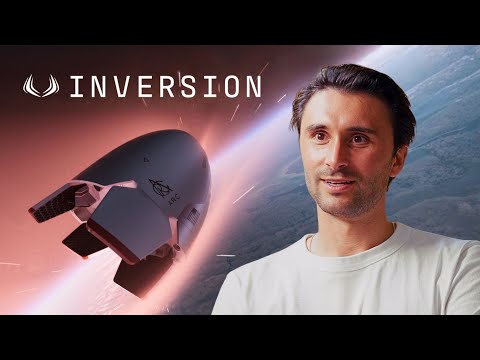
Justin Fiaschetti, co-founder and CEO of Inversion, discusses how his company is building the future of space-based cargo delivery. Inversion builds re-entry vehicles that allow payloads to be stored in orbit for up to 5 years and then delivered anywhere on Earth in under an hour via lifting body vehicles that glide during hypersonic re-entry and land softly under parachute.
The company was founded in January 2021 and launched its first demo mission (Ray) in early 2025. Ray was a 2-foot wide spacecraft built entirely in-house by just 25 people. While an igniter component failure prevented engine restart during the mission, they still achieved 90-95% of their learning objectives. The experience accelerated ARC development by roughly 2 years. ARC is their main product - a 4-foot wide, 8-foot tall lifting body re-entry vehicle specifically designed for DoD cargo delivery.
Justin explains the structural truths driving their business: humans always want faster global access, cost always matters, and space provides unique access to the whole globe. He discusses their extreme vertical integration approach, building everything from engines to parachutes in-house because the aerospace supply chain is too slow and the resulting products are suboptimal. The interview covers their simulation-first development approach, parachute testing via hot air balloon and aircraft drops, and their philosophy of hiring “future founder” types who can operate with minimal direction.
Highlights
”We couldn’t conceive that this wasn’t a thing - we spent the first month looking for competitors”
Clip command
yt-dlp --download-sections "*0:00-1:00" "https://www.youtube.com/watch?v=SfMzG3pg8Kc" --force-keyframes-at-cuts --merge-output-format mp4 -o "SfMzG3pg8Kc-0m00s.mp4"“If you think about companies in space that make money, they use space as a platform - satellite internet, imaging, GPS. What if you could do that with physical cargo? The first month we spent looking to see who else was doing it. We couldn’t conceive that this wasn’t a thing.” — Justin Fiaschetti, 0:00
”Cheaper to store cargo in orbit than have it accessible anywhere on Earth”
Clip command
yt-dlp --download-sections "*18:02-19:05" "https://www.youtube.com/watch?v=SfMzG3pg8Kc" --force-keyframes-at-cuts --merge-output-format mp4 -o "SfMzG3pg8Kc-18m02s.mp4"“It’s actually cheaper to store cargo in orbit and deliver it down to the ground anywhere on Earth than it is to have that same cargo accessible anywhere on Earth via warehouses. The economics have finally shifted.” — Justin Fiaschetti, 18:02
”We don’t have backup parachutes because no humans aboard”
Clip command
yt-dlp --download-sections "*14:07-15:10" "https://www.youtube.com/watch?v=SfMzG3pg8Kc" --force-keyframes-at-cuts --merge-output-format mp4 -o "SfMzG3pg8Kc-14m07s.mp4"“We don’t have a backup parachute. SpaceX did not have that luxury - NASA required redundant parachutes on Dragon. Since we have no humans aboard, we can simplify the design significantly.” — Justin Fiaschetti, 14:07
”Industry quoted 3 years for parachutes - so we built our own capability”
Clip command
yt-dlp --download-sections "*47:05-48:10" "https://www.youtube.com/watch?v=SfMzG3pg8Kc" --force-keyframes-at-cuts --merge-output-format mp4 -o "SfMzG3pg8Kc-47m05s.mp4"“When we went out to get parachutes for our vehicle, it was going to be three years and millions of dollars. And so we said, well, we can build those. We now have full parachute manufacturing capability in-house.” — Justin Fiaschetti, 47:05
”If the first aircraft didn’t have to have humans, it probably wouldn’t have”
Clip command
yt-dlp --download-sections "*28:58-30:00" "https://www.youtube.com/watch?v=SfMzG3pg8Kc" --force-keyframes-at-cuts --merge-output-format mp4 -o "SfMzG3pg8Kc-28m58s.mp4"“If the first aircraft didn’t have to have humans, it probably wouldn’t have. Amelia Earhart, Charles Lindbergh - those heroic feats were artifacts of no autonomous guidance existing. We don’t need that constraint.” — Justin Fiaschetti, 28:58
”F-117 stealth reduced 32 aircraft requirement to 1 - we enable similar force multiplication”
Clip command
yt-dlp --download-sections "*27:16-28:20" "https://www.youtube.com/watch?v=SfMzG3pg8Kc" --force-keyframes-at-cuts --merge-output-format mp4 -o "SfMzG3pg8Kc-27m16s.mp4"“The F-117 stealth aircraft reduced a 32-aircraft requirement to strike a target to just 1. Space delivery enables similar force multiplication - you don’t need forward bases and supply chains.” — Justin Fiaschetti, 27:16
Key Points
- Space Delivery Vision (0:46) - Building re-entry vehicles that store payloads in orbit for up to 5 years and deliver anywhere on Earth in under an hour
- Ray Mission (2:37) - First demo mission launched January 2025; 2ft wide spacecraft built by 25 people with every system in-house
- ARC Vehicle (3:01) - Main product: 4ft wide, 8ft tall lifting body vehicle for DoD cargo delivery with 1000+ km cross range capability
- YC Summer 21 (3:32) - Founded January 2021, went through Y Combinator, raised seed round by October 2021
- 90-95% Learning Success (5:50) - Despite engine restart failure, achieved vast majority of learning goals from Ray mission
- Nightly Simulations (6:14) - Run hundreds of mission simulations overnight to test scenarios like GPS fallout, iterate daily
- Lifting Body Heritage (7:05) - Reviving lifting body aerodynamics from 1960s/90s with modern technology; enables hypersonic glide
- Engine Igniter Failure (8:14) - Third-party component on igniter board failed, preventing engine restart and re-entry burn
- Parachute Testing (9:38) - Test low dynamic pressure via hot air balloon drops; high pressure via aircraft in dive
- Single Parachute Design (14:07) - No backup parachute needed since no humans aboard, significantly simplifying design
- Structural Truths (16:51) - Business based on eternal truths: humans always want more global access, cost matters, space enables global reach
- Cheaper Than Terrestrial (18:02) - Storing cargo in orbit will be cheaper than having it accessible anywhere on Earth via warehouses
- 31st Booster Flight (23:44) - SpaceX just flew their life-leading booster for 31st time; reusability enables mass to orbit
- F-117 Analogy (27:16) - Stealth aircraft reduced 32 aircraft requirement to 1; similar force multiplication from space delivery
- China Space Planes (41:00) - China has active space planes; not far stretch to weaponize many in orbit
- Complete Vertical Integration (44:23) - Built everything in-house from tanks to separation systems to parachutes to engines
- 3-Year Parachute Lead Time (47:05) - Industry parachute supplier quoted 3 years and millions; built own parachute manufacturing capability
- Single-Threaded Subsystems (55:00) - 25 person team with every subsystem having single responsible engineer; full ownership model
- Future Founder Hiring (57:20) - Screen for people who could be founders themselves - driven, creative, independent decision makers
- Interview Question (58:00) - Ask candidates to pick two random objects and invent three products; tests creative thinking under pressure
- Thousands of Vehicles (36:47) - Long-term vision is single-digit thousands to low tens of thousands of vehicles in orbit
- Behavior Change Focus (21:42) - Like iPhone evolved from email/phone to content consumption, use cases will emerge from behavior shift
Mentions
Companies
- Inversion (0:31) - Justin’s company building space-based delivery vehicles
- SpaceX (3:52) - Launched Ray on Transporter 12; enables Inversion’s business through reusable rockets
- NASA (10:17) - Partnership for thermal protection material heritage
- Y Combinator (3:32) - Went through YC Summer 2021
- Starlink (2:03) - Example of using space as platform to access globe digitally
- Neutron (25:11) - Upcoming competition for Falcon from Rocket Lab
- New Glenn (25:19) - Blue Origin rocket coming online with first launch successful
Products & Technologies
- Ray (2:37) - First demo mission spacecraft; 2ft wide; launched January 2025
- ARC (3:01) - Main product; 4x8ft lifting body re-entry vehicle for DoD cargo
- Falcon 9 (3:52) - SpaceX rocket that launched Ray; Transporter 12 mission
- Starship (24:55) - Will compete with Falcon and further reduce launch costs
- F-117 Nighthawk (27:16) - First stealth aircraft; reduced 32-aircraft requirement to 1
- Dragon (31:02) - SpaceX human-rated spacecraft with redundant parachutes
People
- Justin Fiaschetti (0:31) - Co-founder and CEO of Inversion
- Austin (23:18) - Justin’s co-founder; different leadership style but complementary
- Napoleon (1:27) - Referenced for historical importance of logistics in warfare
- Jeff Bezos (17:22) - Referenced for “what’s not going to change” framework
- Elon Musk (1:07:10) - Referenced from Walter Isaacson biography for $10M/day delay cost philosophy
- Amelia Earhart (29:28) - Early aircraft required humans because no autopilot existed
- Charles Lindbergh (29:35) - Heroic feats were artifact of no autonomous guidance
Surprising Quotes
“The first month we spent looking to see who else was doing it because we couldn’t conceive that this wasn’t a thing.” — 1:17:03
“It’s actually cheaper to store cargo in orbit and deliver it down to the ground anywhere on Earth than it is to have that same cargo accessible anywhere on Earth.” — 18:02
“If the first aircraft didn’t have to have humans, it probably wouldn’t have.” — 28:58
“We don’t have a backup parachute… SpaceX did not have that luxury, right? NASA required redundant parachutes.” — 14:07
“When we went out to get parachutes for our vehicle, it was going to be three years and millions of dollars. And so we said, well, we can build those.” — 47:05
Transcript
0:00 If you think about the companies in the space industry that make a lot of money, it’s like satellite internet, imaging, GPS, companies and use cases that are using space as a platform. What if you could do that same thing with physical cargo? The first month we spent looking to see who else was doing it. We couldn’t conceive that this wasn’t a thing. This is not just an increment. This will rewrite fundamentally how we think about accessing the globe in the same way a century ago the aircraft did.
0:31 This is Justin Fiaschetti and he is the co-founder and CEO of Inversion. And they are allowing people to just basically drop payloads from space in under an hour. Do you want to just talk about why that is important?
0:43 Yeah, absolutely. And so thank you for having me. Super hyped to chat today. So at Inversion, we build re-entry vehicles that allow focused mainly on the military for payloads to be stored in orbit for up to 5 years and then called down to anywhere on Earth in under an hour, right? And land softly under parachute.
1:04 The real kind of core for why we’re doing this here at Inversion is making the world more accessible. We talk a lot about in the defense side of stuff, how do you access remote areas, right? Logistics is always been determined as the way that a battle or a war is won. Going back to like Napoleon. Yeah. Like I mean even further behind that, right? Like it is across human history that that is the case.
1:36 And a century ago, humanity took a step with the aircraft, right? That was introduced, allowed people to move cargo and effects and people faster and further than they were able to before. And we want to help take that next step. And to do that, we have to use space, right? Space is an incredible platform that allows you to access the whole globe.
1:59 Right? If you think about the companies in the space industry that make a lot of money, right? It’s like Starlink with satellite internet. It’s imaging. It’s GPS, TV channels. Yeah, it’s all of these companies and use cases that are using space as a platform to access back down on the globe.
2:17 And so my co-founder and I realized that when we were working in the launch industry. And we asked the question, okay, what if you could do that same thing but with physical cargo, right? Physical access to the globe rather than just digital access to the globe. And that’s what we founded Inversion to go and do.
2:37 And so we’ve been working on this for about coming up on five years. We launched our first demo mission earlier this year. Fully built in-house spacecraft. Was that the Ray? That was Ray. Yeah. So about 2 feet wide or so, you know, about that big. Built with just 25 people. Built every system in house because that led to our main product which we actually just recently announced named ARC.
3:01 And Arc is a 4 foot wide, 8 foot tall. It’s right there in the background. Lifting body re-entry vehicle. You know, kind of the world’s first space-based delivery vehicle, specifically focused on cargo delivery for the DoD.
3:17 Yeah. And so for Ray, you start in like 2021 and you’re basically grinding away for roughly four years before you’re actually able to ship something into space and test it in the real world for the first time. What were you trying to get out of that mission?
3:29 Yeah. So, we founded the company in January of 2021. We then went through YC summer 21, raised our seed round in like September, October-ish time frame of 21. So then everything kind of kicked off. Started hiring, started building out the facility. And you know, starting from a garage, there’s a lot to go and do.
3:55 We then, so Ray initially was actually planning to launch earlier than January. We were ready to go for the SpaceX Transporter 12 mission, which I believe was slated for like August of 2024. And then there was a series of reasons that that launch got delayed which sent us up in January.
4:20 But it was useful because we got to do even more testing on the ground, that kind of stuff. The whole goal for Ray was around like the learnings that you get from a first vehicle, right? That’s both from a company perspective and from an actual technology perspective. The amount of processes you build, the operations in orbit, testing out specific subsystems that go directly onto the arc vehicle.
4:46 For example like the software, the GNC, the attitude control thrusters and all that whole system translates pretty directly to the arc vehicle. And so it was very much about this like move quick. How do we get product in the hands of customers or physics as fast as possible, right?
5:01 And you at least get something like in the real world being tested sort of situation. Yeah, exactly. Like you learned so much just from getting to space. And we’ve learned a ton from that and have taken a lot of those lessons and now ARC’s development is probably about like 2 years faster because of that. There’s so many things you can learn and shortcut. At least we found things that we were able to now shortcut or not have to do because we did them on Ray and know that they will work.
5:31 What were those things? There’s a few different places that that’s applicable. Some of it comes from like the sequencing of development. You know a lot of times you’ll kind of like build everything and then test it at the end or like that’s the traditional way. Nowadays like a lot more people are building and testing as they go.
5:53 A place we’ve put like a tremendous amount of effort and resources is actually in our simulation stack within the company. A lot of folks will probably be familiar with like hardware in the loop testing or software in the loop testing that used to kind of be like okay a final validation at the end.
6:10 We’ve built out infrastructure within the company that allows us to test on like a daily basis. We run nightlys even already. So nightly like that’s where overnight we will run a full mission simulation or you know hundreds of them with varying different inputs. You know testing okay what if we have GPS fallout, what if we have a bunch of different scenarios, all sorts of stuff. We’re able to get that data, ingest it in the morning when we walk into the office, iterate again and then run again the next night.
6:40 You know with a re-entry vehicle a lot of people think about aerodynamics and that’s kind of a key thing for ARC is its unique aerodynamics that allow it to glide in the hypersonic regime, you know, maneuver during re-entry when it’s coming back from orbit down to the ground.
7:00 And the specific type of aerodynamics being a lifting body, it’s a relatively limited body of work that exists for lifting bodies. You know, they were really done a lot in the 60s, brought back a little bit in the 90s, and then we’re kind of bringing them back with modern technology.
7:20 But the amount of aerodynamic simulation we can do today and the quality of our predictions makes wind tunnel testing substantially less valuable to the company. It’s still useful, don’t get me wrong. But it can be pushed later. It can be done less. It can be done at a lower expense because turns out when you go to the wind tunnels they tell you yeah your simulations are plus or minus 10%. And like that’s what it is going to be for the most part unless there’s something specific that creeps up.
7:54 And so you can do a lot more learnings and iteration early on with simulation than you would have even been able to do 10 years ago. And that’s really helped speed things up for us.
8:02 On that test with Ray. I know the only thing that kind of didn’t work was like engine restarting correct. So what were the main goals for that? Even on the engine restart what were you trying to figure out with that?
8:14 Yeah absolutely. So we built the engine, the igniter, the whole system in house. The one of the parts we didn’t build which was like a small component on one of the boards. The board worked great, the component failed which is frustrating. Meant we were not able to ignite our torch igniter, which meant we couldn’t ignite the main engine.
8:42 That would have been the first of I believe two burns to then bring us back and land off the coast of California. We then proceeded to basically demonstrate the system minus that pure ignition, right? Being able to do an orbit lowering and orbit raising maneuver, showing the proper control algorithms, the proper being able to determine our attitude of the spacecraft very accurately to make sure we were burning in the right direction, all that kind of stuff.
9:17 So had there been ignition, I think we would have had a high likelihood of putting the re-entry capsule portion of Ray on a trajectory that is desirable. Right now, unfortunately, we didn’t get to test what happens after that, right? Were the aerodynamics designed properly? Did the parachutes deploy and properly splash down in the ocean?
9:38 Luckily though, a lot of those components and a lot of those systems have a lot of heritage around them or can be tested very well outside of the full flight environment. Right? So, for example, with the parachute system, we’re able to go and test the parachutes at the exact dynamic pressures, exact altitudes, etc. that we would see in flight.
10:00 And so we can go do that, validate those systems work well, and we do that during qualification, making sure to hit both the high dynamic pressure and low dynamic pressures we would expect to see.
10:12 How do you actually do that? So, there’s a few different ways you can do it. We do it through drop testing out of aircraft. Yeah. And interestingly when we want to test a low dynamic pressure opening of the parachute, right? Does the canopy, the parachute canopy inflate when there’s not very much air flow trying to inflate it, right?
10:32 The way we tested actually is we brought a test configuration onto a hot air balloon and we actually just dropped it over the side because you have no vertical velocity, right? So you have the worst case scenario you could possibly have.
10:49 And then high dynamic pressure actually requires us to put our aircraft in a bit of a dive to get a higher air speed. You just throw it out the back? We static line deploy it out of the back. And so you get this super high shock loading for the parachute inflating at a very high velocity and that can replicate the dynamic pressure you would see in flight.
11:14 And then on the kind of thermal protection material side and the aerodynamics side like I mentioned, there’s a lot of both heritage in the materials coming from NASA as who we have a partnership with but also the ability to simulate and model that quite closely.
11:32 And with Ray, you know, the aerodynamics did not translate to ARC, right? Arc has completely novel aerodynamics. And so we were definitely, you know, it’s definitely a bummer working a lot on Ray to not get it back, but I think we got probably across the whole program, I’d say we probably got 90 to 95% of the possible learnings that could happen, which was the whole goal of the vehicle.
11:58 Yeah. I mean, I think 95% of the possible learnings is basically like the best case scenario where most things go well and if one thing doesn’t go well, then that’s awesome. Totally.
12:13 So when you first like started out, I know that with this sort of thing, it’s very long feedback loops. Like you don’t actually get to test the first thing in space until like three and a half, four years in-ish. And then also like occasionally SpaceX just can’t launch a rocket on time or maybe you get bumped to the next launch window or something like that. How are you thinking about moving quickly and getting the first thing done even while having a thousand plus day window?
12:43 Yeah. So there’s a few different iteration cycles that we think about. Technical iteration, product iteration, go to market iteration, there’s probably a couple others, but those are kind of the three main ones. And I guess customer iteration which fits somewhat in between product and go to market.
13:02 Technical iteration happens like we talked about a lot on the day-to-day, right? Like being able to test in simulation, going out to our Mojave Desert test site to be able to run actual hardware. We like to build and iterate as quick as possible, right? Starting with as flight representative hardware as possible that we can get in the compressed time frame. We want to get it tested, learning, iterating and being able to get a few cycles in of design.
13:30 The product iteration I think is maybe more interesting to talk about because you know how do you build a product that you kind of have to predict the future, call your shot at least for years ahead of the time with budget cycles that take years to happen with customer needs that you know won’t be fulfilled for years, right?
13:50 With AI and all the software companies you okay, I test it. I see if users love it and then if they don’t, I iterate tomorrow and then I try another thing. Like a two week, one week, maybe same day iteration loop, whereas this is like a year, two years. Exactly.
14:06 And so we try to solve that in two ways. The first is the old YC adage of talk to your customers, right? Like go talk to the end users that are going to get the delivery or are going to buy the product or are planning out the strategy for how an improved logistics solution could help them in the real world.
14:27 And so you know we’re talking with customers every single day. And you know we’re constantly tuning the product in different ways to meet customer feedback. You know, one of the things we heard early on was cost, right? This, you know, you hear about storing in space and it’s like that’s going to be expensive as hell.
14:47 And we kind of took that feedback and you know, the reality of it today is it’s actually cheaper, it will be cheaper to store cargo in orbit and deliver it down to the ground anywhere on Earth than it is to have that same cargo accessible anywhere on Earth.
15:09 Right? Because to have it accessible anywhere on Earth, stored terrestrially, you need to have hundreds and hundreds of warehouses manned by people with aircraft with runways and treaties and shipping logistics to get all your food and stuff like it is this massive logistics web that has been built out to have that access, right? Hundreds and hundreds of units versus we can condense that, put it in orbit and have tens of units to have access to the same place.
15:45 Now, you know, at the moment that’s not a good strategy for high volume goods, right? Like you know, you’re using things you use all the time like uniforms as an example. Like we’re not going to store uniforms in space. That doesn’t make any sense. But the things that you need very fast, you don’t know where you’re going to need them, that makes a lot of sense.
16:08 And so, you know, talking with customers, learning, hearing about what their needs are and stuff has, for example, driven the aerodynamics of Ark. We wanted to make it so that as few of vehicles as possible were needed to cover a geographic area. And that’s kind of what led us to the lifting body geometry, right?
16:30 It provides substantial access to the ground, right? Over a thousand kilometers of cross range either direction, which allow it to kind of glide multiple different places from its single orbit. Which lets us keep the cost really low for customers when they have a specific type of cargo they want to access down on the ground.
16:51 So that was number one which is talk to your customers, listen to what they have to say and you find a useful piece of information you can iterate on your product with. The second though is because the time horizons for these types of products are longer than your traditional software products, we tried to look at what are things we know to be true that will be true in 15 years.
17:15 Will be Jeff Bezos-ism where he’s just like what’s not going to change in the next 10 years sort of situation. Exactly. Right. And my question is what’s not going to ever change for humanity, right? Like you know what is going to be true, what was true a thousand years ago and what will be true a thousand years from now?
17:37 And we try to base core decisions off of those types of structural truths, right? A structural truth is that humans always want to access more of the globe faster, right? That has always been the case and that will never cease to be the case. And we put a foundation for the company together and say, you know, our mission is to make Earth radically more accessible by making space a transportation layer.
18:06 And so that structural truth is helpful, right? Cost is another and that’s a good Bezos one, right? He’s always talking about people aren’t going to want less selection, slower delivery. Exactly. No one wants that. And so, you know, the military always wants to be able to operate inside their adversary’s decision loop, right?
18:33 You know, the OODA loop is the phrase. But, you know, put simply, if I can dodge you and punch you faster than you can dodge and punch me, I’m going to win, right?
18:48 And then the final one, the final kind of structural truth is that space is really great at giving access to the globe and it always will be. That is a fundamental characteristic of that platform. Just like a fundamental characteristic of the internet is that you can distribute information fast and quite cheaply.
19:10 And so if we believe those kind of three things that gives us the foundation for what types of products to build and where to go over that medium term.
19:22 Yeah. So especially for the first few that you’re going to throw up there, what did people kind of come back and say this is what would be super valuable to be able to get in under an hour in these different geographic locations?
19:35 Yeah. So there’s some stuff we can’t talk about quite yet. And hopefully we’ll be able to talk about it soon, but it generally falls into the category of mission enabling cargo or effects like things that make the difference in the moment.
19:52 That be like food and medical supplies, that kind of thing? That kind of thing or like communication systems or sensors, ISR, like that kind of world. An important thing to think about is like it’s not necessarily about the cost of the good you’re delivering, but rather what is the value of the impact it has.
20:15 Because if it can help make a mission successful that couldn’t have been successful otherwise, well, that’s profoundly valuable. That’s what we look at today. What we look at for tomorrow or kind of the future is how do behaviors change when this is real, right?
20:35 When you can rely on one hour delivery anywhere on Earth, how do behaviors change for our customers? And what that starts to look like is more freedom to go further away from your existing supply chain or your existing base of operations, more flexibility in smaller teams that can be supported without massive logistics chains.
21:00 There’s a story about how the F-117 Nighthawk, which is the first stealth aircraft that the US used in operation, not only was it awesome because it was a stealth aircraft that could get through any enemy radar, but what it also meant was the military didn’t need to have dozens of aircraft surrounding it.
21:22 Because the way they used to have it was they would send in decoy drones or missile cannon fight sort of situation. Exactly. For the enemy radars to light up so that then the next wave of aircraft could come and hit those radars so that the next wave of aircraft could come so then finally the bombers could come, right?
21:44 And the advent of stealth allowed for that - I think it was like 32 aircraft, I forget the exact number - to be reduced down to one. So you can cost a lot more but it’s still way more efficient. Way more efficient and way more effective.
22:02 And so when you don’t need to have dozens of people, aircraft, trucks all supporting the logistics of this one mission and you can have these systems, both cargo and autonomous systems deployed, your behavior starts to change and you start to plan differently and you start to operate differently.
22:25 In the same way that aircraft allowed for that in World War II where now we can drop people behind enemy lines, which was never a thing beforehand, right? You couldn’t support with airdrops. You couldn’t affect things outside the reach of either ground or artillery from boats.
22:47 And so that’s a really exciting place to be where behavior changes and customers start relying on your products. And you know I think we’ll see that really start to take hold over the next couple years.
23:02 Yeah. I think for this sort of thing it just wouldn’t have been possible prior to like rapid rocket reusability. And I know that you used to work at SpaceX. Was this one of the situations where you’re working there and you’re seeing like the launch cost go down and then you’re kind of like, you know, extrapolate that out a few years and suddenly a business like this becomes viable?
23:22 So, launch cost is definitely one of the big inputs for us. I would actually argue that it’s less about the cost and more about the mass to orbit. Like until Falcon started flying regularly… Actually Austin and I were just talking about this today. Austin, my co-founder.
23:44 I believe today SpaceX just flew their life-leading booster for the 31st time and like that’s awesome from a cost perspective. From a price perspective the price of Falcon has been I think roughly stable over the last couple years, right? Different demand is kind of just - well, demand keeps going up, right?
24:05 Exactly. But imagine trying to build 31 boosters, right? The amount of time and people and resources and money required to do that is unbelievable. And so I think the real, one of the big unlocks that’s maybe a bit underappreciated with reusability of rockets, and Elon talks about this so it’s nothing new, is the limited footprint of production you need compared to what you would have to do otherwise.
24:34 And so when you have launches going up regularly, not only does that make it cost effective for us to go and build this type of business in space, but it lets us ride the wave of cost reduction, right? So it works today and it’s only going to be better later.
24:55 And it gives us and investors and customers confidence that there will be a ride to space, right? You don’t have to worry that how are you going to get onto a space shuttle mission? Like do you know what forms you have to fill out? Like no. I just go on SpaceX’s website, put in my credit card and call it good, right?
25:14 So I think reuse has done a lot. I think it will continue to do more. I don’t think we’ve seen the true rate of price reductions that are possible with reuse because there’s limited competition today. But there is competition coming quickly for Falcon. I mean even Starship is going to be competition but Neutron will be launching soon. New Glenn is coming online with its first launch successful and then second launch coming up as well.
25:44 I think we’re going to start to see further cost reductions to get to orbit. And so when that kind of main input cost drops, your cost of accessing the globe just goes down and goes down and goes down. It’s kind of like, you know, as semiconductors get cheaper, you can build more computers, which means you can network those computers, which means you can build Facebook.
26:10 And that’s kind of where we’re at today. It’s like an emerging thing. Yeah.
26:15 So, for you, is there any like non-obvious questions that people like that you wouldn’t go into starting the company with? But that have come out from just going after it and boots on the ground sort of thing.
26:30 I think the behavior shift when you’re able to rely on this is like an interesting question. The question we always get is like what payload are you gonna carry, right? And like that’s kind of like asking what the main use case of a phone was going to be in the early 2000s, right?
26:50 Behavior shift hasn’t happened to the smartphone quite yet, right? The iPhone, let’s just say the iPhone has just been introduced. What’s the main use case for the iPhone? Well at the time it was envisioned as internet, email, music, and phone.
27:10 I would bet a ton of money, and I don’t know this for sure, but that most people’s screen time is now dominated by social media and content consumption. Connecting with people in a way that just wasn’t even possible or even foretold at that point.
27:28 Yeah. And like not even connecting, it’s content consumption, right? Like an iPhone is a content consumption device and it just happens to also be able to make phone calls, right? Like I think most people browse the internet on their computer more and the time they spend on their phone is mainly dominated by content consumption.
27:50 But that was not the initial pitch for the iPhone, right? The initial pitch was all about connectivity. Phone, internet, email. And so when we talk about what payloads are we going to carry, what missions are we going to carry, like we know what we’re going to go do for the first dozen, two dozen, three dozen, something like that. But how do behaviors shift over time is something that we find very exciting.
28:18 If you pay attention and think about what we’re doing in parallel with the reduction in cost of drones and other autonomous systems and the increase in the intellect of AI and general autonomy you can put on these types of vehicles, it’s reasonable to extrapolate that in the future most of our missions will not involve humans.
28:43 We will not deliver to humans for any need. It might even be like delivering an autonomous system sort of thing. Either that or delivering to support those systems, something in that world, right?
28:58 If you extrapolate like there is, it is, and I don’t know when that will happen, maybe it’s 5 years, maybe it’s 10 years, maybe it’s 30, but it is not unforeseeable that most of our demand actually comes from independent of humans being in the location we’re delivering to.
29:20 I was talking with our GNC team and we were just kind of chatting and it was an interesting point we got to which is if the first aircraft didn’t have to have humans, it probably wouldn’t have. Like the reason aircraft had, like the early airplanes, right? The Wright brothers and so forth, had humans on board was because well there was no other way to control them, right? There was no such thing as a computer even at the time.
29:52 And so you coming out of that you get these heroic feats of Amelia Earhart and crossing the Atlantic. And Charles Lindbergh was hailed as a hero, as an American hero. And that was kind of like an artifact of the fact that there was no autonomous guidance system or autopilot to fly those.
30:15 And so like I bet the engineers or the safety people or even just the performance design team would have loved to not have to keep a human alive when flying an aircraft, right? It could have made it thinner and smaller and faster. Style sort of situation. Or just even like put more fuel in where the human was and be able to deliver the same cargo further.
30:42 And so you know, we’ve gotten the question of oh, are you going to deliver people? And you know we have the benefit that we don’t have to start with humans. Like that’s super awesome to be in that position.
30:57 And the space shuttle was not in that position as an example, right? They had human pilots flying the shuttle as it comes down to the ground. But you know the advancements of edge compute and our AI stack that’s on the vehicle allows us to have close to equivalent of human decision-making faster with better sensor data in real time anywhere on Earth.
31:22 Yeah, I know on Dragon, Elon was incredibly and that entire team was like incredibly focused on making sure that nothing went wrong on those missions because you have a human on board and you can’t have someone blow up. Is there anything that you’ve been able to do because you’re just going to have like basically dead cargo on board that you wouldn’t have been able to do otherwise?
31:45 I think the starting place for most space engineers coming from the space industry is that you don’t have to have humans in your system. So I think our buildout of the business and of our engineering culture and requirements processes and all of that were born in an environment that didn’t consider humans.
32:10 So, I think it’s hard to answer if we do or don’t. Or maybe rather we certainly do, probably in every single decision, but I could not tell you the counterfactual because we haven’t been in that environment to go and actually run through those decisions.
32:26 It’s not a factor in our decision-making. So like for example we have one parachute, one main parachute that we have and we don’t have a backup parachute and that is an intentional decision that the reliability meets our targeted reliability. But SpaceX did not have that luxury, right? NASA required redundant parachutes. Or skydivers as an example always have their backup parachute just in case. We don’t need to have that. And so maybe that’s a good answer to your question of you’re able to keep costs lower and then make it a simple system. A lot simpler. Yeah.
33:05 So, I know you basically said I think it’s something like right now even with a distributed set of bases and all these different things, it’s like a 5 to 6 hour lead time before you can actually get some piece of cargo to someplace without space payload delivery. How much infrastructure is this replacing?
33:24 A lot. I think that there’s a world that overseas bases are purely for political reasons rather than operational reasons in probably 30 years from now.
33:36 And do you know how much infrastructure that is? Tens to hundreds of billions of dollars a year. Yeah, it is the vast majority of the DoD’s, or a large amount of the DoD’s budget is in operations and maintenance funding, not necessarily the funding to actually go buy the new system, but rather maintain it, keep it operational, distribute around the globe.
34:02 And yeah, I think more than anybody can conceive right now is going to get replaced by this.
34:08 How many of these do you think you’re going to need in orbit? Once you aren’t constrained by just launch windows and all that stuff and everything is kind of fleshed out. Are you going to have like hundreds of these or thousands in orbit?
34:21 Yeah, I think we’ll probably get to the place where we have single-digit thousands to low tens of thousands. Once you get to that level, you actually want to switch to a different concept of operations. It no longer then makes sense to have tons of distributed vehicles, but rather it makes more sense to start to centralize cargo in singular locations with multiple vehicles that can deliver a selected cargo.
34:50 But that’s still decades away. I think that the… part of the problem, you can imagine like hundreds of space stations all with being a warehouse with the delivery vehicles that fly off, right? The problem is you can’t start there.
35:10 You don’t have enough cargo. You don’t have enough budget. There are constraints. There are constraints that make it more advantageous to start with the delivery vehicle being the host vehicle because it allows you to scale in less step change ways, right? You can kind of continuously launch new vehicles rather than having to put a whole bet on a major…
35:35 A little bit more like the Starlink satellites where you can just do version one, version two, version three, and you only start really scaling up once you have something that’s absolutely fantastic.
35:46 Yeah. I mean, I think SpaceX totally would have flown thousands of V1 Starlinks if they hadn’t made V2 better already, right? And that’s kind of how we will work.
35:59 More so like you don’t have a big Amazon distribution center until there’s a city’s worth of demand for those types of goods. And so rather you start off with like a single CVS, right? And it’s much easier to scale single CVSs than it is to scale massive distribution centers. Maybe that analogy is a bit stretched, but we’ll probably see thousands to tens of thousands of these in orbit.
36:29 So when you talked about the behavior change, I’d imagine that it’s not only how people kind of operate in the field, but it’s also getting people to decide that this is a known quantity and that this is even accessible or possible in the first place. What was it like trying to educate people on here’s what this can do, here’s what it can’t do, maybe it doesn’t deliver humans, but here’s what it can do in the first place?
36:55 Yeah. Well, I mean with any new technology, right, you have your adoption curve you have to run through. And one of the first stops on that curve is education, right, before you get to full adoption.
37:08 And so, you know, we were fortunate to be able to ground our vehicles and our operations in that of airdrops, right? People are used to calling in cargo and having it delivered by aircraft or cargo, whatever system they want to deliver.
37:24 And so we’re fortunate enough to be like, we basically talk about how we’re not really a space company, right? Like we are a space company in the same way that like Nike is an internet company. Like yes, they use the internet to sell their products and market their products, but fundamentally they’re an athletics brand or a lifestyle brand depending on what you think.
37:48 And we just happen to use space, right? Like the only reason we use space is because that is the best way to get access to the globe. If we could do it by tunneling, we probably would do it by tunneling.
38:02 And so when we talk to customers, you know, hey, that requirement you have of being able to respond to the conflict when and wherever it breaks out, right now you’re fulfilling that with aircraft and etc. What if you added this to it, right? What if you added the ability to come from space?
38:22 And from your perspective or from the operator’s perspective, they’re calling in an airdrop or they’re calling in whatever, but it’s just going to come from space instead of the airplane and there’s no difference in how that works to start.
38:37 And so to start we try to see how we can be better faster cheaper in current operations. And then as people start to understand that we can then start to talk about now that you have that as a reliable function, here are the other things you don’t need to do that you’re currently doing, or here are the new things you could do that you’re not able to do today.
39:00 And I think that’s really where people’s eyes start to light up and they start to see like, oh, this is not just an increment. This will rewrite fundamentally how we think about accessing the globe and transportation around the globe in the same way a century ago the aircraft did.
39:18 Yeah. And has there been any missions over the past like 20ish years where if there had been rapid access to supplies in under an hour, things would have turned out differently in a way that they didn’t?
39:32 I think that there are countless examples of this especially across the war on terror where people were not able to be supported when they needed that support and that led to poor outcomes. Unnecessary deaths or things like that.
39:50 It could be that. It could be the mission failing. There are examples of it being more expensive than it needed to, right? Having to send in extra resources and support.
40:02 A way to think about it is what would the last 20 years have looked like if we didn’t have aircraft? And like the answer is kind of like it would be fundamentally different. It would be totally different.
40:18 It would be back as if it were World War I or earlier, right? And so, what does a Civil War battle look like that an aircraft is plopped into? Just changes everything. Completely different, right? It is a fundamental mismatch in forces and technology.
40:42 There’s a bunch of YouTube videos that are fun like what if an F-22 went up against Napoleon’s army or something like that, right? And you know, they’re a little absurd, but it’s asking the question of what if you had such great technical overmatch? How would that change? And what usually the conclusion is is like the technical overmatch is so great it doesn’t even make sense to fight. Like a landslide victory.
41:10 It doesn’t even make sense to even try to engage it, right? Cuz like what are you going to do? Throw a spear at an F-22 or shoot it with a cannon? Like you’re not, right?
41:22 And so it’s hard to do the counterfactual of what would it look like if you could do specifics of here is where we could have delivered life-saving supplies or mission-critical supplies that would have changed the outcome. But fundamentally any conflict would be completely different with that capability.
41:44 Is China trying to build some sort of similar system or are we kind of the only country that’s doing it?
41:52 China has active space planes. It’s not a far stretch to make a bunch of them and put them in orbit. Do you think in a hypothetical future conflict, this would give us a significant advantage on that front?
42:08 100%. It gives an advantage to every single branch of the military, right? In every single domain of operation. Being able to be supported by the space domain is a force multiplier, right?
42:26 It’s hard to conceive of a world where deliveries to the battlefield aren’t happening from space or to remote teams or to the middle of the ocean, right? It’s too fast and too good of a capability for that to not exist.
42:44 The only reasonable argument against that existing is cost. And right now the cost makes sense for a vast array of missions and cargo and effects. But like we talked about earlier, costs are coming down substantially in the launch industry and costs come down with any technology curve.
43:06 And so to bet against the imperious nature of cost reduction of technology is like a fool’s errand. And so you can have a debate if between 2022 and 2025 the costs bore the value that delivery would have. And from everything we’ve looked at the answer was always yes.
43:30 But you can ask the question - once you get towards the end of this decade, in the early 2030s, which we’re closer - yeah, we’re getting closer and closer. We’re four years away. It’s impossible to argue that it’s not.
43:48 Some companies decide to vertically integrate a lot more than others. How have you thought about that and what has been the process for deciding which parts to vertically integrate and not?
44:00 Yeah, so we try to vertically integrate everything. So, our Ray spacecraft, we built practically everything in house. Everything from the tanks for the propellant to the separation system that connected us to Falcon 9 to the parachute system to the engine to the software, the avionics, the solar panels, list goes on.
44:23 What’s the logic behind doing that? Yeah. So, there’s a couple reasons we do that. The first reason we do vertical integration is because it results in a better product. The supply base is not robust enough such that you have infinitely granular options of subcomponents, right? Like there are discrete components you can go and buy, right? There’s a discrete number of valves that exist.
44:52 Some things literally just don’t exist. Yeah. Exactly. Some things don’t exist. Or some things you could make work, right? But when you have to make a could work decision across thousands of components, you end up with a flawed or less optimized product. It has more compromises baked into every subcomponent because maybe this one’s slightly bigger than we want, but that’s fine. We’ll deal with it. Well, now we have to deal with it with this and with that.
45:25 But the other is really around supply chain and time and cost, which is if you want a valve, a certain valve today, it’s 18 months, right? Like there are… when we went out to get parachutes for our vehicle, it was going to be three years and millions of dollars. And so we said, well, we can build those. Let’s go hire the team and buy the sewing machines and now we make our own parachutes.
45:53 And it allows for this iteration cycle at the core, the deepest level of the product that influences the rest of the product. And so, I think it’s smart to not vertically integrate in industries where your supply base is also moving as fast or faster than you are, right?
46:15 The electronics and consumer electronics industry is a great place to show this, right? No startup is going to build batteries faster and iterate on 18650 cells faster than the general supply chain is going to. BYD or Tesla or Panasonic or Samsung.
46:36 But when there is a singular parachute supplier in the United States that doesn’t care about new companies, that doesn’t frankly care about innovating because why the hell should they - they have all the contracts, right? There’s no incentive for them to move quickly and there’s no incentive for them to meet a startup’s demands and needs, timelines or cost.
47:05 Exactly. So that’s the early reasons, right? Which is we do it because it makes a better first product and it lets us control our timelines, our costs and our iteration in the development cycle for us faster.
47:22 As we get into production though, that’s where it really shines, which is you can switch from okay, now I have a really great product that’s been optimized around the customer needs to now I can optimize every single component within that to be as cheap and as easy to manufacture as possible. And I can eliminate components and I can combine components.
47:48 Like as an example in traditional automotive, a lot of car companies are not car manufacturers but are car assemblers, right? They get the center console from one company and they get the door switch…
48:04 I think that Boeing has like 120,000 suppliers or some crazy number like that. Something like that. Yeah.
48:12 And staying in the automotive world, you have a computer that controls the center screen and you have a computer that controls the light switches and so they can’t talk to each other and so you have redundancy that you can’t eliminate, right?
48:27 But when you have a full understanding of your whole product and full control over all of them, you can start to do things like, well, what if I didn’t need a controller on my motor, but I could build that into my avionic system?
48:43 And like that’s probably not the right decision to start. And for example, a lot of our motors have the built-in controller. But eventually you can move towards that. And so then now you can use a cheaper… you can think through and say a few iterations in the future how much cost can we get down.
49:03 And then the final reason we do that is around reliability of supply chain. So we are… our missions are highly binary in the fact that they launch at a launch date. Every single system has to be ready to go and has to be integrating the vehicle at the date we need to integrate onto the rocket.
49:27 And so you can’t really have one system that lags behind. If one system lags behind, the whole vehicle lags behind. And so we’ve run into this countless times where a supplier is delayed and now it’s like that’s delayed by 6 months. Is our whole company delayed by 6 months? And we don’t want to have to have that as a risk item in the business.
49:50 And so where there are robust supply chains with multiple vendors that are moving quickly that are supported by other industries such as batteries as a great example, we’re not going to touch those, right? Maybe we’ll assemble our own battery package. We need the form and function of a certain thing but we’re not going to do our own cell level.
50:12 But when you start to get into these highly… you are now a derivative of your supplier, right? If your supplier is slow, you’re slow. If the parachute manufacturer decides that their army contract is more important, then you’re fine. Woke up on the wrong side of the bed and you’re going to be delayed by six months. Who cares? You’re a small fish. And so the best way to avoid that is to build your own.
50:42 Going back to the super early days, you talked about basically trying to find vendors to fill all these needs and then three years or 18 months for some of the parts. What was it like at the beginning? I imagine you’re trying to do as little as you can to actually make something work or just to start. How did you change philosophy over time?
51:07 Well, I think there are examples where you can solve that problem with money. And that can work quite well, right? Going out and saying, I don’t want to build anything. I’m just going to buy it from a supplier or from a satellite bus provider or something like that can work quite well and it does to a lot of degree.
51:30 But now you don’t have that experience of building. Your company’s not built around building. Your company’s built around assembling. And so you aren’t building those muscles. You aren’t building the processes. You aren’t building the culture. You aren’t hiring the people focused on deep level high quality iteration and design.
51:55 And so early on we knew that ARC was the place we needed to get to. And Ray was the way to get there. And so the purpose of Ray, like if we just bought Ray, it wouldn’t have served the function, right? If we literally purchased the vehicle and flew it, it wouldn’t have done anything for the… Not building any muscle memory. Or processes or testing or anything like that, right?
52:22 And so the decision to bring in house versus go out of house, you know, part of it is we check, hey, could we get this right? Because some things we don’t need to have a core competency in, right? Like we don’t need a core competency to start in solenoid valves. A solenoid valve is going to work as a solenoid valve is going to work.
52:46 And your main optimization for that is cost, which we don’t super care about early on because it’s $800 instead of $100. And you can stomach that early on for a one-off vehicle and you’ll bring those in house later.
53:02 But where we know we need a core competency, it’s inconceivable to me to hand that off to another company, right? Where your core business doesn’t function if you don’t have that other component or other supplier. That’s a weird place to be for me. And I think it makes a lot of sense to build that in-house.
53:26 Yeah. Where especially with this sort of thing where the launch windows are incredibly important and having things ready in case you can ship just a little bit faster is super important. How are you thinking about planning a few months, years into the future and figuring out which things you need in this warehouse whereas maybe you can just get it moment of?
53:48 Well the great thing about the team we’ve hired is it’s a very decentralized decision-making process on that and we specifically hire a team that understands those problems, has experience in those problems and has full ownership of their systems.
54:08 So when the responsible engineer for the flaps on the back of the vehicle is designing the system and is looking at that, he’s looking at what is the lead time for the actuators, what is the lead time for the materials, all of that. And that’s happening early in the conceptual design of the vehicle and that is rolling up then to the overarching vehicle level timeline.
54:35 Okay, these actuators are going to be a three-month lead time, but then they need six months of testing or whatever. And you’re able to back it out from there versus like, okay, we know we can buy standard screws or lock wire whenever.
54:52 And so we try to identify what are the long lead items that are high risk that we need to make sure we either are manufacturing fully in-house or we have multiple vendors for or we have ordered it early enough that we can pivot if we need to.
55:12 So we try to make sure that the team and the individual engineers on the team have that full scope of ownership and can hold the full… their full system and all the design, build and test that goes into it in context at all times, right?
55:30 So we try to keep a very lean and talent dense team because the goal is that like the whole team should be able to hold the whole context of the vehicle in their head at any given time. So that if you ask an avionics engineer why they’ve made the decision to go with this sensor, they can say something like well the parachute needs to have this amount of accuracy and as such this has driven my decision-making.
55:58 If you look at big defense primes and how they design their systems traditionally, that context holding is replaced by detailed requirements. Not like make sure you have everything organized, but like you are going to have this very specific load requirement on your structural beam and it’s going to go in this force direction and you’re going to design and you have a mass budget and a material allocation and like this is how you’re going to design this bracket.
56:32 The problem is that takes like a decade to develop just the requirements, let alone the actual design. And so when we’re trying to ride the bike as we’re building it, it’s important that everybody on the team is constantly making decisions with context from other systems and are communicating across systems and are empowered to make a decision as needed.
57:00 So did you try to keep the team kind of artificially small for the first four-ish years before you had something where you were sending it to orbit?
57:12 I think we kept the team at the level that it needed to be. I don’t know if it’s artificially small or not. I mean, it’s way smaller than any other team I’ve heard of. We were 25 people building the entire vehicle in house. We had a couple software engineers, but every single subsystem was single threaded, right? But that’s all that was needed.
57:35 So it wouldn’t have necessarily helped you move faster? I think there would have been some benefits if we had a few extra people. But I like… it’s this weird thing where I don’t know why everybody else needs such a big team. Like yeah, I don’t understand that.
57:55 And I think that kind of goes to the folks we’ve hired here are incredibly dedicated, incredibly excited. We try to screen for people who we could see as future founders, right? That are driven by a purpose bigger than themselves with a creativity and a decision-making capability that can be independent of any sort of… you don’t have to be told what to do. You’re kind of intuitively just trying to figure… Yeah, exactly. You’re expected to not be told what you’re what to do. If you are being told what to do, that’s a huge problem within a company.
58:32 So, how have you been screening for that? What traits are you looking for?
58:40 Well, you want to try an interview question? Sure. Go for it.
58:45 Okay. So, I’ll give there’s a two-part question. I’ll tell you the second part after the first part. I want you to just choose two random things in the office like choose them. Tell me what they are.
58:58 Sure. Forklift thing and then I don’t know that table. Okay. So, we have a forklift and a table.
59:07 So what I want you to do is come up with three products, ideas, companies, whatever inspired by, based on, or thought of from those two items. So it could be for an example a standing desk that can also be used to raise up as a podium that you could stand on for giving a talk to the team. Something like that. An IKEA warehouse. Yeah. Yeah.
59:34 What’s been the most interesting responses that you’ve gotten with that question?
59:38 So the fun part about it is it is totally different depending on what people choose. And so there’s no actual right answer to those questions. And frankly it’s kind of a silly question and the ideas are not meant to be serious in any way.
59:55 This is one of those questions that’s like hey tell me how you think. Right? And I’m not screening and it’s fundamentally independent of anybody’s role or background or skill set, right? Or technical skill set. It’s purely a question of can you think of random things at in a relatively high pressure setting being an interview.
1:00:18 And you know where does your mind go and what connections do you make? Cuz like decision-making and problem solving is just about random context and being able to use that random context to find a way through the problem.
1:00:35 And this is a similar thing which is like I don’t know what am I going to make between a table and a forklift or a scissor lift? Like I guess I could use the material and make a wooden forklift that comes in an IKEA box to lift a cuckoo clock onto the wall or something.
1:00:55 But consistently the folks that are like I am completely blown away by their performance here crush that question. It’s the craziest… it’s a uh… and maybe it’s anecdotal and maybe I’m just remembering those specifically, but… Yeah, I like that and it’s fun to just kind of chat about and iterate on it.
1:01:17 When you do find those people that are incredibly creative, think on their feet, they can be future founder types. What kind of control or latitude are you trying to give them so that they can do their best work while here?
1:01:34 Well, the thing I say, so whenever someone starts, we do onboarding and I’ll talk to them and kind of go through and tell them about the culture and the company. And I always say like my job as the CEO is to give you the direction you need to run in and then unblock you so you can run as fast as you possibly want to. Systematically unfuck people.
1:02:00 Yeah. Like basically what’s your problem that is blocking you from being as great as you could be? And we’ve found that, you know, it’s important to make sure people know what direction they’re running because when you have creative, ambitious people, they will run and you got to make sure that in the system of a company, it needs to be aligned with where everybody else is.
1:02:26 You need to make sure that everyone has the why in the back of their minds while they’re just running at full speed. Exactly.
1:02:33 And then remove the roadblocks and a lot of that is administrative and bureaucracy based, right? Making sure to eliminate unnecessary red tape, if you will. But some of it could be as simple as making sure we have enough machines to manufacture prototypes of their hardware so they can test it quickly.
1:02:55 Yeah. And I always try to tell people like I want you to run as fast as you possibly can, right? And if you’re ever blocked or slowed down, let me know and we’ll figure out whatever that might be. And consistently the team has just been crushing it.
1:03:15 If you fast forward a few years and you’ve put a bunch of these things in orbit, what are you going to be basically focused on at that point?
1:03:25 You know, once we have kind of our first fleet of vehicles on orbit, I think the big thing we’re going to be focused on is scale, right? Is how do you scale up production and how do you get to the scale that you need to…
1:03:40 Are you going to try to do that in the US here? Oh, yeah. Well, I don’t know if it’ll be in LA, but it will definitely be domestic. Like, it not only do I want it to be, but it has to be.
1:03:53 And so that will be a big deal is how fast can we scale and how much can we drop the costs of these vehicles. The market for this is infinitely elastic is my point of view. And so any cost reduction results in a greater than that increase in the market by a ton. And so it will be about scaling production and getting that production to be as efficient as possible. I think that’s going to be the number one thing for us.
1:04:25 Yeah. I remember reading Elon’s biography that Walter Isaacson did and I think Elon had this before the first few actual orbital launches. He was talking with his team and he was basically saying every day that we delay is like $10 million in future revenue that doesn’t get unlocked because we delayed by one day.
1:04:47 And so we should be constantly like running this - if we can undo some issue today and it costs $100,000, it may make sense to do that and pay for it just to make the 10 million happen a little sooner.
1:05:00 For you on speeding things up, what is your process for basically making things happen faster that shouldn’t be possible?
1:05:10 Yeah. Well, I think the easy answer and kind of most obvious answer is usually spend money. The Elon quote is a reasonable first pass at looking at that. Most of the time though, spending money, or maybe necessarily spending money, indicates that you are doing a thing.
1:05:35 Which might be wrong. Like it might be faster to eliminate the process that you were going to go and do. Question requirement thing. Exactly.
1:05:47 Like you can speed up parts. You can have a courier deliver your part in 8 hours from Florida to California if you need to. I think the biggest place we’ve seen speed improvements is when you ask the question of like why are you doing that?
1:06:05 And like it’s not a super novel approach, I don’t think. And maybe there’s unique things we do that others don’t that I don’t know about, but I think it’s just the basic of like do we actually have to be doing this thing right now? And like what is the core reason we’re doing it?
1:06:23 And like most of the time we find out that the core reason is based on an assumption or a requirement that was determined or set early enough that it was the best one that could have been set and it was right for the time but no longer right for today. And so the fastest way you can speed stuff up is just remove that as a constraint.
1:06:45 Do you have a process for systematically eliminating things that may have made sense at the very beginning but don’t make sense today? Is that an actual process?
1:06:58 So we try to not do that in a process but rather in culture. If it’s in a process then people have to remember the process and they have to follow the process and that’s another thing they have to do.
1:07:13 But rather we try to instill that in the culture of the team and how we work which is that is a thing that Austin and I try to model within the company but also we hire people that do that inherently and kind of think that way inherently. And so that helps with a flywheel.
1:07:33 When we’re sitting in a design review or when we’re doing a CAD spin at someone’s desk and it’s like why does this exist? Right? And part of the reason you’re asking that is cuz you’re curious and part of it’s cuz you’re like there’s something in the back of your head telling you that doesn’t make sense to exist. Like I don’t know the reason so why the hell is that there?
1:07:57 So we try to focus a lot on the culture of the company and not just do you have a positive culture or a negative culture, like a higher level Glassdoor culture write-up, but rather how does culture permeate into how we make decisions, how we design parts, how we hire, how we show up to meetings. All of that is part of the culture here at Inversion.
1:08:25 What do you think leadership style-wise? What leadership style have you tried to emulate?
1:08:32 I don’t think I’ve… I think I try to take bits and pieces that I like from various different locations. I don’t think there’s one particular person that has a leadership style that would work for me.
1:08:48 And I think that’s maybe a key thing for me which is the concept that the leadership style or the management style or what have you is only as right as it is right for the person. In a similar way that athletes don’t all train the same because some like high volume, some like low volume, high intensity.
1:09:10 And different things work for different people. I think that’s probably the same approach that myself and Austin take. Like our leadership styles are completely different, the actual stylistic point. I don’t find that my style is or I am the most effective for example when there is a lot of structure. I much prefer an unstructured kind of leadership and management style for myself and that works for me and for my direct reports as well.
1:09:42 There’s a little bit more serendipity day to day figuring out what to do. Serendipity or like intentional wandering, right? Maybe that’s an example where Jeff Bezos talks about how for meetings he likes to have a very crisp document they can read and then lots of time to wander.
1:10:03 The crisp document, he likes it in a written format or whatever, but the purpose of that is to make sure everyone’s on the same page in the meeting, right? So that there is enough context set that the really smart and creative people in the meeting can then just kind of think and wander and talk and stuff like that.
1:10:25 And so I think the main goal I have is to make sure the team is unblocked and trusted, right? Like if there’s one thing it’s trust that the team is able to do it, right? Because 99.9% of the time that’s true and if you hire great people like we try to do, they flourish more in the case where they can use their freedom and creativity rather than if they’re told what to do.
1:10:52 So, I guess like let the team run as long as they’re running in the right direction. Set the why and then let them go. Yep. Exactly.
1:11:02 Interesting. For me on interviews, I love doing interviews, but I hate editing and I don’t love trying to figure out all the logistics around getting to a shoot and making the shoot happen. So, I want to hire away those parts of the job.
1:11:17 For you, what’s the most fun part about being a CEO? And what are the things that you kind of just offloaded?
1:11:25 It’s an interesting question. I love the cycle of talking with customers, getting their feedback, iterating on the product, and having that insight and that moment of kind of like there’s a feeling when you get when you’re like, “Oh, I know how to solve that problem for the customer.”
1:11:45 A little bit of an aha. Yeah. A bit of an aha moment. This kind of excitement builds and then you kind of go down the path of iterating on it. I for at least from an enjoyment perspective, that is the part that I absolutely love is thinking about a problem from first principles, talking with the customer about it, understanding what they need, understanding what they actually need, and then figuring out how the product can adapt or change or stay the same and meet that. To me, that’s my absolute by far favorite part of Inversion is getting to do that.
1:12:25 What was the biggest moment where you were talking with a customer and you did experience that aha?
1:12:32 We were talking to a bunch of customers about delivery missions and telling them about how ARC is designed to glide such that it can access the globe. And they were like, oh you should go talk to the hypersonics folks, you should go talk to the folks down the hall.
1:12:50 And we went and talked to them and they were like, you know, first we try to understand what their mission is and oh it’s hypersonic testing. Well, what do you test? Because in my mind, hypersonic testing was always like throw some materials on the outside and see if the materials survive. And I was like, that can’t be that big of a market. And like it actually isn’t. It’s not that big of a market.
1:13:15 But what they really wanted ARC for was the ability to maneuver during hypersonics lets them test more than just materials. It lets them test sensors on the ground to track the vehicle. It lets them test components inside.
1:13:33 And that was a very much like, oh, this is not a one-trick pony vehicle. It’s even more than we thought, right? The core of a low-cost platform that is able to integrate payloads and is able to maneuver in the hypersonic and supersonic regimes of re-entry is far more useful than we initially even thought. That was I think one that was super cool.
1:14:00 Okay. Final question. What’s the hardest thing you’ve overcome?
1:14:05 I think this is going to be maybe a bit of an unsatisfying answer. I think the hardest thing was the first decision of jumping in. Cuz once you make the decision you’re going to do it, then everything else is like, well, I got to go solve that problem cuz I’m doing the thing, right? The decision has been made.
1:14:27 It was one decision. It was, am I going to… are we going to go for it? Do we think that we can have as big of an impact on the world as we’ve always thought we could? Once you make that decision that the answer is yes, everything else fits in a framework of like well I am doing this hard thing because I want to have this impact on the world or I want to serve these customers. You’re doing it, right?
1:14:55 It’s very easy to not do it, right? Like everybody has ideas every day and I kept a journal of cool ideas for my whole life and the first decision of are we sending it until we’re living on the streets? Yes. All right, cool. The decision’s made. Everything else kind of comes a bit easier after that.
1:15:20 And on the notebook of all the different ideas that you had, why was this one in particular something that got you over the edge into deciding, yes, I’m going to go for it? What was the catalyst?
1:15:35 It was a feeling of inevitability that the world would look different, right? That this was such an obvious no-brainer once we thought of it. Frankly, the first month we spent looking to see who else was doing it because we couldn’t conceive that this wasn’t a thing. We’re like we just probably haven’t found the…
1:15:57 You did the whole Elon thing where you go on the NASA website and you’re like when’s the first Mars mission and then you realize oh it’s not there. There’s no Mars mission.
1:16:07 Like we literally were like we must be missing something. Like what is wrong with this, right? Turns out the why now of Inversion is launch costs have come down, costs of components have come down, there’s capital availability and there’s a market demand because now more than ever global access is important.
1:16:30 But yeah, I think it was an obvious nature of like those structural truths. What are those undeniable things that were true a thousand years ago and will be true a thousand years from now?
1:16:45 And like AI LinkedIn is like an ethereal concept that is probably useful right now, but like was it useful 10 years ago? Will it be useful in 100 years? Like I don’t know. And that might be an awesome business or awesome company to build.
1:17:03 But to me, if we’re going to dedicate our lives to go and do something, we want it to be something that we can always say this will be real in 80 years, when we’re old and dying, it was worth spending our time building this business to change the world, right?
1:17:25 And the kind of vision I hang on to is sitting on the porch with grandchildren playing in the yard and there’s a re-entry vehicle streaking across the sky and I can look up and say, you know, the team we built was able to do that and make that a commonality that the grandchildren playing in the yard don’t even notice it because it’s so common.