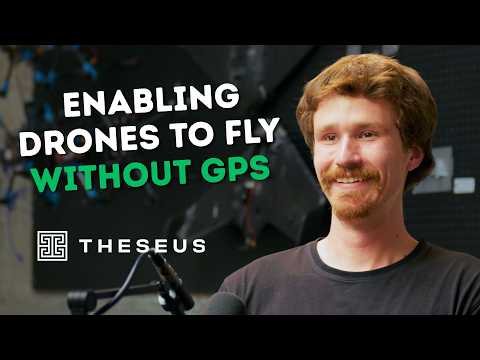
#49 - Ian Laffey, Cofounder & CEO of Theseus
#49 - Ian Laffey, Cofounder & CEO of Theseus
Summary
Ian Laffey, co-founder and CEO of Theseus, shares the journey of building GPS-denied navigation technology for drones. What started as a hackathon project became a critical piece of defense technology after their Twitter post attracted attention from Ukraine and the White House. The company builds a small box that attaches to drones, enabling them to navigate autonomously without GPS by using visual fingerprinting against satellite imagery.
The interview covers Ian’s path from a Yale physics student to defense tech founder, including multiple trips to Ukraine to test and iterate on their product in real combat conditions. He discusses the intense pressure of building hardware for life-or-death situations, the importance of understanding problems deeply before bringing in team members, and how hiking the Appalachian Trail at 18 shaped his approach to difficult challenges.
Highlights
”We posted on Twitter, slept 18 hours, woke up to messages from Ukraine and the White House”
Clip command
yt-dlp --download-sections "*0:00-1:00" "https://www.youtube.com/watch?v=OrIoZnqCs4w" --force-keyframes-at-cuts --merge-output-format mp4 -o "OrIoZnqCs4w-0m00s.mp4"“We built a drone that flies without GPS using Google Maps to fingerprint where you are. We built that, put a picture up on Twitter, then slept for 18 hours. I woke up to tons of people from Ukraine, tons of people associated with the White House. Very quickly it became clear we needed to do this.” — Ian Laffey, 0:00
”First prototype was literally an Android phone strapped to a drone”
Clip command
yt-dlp --download-sections "*8:40-9:45" "https://www.youtube.com/watch?v=OrIoZnqCs4w" --force-keyframes-at-cuts --merge-output-format mp4 -o "OrIoZnqCs4w-8m40s.mp4"“Our first real prototype was basically an Android phone strapped to a drone. It sounds ridiculous, but it worked. We had to start somewhere. Phones have pretty good cameras and processors. It let us test the core concept without building custom hardware.” — Ian Laffey, 8:40
”Every day we’re not shipping, that’s a day where someone might die”
Clip command
yt-dlp --download-sections "*16:55-18:00" "https://www.youtube.com/watch?v=OrIoZnqCs4w" --force-keyframes-at-cuts --merge-output-format mp4 -o "OrIoZnqCs4w-16m55s.mp4"“Every day we’re not shipping, that’s a day where someone might die because they didn’t have our product. That weight is always there. Every decision you make, you’re thinking about the consequences. It makes you more careful, but also more stressful.” — Ian Laffey, 16:55
”Sasha dropped out of his PhD. I quit my job. We went all in.”
Clip command
yt-dlp --download-sections "*7:20-8:25" "https://www.youtube.com/watch?v=OrIoZnqCs4w" --force-keyframes-at-cuts --merge-output-format mp4 -o "OrIoZnqCs4w-7m20s.mp4"“After the hackathon, the response made it clear - this was needed. People were literally fighting and dying, and this technology could help. Sasha dropped out of his PhD. I quit my job. We went all in. Within weeks we were talking to people in Ukraine.” — Ian Laffey, 7:20
”GPS has been military navigation backbone for decades - but it can be jammed”
Clip command
yt-dlp --download-sections "*4:19-5:25" "https://www.youtube.com/watch?v=OrIoZnqCs4w" --force-keyframes-at-cuts --merge-output-format mp4 -o "OrIoZnqCs4w-4m19s.mp4"“GPS has been the backbone of military navigation for decades. Missiles, drones, vehicles - everything uses GPS. But GPS can be jammed or spoofed. The Russians are really good at this. In Ukraine, GPS is basically unusable in many areas because of Russian jamming.” — Ian Laffey, 4:19
”The unknown unknowns are the things that will kill you in hardware”
Clip command
yt-dlp --download-sections "*48:47-49:50" "https://www.youtube.com/watch?v=OrIoZnqCs4w" --force-keyframes-at-cuts --merge-output-format mp4 -o "OrIoZnqCs4w-48m47s.mp4"“The unknown unknowns are the things that will kill you. In software, you can push a fix. In hardware, if you shipped something wrong, those units are gone. You have to be incredibly thorough about testing every edge case.” — Ian Laffey, 48:47
Key Points
- GPS-Denied Navigation (0:26) - Theseus builds technology that allows drones to navigate autonomously without GPS using visual fingerprinting against Google Maps/satellite imagery
- Hackathon Origin (2:30) - Started at a defense hackathon in LA where Ian and co-founder Sasha built a working prototype, posted it on Twitter, and woke up to messages from Ukraine and White House contacts
- GPS in Military Systems (4:19) - Everything built for military in last 30-50 years uses GPS for navigation, making GPS denial a critical vulnerability
- Android Phone Prototype (8:40) - First prototype was literally an Android phone strapped to a drone with an app they built
- Painful Delays (16:55) - Every day of delay in shipping product to Ukraine means real consequences on the battlefield
- Decision Making on Intuition (20:51) - Learning to make decisions with incomplete information when people’s lives depend on it
- Building Trust in Ukraine (32:54) - Had to physically go to Ukraine multiple times to build relationships and understand the real problems
- Being Earnest (39:05) - The importance of genuine care and authenticity when working with military partners
- “What is F*ing Me the Most?” (41:02) - Framework for prioritizing problems when everything feels urgent
- Unknown Unknowns (48:47) - The danger of problems you don’t even know exist, especially in hardware
- Understanding Problems First (58:53) - Importance of deeply understanding a problem before bringing people in to solve it
- Building the Right Team (1:05:57) - Hiring people who genuinely care about the mission, not just the job
- First Ukraine Trip (1:12:34) - Intense experience of testing technology in an active war zone
- Florida Testing (1:19:49) - Rigorous field testing methodology developed to simulate combat conditions
- Appalachian Trail (1:23:49) - Hiked the entire trail at 18, learning about persistence and dealing with monotony
- Nine Nines Reliability (1:37:34) - Journey from first prototype to achieving 99.9999999% reliability
Mentions
Companies
- Theseus (0:26) - Ian’s company building GPS-denied navigation for drones
- Google Maps (0:26) - Used as satellite imagery source for visual fingerprinting
- DJI (8:40) - Chinese drone manufacturer, dominant in consumer/commercial market
- Yale University (2:30) - Where co-founder Sasha was doing his PhD
Products & Technologies
- GPS (Global Positioning System) (0:26) - Navigation system that military systems have relied on for decades
- GPS Jamming (4:19) - Electronic warfare technique used to deny GPS to enemy systems
- Visual Fingerprinting (0:26) - Technique of matching camera imagery to satellite maps for positioning
- Android Phone Prototype (8:40) - First working prototype built during hackathon
- FPV Drones (32:54) - First-person view drones used extensively in Ukraine conflict
People
Places
- Ukraine (0:26) - Primary customer and testing ground for Theseus technology
- Los Angeles (2:30) - Location of the defense hackathon where Theseus started
- Florida (1:19:49) - Location of rigorous field testing
- Appalachian Trail (1:23:49) - 2,190-mile trail Ian hiked at age 18
Surprising Quotes
“Drones and then also missiles all have GPS. Anything that’s been built for the military in the last 30, 40, 50 years does its navigation with GPS.” — 0:00
“We built that, put a picture up on Twitter, and then slept for like 18 hours. I woke up, opened my phone, and tons of people from Ukraine, tons of people associated with the White House… very quickly became clear we needed to do this.” — 0:26
“Every day we’re not shipping, that’s a day where someone might die because they didn’t have our product.” — 16:55
“I want to make a drone that flies without GPS. It should use Google Maps to like fingerprint where you are.” — 0:15
“The unknown unknowns are the things that will kill you. In software, you can push a fix. In hardware, if you shipped something wrong, those units are gone.” — 48:47
Transcript
0:00 Drones and then also missiles all have GPS. Anything that’s been built for the military in the last 30, 40, 50 years does its navigation with GPS. I want to make a drone that flies without GPS. It should use Google Maps to like fingerprint where you are. We built that, put a picture up on Twitter, and then slept for like 18 hours. I woke up, opened my phone, and tons of people from Ukraine, tons of people associated with the White House… very quickly became clear we needed to do this.
0:39 This is Ian Laffey and he is the co-founder and CEO of Theseus. And Theseus is basically building a little box that sits on the underside of a drone that makes it so drones can fly into GPS denied environments and basically fly without GPS. Do you want to just talk about what that is and why it matters?
1:05 Yeah, for sure. So, yeah, you want drones to do things autonomously. You want them to do things without needing an operator to control them the whole time. And in order to do that, they need to know where they are. Because if I’m trying to go from A to B and I don’t know where I am at A and I don’t know where I am at A plus one, then I can’t get to B.
1:30 I know that you went through a hackathon and basically let’s start off there. How did that hackathon come together? What did you build and what came out of it?
1:45 Yeah, for sure. So, Sasha, my co-founder, he was doing a PhD at Yale, and one of the guys that put the hackathon on was also like they were buddies from school. And we did our undergrad together. We’re very good friends. And so I think I’d seen it on Twitter, but I wasn’t planning on making the trip down to LA.
2:15 And so he messaged me and he’s like, “Oh, dude, do you want to go to this?” Yes, definitely. Neither of us knew anything about hardware really. We both had physics backgrounds. And we just showed up and we’re like, “All right, let’s build something.”
2:45 The idea was pretty simple. GPS is how everything navigates. If you can deny GPS, you can deny navigation. And so we thought, what if you could navigate without GPS? What if you could use a camera and match what you see to satellite imagery? That’s basically what we built in like 36 hours.
3:15 We strapped an Android phone to a drone. The phone had a camera, and we wrote an app that would take pictures, compare them to Google Maps satellite imagery, and figure out where you were. It was janky as hell, but it worked.
3:45 We won the hackathon, posted a picture on Twitter, and then crashed. Slept for like 18 hours. And when I woke up and opened my phone, it was insane. Messages from people in Ukraine, people connected to the White House, defense contractors. It was clear immediately that this was something people needed.
4:19 The reason it matters is that GPS has been the backbone of military navigation for decades. Missiles, drones, vehicles - everything uses GPS. But GPS can be jammed or spoofed. The Russians are really good at this. In Ukraine, GPS is basically unusable in many areas because of Russian jamming.
4:50 So if your drone relies on GPS and it flies into a jammed area, it’s done. It’s lost. It might crash, it might fly in circles, it might get captured. Having an alternative navigation system that doesn’t rely on GPS is a game changer.
5:20 Our system uses computer vision. The drone looks down with a camera, takes pictures of the ground, and matches those pictures against satellite imagery. It’s like how you might recognize where you are by looking at landmarks, except we’re doing it computationally, comparing visual features.
5:50 The challenge is doing this in real-time, on a small computer, while the drone is moving. You can’t have the drone stop and think for 30 seconds. You need answers in milliseconds. That’s where the hard engineering comes in.
6:20 We also need to handle all kinds of conditions - different lighting, weather, seasons. A forest looks different in summer versus winter. A city looks different at noon versus midnight. The system needs to be robust to all of that.
6:50 After the hackathon, we had a decision to make. Do we go back to our normal lives, or do we pursue this? The response we got made it clear - this was needed. People were literally fighting and dying, and this technology could help.
7:20 Sasha dropped out of his PhD. I quit my job. We went all in. Within weeks we were talking to people in Ukraine, understanding what they needed, figuring out how to actually deploy something in a war zone.
7:50 The thing about defense tech that’s different from consumer tech is that the stakes are real. If your social media app has a bug, someone might miss a notification. If our navigation system has a bug, a drone might crash or miss its target. People might die.
8:20 That weight is always there. Every decision you make, you’re thinking about the consequences. It makes you more careful, but it also makes everything more stressful.
8:40 Our first real prototype was basically an Android phone strapped to a drone. It sounds ridiculous, but it worked. We had to start somewhere, and phones actually have pretty good cameras and processors. It let us test the core concept without building custom hardware.
9:10 From there, we iterated. Built custom hardware, improved the algorithms, made it smaller and lighter. The current version is a small box that can be attached to pretty much any drone. It’s about the size of a deck of cards.
9:40 The key insight was that you don’t need perfect accuracy. You need to be accurate enough to complete the mission. For a drone flying to a location, being within a few meters is usually fine. GPS gives you meter-level accuracy when it works, so that’s our target.
10:10 We spent a lot of time understanding the failure modes. What happens if the camera gets dirty? What if there are clouds? What if the satellite imagery is out of date? You have to build systems to handle all these edge cases.
10:40 Testing is crucial. We test constantly. In the lab, in the field, in conditions that simulate combat. We’ve done hundreds of flights, thousands of hours of testing. Every failure teaches us something.
11:10 One thing that surprised me is how much of the challenge is not the core technology, but everything around it. Packaging, power management, thermal issues, integration with different drone platforms. The algorithm is maybe 20% of the work.
11:40 Working with military customers is also a learning curve. They have specific requirements, specific processes, specific terminology. You have to learn their world while building in yours.
12:10 Ukraine has been an incredible partner because they’re willing to try new things. They’re in a fight for their existence, so they’re open to innovation in ways that peacetime militaries aren’t. That’s been invaluable for us.
12:40 We’ve learned so much from them. They’ll use something, tell us immediately what’s wrong, what works, what they need. That feedback loop is incredibly tight compared to traditional defense procurement.
13:10 Traditional defense moves slowly. You write proposals, wait for contracts, go through reviews. That can take years. In Ukraine, they needed something last week. It forces you to move fast.
13:40 We made the decision early on that we would ship imperfect products and iterate rather than wait for perfection. Something that works 80% of the time and ships today is more valuable than something perfect that ships in six months.
14:10 That said, you have to be honest about the limitations. We tell our users exactly what the system can and can’t do. Overpromising in defense tech can get people killed. You have to be brutally honest.
14:40 The team has grown a lot since the hackathon. It’s not just me and Sasha anymore. We’ve brought in hardware engineers, software engineers, people with military experience. Building a company while building a product is challenging.
15:10 We look for people who genuinely care about the mission. This isn’t a job where you clock in and clock out. Everyone on the team understands what we’re building and why it matters. That shared purpose is powerful.
15:40 I’ve made hiring mistakes. Brought in people who were technically skilled but didn’t have the right mindset for this kind of work. Learned to prioritize character and mission alignment over pure credentials.
16:10 The funding environment for defense tech has changed dramatically. A few years ago, investors were skeptical. Now there’s significant capital flowing into the space. The Ukraine war changed a lot of minds.
16:40 But we’re not building this for the funding. We’re building it because it needs to exist. The money is a means to an end, not the goal. That keeps us focused on what matters.
16:55 Delays are painful in a way that’s hard to explain. Every day we’re not shipping, that’s a day where someone might die because they didn’t have our product. That urgency is constant.
17:25 We’ve had times where something broke at the worst possible moment. A software bug, a hardware failure. You have to fix it, and you have to fix it now. There’s no “we’ll patch it next sprint.”
17:55 The pressure can be overwhelming. I’ve had nights where I couldn’t sleep, running through scenarios in my head. What if this fails? What if we missed something? You have to learn to manage that.
18:25 I’ve developed some coping mechanisms. Exercise helps. Talking to the team helps. Having clarity on what you can control versus what you can’t. You can’t control everything, but you can control how hard you work.
18:55 The relationship with my co-founder is critical. Sasha and I balance each other out. When one of us is stressed, the other is steady. We’ve known each other long enough to read each other.
19:25 Communication is huge. In a high-stakes environment, miscommunication can be catastrophic. We over-communicate. Write things down. Confirm understanding. It feels redundant sometimes, but it prevents disasters.
19:55 We’ve also learned to celebrate wins, even small ones. When something works, take a moment to acknowledge it. The work is hard enough without ignoring the progress you’re making.
20:25 Looking back at the hackathon, I can’t believe how far we’ve come. What started as a weekend project is now a real company with real products deployed in a real conflict. It’s surreal.
20:51 Decision making with incomplete information is something I’ve had to get comfortable with. You never have all the data you want. You make the best call you can and adjust as you learn more.
21:21 Sometimes the right decision feels wrong in the moment. You have to trust your process and not second-guess yourself constantly. Analysis paralysis is real and it’s deadly in fast-moving situations.
21:51 I’ve learned to distinguish between reversible and irreversible decisions. For reversible ones, bias toward action. For irreversible ones, take more time. Most decisions are more reversible than you think.
22:21 The military talks about the OODA loop - Observe, Orient, Decide, Act. It’s a useful framework. The side that cycles through this faster usually wins. We try to embody that in how we work.
22:51 Part of moving fast is being willing to be wrong. If you’re not making mistakes, you’re not moving fast enough. The key is catching mistakes early and learning from them quickly.
23:21 We do post-mortems on everything significant. What worked? What didn’t? What would we do differently? No blame, just learning. That culture of honest reflection is essential.
23:51 The technical challenges are interesting, but the human challenges are harder. Keeping a team motivated, managing different personalities, maintaining focus when things get chaotic.
24:21 I underestimated how much of my job would be people management. Building and leading a team is a skill, and it’s different from building technology. You have to work at it.
24:51 Transparency helps. We share a lot with the team - financials, strategy, challenges. People do better work when they understand the context. And they can handle hard truths.
25:21 We’ve had tough conversations. Things like, “This product isn’t working and we need to pivot.” Or “This person isn’t performing and we need to make a change.” Those are never easy.
25:51 But avoiding hard conversations makes things worse. Problems don’t fix themselves. The longer you wait, the harder it gets. Better to address things early, even when it’s uncomfortable.
26:21 I’ve gotten better at giving feedback. Specific, timely, actionable. Not just “good job” or “this needs work” but exactly what was good or what needs to change and how.
26:51 Receiving feedback is equally important. I ask people to tell me when I’m wrong or when something isn’t working. Creating space for that honesty takes effort.
27:21 The culture of a company is set by the founders. Every decision, every action, every conversation shapes it. You can’t just declare a culture; you have to live it.
27:51 We value speed, honesty, and craftsmanship. We want to move fast but not sloppy. Build things that work and that we’re proud of. Those values guide daily decisions.
28:21 One thing we don’t tolerate is ego. The mission is bigger than any individual. If someone can’t collaborate, can’t take feedback, can’t put the team first, they don’t belong here.
28:51 Working with the military has taught me a lot about organizational effectiveness. There’s a reason why certain practices exist. They’ve been refined over decades of actual operations.
29:21 But military organizations can also be slow and bureaucratic. We try to take the good parts - the discipline, the clarity, the structure - without the bad parts.
29:51 The relationship between startups and the military is evolving. There’s more openness to working together than there was a decade ago. Still friction, but progress.
30:21 Traditional defense contractors have advantages - relationships, scale, track record. But they’re also slow and often build what they want to build rather than what’s needed.
30:51 Startups can be more responsive, more innovative. We can pivot quickly when requirements change. That agility is valuable in a rapidly evolving threat environment.
31:21 The sweet spot might be collaboration - startups providing innovation and speed, larger organizations providing scale and integration. We’re seeing more of that.
31:51 Internationally, other countries are watching what’s happening in Ukraine and learning. The lessons about drones, about GPS denial, about rapid innovation - those are being absorbed worldwide.
32:21 That means the bar is constantly rising. What’s innovative today is baseline tomorrow. We have to keep pushing, keep improving. There’s no resting.
32:54 Building trust in Ukraine required going there in person. You can’t just send emails and expect people to trust you with their lives. You have to show up, look them in the eye, understand their reality.
33:24 The first time I went to Ukraine was intense. Air raid sirens, bomb shelters, the constant awareness that you’re in a war zone. It changes your perspective on what matters.
33:54 The Ukrainians I’ve met are incredibly resilient. They’ve been fighting for years now. They’re exhausted but determined. Their spirit is inspiring.
34:24 Seeing our technology actually used in combat is both thrilling and sobering. You built something that’s making a difference. But you’re also acutely aware of what failure means.
34:54 We get feedback from the field constantly. “This worked great.” “This failed here.” “We need this feature.” It’s the tightest feedback loop you can imagine.
35:24 Some of that feedback is hard to hear. When something breaks in combat, people’s lives are at risk. You have to be humble, fix it, and do better. No excuses.
35:54 The relationship we’ve built with Ukrainian units is deep. They trust us. We trust them. It’s a partnership forged in incredibly difficult circumstances.
36:24 That trust didn’t come automatically. It was earned over time, through showing up, through delivering, through being honest about limitations. You can’t fake it.
36:54 I’ve made multiple trips to Ukraine now. Each one teaches me something. The situation on the ground evolves, and you have to keep learning to stay relevant.
37:24 The logistics of operating in a war zone are challenging. Getting equipment in, getting data out, communicating securely. Everything is harder than it would be in peacetime.
37:54 We’ve developed systems for rapid deployment and feedback. Something breaks, we know within hours. Fix goes out within days. That speed matters.
38:24 The war has accelerated innovation in ways that peacetime never would. Necessity really is the mother of invention. When you need something to survive, you figure it out.
39:05 Being earnest matters more than I expected. People can tell when you genuinely care versus when you’re just trying to make a sale. Authenticity builds trust.
39:35 We’re not doing this for the money. We’re doing it because it matters. That comes through in how we work, how we communicate, how we prioritize. People sense it.
40:05 I’ve seen companies in defense tech that are in it for the wrong reasons. Chasing contracts, playing politics, optimizing for appearances. They rarely succeed long-term.
40:35 The best defense companies I’ve encountered are mission-driven. They’re obsessed with solving the problem, not with looking good or getting rich. That focus is magnetic.
41:02 When everything feels urgent, I ask myself: “What is f*cking me the most right now?” That’s where to focus. You can’t do everything, so do the thing that hurts the most.
41:32 It’s a crude framework, but it works. Cuts through the noise. Forces you to be honest about what’s actually blocking progress versus what’s just uncomfortable.
42:02 Often the thing that’s f*cking you the most is something you’ve been avoiding. A hard conversation, a technical problem you don’t want to face, a decision you’ve been postponing.
42:32 Confronting those things head-on is liberating. Even if the outcome isn’t what you wanted, at least you’re dealing with reality. Progress becomes possible.
43:02 I try to do this exercise weekly. Look at everything on my plate, identify the biggest blocker, and focus there. It’s simple but requires discipline.
43:32 The team has adopted this too. In our meetings, we often start with: what’s the biggest problem right now? It keeps us focused on what matters.
44:02 There’s a difference between being busy and being productive. You can fill every hour with activities that feel important but don’t move the needle. That’s a trap.
44:32 Saying no is hard but necessary. Every yes is a no to something else. We’re ruthless about protecting focus. If it doesn’t help the mission, we don’t do it.
45:02 Meetings are a particular area of discipline. We keep them short, we have agendas, we make decisions. No meetings for the sake of meetings.
45:32 Documentation helps. Writing things down forces clarity. It also means people can get information asynchronously instead of needing yet another meeting.
46:02 We use Slack, but carefully. It can be a huge distraction if you’re not intentional. Batch communication when possible, don’t be reactive to every ping.
46:32 Deep work time is sacred. I block off chunks of my calendar for thinking, designing, problem-solving. No interruptions. That’s when the real progress happens.
47:02 But you also have to be available when things go wrong. It’s a balance. Protecting focus while staying responsive. I’m still figuring it out.
47:32 Sleep is non-negotiable for me now. I learned the hard way that sleep-deprived me makes bad decisions. Better to get rest and be sharp than power through exhausted.
48:02 Exercise too. Sounds basic, but physical health affects mental performance. I make time for it even when things are crazy. It pays dividends.
48:47 The unknown unknowns are terrifying. The things you don’t even know to worry about. In software, you can push a fix. In hardware, if you shipped something wrong, those units are out there.
49:17 We’ve had scares. Times when we discovered an issue and had to trace back which units were affected. Thankfully nothing catastrophic, but it’s always a reminder.
49:47 Testing helps uncover unknown unknowns, but you can never test everything. There are always edge cases you didn’t anticipate, environments you didn’t simulate.
50:17 The best mitigation is designing for failure. Assume things will break. Have fallbacks, have monitoring, have ways to recover. Defense in depth.
50:47 We also try to fail fast. If something is going to fail, find out early when the cost is low. That’s why we test so aggressively.
51:17 Simulation helps but has limits. Real-world conditions are messier than any simulation. There’s no substitute for actual field testing.
51:47 We’ve built relationships with testing facilities and military ranges. Places where we can put our stuff through realistic conditions. It’s expensive but essential.
52:17 Each test teaches us something. Sometimes it’s “this works great.” Sometimes it’s “this breaks in ways we never imagined.” Both are valuable.
52:47 The iterative cycle of build-test-learn is core to how we work. Quick iterations, constant feedback, continuous improvement. It never stops.
53:17 Hardware iteration is slower than software, which is frustrating. You can’t just push a new version. But you can parallelize - test this while building the next.
53:47 Supply chain is a constant headache. Parts availability, lead times, quality control. You’re dependent on external factors you can’t control.
54:17 We’ve developed redundancies. Multiple suppliers for critical components. Buffer inventory. Alternative designs that use different parts. It adds complexity but reduces risk.
54:47 Manufacturing at scale is a whole different challenge. What works in small batches doesn’t necessarily work at volume. Processes that are fine for 10 units break at 1000.
55:17 Quality control has to scale too. You can’t manually inspect every unit when volumes grow. You need systems, processes, statistical methods.
55:47 We’re learning a lot about manufacturing engineering. It’s a discipline unto itself. Different skills than product development, but equally important.
56:17 The goal is reliable production at scale. Consistent quality, reasonable cost, fast throughput. Easy to say, hard to achieve.
56:47 We’re not there yet, but we’re making progress. Each batch is better than the last. Each production run teaches us something.
57:17 Partnership with contract manufacturers helps. They have expertise we don’t. But you have to manage those relationships carefully.
57:47 Communication is key. They need to understand what we’re building and why. We need to understand their constraints. Alignment takes ongoing effort.
58:17 Quality issues get traced back ruthlessly. If something fails in the field, we do a full investigation. Find the root cause, fix it, prevent recurrence.
58:53 Understanding the problem before bringing people in is crucial. If you hire before you understand what you need, you’ll hire the wrong people.
59:23 Early on, Sasha and I did everything. Not because we were good at everything, but because we needed to understand all the pieces before delegating.
59:53 That hands-on experience is invaluable when hiring. You know what good looks like because you’ve done it. You can evaluate candidates more effectively.
1:00:23 It also helps with management. If someone tells me something is impossible, I have the context to know if they’re right or if they’re just not trying hard enough.
1:00:53 Not that I micromanage. Once we hire people, we trust them. But having that foundation means the trust is informed, not blind.
1:01:23 The flip side is knowing when to let go. At some point, others will be better than you at specific things. Your job becomes enabling them, not doing it yourself.
1:01:53 That transition is hard. You go from being the one who does things to the one who makes sure things get done. Different skill set.
1:02:23 I still code sometimes, still test things, still get hands dirty. It keeps me grounded and connected to the work. But it’s not the majority of my time anymore.
1:02:53 The CEO role is primarily about setting direction, making key decisions, and building the team. Everything else should flow from those.
1:03:23 Direction means having a clear vision and communicating it constantly. People need to know where we’re going and why. Repeat it until you’re sick of it, then repeat it more.
1:03:53 Decisions means being willing to make the hard calls. Often with incomplete information, often unpopular. That’s the job.
1:04:23 Building the team means recruiting, developing, and sometimes letting people go. It’s the most important thing because everything else depends on having the right people.
1:04:53 I spend a lot of time on recruiting. Meeting candidates, selling the mission, evaluating fit. A great hire is worth ten mediocre ones.
1:05:27 We’re picky. We’d rather wait than hire someone who isn’t right. An open position is better than a bad hire.
1:05:57 We look for people who give a sh*t. Technical skills can be developed. Caring about the outcome is harder to teach.
1:06:27 Questions that reveal character: Why do you want to work on this? Tell me about a time you pushed through something hard. What are you most proud of?
1:06:57 The answers tell you a lot. Are they motivated by challenge and impact, or by comfort and status? Do they take ownership or make excuses?
1:07:27 Reference checks are valuable but underused. Actually call the references. Ask probing questions. People will tell you things they wouldn’t write.
1:07:57 We also do trial projects when possible. See how someone actually works, not just how they interview. Reveals a lot that interviews miss.
1:08:27 Onboarding matters too. Bringing someone in and just expecting them to figure it out doesn’t work. You need to invest in getting them up to speed.
1:08:57 We pair new people with experienced team members. Regular check-ins, clear expectations, gradual ramp-up of responsibility. It takes time but pays off.
1:09:27 Retention is important too. Good people have options. You have to create an environment where they want to stay - interesting work, growth opportunities, good culture.
1:09:57 We try to give people ownership and autonomy. Micromanagement drives talent away. Trust people to do their jobs and support them when they need help.
1:10:27 Compensation matters but isn’t everything. Mission-driven people will take less money for more meaningful work. But you can’t underpay and expect loyalty.
1:10:57 Equity is important for startups. Aligning incentives so people benefit when the company succeeds. We’re generous with equity for key people.
1:11:27 Career development is something we’re working on. As the company grows, there need to be paths for people to grow too. Otherwise they’ll leave.
1:11:57 Feedback loops for performance. Regular one-on-ones, clear objectives, honest assessments. People want to know how they’re doing.
1:12:34 The first time going to Ukraine was surreal. You’re in a country at war. Air raid sirens, people in bomb shelters, the tension in the air. It hits you viscerally.
1:13:04 Getting there is an adventure itself. Flying into Poland, driving across the border. Everything takes longer, is more complicated. You’re in a different world.
1:13:34 Meeting the people we work with in person was powerful. These aren’t just names on emails. They’re real people fighting for their country. It makes it personal.
1:14:04 Seeing the conditions they work in, the equipment they use, the challenges they face. You understand things you never would from a distance.
1:14:34 We’ve trained Ukrainian operators on our equipment. Watching them learn it, use it, adapt it to their needs. That feedback is gold.
1:15:04 They’re incredibly resourceful. MacGyvering solutions we never would have thought of. User innovation in real-time under extreme pressure.
1:15:34 The relationships built over shared meals, shared risks, shared purpose. You can’t replicate that over video calls. Being there matters.
1:16:04 I’ve seen the impact of our work firsthand. Missions that succeeded because navigation worked. It’s validating in a way nothing else is.
1:16:34 But you also see the cost of failure. Equipment that didn’t perform. Missions that failed. People who didn’t come back. That weight stays with you.
1:17:04 Coming back to the US after Ukraine is jarring. Life here is so normal, so comfortable. The disconnect between our reality and theirs is stark.
1:17:34 It motivates me. Knowing what’s at stake, knowing who we’re serving. When things get hard here, I think about what they’re dealing with there.
1:18:04 We bring back lessons from each trip. Things to improve, new features to add, better ways to train. It directly shapes our roadmap.
1:18:34 The war will end eventually. What we’re building has to work beyond Ukraine. The technology is applicable to many scenarios, many customers.
1:19:04 But Ukraine will always be special to us. They took a chance on us when we were unproven. That relationship is foundational.
1:19:49 Florida testing was crucial for development. We set up intense field testing in conditions that simulate combat. Heat, humidity, long duration flights.
1:20:19 We developed a checklist methodology for testing. Systematic, repeatable, comprehensive. Every test follows the same process so results are comparable.
1:20:49 Failure modes get catalogued and analyzed. What broke? Why? How do we prevent it? Each failure makes the system better.
1:21:19 We test until things break, then fix them and test again. Push limits, find boundaries, understand the envelope. That’s how you build robust systems.
1:21:49 Environmental stress testing. Vibration, temperature extremes, humidity. Real-world conditions are harsh. Lab conditions don’t cut it.
1:22:19 We learned a lot about thermal management. Electronics get hot. Drones vibrate. Combining those stresses reveals weaknesses.
1:22:49 Battery management is tricky. You want maximum flight time but can’t drain batteries so low that you can’t recover. Margins matter.
1:23:19 Weight is constant enemy. Every gram matters for drones. Adding features means adding weight. Trade-offs everywhere.
1:23:49 When I was 18, I hiked the entire Appalachian Trail. 2,190 miles from Georgia to Maine. It took about 6 months.
1:24:19 It taught me a lot about persistence. Day after day, just keep walking. You don’t think about the whole trail, just the next step.
1:24:49 Monotony is hard. Doing the same thing every day for months. Finding ways to stay motivated when progress feels slow. That’s a skill.
1:25:19 Physical hardship too. Rain, cold, injuries. You learn what you can push through and what you can’t. Knowing your limits is valuable.
1:25:49 Self-reliance. On the trail, you’re responsible for yourself. Nobody’s coming to save you. That independence carries over.
1:26:19 But also community. Other hikers, trail angels, people who help along the way. You can’t do it completely alone. Asking for help is okay.
1:26:49 Finishing was profound. Looking back at what you accomplished. The distance, the time, the effort. Proof that big things are possible.
1:27:19 I think about that hike when things get hard with the company. If I could walk 2,200 miles, I can solve this problem. Perspective helps.
1:27:49 The trail also taught me about simplicity. You carry everything you need. No excess. That minimalism applies to building products too.
1:28:19 Being comfortable with discomfort. On the trail, you’re often uncomfortable. Learning to function anyway, not let it stop you.
1:28:49 Nature is humbling. You’re at the mercy of weather, terrain, your own body. Control is limited. Accepting that is freeing.
1:29:19 I met people from all walks of life on the trail. Diverse backgrounds, diverse reasons for being there. Perspectives I never would have encountered otherwise.
1:29:49 Those relationships, formed through shared challenge, are deep. Some of those people are still friends. Bonds formed in difficulty last.
1:30:19 Time to think. Months of walking gives you a lot of time with your own thoughts. Processing, planning, dreaming. Valuable clarity.
1:30:49 I decided a lot about what I wanted my life to be during that hike. The direction I wanted to go, what mattered to me.
1:31:19 Building a company is like a long hike. One step at a time, dealing with whatever comes, trusting the process. Same energy.
1:31:49 There are days when nothing seems to go right. Just like there were days on the trail when everything sucked. You keep going anyway.
1:32:19 And there are days when everything clicks. Breakthrough moments. They make the hard days worth it. You remember why you’re doing this.
1:32:49 The trail taught me that anything is possible if you break it down small enough. No day of hiking was impossible. String enough together, you cross the country.
1:33:19 Same with building. No single task is impossible. String enough together, you build something amazing. The key is just not stopping.
1:33:49 I would encourage anyone to do something like a through-hike. Doesn’t have to be the AT. But some big physical challenge that takes months.
1:34:19 You learn things about yourself you can’t learn any other way. Your capacity for endurance. Your relationship with discomfort. What you actually need.
1:34:49 Doing it young, before “real life” kicks in, was lucky. Fewer obligations, more flexibility. Harder to take six months off later.
1:35:19 But the lessons last forever. I draw on that experience constantly. It’s part of who I am now.
1:35:49 Looking ahead for Theseus, there’s so much to do. Product development, scaling, new markets. It feels like we’re just getting started.
1:36:19 The technology will keep evolving. Better algorithms, smaller hardware, more capabilities. The fundamental approach is sound, but there’s room to improve everything.
1:36:49 Markets beyond Ukraine are opening. Other militaries, commercial applications. GPS denial is a broader problem than just one war.
1:37:04 We’re building the team to handle scale. Can’t do everything ourselves anymore. Need people and processes for the next phase.
1:37:34 From first prototype to nine nines of reliability. That’s been the journey. From a hackathon project to something you can stake lives on.
1:38:04 Nine nines means 99.9999999% reliable. That’s the goal for critical systems. You can count failures on one hand out of billions of operations.
1:38:34 We’re not at nine nines yet for everything. But we’re getting closer. Each iteration, each improvement, each failure fixed.
1:39:04 Reliability is earned through obsessive attention to detail. Testing, monitoring, fixing, repeating. There are no shortcuts.
1:39:34 The journey continues. Building something that matters, with people who care, under pressure that’s real. It’s hard and it’s worth it.
1:40:04 I’m grateful for the opportunity. Not everyone gets to work on something this meaningful. We don’t take it for granted.
1:40:34 Whatever comes next, we’ll handle it. That’s what we’ve learned. Problems are solvable. Challenges are surmountable. Just keep going.
1:41:04 Thanks for having me. These conversations matter. Sharing what we’ve learned might help someone else building something hard. That’s worth doing.