Fireside Chat w Joshua Browder
Fireside Chat w Joshua Browder
Summary
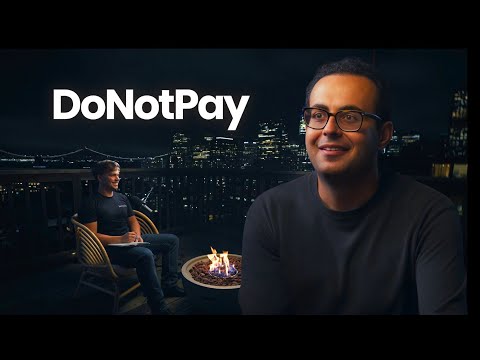
Joshua Browder, founder and CEO of DoNotPay and Browder Capital, shares his entrepreneurial journey in this nighttime fireside chat overlooking San Francisco. Starting from creating iPhone app themes on the jailbroken Cydia store as a teenager in the UK, Browder built an unauthorized Pret A Manger app that eventually became the official app after the company realized he was just a passionate 14-year-old.
Browder discusses growing up as the son of Bill Browder, who was once Putin’s number one foreign enemy for freezing billions in Russian assets through the Magnitsky Act. This experience taught him to be fearless and put everyday problems in perspective. He came to Stanford after being inspired by YouTube coding videos that showed California’s beautiful landscape, and found Silicon Valley to be 10-100x more ambitious than the UK.
The interview covers DoNotPay’s journey from a free parking ticket appeal service to a consumer rights company with over 100 products, including a clever virtual credit card system to help people sue robocall companies. Browder shares how he almost gave up after 19 VC rejections, but a pivot in his pitch strategy and demo approach led to immediate investment offers. He also recounts living in the original Facebook house and using tour buses to acquire app downloads, interviewing Warren Buffett at a Microsoft summit, and his philosophy on momentum, investing in young founders, and building a sustainable, profitable business.
Highlights
”With software you can build things without asking for permission”
Clip command
yt-dlp --download-sections "*0:50-1:55" "https://www.youtube.com/watch?v=INCjTTw-rwg" --force-keyframes-at-cuts --merge-output-format mp4 -o "INCjTTw-rwg-0m50s.mp4"“I love software because you can build things without asking for other people’s permission. As a child I was looking at all these career paths - you have to work for 30 years somewhere, work your way up, then eventually build something. But with software you have the power to create something and if it’s useful anyone in the world can use it.” — Joshua Browder, 0:50
”They wanted to sue me - then realized I was 14”
Clip command
yt-dlp --download-sections "*4:05-5:10" "https://www.youtube.com/watch?v=INCjTTw-rwg" --force-keyframes-at-cuts --merge-output-format mp4 -o "INCjTTw-rwg-4m05s.mp4"“Pret A Manger invited me to talk to their legal team so they could educate me on copyright law. I showed up and they realized I was a 14-year-old. They completely changed because it wouldn’t look good if they sued a 14-year-old app developer who was just passionate about their sandwiches. They made me the official app developer instead.” — Joshua Browder, 4:45
”My father was Putin’s number one foreign enemy”
Clip command
yt-dlp --download-sections "*6:04-7:10" "https://www.youtube.com/watch?v=INCjTTw-rwg" --force-keyframes-at-cuts --merge-output-format mp4 -o "INCjTTw-rwg-6m04s.mp4"“My father, Bill Browder, was Putin’s number one foreign enemy. He pushed the Magnitsky Act that froze billions in Russian assets. Russians would show up to our house to scare us. When you have dangerous groups after your family, it puts everything in perspective - health and safety are what really matter.” — Joshua Browder, 6:04
”One man made close to $100k full-time suing robocallers”
Clip command
yt-dlp --download-sections "*17:39-18:45" "https://www.youtube.com/watch?v=INCjTTw-rwg" --force-keyframes-at-cuts --merge-output-format mp4 -o "INCjTTw-rwg-17m39s.mp4"“We built a virtual credit card trap to identify robocall companies. Under the Telephone Consumer Protection Act, you can sue them for $1,500 per call. One man made close to $100,000 doing this full-time. He would go to small claims court in New Jersey and just sue these robocallers.” — Joshua Browder, 17:39
”I interviewed Warren Buffett as a Stanford sophomore”
Clip command
yt-dlp --download-sections "*20:23-21:30" "https://www.youtube.com/watch?v=INCjTTw-rwg" --force-keyframes-at-cuts --merge-output-format mp4 -o "INCjTTw-rwg-20m23s.mp4"“As a Stanford sophomore, I got invited to interview Warren Buffett at Microsoft’s AGM. I asked him about consumer rights and he told me about his first lawsuit against Harper’s Magazine - they wouldn’t refund him when he canceled his subscription. That story inspired our free trial card product.” — Joshua Browder, 20:23
”After 19 VC rejections, one advisor changed everything”
Clip command
yt-dlp --download-sections "*32:26-33:35" "https://www.youtube.com/watch?v=INCjTTw-rwg" --force-keyframes-at-cuts --merge-output-format mp4 -o "INCjTTw-rwg-32m26s.mp4"“After 19 VC rejections, I was about to give up. Damon Weiss helped me revamp my pitch - showed a live demo, used Intuit and Honey as comparables, positioned as subscription business. The very next pitch got an offer on the spot.” — Joshua Browder, 32:26
Key Points
- Anti-authority mindset (0:52) - Software allows you to build things without asking permission, unlike traditional career paths that require 30 years to work your way up
- Cydia app themes (2:03) - Started selling iPhone themes and apps on the jailbroken app store, fighting Apple’s restrictions
- Pret A Manger app (2:48) - Created an unofficial app for the UK sandwich chain that became so popular Apple wanted to feature it; the company invited him in thinking they’d sue, but made him the official app developer after seeing he was 14
- Growing up with Bill Browder (6:04) - His father was Putin’s number one foreign enemy for pushing the Magnitsky Act that froze billions in Russian assets; Russians would show up to their house to scare them
- Learning to be fearless (8:21) - Having dangerous groups after your family puts everything in perspective and teaches you that health and safety are what really matter
- Stanford YouTube videos (9:24) - Learned to code from Stanford YouTube videos that would zoom in on Palm Drive’s beautiful landscape, inspiring him to attend Stanford
- First investment in Adam Gild (10:55) - Used his Thiel Fellowship prize money to invest in Adam Gild’s pre-seed, which became a unicorn; now runs Browder Capital
- Evidence of childhood exceptionalism (13:20) - Looks for founders who showed exceptional abilities as children, like selling Minecraft servers or building sneaker bots
- AWS credit hack (17:15) - DoNotPay got the AWS $100k startup credit five times by repeatedly applying
- Robocall revenge product (17:39) - Built a virtual credit card trap to identify robocall companies so users can sue them for $1,500 under the Telephone Consumer Protection Act; one man made close to $100k doing this full-time
- Warren Buffett interview (20:23) - As a Stanford sophomore, got invited to interview Warren Buffett at Microsoft’s AGM; asked about consumer rights and learned about Buffett’s first lawsuit against Harper’s Magazine
- Free trial card (26:15) - Inspired by Buffett’s story, created a virtual credit card for free trials that automatically prevents unwanted charges
- Original Facebook house (28:31) - Lived in Mark Zuckerberg’s original Facebook house for $4k/month; used tour bus visitors to acquire DoNotPay app downloads
- Almost giving up (32:26) - After 19 VC rejections, advisor Damon Weiss helped him revamp his pitch with a live demo, comparable logos (Intuit, Honey), and subscription business model; the next pitch got an offer on the spot
- Building a profitable business (39:18) - DoNotPay has more money than they’ve raised and was one of the first companies to pay dividends to shareholders
- Marc Andreessen breakfast (43:26) - First luminary he met; Andreessen convinced him to make DoNotPay a for-profit company rather than a nonprofit
- Mansa Musa lesson (47:15) - Would want to witness history’s richest person giving gold to entire cities, causing massive hyperinflation - a lesson about why you can’t just give everyone money
- Dyspraxia and coding (51:22) - Grew up with dyspraxia, a condition affecting shapes and perception; coding became his outlet where he could excel despite the challenges
Mentions
Companies
- DoNotPay (0:39) - Joshua’s consumer rights company that started with parking tickets and now has 100+ products
- Browder Capital (0:41) - Joshua’s investment fund focused on early-stage founders
- Apple (2:25) - First company he “fought” by selling themes on Cydia; later dealt with their 30% app store tax
- Pret A Manger (2:48) - UK sandwich chain for which he created the first official app
- Cydia (2:03) - Counter app store for jailbroken iPhones where he sold themes
- Intuit (35:36) - $200 billion company he used as a comparable in his VC pitch
- Honey (35:42) - Acquired for $6 billion by PayPal; used as comparable
- Wells Fargo (33:55) - Demo showed robot appealing bank fees by logging into message center
- Greylock (27:38) - VC firm where Reed Hoffman offered him an EIR position after the Buffett interview
- Microsoft (20:40) - Hosted the AGM summit where Joshua interviewed Warren Buffett
- AWS (17:15) - Got their $100k startup credit five times
- OpenAI (39:55) - Mentioned as example of why growth mode is back; also mentioned as going for-profit
- Andreessen Horowitz (46:15) - First institutional believer in DoNotPay’s pre-seed with $1M check
- Robin Hood (25:45) - Mentioned for launching free trial card feature similar to DoNotPay’s
- Speechify (53:45) - Company he invested in that helps dyslexic people read
Products & Technologies
- iPhone (1:26) - First device he built apps for, starting with themes on jailbroken devices
- Thiel Fellowship (10:25) - Program he took to build DoNotPay; provides $100k prize money
- ChatGPT (15:15) - Warns against “AI psychosis” of letting AI make major decisions
- Free Trial Card (26:15) - Virtual credit card to prevent unwanted subscription charges
- Robocall Trap Card (19:00) - Virtual credit card that captures robocaller business info for lawsuits
- Magnitzky Act (7:06) - Law his father pushed through to freeze Russian assets
People
- Bill Browder (6:07) - Joshua’s father, human rights activist who was Putin’s number one foreign enemy
- Adam Gild (11:04) - First founder Joshua invested in; sold Minecraft servers in high school; now runs unicorn company
- Jake Adler (12:31) - Founder Joshua was first investor in; so passionate he tests products on himself
- Warren Buffett (20:23) - Interviewed him at Microsoft AGM; learned about his first lawsuit against Harper’s Magazine
- Damon Weiss (33:05) - Legendary Silicon Valley lawyer at Wilson Sonsini who helped revamp Joshua’s pitch
- Reed Hoffman (27:35) - Saw the Buffett interview and offered Joshua an EIR position at Greylock
- Josh Elman (27:55) - Investor and entrepreneur at Greylock who joined Robin Hood as head of product
- Marc Andreessen (43:26) - First luminary Joshua met; had breakfast at his Atherton house; convinced him to make DoNotPay for-profit
- John O’Farrell (44:15) - Partner at a]16z who introduced Joshua to Marc Andreessen
- Sam Altman (23:55) - Saw him talking to Satya Nadella at Microsoft summit in 2017; in hindsight obvious what they discussed
- Peter Thiel (10:25) - Runs the Thiel Fellowship that Joshua took
- Justin Lewis Weber (29:15) - Stanford roommate who found the Facebook house; now running Assured
- Mark Zuckerberg (30:15) - Original resident of the Facebook house Joshua lived in
- Mansa Musa (47:15) - African king who was the richest person in history; caused hyperinflation by giving gold to everyone
- Paul Graham (15:00) - Mentioned for his essays on startups
- David Synra (38:05) - Founders Podcast host; idea of “different for different sake”
Surprising Quotes
“I love software and I think the reason I like it is because you can build things without asking for other people’s permission.” — 0:56
“I’m the type of person to wait on hold for 4 hours to save $20. It’s about the justice for me.” — 12:09
“The half-life of being a founder is 6 months. I’ve heard investors say it’s 2 years. I think that’s a self-serving comment because they conveniently are like one year out.” — 16:23
“I don’t ask ChatGPT for major decisions because I think it’s like an AI psychosis. You kind of revert to the mean and that’s not a good thing to do.” — 15:22
“I’ve been in the Bay Area for 10 years now and I haven’t seen a case where someone hasn’t achieved some level of success if they’re earnest and it’s truly their life’s work.” — 13:03
Transcript
0:00 If you had to live in another time period, what time period would it be? The one event I would want to witness was Mansa Musa, the richest person in history. He would show up to a town and give every person in the town a bar of gold. You would think that the people of these cities would benefit hugely from the gold injections, but the prices of bread would just go up 100x, causing inflation, massive hyperinflation. You need a structure to allocate resources efficiently. You can’t just give everyone all the money.
0:32 Tonight I am having the pleasure of sitting down with Joshua Browder and he is the founder and CEO of DoNotPay and then Browder Capital. I noticed in another interview that you did that you said that you’re anti-authority and I would love to hear about the first moment where you were being anti-authority.
0:50 Thank you so much for having me. I’m a big fan of your show and also very anti-authority. I love software and I think the reason I like it is because you can build things without asking for other people’s permission. As a child I was looking at all these career paths and it seemed like you have to work for 30 years somewhere and then you work your way up and then eventually you can build something. But with software you have the power to create something and if it’s useful anyone in the world can use it.
1:23 I really experienced this firsthand as a child. So I got into the whole drug of software development by creating iPhone apps and specifically iPhone app themes. This was back in the day where it was groundbreaking to change the app icons on your iPhone. The iPhone was basically useless. I had all the iPhones from the very beginning. The very first iPhone didn’t even have Safari and then finally Safari came but then it didn’t have any apps and then it had apps but the apps were very limited.
1:57 There was a whole community of people who were jailbreaking iPhones to expand the functionality and that was my gateway drug. I was selling themes and apps on the Cydia app store, which was kind of the counter app store to the official Apple App Store. I was selling all different types of themes like Disney themes and all of this stuff. And I thought people had the right to change their iPhone app icons. So my first kind of thing was fighting Apple and selling these themes.
2:29 Then I decided that the market on the legitimate app store was like 100 times bigger than the jailbroken app store. So maybe I should create some real iPhone apps that Apple would actually approve. And that was also anti-authority because one of the first apps I created was for this sandwich chain called Pret A Manger. Pret A Manger is one of the biggest sandwich chains in the UK. It’s kind of like Joe and the Juice of the UK, but more on the food side.
3:08 I decided to create a Pret app. And this was back in the day when having an app that would tell you where your nearest sandwich store was… And was this contracted or did you just do this on your own? No, I just did it rogue. It would show you the menu and show you the nearest store and all of this stuff. And this was truly groundbreaking stuff in the early 2010s.
3:28 I put it on the app store and it was very popular because people really wanted to find the nearest sandwich shop and get the menu. It started rising in the charts and it got the attention of Apple developer relations and they sent me an email saying we want to feature your app on the what’s hot section of the app store on the front page for everyone to see. They sent me this consent form saying this is the official Pret app and I had all the consent and designs all completely legalized and I just signed it, DocuSigned.
4:05 I was a teenager, so I don’t even know if it was even legal for me to be signing these forms. I should mention that I was charging 99 cents for the sandwich app and so Pret, the sandwich chain, became so popular that they were getting complaints. This was back in the days where people were doing YouTube videos like “Why is my sandwich chain charging for the app? I want to find my sandwich store for free. They’re being so greedy.”
4:45 It got the attention of this big company and they started sending me all these letters. They actually invited me to talk to the legal team so they could educate me on copyright law. And I showed up and I don’t think they realized that this was like a 14 or 15 year old. So I showed up and they realized that I was harmless and then they completely changed because they realized it wouldn’t look good if they sued a 14-year-old app developer who is just passionate about their sandwiches.
5:28 So they actually invited me in for a private tour of the kitchen with the CEO of the sandwich chain and they said we’d love to make this the official app. And so it transitioned from the unofficial to the official Pret app. I kind of gave it to them and then obviously mobile apps became a lot more important in the economy and they updated it. So I was lucky to create the first official Pret app that I guess today millions of people use and it still exists to this day. So I think as a young person you can do a lot where as an older person you have to be more careful.
6:04 I know that your dad is Bill Browder and he had a meaningful hand in basically having a bunch of Putin and Russia’s assets frozen. And I noticed in another interview that you did where you said there have always been kind of scammers chasing you and potentially Russians chasing you. What was that like growing up?
6:28 So my dad is a human rights activist and at one point I would say he was Putin’s number one foreign enemy. Thankfully I think now maybe he’s been downgraded given that the war with Ukraine and so there’s Zelensky and others who are higher on the priority list, maybe now he’s been downgraded to top 20.
6:52 It’s really scary and the reason he’s his number one enemy or he was is because he is responsible for freezing a lot of Putin’s money worldwide. He kind of single-handedly pushed through a law in the United States called the Magnitsky Act, which is responsible for freezing billions and billions of Russian assets and is actually the framework for the sanctions on Russia today because of the Ukraine war.
7:17 That’s a very scary place to be when your father is freezing the Russian mafia’s money. And I grew up experiencing the journey of him fighting these really scary people. It was really sad and scary. There were many times when they would actually show up to our house, the Russians, to try and scare us. They were using both legal and illegal means to try and scare my family.
7:43 On the legal side, they would issue arrest warrants around the world for my dad. He would be detained in Spain because the global countries assume that when a big country like Russia issues an arrest warrant it’s kind of semi-legitimate. So even civilized countries like Spain would temporarily detain him until they figured out what was going on. And if it wasn’t for the many advocates he had, he would be in a Russian prison. And then on the illegal side they would call him, they would visit, and it was really scary.
8:18 Having that experience you try and look for the lessons and try and look for the positives in that. I think the biggest positive for me was it taught me it put everything in perspective. It really puts everything in perspective to have such a dangerous group after you and your family. And it taught me to be fearless. Perhaps if you have minor problems in life, you get a parking ticket or something or you get really upset, you realize that the most important thing is health and being safe and standing up for what you believe in. It really taught me the power of being fearless.
9:02 Do you think that you would have come to Stanford and gone across the world if you hadn’t had that experience as a child? I think the Stanford reason was a bit different and I know it might sound shallow but the initial reason was in London it’s just pouring with rain all the time. I taught myself to code using Stanford YouTube videos and this was before the days of ChatGPT and certainly before the days of Codecademy.
9:34 The only way to learn was to copy what the YouTubers were doing. With Stanford they would zoom in on the beautiful California landscape of Palm Drive before they started the class, kind of incepting you with the idea. That’s really what inspired me. I was like, “Wow, if this is what the YouTube videos are like, one could only imagine what it’s like in person.”
9:58 And now that I’ve come, I can justify in hindsight the reasons for being here. I think people are 10 times more ambitious, maybe even 100 times more ambitious than the UK. The scale of capital and innovation here is nothing like anywhere in the world, especially the UK. But initially it’s because of those YouTube videos.
10:13 I know that you’ve spent a great deal of time with people that are very early on in their founding journeys. What are the traits and attributes that you’re looking for when you’re meeting with someone?
10:25 I got into the whole investing world by accident. Three and a half years into Stanford I took a program called the Thiel Fellowship to build my company DoNotPay. I’d already was very passionate about it as a project and it had a lot of users like getting out parking tickets and stuff but I wanted to make it a serious business.
10:47 There’s an amazing tradition where the existing Thiel Fellows every year kind of help out with future years and they help advise who’s real and who’s not almost like an interview process. I interviewed this amazing person as a prospective Thiel Fellow, his name is Adam Gild, and he struck me as true top 0.1%.
11:09 So I decided to invest in him in the pre-pre-seed. The problem was I didn’t have any money at the time to invest. My company wasn’t paying dividends and this was before the scout fund mania that you see today. But I did have one source of money which is that when you get the Thiel Fellowship, you get $100k in prize money paid in installments and my latest installment just hit. I just thought I’m going to empty my bank account and put it in this guy.
11:33 That investment did very well. It’s now a unicorn company. It’s better to be lucky than smart with one’s first investment and so I thought I should keep it going. I’ve since raised a lot of funds to do it with Browder Capital.
11:50 To answer your question it’s a combination of things. It’s really about someone who has an irrational chip on their shoulder that they will succeed no matter what. And really it’s about a personal connection to the problem. With DoNotPay, I’m the type of person to wait on hold for 4 hours to save $20. It’s about the justice for me. We also have a lot of wealthy people who use our product. It’s the same for them.
12:23 I realized that not everyone else is as crazy as me. So I built DoNotPay to kind of automate that. And the very first use case was because I got a lot of parking tickets. So I look for founders with similar connection to those issues. Jake Adler, I was lucky to be his first investor and he’s incredibly passionate. He even tests the product on himself sometimes.
12:52 I don’t encourage people to do that but if they come to me with that level of passion it’s very difficult to say no to someone’s life’s work. I’ve been in the Bay Area for 10 years now and I haven’t seen a case where someone hasn’t achieved some level of success if they’re earnest and it’s truly their life’s work. Now, it could be their second company, it could be something adjacent that they do, but they do generally succeed and you don’t want to bet against them.
13:21 In the first meeting that you had with Adam Gild, you said that he’s in the 0.001% of the people that you’ve met. What struck you as so special about him?
13:32 I look for evidence across everyone I back of something exceptional in their childhood. There’s a founder called Saurin who I’m not an investor in. He’s an amazing founder of Nuro, a young founder. He just got the Thiel Fellowship and he is one of the best drone racers in the world.
13:50 With Adam Gild, he was selling Minecraft servers and making serious money doing that in high school. Some founders do sneaker bots. I’m an investor in a company which is now close to a billion dollar valuation and they were making a lot of money with sneaker bots. Sometimes it’s Roblox and sometimes founders skip all of that and even as a 13-year-old, they go straight to enterprise SaaS.
14:18 There’s founders now going viral on X who have serious revenue with SaaS products. In fact, just before this interview, I spoke with an 18-year-old who’s multi-million dollar revenue. I think the kids are all right. I’m 28. I’m getting old. I’m like a dinosaur in Silicon Valley now. But when I was 18, if you even knew how to create an iPhone app, I like to think you’re in the top 5% of entrepreneurs. And now you have 18 year olds doing millions in revenue.
14:40 Do you think that that’s going to continue accelerating and younger and younger people are going to be having more and more meaningful results?
14:48 I think so. And I think the reason for that is that the transparency of information is at an all-time high. First you had people like YC, they’d publish everything about starting a company and we were just talking about Marc Andreessen’s essays and Paul Graham’s essays. That didn’t exist decades ago. And now you can even ask AI every problem.
15:10 I notice a trend with young entrepreneurs. It’s a bit unfortunate actually. They kind of let AI decide their lives. Do their thinking for them. Yeah. And I actually push back against that. I don’t ask ChatGPT for major decisions because I think it’s like an AI psychosis. You kind of revert to the mean and that’s not a good thing to do.
15:33 I also think it’s unfortunate. I was lucky. I really enjoyed my childhood. I was doing this Cydia themes and apps on the side but you can’t be too business-oriented. There is a joy of youth and so I hope it doesn’t go too far. You want maybe 15, 16 year olds doing stuff, but maybe not like 12 year olds grinding on SaaS. I think 17, 18 is a good place to start.
15:55 But it’s good to know. I have an amazing brother and he reads a lot on X and I think it’s good to start reading a lot, but you still want to have a childhood.
16:09 Do you think that you have more fun being a coach or an actual player in the game? Definitely. I love still running my company and I think it makes me a better investor. The half-life of being a founder is 6 months. I’ve heard investors say it’s 2 years. I think that’s a self-serving comment because they conveniently are like one year out.
16:32 I deal with challenges every day that the world changes so quickly. The world even 6 months ago is completely different from where it is today in terms of AI. And then 5 years ago is completely different with the pandemic and all sorts of things changing.
16:49 I was helping an entrepreneur the other day not get extorted by Apple. Apple takes 30% and this is something I constantly deal with. There’s ways you can do it to classify your app in certain ways and that constantly changes. That’s something you would only know if you’re an entrepreneur.
17:09 I’ll give you one more example. DoNotPay, and I guess this speaks to our company name, has got the AWS $100k credit like five times. AWS and Microsoft and Azure and I guess the AI models now, they give credits to startups. We realized we could just keep applying for the credit. That’s things I advise people to do. Obviously now we’re a big customer of theirs. So I guess they hooked us in and they got us. But there’s all these things you would only know if you’re operating day-to-day.
17:39 Do you have any interesting stories of seeking justice for other people?
17:46 So many. I’ll give you two if that’s okay. So the first is my favorite DoNotPay product. DoNotPay started with parking tickets and I realized this issue is bigger than tickets of consumer rights fighting these big companies and governments. And so now we have over a hundred different products that help people.
18:07 One area that’s my favorite, people ask me what’s my favorite, is helping people sue and get money back from robocall companies. There’s this amazing law in the US that allows you to get $1,500 every time you get a spam call. It’s called the Telephone Consumer Protection Act. But like most rights that people have, they don’t have the time and the resources and the knowledge to get their money.
18:32 This law is from 1991. The problem with these robocallers is they use fake names, fake numbers. I’m sure we’ve all received a call where they’re trying to sell us a cruise and you ask them who they are and the caller ID is blocked.
18:50 So we decided to build something to help these people if you get the spam call and get the money you deserved. The way it works is it’s a trap. We’ve built a special credit card, a virtual credit card, and it’s not linked to the consumer, it’s linked to DoNotPay. And when they try and sell you the cruise or whatever they’re trying to sell you, you can say, “I’m very interested.” Here’s my special card and you give them the special DoNotPay card.
19:17 Through the payment network, it gets the business name, address, phone number, all the details through the payment network that you would need to generate a letter to get your money. There’s this one man I keep talking about. He’s based in New Jersey and he’s made it his full-time job using DoNotPay to get money back from these robocallers. He’s kind of an exceptional case. He’s made, I would say, close to $100,000 doing this. He bought a new roof for his house. I guess the weather in New Jersey is not very good. So you constantly need a new roof.
19:52 That’s really helpful because I think without the card and without the knowledge, he wouldn’t be able to do this.
20:01 So that’s the first story. If it’s okay, I’d love to share one more. This one is a product that I decided to do and it’s an inspiration. A guy inspired me to do it and that was Warren Buffett.
20:23 I was a sophomore at Stanford, fresh off the boat from the United Kingdom and I was in a computer science class. I received an email one day and it said do you want to interview Warren Buffett on stage and have lunch with him at the Microsoft annual AGM summit? I had no interview experience. I’d never spoken to Microsoft or anyone that worked there in my life. So I thought this has to be a scam.
20:55 There’s a number at the bottom of the email. And by the way, I was no stranger to strange Russian scam emails and stuff, so I was very wary. But I called the number and a nice lady with a Seattle accent picked up and I thought, maybe this isn’t a scam. And she said, “No, it’s real. We can send you a flight. We’ll actually book you a business class to Seattle.” And I was like, “Wow. DoNotPay lifestyle, free flight to Seattle.”
21:21 So I flew to Seattle and I prepared to interview Warren Buffett on stage. I got to this conference center and it was ultra exclusive. It wasn’t like a public conference. It was for all the biggest shareholders of Microsoft and friends of Bill Gates who was also in the audience. So Jeff Bezos was there. Did you meet any of these people? Yeah, Sam Altman was there.
21:47 I walked in and there were black SUVs and security and the first thing I saw, very crystal memory, this was like 2017, was Sam Altman talking to Satya Nadella. And in hindsight it’s obvious what they were talking about. But at the time I was like wow, all these people. But I wasn’t even focusing on the people there. I was kind of very shy. I was focused on doing a good job for my interview with Warren on stage.
22:15 The issue that I had was my biggest thing beyond anti-authority is I always want to provide a unique perspective to the world. And how can you ask people unique questions? The problem with Warren Buffett is he’d been interviewed thousands of times. There’s books written on him, all this stuff.
22:37 They have this tradition where this college person interviews him on stage. I looked at previous versions of this. It wasn’t public but I asked the organizers to send me previous ones and it was all these questions like what should you be investing in or tell me how you got started and I was like I can’t ask that. This is a once in a lifetime thing.
22:57 So I got to the stage and I still didn’t really know what to talk about, but one thing you can always count on with me is shameless self-promotion. So I thought the only way I can be unique is kind of insert myself into the dialogue. I got on stage and I said, “Thank you so much for being here. What is one area in your life that you fought back for yourself and you stood up for your consumer rights?” And I introduced DoNotPay. I used it as an excuse to get the audience DoNotPay knowledge.
23:28 I was very lucky because he gave me an answer that he’d never spoken about ever before in any interview. Which is the first lawsuit he was ever involved in. This was before the days of Berkshire Hathaway being shaken down by class action lawyers or anything like that. It was when he was my age at the time or maybe slightly older in his 20s.
23:51 He was subscribed to a magazine called Harper’s Magazine, which still exists to this day. Back in those days, this was even pre-credit. The way it would work is you’d subscribe and it was like a trust system. They’d send you an invoice for the magazine. And if you didn’t pay the invoice, it was a high trust society, but also a more scary society where bad things would really happen, like maybe they call the police or something. So you really had to pay the invoice.
24:20 So he’d get these invoices every month and read the magazine. One day he decided to cancel his subscription. He wrote to them and called them and they acknowledged the cancellation, but they kept sending him the invoices and he kept getting the magazines. He wrote to them again and they kept sending them magazines.
24:42 He was so frustrated and so scared that he kept paying the invoices but he thought this is really unfair. And just to eventually figure out a way to cancel this damn subscription, he sued Harper’s Magazine himself, representing himself in small claims court.
24:58 He took them to court and not only did he get his money back for the invoices he was being forced to pay, he also got punitive damages. In today’s nominal dollars it wasn’t that much, but at the time, probably like $50 or something, but in today’s money it would be a lot.
25:18 It taught him and then it taught me two lessons. The first is it taught him the value of standing up for yourself. Sometimes only the squeaky wheel gets the grease. And finally inserting his rights, he got his subscription cancelled and he got his money.
25:36 And it taught me a valuable lesson which is god knows how much later, like 50 years plus later, 70 years plus, people still can’t cancel their damn subscriptions. And so that was the inspiration for a product called the free trial card. I love these virtual credit cards and it’s a virtual credit card that consumers could use especially during COVID. You can sign up for any free trial and it’s not linked to their credit card or credit. So when the subscription comes time to cancel or renew, they don’t have to worry about being charged.
26:08 We were really the first pioneer, the first ever company to do this. Now I guess Robinhood Gold has just introduced it. I’m not too worried about that because our consumers aren’t using Robinhood Gold. They don’t have any assets. But we were really the pioneer and it was all down to this story.
26:30 And the Robinhood users can be your users once they have no assets either. That’s a good point. Yeah, I’ve seen some of these screenshots. So after they’re no longer Robinhood Gold because they’re trading Robinhood and Reddit, there’s a high correlation. They will happily serve them at DoNotPay and we don’t have to take all your money with risky options. It’s just a very cheap subscription.
26:52 Was there any like outside of actually doing the interview, did any serendipity happen from that and meeting with him?
27:02 Yes, actually. No one’s ever asked me that. It’s such a good question. Two things, two big things happened. The first is that Reed Hoffman was in the audience and Greylock… I was an EIR intern at Greylock. EIR stands for entrepreneur in residence and typically they have these very experienced executives who are thinking about starting companies.
27:25 But I guess Reed was so happy with the interview that he offered me a position to intern at Greylock to build DoNotPay. And Greylock was one of my first pre-seed investors. I got to work out of the offices and kind of eat snacks at 4:00 a.m. on Sand Hill Road and really learn from some of the best minds at Greylock, including Josh Elman, who’s an amazing investor and entrepreneur who actually joined Robinhood as head of product.
27:55 And then the second thing that happened was it became known that I did this. I think I tweeted about it and the tweet got some minimal engagement, maybe a few hundred likes. And the Thiel Fellowship actually noticed. So they encouraged me to apply. So that’s how the Thiel Fellowship found out about me.
28:15 I’m a big believer in momentum in the companies I invest in. I think momentum is everything and I try and say yes to everything. I’m so lucky to be on this podcast, but when you reach out I’m like yes instantly. And events and meeting people, because you never know what will happen.
28:31 Do you have any interesting stories from saying yes to something that a lot of people might not have said yes to?
28:39 So there were a lot of these groups at Stanford and they were looking for summer roommates. I decided to just go into it and room with a stranger. It was this amazing guy, his name is Justin Lewis Weber. We decided to become roommates. We were searching on Craigslist for rentals. And there was this amazing house. It was in Palo Alto, but it was kind of in a very rough part of Palo Alto. Not the nice part. And it was a very rundown house as well.
29:10 I guess the thing I said yes to was rooming with a stranger and then going for this rough house. So we signed the lease for the rough house. It was $4k each, which was a lot for this rough house. This was before the days of hyperinflation. It was like 2018.
29:30 We later found out, and I’m shocked that the landlord didn’t advertise this, that this was the house where Facebook was started. This was the real house that Mark Zuckerberg lived in, not the one in the movie. And we only found this out on moving day because we opened the door and there was this shrine, this Mark Zuckerberg shrine of pictures with Mark and Eduardo Saverin and all of the crew, Sean Parker, Dustin I assume.
29:58 I was like, “Wow.” So we got into the house and we thought, “This is cool.” Seems like a cute thing. There’s good aura in the house. And by the way, my college summer roommate is doing incredibly well now with his company Assured.
30:14 But the real benefit came a few days later which is a bus arrived at the house and the bus was full of foreign tourists and I was like what are all these people doing here. It turns out there’s a tour of Silicon Valley. A lot of tour companies, people come, this is the center of innovation. Tesla started here, all of that.
30:38 So people come to Silicon Valley and there’s like Avenue of the Stars like in the same way people do buses where they try and stop outside Angelina Jolie’s house, they do it for here. And this was on the map for all these tour companies. So every day these buses would come.
30:58 So I obviously rented the house that year and then the next year DoNotPay took over the entire house and I had all my team live with me. And whenever someone would come, usually they would expect to just see the house from the outside, but I would always let them in like 50 people at a time. I said, “You can only come in if you download the DoNotPay app.” And so that’s how I got my first, signing up the first few users.
31:22 Amazing. Obviously we got a lot of PR and stuff for the DoNotPay web product and getting out of parking tickets, but we were just about to launch an app and I was like, I need to push the app and that’s very helpful. And we had this agreement with all the tour companies that they would be let in if they downloaded the app.
31:42 Did you try to put up a sign on the side of the house where all the tour buses were going to go by? And so if someone took a picture of the Facebook house, it would have the DoNotPay thing on there? There’s a sign. It says “First DoNotPay Headquarters.” I really have to dig to find it. And actually National Geographic came and we’re like a safari. It’s like a zoo. They were taking pictures of us in the house. They weren’t doing a story on the house. They were just doing a photo shoot because National Geographic is a photo company. So there’s so many benefits of being in that house and it definitely was worth the $4K.
32:15 On the momentum side, I know Sam Altman has talked about momentum is the lifeblood of startups and if you don’t have momentum, you just need to get momentum. It’s basically a company that is winning stays winning and one that isn’t winning just falls apart. Everything kind of falls apart. What have been the biggest things for you when you’re engaging with a founder or even in DoNotPay’s history where you kind of built momentum or tried to build momentum when there wasn’t any?
32:40 I think of the lowest point of DoNotPay and that was actually 6 months after the Facebook house. I was trying to raise my institutional seed for the company and it was very tough. I thought it was a slam dunk pitch. We had hundreds of thousands of people using it. CNN was covering us every day. It was very unique. It was kind of N of one company. And we had an amazing team of me and my Stanford buddies.
33:08 And today it would instantly get funded, but back then people were a bit more cautious. So I went to the Sand Hill Road, all the big institutional VC firms. And one after the other they were turning us down. I’ve never been one of these suave guys pitching. So I thought, “Wow, this is really disappointing.” And 19 people in a row rejected us. One after the other, rejection, rejection.
33:35 These VCs are really upsetting. They will lead you on for weeks before finally rejecting you. This was especially scary for me because as exciting as I was about the DoNotPay mission, I realized I would probably have to do something depressing like get work at Google or go back to Stanford if I wasn’t able to raise money because I needed to pay the team.
34:00 So I said to myself, I set an informal promise, if I had a few more pitches left, if I didn’t get through those pitches and get an offer, I would throw in the towel and give up. That was really scary.
34:18 I had one adviser to the company. He’s a legendary Silicon Valley lawyer. His name is Damon Weiss. He’s a partner at this firm called Wilson Sonsini, which is a leading Silicon Valley law firm. They represent X and all of the leading companies. I was lucky to get him as an adviser because DoNotPay… I thought I need a lawyer at least on the surface as a legal adviser because I’m in the consumer space.
34:45 I told him this big challenge I was having. He said, “Okay, well, let’s go out for drinks.” And I said, “I’m below the age of 21. I can’t do drinks, but I can do coffee.” So we went out for coffee and I went through the entire pitch in front of him with my laptop and the PDF.
35:02 At the end of the pitch he said, “You’re doing it completely wrong. First of all, no one really cares about this PDF. They care about you and the product. So the fact that you’re not doing a demo of the product is a huge missed opportunity.” And I thought, “That makes sense.”
35:18 The big VC pitch was the next day. So over the night, I scrambled this demo together of a robot appealing someone’s bank fees. It would log into a Wells Fargo account, go into the message center and start messaging Wells Fargo to get the overdraft fees overturned. And that was compelling.
35:40 He said, secondly, no one has any idea what this can be and what you’re trying to build. You should put on the logos of the companies that you one day want to emulate. It seems like a Silicon Valley cliche, Airbnb for X or Uber for Y, but that was really popular at the time. So I thought, okay, I’m going to put on the Intuit logo on my deck. Intuit is a $200 billion company. I said, we’re going to be the Intuit for Consumer Rights. And I also put on the Honey logo. They’d recently been acquired for $6 billion by PayPal. And that was another good example.
36:12 He said, finally, the business model is completely messed up. At the time I thought maybe I want to have a business model like Credit Karma, where maybe I help people get credit cards or something after I’d saved them money with DoNotPay. But the problem was that the Cambridge Analytica scandal had just happened, about a year and a half after the election. Everyone was very skittish with lead gen based business models. And he said just change it to subscription. And he was ultimately right. DoNotPay is now a membership based business model and I think it’s really good to work for your users.
36:45 So I went into the pitch the next day. Nothing changed about the company. Nothing changed about the users or the product. Just those three minor changes. And it was shocking. It was like a night and day difference with the pitch. I made my pitch and then I left the room and I came back and they said, “Not only do we want to invest, we want to invest on the spot.”
37:12 I was shocked at how enthusiastic they were given my previous rejections. And one thing I’ll say is that Silicon Valley unfortunately is a very group mindset place. Word got out that this VC firm gave me an offer. And then everyone started piling in, piling in. And even people who previously rejected me wanted to invest.
37:32 It taught me a really valuable lesson, which is when things aren’t working, sometimes the most minor differences in strategy and framing can make all the difference to momentum. And that is something I really encourage entrepreneurs I back. I always want them to feel like they’re making progress with momentum every week. Sometimes that can initially just be they choose a domain name. We were talking about domain names earlier. That’s big momentum. Building the initial product, crafting the pitch in the right way. So it’s all about momentum and the exact framing to get there.
38:05 David Senra from Founders Podcast has this idea of you should be different for different’s sake. Do you have any examples in your life of things where you did things very differently than normally people would or uniqueness?
38:18 I think that I’ve always, maybe it’s because I’m not from the US or from the Silicon Valley hype train, but I’ve always focused on building a sustainable business and profitability. DoNotPay, we’re lucky to have more money than we’ve raised, and we’ve actually, one of the first companies to do dividends for our shareholders.
38:40 When I was thinking about doing the dividend, I spoke to an old friend of mine, like a mentor, and he said, “Perhaps you shouldn’t consider doing the dividend because the market doesn’t really value dividends. A company like Google would never do a dividend.”
38:58 I understand what he’s saying because it’s really important to focus on growth and reinvestment. But at the same time I thought it would be a nice milestone for the employees and investors. So we did our dividend and then two months later actually Google did do their first ever dividend. So I like to say we’re a trendsetter.
39:18 The market, the world is changing really quickly with loads of different things and what worked 6 months ago might not work today. So I think it’s really important never to rest on one’s laurels and constantly adapt one’s worldview. And I think now we’re back in growth mode. I mean, we’re in a world where OpenAI is worth hundreds of billions. So it’s about growth again, but this was in kind of 2023 where people really valued cash flow.
39:45 I know you kind of spend a lot of your time trying to help people. What have been the biggest moments where people helped you?
39:55 I think Silicon Valley is really a pay it forward place and I’m so lucky that people have helped me. I mean, even the whole concept of the Thiel Fellowship. The Thiel Fellowship is an amazing nonprofit. They’ve helped me immeasurably as much as any investor, but they have no equity. It’s just a nonprofit grant.
40:15 I’ll tell a story. I won’t mention who it is or too many details because they might get upset. But I did a small personal check in someone’s company and the company didn’t work out. They started another company and I didn’t manage to invest in them. But let’s just say they started another company and that company did immensely, immensely successful.
40:40 They decided because I spent so much time with them for the first company and invested my $25k, and I actually got it back, it wasn’t like I lost the money, they gave me millions of dollars in equity in the new company. As a gift. There’s no legal reason for them to do that. And I won’t mention who it is. So if they’re listening to this, please don’t be upset with me. I’ve never mentioned who it is.
41:08 But that just goes to show the generosity. And I was telling one of my relatives about this and he was shocked. He was like, “Why would someone do this?” And I think that’s why Silicon Valley works so well.
41:22 People outside of, especially you know I’m from Alaska and people in Alaska think of a million dollars as a massive thing. It is a big thing, but to people here, it’s just something that if you’re starting a company, a million dollars is just something that happens.
41:40 What do you think your superpowers are if you have any?
41:45 So I’ll tell you about my weaknesses first. So my weaknesses, I’m not very polished. On the LP side, raising money for anything, I’m just a straight shooting kind of person. My strength is I think very tactically on a day-to-day basis. I think in Silicon Valley a lot of people get caught up with reading a lot and having mental frameworks and I think that’s really important. But I try and focus on one day at a time and I think that’s really useful, like baby steps.
42:15 You mentioned on another podcast that Marc Andreessen had a massive impact on your life. What was that about?
42:25 Marc Andreessen was my first ever believer with DoNotPay and my first ever institutional believer for my fund, Browder Capital. And so I’m a big big fan of his belief in me and very thankful to him.
42:40 I first met him… DoNotPay had gone viral for like the third time and there was a partner at Andreessen who I think saw our virality and kind of used the product. His name is John O’Farrell. I believe he’s now adviser to Andreessen. And he’s truly an inspiration and he introduced me to Marc.
43:00 He said Marc wants to have breakfast with you. Marc was the first luminary I ever met fresh off the boat from the United Kingdom and he is the most intellectually curious guy and he really lives up to the hype.
43:15 I showed up at this breakfast at his house in Atherton and I sat with him for hours and we were talking about the world and DoNotPay and all sorts of different things. Very similar, a 2016 version of this conversation. And he convinced me to make DoNotPay a company.
43:35 Were you deciding or initially thinking it was a nonprofit? Kind of libertarian anti-capitalist a little bit. No. Anti-establishment freedom fighter for parking tickets. I thought that I admit, okay, I’m not the most sympathetic person getting all these parking tickets.
43:55 But what I discovered through DoNotPay is that the government issues tickets not maybe to punish people but to make money. In some budgets it’s like 30% of the city budget that they get from tickets. In fact, New York City gets over a billion dollars a year from tickets. And when there’s those incentives, there’s an incentive to take advantage of people. I noticed old people and homeless people were getting tickets. And that was really why I started DoNotPay.
44:28 And then on the company side, there’s this problem of concentrated benefit and spread out harm. So what I mean by that is Comcast can charge a million people a $10 late fee that they don’t notice. They make $10 million theoretically. And that’s great for them. They get the benefit of $10 million, but the people being charged $10 can’t afford to fight back.
44:55 So I was very passionate about these issues. So I thought when I started DoNotPay, completely free public service, there was no business model, no ads, no payment. I was no stranger to monetizing my products like with the sandwich thing, but this was really a passion. And I was considering making it a nonprofit.
45:18 During our conversation between me and Marc, we spoke very philosophically about the biggest organizations that have impact on the world and he convinced me that they’re businesses. And you look at OpenAI today going to a for-profit, that’s a perfect example of that. They want to have the biggest impact and they realize that they have to make that a for-profit company.
45:40 Lucky for me, he convinced me and so I decided to make DoNotPay a company.
45:48 Did he write a check in that first conversation over breakfast?
45:52 He didn’t. He wanted me to meet the rest of the team and so Andreessen Horowitz were my first ever believer in the pre-pre-seed. They wrote a million dollar check. The story I shared about the difficulty fundraising was a seed a few years later.
46:15 If you had to live in another time period, what time period would it be and why?
46:22 I have a great answer to this question because I love history. If all jobs paid equally, I would want to be a history teacher. So I really love history. And the one event I would want to witness was Mansa Musa.
46:40 Mansa Musa is the world’s richest person in history, inflation adjusted. Richer than Vanderbilt? By far richer than Vanderbilt. And there’s an open question. Is he richer than Larry Ellison or Elon Musk in this climate? I need to do more research, but he was at that level. I think it was half a trillion. It was a lot of money. And I’m going to get scolded by the history people. So, disclaimer.
47:06 This guy’s from Africa, right? Yes. So he’s an African king. And he was truly extremely wealthy. He’d go around Africa on these gold pilgrimages and he would show up to a town, like big big places, probably hundreds of thousands of people lived there. So like San Francisco basically. And he’d give every person in the town or the city a bar of gold.
47:32 There would be these pilgrimages and he’d have so much gold. Who’s so rich who just gives all of his money away on these trips. It’s kind of a lesson about capitalism. Have you ever seen the movie In Time with Justin Timberlake? It’s kind of a cheesy movie but it’s where time is money and people pay for everything with limited time.
47:55 In any case, you would think that the people of these cities would benefit hugely from the gold injections. But they’d get the gold and the prices of bread would just go up 100x because everyone was rich, or nominally rich in the currency of the day, which was gold. And so to get even a loaf of bread, you’d have to have a bar of gold, causing inflation, massive hyperinflation.
48:22 And it’s a lesson against communism, which is you can’t… you need a structure to allocate resources efficiently and you can’t just give everyone all the money. So I would want to be there to witness that. And I think history repeats itself. And I really think that’s the first lesson of the failure of communism well before communism even existed. It was well before the days of Karl Marx.
48:50 On that same thread, if you could change one thing about the world, what would that thing be?
48:58 That’s such a good question and it’s something no one has asked me about. I would say every city has a really good thing about it. San Francisco, people are delusionally building the future. Washington DC, people are focused on power. New York, there is some focus on capitalism which could be good. LA, people are very vain. And don’t get me wrong, it can be good to be a bit vain. Alex Cobb has this quote like morality is beauty. Not sure I fully agree with that, but it’s good to take care of yourself.
49:32 So I wish every positive aspect of all these cities was combined. London, the best thing about London is it’s very multicultural. There’s no such thing… Well, okay, very controversial. I’m going to tone it back a bit. There’s not that much concept of race as much as there is in the US.
49:55 In the UK growing up, people didn’t really ask you and people are going to say I’m crazy for saying this. So it’s a balance right, but it’s not like the US where the government forms ask you to take your race. That’s not the case in the UK because everyone is a blend and I’m certainly a blend of a lot of different races. One of my grandfathers is Turkish, Slavic, all this different stuff. And there’s amazing melting pot in the UK. So that’s the thing I like the most about the UK.
50:25 I would love to spend a little bit of time on dyslexia and having a slightly different way of viewing the world. I know that for me personally growing up with dyslexia was very… it was kind of like I was in a different group and maybe like I was stupid but I wasn’t stupid. How was that for you? What was that like growing up?
50:48 I grew up with something called dyspraxia, which is kind of adjacent to dyslexia. It’s kind of all of the disadvantages of dyslexia with additional disadvantages. So dyspraxia is about mixing shapes and perception. And the reason I say that it inherits all of dyslexia is because words are shapes as well. So it’s very difficult to engage with that.
51:15 Additionally, it’s difficult to engage with all sorts of things. Growing up I had to do physical training. It was as if I had an injury. Even sucking from a straw was difficult for me growing up. And I really love to learn. I was very academic, but at the same time I really struggled with this in school.
51:38 And coding was like my outlet because coding you could do a lot of keyboard shortcuts and things like that. So coding in spite of my dyspraxia was really a positive experience for me where finally I was really good at something and I really enjoyed something.
51:58 I imagine that you were good at something that no one else you knew was good at. Yeah. And I think that having these issues made me… it’s like the people who lose one sense have slightly better other senses because they have to rely on it.
52:18 So other things like understanding people and things like that I really tried to excel at as a child. Yeah, I think coding really helped me overcome it. It’s more of a confidence thing. These things are very easy to overcome if you have the confidence. I started being good at coding and then I thought okay I can do something.
52:42 Unfortunately you had to take the SAT back then to go to Stanford and that’s something I really feel strongly about. So I love to support dyslexic and dyspraxic children. I’m an investor in Speechify which helps people who are dyslexic read things.
53:05 I’ve been lucky to have my dividend and exits from DoNotPay and other things. And so I donate to a high school in the UK, a special dyslexic, dyspraxic, autism high school and feel very strongly about supporting that. So I’m lucky to have personally created this program that helps children just like me overcome these sorts of things.
53:32 Has there ever been a moment where you did something, made some decision that was against your interest for the better of someone else or generally?
53:45 I mean, I would say that it was delusional for the first four years of DoNotPay. It was a free public service with no business model or no ads. And I built a lot of products that weren’t very lucrative, but helped people, like help people apply for homeless assistance and things like that.
54:08 I think had I done a business model from day one, it would have been a much quicker journey. Do you think you would have built the same brand? No, I don’t. And I think people really appreciate that even to this day. I have people who have used it even 10 years ago for free and they say it really helped them.
54:28 I think it’s really… I’m a big believer in karma. You do good things and it comes back. And so I try and always wish well on people. I think it’s always good to have a positive outlook. It can get a bit annoying like in Silicon Valley people are blindly optimistic. You have to have some clarity of the world, but at the same time it’s good.