Building Unmanned Cargo Planes | David Zagaynov, Poseidon
Building Unmanned Cargo Planes | David Zagaynov, Poseidon
Summary
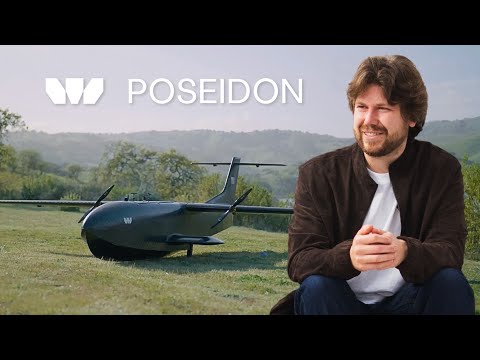
David Zagaynov, co-founder and CEO of Poseidon, discusses his journey from Amazon to building unmanned cargo planes designed to revolutionize air logistics. The company started as a ground effect vehicle project inspired by Soviet ekranoplans from the 1960s-70s, but pivoted to focus on reducing cost per flight ton mile across the entire air cargo spectrum by building pilotless seaplanes and land planes.
Poseidon is building two platforms - Heron (seaplane) and Egret (land plane) - using carbon fiber composites for lightweight, corrosion-resistant construction. By removing the pilot, they eliminate the cockpit, windows, and life support systems, achieving roughly a magnitude reduction in parts compared to traditional aircraft. Their goal is to operate at $400-500 per flight hour compared to the $1,100-1,200 per flight hour of existing Cessna Caravans.
The interview covers Poseidon’s vertically integrated manufacturing approach, their rapid iteration from garage to 25,000 square feet in San Francisco, regulatory developments including Part 108 for large drones, and their vision for building airports optimized for unmanned cargo operations. Zagaynov emphasizes that logistics will always be essential to humanity, making this a structurally sound business opportunity.
Highlights
”Planes are largely the same that got developed and certified in the 70s and 80s”
Clip command
yt-dlp --download-sections "*1:54-2:55" "https://www.youtube.com/watch?v=HbPxncZvWk8" --force-keyframes-at-cuts --merge-output-format mp4 -o "HbPxncZvWk8-1m54s.mp4"“One of the things I noticed was that we had hyper optimized a bunch of our logistics infrastructure in terms of distribution centers and vans. But one of the large things that we hadn’t optimized are the planes. These planes are largely the same that had gotten developed and certified in the 70s and 80s.” — David Zagaynov, 1:54
”The average regional air cargo line is flying planes that are 35 to 40 years old”
Clip command
yt-dlp --download-sections "*4:58-6:00" "https://www.youtube.com/watch?v=HbPxncZvWk8" --force-keyframes-at-cuts --merge-output-format mp4 -o "HbPxncZvWk8-4m58s.mp4"“The average regional air cargo line is flying planes that are an average of 35 to 40 years old. These are old old airframes and haven’t been updated to modern tech.” — David Zagaynov, 4:58
”About a magnitude reduction in parts”
Clip command
yt-dlp --download-sections "*9:40-10:40" "https://www.youtube.com/watch?v=HbPxncZvWk8" --force-keyframes-at-cuts --merge-output-format mp4 -o "HbPxncZvWk8-9m40s.mp4"“The 747 has like 120,000 different suppliers. By going pilotless and doing it with composites, it’s about a magnitude reduction in parts which is pretty nuts.” — David Zagaynov, 9:40
”I just strip completely and swim through a foot of duck poop”
Clip command
yt-dlp --download-sections "*10:30-11:35" "https://www.youtube.com/watch?v=HbPxncZvWk8" --force-keyframes-at-cuts --merge-output-format mp4 -o "HbPxncZvWk8-10m30s.mp4"“We went out to the lake at Golden Gate Park at 1:00 a.m. We take off, try to go up higher and lose control and the thing flips. I just strip completely, run into the water, swim like 100 meters and drag it back. This is the nastiest lake ever. The floor of the lake was like a foot of duck poop.” — David Zagaynov, 10:30
”We’re building the cargo truck for the skies”
Clip command
yt-dlp --download-sections "*18:50-19:40" "https://www.youtube.com/watch?v=HbPxncZvWk8" --force-keyframes-at-cuts --merge-output-format mp4 -o "HbPxncZvWk8-18m50s.mp4"“We’re building the cargo truck for the skies. It’s like the good cheap reliable F-150 for moving things around in the sky.” — David Zagaynov, 18:50
”Part 108 for large drones passed by executive order”
Clip command
yt-dlp --download-sections "*22:06-23:10" "https://www.youtube.com/watch?v=HbPxncZvWk8" --force-keyframes-at-cuts --merge-output-format mp4 -o "HbPxncZvWk8-22m06s.mp4"“Trump passed an executive order that pushed the FAA to publish language for Part 108, which regulates drones larger than 50 lbs beyond visual line of sight. It’s a clear framework for getting large cargo drones approved. We’re very optimistic that there’s going to be a clear regulatory path.” — David Zagaynov, 22:06
Key Points
- Amazon Experience (0:14) - Before Poseidon, David worked at Amazon where planes used for logistics were largely unchanged since the 70s and 80s
- Ground Effect Origins (2:43) - Poseidon initially focused on Soviet-style ground effect vehicles (ekranoplans) before expanding to solve cost per flight ton mile broadly
- Certification Costs (3:48) - Traditional aircraft certification costs hundreds of millions to billions of dollars, preventing innovation in the industry
- Pilotless Advantage (5:42) - Removing pilots eliminates cockpit, windows, life support systems, allowing smaller/cheaper engines and about 10x fewer parts
- Mid-2026 Flight Goal (7:11) - Planning first test flights of Heron and Egret by mid-2026, currently in full manufacturing sprint
- Composite Manufacturing (7:55) - Using carbon fiber composites which are light, strong, corrosion-resistant, and allow mathematically optimal designs
- Lake Crash Story (10:30) - Early prototype crashed in Golden Gate Park lake at 1am; David stripped and swam through duck poop to retrieve it
- Seagull Test Platform (11:56) - Quarter-scale prototype Seagull serves as ongoing testbed for avionics and control algorithms
- RC Test Pilot Rick (14:07) - Found test pilot through RC plane forum who ran Northern California’s largest RC club
- 25K Sq Ft Facility (15:42) - Now operating in 25,000 square feet in San Francisco, already planning for larger factory
- WWI Plane Innovation (16:30) - Wartime serves as forcing function for accelerated development, similar to WWI airplane evolution
- Dual Use Strategy (19:31) - Operating in both defense and commercial markets; DoD funds R&D while commercial provides steady revenue
- Part 108 Regulation (21:26) - Trump’s executive order pushed FAA to publish Part 108 for large drones, providing clear regulatory path
- Heron & Egret Platforms (24:19) - Share same wing, tail, avionics, and engines; main difference is fuselage design
- Cost Comparison (25:34) - Targeting $400-500/flight hour vs Cessna Caravan’s $1,100-1,200 through no pilot, lower fuel burn, reduced maintenance
- Five Warehouses (30:59) - Grew through five locations from garage to current facility, acquiring more space as needed
- SpaceX Comparison (36:15) - Like SpaceX, wants to own entire value stack rather than just selling planes
- Regional Cargo Crisis (39:57) - Industry flying 35-40 year old planes; by 2035 half of pilots will be forced retired due to age
- Building Airports (47:50) - Future vision includes building and owning network of cargo airports with shorter runways and integrated warehouses
- Neo Robot Integration (49:40) - Pre-ordered Neo humanoid robot to potentially handle cargo loading/unloading operations
Mentions
Companies
- Amazon (0:14) - David’s former employer; ships tens of millions of packages daily
- SpaceX (36:15) - Model for capturing entire value stack rather than just manufacturing
- Starship (10:55) - Sean and Hugo from Starship were present at early lake testing
- Ulysses (8:37) - Mentioned as also dealing with saltwater corrosion challenges
- FedEx (37:25) - Potential customer; always wants cheaper cost per flight ton mile
- UPS (37:25) - Potential customer for cargo services
- Boeing (9:40) - Has ~120,000 different suppliers for 747
- Zipline (21:04) - Did first 40 million flight miles in Africa to avoid US drone regulation
- Tesla (28:59) - Lower maintenance costs example due to consolidated complexity
- Cessna (26:22) - Caravan is main workhorse of regional air cargo, certified 40+ years ago
- Neo/1X (49:40) - Humanoid robot company; Poseidon has pre-order for cargo loading
Products & Technologies
- Heron (7:18) - Poseidon’s seaplane platform
- Egret (7:20) - Poseidon’s land plane platform
- Seagull (11:34) - Quarter-scale test prototype still used for avionics testing
- Part 107 (21:32) - FAA regulation for small drones under 50 lbs
- Part 108 (22:06) - Upcoming FAA regulation for large drones beyond visual line of sight
- Carbon Fiber Composites (8:03) - Manufacturing material enabling lightweight, corrosion-resistant construction
- Cessna Caravan (26:22) - Main workhorse of regional air cargo at $1,100-1,200/flight hour
- 767 (33:37) - Narrow body jet often flying 40% full on short routes Poseidon could serve
People
- David Zagaynov (0:04) - Co-founder and CEO of Poseidon
- Parker (2:26) - Co-founder of Poseidon who started looking at cargo planes together
- Rick (14:07) - RC test pilot found on forum who runs Northern California’s largest RC club
- Sean and Hugo (10:55) - Guys from Starship who were at early lake testing
- Jeff Bezos (39:57) - Referenced for “what won’t change” framework for business decisions
- Napoleon (40:54) - His Russia expedition failed due to supply chain issues
Surprising Quotes
“The average regional air cargo line is flying planes that are 35 to 40 years old.” — 4:58
“I just like strip completely, run into the water, swim like 100 meters and drag it back. This is the nastiest lake ever. The floor of the lake was like a foot of duck poop.” — 11:07
“It’s about like a magnitude reduction in parts which is pretty nuts.” — 9:56
“We’re building the cargo truck for the skies. It’s like the good cheap reliable F-150 for moving things around in the sky.” — 18:50
“By 2035 half the pilots that are eligible to fly are going to be forced retired because as they age out… you’re legally not allowed to fly anymore.” — 42:16
Transcript
0:00 Today I’m interviewing David Zaganov and he is the co-founder and CEO of Poseidon. Do you want to just talk about the cargo market in general and how you got into it?
0:14 Yeah, so before Poseidon I was working at Amazon and Amazon ships like tens of millions of packages every single day at a scale like impossible to comprehend really. I can go on my phone right now and I can get my groceries delivered by like 4:00 p.m. I can get a box by 8:00 a.m. tomorrow morning if I pay like $2 extra. And so I think there’s been a massive… the world’s gotten like incredibly small where we can buy something from Europe, from China, from the other side of the United States and it gets to us immediately. And that unlocks a bunch of super interesting stuff in terms of like supply chains, logistics. We’re able to build stuff in San Francisco, in LA, wherever. And it’s like one of the most complicated challenges to think of.
1:09 What are you inspired by on the logistics side? Like why does that kind of light a fire in you? I think logistics are like the backbone of today’s economy. They’re the backbone of any military operation. They’re just incredibly important to everyday life. I think if our logistics network stopped functioning tomorrow, life would look incredibly different, we wouldn’t be able to get these nice Red Bulls in our office every week.
1:35 What is the first thing that’s going through your mind on how to even break into that? Because I know with Amazon, prior to Amazon, the only reason that was startable was because USPS already existed and there was a whole bunch of roads paved and all this stuff. How are you thinking about it from a 2025 perspective looking forward?
1:54 When I was working at Amazon, one of the things I noticed was that we had hyper optimized a bunch of our logistics infrastructure in terms of these distribution centers and the vans that they get moved on, actually getting things from point A to point B. But one of the large things that we hadn’t optimized are the planes that we’re flying everything on. And so these planes are largely the same that had gotten developed and certified in the 70s and 80s which is absolutely insane to me that we hadn’t made any big leaps forward there. And so Parker and I started looking around at what can be done in this space.
2:30 So I know that Poseidon basically started out as a ground effect company and you were trying to build a plane that took advantage of that and now you’re kind of shifting towards cargo. How did Poseidon start? What was that initial idea and then why are you shifting towards this now?
2:43 Yeah, I think when Poseidon started, we had seen the Soviet ground effect vehicles and ekranoplans as they called them in the 60s and 70s which were these massive plane boat hybrids that flew very close to the surface of the water and took advantage of ground effect which gave them increased lift and decreased drag. And we saw that as a technology that we wanted to bring forth into the 21st century. I think in the meanwhile the mission has stayed the same where it’s we want to reduce cost per flight ton mile and this was a way that we could do it. Ground effect vehicles are great in certain operational environments where you don’t have to fly over land and your waves are such a height that you can be taking advantage of this. But I think what we realized pretty quickly was we didn’t want to be just constrained to a certain market in a certain time, and we wanted to solve cost per flight ton mile across the entire air cargo spectrum. So ground effect vehicles are still great. We’re still building seaplanes, but we’re just expanding beyond that as well.
3:50 I know you mentioned that basically planes have seen very little innovation over the last 50 plus years. Why is that the case and what are you guys going to be able to do differently now?
4:02 Yeah, so it’s a combo of a few factors. The first one is when these vehicles got certified initially, there’s a bunch of upfront costs that goes with that. Is that like hundreds of millions of dollars per vehicle? Yes. Yeah. Up to billions of dollars per vehicles for the 747s and the narrow body wide bodies. And so that upfront cost is very prohibitive from doing very large step changes. You can’t just send a new patch note out like you can with software. And so then what happens is iterative improvements where they’ll have the frame that’s been certified, the engine that’s been certified and they’ll make small improvements to that. And along at the same time the airlines buy the planes and those are large upfront cost so they want to just maintain and run them for as long as possible. And so between those two there’s been no real push for innovation on that front. So the average regional air cargo line is flying planes that are an average of 35 to 40 years old. And so these are old old airframes and haven’t been updated to modern tech.
5:10 I know that the way that cars work or have historically is you sell the car almost like Ford would sell a truck almost at a loss and then they just make up the margin on the parts as they replace. Yeah, that’s very much the case especially with engines where there’s the initial cost of the engine, but the rebuilds and the maintenance is where a lot of the OEMs make their money.
5:32 With the knowledge that it costs hundreds of millions or billions of dollars to do a ground-up rebuild and certification for a new vehicle, how are you guys going about that? Yeah, so one of the reasons that it is so expensive to build a new vehicle and certify it is because there are people on board. And so I think one of the realizations for us was if we want to optimize cost per flight ton mile, the thing to do is take the pilot out. And if you take the pilot out, you get rid of the cockpit and the windows and all the life support systems and a ton of weight and space that you weren’t using for anything effective. And then your airframe can be built differently. You’re not beholden to the same standards. So because you weigh less, your engines can be smaller, they can be cheaper, and so all around there’s cost savings in getting rid of that pilot. And it also helps massively with the certification process.
6:28 Does it go down? Is most of the certification process basically making sure that the human is not going to die in the plane? The certification process exists to make sure that these vehicles are being safely operated. And so ideally when there’s people on board, you want to protect the lives of the people, but you also really care about the people that you’re flying over and those populated areas. And so the FAA does its job great when they’re ensuring that our skies are safe.
6:55 When you’re thinking forward and you’re saying you want to minimize the number of days between now and when you’re actually shipping cargo, how are you thinking about making that plan if it’s going to take over a year, multiple years maybe to actually have the first plane in the air delivering stuff?
7:11 Yeah, we’re actually planning on having our first plane in the air mid next year. So we’re in a full-on sprint right now to build both Heron and Egret. Heron being our seaplane platform, Egret being our land plane platform and getting the first test flights next summer. And the sprint towards getting commercial operations after that is getting certification as quickly as possible. And so we’ll first be able to fly in areas that have low population. We have areas where we’ll be able to test immediately and then as we get flight hours, we’ll work towards certification. There’s a pretty clear path that way.
7:49 You said that you’re sprinting towards that. How are you kind of spending your time and what are you focusing on right now? We are in the middle of manufacturing of the planes. Is that the massive shell that I saw? Yeah. What does that look like? It’s building the wing, building the fuselage, doing carbon fiber layup. And one of the interesting things about the way that we do our manufacturing process is we are incredibly vertically integrated and we do most of it in-house.
8:15 Composites are absolute magic. They’ve really matured as technology over the past decade and they’re becoming more and more prevalent in aerospace. What’s cool is composites are super light, super strong. In a marine environment, they don’t have corrosion which is a huge problem that seaplanes experience. It’s like the same situation as you know the salt water where Ulysses has to design their vehicle so that it’s not going to get damaged by sea water. Same situation.
8:47 Yeah, saltwater corrosion is a big problem if you put any metal in the water. Edges are historically what seaplanes experience. And then also you could do the mathematically optimal design for your hull for your wings because of the way that you make molds and you just lay the carbon fiber into it and so you can preserve the perfect optimal shape. And the manufacturing process for us ends up being a lot closer to that of composite boat manufacturing than exquisite aerospace manufacturing. We’re not building F-35s or F-22s where these take years and hundreds of people to thousands of people across dozens of states making parts. We’re able to do all of it under one roof and minimize our part count significantly by going composite carbon fiber.
9:40 I think the 747 or Boeing at least has like 120,000 different suppliers. How many parts are you able to eliminate just by doing it with a model where it doesn’t have a human and you’re trying to basically form the entire shell in one go? It’s about a magnitude reduction in parts which is pretty nuts.
9:59 Let’s go through the iteration process on how you built the first few iterations and then I think this was the first one that really flew, right? Yeah. So we built off the rip after we started the company, we built a first prototype. This was an initial ground effect vehicle seaplane design with a box wing design that was basically optimized to fly very close to the water. What we quickly realized is that flying outside of a very small envelope, you lose most of your controllability.
10:30 One time we were trying to figure out where we can actually test this. And so we went out to the lake at Golden Gate Park at 1:00 a.m. because that’s when there would be no one there. And this is an RC test boat lake that’s been approved for testing little RC boats. And so we put our plane in the water and we have the guys from Starship, Sean and Hugo were there with us and we do a couple test flights. We take off. We’re flying very close to the water and we try to go up higher and lose control and the thing flips and it starts drowning immediately and I just strip completely, run into the water, swim like 100 meters and drag it back. This is the nastiest lake ever. The floor of the lake was like a foot of duck poop. I thought I was going to catch some disease.
11:21 But yeah, shortly after then we went back to the drawing board and we’re like, “Okay, here are the design parameters. Here’s what we want to be able to do. Let’s just redesign from the ground up.” And that’s what Seagull is. And so Seagull took us about 6 months from start of design to our first test flight which I think was a very quick turnaround with three and a half engineers. I’m half-ficient. Yeah, so that was cool. And then we did our first test flight in March.
11:53 What was the goal for that first test flight? What were you trying to achieve? We were trying to achieve flight. Getting up and off of the water was the entire goal of the first test flight and then subsequent test flights we validated our payload and our range and our autonomous controls and what sat link looked like. And today Seagull still serves as a test bed platform for our avionics and our controls algorithms. And so even as we’re in the middle of building our first prototypes of Heron and Egret, we’re able to test a lot of our designs on Seagull.
12:33 So you’re able to test all the parts that you’re going to probably put onto the next platform without actually having the platform ready. Yeah, a lot of the software side of what we’re building out can get tested on Seagull.
12:46 Are you glad that you did that before you tried to go straight into the cargo market? So much. I think even from the get-go we knew that Seagull was a quarter scale prototype. But I think there were a ton of learnings across the board. Even in so far as how do we do a carbon fiber layup? How do we actually run an aircraft program from clean sheet design to manufacturing? And there’s a lot of things that we did right and a lot of things that we learned how to do better. But yeah, I think it would be really challenging for us to just go right from the rip to two 50 foot planes.
13:25 Tell me about what went wrong. I think the design for manufacturability is a lesson that is incredibly important because there are techniques that are feasible to do for a one-off prototype that would be a massive pain in the butt to do when we’re pumping out hundreds of planes. And so that’s been a really important learning. I learned that I am not the world’s best avionics engineer. Thank god our team has now expanded to have people who are incredibly excellent at what they do.
13:58 Do you have any other really good stories of extreme scrappiness like going out to the lake at 1 a.m.? Yeah. Our test pilot is this guy Rick who we found on a forum. And so we were looking for someone to test fly our plane for the first time. And so the very first test flight was with RC controls. So we wanted to make sure that all of our control surfaces were functioning properly, the aerodynamics, the hydrodynamics were working. And so we found this guy who ran Northern California’s largest RC test club. And they just love flying RC planes. And so he flies people’s massive RC prototypes for the first time. And so we called him over like, “Hey, do you want to fly our seaplane?” He was like, “That is the largest seaplane drone I’ve ever seen.” But, “Yeah, no, I’d love to do it.” And so we met up with him. We handed him the controls, just trusted that he was not going to crash. And he did excellent.
15:05 Let’s say that everything goes right and next year your first version of the actual cargo plane is flying around. How are you going to go from that to actually shipping real cargo in the plane?
15:21 Yeah. So I think there’s a bit of a crawl-walk-run on both manufacturing and test and development. And so when we test fly our vehicles for the first time, we are going to have a bunch of learnings about how to optimize their flight, continue to iterate our avionics and controls. And then as we’re talking to customers and our partners, we want to be able to deliver to them as quickly as possible. And so we have 25,000 square feet in San Francisco and it’s a good amount of space to build the first ones barely, but not to stand up full manufacturing. And so we’re going to quickly build our first factory where we’ll do initial rate production and then after that it’s a large factory to be pumping out tens and dozens of these on a monthly basis.
16:15 In a slightly different world, if you were teleported back and you had to work on some plane program from anywhere in the 20th century, what would that be? I think that the planes immediately after the Wright brothers planes were terribly interesting because this was a moment where we knew flight was achievable. We knew that if we have an airfoil and we produce some thrust so we can get up off the air, but not much else was known about how do we build great planes. And I think that wartime is a forcing function for development to be accelerated. And there’s very specific things that we need to optimize for. And so the first planes that were flying in World War I would have been incredibly interesting to be working on.
17:08 I’d imagine that you were able to get something approved and actually in the air much easier during war. Yeah, I don’t even know what their approvals looked like. I think it was like, “All right, who wants to pilot this thing?” and someone’s like, “All right, cool. I’ll go.” Yeah, at the beginning of the conflict, beginning of World War I, there weren’t really that many fighter planes flying. But by the end, they had quickly ramped up manufacturing production with tons of pilots up in the skies.
17:36 Do you know how that happened? I’d imagine that you’d probably want to take learnings from the initial high ramp maybe even during World War I and II where you just started throwing thousands and thousands of planes into the air from basically zero prior to that. And I imagine that you’d want to kind of copy that sort of ramp if you’re able to with Poseidon.
17:58 Yeah, I think specifically industrial capacity during World War II is a super interesting example to look at where going into that we didn’t have industrial capacity in the way that we needed. And so factories that built cars and home appliances quickly took the same labor and workforce and applied it to building planes and turning out bombers and fighter jets. And that was actually a huge lift but they were able to achieve it in very little time. But I think there’s a clear roadmap to scaling production and the way that we’re designing and building our planes. They’re very much designed for being able to build many of these as cheap of a price as possible.
18:50 We’re building the cargo truck for the skies. It’s like the good cheap reliable F-150 for moving things around in the sky.
18:59 How does a typical week look like for you right now? I think time split between building engineering and developing partnerships and businesses. We’re dual use and so we have our defense federal market as well as a commercial market. And what’s great about that is our vehicles are applicable between both markets. But each of those have very different go-to-market strategies and very different challenges they have to face.
19:39 Is the defense market a little bit easier to get something? I’d imagine that their approval process is a little bit simpler than the commercial market. I don’t know if I would say that defense procurement is easy by any means. But there are advantages and disadvantages to operating in each market. Being dual use is great because you can get the best of both worlds in a way that it’s very hard to sell something commercially that doesn’t exist and isn’t ready to commercially operate. But the DoD does a lot of funding of R&D and so they will fund programs that aren’t at TRL 9. So the TRL scale is from 1 to 9 of how ready is this, and 6 being a prototype and then 7 being tested and as you mature towards 9 that’s a product that’s ready to be commercialized. And so we’re able to get initial traction and testing on that side and then you can go to the commercial side.
20:40 Having the commercial business line helps bridge what is the valley of death where there’s in between the resources that you can get for initial R&D and testing and actual programs and being implemented at the end of the day is a decent chunk of time and resources. And companies that are just purely defense are often going to struggle with how do you bridge that gap because you just need resources. And so having a consistently growing business line that’s the commercial helps with that.
21:04 I’d imagine this is a little bit similar to kind of a drone startup. There’s a lot of regulation in the United States around drones. But with Zipline, they just went to Africa and their first 40 million miles or flight miles were done in Africa. Are you thinking about something similar to that where you’re going outside of the US to try to get the first planes going faster or are you going to just try to mainly stick to the US?
21:26 We’re very optimistic that we’ll be able to begin operating commercially in the US. So about a decade ago everyone started flying the DJI drones and it was crazy because we had these things up in our air and there was no regulation for what was flying to airports and stuff. Yeah, absolutely crazy. And so the FAA who’s been tasked with regulating our skies passes Part 107 which regulates drones. So small drones, all your DJIs like 50 lbs or less. And since then the regulation for large drones beyond visual line of sight hasn’t been extremely clear.
22:06 And so there’s different groups like group one, group two. Group two is 50 lbs or less. And then you get all the way to group five. Poseidon’s planes are well into the group five range. And so everything past that is just all one category. And the established path there is you get a bunch of waivers to get around the rules sort of thing. Yeah, or you get explicit permission from the FAA specifically for what you’re building.
22:41 But Trump passed an executive order that pushed the FAA recently to publish language for Part 108, which will become law early next year. And that regulates drones larger than that group two size beyond visual line of sight. And so it’s a clear framework for getting large cargo drones approved. And so we’re very optimistic that there’s going to be a clear regulatory path in a way that there hasn’t been for a very long time.
23:12 So is this one of those things that literally wasn’t possible even a couple years ago from a regulatory perspective? Would it just have been impossible to overcome that kind of challenge as a startup? Not impossible but very hard and we’ve seen that with a lot of the aviation startups that have been struggling with that for a very long time. Even a year ago we didn’t know that this was going to happen. So incredibly optimistic.
23:43 So on Egret, talk about basically how you started working on that and what you’re doing now to get that up and going by mid next year.
24:00 Yeah. The cool thing between Heron and Egret is that they share a lot of the same features between the two. And I think the naming convention is also a little cheap because a heron and egret are the same exact species of birds, but they’re two different names for them. They live in two different environments. They look slightly different. And much the same way a lot of the engineering between the two platforms is transferable. So the wing, the tail, avionics, our engines between platforms are the same. The major difference between the two platforms is the fuselage. And so because of the way that we’re designing it, when we came into design there weren’t any rules of it needs to look a certain way. It’s just if a box with wings was the cheapest way to move something from point A to point B, we would be building a box with wings. And so these platforms are what we see as the cheapest way to be moving air cargo.
25:00 So for the cargo that’s shipped currently in the United States, you’re talking about, it’s extremely efficient. You can get your toothbrush or something delivered within a couple hours or if not the next morning for basically free. How are you thinking or how much cheaper is the platform that you’re developing going to be for cost per mile per pound?
25:25 Yeah. So looking at cost per flight ton mile would be the metric here. And so right now a lot of the air logistics in the United States is hub and spoke. So all orders get shipped to a hub that gets then flown to another hub on the other end of the United States and then takes a regional air cargo flight to its final destination. And so those larger planes are wide bodies and narrow bodies, but the planes that are flying the middle mile are these regional air cargo planes. And they’re operated under part 135 airlines that have as little as a couple planes to a couple hundred planes. And so a lot of your FedEx packages, your UPS, your Amazon, your DHL gets moved on these planes.
26:15 And so the main workhorse of regional air cargo is the Cessna Caravan. Is this another one of those planes that just hasn’t innovated at all since the last 50 years? Yeah, it’s been certified over I think 40 years ago. The caravans that we’re flying today are very very old.
26:37 And so the Caravan costs about $1,200 per flight hour to operate between I’d say the biggest chunks if we’re going to break them down into three is your fuel costs, your maintenance (maintenance is both your airframe and every single flight hour you fly you have your block engine maintenance), and then your crew costs. So that comes out to like $1,100 to $1,200 per flight hour.
27:08 And how does that actually break down in between those three things? Roughly about a third each. Depending slightly on what market and what area you’re flying in, they fluctuate. So some areas gas is slightly higher. Some areas labor is a higher percentage.
27:28 You can take out like a third of the cost just by deleting the humans from inside the plane. Yeah. So not having humans on board, cutting your fuel burn by more than half, carrying significantly more increases the profitability of each flight. And maintenance is significantly lower.
27:52 And so a lot of these cargo planes that they’re flying weren’t originally designed as cargo planes. They were designed as passenger planes or initially operated as passenger planes, just retrofitted. Yeah. And so after they’re flown a bunch they’re not as nice for cargo or for passenger planes anymore. And so they tear out all the seats and they’re like, “Okay, cool. We’re going to move boxes in this now.” And so these aren’t platforms that are optimal for cargo.
28:24 And so one of the things that we see is that each of these planes have max payloads, but a lot of the times what will happen is the density of cargo is lighter than the density of the cargo hold available. So you’ll what’s called volume out before you max out your weight. And so you could carry more, there’s just not enough space. And so one of the important design decisions here is for the amount of cargo that you’re capable of carrying, how much space do you need? And that comes at around 5 to 6 pounds per cubic foot which is optimal for packages that get moved by Amazon. For most boxes or most packages they average out to roughly there. Obviously some things are incredibly heavy and some things are very light.
29:17 And so these are platforms that just weren’t optimal but because they get bought, this is what’s available, this is what people have been flying. And I think comparably we are significantly cheaper for a couple reasons. So one is we talked about is we don’t have the pilot on board. So initially we’ll have a remote pilot who’s able to oversee not just one plane but a few planes at a time and moving towards full autonomy where that pilot is out of the loop entirely.
29:52 But also since they’re not there, can they just be remotely controlled? Yeah, anywhere in the world. And so if needed someone can take over controls. And so getting rid of the pilot all the way also makes it more efficient. And we can reduce the fuel burn through modern construction techniques, optimized design and not having all the human rated stuff on board to about half of what these planes are flying.
30:24 And then the third factor here of reducing cost is significantly reducing your maintenance costs. And so that looks like having things that are a lot less parts means a lot cheaper maintenance. Few things break. Yeah, few things break. Look at a Tesla - Tesla maintenance is way lower because they’ve been able to consolidate a ton of complexity into some very well-designed simple things. And having engines that are cheaper also significantly reduces your cost on your engine maintenance platform.
30:55 And so all in we’re looking at a massive decrease in cost per flight hour at around $400 to $500 per flight hour compared to a Cessna Caravan’s $1,100 or $1,200.
31:07 For hard tech startups one of the biggest things that you kind of have to think about is growing into your factory space and sometimes you just way over… you book or buy something that’s much bigger or rent something that’s much bigger than maybe your current capacity and how many employees you have and stuff to fill it. You said that you had five different warehouses or five different locations. How did you go from starting in a garage to being in this 25,000 square foot place?
31:40 Yeah. Immediately when we started we started working out of our garage in Foster City, so like your Silicon Valley garage startup. And quickly realized that we’re out of space and the theme besides always existential problems was we were running out of space. And so we moved to Burlingame and we got this little 400 foot warehouse and we were like okay cool this feels like a ton of space we’re going to be good. And couple months into working there we started to fill it up and then we found just a ton of mold and we were forced to move out. So then we moved back into the garage.
32:21 And at this point, the amount of things that we’ve acquired… Poseidon’s good at two things, I think: building planes and acquiring stuff. And we’ve just acquired so much stuff. And so garage completely full. We’re like, “Okay, we can’t get any work done.” And so we just started looking around at warehouses around. We found 3,500 square feet in Petro in San Francisco. And so we moved there.
32:49 And that’s actually where at the time, our warehouse shared a wall with a mirrored warehouse right next to it. And a month and a half into us moving in, this Irish kid shows up. And so the Ulysses guys moved in next door and that was a ton of fun. But as we grew and they also grew, we ran out of space there and so we’re like, “Okay, cool. Let’s get something with enough space to build the large planes that we are going to be building.” At this point we had the designs for Heron. And so started looking around. We found a 15,000 foot warehouse, okay cool this will be good. And so we moved in there in December of ‘24 and we’ve been there since.
33:31 But a month ago, we realized we need even more space. And so I had to go to where we are now and convince our neighbors to move out 6 months early so we could take over their lease. And so we’re just going to keep gobbling up until I think we’re just going to take the rest of this block. And hopefully this will be good enough for the next year. And then we’ll start hunting for real estate again.
34:00 Yeah. I remember you mentioning when I first did the tour, it was probably a few months ago now, but you basically mentioned the plane won’t even fit going out the door. And so you have to have… you may have to smash through a wall or something to make a bigger door.
34:13 Yeah. We have enough space that we can get a double wide truck in, but the plane is 50 ft long, 50 ft wide. We do not have space. We don’t have hangar doors here. And so we’ll do assembly in here, test subsystems. But when we want to move it out and go test, we’re gonna have to take the wing apart and take the fuselage separately and ship them separately. Which is also an interesting design requirement for being able to move things - you don’t want to have them permanently attached. So you could move things around and ship them. And so we could fit in a container box and ship like that, which is I think pretty cool.
34:57 I know that with automotive and Tesla, I think Tesla is the first automotive company that hasn’t gone bankrupt since I think Chrysler and Ford and a few others, actually I think they’ve gone bankrupt too now and GM. But very few automotive companies have actually succeeded and by succeeded for me it’s do you have a positive gross margin on your product and are you actually making money or not. Has this been a similar situation in the aviation industry where any aviation startup is just incredibly hard to get off the ground?
35:33 I think so and there’s a bunch of challenges because it depends on what market you’re trying to sell into. And so I think everyone loves to talk about SpaceX, but one of the things that SpaceX I think does very well is it’s a full stack deep tech startup where they’re not only building the engines but instead of just selling the engines to someone else like NASA or ULA or whatever, they’re also the service provider. And so they capitalized on that entire value stack. And so as launch has been getting cheaper and cheaper for them, the price of launch actually hasn’t gone down significantly. What’s actually increased is their margins are getting bigger and bigger and that is why they’ve been able to capture that value stack.
36:22 And so I think that informs a lot of the ways that I think about building out the business. It’s I’m not interested in just building some tech. You don’t want to build a plane and then sell it. You want to operate it. We’ll likely sell planes at some point, but I think the market opportunity here is to disrupt the way that cargo operates today, not just disrupt aircraft manufacturing.
36:52 What other aviation startups have been tried over the past 50 years? I think a lot of the aviation startups in recent years have taken some sort of technology or esoteric whatever and tried to cram that into a plane design or whatever else. There’s been a surge of eVTOL companies - electric vertical takeoff and landing. There’s been so many of them and a lot of them have gone public. But they’re not yet flying routes. And so there’s been a lot of companies that are designed around one thing. So like electric or hydrogen propulsion or something of that sort. And then you try to retcon that into a business case.
37:30 And so I think the way that we’re looking about it very differently is we are first and foremost trying to solve cost per flight ton mile and then that informs all of our design decisions. And deciding what size plane to build isn’t just throwing darts at a dart board and being like okay 50 foot, two-ton payload. I think it requires for us seeing what size payloads are being delivered today. If we unlock a significantly lower cost curve, what markets do we unlock additionally? And so that looks like not just doing hub and spoke but also point to point. So you’re flying directly from where the person’s sending it to the final destination instead of having it go on a full loop around to a bunch of other random hub cities.
38:18 Is that also partially enabled by having a much lower cost vehicle? Because if you have a much lower cost plane and it costs less to actually operate, maybe you can fly a lot more routes than most planes can.
38:30 Yeah, exactly. So the factor of the cost of your plane at the end of the day ends up being less of a factor than your operational cost. Because over the lifetime of the vehicle, your acquisition costs end up being dwarfed by the amount of the money that you pay to actually fly every single hour. So I think that’s what we see as the cost. It is the case that for us these planes aren’t going to be exceptionally more expensive by any means to build, produce, and manufacture. But what we’ve been optimizing is that operational cost.
39:05 And so with a lower operational cost, not only are we incredibly competitive with the planes that are flying today, we’re competitive with planes that are significantly bigger than us that are flying routes that are short. To go Miami to the Bahamas or Puerto Rico that are being flown on narrow body jets like 767s. A lot of those planes aren’t being filled to the brim right now. So it actually makes sense to fly a couple of our planes instead of a 40% full 767. And also there’s a lot of routes that are being moved on trucks or cargo vans that our price point we’re able to compete with them. So the market of air cargo itself is huge, but I think we’re starting to unlock markets that weren’t previously accessible for air cargo at the current cost curve.
39:57 Jeff Bezos when he initially started Amazon, he was trying to think about what things won’t change over the next 10, 20, 30 years. And the things were basically we’re going to want wider selection - that’s not going to change. People won’t want less stuff. We’re going to want faster delivery. No one’s going to want it in a week if they can get it in 2 days. And we’re also going to want cheaper, lower prices.
40:24 And for this instead of you know you’re taking and you’re saying here’s this idea of a hydrogen powered plane and you’re trying to make this idea a reality fit the market. Instead of that you’re basically saying here’s this obvious problem which is just transferring basically mass from one place to another and just lowering the cost of that because that’s clearly a valuable thing. How did you think about that?
40:48 Yeah, I think what’s not going to change is that we are going to need to keep moving things around the world. And that’s been true since thousands of years ago. We had the Silk Road developed to move spices and goods from the Far East back to Europe. I think trade and logistics have been existentially important to humanity throughout our existence. Wars have been fought, won, and lost by how reliable and strong is your logistics network. Napoleon’s expedition into Russia lost because he couldn’t maintain supply chains. The Union won the Civil War because our infrastructure for moving stuff and our train networks were superior to the South’s.
41:34 We will always want to move stuff and e-commerce is getting bigger and bigger. And maybe it’s not optimal that we’re buying a bunch of crap from Temu. But the reality is we produce a lot of stuff as United States and we export them. And a lot of our industrial supply chain is tied up in Europe and Europe is also an industrial powerhouse in terms of production roughly equivalent to ours. If I buy a camera, and it has a lens, that lens is probably coming from the best lens manufacturer, Zeiss, in Germany.
42:06 And so I think the amount of things that we produce hopefully is going to keep going up. And in a world of abundance, there is more that gets built. And so as we’re building more, we’ll need to move things more. And so if things are moving, what do we want? We want to be able to carry more. We want to be able to be more flexible with what we’re carrying and when and how. And we want it to be cheaper.
42:34 And so part of what’s interesting with seaplanes is we’re able to unlock capacity in regions where you historically weren’t able to get air cargo in as easily and they’ve been relegated to boats that come maybe once a week and are incredibly slow. And so we’re able to operate in and out of docks and using existing infrastructure move things there and being able to do ship to shore for fishing supplies and to cruise ships. And one of the big markets is offshore oil where they’re flying either these very expensive helicopters that cost tens of thousands of dollars per flight hour or boats that take forever.
43:13 Thousands per flight hour? Helicopters are crazy expensive. Some of the most expensive helicopters that we use in the military right now are like $40,000 per flight hour. And why are they so expensive? The platforms are incredibly expensive. The maintenance costs are crazy. The man trip and man train and equip portion of helicopter platforms is astronomical. You can leave a boat in the water and not burn fuel, but every hour a plane or a helicopter’s in there, you’re burning fuel. The dollar ticker just keeps running up.
43:56 Are you going to try to partner with another… imagine partnering with Amazon or one of these massive shippers to start out and just basically build a relationship with one of those players ideally that ships all over the place and then just get a few routes really successful or are you going to try and spin up the entire thing from scratch?
44:17 Yeah, I think there’s a bunch of ways that we’re parallel tracking down this and so we’re talking to the large operators like FedEx and UPS and then also the smaller operators that are flying these regional air cargo planes right now that we’re going to be ostensibly making irrelevant in the next couple years.
44:35 And are people excited to embrace a new platform or are they trying even though it may be slightly sub-optimal and cost way more? Are they trying to basically do the thing that they already know works even if it’s like a 40-year-old plane?
44:50 Yeah, I think what was incredibly surprising to me was the state of regional air cargo as it is today. I had the opportunity to go to the regional air cargo convention that happens once a year. And so there’s a ton of these operators that are just heads down locked in their operation. And they come up for air once a year to go to RACCA which is their big conference. So it’s in a small hotel, DoubleTree in Scottsdale and they all hang out.
45:20 And so talking to all these folks made it very clear to me the problems that the industry is facing at a large level. And so not only are these fleets on average 35-40 years old and a lot of them the planes are reaching their end of life. Some of these planes, once they reach a certain amount of hours that have been flown, they legally cannot fly anymore. You can’t do repairs on them. It’s just legally not allowed.
45:49 And is it because the planes don’t work or is it just some regulation? They never got approved for repairs. Amazing.
45:59 And then on the other side, these operators have a lot of problems with their pilots. It’s not like oh we want to protect our pilots. There’s been a massive pilot shortage in the past couple years. And so pilot salaries have gone up and these pilots who get their licenses, they’ll fly for regional air cargo lines for a little bit, but once you get enough hours, you’re allowed to go and fly bigger planes for the bigger airlines and that’s also a lot more lucrative. And so with the shortage there, there’s a lot of flights that get missed and when you miss a flight, you have to pay a massive fee that you incur.
46:40 Another big problem is by 2035 half the pilots that are eligible to fly are going to be forced retired because as they age out… are they legally not allowed to fly anymore? Yes. Yeah. Once you reach a certain age you’re legally not allowed to fly anymore. And so by 2035 the pilot shortage is going to be massively exacerbated.
47:02 Where whereas there have been significantly more of these regional air cargo lines, they’ve been consolidating and a lot of them are barely profitable or no longer profitable. And when they stop being profitable they sell their airline. And at the top level they’re getting squeezed by FedEx and UPS. So FedEx and UPS at any point what they want is cheaper cost per flight ton mile. They will switch over to whoever will provide them the cheapest service option for moving their packages. And so these operators aren’t operating with much margin, which puts them in a really hard place.
47:37 Is this also something where because you have a smaller platform and it doesn’t require humans and stuff, are you able to kind of land in places that aren’t normally landable? And maybe with airports right now if an airline has access to a certain terminal or something that’s basically a guaranteed monopoly in some cases? Is this kind of similar in cargo where you have access to a certain terminal and you can just drop off your packages and if you don’t have access to that then it’s locked out?
48:06 Not entirely the case but one of the designs that we have is we are optimizing for being able to land on regular runways and also degraded runways. And so places where it’s not the most optimal. So a lot of the runways in Alaska are not paved. It’s just gravel and so you can’t just fly any random jet into there. Bad things would happen. Yeah, you want to be a little bit more ruggedized.
48:35 And I think that the design of an airport is super interesting right now because you have your basic airport with your runways for your planes to be able to take off. You have your hangars to store the planes. You have your air traffic control and then you have your terminals for where the people are as they wait and they check in and they go through TSA.
49:00 But if you were to design an airport for unmanned cargo plane operations, you would be able to design it super differently. So you’d be able to have shorter runways. Basically runway with warehouse where delivery trucks would drive in, drop off the packages and then leave. I think in a not too distant future it would be super interesting for us to start looking at building airports.
49:25 Building airports? Yeah, building airports. Building and owning our own network of airports where we do air cargo out of.
49:35 I’ve not heard of any other company… Well, actually, I think Amazon’s building their own airports. Yeah, they are. Yeah. Okay. Are they the only company doing it? As far as I know, there’s PE firms that own random airports, but building their own. Yeah. I think once you own… it only takes a couple airports to get to the top 10 owner of airports. So it’s really within reach.
50:04 And then, okay, now we’re getting a little out here, but Neo recently launched and so there’s been an influx of these humanoid robots where they’re supposed to be able to do tasks in the house incredibly well, but a lot of these demos have been taking a box and putting a box over there. It’s not incredibly useful everywhere, but for me that’s super useful because we still need a human to be able to take the box off the UPS truck and put it into our plane even if we don’t have a human flying the plane.
50:39 And so if we can get a humanoid robot to load the planes for us, I think that’s super interesting. And then in that case there are places where you’ll fly into a remote village and it might be the middle of the night 3:00 a.m. And instead of having someone have to come out and you pay someone to be up in the middle of the night to unload the plane, you have a little humanoid who sits in the plane and he just hops out and he takes all the packages, puts them on to the little dolly that’s next to the plane and then jumps back in, plugs himself in and then you take back off.
51:16 So I do have a pre-order in for the Neo robot. How fast do you think you’re going to be going from actually shipping packages to implementing a Neo in your own system? The moment we get our hands on it, we’ll try it out. We’ll see if it works. If the tech is there, we’ll mess around with it. If it’s not, we’ll wait.
51:36 I’d imagine even with tele-operation if you had a single person where instead of them being in the plane or being at the airport unpacking cargo and repacking cargo, I’d imagine you could just have one person that controls a whole fleet of Neos and basically as the plane lands it takes 30 minutes or something to unpack a plane, an hour to unpack a plane, and then they juice remote operate into another Neo in another airport or place to unpack another plane.
52:03 Yeah, exactly. And so the question here is how much can they lift? I think this is gonna be super interesting. But then they say it was over 100 pounds. Yeah. And so that gets you the majority of your packages out of the way. There’s some really bulky size ones. But I imagine for the first few you’re going to probably… the vast majority of packages are under 60 pounds which means that for the vast majority of the packages that you want to start shipping at the beginning, they’re totally doable.
52:38 Yeah, I think that could be really fun. And so yeah, I think it’s fun to think about this but genuinely rethinking from first principles the way that logistics networks are run. And there’s been a ton of this technology that’s really matured over the past decade where things that weren’t possible or that would be sci-fi are now possible today. So costs are just being taken out very quickly. Yes. Yeah.
53:08 All right. Final question. What are you most excited about?
53:14 Right now, what I’m most excited about is the absolute sprint that we have to get our planes in the water, in the air, as quickly as possible. I remember the first time Seagull flew, that was… we all cried. It was crazy. There are very few times that I’ve felt that much joy and excitement of seeing something that was first just an idea in your head. And we made the designs and we put that effort into building it and it flies is absolutely crazy. And so I’m imagining that it’ll be that times 100 when we see these giant platforms fly.
53:56 And it’s awesome because I really really love our team. As we’ve grown a ton, the people that have joined us in this mission are incredibly excellent both as engineers and at what they do but also excellent people. And so being able to share the massive amount of work that it takes and that culminating in a test flight that works is crazy. And then after that, the next… we celebrate and the next day it’s back to work, back to the grind. Back to the grind. We now got to make a lot of them.