Hardtech Roundtable: China vs USA, Manufacturing, AI Cults, Silicon Valley, Regulation
Hardtech Roundtable: China vs USA, Manufacturing, AI Cults, Silicon Valley, Regulation
Summary
A roundtable discussion filmed on a ferry in San Francisco featuring five hardtech founders: Sam D’Amico (Impulse Labs - high-performance stoves), Jason Carman (Story Company - sci-fi films), Will O’Brien (Ulysses - underwater robots), Michael LaFramboise (Aurelius Systems - laser weapons), and Laurence Allen (Terranova - terraforming robots). The conversation explores Silicon Valley’s evolution from semiconductor innovation to enterprise SaaS and the current return to building physical things.
The founders discuss why they started their companies, the frontier spirit of San Francisco, and the challenges of building hardware in America versus China. They delve into topics including the de-industrialization of America, regulatory obstacles (NEPA, CEQA), the cultural shifts in Silicon Valley over 60 years, and what’s wrong with San Francisco today. The conversation touches on AI talent being overpaid, the emergence of “AI cult houses,” and the need for better storytelling around hardtech to provide “narrative air cover” for ambitious builders.
Highlights
”Silicon Valley got really rich off of enterprise SaaS - now it feels like a return to form”
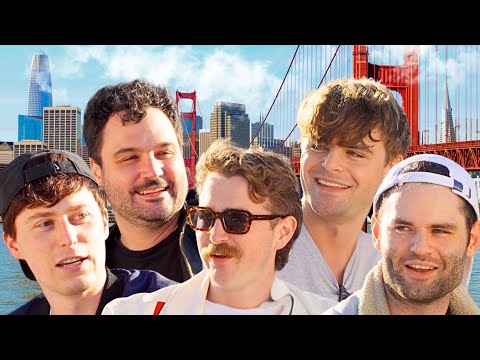
Clip command
yt-dlp --download-sections "*0:00-1:05" "https://www.youtube.com/watch?v=FddjP_zNkyc" --force-keyframes-at-cuts --merge-output-format mp4 -o "FddjP_zNkyc-0m00s.mp4"“Silicon Valley used to be the innovation capital of the world. It’s where the semiconductor was done, where the internet was pioneered. Then there’s skyscrapers built behind us solely for software as a service. The past 10 years the city has changed and I don’t think all for the better. But it feels like a return to form for Silicon Valley is happening right now.” — Jason Carman, 0:00
”We know more about the surface of Mars than our own oceans”
Clip command
yt-dlp --download-sections "*8:52-10:00" "https://www.youtube.com/watch?v=FddjP_zNkyc" --force-keyframes-at-cuts --merge-output-format mp4 -o "FddjP_zNkyc-8m52s.mp4"“The subsea technology space is so ancient. It hasn’t changed much since the 80s. We know more about the surface of Mars than we know about our own oceans. We believe Atlantis is out there somewhere. There’s trillions of dollars of minerals at the bottom of the ocean.” — Will O’Brien, 8:52
”The appliance market is as big as the smartphone market - and there is no Apple”
Clip command
yt-dlp --download-sections "*26:43-27:45" "https://www.youtube.com/watch?v=FddjP_zNkyc" --force-keyframes-at-cuts --merge-output-format mp4 -o "FddjP_zNkyc-26m43s.mp4"“The appliance market is just as big as the smartphone market. And there is no Apple in that market, which makes no sense. The appliance industry has been neglected for decades without seeing a ton of innovation.” — Sam D’Amico, 26:43
”Jim Belosic is the best American manufacturing founder CEO alive”
Clip command
yt-dlp --download-sections "*31:55-33:00" "https://www.youtube.com/watch?v=FddjP_zNkyc" --force-keyframes-at-cuts --merge-output-format mp4 -o "FddjP_zNkyc-31m55s.mp4"“Jim Belosic is probably the best American manufacturing founder CEO alive right now. SendCutSend delivers parts as fast, cheap, and reliably and quality as China does within days. He employs Americans, shows other manufacturing companies what they can do.” — Roundtable Discussion, 31:55
”A kid in rural Kansas with $200/month has access to the best AI tools”
Clip command
yt-dlp --download-sections "*29:15-30:20" "https://www.youtube.com/watch?v=FddjP_zNkyc" --force-keyframes-at-cuts --merge-output-format mp4 -o "FddjP_zNkyc-29m15s.mp4"“We’re at the highest leverage point in decades. A kid in rural Kansas, as long as they’re down to pay 200 bucks a month for the latest AI models, has access to the best information sources. You can use them to code, to build stuff. It’s unprecedented.” — Sam D’Amico, 29:15
”Storytellers create narrative air cover for builders of scary-sounding things”
Clip command
yt-dlp --download-sections "*23:38-24:45" "https://www.youtube.com/watch?v=FddjP_zNkyc" --force-keyframes-at-cuts --merge-output-format mp4 -o "FddjP_zNkyc-23m38s.mp4"“The storytellers are an underrated part of the equation. Technologists building scary-sounding things need storytellers to create beautiful narrative about the future that pulls people to work at these great companies and support them and not be afraid.” — Jason Carman, 23:38
Key Points
- Silicon Valley return to form (0:33) - Silicon Valley pioneered semiconductors and the internet, then got rich off enterprise SaaS; now seeing a return to building physical things
- Impulse Labs origin (4:16) - Sam D’Amico wanted to cook pizza really fast, realized medium-sized appliances have mismatch between peak and average power that batteries can solve
- Battery-powered appliance revolution (4:30) - Every medium-sized machine on the grid can be reinvented by putting a battery inside to decouple energy input from power output
- Appliance market opportunity (26:43) - The appliance market is as big as the smartphone market but has no Apple; huge opportunity for innovation
- San Francisco terraformed history (6:57) - Much of SF’s waterfront was built by filling in around abandoned gold rush ships; 40 feet of land added
- Terranova’s mission (6:03) - Downtown Centerville is 6 feet below sea level in a flood zone; they’re building robots to lift land out of flood zones
- Ulysses and ocean frontier (8:10) - Building underwater robots because subsea technology hasn’t changed since the 80s; we know more about Mars than our oceans
- San Francisco frontier spirit (10:15) - America selected for “crazy people” who moved westward; SF born of Catholic missions, gold rush, then hippies, then tech
- Storytelling creates narrative air cover (23:38) - Technologists building scary-sounding things need storytellers to explain why it’s for human flourishing, not evil megalomania
- Technology for forgotten 80% (26:08) - Haven’t been building brilliant technology for military, people in flood zones, fishermen, offshore workers
- Building in China vs America (32:37) - US is wealthier than China but can you build “sick stuff” as fast? China excels at the electric technology stack
- SendCutSend praise (31:55) - Jim Belosic called “best American manufacturing founder CEO alive” - delivers parts as fast, cheap, and reliably as China
- Fractional equipment access (30:30) - Startups can’t afford one of every machine needed; need to fractionally rent machines, which typically requires China
- Ralph Nader’s legacy (33:06) - Trial lawyer/environmental law infrastructure built to sue manufacturers created institutions blocking physical world building
- De-growth forces won (34:20) - Post-Cold War, GE-style financialization turned physical industries into spreadsheets instead of starships
- AI overpaying talent (37:04) - $200/month gets rural Kansas kid access to best AI models for coding and design; leverage point unprecedented in decades
- AI cult houses (44:16) - Two-bedroom apartments going from $4,500 to $6,500 competing against group houses of AI multi-millionaires
- 50,000 art hoes would fix SF (55:50) - City needs non-tech attractive people for culture; tech workers make money but don’t reinvest in nightlife
- Kowloon Walled City proposal (58:34) - Joke suggestion that Trump should turn Presidio golf course into densely built city on federal land
- Hardware founders in DC (1:04:37) - This generation of founders spending much more time in DC; many share same lobbyists, becoming politically literate
- SB979 zoning reform (1:08:30) - New rezoning would allow 6-story buildings instead of 2-story in much of SF; born from tech-adjacent YIMBY community
- Austin housing success (1:09:30) - Austin pushed down rental prices by building more housing; supply and demand works
- SpaceX Brownsville example (1:11:45) - Elon created vibrant city in one of poorest US areas; employing 2,000 people is better than most charity
Mentions
Companies
- Impulse Labs (1:45) - Sam D’Amico’s company building highest performance stove with integrated battery storage
- Story Company (1:23) - Jason Carman’s company making sci-fi films inspired by real science and engineering
- Ulysses (0:51) - Will O’Brien’s company building autonomous underwater vehicles
- Aurelius Systems (1:09) - Michael LaFramboise’s company making laser weapon systems
- Terranova (2:28) - Laurence Allen’s company making terraforming robots for flood zone protection
- SendCutSend (31:55) - Jim Belosic’s manufacturing company praised as delivering as fast as China
- SpaceX (31:00) - Elon’s company mentioned as having enough scale to justify owning all equipment
- Palantir (60:30) - Early tech company that filled up Palo Alto, catalyzing housing reform movement
- GrowSF (1:05:15) - San Francisco political organization led by Gary Tan
- California Forever (1:05:45) - Project to create new city in Solano County with hardware startup foundry
- Abundance Institute (1:06:35) - Team of former technologists working in DC to bring tech mindset to policy
- McMaster-Carr (28:51) - Industrial supply company mentioned as essential tool for builders
Products & Technologies
- Impulse Stove (1:47) - Battery-integrated high-performance electric stove
- Autonomous underwater vehicles (1:00) - Ulysses’s robots for ocean survey and defense
- Laser weapons (1:11) - Aurelius Systems’ directed energy weapon systems
- Terraforming robots (2:29) - Terranova’s machines for lifting land out of flood zones
People
- Sam D’Amico (1:45) - Founder and CEO of Impulse Labs
- Jason Carman (1:16) - Founder of Story Company
- Will O’Brien (0:51) - Co-founder of Ulysses
- Michael LaFramboise (1:09) - Co-founder and CEO of Aurelius Systems
- Laurence Allen (2:28) - CEO of Terranova
- Ti Morse (0:40) - Host of Relentless
- Jim Belosic (31:55) - Founder of SendCutSend, “best American manufacturing founder CEO alive”
- Elon Musk (31:00) - Referenced for scale of operations and creating Brownsville community
- Ralph Nader (33:06) - Blamed for building legal infrastructure that blocks physical world building
- Stuart Brand (11:24) - Organized Grateful Dead’s first conference and gave Steve Jobs first money
- Aaron Peskin (35:50) - SF politician who started career blocking UC Santa Cruz dorm construction
- Daniel Lurie (35:55) - Called “the GOAT” for pushing housing reform
- Gary Tan (1:05:15) - Leading GrowSF initiative
- Jack Welch (34:48) - GE CEO who symbolizes financialization of physical industries
Surprising Quotes
“Silicon Valley used to be the innovation capital of the world. Past 10 years, the city that I grew up next to has kind of changed and I don’t think all for the better.” — 0:00
“We know more about the surface of Mars than we know about our own oceans. We believe Atlantis is out there somewhere in the subsea domain.” — 8:57
“The appliance market is just as big as the smartphone market. And there is no Apple in that market, which makes no sense.” — 27:15
“Jim Belosic is probably the best American manufacturing founder CEO alive right now… they deliver parts as fast, cheap, and reliably and quality as China does within days.” — 31:55
“If you say nobody wants to work anymore, they don’t want to work for you.” — Referenced from SendCutSend video
Transcript
0:00 Silicon Valley used to be the innovation capital of the world. Past 10 years, the city that I grew up next to has kind of changed and I don’t think all for the better. This is always been kind of this like industrial heartland of the United States. It just happened that we got really rich off of enterprise SAS over the past 20 years. San Francisco very much exemplified the idea of like a frontier city, right? That spirit is still here.
0:19 There’s a lot of really really great talent. A lot of people that are interested in building really new things. I think there’s a lot of undiscovered hardware talent specifically that has kind of been underserved for the last 15 years. The fact that they’re difficult companies to build is exactly why they’re good companies to build. It’s easier to recruit the best talent to solve a hard problem. It feels like a return to form for Silicon Valley is happening right now.
0:40 I am in San Francisco with Lawrence, Sam, Jason, Michael, and Will. Do you want to just go around and basically explain what your companies do? Will.
0:51 Oh yeah, sure. Hello everyone. My name is Will O’Brien. One of the founders of Ulysses. We build autonomous underwater vehicles for use in nature use cases, for use in commercial offshore survey and defense.
1:09 Cool. Hi, I’m Michael LaFramboise. I’m the co-founder and CEO of Aurelius Systems. We make laser weapon systems.
1:16 Howdy. I’m Jason Carman. Grew up an hour north of here. Sitting here in beautiful San Francisco, California, the sailing capital of the world. And I’m the founder of Story Company, which is the company I’ve wanted to build since I was nine. And we’re making movies. We’re working to make the next big sci-fi trilogy series as well as have it be inspired by real non-fiction science and engineering stories. Some of the folks here I filmed with before, which is awesome. And today’s a cool day cuz we just released our first sci-fi film, Planet, online. And we’re using that to go and make a bigger movie soon.
1:45 Let’s go. I’m Sam D’Amico, founder and CEO at Impulse Labs. We build the highest performance stove on the market today, which has been shipping for the past several months. You can order it on our website. But additionally, what we’re doing is we’re basically reinventing the grid by putting battery storage into like every device with a power cord. Like every medium-sized machine is now going to get reinvented around this new electrified technology stack. And I think I’m older than everyone else here, which is kind of funny. So hello my Gen Z brethren.
2:13 Boomer. And this is crazy that I can say that because I used to be the young guy. And yeah, it’s been in San Francisco since 2014 officially. And really great to see a lot of awesome folks kind of like building stuff here.
2:28 I’m Lawrence Allen. I’m CEO of Terranova. We’re making terraforming robots and lifting land out of flood zones.
2:35 Yeah. Let’s just start off with like why did you guys start your companies? I went down to El Segundo and there’s very clearly like missions behind each of those companies and I wanted to kind of show that like people in San Francisco are also going after really tough problems and meaningful missions.
2:51 Silicon Valley used to be the innovation capital of the world. I mean it’s where the semiconductor was really done in the early days. It’s where the internet was really pioneered. And then I think that went so well that now there’s skyscrapers built behind us solely for software as a service and similar things.
3:08 And I think the past 10 years the city that I grew up, it’s like the biggest city I grew up next to has kind of changed and I don’t think all for the better. And I grew up north of that initial innovation and that inspiration being so excited about it and moving here working at a satellite company aerospace company found this burgeoning underground deep tech scene.
3:30 Myself talking Sam is talking about all these wonderful gentlemen who are building incredible things and so for me I’m just making movies I’m not doing anything nearly as ambitious as what they are but to me there’s a story here of getting back to that initial vision of innovation and changing the world for the better, whether you’re building the most advanced robots or things to terraform the land or work in the ocean or anything in between, there’s a huge opportunity to get back to building real physical things here.
4:00 And it just feels like this is the current capital of the world obviously of AI but also robotics, smaller more kind of niche and bespoke technologies as well. And it just feels like a return to form for Silicon Valley is happening right now here.
4:10 Yeah. So I think one of the rationale for starting Impulse was basically I kind of wanted to cook pizza really fast to be frank and realized that basically every medium-sized home appliance and frankly every medium-sized like machine on the grid kind of has a very big mismatch between its peak power and its average power and you can make the peak power and thus cooking your pizza much faster if you put a battery inside.
4:41 And so realized that that was kind of a big idea that came from a very small like almost like personal anecdote. But the separate part was I was working in AR and VR like Google Glass, Oculus these other programs and it was like these were increasingly the realm of like mega mega cap companies like they had to innovate on like the silicon the core display technologies all these other things but like the appliance industry has been neglected for decades without seeing a ton of innovation.
5:08 And if you can just fundamentally make a better product well we don’t have to worry about gas stove debates. We don’t have to worry about any of this other stuff. We just like build better stuff with now we’ve got this new set of tools which is kind of like the electric technology stack let’s do that and then we’ll transform the grid as well and so that was kind of the impetus for getting stuff started.
5:33 But realized that it turned out to be a bigger idea than I expected it’s like many of these appliance companies that already exist are like wait can we have that too and then they give you distribution and we don’t have to stop at just stoves we’re doing other things as well so that’s what’s been really exciting.
5:55 But yeah the other point with San Francisco is like obviously like literally looking across the bay. And like there’s all these former industrial facilities that built like a huge chunk of our military might in World War II. Obviously down there like Pier 70 where like Astronis was like this has always been kind of this like industrial heartland of the United States. It just happened that we got really rich off of enterprise SAS for the past 20 years. And it’s frankly pretty exciting to see that maybe the big ideas are going to come back soon.
6:21 Yeah. We started here because I grew up in Centerfell, just like an hour north of here. And it’s, you know, in a flood zone. Downtown’s like the most densely populated part in the entire Bay Area, and it’s like 6 ft under sea level. They’re talking about spending a billion dollars on a seawall. I thought that was crazy. Like, first principles, you know, it needs to just be lifted up. So, you know, set on fixing that. That’s our mission.
6:50 Trying to start in the Bay Area. Kind of bounced around Berkeley, Stanford and realized this is you know the core hub of not just lame SAS companies but also cool atoms over bits and trying to bring that back that you know spirit of innovation. I think all these founders here are really modeling that you know for this next generation showing that you really can build big physical companies and get that same you know venture capital interest going for things that are cool and big and physical and real.
7:19 I mean, it’s interesting like this whole area is terraformed technically, right? Like this whole way down of San Francisco did not exist at a certain point in time. So it’s good to see you guys flooding too.
7:30 The ships that brought some of my early family members, I have some family that’s from California. Like the ships that brought them here from like New England, some of them were buried and basically built a lot of this waterfront, you know.
7:41 Yeah. I mean during during the gold rush like this whole area just had ships coming in and out in and out and they would just like if the company would go bust they would just like leave the ship here and then they like infilled like garbage around it and it’s like ship after ship and you literally added like 40 foot but like that’s the degree of dog in them that these like gold rush people had.
8:07 I mean yeah so the reason why we do what we do or why we started, I grew up by the seaside in like a small town southwest of Ireland like grew up on the coast was like in the water on the water fishing surfing swimming whatever it was like every summer growing up as a kid so always just like had like a very strong affinity to the ocean.
8:25 And then a few years ago me and my co-founders two years ago got nerd sniped by building underwater robots. We initially got very interested we were becoming very worried about the loss of subsea ecosystems, seagrasses, corals, these sorts of things that are dying at like an insane rate around the world and basically the tools for replanting them or bringing them back are basically humans going down and manually hand-planting or hand intervening with the subsea domain.
8:52 Because the subsea technology space is just so ancient. It really has not changed much since the 80s. The tools there are ancient. You see all these like developments in self-driving cars or these developments in like FPV drones or others that just hadn’t been brought to the subsea domain.
9:11 And yeah in thinking about how do we solve this like subsea kind of ecosystem restoration problem we realize holy crap you could build a very big business that builds tools for this great blue frontier. Like we know more about the surface of Mars than we know about our own oceans. We believe Atlantis is out there somewhere in the subsea domain we don’t know. There’s all these archeological sites in the subsea domain. We don’t know. There’s like trillions of dollars of minerals like stuck at the bottom of the ocean.
9:43 There’s all this like subsea life that we don’t know about. And also like the ocean is just becoming a very geopolitically important domain, particularly the subsea domain. The amount of subcables that are being built out every year, subsea energy infrastructure being built out each year and the tools for maintaining them and intervening them again have not been reinvented for a long time. So that kind of like nerds us in that but it’s more generally this idea of like the frontier right we believe the ocean is like one of the next great frontiers and one of the greatly underrated frontiers of our time.
10:15 But San Francisco very much exemplifies the idea of like a frontier city right. America itself is a frontier nation right it’s born of people it’s selected for especially as United States moved westward it’s selected for a certain type of crazy person maybe a crazy Irish person who came over during the famine or a crazy German person or Italian, they came out and they decided to set up base of the frontier because they saw opportunity there and they moved westward and then we had this frontier that moved westward across the country and then ended here when you get to the ocean.
10:49 And that frontier spirit is what San Francisco was born of. It was born of that. I mean San Francisco was born of a Catholic mission. It’s a missionary is the mission that was the first place with the Presidio and the mission these people pursuing westward for a transcendent reason who was in that instance missionaries.
11:09 But you know after that you have then things like the gold rush again another frontier of exploration pursuit for something greater than themselves. And that spirit very that spirit is still here right and that spirit remained here. You had the gold rush and you had all that brought and then you have like the industrialization of America and you had some of the great industrial families setting up bases here.
11:32 And then you have that like you know we have this kind of like a revolution you know the hippies came here right but that was another frontier idea right it was like new ideas but you know it turned inward then but still there was like frontier ideologies here the summer of love started here again it’s like a very much a frontier very contrarian to the kind of like post-war people.
11:55 And then you have like from actually the kind of the embers the ashes of the kind of hippie revolution. You have like the earliest days of the software and the kind of broader like Silicon Valley rises out of the ashes of this like hippie revolution. You have people like Stuart Brand who was like organizing the Grateful Dead’s first conference but he was also like the first person to give Steve Jobs money right like you have that continuity then it’s like this direct lineage right and he hands over them and then you have like homebrew computer club that starts here you have that whole revolution Fairchild.
12:32 So then you have that and then we kind of get in this as you put it like this enterprise SAS slump although I think there is some like great frontiers been in the world of enterprise. Oracle right like these guys they’re true frontiersmen right and I think we’ve recognized that. Came to mobile that was again a little bit cringe but like now the frontier spirit is still here and you have like a group of people here who are very much like embodying it then other people on the west coast our friends and also going to doing like similar things and reviving it again and going to the frontier.
23:38 I think it’s totally like an underrated part of the equation is like the storytellers, right? Like I mean shock you build like an industry on top of nerds and all of a sudden the public perception of them is like not that good. Like there’s a degree to which like you know you kind of live in like two worlds that we live in the material world like the stuff you can touch and there’s like the symbolic world the world of ideas.
24:01 And people always think that like you know it’s a one way if you want to like change the future that like oh yeah you just work in the material world and build that but like what is equally important is like what you two guys are doing is like yeah creating this like beautiful narrative about the future that pull people to work at our great companies or to like support them or something like that.
24:28 Understand and be and not be not be afraid of. I think another thing that’s like interesting about this like generation of companies as well is like how many of them are building for like the kind of like 80% of Americans or people around the world that have kind of been forgotten, right? Like we haven’t been building technology brilliant technology for members of the military. We haven’t been building technology for people who like live on coastlines or getting their houses flooded or like we haven’t been building technology that like helps fishermen do like a better catch every year or people who work on like offshore infrastructure.
26:43 The appliance market is just as big as the smartphone market, right? And like there is no Apple in that market which makes no sense.
29:15 We’re at this weird inflection point in technology where it’s probably the highest leverage point in decades of like there’s now all these tools. You could be a kid in rural Kansas and you have access to like as long as you’re down to pay 200 bucks a month for like the latest AI the top end AI models. You’ve got access to the best information sources most useful information sources you possibly can do. You can use them to code. You can use them to build stuff.
30:05 We’re now at the point of the digital domain is getting mastered to the point of like if you can build software defined hardware, you can now progress really fast on making next generation products that are awesome. The issue is actually now how do we get the physical stuff moving again and how do you do that efficiently and with leverage because the big issue is fundamentally if I need to go buy one of every machine I would need to use to build my product I would not the company wouldn’t make any financial sense.
30:30 Because like if I could fractionally rent those machines then it makes sense to do that you typically need to go to China right now and it’s something where I think people are this is an underrated part of San Francisco is like you could fly to China really easily from here. But you can also just share equipment. You know, we have a laser that can do like quarter inch steel. I let these boys use it.
31:00 The big point though is like Elon can do this because he’s big enough to basically give enough demand to basically mean that he can like one of each like he gets above the integer number of machines where they pay for themselves basically. But like if you’re a startup, you can’t afford an integer number of all the equipment you would need to build your thing at scale.
31:20 Where’s Jim Belosic? He’s in Reno. And by the way, that’s the coolest story ever. And also a good lesson. You should never raise VC money because guy.
31:32 Yes, we’ve made films for him. Jim is goated. Jim is probably the best American manufacturing founder CEO alive right now. I mean, he was traveling over eight years starting with like a single laser cutting machine in his garage that he convinced his wife to get for I think half a million dollars. And now they deliver parts as fast, cheap, and reliably and quality as China does within days. It’s incredible. And now they’re getting into CNC as well.
32:03 And there’s it is so underrated. I think he like basically has no venture. I think he took like a small tiny little check at some point from someone and it’s not even like he doesn’t need it for his growth.
32:37 The story around China used to be that it’s cheap labor and it’s unskilled, but now they’re the best in the world at building. They’re the best at the electric technology stack. They made me an awful drill rig. So you got to take these anecdotes and let’s just say that these are not anecdotes. Our iPhones are not made in America. Like most of the appliances we have made in America.
33:06 The big meta narrative and I’m not sure if you guys are young enough to remember when Ralph Nader tilted the 2000 presidential election to George W. But if you’re on the left, Ralph Nader’s number one exercise in villainy was that. Meanwhile, the actual truth is his number one exercise in villainy was basically beating the New Deal coalition inside the Democratic party.
33:35 Basically, there was an abundance coalition within the Democratic party in the ’60s, in the ’50s, ’60s, whatever. But then the kind of like trial lawyer lawsuit like environmental law like public interest law syndicate effectively led by Ralph Nader he wanted to sue manufacturers for not having seat belts in their cars. Some of these things were justified. Some of these things were not. But that built the infrastructure and institutions that allowed us to basically block us doing anything in the physical world.
34:05 And that is basically enshrined us into this sort of like do nothing NIMBY universe. No, this is also like Ronald Reagan signed the California Environmental Quality Act. This is both like basically we decided as a response to the oil crisis in the 70s to the Soviets probably scoping the anti-nuclear movement through the 50s 60s through the Bay Area. In Germany, the whole anti-nuclear thing is just disaster. Soviet conduit nonprofits in France and other places funneling money back to Germany to get them to shut it down.
34:48 But basically all of these the forces of degrowth won in the probably like I would argue locking up in the 80s and then the end of the cold war meant that we de-industrialized the defense sector cuz we had all of like the US still needed to beat the Soviets and so we had all this stuff. Now in the ’90s you basically have like GE with Jack Welch, you know, and all their stuff. We started financializing our physical industries and now suddenly everything turns into a spreadsheet versus turns into like a starship and it’s over.
35:20 And so we’re now at the point of like okay so that all happened and meanwhile like our GDP is still doing great but then okay if like stuff paused for a minute and like I wanted to build something and I could choose between doing it in Shenzhen or here you know it’s kind of a bad comparison for the United States. It’s like the US is a wealthier country than China, but like could you build sick stuff as fast and that’s during you know war times what’s going to happen?
54:07 So, I think the people here are all based in San Francisco. Working on things that I think are really really meaningful. I want to also talk about like what is wrong with SF? What are the things that you guys would like to improve and see a difference? I mean, we talked about it a little bit saying that we want to see like software is great. We talked about like SAS SAS SAS, but it is great. It’s what’s affording our VCs who fund a lot of us to do what we do.
54:30 I do think that as Will was pointing out there was a really big counterculture sort of arts movement here that has been almost fully displaced and you know arts a spectrum and the stuff that was happening here wasn’t like I was not a rabid fan of per se but I do think that the people in SF right now and who live majority in this buildings behind us are transplants that have moved here don’t know the history or the culture of the city and aren’t adding anything to it.
55:00 They don’t a thing that I think is really interesting is the IQ or the collective IQ and the hobbies that all the people who move to SF and do tech stuff do like it’s not a lot of nightlife. I think Sam and I might be leading San Francisco nightlife single-handedly.
55:50 The thing that I think is a shame is that the people here make so much money in software. And then unlike other cities in America, they don’t reinvest it into nightlife, which sounds almost stupid, but I think that’s a huge driving factor. The amount of beautiful people that I know that like want to be in LA over San Francisco solely because there’s more things to do on any given day of the week or a Friday or a Saturday night is big.
56:10 I think SF would be fixed. There was a presentation online recently that I think said 50,000 art hoes would fix San Francisco. I don’t know if I’d use that terminology, but I agree. I think 50,000 non-tech attractive people moving here would do wonders for the culture of the city.
58:34 So I would just say if Trump wanted to troll San Francisco really bad, I’m just going to say he should do it. He should definitely do it. Turn the Presidio golf course into Kowloon Walled City. Because you could do that on federal land. It’s a golf course. You put a golf course on the top of it.
1:04:37 I think cause for optimism you have is that like this cadre of hardware founders are spending a lot more time in DC than the previous cadre are. As in I mean like literally me, Lawrence and Michael have the same lobbyists, you know, like we have. I’ve been to DC like three times in the past two weeks and many many of my friends who are doing stuff and working have multiple lobbyists, right?
1:05:00 Like and so you’re also having like another generation of founders that are becoming increasingly literate in like how to get things done at a political level. And if you like map this out further then it’s like you know God willing all of our companies do well and we’re in a position where we have a bit more money and then you also have like a generation of founders that actually know what to do in a political sense.
1:05:30 And you’re seeing like signs of this happening now. You have like GrowSF in San Francisco. You have like Elon getting you know which is led by Gary Tan who have to tip his hat off to them there like started a very good initiative in that and like Elon obviously doing it to the most obvious extent and then you also are seeing like other initiatives which are political in nature as well with like California Forever this project that’s like just north of here trying to create like a new city in Solano County that has like a home for ship building that like has a home for the foundry for home hardware startups like us that we’re working with them on.
1:06:15 So I think like this is like with great power comes great responsibility like I think that definitely a cause for optimism. You’ll have like a lot of people in 5 10 years that have a lot of money but they also know how to work the DC system as well and I think that is exciting because then you can start to get over these sorts of things.
1:11:25 Best example of that. Elon just created this city. You know, when I first went there, Brownsville, you know, had a little bit of nightlife, but now it’s this like big vibrant city. You know, they have their families there. They have all the, you know, Starbucks workers that support them. It’s really cool. You can just move and build things and create really large vibrant communities by using that capital power.
1:11:45 Yeah. And this is described as like one of the poorest kind of like most neglected areas of the United States. I think it’s like looking at capital allocation not just from like a first order impact. A first order impact is just like looking at like oh you give it to the malaria net. It’s like oh no I’m going to take it and I’m going to invest in let’s say a manufacturing facility or something like that and it’s like you think of the second and third order effects on that.