The Story of deel | Shuo Wang
The Story of deel | Shuo Wang
Summary
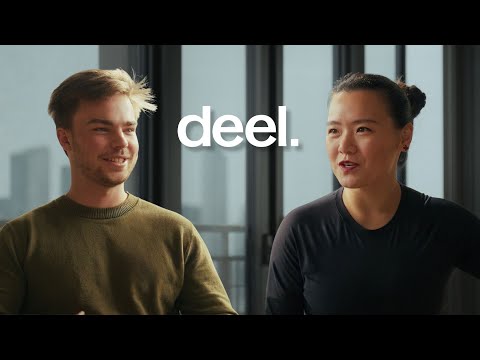
Shuo Wang, Co-Founder and Chief Revenue Officer at Deel, shares the comprehensive story of building a global HR and payroll platform that enables companies to hire talent anywhere in the world. The conversation covers Deel’s vision of removing geographic restrictions from hiring, their “Deel speed” culture of rapid execution, and how they opened 100+ entities across 80 different countries in just one year.
Wang discusses her journey from growing up in China with her grandparents to moving to the United States at 16, building an air purifier company in China, and eventually co-founding Deel. She emphasizes the importance of focusing on problems rather than solutions, creating “11-star customer experiences,” and the value of being an outsider in Silicon Valley. The interview also explores Deel’s three pivots during Y Combinator, their approach to sales and hiring, and how COVID became a “lifetime opportunity” for their business.
Highlights
”Within one year we opened 100 plus entities across 80 different countries”
Clip command
yt-dlp --download-sections "*0:00-1:00" "https://www.youtube.com/watch?v=ExoQOtqtxX0" --force-keyframes-at-cuts --merge-output-format mp4 -o "ExoQOtqtxX0-0m00s.mp4"“There’s one culture at Deel which we call Deel speed. We move very fast. We focus on execution and we focus on problem solving. Within one year we opened 100 plus entities across like 80 different countries.” — Shuo Wang, 0:00
”If I do not receive my payment, I will not be able to pay the rent of the week”
Clip command
yt-dlp --download-sections "*0:16-1:15" "https://www.youtube.com/watch?v=ExoQOtqtxX0" --force-keyframes-at-cuts --merge-output-format mp4 -o "ExoQOtqtxX0-0m16s.mp4"“At the early days of Deel, Alex and myself, we were both customer support. The questions are mainly when can I receive my payment? Today is a Friday. If I do not receive my payment, I will not be able to pay the rent of the week.” — Shuo Wang, 0:16
”We pivoted three times during YC”
Clip command
yt-dlp --download-sections "*14:00-15:20" "https://www.youtube.com/watch?v=ExoQOtqtxX0" --force-keyframes-at-cuts --merge-output-format mp4 -o "ExoQOtqtxX0-14m00s.mp4"“We actually pivoted three times during YC, which is unusual but I think it shows how important it is to be willing to change direction when something isn’t working. When we joined YC, we were building a crypto payment platform for content creators.” — Shuo Wang, 14:00
”Government offices were closed, banks weren’t processing applications”
Clip command
yt-dlp --download-sections "*36:30-37:40" "https://www.youtube.com/watch?v=ExoQOtqtxX0" --force-keyframes-at-cuts --merge-output-format mp4 -o "ExoQOtqtxX0-36m30s.mp4"“Let me tell you how painful it was to open corporate entities during COVID. We were trying to open 100 entities across 80 countries at the same time that the whole world was shutting down. Government offices were closed. Banks weren’t processing applications.” — Shuo Wang, 36:30
”COVID was a lifetime opportunity for Deel”
Clip command
yt-dlp --download-sections "*44:15-45:20" "https://www.youtube.com/watch?v=ExoQOtqtxX0" --force-keyframes-at-cuts --merge-output-format mp4 -o "ExoQOtqtxX0-44m15s.mp4"“COVID was a lifetime opportunity for Deel. I know that sounds strange because COVID was terrible for so many people. But for our business, it accelerated adoption of remote work by years.” — Shuo Wang, 44:15
”I interviewed Deel’s first 400 employees personally”
Clip command
yt-dlp --download-sections "*50:07-51:10" "https://www.youtube.com/watch?v=ExoQOtqtxX0" --force-keyframes-at-cuts --merge-output-format mp4 -o "ExoQOtqtxX0-50m07s.mp4"“I interviewed Deel’s first 400 employees personally. That might sound crazy, but I think it was one of the best investments I made. When you’re building a culture, the first few hundred hires are incredibly important.” — Shuo Wang, 50:07
”I screen for happiness”
Clip command
yt-dlp --download-sections "*51:33-52:40" "https://www.youtube.com/watch?v=ExoQOtqtxX0" --force-keyframes-at-cuts --merge-output-format mp4 -o "ExoQOtqtxX0-51m33s.mp4"“One thing I screen for is happiness. I want to hire people who are fundamentally happy. Not people who are always complaining, not people who see the negative in everything. Happy people are more productive. They’re easier to work with.” — Shuo Wang, 51:33
Key Points
-
Deel Speed Culture (0:00) - Deel moves very fast, focusing on execution and problem solving. They opened 100+ entities across 80 countries within one year.
-
Vision for Global Talent (1:17) - Deel’s vision is to enable any talent to work anywhere regardless of location, and any company to hire any talent without restrictions.
-
Why Companies Should Go Global Early (3:28) - Companies should think globally from day one to access the best talent worldwide.
-
Building Deel’s Sales Team (7:30) - Discussion of how Shuo built and scaled Deel’s sales organization.
-
Why Shuo Loves Sales (10:33) - Sales is about understanding problems and helping customers solve them.
-
Pivoting 3 Times During YC (14:44) - Deel pivoted three times during Y Combinator, starting as a crypto payment platform for content creators before finding product-market fit.
-
Solving Payment Delays (22:04) - In the early days, contractors would ask “when can I receive my payment?” because they needed to pay rent weekly.
-
Making Decisions Before Data (32:37) - How to make strategic decisions when you don’t have enough data to inform them.
-
Opening Entities During COVID (36:30) - The painful process of opening corporate entities around the world during the pandemic.
-
COVID as a Lifetime Opportunity (44:15) - The pandemic accelerated remote work adoption, creating massive demand for Deel’s services.
-
Interviewing First 400 Employees (50:07) - Shuo personally interviewed Deel’s first 400 employees.
-
Screening For Happiness (51:33) - The importance of hiring happy people who bring positive energy to the team.
-
Ghost Busters Special Projects Team (52:59) - Creating a special projects team to solve the most challenging problems.
-
Co-Founder Relationship (59:16) - The importance of having a co-founder you can rely on (Alex).
-
Importance of Offsites (1:03:31) - Why company offsites are critical for building culture and alignment.
-
Learning Business From Her Mom (1:07:20) - Shuo learned about running a business from watching her mother.
-
Growing Up in China (1:11:26) - Shuo grew up in China living with her grandparents.
-
Moving to the US at 16 (1:15:51) - The experience of immigrating to America as a teenager.
-
Air Purifier Company in China (1:24:13) - Before Deel, Shuo built an air purifier company in China.
-
Being an Outsider in Silicon Valley (1:30:18) - How being an outsider shaped her approach to building Deel.
-
Product-Market Fit at Deel (1:32:46) - What it felt like when Deel found product-market fit.
-
11-Star Customer Experience (1:42:08) - Creating an exceptional customer experience that goes beyond expectations.
-
What Makes Alex Special (1:43:44) - The unique qualities of her co-founder Alex.
Mentions
Companies
- Deel (0:00) - The global HR and payroll platform Shuo co-founded
- Y Combinator (14:44) - The startup accelerator where Deel went through three pivots
- Intercom (19:06) - A company Shuo dreamed about while building Deel
Products & Technologies
- Crypto Payment Platform (25:11) - Deel’s original product idea for content creators
- Global Payroll (0:00) - Deel’s core product for paying international employees
People
- Shuo Wang (0:00) - Co-Founder and CRO of Deel
- Alex (0:16) - Co-founder of Deel, mentioned as doing customer support together in early days
Surprising Quotes
“There’s one culture at Deel which we call Deel speed. We move very fast. We focus on execution and we focus on problem solving. Within one year we opened 100 plus entities across like 80 different countries.” — 0:00
“At the early days of Deel, Alex and myself, we were both customer support. The questions are mainly ‘when can I receive my payment? Today is a Friday. If I do not receive my payment, I will not be able to pay the rent of the week.’” — 0:16
“We have a vision that we want to enable any talents to be able to work anywhere they want regardless of location and we want any company to be able to hire any talent they want regardless of any restrictions out there.” — 1:17
“That make me realize that oh wow people really depends on Deel.” — 0:33
Transcript
0:00 There’s one culture at the deal which we call deal speed. We move very fast. We focus on execution and we focus on problem solving. Within one year we opened 100 plus entities across like 80 different countries.
0:16 At the early days of deal, Alex and myself, we were both customer support. The questions are mainly when can I receive my payment? Today is a Friday. If I do not receive my payment, I will not be able to pay the rent of the week. But for a lot of the countries you pay rent weekly instead of monthly that make me realize that oh wow people really depends on deal.
0:37 Today I have the pleasure of sitting down with Wang the co-founder and CRO of deal. While I’ve been like doing my research one thing kept on coming up which was you talking about like strategy and I would love to know how do you think about strategy? There are many aspects of strategy right so right now it is sales and then I think a lot of sales strategies and go to market strategy but I’m also a founder so like you know and I also think about like you know structurally company wise what would be our strategy.
1:11 I’d be curious to start on just the company wise like how do you think about company building.
1:17 I think what we are trying to build or what we are aiming to build for deal has never changed. We have a vision that we want to enable any talents to be able to work anywhere they want regardless of location and we want any company to be able to hire any talent they want like they can regardless of any restrictions out there right that’s why we build deal.
1:44 If you think about that there’s just so 195 countries out there and every single country has their own compliance rules and then regulations and then their own benefits, taxes and we need to figure out every like all of those for every single country out there and then based on that like you know what kind of structure that we need to build.
2:11 So right now deal has two main products. One is Employer of Record which is if I want to hire someone else in another country for example if I want to hire someone in France I don’t have a French entity I can use deal’s French entity to hire that French employee. Deal takes the employment liability for me and I just pay deal. And then deal pays the employee.
2:45 The other product is contractor payment. So if I hire an independent contractor from anywhere in the world, I can use deal to pay them. We actually generate the compliant agreement for them and we handle all the tax compliance and we also process the payment.
3:08 So if you think about structurally, how do we build this company? In order to be able to provide these two products we need to have a lot of entities around the world. So we need to have our own French entity, our own German entity, our own Australian entity. We actually have over 100 entities ourselves.
3:35 We also need to have a lot of local expertise. We need to have local lawyers, local accountants, local HR experts in every single country. And we also need to have a lot of banking relationships because we need to be able to pay people in every single country in their local currency.
4:02 So when I think about like what are the structural decisions that we need to make, the first one is like we need to be very global from day one. We cannot just start in one country and then expand to another country. We need to be everywhere at the same time because our customers need to hire everywhere at the same time.
4:30 The second structural decision is that we need to own everything ourselves. We cannot rely on partners because if we rely on partners, we cannot control the quality of service and we cannot control the speed. And speed is very important for us because we want to be able to onboard employees within days not weeks.
5:00 The third structural decision is that we need to be very vertical. We cannot just be a software company. We need to actually handle the compliance, handle the payroll, handle the benefits, handle everything for our customers. Because if we just provide software, our customers still need to figure out all the compliance themselves and that’s very painful.
5:30 So those are the three main structural decisions that we made early on. Be global from day one, own everything ourselves, and be very vertical. And I think those decisions have really shaped how deal has grown over the past few years.
6:00 When you think about why companies should go global early, I think there are a few reasons. The first one is talent. The best talent is not concentrated in one place. The best engineers might be in Poland, the best designers might be in Brazil, the best salespeople might be in the Philippines.
6:30 If you limit yourself to only hiring in one country, you’re missing out on 99% of the world’s talent. And in today’s world, especially after COVID, remote work has become so normal that there’s really no reason to limit yourself geographically.
7:00 The second reason is cost. Talent in different countries costs very different amounts. You can hire amazing engineers in South America for a fraction of what you would pay in San Francisco. And it’s not because they’re less talented, it’s just because the cost of living is different.
7:30 When it comes to building the sales team, I think the most important thing is hiring people who really understand the problem that we’re solving. Our customers are companies who want to hire globally but don’t know how. They’re scared of compliance, they’re scared of making mistakes, they’re scared of getting sued.
8:00 So our salespeople need to be consultants first and salespeople second. They need to be able to explain the compliance landscape in different countries, they need to be able to help customers make decisions about where to hire and how to structure their teams.
8:30 That’s why when I hire salespeople, I look for people who are curious, who are good at learning, and who genuinely want to help customers solve problems. I don’t just look for people who are good at closing deals.
9:00 The other thing that’s important for our sales team is speed. Because we move so fast as a company, our sales team needs to move fast too. We can’t have salespeople who take weeks to respond to customers. We need to respond within hours, sometimes within minutes.
9:30 That’s actually one of our competitive advantages. When customers compare us to other companies, they often say that deal is just faster. We respond faster, we onboard faster, we solve problems faster. And that speed comes from our culture but also from the people we hire.
10:00 I think the reason I love sales is because sales is really about understanding people and understanding problems. When you’re doing sales, you’re talking to customers every day, you’re learning about their challenges, you’re learning about what they need.
10:33 And then your job is to figure out how to help them. Sometimes that means selling them your product, but sometimes that means telling them that your product is not the right fit for them. I think the best salespeople are the ones who genuinely want to help customers succeed, not just close deals.
11:00 The other thing I love about sales is that it’s very measurable. You know every day whether you’re doing a good job or not. You can see how many calls you made, how many meetings you had, how many deals you closed. There’s no hiding in sales.
11:30 And I think that immediate feedback loop is really valuable for learning. When you do something well, you see the results immediately. When you do something poorly, you also see the results immediately. And that helps you improve faster than almost any other function.
12:00 I also think sales is one of the best ways to understand your market and your customers. As a founder, the more time you spend talking to customers, the better decisions you’ll make. And sales forces you to talk to customers every single day.
12:30 That’s why I think every founder should do sales in the early days, even if they’re not naturally good at it. Because there’s no better way to understand what your customers need and what problems they’re facing.
13:00 At deal, even now when we have hundreds of salespeople, I still spend time talking to customers. Not because I have to, but because I want to. Because every conversation teaches me something new about our market and our customers.
13:30 And I think that’s one of the things that has helped deal stay customer-focused as we’ve grown. Because the leadership is still very connected to what customers are experiencing and what they need.
14:00 Let me tell you about our experience at YC. We actually pivoted three times during YC, which is unusual but I think it shows how important it is to be willing to change direction when something isn’t working.
14:44 When we joined YC, we were building a crypto payment platform for content creators. The idea was that content creators could get paid in crypto by their fans. But we quickly realized that the market wasn’t ready for that.
15:15 So we pivoted to a different idea, and that didn’t work either. And then we pivoted again. It was a very stressful time because we kept changing direction and we were running out of time.
15:45 But I think being shameless about pivoting is actually a strength. A lot of founders are too attached to their original idea and they keep pushing on something that’s not working. We were willing to admit when something wasn’t working and try something new.
16:15 The key to pivoting successfully is speed. You need to be able to test new ideas very quickly. You can’t spend months building something before you know if customers want it. You need to talk to customers first, validate the idea, and only then start building.
16:45 That’s actually how we found the idea for deal. We talked to a lot of companies and we kept hearing the same problem: they wanted to hire people in other countries but they didn’t know how. And when we dug into it, we realized it was a huge pain point that nobody was solving well.
17:15 And the moment we started talking to customers about this idea, we could tell it was different. People’s eyes would light up. They would tell us all the problems they were facing. They would ask when they could start using the product. That’s when we knew we had found something.
17:45 I think one of the lessons from our YC experience is that you should be very aggressive about killing ideas that aren’t working. Don’t fall in love with your idea. Fall in love with solving problems for customers.
18:15 And be shameless about asking customers for help. In the early days, we would ask customers to pay us before we even built the product. And many of them said yes because they needed the solution so badly.
18:45 That pre-selling is a great way to validate an idea. If customers won’t pay you before the product exists, they probably won’t pay you after the product exists either.
19:06 I remember dreaming about Intercom when we were building deal. Intercom was this company that had figured out customer communication so well, and I would think about how we could learn from them.
19:30 One of the things I admired about Intercom was how they made customer support a strategic advantage. They didn’t just view support as a cost center, they viewed it as a way to build relationships with customers and learn about their needs.
20:00 We tried to apply that same thinking at deal. Our customer support is not just about solving tickets, it’s about building relationships and understanding what our customers need so we can build better products.
20:30 And I think that mindset has really helped us grow. Our customers trust us because they know we care about them. We’re not just trying to sell them something, we’re trying to help them succeed.
21:00 That’s actually why customer support was so important in the early days. Alex and I were both doing customer support ourselves. We were answering every question, solving every problem.
21:30 And that taught us so much about what customers needed. We learned which parts of the product were confusing, which problems came up most often, what customers wished we could do better.
22:04 The biggest thing we learned was about payment delays. Customers would ask “when can I receive my payment?” And sometimes they would say “today is Friday, if I don’t receive my payment, I won’t be able to pay my rent this week.”
22:30 That really hit home for us. These were real people depending on deal to pay their bills. And in many countries, people pay rent weekly, not monthly. So a few days delay could cause real hardship.
23:00 That’s when we realized how important speed was. Not just for our business, but for our customers’ lives. Every day we could make payments faster meant less stress for real people.
23:30 So we obsessed over payment speed. We built relationships with banks in every country. We optimized every step of the process. We found ways to pay people in days instead of weeks.
24:00 And I think that obsession with speed has become part of our DNA. It’s not just about payments anymore. Everything we do, we try to do fast. Because we know that speed matters to our customers.
24:30 That experience also taught me the importance of empathy in business. When you understand how your product affects people’s real lives, you work harder to make it better.
25:11 So originally we joined YC as a crypto payment platform for content creators. The idea was that fans could pay their favorite creators in crypto, and creators could instantly receive payments from anywhere in the world.
25:45 It was a technically interesting idea, but we quickly learned that the market wasn’t there. Content creators didn’t want to be paid in crypto. They wanted to be paid in their local currency. And fans didn’t want to use crypto to pay creators. They wanted to use credit cards.
26:15 So we pivoted away from crypto, but we kept the insight about payments being difficult across borders. That insight eventually led us to deal.
26:45 I think the lesson there is that sometimes your first idea is wrong, but there’s a kernel of truth in it that leads you to the right idea. You just have to keep exploring and be willing to change.
27:15 The crypto experience also taught us a lot about compliance and regulation. Dealing with crypto meant dealing with a lot of complex regulatory requirements in different countries.
27:45 And that experience was actually very valuable when we started deal. Because deal also has a lot of compliance complexity. Understanding how to navigate regulations in different countries became a core competency for us.
28:15 So even though the crypto idea didn’t work, the experience wasn’t wasted. Everything you learn building one thing can be useful for building the next thing.
28:45 That’s why I think founders shouldn’t be afraid of failure. Failed projects teach you things that successful projects never could. The key is to fail fast, learn from it, and move on.
29:15 At YC, they taught us that the goal is not to validate your idea, it’s to invalidate it as fast as possible. Because if your idea is wrong, you want to find out quickly so you can try something else.
29:45 That’s a very different mindset from what most people have. Most people try to prove their idea is right. But the best entrepreneurs try to prove their idea is wrong. And only when they can’t prove it wrong do they commit to building it.
30:15 I think that mindset saved us a lot of time at deal. We were very aggressive about testing our assumptions and killing ideas that didn’t work. And that’s how we found product-market fit so quickly.
30:45 The other thing YC taught us was to talk to customers constantly. Not just in the beginning, but all the time. Even now, I still try to talk to customers every week.
31:15 Because the market is always changing, customers’ needs are always changing, and if you stop talking to customers, you’ll miss important shifts.
31:45 I’ve seen so many companies fail because they stopped listening to customers. They got too focused on their internal roadmap and forgot to check if customers still wanted what they were building.
32:15 At deal, we try to stay very close to our customers. We have feedback loops everywhere. We read support tickets, we do customer interviews, we watch how people use the product.
32:37 One of the hardest things about building a company is making decisions when you don’t have data. In the early days, you’re constantly making bets on things you can’t prove.
33:00 What I learned is that you have to trust your intuition more than you think. Your intuition is actually informed by all the conversations you’ve had with customers and all the patterns you’ve observed.
33:30 But you also have to be willing to change your mind quickly when you get data that contradicts your intuition. The key is to make decisions fast, but hold those decisions loosely.
34:00 I think a lot of founders get stuck in analysis paralysis. They want perfect data before making any decision. But in a startup, you’ll never have perfect data. You have to decide with incomplete information.
34:30 What helps is to frame decisions as experiments. Instead of saying “we’re going to do X”, say “we’re going to try X and see what happens.” That makes it easier to change course if it doesn’t work.
35:00 The other thing that helps is to set clear success criteria before you run an experiment. What would have to be true for you to say the experiment worked? That way you’re not rationalizing after the fact.
35:30 At deal, we make a lot of decisions quickly, but we also reverse them quickly if they’re not working. I think that speed of learning is more important than making the “right” decision the first time.
36:00 Because in practice, you often can’t know what the right decision is until you try it. The companies that win are the ones that can iterate fastest.
36:30 Let me tell you how painful it was to open corporate entities during COVID. We were trying to open 100 entities across 80 countries at the same time that the whole world was shutting down.
37:00 Government offices were closed. Banks weren’t processing applications. Lawyers weren’t coming to work. Everything that normally takes weeks started taking months.
37:30 But we couldn’t slow down because our customers needed us. Companies were suddenly going remote and they needed to hire people in other countries. The demand for deal exploded.
38:00 So we had to find creative solutions. We built relationships with government officials who could help us. We found lawyers who were willing to work from home. We figured out which banks were still processing applications.
38:30 It was incredibly stressful, but it also showed us what we were capable of. When you have no choice but to succeed, you find a way.
39:00 And I think that experience hardened us as a company. We learned that we could do things that seemed impossible. That confidence has helped us tackle other big challenges since then.
39:30 COVID was the ultimate stress test for deal. If we could open 100 entities during a global pandemic, we could do anything.
39:57 Thinking outside the box was essential during that time. The normal ways of doing things weren’t working, so we had to invent new ways.
40:15 For example, in some countries, you need physical documents signed and stamped. But during COVID, you couldn’t get documents signed in person. So we figured out which countries accepted digital signatures, which ones would accept couriered documents, which ones had workarounds.
40:45 We became experts in navigating bureaucracy. Every country had different rules and different workarounds. We had to learn them all.
41:15 That knowledge became a huge competitive advantage. Other companies were stuck because they didn’t know how to navigate the COVID restrictions. We had figured it out.
41:45 And that knowledge is still valuable today. Even though COVID is over, we learned so much about how to work with governments and banks around the world.
42:15 I think the lesson there is that constraints can actually be good for you. COVID forced us to be more creative and more resourceful than we would have been otherwise.
42:45 When things are easy, you get lazy. When things are hard, you have to innovate. Some of our best processes came out of solving problems during COVID.
43:15 Now we apply that thinking to everything. When we face a constraint, we ask “how can we use this constraint to our advantage?” instead of just complaining about it.
43:45 That mindset shift is really powerful. Constraints become opportunities to differentiate yourself from competitors who can’t figure out how to work around them.
44:15 COVID was a lifetime opportunity for deal. I know that sounds strange because COVID was terrible for so many people. But for our business, it accelerated adoption of remote work by years.
44:45 Before COVID, remote work was still controversial. Many companies didn’t believe it could work. They thought you had to be in an office to be productive.
45:15 COVID forced every company to try remote work. And most of them discovered it actually works pretty well. Suddenly, all the barriers to hiring remotely were gone.
45:45 That created massive demand for deal. Companies that had never thought about hiring internationally were suddenly asking how to do it.
46:11 Deal speed means we never slow down. Even when we could relax, we don’t. We’re always pushing to move faster, to serve customers better, to solve more problems.
46:30 That culture is hard to maintain as you grow. When a company is small, everyone is naturally moving fast. But as you add more people, things tend to slow down.
47:00 We fight that by hiring people who love moving fast. We look for people who get impatient when things are slow. People who would rather make a mistake quickly than make the “right” decision slowly.
47:30 And we celebrate speed. When someone does something fast, we recognize them. When a team ships something quickly, we make a big deal out of it.
47:55 Argentina and Brazil are two of our biggest markets. There’s incredible talent in South America and the cost is much lower than in the US or Europe.
48:30 But operating in those markets is complicated. The regulations are complex, the banking systems are different, the tax requirements are unusual.
49:00 That complexity is actually an advantage for us. Because it’s hard, most companies don’t want to figure it out. But we’ve done the work, so we can help our customers tap into that talent pool.
49:30 I think that’s a pattern in our business. We go where it’s hard. We figure out the hard stuff so our customers don’t have to.
50:07 I interviewed deal’s first 400 employees personally. That might sound crazy, but I think it was one of the best investments I made.
50:30 When you’re building a culture, the first few hundred hires are incredibly important. They set the tone for everyone who comes after them.
51:00 By interviewing everyone myself, I could make sure we were hiring people who fit our culture. People who were fast, who cared about customers, who wanted to build something amazing.
51:33 One thing I screen for is happiness. I want to hire people who are fundamentally happy. Not people who are always complaining, not people who see the negative in everything.
52:00 Happy people are more productive. They’re easier to work with. They make the whole team better. And they’re more resilient when things get hard.
52:30 You can teach skills, but you can’t teach attitude. If someone comes in with a negative attitude, they’re going to bring the team down no matter how skilled they are.
52:59 We created a team called Ghost Busters, which is our special projects team. When there’s a hard problem that nobody else can solve, they’re the ones who tackle it.
53:30 The name comes from the movie, of course. When you have a ghost, you call the Ghost Busters. When deal has a problem, we call our special projects team.
54:00 These are some of our best people. They’re generalists who can figure out anything. They don’t have a specific role, they just solve whatever problem needs solving.
54:30 Having a team like this is incredibly valuable. When something urgent comes up, you have people who can drop everything and focus on it.
55:00 It also creates a career path for people who don’t fit into traditional roles. Some of our best people are generalists who would be bored in a specialized role.
55:30 The Ghost Busters have solved some of our hardest problems. They’ve opened entities in difficult countries, they’ve fixed broken processes, they’ve handled crises.
56:00 I think every company should have a team like this. Not a big team, but a small group of people who can tackle anything.
56:30 The key is hiring people who are curious and adaptable. People who aren’t afraid of jumping into unfamiliar problems.
57:00 And you have to give them freedom. The Ghost Busters don’t have a manager telling them what to do. They identify problems and solve them on their own.
57:30 That autonomy is important. The best problem solvers don’t want to be micromanaged. They want to be trusted to figure things out.
58:00 At deal, we try to give everyone as much autonomy as possible. We hire great people and then get out of their way.
58:30 That doesn’t mean no guidance. It means setting clear goals and then letting people figure out how to achieve them.
59:16 Having a co-founder you can rely on is so important. Alex and I have been through everything together. The good times and the bad times.
59:45 When I’m having a bad day, Alex picks me up. When he’s having a bad day, I pick him up. You need that support to get through the hard times.
60:15 I think the relationship with your co-founder is almost like a marriage. You’re going to spend more time with them than with your family. You have to really trust each other.
60:45 What makes our partnership work is that we have complementary skills. Alex is amazing at product and engineering. I’m focused on sales and go-to-market. We don’t step on each other’s toes.
61:15 But we also challenge each other. We debate important decisions. We push each other to be better. A good co-founder relationship has both support and accountability.
61:45 I’ve seen so many startups fail because the co-founders couldn’t work together. It’s one of the most common reasons startups die.
62:15 If you’re going to start a company, spend a lot of time choosing your co-founder. It’s one of the most important decisions you’ll make.
62:45 And if something isn’t working with your co-founder, address it early. Don’t let problems fester. Have the hard conversations.
63:15 At deal, Alex and I have a rule: no surprises. If something is bothering one of us, we bring it up immediately. We don’t let it turn into a bigger problem.
63:31 Offsites are really important for us. When you’re a remote company, you have to be intentional about bringing people together.
64:00 We do company-wide offsites a few times a year. We bring everyone together in one place for a week.
64:30 It’s expensive, but it’s worth it. The relationships people build during offsites last all year. The energy people get from being together carries them through the hard times.
65:00 We also use offsites to do strategic planning. It’s much easier to align on big decisions when you’re in the same room.
65:30 But the most important part of offsites isn’t the meetings. It’s the informal time. The dinners, the activities, the conversations in the hallways.
66:00 That’s where real relationships are built. That’s where people learn to trust each other.
66:30 When you work remotely, you only see people in meetings. You miss all the informal interactions that happen in an office.
1:06:07 Torturing yourself into greatness is a phrase I use a lot. Building a company is really hard. You have to push yourself constantly.
1:07:00 There were so many times I wanted to give up. Times when everything seemed impossible. Times when I was exhausted and couldn’t see a way forward.
1:07:20 I learned a lot about running a business from watching my mom. She ran a small business in China, and I watched her handle every challenge that came her way.
1:07:45 She taught me that you can’t give up. No matter how hard things get, you find a way. You keep pushing.
1:08:15 She also taught me about customer service. She would do anything to make her customers happy. That stuck with me.
1:08:45 At deal, we have that same obsession with customers. We’ll do whatever it takes to solve their problems.
1:09:15 I think watching my mom work gave me a realistic view of entrepreneurship. I knew it was going to be hard. I knew there would be setbacks. I was prepared for it.
1:09:45 A lot of people start companies with romantic notions of entrepreneurship. They think it’s going to be fun and exciting all the time.
1:10:15 The reality is that most of it is grinding through hard problems. The exciting moments are rare. But they’re worth it.
1:10:45 If you’re not prepared for the grind, you won’t make it. You have to love the process, not just the outcome.
1:11:26 I grew up in China living with my grandparents. My parents were working in a different city, so I spent most of my childhood with my grandma and grandpa.
1:11:45 They had a huge influence on me. They taught me to work hard, to be resourceful, to never complain.
1:12:15 Growing up in China in that era taught you to be scrappy. Things weren’t easy. You had to figure things out on your own.
1:12:45 I think that background prepared me for startup life. When things get hard at deal, I remember that I’ve been through harder.
1:13:15 My grandparents also taught me the value of education. They didn’t have much formal education themselves, but they pushed me to study.
1:13:45 That’s actually why I ended up coming to America. My parents wanted me to get an education that wasn’t available in China at the time.
1:14:15 Leaving my grandparents was hard. But they encouraged me to go. They wanted me to have opportunities they never had.
1:14:45 I think about them a lot when I’m building deal. I want to make them proud. I want to prove that their sacrifices were worth it.
1:15:15 That motivation is really powerful. When you’re building something for reasons beyond yourself, you can push through things you never thought possible.
1:15:51 Moving to the United States at 16 was one of the hardest things I’ve ever done. I didn’t speak English well. I didn’t know anyone. Everything was different.
1:16:15 But it was also incredibly formative. I had to learn to adapt quickly. I had to figure things out in a completely new environment.
1:16:45 Those skills are exactly what you need to be an entrepreneur. Building a startup is like moving to a new country. Everything is unfamiliar. You have to learn fast.
1:17:15 I also learned resilience from that experience. When you survive something that hard, you know you can survive almost anything.
1:17:45 The language barrier was especially challenging. For the first few years, I was constantly struggling to express myself.
1:18:15 But that struggle taught me to communicate simply and clearly. When you’re not fluent in a language, you learn to say things in the most direct way possible.
1:18:45 That’s actually helped me in business. I try to communicate simply and directly. No jargon, no complexity.
1:19:15 The immigrant experience also gave me perspective. I’ve seen how different the world looks from different places.
1:19:45 That perspective is valuable when you’re building a global company. I understand that what works in America might not work in China, or Brazil, or Germany.
1:20:15 A lot of American companies fail when they try to expand internationally because they assume everyone thinks like Americans. That’s not true.
1:20:45 At deal, we try to be culturally sensitive. We hire local teams who understand local markets. We adapt our approach for different regions.
1:21:15 That cultural awareness comes from my own experience navigating two very different cultures.
1:21:45 I’m grateful for the immigrant experience, even though it was hard. It made me who I am today.
1:22:15 And I think it made me a better founder. The same skills that helped me succeed as an immigrant help me succeed in business.
1:22:45 Adaptability. Resilience. The ability to learn quickly. The ability to work hard. These are immigrant traits and entrepreneur traits.
1:23:15 That’s why I think immigrants often make great entrepreneurs. They’ve already proven they can thrive in uncertainty.
1:23:45 If you’ve moved to a new country and built a life there, starting a company doesn’t seem that scary by comparison.
1:24:13 Before deal, I built an air purifier company in China. This was during the period when air pollution in China was a huge problem.
1:24:45 People were desperate for solutions. They would pay almost anything for clean air. It seemed like an obvious business opportunity.
1:25:15 I learned so much from that experience. How to source from factories. How to build a brand. How to sell directly to consumers.
1:25:45 It also taught me about operating in emerging markets. The challenges are different from what you face in the US.
1:26:15 Everything moves faster in emerging markets. There’s more chaos, but also more opportunity. You have to be comfortable with ambiguity.
1:26:45 The air purifier company was moderately successful, but it wasn’t going to be a huge business. The market wasn’t big enough.
1:27:15 That’s when I learned the importance of market size. You can execute perfectly, but if the market is too small, you’ll never build something big.
1:27:45 With deal, we went after a huge market. Global payroll and compliance is a massive, growing market. Even if we only capture a small percentage, it’s a big business.
1:28:15 I also learned about the importance of timing. I started the air purifier company when pollution was at its peak.
1:28:45 With deal, the timing was also perfect. Remote work was growing, and COVID accelerated it massively.
1:29:15 You can’t control timing, but you can be aware of it. When you see a big shift happening, that’s when you want to start a company.
1:29:45 The air purifier experience also taught me about building teams. I made a lot of hiring mistakes there that I didn’t repeat at deal.
1:30:18 Being an outsider in Silicon Valley is actually an advantage. I didn’t know what was “supposed” to be impossible.
1:30:45 A lot of people who grow up in the startup ecosystem learn all these rules about what you can and can’t do. They limit themselves.
1:31:08 When thinking about focusing on one product versus building multiple products, I think focus is critical in the early days.
1:31:30 You don’t have enough people or resources to do multiple things well. You have to pick one thing and be the best at it.
1:32:00 At deal, we resisted the temptation to add new products for a long time. We just kept making our core product better.
1:32:30 Only now that we’re bigger are we starting to expand. And even now, everything we build is connected to our core mission.
1:32:46 Product-market fit at deal felt like drinking from a fire hose. Once we found it, customers just kept coming.
1:33:15 Before product-market fit, we were pushing the product onto customers. After product-market fit, customers were pulling it from us.
1:33:45 The demand was so high that we couldn’t keep up. We were turning customers away because we couldn’t onboard them fast enough.
1:34:15 That’s when you know you have product-market fit. When the problem shifts from finding customers to serving customers.
1:34:46 The way I think about risk is that not taking risks is the biggest risk. If you play it safe, you’ll definitely lose.
1:35:15 In startups, you have to take calculated risks. Not blind risks, but risks where the upside is much bigger than the downside.
1:35:45 And you have to be willing to be wrong. If you’re not wrong sometimes, you’re not taking enough risks.
1:36:15 At deal, we’ve made a lot of bets that didn’t work out. But we’ve also made bets that paid off massively.
1:36:45 The key is to take risks where failing won’t kill you, but succeeding will transform you.
1:37:18 Understanding the problem, not the solution, is critical. Too many founders fall in love with their solution and forget about the problem.
1:37:45 If you really understand the problem, you can always find a solution. But if you’re attached to a particular solution, you might miss better solutions.
1:38:15 At deal, we stay focused on the problem: helping companies hire globally. The solutions have evolved over time, but the problem stays the same.
1:38:45 That clarity helps us make decisions. When we’re not sure what to do, we go back to the problem and ask what would best solve it.
1:39:15 It also helps us avoid distractions. There are always shiny new things we could work on. But if they don’t solve our core problem better, we don’t do them.
1:39:45 I think a lot of startups fail because they lose sight of the problem. They get distracted by features or technology or competition.
1:40:15 Stay focused on the problem. Everything else is secondary.
1:40:45 The problem should be the north star for everyone in the company. Every decision should be evaluated by how well it addresses the problem.
1:41:15 When you hire, ask candidates how they would approach the problem. When you do product reviews, ask if the product solves the problem better.
1:41:45 Make the problem your obsession. Talk about it constantly. Make sure everyone understands it deeply.
1:42:08 Creating an 11-star customer experience means going way beyond what customers expect. Not 10 stars, 11 stars.
1:42:30 We got this concept from Airbnb. Brian Chesky talked about imagining what a 10-star experience would look like, and then going even further.
1:43:00 For deal, an 11-star experience means solving problems before customers even know they have them. Being proactive, not reactive.
1:43:30 It means treating every customer like they’re our most important customer. Giving them dedicated attention and support.
1:43:44 What makes Alex special is his product vision. He can see things that other people can’t see yet.
1:44:15 He’s also incredibly good at simplifying complexity. Deal is a complicated product, but Alex makes it feel simple for users.
1:44:45 And he’s relentless about quality. He won’t ship something until it’s right. That attention to detail shows up in everything we build.
1:45:15 But maybe the most important thing about Alex is his integrity. He does the right thing even when it’s hard. Our customers trust him.
1:45:45 Having a co-founder with integrity sets the tone for the whole company. If the leaders are trustworthy, the company will be trustworthy.
1:46:00 Poker is a hobby of mine. I think it teaches you a lot about decision making under uncertainty.
1:46:30 In poker, you never have complete information. You have to make decisions based on probabilities and read other people.
1:46:43 Always look at the positives even in tough situations. When something goes wrong, ask what you can learn from it.
1:47:15 That positive mindset is really important for surviving as a founder. There will be so many setbacks. You have to stay optimistic.
1:47:45 But it’s not naive optimism. It’s realistic optimism. You acknowledge that things are hard, but you believe you can figure it out.
1:48:15 The founders who succeed are the ones who can stay positive through adversity. They keep pushing even when things look bleak.
1:48:45 At deal, we try to maintain that positive culture. We celebrate wins, but we also celebrate learning from failures.
1:49:15 Every failure is a lesson. Every setback is an opportunity to get better. If you can maintain that perspective, you’ll eventually succeed.
1:49:45 Building deal has been the adventure of my life. All the challenges, all the stress, all the uncertainty - it’s been worth it.
1:50:15 We’ve helped thousands of companies hire globally. We’ve helped hundreds of thousands of people get paid reliably.
1:50:45 That impact makes all the hard work worthwhile. Every day I know we’re making a real difference in people’s lives.
1:51:15 And we’re just getting started. There’s so much more we want to do. The mission of enabling anyone to work anywhere is far from complete.