Competing With China In 3D Printing | Max Lobovsky, Formlabs
Competing With China In 3D Printing | Max Lobovsky, Formlabs
Summary
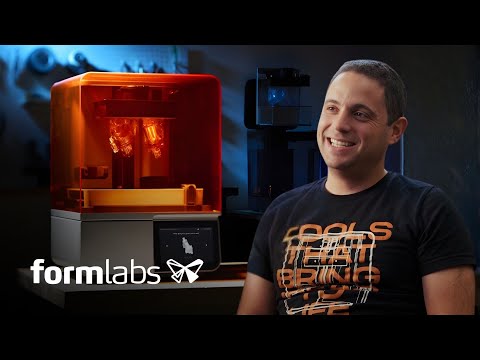
Max Lobovsky, co-founder and CEO of Formlabs, shares the comprehensive story of building one of the few successful 3D printing companies in the Western world. Starting from a $3 million Kickstarter campaign in 2012 that exceeded all expectations, Formlabs has grown into a vertically integrated company that manufactures hardware, software, and materials across multiple continents.
The conversation covers existential challenges including being sued by 3D Systems for patent infringement weeks after their Kickstarter launch, with settlement offers demanding they hand over the company. Max discusses how they strategically slow-rolled the lawsuit while building revenue, eventually settling on favorable terms. He reflects on key decisions including why focusing on SLA over FDM may have been their biggest strategic mistake, and how the “MIT startup failure mode” of pursuing technically hard problems over valuable ones affected early choices.
Max provides insights on global manufacturing competition, arguing that tariffs have actually helped Chinese companies over American ones because Chinese companies adapt faster to disruption. He shares his philosophy on leadership, identifying talent, building company culture, and the importance of being “lazy” in the strategic sense - learning from others rather than reinventing solutions. The interview concludes with discussions about 3D printing applications in Ukraine, the decline of American manufacturing dominance, and his fascination with Bell Labs as a model for innovation.
Highlights
”Their settlement offer was hand over your company and have jobs at 3D Systems”
Clip command
yt-dlp --download-sections "*5:16-6:20" "https://www.youtube.com/watch?v=CcLHYxPRjDY" --force-keyframes-at-cuts --merge-output-format mp4 -o "CcLHYxPRjDY-5m16s.mp4"“We knew this was an existential threat. Pretty much any lawyer you talk to says the minimum you’re going to spend fighting this is like three or four million. The total amount of money we had raised was less than 2 million. Their offer was you can hand over your company and have jobs at 3D Systems. That was the settlement proposal.” — Max Lobovsky, 5:37
”There’s no correlation between difficulty and value - that’s the basic thing people get wrong”
Clip command
yt-dlp --download-sections "*15:36-16:40" "https://www.youtube.com/watch?v=CcLHYxPRjDY" --force-keyframes-at-cuts --merge-output-format mp4 -o "CcLHYxPRjDY-15m36s.mp4"“You need to orient yourself around the problem, not the solution. There’s no correlation at all between difficulty and value. That’s the basic thing that a lot of hard tech startups get wrong. I fell for the classic MIT startup failure mode: if it’s important, it must be really hard.” — Max Lobovsky, 15:36
”If we applied our idea to FDM, we would be a larger company today”
Clip command
yt-dlp --download-sections "*13:46-14:50" "https://www.youtube.com/watch?v=CcLHYxPRjDY" --force-keyframes-at-cuts --merge-output-format mp4 -o "CcLHYxPRjDY-13m46s.mp4"“The single biggest decision that we should have made differently in the history of the company: if we applied that idea to FDM, we would be a larger company today because that’s a larger category than SLA. Companies like Makerbot are completely irrelevant today.” — Max Lobovsky, 13:46
”Stress should only flow in one direction - upwards”
Clip command
yt-dlp --download-sections "*10:40-11:45" "https://www.youtube.com/watch?v=CcLHYxPRjDY" --force-keyframes-at-cuts --merge-output-format mp4 -o "CcLHYxPRjDY-10m40s.mp4"“One of our board members has a nice line that in a business stress should only flow in one direction and that’s upwards. While it’s good to set ambitious goals and push people to the limits of their ability, you don’t need to bother them with something that they can’t do a lot about. That’s just unproductive stress.” — Max Lobovsky, 10:40
”Tariffs have helped Chinese companies over American companies on net”
Clip command
yt-dlp --download-sections "*45:43-46:50" "https://www.youtube.com/watch?v=CcLHYxPRjDY" --force-keyframes-at-cuts --merge-output-format mp4 -o "CcLHYxPRjDY-45m43s.mp4"“I’m pretty sure tariffs have helped Chinese companies over American companies on net. Chinese companies are essentially always faster at adapting. If you throw a change at them, that’s just going to help the Chinese company. Apple and Huawei manufacture phones in the same place, but Huawei responds to changes faster.” — Max Lobovsky, 45:43
”We are at the end of Pax Americana”
Clip command
yt-dlp --download-sections "*51:08-52:15" "https://www.youtube.com/watch?v=CcLHYxPRjDY" --force-keyframes-at-cuts --merge-output-format mp4 -o "CcLHYxPRjDY-51m08s.mp4"“We are at the end of Pax Americana. China has four times our population with roughly equal entrepreneurship and work ethic. To maintain a full complete tech stack in the modern world now requires like a billion people. It used to maybe only take 100 million.” — Max Lobovsky, 51:08
Key Points
- Kickstarter Success (1:51) - Formlabs raised $3 million on Kickstarter, exceeding their most optimistic estimate of $1.5 million, reaching $1 million in just two days
- 3D Systems Patent Lawsuit (4:31) - Weeks after Kickstarter, received call from 3D Systems CEO announcing patent infringement lawsuit; their settlement offer was “hand over your company and have jobs at 3D Systems”
- Existential Legal Threat (5:54) - Lawyers said minimum cost to fight was $3-4 million; total raised was under $2 million, Kickstarter orders were $3 million with low gross margins
- Strategic Lawsuit Defense (7:30) - Ignored lawyers’ advice to settle quickly, deliberately slow-rolled lawsuit knowing they were getting stronger and patents were expiring
- Stress Management Philosophy (10:58) - Board member’s principle: “stress should only flow in one direction - upwards”; protect team from unproductive stress
- Biggest Strategic Mistake (13:54) - Should have applied “professional desktop printer” idea to FDM instead of SLA; FDM is larger market, companies like Makerbot are now irrelevant
- MIT Startup Failure Mode (15:09) - Classic mistake of thinking valuable = technically hard; “you need to orient yourself around the problem, not the solution”
- No Correlation Rule (16:52) - “There’s no correlation at all” between difficulty and value; this is the basic thing many hard tech startups get wrong
- Supply Chain Evolution (21:03) - Form 1 built in San Diego, Form 2 in Hungary (CPO’s father runs largest Hungarian contract manufacturer), Form 3+ in China
- Galvanometer Development (23:02) - Used cheap laser light show galvos initially, then developed own for Form 2 when they became likely “largest consumer of galvos in the world”
- Serendipitous Fundraising (24:39) - Mitch Kapor (Lotus founder) tweeted about overhearing their pitch at Legal Seafoods; cold email led to him leading first investment round
- Identifying Talent (30:07) - Two traits: smart + willing to do the job that needs doing; best engineers recognize “the most powerful tool is the telephone”
- Cockroach Company (33:50) - Called themselves a “cockroach”; only successful large new 3D printing company in Western world despite billions invested industry-wide
- Tariffs Help China (45:43) - Chinese companies adapt faster to disruption; Apple and Huawei manufacture in same place, but Huawei responds to changes faster
- Ukraine Drone Production (48:47) - Every drone in Ukraine covered in 3D printed parts; same technology makes weapons and prosthetics
- China’s Inevitable Rise (51:08) - “We are at the end of Pax Americana”; China has 4x US population with equal entrepreneurship and work ethic
- Bell Labs Inspiration (55:08) - A few thousand people in New Jersey “invented half of all modern computing and telecommunications”
- Hardest Personal Challenge (62:47) - Learning to broadcast personal motivation and enthusiasm; as organization grows, can’t rely on individual conversations
Mentions
Companies
- Formlabs (0:06) - Max’s 3D printing company, one of few successful new 3D printing companies in Western world
- 3D Systems (4:52) - Largest 3D printing company that sued Formlabs for patent infringement
- Makerbot (14:28) - Early FDM printer company, now “completely irrelevant”
- Kickstarter (1:04) - Crowdfunding platform where Formlabs raised $3 million
- Tesla (33:56) - Referenced as comparison for surviving in hardware while competitors fail
- Lucid (34:20) - EV company mentioned as example of negative gross margin
- Rivian (34:22) - EV company mentioned as example of negative gross margin
- SpaceX (23:22) - Referenced for using AC units from refrigerators vs expensive rocket components
- SoftBank (37:59) - Invested in Formlabs’ 2021 funding round
- Apple (45:55) - Referenced for manufacturing phones in same place as Huawei
- Huawei (45:55) - Chinese phone company that adapts faster than Apple to supply chain changes
- Google (56:02) - Modern company with resources for Bell Labs-style R&D but lacks diverse problem space
- Microsoft (56:04) - Modern company attempting Bell Labs-style R&D
- Bell Labs (55:08) - Historic research lab that “invented half of all modern computing and telecommunications”
- AT&T (55:55) - Parent company of Bell Labs with diverse problem space from handsets to telephone poles
- Lotus Software (25:17) - Company founded by Mitch Kapor, developed first killer app for PC
- Lockheed (48:56) - Defense company using Formlabs products
- Anduril (48:57) - Defense technology company using Formlabs products
- Sendcuts (33:34) - Digital fabrication company (Jim Bosik interview mentioned)
- Boom (60:10) - Supersonic aircraft company mentioned as potential interest
- Astro Mechanica (60:12) - Aerospace company mentioned as potential interest
Products & Technologies
- Form 1 (1:51) - First Formlabs printer, launched on Kickstarter
- Form 2 (12:01) - Second generation printer with cartridge system, Wi-Fi, touchscreen
- Form 3 (35:30) - Third generation printer manufactured in China
- Form 4/4L (35:50) - Latest printers using LCD instead of galvos
- Stereolithography (SLA) (1:17) - Resin 3D printing technology Formlabs brought to desktop
- FDM (Fused Deposition Modeling) (13:58) - Alternative 3D printing technology that Max says would have been larger market
- Galvanometers (22:24) - Special motors for positioning mirrors to scan lasers with 100 nanometer accuracy at kilohertz
- LCD panels (35:50) - Custom fabricated display for Form 4, costs $1 million per new design
People
- Max Lobovsky (0:00) - Co-founder and CEO of Formlabs
- David Lakato (20:40) - Chief Product Officer, his father runs largest independent contract manufacturer in Hungary
- David Cranor (26:00) - Co-founder who left about a year in, but great at spotting talented people
- Natan Linder (24:05) - Co-founder who is on board as adviser, much better with investors
- Mitch Kapor (25:08) - Founder of Lotus Software, led first investment round after overhearing pitch at restaurant
- Joi Ito (26:08) - MIT Media Lab director who co-led first investment round
- Jim Bosik (33:34) - CEO of Sendcuts, referenced previous interview
- Warren Buffett (16:33) - Referenced for “stepping over one foot bars” philosophy
- Steve Jobs (61:03) - Referenced Stanford commencement speech about daily self-reflection
Places
- Hungary (20:55) - Location of Form 2 contract manufacturer
- San Diego (20:45) - Location of Form 1 contract manufacturer
- China/Guangdong (35:25) - Location of Form 3+ hardware manufacturing
- Ohio (35:35) - Location of Formlabs’ chemical plant for materials
- Vietnam (35:40) - Moving some hardware manufacturing due to tariffs
- Ukraine (48:47) - Max’s parents grew up there; major market for 3D printed drone parts and prosthetics
- Lviv (50:30) - City in Ukraine where Max’s father grew up; planning to visit
- Murray Hill, New Jersey (55:20) - Bell Labs headquarters location
- New Providence, New Jersey (55:17) - Where Max grew up, next to Bell Labs
Surprising Quotes
“Their offer was like you can hand over your company and have jobs at 3D Systems. That was like the settlement proposal.” — 5:30
“The single biggest decision that we should have made differently in the history of the company… if we applied that idea to FDM, we would be a larger company today.” — 13:54
“There’s no correlation at all between difficulty and value. And that’s like that’s the basic thing that a lot of people get wrong.” — 16:52
“I’m pretty sure tariffs have helped Chinese companies over American companies on net… Chinese companies are essentially always faster at adapting. If you throw a change at them, that’s just going to help the Chinese company.” — 45:43
“To maintain a full complete tech stack in the modern world now requires like a billion people. It used to maybe only take 100 million. Now it takes a billion.” — 53:45
Transcript
0:00 Today I’m sitting down with Max Lobovsky and he is the co-founder and CEO of Formlabs. Formlabs is a 3D printing company. Do you want to just start off by actually talking about why there’s been so many 3D printing companies and like why yours has been able to be successful?
0:18 Well, the dream of 3D printing is huge. It’s to be able to go from a digital model to a real thing quickly, cheaply, easily. Anyone who’s ever made something knows that the bigger problem is going from an idea to a real thing. And anyone who’s ever made something in the physical world knows that that is usually a painful long process. And usually your idea gets kind of cut down and limited and the thing you get out isn’t exactly what you imagined. So any tool that streamlines that process is something that’s really valuable but also just like conceptually feels amazing. So people have been excited about 3D printers for a long time.
1:00 Let’s go back to when you first started the company. I know the biggest thing was like a Kickstarter campaign and I think you raised like $3 million through this Kickstarter campaign. How did that happen? Yeah. So, we started the company and we had this idea to make the first, to bring stereolithography or resin 3D printing to the desktop. And also to make the first professional desktop printer because at the time there were starting to be a couple desktop printers, but they were really sort of hobbyist, didn’t work well. And we wanted to make something that would do what the $100,000 printers could do, but get it to everybody.
1:34 We built a prototype, borrowed some money from my cousin, built a prototype and then we raised a small round of venture capital. That was like 500k something like that. 1.8 million was the first real round of funding and then about a year later which in retrospect was pretty fast we launched the first product on Kickstarter, the Form 1.
1:54 What were you guys expecting going into that? I remember really well because it was, you know, it was a big moment and stressful and all that and we went out for beers the night before and we’re kind of taking bets. We knew we were going to beat the target you put up on Kickstarter. That wasn’t the main thing. But I think like the most optimistic that anyone else in the room was saying is like maybe we’ll get to a million and I thought I think we can get to like one and a half million. And everyone thought I was crazy and then we got to 3 million and like we got to a million in two days or something.
2:31 So, it was really fun in those first days. The first day was just like non-stop celebrating basically because all our friends were coming by and keeping following the Kickstarter and it was really fun and then probably by the second day it was stressful again because now we knew we had to ramp up our production and that was even more real than we expected.
2:55 Yeah. Okay. So coming out of that and like you’ve got all these orders now and you know hundreds and hundreds of people are kind of like counting on you. How did you kind of think through actually getting those first printers out? We had a plan before that. It wasn’t the right plan. What was that plan? I think we had been before the Kickstarter had been planning to set up our own final assembly facility and like we had been considering contract manufacturer and after we saw the trajectory of the Kickstarter we knew we had to go with the contract manufacturer because it’s going to be too much to ramp up.
3:35 And you know I think we heard enough advice like it’s harder to make things and ship them than you expect and like it’s a 80/20 kind of thing where it feels like you’re done but you’re not done. So, we padded the timeline and all that, but of course, not enough. So I think we announced it in September, said we would be delivering in volume in February or March and we were doing it in May. So it was like actually relatively on schedule for a Kickstarter. Other Kickstarters, but it did not feel good for sure.
4:06 What was going through your mind? I know every great founder really hates not making their customers happy and having delays. So what was going through your mind at the time? I mean just every day’s problem basically. Yeah we knew customers are waiting for us but it’s not like you think about that all the time. You think about the next thing in front of you and grinding through that. And then we had another really, I would say a 2x multiplier on the stress at that point because a few weeks after the Kickstarter we had been sued by the largest 3D printing company in the world for patent infringement.
4:48 Hell yeah. So we got, I literally got a call out of the blue from the CEO of 3D Systems, saying that he’s suing us for patent infringement. He started with a bunch of stuff about how he didn’t want to sue us and his board made him sue us, which is not a good way to open a business relationship. “I’m a great guy, but I got to do this. Sorry, dog.” Yeah, he really got off on the wrong foot.
5:16 But yeah, so we had that going on for the first few years of the company and in the middle of this Kickstarter craziness and trying to fulfill it we had this company trying to sue us out of existence and that was their explicit goal. Their offer was like you can hand over your company and have jobs at 3D Systems. That was like the settlement proposal.
5:37 So I know now it may be kind of cool to get sued by a bigger company, but I imagine that in 2012 it wasn’t as cool. Did you kind of think to yourself like this is the end at all during that time? I knew this was an existential threat and like pretty much any lawyer you talk to says like, “Oh yeah, the minimum you’re going to spend fighting this is like three or four million or something like that.” Like the total amount of money we had raised was less than 2 million. And then like all the orders combined? Yeah. All the orders combined are three million. That’s for the product we’re going to deliver with not amazing gross margins at that point.
6:21 If it went the way most the lawyers told us it was going to go, we were not going to make it. On the other hand, it was kind of fun to fight it because it actually helped that very early on they told us very clearly that we want your company to go away and we’re kind of dicks so you probably don’t want to work with us. So you had a chip on your shoulder. Well, there was like no other option like I’m not gonna roll over and die. I’m gonna try.
6:56 What was frustrating though, it just made everything else harder. It’s not just dealing with that lawsuit, but every single time you hire someone, they’re like, “What’s the deal with this lawsuit? Are you even going to be around?” Even customers are asking and then we did want to raise more venture capital and that was a huge multiplier to that challenge. But we managed to do all those things while the lawsuit was going on. And then eventually we paid them a bit of money but not that much and that’s all behind us.
7:27 How did you navigate that? We mostly ignored what the lawyers were telling us. Because everyone was kind of saying you have to kind of settle it now because of all these negative impacts on the business and we said no actually we’re going to basically slow roll it while we know we’re getting stronger quickly. We know people love this product and they’re going to keep buying. We’re going to get revenue. We also knew the patents were generally expiring in the next few years. So, we managed to do various things to kind of slow down the pace of the lawsuit and then eventually when they saw there’s not much time left on their patents, they accepted a reasonable settlement.
8:08 Interesting. Do you think it kind of forged a specific type of culture because you had that happen so quickly? I think it definitely tested my abilities as a leader of getting people to focus on what’s important. At all points in a company there’s so many things you could be worrying about that seem like the most important thing like what investors care about or this patent lawsuit or maybe in a later stage of the company the stock price. But most those things don’t make any impact on like are you able to deliver more stuff to your customers.
8:54 And so this was an early strong test of like can we as a company and me personally help the team stay focused on what really matters. Can I try to shield the unnecessary stress from people and just help everyone deliver an awesome product.
9:10 How much sleep were you getting at that time? I don’t know. But I only worked. I didn’t really have hobbies or family or anything else at that time. Do you think that was the most stressful point? It was stressful. I think in general my stress level is inversely related to how much money we’re losing. So that was yeah definitely we were burning money. I mean we weren’t shipping anything either and it felt like the company was like kind of we had almost just taken off but we were still like tethered to the ground and possibly about to crash.
9:54 When you’re navigating that sort of situation where you have some fires that are needing to be put out, but you also have to keep on building the company, the lawyer fire is probably a big distraction. For the most part, how are you thinking or making decisions day-to-day when you’re in that environment? I think one of my strengths is kind of compartmentalizing the stress. You take everything in, feel stressed, maybe talk with your friends or wife about it and get the feelings out and then you have to be able to step back and say okay what do we need to do to move forward?
10:40 And then especially when you’re in a company with a team, you have to think about what can each person do and how can I help them do the best thing because if I’m freaking out about something, if someone else can’t really help me with that, it’s not helpful. One of our board members has a nice line that in a business stress should only flow in one direction and that’s upwards. While it’s good to set ambitious goals and push people to the limits of their ability, you don’t need to bother them with something that they can’t do a lot about. That’s just unproductive stress.
11:17 It’s good to not just off the cuff let someone that’s working on something know shit’s hitting the fan and we might be… Yeah. And it was tough because one meeting you get off the phone with the CEO of 3D Systems, then you have to go into an engineering design review and not freak out.
11:38 How did you decide to set the bar for the first Form 1 product that you wanted to create versus, you know, I imagine you want to create somewhat of a really great thing right off the bat, but I also understand that in order to do that, it takes years to really work out the kinks.
11:59 Yeah. I have a good answer for that because basically everything that was in the Form 2, which is a lot more than in the Form 1, was already on the table when we were designing the Form 1. So like a cartridge system so you didn’t have to pour resin in, Wi-Fi, touchscreen, a bunch of these things which we knew should be in the final form of this product, but we cut them all for the Form 1 because we knew they weren’t actually critical to proving out this product.
12:29 So, we did cut quite a bit from what we would have liked to build and even then it still wasn’t, we still didn’t really have the resources to deliver what the Form 1 should have been. It wasn’t reliable enough. There was a lot of repairs and too high of an RMA rate and all that.
12:49 And did you know all the like maybe not necessarily issues but slightly suboptimal things that you could have hypothetically made better on the next version that you had to ship the first version? Features that were missing I think we were pretty clear on. Yeah we dropped the Wi-Fi it’s going to be okay. What proved to be much harder, which I think is true of most products, but especially in 3D printing, is just making something reliable that executes even on its core function once you distribute it to a bunch of different people who use it in different ways and have manufacturing variation, all this stuff.
13:26 It can’t be understated how hard that is. When your prototype that works in the lab meets the real world at scale, so many things break in so many different ways. And even though we had enough people tell us that was going to be the case and we’re trying to be diligent about that, it’s still worse than you expect.
13:46 What are the decisions that if you could have gone back and made different calls? What would those calls have been? The single biggest decision that we should have made differently in the history of the company. We started with two ideas. One is to bring stereolithography to the desktop. The other was to make a professional desktop printer. And most people think of that first one because that’s the obvious aspect of our product that we made sort of the first desktop resin printer. The second idea was actually more important and if we applied that idea to FDM, we would be a larger company today because ultimately that’s a larger category than SLA or resin.
14:28 So why did you decide to go after this instead of that? At the time, I thought like completely incorrectly that we were maybe too late for FDM because there were a couple of companies doing it. In retrospect, there’s been like multiple generations of failed companies since then. We could have tried multiple times since then and the companies that were around then are completely irrelevant today like Makerbot.
14:56 So that was wrong and I think I was doing a masters at MIT and I fell for probably the classic MIT startup failure mode of like well we need to work on something valuable so it must be something very hard. You got to feel the pain a little bit. Yeah. Well, if it’s going to be important new technology, it’s going to be really hard technology and lasers and galvos and resin and all this stuff that no one has made working on the desktop. That’s really hard. Let’s work on that. And FDM, this is like a glue gun on a three axis. That’s not that hard. So that’s not that valuable.
15:36 But that’s really dumb. And a lot of hard tech companies fail in that way where you need to orient yourself around the problem, not the solution. This is such a basic mistake that so many startups, especially hard tech startups, make. They say, “Oh, I figured out how to point lasers with a galvanometer at photopolymers and that’s really cool. Let me do something with that.” But the world doesn’t care about that. The world cares about what problem you solve for them and the more you focus on the problem and then be flexible about the solution and say well hell if I can solve that with an off-the-shelf thing great. So you should orient around the problem not the solution.
16:24 I love this. It’s like the inverse of what Warren Buffett talks about. He wants to step over one foot bars. There’s some people that want to do the high jump hurdle over the 11 foot bar but there’s sometimes things where the output or value is not correlated with the difficulty of doing the thing. There’s no correlation at all. And that’s the basic thing that a lot of people get wrong. It’s kind of reasonable to think that there might be but there isn’t.
17:04 Okay. What are you doing today with that new framing in your mind? I mean this has been years of evolution and you’re 14 years in. I’m not sure I’ve still fully mastered that understanding. What are we doing today? You always want to look at a lot of different things you could do and not just the first thing you get excited about. That’s one thing that really helps because then when you can compare, it makes it a lot easier to say, well, there’s this really hard thing that might be valuable, but then there’s this easy thing that’s equally valuable. So that makes it easier to pick. Trying to always be considering a number of options and directions really helps.
17:47 And then I think thinking about the timeline that you want to contribute to the world in is really useful. So there’s really hard stuff that probably will be important 10 years from now. But for a product company like ours the kind of right sweet spot is maybe like three year time frame. A full printer development is maybe two and a half years something like that. So thinking about what’s the best thing we can get out there in about three years.
18:15 Do you keep that in mind while you’re thinking about the longer term arc of the business? Yeah. Well, I think we’ve gotten pretty good at this three-year thing and now we kind of need to add back in the five and 10 year view because there are things that you can’t do in three years. I just think that a lot of companies start with the 10-year thing and you won’t survive 10 years unless you do something good in three years.
18:43 Do you think your story is a little bit more of being a cockroach? Yes, I think that’s a reasonable description of Formlabs. I mean, there are a lot of 3D printing companies that have raised a lot of money in the last 10 or 15 years, like billions of dollars. And I think in the western world I think we’re like the only successful large new 3D printing company. In China there’s a number.
19:08 I’m kind of thinking about this and I would almost consider it to be like Tesla where there’s I don’t know how many different auto companies have been started but none of them actually survive. Like even today many of the public companies are like negative gross margin to a drastic degree like Lucid and Rivian. It’s hard. I mean I think one thing that makes this business fun but also really hard is it’s unreasonably complex for what’s not that big of a business.
19:42 We have our engineering is equal parts hardware, software and materials. We manufacture hardware with contract manufacturers in China. We run our own chemical plant in Ohio. We sell in like a hundred different countries. We sell from almost consumer level e-commerce up to multi-million dollar enterprise sales. So there’s way too much going on and you kind of have to do all of it to deliver on that original vision of I want to give you a 3D model and you give me a part. We have to do all those things to make that happen.
20:23 So once you’ve built the Form 1 and you’re going towards the Form 2, how did you decide what to build in-house versus going to China and creating that entire supply chain? So the Form 1 was built with a contract manufacturer in San Diego. The Form 2 was built with a contract manufacturer in Hungary. And we were starting to leverage more and more Chinese suppliers.
20:50 How’d you find the Hungary contract manufacturer? We wanted to go somewhere lower cost than the US and my close partner here, David Lakato, our chief product officer, his father happens to run the largest independent contract manufacturer in Hungary. So we had that connection. And we thought Hungary could be some kind of middle ground between working with China, closer time zone and more English language and it worked. Form 2 was very successful.
21:18 But I think you’re asking about what to do internally versus outsource. I think the right approach, I don’t know if we’ve always done this, but try to do as little as you can do to solve the problem and then only take something on in-house when you’re sure about two things. One is that you really have a unique problem. And two that you now know enough about this problem that you’re approaching the state-of-the-art of knowledge.
21:48 I think this is another place a lot of hard tech startups get it wrong. You need to try to do as little as you can do because just delivering whatever complete version you’re trying to do is so hard. You take on as little as possible and we’re a very vertically integrated company and we do a lot but each one is reluctantly basically. And it gets it makes a lot more sense once you get a little bit bigger and you have the volume and you have the knowledge.
22:17 There’s a really good example from Form 2 - the galvanometer. So the galvanometers are these special electric motors that position a mirror that we scan the laser in a number of our products. Really cool because they position that mirror to like 100 nanometer type accuracy at kilohertz. Normally they’re really expensive specialized industrial components. We had found some low-cost ones that we use in the Form 1 that are meant for laser light shows. Laser light shows don’t really need to be accurate.
22:52 It’s a little bit like the SpaceX thing of just using an AC unit out of a refrigerator because it costs less than $1,000, whereas the rocket one costs a million or two. And my guess is they probably don’t actually use just an AC unit out of a refrigerator anymore, but they started with that, prototyped with it, and learned enough to now build a better one than any.
23:12 So, we went through that. As we’re working with the galvo companies and helping them improve the accuracy, we’re starting to realize we kind of know how to build one of these and we’re looking at the volumes we’re approaching and actually we might be the largest consumer of galvos in the world at this point. So we started a parallel project to develop our own for the Form 2 and we kept it compatible so that if it failed we could use the off-the-shelf one. And it was just at the end of the timeline when it just started working and we swapped it in and that was a success. It makes the parts smoother, makes the printer print faster and we still design and build our own galvos to this day.
23:53 What do you think the biggest moments are throughout the company history where if things hadn’t gone right, bad things would have happened? They might not have survived. I mean obviously the 3D Systems patent lawsuit was a big challenge. We’ve been sued two other times for patent infringement. Those weren’t as existential. I mean the first hardest hurdle was just the first round of funding. It was very hard for me. I’m not great at fundraising. If I didn’t meet my co-founder Natan, who’s much better with investors, I don’t think the company would have gotten started at all.
24:30 Interesting. What got you over that hurdle on that first fundraising round? Oh, it’s a really good story. We were months into pitching different investors. We had a prototype in our basement in Cambridge and we’d bring investors by and show them. It would only print for like a few minutes successfully at a time. So, we have to time the pitch to bring them down to the basement before it fails.
24:56 But people, especially in Boston, and this was 2011, in Boston, 2011, 23-year-olds with no work experience, starting a hardware company, nobody was funding that at all. There’s approximately zero examples of that. But it was interesting enough that we’d meet with someone and they say, “I’m not going to invest, but I know someone else who’d like to come and check out your basement.” “I’m not dumb, but I know a guy.”
25:22 So we kept getting meetings and months into that we were at Legal Seafoods in Harvard Square, which is a common place you’d have a pitch dinner, and we were pitching a VC from Best Buy, which apparently had a VC arm at that time. At that point, we already learned the lesson that if they’re not interested immediately, it’s not going to work. So, we knew by the end of the dinner, there’s no chance here.
25:48 But then we got home. I shared an apartment with my other co-founder David Cranor and he got an email from a friend of ours from MIT with a screenshot of a retweet of an original tweet from M Kapor saying “on the patio at Legal Seafoods in Harvard Square overhearing two entrepreneurs pitching 3D printing.” And we’re like what the… that’s us. How did this even happen? How do we find this?
26:15 And then we look up M Kapor and that’s Mitch Kapor who was the founder of Lotus Software, Lotus Notes, basically developed the first killer app for the PC. And we were amazed. If it was up to me, that was probably another point when we would have failed to start the company and nothing would have happened. But luckily, David was more outgoing than me. And so he’s like, “Let’s send him an email.” He found his email address somewhere and sent him a one-line email saying “that was us. Did you hear anything you like?” And few weeks later he met with us and ended up leading our first round investment.
26:52 It was a really good lesson for me as a naturally introverted and quiet engineer at that time who kind of doesn’t want to believe that speaking loudly at parties and meeting random people is a way to be successful or a way to achieve your goals. But that was a very clear lesson that helping to make yourself lucky by meeting people actually really works and you should put some energy into that.
27:20 Do you think without that one email and that first check from him, this thing just doesn’t happen? Very possibly. We had at the other time there were actually two people who led the round. Joi Ito, who had just joined MIT Media Lab as a director, also kind of co-led the round. So, we had also just met him and maybe it would have happened. I don’t know. But it definitely felt like it changed the whole game.
27:48 You know, I think everyone kind of has a superpower or at least everyone great has a superpower and I guess yours may not be pitching. How did you, what is your superpower and then how did you find other people who had different superpowers that were complementary? Can I have two superpowers? You can have two superpowers. That’s unreasonable, but everyone should have at least one. If they don’t have one, there’s an issue. If you have two, that’s great.
28:16 I think the two things I’m best at. One is identifying young promising people before they’ve actually accomplished something big and betting on them and working with them to build something good. I think we’ve had a lot of really talented people at Formlabs and ultimately the success of Formlabs is not based on my superpowers. It’s based on the superpowers of the team that I’ve assembled. Your ability to assemble people. Yeah.
28:47 And the other thing I think is going back to that focus thing of helping to cut the distraction for people and for a product and say what do we actually need to get done here to make this great?
29:02 And for your co-founders, what are their superpowers? So David Cranor left about a year into Formlabs. Natan Linder has always been on the board and sort of an adviser. And he’s awesome at, he’s really talented at spotting talented people as well. I would say very strong at that. And then I think really good at, much better at crafting a story and building relationships with key people than I am.
29:35 But we have a lot of, like I mentioned David our chief product officer, we have a number of people who’ve been here since the beginning who are basically part of the founding team as far as I’m concerned who’ve all brought different amazing abilities.
29:50 And when you say that you are good at identifying talent that hasn’t achieved great things yet but will in the future, what are you looking for in those people to be able to spot them? I spent a lot of time thinking about how to interview and hire and assess people, but one of the simplest rubrics I have is you could kind of boil down any person to two traits. Are you smart and are you willing to do the job that needs to be done?
30:20 So the second one is the more subtle one. And what I found is there’s a lot of smart people who either have a very clear idea of what they want to do that doesn’t align with what you want to do, or are missing the ability to actually understand what needs to be done, which is maybe the entire battle or at least half the battle. And are maybe not willing to put time into that.
30:47 But people who want to understand how can I be most valuable here? What needs to be done? How can I adapt? I’ve got my skills that I’m great at, but this problem needs something else. So, a classic example, lots of great engineers want to go to CAD or code as their home base for solving something, but a lot of problems in engineering are best solved with a telephone - call a supplier or call an expert or something like that.
31:17 A little bit the man with a hammer syndrome. Yes, exactly. But the smarter you are, the more you think, this is not a hammer. I have the ultimate tool here, but actually the most capable people recognize there’s almost a different tool for every scenario. And you need to be personally flexible because maybe you’re that introverted engineer and the telephone doesn’t come so naturally. But it’s the single most powerful tool because that’s how you access all other humans and human capabilities in the world.
31:50 And just generally being flexible about the way you work and what you do. Restricting your ego a little bit about who you should be and what you should do. There’s this thing about the CEO should also be the janitor and that kind of thing. I really believe that if you’re capable and then you’re really dedicating yourself to what’s the best way I can be useful now and then do whatever it takes to do that, that’s unstoppable.
32:20 What have been the moments where you felt like you were being the janitor? I’m probably not actually a good janitor. So it’s a little bit more like you should all be the janitor but I’m going to be… I need a better euphemism than the janitor. One good example that I still do regularly is be a customer support agent and try to get involved directly with customers even maybe less fun cases and help them out and go through that. That’s a really good one where it helps you learn what needs to be done.
32:55 I kind of get the vibe that like Napoleon when he was fighting a battle, he had a much better idea than his opponents of what the battlefield looked like and where to position troops and what to tackle to find a great competitive advantage. How do you think about positioning the company so that you can win?
33:17 I think about that a lot and I try to meet as many leaders of either competitors or other similar companies as I can to gain their perspective. That’s why I loved your interview with Jim Bosik at Sendcuts because they’re doing awesome stuff in the digital fabrication world. And I think of it as a shortcut because here’s a capable person who has spent their whole career gaining a bunch of knowledge from a different perspective with different access to different things and you can pretty quickly just absorb all the learnings that they’ve got.
33:52 So I think that’s a really valuable thing. And then with your direct competitors, definitely that idea that you should know the battlefield better than they do. I think you should know what they’re doing better than they do and understand why they’re doing it differently than you. Because usually there’s some things you should actually learn. Even if you think they’re doing it wrong, understanding how they got to that place, there’s probably wrong assumptions they were making. Yeah. There’s this line that I love which is never interrupt your enemy when they are making a mistake. Yeah. I think that’s Sun Tzu. Art of War. It’s a good one.
34:30 Can you walk me through the different iterations of your supply chain and how that’s worked throughout the years as you’ve been building all the different products? Yeah. So, there’s been a lot of iterations in supply chain. The Form 1 was built with a contract manufacturer in San Diego. Then the Form 2 in Hungary, Form 3 and onwards hardware products have been contract manufacturers in China and Guangdong.
35:00 The materials we started working with a contract manufacturer, or they call it a toll manufacturer in the materials world, and then eventually we became a large customer of theirs and we saw enough reasons that made sense to own it ourselves so we acquired them. So we own a chemical plant in Ohio. Lately we’ve been moving some hardware manufacturing to Vietnam to deal with tariffs and things like that.
35:30 And then with each product generation, there’s usually different key components that we have to dive deep into. So I talked about developing galvanometers. That’s been one manufacturing challenge. Form 4 and 4L use an LCD instead of galvos to create the optical image. And so we had to custom fabricate LCDs and that’s a totally different world and become experts in that. Well, I wouldn’t say we’re experts but proficient. That’s really scary but maybe kind of fun.
36:07 Why scary? Because the LCDs are the single most expensive things that we’ve bought. It’s basically like a million dollars each time you want to make a new LCD. And so that’s, we’re not used to that level of commitment for a single part. There’s a lot of key polymer, like the resin tanks in stereolithography have these special polymer films that we’ve had to invest in. Actually the milling machine right now is machining a special precision tool for some of the plastic parts that we make.
36:45 When I was doing some research, I was very surprised by the lack of cash. You guys haven’t raised a huge amount of money up until 2021 when SoftBank came in. But prior to that, do you think that the constraints of not having huge amounts of cash was positive or what impact did that have?
37:08 Yeah, absolutely. I think that if you’re building a hardware product company like this and especially one where we don’t just manufacture stuff, we manufacture stuff for manufacturers. The whole game of manufacturing is about cost, right? If we don’t have cost discipline deeply ingrained in the company, not going to make it in this field.
37:33 You talked about Tesla versus all the other new EV companies. It’s a great example. You can just see it in the money they’re spending and raising. Car manufacturers, great gross margin for a car manufacturer is 25%. You have to have that throughout the company. So, yeah, we’ve had that and I think we’ve raised too much money. I mean, we raised 250 million. We could have done this for much less the second time around if I got a chance.
38:05 Why did you decide to go out and raise that money instead of not doing that? The decision to raise money and spend money should be completely independent decisions. Unfortunately, even disciplined companies fail to keep them separated, but they can be. They’re not really directly connected at all. So, raising money generally when the valuation is high and people are interested, raise some money.
38:32 Catnip a little bit. Yeah. I mean, I’m glad we raised a bunch of money in 2021 because nobody’s excited about 3D printing today. It’s not a hot field for at least Silicon Valley venture capital types. But that’s fine. We’re profitable and growing and don’t need the money.
38:52 How early into the journey did you become profitable? We haven’t been consistently profitable until the last couple years. But since Kickstarter, since like the 12th month, most of the money we’ve spent has come from customers. So we’ve been steadily burning money but I think we had that discipline that mostly we’re going to live off the revenue that we make.
39:17 You could see the inflection of the J curve. Yeah. And I think we always thought it was always ended up being a little further than we thought. I mean, we should have just forced it to be sooner, honestly. I think we could have spent $100 million less on sales and marketing in the last six or seven years and gotten the exact same result that we did.
39:42 On the being frugal aspect, what tilted your hand into deciding to spend the money in the first place if you could have done it on way less money had you done it a different way? Well, we didn’t think we were just blowing the money. We thought that okay we went through a couple cycles of like okay now we made it with this product generation and we just need to turn the crank on sales and marketing and scale it up. And on some level that may be true, like if you’re not spending any money on that and you haven’t done the basics. But where we were it was not good ROI.
40:20 Yeah. I know Jim, we mentioned this briefly before things started rolling on the fun coupons where he kind of lubricates his business with $100 bills just to reinforce good behavior and behavior that he likes. Has there been anything like that with your company on doing a nice thing for a supplier or something like that?
40:43 For our Chinese suppliers, we make, actually I think we do it for all our global suppliers, but started in China. We make the Chinese zodiac animal, we make a 3D printed and painted statue every year of that for that year and send that out to all the key suppliers. I think key supplier relationships we have a supplier summit every year where we bring them together. We do have awards for the best ones.
41:12 And we have some that we’ve worked with since the beginning. There’s a CNC shop in China that’s a one owner, 15 machine shop that we’ve worked with since the beginning of the company. He texts me regularly and that’s been a good partnership.
41:32 Earlier this year when things kind of got a little crazy on the tariff side. I imagine if you’re shipping to 100 plus countries and you have operations all over the world, that would have had a massive impact on your company and planning or trying to plan for a few years out. What impact did that have?
41:55 It definitely was very disruptive within the walls of Formlabs. The operations team had to drop a lot of what they’re doing for an extended period and basically we’re having weekly meetings for a few months of just like what’s the latest thing that Trump tweeted? Okay. What are we doing about it? Like the screen that’s just like a new tweet. Yeah. It was very hard to even track what the hell is going on. It was like this is the impact of the announcements from the week before and then but this week do they override those ones or… really really disruptive.
42:32 It hasn’t been as bad. Once we work through it all and we did make a variety of changes, it hasn’t dramatically increased our costs in part because we are so international and we manufacture in the US and different places. So the amount of trade we have going through any one country pair is not that big. A little bit of reflexivity. Yeah.
42:58 But one thing I think that’s really not, a story that’s not well told there is I’m pretty sure tariffs have helped Chinese companies over American companies on net. Because within given product categories things are pretty much all made in the same place. So Apple makes their phones in the same place that Huawei makes their phones. And that’s true in all categories, but often times there is a US brand and a Chinese brand.
43:28 And where there is that competition in a lot of categories, the Chinese companies, compared to American companies, they’re essentially always faster at adapting. So if you throw a change at them, if you throw a change at an American company versus a Chinese company, that’s just going to help the Chinese company because they’re going to adapt faster. So if they need to reroute their supply chain or change things, the Chinese companies are all moving faster and I really think they’re actually gaining ground, not necessarily from tariffs specifically but through disruptive policy.
44:05 Yeah. I mean I imagine in the case of Apple, if they are designing in California and then manufactured in China, if Huawei is just built in China designed in China they can just go to their factory and make changes immediately. Whereas Apple has a lot more inertia.
44:25 When a problem is thrown at you, what is your typical mental model for how to deal with it and come up to speed and make the right call even on a new area of the map? I think two most important principles. One is focus on the problem and not the solution. So spend some time understanding what is the problem because it almost never comes stated correctly. Someone will say we’re having a problem with this supplier, but they actually mean the product is too expensive to manufacture and maybe there’s a different way to address that problem. So start with understanding what’s the actual root problem. Usually by the time someone’s asked you they’ve already formulated it in the form of what they think the solution is.
45:08 And the other one is basically be lazy and learn as much from what other people have done as possible. There’s very few totally unique problems in the world. And so you don’t need to figure it out from scratch. I spend a lot of time trying to figure out what’s the right analogy. Whenever we’re trying to develop a new part of our business, say like how do we sell our products in Japan or something? We spend a lot of time with what companies are doing something similar to what we do and how do they do it and here’s maybe three options and you can do that across almost every type of problem you want to solve.
45:50 What’s been the biggest moment where you felt like you were being lazy and just trying to adopt something and it rapidly speeded up some process? I’m struggling to think of a good example, but there’s a fun quote from a German general from the interwar period who has this theory on his officers. He says there’s four types of officers basically lazy versus hardworking and smart versus dumb and the four combinations.
46:22 And he said the smart and hardworking ones, they’re your general HQ staff, it’s good. The lazy and stupid ones, that’s most of what you have and they’re going to do some kind of job. And then the stupid and hardworking, those are the most dangerous. You have to get rid of them because they’re going to muck things up. They’re going to do lots of stuff and it’s not good.
46:50 And then he says that lazy and smart are suited for the highest leadership. And I don’t think he’s using the word lazy as in doesn’t want to work. But lazy as in you’re careful about how you spend your time. And I think that is a good trait for leaders, that you make sure that each thing you’re spending time on is really worth doing and not necessarily jump on every single thing that could be done.
47:23 Should we talk about Ukraine stuff? What’s going on in Ukraine? So people use 3D printers for all sorts of stuff including aerospace stuff and lately they’ve been using it a lot for making drones. We’ve got western companies like Lockheed and Anduril who use a bunch of our products. But in the last year or so we also have a lot of users in Ukraine and today every drone that you see in Ukraine is covered in printed parts. There’s a really huge volume of it.
47:58 And then I was born in New Jersey but my parents both grew up in Ukraine. So I’m going to go in a few weeks to Ukraine for the first time. Kind of a combination of a personal trip, hope to do some philanthropy as well and then basically supporting and encouraging usage of 3D printing in Ukraine. There’s a crazy thing, the two things our printers get used for there is drones and prosthetics. So literally the same technology is blowing people up and then also repairing them.
48:35 How do you feel about that? I wouldn’t, I don’t think I would ever make my career about making weapons. Although I think that’s a perfectly reasonable thing to do. Let me revise that. I’m glad that I live in a peaceful time in the United States and I don’t think that’s the most important thing that I could do. But I definitely support Ukraine defending itself. And then our products get used in all sorts of different ways and we don’t really take a position on that. It’s literally everything from dentists to people making sex toys to people making drones. That’s 3D printing.
49:15 I know I think most people that go into Ukraine or at least people that I know go flying to Poland and then have to take a long train ride into Ukraine. Are you going to have to do that? Fly to Poland and take like 13 hour overnight train to Kiev and then I’ll also go to Lviv. I’m going to go with my father. He grew up in Lviv.
49:38 What trips have you taken over the past 14 years that have had the most meaningful impact on you? Probably to China. China is where our hardware products are made. China is the global leader in plastics manufacturing and you could call what we do 3D printing or you could call it plastics manufacturing. And China will be the global leader in essentially every field of technology in the coming years.
50:08 So it’s really important and inspirational to see that. I’ve been going since first time in 2014 and I’ve been to most of the major cities and even in that period of time to see the amount of development and to see a society that’s organized very differently and not always in the way I would prefer it but in a way that does seem to be, for the impact I want to make on the world which is making it easier for people to make things and encouraging more problem solving in the physical world and all that, China’s doing that a lot better than the US is doing that. So it’s kind of tied to my mission with Formlabs pretty closely.
50:48 Do you think on China being the leader in all making things, is that a reversible trend or do you just see it as an unstoppable wave and the best thing to do is lean in? History repeats itself and there have been many transitions of global leaders and yeah I think it’s pretty clear that we are at the end of Pax Americana as some people call it. I don’t think that means United States is done or it’s over. Yeah, it’s not over. These transitions will take a long time.
51:22 And then you know the last great empire was the United Kingdom. They’re still around. It’s smaller, but people are doing things there. I do think it’s sad. I would wish the American Empire would continue longer. But that’s such a big scale development, that’s beyond anything that I can make a difference in.
51:47 And the one basic thing people about this seem to be missing is just literal population. China, if you have a country that’s as hardworking and entrepreneurial and smart, but they have four times more people than you, there’s not a lot… You’re fighting a real uphill battle there.
52:10 Which is why any realistic option for the US to be part of an alternative view of the future is going to be more than just the US. There’s no US going it alone. Basically we need a billion people working together if we wanted to have a power that can basically, if you want to have a complete tech stack, I’ll just put it in technology terms. Forget about the politics. If you want to have a complete tech stack in the modern world as our tech stack gets taller and taller and taller and you need more and more components adding it up to it, think about how much goes into a jet engine. Thousands of companies contributing amazing pieces of technology or into a microchip.
52:52 Today to maintain a full complete tech stack now requires like a billion people. It didn’t used to. It used to maybe only take 100 million. Now it takes a billion. The things are way more complex today. There’s too many things to do. Can’t all do them inside one country.
53:17 Interesting. If you had to be teleported back to any point in history to either a company or becoming a general of an army, who would that person be that you would like to trade places with? I don’t have an exact answer to that question, but I am really fascinated with Bell Labs. I grew up in New Jersey and New Providence, which is next to where Bell Labs was headquartered in Murray Hill. And my mom worked at Bell Labs in its well into its declining years.
53:52 But that place is just amazing. Literally a couple of campuses in New Jersey invented half of all modern computing and telecommunications. Like a few thousand people. They’re punching a little bit above their weight. Yeah. Punching way above their weight. And that’s, I would love to be part of creating something even a fraction as important as that. There’s a great book Idea Factory about the history that I recommend for anyone who’s interested in that.
54:25 What did you take from that? I think a couple things are really interesting. Bell Labs, they were probably now it’s become a bit more common with big tech companies, but they were I think one of the first places that recognized you can just assemble super smart people. You have to go and find them hiding in their holes in different university groups but if you just bring very smart people together from a bunch of different fields and put them together you can make amazing things happen. And there wasn’t a history of doing that in basically anywhere in any form in the world.
54:58 And then in terms of what it takes to create a new Bell Labs which I would love to make something even close to that, there’s two things you need. I think the thing that everyone talks about is you need a super profitable monopoly that spins out billions and billions of dollars every year like AT&T or maybe Google.
55:22 But I think what Google and Microsoft and other modern attempts at Bell Labs have missed is the other key thing that AT&T had which is an extremely diverse problem space. So AT&T had to do everything. They literally had to make the telephone handsets to the switching equipment to telephone poles. They had to figure out how to make a telephone pole that lasts 50 years. They had to figure out all the infrastructure and all the pieces and parts that go into it.
55:52 So many different domains and that goes well with more open-ended long-term research because the problem that a Google has is if they just want to invent things, they don’t have any expertise. This goes back to that problem versus solutions thing. They’re just throwing solutions at the wall. They don’t have any expertise in the problems.
56:15 Whereas AT&T had this rich space of problems where you could ask some people just invent random stuff and then AT&T can look at their list of problems and be like yeah I think we could use that to put satellites in space and send phone calls through them. And that made it a better match for open-ended development.
56:40 So, Formlabs, I don’t have the path for how we’re going to make a super profitable monopoly. Still working on that path, but at least we have a very rich problem space that I think can consume lots of different types of invention.
56:56 If you’re trying to recreate the modern-day Bell Labs inside of this company and you don’t have the monopoly yet, what is your thought process for doing that? I don’t think we’re really into the making Bell Labs phase yet. We need to make a whole lot more money before we can really take that on. I do think we’re assembling people like that, but today we’re much more focused on how do we make a product that we can sell a few years from now that we’re going to deliver to a lot of people and they’re going to get a lot of value from. And there’s some open-ended invention there, but it’s a different type of work. So, I think we’re going to keep working on getting great at that and then maybe slowly add in more long-term projects.
57:43 Do you think of this as kind of your last company? It doesn’t feel good to think about anything as my last anything at this stage in life. But I don’t, I think regularly, everyone should do this in a career. You should consider what you’re doing and think about is this the best thing you could be doing or is there a better thing you could be doing by your own whatever your metric is. And I keep coming back to yes for Formlabs but I don’t know if that’ll always be true.
58:17 Formlabs can be a lot of things for me, covering a lot of different interests in technology and making but not everything. I really like airplanes. I would love to somehow work on airplanes in some form. Maybe someday. Work with Boom or Astro Mechanica or something like that. Yeah.
58:40 There’s a few parts of flight I am interested in. One specific thing I’ve been thinking about for a long time is a couple companies have tried, is a transportation solution between ocean cargo and air freight. They vary widely in speed and cost like 30 times in speed and 10 times in cost. Is there no way to have something somewhere in the middle? And there’s these airships and ground effect aircraft and things like that that might be solutions to that problem.
59:12 And then eVTOL is very interesting. I think it’s still a ways away from a flying car but I do think we’re on a trajectory towards flying car.
59:23 One of the things that I love from Steve Jobs is he said in his speech at Stanford, the commencement speech, he was talking about every day he wakes up and he looks himself in the mirror and he would ask himself if today, the thing that I’m doing today was the last thing that I was going to be doing, am I happy with what I’m doing today? And if there’s too many days in a row where the answer is no, I’m not enjoying this and there’s not a clear path to getting to the thing where I do enjoy, then he kind of changes direction.
59:58 Has there ever been a moment, you’ve been at this for 14 years, has there been a moment during that time where you had that same situation where you decided at one point or another to change direction?
1:00:12 Yeah. I mean, there’s definitely been times where I’ve been less committed and I think that day-to-day enjoyment of what I’ve been doing is always okay, but I more just worry is this the most impactful thing I can be doing? There’s so many big problems to work on and should I be working on a bigger one? It’s kind of like the lazy thing again, is this really what I should be getting out of bed for or is there something even bigger to get out of bed for?
1:00:43 And how did you decide that it was when you were going through that thought process? I think you have to consider alternatives. So I do pay attention to lots of other interesting developments in the world. I don’t have a perfect rubric for it but I was just in San Francisco this past weekend and that’s always a good way to spend a weekend in San Francisco and you’ll talk to a hundred people with a hundred huge ideas. So it’s a good way to quickly run through like maybe I would do that one, not interested, do that. Go to San Francisco every few months and if you come back still committed to what you’re doing, then you’re probably doing it right.
1:01:22 Amazing. Final question. What’s the hardest thing you’ve overcome? Learning to be a team player. It’s not the words that I want. What do you mean by that? I’ve always liked to be on a team. I’ve always liked team sports. But I’ve never had to do something where I have to be so open about everything that I’m doing and thinking. And that actually really doesn’t come naturally to me.
1:01:52 That part of my job is sharing my personal motivation for what we’re doing and my enthusiasm for what we’re doing and my dreams about where this can go. And I’m not opposed to sharing things but that becoming part of your job, that’s been difficult for me to learn to do.
1:02:15 How did you kind of figure out over time that that was something that you needed to be doing when it wasn’t something natural? I mean, as you get into a bigger organization, there’s a basic Dunbar number kind of limit thing where if you’ve got 20 people, you probably talk to every one of them once a week or something and so they intuitively know what you’re going after and why you’re doing it. But once you get to a larger organization or a larger customer base, you have to start communicating in more of a broadcast fashion.
1:02:47 And you just see it’s just sort of like math. If you want to impact that number of people, you have to start broadcasting and I really, this is much better for me when I’m talking to someone and I can think about what they’re thinking about and you can interact. But when you just have to share without any feedback, so hard. You’re just throwing the why out into the abyss and hoping.
1:03:12 Yeah. And social media I don’t, I’ve been trying a little bit but I really don’t understand how people do it and just keep throwing things out there.