SpaceX, Starship, Building A Gas Station On Mars | Halen Mattison, CEO General Galactic
SpaceX, Starship, Building A Gas Station On Mars | Halen Mattison, CEO General Galactic
Summary
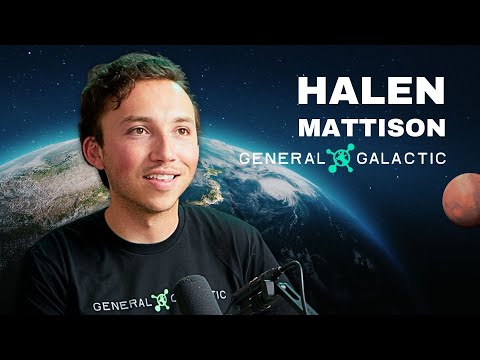
Halen Mattison, former SpaceX engineer and now CEO of General Galactic, provides an insider’s perspective on SpaceX’s culture, the Starship program, and his new venture to build propellant infrastructure in space. He describes witnessing a Dragon capsule explode during ground testing, and how SpaceX’s unique failure investigation methodology allowed them to quickly diagnose and fix the problem.
The conversation covers the technical challenges of building orbital gas stations, why China’s ability to capture non-cooperative assets in space represents a significant threat, and how SpaceX’s iterative development approach revolutionized aerospace. Halen shares his journey from joining SpaceX straight out of school to starting General Galactic, emphasizing that you don’t need to be a billionaire to start a space company anymore.
Highlights
”Dragon Capsule Exploded”
Clip command
yt-dlp --download-sections "*1:05-2:10" "https://www.youtube.com/watch?v=AYOmMaBaQ3I" --force-keyframes-at-cuts --merge-output-format mp4 -o "AYOmMaBaQ3I-1m05s.mp4"“I was there when we had one of the Dragon capsules explode during a test firing on the ground. We brought it back and we were doing checkouts on the ground. We were going to try to do some test firing on the engine and it just exploded everywhere. I got a call on a Saturday and they were like, ‘Yeah, capsule’s gone, dude.’” — Halen Mattison, 1:05
”China Can Capture Anything in Orbit”
Clip command
yt-dlp --download-sections "*0:28-0:55" "https://www.youtube.com/watch?v=AYOmMaBaQ3I" --force-keyframes-at-cuts --merge-output-format mp4 -o "AYOmMaBaQ3I-0m28s.mp4"“China is the only nation that has demonstrated the ability to capture and rendezvous with a non-cooperative asset. They can basically go and capture anything on orbit. The US cannot do that right now.” — Halen Mattison, 0:28
”Largest Non-Nuclear Explosion in History”
Clip command
yt-dlp --download-sections "*0:09-0:28" "https://www.youtube.com/watch?v=AYOmMaBaQ3I" --force-keyframes-at-cuts --merge-output-format mp4 -o "AYOmMaBaQ3I-0m09s.mp4"“In the case of Starship, you’ve got so much methane and so much oxygen that if those mixed well enough, you would end up with the largest non-nuclear explosion in history by a factor of five.” — Halen Mattison, 0:09
”SpaceX Failure Investigations”
Clip command
yt-dlp --download-sections "*2:25-3:20" "https://www.youtube.com/watch?v=AYOmMaBaQ3I" --force-keyframes-at-cuts --merge-output-format mp4 -o "AYOmMaBaQ3I-2m25s.mp4"“That’s one of the cool things about SpaceX that they probably do better than pretty much anyone else out there - investigate when they screw up. The failure investigation style that SpaceX has crafted has allowed them to figure out a lot of the exceptionally hard problems.” — Halen Mattison, 2:25
”You Don’t Need to Be a Billionaire”
Clip command
yt-dlp --download-sections "*0:00-0:09" "https://www.youtube.com/watch?v=AYOmMaBaQ3I" --force-keyframes-at-cuts --merge-output-format mp4 -o "AYOmMaBaQ3I-0m00s.mp4"“You don’t need to be a billionaire to do a space company or do a cool hard tech startup.” — Halen Mattison, 0:00
Key Points
- Dragon Explosion (1:05) - Dragon capsule exploded during ground testing after Demo One; investigation was fascinating
- SpaceX Failure Investigations (2:25) - SpaceX does failure investigations better than anyone else in aerospace
- Things Go Wrong Frequently (3:10) - New hardware testing at SpaceX fails constantly; part of the iterative process
- China’s Space Threat (0:28) - China can capture non-cooperative assets in orbit; US cannot
- Starship Explosion Risk (0:09) - Fully loaded Starship could be largest non-nuclear explosion in history
- General Galactic Mission (5:42) - Building propellant infrastructure in space - gas stations for Mars missions
- Not Needing Billions (0:00) - Space companies no longer require billionaire funding to start
- SpaceX Culture (8:15) - Culture of moving fast, breaking things, and learning from failures
- Demo One (1:30) - First Crew Dragon flight; capsule supposed to fly again before explosion
- Orbital Mechanics (12:45) - Technical challenges of building and operating propellant depots in space
- Mars Gas Station (18:20) - Critical infrastructure needed for sustainable Mars presence
- SpaceX Interview Style (25:30) - Focus on problem-solving ability and first principles thinking
- Hardware vs Software (32:15) - Hardware failures are more spectacular but follow similar debugging approaches
- Test Early Test Often (38:42) - SpaceX philosophy of testing real hardware quickly rather than endless simulations
- Founding General Galactic (45:18) - Left SpaceX to solve propellant infrastructure problem independently
- Space Economy (52:10) - Starship enables entirely new space economy; infrastructure is key enabler
Mentions
Companies
- SpaceX (0:00) - Halen’s former employer; revolutionized space industry
- General Galactic (5:42) - Halen’s current company building space propellant infrastructure
- NASA (1:30) - Partner on Crew Dragon program
- Boeing (3:10) - Competitor with Starliner; different development approach
- United Launch Alliance (3:45) - Traditional aerospace player; slower development
Products & Technologies
- Dragon (1:05) - SpaceX’s crewed spacecraft
- Crew Dragon (1:30) - Human-rated version of Dragon
- Starship (0:09) - SpaceX’s massive next-gen rocket
- Falcon 9 (8:15) - SpaceX’s workhorse rocket
- Demo One (1:30) - First Crew Dragon orbital flight
People
- Halen Mattison (0:00) - Former SpaceX engineer, now CEO of General Galactic
- Elon Musk (8:15) - Referenced for SpaceX culture and leadership
Surprising Quotes
“In the case of Starship, you’ve got so much methane and so much oxygen that if those mixed well enough, you would end up with the largest non-nuclear explosion in history by a factor of five.” — 0:09
“China is the only nation that has demonstrated the ability to capture and rendezvous with a non-cooperative asset. They can basically go and capture anything on orbit. The US cannot do that right now.” — 0:28
“I got a call on a Saturday and they were like, ‘Yeah, capsule’s gone, dude.’ That capsule was supposed to fly again.” — 1:05
“You don’t need to be a billionaire to do a space company or do a cool hard tech startup.” — 0:00
Transcript
0:00 You don’t need to be a billionaire to do a space company or do a cool hard tech startup. In the case of Starship, you’ve got so much methane and so much oxygen that if those mixed well enough, you would end up with the largest non-nuclear explosion in history by a factor of five.
0:28 China is the only nation that has demonstrated the ability to capture and rendezvous with a non-cooperative asset. They can basically go and capture anything on orbit. The US cannot do that right now.
0:55 This is Halen Mattison and he used to work at SpaceX and now he’s started a new company called General Galactic. Let’s just start off with that SpaceX stuff. What’s the worst shit that happened while working at SpaceX?
1:05 Oh man. Well, there’s certainly a few things I probably can’t talk about for a lot of reasons. I mean I was there when we had one of the Dragon capsules explode during a test firing on the ground. So we had just flown demo one. It’s the first time we’re flying the Crew Dragon vehicle. And we brought it back and we were doing checkouts on the ground.
1:30 And we were going to try to do some test firing on the engine and it just exploded everywhere. So everything inside got obliterated. That capsule was supposed to fly again. And then I remember I got a call on a Saturday. And they were like, “Yeah, capsule’s gone, dude. So we got to figure out what just happened.”
2:00 And that investigation was actually super interesting. I will say that’s actually one of the cool things about SpaceX that they probably do better than pretty much anyone else out there is investigate when they screw up.
2:25 The failure investigation style that SpaceX has crafted has allowed them to figure out a lot of the exceptionally hard problems. How often does something go horribly wrong when they’re trying out some new test?
3:10 Yeah, I mean with new stuff pretty often. And that’s actually the point. The whole philosophy at SpaceX is test early, test often. You’re going to find out things in testing that you never would have found in analysis or simulation. And yeah, sometimes things blow up. That’s how you learn.
3:45 The traditional aerospace approach is to analyze everything to death before you ever build hardware. SpaceX flips that. Build hardware, test it, break it, learn from it. It’s faster and you learn things you never would have discovered on paper.
5:42 So General Galactic, what we’re building is propellant infrastructure in space. Think of it as gas stations for spacecraft. If you want to go to Mars and come back, you need fuel along the way. You can’t carry all of it from Earth.
8:15 The culture at SpaceX is unlike anything else. Everyone is there because they believe in the mission. You’re working insane hours but you’re doing it because you want to make humanity multiplanetary. That kind of shared purpose is incredibly powerful.
12:45 The orbital mechanics of propellant depots are fascinating. You have to deal with boil-off, thermal management, transfer in microgravity. These are hard problems but they’re solvable problems. And Starship makes the economics work for the first time.
18:20 A Mars gas station changes everything. Instead of having to launch everything from Earth, you can refuel along the way. It’s like the difference between flying direct from New York to Tokyo versus being able to stop in Hawaii. It opens up possibilities.
25:30 SpaceX interviews are intense. They want to see how you think, not just what you know. They’ll give you an impossible problem and see how you attack it. Do you ask the right questions? Do you challenge assumptions? That’s what they’re looking for.
32:15 Hardware failures are more spectacular than software bugs but the debugging process is actually similar. You start with what you know, form hypotheses, test them systematically. The difference is your test cycles take days or weeks instead of minutes.
38:42 Test early, test often. Don’t fall in love with your analysis. Real hardware will surprise you every time. Better to find out early when the consequences are manageable than late when you’ve built hundreds of units.
45:18 I left SpaceX because I saw this massive gap in the market. Starship is going to create enormous demand for propellant in orbit. Someone needs to build that infrastructure. And I realized I could be that someone.
52:10 Starship changes everything. It’s not just a bigger rocket. It’s a new economic model for space. When launch costs drop by 10x or 100x, things that were impossible become possible. That’s the world General Galactic is building for.
1:02:30 You don’t need to be a billionaire anymore. The tools exist, the knowledge is out there, and the launch costs are coming down. If you have a good idea and you’re willing to work hard, you can build a space company. That’s the era we’re entering.