How Land Raising Works | Laurence Allen, Terranova
How Land Raising Works | Laurence Allen, Terranova
Summary
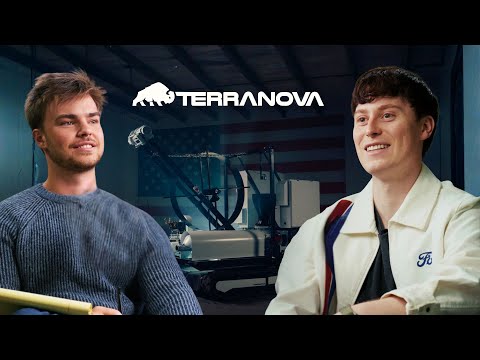
Laurence Allen, co-founder and CEO of Terranova, explains how his company is revolutionizing flood mitigation by injecting wood chip slurry underground to physically raise land out of flood zones. Unlike traditional expensive solutions like seawalls (which can cost $500-900 million for small cities) or levees (which require constant gopher maintenance and Army Corps certification), Terranova’s approach costs less than an order of magnitude compared to these alternatives and can lift an acre by a foot in a single day.
The technology uses waste wood chips - which are free and abundant - mixed with water and a thickening agent to create a pumpable slurry. Allen explains that Florida alone produces enough waste wood annually to lift the entire city of Miami by the amount it needs. The company validated their technology using a hacked concrete pump at a walnut orchard in Sacramento before developing their purpose-built Prometheus injection robots and Arc processing units. They can now achieve 2mm precision in lifting, enabling them to raise infrastructure like highways and runways while they remain in operation.
Allen, a former SpaceX intern who worked on Dragon thermal protection systems and Raptor engines during production surges, brings the same high-intensity culture to Terranova. The company is building 10 Gen 2 Prometheus units this year to enable 100-acre projects, with plans to license the technology to contractors worldwide - including discussions with ministers in Indonesia and Cambodia - rather than vertically integrating and slowing global deployment of this anti-subsidence solution.
Highlights
”Florida has enough waste wood to lift the entire city of Miami in one year”
Clip command
yt-dlp --download-sections "*0:00-1:00" "https://www.youtube.com/watch?v=AAJbpB9aLfI" --force-keyframes-at-cuts --merge-output-format mp4 -o "AAJbpB9aLfI-0m00s.mp4"“We did the math. Florida has enough waste wood on a yearly basis to lift the entire city of Miami by the whole amount it needs in one year. We are basically the anti-subsidence and I think the right solution to fix that at scale.” — Laurence Allen, 0:00
”A gopher can literally take out a city by chewing through an earth levy”
Clip command
yt-dlp --download-sections "*3:14-4:20" "https://www.youtube.com/watch?v=AAJbpB9aLfI" --force-keyframes-at-cuts --merge-output-format mp4 -o "AAJbpB9aLfI-3m14s.mp4"“A gopher can literally take out like a city by just chewing through an earth levy. The predicted damage from that is about a trillion dollars. One of the things the leaders in the Bay Area meet every month about is protecting these levies from gophers.” — Laurence Allen, 3:14
”Seawalls cost $500 to $900 million for a small city”
Clip command
yt-dlp --download-sections "*1:05-2:10" "https://www.youtube.com/watch?v=AAJbpB9aLfI" --force-keyframes-at-cuts --merge-output-format mp4 -o "AAJbpB9aLfI-1m05s.mp4"“For a small municipality like my hometown of San Rafael, they quoted 500 to 900 million for the seawall that they needed, which is of course prohibitively expensive if it’s like a 60,000 person city.” — Laurence Allen, 1:05
”Tehran sinks 25 cm a year due to groundwater extraction”
Clip command
yt-dlp --download-sections "*14:37-15:40" "https://www.youtube.com/watch?v=AAJbpB9aLfI" --force-keyframes-at-cuts --merge-output-format mp4 -o "AAJbpB9aLfI-14m37s.mp4"“Tehran sinks 25 cm a year due to groundwater extraction. There’s just no, it’s hard to even imagine what does it mean to sink like a foot a year. But it’s a very serious problem and we are basically the anti-subsidence.” — Laurence Allen, 14:37
”San Rafael pays $1,000 per truck load to get rid of wood chips”
Clip command
yt-dlp --download-sections "*17:06-18:10" "https://www.youtube.com/watch?v=AAJbpB9aLfI" --force-keyframes-at-cuts --merge-output-format mp4 -o "AAJbpB9aLfI-17m06s.mp4"“In my hometown of San Rafael, they ship eight semi-truck loads of wood chips every single day to be burned in biomass energy plants. San Rafael pays $1,000 bucks a semi-truck load to get rid of it. And so, of course, you can get it for free if you’d want to.” — Laurence Allen, 17:06
”Venice lifted a whole island in the 1970s but never did it again because of cement costs”
Clip command
yt-dlp --download-sections "*20:56-22:00" "https://www.youtube.com/watch?v=AAJbpB9aLfI" --force-keyframes-at-cuts --merge-output-format mp4 -o "AAJbpB9aLfI-20m56s.mp4"“In Venice in the 70s, they lifted a whole island with multiple buildings on it using a cementious mud mixture called mudjacking. It was super cool and obviously very relevant for Venice. They really just never did it again because it’s so expensive. We solved that problem with wood chips which are free.” — Laurence Allen, 20:56
Key Points
- Land raising with wood chips (0:37) - Terranova lifts land by injecting wood chip slurry 15-300 feet underground, creating a permanent solution that doesn’t decompose in anaerobic conditions
- Cost comparison to seawalls (1:08) - Traditional seawalls cost $500-900 million for small cities; Terranova costs less than an order of magnitude compared to these solutions
- Gopher risk to levees (3:08) - A predicted trillion dollars of damage could occur from levy collapse in the Bay Area, with gophers being a major threat to earth levies
- Reactive vs proactive approach (4:15) - Like wildfire prevention, flood mitigation is often ignored until billions in damage occurs
- Modular capacity (6:00) - Three Prometheus units with one Arc can lift an acre by a foot every day, processing 20 semi-truck loads of wood chips
- Geology modeling with AI (9:52) - Trained on 900,000 geocores in California, their AI tool models underground geology for cost estimation without on-site work
- SpaceX origin (10:26) - Allen worked at SpaceX on Dragon thermal protection systems before starting Terranova in late 2021
- First prototype was hacked concrete pump (12:03) - They validated the technology with a modified concrete pump called “old faithful” at a Sacramento orchard
- Global subsidence problem (14:58) - Mexico City has sunk 80-100 feet; Tehran sinks 25cm per year; Jakarta is moving its entire capital due to groundwater extraction
- Wood chips are free (16:45) - San Rafael pays $1,000 per semi-truck load to dispose of wood chips that Terranova can use for free
- Historical precedent in Venice (18:55) - In the 1970s, Venice lifted a whole island using mudjacking but never did it again due to cement costs
- 2mm precision lifting (27:46) - Can lift infrastructure more accurately than needed to prevent cracking, enabling lifting of highways while traffic continues
- SpaceX Thanksgiving surge (34:19) - Allen recounts working until 7am on Raptor production after Elon’s midnight Thanksgiving email calling everyone back
- High-intensity hiring (45:10) - Looking for “spiky young kids” and makers with portfolio proof of work, like those inspired by Ben Noak
- SF vs El Segundo (53:57) - Chose Berkeley for exceptional Bay Area talent, paying $1/sqft for 16,500 sqft facility
- Manufacturing in America (57:04) - Decided to fabricate robots in US rather than China to control their own destiny
- Living in the office (1:04:47) - Allen lives at the factory for efficiency, doing DoorDash for every meal and pulling all-nighters for launches
Mentions
Companies
- Terranova (0:37) - The land raising startup Allen co-founded
- SpaceX (10:26) - Where Allen interned working on Dragon and Raptor
- Tesla (53:57) - Set floor price for technician labor at $40/hour
- Lockheed Martin (45:10) - Mentioned as contrast to SpaceX impact culture
- Gothams (24:32) - Partner contractor doing FEMA projects with Terranova
- Army Corps of Engineers (4:15) - Certifies levies
- Caltrans (27:46) - Writing internal grant to study Terranova’s work near Highway 37
- Department of Water Resources (27:46) - Has $20 billion aqueduct subsidence issue
- Y Combinator (53:57) - Referenced for SF startup culture
- Zipline (1:01:31) - Where Ben Noak worked
Products & Technologies
- Prometheus (6:00) - Terranova’s injection rover robots
- Arc (6:00) - 20-foot shipping container slurry processing and command center
- Vulcan (12:03) - Terranova’s well drilling robot
- Atlas (12:03) - Referenced alongside Vulcan as early equipment
- Dragon (34:19) - SpaceX capsule Allen worked on thermal protection for
- Raptor (34:19) - SpaceX rocket engine Allen helped with during surge
- Falcon 9 (34:19) - Achieved 24 reuses during Allen’s time
- Cyber Truck (24:32) - Used to tow Prometheus units to job sites
- Neurolink (1:04:47) - Referenced in discussion of human augmentation
- CRISPR (1:04:47) - Allen did research internship on this technology
People
- Laurence Allen (0:37) - Co-founder and CEO of Terranova
- Ty Morse (0:32) - Host of Relentless podcast
- Fiona Ma (3:48) - California State Treasurer who visited Terranova
- Elon Musk (34:19) - Referenced for Thanksgiving surge email and leadership style
- Ben Noak (1:01:31) - Prototypical maker engineer Allen met in 7th/8th grade
- David Zagov (45:10) - Designed Terranova’s Bison logo overnight
- Walter Isaacson (45:10) - Author of Elon Musk biography mentioning surges
- Jeff Bezos (24:32) - Referenced Amazon’s reliance on existing infrastructure
- Bulldog (34:19) - Best welder at SpaceX Starbase who works 120-hour weeks
- Michael (45:10) - Candidate doing work trial at Terranova
Surprising Quotes
“We did the math. Florida has enough waste wood on a yearly basis to lift the entire city of Miami by the whole amount it needs in one year.” — 0:20
“A gopher can literally take out like a city by just chewing through an earth levy… the predicted damage from that is about a trillion dollars.” — 3:28
“Tehran sinks 25 cm a year due to groundwater extraction. There’s just no, you know, it’s hard to even imagine what does it mean to sink like a foot a year.” — 14:42
“I would implore them to steal our technology if we weren’t ready to solve their problems on the timeline that they needed.” — 27:46
“I’d go to bed at like 3:00 a.m. after working all night long and wake up at 10:00, walk back into work and there’d be a new building that was not there when I left at 3:00 a.m.” — 34:19
Transcript
0:00 In Venice in the 70s, they lifted a whole island with multiple buildings on it using a cementious mud mixture called mudjacking. It was super cool and obviously very relevant for Venice that you can just lift like the whole thing using underground injection. They really just never did it again because it’s so expensive. We solved the cement being super expensive problem with wood chips which are free delivered and abundant. We did the math. Florida has enough waste wood on a yearly basis to lift the entire city of Miami by the whole amount it needs in one year. We are basically the anti-subsidence and I think the right solution to fix that at scale.
0:32 Today I have the pleasure of sitting down with Laurence Allen, the co-founder and CEO of Terranova. Thank you for having me on, Ty. Terranova is basically going to lift land out of flood zones by injecting like wood chips slurries into the ground. How is that currently being done today? It’s really not being done. So the unfortunate truth is there’s really not a miracle solution for flooding. We have large scale flood problems and they spend hundreds of millions of dollars on even just flood consulting to try to figure out what to do about it. But the issue is your toolbox is very limited.
1:05 So you have seawalls. You can put a really expensive seawall in front of a property. How much does that cost? Kind of depends. I’d love to give you like a per foot basis, which is how you’d really price it. But for a small municipality like my hometown of San Rafael for example, they quoted 500 to 900 million for the seawall that they needed, which is of course prohibitively expensive if it’s like a 60,000 person city. So usually the answer is too much for a seawall and you can do dyke systems out of dirt.
1:37 You can do things like for example demolishing and rebuilding the entire city. They do very similar with infrastructure all the time where you’ll just find that the cost of other things is too high and you can’t just casually import fill and prop properties up. And so what you’re forced to do is demolish it, put the fill dirt on, spend a year, year and a half compacting it. And then at the end of the day, you can rebuild that infrastructure or that community where it was but higher. And you know, at the end of the day, you have pretty much the same situation as the Palisades or something.
2:13 Yeah, exactly. It’s just a terrible situation. So really what we’re doing is kind of breathing a breath of fresh air into that where all of a sudden you have something you can do where you can on a maintenance budget protect whole communities. You can protect critical infrastructure. You don’t have to wait for these giant capital projects to go through. You can really do something today. This is shovel ready technology. You can also do it dramatically less expensive. This is less than an order of magnitude what seawalls cost.
2:43 You’re protecting the infrastructure immediately. You get incremental protection instead of the crazy interruption of service that you might imagine with some massive highway project and then following that with your constant ongoing maintenance that you have there. There’s also something to be said for how much safer and better this is. You don’t have this perpetual risk that you have with lots of other solutions. So, for example, if you install some earth and levy, you’re going to be fighting gophers till the day you die on that.
3:14 It sounds crazy, but actually, one of the main issues and one of the things that the leaders in the architecture, engineering, and construction world in the Bay Area meet every month about is protecting these levies from gophers. Because a gopher can literally take out like a city by just chewing through an earth levy. Like hundreds of millions of dollars of damage or something? Way like a trillion. I mean it’s crazy. They’re worried about a levy collapse that cascades and is domino effect into more levies collapsing in the bay and the predicted damage from that is about a trillion dollars.
3:50 So we had Fiona Ma the state treasurer over and we were like what are your plans? You guys just keep doing more and more levies, it’s just getting worse and worse. And how much do these levies cost? It’s again, it’s like a linear foot figure for each of them. It really depends what you’re protecting. But they’re very expensive. They’re not as much as like a mechanical flood wall seawall system, but they’re still very expensive and they take forever to do and they’re all certified by the Army Corps of Engineers or something. It’s not like a casual thing a city can do alone.
4:21 Is this something similar to wildfires where a county or even state like California basically just doesn’t even think about it and kind of buries the head in the sand until some massive billions and billions of dollars damage happens and then they’re like oh we should really have done something about this and they kind of just forget about it again? Yes, it is very similar to that unfortunately. There’s kind of always a chicken or the egg problem and a lot of fingerpointing about who exactly is responsible for this.
4:46 Lots of municipalities would love to bring in, of course, a giant bag of federal money to solve their problems. My hometown is hoping for some federal assistance as well. Of course, we’re competing with like the Ninth Ward in New Orleans who historically floods a lot worse. And so, it’s a hard sell. Even with my hometown being 6 feet under sea level, it’s hard to get external support for that. Every time you have a king tide in San Rafael or you have a pump failure, you have massive flooding and the whole community rallies for a little bit.
5:16 People think of it as kind of an existential problem in the city. So it’s a little bit more severe than in other places where it is actually top of mind. But your expenditures don’t necessarily reflect that sentiment. And the reason is because again there’s just not much you can casually do or even anything you can do by taking bonds out and having the municipality itself pay for it. You really are in a game where you’re competing for serious federal spend on your personal city’s flood resilience.
5:47 It’s something like 15 to 300 feet underground is where you guys are injecting the wood chips. And then you’re able to with one machine bring I think 20 conxes of wood chips per day or put 20 through. Is that correct? Yeah. So 20 semi-truck loads of wood chips a day through each shipping container unit which we call our Arc. So that’s kind of a slurry processing and a command and control center. Each Arc can support up to three rovers currently. So, we have these rovers we call Prometheus units that are basically actually delivering that final injection pressure and moving that wood material underground.
6:21 They’re being supplied with both energy and slurry material by these big shipping containers that just kind of sit stationary in the parking lot and you move truck after truck through them and you lift the land progressively. And you’re able to do all this in like a day, right? Well, it depends what you’re lifting. So, it’s kind of that modular unit of three Prometheus units in one Arc that can lift an acre by a foot every day. So, if you want an acre lifted by a foot and that’s it, it’s a one-day project potentially.
6:48 We’ve done same day deployments. It’s not all that hard. Usually though, I would expect you to want dramatically more than that. One of our major issues is all the projects we get offered are huge, like really really huge. So is it like prohibitively you got to scale up into that and this is not something where you can just go and tackle like a hundred million dollar project? Yeah I’m building 10 of these new you can see it behind me. This is the first of the production unit the Gen 2 Prometheus unit.
7:17 I’m building 10 of those this year and that’s enough to support like 100 acre projects. But we have to do like 600 acre wetland restoration projects and like similar for new housing development. They’re all huge and the reason is because they can’t do anything else. When you need that amount of fill and you don’t have enough on site, you can’t casually import it. And so they start to look for other craziness things they could bring in and we come up, I guess, relatively high on that list now because we’re so much less expensive.
7:51 And I love that those are the groups that are willing to go. But man, it is hard to casually go deploy that. I want our first infrastructure project to be like a 3 to 30 acre type thing and not like us lifting the entire Ninth Ward, for example. So, what has that been like so far? How have you kind of gone and contacted people that would actually fit that bill of 30 to 60 acres versus much larger projects?
8:11 Usually, it’s them coming to us, people find us. The launch we did recently was pretty helpful. I had tons of land developers reach out, a few like kind of funny ones like a parking lot project and some other things that are actually relatively good projects surprisingly. What would make them a good project? For us like higher value created by that lift is ideal. So if we’re lifting something that has infrastructure in place already that has more value to the customer.
8:41 There are some other things. We have a lot of tools that model underground geology and we use that to explore how much it’s going to cost to do projects in certain areas. We also have, you go to plan.terranova.inc and you can plan your own flood project, explore your flood risk, model your underground injections, and that gives us a pretty good idea of what it’s going to cost in an area. But it is variable and so you can kind of decide how good of a project it is based off of how well it comes out on those tools.
9:12 In general, it pretty much works everywhere. You don’t want to inject into direct bedrock usually, but expensive to drill in at a minimum. Our fracturing into bedrock would also be very expensive. Use a lot of additive, too. That’s kind of the main difference between low-cost injections and high-cost ones for us is how much additive you use in the process. And what is additive? It’s like our viscosifying agent. So, we use wood, water, and a thickening agent so that you can pump it like a milkshake.
9:40 Is this a little bit like mining where you drill core samples all over the place where you’re going to potentially do the injections and then you decide based on those core samples how to do it? It’s yeah, it’s a lot like mining. We have an AI tool that we’ve trained off of about 900,000 geocores in California. And because of that, we’ve been able to model the entirety of California’s underground geology and we can use that to kind of leverage the data that we take on site or that already exists.
10:10 Usually we can do most of our cost modeling without any on-site work, which is really important for vetting lots of customers and going through that pipeline quickly. But those tools really allow you to find ideal projects and do that vetting in a really low stakes way. I know you worked as an intern at SpaceX prior to this and I was watching the TVN appearance earlier today and you’re like we were one of the startups that were in stealth like the longest.
10:41 How did you think about when you were just starting the company? How did you think about kind of the critical path to actually doing the first major project? Yeah, my co-founder started filing patents back in 2020. So, we’ve been thinking about this for forever. We incorporated late 2021 and I was working at SpaceX at the time. I got a return offer. I loved it. My entire team ended up moving around or otherwise leaving the company and so I would have come back to kind of a shell of my previous team and so I luckily decided to stick with the startup instead.
11:15 Very glad I did. It was certainly a long road. I think lots of people like to flex, we started this company six months ago and we’re already at XYZ. We are very much a slow burn for a little bit. But it was really because we were trying to be capital efficient. We’re bootstrapping. We were actually like figuring this technology out. No one had done this before. Were we just poor? We were a little poor. That kind of sometimes helps with slow ramp. Yeah, that might be more way to describe it.
11:47 But yeah, we were doing it very cost-effectively. So we figured out this technology, got some critical patents issued in the US and in Europe off of it. And so there was some utility to that long stealth mode, but some days I wish I raised a $2 million pre-seed back in late 2021 instead. For this type of thing, how did the technology develop? What was the first version of the Atlas and like Vulcan that you built?
12:13 Yeah, the first version of well, I’ll go back and say Prometheus, which is the one that does the injection, was kind of where we started. And the first version of that was actually a hacked concrete pump. So you can take a concrete pump and it’s a way higher pressure pump than you need actually. And the issue is it has these like tiny little ball valves that just clog. I mean, you can imagine trying to put like a 2-inch wood chip through like a ball valve with like half an inch of clearance or something. It clogs all the time.
12:45 But we were able to get wood underground. And so we were able to validate it with that old pump. We called it old faithful even though it wasn’t all that faithful. And where did you validate? Yeah. So we did that at our project site up in Sacramento. And so we basically have this site that floods. It is an orchard. It’s a walnut orchard. And so he can’t plant like half of it because it has flood problems. So he’s very interested. The city that we’re doing it in is famous for having flood problems as well.
13:14 So, it’s very top of mind. They’re all like behind levies and when you drive down the road to get there, you’re on a road with a levy above you and the farmland below it. And so, you can just tell if this levy breaks, this entire area is going to - it’s over for that. Yeah, it’s like but it’s not like one foot underwater. It’s like six feet, 20 feet underwater. And that’s because actually the entire Central Valley subsided about 20 feet due to groundwater extraction.
13:42 And is that the situation that San Rafael has? No, San Rafael is a little different. Theirs is primarily because they built a lot of it on fill. So they would basically import fill. They’d like cut tops of mountains off of and put them in San Rafael or like take tons of dredge out of the bay and put it there. And then they also built some directly on top of landfill. And so you just like have a landfill, build a city on top of it. And unsurprisingly that it kind of sinks over time as it compacts.
14:08 And it’s sinking in some areas as much as 2 inches a year, which is really a lot. If you’re looking at sea level rise, for example, it is not on that same order. Lots of people look at what we’re doing and they might say we’re like sea level rise alarmists or something. It’s really not about that. It’s about land that sinks and what you do about that. So, if you’re in an area like Jakarta, for example, their whole city is about to have to be moved because they just have pumped so much groundwater out.
14:37 I saw a figure the other day, it’s the same thing in Tehran. Tehran sinks 25 cm a year due to groundwater extraction. There’s just no, it’s hard to even imagine what does it mean to sink like a foot a year. But it’s a very serious problem and we are basically the anti-subsidence and I think the right solution to fix that at scale.
15:01 When I think of like Miami or especially like South Florida, I think this is just a problem with the entire state basically that it’s all just going underwater over time. Yeah, there sea level rise is worse on the east coast and lower east coast. It’s also true that hurricanes don’t help that. There’s a number of other problems that are notable as well, like petroleum extraction causes places to sink a ton. Long Beach is famous for that. Called a sinking city for years.
15:32 There’s many other examples of the same thing happening. Mexico City is maybe the most famous. It sunk like 80 or 100 feet. So there’s no end in sight. It’s kind of turtles all the way down. You can really sink your city as much as you want. And is this a solvable problem at that scale? Like, okay, you say for a 60, even 600 acre project, that’s a pretty solvable amount, but then you think of the entire scale of South Florida. Is that a solvable problem where you can just inject a whole bunch of wood chips and it’s all good?
16:02 We did the math and Florida has enough wood, waste wood on a yearly basis to lift the entire city of Miami by the whole amount it needs in one year. So, it’s actually surprisingly well matched. Trees grow like three times as fast down there. And so you have really a lot of wood and Florida strangely is already pre-separating all their wood from their other waste. It also is very much solvable at a city scale. Long Beach notably has two like artificial islands off the coast and they kind of did solve the problem by underground injection of water.
16:35 When they’re extracting the petroleum through this well, they’re also injecting like sea water through the other to offset it. And so I think if you turn the pumps off the city would probably sink, but we can kind of put our heads in the sand and that’s a nice band-aid for now. I know you mentioned that wood chips are basically free and we just produce a ridiculous amount and there’s really no place for them to go right now. How did you come to the conclusion that wood chips was the right thing to be injecting versus like concrete or just mud?
17:06 Yeah, it was a pretty easy conclusion. Just frankly there really is nothing else that’s volumetrically available on that level. It’s kind of like it’s wood or dirt, right? And surprisingly, wood is way cheaper than dirt. It’s a huge waste product. And so, in California, actually, I’ll give the San Rafael example. In my hometown of San Rafael, that of course has these terrible flood problems, they ship eight semi-truck loads of wood chips every single day, including Sundays, to the Central Valley to be burned in biomass energy plants.
17:38 We had an intern that got asthma from the same Stockton biomass energy plant that sends its wood chips to. It’s very unclean. It’s subsidized to like 14 cents a kilowatt hour by the state. They’d prefer not to do that. It’s just subsidized wood disposal and you have to do it because otherwise wood would pile up. People just dump it on the side of the highway if you can’t get rid of it. San Rafael pays $1,000 bucks a semi-truck load to get rid of it, for example, right now. And so, of course, you can get it for free if you’d want to.
18:08 And it’s pretty much the exact same almost all over the world where you just have trees growing constantly and you have to do something about that. You have agricultural waste. We talked to a single farmer in the Central Valley and she said she burned 50,000 tons of biomass of like agricultural wood waste that year, which is crazy. It’s actually illegal as well. So, it’s funny that they just talk about that. But that’s one source you can get it from. Urban wood waste. So like the local waste municipalities have just from the tree trimming operations that they do.
18:41 A lot of that is more extreme in California because we have these laws now about how many trees you can have close to your house to prevent fires. So they’ve had a resurgence of this and you can also get it from sawmills. Sawmills have tons of waste and they bring it mostly to bio energy plants as well. And you can additionally get it from fuel management from like forest fire prevention has tons of that especially in the dry seasons as well.
19:02 Can you walk me through the history of just raising land in general? I know in Alaska we probably like every 3 or 4 years you have to just redo the highways because there’s so many potholes from the permafrost. It just constantly destroys highways and roads. And I know you mentioned that Alaska is one of the first places where they’re like lifting highways kind of using this type of technology.
19:26 Yeah, Alaska does something close. So, they built pretty much the whole Alaskan highway system on wood chip fill, but they didn’t place it with our underground injection method. They just placed like 3 to 4 feet of surface fill and then they built their highway on top of that. Just pave it with concrete on top. Yeah, exactly. And you do that mostly because it’s lightweight fill. And so before everyone used Styrofoam, they were using wood chip waste. It was inexpensive. It’s actually almost as good as Styrofoam.
19:57 Once it’s anaerobic, it does not decompose at all. And so luckily, we’re going into this with departments of transportation and their geotech understanding that wood persists indefinitely anaerobically. Huge tailwind for us. Would be hard without that. And Alaska is one of the best examples of that. They did similar in Oregon and Washington and also in California. We have the Dumbarton Bridge which is like 20 minutes east of here which is built on I believe 15 feet of wood chip fill on one of the embankments.
20:27 So there’s lots of examples of things being built on wood. If you’re looking for examples of underground injection that’s kind of a whole other category. Everyone’s heard of grouting. You could do a lot of this with grouting. It would just be so expensive you would choose not to. How much would that cost? A lot more, I think. So, we target about $50,000 per acre foot. This would be like just material alone is like $250,000 for cement.
20:56 So, you’re starting there and then in addition to that, cement doesn’t flow very well underground. This was kind of proven in Venice in the 70s. They lifted a whole island with multiple buildings on it using a cementious mud mixture called mudjacking. And it worked. I mean, it’s kind of weird that the study is so hard to find on Google because it was super cool and obviously very relevant for Venice that you can just lift like the whole thing using underground injection. They really just never did it again because it’s so expensive that everyone looked at that and went, “Okay, that’s not scalable.”
21:30 You can’t afford that amount of cement. You can’t afford the giant research team to do that. So, we solved the cement being super expensive problem with wood chips, which are free delivered and abundant. And then we solve the giant research team to pull this injection off by having robots that do the injection for us and AI planning software. We also notably have a slurry that performs much better which is maybe surprising.
21:58 How did you test that? Yeah, so it primarily I’m saying it performs better in terms of how the injection process happens. And so when you are using something that is as viscous as your cementous grout mixture, you need a ton of injection wells. And those wells are super expensive as you might imagine. So they’re doing an injection every 10 feet whereas we would do it maybe every thousand feet for a really large project. And so there’s a very large difference in that.
22:28 So like you have to drill way more holes and it just takes a lot more time that sort of thing. Yeah, exactly. And that’s primarily because wood chips are neutrally buoyant as well and so they flow really well and it’s like on the other end of the spectrum from the extremely viscous mix that you use with cement. There’s lots of other things. Of course, cement also hardens and there’s all the complexities that come from that.
22:56 So surprisingly wood performs super well. We don’t claim this publicly usually, but we expect to perform better in earthquake situations than normal dirt. And so you’re starting a leg above. And the reason is because this is under a minimum of 30 feet of consolidated earth. So, it’s a ton of compaction force. And that wood chip slurry that you have very quickly turns into something that’s more like an MDF or a particle board underground. And, MDF and particle board are going to be way better to build a house on than something like normal alluvial dirt might be.
23:30 Let’s say you have a site, you’re going to do a deployment, and let’s say you’re just raising one acre. What does that process actually look like? Yeah. So, you load this thing up on this cool little drop deck trailer we have that has airbags that brings it down. You drive it on. Strangely, we tow it on a Cyber Truck, which you might like to see. I was up in Sacramento two days ago doing exactly this. We actually brought this back for you today and we’ll deploy again tomorrow.
24:00 So it is casual enough to bring it in for a podcast appearance, but we bring that injection Prometheus robot over. We currently at the site also have that big Arc 20-foot shipping container that’s all set up. That takes a little longer to set up. You can spend a day setting that up. You can do it quicker than that, but it’s hard. Why is it hard? You have to plumb water into it. You have to get electricity source. You have to keep it kind of level. It doesn’t have to be perfect. And then you have to set up all of the hoses that get run out to the units like this rover unit.
24:32 And it’s certainly possible for us to do a same day deployment, but you’d be doing the injection late at night. So what we again we do that frequently, but moving towards a world with more normalcy where we’re having external contractors do it like our partner Gothams, I’m expecting they’re probably going to do a day setup and maybe some more than that. You could have just fully vertically integrated the entire process, but you did decide which areas you want to just focus on for now.
25:01 Which parts of the process did you decide these are the things we should focus on versus fully expanding? Yeah, I know it’s strange because we have the Vulcan well drilling robot, but one of the first things we decided was well drilling is like it’s an industry. People know how to drill wells. We are not reinventing the wheel and we want them to know that they can do it in a very low-cost way. This is not the same as like a water well. You can do 20 of these wells a day like they do. You have to do like different standards for water wells.
25:32 Yeah, it’s much different. So, we are doing non-permanent wells, which is great when you’re trying to permit this. If you have a permanent well, you almost always have to get a well drilling permit in any region to do that. Whereas with a non-permanent well, it’s kind of regionally specific. In Sacramento, for example, you don’t need a well drilling permit for non-permanent wells. So, what we do is we basically come into the site, either we drill the wells or an external contractor does.
26:02 We do this set up in the parking lot with Arc system and then we have our rovers that go out to the different injection wells and actually lift them up. You’ll have less rovers than total number of injection wells, but usually multiple. And you do that injection process. You’ll lift it to your desired topography and at the end you pull it all up back out of the well and it’s just an open well bore which is great means you’re leaving no hardware behind so there’s no added cost, there’s nothing for any kind of permitting agency like a waterboard or an EPA to get concerned about and it’s just really low stakes and fairly easy to do.
26:38 I remember when Jeff Bezos was starting Amazon, he mentioned that basically it would be impossible to start Amazon even a few years earlier. If the internet didn’t exist and the roads and highways didn’t exist and UPS even didn’t exist, then there was a bunch of these different parts that would have made the cost of starting Amazon be way too high. Is this one of those things where if you didn’t have the geography data or topology data from California, it wouldn’t be possible to start?
27:10 Yeah, that would not be the thing that would have killed us. It would be hard without the level of artificial intelligence that you can kind of casually do now to pull a lot of these things. Data all over the place and you just got to go pick it up. Data scarcity is definitely a problem. I would say more than that it’s the AI talent behind it. We’ve been able to make some pretty big leaps forward. We kind of repurposed some algorithms from the robotics world that had recently won papers for example for our own underground geology use cases.
27:46 So there’s certainly something there, but more than that, I would say robotics in general as an industry is kind of what enables this to be possible to scale. You can’t casually hand this off to a contractor if you don’t go for the level of autonomy that we’re going for. They can’t just go like manually control these pumps. We tried. You clog it every single time without fail. So you do need to bring that autonomy in. And then there’s a number of well-timed other factors. One is the fire risk which is causing an obscene amount of wood and wood waste. And then the other one is of course sea level rise and subsidence kind of finally catching up to most major cities.
28:21 Let’s say you go to San Rafael and you do want to help them with lifting up their town just a little bit. You say like a couple feet, something like that. Six feet. Okay. What would you have to do prior to being willing and comfortable to just say yes to that kind of project? Yeah, we definitely are a few years out from that right now. We want to do some infrastructure projects. Right now we’re going to start a project very soon near Petaluma very near Highway 37.
28:51 And so we’ll be pulling in partners. Caltrans wrote an internal grant that we’re hoping gets funded to study our work there. And so, we’ll bring in other partners and they’ll give third-party validation of the efficacy of this and the ability to lift serious infrastructure with this and not just open land like what we’ve been doing right now. We will then kind of stair-step in complexity. I hope to do some projects with the Department of Water Resources in California. There’s a $20 billion aqueduct subsidence issue that we could fix very easily.
29:22 There are lots of other relatively low hanging fruit projects. Highways surprisingly are one of them. We can lift highways much more accurately than you need to not crack them, which is the question we get all the time. We can lift things to about a 2 millimeter level precision, which is of course much more than you actually need. And so kind of stair-step up and do infrastructure. And then finally, we will get to projects where we’re doing multi-story buildings, which for us is kind of where it starts to get real. You’re lifting someone’s home.
29:55 You’re not going to have them move out while you’re lifting it, right? So, this is something you would just do while they’re living there. Yeah. If we’re doing your highway, you’re driving over it. If we’re doing your runway, you’re flying over it. We’re doing anyone’s house, they’ll continue to live in it, which is one of the best parts of this technology. Why hasn’t someone done this before? We can’t figure that out. We have tried to figure it out because it’s like we’re playing Minecraft and we’re mixing earth with wood and if you put it together you have like solution for global flooding and somehow no one had ever done that.
30:28 I can’t even believe that we were like the first hand in the cookie jar for that. But we feel very fortunate and have tried to be stewards of this new technology and not vertically integrate on the level where no one else can do this without us. We don’t want to be the ones preventing people from using this technology that could save their entire city. We want to instead be licensing this out so any contractor can go do this so cities can do it themselves.
30:57 Currently, one of the ministers of Indonesia as we speak is pitching Jakarta on using this technology for the whole city. That’s enabled by the fact that we would just license it directly to local contractors who understand the permitting that happens in Jakarta, Indonesia, which I certainly do not. And so instead of having an individual team that you have to hire to figure out that entire process, you just outsource it to some other team that already knows it.
31:30 Yeah. What a nightmare. I can’t even imagine what it’d be like to have to go figure out the permitting in every single one of these places. We also have the huge tailwind that you can kind of shoe this into a lot of project types that are already about to start. If you have a new home development project and you’ve permitted this and your AE firm specs a final compaction amount and a final topography, we can just do that to spec. So you can just bring in this technology instead.
32:00 We’ve seen that in the wetland restoration world a lot where they’ll have pre-specced those two things and this will just work and so they don’t have to make any changes. They just switch and use this technology and they can start like next month. I got to imagine that this has not been a super smooth process. What have been the biggest things that have just gone wrong? It took a while to figure it out. I mean, just to be frank, we had lots of long days and I was sleeping in the back of a Chevy Silverado many nights at our pilot site.
32:34 I struggled to find the thing that was the hardest. I would say just in general, deep tech is hard. We are really great at fabricating here. Luckily, we have a team that cuts metal like it’s butter and builds very large things overnight. But actually getting it to work repeatedly, repeatably. And to be able to do customer handoffs and have assurances that that is going to work well for them as well has been maybe the hardest thing so far is just getting that equipment to work as reliably as you need it to get those operating hours in.
33:07 The clogging issue, funny enough, was like one of our big things where we finally solved it by figuring out a really good additive and a really great slurry mixture and having the machine take control over that so that we wouldn’t make manual errors anymore. We’ve solved other injection problems with just really going back to first principles and what can you do to affect what’s happening underground. It’s such a black box, but actually we’ve come up with many things that you can do that allow you to fix problems before they happen. We have jetting technology for example that really helps a lot.
33:42 It lowers the initial injection pressure so that it’s not the biggest pump you’ve ever seen and we don’t have to use crazy concrete pumps. Is that also something that you’re thinking about where if you just expand the time that you’re willing to do a project and maybe suddenly you can use way cheaper pumps and other technology or is this something where it doesn’t really have a huge impact whether the project takes like 2 days, 3 days, a week, two months?
34:13 It occasionally will have big impacts for customers. So our partner Gothams for example does a lot of FEMA projects. With FEMA projects they care a lot about the speed of course. I think one of the main advantages to this technology is also that it can be done very quickly because you don’t have that huge compaction time. So you’re starting really a leg up because you don’t have that year and a half. It’s like a two-week compaction process instead of a multi-year one.
34:43 You do definitely have a huge advantage from speed and it’s cool. Similar to many project types, unsurprisingly, you can just scale it up. So, if I wanted it to be faster, I would just bring more robots to the site and we would just do it faster. There’s no issues with you’re basically raising one part of the land while the other part isn’t being raised at the same time? That’s one of the things we plan for. So, that the change in grade between your natural topography and the one that you lift.
35:13 You have to plan that transition zone. So we have an earth anchor technology for example where if you want to get a really steep transition you can put our earth anchors in and you can make it so it only lifts the roadway and doesn’t lift the surrounding area. If you don’t care as much you can save some cost by just doing a larger scale project where you’re keeping a whatever 3% grade all the way back to your neighbor’s house.
35:40 When you were working at SpaceX, what did you learn there that you’ve kind of taken to this? Really a lot. I had a really incredible mentor there and also an incredible lead who taught me a lot of leadership and responsibility just at a high level. Other than that, I learned how to manufacture things and work. I was working on Dragon thermal protection systems primarily. So Dragon is the one that brings the astronauts to the ISS and also something where reliability really matters a lot.
36:12 That’s like the most reliable part of anything that SpaceX launches because it has to work. Yeah. No, it really was a zero failure game. But yeah, I’d work on the back shell. So all of the carbon fiber, all of the protection, heat shielding that you see on top of it was the main thing I would work on. And I pretty much touched every part there. I also worked on the Raptor rocket engines for a bit because we had a production crisis and I was flown down to Starbase for a bit to work on booster as well.
36:44 What was that like? Really cool. Very cowboy. Felt like a hurricane was about to hit all the time. I don’t love that bottom tip of the US weather, but it was cool. I’d go to bed at like 3:00 a.m. after working all night long and wake up at 10:00, walk back into work and there’d be a new building that was not there when I left at 3:00 a.m. So, it was a pretty incredible place to see and to be around that pace of work I think was very inspiring and maybe one of my bigger lessons.
37:18 Yeah, it’s kind of nice. We were there recently, I think like a week and a half ago, and they were building Mega Bay for Starship production I think of V3. I would love to see that. I worked in Highbay, which is so tall that when you look up to it to try to see the top, you always guess wrong. It’s hard to understand because obviously there’s taller skyscrapers. With a skyscraper, you kind of know where to look, but you always guess wrong because Highbay just has this weird ratio.
37:50 I was at the top of it where Elon’s office is and looking out from there you can basically see to Mexico. It’s a really nuts feeling because there’s very few projects in the United States of the same scale and like the speed of things happening. They created a city. I mean Brownsville was there before but it wasn’t the Brownsville. There’s nightlife in the city now and Starbase is like a destination city. All of a sudden Boca Chica was not really a place that you could go. But there was technically the one little neighborhood on Webs Road that was technically there before, but that was really it.
38:26 Even the housing, it looks like a mini Manhattan project happening. I think the Manhattan project is almost the perfect comparison to Starbase. It really just felt like that the entire time where Elon is giving this directive from the top that thou must count in minutes instead of days. And so you just do work like getting to Mars depends on it.
38:54 What was the craziest story from working there? I don’t know. My favorite was there’s this welder there called Bulldog who’s by far the best welder and so he gets to do whatever he wants and he just whips this ATV around all the time. He works like 120 hour weeks and everyone else is not allowed to work double overtime but they can’t tell their best welder no. And he was one of my favorite guys I’ve ever met. I made lots of friends there.
39:24 I’ll give one funny story. So I’m there. This is Thanksgiving and they have a fantastic banquet and I’m excited to go back to Hawthorne where I was based out of primarily and so I was supposed to take Elon’s jet back which is an honor and I took it there as well. Is that the private jet or the SpaceX jet? It’s actually his personal jet. So he has two personal jets that he just lets SpaceX executives use. But also the engineers get to take it pretty frequently too.
39:56 Between LA and Starbase or? Primarily but lots of other things too. It goes to Austin as well. So anyways, I’m supposed to go on this jet and my flight gets canceled. I’m like man I got bumped. I think I’m going to have to book a normal Southwest flight back, but luckily I get rescheduled to something like 9:00 p.m. and get on the plane. I get back. It’s basically midnight in Hawthorne. I lived right across the street from SpaceX, so I kind of walked in.
40:28 I made the mistake of checking my phone right before going to bed and there’s like seven emails from Elon and they’re company CC all emails and basically he says everyone needs to come back into work right now. This is like midnight on Thanksgiving and apparently there was some misunderstanding in how well Raptor production was going. And so Elon is there telling everyone he’s welding on the shop floor right now of SpaceX.
41:00 I walk in, I don’t know what the heck to do, and this is not my team. SpaceX was very much split into your different teams. Dragon and Falcon and Falcon Heavy and Starship and Raptor. And Starlink. And they’re all split up, but everyone is told just come in right now on Thanksgiving and go work on Raptor production. And I thought I was going to see Elon. I didn’t see him there. I did see him a couple times at Starbase.
41:32 But anyways, I come in. I work till I think 7 a.m. with Jacob, who’s the senior director of Raptor production. It was super cool. It was just me and him fixing a robot welding arm for Raptor. And I was also inside of one of the rocket engines just manually sanding the wall trying to get it done faster, like this is going to make all the difference for launch somehow. But I did end up doing weekend flex work for the next two months I think on Raptor and honestly kind of enjoyed it.
42:04 But that is the best story I have for the intensity of SpaceX. Yeah, I’ve kind of recently come to the conclusion I wouldn’t say that chaos is necessary, but I’ve noticed that even if you read Elon’s bio by Walter Isaacson, he’s talking about these surges. And I think that was probably one of the surges where randomly at 11 p.m. if you don’t have your phone on, you miss an email from Elon saying come right now. And then if you’re not there, that’s the time to be there. How like what did you learn during those surges?
42:38 I just had a lot of fun. I mean, I think most people that go to work at SpaceX know what they’re getting into. I would compare it to maybe fraternity hazing or something where you know what you’re going to get into and you’re walking in preparing to have your engineering elevated and some of that comes from the intensity of the work, the responsibility that you’re given immediately. As an engineering intern you are responsible for your work. I mean, you own hardware almost immediately and you’re responsible for that getting to completion.
43:10 My team was always the most behind team as our stuff was like arts and crafts basically where technicians would make small errors and it would threaten to push launch back by a month. And so we had upper management breathing down our necks all the time. People would literally sleep on the shop floor and not do their laundry for multiple weeks because they were working 70 hours trying to get stuff done.
43:40 But that intensity is very good and in many ways SpaceX is very adept at empowering engineers and you’re aware immediately that everything that you’re doing has meaning and that you can really move the needle. My final presentation that I gave said that and this is checked by someone else - I said I saved the company like $15 million, which is amazing. And if you were going to work at Lockheed Martin or some other company, you wouldn’t feel that same way at the end of your time there.
44:13 That you would had an impact at that level, especially not as fast as SpaceX will let you fill those shoes. When I was there, I was talking with one of the rocket designers for the door that’s going to be on Starship. And he basically said, “You can have as much responsibility as you want, and you can just keep on taking on responsibility. And as long as you just deliver, and if you don’t deliver, then you’re just out. But if you deliver, you just take on as much responsibility as you want.”
44:45 You can definitely be out. People had 30 feet from Elon rules where they would get too close. But those doors are actually hard. I worked on the one on Dragon. I worked on the seal and the seal redesign and it’s like impossible to get those seals RTV perfectly because it’s again all arts and crafts. So, how do you get arts and crafts reliable to the point where you can have an astronaut safely be in there?
45:18 So, we would be testing and trying to make sure this seal went down appropriately and then you do pull tests on it to make sure and lo and behold, you had some air intrusion or some other issue and it wasn’t perfectly applied and you’d start over. So we redesigned the entire door just so that we could fix that. And lots of examples of that. We do pull testing on lots of things and it would fail and you’d be on the phone with NASA trying to decide if you could ship it or not or if you got to go back to the redesign.
45:52 And I think seeing how high stakes everything was and that environment where you have responsible engineers and manufacturing engineers working together. It’s a little different on the experimental areas like Starbase. You have build engineers that do both, but you very much have a partner engineer and these two teams. One is trying to produce them, one is responsible for designing it, making sure that it fits that design and you’re not shipping hardware that’s unsafe.
46:24 But that’s a very functional way to very quickly solve problems and iterate and get something out that is safe but is also cost-effective and you have lots of opportunity to innovate. One of the main things that had just happened when I got there, for example, is we started to reuse the outer back shell. So we would use the carbon composites again. And so we would save all of that and we would reapply like a blade of material that goes over it instead of having that have to get completely scrapped every time you do a launch just because the outer area got burnt.
46:58 So lots of innovation came from how do you reuse that? How do you test that’s safe? How do you actually build a perfect new layer over something that’s already flown? And now they’ve reused Falcon 9 - they got 24 reuses on a Falcon 9 and it is so amazing. Human ingenuity is so amazing. My Prius barely even made it 60,000 miles in high school. So, it’s pretty cool.
47:28 Coming out of that type of environment where there’s a lot of structure and it’s very clear you’re not the only person that has to have high intensity. If you’re the founder of a company, you kind of set the pace whereas if you’re at some massive company like SpaceX, like most massive companies, the intensity is just not very high. But then I think with SpaceX, it’s very high. How do you actually adopt that into the work that you’re doing?
47:58 We like hiring SpaceX people. I’ve hired two. I have a candidate here right now for a work trial who I am going to make an offer to who’s seeing this. Michael, you did great today. But he’s our first non-SpaceX person I’ve hired in a while just because it’s really great to get people who have come from that high-intensity environment.
48:28 Yeah. How do you actually adopt that into the work that you’re doing? Because if you have let’s say you have a deadline and it’s like we have to have a Dragon capsule ready so that we can ship passengers on it by X date. I think that’s a very big fire that you have under your ass. Whereas with this, it’s like if we don’t, if we delay a week or a month or even a day, maybe the holes aren’t dug, maybe the land doesn’t move an inch, but it doesn’t really have the same fire.
49:00 Yeah. Getting teams that care helps a lot. I mean, I would say you can kind of lead a horse to water, but you can’t make him drink. You need people that are passionate about the mission. Spiky young kids that want to work on really hard problems is only who we hire. A lot of makers also. You want to get people that if they weren’t working with you, they would still be doing something like that - night soldering. It’s important to get people that kind of live to work instead of working to live.
49:32 But I, as a founder, I try to really live what we’re doing. We had a few periods of this where I exemplified that. Some of them were at our pilot site, some of them were just here. I was working no less than 90 hour weeks for the entirety of our fundraise, which was interesting. That was a very high intensity time for us because we were both deployed in the field and I was trying to raise a round.
50:02 We had a number of other ones. A silly one recently is I did like four out of five all-nighters going into our launch, which is crazy. We had - That’s a horrible idea, but go on. Yeah. So, Ty and I were clay pigeon shooting on a Thursday. And I called David Zagov, who was another friend of ours, who was there, his in-house designer, and asked him to do a logo that day. And by that night, at like 9:00 p.m., he had pulled off a fantastic logo, which we now use - our Bison.
50:38 And I had to build a website and get a launch video done off of that before our Monday launch. And so we basically had a team which we’d worked with before that was working in Europe and another team working in the US. And I would run them in 12-hour shifts to do that very quickly. And so I would pull an all-nighter to make sure that they didn’t get stuck and do some website poorly. It seemed silly, but I’m glad with how it turned out. We got a lot of customers in from that launch. And launch video was the same thing. Just trying to put all the branding immediately overnight.
51:14 When you’re coming into contact with these types of customers, especially if you’re working with cities and governments and those types of organizations. The default pace is very not urgent. How do you kind of drive that urgency? You think you have to be really honest with your customers like we are a venture-backed company. We are on that timeline. If you want to work with us, you must be aware of that and you have to have that same urgency.
51:46 I think lots of municipalities, just like you flag, do not have that urgency and they are hard customers to work with for that reason. Land developers are in a different category. Lots of folks in wetland restoration, as weird as it sounds, are actually working more urgently than we are for whatever reason. Do you know why? I’d love to say they’re just fervent environmentalists, but usually it’s because we’re jumping into a project that they’ve already decided that they’re going to break ground on in like a month or something.
52:18 And so we have to either fit that next quarter timeline or we don’t and we get passed over. And so it’s very much a customer group specific thing. We need to find customers that can work for you as you scale. And our approach where we’re working with contractors on a licensing basis and a revenue split basis allows us to do lots of different types of customer projects with pretty much the same end relationship for us, which is just us kind of guiding this perm contractor through the process.
52:52 You’re trying to get 10 of these machines built in the next 12 months. What is that going to enable you to do? And then like what’s the scaling past that? Yeah, that’s going to enable us to run concurrent projects, which is pretty important. So right now we can only really do one project at a time which is of course pushing everything else off. We are going to also be able to do projects with higher complexity and higher acreage.
53:22 So some projects require you to be injecting on multiple wells at the same time so you can get that nice even membrane lift that you want where you get the 2mm accuracy. Exactly. Yeah. So we have an elevation tracking system that allows for that. But to actually perform the injection at any reasonable rate requires multiple injection robots in lots of cases. And so as you scale, you just require more and more.
53:52 We also need to do three Arc units in that same time period. So that’s basically three of these big 20-foot shipping containers that we fill. And that’s kind of our 12-month plan. 24-month plan, besides conquer the world and fix global flood problems is primarily to get this into lots of contractor’s hands so that contractors can go solve their local flood problems. We again are really trying not to hamstring this technology.
54:22 We’re very aware that we have to be able to do multi-state and international projects immediately. So making it so this is only available in the Bay Area is very non-functional. Again, I mentioned Jakarta, but we talked to folks that are ministers in Cambodia. I’m meeting the PM in Cambodia in January. It’s really like an existential problem for so many countries that you have to not be the reason that they’re slowing it down and the person they’re waiting on.
54:54 I also, just to be frank, I would implore them to steal our technology if we weren’t ready to solve their problems on the timeline that they needed. I would almost imagine that competition is not really even a factor for a very long time because there’s just so much demand and like so much of an issue that even if you are basically scaling as fast as you possibly can you can’t possibly satiate that demand over the course of even a couple years I imagine.
55:26 Yeah, we very much build fast and don’t look back. We have issued patents in the US and in Europe on pretty much every aspect of the technology. That is not why we think people are going to work with us. They’re going to work with us because we are by far the cheapest. We make it easy to work with us with this contractor licensing model. And we provide so much value through this fully autonomous system.
55:56 It’s not supposed to be hardware or ecosystem lock-in. It’s very much just we make this process very smooth. We make it so you can make much more money than you make on any type of other project. This has much higher margins than any kind of fill project, unsurprisingly, because it’s a new technology and it’s dramatically cheaper.
56:26 And so from a contractor perspective and from a customer perspective, it’s very much a no-brainer. And I think if we can continue to lean into that and make our municipalities happy because they save tons of money on their flood project, make our infrastructure companies happy because they save the infrastructure, make our contractors happy because they’re making great margins and have this whole new line of business, we’re going to really not have this competition problem because everyone’s going to want to work with us and not work above us.
57:00 Yeah. Do you want to talk through the iteration process on the technology itself? Like what were - what was the first version to what is it today? Yeah. So going from that initial - hacked and jerry-rigged - well it was the concrete pump. So going from that hacked concrete pump to a unit which was kind of a combined mothership rover which did both the slurry mixing and had a pump on it which had to be right next to the injection well which meant you had to deliver the wood right next to the injection well which works on some sites doesn’t work on a wetland.
57:36 You said I think now it’s like it could be 500 feet away and it still works. Yeah. The deployment we did that ended last Sunday that we’re going to pick up again tomorrow was 220 feet between the mothership and the rover. So you’re basically moving that slurry that far. It’s really important because on areas where you have soft soils, your trucks and stuff just get stuck and it becomes a nightmare. We have tracks on the rover, but you don’t have tracks on a semi-truck.
58:08 So you decided to be located in San Francisco and I think a lot of the guys that I know that are in hardware have decided to be in El Segundo. How’d you make that call? El Segundo is fun. It’s expensive rent down there. Hawthorne I liked during my internship but not because Hawthorne had anything notable. Their food is atrocious. Just to be frank I’m kind of Bay Area born and raised. Went San Rafael, Berkeley, Stanford and back to Berkeley where we are now.
58:40 I think Bay Area talent is exceptional and it’s very hard to find that caliber of talent anywhere else, El Segundo included. If you need very talented software engineers in addition to your mechanical engineers, this is the best place in the world by far to do that. We also have a bustling deep tech scene that I think more than rivals El Segundo. I don’t want to start any drama here, but El Segundo is called El Segundo, which means second place.
59:12 And I do think that is notable. San Francisco has been known as the tech capital of the world and it’s that for a reason. You have not just a vibrant software engineering community, which everyone has heard of because of Y Combinator and stuff, but you also have a lot of deep tech companies here and lots of investors and venture capitalists who have leaned in hard and have set their roots down in San Francisco.
59:44 We have lots of venture capitalists that I know that are coming here because of the deep tech scene. VCs that we’re close to that are coming from Australia just to meet all of the SF hardware talent. Lots of my best friends are hardware founders - shout out Willow, Brian, David Zagov, Michael from Aurelius. These guys are building real companies in San Francisco and turning the city into something that we’ll tell our kids about.
1:00:16 Yeah, I know Michael from Aurelius, he was able to get some space in like downtown SF for really cheap because there’s just not a whole lot of software companies that want the same space, but is perfect for deep tech. I know if you have a very unusual mission, then it kind of attracts different types of talent. And if you are in a place where everyone’s building software and AI, then if you’re the one land company that’s raising land, I imagine it’s a little bit easier to find people.
1:00:48 Yeah, it’s funny and ironic. I had a VC call last week and they were suggesting we just buy land and raise it. And I was thinking, man, maybe our next office is on an island or something. For right now, we’re very happy in Berkeley. We’re paying a dollar a square foot for this space, which is 16,500 square feet. It’s fantastic. We have enough space to build 10 robots a year, which is what we’re looking to do.
1:01:18 We will have to scale up from there. And I think we might end up in El Segundo. We might end up in New Mexico, which has surprisingly a very vibrant community as well. We could use some lower cost technician labor for sure. I would say that’s the main thing to flag when you’re building in San Francisco is it’s a lot of money to get experienced electromechanical techs and welding techs. Tesla’s kind of set the floor price at like $40 an hour which is really a lot.
1:01:48 And so for large scale mass production of our Prometheus, Atlas and Vulcan units we might choose to start doing some of that somewhere else. What have been the biggest manufacturing challenges so far? We are really good at building stuff. I would say manufacturing challenges are very low on the list. We have fabricators that are so experienced they can build whatever our engineers set our hearts on.
1:02:20 We make lots of on-the-fly design changes and off-roading which adds a lot of complication. That might be one of the main challenges. We definitely have had challenges around sourcing. We had initially been sourcing a lot of stuff from China, but we had to kind of find alternate supply chains because that stuff really hit the fan. I am embarrassed to say this now, but I’d considered actually fabricating these robots at some scale in China, and we just decided screw it, we’re going to do it here.
1:02:52 What was that process like? Did you go to China? No, but my co-founder went there once. And there are lots of good engineers in China and their tooling engineers and everything are very impressive. You just really want to be in control of your own destiny and building in America makes that possible. I think we are in a special situation where there’s not anything that’s that crazy.
1:03:22 We’re not putting some crazy new Nvidia chip in these. You have a modest amount of compute that allows you to do these calculations in the Arc units and on the rovers, you pretty much just have a giant pump on tracks and some big batteries. And we have a lot of cool sensors that we’ve done in house and circuit boards that enable that. But it is not so crazy that we were forced to have such a complex supply chain that we couldn’t do it in house.
1:03:54 And so we decided we’re just going to do it all ourselves. I don’t want to have to tell customer that I can’t deliver on their project on the timeline they wanted because I can’t make enough robots fast enough. If I want to make more robots and I have a project ready for me, I will definitely be able to make enough robots.
1:04:20 I know that you live here. Why did you make the call? I think it’s becoming much more common. There was kind of jokes for forever about YC founders sleeping where they worked and I think it was more so that they worked out their apartment than anything else. But in deep tech, it’s very important to be on the floor and seeing the progress that’s happening and being able to guide that and connecting with your team.
1:04:50 Also, having that empathy with how hard everyone is working. It’s much easier when I’m here every day. So, I decided to do that. It honestly made it a little easier to have the amount of hours a week that I work currently. The rolling out of bed in time for my 7, 8, 9, 10 a.m. Zoom meetings is much easier than any kind of commute. And so I’m able to be more productive because of that.
1:05:20 I try to not spend time on anything else besides work. And so I’ll do DoorDash for every meal instead of HelloFresh. I’ll live in the office. And luckily we have a shower here now. So I’m not leaving to go shower in the gym. But yeah, I would say it’s not just about intensity, it’s also efficiency.
1:05:50 It’s probably similar with SpaceX where the reason why people are able to go so hard is because they don’t really leave. And if you leave, you kind of start asking yourself why am I not doing these other parts of my life? But if you’re just always there, you’re just focused on the next problem and solving whatever fire is in front of you.
1:06:20 I think that’s really where it started for me. So, I lived literally right across the street from SpaceX, which I would co-sign this apartment, but they actually ended up thinking my roommate never paid them their final check, so it was not my favorite apartment unit. But, nonetheless, right across the street was super convenient. We just walk into work and it would make it so we would save 30 minutes every day.
1:06:50 I really got used to that and being able to come in casually at night. I kind of ran a 3D printer farm casually outside of my job at SpaceX, which is weird, but I just kind of started doing it and I could do that because I would just move prints up after a power nap or something. I just come in and make it so I could do the things for my team overnight or something and get our stuff jumped ahead in the line.
1:07:20 And that translated really well over here where we just don’t ever stop. Texts come in at 8 a.m. and engineers leave at 11:00 p.m. and there’s just very little time where I would not want to be here with my team and seeing that. For actually finding those types of folks, I know you mentioned you’re looking for people that are just like tinkerers and going home and working on the thing even if they’re not working on your thing.
1:07:52 Like with Ben Noak, he’s one of those prototypical examples for me in my head of the - not I wouldn’t necessarily say pinnacle, but he’s just always working on some - if you look at those YouTube channels, just a whole bunch of different projects prior to working at SpaceX and Zipline. How do you think about finding those types of people?
1:08:22 I have literally told our recruiters, please find me another Ben Noak. In exactly those words. Ben Noak for me is also prototypical example. He’s probably the best engineer I know. I’m actually in one of those videos, funny enough, and he’s taught me a lot. How’d you meet him? It’s crazy. My dad literally DM’d him off YouTube and I just flew to his house in I think seventh or eighth grade for two weeks and some change.
1:08:54 I was in Boston. We built nuclear fusers and supercritical CO2 caffeine extractors and chocolate 3D printers and lots of things that blow up. And so it was really the time of my life and it was probably what made me into the level maker that I am now. And I’ve tried to grow a team that has that same creed and I’ve done it very successfully where we lean in really hard on candidates that can show an impressive portfolio.
1:09:26 And we understand because we’re makers the level of complexity involved and you can just see spikiness in a 10-second scroll of a portfolio if a candidate is saying this is what I made. I did this myself and it’s some incredible robot, obviously that candidate is going to be super high value and they’re going to be really good at working autonomously as well.
1:09:58 How are you thinking day-to-day like what actions are you taking to make it so timelines are moving faster than they otherwise would? Yeah, I mean we do pass on that intensity to the team. I think one of the main things is just having the team be very aware of the business development goals. There’s a joke in Silicon Valley where there’s the conjoined triangles of success between engineering and sales.
1:10:28 And it’s very much true like they have to meet or your company’s going to go bust if you’re venture-backed and so you don’t want to overindex on engineering, you don’t want to overindex on sales, but you have to get revenue in the door and it requires both of them to work in tandem. There’s that joke of companies only die for one reason and it’s just running out of money.
1:10:58 There are multiple reasons. You can die much more flamboyantly than that. But yeah, I would say the most common non-flagrant death is either death by indigestion, which means you oversold and under-delivered, or a lack of sales - that’s honestly the saddest one for me is if you build an incredible engineering team and you have this beautiful product and you go out to the market and no one wants it or you didn’t hire sales people early enough and so you don’t end up getting those sales. That’s just terrible and heartbreaking.
1:11:32 We had a talented engineer interview with us that had her company died by that same reason. She was like a director of engineering at a startup that was backed by one of our lead VCs and she basically performed, did her job and then the market didn’t materialize.
1:12:00 On the expectation setting side, I know something like this where you’re early on but you’re also trying to do reasonably large projects. How do you kind of set expectations with the partners that you’re going to be working with? Yeah. It’s important - the way it comes up is with the bond. So contractors are bonded usually - a prime contractor is bonded and so there’s kind of a make-whole clause usually in there.
1:12:32 Where let’s say what you’re doing you don’t perform and it’s like 6 inches under where you said it would be, you have a make-whole clause - you have to go get to your final topography that you’ve promised. And if something were to go wrong you would be responsible for ensuring it stayed there or you go and repair it after. And so that’s exact same situation we’re in when we are doing these projects.
1:13:04 And so we can kind of debate that exact bond with the customer and the requirements they have there. And usually we try to be judicious and give something that’s functional for the customer but also acknowledges that we are an early company. They are choosing us because we are a low-cost option and they are taking an implied additional responsibility there.
1:13:36 If you had to look at kids today and you were to say, how can we get more really cracked engineers and people that are just tinkering and building stuff. How would you do that? I would do what my dad did. So, my dad did a really good job of introducing me to engineering early. I was being shown square roots in kindergarten and I was probably doing little baking soda vinegar volcanoes before that.
1:14:06 And so I got into science really early and I loved it. I just build ridiculous things out of lots of hot glue and random things and trinkets and finally started to really be able to build stuff in maybe sixth grade when I started an electric skateboard business and I was selling these ridiculously expensive electric skateboards. Kind of like one wheel? No, like normal skateboard long boards. Super fast. They went like - I had one that went 32 miles an hour.
1:14:38 Which I only know because I broke my a bone called your snuff box here when I flew off into a bush at 32 mph and that was the last speed it recorded. Were you wearing a helmet? Yeah, thankfully. The noggin is intact. But yeah, I make these expensive skateboards and people would bring them to Coachella and they’d have lights on them and that was kind of my first business.
1:15:08 I was also introduced by my parents to sales at a really young age. I was asked to sell raffle tickets by the school and my parents took that super seriously and so we would go table out near various grocery stores and it was like a two-week timeline that you had to sell these tickets and I won the district - most raffle tickets sold 5 years in a row because my parents would just have me sit at the grocery store and not leave for the entire week or the entire two weeks.
1:15:40 And I would sell like $3,500 of raffle tickets of $5 raffle tickets every single time and win like Xboxes and PlayStations and Wiis and I would just go turn that into cold hard cash usually. And I almost put it all in Bitcoin and it just didn’t because I was a little kid and I couldn’t figure out how to set it up on the old white iMac. So, I was this close to creating generational wealth off of those raffle tickets sold.
1:16:12 But, I’m very grateful I both got that engineering and that sales background started really young. And I feel like when you start early on, you kind of have that graph begin really where that started to become a passion for you. And so when we look at candidates that have maker backgrounds, it’s like they have three, four years of industry experience that is being undervalued by most other employers.
1:16:44 It’s not on the resume. It’s like I - you didn’t work at Lockheed Martin for four years, but you’ve got probably even a better sense because you’re just doing - better. Way better. We have a - you know - ex-SpaceX, ex-Lockheed Martin engineer and he is fantastic but he’s not fantastic because he worked at Lockheed. He’s fantastic because he had a giant maker background before he did stuff.
1:17:14 Yeah. Yeah. I have another engineer. She’s ex-Tesla, SpaceX, Zipline, Boston Scientific. Somehow did a software engineering internship at T-Mobile. But she’s not good because of that. She’s good because she’s been making things her entire life - in spite of it. Yeah. Well, not quite in spite of it. But yeah, the maker background is really what makes those candidates exceptional.