The Manufacturing Startup That's Outcompeting China | Jim Belosic, SendCutSend | Round II
The Manufacturing Startup That’s Outcompeting China | Jim Belosic, SendCutSend | Round II
Summary
Jim Belosic, founder and CEO of SendCutSend, returns to Relentless to walk Ti Morse through what changed in the eight months since their first interview — most importantly, a $110M raise led by Andrew, Matt, Patrick Collison, with Sequoia and Paradigm in the syndicate. SendCutSend bootstrapped for eight years on a “lemonade stand” model — buy lemons for 50 cents, sell for a dollar, reinvest 50 cents — and Belosic frames the new capital as a literal time machine: five years of organic growth compressed into 18-24 months. He waited so long to raise that he only had to give up 10% of the company, and he refused to take a CFO as a condition of staying frugal but generous.
Belosic argues that the magic bullet for outcompeting China is not automation — it’s scale plus high-quality labor that actually cares. Today SendCutSend can meet or beat China on roughly 20-25% of parts; he wants 100%. The company’s brand promise is built on speed (the cultural slogan in the factory is “3 PM is the new midnight” — if it doesn’t make the truck, it doesn’t count) and a ratchet philosophy: once you’ve delivered next-day, you can never go back to seven-day shipping. He talks about gambling on building leases and machine POs before signing — saving 30 days at the front compresses into millions of dollars of new capacity 12 months out — and his fear that the next bottleneck won’t be capital but recruiting, training, and most of all American power infrastructure.
The interview closes on Belosic’s vision: SendCutSend as the “Home Depot of manufacturing.” Pre-Home Depot, you couldn’t even walk into a lumber yard; pre-SendCutSend, you can’t walk into a US manufacturer and ask for a part. He wants accessibility for hobbyists, formula SAE teams, and Fortune 500s alike, with vertical integration eliminating middlemen and bulk purchasing dropping prices. Belosic warns that US power infrastructure is the limiting reagent for reindustrialization (“we need a hundred times more power than we have”), that raw material prices never go down (“just look at gas prices”), and that the energy of the moment is largely “vibes” — patriotism, fear of offshore IP theft, and supply chain shocks that have made US manufacturing finally feel viable.
Highlights
”Automation Is Not the Magic Bullet”
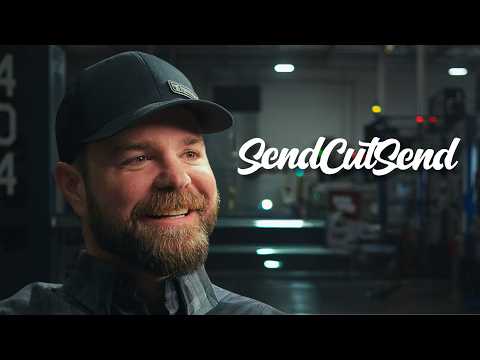
“Automation is not the magic bullet. Fully automating and dark factories and lights out manufacturing or whatever, yes, it helps, but that’s not the magic bullet… Everyone thinks like, oh, because China has cheap labor or whatever, the only way to compete with that is to automate. What we’ve found is, no, you just have really good labor.” — Jim Belosic, 1:25
Clip command
yt-dlp --download-sections "*1:25-2:12" "https://www.youtube.com/watch?v=8sbOL5wGADo" --force-keyframes-at-cuts --merge-output-format mp4 -o "belosic-automation-not-magic-bullet.mp4"”I Run This Company Like a Lemonade Stand”
“I run this company like a lemonade stand. I buy lemons for 50 cents and I sell them for a dollar. I take the extra 50 cents and invest in more lemons, right? So my concept of running a business is you have to be profitable from day one.” — Jim Belosic, 3:00
Clip command
yt-dlp --download-sections "*3:00-3:43" "https://www.youtube.com/watch?v=8sbOL5wGADo" --force-keyframes-at-cuts --merge-output-format mp4 -o "belosic-lemonade-stand.mp4"”$110M Is Literal Rocket Fuel”
“Without money, I can hit most of my goals in the next five to eight years. With some cash, I can do that in 18 to 24 months. So it’s a time machine. It’s literal rocket fuel.” — Jim Belosic, 11:20
Clip command
yt-dlp --download-sections "*11:20-12:00" "https://www.youtube.com/watch?v=8sbOL5wGADo" --force-keyframes-at-cuts --merge-output-format mp4 -o "belosic-rocket-fuel.mp4"”3 PM Is the New Midnight”
“If it’s due today, it’s actually due today by 3:00, hustle. I want to see the Indiana Jones, you know, rolling under the door to get it into the truck type thing as it’s pulling away.” — Jim Belosic, 27:00
Clip command
yt-dlp --download-sections "*26:51-27:50" "https://www.youtube.com/watch?v=8sbOL5wGADo" --force-keyframes-at-cuts --merge-output-format mp4 -o "belosic-3pm-new-midnight.mp4"”We Need a Hundred Times More Power Than We Have”
“Power infrastructure now sucks. Everyone wants to re-industrialize, but we don’t have the power for it. We need a hundred times more power than we have.” — Jim Belosic, 30:58
Clip command
yt-dlp --download-sections "*30:58-32:25" "https://www.youtube.com/watch?v=8sbOL5wGADo" --force-keyframes-at-cuts --merge-output-format mp4 -o "belosic-power-infrastructure.mp4"”Capacity Creates Demand”
“I’m not too worried about building capacity ahead of our demand. I think the capacity creates demand. As soon as we have machines idle, all of a sudden the lead time drops to near zero.” — Jim Belosic, 55:34
Clip command
yt-dlp --download-sections "*55:34-57:00" "https://www.youtube.com/watch?v=8sbOL5wGADo" --force-keyframes-at-cuts --merge-output-format mp4 -o "belosic-capacity-creates-demand.mp4"Key Points
- Competing with China today (0:21) - SendCutSend can meet or beat China on 20-25% of parts; Belosic wants 100%
- Manufacturing is mostly mom-and-pop (0:21) - 93% of US manufacturers have 100 or fewer staff; 75% have 20 or fewer
- Automation isn’t the answer (1:25) - Mix of robots and high-quality labor beats lights-out factories
- Lemonade stand philosophy (3:00) - Profitable from day one, reinvesting margin into more capacity
- Use debt before equity (3:26) - Leverage good credit to buy your first machines instead of giving up equity
- Eight-year overnight success (3:43) - The new $50M facility cost makes pure bootstrapping too slow even though it’s possible
- Culture scaling has a ceiling (6:00) - Need ~400 people serving the Kool-Aid before you can go from 500 to 1,000
- CEO is five people (7:00) - Office of the CEO, CFO, and President are each five-person teams so the same answer holds everywhere
- Demand outpaced bank covenants (9:07) - Could loan against machines, but not against software, R&D, or speculative experiments
- Only gave up 10% (11:20) - Waiting until the company was great meant raising $110M for 10% instead of 50-70%
- Expectations are promises, ratchets only go one way (12:13) - Once you’ve trained customers on next-day, seven-day kills the brand
- Multi-site network smooths weather risk (13:40) - Reno snowstorms close the pass; Texas/Kentucky/etc. load balance and put work on planes in Memphis
- Speed is the strategy (15:44) - Amazon-effect on speed has trickled into manufacturing; distribution near population centers is the next move
- Home Depot of manufacturing (15:44) - Belosic wants people to walk in and chitchat about a part the way they do at Home Depot
- 90% now enterprise, not hobbyists (18:00) - Started with garage tinkerers; now does thousands to millions of parts per customer
- No CFO (22:46) - Belosic deliberately delays hiring one; “frugal but generous” is the corporate identity
- HR org as risk (22:49) - At 500 staff, formal HR will try to compress pay into a chart; Belosic fights for slush funds and intangibles
- LLM CAD generation (25:30) - You can describe a bracket in text and the tool generates the CAD
- Open-sourcing DFM rules (25:30) - SendCutSend publishes capability/limit data so anyone can build LLM tooling on top
- 3 PM is the new midnight (27:00) - If it doesn’t make the daily truck, it doesn’t count as shipped
- The next bottleneck is recruiting and training (27:52) - Even with 50 recruiters, you can’t train 200 people in a day — need classrooms and dedicated training equipment
- Power is the limiting reagent (29:22) - The current 12-month-old building has 1,200 amps; air compressors eat the electrical footprint of four CNC machines
- Reno is a logistics hub (30:58) - Huge warehouses but only enough power for forklifts; finding 4,000-amp buildings is now a key site selection criterion
- Raw material prices never go down (33:59) - Strait of Hormuz closes, aluminum jumps 15%, but never comes back; scale buying is the only lever
- Costco rule (35:56) - Belosic refuses to price-gouge even when margin would let him; customers research and remember
- Gamble for speed (37:54) - Placing equipment POs before a lease is even signed saves 30 days that compound into ~$10M of new 12-month capacity
- Aim for perfection and you’ll end up at excellence (39:18) - Brian Wolf’s (VP Ops) maxim; always have plan B and C
- Impatience as a moat (40:10) - Belosic, Phil & Chide (Director of Mfg), and Brian Wolf — the three most impatient people in the building
- Forward-deploy SCS DNA (41:47) - Send 25-year-old machine shop staff to spin up Texas and Kentucky factories for 6 weeks at a time
- Fundraising was hell (43:52) - Belosic openly says it was exhausting and not in his element; he’s relieved to be back to building
- Pick investors like spouses (45:51) - It’s not the firm; can you text them at midnight?
- Pain or pleasure for customer prioritization (49:03) - “Is it our problem or their problem?” — back office gets de-prioritized if customer doesn’t feel it
- Due diligence shock (51:00) - Investors examined Meta Pixel cookies and undisclosed tracking; small annual cleanup makes diligence survivable
- Reshoring is “vibes” (54:30) - Patriotism, IP theft fear, and supply-chain shocks have made US manufacturing finally feel viable
- Capacity creates demand (55:34) - Idle machines drop lead times to near zero, which immediately fills them back up
- Default skeptical with high trust upside (58:40) - Belosic’s “BS meter” triggers on inauthenticity; once you’re in, you’re really in
Mentions
Companies
- SendCutSend (0:00) - Belosic’s on-demand US manufacturing company; ~500 staff with a fresh $110M round
- Sequoia (45:51) - One of the firms in the $110M round
- Paradigm (45:51) - Another firm in the round
- Amazon (12:43) - Speed benchmark; “Amazon effect” reframed manufacturing expectations
- Walmart (6:17) - Sam Walton’s distribution-center donut visits as cultural inspiration
- Home Depot (15:44) - Vision template; SendCutSend wants to do for manufacturing what Home Depot did for home improvement
- Costco (35:22) - The 15% margin rule on the jeans story as a model for not price-gouging
- DoorDash (15:44) - Instant-gratification benchmark “30 minutes seems like a long time”
- UPS / FedEx (15:44) - Carrier constraint on coast-to-coast ground shipping
- NV Energy (30:58) - Reno’s utility; getting to the top of their list is a constant fight
- Neuros (43:10) - Soren’s drone company; referenced as another founder whose role shifted away from building
- Machina Labs (30:58) - Considering Reno; Ed (CEO) recently talked with Belosic about it
- Starpath (30:58) - Saurav also considering Reno; Belosic talks about power gotchas
- Disney (45:51) - Used as “fancy-firm vs. small-firm” foil
- Target (15:44) - Compared to instant-shipping convenience
- Meta (51:00) - Meta Pixel lawsuits surfaced in diligence as a new risk vector
Products & Technologies
- CNC machines / sheet metal / powder coat / bending (29:22) - Core production stack
- Air compressors (29:22) - Use more electricity than CNC machines themselves
- LLM-driven CAD generation (25:30) - Talk-to-it CAD; SendCutSend publishes DFM rules so others can build tooling
- Forklift / scissor lift (19:00) - Belosic buys used on Facebook Marketplace or at auction
- Herman Miller chairs (19:00) - Anti-pattern for VC-bloated startups
- Jim Bucks (22:21) - Belosic’s $100-bills-in-pocket spot bonuses for staff and customers
- Formula SAE (24:00) - Engineering competition cars; SCS gives them free engineering help
- Meta Pixel (51:00) - Disclosed-tracking lawsuits flagged in due diligence
People
- Jim Belosic (0:00) - Founder & CEO of SendCutSend
- Ti Morse (0:00) - Relentless host
- Mark and Sandy (5:05) - Early small-cheque investors Belosic shouts out
- Andrew and Matt (22:49) - Lead investors in the $110M round
- Patrick Collison (45:51) - Stripe co-founder, individual investor in the round
- Sam Walton (6:17) - Walmart founder; donut-and-truck-driver mgmt style as inspiration
- Brian Wolf (39:18) - VP of Operations at SendCutSend; “aim for perfection, end up at excellence”
- Phil & Chide (40:10) - Director of Manufacturing; one of the three most impatient people in the building
- Soren Monroe-Anderson (43:10) - Neuros CEO referenced as a founder no longer building drones himself
- Ed Mehr (Machina Labs) (30:58) - Talked to Belosic about coming to Reno
- Saurav Shroff (Starpath) (30:58) - Also exploring Reno
Places
- Reno, Nevada (13:40) - SendCutSend HQ; logistics-corridor warehouses with low power
- Texas, Kentucky (13:40) - New SCS factory states
- Parris, Kentucky (41:47) - Forward-deployment joke vs. Afghanistan/Iraq
- Memphis (13:40) - Air-cargo hub used to reroute around weather
Surprising Quotes
“I run this company like a lemonade stand. I buy lemons for 50 cents and I sell them for a dollar. I take the extra 50 cents and invest in more lemons.” — Jim Belosic, 3:00
“Without money, I can hit most of my goals in the next five to eight years. With some cash, I can do that in 18 to 24 months. So it’s a time machine.” — Jim Belosic, 11:20
“Oh no, we still have no CFO. I’m avoiding that for as long as possible.” — Jim Belosic, 22:46
“What’s the good of having fuck you money if you can’t say fuck you? I want to be able to do stuff that feels good, whether it makes sense on paper or not.” — Jim Belosic, 24:00
“I want to see the Indiana Jones, you know, rolling under the door to get it into the truck type thing as it’s pulling away.” — Jim Belosic, 27:00
“Power infrastructure now sucks. Everyone wants to re-industrialize, but we don’t have the power for it. We need a hundred times more power than we have.” — Jim Belosic, 30:58
“Raw material prices do nothing but go up… it’s like gas prices. Gas prices go up a dollar. If there’s more oil or whatever, like maybe it’ll go down 25 cents. It never goes all the way back down.” — Jim Belosic, 33:59
“I don’t know, it feels like vibes. There’s some rah rah rah of patriotism, reindustrialization. People are a little scared of offshore now.” — Jim Belosic, 54:30
Transcript
Ti Morse: 0:00 Today I have the pleasure of sitting down with Jim Belosic, the founder and CEO of SendCutSend. SendCutSend is absolutely crushing building factories here in the United States and in my mind is one of the few manufacturing companies that is genuinely competitive with China. So with that in mind, I want to start off with what does it take for a US manufacturing startup to be competitive with China and is it even possible today?
Jim Belosic: 0:21 Yeah, of course it’s possible. It takes scale. You need a lot of scale. Manufacturing in the US right now is like I think 93% of it is companies that are 100 staff or smaller. And then like 75% of that is companies that are 20 staff or smaller. So lots of, you know, mom and pop type shops. You put them together and we’re a force to be reckoned with, but no one is really scaling at the proper level to bring prices down, increase speed, whatever. So that’s what we’re trying to do. We compete with China on parts right now, you know, maybe 20% of everything we do, 25%, we actually can meet or beat China, but I’m not happy with that. I want it to be 100.
Ti Morse: 1:14 Right now we have a bunch of machines in the background that in most cases are like semi-automated or a large part of the process is automated, but there is obviously some human touch. So how do we actually make, you know, companies like this competitive?
Jim Belosic: 1:25 Yeah, automation is not the magic bullet. Fully automating and dark factories and lights out manufacturing or whatever, yes, it helps, but that’s not the magic bullet. You know, we’ll get there someday, but today’s not the day. You have to have a mix. You know, we’re really happy to have robots where it makes sense to have robots and then we have good dudes where it makes sense to have dudes and dudettes. Everyone thinks like, oh, because China has cheap labor or whatever, the only way to compete with that is to automate. What we’ve found is, no, you just have really good labor. And if it’s expensive labor, they care, they like their job, they want to produce a good quality product, they want to hit deadlines, they want to go faster, they want to improve the process. So you take really good people and you level them up with really good technology and you’re good to go.
Ti Morse: 2:12 I know for the past like eight years you’ve been in bootstrap mode and you’ve raised almost no money to date. A lot of people when they’re starting a manufacturing startup, they just raise a huge amount of money out the gate before they actually have any product or customers and they kind of hope things will work.
Jim Belosic: 2:30 Yeah, well, what’s it called? Product-market fit, that’s what they’re looking for.
Ti Morse: 2:32 You inverted the entire thing where you raised almost nothing and then figured out this entire process and how to scale before you raised the money. How do you kind of go from that R&D mode to now you’re going to be scaling a bunch of different factories around the United States?
Jim Belosic: 2:50 So I’m trying to show people like what the path is. I hope that we’re a template for how to do this. My belief is you have to figure something out, you know, at very small scale, prove it. Get the customers, understand what customers want, understand what your capabilities are, scale it using profit to the company. My thinking is very, very old school. You know, I’ve said before, I run this company like a lemonade stand. I buy lemons for 50 cents and I sell them for a dollar. I take the extra 50 cents and invest in more lemons, right? So my concept of running a business is you have to be profitable from day one. Now, not everyone has, you know, a million dollars laying around to go buy equipment or whatever, neither did I, but you can get a loan on it. So to anyone listening out there, like make sure that you have good credit. Leverage credit and debt to get your business off the ground and then put your head down and grind. You know, it’s, yeah, we’re eight years in. People are looking at us and going, oh my gosh, you’re an overnight success. It’s like, no, you haven’t seen us get, you know, punched in the face for eight years. Now is the time for us to like really add rocket fuel and go to the next level. So the challenge that we have is we’ve gotten to this big scale where it’s very difficult to continue bootstrapping. Like for us to in the old days to open up a new facility, you know, maybe it was like a million dollars, something like that. Now for us to open up a large facility, it’s 50 million dollars. And it’s, I can bootstrap that, but it’s on this timeline that I just I’m very impatient for.
Ti Morse: 4:31 Yeah, I know there’s also this like dynamic of you don’t want to be like turning away customers, but you also want to make sure that the products and services that you’re providing are of the quality and standard that you care about. And so if you want a 24-hour, 48-hour turnaround from someone asking for a part online and then having it show up at their door, you know, you can deliver that at small scale, but then if you scale too quickly, maybe suddenly things like slip. And so how do you kind of think about making sure that the product service experience that you create scales with the company?
Jim Belosic: 5:05 That’s really hard. It’s culture. So because we’ve scaled, I mean, we’ve scaled fast by some measures, but we’ve scaled slow by others. We’ve scaled fast for, you know, a self-funded or mostly self-funded company. I did raise a little bit of money. Shout out to Mark and Sandy. Thank you. We didn’t take, you know, this massive amount of money right at the beginning when we had no idea what we were doing. So it forced us to go at a certain pace and build the culture without getting too far over our skis and falling over. So what I’m concerned about is, you know, with some money to spend all of a sudden you go 10x faster. Do we start hiring people 10 times faster and there’s, you know, 50% of them aren’t the right fit? Luckily we have this really deep culture already ingrained, so everyone new gets to learn from the people that have been here. They understand how we operate, what our quality standards are, or how generous we are, and so doing that at scale, yeah, you need about 400 people in order to, like, serve everyone the Kool-Aid, you know? It’s because we’re going to have another thousand people coming on. I couldn’t go from 10 people to a thousand. I can probably go from 4 or 500 to a thousand.
Ti Morse: 6:17 Even with money, you can only scale culture so fast. And I think Sam Walton — one of the things he did was he would fly to different Walmarts and basically just see if everything, you know, worked and was — or what was amiss. He would go to the distribution centers at 5:00 a.m. and bring donuts and talk with the truck drivers to see, you know, get a pulse for five different stores at once. How do you kind of scale yourself while you’re doing that, if you can’t be walking the floor every day?
Jim Belosic: 6:42 Yeah, you can’t. So I run into that every day. Just walking around this facility, I see new faces all the time. Right now as we’re filming, this is C-shift. So Friday, Saturday, Sunday. I’ll come in on a Sunday and see 10 new faces and, you know, some people will be like, ‘Hey, you know, where do you work? What department do you work in?’ I’m like, ‘I don’t know what department I’m in.’ So I can’t be everywhere at once, and thank God, because that’s exactly how you put a ceiling on your business. If you think that you’re the only guy who can go around and make sure everything’s working perfectly, you’ll be limited by how many hours you can be awake. Very early on, I knew that I wouldn’t be able to do that. So having, you know, an incredible staff as my direct reports, they are my eyes and ears. They go around. They understand what I want. They understand the vision of the company, and I understand their vision, too. Like, the office of the CEO is — it’s not just me as CEO. It’s like five people. The CFO is five people. The president is five people. You know, everything is kind of like a group of us that are all additive. And then that way, no matter if someone’s on vacation or travel or whatever, it’s basically the same answer to any question that happens across any facility. So hiring great leaders that are a culture fit, and then just doing it time and time again, that’s the only way that we can do it. We spend a lot of time traveling now. Our travel budget is through the roof. We’re gonna have to address that at some point. I don’t know how. But especially when we start a new facility, you have to be out there for weeks at a time in a rotation with myself, with other leaders, so they understand, like, the background, the history of the company. They can be a really incredible operator. Maybe they came from some massive manufacturer and they’re going to run our facility, but they don’t know SendCutSend. And so it takes weeks and weeks and months of us going out there, them coming out here, blending it all together. It’s hard. It’s fun, but it’s hard.
Ti Morse: 8:44 Yeah. I know you just raised 110 million or something like that. And I know for a very long time, you were very conscious and thoughtful about not raising money. And you had some good reasons for doing that. But at some point, I think things flipped and there was so much demand, that you just could not scale fast enough without external capital. So what kind of made that flip in your mind?
Jim Belosic: 9:07 In my perception I thought I was disappointing my customers. The only way that we can control demand is by increasing lead times or raising prices or saying no, you know, put a banner on the website and it’s like, sorry, like stop ordering, we’re not going to hit our deadlines, right? That’s super painful. And it’s incredibly expensive to the brand. Like we built our brand for years and years on speed, quality, good price, incredible service, you know? So as soon as that starts to slip, I think you can grenade the entire company. So we’re like, okay, we got to go faster, we got to go faster, but demand was always outpacing our budget, outpacing our bank covenants. You know, we have great lending partners, people will give us a loan on our machines all day long, but there’s a lot of stuff that you can’t get a loan on. You know, I can’t get a loan on tripling the size of my software development team. You know, I can’t get a loan on these crazy R&D projects that we need to go and experiment with, and we don’t know what the outcome is going to be. So what I’m happy that we did is we waited so long to say yes to taking on money that I didn’t have to give away the farm. I didn’t have to give away…
Ti Morse: 11:19 Like 50% of the business.
Jim Belosic: 11:20 Yeah, I didn’t have to give away, you know, my vision or anything like that. We built a really, really awesome company that looks great to our customers, it looks great on paper. And so when it comes time to negotiate like, hey, I’m going to give up a chunk of my baby, you know, we gave up 10%. That amount of loss of control was acceptable to me in order for the gain that it’s going to get me to my customers. Because that’s a shit ton of money. When you have to like produce every single dollar of profit, you know, as a team over years, when someone can just inject a bunch of capital and you get to run with that and add capacity and add scale and lower prices and increase speed and add new capabilities, it’s like, okay, that’s a tradeoff I’m willing to make. But I’m glad we didn’t do it too early, because it wouldn’t have been 10%. It would have been, you know, 50% or 70% or who knows what.
Ti Morse: 11:59 When we were just at dinner last night, we talked a little bit about expectation setting and like making sure that whatever you’re saying that you’re going to do, you actually do it. And not only that you kind of exceed it most of the time. How do you think about expectation setting in your mind with the customers or even with suppliers and vendors and stuff?
Jim Belosic: 12:00 Promise a customer that it’s going to be there on Thursday, it better get there on Thursday. If I promise them that it’s going to cost a certain amount, it’s going to cost a certain amount. So that expectations is like live by the sword, die by the sword. The issue with it is it’s like a ratchet. When you improve stuff, that’s the new bar, like you can’t go backwards, which is where you know we run into these crazy challenges, like manufacturing is a hell of a lot easier when you’re not quick turn. So from day one, we’re like oh, we’ll be quick turn, because I’m impatient, I want my stuff fast. We should do that. Scaling that is really hard. And then as you get better and better, you’re like cool let’s shave a day off of our lead time. For expectations, I’m — my son is joining us and the audience here. I always told him, I was like, I don’t make threats, I make promises. If you don’t clean up your room, I’m going to throw out everything on the ground. And it’s like, I will throw out everything on the ground. And then I had to buy it back again, so anyway, that hurt me more than it hurt him. But expectations are promises.
Ti Morse: 12:43 It’s like Amazon where they say suddenly it’s two-day shipping or you know one-hour shipping and people don’t want to go back.
Jim Belosic: 12:50 Yeah, no, you can’t. You can’t go from one-day shipping to seven-day shipping, like people get super pissed and I would get pissed as a customer. I’m still a customer. I think about myself as a customer. I’m the number one representative of all of our customers out there, and I want what they want. Actually I think I want more than what they want. I’m probably the most demanding customer that we have and I’m never satisfied. So I’m always ratcheting those expectations and making sure we hit our promises.
Ti Morse: 13:29 Were there any like specific examples in the history of the company where you did have those expectations or like set a high bar for expectations and then just completely missed them? And like how did that feel?
Jim Belosic: 13:40 Yeah, well, it still happens, and it happens through nature. You know, if the pass gets closed during a winter storm and, you know, we can’t get trucks over the hill, or mechanical issues, you know, maybe a machine catches on fire and we have to evacuate the building for half a day or something like that. Someone accidentally hit a sprinkler in the ceiling and that, you know. So, yeah, you have to make some calls, send some emails, and let people know that we’re going to disappoint them. I love to be part of that conversation. I like to get the pain so that we can make the system more robust so it doesn’t happen again. And that’s been a big part of our expansion across the US because, you know, just operating out of Reno, usually in the winter it’s pretty easy for us to go east. To go west over the Sierras sometimes things get stuck. But if we, you know, we have different facilities in, you know, Texas and Kentucky and wherever we’re going, they can all help each other, we can all load balance a little bit. Usually we can get something on a plane in Memphis and then they can fly over the weather and then make it to Southern California or whatever. So, yeah, we have lots of challenges every day where we disappoint people. But if you’re arms length from that it never hurts you as much. Like, I want to get touched by it, I want to feel the burn so that we fix it.
Jim Belosic: 15:00 I don’t do it again. Like, I’m so stupid, like that’s the only way I learn. You can tell me that it’s hot, I have to like grab it and see that it’s hot and get burned. So being like on the front lines and feeling the pain with the customer and having the customers yell at me directly, I’m like okay cool let’s have backups on backups, you know, let’s have more material in stock, let’s have additional customer support people so that they’re not waiting for a response for, you know, hours or whatever, it’s things you learn over time. You finally figure out where all the weak links are, where the chain breaks and then you make the chain stronger in those areas.
Ti Morse: 15:34 You’re kind of looking out over the next like couple years and you’re thinking about how the scale up will end up unfolding. What does that actually look like in your mind?
Jim Belosic: 15:41 Speed.
Ti Morse: 15:43 Hmm.
Jim Belosic: 15:44 Speed is the main thing. I think Amazon kind of showed the way where if I can get it to you tomorrow or even in two days or whatever, people like the convenience. People are lazy. I know I am. I can get in the car and, you know, go to Target and get some stuff. Or I’m like, oh, if it’s gonna show up tomorrow, you know, that’s fine. So that Amazon effect on speed is trickling into every other aspect of our life. You know, DoorDash with food, you know, I’m like, oh, 30 minutes? That seems like a long time. It’s like we’re so spoiled. So people get spoiled on everything being almost instant gratification and that’s going into manufacturing too. So, you know, if you give me a million square feet, I could have a huge mega factory, and I could produce parts really, really fast. But I can’t get them in your hands fast enough because actually one of our constraints is our carriers. You know, UPS and FedEx are incredible, but it’s expensive to move things by air all the time. So, you know, you go do a ground network and coast-to-coast it’s five or six days. You know, if shipping from Seattle to Florida takes forever, from Southern California to Massachusetts takes forever. So the future is, you know, distribution, I guess. I want to make sure that we have capacity wherever there’s population centers. I want that accessibility in all those population centers. I want people to think about SendCutSend like Home Depot. You know, I go to Home Depot all the time. If I knew that I could just go to a local manufacturer that was super accessible and I could just walk in the door and be like, ‘Hey, you know, I need this made, you know, help me out, help me figure it out.’ That would be amazing. I think more of the US needs that. Every city has tons of manufacturers, but their doors aren’t open. You know, some of them don’t have websites, you know, you gotta know a guy or whatever. So we’re trying to change that. I want to show the example of what we’re doing, you know, being more open to the public to actually a good way of doing business in manufacturing. Like our customers can grow with us or we can grow with our customers. You know, we started out just doing prototypes and, you know, stuff for hobbyists.
Jim Belosic: 18:00 Guys in their garage, but now, I mean, 90% of what we do is for, you know, large enterprise. You know, we do thousands of parts, millions of parts, you know, for individual customers that are doing, you know, huge projects. For a long time, when someone needed that many parts or they needed that much capacity, we’d have to say no, or our prices weren’t competitive, because it’s hard for me to, like, lock up a facility just for one customer and then disappoint thousands of other customers because the machines are going to be busy on that project for a month or whatever. So, scale for us is being able to say yes to everything, you know, including, you know, this traditional stuff that would be done by these very large, you know, OEM-level manufacturers. We’re doing it today, but we’re going to do a lot more of it.
Ti Morse: 18:46 You started this business in a very unusual way. This is not normally how people start companies, where they’re using their own money and taking on loans and doing all this stuff. This is the way I did it.
Jim Belosic: 18:58 I thought it was super normal.
Ti Morse: 19:00 Having a whole bunch of money behind you now, I don’t think a whole lot of things change. It brings up the timelines, it makes it so you can scale faster, but you don’t fundamentally — you don’t, like, suddenly flip to unprofitability so that you can scale, you know, grow unprofitably like most companies do. So what things are going to change and what’s going to stay the same?
Jim Belosic: 19:10 Everything’s going to stay the same except for our timelines. You know, without money, I can hit most of my goals in the next five to eight years. With some cash, I can do that in 18 to 24 months. You know, so it’s a time machine. It’s literal rocket fuel. We’re already doing well. We’re growing. This is fuel on the fire. We’re going to go faster. Things that won’t change, like, I’m still cheap. I mean, frugal, I guess. You know, we talked about that in the last one, but it’s my upbringing. It’s our culture. Like, we buy stuff used on Facebook Marketplace. You know, our scissor lift that I’m staring at, you know, got that at auction or something. So I try and make sure that I’m a good steward of money, whether it’s my money or somebody else’s. I think if we had taken a bunch of money right at the beginning, that’s when you end up with brand new, super amazing forklifts and crazy equipment that you don’t really need, and maybe too many staff, and then you have, like, a really nice conference table for some reason and Herman Miller chairs and, you know. It’s like, no, just focus on your customer, have a good product, focus on profitability. We have that muscle memory forever. I had it in my last two businesses. I had it since I was little, you know, mowing lawns. I was like, “Oh man, can I do this pattern a little bit faster so that my hourly rate, you know, I’m more productive or whatever?” So it’s just in my nature. It’s in our nature as a company. So all of that is going to stay the same. We’re going to go a hell of a lot faster, though. We’re going to have more capabilities, better customer experience, which I think is pretty damn great right now.
Ti Morse: 21:00 But I think it could be better. On the customer experience side, like you’re very focused on trying to create as much love with your customers as possible. What is the thing that is the biggest like keeps you up at night because it just sucks right now?
Jim Belosic: 21:13 The fact that in periods of high demand, we can’t take the time with a customer and really hold their hand and understand like what their project is, give them advice on how to make it way better, whatever. You know, sometimes we can spend, you know, an hour, you know, working with a customer or whatever. But I’d love to have it unlimited, you know. If we need to go back and forth with a customer, jump on a phone call, invite them to a facility or something, be like, ‘Hey, show me your thing that you’re trying to make. Hey, we can re-engineer it so it saves some money here.’ Or ‘Hey, if you, if you take a half inch off this dimension, we can actually fit more on a sheet and it’s going to cut your price in half,’ or something like that. That would be so fun. We get to do it sporadically, but what if we could do it every single time? It’s an investment that doesn’t make a whole lot of sense on a spreadsheet. When the finance guys look at that, they’re like, ‘Why are you spending all this money?’ But it feels damn good as a customer. It makes me feel good as like a company that I want to run. If people can learn about manufacturing through our customer support, then hell yeah, you know, that’d be amazing.
Ti Morse: 22:21 Last time we talked, you were very wary of having a CFO and having someone that was too focused on making money and too focused on watching the costs to the detriment of creating real employee love and vendor love and all these things. And you have this wonderful concept of Jim bucks where you’ll just hand out hundred dollar bills as you’re going throughout your day. How is that kind of shifted? Like, why did you decide to hire, you know, someone in finance? And what is shifting there?
Jim Belosic: 22:46 Oh no, we still have no CFO.
Ti Morse: 22:48 Oh, really?
Jim Belosic: 22:49 Yeah, no, I’m avoiding that for as long as possible. And, you know, shout out to Andrew and Matt, who actually like believed in me to give me a bunch of money without having a CFO. It’s because I think they know that I’m frugal. I’m frugal but generous. Like, I like generosity to our customers. I like generosity to our crew. We try and take really good care of people. So what you were talking about is if you let someone who’s only focused on the dollars and cents, it can erode that customer satisfaction, it can erode, um, you know, just love with the staff, you know. One of the things that I’m fighting actively right now is, you know, we’re almost at 500 people. With that size staff, you know, as we approach 1,000, 2,000 people, there’s policies and rules and HR starts to become this like big org within an org. And they love to be able to point to a chart and say, ‘Okay, you have this many years of experience and this, and that’s exactly, you’re going to make $31.18.’ I’m like, ‘What if they’re awesome?’ Like, ‘What if they’re doing stuff that you can’t track?’ Like, ‘Can’t we have some flexibility in there?’
Jim Belosic: 24:00 Slush fund, you know where it’s merit-based, but sometimes you can’t just like line all these things up, there’s intangibles. I don’t know, maybe that’s a theme of our whole company as our approach to you know, our products and finance, this intangible, you know, doesn’t make sense on a spreadsheet, but it sure as hell makes sense when you’re on the receiving end of it as a customer or staff member or whatever. So as long as I have control over slush funds and intangibles and I can keep a wad of hundreds in my pocket or whatever, um or if I can you know, upgrade stuff to overnight you know to make a customer happy or some MIT kid that’s working on a formula SAE car and we have to throw an engineer at the project for them or whatever, it’s yeah, when you pencil it out you’re like oh man that just cost us you know thousands of dollars worth of time, I’m like yeah, but help the kid get his project done. We’re in that position, like why not use it? You know, what do they say? Uh what’s the good of having fuck you money if you can’t say fuck you? I mean that’s what I want. I want to be able to do stuff that feels good, whether it makes sense on paper or not.
Ti Morse: 25:07 I know you’ve been like very focused from the beginning on like hobbyists and people that just tinker and build things and they need a part quickly, but as you kind of scale you’re going to be able to go from just having a given part and you have to like know CAD and stuff to be able to even order it, to you basically just type in here’s what I want and then a finished product comes to your door. So how does that actually look like?
Jim Belosic: 25:30 Yeah, it’s happening now, right? So we’ve built our own tools so that you can kind of talk to it and say, hey, I need this kind of bracket, you know, it’s three inches long, whatever, and we can generate the CAD for you using LLMs. And that’s good, but I think there’s a limit to what we can do in-house. We only have so big of a team, we only have so many ideas. What we’re doing is we’re just open-sourcing, you know, how our system works so that everyone else out there can grow and make better tools than we could even make. Hey guys, here’s all of our DFM calculations, here’s our limitations, here’s our capabilities, and it’s all in, you know, a language that’s readable by an LLM. It’s like go make tools, go figure it out, go make your own plugins, go make your own little use cases and we’ll manufacture it for you at the end of the day. I don’t want to, you know, gatekeep anything, I just want to make parts. So if people can understand our ecosystem and make really cool tools to make even more parts, then I’m all for it.
Ti Morse: 26:34 As we were walking through the factory and just doing a tour before this, there was this sign that said ‘3pm is the new midnight’ and I think that is basically when the trucks leave, and if the trucks don’t leave on time, then they don’t make the plane, so the parts don’t get delivered. So how did you kind of like come to that?
Jim Belosic: 26:51 We had this problem where, you know, on work orders, it has different due dates. So hey, it’s due, you know, into bending on this day. It’s due out of powder coat on this date, you know, it’s due to ship on this date. So let’s say, you know, it’s June 3rd is the due date. We would have people like, ‘oh man, high five, you know, we shipped it on June 3rd.’ But I was like, ‘no, you missed the damn truck.’ You know, you shipped it June 3rd at 9:00 PM, like that doesn’t count, it’s not a real ship date. And I think you’ve experienced that as a consumer too. It’s like, hey, you order something and then you get a shipping label and then you’re watching the tracking and like, it hasn’t moved, it hasn’t moved, it hasn’t moved. We don’t want to do that. So yeah, 3:00 PM is the new midnight is just a culture thing. It’s like, hey guys, if it’s due today, it’s actually due today by 3:00, hustle. You know, I want to see the Indiana Jones, you know, rolling under the door to get it into the truck type thing as it’s pulling away. And then we do that.
Ti Morse: 27:50 What’s the biggest thing that you’re fearing right now?
Jim Belosic: 27:52 I’m fearing the unknown. The unknown of having a lot of money to deploy. Capital has been a great constraint for us. It’s everything starts from there. It starts from like how much profit do we have? How much can we spend? How much debt can we handle and service? And all of our decisions have worked backwards from there. And so now, you know, with some great partners that believe in us, that’s not really a constraint right now. And I don’t know what the next bottleneck is. You know, I’m gonna find it, I’ll find it really damn quick. I believe it’s actually going to be recruiting and training. I think we have three recruiters right now, we have two more coming on board. So five recruiters, we need to scale up our HR staff because that’s a whole thing. But then even if I could hire, let’s say I had 50 recruiters and I could hire 200 people in a day, I can’t train them. I can’t train them that fast. So we need trainers, we need all these different processes. Like we need more classrooms, we need more equipment that’s just dedicated to training so that we’re not taking it out of production. That’s my fear. I just don’t, I have vague ideas, but I don’t really know what’s going to happen, so we’re biasing towards optionality right now.
Ti Morse: 29:14 What were the biggest like bottlenecks or, you know, things that you would have feared 12 months ago that you were able to kind of solve?
Jim Belosic: 29:22 Yeah, in the last 12 months, some of our big challenges have been, we’ve been scaling really fast. And especially the CNC side. I mean, this whole building is 12 months old. We ran into bottlenecks of power, just getting power to the building. Yeah, so I think we have 1200 amps in this building and you start to add more and more machines and then we’re like, ‘oh, turns out we miscalculated on how much air compression we need.’ And so, you know, the manufacturer says it uses this much air, but it actually uses a little bit more, then you need a second compressor. Compressors use way more electricity than our CNC machines do. And so you’re like, ‘okay, crap, that one compressor is going to take the electrical footprint of four machines, so we need to figure out what our next batch of machines is going to be. It’s just these little unexpected things. We’ll be like, ‘Hey, we got to land all these machines.’ And we’re so focused on getting the machines, negotiating the price, scheduling the techs to come out, that like, ‘Oh, we also need a lot of electricians here that day.’ And, ‘Oh, our favorite electrician is booked out six weeks because they just landed a huge job somewhere.’ So we have to go to a backup electrician, and they don’t know us as much, and they’re unfamiliar with the equipment. And then they wire it a different way. It’s just like all these little things that just — it’s like death by a thousand cuts.
Ti Morse: 30:39 Is that another thing? When we were talking last night, you said that you wanted to buy like a much larger, you know, warehouse to turn into a factory very quickly, but it just didn’t have the power requirements that you needed. Like, is that one of the biggest constraints, is the buildings that you want just literally don’t have the necessary functionality effectively to make it work?
Jim Belosic: 30:58 Yeah, I was talking to Saurav from Starpath and I was just talking to Ed from Machina Labs the other day, and they’re thinking about, like, ‘Hey, Reno seems pretty cool. Like, should we come to Reno?’ I was like, ‘Yeah, Reno’s great for a lot of reasons. We have huge buildings; there’s almost no power in them.’ And, you know, because this is a region that’s dedicated to logistics. And in logistics, you need a lot of space, but only enough power to charge forklifts or whatever. So we’re trying to figure out how do we get power in incredibly quickly, how do we, you know, go to NV Energy and try and get to the top of their list and then order transformers that maybe aren’t approved by NV Energy, but we can get them from, you know, a different state and then you have to go through a permitting process and try and get them like recertified or whatever. Things that you don’t think about become these huge bottlenecks. So then when we’re looking at other locations, we’re like, ‘Okay, can we go to a metro that has a lot of power? They have a manufacturing background or a history of it. You know, these buildings that already have 4,000 amps of power.’ And that’s one of our big decisions moving forward is because it’s hard to go to these cities and states that don’t have the infrastructure. And I think that’s actually a big problem in the US in general is just power infrastructure now sucks. Everyone wants to re-industrialize, but we don’t have the power for it. We need a hundred times more power than we have.
Ti Morse: 32:25 Is there any like other major bottlenecks that the US infrastructure just does not support?
Jim Belosic: 32:30 I think our incentives are misaligned.
Ti Morse: 32:35 What do you mean by that?
Jim Belosic: 32:38 I think that the incentives that a software company gets for creating jobs or whatever is — I think it’s easier to get than it is to, you know, grow a manufacturer. I think the way that venture capital looks at software versus manufacturing is, you know, we’re tier eight citizens, you know, compared to software because it’s capital light and they see these, you know, huge multiples or whatever, whereas manufacturing is incredibly critical. You just don’t have the same access to capital as everybody else. Or at least, at least that’s how it was. I think it’s changing. There’s a lot of big shifts right now where manufacturing is kind of becoming sexy and it’s a little bit easier to get, but it hasn’t changed, you know, as nearly as much as we should. So yeah, money, power. Otherwise, we have a decent amount of raw material. People complain, you know, that it’s nowhere as cheap as you can get it offshore or whatever. But it does exist and there are mills that are starting to come back online. It’s kind of too little too late, you know, because for new mills to be spun up, it’s incredibly expensive, takes five years. But it’s at least it’s starting to happen now. So I think it’ll be better in the next five to 10 years.
Ti Morse: 33:47 How do you kind of think it’s going to shift with having more capacity, raw material costs dropping and like how fast you’re able to turn products around?
Jim Belosic: 33:56 Did you say raw material costs dropping?
Ti Morse: 33:58 Yeah.
Jim Belosic: 33:59 Yeah, that doesn’t happen. That doesn’t happen at all. Oh my god. It just — raw material prices do nothing but go up from what I’ve seen. You know, and something like, you know, the Strait of Hormuz being closed, you know, all of a sudden it’s like, okay, there’s, you know, 15% of the global supply of aluminum is cut off. So therefore aluminum prices go up. When the strait opens back up, like prices aren’t going to drop 15%. You know, it’s like gas prices. Gas prices go up a dollar. If there’s, you know, more oil or whatever, like maybe it’ll go down 25 cents. It never goes all the way back down. So the way that we get lower prices to our customers is just purchasing in scale. So instead of us buying, you know, 100 tons at a time, can we buy a thousand? Or can we buy 10,000? Can we, you know, use those efficiencies of scale in negotiation and efficiency with our vendors so that they’re not starting and stopping a production line for us or something like that? You can negotiate, you know, a few pennies here and there, you know, per pound off of that. And then we pass that along to the customer because we want to be incredibly competitive. And even if we have no competition, like I want the customer to have just a mind-blowing price so that they’re encouraged to make more stuff.
Ti Morse: 35:22 Now remember when like Costco has this rule that they never make more than 15% on any given item in a sale. And there was this one specific case where a like shipment of jeans came in and they were way below cost. And so suddenly they were able to, if they wanted to, sell at the normal price and get like a 50% margin on these jeans. And they decided not to because they didn’t want to set a bad precedent. Do you have anything like that where you’re kind of saying we could charge more, but we’re going to not charge more because we want to basically create the best customer experience and like know that when you’re coming to SendCutSend, you get the best price?
Jim Belosic: 35:56 Yeah, of course. I don’t… Look, I think it’s gouging and it’s gross. You have to protect your margins, especially when you’re bootstrapping, like your margin is your ability to scale. But consumers are very smart. Like our customers are geniuses. They know if you’re trying to, you know, steal from them. And there’s always options out there. And there’s always like research. People go out and they’re like, ‘Hey, you know, you’re charging me 58 bucks for this, and I’m looking at the raw material, and it’s a dollar a pound. Like what the hell are you doing?’ I don’t want to have that conversation. I want it to feel very, very fair. So, like I said, even if there’s no competition, we should focus on having the absolute lowest prices, the fastest service so that people just kind of get used to like, ‘Oh, this is how manufacturing should be done. I don’t feel like I’m getting screwed over.’
Ti Morse: 36:51 They don’t even need a price comparison because they just know that the best price and the best like timelines and stuff is going to be here.
Jim Belosic: 36:56 And if you lower prices, people do more with it. Like they order more stuff. They’re going to… it’s going to allow their company to grow. I’m going to give them some room to have margin on their end product. If I charge someone, you know, I gouge them on margin and then they gotta go mark it up, like their business isn’t going to survive. You know, it’s all these little middlemen, you know, they’re adding value or whatever, taking their little slice, it gets wildly expensive. I mean, that’s why we’re trying to go so vertical. It’s so that we eliminate a lot of middlemen, pass that price on to the consumer, they can run a better business, they can grow. You know, I want people to bootstrap off of us. You know, that’s our legacy. I’m proud of that.
Ti Morse: 37:35 When you’re turning on a new factory, you want to basically minimize the number of days between actually putting dollars down and signing some contract and things going out the door as finished products. What’s the process for minimizing the number of days on that?
Jim Belosic: 37:50 You gotta gamble.
Ti Morse: 37:53 Mm-hmm.
Jim Belosic: 37:54 So, like right now, our 150,000 square feet across the street, when we started negotiating the letter of intent, we placed POs on equipment. And it was like equipment for that building, for that layout, even though we don’t have a lease. Like as of right now, we don’t have a signed lease. Pretty damn close, but we’ve already scheduled electricians, we’re hiring for that building, we’re taking a gamble. We’ve done it many times. If the gamble fails, then we’ll go to plan B, plan C, whatever. It’ll cost us a little bit of time. But if the gamble pays off, then we’re 60 days ahead of everybody. So for us, you know, if I can save 30 days, that’s millions of dollars. You know, the way that it compounds, the faster I can get into production, then the faster I can scale that facility. So I don’t really know the math on it, but like 30 days saved at the beginning is like, you know, $10 million of new capacity after 12 months, because you’re so far ahead, you know, the way that that ramps. So, yeah, we gamble a lot, make some educated guesses and some hopes.
Ti Morse: 39:03 When you’re thinking about taking some kind of risk like that, what’s going through your mind as in, you obviously wouldn’t hire electricians if you didn’t think that building was going to operate, you know, on some date. So at what point does it make sense to just take that gamble, hire the people, schedule things?
Jim Belosic: 39:18 It’s optionality. You know, we always have a worst-case scenario plan. I will rarely take a gamble that, you know, I can’t go to plan B on. If I ordered all this equipment and the lease fell through and I had no other building, like that would be incredibly painful. So yeah, maybe we go to a building that’s a little further away, or it’s a little older, or has less power or something. Like, at least we can keep moving. So it’s always aim for perfection and you’ll end up at excellence. That’s what Brian Wolf, our VP of operations, always says. So we have this like brilliant dream that we’re trying to hit, and usually doesn’t work out perfectly, but the next step down is pretty damn good.
Ti Morse: 40:06 How do you kind of maintain a maniacal sense of urgency?
Jim Belosic: 40:10 I don’t think it can be trained. I think it has to be bred into you. I don’t know if there’s a difference between urgency and impatience. Maybe it’s the same thing, but I don’t have any patience. If it’s within my control, I want it as soon as I possibly can get it. When I was little, working on model airplanes and model cars, like you gotta put the spray paint on it and then wait for it to dry, and I never waited. You know, I’d be working with wet paint and try and like assemble a thing, and then you have like glue and wet paint and the thing would look like shit and then I’d smash it. I don’t know. I’m trying to leverage my urgency. It sounds better than impatience, I’m gonna use that, in business and I think it benefits our customers. But I don’t know if you can teach it. So right now, Phil and Chide, Brian Wolf, and myself. So our Director of Manufacturing, our VP of Operations and me. We huddle up often, and we are the three most impatient people in the world. Like when we’re walking down the hall and they see the three of us, they’re like, ‘Oh god, what are you guys up to?’ It’s because we know exactly what we want, and we’re just not there yet. And we’re trying to figure out how to get there as fast as we possibly can within our constraints. If you don’t have that in your org, then you’ll fall behind.
Ti Morse: 41:31 Are you going to try to do something where you basically take the people that are super well-trained from these first few factories that you’ve spent a lot of time with and kind of forward deploy them almost at the new factories for the first like few months or year to get that DNA like similar to what you actually have today?
Jim Belosic: 41:47 Yeah. Yeah, I love the term forward deployed. Although I think it discounts like, you know, our men and women in the military who are actually forward deployed and seeing some shit. Being forward deployed to Parris, Kentucky is not the same as Afghanistan or Iraq. But yes, we had that concept. So we’re really lucky to have a lot of young staff. You know, our average age in the machine shop here is like 25.2 years old or something like that. And oftentimes when these opportunities come up, it’s like, ‘Hey, you want to go to Texas, either permanently or you want to go there for six weeks and you know, help spread the SendCutSend love and teach people stuff?’ We get a lot of hands in the air. They’re like, ‘Yes, I want to go do it.’ And then there’s career paths too. It’s like, ‘Hey, maybe you think that there’s no higher that you can go in this particular building. Well, maybe you can go spin up a new building. You know, maybe you can be a, you know, a shift lead or in charge of the building or something like that.’ So it’s really cool. They can see that career path now, which is one of the reasons why I want to keep opening up buildings too. I would hate for SendCutSend to hit a plateau where all of a sudden like you have to wait for your boss to die or retire in order to, you know, get a new opportunity. There’s too many like really cool young people that deserve to be doing really, really cool stuff and if I can do it under our own roofs then I’m really happy.
Ti Morse: 43:10 I think one of the biggest issues when companies scale or one of the biggest things that people run into is the thing that made you great is no longer what you’re actually doing. So with like Soren at Neuros, he loved making drones and he just designed and soldered and all this stuff in his garage and he made these drones. And then when I was talking with him a few months ago, he said, ‘I now realize like I start got into this business because I love making drones and now I’m not spending my time making drones at all. I’m mostly focus, you know, focusing on how do we scale, how do we, you know, scale the team, all this stuff.’ How do you kind of think about maintaining your sense of joy, you know, making sure that you’re doing the thing that you actually enjoy doing that brings you joy and you have fun with over time as you scale?
Jim Belosic: 43:52 I’ve been full of joy or, you know, whatever. I’ve been doing that for eight years. I haven’t known any different. This is a huge puzzle for me to solve. Before I started this business, I would get all my problem-solving skills out either via software, you know, doing running the software company, or through like cars and hobbies. And, you know, you’re trying to stuff way too big of an engine in way too small of a car and, you know, there’s challenges and that’s cool. This company is full of those wild problem-solving challenges all the time. So even if it was solving HR or staffing or something, you know, or something mechanical or, you know, a material issue, it’s it’s fun problems and challenges. I can tell you though that I went through hell the last what three months or so trying to raise money. It is not fun. I am not good at it and it does not bring me any joy. It’s a huge distraction. It’s a completely different skill set than being on the floor, like hearing a machine, you’re like, ‘Oh, that’s going to chatter a little bit,’ or ‘I bet that bit is dull.’ Like, I know that kind of stuff.
Jim Belosic: 45:00 Yeah, trying to sell people your company and get them to like love it at the level that you love it, it’s exhausting. So that did not bring me a lot of joy. The process was… I heard that our process was actually pretty smooth compared to others, but I’m really excited to get back to doing what I do best, which is build. So when I see a 150,000 square foot empty building or a 300,000 square foot building in another state, I’m back in my element. So, yeah, I have to stay in my element. I thought everything was my element, but not fundraising.
Ti Morse: 45:32 I think that was a really big decision to go do it at all. And I know that you’re very focused on finding the right partners and making sure that the people that you’re working with are in it for the same reasons that you are and are aligned with your vision for where you want to take the company. So how did you decide which partners made sense with that context?
Jim Belosic: 45:51 You get to pick. Like you can’t really pick your brother-in-law, like if you go to get married, the brother-in-law’s just come with it. And I’m lucky to have awesome brother-in-laws. I have three really cool brother-in-laws. But I’ve seen some guys get married and brother-in-law’s total dick, you know? Or you could say mother-in-law, whatever, right? Everyone complains about their mother-in-law. You don’t get to pick that. I see investor partners as like kind of a marriage, but you you get to pick. And I was really lucky to have enough, you know, opportunity to talk to a bunch of different people where I got to figure out who’s just cool. Like who do I want to have a beer with? If we’re getting married, like who do I want to hang out with? And who can just like be cool? Who can I text at midnight and be like, dude, I can’t sleep, like what do I do about this thing? I was lucky to find that in, you know, Andrew and Matt and Patrick Collison and they’re just they’re weapons. And I think we were… I don’t know if lucky is the word, I think we were patient enough to wait until we could attract that level of of person. It’s not necessarily the firm, I mean Sequoia and Paradigm and Patrick Collison are rad for the best of the best, but it’s more about the person. Like if you come from Disney company or whatever, but you’re a total turd, you know, that sucks. So focused more on the person. I’d rather have someone from, you know, a really small company that’s just easy to work with because we’re going to be doing this for a long time. This is not like a race to the exit thing.
Ti Morse: 47:38 Have you already had moments where they were able to come in or one of them was able to come in and kind of unfuck a problem for you or help you think through some next challenge, in a better way?
Jim Belosic: 47:46 Yeah, these guys are incredibly good at what they do and if they’re not good at something, they know someone who is. And it’s so crazy being connected to this like brand new network. Like we had all these nodes in manufacturing, you know, these hubs and spokes of connections and vendors and electricians like I’m good at that stuff. I know a bunch of different plumbers that can come fix toilets at any time. I know machine techs that’ll jump out of bed and do all this stuff. But then you’re like, ‘Hey, how do I deal with money and banks and how do I do executive recruiting?’ That’s where these guys are worth their weight in gold and I never put any emphasis on that internally because I was like, I don’t know, it seems weird. But when someone loves it and they’re good at it and it’s a weapon for you, then it’s a perfect match.
Ti Morse: 48:41 I think a lot of the best companies allow certain aspects of the business just like you were describing, you were okay delaying, you know, making something a priority, saying ‘We’re just going to focus on how do we set up these factories? How do we delight customers?’ and delay on like perfect accounting and all the stuff. How do you kind of decide which areas to focus on or versus which ones you can just basically completely ignore?
Jim Belosic: 49:03 It’s easy to focus on the pain first, right? So it’s pain or pleasure, right? It’s does the customer have pain or is the customer getting pleasure? If those are two things that you focus on, just keep throwing money at it or throw effort at it. If the customer doesn’t really know, then it always goes to the back burner. So one of the things we always say is ‘is it our problem or their problem?’ And so if the customer is like ‘Hey, I want to upload this thing, but my file doesn’t work, I’m getting all these errors,’ that’s our problem. We should totally fix it. If they’re like ‘Hey, I want to upload the recipe for a cake and have you send me a cake,’ I’m like ‘Well, that’s your problem. I’m not gonna do that right now.’ So when it comes to like efficiency of the back office and how we do our accounting and how we reconcile our books and, you know, all that kind of stuff, the customer doesn’t care. It’s not their problem. It’s our problem. We’ll deal with it, you know, behind the scenes when we have time. So yeah, we’ve kind of kicked the can down the road on some of that stuff and we gotta probably straighten up a little bit in some of those areas. But I think a lot of people starting out, they read books or they get the wrong advice and they try and have everything perfect in their business from day one. They’re like ‘Oh, well I have to make sure that my accounting is this level of perfect and I need to set up all these SOPs and bylaws and whatever.’ No, have a good product first. You know, figure it out. People have come to me and said like ‘Hey Jim, will you invest? I want to do a restaurant or whatever.’ I was like ‘Go start with a hot dog stand. Go do a hot dog stand really, really well and then go to a food truck. You know, and then if the food truck is really popular or whatever then go do a restaurant.’ But a lot of people like start planning their restaurant first and they haven’t even done anything. So worry about the customer experience first. Everything else will kind of fall into place.
Jim Belosic: 51:00 Actually over a longer period of time. Every year that you pay your taxes, every year that you talk to your CPA, you dial in things a little bit better. We just had a huge test with the due diligence. So that’s what no one tells ya. This is like you can talk to an investor all you want and they’ll say like yeah, everything looks cool, the business looks awesome. And then it goes to diligence. Holy crap! Like they go through everything. They’re trying to figure out like, you know, what’s going on. They’re looking at like cookies on the website. They’re saying like oh, you know, do you have a Meta pixel because there’s these new suits that people are going after Meta pixels that aren’t disclosed. I’m like thank God we didn’t have any of that. But just these little wrinkles that people uncover, it would be so daunting to have to do all that in year one. It would destroy a lot of your customer experience. But like I said, if you’re patient, you keep doing it, you knock some of those checkboxes off every single year and then eventually you’re pretty good.
Ti Morse: 51:58 So when we were talking last night, you mentioned that you really loved Home Depot as this example of a business that kind of empowers individuals to modify their homes and make changes and improvements without needing to have a complex network of everyone that knows what’s what. And I think the combination of that with YouTube is just incredibly empowering. How do you kind of think about the analogy of your business to Home Depot?
Jim Belosic: 52:25 Yeah, I am hoping that we can be similar. You know, before Home Depot, if you wanted something done you’d have to go to a lumber yard, which may or may not be open to the public. You know, if you needed a toilet, you’d have to like call a plumber and he’d be like hey, here’s my two distributors that I work with, you have two choices. It was very complex, you’d have to go through a bunch of different stuff. Limited choices, unknown prices, unknown timeline. I think Home Depot disrupted that not only for the homeowner and like the everyman, the DIY-er, but for contractors too. Like I know today, you can go and get roofing materials at Home Depot as a contractor sometimes less than you can get it from a distributor just because of that scale. So manufacturing is very similar to the pre-Home Depot days right now. You can’t just like walk into a place and chit-chat and try and figure something out. You can’t go into a manufacturer that does every service under one roof. If SendCutSend could be, you know, a fraction of that, I think it benefits everyone. It benefits people just learning about manufacturing, like all these, you know, young engineers that are graduating and maybe they have a degree in mechanical engineering but they barely run a lathe. They need to come in and see what manufacturing is actually like. And then to all the seasoned people, they’re used to dealing with a very small subset of vendors that are telling them what’s possible. It’s like well, what if you could go into this, you know, big manufacturer that has everything…
Jim Belosic: 54:00 …at the sun and learn and see what else is out there. So accessibility, you know, I keep talking about accessibility to manufacturing and Home Depot did accessibility to home improvement, I think SendCutSend could add accessibility to manufacturing.
Ti Morse: 54:16 I think for a very long time, we’ve kind of like outsourced manufacturing and there’s a whole lot of reasons we’ve done that. Now this is kind of flipping and we’re bringing things back to America, we’re going to make more things in America. What is like different about today than five years ago or 10 years ago that is enabling us?
Jim Belosic: 54:30 I don’t know, it feels like vibes. I don’t know how else to put it. There’s some rah rah rah of patriotism, reindustrialization. People are a little scared of offshore now. It’s like, oh, are they going to cut off my supply chain without any warning? Are they going to steal all my IP and make a competitor or whatever? I don’t think people realized those issues, you know, in the early days and now everyone’s like a little more aware. They’re a little scared and US is actually a viable option now. We’re in our early days for accessibility and price and speed and everything, but we’re getting there. So I think people are testing the waters.
Ti Morse: 55:14 You’ve been basically capacity constrained for the past seven years, something like this. And you’ve never necessarily had the money in order to build capacity significantly ahead of demand. How are you kind of thinking to yourself how to build capacity today without a full clear picture of here’s exactly where the demand is going to materialize and just making sure that goes well?
Jim Belosic: 55:34 Well, I believe that we would have all the work in the world if we could say, hey, order today, you get it tomorrow, you know, with any process that you want, whatever, and at a really, really low price. So I’m not too worried about building capacity ahead of our demand. I think the capacity creates demand. As soon as we have machines idle, all of a sudden, you know, the lead time drops to near zero. You know, it’s like, hey, order it by noon, come pick it up at one, like I don’t care, you know, we’re going to be incredibly fast if we had excess capacity. Then people are like, wow, I can get it so fast, I’m going to order more and then that capacity starts to fill up and then that’s where we go back to that ratchet thing where I’m like, okay, crap, if I just told them they could have it in one hour, I can’t go backwards from that, so I have to keep adding more and more capacity. I don’t worry too much about getting ahead of it. If let’s say we reached total market share for, you know, sheet metal or something like that, that’s cool because then we can add another service. There’s manufacturing is, you know, infinite in possibilities. There’s, you know, stamping and injection molding and tube and, you know, forming and forging and, you know, everything else that you can imagine under the sun casting. So as long as our customers are creative, as long as they need parts or projects manufactured in the USA, and we have the ability to add new services and capacity, then we will never run out of stuff.
Ti Morse: 57:00 How do you think about basically building capacity in the event that you have this like surge demand and you need to fulfill it in a short period of time? How do you actually do that?
Jim Belosic: 57:10 You always need some surge capacity because as an on-demand manufacturer, we have no idea what we’re going to do that day. We might do a hundred parts or we might do a million. I don’t know what people are going to order. So we have flexibility built into the system. But there’s only so much surge you can take. So being able to have, you know, 10 times the surge capacity is hard to do because then you have idle equipment and idle equipment doesn’t amortize very well. You know, you want those machines running the best possible uptime. But part of being quick-turn is we have to have surge capacity whether we want it or not because we have to have redundancy as well. We have to take machines offline for planned or unplanned maintenance. So there’s always some bit in there. You just we want additional surge capacity but then we fill it with demand.
Ti Morse: 58:13 It’s a very difficult like eye of the needle to thread.
Jim Belosic: 58:16 Yeah, just it never ends. I don’t know if there’s a right answer. It’s this algorithm that I don’t think we can ever solve. But we’re trying.
Ti Morse: 58:24 One of the things that you do that I haven’t seen very many other people do is your like default skeptical. You have a very high bar for the people that you allow close to you and who you let into your life, but once they’re in, they’re really in. Why did you kind of come to that philosophy?
Jim Belosic: 58:40 I have one of the best bullshit meters that I know of. I don’t know where that comes from. But man, I can just sense if someone’s not —
Ti Morse: 58:49 Like inauthenticity?
Jim Belosic: 58:51 Yeah, yeah, it triggers me. I’m a pretty good salesman. You know, I like to sell and I like to build relationships and everything, but I always do it in a trustworthy way because I’m so sensitive to when people are lying to me or they have an ulterior motive or something like that. So yeah, default skeptical. I guess I am. I was going to say I’m actually incredibly trusting in the first interaction and I’m like, ‘we’re going to be best friends,’ you know, or ‘we’re going to get married,’ whatever. I’m super excited and then as the relationship goes on, if I see something, all of a sudden my radar will go up and, you know, maybe I’ll have to push back a little bit and then earn it back. So it’s kind of like Dunning-Kruger where I’m like, ‘this is going to be great’ and then I see a little something and I have to reset. But being skeptical allows you to, I don’t know, have some backup plans, I guess. I’m like, ‘okay, I thought this was going to be really great. I saw something that maybe I’m unsure of.’
Jim Belosic: 1:00:00 I’m gonna research it, but then immediately I’m starting to plan like, okay, if this doesn’t work out, what am I going to do? I guess I do that with people, I do it with equipment, I do it with buildings, whatever. It’s wow, this new building is going to be incredible, and then we get in there and I’m like, oh God, it’s full of raccoons. So I’m like a little skeptical, and then build it back up at the same time knowing, okay, if we have to punch out of here, you know, I have a backup.
Ti Morse: 1:00:27 Let’s end on what are you most excited about over the next like 12 to 24 months for the business?
Jim Belosic: 1:00:33 I’m excited that I get to go back to doing what I do best, which is build. I have a much longer leash now. I can run faster than I ever have. And then I’m really excited that I have all this experience. We’ve done it before, we just had constraints. I have a little less constraint now. So I don’t know, I’m excited for the impact that we’re going to have on manufacturing in the US. I’m excited for the positive impact we’re going to have for our customers. I’m excited to kind of show the roadmap, show the template of, hey guys, if I can do it, anyone can do it. I don’t know if this plan is going to work out perfectly, but hopefully it does and people can model it and say, hey, let’s do it the SendCutSend way. You know, let’s build something that’s really good and it can survive on its own two legs, and then you add a little rocket fuel and then you do more and more and more. I think it’s the way to build a business. I think it’s the way to do manufacturing in the US. I hope that we’re an example that people look up to. I don’t know. I’m super happy. I’m happy to be done fundraising. I’m happy to go back to hauling ass and making cool stuff.