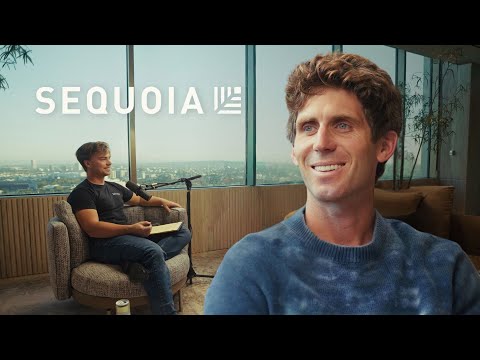
Why Elon Outcompetes Everyone | Shaun Maguire, Sequoia
Why Elon Outcompetes Everyone | Shaun Maguire, Sequoia
Summary
Shaun Maguire, Partner at Sequoia Capital, provides a deep dive into what makes Elon Musk uniquely successful, drawing on his proximity to Elon’s inner circle and his own background in mathematics and physics. The conversation explores the concept of “Elon the Collective” - the roughly 20 people who have built deep trust with Elon over a decade and can execute his will autonomously with precision.
Shaun introduces a fascinating framework for understanding talent: the “15 levels of mathematicians” - distinct tiers of ability that can only be perceived by looking down from above, not up from below. He applies this to how he assesses founders, emphasizing the importance of calibrating one’s sense of true tail outliers. The interview covers Shaun’s unique path from math PhD programs to physics to becoming a competitive CS:GO player, his time at The Boring Company, and his insights on why people consistently underestimate both Elon and Jensen Huang.
Highlights
”Elon the Collective”
Clip command
yt-dlp --download-sections "*4:01-5:00" "https://www.youtube.com/watch?v=62X1vm3QBuE" --force-keyframes-at-cuts --merge-output-format mp4 -o "62X1vm3QBuE-4m01s.mp4"“There’s Elon the Collective, which is probably about 20 people. They’ve been working with him for a very long time. They’ve built unbelievable amounts of trust. They can almost read his mind and they know what he would want to have done in some situation and then they also know when they need to escalate a question to him.” — Shaun Maguire, 4:01
”Bourbaki - The Math Collective”
Clip command
yt-dlp --download-sections "*1:15-2:10" "https://www.youtube.com/watch?v=62X1vm3QBuE" --force-keyframes-at-cuts --merge-output-format mp4 -o "62X1vm3QBuE-1m15s.mp4"“Bourbaki was a French math collective. This new mathematician burst onto the scene and started solving a bunch of unsolved problems in mathematics and the math community was like who is Bourbaki? And it turns out Bourbaki wasn’t one person. Bourbaki was a collection of a bunch of very very talented young French mathematicians.” — Shaun Maguire, 1:15
”You’re Going to Do Mechanical Engineering”
Clip command
yt-dlp --download-sections "*5:30-6:40" "https://www.youtube.com/watch?v=62X1vm3QBuE" --force-keyframes-at-cuts --merge-output-format mp4 -o "62X1vm3QBuE-5m30s.mp4"“Elon told him ‘You’re not going to do business development. You’re going to do mechanical engineering.’ The person studied economics. And they rose up to be a very senior engineer. He could just tell they had an engineering mind.” — Shaun Maguire, 5:52
”Rope to Hang Themselves”
Clip command
yt-dlp --download-sections "*6:30-7:30" "https://www.youtube.com/watch?v=62X1vm3QBuE" --force-keyframes-at-cuts --merge-output-format mp4 -o "62X1vm3QBuE-6m30s.mp4"“If you actually perform, you will rise up really really quickly. But if you screw up once, you’re basically out. When you do this over 10 years… you build incredible loyalty with the most capable, competent people. You basically give them more than they could get anywhere.” — Shaun Maguire, 6:30
”15 Levels of Mathematicians”
Clip command
yt-dlp --download-sections "*15:40-16:50" "https://www.youtube.com/watch?v=62X1vm3QBuE" --force-keyframes-at-cuts --merge-output-format mp4 -o "62X1vm3QBuE-15m40s.mp4"“In mathematics, there are something like 15 distinct levels beyond just being incredibly good at mathematics. People can look down with precision - you can see the tiers below you with precision. But it’s not obvious at all from below.” — Shaun Maguire, 15:40
”800 Math SAT is a Joke”
Clip command
yt-dlp --download-sections "*19:49-20:50" "https://www.youtube.com/watch?v=62X1vm3QBuE" --force-keyframes-at-cuts --merge-output-format mp4 -o "62X1vm3QBuE-19m49s.mp4"“For every one of these people, they get an 800 on the math SAT without even trying. These people are just born and 800 math SAT is a joke. The typical high school teacher that teaches math can’t tell the difference between any of these levels.” — Shaun Maguire, 19:49
”Magnus Carlsen Drunk and Blindfolded”
Clip command
yt-dlp --download-sections "*21:15-22:20" "https://www.youtube.com/watch?v=62X1vm3QBuE" --force-keyframes-at-cuts --merge-output-format mp4 -o "62X1vm3QBuE-21m15s.mp4"“If you have a 2850 rated player play a 2700 rated player, they’re going to absolutely crush them 99% of the time. This is where you get the video of Magnus Carlsen drunk beating someone at 2500-2600. He can play 10 of them simultaneously with a blindfold while drunk.” — Shaun Maguire, 21:15
”Published a Paper with Juan”
Clip command
yt-dlp --download-sections "*27:25-29:00" "https://www.youtube.com/watch?v=62X1vm3QBuE" --force-keyframes-at-cuts --merge-output-format mp4 -o "62X1vm3QBuE-27m25s.mp4"“The founder had written a paper as an undergrad with Juan Maldacena, one of the most famous string theorists in the world. For me, that anecdote alone was like okay this guy is incredibly talented. Writing a paper with Juan as an undergrad means he has a minimum 2600 rated technical ability. Very few VCs would have picked up on that signal.” — Shaun Maguire, 27:25
Key Points
-
Elon the Collective (0:30) - Beyond Elon the individual is “Elon the Collective” - about 20 people who have worked with him for over a decade, built unbelievable trust, and can execute his will autonomously with force, scale, and precision
-
Bourbaki Analogy (1:15) - Elon operates like the French math collective Bourbaki - multiple talented people working together under one name; this is why he can run multiple companies
-
France’s Math Dominance (2:18) - 25% of Fields medalists in the last 25 years were trained in France; French mathematicians have unusual “pizzazz” and competitiveness
-
Elon’s Talent Assessment (5:52) - Elon once told an economics major interviewing for business development that he’d do mechanical engineering instead because Elon could tell he had an engineering mind; the person became a senior engineer
-
Rope to Hang Themselves (6:30) - Elon gives people the opportunity to rise rapidly if they perform, but if they screw up once, they’re out; this builds incredible loyalty with the most capable people
-
Execution Speed (8:11) - Shaun tried to keep up with Elon for a couple days and literally couldn’t physically maintain the pace; Elon works essentially whenever he’s awake
-
Mr. Beast Comparison (5:00) - Mr. Beast is one of the few other people who has replicated Elon’s model of cloning himself and having lieutenants clone themselves
-
15 Levels of Mathematicians (15:40) - There are approximately 15 distinct levels of mathematical ability beyond “incredibly good,” from once-a-century mathematicians down to getting an 800 on math SAT
-
One-Way Visibility (16:15) - Higher levels can easily distinguish all levels below, but lower levels cannot distinguish levels above - a 1000-rated chess player can’t tell the difference between 2200 and 2600 rated games
-
Clay Math Institute Summer (9:46) - Shaun spent a month in Brazil at an elite math program with future Fields medalists, giving him calibration for true tail outlier ability
-
DRW Algorithmic Trading (12:51) - Worked with math legends like Eufiao at DRW; the intern class included people who would break the Putnam competition
-
Assessing Founders (25:52) - First question is figuring out what properties actually matter for a specific company; intelligence doesn’t matter for all businesses
-
Factory Investment (27:43) - Invested $1M for 20% in Factory based on a cold email mentioning the founder published a paper with Juan Maldacena as an undergrad - a signal most VCs would miss
-
Starting the Next Bell Labs (29:31) - If given $10B to create modern Bell Labs, would call friend Casey Handmer who has thought deeply about this
-
SpaceX 2019 Investment Difficulty (32:43) - Why it was extremely hard to invest in SpaceX back in 2019 despite the obvious opportunity
-
Working at The Boring Company (36:26) - Shaun’s direct experience working at one of Elon’s companies and what he learned
-
What Elon Looks for in Capital Partners (42:36) - The criteria Elon uses when choosing who to take money from
-
Why People Underestimate Boring Company (44:43) - The Boring Company is more strategically important than most realize
-
Stepping into the Fire (51:37) - The importance of embracing difficulty and challenge rather than avoiding it
-
Playing CS:GO Competitively (56:00) - Shaun’s competitive gaming experience and what it taught him about skill assessment
-
Dropping Out of High School (1:03:56) - Shaun’s unconventional educational path and how it shaped his perspective
-
Getting Renamed in 7th Grade (1:07:20) - A formative personal experience that influenced his worldview
-
Lord of the Flies (1:14:02) - Reflections on human nature and organizational dynamics
-
Gwynne Shotwell and Steve Davis (1:21:23) - How key lieutenants like Gwynne Shotwell work with Elon - they know when to act autonomously and when to escalate
-
Elon as Capital Allocator (1:25:07) - Why Elon is one of the greatest capital allocators of all time
-
Underestimating Jensen Huang (1:30:59) - People consistently underestimate Jensen just as they underestimate Elon; both have similar relentless execution
Mentions
Companies
- Sequoia Capital (0:18) - Where Shaun is a partner
- SpaceX (1:05) - One of Elon’s companies; Sequoia made big investment
- Tesla - Elon’s electric vehicle company
- The Boring Company (36:26) - Where Shaun worked; more strategically important than people realize
- Neuralink - Elon’s brain-computer interface company
- xAI - Elon’s AI company
- DRW (12:51) - Top algorithmic trading group where Shaun interned
- Factory (27:43) - AI cogen company; Shaun was first investor at $1M for 20%
- Google (26:17) - Successful because founders were geniuses and engineering team was one of the best
- Facebook (26:39) - Same pattern as Google with excellent engineering
- Stripe (26:44) - Strong early engineering team
- NVIDIA (1:30:59) - Jensen Huang’s company; consistently underestimated
Products & Technologies
- Starship - SpaceX’s next-generation launch vehicle
- CS:GO (56:00) - Counter-Strike: Global Offensive; Shaun played competitively
- Starcraft 2 (24:56) - Shaun’s brother is top 1-2 in world in similar games
- Chess Rating System (21:15) - Used as analogy for understanding skill tiers
- Putnam Competition (13:09) - Elite college math competition
People
- Elon Musk (0:30) - Main subject of discussion; one of most talented humans of all time
- Gwynne Shotwell (1:21:23) - SpaceX President; key member of Elon’s inner circle
- Steve Davis - Another key Elon lieutenant
- Nicolas Bourbaki (1:15) - Pseudonym for French math collective that solved unsolved problems
- Cedric Villani (2:49) - French Fields medalist known for wearing tuxedos with bedazzled spiders
- Stanislav Smirnov (10:04) - Won Fields Medal summer of 2010; Shaun interacted with him
- Hugo Duminil-Copin (10:15) - French PhD student who later won Fields Medal; considered best PhD student at the time
- Wendelin Werner (9:58) - Fields medalist at the summer program
- Nikolai Makarov (9:23) - Shaun’s PhD adviser, incredibly talented mathematician
- Eufiao (Yufei Zhao) (13:09) - MIT legend, three-time Putnam fellow, now tenured MIT math professor; “broke” the Putnam
- Terry Tao (17:29) - Example of “once in a decade” level mathematician
- Kip Thorne (14:51) - Nobel Prize winner in physics; Shaun knew him before the prize
- Magnus Carlsen (21:29) - World chess champion; can beat grandmasters drunk and blindfolded
- Alex Alekhine (22:18) - Former world chess champion; Shaun’s great-grandfather beat him
- Juan Maldacena (28:03) - Famous string theorist; Factory founder published paper with him as undergrad
- Matan Grinberg (29:09) - Factory founder; combined strong technical ability with charisma
- Mr. Beast (5:00) - One of few who has replicated Elon’s model of cloning lieutenants
- Casey Handmer (29:28) - Friend who has thought deeply about creating modern Bell Labs
- Jensen Huang (1:30:59) - NVIDIA CEO; consistently underestimated like Elon
Surprising Quotes
“There’s Elon the individual, which I would never want to underestimate. But there’s also Elon the collective, which is really like 20 people or so that have been working with him for a very long time. They’ve built unbelievable amounts of trust. They execute his will autonomously and just with like force and scale and precision.” — 0:02
“He just works when he’s awake. I’ve tried to keep up with him a couple days and I’m a pretty fit guy. I literally can’t keep up with him physically.” — 3:45
“Elon told him ‘You’re not going to do business development. You’re going to do mechanical engineering.’ The person studied economics. And they rose up to be a very senior engineer. He could just tell they had an engineering mind.” — 5:52
“In mathematics, there are something like 15 distinct levels beyond just being incredibly good at mathematics. People can look down with precision, but from below it’s impossible to distinguish - a high school math teacher can’t tell the difference between any of these levels.” — 15:40
“For every one of these mathematicians, they get an 800 on the math SAT without even trying. These people are just born and 800 math SAT is a joke.” — 20:06
Transcript
0:02 There’s Elon the individual, which I would never want to underestimate. But there’s also Elon the collective, which is really like 20 people or so that have been working with him for a very long time. They’ve built unbelievable amounts of trust. They execute his will autonomously and just with like force and scale and precision. Basically, all the other entrepreneurs I know in Silicon Valley, this is not how they operate.
0:28 Today, I have the pleasure of sitting down with Shaun Maguire. He is a partner here at Sequoia. I would like to start off with you’ve had the opportunity to kind of be close to Elon and see how he operates. And I think a lot of people think to themselves like how does Elon do it? So, how does he do it?
0:50 I mean, look, there’s people that are a lot closer to him than me. But I’ve been lucky to be close to a lot of people that are second degree. And there’s a lot of things I’d say. So, one at Sequoia when we were doing one of our big investments, some of my partners were like, “How can you possibly do multiple companies?” And I ended up writing this kind of internal letter where I drew an analogy to this kind of weird math collective called Bourbaki.
1:15 Have you ever heard of Nicolas Bourbaki? I have not. So I may have some of the details a little off but Bourbaki was a French math collective. So what happened is sometime in the 40s or 50s, this new mathematician burst onto the scenes and started solving a bunch of unsolved problems in mathematics and the math community was like who is Bourbaki, who is this person? And it turns out Bourbaki wasn’t one person. Bourbaki was a collection of a bunch of very very talented young French mathematicians.
2:03 First of all, people don’t quite understand that France has one of the best math communities in the world. Huge number of Fields medalists. I think something like 25% of the Fields medalists in the last 25 years were trained in France. That’s an insane stat and I think would surprise a lot of people. And so anyways, they have this really incredible math education and their mathematicians have a little more flare, a little more pizzazz than what we think of as mathematicians here.
2:37 They did this just kind of to mess with everyone and to have fun. Mathematicians with rizz. Quite literally mathematicians with rizz. And if you want to look, there’s a mathematician named Cedric Villani. He won the Fields Medal in like 2012. He always wears tuxedos with these crazy bedazzled spiders on them and these crazy bow ties. The French mathematicians have a lot of rizz, which is not what you’d expect.
3:07 There’s this French math collective that just kept solving these unsolved problems. And for me, I think of Elon similarly. There’s Elon the individual - one of the most talented humans of all time, a visionary who works harder than I can even imagine. He works 16 hour days, 7 days a week. He just works when he’s awake. And I think maybe even sometimes when he’s sleeping. I’ve tried to keep up with him a couple days and I’m a pretty fit guy. I literally can’t keep up with him physically.
4:01 But I view Elon as almost like there’s a second thing. There’s Elon the Collective, which is probably about 20 people. I’m not going to name any of them. There’s roughly 20 people that have been working with him for a very long time. They’ve built unbelievable amounts of trust. They can almost read his mind and they know what he would want to have done in some situation and then they also know when they need to escalate a question to him.
4:33 You can’t build this quickly. It takes like a decade to really trust someone and to test the limits of what they can do. And test that they can do things at the highest possible level and almost be a proxy for you. And I’ve actually never seen another entrepreneur that has done this the way that Elon has.
5:00 I’m kind of thinking of Mr. Beast as the only person that I’ve ever heard of. He basically tried to clone himself and then he tried to have his top lieutenants also clone themselves out of three or four people each. I know a little bit about Mr. Beast the way he operates. I think that’s a good analogy. But for basically all the other entrepreneurs I know in Silicon Valley this is not how they operate and it’s really a superpower for Elon. It’s not easy to replicate.
5:30 First of all Elon is just one of the best judges of talent on the planet. There’s a very senior person that works for him who studied economics in college and they went in for a final interview with Elon and he said you’re not going to do business development, you’re going to do mechanical engineering because he could just tell they were a very good engineer. They literally studied economics. And the person rose up to be a very senior engineer.
6:06 This is the type of thing that you can’t fake. That is such a superpower to be able to meet some young kid straight out of college who studied economics and be like actually you have an engineering mind. You’re not doing business development. You’re going to be a mechie. He’s an incredible read of talent and he gives people the rope to hang themselves.
6:30 What this means is that if you actually perform, you will rise up really really quickly. But if you screw up once, you’re basically out. And when you do this over 10 years and you just keep letting people rise up way more quickly than they could in almost any other organization, you build incredible loyalty with the most capable, competent people. You basically give them more than they could get anywhere.
7:05 You also turn out a lot of people because turns out most people are not very competent. Most people are not very loyal. I’m a believer that it’s the top 1% in the organization that are the most important and are the ones that really drive things and those are the people that you want to stick around for a long time and really learn where all the knobs and levers are in an organization.
7:50 There’s Elon the individual, which I would never want to underestimate or be enemy with because he’s a very competent enemy. But there’s also Elon the collective, which is really like 20 people or so that can execute his will autonomously. And just with force and scale and precision. People don’t have intuition for what 20 people that are aligned can do.
8:15 I imagine that execution ability and speed is critically important. And I also think your bar has probably shifted over the past 15 years for what great looks like. Yes, my bar has shifted a lot. I would say one of my superpowers is I’ve been lucky in my life because I have spent time in a lot of communities. I have seen truly the best people in the world in many different fields.
9:00 In 2010, I spent time doing a math PhD. I ended up finishing my PhD in physics, but for a while I was doing math and I had a PhD adviser named Nikolai Makarov, an incredibly talented mathematician, and one of his students had won a Fields medal that summer - Stanislav Smirnov. I did this really advanced math summer program called the Clay Math Institute summer school which that summer was in probability and statistical physics in two dimensions.
9:46 The summer school was in Buzios, Brazil for a month. It was about 100 people - 30 professors, 30 postdocs, 30 grad students. And it was unbelievably high level. Out of the 100 people there, there were a couple Fields medalists like Wendelin Werner. And then there was one person who got a Fields medal that summer, Stanislav Smirnov. And there was one PhD student from France named Hugo Duminil-Copin who ended up getting the Fields Medal 8 years later.
10:32 We were all living in one hotel and we were together all day every day. The grad students would spend a lot of time together and we were all competing - the American kids were competing against the French kids. The French, it’s really hard to explain how tight-knit their math community is because they pretty much all go to two universities like ENS and Polytechnique for their undergrad equivalent.
11:09 The French were psychotically competitive and they would always want to play against everyone else. We would play volleyball a lot of times and the French kids were just not what Americans would think of as math people. Would it be more like the Greeks where you were both fit and also highly intellectual? They were fit and highly intellectual. The Russian mathematicians were fit and intellectual too. The American ones were not as intellectual.
12:51 I got to interact pretty closely with two people that went on to win Fields medals. This gave me grounding in what is true tail outlier mathematician ability. I also worked in an algorithmic trading group at DRW which was probably the top algo group at the time. The intern class in the algo group - there were five of us and all five were really smart.
13:09 One of the five was this guy Eufiao. He was a legend at MIT - a three-time Putnam fellow and a three-time IMO gold medalist. He became a tenured math professor at MIT doing combinatorics. He kind of broke the Putnam because he’s such a good teacher and knows competition so well that before him it would be equally likely to be Harvard or MIT that won any year. After Eufiao, MIT just won every single time.
14:30 Having this calibration where I’ve gotten to spend meaningful intellectual time with the absolute tail outlier people has given me this calibration on true tail outliers. I also started my PhD in AI in the stats department at Stanford. This is before deep learning, when it was statistical learning. And I got to see a lot of the early really good AI people. I then did it in physics and I knew a couple Nobel Prize winners before they became Nobel Prize winners like Kip Thorne.
15:40 I now think of people in intellectual fields in levels. In mathematics, I think that there’s something like 15 distinct levels beyond just being incredibly good at mathematics. There’s this one-way feature where people can look down - you can see the tiers below you with precision. It’s a very clear differentiation. But it’s not obvious at all from below. Once someone is three tiers better than you, you can tell they’re better, but placing someone three tiers versus six tiers is very hard.
16:40 In mathematics you have the once in a century mathematician. This is someone that is better at math in basically every sub-field than everyone else. Even for Fields medal level people, they can go see someone else’s research problem and within a few weeks they’re ahead of them in the area. This only happens about once a century.
17:12 Then you have the once a decade person. A once a decade person will be guaranteed to win a Fields medal because over the course of their life they’ll do like five to ten things that are worthy of a Fields medal. Someone like Terry Tao is one of those names. You can often tell looking forwards if you are on a very high level.
17:48 Then you have the typical Fields medalist who’s incredibly good and does two or three things in their life that might be worthy of it. Then you have the person that just gets tenure at a top five math research university at a young age without getting a Fields medal - someone like Eufiao. Then easily getting tenure at a top 20, then a top 50.
19:00 Then there’s a branching - maybe someone decides to be a math professor at a top 50 university or join a hedge fund. The median Harvard or MIT or Princeton math PhD. Then someone that easily gets a math PhD from a top 20, then top 50. Then trivially gets a math major from top 5 undergrad, then top 20. Every one of these is a distinct level.
19:49 Looking down, it’s pretty easy to place almost exactly where someone is within one or two tiers, within 30 minutes of talking to another mathematician. For every one of these people, they get an 800 on the math SAT without even trying. These people are just born and 800 math SAT is a joke. The typical high school teacher that teaches math can’t tell the difference between any of these levels. Anyone that gets an 800 on the math SAT, they’re all lumped into the same category.
20:42 Having the ability to tease out with high fidelity ahead of time, before the accolades have caught up, where people are going to go - that is an absolute superpower. You only develop it by seeing the absolute most extreme tails and having some talent yourself. I think you can only look a few levels ahead of yourself with precision.
21:15 I think about this in terms of the chess rating scale. The best players in the world are around 2850-2870 - Magnus Carlsen and these guys. 2500 is where you can start to be a grandmaster. If you have a 2850 rated player play a 2700 rated player, they’re going to absolutely crush them 99% of the time or more. This is where you get the video of Magnus Carlsen drunk beating someone else at 2500-2600. He can play 10 of them simultaneously with a blindfold while drunk.
22:18 I don’t play chess but I’m very proud that I have a great-grandfather that beat Alex Alekhine who was the world champion when my great-grandfather beat him. The game is on chessgames.com. He also beat the US champion. I was forbidden from playing chess as a kid because my grandfather felt like he lost his father to chess.
23:03 If you have a 1000 rated player randomly see games of 1400, 1800, 2200, and 2600 rated players and they have to place which game is which - it’s random. They have basically no ability to know which game is which. If you do it the other way, if you have a 2800 rated player see these games, they can tell you in 10 moves or with unbelievable accuracy.
23:40 This for me is very important as an investor where my core job is assessing people and talent, especially at the earliest stages. Understanding the level of talent is a mental model I developed. My first question when I meet a founder is to try to understand what skills matter for this company.
24:05 There’s a lot of companies where intelligence doesn’t matter at all. If it’s a simple product to build or a mafia-driven trash company then no, intelligence doesn’t matter. So the first question is figure out what properties actually matter and then from there try to figure out where is this person on the scale for the most important traits - whether it’s sales ability, raw mathematics ability for AI research companies, or pure pain tolerance.
24:56 My little brother is top one or two in multiple Starcraft 2-esque games in the world. It’s funny to watch him analyze other people because he can pin someone within 30 or 50 points on a 3000 rating scale every single game that he sees. Give him 5 minutes and he’ll have it down to within 30. From a static snapshot he can know this high-rated player would put certain units here.
26:10 Even just for assessing the quality of engineering teams - almost every tech company the quality of engineering team matters. A big part of why Google was so successful is purely that the founders were geniuses and their engineering team was one of the best of all time early on. The same is true for Facebook, Stripe in the early days, and a lot of companies.
27:25 I was the first investor in a company called Factory, an AI cogen company. I got really good terms - $1 million for 20% because the founder cold emailed. He was doing his PhD at Berkeley before the current AI mania. The founder had written a paper as an undergrad with a guy named Juan Maldacena, one of the most famous string theorists in the world.
28:03 For me, that anecdote alone was like okay this guy is incredibly talented. Knowing what signals to pick up on - writing a paper with Juan as an undergrad means he has a minimum 2600 rated technical ability. Very few VCs would have known just from a cold email where he said “I published a paper with Juan” - they wouldn’t be able to pick up on that signal.
28:55 The meta that he had the rizz to just say “published a paper with Juan,” not “Juan Maldacena” - I loved that. I thought that was the good meta game. This founder has really good sales ability too. That’s the magic - he had very strong technical ability and incredible charisma and empathy. His name is Matan Grinberg.
29:31 Hypothetical: if you’re stripped of all credentials, achievements, cash, network, and given $10 billion, tasked with creating the modern Bell Labs - what do you do? I call up my friend Casey Handmer who has thought deeply about this.
1:21:23 People like Gwynne Shotwell know exactly what Elon would want. They know when to act autonomously and when to escalate. Building that level of trust takes a decade of working together, testing limits, proving capability. Most entrepreneurs never develop this kind of extension of themselves.
1:25:07 Elon is one of the greatest capital allocators of all time. He takes billions and deploys it into hard problems - rockets, cars, tunnels, AI, brain interfaces - and actually executes at a level that delivers returns. Most people with that much capital just become conservative with it.
1:30:59 People consistently underestimate Jensen Huang the same way they underestimate Elon. Both have this relentless execution capability. People keep thinking NVIDIA can’t sustain their lead and Jensen keeps proving them wrong. The same pattern plays out with both of them - constant underestimation followed by overdelivery.