Manufacturing 1 million drones a year | Soren Monroe-Anderson, Neros
Manufacturing 1 million drones a year | Soren Monroe-Anderson, Neros
Summary
Soren Monroe-Anderson, co-founder and CEO of Neros, returns for his second interview with Ti Morse to discuss the company’s explosive growth from a garage operation to a 250,000 square foot factory capable of producing one million drones per year. Monroe-Anderson, who comes from a drone racing background, describes how Neros built up a competency in military-grade FPV drones by studying the Russia-Ukraine conflict and delivering thousands of drones to the front lines. The company has now defeated every jammer the US military has put them up against on first pass, fundamentally challenging assumptions about drone defense.
The conversation dives deep into the realities of scaling drone production in America, including the critical challenge of creating a fully China-free supply chain. Monroe-Anderson explains the layers of supply chain independence — from removing Chinese critical components to eventually domestic component manufacturing — and why Neros views itself as building not just a drone company but a drone industrial base that can supply other manufacturers. He draws parallels to SpaceX’s production ramp and the Starlink manufacturing model, while noting that drone manufacturing requires a fundamentally different approach than traditional defense procurement.
Monroe-Anderson opens up about the personal toll of building a defense startup, including a kidney issue exacerbated by constant sprinting, and the difficult decision to build lethal systems. He makes a passionate case for why America needs to urgently solve its manufacturing deficit, warning that there is a limited time window of a few years to establish serious domestic production capability before adversaries gain an insurmountable lead. The interview closes with his surprisingly measured take on AI in warfare — arguing that human pilots remain superior in most combat scenarios and that the future is about giving leverage to skilled operators rather than replacing them entirely.
Highlights
”We’ve Defeated Every Single Jammer”
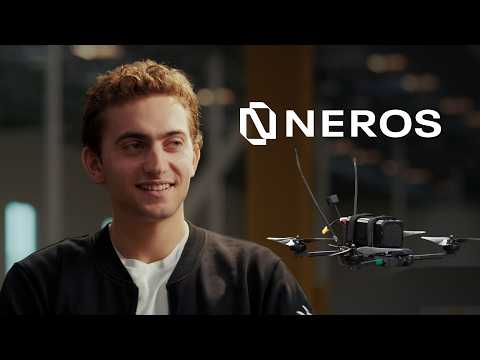
“We’ve done this a bunch of times with the US military. Um, yeah, we’ve defeated on on first pass we’ve defeated every single jammer that the US military has put us up against, so we pass through all the jamming.” — Soren Monroe-Anderson, 51:07
Clip command
yt-dlp --download-sections "*51:07-52:30" "https://www.youtube.com/watch?v=3CEinhANrdg" --force-keyframes-at-cuts --merge-output-format mp4 -o "neros-defeated-every-jammer.mp4"”We Strapped a Jar of Salsa to a Drone”
“Um and we expected this so we kind of played a bit of a prank on the soldiers. We strapped a jar of salsa to a drone.” — Soren Monroe-Anderson, 52:50
Clip command
yt-dlp --download-sections "*52:50-54:10" "https://www.youtube.com/watch?v=3CEinhANrdg" --force-keyframes-at-cuts --merge-output-format mp4 -o "neros-salsa-drone-prank.mp4"”Are We Going Fast Enough?”
“I think just are we going fast enough? Because I think we have a really limited time window to do this. You know, it’s impossible to say, but I believe that in the next few years, if we don’t have some serious production capability…” — Soren Monroe-Anderson, 1:27:09
Clip command
yt-dlp --download-sections "*1:27:09-1:28:30" "https://www.youtube.com/watch?v=3CEinhANrdg" --force-keyframes-at-cuts --merge-output-format mp4 -o "neros-going-fast-enough.mp4"”Sent 6,000 Drones to Ukraine in 2025”
“In 2025 we sent over 6,000 drones to Ukraine. Um, so that was… from that we’ve gotten to work with a lot of different units and operations.” — Soren Monroe-Anderson, 1:06:00
Clip command
yt-dlp --download-sections "*1:06:00-1:07:00" "https://www.youtube.com/watch?v=3CEinhANrdg" --force-keyframes-at-cuts --merge-output-format mp4 -o "neros-6000-drones-ukraine.mp4"”It’s a Mind Virus to Not Be Pro-America”
“Dangerous. It’s a mind virus. It’s it’s not correct. Um, and that that’s an unfortunate reality that a not small enough portion of the population has.” — Soren Monroe-Anderson, 1:31:59
Clip command
yt-dlp --download-sections "*1:31:59-1:33:00" "https://www.youtube.com/watch?v=3CEinhANrdg" --force-keyframes-at-cuts --merge-output-format mp4 -o "neros-mind-virus-pro-america.mp4"”No AI Model is Better Than a Human Pilot”
“Right now, there’s no AI model that is better than a human pilot in- in basically every circumstance.” — Soren Monroe-Anderson, 1:37:55
Clip command
yt-dlp --download-sections "*1:37:55-1:39:00" "https://www.youtube.com/watch?v=3CEinhANrdg" --force-keyframes-at-cuts --merge-output-format mp4 -o "neros-no-ai-better-than-pilot.mp4"Key Points
- New 250K square foot factory (1:15) - Neros moved into a massive new facility to scale from their previous smaller factory, targeting 1M drones/year peak capacity
- Russia-Ukraine war evolution (5:26) - The conflict rapidly validated small quadcopter warfare; Neros built competency by watching Ukrainians and racing to deliver
- Learning from Starlink production (9:00) - Monroe-Anderson studied SpaceX’s Starlink ramp as a model for high-rate drone manufacturing
- Building military-spec drones (12:47) - Neros invested heavily in jamming-resistant radios and superior flight performance
- Prototypes vs production product (15:38) - The frustration of shipping “obsolete” products while better designs sit in development
- Creating a fully China-free drone (17:44) - Removing Chinese critical components is the most important supply chain milestone, though full domestic isn’t always necessary
- Production hell is actually supply chain hell (26:05) - The biggest production scaling moments have been supply chain failures, not factory issues
- Timelines and urgency (28:43) - Only make commitments you can keep; Neros avoids overpromising because burned bridges destroy trust
- Flyoff mode and PBAS (35:08) - Neros won the Army’s PBAS program fly-off competition, proving their drones in direct comparison
- Shifting from building drones to company building (41:24) - Monroe-Anderson can no longer build drones himself; his job shifted to leadership hiring and strategy
- Recruiting as biggest execution blocker (45:26) - Not leaning forward enough on hiring was the biggest constraint; they now look for proof of work over logos
- Defeating every US military jammer (51:07) - On first pass, Neros drones have defeated every jammer the US military has tested them against
- Salsa jar drone prank (52:50) - To demonstrate jamming defeat, they strapped a jar of salsa to a drone and flew it past soldiers’ defenses
- Kidney health scare (1:00:25) - Monroe-Anderson had a serious kidney issue from constant sprinting; learned the importance of health
- 6,000 drones sent to Ukraine in 2025 (1:06:00) - Neros shipped thousands of combat drones to Ukraine, getting real battlefield feedback
- Archer Fiber development (1:16:08) - Fiber optic drone control has been one of the biggest FPV step changes, making drones unjammable
- Lifting up the entire drone industrial base (1:18:10) - Neros wants to supply components to other drone OEMs, building a US-based drone supply chain
- Limited time window for American manufacturing (1:27:09) - A few years to establish serious production capability before adversaries have insurmountable lead
- Choosing to work on lethal systems (1:29:34) - A significant personal decision; Monroe-Anderson believes it’s critical for American defense
- AI vs human pilots in warfare (1:37:55) - No AI model currently beats a human pilot; the future is augmenting human operators, not replacing them
Mentions
Companies
- Neros (0:44) - Monroe-Anderson’s drone company, scaling to 1M drones/year production capacity
- SpaceX (9:00) - Referenced for Starlink production ramp as model for high-rate manufacturing
- Tesla (18:43) - Referenced as example of deep supply chain integration (building lithium plants)
- DJI (25:02) - Chinese drone manufacturer; China produces millions of drones per year through companies like DJI
Products & Technologies
- FPV drones (0:00) - First-person-view drones used in combat, Neros’s core product
- Archer Fiber (1:16:08) - Fiber optic drone control system, one of the biggest recent step changes in FPV technology
- PBAS (35:08) - Army program that Neros won through a fly-off competition
- Starlink (9:00) - SpaceX’s satellite constellation, used as production scaling model
People
- Soren Monroe-Anderson (0:44) - Co-founder and CEO of Neros, former drone racer
- Olaf (50:30) - Neros co-founder, referenced in context of drone jamming demonstrations
- Elon Musk (31:37) - Referenced for timeline management philosophy and SpaceX production approach
- Mark Zuckerberg (40:56) - Referenced as example of founder transition from building product to company building
Surprising Quotes
“On first pass we’ve defeated every single jammer that the US military has put us up against, so we pass through all the jamming.” — Soren Monroe-Anderson, 51:07
“We strapped a jar of salsa to a drone. We expected this so we kind of played a bit of a prank on the soldiers.” — Soren Monroe-Anderson, 52:50
“There’s basically no opportunity in the day for me to build drones anymore. Like, that wouldn’t make sense.” — Soren Monroe-Anderson, 41:24
“I think just are we going fast enough? Because I think we have a really limited time window to do this.” — Soren Monroe-Anderson, 1:27:09
“Right now, there’s no AI model that is better than a human pilot in basically every circumstance.” — Soren Monroe-Anderson, 1:37:55
Transcript
Soren Monroe-Anderson: 0:00 On first pass we’ve defeated every single jammer that the US military has put us up against, so we played a bit of a prank on the soldiers. They knew our frequencies we were operating on, we’d already done a bunch of testing runs and they collected data. We flew seven kilometers over to the jammer and then just hovered in front of them for like 10 minutes. After 10 minutes with five jammers going at once, they got to taking out one of our control links, we have two. And we asked them on the radio like ‘hey can you guys see the payload?’ and they’re like ‘yep, we see you have a payload’ and we’re like ‘no, can you see what the payload is?’ we strapped a jar of Smucker’s strawberry jam to our drone as the payload and then the soldier saw the Smucker’s jam, the jammer has been defeated by the jam. In a real-world scenario we would just have come in and hit the target.
Ti Morse: 0:44 Today I have the pleasure of sitting down with Soren Monroe-Anderson, the co-founder and CEO of Neuros. Neuros is, I think, today the biggest FPV drone maker in America. When I interviewed you last, I think you were just moving into your old warehouse, which has like a max capacity of 10, 20, 30,000 drones a year, and we are now in your new 250,000 square foot warehouse with a max capacity of a million drones per year. Do you want to just start with like what was the ramp like at that old warehouse and what are you going to be able to do here?
Soren Monroe-Anderson: 1:15 Yeah, so we moved into our old facility in March of 2024. We’d been in a very small garage before that. We had built like a couple hundred drones out of that little garage, but we knew ramping production capacity was kind of the number one goal of the company at that point. And we wanted to be able to, we didn’t have the orders for lots of drones, but we wanted to be able to say like, ‘Look, we can do it.’ It took us about six months after moving into that facility to really have like a real assembly line going that we could kind of credibly say like, ‘Give us the order, we’ll start delivering.’ But it wasn’t until early 2025 that we were really shipping more than a few hundred drones per month. So it’s honestly been a really fast ramp up over the last 12 months, and also just to fill that facility, not just from the production side, but the team size. You know, we were, Neuros was 16 people when 2025 started, and we are currently about 125, and I’d guess that number’s going to be even higher just by the time this interview comes out. We’re growing the team very rapidly.
Ti Morse: 2:28 Almost 10x a year.
Soren Monroe-Anderson: 2:30 At this rate, yeah. So, you know, we thought, we only had like a, I think, three-year lease on the old building, so it’s not like we were planning to be in there for a really long time, but we did, you know, we’ve really pushed the old facility to its limits now with both production and engineering. And so when we were, we started looking for a new building actually almost a year ago now because we were very… picky on certain things. So we wanted to start the process early and we went through a few different phases of like what size of building we were going to get and, you know, we ended up landing on this 250,000 because we over the past 12 months have really oriented the company around being the first American drone company that can build a million drones per year. So we wanted to spec a facility that could support that goal and not just assembly and test, but component manufacturing. We’ve been with our current production running into limitations on what we can get from suppliers outside of China and we’ve sort of known for a long time that to do what we want to do eventually, it will really involve vertical integration. But with the demand signal we’re seeing right now from the US government and from our allied partners and just the, honestly, just the direction that the world is going and how important FPV systems are, building massive sovereign capacity is really our number one mandate. So we wanted to find a size facility that could support the long-term growth of the company, not be another, you know, two, three year stepping stone, be something that we can actually build into the global headquarters of Nearos. You know, it’ll be a lot of construction even to just get the like office space that we need in here. And then, you know, an empty building doesn’t equal a million drones per year. There’s huge CapEx investments and build out and just great, you know, engineering that needs to be done to, to actually turn this into a factory. So it’s, you know, we haven’t done the thing, but we’ve, we’ve bought ourselves a canvas to do the thing.
Ti Morse: 4:52 Basically have all the paints and the canvas ready to go and now you just got to go paint something.
Soren Monroe-Anderson: 4:57 Yeah, I’d say the paint is still, you know, some of that’s still lacking with talent that we need to hire. Um, you know, we have an amazing team and we have the right building blocks, but we gotta get a lot more great people in to, to be able to do to do this.
Ti Morse: 5:18 Very few people have kind of had a pulse like you have on how the Russia-Ukraine conflict has evolved. So do you want to just talk about what it was like going into early 2022 and how what’s happened over the past three and a half years?
Soren Monroe-Anderson: 5:26 Yeah, coming up on, I mean, basically four years now. Uh, yeah, you know, Nearos has not been around for, for all of that, but I’ve been closely tracking since the full-scale invasion started. And when it started, it was a very impactful moment for me and I’ve talked about this in the past, so I won’t go totally deep into that. But, um, I, it’s been very, very interesting to see how it’s made the world react to the technology that Nearos is building because, you know, we sort of had our own ideas even before the We saw the Ukrainians doing it, and before Neuros was a company, we had our own ideas of drone racing technology applied to defense applications and, you know, thought it could be meaningful, but couldn’t prove it really. And then the Ukrainians went and proved it. And then in 2023, when we were starting the company, we were just focused on building a better product for the Ukrainians that we were working with. And the excitement from the U.S. side was really limited. There was like, most most people in the Pentagon did not care about small quadcopters. Kind of understandably, because they had not been a meaningful capability increase, for the most part, from what they had seen. So focusing on Ukraine for the first, you know, 12 months of the company was, I think, the right decision because we ended up making a much more useful product out of that. And it’s still a really big focus of the company. But it’s been interesting to see that, you know, the mindset in America has totally flipped 180. Small drones are now a top priority from, you know, the senior leaders of the Pentagon and of the country.
Ti Morse: 7:20 Like a competency incredibly fast.
Soren Monroe-Anderson: 7:23 Exactly. We built up a competency, and then we were ready to deliver for these initial programs that the U.S. is spinning up. And now we are trying to build the capacity ahead of the government actually putting out contracts for, you know, millions of drones per year. There’s been some talk from the Pentagon and from the Army saying that they’re going to try to acquire a million drones over the next year or two. Nobody exists to deliver that right now. And I think, you know, that’s not going to happen on a one or two year timeline. I think two to three years, we’re going to start to be able to deliver that, and the country’s going to start to be able to deliver that. And we’re going to push to go as fast as possible. But it’s, you know, the government is trying to provide some amount of demand signal. Industry is responding. I would say we are out ahead in terms of FPV drone manufacturers, just in terms of our actual proven production scale. And now with this facility, again, it’s just a big empty box right now, but it will be the largest small drone factory in America. And yeah, it’s going to allow us to, the way we think about it is it’s going to allow us to create credible deterrents. I think under this scale, and without having the blueprint for factories like this, America does not have credible deterrents. And so that’s what we are trying to build, to put it most simply.
Ti Morse: 8:51 If there’s not a blueprint that exists on how to spin up some sort of supply chain and factory like you’re trying to do here, how are you kind of coming up with it?
Soren Monroe-Anderson: 9:00 that, you know, from first principles. There are things to look out outside of drones. So, um, I’ve given this example a few times but of course the SpaceX Starlink user terminal factory is a really great example. I mean, the best example of modern consumer electronics manufacturing in America. Incredibly high rate, actually a lot of similarities between the products in terms of, you know, the like core processes that make up the product and, you know, being a very electronics and RF heavy system and then you have sort of this more simple structure that your main electronics go into and basically the way you build Starlink user terminals and the way you build drones are not that far away from each other and SpaceX has been able to do that at the, you know, millions per year and the full assembled product in that vertically integrated factory is cheaper than what they could do in China, which is unbelievable. And that’s the bar, so…
Ti Morse: 10:05 And that’s like a first for America, right?
Soren Monroe-Anderson: 10:06 It’s a first for America in the last 10 years. We used to own a lot more manufacturing like that. And there’s still some companies, you know, really big CMs that operate in America, but now they also, you know, they operate in a ton of countries and most of them have pretty strong ties into China now. And it was like America taught China how to do all the stuff that they’re doing. Then China went and realized the advantage of that and made a concerted effort to be better at it and to scale it way beyond anybody else. So the things, like the limitations, you know, we run into is like electronics in America are so expensive and the lead time is much longer and the quality is much lower. And I believe SpaceX is the largest PCB manufacturer in America now. It’s not one of the, you know, large board houses because and there aren’t that many, it’s SpaceX. I’m pretty sure. So that’s sort of the blueprint. But a lot of what we need to do is look at China and understand how their drone factories are operating. A lot of this stuff is not wildly complex on its own, but building an entire factory that operates efficiently and then produces a high-performance system, that’s where the hard, that’s where the magic is. It’s the, like, tying the performance of the product in every single little design detail that goes into that back into something that is manufacturable and then iterating, being able to iterate quickly while producing at high volume. So that’s why it is such an advantage to own the factory and own the product is like there’s this iteration loop that you do not get with about that, and you need to have engineers who are responsible for, you know, their part being both performant and manufacturable and understanding the impacts to the customer when they change something, but also understanding the impacts to the line when they change something. So this is why at SpaceX, when an engineer is designing a part, they’re owning everything all the way through manufacturing, and that’s the same mindset that we take. It’s, you know, not just like the responsible engineering mindset, but having people who own the entire life cycle of the of the part design.
Ti Morse: 12:38 And for the evolution of your own technology over the past, you know, couple of years, what have been the biggest step function improvements in capability?
Soren Monroe-Anderson: 12:47 So we’ve spent a lot of time on radios and making jamming-resistant radios. So it’s one of the number one things that you deal with in FPV drones on the battlefield is electronic warfare. So we’ve gone through a ton of different iterations on that. We’ve made the efficiency of our drone really second to none. Like every size category that we have a drone in, I’ve never seen a more efficient drone.
Ti Morse: 13:22 How’d you do that?
Soren Monroe-Anderson: 13:23 We’re really good at flight performance, and we I think test in a very unique way. We’re super analytical in our testing. We care a lot about the performance of the system. So there’s a lot of drone companies and FPV companies that sort of either care about building components or care about building drones. They don’t a lot of them don’t really like build the most performant components to build the most performant drones. We do. And we try to make a very high performance integrated product because we own basically all the component design as well. And then there are, you know, we’ve heard very, very frequently from the actual end users that they really appreciate the way our drone flies, the amount of precision it gives them, and just how well it’s built. We’ve had units in Ukraine tell us that this is the first actual like military spec drone they’ve ever used. And they’ve used, you know, all the FPVs. So that’s pretty cool. And that’s been a good bit of work to get there. And in the past, you know, we’ve definitely shipped products that are not up to like the spec that I want for a for a military system. And even on the current product, there’s tons of stuff that needs to be improved, and we’re working on we’re working on new revisions of everything and a lot of new products right now. So over the next few months, there’ll be a lot of really cool stuff coming out and being visible publicly. That’s going to be pretty significant changes in the way our system can operate. excited about those as well. I can’t talk about most of the biggest step changes that we’ve had because a lot of those have been recent and not announced yet, but I’ll say that our sort of cohesiveness and performance of our entire system across the ground station to the drone and the way the operator interfaces with all that, um, it’s going to get a really big level up soon.
Ti Morse: 15:25 You’re scaling up production, but you also have to basically be improving the product as fast as possible. What’s going through your mind when you know something can be improved, but you also have to ship at the same time so you’ve got to make that trade-off?
Soren Monroe-Anderson: 15:38 Yeah, it’s honestly, it can be such a frustrating feeling to even see, you know, we have products that are awesome. We have like prototypes of them that we are flying internally, like we’re using every single day, but they’re not production products. There’s a huge difference between a prototype and a production product. And so there’s this like, you have to, you know, it’s a little frustrating to be like looking at this thing that’s so beautiful that you want all of your customers to have, but it’s like six months away even though it already exists. Um, because the time it takes to actually properly qualify something and move it into production, do your production validation builds, uh, and then actually start shipping it to the customer, there’s a decent lead time there. Um, and yeah, so it’s like we also try to measure how much we can show the new stuff to current customers because they get really excited and they want to buy it too quickly. And we’re like, hold on, you know, this isn’t a production product. Like if we try to ship this to you, we’ll have a lot of problems. It will be, you know, not very efficient for us because we’re doing these like small batches. So we kind of limit the exposure of the new stuff until it’s really ready. Uh, but it’s always a feeling of I wish this was, you know, I wish we could ship it right now.
Ti Morse: 16:54 Are you just basically like living I don’t know, six months or 12 months in the future and then you’re having to ship the 12 month, you know, 6-12 month old product simply because of that?
Soren Monroe-Anderson: 17:04 Most of the time, yes. Yeah, um, but this is, I mean, this is quite normal. I think it’s just like learning it, as we build up the sort of suite of products in the company and improve our, the way we design products and the way we validate products and move them over to production. So there’s a lot of like learning here, but, you know, many many companies deal with this. It’s just kind of funny to see it.
Ti Morse: 17:30 One of the things that you’re most focused on is you want to be like the first drone that is just fully made in America with all the components and like sub-assemblies and everything. Um, how close are you to that and like what are the key constraints to actually getting there?
Soren Monroe-Anderson: 17:44 I mean, if, it’s just about how far down the supply chain you go. Um, at, there’s just every level is hard work.
Ti Morse: 17:55 Do you want to talk about each of those levels?
Soren Monroe-Anderson: 17:58 Yeah, I mean, you know, we’ve gone to the biggest supply chain… supply chain hurdle we’ve had to clear so far is getting all of the quote critical components China-free. Um, and then we’ve gone beyond that definition as well. So we, you know, we go down to things like motors as well. Um, and then also we’ve gone down to the neodymium that goes into the magnets that goes into our motors. Uh, but that’s not work that we can always do directly. I mean most of it’s not, right? It’s actually just finding the right supplier and building a partnership with them, building a relationship with them. And so when I say it’s like just how far down the supply chain you go, you know, Neurus is not going to be the company that can solve like neodymium mining and refining in America, at least not for a long time. Um,
Ti Morse: 18:43 Not going to go full Tesla where you’re like building the lithium plant?
Soren Monroe-Anderson: 18:46 Not yet. Um, we can’t, you know, we we have to build high rate assembly and test, then we have to build high rate um, component manufacturing, then, you know, certain sub-components. But you start to get to the like, you know, chips and magnets and those things are obviously insanely hard. Um, you don’t you don’t get to do those until you’re you just hugely scaled. So a lot of this stuff is a a team effort for for America and for allied countries. Um, to go back to your original question, you were quite far away from a a drone that is fully made in America because if you if you want to do that, you’re talking about every microchip, every, you know, mineral. It’s just like it’s such an impossible list. I actually don’t think made in America is, you know, fully made in America is the most important step though. It’s um, can we build drones with an allied supply chain, um, with certain like biases towards America or other regions depending on who the customer is. Um, but like, you know, could the allied world build a number of drones that is competitive with China and, you know, countries like Russia. That’s what we care about more than anything. But then for each customer there is a a bias towards having, you know, very domestic supply chains and manufacturing, which is is understandable. So over time we’ll figure out how to do that.
Ti Morse: 20:27 One of the things that you talked about with me right before we started was this idea of there’s part of it which is you want to be able to have, you know, there’s building a million drones a year and then there’s also the capability to build a million drones. And right now we just don’t have the capability. So how are you thinking about basically making sure as quickly as possible we have that capability, even if you’re not necessarily producing a million?
Soren Monroe-Anderson: 20:51 That’s why we’re focusing really hard on the factory and and also thinking about if we are building a- factory that’s capable of peaking at a million drones per year what rate can it run at that is sustainable um which is much lower than a million per year and also you know what are the effective ways of of financing and selling capacity versus just drones so those are some of the questions that that exist um for that right like the we can’t control the demand side and there is no program for a million drones per year yet and so we have to think about what is the most existential thing which is the capacity um and then and then build around that and we’re very very willing to invest our own capital into that vision well before the government is is paying for a million drones
Ti Morse: 21:51 just like you did on the first factory
Soren Monroe-Anderson: 21:52 yeah but the you know the capex investment in the first factory’s not that significant really like the team and the engineering costs are the biggest and and the inventory the working capital costs have been the biggest um have been the biggest factors so far the investment into component manufacturing and automated assembly and test at millions per year scale like that’s where the um that’s where it becomes a serious financial question but we’re willing to take a good amount of that risk ourselves uh because we’re fundamentally a mission driven company we know this thing needs to exist so it would be somewhat silly in my opinion to wait around for uh for the government to to say okay yeah we’re gonna buy all those drones um you have to operate on some level of uncertainty
Ti Morse: 22:50 yeah this is a little bit more like uh the spacex situation with just figuring out launch cost to orbit and like mass to orbit and how do we just scale that as quickly as possible and it turns out you know at least in their case uh the best customer was just themselves for that mass to orbit right um and if you just listen to the government you wouldn’t scale it
Soren Monroe-Anderson: 23:06 yeah absolutely um and and you know the government doesn’t need to be our only customer for uh for forever it shouldn’t be actually um but we have to start if we’re trying to fix the drone industrial base we have to start in defense because right now or you know in defense is where the regulatory environment and the customer exists that just totally excludes the chinese competitors uh because it’s not possible to go head to head with the chinese competitors in the uh you know consumer enterprise market right now but that’s shifting um and it’s shifting in america especially with the new ruling by the fcc on dji and just the the direction that we are the country is pushing it um it’s clear I think that we’re going to have to have a—and really should have—a domestic drone industrial base that supports all of the applications, not just defense. And that’s where the millions-per-year volume is also just extremely reasonable. You know, if we’re talking about millions per year just for defense, you know, that means we’re probably doing some significant stockpiling, we’re using a lot in training. I think we should be doing both of those things. But if you look at the number of drones that DJI sells in America every year, you know, millions makes a ton of sense. So we just have to build a, you know, competitor to that. And the government seems to be pushing in the direction of just not allowing DJI to operate here long term, which is the right decision. So that creates opportunity for actually fixing an industrial base, not just building sort of a, you know, one-off factory that then just sits unutilized.
Ti Morse: 25:02 If you had to like look at what the state of the current drone environment is, I think China produces something on the order of like 70 million drones a year, whereas the US produces less than like a couple hundred thousand. How do we actually bridge that gap to a point where we’re even semi-on-parity?
Soren Monroe-Anderson: 25:25 I mean, I think, you know, everything we’ve been talking about so far is somewhat the answer to that. It’s, you know, I believe it’s a very vertically integrated factory, and then many of them. It’s basically our roadmap. Like that’s what—that’s what the answer should be, because that’s what the goal of the company is. So we’ll start talking about some of this stuff even more publicly in the coming months, but I think it’s, yeah, the investment into the factory capability and and finding the use cases over time that consume at high volume.
Ti Morse: 25:53 Going through the first like production ramp in your old factory, what was kind of the biggest moments of production hell? And then, you know, in this new one, what do you kind of predicting the biggest hurdles are going to be?
Soren Monroe-Anderson: 26:05 The biggest moments of production hell so far have actually been supply chain hell, where you, you know, we order 98% of the parts you need to build the drone, and then you realize, hey, somehow the $5 part didn’t get ordered and it has a six-week lead time. So you’re sitting there with, you know, basically the entire BOM cost of the drone for thousands of drones, and you can’t build them because you don’t have a $5 part.
Ti Morse: 26:34 And you have limited space in your factory, so it’s just piling up.
Soren Monroe-Anderson: 26:37 It’s piling up, but it’s just like you can’t operate a factory that’s not—or you can’t—you can’t sustain a factory that’s not producing. It’s just like that’s how you—that’s how you ruin your ramp. So those have been some of the hardest moments that we dealt with in 2025. We—that didn’t happen to us a lot, but there were certain times where supply chain really limited the output. Amount of drones that could go out the door and drones that could be built and go out the door. Um, we’ve tried to spread out sort of the ramp of assembly capacity reasonably so it’s not like these huge jumps. It’s like a pretty even buildup and that helps a lot. You know, we can sort of like staff more and more over time. We are consistently driving tact times down across the line. Um, and and having a smooth ramp is just just makes everything so much easier. Um, this is also why we do want to be sort of ahead in capacity from where we think the contracts are going to be because the worst the way you really get into trouble is by signing up for a contract that you don’t already have the capacity for on a timeline that is too quick.
Ti Morse: 27:52 Impossible to meet.
Soren Monroe-Anderson: 27:53 Yeah, and that sounds obvious, but there’s a lot of companies that do this. Actually, I’d say the majority of defense companies do this or like new defense startups do this is is like kind of speak in the manner, like say you have the capacity but have not actually proven it, get a contract, have a delivery window, try to go through the production ramp, realize that it’s actually really hard, um, and then fail to deliver on time. That’s like the classic story. And I just wish that people would speak a little bit more honestly about the the production capacity they hold today, like what they’ve actually proven because, um, you know, the point I was making here is like, yeah, we’ve got a big empty box that in a few years is going to hopefully produce a million drones per year. Um, but the the space isn’t everything, the equipment isn’t everything, the team is everything, it’s the whole combined thing working together correctly, actually producing the stuff. That’s how you measure capacity. Um, and a lot of people don’t don’t understand that and get themselves into trouble. Um, and then that leaves a bad taste in the mouth of the customer. So for us, it’s figuring out how we can while still being sort of financially smart, build capacity ahead of demand, um, and try to match those two things closely together.
Ti Morse: 28:30 How successful have you been like to date on when you say you have a timeline that can work, that it actually does, and then if things do go wrong, how do you kind of rapidly course correct that?
Soren Monroe-Anderson: 28:43 That’s a good question. Um, because we’ve not been perfect. Um, you know, there have absolutely been failures in in our history of thinking we could do something faster and making a commitment and then, you know, realizing we can’t. I think we’ve done a very good job of maintaining high communication with the customer, like, you know, balancing understanding what is actually mission critical for them versus, you know, what is their sort of desire versus, you know, like a lot of it is about the relationship and communication with the customer. Um… I’ve seen that go really wrong for other companies, just making these commitments, burning bridges. We try really hard not to do that. So like being, yeah, being very honest and then just getting better, building the muscle of, you know, engineering and production timelining. We started with a team that had, you know, great experience from other verticals and, and you know, have done parts of this before, but it’s clearly a learning process doing it for the first time as Neros. And so we’ve, we’ve, I’d say, gotten much better at it. And there, there was a time like early 2025, you know, we’re trying to ship our ground station for the first time, or ship like production units of it for the first time. And that was really biting us, just getting everything functional and reliable and sort of, you know, working the way we had promised to people. And that was one of the hardest pushes of like, we just didn’t give ourselves enough time to finish the engineering and then hand it off to production. So you know, you learn by making mistakes. Uh, but I think the severity of those mistakes are seriously defined by like how well you communicate externally and then make it up to people, or, or you know, figure out like what can you do for them, uh, your customer typically, that is solving some of the issue even if you’re not ready to solve all of the issue.
Ti Morse: 31:37 Elon has this idea where I think in the past he had timeline slips a lot more than he does today. And now he’s got some idea where he’s trying to do roughly like 50% of the time, he wants the maximally aggressive timeline, that 50% of the time they can actually hit it. And that by definition means that half the time they won’t. Um, but without that, there’s not the same level of like urgency. Um, how do you kind of think about maintaining just extreme urgency while also making sure that you’re not like committing things that are impossible?
Soren Monroe-Anderson: 32:07 I think maintaining urgency comes a lot from the mission and the sort of like broader timeline that the company is thinking on. And that’s why we’re, you know, right now as a 120-person, you know, tens of thousands of drones per year company talking about a million drones per year. Um, in some ways that’s ridiculous. But this is also something that Elon seems to do extremely well is look into the future and say, ‘here’s what needs to exist, and here’s why it’s existential for it to exist. So we’re going to push as hard as possible to get there.’ So that’s what I believe drives urgency, uh, sort of at the broadest level within the company. Um, then you have these sort of events… And rocket launches are a great thing to drive urgency, right? You have a launch date and it’s very binary if it succeeds or fails. Um, so we sort of have that when there’s a contract opportunity that we’re getting ready for, you know, a fly-off to go and prove that we’re the best, that we should win the contract, or really important test event or, you know, delivering some big milestone to the customer. Um, there’s a again, it’s the careful balance, right? Because those have high risk if you, if you mess up, if you overcommit, um, sometimes it’s not a penalty on the customer, but it’s really a penalty on you if you just like are going off to try to win a contract and you try to build too much new stuff and then it doesn’t work the day of. Um, you know, they’re not, it’s not like the customer needed it because they’re going to go and deploy with it shortly. Like we deal with those situations too, but that’s more like, okay, the company just failed um on that goal. So that’s where I’d say the timelining piece is really important. In we have what we call fly-off mode at the company. So if we’re getting ready for one of these, these testing events or fly-offs, um, you know, we’re buying dinner for everyone in the office. We’re, we’re doing these things that help just keep people at the office longer because I mean, even if we weren’t buying people dinner, engineers are going to be there until 10:00, 11:00 PM at night. Uh, it’s not the dinner that keeps them there, but it’s the recognition that we’re pushing really hard that’s important. And so we, we are like quite intentional with, with when we do that. You can’t do that all the time. You can’t ask people to go uh, you know, that absolute maximum effort…
Ti Morse: 34:52 By definition a sprint has to be for a short period of time.
Soren Monroe-Anderson: 34:55 Yes, exactly. But uh, yeah, it’s weird in software development they say like you just go from sprint to the next sprint to the next sprint. That’s not how it works. Um, you get to, I think you get a couple good sprints a year um, in a company. So we try to use them sparingly.
Ti Morse: 35:07 Interesting. What have been the sprints over the past 12 months?
Soren Monroe-Anderson: 35:08 We had the fly-off for the Army program, um, the PBAS program. That fly-off I believe was in August last year. Um, but we were building around the program well ahead of that. Um, and we had new products that we needed to ship for PBAS. So that was kind of our best example of, you know, many, many months away, timelining out what what new do we need to build, exactly what we want to deliver on the day of the fly-off, and then deliver when we think they’re going to ask us to actually ship the production product, you know, given that we win the contract. Um, so that was a big one in 2025, 2024 was… winning the uh our first production contract for Ukraine. That was the hardest push, um sort of summer of 2024. So it was like summer of 2024 was the IDCC contract, summer of 2025 was uh for PBAS, um and right now we’re getting ready for Drone Dominance, which is a really exciting program. Um that one’s a bit different because we are essentially shipping the product like our current production product. Um you know our product is more mature and sort of ready to meet the demands as it as it is, but there’s still a lot of things we want to, you know, ensure before we go to a fly-off and I would say one of our strengths of the company because we have such a strong racing background and just competitive team is the preparation we do for every single one of these events. I mean, we are like an F1 team when we show up to one of these things. Um and I I really think it’s it’s one of our our big strengths um or and has contributed to our success so far um with just how successful we’ve been in in sort of winning these early contract opportunities and like showing up when it matters and showing the the, you know, the decision makers that sort of the full capability of what Neros is. It’s not just the product in isolation, um you know, it’s it’s the team behind it and if you you get a bit of an opportunity to…
Ti Morse: 37:13 I feel like you build trust.
Soren Monroe-Anderson: 37:14 Yeah, you get an opportunity to showcase how much you care and how good you are when every time you interact with these government decision makers. So if they see a team that is coming to a fly-off that has, you know, absolutely everything perfect and has amazing communication and is is clearly passionate about their what they’re doing and everything just like runs super smoothly, that builds a lot of confidence beyond just the specific things they’re testing for in the product.
Ti Morse: 37:46 You have this like well-oiled machine when you have to basically do one of these sprints. How does the the brain of Soren operate in one of these environments?
Soren Monroe-Anderson: 37:52 It’s had to change over time because now it doesn’t make sense for me to be giving 100% on these sprints, because there’s so much other critical stuff going on at the company that I have to be paying attention to. Um so this has been a bit of a like learning as well, because in 2024 when we were trying to win the IDCC contract, all I did every day was contribute to winning the IDCC contract. You know, I was like I was doing like drone design decisions, I was doing some like basically technical project management uh tasks, I was going out with the flight test team um every single night till like 4:00 AM. I was, you know, soldering drones together. Like it was just do everything that we have to do to win. Um 2025 for PBAS, way more like the engineering team uh just owning like the product development and the preparation, but I basically canceled all my responsibilities or like my meetings and everything, you know, for the weeks coming up to the fly-off, um and just was… Like running through all of the gear, running through…
Ti Morse: 39:02 Just goblin mode.
Soren Monroe-Anderson: 39:04 Yeah, just running through how we’re doing every single thing at the demo, running our rehearsal demo, or or being, you know, a part of it. And, um, you know, like the credit now is all on the team. The team, like, makes everything happen. Uh, we basically, like, now can get ready for these things without… without my involvement, which is what we… that’s where we should be. Um, but it’s also hard to, like, not… it’s so fun to just go full, all-in, ‘hey, all I’m doing today is… is just going out and testing drones.’ Uh, running a company, you do a lot less building and flying drones than you would have hoped.
Ti Morse: 39:47 Is your, like, favorite way of of operating or the favorite part of your life just basically preparing for one of these competitions?
Soren Monroe-Anderson: 39:56 It… it can be. Yeah. Um, I do really love it, but again, it’s just… not that practical anymore. So, um, but there’s other things that we have to, like, cut out some of the, like, day-to-day stuff to focus on when we’re doing, like, you know, whether it is the, like, annual planning of the company or… or, you know, pushing for some other really big funding opportunity or… there’s a lot of things in these categories where you sort of have to, like, go and… and put most of your attention towards them while they’re going on. It just becomes harder and harder to do that as the company grows and as there’s more critical path things happening in parallel. So, been learning… learning a bit about how to do that and, uh, I do wish that there was more opportunity still to just fully focus on one thing, but fully focusing on one thing is kind of a… it’s not really something you get to do as the company scales.
Ti Morse: 40:56 Yeah, I remember when… when Facebook started, Mark is obviously just coding the entire product and he’s building it himself. I think it was the same thing here where at first you guys are just building drones, you and Olaf were building drones together in a garage… I believe.
Soren Monroe-Anderson: 41:14 Yeah.
Ti Morse: 41:15 Um, and then over time you basically have to spend more of your time not focused on the thing that is just, you know, coding or… or building. How has your energy shifted over time from actually building drones to more like company building?
Soren Monroe-Anderson: 41:24 There’s basically no opportunity in the day for me to build drones anymore. Like, that wouldn’t make any sense. Um, so, I don’t know, it’s… it’s just something I joke about with founder friends because you’re like, ‘wow, uh, you know, I started a drone company’ or whatever type of company it is, it’s like, ‘I loved to do this thing, I started a company around it, I don’t do any of that thing anymore.’ Um, people ask me, they’re like, ‘do you still fly?’ I’m like, ‘yeah, I do,’ uh, ‘on occasion, but not usually ever for fun.’ And… and it’s just, like, these super small opportunities to… to, like, go and fly a drone or go and build a drone. Um, this is natural, so it’s… like, it’s good that this is happening. Um, it’s just funny to think about, like, the original motivations for starting a company can be, you know, very different than what you end up actually doing. Um, but, you know, I… I wouldn’t have started Neros if I… if I thought that… um, I was just going to be building drones and… and if it wasn’t for this sort of, like, the greater purpose of what we’re trying to accomplish. Um, so it’s all… it’s all expected and good. Um, it’s just interesting to experience.
Ti Morse: 42:38 What are the new things that you’re getting to start to focus on now, now that the company is, like, really ramping and scaling, that you didn’t get to focus on in the beginning?
Soren Monroe-Anderson: 42:46 I would say my time is… is split, um, sort of between leadership hiring, um, so recruiting, of course, is the driver of company growth. Um, you know, we have a… a great head of talent, um, and, you know, a team that works around, um, the whole recruiting process, um, but, you know, for… like, before we had that head of talent, it was hiring that head of talent, ensuring that we get the right person in the door. Now it’s focusing, um, you know, the time I have for interviews on sort of the critical leadership hires, um, making sure that we… you know, the best thing we can do if we want to scale rapidly is hire the right leadership to then, for them to go off and hire the people under them. So I’m doing a good bit of that. Um, there’s more time being spent on the long-term vision of the company and the, you know, product roadmap beyond sort of the, like, more obvious stuff that we’ve needed to build so far. Um, and then, you know, management just becomes a… a bigger job, um, and not necessarily, like, having to micromanage the people who report into me. That’s not how… how we operate, but just the the number of meetings in a day that need some amount of my input, um, has become pretty high. Um, so I’ve actually just been looking through, like, how can I get rid of these recurring events and… and, like, make just more open blocks of time on my… my calendar to do, like, real work, sit down and do real work, um, or… or deep work is maybe the better term for it. So that balance can be really tricky. Um, it’s very hard to be actually directly responsible for any work product as… a… as the, like, as a co-founder/CEO. Um, and so we have to… I have to be very measured in, like, signing up for things, um, and, you know, there was a lot of stuff that I wish I could just sit down and do myself, because I would like to… to do it. Um, but often it’s not realistic to… to sign up for that. So then you sort of go through the list of, all right, who’s the best person for this? If we don’t have them, who do we need to hire? All right, what do I have to—what do I need to—what can I delegate? And if there’s not a person at the company who can take over this task right now, that should—that should probably become a role. Uh, so I’ve been trying to be more intentional about thinking about that too. Like, I just have a running list of things that I should be delegating, and then eventually those sort of hit critical mass and become a role.
Ti Morse: 45:21 What have been the biggest things, like, over the past year that stopped you from, like, executing really well?
Soren Monroe-Anderson: 45:26 I think our biggest blocker to execution has been recruiting. Um, and just not leaning forward enough on building up the internal recruiting resources and how, you know, how many people should we have at the company for at any given time. Now we’re sort of in the mindset of support maximum sustainable growth. Um, and if we had, you know, more engineering resources, more operations resources, we’d just, like, be able to go faster, um, build better. So I think that’s one of my key takeaways from—like, if I was doing this again, uh, if I—if you have a company where you see the clear growth trajectory, um, build the recruiting muscle early. And set the bar for talent. I think we did a good job setting the bar for talent; we just didn’t build enough of an engine to, uh, to find those people because they’re super rare, so it’s really hard. Um, but I just—I wish I’d put more attention into that, um, earlier on and sort of our, just constant trend is, is like turning things down or—or going slower because—uh, because of lack of people resources. We’ve not really lived in a demand-constrained world, um, in the company, so we should have just built faster.
Ti Morse: 46:53 If the biggest constraint over the past 12 or 24 months was basically just finding amazing people, how are you kind of systematizing figuring that out going forward so that when you need to hire that next executive, uh, things just go work?
Soren Monroe-Anderson: 47:08 The whole process gets easier as you scale the company. As you build momentum, people see that, and—and there’s a lot of great talent who are willing to join a startup but maybe not willing to join a, you know, seed or Series A startup. I’d say there’s been a really significant shift post—post Series B and post a few, kind of, critical government contracts. Uh, it’s just been a lot easier to attract and close the level of people that we’re looking for. We’ve also built a pretty good system for finding the people who don’t have flashy resumes.
Ti Morse: 47:48 How do you do that?
Soren Monroe-Anderson: 47:49 I think instead you—you train your recruiting team instead of looking for logos, they’re looking for—uh, sort of core skills and also seeing the examples of the people at the company who’ve done incredibly— really well who came from, you know, random company that you’re like string of random companies that you as a logo would not expect them to have the best talent in the world, especially I’d say in Southern California there’s a lot of like shops like there’s a lot of companies in aerospace and defense and you know sort of the technologies that support those and like sub-suppliers you know there’s like tons of companies supporting this industry that aren’t very well known that do have some really great people and then there’s a lot of amazing schools here for where people will like go and get an incredible education but then go to a company that you know most people would never heard of and then sort of be missed by the the typical recruiting pipeline and so I think we’ve done a decent job at identifying people like that um which is I’d say something we should lean you know even heavier into going forward.
Ti Morse: 49:06 When you’re thinking about taking risk and which risks you want to take, I think the most important thing is to just make sure that whatever you’re committing you can actually pull off, but then later on there’s the risk of like not scaling fast enough and not building capacity fast enough. How are you kind of going through the, you know, risks in your own mind and then just checking those things off?
Soren Monroe-Anderson: 49:30 I’m 90% concerned about execution to for like I’m way more concerned about are we going to be actual you know are we going to be able to build this factory and and do it in a quick timeline and build credible deterrence versus you know worrying about like the demand side of the side of the equation pretty big believer in the like if you build it they will come especially with the importance of the technology that we’re making yeah with the importance of the technology that we’re making I’d say it’s it’s almost all execution risk and then it you know again comes back to like finding the right people to do it but if you can find the right people to do it and give them the resources then it’s it’s possible we have the financial resources to do it um so again the mindset is just is just like pick the thing that matters the most which to me is is building this factory and and putting full steam full effort into that.
Ti Morse: 50:30 Yeah. I remember, I think I was at Olof’s house probably three or four months ago and I was talking with one of the people that works at Neros and he mentioned that when you guys were out on some like testing thing, I don’t know if it was in like Hawaii with the military, they had a like RF or you know a jammer and you guys flew a drone right by a jammer and they didn’t even pick it up. What’s it been like when you kind run into the situation where the military or some other organization thinks… think that they have capability to, you know, detect or or jam drones, and then they realize like, oh shit, we don’t actually have that.
Soren Monroe-Anderson: 51:07 We’ve done this a bunch of times with the US military. Um, yeah, we’ve defeated on on first pass we’ve defeated like every single jammer that the US military has put us put us up against. Um, and there’s a lot of nuance in in like how you do testing with jammers, but I think a really good example of this was um in Alaska, uh with a event where we were flying about seven kilometers away from the jam- so our ground station was seventy seven kilometers away from the ground station and so, you know, the the advantage at that point is really with the jammer not with the drone system. Um, the soldiers, they knew our frequencies we were operating on. They’d we’d already done a bunch of testing runs and they’d collected data. So this was not a realistic scenario. It was so in favor of the jamming team and so we flew seven kilometers over to the jammer and then just hovered in front of them for like 10 minutes. You know, letting them adjust their settings seeing if they could if they could degrade our link to the point where, you know, they would actually take us out of the sky. Um, after 10 minutes they eventually with five jammers going at once, they got to uh essentially taking out one of our control links. We have two. Um, so the drone was still operating but they had they had degraded about half. Um, in a real world scenario, you know, that would that it just our drone would have obviously won there, right? Like we wouldn’t have hovered, we would just have come in and hit the target.
Ti Morse: 52:46 It would have taken like a few seconds. Yeah.
Soren Monroe-Anderson: 52:50 Um and we expected this so we kind of played a bit of a prank on the soldiers. We strapped a jar of Smucker’s strawberry jam to our drone as the payload. Um, and so we had radio to to them and after, you know, a few minutes hovering there, they were we start- like we asked them on the radio like ‘Hey, can you guys see the payload?’ and they’re like ‘Yep, we see you have a payload’ and we’re like ‘No, can you see what the payload is?’ And then they sent a guy with a backpack jammer because they wanted to get this backpack jammer, you know, as close to the drone as possible. They got the backpack jammer within 15 feet of our drone and then the soldier carrying that saw the Smucker’s jam. Um and yeah, they were like ‘Alright, well the the’ you know ‘the jammer has been defeated by the jam.’ Um so but going back to your your point of like what is that like, um it’s actually quite worrying for the soldiers, understandably, right? Because this is expensive- equipment it’s expensive equipment
Ti Morse: 54:03 Maybe like hundreds of thousands or maybe millions of dollars
Soren Monroe-Anderson: 54:05 hundreds of thousands of dollars combined millions of dollars stuff that they’ve been told would protect them from a threat like this and then totally falls flat on its face. Um so they were you know they you know it was a funny funny joke but actually they were pretty unhappy at the end of this just because it was like realizing how underprepared um like you know we are collectively for a scenario where small drones are the you know one of the biggest threats. um so I think it’s important that we continue to do a lot of testing against the the counter UAS systems that exist in America because the trend so far has been that we dominate and that’s actually a bad thing because our you know our drone technology has a lot of similarities to adversary drone technology um so we’re clearly not ready for a for a war.
Ti Morse: 55:05 Are you trying to help the US military kind of prepare for that sort of eventuality where there are you know you don’t have 10 minutes to hover? um and like how do you how do you help them with that?
Soren Monroe-Anderson: 55:17 It’s just making more opportunities like both us and the government making more opportunities available to each other to go out and do testing like this and then talking about why you know why is the jamming not working um what are the sort of nuances of our radios that make that possible. I will say that the regulatory environment in America is a big reason why we’re in this position now. um we have such strict controls over the spectrum that even military jamming equipment has been largely designed around consumer frequencies. basically making this assumption that you know in a time of war adversarial drones are going to be using consumer frequencies and consumer radios.
Ti Morse: 56:05 And how did that happen? like wouldn’t wouldn’t someone at some point be like this doesn’t make sense?
Soren Monroe-Anderson: 56:11 You would think. it’s just so hard to actually go and get approval like range approval to turn on a jammer or a drone working on non-standard frequencies. so even for the Department of War it’s a huge limitation um you know and I get it like the the FCC and the FAA don’t want airplanes falling out of the sky and and you know telecommunications not working etc but
Ti Morse: 56:35 But if you if you can’t test for it then you can’t actually prepare for the real world scenario.
Soren Monroe-Anderson: 56:39 It’s really hard to test these systems in America right now um and and there are folks in the government who recognize this and are trying to figure out how to get this changed but it’s a huge hurdle for any like small company that wants to do this. um I actually believe that America has incredible electronic warfare capability it’s just super high end of the spectrum, uh, you know, we like flew over Venezuela and turned off all the lights, right? That’s insane. Um, and and, you know, like the F-18 Growlers is an amazingly capable product. But on the sort of low-cost end, um, I think that’s where we we aren’t very good. Uh, but that’s the stuff that will get widely distributed to our warfighters. And that’s why going back to the testing events, that’s why it’s scary for um for the soldiers to see that result of the drone just dominating the jammer. So it sort of follows the trend of FPV drones themselves, like America didn’t invest heavily into the high-quantity, low-cost systems. We are far behind in the production and technology of those systems. It’s not just the drones, it’s also the counter-drones. So I believe there’s a huge gap in the, yeah, the widely distributed counter-UAS space.
Ti Morse: 57:54 Do you have any other stories that are similar to the Alaska experience where there was almost like an oh shit moment with the military where you were able to kind of show them how much further along or how much their capabilities didn’t work?
Soren Monroe-Anderson: 58:03 There have been moments where we we sort of prove actually, I mean, it’s just like every time we’ve flown against a US jammer, it’s basically been the case, but there’s also the other the opposite side of that, which is seeing the excitement about how capable our system is and what it brings to um, you know, to the people who are using it. So a good example of this was um recently we did in December, uh we did a or the Marines conducted a live fire exercise uh in Okinawa with our system. And there were um some of the highest ranking generals and admirals of the the Indo-Pacific region um watching that, and the Marines and the Marine Corps tact drone team were there giving a brief on the capability. And something really stood out to me, which was the the sort of assumed effective range of a Marine or a group of Marines was, you know, one kilometer when they’re thinking about like this scenario in Okinawa. Um and then they are saying, this is incredible because we’re going from one kilometer to 20 kilometers. Like strike anything with precision in a 20 kilometer radius. And on an island like Okinawa, you know, if you are set up on the high ground, you basically have coverage over like this entire critical area. Um and it just completely changes the way they can think about fighting in that scenario. So that was a really it was a great live fire to watch not just because it was, you know, the first time an FPV drone had been uh live fired uh there, and and it was, you know, there’s a lot of firsts in that, but it was like seeing the excitement of the Marines. that they had this system and capability now, which just could totally change the way they were thinking about fighting in an area like that.
Ti Morse: 60:09 I remember you mentioned, uh, when we did the Gundisha shoot, roughly a third of your energy had gone towards or been depleted because you had this like kidney issue. How did that kind of impact you on a day-to-day basis and then how things shifted since you got that solved?
Soren Monroe-Anderson: 60:25 Yeah, so I had a, uh, issue with my kidney in… I mean, it started a couple years ago, but it was very infrequent that I would feel the pain from it… until like middle of 2021. And then I would just get these, like, I would get this horrible pain in my side and have to basically stop what I was doing and it would just, like, completely drain my energy. And, um, I would, like, I would get sick very frequently and, you know, I just, like, I just didn’t feel good. Um, and I was going to the doctor and and explaining the issue and and got a lot of bad answers. I got a lot of, like, ‘Well, this is, you know, this one’s a really hard one to pinpoint. We don’t really know. Like, unless you can come in when it’s happening.’ Like, it was just really frustrating to deal with, um, at the start. And and then got it pinpointed to what the actual issue was. Of course, scheduling surgery for it was, like, two months out. Um, but finally in May of last year, got the surgery, you know, recovery was better than I expected, but you know, took me out for a week, week and a half. After that, I’ve just felt so much better. Um, and and just realized, like, how big of a burden on my ability to function, like on, you know, for the company, like that that issue was. Um, and now, like, I almost never get sick. I have way more energy. I feel like, you know, my both my physical and my mental, uh, state is just so much better and it’s a good lesson in how important it is to take care of yourself because it’s so easy when you’re doing something like building a startup to not. It’s so easy to just, you know, sort of put it off, stop, like, stop going to the gym, stop eating well, um, putting the, the, you know, because you feel in the moment like you’re putting the mission and the company above all else, which feels like the righteous thing to do. It’s not, because if you can’t function as a effective human or, you know, executive, you’re just making bad decisions. You’re not giving your best work product. Like…
Ti Morse: 62:44 Basically asking yourself to do the sprints, but constantly.
Soren Monroe-Anderson: 62:47 Yeah, um, and that stuff can, like, you can do it for a while, um, but it will come back to bite you. So, um, yeah, it’s made me realize like the the health aspect is a huge part of this. and just taking care of yourself more generally is is really important like try very very hard to get 8 hours of sleep and do these sort of smaller routine things that keep me feeling good and and sharp. And then you know now anytime there’s been sort of like a a hint at a possible medical problem I just like try to fix it as quickly as I can because part of the issue of like why it took so long to get the the kidney thing fixed was was on me it was like putting it off for the company and then that ended up being you know detrimental to the company because it just lasted longer so
Ti Morse: 63:38 Is there anything else that you’re doing or did do in the past where you were trying to run these sprints and then realized I don’t know even nece- maybe recently that basically slowing down or changing things shorter term so that you could be more consistent on a day-to-day basis going forward.
Soren Monroe-Anderson: 63:56 One of the biggest things for me which I still you know am not doing in the way that I would be ideally is just finding the time to go to the gym consistently and work out and and do things that you know before I started Neuros I was I was doing powerlifting, triathlon training, rock climbing, you know I was doing all of those things multiple times a week I you know I basically work out twice a day and that was I think a good like I felt so good when I was doing that that I had a ton of energy when I like went into start the company and then all of that sort of got put to the side to then do the company and then it just sort of goes in these cycles where I’m like I don’t do the thing that I need to be doing to keep myself like sane and operating well and healthy and then I can do it for a few months and then I’m like okay I actually need to go back and like make myself good again um and then uh yeah so there’s just like these points you hit like all right I’m not I’m not happy with the way I feel I need to go put attention towards this. Trying to find just like a steady consistent rhythm instead of doing it in cycles of like uh you know not working out for two months then feeling terrible then going and fixing it. It should just be like a steady state thing.
Ti Morse: 65:26 You started Neuros by basically flying to Ukraine with a bunch of drones that you’d made in a garage.
Soren Monroe-Anderson: 65:42 Basement.
Ti Morse: 65:44 In a basement. Exactly. And now that you’re kind of scaling up I you know three or four years later I know the relationship is probably sort of evolved in the way that you kind of interact and how often you fly over there what you do when you get there has changed. How’s that shifted over time?
Soren Monroe-Anderson: 65:46 Yeah I mean we’ve been able to formalize a lot of stuff you know it’s it’s no longer uh bringing drones over in a suitcase which is a good thing. Uh we have established an office in Kyiv um and In 2025 we sent over 6,000 drones to Ukraine. Um, so that was… from that we’ve gotten to work with a lot more units. We’ve gotten to see a lot more results from the battlefield, which has been amazing. Um, and we’ve also, you know, taken a lot of measures both in the design of the core product but also in what we do in Ukraine and support with our Ukraine office to make the product as effective as possible. So there’s an example of this is, um, you know, depending on the area on the front line that the drones are operating on, certain frequencies work way better than others. Um, and, you know, Neros does not build radios for all of these frequencies. Uh, you know, eventually we may or build something that’s much more flexible, but in the current state of things, um, there are frequencies that like our radios don’t support that the Ukrainians need on in- in areas. So, uh, you know, we- we actually help the units with supplying and- and swapping out new radios into the drones, um, and- and things of that nature to make the platform as effective as possible for the specific user. Um, we measure our success very heavily off of battlefield results and like true effectiveness of the product. And you know we see this with all of- we try to track this with all of our customers, not just in Ukraine, but it’s- it’s absolutely vital that we are measuring ourselves by like the product making a real difference in the world versus, you know, just the sort of like top level size of the contracts or, you know, whatever. Because there’s- there’s a lot of metrics you can measure yourself by that are sort of removed from reality and don’t actually mean you’re being super impactful. Like you can build a very large company in the defense space without having a seriously measurable impact. Um, so that’s something we care a lot about and our operations in Ukraine, um, are- are part of that. Um, and yeah, we’ve gotten- as I said we’ve gotten to deploy a lot more systems there and establish those relationships a lot better and- and build a better system for feedback too. Like getting high quality feedback, uh, directly from the end users and putting that back into our engineering process, um, is something we’ve- we’ve gotten a lot better at.
Ti Morse: 68:32 Was that something that was difficult at the beginning? Like have you been able to get better feedback of real world outcomes with your technology?
Soren Monroe-Anderson: 68:40 Yeah, we’ve been able to get much higher quality feedback and also know how to respond to it much better. Cause at the beginning we were trying to figure out everything and also everything seemed critical. So you’re like- like you try to do everything that you hear from the end user. Um, there’s a- a approach to valuing everything you hear from the end user. Sure, but you have to prioritize stuff, you can’t do everything at once. And you also have to listen to the problem, not the proposed solution for a lot of stuff, right? Because it’s like the classic, you know, you build people a faster horse. Like what you want to do is deeply understand the problems that the end users are running into, and especially in Ukraine, they have a lot of amazing knowledge on how to build good drones, so there are learnings to take away from that, but there’s also cases where we do things differently and we, you know, they, for an example, our propellers are much more like flexible than the standard prop that they use in Ukraine, or the standard propellers that they use in Ukraine. So a lot of units will receive the drones and just like see and feel the prop and be like ‘this will not work well with a heavy payload because the prop is too flexible, it will deflect under the load.’ And every time we see that, we make a bet with them, we’re like, ‘you know, go try it, go actually fly it and compare it back to back with your props.’ And then they do that and they’re like, ‘okay, yeah, it works really well.’ But it’s just this like knowledge that they’ve built up is like stiffer props work better with heavy payloads, and that’s a very logical thing to think, and generally the props that are designed for heavy payloads are much stiffer, and so like completely understandable why that’s an assumption. You can, you know, we broke that assumption by testing a lot of different stuff and ending up on this prop. And so yeah, we just like have to have that good back and forth with the customer.
Ti Morse: 70:46 What other like product assumptions do people in conflict have that have been wrong and you’ve been able basically by having this like super in-depth knowledge on how to solve these problems and like understanding their problems, you’ve been able to figure out unintuitive solutions?
Soren Monroe-Anderson: 71:04 We covered it a little bit earlier but the flight performance of the drone, how well the drone flies. You know, there’s a lot of opinions about how to make a drone fly well and also like how much does that matter. Actually very fair question, like question the requirement, do you need a drone that flies good? I’m serious, like if you’re just trying to take a, you know, take a payload from one spot to another spot, maybe you don’t need it to fly that well. There’s actually a lot of precision that can be gained from, you know, a high performing drone and that’s actually become something that our users appreciate and they immediately notice every time they fly, they’re like ‘wow, this flies amazing.’ And a lot of that is from, you know, the way we design the airframe, the stiffness of the whole vehicle, and then you know mostly in the tuning as well and also the motor and the prop selection for the payload size, like there’s a lot of factors that go into it. But it ends up becoming something that is highly appreciated. At first undervalued, like you tell someone your drone’s better than yours because it flies better and they’re like, I don’t care, I like how much does it carry, how far does it go, you know, does it hit the target? So that’s that’s something, you know, the the steps to get there actually are things that we’ve gone against the grain on. Um, you know, our motors for our eight-inch drone are significantly bigger than a lot of eight-inch drones, um, and when the initial reaction of the Ukrainians usually when they see that is like, this is a waste of money, or it’s like, you don’t need this, you just want this size motor, every eight-inch drone uses this size motor. Like go try it. Um, see how it flies with a heavier payload, um, show that it actually works better. Um, and you know, we’ve again, we got to that answer by doing an insane amount of testing, uh, and we we are very confident in the fact that it is a better solution. Um, and so you just sort of have to break through assumptions sometimes.
Ti Morse: 73:05 What’s been the evolution of your testing process since end of 2024 to today?
Soren Monroe-Anderson: 73:10 We’ve gotten wildly better at running testing in the company. So there’s a, you know, few different types of testing, um, in development there’s like benchtop component-level testing that you can do. This is things like um measuring the thrust efficiency curves of motors and propellers, um, and then there’s uh actual, you know, flight testing um and trying to replicate the conditions that you expect for the, you know, the product to actually be used in um in a test environment and and understand how it performs. You do a lot of testing in development and then you also do a lot of testing in qualification um to ensure that the product is, you know, meeting or exceeding the requirements that you’ve set and will be reliable. And then there’s testing in manufacturing, so there’s component-level testing along the line to make sure that every component before it gets built into a drone is actually functional and then end-of-line testing uh to to see if the whole system is uh is uh meeting spec. So again, yeah, wide category, we’ve gotten better at all of it, um, but I was sort of talking about the like performance, the flight testing in development. Um, we I think have good instinct there given our racing background, but uh it’s also an engineering task. Um, so our uh our the person who leads our flight test team, uh, Levi, he’s an old friend of mine from drone racing. Um, he’s one of the only people at the company who’s younger than me. Um, and he he runs our flight testing team and does an incredible job at it. Um, but I’ve also get I’ve gotten to see him grow in that role by learning from working with amazing engineers to understand like what is the data output they need from me. flight test to make the product better because a drone racer you hand them a drone and you say like all right how does this fly or like go fly it and tell me what you think like yeah man it’s locked in it flies on rails like there’s just like these terms that are completely useless to engineering an engineer does not want to hear the drone is you know locked in or not locked in so you know we built a team that’s much better at giving you know analytical feedback and stuff that’s really helpful to engineers and we test every single day so we operate out in the desert and so our team is able to go from our headquarters to the desert every day and they actually can stay out in the desert and so we just like run I mean we’re usually testing like three four five different things at once and doing it every single day and maximizing the number of sets and reps
Ti Morse: 76:05 how did you decide to do Archer fiber
Soren Monroe-Anderson: 76:08 so I’d say fiber optic has been one of the bigger development step changes in FPV over the last two years in many ways like you look at an FPV drone from two years ago to one today a lot of them look really similar there’s small differences there’s things that are tweaked drones are generally getting a little bit bigger you know there’s shifted frequencies but a lot of the technology’s also stayed the same fiber’s been one of those sort of actual significant shifts so what it enables is operation when you would not be able to sustain a radio link so that’s either in a highly contested jammed environment or beyond radio line of sight or even you know in a tunnel or something like that so it’s still you know it’s not it’s been a huge factor in Ukraine but it’s not like the majority of missions are being flown with fiber fiber’s really finicky use and much more expensive and it reduces your payload and you need bigger drones there’s a lot of drawbacks but we saw how important it is as one of the tools in the tool belt one of the pieces of the complete FPV ecosystem and what we’ve been building is a complete FPV ecosystem so to do that we need to have a fiber optic solution and just like everything else there was no alternative or no option that doesn’t have Chinese components so we started working on it and then we actually found a partner on it to help move quickly and so we’ve you know now validated Archer fiber it’s going into production shortly and will be you know very important it will not be the majority of drones that we ship but it will be an important percentage of drones that we ship
Ti Morse: 77:56 one of the things that you really want to work on and scale up is This idea of being able to supply other OEMs and other drone manufacturers with components, how are you kind of thinking about that over the next like year or two?
Soren Monroe-Anderson: 78:10 So, I personally care the most about making a drone industrial base that’s competitive with China and making, you know, an American and an allied drone industrial base that’s extremely strong. Um, there’s two things to balance here for us. Like Neros needs to be in control of our own destiny, which means we need to do a lot of stuff ourselves and then make a lot of great partnerships. And then there’s how can we lift up the entire drone industrial base? Um, that is, that ties in well to needing to build our own components to hit our scale, because then we get to be able to provide those components to other people. Um, so I think, you know, we care a lot about making like the best FPV system and scaling the componentry that goes into those systems, but then there’s a lot of shared componentry between FPVs and other types of drones. And eventually we should be doing this high-rate manufacturing of sort of all the critical technology that goes into a drone, um, and being able to to provide that to to other companies as well. Um, because, you know, we’re not going to go out and make every single type of of platform. Um, and we want to be, we want to be lifting, you know, the rising tide lifts all boats, right? Um, so if we can, like, both unblock our own supply chain and help other drone companies at the same time, like that’s that’s the win-win scenario for, um, you know, for the country and and for everyone.
Ti Morse: 79:42 How fast do you think you’re going to be able to scale that up?
Soren Monroe-Anderson: 79:43 2026 is when we start actually doing component manufacturing. So, that’s the clearest thing in my mind is that we will be producing components in 2026. I’m not sure if we’ll really start providing them to other people in 2026, um, because we we need to start filling our own demand first. But beyond the immediate year, I think it’s it’s very reasonable that we’ll be doing that. Um, and, you know, we’re also we’re trying to do this in a way that’s very collaborative with the rest of the industry. Um, it is not our intention to come in and try to do everything ourselves and then, you know, including all the other efforts that are like there’s a lot of companies working on drone components in America now and, you know, more and more every day as the trend continues. Um, there’s going to be a lot of opportunity for us to partner with those people to build out, uh, you know, this factory behind me and to either license their technology or they’re licensing our technology. Um, just overall very big believer in collaboration in the ecosystem. So, uh, it shouldn’t be seen like we’re we’re going out to try to take over the entire market. Like that would that would not be a successful path.
Ti Morse: 80:58 Neros makes a hundred million drones a year.
Soren Monroe-Anderson: 81:00 Yeah. But first and foremost, we have to unblock our own production. We have to be in control of our own destiny and build the strategic deterrent. So that means, you know, unblocking the things that we can’t get right now.
Ti Morse: 81:14 And while you’re both trying to scale up this factory here, you also want to be building drones in other places around the world. What’s kind of the logic behind that and how are you going to kind of both focus on this mainly while also doing that in parallel?
Soren Monroe-Anderson: 81:28 Yeah, good question. That is going to be leveraging partners very heavily because we will not be able to, you know, focus on building out this factory and, you know, deploy like Neros teams to also build out factories other places. It’s not realistic. Um, but, or not realistic in the short term. It’s it’s definitely doable in the longer term. Um, but what we want to do essentially is take our knowledge on how to make a really effective drone system and partner with folks in other regions, um, to to bring that technology there and also build out more region, like region-specific supply chains. Um, so you know, clear uh area of interest is Indo-Indo-PACOM. Um, it’s pretty obvious if you look at the problem set that you need to have domestic production and like capability that will be sustained if logistics is cut off from continentally US. So, I see that like this facility, um, being the sort of backbone of uh the American supply chain and the countries that are uh within logistical reach. Um, eventually, we’ll have multiple of these factories in America but then we’ll also have them across the world. Um, sort of along my mindset that this whole thing is a is a collaborate like collaborative effort, um you know we should be getting all of the best people and partners aligned in the same direction. Um, we should be thinking about the manufacturing problem as a uh, you know, as an allied joint effort. Um, because no one country alone in, you know, the next three years is going to have full domestic ground up everything drone manufacturing capacity. It’s just an impossible task. It’s just an impossible task. Um, and you know, strong strong allies are strength in America and so we should be we should be working with them um and and trying to give, you know, going back to the idea of credible deterrence, like if building a factory in America is what brings it to America, it’s probably you know very similar, like production matters in other places too.
Ti Morse: 83:51 I know you’re very focused on trying to kind of help America win uh on the global stage. What are the required inputs to make sure that we like remain competitive consistently over the next decade?
Soren Monroe-Anderson: 84:00 I believe it’s solving the core production problems across all of our critical industries. Yeah, basically building companies, you know, like Tesla, like SpaceX, like what Nuro is going to be, building that across everything that is essential for our mode of operations, our daily lives, and critical infrastructure. So, the weakest point in our current position is the fact that fundamentally it’s really hard to make things in America now and there’s not that many people who do it at scale, and there’s just these massive gaps, obviously drones being one of them that we need to fill. It’s not just in drones, for example in energy production especially for AI data centers, there’s a huge gap right now in industrial gas turbines. You know, if we had a bunch of like nuclear reactors, that would probably help, and if we had a bunch of industrial gas turbines and plentiful investment castings and things of that nature, then that problem would be largely solved. Or just a ton of solar. Like, there’s many approaches to this power problem, but like in all of those things I just talked about, we are struggling on production. So we can’t really think about, like, we got ourselves in this position by optimizing for stock price. It was like you can make a cheaper thing, a cheaper widget by doing it, you know, overseas.
Ti Morse: 85:42 At least short term.
Soren Monroe-Anderson: 85:43 Short term, right. Yeah, so it was like the short term optimization of stock price. American corporations teach China how to build everything, China then accelerates on top of that and also, you know, just goes out and copies and steals as much as they possibly can. And then now the industrial powerhouse of the world. And you realize, like, if you take away the fundamental ability to make things, it’s very hard to support a military, it’s very hard to support anything in the country. So it’s, yeah, I think manufacturing is one of the most important things that people can go and work on right now. Just figuring out how to make stuff. And it’s like all across the spectrum. It’s not just defense, right? Like not everyone needs to build weapons. Most of the problems are not in defense I think. But it’s actually like a strong industrial base is something that can feed consumer and enterprise and defense. That’s what we need to be building over the next decades.
Ti Morse: 86:56 A huge part of a founder’s job is to basically focus on their problem and Be ruthless about cutting away distraction on things that you can’t control, but what—what is the biggest thing that keeps you up at night and worries you?
Soren Monroe-Anderson: 87:09 I think just are we going fast enough? Because I think we have a really limited time window to do this. You know, it’s impossible to say, but I believe that in the next few years, if we don’t have some semblance of a drone industrial base, our military is, you know, significantly weakened and then that in a scenario where, you know, China may invade Taiwan, you now have a real peer adversary, that’s where things get pretty concerning. So I think it’s like a pretty limited time window. I’ve been asked like, it seems too late, why are we even trying? Like that’s how some people look at the problem.
Ti Morse: 87:59 But I imagine that that’s not like a helpful frame, because if it is over, then that’s not great.
Soren Monroe-Anderson: 88:06 Yeah, I think, you know, America’s come from—come back from positions of weakness before. It’s a—I think largely a mindset and people problem, like how many great smart people can you get motivated to come and work on this? And now I think it’s really important that we are public about what the problem is, because a lot of America is just going about their daily lives and not thinking about this stuff, like why is it a problem that America doesn’t make stuff? You know, what would happen if China invaded Taiwan? There’s like all these scenarios, and I again don’t think that everyone should need to be thinking about them or like working on building weapons, but there should be broad awareness of the problem before it becomes, you know, something on the level of a World War. Like, then everyone’s going to be paying attention, but it’s also far later than you want to start solving these things.
Ti Morse: 89:06 If you start, you know, when the conflict actually happens, then we’re not in a good position. We don’t have that capability.
Soren Monroe-Anderson: 89:12 Yep.
Ti Morse: 89:13 Like you kind of said, not everyone needs to be working on weapon systems. I know from your and Olaf’s background, it’s kind of just perfect because you guys have this drone racing background. You used to be one of the best drone racers in the world, may still be, I’m not totally sure, depending on how much you train.
Soren Monroe-Anderson: 89:30 Not anymore.
Ti Morse: 89:31 Like, how does it feel making this sort of technology?
Soren Monroe-Anderson: 89:34 There was a big question about whether we wanted to do this before we started doing it. Like, you know, going and deciding to build lethal systems is a very significant decision and something that Olaf and I talked a lot about. To me, I’ve through my entire life believed that defense is very, very important, and, you know… it is critical that America controls the most powerful defense systems versus, you know, our adversaries. And and so it’s it feels like a fundamentally correct thing to be doing. Uh, but again, still a very intentional decision, sort of a decision that everyone needs to make on their own. Uh, but I hope that more people become willing to do that.
Ti Morse: 90:29 It’s one of these weird things where if no one does it, then you just fail.
Soren Monroe-Anderson: 90:35 Yeah. You like- you can’t just assume that other people are going to do it. Um, like a healthy society is one where there are many people willing to work on defense, but not that large of a percentage that has to. Like, we should be in the position where we don’t have to have a massive, you know, percentage of our population doing this, but people actually get why it’s important. And I think the ‘get why it’s important’ is what’s slipped the most. Um, and unfortunately, defense has become a bit of a political topic. Uh, and and you know, there there’s like extreme political views that have that have elevated across the, you know, it’s just gotten worse and worse in America, like both sides kind of going to the extremes. And then within that, people wrapping up the idea of defense with these other ideologies and and sort of thinking it’s like a a morally wrong thing to be to be doing. Um, I think it’s very important that people are able to voice their criticisms of the government and what the military is doing, but that driving decision that, you know, working on defense systems is somehow immoral is, I think, um…
Ti Morse: 91:58 Is dangerous.
Soren Monroe-Anderson: 91:59 Dangerous. It’s a mind virus. It’s it’s not correct. Um, and that that’s an unfortunate reality that exists in the country today. Um, so you sort of have, like, people who are vehemently opposed, you have people who are just not thinking about it, somewhat complacent. Um, and those two percentage- those two groups together are are too large of a percent of the population right now.
Ti Morse: 92:22 Yeah, the way I think about it is you really want the the people that are building these types of systems to be, like, doing it for the right reasons. Um, and I think I think you guys are. How do you think we as a nation sort of shift this mentality that we currently have where defense equals bad, thus, you know, we should do less of it when very clearly if you are not the military superpower, you don’t stay in power.
Soren Monroe-Anderson: 92:48 I think the most toxic point of view are the people in America who aren’t pro-America, so then they’re not pro-American defense. And that’s a… It’s an alarmingly large, well, it’s an alarmingly loud part of the population. It’s probably not that large of a percentage, but that is a message that you can find very, very publicly, very clearly. So I’d say that’s the most dangerous one. I think logically, if you’re looking at politicians in DC, defense is a bipartisan issue. It’s generally very well supported on both sides of the aisle as it should be. It’s the very loud, small pockets of the population that are distrustful of America or don’t actually believe in what America stands for, why America exists. And you know, it’s not just in opposing defense, but I think that is the toxicity that drives a lot of it.
Ti Morse: 93:57 What do you think, in your own mind, what do you want America to stand for?
Soren Monroe-Anderson: 94:02 A huge part of it is people being able to make their own decisions. And it’s sort of an odd loop where people get to make their own decisions and have free speech, which is absolutely critical. And then you end up with the folks who can sort of go down this path and have this mindset of like, ‘The place that I live that enables me to have this freedom is bad for these ways.’ So maybe that’s just fundamental to America. Like, maybe there will always be anti-America people in America because we have such freedoms. Sort of a weird catch-22.
Ti Morse: 94:47 Yeah, catch-22.
Soren Monroe-Anderson: 94:48 Yeah. But you know, America is a place that values innovation. It values freedoms. It values democracy. It’s not perfect, but I believe the world is fundamentally safer with America in the number one position. I think history supports that view, and I think America has contributed the most to humanity. We have fostered such innovation and ability for people to go and just do things that we’ve driven humanity forward the most. So as a person who really cares about technology, I think if you really care about technology, it’s very hard to be anti-America.
Ti Morse: 95:37 I think a potentially good place to end it is how do you think that warfare is going to evolve over the next couple of years, especially with the kind of like rapid change in technology?
Soren Monroe-Anderson: 96:00 Neros has been a bit odd in the defense startup space by not having… Yeah, an AI pitch. So every hot defense tech startup that’s been funded aggressively by these VCs, maybe not every one of them, but basically all of them are, you know, applying artificial intelligence to the problem. And that’s like, they’re actually, like a lot of companies talk more about applying artificial intelligence to the problem versus what the actual outcome of that is. You know, Neros, we come from a drone racing background, it’s pretty natural we’d focus on FPV drones. Um, that was like the first thing we needed to do. We’re super pro-autonomy. Um, we are, we are building autonomy internally and we are working with, uh, partners on autonomy. The thing we care about, though, is, is maintaining manual precision and human decision making. So, I- I fully believe that the reason why FPV drones have been so effective is because they give a human operator the most precise control of an object through 3D space at a large distance. Um, there isn’t really anything else, especially in the- in the cost category where you can be sitting 20, 30 kilometers away and precisely navigating, you know, like- inch-level precision basically. Um, it’s a- it’s a wild technology, it’s- it’s like, um, you know, if- if you’d thought about it 50 years ago, it’s like a sci-fi capability, you know, it’s basically Ender’s Game. So- But I think the- the importance of that actually sometimes gets overlooked in the, uh, in the rhetoric about autonomous drone systems. Um, everyone’s thinking about the drone swarm, which will be important, but you can’t- you can’t overlook giving- why it’s so important to give the operator ultimate control. Right now, there’s no AI model that is better than a human pilot in- in basically every circumstance and dealing with the edge cases that are, you know, all across the battlefield. So, a lot of folks have chased this idea of, um, sort of end-to-end autonomous missions where you’re doing object recognition and classification on the drone. Um, you’re basically saying, like, here’s the general area for the target, go find it, do, um, object recognition and then strike it autonomously. Problem with that is basically everything on the battlefield now is highly camouflaged and highly dynamic. So all of these object detection algorithms fail pretty miserably unless it’s like a tank driving down the road out in the open.
Ti Morse: 98:45 Which is fucking obvious.
Soren Monroe-Anderson: 98:48 Yeah. Um, and so especially as the war in Ukraine has evolved, distances have gotten longer, targets have gotten harder to identify, and also- smaller and less valuable the closer to the front line you are. So the main Russian tactic now for making advancement is uh guys on foot or motorcycles uh and that’s because anything of value like a tank is just instantly destroyed by uh by drones and even you know these these smaller targets are also instantly destroyed by drones but you have a bit higher chance of you’re really fast and nimble. uh there are you know smarter ways of doing end-to-end autonomous missions and and I’m excited about those um but you don’t want to remove the warfighter’s ability to control the system uh because at the end of the day you know the human warfighter uh is is like the thing that we value and it’s the it’s the decision maker um and and uh again the precision control element is really important um so we’ve worked a lot on that. um as we move forward we’re thinking about how do we give leverage to that person how do we make it so they can effectively control multiple systems at once how can they for the targets where you don’t need to manually pilot it into the exact spot um just say you know click click here go there um that is all stuff that we’re working on so I think the future is going to look like each warfighter able to do more and the barrier for entry being much lower um so part of the problem with FPV systems is that they’re quite hard to use um there’s a lot of nuance in using them so you compare like a DJI drone versus an FPV drone basically anyone can fly a DJI drone out of the box and it just works you don’t have to do anything to it and then you move over to an FPV system it’s like
Ti Morse: 100:58 You need a highly skilled pilot.
Soren Monroe-Anderson: 100:59 Yeah like if I told you to go charge my FPV drone battery you would not do it correctly like the settings on the char- you know this is such a specific but it’s like that’s the level of detail and nuance that exists in the systems right now that should go away so it will become much easier over time um if we do our job correctly for these systems to be widely distributed and and you know easy for every warfighter to take advantage of.