#35 - Automating Drill & Blast | Elliot F. Poirier, Watoga
#35 - Automating Drill & Blast | Elliot F. Poirier, Watoga
Summary
Ti Morse interviews Elliot F. Poirier, co-founder and CEO of Watoga, which is building the AI operating system for the mining industry. Based in Quebec, Watoga focuses on automating the drill and blast process — the critical first step in mining where explosives fragment rock. A botched blast can leave miners stuck with an unusable pile of rock, so the stakes are extraordinarily high. Elliot’s journey to mining was unconventional: he went from being a self-described communist in university studying finance to discovering complex systems theory, which led him to see mining as a massive, underserved industry ripe for technological disruption.
The interview covers Elliot’s near-stabbing at a Vegas mining conference (he booked a cheap motel in the wrong neighborhood), how Minecraft sparked his interest in automating systems, his political evolution from communist to capitalist, and why Quebec is uniquely positioned for mining tech companies due to its proximity to major mines and deep engineering talent pool. Elliot discusses going through the Discipulus residency in El Segundo, finding first customers by building trust in a relationship-heavy industry, and the challenge of hiring technical talent in Quebec. The conversation also touches on his experience sleeping in an El Segundo Airbnb during the Discipulus program and what he sees as the critical focus areas for Watoga over the next year.
Highlights
”If You Blast and You Mess Up, You’re Stuck with a Pile of Rock”
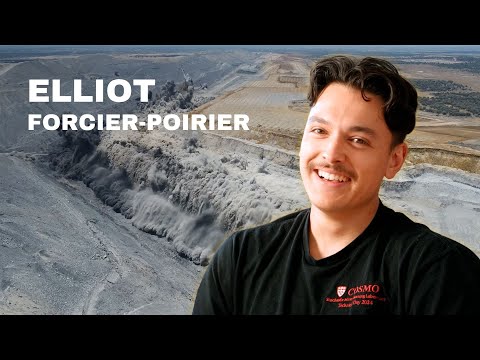
“If you blast and you fuck up, you’re just stuck with a pile of rock that absolutely sucks. This isn’t like a small pile of rock.” — Elliot F. Poirier, 0:00
Clip command
yt-dlp --download-sections "*0:00-0:30" "https://www.youtube.com/watch?v=2Q1EN7GXqzI" --force-keyframes-at-cuts --merge-output-format mp4 -o "blast-mess-up.mp4"”Almost Got Stabbed at a Mining Conference”
“I was in Vegas for a mining conference and almost got stabbed. I booked the cheapest motel I could find and the lady on the flight goes, ‘Oh honey, that’s not a safe area.’” — Elliot F. Poirier, 0:32
Clip command
yt-dlp --download-sections "*0:24-2:00" "https://www.youtube.com/watch?v=2Q1EN7GXqzI" --force-keyframes-at-cuts --merge-output-format mp4 -o "stabbing-mining-conference.mp4"”I Became a Straight-Up Communist in University”
“Ironically I was studying finance, but I just became a communist, like straight up. I was going to the marches, I was part of a socialist strike.” — Elliot F. Poirier, 6:00
Clip command
yt-dlp --download-sections "*6:00-7:00" "https://www.youtube.com/watch?v=2Q1EN7GXqzI" --force-keyframes-at-cuts --merge-output-format mp4 -o "communist-to-capitalist.mp4"”Minecraft Got Me Into Mining”
“If you want to go way back, Minecraft. When I was a kid I just really liked automating a lot of systems in the modern Minecraft modpacks.” — Elliot F. Poirier, 3:26
Clip command
yt-dlp --download-sections "*3:26-4:00" "https://www.youtube.com/watch?v=2Q1EN7GXqzI" --force-keyframes-at-cuts --merge-output-format mp4 -o "minecraft-mining.mp4"Key Points
- What is blasting (28:40) - Drill and blast is the process of drilling holes in rock and using explosives to fragment it; a bad blast creates unusable rock piles
- Almost stabbed in Vegas (0:32) - Elliot booked the cheapest motel for a mining conference and ended up in a dangerous neighborhood
- Minecraft to mining (3:26) - Interest in automating systems started with Minecraft modpacks
- Math and divinity (6:17) - Elliot’s political journey from communist to capitalist through studying complex systems
- Why Quebec (19:27) - Quebec has proximity to major mines and deep engineering talent
- How Watoga started (22:08) - Named after the city of Watoga from the Fallout video game
- AI operating system for mines (31:34) - Watoga is building comprehensive AI software for mining operations
- Building relationships in mining (40:06) - Mining is extremely relationship-based; trust is essential
- Discipulus experience (43:32) - Went through the Discipulus hard tech residency in El Segundo
- Finding talent in Quebec (51:05) - Quebec has strong engineering schools but competing for talent is still challenging
- El Segundo Airbnb story (53:35) - Lived in an Airbnb during the Discipulus program
- Focus for the next year (55:22) - Landing more mining customers and building out the AI platform
- Hardest thing overcome (1:00:30) - The emotional challenge of building a company in an industry where no one knows you
Mentions
Companies
- Watoga (0:12) - AI operating system for the mining industry, based in Quebec
- Discipulus (43:32) - Hard tech residency in El Segundo that Elliot went through
Products & Technologies
- Minecraft (3:26) - Sparked Elliot’s interest in automating systems
- Fallout (17:30) - Video game that inspired the company name “Watoga”
People
- Elliot F. Poirier (0:12) - Co-founder and CEO of Watoga
Surprising Quotes
“Ironically I was studying finance, but I just became a communist, like straight up. I was going to the marches, I was part of a socialist strike.” — Elliot F. Poirier, 6:00
“If you blast and you fuck up, you’re just stuck with a pile of rock that absolutely sucks.” — Elliot F. Poirier, 0:00
“When we started the company, I was just like not having a job and we wanted to maximize going out to conferences.” — Elliot F. Poirier, 0:32
Transcript
Elliot F. Poirier: 0:00 If you blast and you fuck up, you’re just stuck with a pile of rock that absolutely sucks. This isn’t like a small pile of rock.
Ti Morse: 0:07 How often are the initial blasts fucking up right now? Today I’m super excited to interview Elliot, the co-founder and CEO of Wutoga. Wutoga is building the AI operating system for the mining industry here in Quebec.
Elliot F. Poirier: 0:22 Yes, very correct.
Ti Morse: 0:24 Yes. All right, let’s let’s start this off with you said last year you’re in Vegas for a mining conference and you almost got stabbed. What was the story behind that?
Elliot F. Poirier: 0:32 Well, so basically like when we started the company, I was just like not having a job and we wanted to like maximize going out to conferences, meeting people in the industry and so on. So when I went to like MINExpo, which was the conference in Vegas, happens every four years, absolutely amazing conference. Like Caterpillar spent $12 million on their booth. They had like trucks where the wheels are three times my height. Fantastic. But so when I was booking my hotel there I couldn’t get something expensive. So I literally filtered by cheapest and I got this hostel that was literally $8 Canadian a night. That’s like $6 US or…
Ti Morse: 1:13 Basically nothing.
Elliot F. Poirier: 1:14 Yeah, exactly. And so I didn’t really look at anything about the area or whatever. So I get there, I’m on the flight, then I start talking to the lady next to me. She goes like, ‘Oh, what neighborhood are you staying in?’ and I tell her the neighborhood, her face drops. And I’m like, doesn’t seem ideal. So I look it up and it was like an F tier like crime neighborhood, like 4X the murder rate and so on. I think like the first night I spent there I took a shower and I felt dirtier after the shower. And like I was like going to bed and I was just, I don’t know, I just felt like I needed to succeed because I could, like this was just like it was that much of a realization in that moment. Um, so the story with getting stabbed is that one night I went out with some people from like industry and so on, went for drinks and we go out to like 1 a.m. or something like that. And it was basically like a 50-minute walk from the strip to the, to the hostel. And while I’m walking back, I’m like, I’m listening to a like an audiobook or something. And this guy just like from a random corner kind of calls out and he goes like, ‘Hey bro, come over here.’ And I’m like, [sighs] he starts getting closer. So I just like as soon as he started getting closer to me, I just like bolted it. And that’s kind of the story. Like he didn’t, like, like, but it was just so sketchy. And like in the morning when I would walk to the strip, there would just be like people injecting like next to me on the street. One time I went, I was going back to the hostel and there was this lady from like a street… club nearby, fully naked in the parking lot just drinking like vodka. And I was like, what the hell is going on? But uh…
Ti Morse: 3:07 There were signs that maybe maybe a little, a little bit sketchy.
Elliot F. Poirier: 3:11 Yeah, but uh I mean, tough times have passed so like uh I could get a $16 hostel back then.
Ti Morse: 3:18 Yeah. You’re not quite playing poverty SIM anymore.
Elliot F. Poirier: 3:21 Exactly, exactly.
Ti Morse: 3:22 Okay. Uh, do you want to just talk about like how you got into the mining industry in the first place?
Elliot F. Poirier: 3:26 Yeah, I mean, if you want to go way back, Minecraft, but that was just like when I was a kid I just really liked automating a lot of systems in like the in the like modern Minecraft where you make like your nuclear reactor, you automate all the pipelines. There was also quarrying in this one specific mod pack I’d play called Tekkit, and like I would make these quarries where every mineral was like sent to its respective processing unit. And I always really enjoyed that. But then like, um, when I when I was in high school I considered doing like physics, but I also considered doing politics because I was very into like economics, um, like history, geopolitics and so on. Uh, and I ended up going more the politics route just because my older brother’s like a pretty successful entrepreneur. So my take was that he would kind of do business, I would do politics, and then we would end up like ruling over Canada. Uh, so I went down the like politics track and kind of hid my like passions for like math, uh, more like engineering, automation, these types of things for a while. Uh, actually I campaigned for the Liberal government of Canada. Uh…
Ti Morse: 4:34 Do you want to talk about that?
Elliot F. Poirier: 4:36 I don’t know. Uh, it’s it’s one of my biggest regrets. That’s that’s all I’ll say.
Ti Morse: 4:42 How’d- how’d you get into it and like what made you decide to kind of leave?
Elliot F. Poirier: 4:45 So, what’s funny is that when I was in high school and CEGEP, since I was surrounded by a lot of French speakers, I was a very devout federalist. So I was like, okay, Canada needs to stay a whole, these independentists are ridiculous. Economically, it makes much more sense for Quebec to stay in uh in Canada. And then like when I went to uni, I was just like at McGill, and everyone spoke English. And like no one spoke French. And I was like, okay, we are actually doomed if we don’t secede. So that like just turned me into like an independentist. And so when I was in high school obviously, as I said, like much more of a federalist, and I really liked the Liberal Party at the time. Was kind of more left-leaning back then, it was patriotic but more left-leaning. And so I ended up like campaigning for Justin Trudeau and like, yeah.
Ti Morse: 5:38 Do you want to talk about like going from the transition, you know, you said that you were kind of like a communist at the beginning when you were a kid and then over time you shifted towards being much more capitalist?
Elliot F. Poirier: 5:48 So I was more left-leaning in like high school and CEGEP. CEGEP is like the in-between step between like uh high school and university. And then when I got to uni I was… Ironically I was studying finance, but I like just became a communist, like straight up. I was like, I was like going to the marches, I was part of like a socialist strike back, which is like an association and so on. And I think like there were like… it was a two-step process going away from this. Firstly, like after two semesters in finance, I was just like this is not a real degree and I just switched to honors math and like I got like super into theory so I was just not thinking about politics that much anymore. I was just like, ‘Okay, this graph is very cool and has nice properties instead.’ And so that was like the first step. That kind of like led me to believe in divinity to some extent. Like if you study enough math, you kind of just like start seeing a bunch of patterns and I was like, ‘Damn, this is cool.’ And like that just made me believe there was something greater.
Ti Morse: 6:49 Because it’s like beautiful or what?
Elliot F. Poirier: 6:51 It’s just, bro, the… like, you know you can bound how close you can get to irrational numbers? That’s like one of my favorite theorems, it’s like Diophantine approximations. It’s so… you can… you can bound how close you can get to irrational numbers. And what’s insane about that is irrational numbers are like kind of akin to like reality, right? You’re going to have a measurement of 10 meters but it’s not actually 10 meters, it’s this abstract measure that you can’t have. You can actually bound that, like mathematically, which is insane. And like… so just seeing all these patterns as well, like, sometimes you solve a math problem and like the main tricky part is the proof, not the actual solution, because like the solution will come intuitively because it makes sense as like a continuation of things. And just that intuition aspect to how these patterns form is very like… inspiration… I don’t know, it just like breeds kind of this beauty and this like coherent order.
Ti Morse: 7:53 Yeah, it kind of like lights you up a little bit?
Elliot F. Poirier: 7:57 Yeah. Yeah. Um, but yeah, so that was like the first step. And then like I started going more and more on trips with my brother and at some… and at some point he brought me to New York to an event with like a bunch of his founder friends and so on. And I was just like talking to them, kind of like just being a rambling communist, like very just annoying. I was like, ‘No, but this is how we need to do things, the government needs to like do all these things.’ And they were just like, ‘Yeah, I’m just like building a company that does that.’ And I was like, ‘Oh, you just… you just do things instead.’ So that… that was like the big unclick and then I like started reading more into that space, um…
Ti Morse: 8:35 What do you think, uh, what kind of like impact, you know, other than just kind of converting a little bit, did that trip… I think it was the David Senra, you know, Patrick O’Shaughnessy trip?
Elliot F. Poirier: 8:45 It was actually before that. It was like, um, I think it was a year before that. It was just like kind of a house party. It was just a bunch of founders, I like played chess with a bunch of people. And also the other thing I found when I like met with these people is like… it was a group of people who I felt… the most kind of like understood and like akin to that I’ve ever been around. Like I think every every step in education I got like closer to that type of group, but like when I was over there, it was just like everyone was very passionate about history, but also like interested in kind of like math, sciences, and like it was very renaissance men in a way. And that was very appealing I feel I find.
Ti Morse: 9:26 Just kind of like being surrounded by builders?
Elliot F. Poirier: 9:28 Yes, but it’s just like all the interests were so aligned and like I don’t know, the same type of jokes, the same type of like interests and everything like so it just like fit really well. Uh and I was like okay, this is kind of like this is what I’m meant to like do. Um and in terms of more so getting into like the mining space, honestly that has so I did a year in math uh I I did my degree in math, right? Uh which was very theoretical, very like like proving these abstract theories without like any application.
Ti Morse: 10:05 Is it more like academic?
Elliot F. Poirier: 10:06 Yeah. And for the first year I was like actually uh very like my my take was that I would become an academic. I would like become a prof in like something like in probability theory, which is one of my favorite fields. Um and so uh during that first year I was like just very academic. After a year I feel like what what what tends to happen is if I was uh immortal, I would do like a billion math PhDs because they’re just really fun. Like it’s puzzle, it’s very nice to like it’s a very good way to see structure in the world where there isn’t. Um but when you’re doing it and you have a finite lifespan, it feels like you’re running in sand or gravel. Like you’re kind of like stuck. It’s not you’re not actually doing that much.
Ti Morse: 10:51 You’re not getting anywhere.
Elliot F. Poirier: 10:52 You’re doing a lot of legwork for very little. That’s what I would say. So after a year I was like I don’t think I can spend my whole life proving that like this graph is bipartite or like these types of very abstract problems. Like I had a friend who was just finishing his masters and he did this like weird problem where it was like just proving that like uh oh no this wasn’t a friend it’s just like I uh this guy that uh one of my friends met like he was doing 6n minus 1 is always prime or semi-prime. And like he spent three years on that.
Ti Morse: 11:32 Just on one problem?
Elliot F. Poirier: 11:33 Yep.
Ti Morse: 11:34 Bro, that’s so like it’s cool. It’s like a cool problem.
Elliot F. Poirier: 11:37 I’m sure the proof is beautiful, but like spending three years of like your peak like your like I don’t know, that’s that’s crazy.
Ti Morse: 11:44 Intellectual horsepower and all the energy that you’re ever going to have.
Elliot F. Poirier: 11:46 Yeah.
Ti Morse: 11:47 Yeah.
Elliot F. Poirier: 11:48 So because of that I I was looking at like I was just starting to look at more applied fields, maybe getting into like company building and so on. And around the same time, like around three three and a half, four years ago, I went to dinner with my brother and a bunch of his friends. And then one of his friends had his own consulting firm and a lot of clients in the mining sector. And so I was kind of still a bit of a like a left-leaning back then. So I spent the whole— we spent the whole dinner him trying to convince me to vote for the Conservative Party. But as a side— side note, he was also just telling me that like my whole generation was dumb because we weren’t going into critical industries, notably mining. He was like everyone’s like very old, they’re all going to retire.
Ti Morse: 12:29 Yeah.
Elliot F. Poirier: 12:30 Like, I’m sure Ted said this during his podcast, but like in the US, by 2020— by 2030, 50% of mining engineers are retiring.
Ti Morse: 12:41 Yeah. And that’s like hundreds of thousands of people, right?
Elliot F. Poirier: 12:43 Yeah, that’s like ridiculous. So that kind of caught my attention. I started looking at it from more of like a supply chain angle, like where we’re dependent, where we’re getting our minerals. And like if you look at the processing numbers specifically, it’s just— it’s just doomed. Like it’s so brutal.
Ti Morse: 12:58 What do you mean?
Elliot F. Poirier: 13:00 Like so much of critical minerals are like fully— like majority processed in China. Like copper, nickel, like a lot of these elements are just majority processed in— in China. And the mines them— and like since they own all the demand, they can just like fluctuate market prices and then snap up assets in like— like US sphere of influence, which ends up like damaging our supply chains. Because you can— you can build all the defense manufacturers you want if China’s like okay, you don’t get any more lithium or like rare earths, you’re kind of fucked.
Ti Morse: 13:34 Yeah.
Elliot F. Poirier: 13:35 And so from— from like that, I started talking to a lot of professors at McGill because we have like the third best mining engineering program in the world. So like a lot of really good research is coming out of there.
Ti Morse: 13:51 Are do most of the like mining founders that are operating in Canada or Quebec kind of come out of that university? Or are there even very many mining startups?
Elliot F. Poirier: 14:00 Uh, I would say there’s more here because the government is like…
Ti Morse: 14:02 It’s basically zero in the US. It’s like almost none.
Elliot F. Poirier: 14:05 Yeah. There’s like none. But you guys like forgot mining existed for like 40 years, so like…
Ti Morse: 14:11 No need to throw shade.
Elliot F. Poirier: 14:12 But— but yes. Aside, you do have the best mining engineering school in the world though. Colorado School of Mines is actually number one. But you have like three schools, so.
Ti Morse: 14:24 You all like concentrated effort on Colorado School of Mines.
Elliot F. Poirier: 14:30 Uh, there are like— I would say what’s interesting is in specifically in operations, a lot of the software in the mining sector were done— were built by McGill grads actually. It’s— it’s very interesting. Like you go to these conferences and you like find out who designed this and McGill grad. It’s like— it’s a— the ubiquit— the ubiquitous McGill grad is very common in like software and mining. Spoke to a lot of profs, started reading a lot of papers, started auditing classes. I still remember this one class, like stochastic ore body modeling, which was like a grad level class. And the prof at the beginning goes like, ‘Who, which faculty are you from?’ and then like, most people, mining engineers, and then, and then like, and ‘Who’s the rest?’ and then like ‘Geology, right?’ and then there’s just me. And then he’s like, ‘What are you?’ and I was like, ‘Math.’ Everyone’s like, ‘What?’ So started doing that. I kind of like fell in love with the industry by doing that, just because it like, it retapped into this kind of like automation and like really love for like industrial things that I had as a kid. And like, just an operating mine is like very heavily reliant on like statistics and optimization. Like, the three aspects are really statistics, optimization, and people. And like statistics and optimization are my favorite fields in math, it’s genuinely how I view the world.
Ti Morse: 16:05 So it’s just like applying the stuff that you’d actually be doing instead of, like, you know, a theorem for three or four years, you’re just applying it all and building a company.
Elliot F. Poirier: 16:13 Exactly. Yeah, what’s, what’s really interesting about that is like, I would read these papers, go see the prof afterwards and be like, ‘Oh, it’s so cool that I can, like, see the math I learned being applied.’ And the profs would be like, ‘You know this is, like, super academic.’ And I’m like, ‘What?’ Like, I’m used to, like, proving, like, 27th-dimensional cubes, like, something like that. And so I think that aspect really, like, I really like that. But also just the fact that it’s like, it’s the coolest form of a factory in the sense that, like, you have this added problem, which is like, you have an information theory problem, right? ‘Cause you have a factory where you don’t know what’s going into it. And it’s just, I don’t know, it’s like a semi-divine process in the sense that you’re just taking rocks and converting into, like, useful metal. So basically, through that, I really fell in love with the space. Ended up doing research at McGill in mine planning optimization with a professor, Professor Alessandro Navarra, which is one of our advisors for the company. He was honestly, like, like very helpful in my journey of, like, getting into mining, because he did one, he did a masters in applied math, actually. So he had a lot of appreciation for, like, mathematics applied to, to mining. And so I did research in that, tried to start another company before this one, actually.
Ti Morse: 17:35 What was that?
Elliot F. Poirier: 17:36 So that one was, also had a terrible name. It was called, the first name was just like a gimmick, we called it Palantir for mining. But like, so I still own the repo. Funnily enough, like this company is more akin to that. But the name we gave it was Behelit, which is a Berserk reference. It’s just the stone in Berserk that represents like divine like ambition and like just the fact that your destiny is like foretold.
Ti Morse: 18:11 Do you want to talk about like where the name Watoga comes from?
Elliot F. Poirier: 18:14 Yeah, sure. Um, so I, I played a lot of Fallout. There’s actually a lot of Fallout decorations like sparsed around here when I was a kid. And I really liked the lore and I kind of liked the, the world in Fallout. And so Watoga is this like fully autonomous city in Fallout built by both RobCo, which is a like gigantic uh robotics company, and then AMS, which is Atomic Mining Services, which is a company that builds fully autonomous mines. And that just like and our first product is named Rockhound, which is one of the locations in Fallout 76, which is a massive mine that was fully automated. And actually what’s, what’s really interesting is uh like my co-founder Sam, who’s a mining engineer, he got uh he got me like a Rockhound Magic card from the collaboration. And the only place where that card was available in like the shiny format was Montreal.
Ti Morse: 19:00 Crazy. How, why’d you guys decide to like base the company here?
Elliot F. Poirier: 19:03 Yeah, so that was that was very challenging for us. Like we, we really tried to figure out a way that it would make sense to stay in El Segundo, because like we really liked the culture there, the, the work ethic and so on. It just made so much more sense for us to come back to Montreal.
Ti Morse: 19:29 Is it like closer to your customers and kind of thing?
Elliot F. Poirier: 19:31 It is literally the fifth floor in this building is someone who runs a nickel mine. So like, LA has no mining people. Like that’s, that’s a big problem. Like if we if we were to walk outside right now, we’re like five minutes away from several very big mining companies as headquarters. And so we’re much closer to our customers. Uh, honestly the talent we need for this company is we have much better talent in Montreal because we have a great uh ML research center and we also have uh like very good mining engineering universities. So what ends up happening is some of the research from this machine learning institute is people working on on like ML products.
Ti Morse: 20:36 It’s just way easier to hire people here.
Elliot F. Poirier: 20:37 Exactly. It’s much more logical from that point of view. Also, I mean the government is much more helpful to startups in terms of like grants and so on here. Um, the like the main the main honestly the main factor that’s like a disadvantage being here is that uh for all my love of Quebec, the Quebec work ethic is very lax. And and so that’s… Kind of why we, like, at the beginning we, like, hesitated… we considered very briefly getting just a WeWork space so this would be, like, super easy to do. And then, like, we had worked out of my brother’s WeWork for a while before we did the Syphilis and, like, it’s just, it’s a toxic environment if you’re trying to build a great company. Because you go get coffee and you hear, like, the French devs next to you saying like, “Oh, I’m going to clock out at four to go, like, rock climbing. I just need to, like, I’m just doing tickets for the day.” Which just, like, if you have that all surrounding you, it’s very negative. So at least we have our own space and me and Sam, the mining engineer co-founder, we live here. So like, uh, we don’t get contaminated. But at the same time it’s kind of nice to, like, we’re literally 30 seconds away from the most beautiful church in Quebec and just being surrounded by, like, such beautiful architecture just like very nice…
Ti Morse: 21:57 Little bit inspiring.
Elliot F. Poirier: 21:59 Exactly, exactly. Yeah.
Ti Morse: 22:00 So do you want to talk about like the right at the like the very beginning of Utoga and with the initial idea was that you guys kind of came in with, how you came up with it?
Elliot F. Poirier: 22:09 So as I, as I mentioned earlier, I tried to start another company before this one, something called Stochastic Ore Body Modeling, which was like kind of inspired by reading a lot of papers. And so what that is is basically like when you’re doing your feasibility study for the mine, so that’s like still in the exploration phase, you’re not building yet… You’re going to build something called a block model. And so you’re going to block out chunks of the mineralized region. And so how you’re going to assign grades, the most popular method right now is multi-indicator kriging, which is a fancy word for weighted average factor in, like, anisotropy and like the skew of the deposit. So you basically take all your assays and then for every block you’re going to average out, like do a weighted average factoring in the skew. And that’s going to give you your grade. The big problem with that is it gives you one estimate and you have no quantification of how uncertain it is. And so stochastic ore body modeling what it does instead is you take all of your assay points, so these are like the drill holes that Teddy gets, and you, you basically turn that into a random field over that region and then you sample your blocks several times. So you get several equally probable deposits and that gives you an idea of what…
Ti Morse: 23:26 Just really like helps you understand the area you’re thinking about.
Elliot F. Poirier: 23:30 It basically gives you a distribution on the amount of ore in the ground. So you can understand like the risk better and you can do mine planning under uncertainty with that, which basically means you’re optimizing on highest expected value instead of optimizing on one deposit estimation, which is mostly likely wrong.
Ti Morse: 23:49 So is, up until today, have most mines operated on this, like, you basically like single shot it, look at your data once and then just go for it, just start mining?
Elliot F. Poirier: 23:56 I mean, there’s multiple stages to this, right? So like… You’re you’re going to get like inferred versus like, uh, I forget the the other term. There’s like several classifications for for resource and it’s based on the amount of data available. So when you do drilling campaigns, you’re going to like get a tighter and tighter grid to define the resource better and better. And then when you get to a point where the grid is tight enough, these by the way, there’s like legal regulation on this, on the tightness of this grid. And so when you get to a point where it’s tight enough, you’re like legally allowed to like output an NI 43-101, which is the Canadian like technical report standard. And then you can build a mine if it’s deemed profitable based on that with like some margin, obviously. Because there’s always, like per the Mining Engineering Handbook, when you start a mine, like when it’s constructed and you start operating, you typically still have 30% uncertainty.
Ti Morse: 24:52 Really? Okay, so you’re basically trying to help like mines way better understand what they or, you know, mining companies way better understand what they have.
Elliot F. Poirier: 25:00 Um, it’s it’s it’s, yeah, so to some extent it is like better resolution. I mean, I’ll I’ll just close out on the first company because I just want to close that thread. So like the reason that that didn’t work out is basically like, uh, I just read a lot of papers and when you and then like started going to conferences after. And when I started going to conferences, I basically realized that like prospectors do not really want to have this like risk profile or like better understanding because they have to like pitch to their investors. So if they have one estimate, they can kind of sell the story around that. But if they have a risk profile, the investor’s going to ask why is this not profitable 50% of the time. And so that ends up like being a downside for them. So I wound that down and like, uh, I was actually initially like going to go for a masters in mining eng. And then I met one of my co-founders, which is Sam, who’s a mining engineer from McGill as well. And we just met like late night at the library, just like, he was kind of surprised to see like someone in math interested in mining. And so we start, like he did most of his internships in drill and blast. He actually got second in the biggest drill and blast competition in North America.
Ti Morse: 25:54 And what is a drill-blast competition?
Elliot F. Poirier: 25:58 They give you a, um, they give you like a it it depends, right? It depends on the competition, but like you’re probably going to have to do a blast plan for a specific thing. I think in his specific case, it was they were do- doing a like a a stope design for like a a mine in BC. And he had to like design the drill holes and like do the analysis, like a void ratio and a a bunch of these like technical characterization for the the specific blast. And so from like all hi- a lot of his experience, he started showing me a lot of the software in the space. …and there was like it was very outdated like legacy software that is like there’s poor integration across like all parts.
Ti Morse: 27:08 A bit like the airline industry where there’s just like no software updates since like 1980s.
Elliot F. Poirier: 27:13 It kind of exactly, yeah. And so the a big problem is like it’s super fragmented like we’ve we’ve been on calls with mining engineers where their workflow has 10 different softwares.
Ti Morse: 27:23 Which is like what?
Elliot F. Poirier: 27:25 And that’s like excluding the Microsoft Suite.
Ti Morse: 27:29 Yeah.
Elliot F. Poirier: 27:30 So that like admittedly most cases are not as bad as that but still. Um and so there’s poor integration between all parts. Um if you want to be able to do the like competent analysis you you typically have to do a lot of manual data entry and they typically don’t have time because like mines are very time-constrained you’re trying to send rocks to to your mill like and that’s the number one priority. So if you have to get that plan out in six hours or like a day it’s going to get out in a day no matter what the analysis is needed is. And so like a lot of manual data entry and the the models they use to like predict like fragmentation or like movement of the rock a lot of them are very outdated like empirical models that you would need to calibrate a lot for it to get like near…
Ti Morse: 27:59 Become useful.
Elliot F. Poirier: 28:00 Exactly. Yeah. So because of all these reasons I was like okay we should definitely like explore this. At first what we were thinking is like really focusing just on material movement. So like uh when you blast how does the the rock move? Uh because that is a big problem and like that causes dilution.
Ti Morse: 28:34 You want to explain what blasting is?
Elliot F. Poirier: 28:36 Um so basically you have a polygon of rock which you have to design as well and then you’re going to place drill holes in it and you’re going to place them in a in a specific pattern based on like the desired outcome. So based on the direction, based on the the like the rock properties of that bench like how do you want it to move? Um so you’re going to place those drill holes and then you’re going to fill them with explosives then put like tiny rocks on top so it doesn’t like blow up like upwards and then you’re going to sequence it in a specific way and then that’s going to blow up the rock. The the main the main reason like this is the way it’s done it’s just uh in terms of energy efficiency like chemical explosives are like basically unmatched. Like in terms of like uh price right? Typically like uh the size reduction of rock is a cycle called like comminution. So that’s like reducing the size and typically whenever you go up a medium it goes up 10x in price. So blasting would be like let’s say blasting is $1 then crushing would be 10 and then uh milling which is like uh like a ball mill or a sag mill or something like that uh would be 100.
Ti Morse: 29:55 So it’s just way more efficient to use dynamite or explosives?
Elliot F. Poirier: 29:59 Exactly. The size, you still have to use crushing and and milling, right? Like you still have to do it because…
Ti Morse: 30:03 Because you want to break up the rock as much as possible on the super cost-efficient, low-cost explosives basis.
Elliot F. Poirier: 30:09 Yes, exactly.
Ti Morse: 30:11 And then you go up the cost curve.
Elliot F. Poirier: 30:12 Exactly. Because you still have to do that, right? It has to be in powder form for the actual, like, processing steps. But you want it to get as close to that as possible before going into those steps because then you’re going to save a lot of money. And there’s technicalities here where, like, you want optimal fragmentation, you don’t want minimal fragmentation in all cases. Where, like, for example, lithium, if you have, if your fragmentation is too small, if you have too much of something called fines, like too much powder, it’s actually negative.
Ti Morse: 30:37 And why is that?
Elliot F. Poirier: 30:43 Um, the reason why lithium is, like, fines are more expensive is because you’re going to lose some recovery when you get to the mill. So you want it actually perfect size, you don’t want minimal size. And like every mineral, metal, and like specific mill design is going to have like an optimal size fragmentation. But typically mining operations are more so on the large side of things where like you’re not blasting small enough. Typically if you’re like a drill and blast, like, consultant where you go to sites to like help them optimize this type of problem, if the mill calls you and the particle size is too small, that’s typically a compliment.
Ti Morse: 31:18 It’s a bad thing?
Elliot F. Poirier: 31:19 No, that’s a compliment. Because if you can get it to that point, that’s usually a good thing. It’s just like it’s not ideal.
Ti Morse: 31:26 Okay. All right. So when you’re thinking through the like first is it basically like you’re making mines more efficient and especially the process of just starting a mine?
Elliot F. Poirier: 31:35 We are making them more efficient in a lot of ways. Like our goal is to make really this like AI-powered kind of OS for the mining operation where we will be building some hardware later on, like for sensors and for specific use cases. But most of it will be software. And so the goal is really like as soon as you collect operational data, that goes into kind of our digital twin of the mine, which is like a collection of machine learning models that and like geo-stats models. Basically whatever works best. We’re not like ML focused, you know. But, so it goes into all these models, dynamically updates the way it, so like you always have the best predictions and then updates your schedule and your like predictions on like what the next actions to take are. So the first product we’re really focusing on is drill and blast and grade control.
Ti Morse: 32:31 And why is that so important? Like why is that a great first product?
Elliot F. Poirier: 32:36 So, two reasons. I mean, first of all, Sam is a drill and blast engineer, so like it made a lot of sense to start here. But also it’s a very like fragmented space. It’s also one of the most like discrete time-step actions. In terms of like if you have, if you have to like view a mine through time, you would probably view it through blasts. In the sense that it’s chunks taken out of the pit or like stopes if you’re underground. …and so there’s there’s that aspect for sure. But the other aspect is like it’s an undoable act.
Ti Morse: 33:11 Eh?
Elliot F. Poirier: 33:12 It’s not an undoable act. Not. Sorry. Where if you blast and you fuck up, you’re just stuck with a pile of rock that absolutely sucks and that’s going to cost you a lot of money to move because it’s like also like for context, right? This isn’t like a small pile of rock.
Ti Morse: 33:30 No.
Elliot F. Poirier: 33:30 A typical bench, like a blast benches are going to be like 10 to 15 meters high, maybe like 40 to 100 meters deep and then like 60 to 100 meters long.
Ti Morse: 33:58 So massive, massive area, huge amount of rock.
Elliot F. Poirier: 34:01 So yeah. So that’s like a whole, you have that pile of rock afterwards and you have to move that. So like it is it is a huge pile of rock. So if you fuck up that, you’re like that’s going to cost you a lot of money.
Ti Morse: 34:18 How often are, you know, the initial blasts like fucking up right now?
Elliot F. Poirier: 34:23 It depends what you define as fucking up. But like…
Ti Morse: 34:31 Done inefficiently. Like done the wrong way.
Elliot F. Poirier: 34:31 I would say it mainly depends on the mine where you have some mines that are like absolute like works of art. Like Malartic mine in in Quebec is like an absolute work of art. Like it’s extremely well run. Uh, it was like the one of the first internships for Sam and…
Ti Morse: 34:54 I think it was his first mine. Which mineral are they taking out?
Elliot F. Poirier: 34:59 Gold.
Ti Morse: 34:59 Gold. Okay.
Elliot F. Poirier: 35:00 They make around like two to three trillion… billion in profit a year.
Ti Morse: 35:04 Two-three billion in profit?
Elliot F. Poirier: 35:06 That’s like one mine.
Ti Morse: 35:06 Okay.
Elliot F. Poirier: 35:08 Yeah.
Ti Morse: 35:08 Yeah. That’s not a bad business.
Elliot F. Poirier: 35:10 But like they just like it’s run so efficiently. It’s like it’s a beautiful asset.
Ti Morse: 35:14 And do they have like a massive deposit? I imagine.
Elliot F. Poirier: 35:18 They do. They they have a really good deposit, but also it’s like uh it’s low tonnage, uh sorry it’s uh low grade high tonnage, which is a specific type of mine where like the the more optimized you get, the better like the performance, more so than like narrow veins. Where you have like some mines that will just have like uh like in Malartic’s case is just like they have a bunch of gold everywhere, it’s low grade. In a lot of uh mines, you’re just going to have like you have these very narrow veins and in those veins you have like insane amounts of gold, but like there’s nothing around it. So uh in their case they really had to optimize a lot in terms of that. Uh in terms of like fuck ups as I said, it depends on the mine, but some mines will have like fairly frequently per year, and then there’s also like the other issue which is like you might- you might not consider this blast like you didn’t fuck it up, but like it could have been like environmentally better or like way better if you had like better pattern, if you had- in a lot of cases where like departments in mining will be siloed. So drill and blast is optimizing for its bottom line…
Ti Morse: 36:00 and then like the grade control, which is the geology, is optimizing for its bottom line. And then all of operations is a separate entity than the mill. But the thing is, like, you should connect your drill and blast with the mill, because typically, if you increase, like, the costs of your drill and blast department, you’re going to get lower costs in the mill by, like, 10x, as I mentioned earlier. So, like, improvement in the—on the blasting side will lead to massive improvement—
Elliot F. Poirier: 36:31 You can make some uneconomic mine done poorly become actually extremely profitable.
Ti Morse: 36:35 Exactly. Exactly. So, the—this, like, siloing of departments is a big problem. And yeah.
Elliot F. Poirier: 36:42 Is—is the goal, like, to—is the long-term goal basically become so good at understanding mines that you just want to do the mining side yourself, like buying mines or buying plots of land? Like, how does that happen?
Ti Morse: 36:54 Yeah, so that’s kind of—that’s kind of our long-term goal. Like, I think in a lot of—in mining, for the most part, if you want to be able to build, like, a massive company and, like, actually capture most of the value you’re generating, you have to go for, like, a services model at the very least, if not asset ownership. And that’s kind of what you’re seeing with a lot of these startups in mining that end up going for one of these two approaches. Because, like, just doing SaaS alone typically does not, like—
Elliot F. Poirier: 37:31 Get the result that you want.
Ti Morse: 37:32 Yeah, exactly. Um, so yeah, our goal is, like, right now we’re just focusing on developing the tech and, like, case-studying it, making sure, like, we prove out that it—it works as intended. But, like, as soon as, like, next year, we’ll be looking at working into services where we—like, we would do all the drill and blast for a site or for a quarry. Might be looking at getting into, like, surveying, mine planning—
Elliot F. Poirier: 37:54 So right now you’re building the software and eventually you’re going to use—like, build a company that’s really, really good at actually executing on the information that you gather or, like, the insights that you have.
Ti Morse: 38:03 Exactly. Because you still—like, our software is not fully autonomous, right? Like, it could be to some extent, but you don’t really want it to be.
Elliot F. Poirier: 38:13 Why?
Ti Morse: 38:14 I mean, first of all, for us, it’s—it’s, like, if—if you let an AI model output blasts that get, like, put into the field, that’s a huge liability.
Elliot F. Poirier: 38:26 Hmm.
Ti Morse: 38:27 But the other reason is, like, um, there might be some, like, insight the guy sees that is not necessarily—like, you always want to guide this, especially with something as critical as blasting, because, like, there’s a lot of safety concerns here.
Elliot F. Poirier: 38:41 Obviously.
Ti Morse: 38:42 Yeah. And so our model basically—like, our software basically does 90% of the work. And it automates a lot of the data analysis and the trying out different scenarios that you would just not have time to do in a normal mining operation. So an engineer still has to review it and stamp it, but we’ve already—like, basically you get to the design meeting, which would typically be a kickoff where you, like, talk about what you should think about on this bench.
Elliot F. Poirier: 39:00 And instead when you get to this meeting with our software, you just have all the most likely scenarios for this bench and several blast plans for each of them with the forecasted performance. So it automates a lot of these steps and a lot of the work.
Ti Morse: 39:12 Okay.
Elliot F. Poirier: 39:13 And so when what going back to the services thing, our goal would basically be we use our own software, we just provide you with the blasts. And it’s like way faster but also improves your performance.
Ti Morse: 39:26 Is the like information collection going to be a big hurdle? Or is this something where you’re just like getting information from, you know, it’s all ready like useful information to get from a mine and you’re just creating like a digital twin and helping people understand?
Elliot F. Poirier: 39:41 So right now we’re using like anything the mine already has as like sensors and instrumentation and so on. The pipelining is a bit tricky, so like right now we’re like implementing it custom per site, but it will just like we’ll be able to just stack these tools. And at the end of the day there’s like four OEMs that matter, so like we just make integrations with them. We’ve already been in talks with them and they they already were like willing to just like give us like a direct stream.
Ti Morse: 40:07 You want to talk about like building those relationships and how you did it or how you’re doing it?
Elliot F. Poirier: 40:12 I’m not gonna lie, like with the OEMs it was just cold outreach. It was like honestly we’ve been brutal at the cold outreach game. Like one of our one of our advisors, which is just absolute goat in mining, man like Jonathan Peck, he basically he invented like GPS tracking on like equipment in mining and then he invented measurement while drilling on like production drills. And so he sold both of his companies to Caterpillar and just absolute—
Ti Morse: 40:34 He just like builds companies and then sells them and—
Elliot F. Poirier: 40:37 But he’s just like when you talk to him he’s just like an absolute legend. Niche figure in mining. His LinkedIn doesn’t even have a profile pic. Like he’s just like a hidden man.
Ti Morse: 41:00 That’s how you know he’s good.
Elliot F. Poirier: 41:01 He’s also, so he’s also based in Montreal, so that might be another reason we’re here because of Jonathan Peck is here. Yeah there’s just like way there’s there’s a whole bunch of people and like talent and stuff you can’t find elsewhere.
Ti Morse: 41:12 Yeah.
Elliot F. Poirier: 41:13 Exactly. Um but yeah so like literally him the way we got contact to him is I basically emailed every single person in his department until he like answered.
Ti Morse: 41:18 How many people were in the department? Was it like five or ten people?
Elliot F. Poirier: 41:22 The 10 to 15 I think, like that. And they just like kept all referring to him and it was like these guys are so annoying. Like and at some point we were like we were reaching out to a lot of like mining people for doing like customer discovery and so on. This one company Alamos Gold, we reached out to them so much, they because we were using our McGill emails because they have better like optimization and so on, like when you use a school email it has more chance to get through the firewall.
Ti Morse: 41:48 Oh it doesn’t bounce? Crazy, okay.
Elliot F. Poirier: 41:51 And and so we emailed them so much they emailed McGill to get us to stop emailing them.
Ti Morse: 41:57 What’d they respond with?
Elliot F. Poirier: 42:00 I think I I assume they emailed something like please some of them were like I got like two please stops.
Ti Morse: 42:07 Yeah.
Elliot F. Poirier: 42:08 That was that was pretty bad. But uh but yeah we just did a lot of cold outreach that way. Um that like worked to some extent for the OEMs. What we’ve started to realize with like mining people is it’s much better to just like get an intro from someone who who we know or like go to a conference.
Ti Morse: 42:24 Is it becoming easier now that you’re a little bit more established and you have a little bit more time and relationships?
Elliot F. Poirier: 42:29 Yeah. It’s it’s getting better from that standpoint I would say. Um like the product’s more fleshed out. Like our our earlier demos were like
Ti Morse: 42:36 Pretty early.
Elliot F. Poirier: 42:37 Yeah. But uh but yeah it’s getting better from that standpoint. Also like I think a lot like it’s a very risk averse industry so now that we’ve like raised money they can be like okay these guys are not going to disappear in two months and I’m going to be left with this like thing.
Ti Morse: 42:54 It’s provided a lot of credibility.
Elliot F. Poirier: 42:57 Yeah exactly. And uh yeah so so I would say that that’s definitely helped. Um but the the like the best way to meet people in mining is you go to a mining conference and you get pissed drunk with them. That’s like that is the peak way.
Ti Morse: 43:14 Do you have any good stories of doing that and just like relationships?
Elliot F. Poirier: 43:18 I didn’t drink before.
Ti Morse: 43:21 Really?
Elliot F. Poirier: 43:22 So I’ve only started doing it recently and I have not been like very drunk in like two to three years so I I unfortunately I have not I have no stories about getting drunk at a mining conference.
Ti Morse: 43:33 So you started this I think probably roughly a year ago now. I believe. Um and then you got into Discipulus the second cohort. Uh what was how’d you find out about that and then what was your thinking behind you know applying?
Elliot F. Poirier: 43:45 So I actually found out about Discipulus uh like I just saw them on Twitter very briefly and I was like okay this is cool. And then what actually convinced me to join is uh I started talking to Ted uh from Duran on Twitter. And then we met up at a mining conference and then he like he strongly like recommended Jacob. And I was like that’s enough of a sell because Ted was amazing then I talked to Jacob. It’s just it’s rare to find this type of like obviously the goal of a VC or like a an accelerator or residency at the end of the day is like to have returns on capital right? But it’s rare you find one that’s so like aligned and especially with
Ti Morse: 44:27 Mission aligned?
Elliot F. Poirier: 44:28 Yes mission aligned. Everyone on the team really like um felt in tune with the values of Discipulus. And so like we actually had a YC interview and we like just went with Discipulus instead because it was just like so much more logical for us and just the crowd in El Segundo seemed like the right place to be. So that’s kind of that’s kind of why we went into it and how we found out about it.
Ti Morse: 45:00 What was your experience like actually doing it?
Elliot F. Poirier: 45:02 Yeah. The experience was insane. And like, I think—I think it’s—I think it’s telling of like Jacob’s ability, but also just like… the people he selected were so like very like mission-aligned and just like compatible. Everyone in the batch, like, we would meet them up tomorrow and we’d go for a beer, like everything would be great. Like, these were like, and like, really like cracked people, first of all, but also like very compatible between each other. Uh, like I—I just went to Reindustrialize, met up with like Denver from Framework. And like, every time I meet up with Denver, it’s just like so nice because it’s just like…
Ti Morse: 45:44 Great time.
Elliot F. Poirier: 45:45 And like, every single one of those guys, like, I miss them obviously, but it’s just like we got along extremely well. Then also like the fact that if you would have seen our pitches at the beginning of the week versus at the end, it was like night and day. And that was like super helpful navigating through fundraising. Jacob helped so much in just like setting up the round for success where we had like tons of inbound instead of just having to do a lot of cold outreach and so on. And that helped like tons.
Ti Morse: 46:17 Did you try to raise money before Decipholus and what’s that like?
Elliot F. Poirier: 46:21 I mean, we tried to do a small friends and family and we got like a bit, but it was not like, um, I think we were raising 100k at 2 mil. And we got 20k out of it or something like that. It was not—it was not much. And…
Ti Morse: 46:42 It was like mom or dad took pity and gave you each ten thousand dollars.
Elliot F. Poirier: 46:46 I actually—I actu—actually didn’t take any money from my parents and like my—my brother and so on, even though they kind of offered. The main reason was just like I did not feel comfortable doing that, like… Yeah, no. So like just setting up the fundraise was super helpful. And while we were like in talks with VCs and so on, it’s very helpful in just like navigating that, understanding like how to negotiate. And also just the speakers, especially, honestly especially like, we had tons of great speakers. The first one, which was Isaiah, was like the one that stuck the most where he was like… I rem—remember this one line, he was like, ‘It’s just us up here.’ And that was like one of the first lines of the presentation and it just stuck with me where I was like, ‘Yeah, it kind of is.’ Where like low-key I think there’s maybe 50 to 100 people in like the West, or like the Imperium if you will, that need to execute on modernizing mining and automating a lot of this and developing new technologies so we can like stay resilient on supply chain. point of view and keep like Western hegemony. And so that really sank in when I like heard that. Where it’s like we’re part of these people and like if we like we need to execute on this. Like otherwise we’re doomed. And so the speakers were really good in the sense of like kind of projecting forward and seeing like, oh, this is what it’s going to look like in two years.
Ti Morse: 48:25 And trying to like set the kind of a picture for you in your head so that you can execute towards that vision.
Elliot F. Poirier: 48:30 Exactly. Exactly.
Ti Morse: 48:31 Okay.
Elliot F. Poirier: 48:31 Yeah.
Ti Morse: 48:32 So right now you’re just like you’re just building the first, you know, version of the software and stuff. Um, how do you think about like getting the first customer?
Elliot F. Poirier: 48:42 I mean, we already have design partners which will likely translate to like being pilots and so on. Uh, we are reaching out to more because we need like a better data quality than the current design partners we have. Uh, but yeah, a big part of it is like initially we’re doing a lot of cold outreach, kind of realize that doesn’t work as well. So now I’m just like sending very tailored like emails or like just DMs. And Sam also has like a pretty big mining network from having worked at like several mine sites. Uh, reaching out to our contacts, our advisors to get like more clients. So that’s kind of how we’re thinking about it. Uh, we’re also in like a, um, this project with Vale to like, uh, because they have this problem where like they have a problem in, uh, with some of their assets in Brazil and are looking for like better software to help solve it. And so just honestly trying every avenue.
Ti Morse: 49:40 When you started like reaching out to people, though, is this one of those things where they kind of immediately know, yes, this is a problem that we’re experiencing and this would be something useful? Or how’s that been like?
Elliot F. Poirier: 49:58 I would say, I mean, yeah, everyone has the problem of fragmentation and dilution. This is like this is omnipresent. Uh, it’s it’s not like a problem you resolve. It’s a problem you optimize to have minimal quantities of, but you always have that problem. Some mines will have it more so than others. The main, the main like critical thing for us is everyone understands it’s a problem. Most people will agree that like we’re we’re getting at it with the nice, with like the right method and it will like improve the industry. The main thing is most mines have a deliberate practice of wanting to be the first to go second. So getting that first case study out is like the crux of the matter here.
Ti Morse: 50:41 I think this is kind of an unusual situation because you are based in Quebec, uh, and you’re planning to stay here. And I think it’s a little bit harder, you know, you mentioned that it’s a little hard, the like cultural vibes here are much more relaxed and less, you know, let’s like work 20 hours a day kind of thing. Um, how are you… to finding people that kind of match the the values that you want to work with.
Elliot F. Poirier: 51:06 I mean you see it you just like will like work with someone for a week and then you can usually tell. Because yeah I mean in reality like first of all you you go through your network through the people you know and you just reach out to other people. Like for example like uh in the background you have like Joaquin which is our founding ML enge and uh he worked with Jonathan Pack before on his PhD and he has earned the nickname war machine because he’s an absolute war machine. And so it’s harder but the thing the thing that’s like the main aspect that’s like good for us in that sense is we’re not a typical software company. Since we’re specifically working on mining so the mining industry is the only safe harbor in Canada in terms of work ethic I would say. Where in a lot of cases you’re secluded from the rest of society so the culture that’s developed is like when Sam would go on like uh on like a a two-week uh to go to the mine site right because you have two-week on two-week off he’d work 84 hours a week 12 hours a day. He’s clocked in like 36-hour shifts.
Ti Morse: 52:22 Brian Johnson would be very unhappy with you.
Elliot F. Poirier: 52:23 But like the typical you know like the typical the typical work ethic in mining is like is there. So when you’re like and we typically we’re typically looking for people who’ve been exposed to that industry to some extent. And my take on Quebec is that like for the most part of the population yeah this like lacks work ethic is very true. But um in a lot of cases like you still have you have a very large amount of outliers who are very cracked they just typically go to the states.
Ti Morse: 52:57 And is it is it one of those things where because there’s not a whole lot of other companies or startups here in Quebec you guys kind of have a pick?
Elliot F. Poirier: 53:02 Yeah because a lot of people don’t want to go to the US actually. They do it because like it’s doomed in a lot of cases like but if you offer the opportunity to work on something meaningful and at a like good pay have a lot of product ownership a lot of people are very receptive to that.
Ti Morse: 53:26 Yeah. Do you have any like really good stories uh from just the past I don’t know let’s say six months in the company?
Elliot F. Poirier: 53:32 The first Airbnb we got when we uh when we got to El Segundo we were like getting scammed on because we got we got like an Airbnb in El Segundo I think it was like 9k US a month or something like that. It was like brutal. We were planning to stay there for the whole period where El Segundo and it was such a bad Airbnb, even though we were paying like 9k a month. Sam almost got stabbed in the eye by like a needle that was just in the covers. Like she had just put sewing needles in the covers to like basically put two covers together to make one. It was absolutely… there was like rats, like it was really bad.
Ti Morse: 54:29 How long did you stay there?
Elliot F. Poirier: 54:30 Stayed there like two or three weeks, honestly. Yeah, it was a process. And then like we just slept in the dirt for a couple days. It was good times. On the last day, the only day we actually like went out… right before we left El Segundo, we went out and we went to like a bar or something, ended up going to a rave, and Sam ended up going another place in town. And we got back to the office so late that we woke up and missed our flight. And then I just like booked a flight like right after for both of us and we just like sped to the airport and like barely made it. That was just an L though. That was not like…
Ti Morse: 55:21 You’re just out here doing things.
Elliot F. Poirier: 55:22 Yeah, we were just out here doing things.
Ti Morse: 55:23 All right, let’s… what is the next probably like 6 to 12 months look like? What are your main focuses?
Elliot F. Poirier: 55:28 Yeah, the next 6 to 12 months, really like building out our tech. This first product is going to be ready within like a month, within a month and a half maybe. And we just need to get a case study out, so we’re just going to be…
Ti Morse: 55:41 What’s the process for getting that first case study?
Elliot F. Poirier: 55:44 So, get the right mining site. Basically we integrate our software with their operations. Typically they already send us like their database, so we know like where to plug and play, integrate with their teams and so on. And then based on that, output plans that they’re going to actually blast with to see how well this performs. And then like do benchmarking in terms of like how our simulation model works, in terms of simulating how the rock moved, how good our predictions are in actual operations. So basically see how much this improves the operation. So that would probably be a two to three month process of just like establishing how well the software performs.
Ti Morse: 56:26 And like assuming it works super well, what does that unlock for you?
Elliot F. Poirier: 56:30 Basically we just have tons of warm leads of like mines we’ve talked to and they just ended up by saying “this sounds great, we basically as an operation never try something first.”
Ti Morse: 56:42 Is this one of those things where because it’s like a very, you know, old industry where a whole… like there aren’t a lot of… there’s not a lot of change, right? Is it one of those things where if you create something that is actually going to move the needle, no one wants to adopt it at the very beginning but everyone wants to adopt it right after?
Elliot F. Poirier: 56:57 Yeah, it’s exactly that. It’s exactly that. Everyone wants to be first to go second. That’s the typical situation in mining. Um, so yeah, that would be the first step, I would say. The first like milestone. Second milestone, another product we’re looking to develop later on, which is automated like surveying for bench blasted— bench blasts. So we want to basically use a drone and we’re not going to design the drone. Definitely not touching that. But we want to make a probe that you can put at the bottom of a— of a— of a drone, flies around the bench, and then drops the probe in every production drill hole. So that first of all, you can automate a lot of surveyors, which is very like—
Ti Morse: 57:42 Very expensive right now, or?
Elliot F. Poirier: 57:44 It’s— it’s very expensive in terms of just like they— it’s like 150k plus per— per operator. But it’s just very rare. Like, it’s not necessarily about automating the like three surveyors or four surveyors you have on team. It’s more so that you couldn’t hire them.
Ti Morse: 58:01 Do they just not exist? Or?
Elliot F. Poirier: 58:03 When’s— when have you ever met a geomatic engineer?
Ti Morse: 58:13 No, be reasonable. I’m mostly in SF. I wouldn’t know— but yes.
Elliot F. Poirier: 58:17 That’s true. That’s true. But— but still, like, I’m sure like even in Montreal there’s— they would be fairly scarce. Yeah, like it’s— it’s pretty— it’s a pretty rare profession.
Ti Morse: 58:23 How many people are geological like surveyors?
Elliot F. Poirier: 58:26 I— I don’t have the number for you, but my— my like— my knowledge of the— of the shortage comes from like— I would say 90% of mines we’ve talked to said they can’t hire enough surveyors.
Ti Morse: 58:36 Really?
Elliot F. Poirier: 58:37 Yeah. Uh, yeah, it’s a big problem. And, I know like a couple— like, one guy, he’s actually called Elliot, funnily enough, who runs a surveying company and he just works six months out of the year and he makes like absolute bank. But when he’s— when he’s working, he works like 100 hours a week because it’s like— they’re that short-staffed.
Ti Morse: 58:58 Crazy. Okay.
Elliot F. Poirier: 58:59 So we want to make basically the probe and then like the software required to automate the drone flying. So you don’t need someone to command it.
Ti Morse: 59:08 So you’re just going to try and like basically take the most expensive and all— like a whole bunch of the risk and randomness and the most expensive tasks and kind of delete them systematically?
Elliot F. Poirier: 59:18 Kind of, yeah.
Ti Morse: 59:19 Okay.
Elliot F. Poirier: 59:19 That’s— that’s the— or make them just way more efficient, automate them and stuff.
Ti Morse: 59:22 Exactly. Exactly.
Elliot F. Poirier: 59:23 So that’s the goal. Uh, basically you have the drone like surveying. And what that allows us to do is, first of all, you automate a lot of surveyors, but that’s kind of like the— like very clear value prop to the mine. The other aspect is, if you put the right sensors on that probe, you get basically the best data set for any mine ever. Because you survey— you get the data for the inside of every single production borehole. And like, the distance between drill cores, so like diamond drill holes, is— which is like what Ted gets, is about like— at the very like tight end, you might have like 20 meters between them, 10 to 20 meters. Production drill holes are like very tight because you’re actually loading them with explosives afterwards. So that’s probably going to be like, might have like a couple meters between them. And so you get a much higher resolution data set over the entire mine. And so that allows us to make better models, predict better what’s going to be in the future, and just reduce the risk a lot, get better predictions, get better blasts.
Ti Morse: 1:00:25 Okay. Interesting. Alright, let’s, let’s end on like what’s the hardest thing you’ve overcome?
Elliot F. Poirier: 1:00:30 I think it’s like twofold. First of all, like growing up as it was a bit challenging for me to like, first of all, being very ambitious, but also like my older brother being like very successful, where we had like seven or eight years difference, and it was kind of like to some extent I had to make it to like get to that level.
Ti Morse: 1:00:52 You feel like you’ve kind of lived in a shadow kind of thing?
Elliot F. Poirier: 1:00:57 Yeah, I kind of felt that, like literally in my high school. When I would go down the steps, my brother would be like on the, on the wall… yeah, so we had like a TV with like notable alum, and my brother was like there. So like let’s say like you just finished a class or something and you got like a quiz wrong or whatever, you just like… that was kind of tough.
Ti Morse: 1:01:18 So is part of the, is part of the drive to go build a, a awesome company kind of you want to prove yourself?
Elliot F. Poirier: 1:01:25 Not really. I will say like before I started this, my brother did offer me to kind of join the company he was a, like about to start. I think I said no to some extent to like prove myself, but also like he’s mainly interested in like, he’s been mainly interested in like fintech a lot, and I could never see myself working in, in the fintech. Like, um, you know how I mentioned I’ve been interested in mining for like three to four years? In the middle of that I like kind of put that aside and I was like working as a, as like a co-founder for like this, um, web accessibility startup. And like I just really didn’t like the work. Like it was, it seemed like a great market and so on, whatever, but I just really didn’t like the work. And at some point, like, uh, I was just like I kept talking to the guy about mining, and like he was just like… I also got like some job interviews at some point where like they would ask me what interested me and then I just started talking about mining for like 30 minutes, and then they were like, ‘Okay, I’m not going to hire you because you should just go do that.’ And so I think it’s like genuine interest. Obviously, definitely like, there’s, there’s some pressure to it, where I want to like, I want to like… I want to like keep up with my brother to some extent. It’s, it’s very complicated in the sense because he’s kind of like the person I’m the closest to. So like when I was in high school, it’s like I can’t really hate this person because I love them, but at the same time it’s making me very sad. And that combined to the fact that I just read way too much philosophy in like, in high school… CEGEP, beginning of uni, I was just kind of stuck in this very like depressive loop where I was just like, I will never make it, I will kill myself. And and like what that ended up doing is like it kind of bred this this situation where my personality became I’m depressed. And then I kind of get attached to this idea, so it becomes much more comfortable to stay in that like depressive mentality versus like
Ti Morse: 1:03:36 Just breaking out of it and doing things.
Elliot F. Poirier: 1:03:39 Yeah, exactly. And yeah. That was that was a tough time and like I did like I think I wrote like two suicide letters. Um, and I almost like really killed myself at some point like one of my friends just pulled up. He was like very friendly, but like he did not know the context. And the other time like my brother literally just gave me a hug randomly.
Ti Morse: 1:04:06 So do you feel like almost not necessarily lucky, but there’s different ways that this could have gone where you just like aren’t here?
Elliot F. Poirier: 1:04:14 Yeah, definitely. I yeah, for for a while I would actually like write cause I take I do journal entries every day and I would like write in my journal uh like I’m very happy that I didn’t do this. For for a while I would do it every day. Um, it’s kind of subsided and like I no longer really have these types of feelings. I also like since I’m I know I’m bipolar like if I’m if I’m kind of feeling down or whatever, I just like
Ti Morse: 1:04:41 Try not to beat yourself up too much.
Elliot F. Poirier: 1:04:42 It’s just it’s it’s more of like you kind of just step outside your mood. I don’t know how to explain it, but you’re just like okay, well this is just my brain trolling. And also I kind of have a mentality where it just like I think if my mood affects my my behavior I just think I’m kind of a pussy, so like so like so I just go like yeah, don’t stop. Um, yeah, so that was kind of challenging. I was on meds for a while actually. Um, was absolutely horrible. Yeah, just like antipsychotics and like lithium. So like uh Seroquel for a while. It was just basically making me
Ti Morse: 1:05:14 Like a SSRI?
Elliot F. Poirier: 1:05:15 No, so you’re not allowed to take SSRIs if you’re bipolar cause it can set off mania.
Ti Morse: 1:05:29 Wow, okay.
Elliot F. Poirier: 1:05:30 Cause if you if you fuck like for example if I take Vyvanse, it can just make me go manic and so like I took it a couple times in uni to like study and so on. And whenever I would take Vyvanse, I couldn’t sleep for like a week. Not a week, um
Ti Morse: 1:05:46 A few days.
Elliot F. Poirier: 1:05:47 Yeah, like five days.
Ti Morse: 1:05:49 Five days? Straight?
Elliot F. Poirier: 1:05:50 Yeah, yeah, and I would feel like nothing. I would feel like nothing. Cause like the thing with being bipolar is like being in high like if you have type two
Ti Morse: 1:06:00 So you get hypomania, not mania? Mania’s like the delusion, that’s not good. But if you get hypomania, it’s kind of just like a power-up in the sense that, like, you’re just more energetic, smarter, and more social.
Elliot F. Poirier: 1:06:12 That’s like, that’s actually what happens. The big downside is just that you get depressed afterwards. So the main thing I’ve found to regulate it well is just sleep regularly and be, like, relatively disciplined, work out. Like if you go partying till like 4:00 AM and like every other day you have a super disorganized like sleep schedule, then you’re, you’re completely cooked.
Ti Morse: 1:06:33 Yeah, way more likely that you’re, yeah, okay.
Elliot F. Poirier: 1:06:37 If you don’t drink, if you stay disciplined in like habits, you go to sleep pretty regularly, you exercise, these types of things, it’s fairly like you can… and like I’m not just making this up, right? My psychiatrist literally told me this was actually the best outcome, and he told me like, ‘Yeah, the meds are to get you to this point usually.’ So…
Ti Morse: 1:07:01 Do you feel, do you feel better now too that you’re like working on things that you genuinely care about?
Elliot F. Poirier: 1:07:07 Definitely. Definitely. It’s much easier in that sense because when you wake up, it’s actually like you’re just excited for the day. And that’s like an amazing feeling.