#32 - Jakob Diepenbrock, Discipulus
#32 - Jakob Diepenbrock, Discipulus
Summary
Ti Morse interviews Jakob Diepenbrock, founder and GP of Discipulus Ventures, the only hard tech residency based in El Segundo, California. Jakob explains how Discipulus started with fireside chats at universities sponsored by funds like 1517 Fund and Contrary, eventually evolving into a cohort-based residency program for hard tech founders. The first cohort was run out of a garage next to Augustus’s (Varda Space) building with founders sleeping on cots in an Airbnb — a scrappy, one-week sprint that resulted in all ten companies raising funding, collectively over $60 million within a year.
The conversation covers the evolution from nonprofit to fund structure, the challenges of fundraising as a young GP with no track record, and why Jakob chose to keep cohorts small (10-15 founders) rather than scaling like YC. Jakob explains that the value proposition is the intensity and exclusivity of the experience — plugging founders into the El Segundo hard tech ecosystem — rather than the extended three-month programs that most accelerators offer. He also shares his entrepreneurial origin story, from drop-shipping watches on a free Wix site at age 13 to selling computer stands via Facebook ads, to building a TikTok following around investing before pivoting to the Young Investor Network and eventually Discipulus.
Highlights
”Our First Batch Has Raised Like $60 Million”
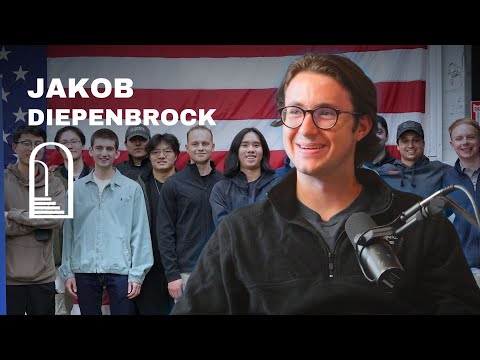
“At the point it was like, let’s just try it out and see what happens. Our first batch has raised like $60 million now in like less than a year. It worked out.” — Jakob Diepenbrock, 0:15
Clip command
yt-dlp --download-sections "*0:15-1:00" "https://www.youtube.com/watch?v=01XUd_dVvWA" --force-keyframes-at-cuts --merge-output-format mp4 -o "60-million-first-batch.mp4"”We Definitely Did That Illegally”
“I think the Airbnb… we definitely did that illegally. Not zoned for business. We had people on cots… Lewis on a cot, Ted was on a cot too.” — Ti Morse, 4:24
Clip command
yt-dlp --download-sections "*4:24-5:20" "https://www.youtube.com/watch?v=01XUd_dVvWA" --force-keyframes-at-cuts --merge-output-format mp4 -o "illegal-airbnb.mp4"”I Sold Them for $100 and Bought Them for $5”
“I sold them for like 100 bucks and I bought them for like 5 bucks… Like nothing, like thirty bucks max total on Facebook ads. I oversold too many and didn’t have anything left.” — Jakob Diepenbrock, 26:49
Clip command
yt-dlp --download-sections "*26:49-27:30" "https://www.youtube.com/watch?v=01XUd_dVvWA" --force-keyframes-at-cuts --merge-output-format mp4 -o "dropship-margins.mp4"”People From High School Now Responding to My LinkedIn Messages”
“When I was in high school, I would LinkedIn connect every single person and nobody would respond. I actually have people now responding to my LinkedIn messages from high school because they see me on LinkedIn now.” — Ti Morse, 23:07
Clip command
yt-dlp --download-sections "*23:07-24:10" "https://www.youtube.com/watch?v=01XUd_dVvWA" --force-keyframes-at-cuts --merge-output-format mp4 -o "linkedin-persistence.mp4"Key Points
- How Discipulus started (0:43) - Began with fireside chats at universities, sponsored by 1517 Fund and Contrary, to find hard tech founders
- Choosing El Segundo (1:31) - Jakob saw Augustus’s tweet about El Segundo and texted him about bringing founders to sleep in his office
- First cohort in a garage (2:11) - First cohort ran out of what was Varda’s space, next to Augustus’s building
- Risk of failure (3:09) - Ti worried about investing $20K and all companies flopping, but every company from batch one raised funding
- Renting an Airbnb illegally (4:24) - The Airbnb wasn’t zoned for business; founders slept on cots
- 6 AM runs every day (7:58) - Daily morning runs during the cohort; some founders were upset but it built culture
- Why not YC model (6:13) - YC is focused on software; hard tech requires different infrastructure and network that can’t just be combined
- Fund vs company structure (10:21) - Chose fund structure over company because of better tax treatment and LP alignment
- Fundraising challenges (12:53) - Relationship-based LP world is hard for young founders; one LP brought whole team on call then blocked Jakob on LinkedIn
- Keeping cohorts small (20:34) - Plans to keep batches at 10-15 people; would rather do 4-5 batches per year than scale batch size
- Two-week format (17:32) - Moving from one week to two weeks based on founder feedback; founders don’t want three-month programs
- Jakob’s first businesses (24:46) - Started at 13 with a Wix watch store (zero sales), then back braces ($1K), then computer stands ($100 each, cost $5)
- Young Investor Network (27:57) - Built TikTok following around investing, then pivoted to organizing events for young investors and entrepreneurs
Mentions
Companies
- Discipulus Ventures (0:23) - Hard tech residency in El Segundo, founded by Jakob
- 1517 Fund (0:43) - Sponsored early Discipulus events; Michael Gibson invested in the nonprofit
- Contrary (0:43) - Sponsored early Discipulus events
- Y Combinator (6:13) - Referenced as comparison; too software-focused for hard tech
- Varda Space (2:11) - First cohort ran in what was previously Varda’s space
- Entrepreneur First (11:43) - Referenced as comparison; recently raised $158M fund
- Cubic Capital (32:38) - Early investor in Discipulus nonprofit
People
- Jakob Diepenbrock (0:23) - Founder and GP of Discipulus Ventures
- Augustus (1:31) - El Segundo-based founder whose building hosted the first cohort
- Ted (4:01) - Cohort 1 founder doing well; Jakob sleeps in his office
- Lewis (4:32) - Cohort 1 founder who slept on a cot
- Michael Gibson (32:38) - 1517 Fund, early supporter of Discipulus
- Josh Manchester (32:38) - First investor in Discipulus nonprofit
- Ben (30:15) - Spoke at Jakob’s Young Investor Network event; connected him to hard tech world
Surprising Quotes
“Everyone got Zyn, everyone got Monster energy drinks, everyone got a whiteboard.” — Ti Morse, 8:53
“I sold them for like 100 bucks and I bought them for like 5 bucks… Like nothing, like thirty bucks max total on Facebook ads.” — Jakob Diepenbrock, 26:49
“I pirated some course off of Reddit on how to drop ship, business guy’s course, and then I basically learned from that.” — Jakob Diepenbrock, 26:18
“I actually have people now responding to my LinkedIn messages from high school because they see me on LinkedIn now.” — Ti Morse, 23:12
“And then he blocked me on LinkedIn. I don’t know why, it was insane.” — Jakob Diepenbrock, 14:10
Transcript
Jakob Diepenbrock: 0:00 My worry was like, are all these 20-year-old guys who have no experience at all going to actually figure it out, or are they going to just like flop?
Ti Morse: 0:08 Why didn’t YC try to build something very similar to this?
Jakob Diepenbrock: 0:11 I think it wasn’t proven, for sure. There was not like a long-term play here. Like, at the point it was like, let’s just try it out and see what happens. Our first batch has raised like $60 million now in like less than a year. Uh, it worked out.
Ti Morse: 0:23 Today I’m very excited to interview Jakob Diepenbrock, the founder and GP of the only Hard Tech Residency here in El Segundo. Your first cohort was, I believe, like last year, um, in early April-ish. Um, but before that, you kind of started off by doing like fireside chats. How did that initially kind of come together?
Jakob Diepenbrock: 0:43 Basically it was a couple events we did at different schools with the goal of like, we got sponsors, like 1517 Fund sponsored one, Contrary sponsored one, these kind of types of funds who basically wanted to see interesting deal flow, and we had an interesting focus because I think people started to know what was going on in like hard tech and American dynamism generally. Um, and then those went really well, a lot of interest from people there. And then the thought was like, what’s the best way to get people who like fit this persona that we’d found through these events and talking to people into a place that like fits the values and the focus of what we’re trying to do? I’d met Augustus around like that summer before, and I saw El Segundo as making sense for a place.
Ti Morse: 1:27 How did you end up, you know, being in El Segundo?
Jakob Diepenbrock: 1:31 Well, I remember we almost did the first cohort, actually, in like San Francisco. We almost did it there. But then I remember I was like in Europe and I saw like Augustus’ tweet about El Segundo, I’m like, this like makes sense for what we care about. And this is after the El Salvador trip. Yeah, this was like, I was in Europe for like Christmas break, and I was just like scrolling on Twitter at night, and then I was like saw the tweet, I’m like, oh like, I know this guy, he’s in El Segundo. Uh, I just text him like, ‘yo, like, this looks kind of cool, can we just like bring a bunch of cots and sleep in your office?’ And then he said yes. We ended up not doing that because we ended up just getting an apartment because it was easier.
Ti Morse: 2:05 Yeah. What, what was it like? ‘Cause you actually did the first cohort in just like the garage on the side of Augustus’ building.
Jakob Diepenbrock: 2:11 Yeah. Well, we did the last one actually, like a lot of it there. Yeah, on the like upper floor, right? Yeah, exactly. It was fun. I mean, that was when it was Varda’s space. Um, so, but there was like nothing there, like it was literally, we just had the whole space, which was kind of cool. Um, so, yeah, it was fun. I mean, the last one, it’s cool like seeing how stuff has grown. Like the first time it was like Augustus had like bottom half, like it was just like a couple people, Isaiah was like there was like a table and there was something on the table. Uh, there was some other stuff, but like it was obviously they’ve grown a ton in the last like less than a year, which is kind of insane.
Ti Morse: 2:46 Let’s say you’re, you know, in your bed at night in December of 2023, I think it was, right? Oh it was. I think it was, yeah. Yeah, you know, you’ve done a few talks like fireside chats with people, you’ve talked with like a few different, I think, funds and like gotten advice and stuff.
Jakob Diepenbrock: 3:00 And you’re designing the program, or what you are considering the program, were you like afraid at all that no one would show up or anything like that?
Ti Morse: 3:09 Yeah. I mean, I think… what… I remember thinking about this… I remember thinking about this. Now that I understand how much these funds don’t care about money, it’s like a little bit less. But I was kind of like, it’s like twenty grand or something like that. I don’t want to just blow it and nothing happens out of it and then it’s just like my chances gone. That didn’t happen, which was good, but I think I was thinking like oh, like all my money in this… none of these companies… all these companies will suck and they just go back to whatever they were doing before. Like, it’s bad for what I care about and then it’s also bad for my career just in general.
Jakob Diepenbrock: 3:38 Yeah. And I also imagine that it’s like bad for, you know, you tried out this thing where you’re like, okay, here, you know, try to help a lot of companies with similar values succeed and suddenly it just like doesn’t work and it doesn’t feel great, you know.
Ti Morse: 3:52 Yeah. Yeah. I think it’s… I think it’s a good sign that all of them have now, pretty much all of them have all raised money. Like, just about one. Yeah. Crazy. Yeah, they had a Series A for the first batch two weeks ago. Obviously Ted is doing really well. So, yeah, pretty much all of them.
Jakob Diepenbrock: 4:15 So the cohort is in March and you’re going to stay in Augustus’s place, decide not to do that. Like how much did it cost with the Airbnb and all of that?
Ti Morse: 4:24 I think the Airbnb… we definitely did that illegally. Not zoned for business. We had like, put people on cots… Lewis on a cot, I remember. Ted, I think Ted was on a cot too. Um, we had like, like basically it was just a house.
Jakob Diepenbrock: 4:46 Were there conversations with the founders before they joined, like, hey, this is a new thing and there may be some kinks?
Ti Morse: 4:52 Well, the first one was like completely like, we didn’t ask for anything beforehand. It was just like come hang out and if it works, we’ll try and make something work afterwards, which we did. No, just come pretty much. And like if it works, we’ll try and make something work afterwards, which we did. But… first one was only a week, so it was like, if it was like three months in cots it would probably be a bigger deal.
Jakob Diepenbrock: 5:29 I think… I think everyone liked it and I think that it was just kind of like… it was like scrappy and it felt scrappy and that’s what people liked about it.
Ti Morse: 5:38 Yeah. Yeah. And yeah, it worked out. Like… yeah, I mean everybody went off to raise money afterwards. So… again, most of them have raised. And it’s like… I think just like living with them, you know, like you’re just like literally living with them, right? Like that wouldn’t work just for like HR reasons for most for most places. So yeah, it was cool. It’s like a good interesting vibe.
Jakob Diepenbrock: 6:13 Yeah, I would also kind of wonder, I imagine that you thought about this a lot, but like, why didn’t YC or some other accelerator try to build something very similar to this?
Ti Morse: 6:25 Well, I think it wasn’t proven for sure. Like, I kind of just took a bet on Augustus, who was like, only raised a pre-seed at the time. But I think, yeah, I think like we had the opportunity to like, we could try stuff out that most people can’t. And then I think, I mean, I think the main issue is just like, I mean, if I’m gonna talk about YC in particular, I think it’s just like, they are so focused on software that like, they just can’t do it. And I think like, yeah, it’s just hard to, it’s just they’re not similar enough where you can like combine the two in a way that makes sense.
Jakob Diepenbrock: 7:54 Do you have any awesome stories from that first batch?
Ti Morse: 7:58 Yeah, I mean, I think like we did like runs every day. It was fun. Some people got mad. I remember there’s one, I won’t say his name, but he tried some edibles for the first time. People were just trying them, and oh, they didn’t feel good. They’re out of it. Yeah, he took it like a boss. But that was fun.
Jakob Diepenbrock: 8:44 Did they also, did you also get the, like, loadout package at last, the first cohort as well, or just this one? For like gear.
Ti Morse: 8:53 That was cohort two was higher quality hardware. Everyone got Zyn, everyone got Monster energy drinks, everyone got a whiteboard.
Ti Morse: 9:04 Amazing, amazing. Okay, what were the biggest like things looking back on that you think from like cohort 1 to cohort 2 you changed?
Jakob Diepenbrock: 9:19 Honestly like not not a ton changed because I think the first cohort worked so well that yeah like I know like we had conversations around what changed between cohorts but it was more like the kind of companies we focused on, like where to find these people, that kind of stuff. It was less of like the actual process.
Ti Morse: 9:53 What were the biggest like levers? Did you keep the morning runs?
Jakob Diepenbrock: 9:57 We did we did, yeah, runs and we did a gym session. I didn’t have enough money to pay for the gym for everybody last time.
Ti Morse: 10:13 How long did it take before like you spent six or eight months raising money after the first cohort?
Jakob Diepenbrock: 10:21 So end of the cohort was like March end of March when the cohort happened. I basically knew I was like I wanted to do something with this in the long term but didn’t know what structure to do. The initial instinct was to do a company.
Ti Morse: 10:53 Why did you decide to not do that?
Jakob Diepenbrock: 10:55 There’s like a clear way to structure a fund that I couldn’t keep behind a company structure. The benefit of doing the fund is better tax treatment and LP alignment.
Ti Morse: 11:22 Investors are also saying like if you raise a million dollars at a 10 million valuation they’re like why am I only owning 10% of a company that doesn’t have anything yet.
Jakob Diepenbrock: 11:32 Yeah exactly. It’s just hard to project anything at that point. Entrepreneur First did it that way actually. They raised recently I think $158 million fund. And the tax is also worse, it’s like 30% tax, double taxation because it’s C corp versus LP where there’s no tax until you make profit.
Ti Morse: 12:05 Yeah. So after you decided to not do that, what were you thinking next and how’d you go through the process of raising?
Jakob Diepenbrock: 12:19 Yeah, I decided I was gonna do the fund structure in June and I spent the summer pretty much fundraising.
Ti Morse: 12:53 Why do you think that was? It seemed like multiple companies had raised already by the time you’re starting the fundraise.
Jakob Diepenbrock: 13:03 It’s just people are so relationship-based and everything like even in fundraising, especially for LP side. And then he blocked me on LinkedIn. I don’t know why it was insane. I had a lot of stuff like that where it was like three calls to raise like 50k or something.
Ti Morse: 14:13 Probably didn’t want to raise from that guy anyway then.
Jakob Diepenbrock: 15:00 How do you think about kind of getting people to support you? Because there’s a bunch of not only founders but also like there are other funds and programs and stuff.
Ti Morse: 15:19 Yeah. Well, I think most people want to help. Like if you say like, hey, we have like 10 of the best founders in the world and we want you to come talk to them, most people are going to say yes.
Jakob Diepenbrock: 16:05 When you’re thinking about trying to scale, what’s the biggest value you’re offering?
Ti Morse: 16:17 Yeah, I think the biggest value we have is we have this network that nobody else can just give you. That’s a lot easier, right? Because especially when you’re early and you don’t have the connections, it’s just like a huge unlock.
Jakob Diepenbrock: 17:22 For this next cohort that you’re going to do, is there anything that you’re going to change drastically?
Ti Morse: 17:32 Yeah, so we’re making it two weeks. First one was only one week. So that’s one change.
Jakob Diepenbrock: 17:38 Why two weeks instead of longer or shorter?
Ti Morse: 17:42 We just got feedback that people don’t want the three months that most batches are. They just think the value is how quick and intense it is. And afterwards if you want to stay, you can stay.
Jakob Diepenbrock: 18:38 Is there a big enough magnet right now where you can get people that could have or might have gone elsewhere?
Ti Morse: 18:45 The culture part, people who we bring in need to know about the Gundo.
Jakob Diepenbrock: 19:20 How are you thinking about actually scaling the program?
Ti Morse: 19:51 You have a privileged position of knowing maybe more of the raw story of what’s going on.
Jakob Diepenbrock: 20:01 Exactly. I think being young, being friends with them, I literally am sleeping in Ted’s office.
Ti Morse: 20:30 Are you going to do anything on scaling the batch size?
Jakob Diepenbrock: 20:34 I don’t want to scale like YC side, but I think 10, 15 in that range.
Ti Morse: 21:03 Right now we’re doing three a year is the plan. I would just do like four or five a year if I could. I just don’t think it ever works well if you have 200, 300 people in your batch. It just becomes so hard. Nobody builds connections.
Jakob Diepenbrock: 21:34 What’s been the most surprising thing for you?
Ti Morse: 21:38 I think a worry was like are all these 20-year-old guys who have no experience at all going to actually figure it out. Like seeing them even during early on, they were across the street actually and it was clear they were building something real.
Jakob Diepenbrock: 22:03 Did any of the people actually build any hardware during the week? Or was it just like vibes, grinding?
Ti Morse: 22:06 No, it’s like vibes, grinding, vibes. Which worked. Like it did.
Jakob Diepenbrock: 22:11 What are you most excited about for the next batch?
Ti Morse: 22:13 I think we’ve hit a point where I’m getting so much inbound now which is pretty cool. First batch I had to ask them to come. Second batch we had inbound, people were excited about what we were doing. Last batch was the first one we invested in all the companies. I think now it’s repeat the same process and show consistency. It’ll be in the fall, September, early October.
Jakob Diepenbrock: 22:59 What’s the hardest thing you’ve overcome?
Ti Morse: 23:01 I think there’s definitely a point where you’re not in network and I think when I was in high school, I would LinkedIn connect every single person and nobody would respond. I actually have people now responding to my LinkedIn messages from high school because they see me on LinkedIn now.
Jakob Diepenbrock: 24:11 I think most people just don’t get to the point where there’s definitely a flip when you’re part of the network. That’s the hardest part is getting people to that point.
Ti Morse: 24:42 All right, so what was the first company that you founded?
Jakob Diepenbrock: 24:46 So basically the first company was actually three companies I started at the same time. So the first one was a watch company called Lusso Luxury Watches and I made a Wix store to try to sell watches. I didn’t know what drop shipping was I just thought it’d be a good idea.
Ti Morse: 24:57 How old were you?
Jakob Diepenbrock: 24:58 Like 13. And it looked horrible. I didn’t want to pay for the premium Wix. So it had the Wix logo on the bottom. Sold zero.
Ti Morse: 25:28 Did you end up selling any watches?
Jakob Diepenbrock: 25:30 None, sold zero. And then the next thing did work, kind of. I figured out what drop shipping was and started selling back braces. And that went pretty well, like a thousand dollars or something.
Ti Morse: 25:54 You evolved from no sales to some sales.
Jakob Diepenbrock: 26:04 The next store was another drop shipping store. This was right during COVID when China shipping was super delayed. I pirated some course off of Reddit on how to drop ship. And then I sold those computer stands that you can stand up and type. I sold a bunch of those. I did Facebook ads for that and Instagram marketing. I sold way too much.
Ti Morse: 26:45 And you couldn’t fulfill the orders? How many of these computer stands did you sell?
Jakob Diepenbrock: 26:49 I sold them for like 100 bucks and I bought them for like 5 bucks. Like nothing, like thirty bucks max total on Facebook ads. I oversold too many and didn’t have anything left. And then literally refunded everyone.
Ti Morse: 27:20 No, it’s perfect. I had the same experience with empanadas.
Jakob Diepenbrock: 27:30 I got banned from TikTok. Or shadow banned basically. If you post financial numbers they flag you. But I think most people just don’t get to the point where they can actually build a following. I instead of trying to sell stuff, I focused on building a community. Started the Young Investor Network.
Ti Morse: 28:21 You just want to help young people kind of thing.
Jakob Diepenbrock: 28:24 Exactly. We started a chapter in London with another kid. And then I remember seeing like people would see my TikToks at school and they would make fun of me.
Ti Morse: 29:29 This was sophomore in high school so you were like 16ish.
Jakob Diepenbrock: 29:40 Yeah 15, 16. I just liked VC. I learned about VC through starting Young Investors Network and I liked VC a lot.
Ti Morse: 30:15 Did you meet Ben at one of those events?
Jakob Diepenbrock: 30:18 Yeah, he talked at one of my events. That’s how I met him originally. And that’s how I heard about hard tech.
Ti Morse: 30:43 Do you think you’ve got a willingness to fail which helps?
Jakob Diepenbrock: 31:03 Yes, I think so. And I started LinkedIn messaging a ton of people because one of the guys told me just talk to a lot of people.
Ti Morse: 31:35 So you give them a reason for engaging.
Jakob Diepenbrock: 31:37 Yeah, exactly. To add some value, which was come to the event, speak and meet a lot of people.
Ti Morse: 31:47 Was there any moment where you were trying to raise and then just decided this isn’t going to work?
Jakob Diepenbrock: 31:56 First cohort was like nonprofit money. We had couple 5k checks.
Ti Morse: 32:00 Why was it nonprofit by the way?
Jakob Diepenbrock: 32:02 Just to prove this out first. And the admin of a one-cohort fund would not be worth it.
Ti Morse: 32:34 Who were the first people that invested or gave you money for the nonprofit?
Jakob Diepenbrock: 32:38 Josh Manchester, I mentioned him. Cubic Capital which is a fund. I think Michael Gibson from 1517 gave me some money. Those were the first ones.