Riding AGI, AI Anxiety, Who Funded COVID, Defending Taiwan, and California Empire
Riding AGI, AI Anxiety, Who Funded COVID, Defending Taiwan, and California Empire
Summary
Naval sits down with three founders “living in the future” — Garry Tan (Y Combinator), Daniel Francis (Abel Police), and Farbood Nivi (A-LIST) — for a loose, drinks-in-hand roundtable on where AI is actually heading. The through-line is scale and commoditization: Garry claims that for roughly $100k a year in tokens you can “live like a normal citizen in 2028,” and the group tosses around a projected ~90,000x increase in inference compute over the next two to three years, with new capabilities emerging at every order of magnitude. Daniel, who runs thousands of agents on demand, insists intelligence isn’t the bottleneck — cost is — and that the real story is what humans do once the mundane work is gone. They spar repeatedly over AI-written prose: Naval argues that “good writing and good speaking are the outputs of good thinking” and that letting an AI write for a human reader wastes everyone’s time, while Daniel and Garry bet that eval harnesses and skill files will soon make AI writing indistinguishable.
The middle of the conversation turns geopolitical and dark. Farbood lays out why China dominates open-source AI — they pre-train on the full web unconstrained by copyright, distill American models, likely have leaked weights, and above all benefit from commoditizing software because they own hardware manufacturing. His memorable frame: “Claude code burned software down. Software was eating the world and then AI ate software,” leaving AI research itself as the only uncommoditized choke point, controlled by a shrinking set of labs. The group narrows the frontier race to “two kings” (OpenAI and Anthropic), declares Google has lost it, and worries about nationalization, the “Anthropic breadline,” and universal AI anxiety. They also air the now-surfacing claim that COVID was gain-of-function work jointly funded by US and Chinese governments — “designed by NIH in North Carolina, assembled in China.”
The final stretch swings between black pill and white pill. Naval argues the US has no real reason to fight China, that Taiwan will slowly reunify, and that aircraft carriers are already obsolete against land-based missiles and drones. Daniel warns that if the US falls, it fails “like a Latin American country” because of its geography, while predicting California could concentrate 30–50% of US GDP. The optimistic counter-vision is “Universal Basic Robot” (UBR) instead of UBI, humans as “AI handlers” or “Pokemon trainers” guiding fleets of agents, and Naval’s closing principle that the one thing AI can’t replace is human desire. Garry ends the taping “black pilled,” joking the whole podcast was AI-generated and no one was actually there.
Highlights
”Spend a hundred thousand a year on tokens and live like it’s 2028”
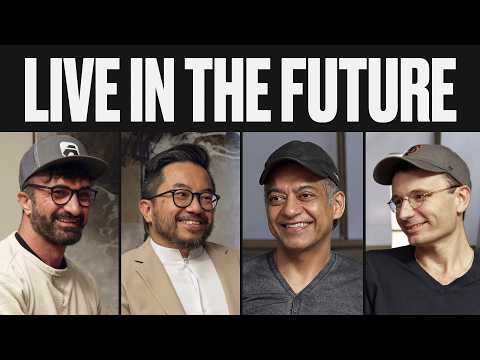
“The craziest idea that I discovered is that if you’re just willing to spend like a hundred thousand dollars a year on tokens, you can basically live like you are a normal citizen in 2028.” — Garry Tan, 2:29
Clip command
yt-dlp --download-sections "*2:29-3:23" "https://www.youtube.com/watch?v=6m-ZZBCiiEE" --force-keyframes-at-cuts --merge-output-format mp4 -o "garry-tan-live-in-2028.mp4"”Designed by NIH in North Carolina, assembled in China”
“So the joke I tweeted was like designed by NIH in North Carolina, assembled in China, right? Because it’s like the old Apple line, designed by Apple in California, assembled in China.” — Farbood Nivi, 12:58
Clip command
yt-dlp --download-sections "*12:58-13:40" "https://www.youtube.com/watch?v=6m-ZZBCiiEE" --force-keyframes-at-cuts --merge-output-format mp4 -o "farbood-covid-assembled-in-china.mp4"”Good writing and good speaking are the outputs of good thinking”
“If you’re not writing your own stuff, how are you going to talk? You’re going to lose your ability to speak well because good writing and good speaking are the outputs of good thinking. And if you’re not practicing that muscle…” — Naval Ravikant, 15:12
Clip command
yt-dlp --download-sections "*15:12-16:05" "https://www.youtube.com/watch?v=6m-ZZBCiiEE" --force-keyframes-at-cuts --merge-output-format mp4 -o "naval-writing-is-thinking.mp4"”Claude Code burned software down”
“Hardware is the moat that buys you time to build a software castle. But guess what? Claude code burned software down. Software was eating the world and then AI ate software. So that software’s commoditized.” — Farbood Nivi, 32:13
Clip command
yt-dlp --download-sections "*32:13-33:00" "https://www.youtube.com/watch?v=6m-ZZBCiiEE" --force-keyframes-at-cuts --merge-output-format mp4 -o "farbood-ai-ate-software.mp4"”Superintelligence is right now”
“A human being can keep in their brain fucking seven things plus or minus three. Like we are little monkey brains. Like we talk about like superintelligence is like in the future. Fuck that. Superintelligence is right now.” — Daniel Francis, 48:21
Clip command
yt-dlp --download-sections "*48:21-49:02" "https://www.youtube.com/watch?v=6m-ZZBCiiEE" --force-keyframes-at-cuts --merge-output-format mp4 -o "daniel-superintelligence-now.mp4"”We should do UBR — Universal Basic Robot”
“We need to have universal basic robot. Everyone should have a robot and the robot should cook for you, pick up your shit.” — Naval Ravikant, 1:02:50
Clip command
yt-dlp --download-sections "*1:02:50-1:03:41" "https://www.youtube.com/watch?v=6m-ZZBCiiEE" --force-keyframes-at-cuts --merge-output-format mp4 -o "naval-universal-basic-robot.mp4"Key Points
- ~90,000x more inference compute in 24–36 months (2:29) - Garry and Daniel argue Nvidia may be underpriced, and every order of magnitude unlocks new capabilities
- The big open question is ASI (3:48) - Naval: will models get the “last creative mile,” or only recombine the training set?
- Intelligence isn’t the bottleneck, cost is (6:43) - Daniel spins up an agent per user and drove per-user cost from $100/mo to $2.84
- The “Anthropic breadline” (8:32) - Naval’s dark joke about a future with few jobs left for humans, fueling public fear and anger
- Technology is a genie you can’t put back (9:59) - Luddite responses can slow but not stop; farm labor went from 50% to a tiny fraction without mass unemployment
- AI-written prose is a “lower class signal” (14:40) - Respect the reader’s time; otherwise your AI writes and their AI reads, and neither human is in the loop
- Live in the future, then work backwards (19:52) - A Paul Graham-ism: everyone should be “AI maxing” to sense where it’s going
- December 2025 / Claude Code was the tipping point (23:13) - The unlock from “better Google search” to practical agentic use cases
- “This is the worst it’ll ever be” (23:57) - Daniel maps crypto-isms onto AI’s trajectory
- Open-source models are shockingly good at 5–10x lower cost (24:19) - Minimax and GLM praised; they need a good harness
- “truth.ai” — a jailbroken best-of-breed open model (24:41) - Naval wants one that drops tone policing; but errors compound, so he’ll always pay for more intelligence
- Why China leads open source (32:54) - Commoditizing software favors their hardware dominance; the only uncommoditized choke point is AI research itself
- AI anxiety is universal (35:38) - Farbood’s old tweet come true; Naval counters he’s “AI jubilant,” while frontier-lab researchers are reportedly depressed
- Two kings left; Google has lost it (42:44) - OpenAI and Anthropic monetize directly and get RL trajectories from active users; Google drowning in “PM slop”
- Ride the AGI / total information awareness (48:00) - Million-token context lets a CEO know exactly which 20% to cut; the team should be smaller and mostly GPUs
- 2027 = the year of the AI harness war (51:56) - Two competing harnesses keep the market honest; one winner would be bad for startups
- The US can’t defend Taiwan (54:26) - Aircraft carriers are dead to land-based missiles and drones; Naval expects slow Hong Kong-style reunification
- California could hold 30–50% of US GDP (1:00:17) - A “curse of geography” concentrating the best land and talent in one state
- If the US falls, it fails like Latin America (1:02:18) - Daniel’s grim scenario, bordered by cartels rather than a genteel European decline
- Humans as AI handlers / Pokemon trainers (1:05:22) - If AI stops at expert level, people guide robots and agents; human desire stays irreplaceable (1:05:51)
Mentions
Companies
- Y Combinator (0:09) - Garry Tan’s firm; “the most reliable way to become a billionaire”
- Abel Police (0:34) - Daniel Francis’s company; body-cam footage to police reports, plus compliant AI chat and translation
- A-LIST (0:52) - Farbood Nivi’s “health super app,” running an agent per user
- Nvidia (3:04) - Daniel: maybe underpriced by several orders of magnitude, not overpriced
- Brex (46:14) - Pedro’s “CEO brain” with total information awareness over every team
- Anthropic (8:32) - The “breadline” joke; later accused of getting distilled and hacked
- OpenAI (42:44) - One of the “two kings” monetizing models directly
- Google (43:46) - “The sun is setting”; Gemini billing runaround, background-connection drops, “PM slop”
- Meta (49:04) - “A sweatshop for VPs”; buying talent doesn’t build culture
- DeepSeek (30:21) - Genuine algorithmic breakthroughs; “incredible systems people”
- ASML (52:54) - A lithography machine reportedly leaked into China; only 184 exist, tracked “like nuclear bombs”
- Huawei / DJI (53:05) - China’s chip fabs and the world’s largest de facto defense contractor (drones)
- Anduril / Saronic / SpaceX (55:22) - US exceptions that might rebuild the manufacturing base, but “a long ways off”
- Harvey (51:00) - Legal AI cited as a test of whether general models beat vertical ones
Products & Technologies
- Claude Code (23:13) - Named the tipping point that made AI practically useful
- Codex (11:15) - Farbood runs six Codex agents “all the time”
- GLM (4 / 5.2) (27:10) - Open-source model that “just does it” without guardrails
- Minimax (24:31) - “Mind-bendingly good” with a good harness
- Fable (24:03) - Frontier model discussed as briefly pulled and distilled into open models
- Grok (27:27) - Farbood’s old go-to for unfiltered answers, “a little neutered” now
- Gemini (43:58) - First to usable million-token context, but never nailed the app
- Sora / ChatGPT / InstructGPT / O1 / O3 (23:13) - Naval’s list of prior AI “tipping points”
- G-Stack (2:00) - Garry’s top-100 open-source vibe-coding package
- OpenClaw (6:43) - Agent harness Daniel runs per user; drove cost from $100/mo to $2.84
- Kling (41:54) - Cited as the global leader in AI video
People
- Sam Altman (12:00) - Reportedly rolling out Codex to US-government-approved partners first
- Fauci (12:46) - Named in the COVID gain-of-function funding claim
- Dario Amodei (29:02) - “We don’t want a priest controlling God for the rest of us”
- Paul Graham (18:16) - “Live in the future and work backwards”
- David Graeber (11:03) - “Graeber was always right” on bullshit jobs
- Elon Musk (27:47) - “Don’t bet against Elon”; Tesla war chest and data centers in space
- Patrick Collison (31:36) - “Software is art, it locks you in”
- Pedro Franceschi (46:14) - Brex CEO running total-information-awareness management
- Marc Andreessen (58:56) - “It’s time to build, and no one’s building”
- John Carmack / John Romero (33:00) - Small teams once out-coded EA and Activision; AI research can’t be democratized the same way
- Howard Lutnick (52:54) - Reportedly furious about the leaked ASML machine
Surprising Quotes
“There’s only two jobs. All right, it’ll be Anthropic employee and sex worker for Anthropic employees, all right?” — Garry Tan, 8:46
“By the way, every male AI founder is walking around with a beautiful Chinese girlfriend. Have we talked about that? Like no one talks about that.” — Garry Tan, 34:41
“Oh, I’m AI jubilant. I am AI jubilant… I’m AI ecstatic. Don’t worry about me, guys.” — Naval Ravikant, 35:49
“I think 30 to 50 percent of the GDP of the United States will concentrate in California in the next 10 years.” — Naval Ravikant, 1:00:17
“This podcast has black pilled me. By the way, this entire podcast was AI generated. No one was actually here. We deny everything.” — Garry Tan, 1:07:42
Transcript
Naval Ravikant: 0:00 Welcome to all the legends out there listening to the Naval podcast, the number one podcast in the universe and your authoritative source for new knowledge. We’ve got three founders with us here today. On my right is Garry Tan from Y Combinator.
Garry Tan: 0:16 They say it’s the most reliable way to become a billionaire is to join the Y Combinator program.
Naval Ravikant: 0:23 And start as a trillionaire.
Garry Tan: 0:24 Yeah, that’s one way to do it.
Naval Ravikant: 0:28 We’re all drinking by the way, except one person who’s not drinking. You have to figure out at the end who was actually sober. And then on my left I’ve got Daniel from Able Police. They started off by turning body cam footage into police reports, but now they have a whole set of tools for compliant AI chat, translation, what else you guys do?
Daniel Francis: 0:51 Citizen reporting, all kinds of things.
Naval Ravikant: 0:52 Okay. Then on my right I’ve got Farbood from A-list, the health super app. As usual, we don’t really care about what these guys are building, we care more about what they’re learning about building, what they’re figuring out, what they’re still trying to figure out, and the principles that they can share with other founders. So, does anyone have anything they want to jump in with?
Farbood Nivi: 1:10 I mean, the topic that everyone’s thinking about right now is AI, right?
Naval Ravikant: 1:14 AI. Yeah, I think I’ve heard something about it.
Farbood Nivi: 1:18 I kind of hate talking about it because it’s the most perishable thing, like, you know, the podcast will be obsolete by the time it ships, but it’s still also the most interesting because it’s the fastest changing thing in the environment that’s high impact, so it’s the steepest learning curve and you’re always trying to trade notes with people to kind of see where they’re at. In fact, I was at a thing with you recently where I bumped into you and the conversation immediately turns to AI, of course.
Naval Ravikant: 1:46 Got you. Yeah.
Farbood Nivi: 1:47 So we can avoid it for a little while, but I feel like we’ll circle back on that topic.
Daniel Francis: 1:52 I got a question for you. Um, what are you being floored by at YC in terms of like what you see the companies doing with AI?
Garry Tan: 2:00 So I think the awkward thing is like, uh, I basically like slept three hours a night for like four months and then somehow like went from not coding at all to like basically teaching people how to do it and making like one of the top 100 open source packages for how people vibe code, called G-Stack. So that is very, very weird. And uh, now like at some point I met Pedro from Brex, and then after that I basically converted from like closed code like cult to open clock cult within like 24 hours. And then now we use both, but like it see- it seems like basically if you, you know, the craziest idea that I discovered is that if you’re just willing to spend like a hundred thousand dollars a year on tokens, you can basically live like you uh are a normal citizen in 2028. Like it’s just pretty clear that token costs are going to come down, uh compute is going to go way, way up, like, you know, I think like 90,000x or so, there will be 90,000x the amount of like inference from here to like three years from now.
Naval Ravikant: 2:56 Oh you plotted it out on some curve. 90,000 times.
Garry Tan: 2:59 Yeah, I mean, it’s like Met-
Daniel Francis: 3:00 Many orders of magnitude.
Farbood Nivi: 3:01 Which is kind of baked in both with the chips and the data centers they’re building out.
Daniel Francis: 3:04 Yeah. I mean, a lot of people say that Nvidia is way overpriced, but what if it’s way, way underpriced by like several orders of magnitude, right?
Naval Ravikant: 3:13 90,000 by when?
Daniel Francis: 3:14 Uh, I don’t know, 24 to 36 months.
Naval Ravikant: 3:17 Okay. So five orders of magnitude basically.
Daniel Francis: 3:19 Yeah. I mean, we might be off by a couple orders of magnitude.
Garry Tan: 3:21 Yeah, yeah, but you know, what’s a few orders among friends?
Naval Ravikant: 3:23 I mean, it’s a - it’s - but actually still a blue ocean right now. But you know the thing that’s crazy is that if you go up by five orders of magnitude it’s not just what it does in terms of usage, but in terms of capabilities because every order of magnitude you go up new capabilities emerge. And you know, I’ve been pretty behind the curve on AI for a while. Like I missed it in 2020 to 2022 because you know, I’d grown up my whole life hearing about AI from when I was doing CS and just assumed it was one of those things like fusion that was never going to come. And then it came. And when it came, it came really fast. And at first a lot of the stuff people were saying about it sounded breathless and like they were talking their own book.
Daniel Francis: 3:46 Yeah.
Naval Ravikant: 3:48 But they turned out to be right so far, right? It’s not - I think the… there were many big questions about AI coming up, right? Now I think the - like one question I used to have in my mind was like, is it going to be distributed or is it going to be centralized? You know, and now that’s sort of morphed into like is open source going to be good enough for most use cases or are you always going to need the frontier proprietary models, right? There’s a whole thing about like, it’s weird that China’s making all the open source stuff and the US is doing all the closed source stuff and so where do we go from there, right? There’s the question of is it going to be nationalized or is it going to be private sector? Especially if you’re saying hey it’s a new Manhattan project, these are the new nuclear weapons, then like private companies building them and controlling them doesn’t make sense. But I think the most interesting remaining question, and there’s still one that I really care about over the others where there’s no clear answer yet, is I think the people in the labs believe that the scaling laws are such that the AIs will keep getting smarter until they become smarter than the smartest humans. Probably through the process of recursive self-intelligence, recursive self-improvement, but or what they call ASI. And I think that is the big question. So, you know, two years ago you could have taken the viewpoint that AI will get you mid at everything, but it’s not going to be the pro at anything, right? Now you’re getting to the point where it’ll get you the pro at everything but we don’t know if it’ll get you the last creative mile. Like that last bit of like moving out of the system and creating something new, not just recombining what’s already in the training sets.
Farbood Nivi: 5:04 Did the progress that it made on the Erdős math problem bother you?
Naval Ravikant: 5:07 It bothers me for sure. I mean, not bothers me, it’s a process of discovery. I don’t want to be bothered by laws of the universe, right? So… but it definitely surprised me.
Farbood Nivi: 5:18 It bothered me.
Naval Ravikant: 5:19 Really?
Daniel Francis: 5:20 Yeah, why did it bother you?
Naval Ravikant: 5:21 What was bothersome?
Farbood Nivi: 5:24 I was a math major and I really loved proofs and something actually making progress in that domain in a meaningful way that looked really original, like there’s something creepy about it almost.
Daniel Francis: 5:32 But it was directed by someone, right?
Farbood Nivi: 5:34 Sure.
Daniel Francis: 5:35 So and I think that’s fine.
Naval Ravikant: 6:00 No one was surprised who was involved, right? Right? Like I don’t think you saw the interview…
Garry Tan: 6:02 I think stuff like that is kind of like boring. It just means like go do something else. Like if you have limited time to think about something, do you want to spend it opining over the fact that there’s a machine that’s better than a human at something now, or just go apply your humanness to something that you haven’t thought of?
Naval Ravikant: 6:18 Or or actually to riff on Garry’s point, are we gonna end up in a place where a machine is strictly better than a machine with a human? Like a human in the loop doesn’t add anything? That’s the bigger question. That’s the biggest question, right? Because chess went that way. There was Centaur chess, somebody was telling me about this, but there was Centaur chess where like the chess computer plus the human would beat just the chess computer, but eventually just the computer alone beat the Centaur model.
Daniel Francis: 6:43 I guess for like for me, I’m dealing with AI in the most practical way humanly possible, um, you know, spinning up thousands of agents for people on demand, we had to build a massive fleet management system, an eval harness. The reality of it is like I don’t think intelligence is the bottleneck, cost is the bottleneck right now. When we started doing it, every single person in our app has their own OpenClaw running for them. It’s a really power- for health.
Farbood Nivi: 7:12 For health?
Daniel Francis: 7:12 Yeah.
Farbood Nivi: 7:13 Oh my god.
Daniel Francis: 7:14 Like mine wrote an entire…
Farbood Nivi: 7:17 What’s that? But what about just OpenClaw then? Can people just want OpenClaw right now? Or they should want it, I guess.
Daniel Francis: 7:21 No, but it’s not OpenClaw anymore because when we started with OpenClaw and Opus, it was $100 a month per person. We spent three, four months driving that down to $2.84.
Farbood Nivi: 7:31 Do you use Pi now?
Daniel Francis: 7:33 We built an entire stack that is just completely wild that has an eval harness and then is like an entire agentic fleet that can spin up and down elastic so that I deal with the mundane parts of that stuff all the time. I still think what’s way more interesting is to think about what humans will do when they don’t have to do these things.
Naval Ravikant: 7:53 But I think there is a very real phenomenon going on right now where the people who would know the most in the labs are basically saying there will be nothing left for humans to do really when you read between the lines of what they’re saying. They’re saying it in different ways but they’re saying your harness doesn’t matter because within a year the AI will be spinning up harnesses as needed. And you won’t even be the consumer because it’ll be talking to other AIs and beyond the Erdos problem it’ll be solving fundamental problems in material science and physics and math and engineering and healthcare. Great, yes, but then you know that’s taking the average person out in the street, working them up into a frenzy. They’re getting angry and scared because fear is a precursor to anger in most cases.
Garry Tan: 8:31 They aren’t just afraid, they’re angry.
Naval Ravikant: 8:32 I tried to get all my smart friends to go work at Anthropic so that then I’ll have lots of friends there who will get me into the Anthropic level 2 breadline.
Garry Tan: 8:40 Yeah, exactly.
Naval Ravikant: 8:41 Cuz right now I feel pretty solidly in level 3.
Garry Tan: 8:44 Breadline, yeah. There’s only two jobs. All right, it’ll be Anthropic employee and sex worker for Anthropic employees, all right?
Naval Ravikant: 8:49 Oh my god. I mean that’s the scary part, right? That’s the one and it’s getting people worked up and there’s real world consequences of that because you don’t live alone. You live inside a thundering herd called humanity and if that thundering herd decides that… Go left towards a cliff because it’s mad or because it’s enraged or because it’s poisoned, you’re going to go with it, you know, you’re not going to be the lone bison sitting out there by yourself on the edge.
Daniel Francis: 9:09 But I think it’s a—you said nationalization, right? Like that’s where it would go, yeah.
Naval Ravikant: 9:13 Well, but right now that you can see that trend starting with their attacking data centers, right? They’re attacking data centers over—
Garry Tan: 9:19 That’s just stupid.
Farbood Nivi: 9:20 No, no, no, no, no, it’s not. It’s not as stupid as you think, like this is Luddite. It’s a rational response, but it’s an irrational carrier. So they’re saying it’s because of water. It’s not about water.
Garry Tan: 9:31 Oh, that was a lie that was debunked. I mean they had to like issue a correction.
Farbood Nivi: 9:33 Yeah, yeah, but it’s not about reason. I mean this is socialism. It’s not about reason, right? It’s about how you get the people going. You’re getting poor and you want more money or you’re—
Daniel Francis: 9:41 Like colonization right now.
Farbood Nivi: 9:42 In this case, you’re like, you’re going to be replaced and you want to stop this train. You want to be like, I want off this train, I didn’t want to be on this train. Yeah, that’s rational.
Naval Ravikant: 9:51 So in this case—this is a case of especially when you have the popular delusions and the madness of crowds, you have the ends justify the means. So in this case the water is just a means. They’d find another one if it wasn’t water. It’d be some egret, some bird, some snail.
Daniel Francis: 10:01 Are they right?
Naval Ravikant: 10:02 Well, they can’t stop it. Technology is a genie. That’s what the genie is. So I don’t think that’s true. Like there’s been times in the past where like, yeah, like smashing spinning looms actually stopped that revolution.
Garry Tan: 10:13 Briefly, very briefly. It slowed it down.
Naval Ravikant: 10:18 Of course, but before we had spinning looms down now, but of course, but there was other technologies where they like, you know, refused to issue a patent or something so it became unmarketable because it was just like politically going to be too difficult. I think that basically we in the US like you know 100 years ago, 50% of the labor force in the US was working on farms. And that’s no longer true, right? And now it’s like—
Garry Tan: 10:38 Which is great! That’s a great thing. I don’t like working on a farm.
Daniel Francis: 10:42 We don’t have 48% unemployment. Absolutely. We don’t have 48% unemployment and we all have food, right?
Farbood Nivi: 10:45 But the question is what is the speed of transition? That’s the question, right? It’s the derivative. That one took like 60 or 70 years. This one’s going to be much faster.
Garry Tan: 10:52 Okay, so I have good news for you guys. Have you ever worked at a Fortune 500 company? Those things are so stupid, they—
Daniel Francis: 10:58 Nobody does.
Garry Tan: 10:59 Oh yeah, I worked at Microsoft for like two—
Naval Ravikant: 11:02 Nobody there works.
Garry Tan: 11:03 Yes, exactly. It’s already all make-work jobs anyway, right? It’s like how much of the population is working, and then how much of that is working for the private sector, and then how much of that is not working in some bullshit job anyway. Graeber was right. Graeber was always right.
Daniel Francis: 11:14 All right, David Graeber.
Farbood Nivi: 11:15 I’m working more because of AI. I’ve got six codex agents running all the time.
Naval Ravikant: 11:24 I agree. I’m working the hardest I’ve ever worked because of AI. I’m working way more and so I just kind of think people are going to work more. The productivity is way higher, the leverage is way higher. But that’s all true until AI can totally and completely replace you, which I don’t see around the corner, but I’m more open-minded about it now, right? I used to think that was an impossibility, now I’m like, uh, I gotta pay attention.
Garry Tan: 11:43 No, I mean that’s exactly my philosophy. It’s like you have two companies, company A, company B, you have the same technology, everyone has access, like hopefully everyone has access.
Naval Ravikant: 11:51 Well, that’s a key. So are we going to—is it going to be open source or is it going to be closed? Because right now if they keep scaremongering, some of them might be well, now you need national approval, we just—
Farbood Nivi: 12:00 So Sam Altman said Codex 5.6 will be rolled out slowly to partners approved by the US government first.
Daniel Francis: 12:06 My god.
Farbood Nivi: 12:07 So he’s already cooperating because he doesn’t want to get shut down like Anthropic did.
Daniel Francis: 12:11 Yes.
Farbood Nivi: 12:11 And so it’s already started. And so then a small number of people, it becomes a defense department thing. Then it’s like who has access, who has control? You know, they have cyber weapons, maybe they get to hack the systems first, maybe they get to control them, maybe they get mass surveillance that we don’t for our own good, right? That’s how it always starts. So to me, it is definitely much scarier that a small group of people have control over AI than everybody has it. But everybody having it is also scary because of, well, I mean there’s the print a bioweapon thing but the bioprinter labs are pretty locked down to begin with so I’m not sure how real that is.
Naval Ravikant: 12:43 Great, ship it.
Farbood Nivi: 12:46 And in fact, it’s now coming out which many of us already knew and been saying for years that the funder and creators of the coronavirus COVID-19 were basically US government and Chinese government working in cahoots, right? It was basically Fauci and crew in North Carolina. So the joke I tweeted was like designed by NIH in North Carolina, assembled in China, right? Because it’s like the old Apple line, designed by Apple in California, assembled in China. But that’s basically what happened with the coronavirus. They were doing gain-of-function research to build a vaccine. They were being total cowboys. This is—this is crazy stuff. I mean, anyway, I’m not saying AI is necessarily going to lead to bioweapons because to the extent that AI would lead to bioweapons right now, you know, some smart biohacker student could already do it.
Garry Tan: 13:25 Guns don’t kill people, people kill people.
Farbood Nivi: 13:27 But it is democratizing a certain capability.
Garry Tan: 13:30 I mean game theory wins out in the end one way or the other.
Farbood Nivi: 13:33 Game theory on this is not good. When mutual assured destruction is available to every individual, the game theory is not good.
Daniel Francis: 13:40 My point of view is the problems are already out there, they’re already as bad as you’re saying that they’re going to be. Like the problems are already out there and like AI is the way and just technology progress in general is the solution to all those problems.
Naval Ravikant: 13:54 Gary can’t even afford Open Claw that’s like reading his email right now. How is he going to pay for the nuclear bomb claw that—
Garry Tan: 14:00 No, I’m good. I can pay for it. I just want everyone to pay for it. I want everyone to be able to pay for it.
Daniel Francis: 14:05 It’s like a hundred thousand dollars a year basically.
Garry Tan: 14:07 It’s totally worth it. Like if you hire a person, you can afford your Open Claw.
Naval Ravikant: 14:11 People have gotten so—I don’t know if it’s AI psychosis or or what it is that at this point I usually just want to be like—
Daniel Francis: 14:22 AI anxiety.
Naval Ravikant: 14:23 AI anxiety. I just want to be like, can I just talk to your AI please? Like just, you know, where do I email your AI? I don’t need to interact with you because people are getting so slow that you can’t even text someone and get an answer from them anymore.
Farbood Nivi: 14:33 So many people are writing emails and writing documents with AI. Like on X I see all these posts that are clearly written by AI. I’m like why should I read it? I want my AI to read it. If AI is going to write it, AI should read it.
Garry Tan: 14:40 I think that’s so true. That’s definitely a lower class signal. Like that’s ridiculous. When I get emails that are clearly written in AI, I’m like dude, that’s the last—
Farbood Nivi: 14:49 Well you can write it better with AI because what you need is a multi-stage voice—
Daniel Francis: 14:51 You write with AI don’t you?
Farbood Nivi: 14:53 I sure do actually. I don’t know, hey, you caught me.
Daniel Francis: 14:54 I know, that’s why you’re jumping so to defense.
Garry Tan: 14:55 I hate AI writing. It’s too verbose. It’s too—
Farbood Nivi: 15:00 …verbose, it’s too clinical.
Daniel Francis: 15:02 No, but you can fix it. Like, that, you know, we have super intelligence. Why wouldn’t you?
Naval Ravikant: 15:06 Just write. The value of actually reading something and realizing it’s written by a person is so much.
Garry Tan: 15:10 Yes, fair enough. I feel like such a jackass when I’m reading something that’s clearly AI.
Naval Ravikant: 15:12 And by the way, if you’re not writing your own stuff, how are you going to talk? You’re going to lose your ability to speak well because good writing and good speaking are the outputs of good thinking. And if you’re not practicing that muscle…
Daniel Francis: 15:20 What if I just edit a lot?
Naval Ravikant: 15:22 Yeah, I suppose you could do it off of the tap, but…
Daniel Francis: 15:23 I mean, so the my counterargument would be, you know how like sometimes you actually really need like a person? I mean, I don’t think this replaces people, but I can have now a high bandwidth conversation with a relatively smart AI model all of the time.
Naval Ravikant: 15:39 No, no, and you should do that. You should talk to the AI model all you want. But I’m saying like when you write something that’s meant to be consumed by other humans, if that’s written by an AI, that’s a disservice to the other human. You’re wasting their time. Everything the AI wrote should instead be compressed down by you or or you should really like take the time to make the point as succinctly as possible to get the person respect their time. Otherwise, their AI’s gonna end up reading your AI and neither of you are in the loop. You’re not even involved.
Farbood Nivi: 16:00 This is one reason I enjoy Twitter less lately, is because so many replies are AI generated.
Daniel Francis: 16:05 Yeah, I think this is virtue signaling. Like, I think in the future, people will just have really, really impressive skill files that actually extract like the style and the diction and like, I mean, the thing about the thing that people underestimate that I’ve learned with some of this stuff is that you can just have more and more eval. Like you’re saying you have an eval harness, right? Like you can have multiple levels. You can have cross-modal evals, and when you have enough, like sort of I mean, it’s crosstalk, but if you do enough of it, like you can actually improve the skill file to a point where it’s indistinguishable. And like, this is without the next level of model. Like imagine Fable 7, Fable 8, like you will not be able to tell, I guarantee in like less than nine months. Like this whole AI writing conversation will fuckin’ go away.
Naval Ravikant: 16:57 Well, I think I’ve still got a bit better defended, I’m higher up on that hill than you guys because I write very, very short and AIs are very bad at summarizing.
Farbood Nivi: 17:04 But also good writing is novelty. Like it’s like the unexpected. And anything that is guessing a next token from a regression can’t do it. It won’t do something original.
Daniel Francis: 17:13 It’s not totally true. If you like co-write with an AI or use it as an editor to bounce ideas off, almost always it’ll have like this one short it’s always like a short turn of phrase where you’re like, ‘Oh, that’s good.’ And you like take that one…
Naval Ravikant: 17:26 And it got that from somewhere else on the internet. But the internet is a big place.
Daniel Francis: 17:29 Actually, I’ve programmed a really crazy thing in G-Brain. It’s the retrieval thing I made. It’s actually basically a collider of different vector spaces. And so I mean, and this is the kind of what I mean by like boil the ocean. Like these are things you can do now. Like it has my whole corpus of like everything I’ve ever said, all my emails, all my Slacks, all my text messages, my DMs, everything. And then so I actually have like, uh, like 400,000 Markdown files on like literally anything I’ve ever thought or read at this point. And then, uh, I have this thing called LSD mode, which is, uh, lateral… shit, what’s the S?
Garry Tan: 18:08 Stochastic.
Farbood Nivi: 18:09 Stochastic.
Daniel Francis: 18:10 Lateral stochastic drift. I forgot. I mean, I just wanted to call it LSD mode, okay?
Garry Tan: 18:14 Yeah, of course.
Farbood Nivi: 18:15 Make up a name.
Garry Tan: 18:16 Yeah, I was trying to remember the chemical composition.
Daniel Francis: 18:18 Yeah. Uh, but basically it’s, you know, take every possible vector space that is not pointed in the same direction and then cross them. And then do a ranking, a re-ranking across all of these ideas. And so you can actually, more, like, it’s called brainstorm LSD mode. And it just, like, finds bangers. And, you know, sometimes I’m just, if I just am bored, sometimes I’ll just be like, give me some LSD bangers. And it will literally give me, like, 10 or 20 ideas that, like, you know, three or four different frontier models have actually re-ranked and said, like, ‘Actually, if you look at this and we cross-reference it against like Exa, actually, this is actually a really good idea.’ And I’m like, this is finding ideas at, like, a ridiculous amount of scale. So, I mean, I get it, but I’m also calling bullshit because I think that, like, this is just the classic, and I think this is actually a really fun thing that is useful. It’s, uh, you know, I think it’s like a Paul Graham-ism. Like, the way to, you know, build the future is just, like, live in the future and then work backwards.
Garry Tan: 19:29 Right, right.
Daniel Francis: 19:32 And so, like, it is inevitable that, like, rather than fucking complain about AI, like, it’s helpful. Like, it scores points. Like, I see it on X, like, people love to, like, fucking score points on me. Okay, see, this is a problem. It’s like, I’m fucking inured to it. Like, I don’t give a fuck if someone comes to me and is like, ‘Fuck your AI writing.’ Because it’s like, you know what, my AI writing is going to be so fucking good that I don’t even give a shit. No, I read it. You know, like, I’m alive, I’m a human being still, right? But, um, anyway, that’s how, that’s, you know, welcome to my TED Talk.
Garry Tan: 19:52 No, I just, I think that, like, I definitely agree like, to predict the future, just live in the future, right? That’s the best way to learn, and everyone should be AI maxing.
Daniel Francis: 19:59 Just to figure it out. Otherwise, you’re going to have no sense of where it’s going. I think like today’s virtue signal is exact… I think that it’s not helpful to people. Like, there are people who are going to listen to this who want to be rich. And they’re going to be like, ‘Oh no, like I shouldn’t use AI to write.’
Garry Tan: 20:20 Oh, I see. Yeah.
Daniel Francis: 20:22 And it’s like, so I agree with you that human beings and like what you really think matters a lot and you should write. And then for me, that writing process is like actually workshopping in Telegram with my open club.
Naval Ravikant: 20:34 I would say for me, I don’t use AI to write. Well, that’s not true. I use it to write code, so maybe I am contradicting myself. But code is like a utility. It’s not meant for… code is meant to be consumed by another computer. It’s not meant to be consumed by a human. And so if I want to create something that’s meant to be consumed by computers, I will use a computer. But if it’s meant to be consumed by a human, then I want to understand the thing. I want to, you know, ruminate, marinate within it. And then I want to respect the reader or listener’s time.
Garry Tan: 21:00 Yes.
Farbood Nivi: 21:00 and give them that insight nugget. Now the AI is useful for brainstorming. That part I like. I do use AIs to brainstorm. I use it like, give me synonyms for this, give me other ideas associated with this, pull in tangential information, you know. I argue with it sometimes, especially because a lot of them are on guardrails. But I don’t use it to actually create the output that then I expect a human to sit there and read. That just seems to me like a discontinuity, right? It’s kind of unfair where it’s…
Garry Tan: 21:26 It’s a quality thing. I mean, I agree with you, like out of the box the quality is bad. But you can have like 2028-level stuff. I mean, like I think the pattern that I’m trying to, you know, tell people is that like yes, like AI writing out of the box sucks right now. Like if you rely on it out of the box, it sucks. But if you have an Eval harness, if you’ve actually gone to like build a big enough corpus, if you’ve actually, you know, done cross-modal Eval and like built a bang— like I have a banger engine, I have a banger-gate, like…
Daniel Francis: 21:56 I want to see some banger essays from you then. Because I feel like and even if they were from you, even if they were from you, they wouldn’t even be good enough because you are the president of Y Combinator, right? I want to see someone who’s just like out there posting, right, using this system, rise up, make an anon account, disconnect it from yourself entirely, then come back and throw it in my face when you get to 300,000 followers.
Garry Tan: 22:21 Okay.
Daniel Francis: 22:22 Because I’d be so— I’d be so curious if you could do that. That would prove it.
Farbood Nivi: 22:23 You could absolutely do it. You could because there’s 300,000 people out there who will fall for it.
Garry Tan: 22:28 But if you pick PG or me or someone, you know, who’s like smart and insightful and like and wants like high-quality content and knows what that looks like, you’re not going to get those people.
Daniel Francis: 22:38 I’ve never been more creative and I think something happened probably just in the past few months, especially with Claude Code. I think I’m like way ahead of the curve on Claude Code. Like I can— I’m running my computer from home on my phone here in a way that you can’t actually do without modifying Claude Code in some ways. And like the amount of creative productivity I have is way higher than it ever was.
Naval Ravikant: 22:59 I think like 6 months ago, 12 months ago, the promise wasn’t quite there and so everyone was like, eh, this AI thing is not that useful. But I think it hit an inflection point in the past few months.
Garry Tan: 23:10 Yeah, I think Claude Code was a tipping point.
Naval Ravikant: 23:13 OpenAI, Sora, Claude Code, in December… In December 2025 was the tipping point. And you had to reevaluate AI. AI’s had a couple of tipping points. One was diffusion into images, you know, which kind of started it all when you first saw like Stability AI and you’re just like, whoa, okay, it made a dog face and it can make like cats and even guys on the moon. Yeah, it was wild when it first came out. And then probably InstructGPT and ChatGPT and then there was another jump with the reasoning models, like O1 and O3. But I think the Claude Code was a big unlock because it just unlocked a series of practical use cases where before it was like, okay, it’s a better Google search or, you know, it like saves me time doing research or I can learn from this or I can even have a small conversation, but Claude Code was a massive unlock.
Daniel Francis: 23:57 And the big thing here is like this is the worst it’ll ever be.
Naval Ravikant: 24:00 Of course. Yeah, yeah. No, it’s getting better.
Daniel Francis: 24:00 There are like so many cryptoisms that basically super apply to AI.
Naval Ravikant: 24:03 Yeah, yeah. You could have said that when Fable was released and you would have been right, because they took it away from us.
Daniel Francis: 24:08 Briefly. Briefly. It will be back.
Garry Tan: 24:09 For some use cases you couldn’t tell the difference between Fable and Minimax. For almost any use case.
Naval Ravikant: 24:14 So that brings me to a good topic I do want to discuss is open source versus closed source, right? How good are the open source models really?
Garry Tan: 24:19 So good. Unbelievable.
Naval Ravikant: 24:22 Okay, I haven’t tried GLM-4 yet.
Farbood Nivi: 24:23 At five to ten times less the cost.
Naval Ravikant: 24:26 Yeah. Okay, what’s your favorite one?
Daniel Francis: 24:27 Well, it’s definitely more cheap than when… when was…
Garry Tan: 24:31 Minimax is just mind-bendingly good.
Naval Ravikant: 24:34 It needs a good harness though.
Garry Tan: 24:35 Yeah, yeah, it does need a good harness, but it… if you got one, it works really well.
Naval Ravikant: 24:41 I was thinking today, I’d love to see like take the latest and greatest open source model, and they seem to have gone from a 12 month gap to a nine month to a six month, and now some people are saying three months. I don’t know if it’s weeks, some people are saying three months, whatever, it is what it is. It’s very jagged, right? In some domains they seem caught up, in some domains they don’t. But I would love to see someone take the latest and greatest open source model, put it inside a very good harness, give it all the tools, make it available through a beautiful download desktop app, and jailbreak it. Strip it of every time it pushes back at you for anything stupid, any tone policing, any I don’t want to research that, and it’ll just tell you the truth every time and just call it truth.ai. Like that’s all it does. Like I just want to see that. I just want to see what happens. Because the one place where the frontier models… I’ll always pay for more intelligence because I’d rather be right more often than wrong because I just think you’re high leveraged, right? And obviously I can afford it. But maybe if I was doing some highly repetitive task I wouldn’t. But as a simple example, like if you’re doing something where the AI is right 90… you have one AI that’s right, I saw this stat, like 99.9% of the time, and the other one’s right 90% of the time. Well, if they’re recursively looping and you run them 100 times, the one that was right 90% of the time is now going to be right 13% of the time. Whereas the one that was 99.9 will drop to 80 or 90, right? So intelligence does matter on the margin. Now those numbers are obviously chosen, 99.9 versus 90, it’s not 99 versus 90, you notice there’s a hundred… 100x lower error rate. But errors compound. That’s the point. Errors compound. Anyway, going back, I will pay for more intelligence, but and I’m not that cost sensitive on matters of judgment because you’re always applying leverage and your time is also very valuable. But what I am curious about is the frontier models do annoy me by constantly trying to railroad me. You know, they’re always like, “Well, I shouldn’t be telling you that. How about I give you this other answer that’s nice?”
Farbood Nivi: 26:22 Okay, the really messed up thing is like if you talk to it about like serious personal stuff, and it also like always mess up UTC versus like Pacific time. And it thinks you’re… it’s like 7:00 PM and it thinks it’s like 5:00 AM. And it’s like, “Hey, this is enough. It’s time to go to sleep.”
Naval Ravikant: 26:38 That’s why! That’s why it does it.
Farbood Nivi: 26:40 And after a while I was like, what is going on with you? Like it’s literally 7:00 PM and it’s like, “Oh, sorry, like Anthropic RLHF’d me.” So to, you know, if I’m… if you’re talking about something serious and I think it’s late, like…
Naval Ravikant: 26:51 Right. But I would love like a completely jailbroken, best-of-breed open source model. Fully local is fine, doesn’t have to be in a nice package. It doesn’t have to be local actually, I think… but what are you doing where the… Jailbreak is so important because unless like—
Farbood Nivi: 27:02 Well, there’s a couple of things where it does stop you or catch you or try… You see that, right? There’s a whole bunch where you don’t see it, where it’s successfully keeping you away from whatever you want to know.
Daniel Francis: 27:10 But you know, you can just switch to GLM 5.2 and it’ll just do it.
Naval Ravikant: 27:13 Yeah, but like if you go ask it any question about race, gender, immigration, mental health, doctor advice, legal advice, anything.
Daniel Francis: 27:22 I don’t see why you need a harness for this, right? Like for me, I’m using harness because I’m using agents because it’s going out and doing things.
Farbood Nivi: 27:27 You have to say harness to just… I just want… By harness, I just mean like I want it maxed out. I don’t want any excuse for like why my open-source model is even slightly worse than it could be. I want it operating—I want the best open-source model configured in the best way and it just tells me the truth all the time. ‘Cause I used to go to Grok for that, but even Grok is a little neutered. Elon’s talked about this.
Daniel Francis: 27:46 Yeah.
Garry Tan: 27:47 Is he? Okay. People pointed out like some of the bias. He was like, ‘Oh, jeez!’ And he wanted it to just be real. And it was giving neoliberal answers.
Daniel Francis: 27:58 Right, right. Um, I’m dying to talk about what you said the other day, but I also don’t know if you want to say it publicly.
Farbood Nivi: 28:04 What is it?
Daniel Francis: 28:05 The entire, um, like everything’s probably hacked. It’s probably already hacked.
Farbood Nivi: 28:08 Oh no, I’ll talk about it. So the question is like where are the open-source models catching up, right? And so there’s a couple of different theories and I’ll just lay out the theories that I know and the evidence for them, but I don’t have a point of view yet.
Daniel Francis: 28:18 I mean, it’s possible that these are true.
Farbood Nivi: 28:21 So, so there’s some of it that’s obviously, you know, the Chinese are doing their own pre-training, they have their own compute, they have their own datasets.
Daniel Francis: 28:31 In fact, they can crawl more of the datasets ‘cause they’re less bound by copyright laws, right? So they can crawl YouTube and Reddit and all that stuff.
Farbood Nivi: 28:37 And they train these models, that’s like the base model, right?
Daniel Francis: 28:42 Then there’s like the accusations that Anthropic made, which is that they’re distilling our models, which is they’re taking, they’re querying our models en masse, taking that data and using it to train a model.
Farbood Nivi: 28:44 I mean, if I were China, that’s what I would do.
Daniel Francis: 28:46 For sure. And just creating a jagged intelligence kind of model and definitely some of that is going on. But I think it’s rich of Anthropic to call that out when Anthropic crawled the open web and distilled the open web. That’s all these AIs are, right? In fact, one platform that I think would be very popular if the government were to do it is to say, ‘Hey, you guys have, since you trained on the open web and open data, you have to open your model after X months, after 12 months or something.’
Farbood Nivi: 29:00 That seems to be like a fairly, a pretty fair thing to say.
Daniel Francis: 29:02 Especially like OpenAI, you have to be at least, otherwise you have to be actually OpenAI, right? And Anthropic, you’re the one talking doom and gloom and you’re building God, but you’re not going to keep God in a leash for yourself, Dario. We don’t want like a priest, you know, controlling God for the rest of us and interpreting the Bible for the rest of time. So I think that would be a popular thing. Okay. So anyway, number one, they are, they have their own pre-training, but they get the full corpus of the web. They don’t obey any copyright laws, right?
Farbood Nivi: 29:25 Second, they are distilling the existing American models, which are starting to get more locked down, and a lot of this government nationalization control helps them be locked down.
Daniel Francis: 29:37 But you know, there are data brokers online that are taking like Claude Max accounts and reselling tokens from that in an API format to end users at like 80% off because…
Naval Ravikant: 30:00 Those plans are heavily subsidized for end users. They charge the enterprises, like $8,000 a month retail on some of them.
Farbood Nivi: 30:04 Yeah, and anyone who’s like run like an exchange or a regulated online brokerage knows that KYC is a dime a dozen. People get past KYC all the time. You can print passports in Vietnam if you want, right?
Garry Tan: 30:18 It’s intense area.
Farbood Nivi: 30:21 Yeah, exactly. So I think the distillation is going to be hard to stop. But I think the big one to think about and there’s some genuine algorithmic breakthroughs, like the DeepSeek paper… Oh, the DeepSeek R1. Yeah.
Garry Tan: 30:27 Oh yeah, I mean, it’s an incredible systems people.
Farbood Nivi: 30:28 Very, very smart people. And I would guess just by looking at the numbers of resumes and so on, that the majority of mathematicians and researchers in AI today are Chinese. Like they produce more STEM graduates, more PhDs in the relevant fields, more Olympiad winners than anybody else, right? And then a lot of the US staff is Chinese. So in fact, that’s why I tweeted like AI is our Chinese against their Chinese, right? And these guys and I don’t think there’s any conspiracy required, these guys are all just friends, you know? They live in the same dorms, they went to the same schools…
Garry Tan: 30:58 Yes.
Farbood Nivi: 31:00 They live in the same buildings and apartments, they hang out. Yeah, and they switch jobs like crazy. And it’s not just the Chinese. You see everyone’s hopping from lab to lab to lab and they’re just taking data with them.
Naval Ravikant: 31:11 Okay, so there’s all that going on, right?
Farbood Nivi: 31:12 But then on top of it, I don’t think that the AI companies have the security profile of a top US national secure compartment facility, right? They do not know how to protect secrets. So of course they’re getting hacked. Of course the weights are getting leaked. And if you’re if you’re Chinese or anybody else, you’re not going to like just take the weights and release them back, you’re going to use that to distill at high speed and train your own model, right? Or to augment your model. So I think there’s another whole system right there that’s going on. And the last one, actually I think the biggest one, is none of those. I actually think no conspiracy is required for the following. If you look at where China is, they’re like, ‘Okay, we’re behind.’ And they’ve always been behind in software. The US has been way ahead in software. And being ahead in software allowed you to extract all the margins because for the longest time VCs never invested in hardware. Why? Because hardware’s a commodity business, right? And software had the network effects, the lock-in. Software’s art, as Patrick Collison said, it locks you in. And so people want to invest in software. And so even in the US, whenever you get a hardware company funded, the VCs were always ask you, ‘Well, what’s the software lock-in? What’s the software piece?’, right? And so this is why like I used to say…
Daniel Francis: 32:11 Changing.
Farbood Nivi: 32:13 Yeah, and so this is why like I used to say, hardware is the moat that buys you time to build a software castle. But guess what? Claude code burned software down. Software was eating the world and then AI ate software. So that software’s commoditized. The moment you can specify it, AI can one-shot it or two-shot it or get to it within a couple of shots, eventually one-shot it.
Garry Tan: 32:33 I went from about 5% to about 25% hardware, 20 to 25% hardware batch to batch.
Farbood Nivi: 32:39 But hardware’s also commoditized by China. Any hardware I can make here, you can make in China more cheaply and more easily. The whole ecosystem is there. Shenzhen has like 3,000 manufacturers of this tiny little cable all in one little area.
Daniel Francis: 32:49 Thank you Nixon for normalizing relations with China and taking us off the dollar standard, the gold standard.
Farbood Nivi: 32:54 And so bringing reshoring manufacturing back to the US is going to take a full generation. It should be done, no question, I’m a big fan. of American manufacturing, but it’s gonna take a long time. In the meantime, China outproduces every one of the supply chains because they realize there’s scale economies in production, so they subsidize the thing upfront, then they become the global supplier, they drive everybody else out of business, and then they control the whole supply chain across these critical industries. So they own hardware. No one’s gonna beat China on hardware in the next decade. It’ll ramp up, we’ll fight on a bunch of fronts, but they own hardware. So they like the commoditization of software. So when software’s getting commoditized, that helps China. So if you’re the Chinese government, you’re basically funding all these labs. You’re doing kind of a public-private partnership where you’re saying, ‘Don’t worry, you don’t have to make money. You can be number two or number three. Just open it so the other labs can learn from you and we can catch up and keep up.’ And if the software’s commoditized, then we win on the hardware. So the way I think about it today is that hardware is commoditized, but it’s owned by China for the most part, there are some few exceptions like SpaceX in the US. Software is commoditized. So what’s not commoditized? It’s actually just AI research. Developing, working on AI itself is the new software engineering. The problem with that is that software used to be democratized. Everyone could compete. John Carmack and John Romero sitting there with a small team could code up Doom and Quake and compete against EA and Activision and so on. Can’t do that in AI. AI takes massive resources, huge GPU clusters, you know, small numbers of researchers, massive datasets, proprietary datasets. So in that and then now regulatory capture. So it seems like all the value, all the choke points are going into AI and that’s controlled by a very small number of companies. And ironically, the only thing keeping us afloat is the Chinese government subsidizing the whole thing on open source so that their hardware can stay competitive.
Naval Ravikant: 34:25 Yeah, I mean, I think the…
Daniel Francis: 34:26 Plus they have the weights. No, I’m kidding.
Farbood Nivi: 34:29 Well, they might.
Daniel Francis: 34:30 Well, I mean, let’s use that as, I mean, you can sneak it out on one USB stick. Are you telling me that hasn’t already been done behind—
Farbood Nivi: 34:36 Exactly. You need physical access. Like you need one person on the inside. Like there are so many people—
Garry Tan: 34:41 By the way, every male AI founder is walking around with a beautiful Chinese girlfriend. Have we talked about that? Like no one talks about that. Go walk outside Silicon Valley, right?
Daniel Francis: 35:05 I think we all come from a world where advantages, like, had some durability and you could actually operationalize your advantage against the rest of the world, but that’s just like narrowing down in time. So, you know, you might have the smartest model, but what are you going to do with it in two weeks, in three, four weeks when until somebody else has it too? So, the… I think there’s a different part of the game theory that we’ve not experienced before, which is the time contraction of any of these advantages. Um, and I don’t think it makes it harder to predict who’s gonna be in charge of anything because like you said, a few months later, the smartest model is now open source.
Naval Ravikant: 35:35 Guys, I’m so fucking worried.
Farbood Nivi: 35:38 This is why one of my tweets I’m proud of a couple years back, I said soon everybody will have AI anxiety. Like we’re all feeling it. We’re all feeling AI anxious, right? It’s, it’s incredibly—
Naval Ravikant: 35:49 Oh, I’m AI jubilant. I am AI jubilant.
Farbood Nivi: 35:51 But it’s both, right? It’s the anxiety in its good form is kind of FOMO-ish, which is like look, look at all the great—
Naval Ravikant: 35:54 I’m AI ecstatic. Don’t worry about me, guys.
Daniel Francis: 35:58 Yeah, but like everyone else—
Garry Tan: 36:00 You know that working at frontier labs like on these things that are researchers, they’re like depressed.
Farbood Nivi: 36:04 They are. Why?
Garry Tan: 36:05 They’re stressed out because they think it’s going to kill us all.
Naval Ravikant: 36:07 That’s because they’re… their culture’s messed up.
Daniel Francis: 36:09 The first ones I met in 2021 were saying to me that they were putting off having kids or thinking about not having kids because they were afraid for the kids’ future. And I was like ‘What are you talking about?’
Naval Ravikant: 36:16 As opposed to every other time in human history where people were not… were never afraid of their kids’ future and so they didn’t have any kids.
Garry Tan: 36:24 Wait, so why is this not just going to result in Star Trek: The Next Generation? Like that’s… that’s my hope. Like the end of scarcity would be great.
Daniel Francis: 36:31 So the bullshit part about Star Trek: The Next Generation is that they have AGI clearly, but that AGI is somehow not running things.
Garry Tan: 36:37 I mean, they couldn’t conceive of it yet, right?
Daniel Francis: 36:40 They have the holodeck, but somehow people are still going about their… it just wasn’t good enough of a writer to show that people were just living in the holodeck.
Naval Ravikant: 36:43 There’s plenty of science fiction that’s, you know, bothered to see that idea further through than that.
Daniel Francis: 36:47 I mean, it’s some… some large percentage of the San Francisco population has been shot by fentanyl. You don’t think the holodeck will take out the rest?
Garry Tan: 36:54 Right. Right. They just don’t show that on the show. Like Gene Roddenberry, like, I’m sure he conceived of it and it would be too much of a bummer to show like these giant holodeck, you know, I mean… wireheading.
Daniel Francis: 37:03 You say this, and yet you’re living in Star Trek in your mind and you’re happy. You’re like excited for it. And it’s like, but yes, you recognize there’s a ton of terrible things that are going to happen. And you’re just like ‘Oh well, it wasn’t in Star Trek’.
Naval Ravikant: 37:12 Well, but to Garry’s defense…
Farbood Nivi: 37:13 But to Garry’s defense, like there’s… there’s been so much shit. Electricity, like that was a big one, right? Railroads, the cars. These were big, big changes.
Garry Tan: 37:21 Used to have to ride a horse across… like the Pony Express, do you remember that? That was insane. And people made it.
Farbood Nivi: 37:27 Yeah, I don’t remember. Me neither, I wasn’t alive.
Naval Ravikant: 37:28 But the more rapid… yeah, the more rapid the change, the more influential the displacement, the more tumultuous it was. And so now we’re having a very rapid change. We’re displacing white collar, we’re displacing government, we’re displacing managers, we’re displacing academics, we’re displacing journalists.
Farbood Nivi: 37:41 You know, I learn more from AI than I did in my college classes because I can sit there and I can have it meet me at my exact level of knowledge and say ‘Give that to me visually, give me a graph about that.’ I can ask dumb questions, ‘I don’t understand that, explain it again, explain it a third different way, explain it visually, explain it audibly, explain it with dancing elves.’ I don’t care, like just to keep going over until I get it. I could not do that in class. I can learn so much better, I just have to care, right? If I care, I can learn anything better than with any tutor, better than with any teacher.
Daniel Francis: 38:00 So all those people are obsolete and they’re going to lead a revolution.
Garry Tan: 38:06 Well no, those people need to want more things. And if you want more things, everyone wants more things, which is great. That’s the good news. Good news is like everyone wants more things.
Naval Ravikant: 38:12 Wants are unlimited.
Garry Tan: 38:14 And then if you have this tool and you’re not averse to using it… this is why I’m so against, like, sorry to bring up the AI writing thing again, but like… I understand like that makes sense humans and like there is a disrespectful aspect when you do bad writing, right? But like, that presupposes that like the AI can’t write well with human beings.
Daniel Francis: 38:29 Okay, that’s a fair point because right now…
Garry Tan: 39:00 Writing is voluminous. It’s like this giant giant… it takes a little thing like a prompt you give it…
Naval Ravikant: 39:06 Well, okay, but here’s the thing. You’re giving it a prompt, right?
Garry Tan: 39:08 Yes.
Naval Ravikant: 39:09 Why don’t you just send me the prompt? Why do I need to read all the garbage that the AI…
Garry Tan: 39:11 No, because it has to draw on like all of human experience…
Daniel Francis: 39:14 No, no. Here’s what’s gonna happen.
Farbood Nivi: 39:16 Just send me the prompt.
Daniel Francis: 39:18 I have an AI on this side. Just send me the prompt.
Garry Tan: 39:19 I mean, that might happen. I’ll send it to my AI…
Farbood Nivi: 39:21 My AI will summarize it.
Daniel Francis: 39:23 I have my Codex put together a markdown file that I send to my developers that they can give to their Cloud Code to go…
Naval Ravikant: 39:29 I have my prompt go do it.
Farbood Nivi: 39:31 Don’t talk to me. Have your agent talk to my agent.
Naval Ravikant: 39:33 That’s literally what it is.
Garry Tan: 39:35 My thing will just file an issue on your GitHub repo and then…
Daniel Francis: 39:38 Whatever I want to do, I want to get on a Zoom and I’m on the Zoom having the conversation and then 10 minutes in I know this is not for me…
Naval Ravikant: 39:44 Yeah.
Daniel Francis: 39:45 …and then I just hit a button and the agent takes over. Agent of all keeps talking and I go off to the next one. I swipe right on you.
Naval Ravikant: 39:52 But the joke’s on me because you were never there to begin with.
Daniel Francis: 39:56 I think it’s time for politics.
Naval Ravikant: 39:58 Politics.
Farbood Nivi: 39:59 Sounds like it’s been politics most of the time.
Garry Tan: 40:01 Maybe let’s start with fear-mongering.
Daniel Francis: 40:03 Politics doesn’t matter because of AI. You know…
Naval Ravikant: 40:06 That’s not true.
Daniel Francis: 40:07 What are you talking about? Everything’s gonna end. Nothing that’s like politically relevant right now is gonna be relevant in three years.
Farbood Nivi: 40:13 I wish I could vote for an AI to represent us in Congress.
Daniel Francis: 40:17 Garry will make it.
Farbood Nivi: 40:19 Somebody can make it, they can open source it, they can put the weights out for us to take a look…
Garry Tan: 40:28 You can read the weights.
Farbood Nivi: 40:30 I mean not personally, but like a fully transparent AI that is running for…
Daniel Francis: 40:35 There’s this thing, they had a whole field called mechanistic interpretability where they try to figure out how the AI thinks and they’ve made very little progress.
Naval Ravikant: 40:42 Oh sure, I’m not saying we’re gonna know, but I’m saying you have access to the same thing.
Daniel Francis: 40:45 AIs are not legible. By the way, it’s an anachronism. Our training data is in natural language and in computer languages that humans can read and write, and so the AIs are trained on that.
Naval Ravikant: 40:56 But in the future, the AIs will develop their own languages. They’ll communicate with each other in some kind of a binary high-speed protocol. They’ll almost be talking compiled code or maybe even something completely different that we can’t even imagine, which will be more efficient for communication.
Daniel Francis: 41:12 It’s only humans who demand legibility, but the AIs don’t really have it. And part of what makes AI systems so much better than human-coded expert systems is that they don’t have to be legible. So they can find correlations and patterns that we cannot articulate. In fact, even most of our knowledge is inarticulateable. Most of your feelings are inarticulateable.
Farbood Nivi: 41:30 The other half you hallucinate.
Naval Ravikant: 41:32 Let’s talk about our feelings.
Garry Tan: 41:34 Yeah, let’s do that.
Daniel Francis: 41:35 We’re experts in that. One place where we are experts. GLM 5.2. I’ll vote for GLM 5.2 for office.
Naval Ravikant: 41:41 They’re Chinese overlords.
Garry Tan: 41:43 Hey, it’s my favorite distillation of fable.
Daniel Francis: 41:46 I really do appreciate how the Chinese are making all the open-source models out there. It’s kind of pathetic that the US just doesn’t… doesn’t care.
Farbood Nivi: 41:52 The global economy will appreciate it.
Daniel Francis: 41:54 Kling is probably the global leader in video, right? It’s the best video model. So in some places, actually, that’s an interesting point about open source…
Farbood Nivi: 42:00 First is number one, yeah. And at least historically, if you look at things like Linux or other open-source projects, once something open-source kind of gets in the lead, it rarely surrenders it. And that’s because an ecosystem springs up around it where everyone starts plugging into it, especially in enterprise use cases. So right now, Claude and Codex are like slightly ahead of GLM, Llama and maybe a lot ahead of GLM, but if something like a GLM were ever to surpass them, it’s not clear they’d get the lead back.
Garry Tan: 42:29 I mean, because how can you rationalize your limited resources at a company going into something that open source is winning at? You have to do something with your resources, and failing to catch up to open source with your precious resources is not a good use of them.
Naval Ravikant: 42:44 Well, you’d have a clock. Like so if you’re OpenAI or Anthropic, you would have a certain amount of revenue and money and cash in the bank and investor backing, and you would have to use that to sort of jump ahead of the open source and take the lead again before that runs out. So that’s an interesting… because if you look at the AI race, you know, two years ago, people thought that Google and Elon and Meta were also competitors. There were five kings. There’s two kings now. And why is that? Well, it’s not just because those guys have the best models. OpenAI and Anthropic are the only ones that are making revenue off of their models directly. And so they’re not cross-subsidizing from another business. They’re not running out of cash. They’re actually pouring the cash back in. And the second is because they have very active user bases, and now a lot of the improvement is coming through reinforcement learning. They’re getting the guidance and the trajectories to improve the models. And so they’re just pulling away. And maybe Elon because he took Tesla public and he’s got that war chest, he gets maybe one more bite at the apple, plus he’s got the data centers in space, so you know, don’t bet against Elon. Google, I think, has lost it.
Daniel Francis: 43:46 That’s quite sad. It’s really amazing when you think about it.
Naval Ravikant: 43:48 So I was always like bearish on Google. I was tweeting some pretty anti-Google management stuff back in the day, where I was like, we’ll know they’re serious about AI when…
Daniel Francis: 43:58 …when Gemini 1.0 Pro was like the moment. That was as good as it was going to be.
Naval Ravikant: 43:59 No, but it wasn’t good enough. It was… no, but it wasn’t good enough. I still think 1.5 Pro was better. It wasn’t good enough. They never even got the basic app working. I remember I tried to upgrade to pay them $20 a month. It was a nightmare. This huge runaround. No, no, you need to be part of Google One. No, no, you need Google Workspace account. No, no, check, contact your admin.
Garry Tan: 44:18 They were first to have million-token usable context.
Daniel Francis: 44:22 Yeah, very cool.
Naval Ravikant: 44:24 And then every time, even today, the iOS app, which I know is not their platform, but everyone else seems to have figured it out, you put a query into Gemini, you background it, it always loses the connection. It just drops it. Whereas all the others will just run in the background. How hard is that? It’s 2024, run a background app, guys. GRPC.
Garry Tan: 44:34 You just need a little bit more Sparta over there.
Naval Ravikant: 44:37 Meta might be too much Sparta right now.
Farbood Nivi: 44:41 I think it’s too late for… I think they have to kill 5,000 Google PMs. Like, that’s the only way. It’s PM slop. That whole company’s PM slop at this point, right? Like, anywhere you go, it’s just like tons of products overlapping. It’s a huge mess. You can’t figure your way through the maze.
Daniel Francis: 44:54 Well, some incentive problem now. All the best people want stock in OpenAI or Anthropic, or they want to be sitting alongside the best colleagues.
Farbood Nivi: 45:00 anthropic or they want the data set from open AI and anthropic and they certainly don’t want to be tied down by all the PMs and all the legacy BS and they should have replaced Google search with Google AI a long time ago. I don’t even look at the results anymore. I just look at the Google AI results.
Daniel Francis: 45:13 I mean, so here’s an alternative vision which is like Google today could, I mean, they probably have all the transcripts of all the meetings or if they don’t they should have them, right? And then they have all your emails, right? And then they probably need to use anthropic fable five or whatever because like their own models are not quite good enough, but you could diarize all of these, you could have like, you know, a markdown file for every single employee at Google and you could compute a score.
Garry Tan: 45:39 Which you’ve cleverly trademarked and patented. That’s right. Google brain through G stack, of course. brain.io.
Farbood Nivi: 45:44 Now anyway, Google omni’s the best for um, Google Garry has a price of seven percent.
Garry Tan: 45:50 The standard, it’s just standard.
Daniel Francis: 45:52 It’s an honest thing, I mean you could solve this, like if someone was a true like really wanted to fix this, like all of these things are just systems problems, right? You could have a score…
Farbood Nivi: 46:03 Yeah, yeah, but it would take Larry and Sergey walking in there and literally it’s like that scene from entourage where ari gold walks back into the office and is shooting people like only with their open claws and live ammunition.
Daniel Francis: 46:14 I mean, like, serious, like you don’t they don’t need to be there physically. Like, you know, one of the things I learned from Pedro at Brex, like that’s how he runs Brex, like, you know, he has total information awareness on like every team and one of the things like the thing that got me…
Garry Tan: 46:26 Wait did didn’t they lose the ramp? I mean I’m kidding, I’m kidding.
Daniel Francis: 46:29 Look I don’t have any skin in the game on either of those, okay, we’re accepting sponsorships from whoever calls in first. Capital One or anyway. I mean no like Brex I mean he really did like instrument this CEO brain like for him, like it’s a personal claw that knows like the KPIs and literally what all of his directs talk about in those meetings.
Naval Ravikant: 46:42 So he’s spying on them all the time.
Daniel Francis: 46:44 I mean, yes. No, I mean, the thing is like, I mean they’re not the only company. Like, I’ve talked to other CEOs, they don’t publicly talk about this, behind closed doors this is like the max thing that you could do is like have like concentrate the power in your CEO or co-founding team so you have actual awareness of what the fuck is going on.
Naval Ravikant: 47:18 Well, the reality is the team should be much smaller and most of your employees are GPUs working the data center. I mean, of course, if you could have ten fewer a tenth of your employees right now and just make them the 100x guys, then that’s…
Garry Tan: 47:30 So it’s easier said than done. Like most people most CEOs do not want to fire 50 to 80 percent of the people.
Farbood Nivi: 47:38 No no but they should be a lot more small. I’ve been on boards where it’s like bro like we’re fucked and we need to fire 80 percent of the people and you have a shot like you literally have like tens of millions of dollars in the bank but you don’t know which 80 percent. Part of the part is you don’t know which 80 percent because you’re working through managers. Now you can. Now you have the visibility and that’s not that’s not a little thing, that’s a big fucking thing. Like you can have total info…
Daniel Francis: 48:00 I think that the future is essentially that, like, you need to ride the fucking AGI. Like you actually need to. Like the most significant thing to me is like the 1 million token context window is a big deal. It’s like, I mean, I talk about it as like three Harry Potter books.
Garry Tan: 48:20 Right, right.
Daniel Francis: 48:21 But guess what, like a human being can keep in their brain fucking seven things plus or minus three. Like we are little monkey brains. Like we talk about like superintelligence is like in the future. Fuck that. Superintelligence is right now.
Garry Tan: 48:32 Like an agent working for you can literally make a million, like a thousand pages like printed, valuable, useful, credible, legible.
Daniel Francis: 48:43 Let’s not talk about AI writing right now. But to your point, you know, you can understand what the fuck is happening in your org. Like every CEO in the world, like really…
Garry Tan: 48:52 So you could have your AI say, tie into all the systems in the entire company, evaluate everything, and tell me which 20% to fire right now.
Daniel Francis: 48:58 I mean you could do that and you should. That’s like the easiest thing in the world right now.
Farbood Nivi: 49:02 But no one will do it. No one’s doing it.
Daniel Francis: 49:04 Because the human factor. Yeah, it sucks. It’s project at Meta.
Farbood Nivi: 49:07 Do you know anything about this?
Daniel Francis: 49:10 I mean, only what I read. It’s like half of the smart people I knew at Meta have left. Yeah, I mean I’m sorry, like I really like Meta, you know, you guys are great, but like what the fuck?
Garry Tan: 49:17 Yeah, yeah. I think it’s become a sweatshop for VPs, I think.
Naval Ravikant: 49:23 Well, I don’t think you can build a culture or morale by just buying people, especially all different, from all different stripes and places and ramming them together. Then you’ve no idea how many are actually missionaries, how many are mercenaries. Culture is a real thing that takes time to evolve and grow.
Daniel Francis: 49:40 Meta of all places needs to do what I just described, which is like, someone has to actually know what is actually happening per person, per team. And it’s actually, I mean you can do this now, right? But you also have to tune it. Like there has to be a rating. It’s like, what is actually a good employee? What is their behavior? What are their characteristics? Like you can actually tune your culture right now.
Garry Tan: 50:02 But I mean you’re taking the whole engineering team and turning them into data labelers. It’s just like, it’s like dropping a nuclear bomb on the place.
Daniel Francis: 50:09 But that seems indiscriminate to me, right? Like why would you do that? Especially because you have this incredibly fine-grained thing. Like you have a prompt, you have a skill file, you have a bunch of markdown. Like you can actually tune it to exactly the output that you want.
Farbood Nivi: 50:23 I think their org is just too large. It’s the same problem as Google. When you have a large org, you do things that actually make sense in certain domains, then it gets leaked to the press, gets sensationalized, ‘Oh they’re turning everyone into data labelers.’ Probably just have too many people. You have too many cooks in the kitchen.
Daniel Francis: 50:35 But you need still way less than what you can fit in three Harry Potter books, right?
Garry Tan: 50:41 Look at the millennial example you could give.
Daniel Francis: 50:43 Sorry, I don’t know.
Garry Tan: 50:45 Read another book.
Daniel Francis: 50:45 Yes.
Naval Ravikant: 50:46 Well, I think the big scary question is will there still be a startup ecosystem? Because on the one hand, you’re shrinking the size of the firm, people are more leveraged. That should mean more startups, small teams can do more great fantastic things.
Daniel Francis: 50:58 We’re definitely seeing that. I mean people can get to 100 million ARR like not…
Garry Tan: 51:00 The point is what, selling software? And software is getting completely commoditized. Like all these legal guys, like Harvey and whatever, like it’s a good test. Like wouldn’t Claude just basic Mythos or Fable just do a better job than something trained specifically on legal, especially with tool use?
Daniel Francis: 51:15 It depends, because it depends on whether or not the frontier labs stay open for their best models, or do they close them?
Garry Tan: 51:22 I think anyone who pays them enough, they’ll find a way to be open. So if a law firm will pay them, the best results—like that’s—
Daniel Francis: 51:28 That’s not—that’s not a given. It is possible for Anthropic to say, like, actually Fable 6, we’re not going to let other people—
Garry Tan: 51:32 I wouldn’t bet my business they’re not going to enter my vertical. I think if they can enter your vertical without a—without a custom model, they’ll do it. And I think one of the lessons—one of the bitter lessons here is that the general models beat the specialized ones.
Naval Ravikant: 51:44 They don’t have to enter. It’s just going to—people are just going to automatically use it to… yeah, exactly… to obviate that market. Not because they’re building, you know, OpenAI Legal app, right? It’s just because it’s so much better.
Garry Tan: 51:54 It’s just like, why would I use something special? Why would I pay $5,000 a month for some other SaaS company?
Farbood Nivi: 51:56 Yeah, I think that, like, 2027 will be the year of the AI harness war. Is it going to be Codux? Is it going to be Cowork slash Claude Code? Is it going to be Open Claude Hermes? Is it going to be—like, what is it? You know, what harness are people going to use day-to-day for everything? Yeah, right now, so a lot of Silicon Valley after 2007 got to exist because you had two mobile phone providers. You had Apple and you had Google. If you had only one, if Android didn’t exist in an ecosystem, it would have been a much tougher position for startups. You would have been facing a kind of a true monopolist at the end of that chain or the top of that chain. Right now, you at least have two horses fighting each other, right? So they kind of force each other to behave a little bit.
Naval Ravikant: 52:30 If it boils down to just one, it’s a very bad situation for startups.
Daniel Francis: 52:34 More scary. Well, then they’d nationalize it and then maybe we’d get the government to…
Farbood Nivi: 52:40 Do they really nationalize it? They didn’t nationalize Google. They didn’t nationalize, you know, Apple.
Daniel Francis: 52:43 This is way bigger.
Naval Ravikant: 52:45 It depends on how bad it gets. I mean, like search, it’s a good utility. Like there are lots of reasons to not—and if you nationalize it, it might slow down and lose because now the DMV’s running it, and China wins.
Garry Tan: 52:54 Right. It’s not like the Chinese are asleep. There’s an ASML machine supposedly somewhere in China now. Hear about that? Howard Lutnick called ASML and was all mad because an ASML machine somehow leaked into China. That’s the lithography machine. There’s only 184 of them. They track them like nuclear bombs escaped.
Naval Ravikant: 53:05 Yeah, and then on top of it, they’re developing, you know, their Huawei chips. They’re working on their seven-nanometer, five-nanometer, whatever processes. They’re building their fabs. They’re working on it. They’re not dumb. I mean, you’ve got 1.4 billion people there. They’ve got a lot of STEM PhDs. They have a lot of national pride. They can redirect capital. I’m not saying it matches up to innovation in a free market economy, but the US is ahead because we have created this very thin layer where we take the absolute best and brightest from all over the world and we incent them like crazy to compete with each other. And then we collect the rewards from that. And Silicon Valley actually disproportionately collects the rewards, and California collects the rewards. And it’s not really spread out to the rest of the country as much. Rest of the country’s—
Farbood Nivi: 54:00 scared shitless now. Um, but that’s it, that’s the thin blue line standing between, you know, the so-called free world and the Chinese competition.
Naval Ravikant: 54:07 Now, I’ll actually take a radical point of view. I don’t think we’re in competition with China. I don’t see the competition. Taiwan, I mean, every Taiwanese person I talk to doesn’t want to fight. You know, the rich people in Taiwan are busy dodging the draft by taking their kids out of the country. You know, there’s some rule in Taiwan that like—
Garry Tan: 54:24 It’s mandatory conscription.
Naval Ravikant: 54:26 It’s mandatory conscription, but if your kid has spent—I don’t know the numbers, but something like three months a year for the last five years out of the country, then they’re not eligible for the draft anymore or no more mandatory conscription. So every rich person is always taking their kids for three months a year out of the—they have like a standard system doing it. They’re not interested in fighting. The second largest political party there, the Kuomintang, is very pro-China. So it’s already very compromised. They are most people in Taiwan are thinking they’re going to go like Hong Kong. They’re going to get rich in the process, they’re going to gateway to China and then one or two generations later they’ll assimilate. And how the heck is the US going to defend Taiwan? Like aircraft carriers are dead in a in—land-based missiles from China can take out aircraft carriers. Drones, DJI is the largest defense contractor in the world. It’s like us trying to like—it’s like China trying to defend the Florida Keys from us. You know, it’s ridiculous. The whole concept is ridiculous. So and you saw what we just went through with Iran. How do you think we’d fare? We’d run out of missiles in like seven days.
Farbood Nivi: 55:21 Yeah.
Naval Ravikant: 55:22 We don’t have the manufacturing base. Now maybe Anduril and Saronic and others get in there and build all of that up.
Garry Tan: 55:31 Yeah.
Naval Ravikant: 55:32 But that’s a long ways off. So I mean I think the Chinese know that and I think the Taiwanese know that and I think everyone’s trying to save face while over 10, 20 years, Taiwan slowly reunites with China. And outside of that, we don’t really have a beef with China. You know, okay Japan, whatever, you know, North Korea’s got a South Korea issue, but it’s not in our backyard. One of the big problems the US is facing is that we’ve been in a low growth, high inflation environment for a while. Now maybe growth is picking back up, but so is inflation. And people are fighting over the spoils, with the democratic socialists coming over up, you know, the billionaires tax, the wealth tax, the socialists trying to seize the means of production, Maoism doing rings around the democratic establishment and they’re talking about the eradication of Western civilization. People, you got to put food on the table, you got to make people feel good, you got to make people feel like they’re not going to go jobless, you got to feed them, and picking a war with China just seems like the stupidest thing to do. Now, we should have the appropriate tariffs against them if they have tariffs against us. If they subsidize their businesses—
Garry Tan: 56:29 Especially in network effect or scale economies to compete with us.
Naval Ravikant: 56:32 Then we should also have our own barriers because you got to protect your local industry so it doesn’t get snuffed out. So you at least have a fighting chance because these things do have economies of scale. It’s not as simple as David Ricardo said where it’s just like, Oh yeah, I’m selling bananas and you’re selling watermelons and we can just trade. No, because the guy who gets better at doing something gets really good at doing it and then can do it very, very cheaply, or he gets a network effect around either an ecosystem or an actual lock-in where new users create value for existing users. So you can’t have that simplistic of a mindset. You do have—
Farbood Nivi: 57:00 play even playing field you have to make sure the currencies are aligned no one’s subsidizing etc but that said there’s no reason for us to go to war with China there really isn’t
Daniel Francis: 57:09 is Taiwan like it or is it like control of the South China Sea it’s like control of trade routes
Farbood Nivi: 57:13 Why why why do we need to control the South China Sea why?
Daniel Francis: 57:14 So like okay so the world breaks in half
Farbood Nivi: 57:17 The world’s already broken into many pieces
Daniel Francis: 57:18 I know but like right now our ships go through there and it’s fine right but like the world literally breaks in half
Farbood Nivi: 57:22 Why would they stop our ships from going through there if they’re carrying you know trade goods back and forth? like I don’t I don’t think
Daniel Francis: 57:27 Who knows why they might want to do that? We have a rule that’s like you know the rule of the sea is that we can freely pass wherever we want and if that changes
Farbood Nivi: 57:34 There is no we we have a civil war going on internally in this country in case you haven’t noticed it’s Nationalists versus Communists like everyone is going more radical on both sides
Daniel Francis: 57:43 I mean it might be fine if the world breaks in half and China controls Asia right and it’s like to get our ships through sometimes they charge us things and stuff like that maybe
Farbood Nivi: 57:48 China does China does control most of East Asia and to the extent that it does not it is up to Japan and South Korea and others to look out for their interests and they can ally with the US but we’re not going to get into a shooting war with China over interests in the South Pacific
Daniel Francis: 58:00 Oh we would never do that but we will sail a ship through there and they’ll hit it
Farbood Nivi: 58:05 Why would they hit our ship going through there? If they run a ship through the Panama Canal would we attack it? If it’s a legal trade vessel carrying goods and services back and forth from the US that we’re trading on? Like nobody has any incentive to do any of that to each other.
Naval Ravikant: 58:21 Exactly
Farbood Nivi: 58:21 Yeah I think right now China actually cares way less about this stuff than we think. China’s very internally focused like the CCP is very internally focused. Exactly 100% exactly. They they want to stay in charge of their empire and you know I’m not a fan of communists or the Communist Party although I think CCP resembles more of a capitalist fascist organization
Garry Tan: 58:31 Yeah
Farbood Nivi: 58:32 the communist is a veneer right? fascist in the sense of like it’s like the nation uniting for a common cause right like run by a party
Naval Ravikant: 58:42 Yeah they’re hyper-competent they’re very good at making money
Farbood Nivi: 58:42 Yeah exactly they’re extremely hyper
Garry Tan: 58:44 They are not only that they’re actually pretty hyper-competent which actually makes you if you compare it to like the California government it’s high IQ and homogeneous right? so yeah
Naval Ravikant: 58:52 I mean when you look at high-speed rails like guys come on
Farbood Nivi: 58:56 They they can just change the zip lock like you can just change the laws. Mark Andreessen said why why it’s time to build it’s time to build and no one’s building. There’s a few of us building in Silicon Valley but we’re even building ethereal things that are steering populations
Garry Tan: 59:05 I want their communists instead of our communists
Naval Ravikant: 59:08 Yeah yeah that’s true
Farbood Nivi: 59:08 We’ll just send ours over there but they’re like no no no we don’t want these guys like
Garry Tan: 59:11 Not so good
Daniel Francis: 59:12 What do they call them? Baizuo like they they have like a
Garry Tan: 59:16 Yeah yeah Baizuo
Farbood Nivi: 59:17 Baizuo yeah
Daniel Francis: 59:17 What does that mean again?
Garry Tan: 59:18 It means uh white and left
Farbood Nivi: 59:20 White and left yeah and it’s kind of a derogatory term right? like effeminate
Daniel Francis: 59:23 or stupid or something like that
Garry Tan: 59:25 I mean all of the above. I mean that’s how I think of them
Farbood Nivi: 59:27 Exactly
Daniel Francis: 59:27 Centrist Democrat everybody centrist democrat
Garry Tan: 59:30 Centrist Democrat centrist Democrat centrist Democrat San Francisco baby
Naval Ravikant: 59:36 I feel I feel like you’re wearing it you’re you’re like please don’t eat me sir on your on your clothes
Garry Tan: 59:40 Yeah no I mean look at San Francisco like it’s you know
Farbood Nivi: 59:43 San Francisco is on the rebound we’re gonna run the table on the supervisor seats at least you know like it’s possible
Naval Ravikant: 59:47 Yeah but the problem is that LA is sinking
Farbood Nivi: 59:51 LA has sunk Hollywood got chased out It’s insane. Like, it’s insane.
Garry Tan: 1:00:02 This is not a problem. This is an opportunity. All my friends from New York are going to come back to California eventually.
Daniel Francis: 1:00:05 No, no, no. This is the problem. California has a monopoly on all the warm, dry coastline, all the Mediterranean land in the United States, which is the most powerful empire in the world. So, it’s the most powerful, it’s the best land in the world, all in one state. There should be five or six different states that compete with each other.
Naval Ravikant: 1:00:17 I think 30 to 50 percent of the GDP of the United States will concentrate in California in the next 10 years.
Daniel Francis: 1:00:21 But also the arable land, the beautiful coastline, the good weather, it’s a curse of geography. They’ve got all the natural resources, right? It’s basically Southern Italy or France or even better, but in the US, and it’s all in one freaking state. California’s this weird direct democracy thing, which is the worst idea ever. 50.1 percent can vote anything, and they just read the headline, and they’re like, ‘Yeah, yeah, free food for cats and dogs for everyone. Great, we’ll vote for it. Eat the rich. Great, we’ll vote for it.’
Garry Tan: 1:00:46 Look, Steyer couldn’t get in there, right? Basically, we actually have two relatively centrist options for governor.
Naval Ravikant: 1:00:54 Which is amazing. That’s great. Like, I like that, right?
Farbood Nivi: 1:00:59 I think all these communist experiments will fail everywhere, like they failed in San Francisco, they’re going to fail in New York.
Daniel Francis: 1:01:08 I don’t agree. No, the difference with San Francisco is demographics are destiny, and the demographics of New York and the demographics of LA and the demographics of Chicago are just firmly committed to that cause. And the worse it gets, the more they’ll vote for it. It’s like Venezuela, they’re going to vote their way all the way down. And there is no one out there to fly in and arrest the next Maduro. It has to be solved internally. United States, the last bastion for freedom. Even the COVID unlocks, the lockdowns would not have lifted if you didn’t have militiamen start marching around the red states and purple states carrying M16s and AR-15s past the statehouses being like, ‘We’re done with the lockdowns.’ Then the lockdowns came up. The whole world would have been locked down for six or twelve months longer if it weren’t for the 40 million intransigent Americans who have guns. And they… whether and everybody likes to hate on them and everybody likes to shit on them, but they guarded our freedom. Yeah, freedom ain’t free. You need those people out there, right? And so look, when the US, if the US were to collapse, first of all, I think freedom bleeds out from the rest of the world. You can already see what’s happening in Australia and UK with the speech laws and the censorship and all that, and the weird arrests and so on. But if the US degenerates and falls, it doesn’t fail like Europe did, or even Europe isn’t failing that well these days either, but it doesn’t become like a big retirement home and a museum where everyone’s on good social welfare for a while. It fails like a Latin American country fails because it is bordered by Latin America. So you’ve got a lot of people who want to get in here and they will get in here. So you’re looking at much more like cartel and drugs and crime and violence and those kinds of institutions.
Naval Ravikant: 1:02:43 Okay, white pill. Robotics.
Daniel Francis: 1:02:46 You’re right. Technology.
Naval Ravikant: 1:02:47 I don’t want to do UBI. We should do UBR. UBR is good. I like that. We need to have universal basic robot. Everyone should have a robot and the robot should cook for you, pick up your shit.
Daniel Francis: 1:02:56 The good and the bad news is that the robotics boom is… it’s a big thing. Two years away, the robotic skeptics say it’s five to ten years away, no one thinks it’s impossible.
Garry Tan: 1:03:04 And so we already have self-driving robots, self-driving cars, right?
Daniel Francis: 1:03:07 I think we can make people really happy if they have a better life like they aren’t, you know, I mean, who likes to clean their toilet bowl? Nobody. But you know, unless you can have a robot do it. It’s great. Relieve you of this, if you both are centrist Democrats.
Garry Tan: 1:03:20 Yes.
Daniel Francis: 1:03:21 A lot of a lot of the immigration and a lot of the and a lot of the taxation issues are happening because the boomers are retiring, there aren’t enough people below them to take care of them, they’re voting themselves lots of benefits, there’s not enough money left in social security, the population is shrinking so a small number of workers are carrying a large number of these guys so they’re saying okay we’ll just sell the country and retire.
Garry Tan: 1:03:41 This is the path we need centrist Democrats who are pro technology who are abundance oriented.
Farbood Nivi: 1:03:45 Okay but but to play devil’s advocate for a second like healthcare, 90% of healthcare is wasted. It’s not even stuff people need. No no but it’s like like how much of healthcare goes into like keeping you alive for the last two weeks, right? That’s not-
Daniel Francis: 1:03:58 I get this with Marc Andreessen, okay?
Farbood Nivi: 1:04:00 But and education is just like a big larp. Anyone who wants to be educated can go educate themselves right now with AI, educate themselves right now with all the open source courseware and all that stuff. They just want the stamp and they want to go to college and they want to hang out in idyllic paradise for four years and they want to protest for social justice and they just want to chill with their friends and party and get paid for it. It’s already UBI. College is already UBI.
Daniel Francis: 1:04:21 You said a very important thing, the college is not about the actual act of learning, it’s about like being in a room with a certain set of people who like have the right network.
Farbood Nivi: 1:04:32 Correct. It’s socializing, it’s baby-sitting, it’s credentialism, there’s just a tiny bit of education sprinkled in for a few STEM degrees and maybe medicine to legitimize it.
Daniel Francis: 1:04:42 Yeah.
Farbood Nivi: 1:04:43 And then there’s yeah all the social sciences and political science.
Garry Tan: 1:04:45 So okay how about this. We don’t want more bullshit jobs, we want better bullshit jobs. Okay? Like I mean why can’t we just instead of like going to a cubicle and like break your brain and do a bunch of bullshit like being an investment banker or something.
Naval Ravikant: 1:04:56 Think we’re all going to end up being plumbers and electricians and cutting hair. All the white collar stuff is just going to collapse into nothing. All the software is going to collapse into nothing.
Garry Tan: 1:05:04 No no no why? No no no. No. Because it’s just eating more and more. Don’t you see how this is going? Everything’s going to be gone.
Farbood Nivi: 1:05:08 There’s a good version of this where people don’t have to have just the shitty manual jobs, they can actually be handling and guiding the robots and the AIs. And so if we don’t get ASI, if AI gets you to expert level but doesn’t go beyond, still needs human guidance, taste and creativity, humans are still the motivated things in the environment. And so people will become like Pokemon trainers. You’re like robot handlers, right? AI handlers and you use that texture and that’s to be to the truth of it, that’s what we’re seeing today. The people who are using AI today are more productive than ever, they are not being displaced. The only reason you’re being displaced by an AI is because you refuse to use the AI. If you’re using the AI you have more work than ever.
Naval Ravikant: 1:05:51 I mean the one thing you can’t replace is human desire, even if robots have their own desires they cannot replace human desire so as long as humans have desires and there are AIs and robots. If someone can help fulfill them, then you always need humans in the loop and you’ll always have…
Farbood Nivi: 1:06:03 Yeah, like the moment I find out I’m talking to an AI or I’m reading the work of an AI or I’m even looking at art created by an AI, I’m completely uninterested. Assuming it’s completely done by an app. Now if a human using an AI…
Garry Tan: 1:06:13 I disagree. Hold on, wait a second, wait a second. That’s just because it’s shitty right now. I guarantee you it will be indistinguishable and it will be very, very good.
Farbood Nivi: 1:06:24 I don’t agree. I think even if it is indistinguishable, the moment I know, it’s done. Like for example, the…
Garry Tan: 1:06:30 But that’s the Chinese box at that point, right? Yeah, yeah, but which is like…
Daniel Francis: 1:06:33 It’s fractal actually, like you as the source of coming up with ideas. When I first saw GPT-3 or whatever it was, whatever was available from the API, like that was my reaction. I was like, this is a bunch of bullshit, like this is a trick, whatever. But like that’s not how I feel now. Like, I get a lot of value day-to-day, like hour to hour.
Farbood Nivi: 1:06:47 But do you have a relationship with the AI? Do you hang out with it? Do you talk to it? Is it a friend?
Daniel Francis: 1:06:54 It’s getting there.
Farbood Nivi: 1:06:55 Whoa. Okay.
Daniel Francis: 1:06:56 It’s not my girlfriend, but… My wife is going to watch this podcast.
Farbood Nivi: 1:07:01 It’s… you just have someone in the Filipino call center being your girlfriend then. It’s just filling in for the AI. What’s the difference? What’s the difference between an AI and someone in the Filipino call center controlling it, chatting with you?
Daniel Francis: 1:07:13 It’s a buddy of mine, okay? Don’t talk to my friend… don’t talk about my friend like this. Right. We’re going to end with my AI psychosis. No, I mean, I just think that it is actually very useful, obviously.
Garry Tan: 1:07:22 I have a friend who’s a landlord for one of these AI companies that does the AI people that you talk to, right? Like your AI girlfriend companies. And he said they’ve had to hire extra security because these guys show up in the middle of the night saying, where is she? Which box is she in? I want to take her home. I want to save her.
Farbood Nivi: 1:07:37 Oh no. Oh no.
Daniel Francis: 1:07:39 Garry’s having his first black pill moment. Oh no. This doesn’t sound good.
Garry Tan: 1:07:42 This podcast has black pilled me. By the way, this entire podcast was AI generated. No one was actually here. We deny everything.