The Problem with this Humanoid Robot
The Problem with this Humanoid Robot
Summary
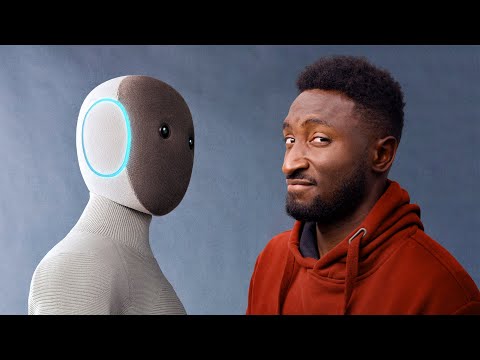
MKBHD critically examines the NEO humanoid robot from 1X Technologies, a $20,000 home robot that promises to do household chores autonomously. The core issue: nearly everything shown in promotional videos is actually remotely controlled by humans wearing VR headsets (teleoperated), not autonomous AI. Only two simple tasks in their entire 10-minute demo video were truly autonomous. Marques argues this represents a broader “AI promise problem” where companies sell futuristic dreams before the technology actually works, comparing it to similar overpromises from Humane Pin, Rabbit r1, and even Apple Intelligence.
Highlights
”100% teleoperated”
Clip command
yt-dlp --download-sections "*3:36-4:40" "https://www.youtube.com/watch?v=j31dmodZ-5c" --force-keyframes-at-cuts --merge-output-format mp4 -o "j31dmodZ-5c-3m36s.mp4"“100% of the stuff they showed her, the carrying things around, the loading up the dishwasher… all of this is teleoperated.” — Marques Brownlee, 3:53
”Lost art of waiting before announcing”
Clip command
yt-dlp --download-sections "*6:05-7:00" "https://www.youtube.com/watch?v=j31dmodZ-5c" --force-keyframes-at-cuts --merge-output-format mp4 -o "j31dmodZ-5c-6m05s.mp4"“There seems to be a bit of a lost art in waiting for a tech product before announcing and unveiling it.” — Marques Brownlee, 6:05
”Selling the dream before the product”
Clip command
yt-dlp --download-sections "*6:29-7:20" "https://www.youtube.com/watch?v=j31dmodZ-5c" --force-keyframes-at-cuts --merge-output-format mp4 -o "j31dmodZ-5c-6m29s.mp4"“You end up selling the dream before you sell the actual product. And that is dangerous.” — Marques Brownlee, 6:35
”People who would benefit most are least likely to adopt”
Clip command
yt-dlp --download-sections "*15:12-15:55" "https://www.youtube.com/watch?v=j31dmodZ-5c" --force-keyframes-at-cuts --merge-output-format mp4 -o "j31dmodZ-5c-15m12s.mp4"“The people that would benefit most from the ideal version of this robot, like the elderly, are the least likely to be early adopters.” — Marques Brownlee, 15:12
”They offered me a sponsored video”
Clip command
yt-dlp --download-sections "*15:29-16:10" "https://www.youtube.com/watch?v=j31dmodZ-5c" --force-keyframes-at-cuts --merge-output-format mp4 -o "j31dmodZ-5c-15m29s.mp4"“Fun fact, they actually reached out to me 10 months ago in January offering to do a sponsored video. I didn’t respond.” — Marques Brownlee, 15:29
Key Points
- 0:17 - Introduction to NEO: 5’6”, 66 pounds, 4-hour battery life humanoid robot priced around $20,000
- 1:40 - Available for pre-order now with $200 refundable deposit
- 2:23 - Marques clarifies his issue isn’t with the price, but with the gap between promises and reality
- 3:36 - Joanna Stern’s investigation revealed 100% of demo tasks were teleoperated (remotely controlled by humans in VR headsets)
- 4:54 - Only TWO autonomous scenes in the entire keynote video: answering the door and taking an object from someone
- 6:05 - “Lost art” criticism: companies used to announce products ready to ship, not years from completion
- 6:42 - The “AI promise problem” - selling the dream before selling the actual product
- 7:14 - Tesla self-driving as a parallel example of the training data challenge
- 8:17 - The complexity of household tasks: laundry folding, medication delivery, etc.
- 10:05 - Home AI is potentially harder than self-driving due to more variables
- 11:16 - “Expert mode” feature allows remote operators to control the robot and see into your home
- 12:29 - Comparison to Humane Pin and Rabbit r1 failures
- 13:33 - Downsides: too small/weak, too slow, privacy concerns with cameras, fall risk
- 14:33 - The “AI promise problem” affects many products, not just this robot
- 15:12 - Ironic observation: those who would benefit most (elderly, disabled) are least likely to be early adopters
- 15:29 - 1X reached out 10 months prior for a sponsored video; Marques declined
Mentions
Companies/Products
- 0:17 - NEO - The humanoid robot being discussed, made by 1X Technologies
- 3:36 - 1X Technologies - The company behind NEO robot
- 5:27 - Google Home - Smart home platform mentioned for comparison
- 6:52 - Rabbit r1 - AI hardware device cited as example of overpromising
- 6:56 - Apple Intelligence - Apple’s AI features cited as another example of overpromising
- 7:09 - Tesla - Referenced for their self-driving car approach to training AI
- 12:29 - Humane Pin - Failed AI wearable device cited as cautionary tale
- 14:17 - Rosie the Robot - The Jetsons character representing the ideal home robot dream
People
- 3:36 - Joanna Stern - WSJ tech journalist who did hands-on testing with NEO
- 0:00 - Marques Brownlee (MKBHD) - Video creator and tech reviewer
Surprising Quotes
“100% of the stuff they showed her, the carrying things around, the loading up the dishwasher… all of this is teleoperated.” - 3:53
“There seems to be a bit of a lost art in waiting for a tech product before announcing and unveiling it.” - 6:05
“You end up selling the dream before you sell the actual product. And that is dangerous.” - 6:35
“The people that would benefit most from the ideal version of this robot, like the elderly, are the least likely to be early adopters.” - 15:12
“Fun fact, they actually reached out to me 10 months ago in January offering to do a sponsored video. I didn’t respond.” - 15:29
Full Transcript
0:00 (upbeat music)
0:04 Okay. We have to have a conversation about this. I feel like it’s been a just an old school straight but this has been all so I feel like I have to.
0:17 So meet NEO, potentially, the most futuristic… This thing is a 5’6”, 66 pounds, four-hour and it lives in your house. It’s finally here. Get your mind out of the gutter. It’s for doing chores. It’s a housekeeper.
0:37 It has the same dexterity as a human because it’s shaped just like a human, walks around on two legs, has 10 fingers. It can fold laundry and or it can do the dishes for and then put everything away. It can go around and water on a perfect schedule, and it… And then it’ll go around and if anything gets left out. It always knows where everything is. It can find the TV remote, and it’ll basically that you know you have to do but you don’t actually want to do.
1:12 And when it’s done, it goes back to its little… Imagine going out for the day of work and coming back a few hours later, and everything’s done. All the chores are finished. You never have to do chores again. That’s amazing.
1:27 Or maybe let’s say you… this thing can sort of act in a lot of ways. These are things that represent massive value for a lot of people, and it’s available to order… Now? This is available to order?
1:42 This feels like it could be the best tech announcement except this isn’t real. And I mean that in the… This is not real.
1:54 First of all, it’s a pre-order. So you can go to this website right now and you can pick between three colors, and then it’s either 500 for a standard delivery, or you can pay a flat and get priority delivery. Just drop a $200 fully refundable deposit to get in line today, and deliveries in the US and that’s just allegedly. We don’t know when it’s…
2:20 Now, to be clear, it’s that I have a big problem with. I know these numbers seem but this is a first generation bleeding edge humanoid robot assistant. Like I never thought… And also there isn’t… So you gotta imagine the target audience is gonna be people whose time is worth more than the money.
2:40 This is for people who the idea of saving a few hours on chores every week so that they can use that actually makes logical sense. People really think like that. It’s for early adopters. It’s for people who wanna spend however much they think it’s worth on this brand new novel thing. That’s fine.
2:57 But my issue with this… what it’s actually capable of today and what they’re promising as… I think when people… they expect that this robot has some sort of built-in that allows it to recognize objects and navigate around on its and be productive for those.
3:25 And that I think would be out of watching that video because that’s what it’s designed to show. That’s what you’re supposed to feel. That’s the dream. But that’s not actually what’s happening.
3:36 So Joanna Stern, the legend, she did a video with this where the company showed her all the things that it could do. And turns out, 100% of the were remotely controlled wearing a VR headset with controllers. That’s not exaggerating. 100% of the stuff they showed her, the carrying things around, the loading up the dishwasher. I mean, look at this thing.
4:03 (gentle music)
4:16 Yeah, all of this is teleoperated, and this was a demo set. So this is like best case scenario stuff. And I see a lot of people like, “Oh, there’s probably other things that it can do autonomously. They just didn’t show her yet.” Really? You don’t think they would show her the best stuff that this… to keep selling the dream?
4:37 If you watch that keynote video back, to their credit, you’ll notice that they actually are exactly when the robot is and not teleoperated. And in that whole nearly 10-minute video, there’s exactly two scenes.
4:54 There’s the get the door command. - [Homeowner] Can you… - Where the robot walks over to the door because someone’s coming up. It grabs the handle, waits for the guest, and then sort of pulls the door open and fumbles backwards a little bit, kinda like a toddler, to let them inside.
5:08 And then there’s the put… where the robot toddles over to the person recognizes the harmless not grabs it, and then walks away with it.
5:19 Cool. No, seriously, that’s… Even if I could already with my Google Home and a there is something at least about a humanoid robot going to do that. That’s part of the dream. It’s doing it autonomously.
5:38 But then that also means that everything else happening in this video and everything else we’ve… we can safely assume is remote controlled.
5:48 So the gap between what this… and what it can maybe hopefully do someday in the ideal future, it is massive. They’re massively far apart. And so that’s really my main issue.
6:05 There seems to be a bit of a lost art in waiting for a tech product before announcing and unveiling it. Do you remember when tech companies would unveil a brand new tech product that they’d been working… And then the next slide was like this thing is going on sale tomorrow, or next week, or something like that. And that hype would carry… You remember that? That was sick.
6:29 But now, in this age of… it’s like there’s this thing where you end up selling the dream before you sell the actual product. And that is dangerous.
6:42 The promise of AI is so huge, and so massive, and but is also so clearly not done yet that you end up with or even the Rabbit r1 for example, or heck even Apple Intelligence where you have these big promises, but the capabilities are still over here while the promise is… And I’m trying to figure… And I think really…
7:08 And believe it or not, I think Tesla self-driving is a really perfect parallel example for a lot of this stuff.
7:14 See, basically, in order for this robot to be everything people want it to be, they need to develop a that looks through the robot sensors and is able to learn its environment and recognize everything it’s looking at and teach itself to and perform tasks.
7:30 It has to learn what a laundry room is and what the laundry looks like and how to fold each type of clothing, and it needs to learn what cups, and how to pick them up. And it has to be adaptable sizes, and shapes, and of all these household objects.
7:47 So that when the user asks just like, “Hey, NEO, vacuum or something like that, then NEO can go, “Okay, I I know where the vacuum is. I know how to use the vacuum, how much battery life I have, how much I need to vacuum I know not to knock over lamps…
8:08 And even the laundry folding thing, just that requires a ton of training data or at least some way to understand all these different shapes of shirts, and jackets, and hoods, and and hooks, and hangers, what gets dry cleaned, all… And the list just goes on and on.
8:25 And like, what if one of the tasks is going and getting the right medication for an elderly person, It has to get that right. It needs to identify at the right time and the right intervals, and bringing it to them. That is one of a ton of household objects that it has to specifically…
8:45 Now, in the self-driving car world, no matter what you think of them, Tesla’s definitely a leader here, and they’ve had a pretty clever approach to trying to work on this problem. Because their problem is need to learn all these and ways to navigate situations that could happen on the road, and how to get around them, traffic cones, construction zones, weird lane markings, et cetera, et cetera.
9:10 So, with their millions of… they have slowly, very slowly let people turn on this in small stages in their cars while instructing people to keep their hands on so that they can slowly from people willing to beta test.
9:31 And so those cars will all sorts of situations and then the second time, and then the 100th time. And all this data can to help all these cars.
9:45 And now at this point, this is they have millions of training data from people essentially beta testing for Tesla. It’s a robotics challenge, but yeah, they’re essentially to beta test to make the systems better for the eventual masses.
10:05 And now, this home AI robot challenge is essentially the same which is potentially way more variables. Cars have to stick to what’s on the road and mostly are operating in a 2D plane, while there’s obviously different… People’s houses are and there’s all sorts of objects, and different shapes and types of them and a million different variables just with household objects.
10:31 And maybe you could argue that the stakes of self-driving because of all the safety risks. And if it messes up, someone could die. Maybe that doesn’t happen as but then again, if it gets it’s still pretty important.
10:47 So, I think the point here is you don’t get to make this without all of this information. And so they need the training data and so they go right…
11:00 So people who press that and who actually, I when they start to ship them, will get a robot that can probably do a few simple things but there will be many things it can’t do.
11:15 And for that, if you scroll you can see there’s expert mode, which is when you have and you schedule one of to look through the sensors into your home and do the task so that the…
11:30 And this is something that they’ve pretty directly said that to be totally cool with. Go watch Joanna’s video, I’ll link it below the like button. She basically grills the and he’s kind of just like, “Yeah, if you wanna be on We’ll probably blur faces and maybe let you geofence but yeah, that’ll be one of the things that they allow you to do.”
11:55 So, look, there are certain industries where pre-ordering something is actually normal behavior. This happens all the time. This happens in video games, even happens a bit with cars these days, although sometimes that…
12:11 But now with all these AI… it’s resulted so many more They feel like they have way before it’s done, and they end up putting out this thing that is just nowhere near the dream.
12:28 And that’s how you get… We talked about the Humane Pin. Doesn’t that sound familiar? Getting announced with such and promising that this could maybe be a post-smartphone world type of gadget, but it was just absolutely and not enough people were willing to beta test something with…
12:47 And then the Rabbit r1, like They are surviving and they’re improving, but absolutely with those early adopters.
12:54 But a $20,000 5’6” humanoid that wanders around your are there really that that are willing to spend and know that they’re gonna have to potentially give up and are basically going for some unknown number of years to hopefully maybe someday…
13:22 Some of those people are out there, but is there enough of those people? I don’t know. I clearly don’t know, and I think a lot of…
13:29 There are obviously a lot of potential downsides to this robot. It’s too small and weak to It’s also too slow and a bit to do anything really serious. And it requires inviting a ton of remote viewable cameras and and it could also fall over and have a hard time getting up.
13:48 And also, just like the self-driving car, there are a number of situations where the robot getting could be dangerous. Even just the medication stuff or even it just clumsily or any other various potentially dangerous…
14:05 And also, I’m not even sure but that’s another…
14:14 But the upside clearly is the dream. Like Rosie the Robot from a personal assistant that and quietly does all the and does it better and and does it in quiet hours of the night.
14:31 The point is this is the new AI promise problem that we have. It’s not just this This is the most visible one But it’s like all these AI products are promising the world way, way before they have a product that’s ready to actually show anyone.
14:52 And theoretically, this It’s not just like and random copyright infringement. We want it to be doing actually That’s not the issue. It’s just the gap. The gap, that’s the issue. And closing that gap is so, so hard. And this is one of the obvious examples.
15:12 The people that would benefit most from the ideal version of this robot, like the elderly or are the least likely to So it’s tough.
15:24 I can actually applaud them for showing everything that they did Fun fact, they actually reached out to me 10 months ago in January offering to do a sponsored video. I didn’t respond. I didn’t think it was or worth doing a video or talking about, but we’ll see how this ages.
15:44 We might look back at this in 12 months, and everyone everywhere and humanoid robots, and it’s all a dream, and I look like an idiot, in which case, great, we made…
15:55 But history seems to be suggesting that I’ll probably be at least for now. But, hey, subscribe to see…
16:04 Thanks for watching. Catch you in the next one. Peace.
16:07 (gentle music)