Switching from iPhone to Android
Switching from iPhone to Android
Summary
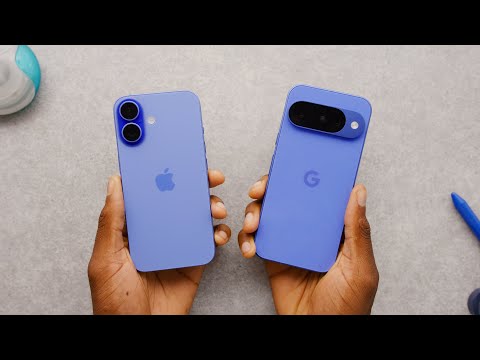
MKBHD analyzes the concept of “switching cost” in the smartphone industry, using Google’s Pixel 10 launch event as a case study. The video explores how both Google and Apple strategically create features and ecosystem lock-in to retain users while simultaneously trying to lower barriers for potential switchers from the competing platform. Key examples include Google adding MagSafe-equivalent “Pixel Snap” magnets, creating a journaling app to match Apple’s, and addressing the blue bubble/green bubble messaging divide through RCS adoption. The video argues that what often looks like companies simply copying each other is actually a calculated strategy to minimize switching costs and compete for the shrinking pool of potential platform switchers.
Highlights
”65% Wouldn’t Switch Even to Save Money”
Clip command
yt-dlp --download-sections "*1:44-2:40" "https://www.youtube.com/watch?v=eCR17sBh-Qw" --force-keyframes-at-cuts --merge-output-format mp4 -o "eCR17sBh-Qw-1m44s.mp4"“65% of people, even if it meant they’d spent less money, still wouldn’t switch phone carriers. So that is an example of an industry with a tremendously high perceived switching cost.” — Marques Brownlee, 1:44
”Copying is Actually About Switching Costs”
Clip command
yt-dlp --download-sections "*3:24-4:25" "https://www.youtube.com/watch?v=eCR17sBh-Qw" --force-keyframes-at-cuts --merge-output-format mp4 -o "eCR17sBh-Qw-3m24s.mp4"“To a lot of people, this looks like a basic copycat of that iPhone journal app. But the other real motivation behind making an app like this is switching costs… So now someone who really likes journaling no longer has a reason why they couldn’t switch.” — Marques Brownlee, 3:24
”The Battle is Now Kids and Switchers”
Clip command
yt-dlp --download-sections "*6:12-7:10" "https://www.youtube.com/watch?v=eCR17sBh-Qw" --force-keyframes-at-cuts --merge-output-format mp4 -o "eCR17sBh-Qw-6m12s.mp4"“They used to be in a battle for new customers, but there’s just so much less of that now. Like most of the world already has a smartphone. So the real battle now is actually two things. It’s kids and people getting their first smartphone… And then switchers.” — Marques Brownlee, 6:12
”Blue Bubble Pressure is So Real”
Clip command
yt-dlp --download-sections "*6:43-7:45" "https://www.youtube.com/watch?v=eCR17sBh-Qw" --force-keyframes-at-cuts --merge-output-format mp4 -o "eCR17sBh-Qw-6m43s.mp4"“The last thing is you can’t talk about switching cost in the US and normies in the US without talking about the biggest obstacle that Apple has set up, which is iMessage lockin… Blue bubble pressure is so real.” — Marques Brownlee, 6:49
”Google Literally Used Applause Signs”
Clip command
yt-dlp --download-sections "*7:43-8:40" "https://www.youtube.com/watch?v=eCR17sBh-Qw" --force-keyframes-at-cuts --merge-output-format mp4 -o "eCR17sBh-Qw-7m43s.mp4"“I wasn’t there so I can’t confirm this but Andrew Edwards did say that they were showing applause signs to the audience who were there in person.” — Marques Brownlee, 7:43
Key Points
- 1:44 - Survey shows 65% of US consumers won’t switch phone carriers even to save money, demonstrating high “perceived switching cost”
- 2:27 - Google’s Pixel 10 event featured Jimmy Fallon, Jonas Brothers, and celebrities specifically targeting mainstream US iPhone users
- 3:24 - Pixel Journal app appears to copy Apple’s journal app, but the real motivation is reducing switching costs for iPhone users
- 4:41 - Pixel Snap (Qi2 wireless charging with magnets) is Google’s answer to MagSafe lock-in
- 5:31 - Pixel 10’s 15-25 watt Qi2 charging is actually an upgrade from Pixel 9’s 12 watt wireless charging
- 6:21 - The battle has shifted from acquiring new customers to targeting kids getting first phones and platform switchers
- 6:49 - iMessage lock-in is the biggest switching obstacle Apple has created in the US market
- 7:52 - Google reportedly used applause signs during event when addressing the blue/green bubble issue
- 7:58 - Apple would never have adopted RCS voluntarily and prefers keeping features exclusive
- 8:25 - Apple also tries to attract Android users with “Move to iOS” app and Apple Intelligence features similar to Circle to Search
Mentions
Companies
- Google - 0:07, 2:29, 4:06, 7:05, 7:38, 8:10
- Apple - 1:18, 3:49, 6:49, 7:58, 8:25
- OPPO - 5:18
- OnePlus - 5:18
- Huawei - 5:20
- Peloton - 2:50
Products
- Pixel 10 Pro - 0:12
- iPhone - 0:31, 3:01, 4:04, 6:08
- Pixel Buds - 1:09
- MagSafe - 1:11, 4:57, 5:51
- Face ID - 0:57
- Apple Intelligence - 1:18, 8:37
- Pixel Journal app - 3:24
- Pixel Snap (Qi2) - 4:41
- iPhone 16 - 5:03
- Pixel 9 - 5:39
- iMessage - 6:49
- RCS - 7:59, 8:13
- Circle to Search - 8:42
- Move to iOS app - 8:31
- SuperV/Dash charging - 5:25
People
Surprising Quotes
“65% of people, even if it meant they’d spent less money, still wouldn’t switch phone carriers.”
“The green blue bubble battle is silly and it’s tired and at Google we’re done with that conversation.” - Google representative at Pixel 10 event
“They were showing applause signs to the audience who were there in person.” - Andrew Edwards on Google’s event tactics
“They used to be in a battle for new customers, but there’s just so much less of that now. Like most of the world already has a smartphone.”
“Blue bubble pressure is so real.”
Full Transcript
0:00 [Music]
0:07 Hey, did you see the new Google event? The Pixel 10 Pros. They look pretty good, right? Yeah, I was watching that. Look pretty sweet. Nice design, nice cameras, bunch of really interesting AI features. I’m a fan. So, you uh finally going to get one?
0:27 Yeah, probably not. But you were just saying how good they are. Yeah, but I just I’m so used to the iPhone. I just don’t want to switch. Like I I’m used to what I got and I’ll I’ll be fine, you know? Okay. I feel like you do this every time. What’s it going to take for you to actually switch? I I I just don’t want to switch. Like I I get that the phones are great and I can appreciate them. I just I’m just used to this, I guess.
0:52 All right. Name one reason why you couldn’t switch to the Pixel right now. Okay. Uh Face ID. It’s really convenient. The Pixel has face unlock. Okay. Uh well, I just I can’t get rid of my uh my wireless earbuds. You mean like Pixel Buds? Uh Mag Safe. They just added that to Pixel 10s. Uh widgets. Did I mention widgets? Okay. You’re not going to believe this. Oh, right. Uh Apple Intelligence.
1:19 Okay. See, now I think you’re joking. Uh I just I love the number 48 and so I just need to have a 48 megapixel main camera. That’s the main thing cuz see I feel like you’re sort of reaching but um these also have 48 megapixel cameras so it’s valid.
1:44 Two years ago in the US, there was a survey that found that only 35% of people would be willing to switch their phone carrier to get a better deal. Which might not sound that crazy, but then you think about it, that means that 65% of people, even if it meant they’d spent less money, still wouldn’t switch phone carriers. So that is an example of an industry with a tremendously high perceived switching cost. Like switching carriers most people believe is too much of a hassle, too much time and effort to actually go through with it even if it would save them a bit of money. And so that allows carriers to get away with a little bit more because people are just not willing to switch.
2:27 So anyway, the reason I bring up switching cost is I was watching this Google event this week, this spectacle of an event, and you know, besides it being a little cringey and clearly not designed to speak to me at all, I do think it was really interesting how much they directly addressed switching. So, okay, this was an event featuring Jimmy Fallon and the Jonas Brothers and a bunch of other celebrity guests like Pelaton instructors and pro athletes. So they were talking to the massive general audience that is normies in the US. And what do normies in the US use? iPhones.
3:02 So this is a theme that came up several times during the event. Sometimes directly, sometimes indirectly, but it all drew attention to the fact that these smartphone companies are trying to make it as easy as possible to switch to them and make it as hard as possible to switch away from them.
3:24 Take the new Pixel Journal app for example. Google just announced the Pixel 10s and one of the new pre-installed apps on these phones is an AI assisted journaling app. To a lot of people, this looks like a basic copycat of that iPhone journal app that they just announced two years ago. And I wouldn’t blame you for thinking that. But the other real motivation behind making an app like this is switching costs.
3:49 See, Apple’s going to make a journal app. And they’re hoping it’s good enough that people start to use it, and a lot of people really like it. And some fraction of people love it so much that they would actually refuse to use a different phone. They would refuse to switch from an iPhone if they couldn’t get that anywhere else. So when Google comes along and makes their journaling app for the Pixel, they are very directly offering an equivalent experience on the other side of the fence. So now someone who really likes journaling no longer has a reason why they couldn’t switch.
4:22 It turns out a very direct response to your competitor adding a feature or something that potentially creates some extra lockin is to just do the same thing on your side of the fence in your own system. And the more of this event that you watch with this in mind, the more of it you very clearly see.
4:41 Like you can think of Pixel Snap the same way, which is them adding these Qi2 wireless chargers and magnets into the back of all their Pixel 10 phones. And I always thought that this would be in more phones. Like I always was shocked that there weren’t more phones with Qi2, especially because when you listen to iPhone people talk about MagSafe, they love it. Like people almost refuse to buy phones that don’t have MagSafe now. See the comments of the iPhone 16 review.
5:05 But there are some small limitations of the official Qi2 support. The big one really was that it doesn’t support the fastest charging speeds. So it’s 15 to 25 watts with the latest edition. Not disastrously slow, but it does make sense why some of the other manufacturers like OPPO or OnePlus or Huawei wouldn’t adopt it. They’d rather continue developing and leaning on their SuperV and Dash charging, which is super fast. It’s one of their selling points with like 80 100 watt wireless charging. Great.
5:33 Here with the Pixel though, it actually makes perfect sense because they’ve never had the biggest numbers or the fastest charging speeds. The Pixel 9 only charged, I think, 12 watts on a Qi charger. So 15 to 25 is a big upgrade actually for wireless charging speeds. And now you get these magnets. You essentially added MagSafe to your phones with no downside.
5:53 And yes, they have done more work with the array and the strength of the magnets and making their own accessories that attach really firmly to the back of the phone. So all that extra work is sick. But if you zoom out enough, MagSafe was a reason people would resist switching from an iPhone to a Pixel. And now it’s not.
6:12 So so many of the times that it looks like these companies are just copying each other. Yeah, you got to keep in mind that minimizing switching costs is a huge motivator to a lot of this stuff. They used to be in a battle for new customers, but there’s just so much less of that now. Like most of the world already has a smartphone.
6:31 So the real battle now is actually two things. It’s kids and people getting their first smartphone because once you get your first smartphone, you’re likely to stick with that for a long time. And then switchers.
6:43 Now, the last thing is you can’t talk about switching cost in the US and normies in the US without talking about the biggest obstacle that Apple has set up, which is iMessage lockin. I’ve talked about this before and like every time I bring it up, a lot of you guys who are not in the US are like, “This seems like the dumbest thing ever because that pressure does not exist outside of this place.” But here, blue bubble pressure is so real.
7:05 But Google did specifically try to talk about this in their event, too. And this is how they decided to tackle it.
7:12 “So, we realized the idea of switching your phone brand can seem scary. It can even maybe be a little bit daunting. And so, we’ve talked about and have tackled the top two concerns that people have when it comes to switching.”
7:26 “So, we can stop talking about the green text versus the blue text or the…” “Yes. And first of all, I’m going to say personally the green blue bubble battle is silly and it’s tired and at Google we’re done with that conversation.”
7:43 Uh yeah, I wasn’t there so I can’t confirm this but Andrew Edwards did say that they were showing applause signs to the audience who were there in person.
7:54 Hm. Look, obviously if it was up to Apple, they never would have adopted RCS and they would love to keep their features as exclusive as possible in their little bubble. And then if you want to switch, you’re leaving all these features behind. But now that Google’s poking holes in that with interoperability and RCS, it’s a little bit less of a bubble.
8:17 I did make an entire video on blue bubbles versus green bubbles and that whole dynamic. So, if you want to watch that, I’ll link it right here or down below the like button.
8:25 But don’t think Apple’s never tried this stuff either. Apple would love to entice Android users to come to their side of the fence. From the move to iOS app that they built and put in the Play Store to the ad campaigns that they’ve run over the years, the newest Apple Intelligence feature that looks and acts a lot like that hit Circle to Search feature on Android. All this stuff runs both ways. It’s all in the name of competition. Something to think about.
8:49 Anyway, stay tuned for the full Pixel 10 series phone reviews. And also, the iPhones are right around the corner. It’s about to be TechTember. There’s a lot of interesting stuff in the pipeline. Thanks for watching. Thanks for subscribing. Catch you very soon in the next one. Peace.