Nothing Phone 4b: They Can't Say It!
Nothing Phone 4b: They Can’t Say It!
Summary
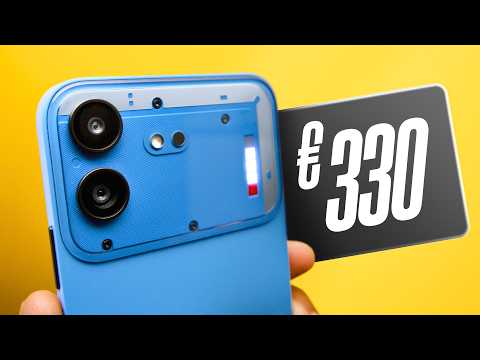
Marques Brownlee reviews Nothing’s newest budget phone and spends the whole video poking at the one thing Nothing refuses to say out loud: this is the cheap one. He opens with a callback to the Nothing Phone (2a) Plus naming saga — a canned statement from Nothing’s Head of Marketing that used “a lot of marketing words” to explain absolutely nothing about what the letter suffixes mean — and diagnoses the company with an “allergy to just calling this a cheaper budget phone.” The phone itself costs 330 euros / 300 pounds, skips the US entirely, and lands in genuinely competitive budget territory in India and Europe. Marques also floats a new theory: this phone was originally supposed to be a CMF Phone Pro from Nothing’s sub-$300 sub-brand, but the memory price spike pushed the bill of materials high enough that Nothing converted it into a slightly more premium Nothing-branded phone instead.
The hardware is a study in what Marques calls a “balancing act of including premium fundamentals, but then like finding ways to save money in ways that you either won’t notice or won’t mind.” The 6.7-inch 120Hz LTPO AMOLED is genuinely good, but the bezels are uneven, the anti-glare coating is worse than premium phones, and the optical in-display fingerprint reader sits low and reads slow. The two cameras — a 50MP OIS primary on a physically tiny Samsung sensor plus an 8MP ultra-wide — are “good enough to not be a dealbreaker at this price” and nothing more. The Snapdragon 6 Gen 4 benchmarks near the seven-year-old OnePlus 7 Pro, yet Nothing OS 4.1’s optimization and a 1000Hz touch sample rate make the software feel like it overperforms the chip, putting the phone at the top of its price class for responsiveness.
The verdict framework is simple: a list of perks (high refresh OLED, IP64, true stereo speakers, glyph lights, and a 5200mAh battery — 6000mAh in India — that’s the biggest ever in a Nothing phone and easily lasts a day and a half) against a list of shortcomings (no wireless charging, no NFC in the Indian version, a mushy vibration motor, scuff-prone plastic, and slower UFS 2.2 storage that won’t age well). If the perks interest you and none of the shortcomings are dealbreakers, put it at the top of your list. Marques closes with a plea: Nothing should just embrace having a lineup that’s “cheap, cheaper, cheapest” — just because the B stands for budget doesn’t make it a bad thing.
Highlights
”Plus, I think safely stands for ‘power’”
“Okay, so that felt like a lot of marketing words to not tell us what the Plus stands for, but I think it does stand for something. So let me see if I can do a little better.” — Marques Brownlee, 0:42
Clip command
yt-dlp --download-sections "*0:42-1:22" "https://www.youtube.com/watch?v=DUgPFNRmsCQ" --force-keyframes-at-cuts --merge-output-format mp4 -o "plus-stands-for-power.mp4"”Nothing has this allergy to just calling this a cheaper budget phone”
“I actually don’t know why Nothing has this allergy to just calling this a cheaper budget phone, it’s like they’re not allowed to use those words or something, but it’s honestly not that hard of a lineup to understand once you just say it.” — Marques Brownlee, 1:03
Clip command
yt-dlp --download-sections "*1:03-1:46" "https://www.youtube.com/watch?v=DUgPFNRmsCQ" --force-keyframes-at-cuts --merge-output-format mp4 -o "budget-phone-allergy.mp4"”This phone was supposed to be a CMF Phone Pro”
“But this insane memory price spike that we’re in now pushes the bill of materials yet even higher, which would have made the cost and the price tag just a bit too high to make it another CMF phone, so they decided to convert it to a slightly more expensive, but also slightly more premium Nothing phone instead. Hear me out.” — Marques Brownlee, 1:46
Clip command
yt-dlp --download-sections "*1:46-2:35" "https://www.youtube.com/watch?v=DUgPFNRmsCQ" --force-keyframes-at-cuts --merge-output-format mp4 -o "cmf-phone-theory.mp4"”A balancing act of including premium fundamentals”
“This screen is like a microcosm for what it means to be a cheap Nothing phone.” — Marques Brownlee, 3:05
“It is a balancing act of including premium fundamentals, but then like finding ways to save money in ways that you either won’t notice or won’t mind.” — Marques Brownlee, 3:10
Clip command
yt-dlp --download-sections "*3:05-3:48" "https://www.youtube.com/watch?v=DUgPFNRmsCQ" --force-keyframes-at-cuts --merge-output-format mp4 -o "premium-fundamentals-balancing-act.mp4"”The biggest battery ever in a Nothing phone”
“So, 5200 milliamp hours and actually 6000 milliamp hours in the Indian market version. That is one of the standout highlights of this phone over the past few days I’ve been using it. Easily a full day and a half phone, and you can make it a full two days if they’re light.” — Marques Brownlee, 7:47
Clip command
yt-dlp --download-sections "*7:47-8:30" "https://www.youtube.com/watch?v=DUgPFNRmsCQ" --force-keyframes-at-cuts --merge-output-format mp4 -o "biggest-nothing-battery.mp4"”It’s okay to have a lineup of phones that’s cheap, cheaper, cheapest”
“So hey, Nothing, embrace it. It’s okay to have a lineup of phones that’s, you know, cheap, cheaper, cheapest. Just because you don’t like that the B stands for budget, that doesn’t mean it’s a bad thing. It’s big bang for the buck. It’s a bold and bare brilliant bargain.” — Marques Brownlee, 9:52
Clip command
yt-dlp --download-sections "*9:52-10:20" "https://www.youtube.com/watch?v=DUgPFNRmsCQ" --force-keyframes-at-cuts --merge-output-format mp4 -o "b-stands-for-budget.mp4"Key Points
- The naming non-answer (0:18) - Nothing’s Head of Marketing explains the lettering system without ever saying what the letter actually stands for: “Numbers represent generations, while letters indicate different product segments”
- Marques’s decode (0:42) - His sarcastic best guess at the lineup: flagship, cheaper phone, and a slightly more premium version of that
- Price and availability (1:03) - Exactly 330 euros or 300 pounds; not launching in the US, but competitive in India and Europe
- The no-flagship theory holds (1:22) - Nothing’s costs are too high at their volume to make a competitive high-end flagship, and they still don’t
- New theory: converted CMF phone (1:46) - The memory price spike pushed the bill of materials too high for a sub-$300 CMF phone, so it became a pricier Nothing phone
- Design (1:55) - 6.7 inches, transparent top-half window with exposed screws and metal-looking pieces, glyph lights, all-plastic body that at least looks glassy up top
- Display specs (2:35) - 6.7-inch AMOLED, 120Hz, LTPO, above 1080p but short of 1440p; grey, black, and white colorways with black buttons
- The cost-saving compromises on screen (3:20) - High refresh rate and high-frequency PWM dimming, but uneven bezels, worse anti-glare finish, and a low, slow optical fingerprint reader
- Two cameras, the right two (4:00) - One primary plus one ultra-wide is “a solid one-two punch. I might argue the correct choice for two cameras”
- Camera reality check (4:21) - 50MP primary with OIS on a tiny Samsung sensor: acceptable in excellent light, dull colors and noise when the light goes away; the 8MP ultra-wide is never sharp in the corners
- Chip benchmarks like 2019 (5:01) - The Snapdragon 6 Gen 4 lands around the seven-year-old OnePlus 7 Pro and close to the Tensor G2, though with a better GPU and a modern vapor chamber
- Software overperforms the silicon (5:44) - Nothing OS 4.1 with a new custom CPU scheduler makes the phone feel smoother than the chip should allow
- Top of its price class for feel (6:00) - 1000Hz touch sample rate plus optimized software equals class-leading responsiveness, with only occasional stutters
- No software features missing (6:20) - All the Nothing widgets, dots, customization, icon packs, AI toolkit, and Essential Space come to the cheap phone too
- The decision framework (7:00) - Perks you want plus no dealbreaker shortcomings means put it at the top of your list
- The perks list (7:21) - High refresh OLED at this price, IP64 rating, true stereo speakers with a dedicated top driver
- The battery highlight (7:47) - 5200mAh (6000mAh in India), a day-and-a-half phone, 33W charging; biggest battery ever in a Nothing phone
- Glyph lights persist (8:08) - Brighter than the 4a’s, still notification LEDs and a blinking red recording light
- The shortcomings list (8:30) - No wireless charging, no NFC in the Indian version, a very mushy vibration motor, and plastic that scuffs early
- Longevity concerns (9:14) - UFS 2.2 storage, optical fingerprint reader, and the Snapdragon 6 Gen 4 probably won’t have the longest shelf life
Mentions
Companies
- Nothing (0:00) - The phone maker with an allergy to the word “budget”; makes one of Marques’s favorite Android skins
- CMF (1:46) - Nothing’s even-more-budget sub-brand of really good sub-$300 phones; Marques theorizes this phone was originally a CMF Pro model
- Samsung (4:10) - Makes the physically tiny primary camera sensor
- Qualcomm (Snapdragon) (5:01) - The Snapdragon 6 Gen 4 mid-to-lower-end chip inside
- MediaTek (5:35) - What the chip probably would have been if this had stayed a CMF phone
- Google (Pixel) (4:52) - If you want much more camera at this price, you end up with a Pixel 10A or something older
- OnePlus (5:01) - The seven-year-old OnePlus 7 Pro flagship is the benchmark comparison for this chip
- Apple (iPhone) (7:21) - True stereo speakers here are “not something you can say about every nine hundred dollar iPhone”
Products & Technologies
- Nothing Phone 2 (0:42) - Nothing’s highest-end phone, “which isn’t really a flagship”
- Nothing Phone (2a) / (2a) Plus (0:00) - The naming-saga callback that opens the video: what does the Plus stand for?
- Glyph lights (1:55) - Still present, brighter than the 4a’s, notification LEDs and recording light (8:08)
- Snapdragon 6 Gen 4 (5:01) - Mid-range chip that benchmarks near seven-year-old flagships but games fine thanks to a better GPU and vapor chamber
- Tensor G2 (5:12) - Benchmark-adjacent, “which honestly probably says more about the Tensor than anything”
- Nothing OS 4.1 (5:44) - Day-one update with a new custom CPU scheduler; the reason the phone feels faster than its chip
- Essential Space / AI toolkit (6:41) - Nothing’s AI features, expanding every few months and reaching all the way down the lineup
- UFS 2.2 storage (9:14) - The slower storage standard that hurts long-term prospects
- LTPO AMOLED / PWM dimming (2:35) - The premium display fundamentals Nothing kept (3:20)
- IP64 rating (7:21) - Splash resistance as a price-class perk
- Pixel 10A (4:52) - The alternative if you want much more camera than this
People
- Marques Brownlee (0:00) - Host and reviewer
- Nothing’s Head of Marketing (0:00) - Supplies the statement that explains the naming system without explaining the naming system
Surprising Quotes
“Okay, so the chip in here is a Snapdragon 6 Gen 4, which is like a mid-range to lower-end chip that benchmarks way down around like the OnePlus 7 Pro, which was a flagship from seven years ago.” — Marques Brownlee, 5:01
“So you can block one or the other and still hear things, which is not something you can say about every nine hundred dollar iPhone.” — Marques Brownlee, 7:21
“Um, I also think the vibration motor in this phone is not hot garbage but pretty close. Like, it’s very mushy. This is how it sounds. It’s not high quality. You can tell when it’s off by default for typing that they probably knew that was bad too.” — Marques Brownlee, 8:30
“So if this was a CMF Phone 3 Pro, they probably would have tried to sneak a useless third camera lens somewhere back here because ‘Pro.’” — Marques Brownlee, 3:48
“Basically, it’s good enough to not be a dealbreaker at this price.” — Marques Brownlee, 4:43
Transcript
Marques Brownlee: 0:00 Alright, so we have a Nothing Phone 2a Plus now. Great. I guess to better understand where it fits in the lineup, what does the Plus stand for? That’d be good to know, right? And looks like we have something from Nothing’s Head of Marketing to tell us more. So let’s see what he says.
Marques Brownlee: 0:18 What does the Plus stand for? Nothing. It’s simply a continuation of our naming system. Numbers represent generations, while letters indicate different product segments. The Plus series builds on that success of the A-series by expanding into a new segment while maintaining the key features that our users love. The A-series remains our most premium line below our flagship products. Hope this is clear.
Marques Brownlee: 0:42 Okay, so that felt like a lot of marketing words to not tell us what the Plus stands for, but I think it does stand for something. So let me see if I can do a little better. So Nothing has their flagship, which isn’t really a flagship, but it’s their highest end phone, which is the Phone 2. Then they have a bit of a cheaper phone, the 2a. Now they have an even more premium version of that, the 2a Plus. So Plus, I think safely stands for ‘power’. There. How’d I do?
Marques Brownlee: 1:03 I actually don’t know why Nothing has this allergy to just calling this a cheaper budget phone, it’s like they’re not allowed to use those words or something, but it’s honestly not that hard of a lineup to understand once you just say it. And this phone still has a lot to like for its price, which is exactly 330 euros or 300 pounds. It is not launching in the US, but for the markets it does launch in, like India and Europe, that is a pretty competitive price bracket.
Marques Brownlee: 1:22 Now the last Nothing video I made, I kind of had a theory about how they really aren’t able to make a high-end competitive flagship phone. Their costs are just a bit too high at their volume, so they just don’t. And they still don’t, so I feel like that theory has proven out to be correct. So anyway, now I have a new theory: that this phone was supposed to be a CMF Phone 1 Pro.
Marques Brownlee: 1:46 You might remember Nothing has this even more budget sub-brand called CMF that’s made really good sub-$300 phones. But this insane memory price spike that we’re in now pushes the bill of materials yet even higher, which would have made the cost and the price tag just a bit too high to make it another CMF phone, so they decided to convert it to a slightly more expensive, but also slightly more premium Nothing phone instead. Hear me out.
Marques Brownlee: 1:55 So this 2a Plus on the outside looks like a slightly more plain Nothing phone. Like it’s a big phone, 6.7 inches, but just the top half has this transparent window with a little bit more texture and exposed screws and metal-looking pieces, plus the Glyph lights exist still over to the side. The whole thing is plastic, and it definitely feels plastic, but at least that clear window up at the top kind of looks glassy and maybe a little more premium and metallic.
Marques Brownlee: 2:35 There’s also a grey, black, and white colorway for this phone, all of which have black buttons on the flat sides, which I quite like. Then around the front, that is a 6.7 inch AMOLED display, 120Hz, LTPO. It is actually above 1080p, but just short of 1440p. And it’s not a flat… 3:00 OLED, so there’s just a little bit more chin down at the bottom, but overall, really not an issue at all.
Marques Brownlee: 3:05 This screen is like a microcosm for what it means to be a cheap Nothing phone. It is a balancing act of including premium fundamentals, but then like finding ways to save money in ways that you either won’t notice or won’t mind. So like, it’s still an OLED display, which is - it’s nice. It’s also high refresh rate, it also has high frequency PWM dimming, but also the bezels aren’t perfectly even all the way around, and the anti-glare finish on here, whatever it is, it’s definitely worse than the more premium phones out, and the in-display fingerprint reader, it’s a little low and it’s optical instead of ultrasonic, so it’s a little slower. 3:40 But like I said, the fundamentals are just fine. It’s readable in most places, it looks good, high contrast, well judged.
Marques Brownlee: 3:48 But then same with the cameras. So if this was a CMF Phone 3 Pro, they probably would have tried to sneak a useless third camera lens somewhere back here because “Pro.” But here it’s one primary and one ultra-wide and that is a solid one-two punch. I might argue the correct choice for two cameras.
Marques Brownlee: 4:10 So this primary is 50 megapixels, bins to 12, and it has OIS. Now, it’s a physically pretty tiny Samsung sensor, smaller than the telephoto sensors we get in a lot of flagships these days, but thanks to their software, you can see it’s still capable of getting you acceptable photos in excellent lighting, but the second that lighting goes away, you know, don’t expect any fast shutter speeds or amazing low-noise shots. 4:33 Colors will get a little bit dull, but it’s fine. Then the 8 megapixel ultra-wide, it’s never been sharp in the corners in a single shot, no matter how perfectly framed and lit, but hey, I’ll still take it over no ultra-wide at all. Like nothing to write home about, these cameras. Basically, it’s good enough to not be a dealbreaker at this price. 4:52 But if you really want much more camera than this, then you end up with like a Pixel 10A or something older, just not a Nothing phone.
Marques Brownlee: 4:58 And then there’s the performance. Okay, so the chip in here is a Snapdragon 6 Gen 4, which is like a mid-range to lower-end chip that benchmarks way down around like the OnePlus 7 Pro, which was a flagship from seven years ago. Really great phone, but seven years ago. And it’s also kind of close to the Tensor G2, which honestly probably says more about the Tensor than anything, but the GPU is more powerful than those older chips and there’s a bit of a larger, more modern vapor chamber on it for better sustained performance, so it can actually handle some gaming.
Marques Brownlee: 5:35 If this was a CMF phone, this probably would have been a MediaTek chip, because that’s what they put in those phones. But the final result is honestly it’s a software feel that feels like it overperforms the chip. It’s mostly pretty smooth. It’s great, and that’s because of how good Nothing’s software is. When I first started testing this phone, it had an update to Nothing OS 4.1 waiting for it right out the box. 5:53 I installed that and it’s been really smooth sailing ever since. Uh, there’s a new custom CPU scheduler. Their software’s always been really well optimized, and this combined with 6:00 the hardware, which is a higher refresh rate OLED display, which has a 1000 Hertz touch sample rate, by the way, it just it puts it at the top of its price class as far as responsiveness, app opening speeds, generally feel pretty quick. Sometimes you can feel that it is not a high-end chip. Like, I’m not gonna lie, it does stutter sometimes, but it is nice. Overall, good for this chip.
Marques Brownlee: 6:20 And what I’m most happy to be able to say is it really doesn’t appear to be missing any features that are on the more expensive Nothing phones. So, if you are already a fan of Nothing’s, you know, near stock, but slightly customized software with all their widgets and dots and customization and icon packs, all that Nothing stuff, that is all still here. 6:41 Plus the new developments to their AI toolkit and their essential space. Every few months they add a little bit more to it, and it’s all getting to the Nothing Phone all the way down to the B-series. So, here’s how I look at it. If you’re looking at this phone trying to decide if it’s for you or if you should splurge for like maybe one of the higher-end Nothing phones or something else, I think it’s pretty simple.
Marques Brownlee: 7:00 This phone has a list of perks that are like really nice for this price and then some shortcomings that they had to use to get to this price. If the perks interest you, then that’s good. But even better, if none of the shortcomings are deal breakers for you, then this fits. You might as well put it at the top of your list. And I think they did a pretty good job.
Marques Brownlee: 7:21 Like the high refresh rate OLED display at this price is a perk for sure. Uh, so is the IP64 rating, which means it can take some splashes and be fine. We also live in a world where I have to say having true stereo speakers is also a perk. This bottom speaker is down here and then the top speaker is actually this like little dot up here, not the earpiece. So you can block one or the other and still hear things, which is not something you can say about every nine hundred dollar iPhone.
Marques Brownlee: 7:47 And then the battery. So, 5200 milliamp hours and actually 6000 milliamp hours in the Indian market version. That is one of the standout highlights of this phone over the past few days I’ve been using it. Easily a full day and a half phone, and you can make it a full two days if they’re light. It’s not the fastest charging thing in the world, it’s 33 watts, but I’d say having the biggest battery ever in a Nothing phone is a perk.
Marques Brownlee: 8:08 And then yes, the glyph lights are still here. I didn’t forget about them. I just don’t use them as much as maybe some others. But these are actually brighter than the ones on the back of the 4a. And yeah, they’re still notification LEDs, they are still a blinking red recording light when you’re taking videos. It’s nice. It’s the Nothing character.
Marques Brownlee: 8:30 So then, the shortcomings. Uh, no wireless charging, that’s probably not a shocker in this price, but no NFC in the Indian market version, that was a little more surprising. Um, I also think the vibration motor in this phone is not hot garbage but pretty close. Like, it’s very mushy. This is how it sounds. It’s not high quality. You can tell when it’s off by default for typing that they probably knew that was bad too. The plastic build, I’ve also I’ve noticed it scuffs and wears pretty… 9:00 pretty easily. I’ve been using the blue one mostly. It’s probably easier to hide on the white phone, but I just… I feel like I can tell that it’s not great pretty early into using it, so I don’t think it’s going to age super well. Also, maybe if you’re a case person, this doesn’t matter at all.
Marques Brownlee: 9:14 And then just generally lower-end performance specs makes me think it’s not going to age amazingly well in like five to six years. It’s slower UFS 2.2 storage and things I already mentioned like the optical fingerprint reader and the Snapdragon 6 Gen 4, they’ll probably not have the longest shelf life.
Marques Brownlee: 9:29 So all in all, my take is this is actually a pretty good set of features for this price and it’s just a good taste of the Nothing experience. Like they give you all the software, the glyph lights. I’ve found that the Nothing software is one of my favorite skins, if you want to call it that, in the Android world. So the fact that you get all that for this price is just them expanding it to one new price bracket.
Marques Brownlee: 9:52 So hey, Nothing, embrace it. It’s okay to have a lineup of phones that’s, you know, cheap, cheaper, cheapest. Just because you don’t like that the B stands for budget, that doesn’t mean it’s a bad thing. It’s big bang for the buck. It’s a bold and bare brilliant bargain. It’s the Nothing Phone (2a). Thanks for watching. Catch you in the next one. Peace.