Glass is glass
Glass is glass
Summary
A short rant/explainer/PSA from Marques Brownlee about how phone makers play games with glass durability claims. The video opens with a supercut of keynote slides where each generation’s screen is “four times more shatter-resistant” or “three times more scratch-resistant” than the previous one — and Brownlee asks the obvious question: how can both things be true year after year without us ending up with truly indestructible glass?
He focuses on Apple’s Ceramic Shield as a case study. The first generation was indeed pitched as four times more shatterproof, and Ceramic Shield 2 (with the iPhone 17) is three times more scratch-resistant. Independent YouTube drop tests do often verify the claims — iPhones really do break less in falls. But Brownlee argues that attributing this entirely to the glass is misleading. Frame shape, bezel material, edge geometry (curved vs. flat) and overall industrial design contribute as much or more to drop survival, and the iPhone 12’s switch back to flat sides got rolled silently into the “four times” marketing number with no asterisks.
He closes by noting the genuinely interesting glass advances that don’t make headlines — oleophobic coatings that reject fingerprints, and anti-reflective coatings — and reminds viewers that despite the headlines, glass is still glass and will still break.
Highlights
”I wonder why”
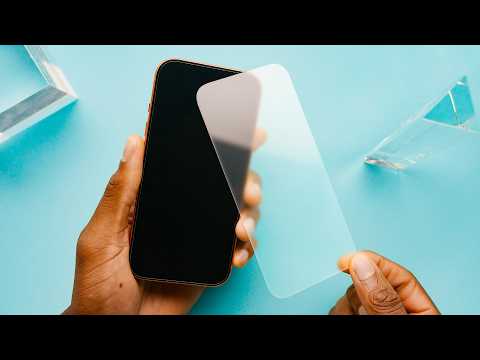
“The first generation of ceramic shield was four times more shatterproof than previous glass. And then ceramic shield 2, which came with the iPhone 17 is, you guessed it, three times more scratch resistant. I wonder why.” — Marques Brownlee, 3:00
Clip command
yt-dlp --download-sections "*3:00-3:26" "https://www.youtube.com/watch?v=7YrdI7h2XoY" --force-keyframes-at-cuts --merge-output-format mp4 -o "glass-i-wonder-why.mp4"”Attributing this all to the glass would be silly”
“But attributing this all to the glass would be silly. There’s lots of other factors that make just as much, if not more of a difference to whether or not your phone screen will shatter on a drop. Things like the shape of the display and the thickness and material of the bezels and whether the edges are flat or curved.” — Marques Brownlee, 3:34
Clip command
yt-dlp --download-sections "*3:34-4:08" "https://www.youtube.com/watch?v=7YrdI7h2XoY" --force-keyframes-at-cuts --merge-output-format mp4 -o "glass-attributing-silly.mp4"”Glass is still glass”
“So next time you see a claim or some keynote slide that this new phone glass is three times as scratch-resistant or twice as shatterproof on a drop… just remember that glass is still glass.” — Marques Brownlee, 4:29
Clip command
yt-dlp --download-sections "*4:29-4:45" "https://www.youtube.com/watch?v=7YrdI7h2XoY" --force-keyframes-at-cuts --merge-output-format mp4 -o "glass-is-still-glass.mp4"Key Points
- Recurring keynote claim (0:00) - “Four times more shatter resistant than its predecessor” repeats every generation
- Compounding scratch-resistance (0:04) - “Three times more scratch resistant than the year before” — yet phones still scratch
- Ceramic Shield 1 vs. 2 (3:00) - First-gen was 4x more shatterproof; Ceramic Shield 2 (iPhone 17) is 3x more scratch-resistant
- Independent drop tests verify it (3:13) - Scientific YouTube drop tests of the iPhone 12 actually do confirm Apple’s shatter claims
- But it’s not just the glass (3:34) - Display shape, bezel thickness/material, and edge geometry contribute hugely
- iPhone 12 design change (3:52) - Square sides (vs. iPhone 11’s rounded edges) had a major impact on drop survival
- No asterisks in the marketing (4:03) - Apple loops design improvements into the “4x better” glass claim with no explanation
- Underrated glass features (4:12) - Oleophobic fingerprint-rejecting coatings and anti-reflective treatments don’t make headlines
- The takeaway (4:38) - “Glass is still glass” — despite the marketing math
Mentions
Companies
- Apple (3:00) - Maker of Ceramic Shield, Ceramic Shield 2; primary case study for the rant
Products & Technologies
- Ceramic Shield (3:00) - Apple’s branded cover glass; iPhone 12 launch material
- Ceramic Shield 2 (3:04) - Second-gen on the iPhone 17, marketed as 3x more scratch resistant
- iPhone 12 (3:13) - Reference point for square-edge design and shatter testing
- iPhone 11 (3:52) - Cited for its rounded edges
- iPhone 17 (3:04) - First device with Ceramic Shield 2
- Oleophobic coating (4:12) - Rejects fingerprints, makes glass glide better
- Anti-reflective coating (4:21) - Reduces glare; underappreciated improvement
Surprising Quotes
“And it’s funny, there are even independent tests on YouTube where people go out and drop iPhones in a scientific way as they possibly can to try to verify Apple’s claim of it being four times more shatter-resistant with the iPhone 12. And believe it or not, the tests actually often do verify this.” — Marques Brownlee, 3:13
“But Apple gets to loop all of that into their four times better shatter resistance claim. No asterisks, no explanation, no nothing.” — Marques Brownlee, 4:03
“And honestly, there are so many other little interesting things about the glass that don’t make the headlines. Like the coating on the glass that’s oleophobic and rejects fingerprints and glides a little bit better, which is super interesting. Or even reflects less, so the anti-reflective coating.” — Marques Brownlee, 4:12
Transcript
Marques Brownlee: 0:00 This phone is four times more shatter resistant than its predecessor.
Marques Brownlee: 0:04 And then the next year the phone is three times more scratch resistant than the year before.
Marques Brownlee: 3:00 The first generation of ceramic shield was four times more shatterproof than previous glass. And then ceramic shield 2, which came with the iPhone 17 is, you guessed it, three times more scratch resistant. I wonder why.
Marques Brownlee: 3:13 And it’s funny, there are even independent tests on YouTube where people go out and drop iPhones in a scientific way as they possibly can to try to verify Apple’s claim of it being four times more shatter-resistant with the iPhone 12. And believe it or not, the tests actually often do verify this. They’ll find that the iPhone does break less often in a fall.
Marques Brownlee: 3:34 But attributing this all to the glass would be silly. There’s lots of other factors that make just as much, if not more of a difference to whether or not your phone screen will shatter on a drop. Things like the shape of the display and the thickness and material of the bezels and whether the edges are flat or curved.
Marques Brownlee: 3:52 The iPhone 12, you might remember, famously returned back to the square sides where the iPhone 11 was much more rounded. And there’s no question this had a huge impact on how likely it was to shatter or not.
Marques Brownlee: 4:03 But Apple gets to loop all of that into their four times better shatter resistance claim. No asterisks, no explanation, no nothing.
Marques Brownlee: 4:12 And honestly, there are so many other little interesting things about the glass that don’t make the headlines. Like the coating on the glass that’s oleophobic and rejects fingerprints and glides a little bit better, which is super interesting. Or even reflects less, so the anti-reflective coating.
Marques Brownlee: 4:29 So next time you see a claim or some keynote slide that this new phone glass is three times as scratch-resistant or twice as shatterproof on a drop… just remember that glass is still glass.
Marques Brownlee: 4:41 Thanks for watching. Catch you in the next one. Peace.
Note: The transcript above reflects the speaker-segmented audio analysis. Between 0:04 and 3:00 the video plays a supercut of past keynote clips and B-roll without Brownlee narration; the analysis returned no narrator segments for that span.