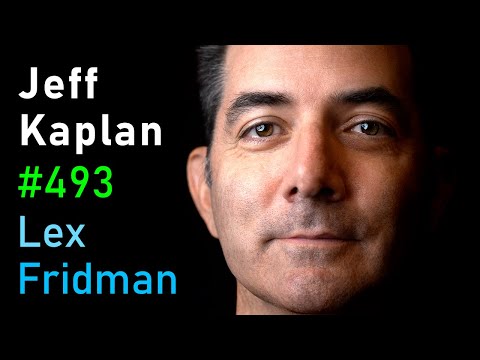
Jeff Kaplan: World of Warcraft, Overwatch, Blizzard, and Future of Gaming | Lex Fridman Podcast #493
Jeff Kaplan: World of Warcraft, Overwatch, Blizzard, and Future of Gaming | Lex Fridman Podcast #493
Summary
Jeff Kaplan, legendary game designer behind World of Warcraft and Overwatch, sits down with Lex Fridman for an epic five-hour conversation spanning his entire life journey — from falling in love with Pac-Man and Zork as a kid in Southern California, to his failed writing career marked by 170 rejection letters, to his obsessive EverQuest days that ultimately led to a job at Blizzard Entertainment. Kaplan opens up about deeply personal struggles including alcoholism, depression, and electroconvulsive therapy, as well as the profound joy of finding community through gaming and building some of the most beloved video games of all time.
The conversation covers the inside story of how World of Warcraft revolutionized MMO design through quest-driven gameplay, the controversial Horde/Alliance faction split, and the emotional culture of early Blizzard. Kaplan reveals the full saga of Project Titan — the ambitious follow-up to WoW that was ultimately cancelled — and how its ashes gave birth to Overwatch in a frantic six-week pitch process. He discusses the creative philosophy behind Overwatch’s hero design, the nightmarish complexity of matchmaking systems, and the corrosive effects of online toxicity on game developers.
In the final act, Kaplan shares the painful story of leaving Blizzard after 19 years as corporate pressures mounted, his period of mourning and recovery, and the creation of his new studio Kintsugiyama — named after the Japanese art of repairing broken pottery with gold. He reveals his new game, The Legend of California, set in an alternate-history Gold Rush era on a mythical island version of California. The conversation closes with Kaplan naming Zelda: Breath of the Wild as the greatest game ever made, his view that AI is currently “an interesting fever dream” for game development, and a passionate plea for game developers to “stop giving it to these fucking corporate jackals.”
Highlights
”My whole career and my family are thanks to EverQuest, so I think I won the game”
“The funny part for me with EverQuest is, you know, you play a game as much as I played EverQuest and people are like, you threw years of your life away, like you can’t win a game like that. And I’m like, I don’t know, like sitting here today, my whole career and my family are thanks to EverQuest. So I think I won the game.” — Jeff Kaplan, 43:26
Clip command
yt-dlp --download-sections "*43:26-44:10" "https://www.youtube.com/watch?v=H9rF1CSSh-w" --force-keyframes-at-cuts --merge-output-format mp4 -o "kaplan-won-the-game.mp4"”I started drinking a lot… one of the things I’m most proud of today is sobriety”
“I started drinking a lot, and alcohol was something that I really wrestled with until my early 30s. And one of the things I’m most proud of today is sobriety and having been sober for such a long time now.” — Jeff Kaplan, 1:03:00
Clip command
yt-dlp --download-sections "*1:03:00-1:04:00" "https://www.youtube.com/watch?v=H9rF1CSSh-w" --force-keyframes-at-cuts --merge-output-format mp4 -o "kaplan-sobriety.mp4"”We were given six weeks to pitch… and whatever we made had to have World of Warcraft like revenue”
“Yeah, the six weeks, it was supposed to be the greatest time ever if you think about it because you’re a game developer at Blizzard and you get to come up with a new idea. So that sounds awesome. But we were probably the most demoralized we’d ever been in our careers, at least I was. You know, I didn’t know if I was going to be fired, I didn’t know if that was the end of my career at that point.” — Jeff Kaplan, 3:19:54
Clip command
yt-dlp --download-sections "*3:19:54-3:21:15" "https://www.youtube.com/watch?v=H9rF1CSSh-w" --force-keyframes-at-cuts --merge-output-format mp4 -o "kaplan-overwatch-six-weeks.mp4"”I wish developers would understand their own value more and stop handing the golden goose to people who don’t deserve it”
“I wish developers would understand their own value more and stop handing the golden goose to people who don’t deserve it.” — Jeff Kaplan, 4:21:29
Clip command
yt-dlp --download-sections "*4:21:29-4:22:00" "https://www.youtube.com/watch?v=H9rF1CSSh-w" --force-keyframes-at-cuts --merge-output-format mp4 -o "kaplan-golden-goose.mp4"”Separating from Blizzard was one of the most painful things… it broke me”
“Ah, it broke me. I think after you’ve been at a place like Blizzard, which I revere, I love Blizzard. To this day, I have nothing but warm, fond memories… So separating from Blizzard was one of the most painful things. And I was very sad when I resigned, and I didn’t realize how broken I was until recently.” — Jeff Kaplan, 4:21:44
Clip command
yt-dlp --download-sections "*4:21:44-4:22:50" "https://www.youtube.com/watch?v=H9rF1CSSh-w" --force-keyframes-at-cuts --merge-output-format mp4 -o "kaplan-leaving-blizzard.mp4"”Own the craft, own our art form, stop giving it to these fucking corporate jackals”
“Own the craft, own our art form, stop giving it to these fucking corporate jackals. You are the golden goose. Keep your eggs.” — Jeff Kaplan, 5:08:25
Clip command
yt-dlp --download-sections "*5:08:25-5:09:00" "https://www.youtube.com/watch?v=H9rF1CSSh-w" --force-keyframes-at-cuts --merge-output-format mp4 -o "kaplan-corporate-jackals.mp4"Key Points
- Early love of gaming (4:31) - Jeff grew up in the golden era of coin-op arcade games in Southern California, starting with Pac-Man, Asteroids, and the Intellivision home console through his father’s connection to Mattel
- Zork and the power of imagination (7:42) - The text-based adventure game Zork remains one of Jeff’s most beloved games, embodying the principle that imagination creates richer worlds than graphics
- Failed writing career (19:00) - Jeff pursued creative writing with deep passion, attending grad school in New York, but ultimately received over 170 rejection letters and burned all his manuscripts
- Rejection letters at a financial cost (27:03) - In the pre-internet era, submitting stories required physical postage including a self-addressed stamped envelope, meaning Jeff paid money for each rejection he received
- EverQuest obsession (34:13) - After giving up writing, Jeff poured eight-hour structured creative days entirely into EverQuest, becoming guild leader of Legacy of Steel, one of the top guilds on the server
- Met his wife in EverQuest (43:11) - Jeff met his wife through the game, and his entire career and family trace back to his EverQuest obsession, leading him to declare “I think I won the game”
- Hired through EverQuest guild connections (51:55) - His EverQuest guildmate “Ariel” turned out to be Rob Pardo, lead designer at Blizzard, who invited Jeff to interview after seeing his Half-Life level designs
- Struggles with alcohol and depression (1:03:00) - Jeff opens up about drinking, depression, therapy, and ultimately electroconvulsive therapy (ECT) as the intervention that helped break him out of his lowest point
- Introverts need people more (1:06:16) - Jeff reflects that introverts may need people even more than extroverts, they just don’t always know how to engage, and gaming communities provided that crucial connection
- Early Blizzard was fewer than 200 people (1:15:00) - When Jeff joined in May 2002, Blizzard was a small studio run by three gamer-programmers (Mike Morhaime, Allen Adham, Frank Pearce) who protected developers from corporate interference
- WoW’s quest-driven design revolution (1:56:11) - After an early playtest of Elwynn Forest, testers expected quests to continue forever, leading to the “oh shit moment” that fundamentally changed how MMOs deliver content through directed gameplay
- Three types of fun (2:25:05) - Jeff cites Sid Meier’s framework: fun for the player, fun for the designer, and fun for the computer, warning designers against “ant farm” design where they optimize for their own entertainment
- Online toxicity robs the world of great creations (3:00:52) - Jeff makes a passionate call to action for people to support young creators, arguing that unchecked negativity drives talented developers out of the industry
- Project Titan’s massive scope (3:04:24) - Titan was set in future Earth where players had day jobs and secret agent missions, with GTA-style driving, neighborhood building, and massive open world — ultimately too ambitious to ship
- Overwatch born from Titan’s ashes (3:19:54) - After Titan was cancelled, a small demoralized team had six weeks to pitch three game ideas, one of which became Overwatch, built on Titan’s salvaged engine
- McCree concept art was a Titan space prospector (3:25:30) - The iconic Overwatch character McCree originated from concept art of a lone prospector in the StarCraft MMO pitch during the six-week brainstorm
- Quake is the GOAT shooter (3:58:17) - Jeff declares Quake the greatest first-person shooter of all time, though he has logged the most hours in Rust outside of his own games
- Corporate pressure drove Jeff from Blizzard (4:15:50) - Jeff felt increasingly losing control of Overwatch’s direction as executive pressure mounted, particularly around Overwatch League costs and the shift away from PvE content
- Kintsugiyama studio philosophy (4:52:54) - Named after the Japanese art of repairing broken pottery with gold, reflecting Jeff’s belief that beauty exists in imperfection and that scars should be celebrated rather than hidden
- Zelda: Breath of the Wild is the greatest game ever (4:55:34) - Jeff names Breath of the Wild as the best game of all time, with Red Dead Redemption 2 also earning a spot on his personal shrine for its Tarantino-level dialogue
- Small studios are the future of gaming (5:07:59) - Jeff argues that the most compelling, innovative ideas will come from small studios, with big studios primarily acquiring them for new IP
Mentions
Companies
- Blizzard Entertainment (1:12:52) - Jeff’s home for 19 years, founded by Mike Morhaime, Allen Adham, and Frank Pearce; created WoW, Overwatch, StarCraft, Diablo, and more
- Kintsugiyama (4:41:27) - Jeff’s new studio, co-founded with Tim Ford, named after the Japanese art of repairing broken pottery with gold
- Infocom (7:42) - Maker of Zork, the text-based adventure games Jeff deeply loves
- Nintendo (4:57:10) - Described as “the Mecca” of gaming, worshipped by Jeff for consistent excellence
- Rockstar Games (4:58:06) - Praised for Red Dead Redemption 2’s craftsmanship
- Mattel (6:04) - Jeff’s father was an executive recruiter with Mattel as a client, leading to the family getting an Intellivision console
Products & Technologies
- World of Warcraft (1:33:29) - The MMO that redefined the genre through quest-driven design and faction-based community
- Overwatch (3:19:54) - Team-based hero shooter born from Titan’s cancellation in a six-week pitch process
- The Legend of California (4:40:58) - Jeff’s new game at Kintsugiyama, set in alternate-history 1800s Gold Rush California, open world multiplayer with voxel-based terrain
- EverQuest (34:13) - The MMO that consumed Jeff’s life and launched his career; he met his wife and got hired at Blizzard through it
- Project Titan (3:02:47) - Blizzard’s cancelled next-gen MMO set in future Earth with day jobs and secret agent gameplay
- Zork (7:42) - Text-based adventure game that holds a special place in Jeff’s heart
- Quake (12:12) - Named the greatest FPS of all time by Jeff; defined early online gaming culture
- Rust (3:58:29) - Open-world PvP survival game where Jeff has logged the most hours outside his own games
- Diablo IV (4:30:32) - Praised by both Jeff and Lex as “really the perfect Diablo game” with a great live team
- Zelda: Breath of the Wild (4:55:34) - Named the greatest game ever made by Jeff for its thoughtful design integration across art, tech, and gameplay
- Red Dead Redemption 2 (4:58:06) - Praised for Tarantino-level dialogue and extraordinary craftsmanship
- Overwatch League (4:09:00) - Blizzard’s ambitious esports league that contributed to financial pressures on the Overwatch team
- Ultima (9:31) - Richard Garriott’s RPG series that influenced Jeff with its rich world-building and emergent gameplay
People
- Rob Pardo (51:55) - Lead designer at Blizzard (as “Ariel” in EverQuest); secretly recruited Jeff by asking to see his Half-Life levels
- Chris Metzen (1:33:29) - Creative director of World of Warcraft, “artist storyteller world builder extraordinaire” who built the lore of Azeroth
- Allen Adham (1:51:11) - Lead designer on WoW, championed the quest system and the Horde/Alliance faction split
- Mike Morhaime (2:51:00) - Blizzard co-founder and CEO who protected the creative culture and committed to the Battle.net launcher
- Tim Ford (4:33:31) - Jeff’s co-founder at Kintsugiyama, formerly at Blizzard
- Sid Meier (2:25:05) - Creator of Civilization, cited for the “three types of fun” framework
- Richard Garriott (9:31) - Known as Lord British, creator of Ultima series
- Jeff Goodman (3:53:33) - Designer of Reinhardt in Overwatch
- Albert Bierstadt (4:45:55) - 19th century painter whose California landscapes inspired The Legend of California’s visual direction
Surprising Quotes
“Introverts almost need people more. And we don’t always know how to engage in the right way.” — Jeff Kaplan, 1:06:16
“I think rightly so, our parents, our coaches, our mentors train us not to give up. And I think a lot of us take pride in that, I’m never going to give up. And sometimes there’s that reality, especially when you’re now in your mid-twenties, where you have that moment of like, am I really going to be this?” — Jeff Kaplan, 29:34
“You think negativity has no cost, but it does. You’re robbing the world of some of the great creations. And also allow creators to suck and to improve. Like that’s what the process of creation is like, is to take risks.” — Jeff Kaplan, 3:00:52
“I was, my son and I, we both played Legend of Zelda: Breath of the Wild, and he makes games also, and we had this moment where he’s like, ‘I’m so sad after I played it.’ And he’s like, ‘I know I’ll never make anything like this.’” — Jeff Kaplan, 4:57:48
“Small studios are the future of gaming. The big studios basically acquire the small studios for new IP and ideas… the really compelling, new, innovative ideas are going to come out of small studios.” — Jeff Kaplan, 5:07:59
“AI to me right now currently is like an interesting fever dream, you know? That’s at the point I’m at with it.” — Jeff Kaplan, 5:07:42
Transcript
Jeff Kaplan: 0:00 There’s three types of fun: fun for the player, fun for the designer, and fun for the computer.
Lex Fridman: 0:06 Is it PVP?
Jeff Kaplan: 0:07 It’s all PVP. In fact, Rust is the most PVP thing in all of PVP.
Lex Fridman: 0:15 I don’t know what that means, but…
Jeff Kaplan: 0:18 Rust players know what that means. My whole career and my family are thanks to EverQuest, so I think I won the game. And we’re idiots, we’re reading the forums, and the forums are just flaming us all the time, like, there’s lag on this server and can’t log into that server. And that was our perspective of what was happening. And when I showed up at that show, it was one of the most emotional things in my life. It was nothing but an outpouring of love. I had believed I would never work any place but Blizzard. I loved it. It was a part of who I was, and I felt I was a part of it. And I literally thought I would retire from the place. I never thought the day would come, and that was it.
Lex Fridman: 1:13 How painful was it to say goodbye?
Jeff Kaplan: 1:16 It broke me.
Lex Fridman: 1:18 Now meanwhile, as far as the outside world is concerned, you’ve disappeared off the face of the earth. But you were actually working on a game. The following is a conversation with Jeff Kaplan, a legendary game designer of World of Warcraft and Overwatch, which are two of the biggest, most influential games ever made. He is genuinely one of the most amazing human beings I’ve ever met. In the many conversations I was fortunate enough to have with him, including while playing video games, he was always kind, thoughtful, hilarious, and still and forever a legit gamer through and through. Of course, he’s always quick to celebrate the incredible teams of creative minds he has gotten the chance to work with over the years. And they are truly incredible. Blizzard has created some of the greatest games ever made. Games that to me personally have brought me thousands of hours of fun, meaning, and happiness. From Warcraft to StarCraft to Diablo, WoW, Overwatch, and more. So for that, a big thank you to Jeff, to the entire Blizzard team, and to every creative mind in the video game industry, giving their heart and soul to building video game worlds that we fans get a chance to enjoy. This was a super fun, inspiring, whirlwind conversation, pun intended, with one of the most beloved gamers and game designers ever. Full of memes, lols, wisdom, emotional rollercoaster moments, and of course, Blizzard video game lore. Jeff left. Blizzard in 2021 and has been secretly working on a new video game called The Legend of California that I got a chance to play with Jeff. It is incredibly beautiful. Set in the 1800s Gold Rush era of California, it’s an open world online multiplayer game, part adventure and action, part survival, sometimes creating a feeling of loneliness and desperation, and sometimes just awe watching the sunrise over a beautiful landscape. It’s unlike any game that Jeff has ever worked on, and it’s a game that I genuinely can’t wait to play with all of you. You can wishlist it on Steam, join the alpha later in March I think, and early access is on the way. And now, dear friends, here’s Jeff Kaplan. You were first a legendary video game player, in particular in EverQuest, before you ever became a legendary video game designer on World of Warcraft and on Overwatch, which I think is a wild journey to go through from gamer to designer. But first, let’s go way back. When did you first fall in love with video games?
Jeff Kaplan: 4:31 I was lucky. I was born in that golden era of coin-op. So I literally remember the first time seeing Pac-Man. I was with my uncle Ronnie and he just kept feeding me quarters. I think he wanted to play but was too scared to, so, you know, his little nephew he would just give him quarters to play Pac-Man. Um, I remember being at my brother’s graduation in Philadelphia and they had an Asteroids machine in the lobby that was one of the first coin-op machines I played as well. And my brother and I, we would try to get the high score, and we’d finally get it, but we had to go to bed early because we were little kids, and then in the morning somebody else had like beat our high score. And then, you know, I grew up in Southern California in the 80s. I was born in 72, so, you know, I was a kid with that skateboard BMX culture where we’d ride two towns over, we knew all the pizza parlors and liquor stores and arcades, and we just lived in that coin-op phase. That was—that was where the love started. And then you started to see things like Pong. You’d go over to a friend’s house, they’d have Pong, and it was just mind-blowing, like we’re playing this thing on the TV and it was so much fun. Atari… It was a big thing at that time as well, but the big one for me was actually in television, because my dad was an executive recruiter, and one of his clients was Mattel. And he said, hey, I, they gave me this thing, and he would get discounts or free games. And my brothers and I just loved Intellivision. Like, we would just play it endlessly. And the comparison was always like, is this game close to what’s in the arcades?
Lex Fridman: 6:29 Mm-hmm.
Jeff Kaplan: 6:30 And it was just such a golden era. Um, and I think the big moment where it really blew open and kind of hit the next level was when the NES came out. And that like NES with Super Mario
Lex Fridman: 6:47 Mm-hmm.
Jeff Kaplan: 6:47 was kind of gaming at the next level at that point, and I have like warm fuzzy memories even thinking about it to this day. I remember we played Super Mario for weeks, my brothers and I, and then I had a friend come over and he showed me all the secret stuff in Super at that I didn’t know existed at the time. And it, it was like suddenly the world opened up more and games could be more. Um, and then there was like a big PC gaming push that hit me. My parents ran their own business, like I said, my dad was an executive recruiter. And they bought an IBM, and this is like when it was DOS before MS DOS existed. And I was so disappointed because like other kids had the Amiga or the Commodore, which, you know, they, they were better for gaming than the IBM at the time. And um, my mom, she really encouraged my brother and I, uh, she bought us Zork. You know, it was just Infocom word games and where your imagination would take you, like Zork holds a place in my heart I think few games will ever touch.
Lex Fridman: 7:52 Is it a text-based game?
Jeff Kaplan: 7:54 Text-based game. You know, you just type in go west, open mailbox, you know, and um, but it’s that power of imagination, it’s why the book is always better than the movie, you know?
Lex Fridman: 8:09 Yeah, so you’re starting to see these creations of worlds that you can navigate.
Jeff Kaplan: 8:14 Yes. You can step into this world and you can lose yourself in that world.
Lex Fridman: 8:19 Yeah, you’re transported. You’re living there. Was Zork popular?
Jeff Kaplan: 8:22 Zork was insanely popular. Um, and then there was Zork two and Zork three.
Lex Fridman: 8:32 The trilogy, Zork trilogy. I see it.
Jeff Kaplan: 8:34 And it was weird in like the, sometime in the nineties, there was this, there was this era of what they called CD-ROM games. That’s how they branded them. And they made a return to Zork, but it now had graphics. And somehow that just shattered everything because the Zork you knew in your head didn’t exist anymore. Yeah, Zork was fantastic. I think it might be open source now, which I think is fabulous. But I highly recommend Zork. Um, there was also in those days on the PC that worked on our IBM was Ultima, which was the Richard Garriott series. And he was Lord British. We knew him as Lord British. He put himself in the game. And you want to talk about world building, you know, there was Yew Forest and there was all the characters. And the first Ultima I played was Ultima II, because Ultima I was before my time. And that series, it was this RPG group-based PC game, and the worlds were just so rich. Like, you could get on a rocket ship. You’re playing in this fantasy world fighting demons, and yet somehow you could get on a rocket ship. And then there was just all of this sort of crazy stuff that would happen in games that are based in the world, like there were bouncers in the towns and merchants, but if you really wanted to, you could try to rob these people or kill Lord British. You know, that was something that was super hard. And when you’re just a jackass kid, you spend your time endlessly trying to do these things over and over. And Ultima was really a profound kind of experience for me.
Lex Fridman: 10:48 And of course that led to Ultima Online, which is a legendary game in itself, perhaps connected to EverQuest, sort of starting to build these worlds that are massively multiplayer on online video games. Can you take me to that journey? Like as you start to get online MMO world, what were influential? What were fun for you?
Jeff Kaplan: 11:11 Well, the big one for me was EverQuest. But, um, like you mentioned, Ultima Online sort of was the predecessor. It came before EverQuest. And it was like one of those unfortunate times in my life where I was actually at grad school.
Lex Fridman: 11:22 You were busy.
Jeff Kaplan: 11:23 I was busy and I missed Ultima Online. Like, I would have had that experience. And when you hear the Ultima Online stories, they’re some of the craziest, funniest… You know, I know somebody who they learned how to poison in the game and then they would poison apples and leave them on the ground and somebody else would be adventuring and then feed the apple to their horse and kill their horse and then they’d steal all their stuff and, you know, Ultima Online was kind of… it was a wild west. The earliest grief-based experiment, really, like, when you’re treating the humans like ants in the ant farm, that was kind of Ultima Online.
Lex Fridman: 12:11 Yeah.
Jeff Kaplan: 12:12 So, my first, like, what online gaming, what defined online gaming for me, was Quake and Doom and Duke Nukem. You know, it started with Doom, and they had, you could basically LAN. You could network with your friends, or you could connect with a modem and hook up with somebody. And that was like a mind-blowing, just seeing another entity in a video game and saying, ‘That’s a person on the other side of that.’ That was magical, like, that that moment happened and that person could be in another room or across town from you. And Quake kind of took it to the next level. Like, that’s where everybody knew what they were doing, the systems were more refined, and this Quake community formed with all of these, you know, great websites, mods. The community was divided into, there were two castes of players, the low-ping bastards, the LPBs, and the rest of us. You know, and I remember rolling into Quake matches, you know, on a dial-up modem with a 300 ping connection and I thought it was the greatest thing ever.
Lex Fridman: 13:10 Mm-hmm.
Jeff Kaplan: 13:11 And just, just connecting with people. Like I said, the websites, to this day, the only gaming website I read—I don’t read any of the news sites anymore—but I read Blue’s News, which was, like, someone actually teased me recently. I linked them a story, I’m like, ‘Oh, did you hear this new thing’s coming out?’ and I sent the link, and they’re like, ‘Dude, this is from Blue’s News. Like, what time machine did you just step out of?’ And a guy named Stephen Heisler, I’m probably pronouncing his name wrong, I apologize. But it was actually through that site that I learned about EverQuest.
Lex Fridman: 13:54 Mm-hmm.
Jeff Kaplan: 13:55 They had those, like, programmer plan updates, the .plan files, and guys like Carmack would, you know, they’d post about what code they were writing or how they had optimized something, or just their personal life. Like, you know, the Ferrari talk would always happen once they, they had achieved success. And there was an id programmer named Brian Hook, and he said, ‘I’m leaving id to go work at Verant, which became Sony Online, to work on this game called EverQuest.’ And I was like, ‘How does anybody leave id?’ the greatest institution in all of gaming ever to work on any other game. I’m like, this guy must be crazy, or whatever this EverQuest thing is, I need to see it, I need to know what’s going on. And if he hadn’t made that post, I’d never would have checked out EverQuest.
Lex Fridman: 15:22 We’ll talk about EverQuest, but since you mentioned Carmack and Quake, what can we say about the genius of John Carmack? Why was he such an important and influential human in the history of gaming?
Jeff Kaplan: 15:35 Those early geniuses at id, like I wouldn’t be sitting here talking to you right now if they hadn’t had the breakthroughs that they had at the time. Um, gaming engines were evolving, but the level of breakthrough that they achieved with Wolf 3D, that was the first I remember playing Wolfenstein when it was a 2D game.
Lex Fridman: 16:01 Mm-hmm.
Jeff Kaplan: 16:03 You’d run around, you’d dress up as a German, you’d throw grenades.
Lex Fridman: 16:08 Yeah.
Jeff Kaplan: 16:11 To see it in 3D. And it’s funny, you look back at the screenshots or videos of it now and it seems almost childish, like oh, why were you so excited about that? And you were transported. There was the intimacy of first person, you know, putting the hands in front of you, holding the gun, being transported to Nazi Germany, but you’re the hero fighting the Nazis. Um, and then the evolution, like when Doom came out, I’m a huge Army of Darkness fan, like one of my favorite movies of all time. And I was like, this is Army of Darkness the video game, you know, like give me the boomstick, here we go. And the graphical advances, but it wasn’t just how the game looked, it was how it played. The smoothness kept getting better, the responsiveness, the sharpness of the gameplay, you have to credit id in those days and Carmack and Romero. Um, I as somebody who worked on an FPS, I— that wouldn’t have existed without them, credit where credit’s due.
Lex Fridman: 17:24 And by the way, we should say your, as a gamer, your range is incredible. You are legit first-person shooter gamer, but you also obviously love the more MMO world-rich exploratory kind of game. So it’s fascinating. But yeah, there’s on the technology stack that brought something like Quake or Wolfenstein 3D to life, there’s a threshold which you pass of realism where you can immerse yourself into that world. I had this same exact experience with the Wolfenstein 2D taking a step to…
Jeff Kaplan: 18:00 3D and it was like tears in my eyes, like this is incredible. Like my memories of Wolfenstein 3D is that it was like ultra realistic. It’s silly to say now.
Lex Fridman: 18:14 There was a feeling like you were there.
Jeff Kaplan: 18:16 Yeah, what an incredible age.
Lex Fridman: 18:18 And some of that is the storytelling, a lot of that is the technology that brings that kind of 3D world to life. It’s incredible. But before we get too far on that tangent, uh, you mentioned grad school. We should mention that, uh, you have a master’s degree in creative writing from NYU. And, uh, you wanted to be a writer. You told me your main influences were Kerouac, but also Hemingway, Salinger, Bukowski, Orwell. What drew you to storytelling in that medium of writing? What aspect of the human experience were you trying to put down on paper?
Jeff Kaplan: 19:00 Well, it started with being a fan first and being inspired and reading and it’s the not only being transported to a different world or into a different person, but also you know the way that stories can touch emotions in you and trigger feelings sometimes you didn’t even know you had. And that was very appealing for me and the big challenge with it is and I think this is for anybody who creates anything is putting yourself out there. Um, to some degree there’s a lot of ego that goes into that moment where you say well I’ve been reading you know 1984 or Green Hills of Africa and I think it’s amazing. Um, and now I’m gonna try to write something that somebody is gonna read. Um, that’s a giant leap of faith, you know, it’s a moment of putting yourself out there completely and there’s got to be some part of that that’s ego, there’s some part of it that’s masochistic. Um, and I think for people who want to create and build stuff, they can’t help but to do it. You don’t really have an option, that’s just how you’re wired and you’re gonna do it anyway. And you know I admire people like Dickinson who can just write all the poems and leave them in a drawer to be discovered by somebody else. You know, that’s one way to go about it.
Lex Fridman: 20:46 Yeah, Franz Kafka, you know, a lot of the stories he wrote never published and he asked for all of them to be destroyed. And then it’s only because of his friend that ignored his request that we even have them. and have many of his stories. So I’d like to be that kind of I mean, clearly there’s some masochism there, some tortured soul.
Jeff Kaplan: 21:08 Yeah.
Lex Fridman: 21:09 But then there’s also the ego like you mentioned. I was entertained by the story of James Joyce when he was a young man, 18-19, declared that he’s going to be the greatest writer of the 20th century. And he turned out in many in the eyes of many to be one of the greatest writers of the 20th century. But there’s like millions of kids just like James Joyce writers, they’re declaring exactly that that turn out not to be. But that is in some cases, in many cases, maybe most cases, you have to have that ego to say, I’m going to…
Jeff Kaplan: 21:43 Yeah right. I read 1984 and I’m going to write the next 1984. Yeah, and I do think ego’s a big part of it. It’s one of the many lessons I’ve learned. Hearing your Kafka story is funny because fast forwarding to how my writing career ended, I literally threw away everything. I mean, in a dumpster. I used to keep copious notes, like journals, my writing journals, everything I ever read, every story idea. I probably had 20 volumes of just handwritten notes. And then I also kept personal journals of just to keep the writing habit up, of just, you know, what happened in my day, how I was feeling, all of that. And then either digitally or typed, I had all of my manuscripts and I threw it all in the dumpster.
Lex Fridman: 22:41 What was that decision? Do you remember that decision? What was that, what was that like to to just take that part of your life and just put it in a dumpster?
Jeff Kaplan: 22:51 Yeah, it it was um I think it was necessary. It was necessary. This is like rational rationalizing it after the fact, you know, which is easy to do you know. But at the time, I think I was so broken and so defeated with failure that I needed the moment, it was like throwing in the towel for a boxer, you know? It’s that moment of like I’m not gonna win this fight and you need to move on from it. And if there was any element of that sitting around, I’d be tempted to try again or bring it out of the drawer 10 years later.
Lex Fridman: 23:35 We should mention that you did give it a a real try. Now you’ve mentioned receiving over 170 rejection letters in one year once submitting your uh stories. So there’s a lot of rejection. So it’s a long chain of rejection. And then what was that like, the rejection?
Jeff Kaplan: 23:57 It was hard. Um, I I had moved from New York. I did the most terrib… Incredible dumb thing that I knew I was doing at the time. I had a really great group of writer friends from grad school in New York, and I think writing’s a very lonely, solitary thing, but weirdly, writers kind of support each other, and just, who do you give the story to? You know, you don’t want to give it to your mom or dad. You know, you kind of want to give it to somebody who’s going to really punch you in the nose and tell you what’s wrong with it. And I had left that writing circle to move back to California.
Lex Fridman: 24:29 Did you, uh, take a bunch of drugs, take your typewriter and drive across, uh, across the United States and then wrote a book about it or just to take Kerouac’s an example? Anyway, sorry, uh, you went back.
Jeff Kaplan: 24:43 I might have been more successful had I done that.
Lex Fridman: 24:46 Uh, so sorry, so you went back.
Jeff Kaplan: 24:48 So I moved back to California and I did it for a girl. And I think within two months of moving back, we were broken up. So, and I knew it when I was standing in my studio apartment when it was empty in New York and I was about to close the door for the last time, I had that like, you know, little me on the shoulder saying, dude, what are you doing? This, you’re making one of those epic life mistakes that is going to come back to haunt you. And, um, I ended up alone in California and I think it was a good three years that I structured my life where I was going to write for eight hours a day because it’s that writer’s habit. Like you have to just force yourself, this is a job, this isn’t a hobby, whether I like it or not, rain or shine, sick or healthy, I’m going to write for eight hours a day. And I did. Um, I was fortunate, like I said, my dad had his company and he hired me, um, as a research associate. So I was calling up, generating name lists for a recruiting company, and I would take whenever there was East Coast assignments, I would take those so I could start at like five in the morning and I created all of this space for me to write. And I just, I had a dog named Jack.
Lex Fridman: 26:11 Who’s, he was a Jack Russell Terrier and so everybody’s like, you’re a writer, you named your Jack Russell Terrier Jack.
Jeff Kaplan: 26:18 I’m like, I named him after Jack Kerouac. It’s poetic and epic and I just look like a dumbass, but it was just me and this dog. And I was writing, you know, all that time intensely. And this was, um, mid to late 90s. So even though internet existed, email was very primitive and you had to send a manuscript off, like printed paper, to all of like, I was trying to get short stories published in literary magazines. And you had to send, um, envelope with return self-addressed stamp. So it was expensive, too. Like if you didn’t have money, you were just, there was a… cost to it, to every single one of them.
Lex Fridman: 27:03 You had to pay for the rejection letter that you would eventually receive.
Jeff Kaplan: 27:06 Yeah. And the like big thing that you were hoping for was that the editor would write you a note with the rejection letter, like…
Lex Fridman: 27:16 Keep going.
Jeff Kaplan: 27:18 Yeah. And you’d like cling onto this, like it was like… oh, Glimmer Train said, you know, showing promise, you know, and you just hang onto that for like a week, you know, pretending like that was… But it was just soul-crushing. Um, and I really stuck and I became more and more isolated. Um, part of that was leaving that group of writing friends in New York. I’m prone to just introversion anyway, the type of person I am. Breaking up with the girlfriend at the time, I just sort of fell into that world of like all I was doing was writing. And, um, it- it broke me. Like I- I went into very deep and heavy depression. I drank too much, I really had a problem with alcohol and all of those things compounded into just deep, deep depression. And, um, I don’t- there wasn’t like a magic rejection that broke me. That would have been epic if like someone out there’s like the dude who- I’m the dude who broke Jeff that one day. But I just had a moment where I said, this is going to destroy me. And, um, and like I don’t want to be discouraging to anybody because I really do believe like you hear it so much, like you have to work for your dreams, never give up, like we’re trained this way, like never give up. The universe… actually, maybe not the universe, a group of editors at literary magazines across the United States was telling me it was time to give up as a writer. Like I wasn’t cut out for it. And, um, I stopped.
Lex Fridman: 29:24 Sometimes, you know, closing a door is required for another door to open. That’s one of the hardest things to do, is to walk away.
Jeff Kaplan: 29:34 Yeah. And I think rightly so, our parents, our coaches, our mentors train us not to give up. And I think a lot of us take pride in that, I’m never going to give up, I’m going to do this come hell or high water. And, um, sometimes there’s that reality, especially when you’re now in your mid-twenties, where you have that moment of like, am I really going to be this? Like am I ever gonna sort of find the light here and maybe and it’s so hard it’s so hard to have this moment maybe this isn’t my calling in life especially when you don’t know what the next calling is gonna be.
Lex Fridman: 30:15 That’s so painful because you’ve invested so much of yourself of who you are of the dreams you’ve had of this just whole conception of yourself and you’re watching yourself slide down in terms of becoming isolated suffering more and more and then you just have to somehow figure out how to get out of that and it is true uh in that situation the way to get out is is the dumpster is to cut it off. Is there advice you can extract from that? There’s a lot of young folks who are in that same situation.
Jeff Kaplan: 30:54 Yeah I this is one of those hindsight things where you know having gone through it and ended up okay on the other side which you don’t know at the time you know when you’re a young person in your late teens or early 20s there’s so much pressure on you and I I really think adults don’t help you know every time you run into the younger nephew or whoever and you start to say things like oh what’s your major what are you gonna do with that what do you want to be it’s such bullshit to do to a human being you know You’re so lost in the world I mean most of us are lost our entire lives but especially in your 20s you’re like you’re lost so questions like yeah what are you what are you doing what’s your major what’s the career and so on that’s not the point man I’m I’m trying to I’m trying to to move through the world I’m trying to run through the world to find the thing that sparks my heart to find the passion to find what I’m meant to be on this earth for and there really I mean that is a real hero’s journey of searching as a young person that’s a real like you know all the adults with their wisdom they’ve stopped searching often they’ve they’ve done the lazy the comfortable thing they found their thing and so now they look back they don’t remember how much suffering and how much uncertainty the young people have to deal with it’s there’s confusion there’s pressure like the the pressure we exert on younger people for having it figured out is it’s insane um so the advice that I always give and it sounds so stupid like this sounds really trite but focus on what you want to do not what you want to be the pressure that society And it puts on us, you know, ‘Oh, do you want to be an astronaut? Do you want to be a firefighter? Do you want to be a writer? Do you want to be a game maker?’ And I think we get lost in the trappings of like a vision of what that role is and how to perform as a fake actor in that role versus when you’re off the clock and no one’s asking you any questions.
Lex Fridman: 33:27 Mhm.
Jeff Kaplan: 33:28 You know, you’re not at Thanksgiving dinner and your uncle’s pressuring you into, you know, what your future’s going to be for the rest of your life. When you go home, how do you spend your time? Like what makes you happy? What brings you fulfillment? And through those paths, you’re going to find out what you’re going to become, not what you want to be. It’s what do you want to do.
Lex Fridman: 33:55 What do you want to do, the thing that brings you joy on a moment-by-moment basis.
Jeff Kaplan: 34:00 Yeah.
Lex Fridman: 34:01 Yeah, that’s brilliantly put. And speaking of which, that’s where you took the pivot. You switched to video games. How did that happen? Gradually, suddenly?
Jeff Kaplan: 34:13 Gradually and suddenly. So, when I had that fateful moment where I just sort of gave up with writing, I had these days where I structured eight-hour chunks of just, this was writing time. You know, I’d sit solitary, typing, all that was gone. And, you know, I could still support myself, which was nice. And then I had this free time and I wasn’t spending it with anybody. I was just alone, me and the dog Jack.
Lex Fridman: 34:40 Mhm.
Jeff Kaplan: 34:41 And I just poured it all into EverQuest. You know, I- I- it was 1999 when that game came out and I had a friend, Victor, like kind of a lifelong friend, one of the few friends I had who played computer games because there was this stigma to that. You know, it wasn’t- you didn’t walk around telling people you played games, they thought you’d waste your time. And my friend Vic had bought EverQuest, and I’m like, ‘That’s that game that that guy Brian Hook went to work on. Is it good?’ and he’s like, ‘Yeah, you got to play it.’ And the moment I logged in, I was just transported. It was the world of Norrath, and it wasn’t just the world itself and how it looked, I thought the game was gorgeous, it was the mechanics, you know, that I- I was this halfling rogue that, you know, had to go out and adventure in the world and when I killed stuff I got experience and I needed better loot to kill more stuff to get more experience. And the sort of draw of progression in the game. It was amazing. I—and I just lived my life of, “I can’t wait till the next time I log in.” There was a lot of escapism going. It wasn’t all healthy. Um, when all was said and done, when I finally had quit EverQuest three days later, you could type in the command /played to see how much, uh, played time you had. I had, I think it was like 272 played days in three years.
Lex Fridman: 36:30 Mm-hmm.
Jeff Kaplan: 36:31 So you start to do the math on like how much time in those three years I was living in that world. It was, uh—it was kind of insane.
Lex Fridman: 36:43 Well, that’s over 6,000 hours
Jeff Kaplan: 36:46 Yeah.
Lex Fridman: 36:47 of gameplay. Wow. So here I’ll go to Perplexity. EverQuest is a long-running 3D fantasy massively multiplayer online role-playing game, MMORPG, set in the world of Norrath, as you were saying. First released in March 1999, it is an online role-playing game where thousands of players create characters, group up, and explore persistent shared world. It is widely regarded as one of the foundational MMORPGs, helping define raid content, guild systems, and 3D online worlds. That’s the other component of it. It’s all humans.
Jeff Kaplan: 37:23 Mm-hmm.
Lex Fridman: 37:24 And they group up.
Jeff Kaplan: 37:27 Mm-hmm.
Lex Fridman: 37:28 And they raid together in the game.
Jeff Kaplan: 37:31 Yep, and the context of EverQuest, raiding is usually around 30 people or more getting together to conquer something that you couldn’t beat otherwise. And to do successful raiding, you usually needed to join what in EverQuest everyone referred to as an Uber guild.
Lex Fridman: 37:54 Mm-hmm.
Jeff Kaplan: 37:55 So I had this great pride in my EverQuest journey that I, most of the time leveling up, I was unguilded, or I was in like a role-playing guild with rogues only. And it was when I got to level 50, and EverQuest was the—the top level, I got invited into this guild called Legacy of Steel, which on our server was the top. Every server had a top guild, and I was on a server called the Nameless server, and the top guild was Legacy of Steel. And that—the thrill of getting 30 people together to go see if you could beat, you know, Nagafen, who was the fire dragon, or Vox, who was the frost dragon, and needing perfect coordination to pull it off, it was insane how fun. Like, you would literally scream out. You’re alone in your room at home, but you felt like you were there with these people, and you would audibly cheer out when you—when you won, and you’d feel depressed when you lost. And it was a game of— high highs and low lows and it it it did everything right, it was amazing.
Lex Fridman: 39:05 So that was a big leap for you to go from the proud lone warrior to a member of a guild, Uber guild. And then there’s that epic story of you rising to the top to become the leader of the super guild.
Jeff Kaplan: 39:22 Yeah, so organizing, organizing people in an online game like EverQuest is like herding cats because, you know, everyone has their own will. Some people are loot motivated, some people want the guild to do well, some people are just lonely and want people to hang out with. And there was also a lot of depression in the EverQuest community. It’s something I suffered with, but a lot of people, you know, anytime you’re feeling sad or down, you’re looking for escape. And one of the great things video games brings us is escapism. And escapism isn’t always bad or negative, but when you sort of abuse it to escape your real life problems, it’s bad and negative.
Lex Fridman: 40:17 So there’s a mix of pain and and darkness that pain can manifest as, all part of this community.
Jeff Kaplan: 40:28 Yeah, and what’s weird is you enter this cycle where being with other people gives you camaraderie and relief and makes you feel like you’re not doing so bad in life. But you can quickly enter a cycle of but then you’re withdrawing from life and it makes you feel that way more to where you can only get the fix from the game at that at that point. So, it’s psychologically there’s a lot going on there.
Lex Fridman: 40:57 And so you had to work with all of that. You have to get a bunch of people together to do a raid who are all human beings going through complicated psychological journeys of their own. Some are talking shit, some are just quietly lonely, just looking for some loot.
Jeff Kaplan: 41:16 In the late 90s, everyone was talking shit. You know what I mean? Like the gaming culture was just a different thing back then. But it was it was a great group, it was super fun, it was people from all walks of life. And to coordinate these people, like you just had to repeat everything like 200 times. Like, okay, we’re gonna we’re gonna port from North Ro. Everybody get to North Ro. And then you’d have to repeat that for like six hours to have any chance of like 20 percent of the people showing up in North Ro. And I sort of like at first I joined the guild, I was just like the bright-eyed bushy-tailed, like I was… like one of the few rogues in the guild, I just wanted to be helpful. I really admired the people running the guild, like we had a great guild leader. And it was just a really fun experience and, you know, the guild leader one day just disappeared. Like, he quit and he was going through, you know, his own thing and that’s what would happen in EverQuest. Like, people would just kind of disappear all of a sudden. There wasn’t a, ‘Hey, in about a month, I’m going to stop playing because I’m starting this new job.’ People, people had to quit in some dramatic way where they just disappear and basically our guild leader stopped playing.
Lex Fridman: 42:43 Did you miss them when they disappeared? Like, we should say that most of the people, maybe all of them were anonymous, so you just have a username and you don’t really say who you are in real life.
Jeff Kaplan: 42:53 Absolutely. In those days, there was a great stigma to mentioning your any real life info. You just kind of kept it all really close to your chest and you never knew who was male or female. You kind of assumed everybody was male.
Lex Fridman: 43:10 Safe assumption.
Jeff Kaplan: 43:11 And then it was a surprise if they were actually female. Uh, like my wife, for example, that’s how I met her.
Lex Fridman: 43:21 You met her in EverQuest. That is a true love story right there.
Jeff Kaplan: 43:22 Yeah. Yeah.
Lex Fridman: 43:24 Wow.
Jeff Kaplan: 43:26 The funny part for me with EverQuest is, you know, you play a game as much as I played EverQuest and people are like, you threw years of your life away, like you can’t win a game like that. And I’m like, I don’t know, like sitting here today, my whole career and my family are thanks to EverQuest. So I think I won the game.
Lex Fridman: 43:46 Yeah, yeah, you’re like the ‘well actually’ guy.
Jeff Kaplan: 43:50 Well, yeah.
Lex Fridman: 43:51 Your life would be on a Wikipedia page somewhere that says, well, here’s an example of somebody why video games are awesome. Uh, yeah, I mean, some of the- I should mention this as an aside, for me and many people I know, yes, it’s hundreds of hours, but some of the happiest hours and days of my life, like looking back, it all worked out. During it, you are pretty low and you think, ‘I, what am I doing with my life?’ All that kind of stuff. But like looking back, just all-nighters you pull playing a particular video game, allowing yourself to really fully be immersed, uh, seeing the sun come up and by the way, many of those games for me were Blizzard games. Just an incredible thing that video games have been able to do. I think, you know, used to be and still somewhat the case that books do that kind of same thing, they take you on a journey, but video games for a long time, you’re right, they had a stigma. Like I couldn’t tell people, I felt like I was doing like heroin or something.
Jeff Kaplan: 45:00 Yeah, it felt like I was doing this secret dark thing. It’s usually in the— [laughs] It’s usually in the dark. There’s just this secret of nature to it, like I’m doing something really dark and shady. It wasn’t mainstream.
Lex Fridman: 45:11 It wasn’t.
Jeff Kaplan: 45:12 It wasn’t.
Lex Fridman: 45:13 It wasn’t accepted.
Jeff Kaplan: 45:14 There was a stigma to it, and one of the weirdest parts of that is, you know, I mentioned like you could type in the /played in EverQuest. Well, if you did the /played on how much TV people watch, what would that look like? It would blow 6,000 hours out of the water easily. Well, it— in 20 years ago it would have, you know, not today.
Lex Fridman: 45:39 Now it’s the phone, yeah. Yeah, but then it is hard to say goodbye to that world. Those are also really painful times. Uh, how hard was it to say goodbye for you?
Jeff Kaplan: 45:52 To EverQuest? It was really hard. And there were times where you’d try to quit—
Lex Fridman: 45:57 Oh, you took a break sometimes?
Jeff Kaplan: 45:58 Yeah, you’d think you’re quitting for good. You’d have those moments of like, ‘I’m doing this too much, I need to move on in life, I’m going to put it down and walk away and hopefully not come back.’ And there were times where you did come back. Um, when I finally did leave EverQuest, it was actually extremely easy because I was psychologically done with the game at the time. Um, it was not shortly, but not too long after a new expansion had come out. At the time it was Shadows of Luclin, which didn’t speak to me like the expansions before, like the one before that was called Scars of Velious, which was an amazing expansion. And I had gotten the job at Blizzard. And I guess I’m just an obsessive person, so all the time and energy that I had put into EverQuest, the second— you know, the second my first minute started at Blizzard, that was my new obsession.
Lex Fridman: 47:04 So speaking of which, you have to tell the epic origin story of how you got the job at Blizzard. As we said, you were this legendary gamer and now legendary troll on EverQuest, username Tigole. Uh, you gave a lot of edgy feedback to the devs, uh, telling them in a now famous— there’s several rants— there’s a famous one where you tell many of them to do a bunch of things, including to pull their heads out of their asses. Uh, you were loved and respected because you gave a lot of specific ways that the game could be improved. And that’s an important thing to say, you weren’t just talking shit. You actually really loved and cared for the game and you gave them in the language of the time, uh, advice on how to improve uh their game. And uh, it’s funny because like you look— Back to those messages, it’s inspiring to me, it should be informative and inspiring to a lot of people because you’re really legit full-time talking shit. And now and you always have been like one of the kindest, most loved human beings in the entire gaming industry. Anyway, how did that lead to you getting a job at Blizzard?
Jeff Kaplan: 48:21 So when the first guild leader left Legacy of Steel, the founder, he was a guy named—his online name was Dread. That was his name. He left. And our guild was kind of in this listless spin for a while. And eventually somebody stepped up and took his position as guild leader and that person’s name was Ariel, who was this blonde wood-elf warrior female who always refused to wear a helmet because thought her character was so pretty, wanted to show her face all the time. So Ariel was a great guild leader for us and made me like a assistant guild leader, raid leader, officer type in the guild. And over time, Ariel got busier and busier and, you know, would send me messages like, ‘Hey, I’m not gonna be online tomorrow,’ or ‘I’m not gonna be online tonight, can you run the raid? Can you run the raid?’ And running the raids was very natural for me. And it was my first experience with leadership in my life of like, how do you motivate people? Like, what does motivation look like? What does discipline look like? How do you inspire people? When do you force people versus encourage them? You know, so it was a learning experience for me on the fly and I had the safety net of the real guild leader would log in eventually.
Lex Fridman: 49:57 I should mention, I’m just now reading about, doing a bunch of research on Justinian of the Roman Empire and he rose from being a peasant to being emperor. So I see a lot of parallels in your life journey from peasant to emperor, but go ahead, I’m sorry.
Jeff Kaplan: 50:18 At least EverQuest guild leader, that’s as much as I can say.
Lex Fridman: 50:20 Uber guild leader.
Jeff Kaplan: 50:21 Uber guild leader. Best guild on the Nameless server. So as time went on, Ariel became busier and busier. And then one day, they contacted me and we were having this like whisper back and forth and they said, ‘You’re gonna have to take over the guild. I’m just too busy.’ And then it came out later—well, let me back up a second. I started fooling around, like around this time Half-Life 1 had come out. And with both Duke Nukem and Half-Life 1, one of the incredible things that those companies did back in the day was when they shipped the game, they shipped— The editor on the CD.
Lex Fridman: 51:01 Mhm.
Jeff Kaplan: 51:02 And if you were curious enough, you could like fire up that editor and fool around with it. So I made a Duke Nukem level and you’d send it off to like those UK programming magazines and, you know, you’d get excited because your level was in, you know, some random magazine. And then I started making like Half-Life levels.
Lex Fridman: 51:25 Mhm.
Jeff Kaplan: 51:26 And Ariel had stepped down as guild leader. I had become guild leader. And then at one point Ariel contacts me and says…
Lex Fridman: 51:32 Mhm.
Jeff Kaplan: 51:33 “Hey, you know, you were talking about those Half-Life levels you made. I want to see those.” And I was like, “Oh, that’s cool, like I didn’t know you played Half-Life, like, yeah, maybe we can get a server up and I can play them.” And Ariel tells me, “No, mail them to this address in Irvine.” And because again, to rewind in the time machine for a second, to send something like a Half-Life level over the internet would have taken like 12 hours.
Lex Fridman: 51:54 Mhm.
Jeff Kaplan: 51:55 So you actually like burned it onto a CD and stuck it in the mail. So I put my Half-Life levels, I send them to Ariel. And he says, “You know, my name’s Rob. I’m a designer at Blizzard Entertainment. We’re… I hear you’re in Pasadena because you mention it, you know, I would write about, you know, the Rose Parade and all these things on our website.” You know, it was blogging before blogging existed. So he knew I lived in Pasadena. He’s like, “Irvine’s only an hour away. Why don’t you come down, see Blizzard, and you can also meet,” and he names like four people in the guild. And I’m like, “They all work at Blizzard too?” He’s like, “Yeah, we’re all Blizzard.” And it was so weird because during that era I didn’t have a lot of money. It was not like kind of nowadays it feels like everybody plays every game, but you had to be selective. So like I never bought Starcraft or Diablo or Warcraft. I was much more of the Half-Life, Quake, Quake 3 guy around that time and I never played a Blizzard game and I just got invited to like go to Blizzard Entertainment.
Lex Fridman: 53:26 Was Blizzard already legendary? You know, with the Warcrafts and Starcraft, was there… was it building this like great legend of this game company that seemingly doesn’t miss?
Jeff Kaplan: 53:37 It was very much on its way to enshrining itself as being one of the legendary game companies. Like, it was beloved by gamers, but there were still ignorant people like me who hadn’t played, you know, War 2 or Diablo 2 or Starcraft, which was shocking to people.
Lex Fridman: 53:56 So you weren’t like freaking out, freaking out?
Jeff Kaplan: 53:59 No, I wasn’t. Because I didn’t realize how significant it was. I was freaking out in a different sense. I’m like, am I going to get mugged when I like who are is this a scam? Because you didn’t meet people off the internet. So I drove down there, uh, I ended up there was there was Rob Pardo,
Lex Fridman: 54:19 Mhm
Jeff Kaplan: 54:19 who at that time was the lead designer on Warcraft 3 and he was Ariel, you know, so okay, it wasn’t a woman after all. It wasn’t this blonde
Lex Fridman: 54:28 What else
Jeff Kaplan: 54:29 You know, I don’t know what you expect at that point. It was Rob Pardo. To this day a great friend of mine named Scott Mercer
Lex Fridman: 54:39 Mhm
Jeff Kaplan: 54:39 was the Enchanter in our EverQuest guild, a guy named Dale Oman, there was a guy named Roman Kenny who was like this totally psychotic wizard
Lex Fridman: 54:47 Mhm
Jeff Kaplan: 54:48 who played in our guild. And I had lunch with these guys, you know, we just went out to Irvine to like a restaurant and, uh, you know, forgive me for the misuse of the phrase, but it was like my coming out moment. And we talked about games having that stigma and being embarrassed about who you are and what you like. Like I up until that point I would never tell friends, family, like I love games, I’m playing this game EverQuest, it’s so cool we just killed a dragon.
Lex Fridman: 55:21 Mhm
Jeff Kaplan: 55:21 And so you were hiding this part of your identity. And I’m out to lunch with these guys in Irvine and we’re talking about dragons and swords and, you know, raid tactics and talking shit on all the people in the guild. And I I literally had this moment where I felt like myself for the first time. I just felt like so comfortable. And that was an eye-opening moment. And after that after that lunch happened, he invited me for a couple more lunches down, you know, just I just saw it as like, oh now I you know I made friends with these people online, now we know each other in real life and they happen to work for this game company. And another one of the lunches they invite this troll warrior to have lunch with us whose name in the game was Barfa the troll warrior.
Lex Fridman: 56:25 Mhm
Jeff Kaplan: 56:26 And Barfa Barfa wasn’t somebody who played with us all the time, but kind of like Ariel got into the guild kind of on the side, you know, it’s one of those like inside invites of like who’s Barfa, I don’t know, but Barfa’s in the guild now. And there was a at the time it was a new dungeon called the Hole. And we had never done it before and we jumped down in this hole and we’re doing this whole dungeon and everything goes wrong as it’s prone to do in EverQuest and the whole guild escapes except for Barfa whose troll character is so big he can’t jump out of the exit. And I had this potion that was like a really expensive potion that was a teleport potion that you know no one but someone in the Uber Guild could afford at the time and I hand the potion to Barf and I said here use this it’ll teleport you out and I’m a rogue I can just stealth and get out of the dungeon on my own. So I saved Barf not really knowing who Barf was and I did it with a very expensive potion.
Lex Fridman: 57:32 Mhm.
Jeff Kaplan: 57:33 Having lunch, Rob introduced me, this is Alan Adham, he plays Barf. I’m like oh, Barf, and we you know he has you saved me in the hole that time. Well turns out Alan was the founder of Blizzard and he was the head he was sort of the head of everything at that time it was Alan, Mike, Mike Morhaime, and Frank Pearce. And what I didn’t realize with these lunches were like I just loved them because I felt like I was myself I felt true happiness being surrounded by these you know people who were talking about video games and I felt comfortable around.
Lex Fridman: 58:13 Mhm.
Jeff Kaplan: 58:14 And one day Rob logs into EverQuest he wasn’t playing much at the time he said I want you to tomorrow to check the Blizzard job site.
Lex Fridman: 58:23 Mhm.
Jeff Kaplan: 58:25 And I’m like okay like I’ll check the Blizzard job site and they had announced World of Warcraft and posted on the job site was a job for an associate quest designer. And the funniest part of it was I forget if it was a requirement or a plus in the job description but they’re like we really want somebody with a creative writing degree. And I’m like you guys set this up for me like they were just looking and and it was that hindsight moment of like actually these guys were just interviewing me for six months and they were actually friends and they were really cool about it too and I just had the fuck it moment like that that job opened up I applied with all my heart you know like it they had a bunch of quest writing on it and then I went through like a pretty hardcore six month recruiting process because they never hired designers from out of the company. Traditionally designers were promoted from within Blizzard either they would like transfer out of other disciplines or they would come from quality assurance tech support so hiring somebody off the street was kind of a big deal for them and they really put me through a grilling. I met with it was the first time I met Chris Metzen…
Lex Fridman: 59:58 Mhm.
Jeff Kaplan: 1:00:00 …who is… Maybe the most inspirational creative person on the planet. And you instantly… they paired me… they did this interview pairing of these two guys. It was Kevin Jordan, who was one of the original designers on WoW. Really he doesn’t get enough credit for his contributions. He was one of the earliest class designers, PVP designers. But he’s a really quiet guy. And they paired him with Chris. And Chris just owns the room, you know? Chris, you could just sit and listen to him. He’s so creative, he’s so passionate. And the way he articulates things, like you just instantly become a fan of Chris when you’re around Chris. And Chris, Kevin and I go to lunch at this Italian place that was across the street from Blizzard. And I remember Chris made a stop to buy cigarettes, you know, on the way to the interview. And then every other word out of Chris’s mouth was like fuck and shit. And I’d come from this whole like corporate culture from my dad’s recruiting business where I’d never imagined somebody would curse in an interview or stop to buy smokes. And again it was like I’m around my people, like I never smoked but just you know being around people who didn’t care about what the corporate norms were was so inspiring. And then my last interview was with Allen and Rob and a great programmer named Bob Fitch. Like I think he’s one of the first five developers at at Blizzard. Uh and they took me to an Arco station that had a Jack in the Box. You know how like sometimes they’ll combo? It was Arco Jack in the Box. And that was my final interview at Blizzard was at the Arco Jack in the Box. And I remember thinking to myself these guys just brought me to a Jack in the Box that’s in an Arco station. I need to work here. Like this is… these are my people. This is where I belong. Like it was the greatest thing ever. And so yeah, that’s my crazy journey to Blizzard.
Lex Fridman: 1:02:26 Uh, started from the bottom and end up at the top in the Jack in the Box. Uh, can you speak to because you mentioned some of the low points and and depression through that journey, how did you find your way out? So can you just… a lot of people are sitting in those low points right now listening to this. What kind of wisdom can you draw about finding your way out? Finding your people?
Jeff Kaplan: 1:02:54 There were a lot of uh really low points. I’ll give you the weirdest one. I started drinking a lot, and alcohol was something that I really wrestled with until my early 30s. And one of the things I’m most proud of today is sobriety and having been sober for such a long time now. And I remember I was just having, I would buy a bottle of Old Grand-Dad and drink the whole thing by myself and then watch the Oscars. And I remember I was, of all things, watching the Oscars, which is just such a fake, bullshit environment. But I was, you know, I was really drunk, and all those people seemed so together and successful and polished. And I just, it made me, it was that contrast that made me feel like such a failure. And it all seems so stupid and unimportant to me now. I became, you know, I got in that constant struggle of ‘try not to drink, but drink to make it feel better.’ I was lucky, my parents were very supportive of me even in my 20s, even after I, you know, quote-unquote left the house. I went into therapy, and that was very helpful. You know, extremely helpful. And one thing I learned is that you have to find the right therapist for you. It’s not just checking a checkbox of ‘I went to therapy.’ It’s about finding somebody who sort of helps you get out of whatever rut you’re in in a way that’s healthy for you. And I tried antidepressants, but I hated, I just hated taking pills and feeling like something was in me and making me feel different. I never responded to it. And then the hardest thing, you know, which I’ve never mentioned to anyone and is hard for me to talk about, but eventually I went through ECT, which is electroconvulsive therapy, shock therapy. And that broke me out. And I would never endorse that as a miracle. That was, I was at such a low point that people were very worried about me and my well-being and what was going to happen. And that was sort of an extreme ‘pull the ripcord, like there’s nothing else to lose’ moment. And I think that was the difference-maker, that and starting at Blizzard.
Lex Fridman: 1:05:56 So I mean, there is a deep loneliness there. And before you met those guys at lunch, you were alone. In a really deep fundamental way, in the way you weren’t in New York with the writers group, right? And so that must have been an incredible experience just to see the Guild.
Jeff Kaplan: 1:06:16 Yes. It was everything I needed. As such an introvert, you think that there are extroverts and introverts, and introverts don’t need anybody, but weirdly, I think introverts almost need people more. And we don’t always know how to engage in the right healthy ways and how to find people and how to connect with people. And it was great. One of the things that had attracted me to creative writing was the solitude of it and the fact that you didn’t have to collaborate and you could just write what you wanted to write and it was all you. You would succeed on your own or you would fail on your own, and that was very attractive to me. And the thought of creative collaboration was actually off-putting. I spent all four years of undergrad interning at Universal Pictures because I thought I wanted to be in film and it was such an unhealthy creative collaboration in the film industry. It’s a very, you know, I look up unhealthily to the film industry and admire it and grew up with all these legends who had come from there. But it’s like a caste system and I was on the bottom of the caste system as an intern and I was seeing how the other people who were low caste in the film industry were treated and it was just horrible, you know. But games was different. Games was very flat. It didn’t matter if you were the CEO or the boss, like the way Mike and Allen carried themselves with me who was an associate game designer, you felt like an equal. And I think not just the camaraderie but the part that shouldn’t be overlooked is the work itself and the work ethic, that’s what really pulled me out.
Lex Fridman: 1:08:33 Hard work on a thing you love.
Jeff Kaplan: 1:08:36 Yeah.
Lex Fridman: 1:08:37 I have to, if you may allow me, read the prophetic one of us, quote ‘one of us’ post you made on April 18th, 2002. Because in some deep sense, you, I think, remained one of us. The… I apologize to bring up Justinian the Emperor, but you remained a kind of peasant gamer, a true… A true gamer, who happens to also be designing the games. And so this post kind of speaks to that. It’s, it’s fascinating to read because that was at the very beginning, right? You didn’t know anything, you didn’t know the games you would end up creating. Title of the post: ‘If You Want Something Done Right’. You wrote: ‘This week, I accepted a position as Associate Game Designer with Blizzard Entertainment. Specifically, I will be designing quests for World of Warcraft, Blizzard’s MMORPG based on the popular Warcraft series.’ ‘In addition to my duties as quest designer, I will also be expected to contribute to helping design the end-game content for World of Warcraft.’ ‘The reason I’m sharing this information, besides the fact that I have a masochistic love of reading rants and flames about myself, is because I know that the fans of this site are hardcore MMORPG players.’ ‘The readers of the site have also come to know my personal opinions on what constitutes a fun gaming experience versus what feels like a complete waste of time or poorly designed encounter.’ Wow, you’re very eloquent in this post, and without too much shit-talking. ‘You’ve all read my opinions on such things as tedious key camps, obvious time sinks devoid of any story or linear narrative, quests which reward the lucky over the skilled, and quest rewards which are out of sync with the amount of time and effort required to complete them.’ ‘I hope that my association with World of Warcraft will serve to comfort MMORPG fans that one of us is on the other side of the fence, looking out for the interests of the player.’ And you go on to describe some of the high hopes you have for World of Warcraft, which is really fun to read because you don’t… you don’t realize it’s gonna be like one of the greatest games of all time… …played by millions of human beings, just where those millions of human beings are playing it for hundreds of hours, thousands of hours. It’s crazy. It’s funny that this ‘one of us’ is writing at the, at the dawn of a new age. The final paragraph is: ‘So with all that is going on with me, you’ll have to excuse any lapse in updates to the site here.’ ‘I will try my hardest to give you slackers something to read while you should be working.’ ‘But in the meantime, there’s a whole world of NPCs that need to learn the words ‘Kek’, ‘Sog’, ‘Ger’… …and ‘Mofacker’ in quotes, ‘and the like’. Although something tells me I’m already in trouble with the boss.’ ‘One of us’, Jeff, ‘one of us’. That was a beautiful, beautiful post. Did you in fact get in trouble with the boss?
Jeff Kaplan: 1:11:35 No. No, my boss was Allen. And Allen was very understanding. And he… they kind of knew what they were getting into when they… when they hired me. And that post actually embarrasses me when I hear it now. Um, there’s so much ego… ego in it. And I think that’s it’s got that 20-year-old, you know, I don’t know what I don’t know.
Lex Fridman: 1:12:11 I know exactly how to fix this video game and all video games and… but there’s brilliance behind that, there’s a passion behind that. Like, where when you’re a gamer and you really put in the hours in a game like EverQuest, you understand what makes for a compelling experience. You don’t at that time understand how much hard work is required to create that experience and how much uncertainty there is, how difficult it is, how many trade-offs there are, how your designs when they actually are brought to the world and experienced by thousands of people, millions of people, they are different from the vision you had for it. So all those elements you don’t know. But you have to have that ego in the beginning, right?
Jeff Kaplan: 1:12:51 Yeah.
Lex Fridman: 1:12:52 To even have the guts to try, to have the guts to put in all that work. So, what were the… what was it like? What were the vibes of early Blizzard like? They’ve at this point, Warcraft 1 and 2, Warcraft 3’s in production, StarCraft, these are legendary games. I don’t know, I spent probably over a thousand hours in these games combined. I played Warcraft 1, 2, 3, I played StarCraft 1 and 2, I played WoW of course, Diablo 1, 2, 3, 4. I played Diablo 2 with “stay awhile and listen” with Deckard Cain. “Stay awhile and listen.” I mean, some of these characters, some of these experiences just will stay with me forever. Anyway, so big thank you to those early Blizzard folks. Uh, what was it like? What was the team like, what were the developers like, what was the vibes like in those early days?
Jeff Kaplan: 1:13:46 It was amazing, it was the dream. When I showed up at Blizzard on my first day, the office was on the University of California, Irvine campus at the time. They have this research and development park where if you’re like a tech company, you can get office space there. And Blizzard took up, when I joined, it was three-fourths of the building was Blizzard. And there’s like a building right next to it that had like Cisco and, you know, it was all kind of techy places. And it was so funny because you drive up and like everything was very serious and corporate, and then outside of the Blizzard offices, it’s everybody’s wearing black T-shirts and shorts and throwing frisbees and playing Hacky Sack and on scooters and skateboards and you’re like, okay, that’s where… that’s where Blizzard is. So it was that environment. I remember walking in the door and thinking like it feels like I’m walking into a dorm room, because it was just posters on the wall and there were actually like people would have futons because they’d be sleeping because we would work so much back then. But the… Vibe was it was very small like Blizzard the day I joined in May of 2002 was fewer than 200 people and that included there was a whole group up in San Mateo called Blizzard North.
Lex Fridman: 1:15:14 Mm-hmm.
Jeff Kaplan: 1:15:15 So Blizzard South the Irvine group was responsible for Starcraft and Warcraft. And there were two development teams at Blizzard it was called Team One and Team Two at Blizzard South. Um, Team One was revered. These are the RTS guys. They made, you know, Starcraft, Warcraft 2 and they were at that time they’re working on Warcraft 3.
Lex Fridman: 1:15:44 Mm-hmm.
Jeff Kaplan: 1:15:45 Team Two was kind of the red-headed stepchild like apparently before I joined they had tried to spin off a second team multiple times and failed. And then they finally decided they were going to make World of Warcraft. Uh, there was a game called Nomad. I don’t know what that game was exactly, but that was what Team Two was working on at first. That got scrapped and Allen steered the team towards World of Warcraft. And there was amazing designer named Eric Dodds. He’d go on later in his career to be the game director of Hearthstone. Him and Ben Brode basically were the core designers behind that. But Eric and Kevin Jordan were these two key designers working on World of Warcraft for Team Two. And then you had this tech group that was headed up by John Cash.
Lex Fridman: 1:16:57 Mm-hmm.
Jeff Kaplan: 1:16:58 And John Cash, the first day that I showed up to work on Team Two they said you have to go get your login from John Cash. I’m like John the John Cash from Id. And, you know, John Cash has a skin you could be John Cash in Quake 3. So and then he saw me and he was a huge Everquest player and you’re like, he was like, “You’re the guy who runs Legacy of Steel” I’m like, “You’re John Cash” and we had that moment where we kind of fanboyed out on each other. Um, and it was just the vibe was so cool there like there were very few producers. So a game team there are five core disciplines that make a video game. You’ve got engineers or programmers who are writing the code. You’ve got the art team that’s making all the visuals for the game and that spans everything from like 3D modeling, characters, environments to also animation, tech art, you know, making it all work. You’ve got game design, which some companies don’t have designers, the artists and the engineers do it. Valve famously has very few designers because everybody there is a designer. But in companies where design is a discipline, which it very much is so at Blizzard, game designers are sort of the creating the game experience people, you know, setting up all the systems and content in a way that gets the player to navigate through the game.
Lex Fridman: 1:18:33 So it’s part of a story, part of this quest design, part of it’s like how you move through the game world.
Jeff Kaplan: 1:18:41 Yes. So game designers, there’s a spectrum, like same with art, same with engineering, of roles within game design. Some are more heavy on the systems side, so like any game that you’ve played where loot drops, you know, Diablo 4, World of Warcraft, you know, Escape from Tarkov, whatever, if there’s loot dropping, a designer has planned out very carefully what drops where and at what percentages. That would be like a systems designer. A content designer is somebody who’s going to make quests or write storylines where there might even be a narrative designer which is even more focused on story. But designers, you know, run the gamut and then you’ve got these jack of all trade designers that can do it all. Um, so that’s the design group. There’s production, which is project management. And production is different at every game company you go to. So if you talk to someone from EA or Blizzard, production might be very different. They might be the boss, they might actually be a designer, or they might be more of a project manager. And then one of my favorite disciplines on a game team that’s often overlooked is sound and, you know, audio, which is comprised of the sound designers and composers. And there are two things, I think there are two things that no one realizes how much they bring to a game until they’re missing, and that’s audio and lighting. Because most of the time we’re playing without these things and it just feels a little off and wrong. And when you have a great lighting artist or you have a great composer or sound designer, like it, the experience, you’re just tapping into these senses that you wouldn’t otherwise. But that’s, that’s who comprises the game team.
Lex Fridman: 1:20:47 Is the lighting, you know, all the different kinds of graphics, would that be under the art team?
Jeff Kaplan: 1:20:57 Yeah. Lighting you’re going to have lighting under the art team, but… They’re going to be best friends with a graphics programmer. And you know, like I mentioned with design, there’s this wide spectrum on the engineering team. You have some guys who are like architectural geniuses who are coming up with, you know, the server client model or the networking or whatever. Others are more like gameplay focused. On Overwatch we had an audio programmer, just doing nothing but audio hooks for the audio team. And on every game team, you’re going to have graphics programmers who will work with people like the lighting artists or the environmental artists, character artists on shaders and basically any way to make the game, they’ll always ask what’s your vision, what are you trying to get it to look like? They’ll want an illustration of what should the world look like? And they’ll be the ones who say I know how to write code to that will let you do that. So you partner a great graphics programmer with a great lighting artist and that’s, that’s actually the creative tension behind games and what makes game teams so unique is if we were to line them up on some crazy spectrum, on one end you’re going to have the artists, who their creative, dare I say emotional, you know, they are artists on that end. And on the other end you have the most logical brilliant programmers who their minds just work very differently from the most creative art, like artists could be sitting, you have a meeting with them and they’ll just sit illustrating. If there’s any piece of paper, they’re drawing on it. And programmers, you know, they’re just so brilliant and organized in their thinking and everything’s so logical. And then in the middle are people like the sound designers, the game designers and the producers. They’re kind of a little bit in in all those fields. But it’s the brilliance of taking people who are so vastly different in their interests and talents, but aiming them at that shared goal or that shared vision of the game that like really makes something special.
Lex Fridman: 1:23:22 And there, I mean you showed me the size of the team for World of Warcraft, but you’ve also are well known for working on quite small teams to create these incredibly huge games. What is the power of a small team in this kind of context where a lot there’s that creative tension? Is it because a small team avoids maybe the compartmentalization, like the modular where people the artists now have their own wing building where they never talk to the engineers, that kind of thing?
Jeff Kaplan: 1:23:54 Absolutely, I mean you hit the nail on the head. The bigger the team, the more you become a cog in the machine. And on a small team, the way I like to describe it is you get to have a loud voice. If we’re a small team, let’s say we’re going to make a game and it’s at sort of the incubation period of a game and there’s only 10 of us, all 10 of us are in the room for every decision. You know, I’m not a server networking guy, but I’m in the room for that discussion. I’m not an illustrator, but I’m going to sit in the room when we decide what the art style looks like. As soon as the team starts to grow, we become compartmentalized. It’s exactly like you said, and there’s a weird thing that happens, this is just kind of a human nature thing. The less you interact with somebody, the more you sort of become alienated from them and vilify their point of view. You tend to look at what they do and say with skepticism rather than trust and belief in them. And I find on smaller teams where we all know each other’s names, I know what everybody’s working on every day, they know what I’m working on, everybody can talk to each other, there’s none of that stereotyping of a discipline. On big unhealthy teams, you start to say things like, well, the artists just don’t get it. They don’t understand what we’re trying to make. And when you back up and you think about the statement that you just said, it’s like such an asshole statement. Like really, all the artists don’t get it? Like that’s, A, that’s not true. B, that’s sort of demeaning to them. Like they signed up for this. This is their life’s work too. This game is going to be as much theirs as it is mine. So who am I to say a statement like that?
Lex Fridman: 1:25:56 Yeah, it’s harmful to discipline to think that you understand the world and those silly other folks don’t and you have nothing to learn from them really and they’re deluded in some in some kind of way. That’s so powerful.
Jeff Kaplan: 1:26:11 Fast forwarding a little bit, when we formed Team 4 and which went on to make Titan and ultimately fail, and then that got rebooted as the Overwatch team, the idea that I tried to get through to the team was to make an assumption. And really, like Blizzard is one of the top game developers in the world, and we were very fortunate when I was there, and I imagine it’s this way today, that we could recruit whatever talent we wanted. It, the best of the best wanted to come work at Blizzard. And if you sort of go through the paces of that and say, okay, please… When we recruit somebody, let’s say we’re recruiting an artist to make props, boxes, chairs, whatever. That is the best prop artist in the industry. That’s who’s going to show up on our doorstep. So when they show up here, we should treat them like the best prop artist in the industry instead of starting from a place of doubt and cynicism. So when that person speaks up and says, I think with Overwatch, for example, I think we should do this, you know, we should do X instead of Y, instead of saying, well, I’m a believer in Y, why are you against my idea X? You should take a moment, have a deep breath and say, man, the best prop artist in the industry is suggesting something, why don’t I listen to it?
Lex Fridman: 1:27:57 I actually do for myself like this kind of thought framework or thought experiment whenever I’m talking to a new person, especially if I feel myself a little bit of a tinge of that feeling. Usually it happens with like a really young person, like an undergraduate student or something like this. I pretend that they’re the smartest person in the world in my head. And now, like, it puts me in a mode of like assuming I have a lot to learn from them. And it helps. You actually like really listen. I literally think they’re the smartest, wisest human on earth. It helps me.
Jeff Kaplan: 1:28:32 I had that like I think, you know, I’m no expert, I’m a game designer. So like as much psychology as I know is how to manipulate people into having fun hopefully. Like I don’t know, I don’t have an important job.
Lex Fridman: 1:28:51 Yeah, right. What’s fun.
Jeff Kaplan: 1:28:53 But psychologically speaking, I one, one thing I think a lot about is ego and I think about insecurity. And insecurity we all have, like all of us as human beings have insecurity, it just manifests itself in different ways. And as we kind of go through our life journey, the insecurity also changes. So like some people, for example, use their insecurity to rip other people apart, some people destroy themselves through their own insecurity, some people destroy everybody with their insecurity. But I had that moment as a young lead, when I first was made a lead on like World of Warcraft, where I felt it was very important to be right and to be, you know, shepherding the correct idea. And I actually got pulled aside, like Pardo and I had a meeting with a couple people who weren’t game designers. And it’s always tricky as a game designer because constantly everybody’s throwing ideas. out in on a game team like there’s no shortage of ideas ever. And we were in some meeting about something and these people kind of threw out these ideas. And I wasn’t mean to them, but I very kind of systematically like an insecure, you know, ego driven new lead would do. I kind of, let me tell you why that’s wrong and let me tell you what we’re going to do instead. And after the meeting, you know, Pardo pulled me aside and he said, you’re a very smart designer, but you shouldn’t do what you just did to those people. You should always listen to what people have to say and try to make their ideas work. And I just, over and over I was like, okay, anytime an idea comes my way, let’s try to make it work. And it went from this kind of thing that I didn’t believe in to actually like a core part of who I am today as a leader, as a game designer, as a game director. And some of the best ideas have come from developing other people’s ideas where your first reaction is like, no, that’s wrong. And then just kind of sticking with it and going, but how could we make it work? And the most gratifying part when it succeeds is they get all the credit and you’ve sort of elevated this person who idea wouldn’t have been championed, whose idea by the insecure egotistical lead of, you know, early 2000s would have just said, no, now their idea is the thing everybody in World of Warcraft or Overwatch is just loving and they get all the credit.
Lex Fridman: 1:31:58 I should give context to the listener who don’t know about the great Jeff Kaplan, that you’re one of the most humble and always give credit to the team for everything and anything. And so everything we talk about today, I know you probably resisting constantly giving credit to the team on everything. So you’re the famous hi I’m Jeff from the Overwatch team, right? So just as a small aside, thank you for your humility through your career and thank you for always celebrating the team. But let’s talk about WoW. Let’s talk about World of Warcraft. Tell me what the early days of developing WoW was like. Maybe we should talk about what World of Warcraft WoW is going to perplexity here. World of Warcraft is a massively multiplayer online RPG where you create a character level it up doing quests and dungeons and progress your gear and power in an open fantasy world called Azeroth. At a basic level you move, use abilities from your action bar, follow quests and gradually learn a combat rotation that fits your class and there’s all kinds of characters and roles and classes. You pick a race, appearance, starting zone, small racial bonuses, and a class, how you fight, what your role is in groups. Can you continue, fill in some of the gaps, what is World of Warcraft?
Jeff Kaplan: 1:33:29 World of Warcraft, first of all, more than anything, is a world. Like it’s a world that you can live in with real other people and everybody’s kind of living out their fantasy. Chris Metzen, who was the creative director on World of Warcraft, and really like Allen Adham, who was one of the founders of Blizzard, calls Chris the heart and soul of Blizzard. And it’s almost like when you’re making a Blizzard game, you’re making Chris’s imagination at some point. And Chris famously said the lead character of World of Warcraft is the world, and I always believed that. So you’re trying to create this place that’s exciting and dangerous but comfortable but uncomfortable, and gorgeous and, you know, it should feel massive and it really is. It, you know, can take a half an hour to get from one end of the world to the other. But it’s this world you’re living in. The world is divided into two warring factions. There’s the Horde and the Alliance, and that was a very important, very controversial decision that was made by Allen Adham, was the champion of the Horde and Alliance.
Lex Fridman: 1:34:52 And that in their early days there was a really strong division.
Jeff Kaplan: 1:34:56 Strong division. Yeah. You pick a side and then you hang around with only people of your kind.
Lex Fridman: 1:35:04 Yeah.
Jeff Kaplan: 1:35:05 And you get it tattooed in real life on you, like the amount of people who walk up to me and show me their Horde tattoo, like it’s epic. It’s become who they are. Like if you were to say, like hey Lex, come play World of Warcraft with me, we’re Alliance on Tychondrius, you’d be like, dude, Alliance? Like, okay, I don’t think we can be friends anymore.
Lex Fridman: 1:35:13 Awesome. Lose my number.
Jeff Kaplan: 1:35:28 But the Horde/Alliance decision was really controversial because in EverQuest it was mixed race. Uh, they had all the races kind of like WoW did, but they could all group with each other. And Pardo and I came from EverQuest where we felt like this was a horrible decision Allen was making. And we argued Allen, Rob, Bob Fitch, and I would have lunch every single day and we would just talk about WoW and the core design of WoW. Rob wasn’t even on WoW at… at the time he was finishing Warcraft 3 and we would fight over the Horde-Alliance split if it was a good idea or not. And Alan had, he came from more of the Dark Age of Camelot community, which was another massively multiplayer online game that was more PvP-based.
Lex Fridman: 1:36:18 Mhm.
Jeff Kaplan: 1:36:19 And he said the magic of that game was they had three factions, and he liked the fact that you were instantly on a team. You weren’t a loner in the world and
Lex Fridman: 1:36:29 Mhm.
Jeff Kaplan: 1:36:30 whether you liked it or not, you had people on your side. And Rob and I just argued and argued against it. And then sometime before beta, Alan retired. He went on to run a hedge fund, of all things, like got super into poker, got super into finance, left and retired like, I think it was nine months to a year before WoW shipped, which is kind of nuts.
Lex Fridman: 1:36:57 Mhm.
Jeff Kaplan: 1:36:59 And Rob takes over as lead designer in Alan’s stead, and to Rob’s credit, the first thing he did was go, speaking to what we were speaking about earlier, he said, “Alan’s a smart guy. The fact that he was fighting so hard for Horde-Alliance, we gotta do it.”
Lex Fridman: 1:37:15 Mhm.
Jeff Kaplan: 1:37:16 And Rob and I sort of changed our point of view and got on board with Horde-Alliance and went all in. And so, you know, the early days of WoW, it was a great team. It was a mix of these veterans that we all looked up to. You know, we had Mark Kern running the team. Shane Dabiri was, you know, legendary Blizzard developer. Bill Petras was the art director. And then we had Metzen, who was sort of like… Metzen was the cool big brother we all, you know, aspired to be. I’m older than Metzen, but I looked up to him like a big brother. And then there were a lot of us who had never done it before, or they had also pulled a lot of people from other teams and other game types. Like for example, the guys building the dungeons, they hired out of the Quake community. And because they didn’t have any hardcore MMO designer on the staff at that time, it was, you know, Kevin and Eric and Alan were sort of the only designers. They started building Quake dungeons as like Quake levels as the dungeons. At one point WoW was even made in QE Radiant, which was the Quake engine, and then they later, you know, retooled to where they were using a proprietary engine. So we were like this hodgepodge, like the Bad News Bears is how I would describe the WoW team, of this mix of veterans and then people like me like I’m just some fucking idiot, you know, who played a lot of EverQuest
Lex Fridman: 1:39:05 Yeah.
Jeff Kaplan: 1:39:06 and I end up at Blizzard
Lex Fridman: 1:39:11 Yeah.
Jeff Kaplan: 1:39:12 like okay we’re gonna design World of Warcraft now
Lex Fridman: 1:39:13 Designing quests.
Jeff Kaplan: 1:39:15 Yeah like okay we’re gonna design World of Warcraft now um and I’ve said this later with hindsight I think a huge part of Wow’s success with especially with the early Wow team Team 2 in its earliest formation was that we didn’t know what we were doing. You kind of like it’s that Titan was the example for me Titan was the attempt at making an MMO after World of Warcraft at Blizzard and we failed horribly and we had the best of the best on that team and it’s because everybody was too much of an expert on how to make a groundbreaking phenomenal MMO. World of Warcraft was a bunch of people like a very successful sure of itself company who had made StarCraft Diablo Warcraft with a bunch of Yahoo’s basically who was like yeah we can compete with Sony Online
Lex Fridman: 1:40:21 Yeah.
Jeff Kaplan: 1:40:22 at the time they were making EverQuest 2 if we go back in the time machine EverQuest 2 had been announced and EverQuest fans we were just drooling for EverQuest 2 it wasn’t oh cool World of Warcraft it was EQ2 was gonna take you know the chalice and run with it and then of all things they announced Star Wars Galaxies
Lex Fridman: 1:40:47 Hm.
Jeff Kaplan: 1:40:48 and they had a brilliant designer on that a guy named Raph Koster who had come from that Ultima Online and he’s just a really smart game designer if you can ever watch one of his lectures like he lectured a lot at GDC and you know we’re like oh my god they’re they’re making EverQuest 2 and Star Wars Galaxies and they have the Star Wars intellectual property we’re fucked like how are we going to compete and everybody had seen the success of EQ EverQuest and everybody was going to make an MMO and it was just a question of who was going to win
Lex Fridman: 1:41:29 So you feel this immense pressure you have this small team of just this hodgepodge of this unlikely team that kind of looks forward into Overwatch the heroes in Overwatch but working extremely hard like you you told me about crazy crazy work hours and not because you were forced but because you wanted to because your heart was in it because you’re like this is everything. I loved it.
Jeff Kaplan: 1:42:01 Yeah, the games industry has a terrible reputation for insane amounts of overtime. It’s just called crunch. Like, do you crunch or not? These days crunch is not allowed, not permitted, heavily frowned upon. If we were to work overtime, somebody would write an article about it next week and say how horrible we are for working overtime. Back then we worked insane. And I mean insane hours. The longest shift I ever worked straight was 30 hours. That’s when we were gold mastering Warcraft 3. This was in my I think War 3 shipped on July 3rd, 2002. So this would have been like late June, early July. Probably late June. And I had nothing to do with War 3. I should just say that, like in the credits I’m additional, additional help or additional testing or something like that.
Lex Fridman: 1:43:15 Mm-hmm.
Jeff Kaplan: 1:43:16 When I showed up in May of 2002, it was all hands on deck World of Warcraft for E3. We got through E3 and then all hands on deck the whole company get War 3 out the door.
Lex Fridman: 1:43:21 For shipping Warcraft 3.
Jeff Kaplan: 1:43:23 For shipping Warcraft 3. And because I had not been involved with the game at all and was a brand new wet behind the ears game designer, they’re like you’re just going to help test whatever we tell you to test. So we’re trying to gold master and there’s a crash that happens rarely if you run one of the cinematics. Like you have to be watching the cinematic after one of the levels and then there was a crash that happened. And so a programmer put in some logging to catch it. And then they needed somebody to just over and over again I need the crash to happen so I can fix the bug. And I sat there for 30 hours and just watched the cinematic for 30 hours straight. And it was the funniest thing, like it was almost surreal watching everybody leave at the which was a trickle out, like everybody kind of trickles out like at different hours, you know, the family guys go much earlier than the single guys.
Lex Fridman: 1:44:40 Mm-hmm.
Jeff Kaplan: 1:44:41 And then watching everybody show up again in the next morning and they’re all like dressed different, they look all refreshed and I’m just like in the same position, you know, like eyes are beet red.
Lex Fridman: 1:44:46 To the soundtrack of the cinematic?
Jeff Kaplan: 1:44:47 Yeah. But we crunched World of Warcraft, we crunched, the date slipped, so you do this thing, I remember Mark Kern standing the team up and saying we’re going to crunch early so we don’t have to crunch later in the project and I really believe he wasn’t manipulating us like I really genuinely believe that he believed in that but with games anything can happen and they’re just we slip uncontrollably all the time and we slipped and it sort of created just this death march endless death march that like to this day members of the wow team will remember like Newport rib if I say that they’ll have like twitches because like they would cater the dinner they’d bring it in at like six or seven at night and everybody was eating Newport rib or Panda Express it was like the worst diet ever I actually like Newport rib no shade on them but you can only eat so much of it and the carpets are stained and like dudes are falling asleep on the couches and it was an unhealthy work environment it gets pinned on like at a lot of places it is executive driven and it is mandated from the top but the hours that I worked I never blamed on anyone but myself I just wanted to I remember you know coming in on Memorial day like with sand from the beach on my feet because I really wanted to get some work done that day and working through Christmas and those were things I wanted to do I never felt like somebody you know held my feet to the coals
Lex Fridman: 1:46:40 Yeah such a complicated thing because yeah okay you could say that’s unhealthy but I know a large number of people especially in their 20s but actually throughout their career that have been at companies that do crunch for a thing they believe in for a thing they love and it’s some of the most fulfilling years of their life months and years of their life and they also it’s not just fulfilling it they grow from it they learn from it and it you know and when they especially when they talk back about it about that time they can see how incredible it was of course when you’re going through it sometimes it’s extremely difficult you don’t know and then the crunch like you mentioned it’s supposed to be a month or two and then it turns out to be a half a year and then maybe it turns out to be something like a Titan type game where you never actually ship it and it’s heartbreaking and the pain that’s all but then you look back and you realize how incredible that journey was
Jeff Kaplan: 1:47:40 I I think like my reflections on it many years later and having gone through like pretty crazy levels of crunch to more controlled I think where crunch is problematic and people are good to be vocal about being opposed to it is when it’s forced and unnecessary. There’s a lot of like hey, if anybody on the team stays, we all stay.
Lex Fridman: 1:48:08 Mhm.
Jeff Kaplan: 1:48:09 kind of, which I think is not necessary. I don’t think executives who take off and work 40-hour week should be telling anybody to stay late. I think that’s wrong and immoral. But to me as an individual, as long as I’m not telling other people to do it, my life’s work is my passion. And I want to do it as much as possible. I find myself - I don’t think I’ve ever worked less than 10 hours in a day. Like, 10 hours is like a normal-ish day to me.
Lex Fridman: 1:48:44 Yeah, yeah.
Jeff Kaplan: 1:48:46 And I enjoy lots of weekends working because I enjoy it. It brings me pleasure and fulfillment. And all of that said from a place of caution, especially in this era when people are very touchy about it, I don’t try to impose that on anybody else. I don’t want anybody to feel like they’re obligated to. But please understand it’s what makes me who I am, that work ethic. I enjoy it. I actually some of my fondest memories are from those wow crunches.
Lex Fridman: 1:49:27 And then looking back and reading some of these stories is pretty cool. Because me as a fan on the receiving end of some of those video games, you bring joy to millions of people. It’s awesome. Let me ask you about quests, but first quick bathroom break, if that’s okay.
Jeff Kaplan: 1:49:42 Yeah.
Lex Fridman: 1:50:21 Okay, we’re back. So I think it’s fair to say that before WoW, MMO leveling, like in EverQuest, consisted of—maybe that’s simplifying it a bit—but standing in one spot and killing monsters for hours. You helped develop with WoW, I would say, a revolutionary idea of quest-driven leveling, where there’s a story-driven, quest-driven guide through the world, and it so happens that as part of doing that, you’re also leveling the character. So the leveling is both fun and is the engine that drives the story that then also immerses you into the world. and it pulls you in more and more and more and more. So, take me through this process of developing that idea of quest-driven design.
Jeff Kaplan: 1:51:11 Sure. Yeah, there were actually a lot of people involved in it, and they all kind of contributed in their own unique ways. Allen Adham was the lead designer on WoW when we first sort of decided we were going to have a quest-based game. We used to joke that, like, EverQuest barely had any quests in it.
Lex Fridman: 1:51:30 Yeah.
Jeff Kaplan: 1:51:31 It did have quests, they just weren’t really in front of the player in an obvious way. You kind of had to seek them out on a website. And Allen knew that he wanted quests to be a big part of World of Warcraft. And so he hired me. That was my entry-level position at Blizzard. And on the same day, he hired a guy named Pat Nagle, which was hilarious to me because Pat was… he had this funny title of HR and facilities at Blizzard because it was such a small company. So like, if you sent an application in, Pat would deal with the application, or if the toilet overflowed, Pat would have to deal with it.
Lex Fridman: 1:52:21 (Laughter)
Jeff Kaplan: 1:52:23 And so the whole time I was applying at Blizzard, I was going through Pat. And then on my first day, they put Pat and I in an office together, and he’s like, ‘Yeah, they hired me also as the quest designer!’
Lex Fridman: 1:52:34 (Laughter)
Jeff Kaplan: 1:52:35 And so Pat, and he was the most wonderful guy, we had so much fun. So Pat and I kind of designed the quest system. It was Allen’s idea to have it in the first place, and then there was that great designer I mentioned, Eric Dodds, who helped a lot with the interface of it all. And the idea was, at first, we actually on a whiteboard in Allen’s office, we estimated how many quests we thought EverQuest had to date. And EverQuest had had, you know, I think three expansions at that point in time. And we’re like, ‘Wow, we have to make all of these quests, like EverQuest has. It’s going to be a lot of quests, and it’s kind of up to me and Pat to do it all.’ And we believed all we had to do was match that EverQuest number. And Pat and I started working on like the design of the system and how it would interact, and Eric Dodds was really involved in how the interface, you know, like how you were going to interact with the NPCs and all of that. And we split up the world into like two zones. He was going to take Elwynn Forest, which was the starting area for the humans, and I was going to take Westfall, which was the sophomore zone after Elwynn for the humans. Pat and I would meet with Chris Metzen, and those were the… finest meetings ever because Chris just has stories in his head and visions, Chris is like artist storyteller world builder extraordinaire and he’d sort of describe what he wanted going on in those zones. You know you want the gameplay to follow the flow of what was going on with the stories of those areas. So we finished Elwynn and Westfall and we did like a team playtest. And our assumption was, because the way EverQuest worked, players just wanted to level up. It was a level based game, you go out, you kill a creature, you get experience points, you level up a little bit. And so the way people played EverQuest is they’d find these areas where there were lots of creatures and you’d usually find the best experience efficiency cycle you could find, so like fast respawn, kind of easy things to kill, and that’s how you would progress through EverQuest. And I remember Allen kind of telling us like hey the quests when Pat and Jeff write quests they’ll aim us to where the creatures are, you’ll do a quest and then you’ll spend a few hours killing creatures in that area afterwards. And that’s how he imagined it would work. So we kind of set up the world that way, you know, Pat probably did a dozen maybe 20 quests in Elwynn, I do a dozen 20 quests in Westfall and we do this team playtest. And we had a bunch of people on the team who never played MMOs like guys with shooter background, Starcraft fans etc. And they play World of Warcraft, I think we played for like an hour or two and we only did Elwynn Forest. And the overwhelming feedback from our team and these are people who really didn’t play EverQuest they’re like my God Pat that was horrible I ran out of quests like right away. And we’re like wait a second you expect to just have quests just keep going? And they’re like yeah we expect to have quests just keep going the whole way. And we kind of had an oh shit moment right after that Elwynn Forest playtest where we realized like we had vastly underestimated the number of quests we were going to need. And we changed we developed this philosophy that’s kind of a shared philosophy across Blizzard games in general at this point I’ve heard it outside of Blizzard other people in the industry which is you design along the path of least resistance. So basically what that means like in EverQuest the path of least resistance if you wanted your character to hit max level is to find the easiest creatures and kill them over and over again in place, which to some people think is very boring. To me, I would do that for eight hours because I think that’s fun. But we decided in World of Warcraft, we said why don’t we make the path of least resistance, so in this case the way to get the best experience the fastest, not to be killing creatures in one place, but we’ll overload the experience into the quests themselves, and then that will move you through the world, which will get you to see everything. It will enable us to tell these awesome storylines. It sort of did a lot for the game, and I think it was like a fundamental change in the genre. Like if you look at the things that EverQuest was very popular and very successful, and it was hitting like hundreds of thousands of players, and WoW blew the doors open and was tens of millions of players, and I think the fundamental difference there was that WoW allowed you to play as a single player. And what makes an MMO, massively multiplayer online game, massive is having the other people there and they’re so important or else the world feels kind of wrong and dead, but the concept that we have to force you to interact with them to do anything is very off-putting to a lot of people.
Lex Fridman: 1:58:18 Mhm.
Jeff Kaplan: 1:58:19 And the fact that people could come into WoW and just kind of the game design, the game design way of describing it is directed gameplay. And some games have extremely tight directed gameplay like for example if you were to play a single player game like Last of Us, you know you’ll have those moments where there’ll be like you’ll come up to a log and press triangle to duck or else or whatever the duck button is, left stick to duck to go under, and that’s like the ultimate in directed gameplay, like they’re telling you exactly what to do.
Lex Fridman: 1:58:45 Mhm.
Jeff Kaplan: 1:58:46 On the other end of the spectrum is a game like Minecraft, like vanilla Minecraft where you’ll find it’s very divisive amongst gamers who love Minecraft or hate it. The ones who hate it are like, I don’t know what I’m supposed to do, like you drop me in this world, I’m supposed to dig or something?
Lex Fridman: 1:59:11 Mhm.
Jeff Kaplan: 1:59:12 And that’s the type of player that needs directed gameplay or they’re going to cycle out. Not all players need it, and what WoW did that it doesn’t seem like an innovation, it doesn’t seem like revolutionary, but it sort of created this directed gameplay that felt optional but really wasn’t.
Lex Fridman: 1:59:50 Mhm.
Jeff Kaplan: 1:59:51 Yeah.
Lex Fridman: 1:59:54 I mean I think it’s absolutely revolutionary.
Jeff Kaplan: 1:59:57 It basically changed the… gaming, it changed the way we see games and it was so successful in part because it became a mechanism by which you could spend hundreds of hours, thousands of hours in the game. I mean, it’s kind of like obviously it’s one of those all these great ideas are always like this, right? You in retrospect you’re like, well, obviously if you make the path of least resistance quest driven gameplay then it’s gonna be the reason that most people play. But it is true that…
Lex Fridman: 2:00:29 I’m I’m with you on I both like the quests and cow level.
Jeff Kaplan: 2:00:36 Yeah.
Lex Fridman: 2:00:37 I guess you have to design for everybody. That’s the tricky thing like how do you fine tune this if you think of it as a loop of like accept quest, kill 10 rats, turn in quest, ding, level up. That loop? Like how do you fine tune that so it’s maximum fun or fun for the maximum number of people? Is how how difficult is that?
Jeff Kaplan: 2:01:03 It’s extremely difficult and not everybody’s good at doing that. We all to some degree lack the self awareness of how we tick. So we’re all different types of gamers, but if you ask me to describe the type of gamer I am, I might actually be giving more of a picture of the type of gamer I wish I was, or the type of gamer I want you to think I am versus the type of gamer I actually am. By playing lots of games, you cannot be an exceptional game designer without playing the shit out of as much as you can and understanding it on a deep level. And the weirdest part about it is you’re not just looking for the greatest hits. You learn just as much from a shitty game that you do from an amazing game. And also, like, a lousy game can have a great system that was tuned wrong, or lacked the correct interface, or they didn’t put the right visceral polish on it. There’s there’s an executional aspect to all of it. When I’m playing, I’m not only like thinking about what makes this fun, I’m thinking about what makes this not fun, but I’m also watching everyone around me. My my wife plays games, my kids play games, and understanding like, well what do they do and how are they different to me? Why are they finding enjoyment in this? Why are they not? What’s frustrating? What did they miss?
Lex Fridman: 2:02:45 And being raw honest with exactly what you just said. I mean, I if I were to analyze the kind of gamer I am, why why do I enjoy the cow level and why above that, why do I enjoy loot? Why was loot so fun? Like what, what is it about opening a chest and getting a bunch of stuff? I mean, I, that might be like at the core of what I enjoy about gaming. That and walking around a beautiful world with nice music.
Jeff Kaplan: 2:03:16 As a game designer, I’m at best a quack psychologist, you know, we can motivate you to do some weird things. The two driving motivators are extrinsic and intrinsic, and all of us at different times in our lives, in our gaming careers, whatever, we can shift from being intrinsically motivated to being extrinsically motivated. Obviously, loot is a big extrinsic motivation, but even saying that is too simplistic. Like, for example, on the loot boxes of Overwatch, there’s a masterfully designed system that was designed by a game designer, not by a business person or whatever, like not a commercial person. But beyond that, we also had a really good team who said the visceral opening of the box, the sound it makes, the graphics, like the way things spill out and animate, all of that is as satisfying as well. And you’re trying to, like there’s the lizard brain part of it of like, how does it, like I see chest, I know I’m gonna, it’s gonna feel good, it’s gonna feel good. And then there’s the spreadsheet-y part of it of what does it have, is it an upgrade? And I think great game designers know how to tap into both of those things, you know, tap into the intrinsic and extrinsic. There’s, like when, when I was studying writing, you would study the elements of fiction and, you know, these are just like basic things like plot and character development and setting and theme and whatever. And there’s no like textbook that exists for game design, at least none that has been introduced to me yet. But I, I think about like elements of fun.
Lex Fridman: 2:04:49 Mhm.
Jeff Kaplan: 2:04:50 What are the things that create fun for players? And they’re not the same. Like every human being is different. Like progression is fun, sense of progression that I’m investing, I’m putting in investment into this game and then the game is recognizing my investment. That things like leveling, things like the amount of gold you have, those are all investment based. There’s mastery, um, there’s just pure raw skill, creativity is one, um, and hand-in-hand with creativity is customization, and some of those can be aesthetic, like look—
Lex Fridman: 2:05:59 Looking cool.
Jeff Kaplan: 2:06:00 my customized character and I have the black curly hair and I put an earring in my character and I’m customizing in that way. The other is customizing my build. I’m going to come up with the whirlwind barbarian and I’m the first to do it. These are all elements of fun that designers can tap into and in fact are frequently tapping into. But they’re never defined anywhere and I find that players drift. Like I’m the type of player who’s not really loot motivated, I’m more motivated by seeing the content the world has to offer and often that takes me on a detour of being loot motivated because there might be a dragon or a demon somewhere that I can’t beat without this level of armor and sword. So now I’m loot motivated for some period of time to get back to being content motivated. Or if I’m having trouble defeating a boss, I might have to go back and look at the skills and abilities that my character’s using and I have to go into creativity mode. Oh, he has one AE where he, area of effect, where he puts a curse on me and you know if I had this counter ability to the curse, I could beat the boss to get the loot to get to the next boss. These are all cycles that are tapping into all those different elements of fun. Looking cool, yeah, looking cool is a huge one.
Lex Fridman: 2:07:42 And ultimately enjoying and discovering what the world gives you, has to offer to you. And you’re, you have a lot of hats as a gamer. So you, you love the RPG MMO RPG world, but you’re also big shooter guy. Can you explain to me what fun in a shooter context is? We’ll talk about Overwatch as a specific kind of fun, maybe but you’re also a huge fan of the ultra-realistic shooters, Call of Duty. What is the definition of fun there?
Jeff Kaplan: 2:08:09 There’s a lot of skill and mastery. Off-the-cuff flippant comment would be clicking heads, you know, I’m just trying to click heads. There’s an intimacy also to the first-person camera. And now not all shooters are first-person, there is a large trend these days to third-person. I really think PUBG and Fortnite sort of opened that third-person shooter door. And you’re seeing games like Arc Raiders are third-person, but to me, nothing is as pure as first-person. Like you’re literally living in the world as that being, you can look at your hands and it’s, it’s that pure visceral test of skill of can you… click on the thing fast enough and when it’s PvP based you know that’s coming at you
Lex Fridman: 2:09:05 Could you lay out for people who don’t necessarily know what PvP and PvE is and single player, multiplayer, massively online multiplayer?
Jeff Kaplan: 2:09:13 Absolutely. So PvP is player versus player. So that means a competitive, you know, if Lex and I are up against each other, we’re attacking each other. We’d call that PvP. You can get killed by another player. Player versus environment is anytime you’re shooting computer-controlled opponents. So if it’s a game about dragons, the dragon is the E, the environment in PvE.
Lex Fridman: 2:09:39 And we should say that PvP and PvE, the P might be multiple players. It could be five versus five, six versus six for PvP. And for PvE, it could be like raids where it’s multiple, multiple people, large groups of people going against the AI.
Jeff Kaplan: 2:09:54 Yep. So single player, that’s a game that you play totally by yourself. Like you don’t play with anybody else, you can’t play with anybody else. It’s not networked to play with other people. For example, I’m playing a game called Story of Seasons right now on the Switch, which I just play by myself. I have my farm, you know, there’s a town, I’m meeting people in the town, and no one can come and join me and interact with that. So it’s a very controlled experience. Single player games are very difficult, or they can be very difficult and expensive in terms of production to create. Like if you think of a game like Uncharted or Last of Us that’s made by Naughty Dog, like those are kind of the preeminent best single player games you could talk about. They’re very handcrafted, every experience is made just for you. One up from that is what I call co-op. And these terms become interchangeable, so I’m using some semantics here. But co-op is any cooperative experience that we can play together, but we’re sharing in the exact same experience very intentionally. And it’s me sharing that experience only with other people that I know. So a great example of a cooperative game, maybe one of the best of all times was Left 4 Dead, which is a game where you and three other people go in and you fight like hordes of zombies and you try to progress through to the end safe room. It’s a very cooperative experience. A game like Diablo IV you can play cooperatively with other people. Now one up from that is multiplayer, and that’s when you’re engaging with strangers who are in the same world that you might not have the same cooperative goals at. You might have very opposed goals to them, you might PVP them, or they might just be random strangers that you pass in a town or city and never see again. And then massively multiplayer, which is what the MMO online sort of stands for, massively multiplayer online game, that’s when you’re breaking into thousands of players and the worlds become really, really big at that point.
Lex Fridman: 2:12:34 By the way, we should say that the co-op could be remote connection, but there’s also, what would you call that? Couch co-op, where you have two people. Some games are really designed well for the experience of two humans sitting together and playing the game together. Which is a really tricky thing to design for, but if it’s done well, it’s a really fulfilling experience, like with a friend, with a loved one, you can play a game together. And Diablo IV, I should say, is an example of a game that does that really well. They do couch co-op, like two people can play Diablo sitting together, and there’s a real intimate experience in that.
Jeff Kaplan: 2:12:52 Couch co-op, it’s funny because it actually predates the couch even. Some of those old arcade games, like would have two joysticks on them and then you could play with somebody else. Or there was, you know, a famous game, Gauntlet, had four joysticks and four people playing together. And then anybody who grew up in that early console era, like you know, NES, Sega Genesis was a legendary one. We would sit and we’d play NHL ‘93 on the couch. And anybody who lost, you’d lose the controller. And you could play that with up to four people playing. Or I remember one of the big games that came out was Mortal Kombat. And we would play Mortal Kombat on the Sega Genesis. And it was, the house rules were, you know, whoever lost. So whether you were in your college dorm or just some buddy’s apartment and there’s five people there, you’re constantly cycling everybody in and out. But there’s just a magic to multiplayer of engaging and sharing in the experience with other people. That’s why I’ve always, I’ve never made a single-player game. I have great admiration for them. I don’t know if I could do it. The challenge, the reason I love multiplayer so much, the way I describe being a game director or game designer on a multiplayer game, it’s like imagine if you were going to be a movie director and you were going to have all these actors and set designers and props and, you know, writers and scripts and all of this stuff, and your goal was to get a certain movie made. But, we’re going to ask you the director to just, you’re going to leave the room. You can set it all up ahead of time and then you’re not allowed to be there or talk to anybody involved in it,
Lex Fridman: 2:15:15 Mhm.
Jeff Kaplan: 2:15:16 and now you need the actors to have an experience. And it’s just kind of the wildest, funnest experiment, like…
Lex Fridman: 2:15:24 From a designer creative perspective because you don’t know what the players will create. So that’s fun to see. You layout the chessboard, you layout the world, and then you get to watch what they create together. That’s true.
Jeff Kaplan: 2:15:41 I struggle because sometimes people call me the anti-story guy in games, and that really hurts me because, like, I actually love story in games, and I counter that I’m the anti-shitty story guy. And what I mean by that is like a, the most magical stories that I’ve ever heard come out of video games are player stories about, you know, the time I gave Barfa a potion and then I met him in real life. Like, that’s better than any video game writing that I’ve heard in a long while.
Lex Fridman: 2:16:00 Mhm.
Jeff Kaplan: 2:16:01 The player story is so much more interesting. You know, Lex, why do you like the cow level so much? And tell me about some goofy time like a loot goblin drew you into the most danger, but there was another player there and then, you know, like, those are the stories that I think are more interesting from games.
Lex Fridman: 2:16:21 Mhm.
Jeff Kaplan: 2:16:22 There are some exceptional writers in video games and some exceptional games at story. You know, I’ve mentioned Naughty Dog, like, they’re kind of on another level. But Valve has amazing writing. The writing behind Half-Life 2, Marc Laidlaw, the writing behind Portal and Portal 2, I think it was Erik Wolpaw who is hilarious, just amazing. And Rockstar, Red Dead Redemption 2 is one of my favorite games of all time. And that’s, that’s a game where you can see the expertise and mastery of the game design and the narrative design and the fact that you can have those player stories of just the goofy shit. Like I remember, because the controls are a little awkward in Red Dead for a PC player who’s playing on console, like I always get confused about, like, taking out my gun and putting it away and what’s, you know, the L1 and L2, like as a PC gamer I’m just like, let me bind this stuff to where I want it. And so, like, you know, a guy in town rides by and he’s like, howdy… my partner and I go to like give him the Arthur Morgan, you know, hey what’s up back. And I just whip out my sawed-off shotgun and like blow his fucking head off and then the whole town is like suddenly I’m like under, I’m wanted and I’m being chased and then there’s a train that like takes out the posse and it’s like those stories and the fact that Red Dead can have, you know, this like touching heartbreaking story of Arthur Morgan and his journey but you can also have, you know, the player story of blowing off the poor guy who’s just trying to…
Lex Fridman: 2:18:33 Yeah, it’s that combination.
Jeff Kaplan: 2:18:35 Yeah, and Rockstar does a really good job with, you know, even in Grand Theft Auto with the radio, it could be kind of a side aspect of the game that great writing there can help create the world with humor, with color, with depth, with heartbreak, all that kind of stuff.
Lex Fridman: 2:18:52 Yeah.
Jeff Kaplan: 2:18:53 There was a moment in Red Dead where it… there’s the Daniel Lanois song, ‘That’s the way it is’. And I just love Daniel Lanois. So the fact that somehow Rockstar landed him and like was able to get that song out of him. And there’s this moment where you’re like riding back and they start that song and everything up to then had been gorgeous, like more of a score. There was Woody Jackson, who’s like a really amazing game composer, he had done the score for that. And so nothing had been like lyrical with words. And then they play the Daniel Lanois song and there’s like the quotes are coming back from like Dutch and Arthur Morgan and I’m just like god damn this is like, this is art, you know? I know it’s supposed to be entertainment, I know it’s a business, but the top of the pyramid is art and it just hit me emotionally.
Lex Fridman: 2:19:58 Yeah, there’s certain games where, you know, I mean that moment and just imagine the number of people who shed a tear during that moment and that’s just a reflection of how much you’re invested into this world and to these characters. And that’s a beautiful thing. I have to ask you about this, this image that you sent me. It’s super cool. So I’d love it if we could nerd out about it a little bit. The zone flow for the original World of Warcraft. There’s a bunch of zones. It’d be awesome if you kind of talk through how like this world is built. Take me to that time when you’re designing this before anyone else got a chance to play it.
Jeff Kaplan: 2:20:30 All WoW stuff, it would start from that inspiration of Chris and the world and, you know, so fun hanging out with Chris because we had whiteboards all over the place. And you know, ‘Hey Chris, we should make Eastern Kingdoms. What do you think it should be?’ And he would just tell you the story of each of these as he’s just drawing… and Chris is a really talented artist, so the map would be gorgeous. I have lots of like photographs of Chris maps um that he would just kind of whiteboard up. He’s like, you know, here’s the dwarven lands, there’s Wetlands with Khaz Modan up there, and that’s where this, you know, tribe of dwarves were from. And then the, you know, humans are going to be down with Elwynn Forest, and then Westfall, there’s, you know, this group called the Defias Brotherhood, and they have a place called Deadmines. So I would talk to Chris because you want to capture the spirit, like as a game designer, you want to capture the experience that’s in people’s head. So like, take Burning Steppes, for example, supposed to be one of the scariest places with lava and dragons and, you know, all this kind of stuff. That doesn’t feel like where you want to start. It feels like where you want to end. So you kind of work the world flow in a way that um puts that at the end. But there was also kind of some magic to the the original starting areas where we gave the dwarves and the humans a free flight path between… the dwarf hometown was called Ironforge, the human hometown was called Stormwind, and we allowed you to fly for free. So like these little noobs who were, you know, level five or something, if you played a dwarf and I played a human, I’m like, “Oh, Lex, don’t worry, I’ll come, you know, I’ll come to Ironforge and we’ll hook up and I’ll just fly out to you,” which is the magic of World of Warcraft. You have to fly over Burning Steppes and Searing Gorge, and you look down and you’re like, “Holy shit, that looks scary and dangerous,” and it plants that seed of things to come.
Lex Fridman: 2:22:56 Uh, so you’ve uh designed some incredible quests. Uh, is there any that stand out that you’re proud of, ashamed of? I mean, you are famously uh have designed the Green Hills of Stranglethorn quest. One of the most infamous quests in the history of WoW, of gaming, where you had to collect a bunch of pages of Green Hills of Stranglethorn. Maybe you can you can uh comment on that one or uh any quest that just springs to mind?
Jeff Kaplan: 2:23:25 Green Hills of Stranglethorn holds a lot of emotional value for me because amongst WoW players back in the day, it was unanimously hated as one of the shittiest, most annoying quests. Um, but it holds a really special place in my heart. First of all, it’s one of the few times that I just like wrote a short story that’s actually in the game. Um, it’s me paying homage to Hemingway, and the guy who gives you the quest, his name is Hemet Nesingwary… Nessingwary, which is just me rearranging the letters of Hemingway. There’s an- there’s another quest giver there that’s Kerouac’s name also mixed up. And then it was the typical hubris of a junior game designer who thinks he’s clever but is actually a dipshit. That’s… that’s the Green Hills of Stranglethorn like summed up. So like I wrote the story over like it was I think winter break, like everybody was gone and I just was so happy to be in the office, you know, I’m at Blizzard by myself, writing late at night. And the whole idea, and this is very much what I call ant farm designer, which is bad, which is you know, you’re the game designer who’s playing God and players are the ants in your ant farm and you want to see what they’re going to do, which is not the correct way to be a good multiplayer designer. But I hadn’t learned that yet. And there’s a- there’s a really great famous Sid Meier quote where he says there’s three types of fun: fun for the player, fun for the designer, and fun for the computer. And we catch ourselves, we’re like, you know, we got to be really careful, it has to be fun for the player, not fun for us. So this Green Hills of Stranglethorn quest was like an ant farm design of I’m going to write this honestly probably pretty shitty story, I haven’t read it since 2003, so God only knows if it’s any good. But I wrote the story and then I divided it up into all of these different pages. And the quest giver, Hemet Nessingwary, wants you to put together like the story is like he wrote this book but then the pages got scattered across Stranglethorn Vale. And so when you’re doing quest design, you’re really thinking about the player flow and you’re directing them from quest giver hubs out into these destinations and you want them to do all the destinations but sometimes we would do these bridging quests where you could do anything in the zone and it sort of had this overlap. And so the pages of Green Hills of Stranglethorn could be looted off of any creature anywhere in Stranglethorn Vale and it was kind of like that McDonald’s Monopoly game where you have to have all the pieces or else you’re not going to win. But where I really went south, I don’t think the idea in a vacuum is horrible, but where this really fell apart was the interface of World of Warcraft wasn’t set up. Like the pages didn’t stack, there wasn’t a dedicated container to please… put all the pages in, so players had very limited bag space and as they’re fighting in Stranglethorn Vale, I’m just shitting up their inventory with all of these pages and they only needed so many, like you might get unlucky and you have like three page fives that are just junk in your inventory and I might have like eight page sixes and then everybody, and this was the goal, like the designer trying to puppeteer everybody, everybody in Stranglethorn chat is like, hey, I’m looking for a page six, anyone got a page three? And that was like my fantasy as a designer of like, and then they’re going to be social and meet each other and players are going to be appreciative for each other, but really all everybody did was just eventually no one did the quest, they just were super annoyed or they went to the auction house. So, the quest is famous in that it was so aggravating and annoying, um, and it just became a way, it not only became a way for me to learn from my mistakes, but because I was very open with the fact that I didn’t think it was good and that the quest had failed, it opened the door for us at Blizzard to be critical of our own work, like it’s always easier if you’re the first one to go out and say, hey guys, I think I made one of the shittiest quests in the game and here’s why. Um, and then it sort of challenged people to make better versions of it.
Lex Fridman: 2:28:35 I mean, again, you continue to speak with so much humility, um, but WoW turned out to be one of the biggest games of all time, both in terms of popularity, how many players play it, revenue, and critical acclaim, and then you rose to become a game director of WoW, um, helping release Wrath of the Lich King, which by many is considered to be the greatest expansion. I mean, there’s a million questions I can ask here, but maybe this is also a good place to ask about the famous Blizzard polish. So, Blizzard as a company has historically, and you were certainly a big part of that, delivered these games that were just got so many pieces right and well functioning and well coordinated and just feel finished in a way that a lot of other games don’t get right. So what does it take to take this gigantic game, this game played by millions of people, loved by millions of people, uh, and deliver it in a way where it’s like it all just works?
Jeff Kaplan: 2:29:45 To have a level of polish is like a studio-wide culture that has to be instilled in everybody. Like no one can be satisfied with a bug. Um, every game is gonna have bugs and Blizzard… Blizzard games have bugs. It’s a question of how quickly do you fix them and with what urgency. And as players ourselves, if we’re playing as much as anybody else, we’re going to be motivated to fix the bugs. There are some really tactical aspects to it too. The quality assurance department at Blizzard is the best in the industry. Like the people who come and do QA at Blizzard, they are passionate gamers. Many of them want to be developers themselves and they’re not just doing it for a job, they do it because they fucking love the game. And the relationship we tried to develop between us on the development teams and QA was extremely tight. And whenever possible, we also tried to sit as many QA members up with the development team as possible. Depending on the logistics of, you know, in the early days, we didn’t always have the space for all of QA to sit with us. We were very fortunate on the Overwatch team to have a large amount of QA sitting with us. And then developing that relationship, you know, in the early days, there were these fears of like, well, QA can’t talk to the developers and trying to shatter that of because some of our QA members knew the game so inside out, you would just say to them, like, hey dude, just message me anytime. Here’s my home number. Like, call me if there’s a bug, if you think we’re going to get raked over the coals on this, you got to speak up. I don’t care what the chain of command is. Like, we got to fix this thing. So QA was amazing.
Lex Fridman: 2:31:53 I mean, so can you speak to QA, quality assurance, at the peak of the craft, what does it entail? Like, you’re basically experiencing the game and trying to figure out a particular slices of that experience that could be improved?
Jeff Kaplan: 2:32:08 Yeah, people simplify the role by just, oh, these guys just get to play games all day and then like let us know if there’s a bug. They are so systematic in the way they test stuff. They come up with these plans that are actually amazing of like who’s going to test what. There’s a lot of regression testing that goes on within QA. There also be compatibility testing. The Blizzard compatibility department was amazing. Like they had every card, every machine, every configuration, and they would roll through to make sure there wasn’t some quirk that was going to come up on some video card or some motherboard that you weren’t expecting. But it was all very systematic. It wasn’t just wild. as let’s play the game and then as a developer interacting with QA you would find that there were certain specialists whether like like for example on Overwatch there were a couple of players that like we all were shooter players when we were making Overwatch but I’m not like eSports level shooter player I’m like you know Gen Xer remember Doom how good I was type of shooter player but we had you know a couple of these QA specialists who like they could just snipe from 100 meters out and hit the shot every time and tell us if there was a frame of input delay you know and then you sit that person with an engineer and say hey I think there’s some input lag here
Lex Fridman: 2:33:58 That’s amazing.
Jeff Kaplan: 2:34:00 And sure enough they’d be right but you have to have that relationship where the devs trust QA or just even on like World of Warcraft they had a great relationship with QA in that they built out a full raid team to do the raids and then you’re not only like looking for bugs like hey the dragon was supposed to fly and instead it just like sunk through the world and the game crashed which would happen but like if you really value QA you’re asking them what do you do what do you think you know like 10 million people are going to see this your opinion multiply it you know it matters what do you think you know are you having fun yeah this is cool this isn’t cool um so QA was important the other thing that was important is the Blizzard engineering which you have to architect your game to be hot fixable and what a hotfix is
Lex Fridman: 2:34:59 Mhm.
Jeff Kaplan: 2:35:00 games there’s a couple ways to fix them the way most of us know because all the software we have gets a patch you know you have to update it you have to download a new version of it Windows you know you get that annoying message like there’s a new version of Windows and takes you know few minutes and you update it you know obviously we patch our games and that’s where we fix a lot of bugs but if you really want to run a game like Overwatch or World of Warcraft successfully you need master level engineers who have architected the client and server in such a way that you can hotfix the game on a dime and what a hotfix is is a server patch that no one’s client has to go down for
Lex Fridman: 2:35:45 Mhm. Because you’re dealing with a huge number of players and you discover an issue and you want to respond to that issue really quickly.
Jeff Kaplan: 2:35:52 Yeah there’s there’s emergency issues like something’s crashing like the worst case scenario is anytime the servers crashing Or in Overwatch, like a really catastrophic bug would be something where you have to disable a hero. Like someone found an exploit and you have to disable a hero from the lineup. You want to turn around that hotfix, if you can, in a half an hour get that hero back live. You might have somebody who only plays that hero and the only reason they’re going to play Overwatch is because that hero’s active. You don’t want to wait for patches and you want to hotfix as fast as you can.
Lex Fridman: 2:36:31 And then also to improve the game quickly, to just even subtle stuff too.
Jeff Kaplan: 2:36:37 Players feel it. Like, that’s where there’s this idea of like the love and the craftsmanship of the developer that you can feel. Like any product, you know, your iPhone or Android or like any computer consumer product, you can feel when there are people who loved it behind it and aren’t just putting it out on a shelf. And games have that as well where you can feel the like heart and soul of the developer in the thing. And some of that’s like the joy and delight of like that there’s a cow level, right? That that’s, you know, you can feel the humanity of the development team through that. But another part of that is like, do they clean up their fucking yard? You know, does this game work? Is it… and it’s not just the bugs and the crashes. It’s like when balance gets wacky and stupid and, you know, suddenly everybody’s a barbarian and whirlwind-ing and no one else will play anything else. You’re like, we should probably fix that, you know.
Lex Fridman: 2:37:41 Ah, those were the days. I sadly was the barbarian whirlwind guy.
Jeff Kaplan: 2:37:49 One-handed.
Lex Fridman: 2:37:50 Yeah, it brought so much joy. So, a lot of people modern day think of you as Jeff from the Overwatch team.
Jeff Kaplan: 2:37:58 My name is Jeff from the Overwatch team. I’m Jeff from the Overwatch team. I’m Jeff from the Overwatch team.
Lex Fridman: 2:38:11 But y’all must have forgot, you were the game director of WoW in an era when WoW was one of the biggest games in the world. Just, you know, looking back, what wisdom can you draw from that time when you got to experience this era of gaming that changed gaming forever where it’s millions of people playing this video game?
Jeff Kaplan: 2:38:33 It was my first game I worked on and I joined it as this entry-level dude. I still have my offer letter from Blizzard, which was for 35k a year. You know, that’s what I was making. And very shortly after WoW shipped… You know, Allen left as the lead before the beta or like right around the beta. And then Rob took over as the lead designer and then he left the team very shortly after WoW shipped to go start StarCraft II. And he put myself and Tom Chilton in charge. Tom is a designer who… he was a great partner of mine and a great leader. And he actually came from Ultima Online. And so I always looked up to Tom because he had a lot more experience than I did. And this is like early 2005. The world was on fire, the servers were barely running, WoW was just had taken off like gangbusters. And they basically put me and Tom in charge of WoW. And at the time they promoted me, my title… I didn’t even have a lead title. My title was Senior Game Designer. And Tom and I were running the design of WoW at that time. So I thought it was totally normal. And I thought what we were experiencing with WoW was just normal for making a video game because it was the first video game that I had worked on. I thought it was the funnest joyride because we were working on WoW, we were still working insane hours, and then I’d get home, eat dinner, and then me and my wife would log in and play WoW, you know, for four hours. And then I’d go in the next day and I’d work… and it was just this… my whole life was World of Warcraft. And I loved it, like I loved everything from, you know, the creative meetings with Chris Metzen and just what an inspiration and muse he was, down to the simplest, dumbest design stuff that, like, we as game designers, like, you want to talk about why a button is in the lower left versus lower right and what does that mean. That’s like two hours of discussion and is there a better way? Like, the 10,000 minutiae problems were thrilling to me. And then also the big disasters. Like the big… I had… in the early days of WoW, we didn’t really have all the processes in place for like how to deal with being a successful online game. And I literally had GMs, like Game Masters, these are customer support guys, calling my home phone. at three in the morning like I remember this one time there was some faction token in Stranglethorn Vale and they figured out a way to exploit it and this GM calls me panicked it’s three in the morning he’s like I’m just spawning uh what what did we call them uh Guardians of Blizzard they were these giant infernals that we just made that instantly death touched anything we used to have them when we were in the beta like off in the distance of places players weren’t supposed to get in case they cheated their way there and this GM is just spawning them all over Stranglethorn Vale because he’s worried because the players are exploiting and it’s like three in the morning and I’m talking in hushed tones because my wife is sleeping right next to the bed I’m doing this because it was actually like before the cell phone days when I actually had a landline but that’s just how and I loved it I loved the thrill of those big moments the minutiae um and I felt like through the running WoW live which was me and Tom together with an amazing team we kind of learned how to be the WoW team and putting WoW in a box and shipping it was like only chapter one in the 12-chapter book essentially and that first how to run the game how to patch it what type of content how to deal with emergencies what should our customer support be like I mean we would debate should we have a launcher or not you know in the early days only reason the launcher existed in WoW was to run anti-cheat on your machine and we had a moment where we figured out how to put that into the game and out of the launcher and it was the first time I ever really had an in-depth conversation with Mike Morhaime he’s like you got to bring the launcher back guys and we’re like why he’s like there’s no better way for us to talk to our players um and I remember trying to hide the launcher and to this day Mike was right like that launcher turned out to be the best thing we ever had that’s essentially what Battle.net has morphed into these days but all those decisions um and when it came time to to make Burning Crusade you know at that point Tom and I were leads we were full they had actually promoted us there was there were two big exoduses of groups that quit Blizzard they were disenfranchised um if you can believe it like we just shipped World of Warcraft and this whole group just walked out the door I was actually sitting my my desk faced Morhaime’s office and I watched them all go in and quit and they were the group that formed um Carbine which made the game WildStar um ended up taking them 10 years to make, and they were just really unhappy with World of Warcraft, and they were unhappy with, um, I don’t know what they were unhappy with. They were unhappy enough to walk out the door right after we had shipped WoW.
Lex Fridman: 2:45:17 That’s incredible. But what, what is it? Just because they put their heart and soul in the game and they maybe get exhausted in a certain kind of way?
Jeff Kaplan: 2:45:23 Yeah, and I don’t want to—it’s not fair of me to speak on their behalf. I think they were promised some compensation that they didn’t immediately see. I don’t know if the game… like here’s the weird part when you make a game. When you come up with the idea and you start pitching it to people, that’s the best the game is ever going to be. And then you work on it like, you know, games I’ve worked on take five years, you know, Overwatch was two and a half, three years. Every day you get close to ship, the imagination of the ideal game gets farther and farther from the reality, and you’re always shipping this like greatly sacrificed thing that nowhere near matches the imagination of the inception of the idea. So you become disenfranchised with the concept.
Lex Fridman: 2:46:31 So in some sense you’re shipping—you’re constantly in a state of disappointment. You’re basically shipping a lesser thing than you’ve been dreaming about. You’re doing less and less and less and no and no and cutting and all that kind of stuff. Yeah, it’s difficult, psychologically difficult. But nevertheless, the result when you zoom out is one of the greatest games of all time that millions of people played for thousands of hours. It’s just, did you ever have an experience, a realization of how huge WoW was?
Jeff Kaplan: 2:46:54 In terms of not like statistics on the server and so on, but the cultural impact it had. The first time was the first BlizzCon, which was in 2005. So when WoW shipped—and this is so weird to tell people, but on the team, not everyone, but a lot of us were very demoralized after WoW shipped. There were all sorts of issues with the servers because the game did way more successful than we expected it to do, and the server load was just nuts. Like we were just—we were doing our best to hire database programmers, you know, because we just didn’t know how to deal with this sheer scope of the game. But when you’re an individual like—and at that time like I mentioned, there were more… multiple exoduses of people who quit Blizzard, they went and formed a couple notable studios, one was Carbine, um, the other was Red 5. And we lost like kind of our core people like when Red 5 started, that was our team leader, that was Mark Kern, and our art director Bill Petras, they quit. Um, when Carbine started, it was I think all of our animators and some of our best programmers and, like it’s really demoralizing when you lose team members like that, but then we were also underwater. Like the servers aren’t running, um, we’re not able to keep up with demand. And we had to start putting patches out. And now we’re making patches like, uh, for a while we had one animator who stuck around and then eventually he left also, but you’re doing like, okay we gotta now do a patch without an animator. Um, a lot of our art team was gone at that point, and you’re trying to keep the ship afloat and the morale was just in the shitter. Like everybody felt very down on Team 2, the WoW team is called Team 2, and that we had somehow failed.
Lex Fridman: 2:49:21 Mhm.
Jeff Kaplan: 2:49:22 And during that time there was, um, this idea to do BlizzCon and the way that started was EverQuest had done these like meetups. Because they knew it was like a big guild social game and people would get together at like some hotel ballroom and you’d sit with your guild at like a banquet room table and to give credit where credit’s due I remember sitting in the meeting for what was to become BlizzCon. It was Pardo who said, ‘Blizzard’s bigger than that. We’re not just one game. And I know everybody’s focused on World of Warcraft right now. We should do BlizzCon.’
Lex Fridman: 2:49:41 Yeah.
Jeff Kaplan: 2:49:42 And at the time we had a game called StarCraft Ghost was in development and that was getting ready to show and there was Frozen Throne which was the expansion to Warcraft III, but like we knew we were gonna make StarCraft 2 and then there was a lot of motion happening with Blizzard North which is a whole separate story, but there was like, ‘Hey, we could really do a cool show that’s this BlizzCon thing.’ And at first we kind of announced it and it just was crickets. You know when you’re like excited about something, you’re like, ‘Man, everybody’s gonna love like we’re doing BlizzCon.’ Everybody’s kind of like, ‘Crickets, what’s BlizzCon, who cares?’ And we’re, we’re idiots, we’re reading the forums and the forums are just flaming us all the time, like ‘There’s lag on this server and can’t log into that server.’ And that’s, that was our perspective of what was happening. And then like I said, give… Mike Morhaime credit where credit’s due, he kept us… he kept us committed to that launcher and they put the BlizzCon tickets on the launcher, which they hadn’t done before, it was on the website. And so everybody who logged into World of Warcraft suddenly got this like ‘Hey, we’re doing BlizzCon in Anaheim, do you want to come?’ Sold out instant, like instantly sold out. And when I showed up at that show, it was one of the most emotional things in my life. It was nothing but an outpouring of love. And up until that point, your perception was because you’re just reading online, and it was… the perception is such hatred because people who are passionate online, they express themselves in the harshest ways because it gets attention. You know, that’s the lesson I should have learned from my early days. And it’s such an unfortunate thing because then you met these people in person and they loved World of Warcraft. And all they wanted to do was talk about World of Warcraft and hear about what was coming next and be around other people who loved World of Warcraft.
Lex Fridman: 2:52:23 It’s incredible… it’s a fascinating thing to me about human nature and it’s absolutely true and I wish it was a thing that could be solved, but then again maybe not, maybe that’s just the way it is. But in person, all of the people that are passionate about a particular topic and whatever that topic is, it could be games, it could be a conferences, technical conferences, they’re all mostly full of love. And just the way they talk about stuff, they nerd out, even the disagreements are drenched in this… respect and appreciation and love for the… for the game, for the topic. And online, you’re right, I don’t know if it’s because of popularity or clicks or so on, but it’s just the way of speaking on the internet is more mockery and… cynical. If you say ‘I love this thing, here’s an apple, I love apples, or I love bananas, I love… I love X, whatever,’ you just get made fun of. You get… and then so what the lesson you learn from that is ‘Well, I’m just not going to speak up when I love something, I’m going to instead speak up when I maybe how much I hate another thing that’s similar to it or or maybe join in when we’re making fun of a particular quirky thing about… don’t you hate it when bananas are too ripe?’ versus like not saying the calling out the elephant in the room is we’re all gathered here today because we love the thing.
Jeff Kaplan: 2:53:57 Yeah.
Lex Fridman: 2:53:58 It’s interesting. It’s a… Aspects of the internet that I think is jarring to a lot of people depending on the game, but if you go to Discord or Reddit or so on in the communities that love a particular video game, there’s a, if you’re not used to it, and I don’t often go, so when I go it’s like, wow, there’s a lot of like pretty intense kind of mockery and derision and so on. But you get used to it pretty quick and you understand it. It’s just I wish there was more love.
Jeff Kaplan: 2:54:25 I feel bad because I played a role in the earliest development of some of that online culture. It really was social media before it was called social media. Um, you know, I ran a… I actually I had this reputation for being edgier than I really was. Um, there were a couple notable posts that survived 30 years that people like to look back on, um, but they don’t look back on the ones where I’m just being chill. Um, and that’s unfortunate. I think a lot as a game designer about the design of social media and unfortunately social media in general is designed in such a way where the maximum hyperbole works and that’s how you get the most points is by being max hyperbolic and usually unfortunately it’s more in the negative direction than the positive direction. You know, if I say that’s, that’s a pretty nice mug, I’ve seen nicer but I like this one, no one’s interested in that. I have to either love this thing or better, this thing’s a crime against humanity in some way. And it’s very self-reinforcing and everybody sort of feeds into it and…
Lex Fridman: 2:56:02 Especially when you’re young, I got to see this kind of interesting thing. So I was at… I spent, as we’re talking about, here from Pasadena, I’ve been spending a lot of time in Caltech and working on robots and we get to see students come in from high school, undergraduates come in and like a tour, hang out with the robots. And middle school also. And the interesting thing you see, the younger they are, the more prevalent this effect, which is all of them are kind of afraid to show that they think a thing is awesome. They’re all… you could just feel they’re checking is it okay. So they’re kind of like the default mode is whatever, this is all stupid, this is stupid, you know, that, because that’s the safe place to be. It’s a real… Active vulnerability, I would say it’s an act of courage, especially for a young person to be like, holy shit, that’s awesome. Like, I’m going to, if I think this is awesome, I’m going to be the nerd, I’m going to take the risk and be made fun of for saying I love this, in that case it’s, I love this robot. So that’s an actual psychological effect that also young people are dealing with in person, also. So I think I just want to say, for young people listening to this, be vulnerable, be courageous, and say you love a thing if you love a thing, and do more of that on the internet. I think, I think people make up the internet, people build the internet, and young people more than anybody else define the future of the internet, so put more love out there in the world. If you love a video game, if you love Overwatch, say you love it.
Jeff Kaplan: 2:57:51 I couldn’t agree more. You know, as somebody who’s taken a lot of heat online, like any game developer, you just get destroyed, doing what you do, you must get destroyed, you know. And it doesn’t matter, you get a hundred compliments, it’s the one, you know, you’re and you’re supposed to read it and supposed to be fine with it and have it not affect you, it’ll stay with you for years, you know. I have those and I think of it, like the cheesy, the cheesy way I think about it is like, is there some kind of social Darwinism going on? And my big worry is that there are creators, like now being a creator of anything, writer, musician, you know, make online videos, whatever, whatever creator means to you, make games. Now part of the skill set is being able to weather like a fire hose of criticism like the world has never seen and I, I make up these scenarios in my head of like, you know, would Van Gogh have existed if, you know, Reddit and all these things were out there commenting on like, how many people were able to communicate with Beethoven in his lifetime, or or in a week? Like how many influences could comment on his music directly to him, versus like, if I want to insult Brad Pitt right now, I can just go on ten different devices and do it, and it’s like, that level of access is very dangerous and I worry that there’s a whole group of people who is receding from us that we’ll never see the brilliance and they’re being shut out by the negativity. There’s a very real example was Jay Wilson…
Lex Fridman: 3:00:00 Who I think is one of the great design minds, who was the game director of Diablo 3, and he took so much heat, it just affected him to the point where he essentially retired from making games, and wrote novels. I was very happy for him because, you know, I’m glad he found his place, and I think he’s getting back into making games now. But we lost, we essentially, think how many people loved Diablo 3 and played the shit out of Diablo 3, and Jay is one of the people you have to thank for that, and yet that community basically removed him from making games for like 10, 15 years, and it feels criminal to me.
Jeff Kaplan: 3:00:52 Yeah, absolutely. So this is a call to action again. People out there, support, especially young creators, support them. You think negativity has no cost, but it does. You’re robbing the world of some of the great creations. And also allow creators to suck and to improve. Like that’s what the process of creation is like, is to take risks. And to take risks means being vulnerable, being cringe, so doing the thing that like the embarrassing failure where you’re standing there, uh, in a silly clown outfit on stage dancing and nobody’s laughing. And comedians go through this all the time, they talk about this all the time, when they bomb, right? The act just doesn’t work, and you have to go through that. And you have to support the creators through that journey. In order to have great things, we need to support those folks.
Lex Fridman: 3:01:58 So after shipping WoW: Wrath of the Lich King, again many consider it to be one of the great expansions for WoW, you stepped down as WoW’s game director and switched to developing Titan. This epic, huge game that promised to be the sort of the MMO to end all MMOs. I mean, it’s kind of a legendary vision for a game. It’s gigantic, with a lot of, like you said, a brilliant team. A team that’s now hardened and knows how to do a great game. But it was cancelled after seven years of development. So tell me what was the vision of the game and what happened?
Jeff Kaplan: 3:02:47 Sure. So as we were experiencing success with World of Warcraft, there was this concept in the studio that WoW wasn’t going to last forever. WoW would be maybe… successful for five years and eventually kind of age out. And the studio would be in real trouble if we didn’t have another massively multiplayer online game sort of waiting in the wings. So starting around I want to say 2006, maybe 2005, the talk of starting a team really picked up momentum. And we were working on Burning Crusade. Rob Pardo took the helm to start sort of Titan development. We didn’t even really have a team then. And I remember, I remember being like embroiled in Burning Crusade and going to Titan meetings and Rob pulled a group, you know, from kind of across the company and we started talking about what this next MMO could be and when it would get going. And eventually it started in earnest, like real development around 2007, the first team members joined. And it was a real ambitious project including like building a new engine from scratch. I think maybe the first team member was a guy named John Lafleur, who was just a stellar game programmer. And the engine which ultimately failed for Titan ended up becoming the engine for Overwatch, which is a great success story for him. And the idea behind the game, it was going to take place in future Earth and the players played as secret agents. And by day they all had day jobs and by night they went off and did cool secret agent stuff. And the secret agent stuff was very first-person shooter but over-the-top abilities like you would see in Overwatch, because that’s where they came from. And the by day stuff we were going to let you run businesses. We took a lot of influence from games like Animal Crossing, Harvest Moon, The Sims. We had a brilliant game designer and game director named Matt Brown who was the creative director on The Sims, he came over. And so we had this vision that there was going to be all this like daytime business, house stuff, you could build a house, you could live in a neighborhood. And beyond that, there was also a vision on the technical side, game design and technical side, that unlike… like World of Warcraft which the- the modern day term for is- is that it’s sharded. So meaning people play on different realms or servers. In a WoW server, I- I don’t- I haven’t been on that team in a very long time, but back in the day you might have five thousand people on a WoW server before they’d have to spin up another WoW server. The big idea behind Titan is that everybody would play on one server. It was a one-server, one-world game. And the world was massive. It was going to take place in future Earth and we were literally building like- we had what we called Bay City which was San Francisco, we had, you know, Hollywood, and then we had to build all of California between that and we also wanted to build like Cairo and London.
Lex Fridman: 3:06:53 Mhm.
Jeff Kaplan: 3:06:54 And there’s this realization of like, how do we connect all of these? The game had driving in it, like full-blown like GTA-style driving. It was such a gargantuan, huge undertaking with a- with a brand new engine, a brand new team, a brand new IP— intellectual property, you know, setting, which we really wrestled over. Like the amount that the IP just, you know, trying to figure out like, ‘Are there aliens or not aliens?’, you know, all that sounds kind of dumb and fun, but when you’re building a game, like you, especially world-building, you have to have rules. That’s- that’s what makes world-building work is that like, this exists in this world and this doesn’t, and, you know, why? It’s like ‘cause someone said so and just the way it needs to be. But that development started in 2007 kind of as ideation, brainstorming, early work, really got going in late 2007, and then I had to ship Wrath of the Lich King. And it was- we had the like- we always did the like a champagne toast. I- I still remember it because it was election day. I think it was like election day and my birthday and the day Obama got elected. Then I left the WoW team on that day. It was like memorable in all those ways. And then I joined the Titan team. And um, that game, we went on like- the fast-forward part of that is we shut it down in 2013.
Lex Fridman: 3:08:41 Mhm.
Jeff Kaplan: 3:08:42 That was one of the most painful development processes that I’ve ever been a part of. And um, probably- probably deep into 2009, I knew that the game in its current state was in trouble. form could never ship and would never exist and by 2010 like after numerous times trying to convince the powers that be that like this game is not going to happen it’s in trouble I remember going to Mike Morhaime in 2010 and like you’re going to the CEO of you know at that time Blizzard was a big company and I’m like you got to shut us down we’re just going to burn money
Lex Fridman: 3:09:36 What was your intuition about why? So like from my understanding there was a few issues so one was such a gigantic world which by the way is a beautiful dream this kind of universe simulator because I love every game you mentioned there is is great I empathize with the dream I would love to play that game but one of the issues as I understand was it was unclear what like the quest flow is like uh what are you supposed to really do in this game what’s the thing that connects all of the pieces together
Jeff Kaplan: 3:10:07 So it was a multi-faceted failure for for many reasons um ultimately the failure of Titan lies with leadership team leadership myself included like there’s just no getting around that and then on top of that like a lot of games you can point to as being like an engineering failure like the you know the servers didn’t work or like an art failure like no one responded to the look of the game or design failure like the it’s just not fun or it’s tuned poorly we failed on art engineering and design and I’m cautious about calling out art because some of the best art ever made at Blizzard was made for Titan my criticism isn’t of the art that was created my criticism is that we never had any art cohesion so the art looked like it could have come from ten different games
Lex Fridman: 3:11:11 And we should say it cost 83 million dollars across those years so large team doing a lot of stuff but not converging towards a game that can actually ship
Jeff Kaplan: 3:11:24 Correct as like a game designer I use semantics a lot and I like to define my semantics so people know where I’m coming from talking about ideas versus vision for a second ideas are easy ideas you know I can have ten in ten seconds you know let’s make a 2D platformer about a mouse you know whatever like you can come I want a secret agent by day is you know doing all this cool shooting stuff by night is running a A flower shop. You know, ideas are just infinite. At least on creative teams, you know, you have no shortage of ideas. What I call vision is the ability to not only take a great idea, but shepherd it into existence. And you’re doing that through inspiration first and foremost. If you need a team to make it, you need a team to believe in the vision of the idea. And then there also has to be a technological plan for the idea, there has to be a design plan, there has to be an art style for the plan, there has to be a pragmatic production reality to the plan. And Titan kind of was like, that was the hubris of Blizzard in that era at its height of, you know, we were over being hurt about, you know, World of Warcraft, I don’t know if people are going to like it. And we were now in the era of like, we made World of Warcraft, we can do no wrong. This next thing is going to be the best ever. And there was also a lot of, um, what I call anticipatory hiring. Or like there’s opportunity hiring, and then there’s also anticipatory hiring.
Lex Fridman: 3:13:28 Mhm.
Jeff Kaplan: 3:13:29 I have the exact opposite hiring philosophy. I won’t hire anybody on any team until like we’re feeling like we got to work overtime or like we might not ship if we don’t get, you know, somebody else in here. And Titan kind of had that hubris of like, well, we’re going to build a really big world. We don’t know the story of the world yet, we don’t really have it mapped out what it should be like, we don’t have the art style really defined, we don’t know technically how we’re going to make the art or what the constraints of it are, but we know we’re going to build a really big world. So let’s just start hiring environmental artists. And like in one year we would hire like 70 environmental artists from all over the world. You know, we’re getting visas and like the top tier talent because at the height of World of Warcraft and nobody knew the team that they were coming on. It was Blizzard’s next MMO top secret and they, you know, their first day at work, like some, you know, poor guy from Belgium just shows up and he’s at his first day at work and he’s like, oh are we making World of Starcraft? Is that… and they’re like, no dude, let me show you what… and he’s like, what is this game? You know. We were in that world. And we hired way too many people. The right way to incubate a video game is you have the smallest group possible. And you try to get the idea… the… across with whatever technology you can get your hands on, using other engines, using art from whatever, you prove out that idea and once you know what you’re doing, then you expand the team.
Lex Fridman: 3:15:14 Mhm.
Jeff Kaplan: 3:15:15 You know, the cliché of idle hands is the devil’s work or whatever. You have these like brilliant team, huge, and we don’t have a roadmap for what we’re making or how we’re going to make it. And now you’re having to deal with all these people. Like, they’re coming into your office, you know, you’re trying to figure out what is the quest flow, what how do I design the quest system for Titan, how can we prototype it. And we’re like, ‘Oh, this prop artist over here is running out of stuff to do. What prop should he make? Should he work on Chinatown or the Hollywood set?’ And you’re just making up busy work. The engine didn’t work. When we would run playtests on Titan, we would have to tell the team stop checking in because it slows us down. We had this really great technical artist, guy named Dylan Jones, and he was on Titan with us. And I remember in like the last days we asked him because he was a very active user, Titan editor was called Titan Edit or Ted, um, which is to this day Ted is the proprietary tool for Overwatch since Overwatch came from the Titan engine which was tank. And we said to Dylan, ‘I want you to log your uptime in the editor in Ted.’ And in a 40-hour week, he was only able to work for 20 hours.
Lex Fridman: 3:16:21 Yeah.
Jeff Kaplan: 3:16:22 And you can imagine you’re building a team of the best and the bright- like the best in the industry, and they can’t work. So not only are you just burning cash faster than anybody on the planet, it’s also like, imagine having fighter pilots but we don’t let them fly. Like, the creative frustration and the way that that manifested itself and how demoralized the team got, it- it was a disaster.
Lex Fridman: 3:17:24 And so many elements of that were done completely differently for Overwatch, which turned out to be this incredibly masterful execution on a short timescale with a small team, uh, with a clear vision. I read that sort of if you were to compare Overwatch and Titan, sort of the defining characteristic for the Titan team they said yes to everything and the Overwatch team said no to everything, meaning focus, like deep, deep focus on the execution of a very clear, uh, vision. And maybe that’s the process of designing games like you said. Is, you know, on a team that’s full of incredible ideas because it’s creative minds, it’s constantly saying no. It’s a really painful process but, uh, perhaps this is the responsibility of leadership to just keep saying no. Which sucks. I guess it sucks to be a leader on the team in that sense because you’re constantly saying no.
Jeff Kaplan: 3:18:21 That being a creative leader, you’re in two modes. You’re pushing or you’re pulling. And whatever mode you’re in is exactly the opposite of the team. When, when they’re not thinking outside the box enough or like elevating the vision enough, that’s when you’re pushing them. Like, come on guys, you know, don’t worry about the schedule. We got, you know, capture hearts and minds, inspire people. And when they’re going a little crazy and you know, endless source of great ideas and really fun development, that’s when you gotta pull and say, guys, we need to ship this. The best feature we can add for the player is shipping. That was a common phrase that we had.
Lex Fridman: 3:19:09 So when Titan was cancelled, I mean, that must have been a gigantic heartbreak for everybody. And there was this moment when, uh, the plan was for the Titan team to be disbanded and moved elsewhere, but you fought for, uh, for keeping some part of the Titan team, the core of the team together, and Mike Morhaime gave you six weeks to come up with a pitch for a new game. And you’ve talked about this process, and you’ve mentioned that there were three possible ideas, directions you’re thinking about: a StarCraft MMO, uh, maybe an MMO in a new IP called Crossworlds, and then the third idea was Overwatch. Can you, uh, take me through those six weeks?
Jeff Kaplan: 3:19:54 Yeah, the six weeks, it, it was supposed to be the greatest time ever if you think about it because you’re a game developer at Blizzard and you get to come up with a new idea. So that sounds awesome. Like to everybody at Blizzard, to all game developers, it sounds great. But we were probably the most demoralized we’d ever been in our careers, at least I was. You know, I didn’t know if I was going to be fired, I didn’t know if that was the end of my career at that point. And so it was like a really serious, kind of dire environment that this was happening in. And we were given two criteria that we had to hit for these pitches. The first one was that we had to ship within two years.
Lex Fridman: 3:20:53 Yeah, it’s crazy.
Jeff Kaplan: 3:20:55 It’s crazy. And that is a very ambitious time frame for any game, but for a Blizzard game, it’s kind of insane. And then the second… the second is even more ambitious and crazy was whatever we made whatever we pitched had to have the potential to have World of Warcraft like revenue
Lex Fridman: 3:21:13 Yeah. Right.
Jeff Kaplan: 3:21:14 And to date at that point there was one game that had World of Warcraft like revenue, which was World of Warcraft. So immediately I just threw out the revenue thing because it’s all fucking monopoly money to me like this game money is it’s insane and I just don’t think about it. That’s someone else’s problem. But I did want to be as realistic as I could about the schedule part of it. So most of our team the Titan team was 140 some people, most of that team got moved to go work on Heroes of the Storm, the D3 expansion, World of Warcraft, Hearthstone. So immediately large number of the team was gone. Then we had a bunch of like what we called temp loans, people that someday were going to come back to us but we loaned off for like six month tour of duty. And then there was a very small team, there was a group of engineers that was mothballing Titan so it exists somewhere at Blizzard at that point and they were also deconstructing the engine because they knew it didn’t work anymore and to make a new game it had to be way reconsidered to sort of what it is today. And then there was a very small creative group that was supposed to come up with these three pitches and given six weeks. And we just sort of arbitrarily decided like let’s spend two weeks on each pitch. The ground rules that I sort of led with is you have to be all in for the two weeks on the pitch. So if we’re you know pitch one was a StarCraft MMO and we have to live and breathe and want it more than anything. And I kind of warned everybody, I said at the end of this two weeks you’re going to think this is the only game idea and you’re not going to be invested in the next but we’re going to throw it out as soon as we finish it and do the next one. And the StarCraft MMO actually really loved that pitch, it was called StarCraft Frontiers and the concept was like less of you’re playing like space marine like it was less armies. StarCraft the RTS has always been about the three races and the giant armies and kind of what made WoW WoW and separate from the Warcraft RTS series was that instead of being like a footman in the army in World of Warcraft you were like a lone adventurer you know make your mark on the world. So we had this idea it was this old Chris Metzen drawing of a space prospector and I loved that idea that someone out and like where all the giant Starcraft battles were happening, you know, thousands of Zerg and Protoss and Terran, there’s like this like lone prospector on some planet, like going through like a mysterious dungeon, you know, looking for minerals but finding monsters, like it was that kind of spirit of more on the ground level.
Lex Fridman: 3:24:24 That’s awesome. I didn’t even think about that because my intuition with Starcraft MMO would be the soldier as part of the army, right? The prospector, that’s such a beautiful vision, yeah. Looking for the resource and on the way finding the monsters.
Jeff Kaplan: 3:24:37 You want to be on the ground like what’s it like on the ground floor? Um, and I don’t want to be a minion in a giant army. I want to, I want to be Indiana Jones in space, you know? Um, so then there was this Metzen picture of the prospector and then two of the most amazing artists, Arnold Tsang and Peter Lee, Arnold’s the great character artist, Peter Lee’s the great environment artist, they did this concept art for Frontiers that was Metzen’s space prospector, he’s smoking a cigar and he’s got his foot on a Hydralisk skull. Nice. And then there’s like a Medivac in the background and they’re on this like big alien planet. And like that picture, you just wanted to like here’s my money, I’ll pre-order now, like sign me up for that game. That picture ended up being McCree from Overwatch.
Lex Fridman: 3:25:33 Nice.
Jeff Kaplan: 3:25:34 We redid it. Um, but but yeah, that’s that was where McCree actually came from. So that was the Starcraft Frontiers idea. We kind of, we went all in on the design, we had a world design, we had class design, like how how the classes would work, um what progression might look like, and you also have to think when you’re trying to design an MMO like what could expansions and live content be like. And we put together a really good pitch, we all knew there’s no way you can make this game. Like this, even though it was more focused than Titan, it’s five years on Blizzard’s best day with nothing going wrong, in perfect scenario, five years to make that game, um probably with, you know, 150 to 200 people. Like these 40 people are not making that game in two years. So as much as I, like again, that was an idea, not a vision because it lacked, it lacked the path to reality, you know?
Lex Fridman: 3:26:41 Cause that’s a legit large scale MMO in a, in a world that you haven’t quite developed in the way that an MMO needs. It was really crafted for the RTS, the real time strategy formulation of Starcraft, and since space, it’s, it would, it would take, I mean, it would be incredible, but it would be a five-year unrealistic, even more.
Jeff Kaplan: 3:26:59 Like an endless- thing that you’d spin on on that team, you’re making the StarCraft game, how do you get from planet to planet? Is it a cutscene? No one’s going to want a cutscene, but we should probably make it a cutscene because that’s easy, but well we gotta have spaceflight. That you’re adding like three years just by saying we gotta have spaceflight.
Lex Fridman: 3:27:18 You are. Yeah.
Jeff Kaplan: 3:27:19 And then how do you make a space game without spaceflight? We’ve all played them. We know we know those games. So.
Lex Fridman: 3:27:25 So you are essentially when you’re brainstorming like that, and by the way, it’s such an incredible thing of for two weeks, you’re just really falling in love with the game altogether and trying to figure out if it’s actually possible. So if you’re developing that, are you just constantly trying to say like what is the simplest possible thing we could do that’s a complete world? Like are you constantly trying to simplify or you’re allowing yourself to go big?
Jeff Kaplan: 3:27:51 So when you’re brainstorming and you’re with the team and you’re the creative leader, it’s guys what’s fucking amazing? What’s big? What what do players need? There’s a Blizzard design value called what is the fantasy? What is the fantasy? You you want to be in space. Uh you want to be in the StarCraft universe. And then your job as the game director, and if you have a great creative director, art director, tech director, the director should be scoping it back into reality. The mistake I see on a lot of game teams is scope becomes a production problem. You give it to the project managers or the executives or the producers to say no, there’s not enough time or you guys should hire more because
Lex Fridman: 3:28:43 Right.
Jeff Kaplan: 3:28:44 like what what do executives, what do those types have at their disposal that they can hit you with meetings in Outlook and tell you that you can hire more people. That’s not really how you get the game made.
Lex Fridman: 3:29:01 That’s why they get paid the big bucks.
Jeff Kaplan: 3:29:04 The scoping, your best case scenario is when your tech director, art director, and game director are doing the scoping. Um because then you know like this part we gotta spend big bucks on, there’s no getting around it, this part we can cheat. Um if you have a giant team and one guy’s job is just to make props, you know, crates and chairs, guy’s going to make the, you know, that’s a triple-A awesome developer who’s going to put his heart and soul into it. If you let him, he’ll take you know six weeks to make a crate. You have to have that moment where you’re like I I kind of need 200 crates so just spend like a couple hours on that one. And that’s a hard thing to say to somebody.
Lex Fridman: 3:29:52 You’re doing this kind of scope carving while also Talking about what is the fantasy. So you’re… there’s a tension there that you’re constantly dancing with. So you’re allowing yourself to think big but then scoping it down. And doing that what, on a scale of days in this case, like?
Jeff Kaplan: 3:30:12 Yeah. We had two weeks. So, and I don’t think we were… I was working on weekends, but we weren’t getting the group together. So it’s, you know, like 10 working days.
Lex Fridman: 3:30:23 And then you like shot it off and go to idea number two?
Jeff Kaplan: 3:30:27 Yeah. Idea number two was Crossworlds. That was a Metzen vision for a universe. And like… I’m glad Metzen’s back at Blizzard and I hope they make this game someday. The way Chris described it was, there’s a planet on the edge of the universe that’s like the Mos Eisley spaceport with all these, you know, freakish aliens and people from all walks of life and it’s kind of seedy and criminal and there’s traders and smugglers and diplomats. But this one planet is sort of the planet that they’ve agreed to like meet on and this is like the neutral place. And then the game was going to take place on that planet.
Lex Fridman: 3:31:25 This is awesome.
Jeff Kaplan: 3:31:27 Yeah. So that was more of like a world IP driven one that was really inspired by Chris.
Lex Fridman: 3:31:31 And that allows you to play with different characters, different… I like that… I like that idea a lot because it’s the meeting place of different worlds and then you can allow your imagination to drive what the worlds from which they came from are like. So you don’t have to design those worlds.
Jeff Kaplan: 3:31:41 No, you don’t have to design them, but then they’re yours. Like if the players really are reacting to like the green people planet or whatever and someday you’re like, ‘Hey, what expansion should we make?’ ‘I don’t know, green people planet.’ ‘Yeah, like, let’s do it.’
Lex Fridman: 3:31:57 I like it.
Jeff Kaplan: 3:31:58 So it was actually that… it was Crossworlds. We were working on Crossworlds and like the Starcraft Frontiers, you know, for Frontiers we were having the class meetings, you know, how class progression worked, like the game designery stuff. And on Crossworlds, we were having a class meeting of like… a big decision in like RPG type games is always are you doing like skill-based or class-based? And it’s usually some combination of those. But class-based you’re like choosing ‘I’m going to be a warrior, therefore I use sword and shield and I do these things’, where more of a skill base is everybody’s kind of an avatar and then the skills that you pick define. So I might take that I know how to use swords. So you’re kind of making those decisions. And with all things game design, there’s no right or wrong, it’s all trade-offs. So the trade-off decision we were making is like, ‘Oh, I think…’ We want to be class-based with this Crossworlds thing and we were in a design meeting and one of my favorite designers of all time is a guy named Jeff Goodman. He was one of the original WoW encounter designers. He designed like Onyxia and all the big raid bosses. Like if someone has a favorite raid boss, Jeff probably designed it. And he just kind of off the cuff said in this meeting, he said, I wish instead of making like six classes, I wish we could make 50 classes. And I wish instead of having like, you know, a hundred abilities on the classes, the the 50 classes all just had like one or two things that was really interesting about them. And then the class meeting ended, like we designed our six classes in that meeting, and then the meeting ended and I was back at my desk
Lex Fridman: 3:34:14 Mhm.
Jeff Kaplan: 3:34:16 and it just stuck with me what Jeff had said about the way he wished he could design the classes. And then I also had, we had this directory of all the amazing Titan art.
Lex Fridman: 3:34:29 Mhm.
Jeff Kaplan: 3:34:31 And I started pulling up Arnold Tsang’s characters. Arnold’s vision and his art is second to none. And I started taking some of the old Titan characters that we had designed. We had a class called the the Jumper. And the Jumper could like teleport forward and rewind time and come back. And the Jumper used dual wield pistols, which was at the time designed after my dual G18s from Modern Warfare 2. That was my favorite loadout. Uh, I was just cribbing Infinity Ward, that’s where Tracer’s guns came from. And we had all these like different guns, like some that bloomed and some that, you know, had this like really crazy recoil, and we had other types of guns. And I took every version of like the Titan Jumper and I just distilled it into what I thought was the best version of the Jumper, which was, you know, the dual wield pistols, the blink, the recall, and time bomb. And then I took Arnold Tsang art, and I went, you know, to Arnold and I’m like, what if this wasn’t like a class, you know, who is this as a person, not a class. And Arnold, oh what if she’s British and her name’s Tracer and like that was the origin of Overwatch. And some of the pragmatic part of that was I knew that Jeff Goodman was going to be on this team, and I knew that Arnold Tsang was going to be on this team, and it’s a play to your strengths moment. Like what could we make in two years with the talent we have and um what is realistic like what could we realistically make and so then I just sat there and I sort of um I went through a bunch of Titan classes um with a guy named the Gunjack who became Reaper um we had um actually the Ranger got split out and became 76 and became Bastion of all things
Lex Fridman: 3:36:30 you’re describing the game of Overwatch where exactly that vision from that meeting came to life where as opposed to having a small number of classes with a large number of skills you have a large number of heroes with each their distinct look distinct set of skills
Jeff Kaplan: 3:36:51 Yeah and personality the personality was a big part of it like capturing this isn’t some generic the Jumper it’s this person Lena Oxton you know and she she has a life and we’re going to you know make you interested in her
Lex Fridman: 3:37:08 Yeah there’s like a deep backstory and it’s also what’s interesting about Overwatch is that backstory is not like revealed in in a direct way it’s it’s like seeps in indirectly throughout the game so the backstory is implied almost and it’s told not directly so there’s a lot of ideas like this and so you’re this was the thing that the team converged to
Jeff Kaplan: 3:37:35 Yeah well and it was funny because like we’re having these cross-world like people are you know writing design docs and doing concept art for Crossworlds and you know we’d have some brainstorm meetings every day and I put together it was a seven-page deck Overwatch deck um and it was called Monetize Shooter at the time yeah and it just said Monetize Shooter and then the first slide was League of Legends plus Team Fortress 2 logos yeah and then I had like six heroes like sloppily designed and as everybody was working on Crossworlds um there were two you know co-leaders of that team for there was you know Chris Metzen was there and Ray Gresko and I remember Ray coming over uh Ray is like a phenomenal game developer of all time he like wrote the Dark Forces engine was the production director on Diablo 3 he and I killed Titan and then um he’s at my desk looking over my shoulder and he’s like well what are you working on is this the Crossworlds pitch and I’m like no this is like another idea that I’m just working on on the side and I show him the seven slides and he’s like Ray looks at me and he says, ‘Go show Metzen this. This is what we should make instead.’ And then I went and I showed Metzen, like, ‘Hey, this is— this is just an idea.’ And then Metzen was like, ‘Yes.’ You know, like, ‘This is what we should make.’ And I showed Arnold and it was Arnold’s art. And then Ray tells me, he’s like— because we would, every morning we’d get the team together because we were in those like dire, you know, dire straits and we’re midway through at that point. And Ray and a producer named Matt Holly said, ‘Tomorrow morning at the meeting, you’re going to pitch this Monetized Shooter idea.’ It was called Monetized Shooter because originally when I pitched it, it was free-to-play and you had to buy the heroes.
Lex Fridman: 3:39:48 Mhm.
Jeff Kaplan: 3:39:49 Which is fucking terrible, but at the time I actually thought that was a good idea. And I’m walking down the hall with Matt Holly to go, like, pitch this to this group, you know, out of— we’re supposed to be working on Crossworlds and they’re like, ‘You’ve got to pitch this idea to them.’
Lex Fridman: 3:40:13 Mhm.
Jeff Kaplan: 3:40:14 And Matt Holly stops me in the hall and says, ‘Jeff, you cannot go into that meeting. I— I refuse to put up a deck in front of the team where the first slide says Monetized Shooter. They’ll hate that and that’s not the spirit of who we are as, you know, creative developers.’ I’m like, ‘Yeah, you’re right, like, well, no one was supposed to see this deck anyway, you guys were all looking over my shoulder.’ And he’s like, ‘You need to put a name on it.’
Lex Fridman: 3:40:41 Mhm.
Jeff Kaplan: 3:40:43 I’m like, ‘It’s Overwatch.’ Like, right on the spot, I said the name was Overwatch. And where that had come from was when we were working on Titan— I was really angry about this. We did this fake— I did not do this, another leader on the team did this— this fake like, ‘We’re going to put up whiteboards and everyone gets to vote for their favorite name for Titan.’
Lex Fridman: 3:41:07 Mhm.
Jeff Kaplan: 3:41:08 But the person who did it already had a name in mind for the game and just kept pushing towards that name. And the thing that got the most votes was Overwatch. Overwatch in Titan was like a police group essentially. But somebody had written Overwatch on that board and it got the most votes. So I basically named the game Overwatch to, like, high-five my team and kind of middle finger like, ‘Don’t act like it’s a democracy when it’s not,’ you know.
Lex Fridman: 3:41:40 Yeah, yeah. So it’s a middle finger.
Jeff Kaplan: 3:41:43 Yeah.
Lex Fridman: 3:41:44 Yeah.
Jeff Kaplan: 3:41:44 Yeah.
Lex Fridman: 3:41:45 So Overwatch and then the— I mean, the rest is history. So what— what in that slide deck, is that— what— in that slide deck, did you already have a kind of crawl, walk, run idea of the way to sort of develop?
Jeff Kaplan: 3:42:00 So, my- my deck was terrible. People actually- there’s a thing called a Jeff deck, which is- it’s always grey with black writing and then the default like PowerPoint blue shapes because I just don’t bother making it look good, besides dragging Arnold Tsang’s art, you know, desecrating it into my deck.
Lex Fridman: 3:42:14 Yeah.
Jeff Kaplan: 3:42:14 Um, we put together- we had this amazing game designer on the Overwatch team, a guy named Jeremy Craig, who’s now actually game directing a game over at Bonfire.
Lex Fridman: 3:42:26 Yeah.
Jeff Kaplan: 3:42:26 Jeremy not only was he a great game designer, but he had the ability to sell things better than anybody else visually. So Jeremy took my shitty deck and then we had lots more like creative brainstorms and we thought through the game of Overwatch a lot more, and then he made this gorgeous pitch deck that we pitched. We first had to go through the Blizzard production and game directors for them to approve it and give it their thumbs up. Then we had to go through the Blizzard executives, then we had to go through Activision.
Lex Fridman: 3:43:13 Mhm.
Jeff Kaplan: 3:43:13 And in that deck, because we had to speak to schedule, we had to speak to two things that were tough to speak to. One, we had to speak to schedule, and we came up with this concept of crawl-walk-run. We had identified the reason Titan failed is we just tried to run. We tried to come up with the next World of Warcraft. But if you think about World of Warcraft, it had Warcraft one, two, and three to build upon to even get to the point where people gave a shit enough about that world to want to live in the World of Warcraft. So the idea was that instead of trying to cut right to World of Warcraft, let’s try to honor Warcraft one, essentially. So this first game is just to establish that there’s a universe you might give a shit about.
Lex Fridman: 3:43:50 Mhm.
Jeff Kaplan: 3:43:50 We also knew that the timeframe we were given of two years, there was no way to create a compelling PvE experience. So we just kind of randomly put dates in a slide of crawl-walk-run thinking it was aspirational and really we were just trying to save- save ourselves like don’t cancel it, don’t cancel us, you know, this team can make something great. The other part that we had to talk to too was like a mobile strategy. Like at that time it was like everything has to be also on mobile, which I think is the dumbest thing ever. And so literally what we did is- this was Jeremy’s brilliant part, so we had a picture with all the boxes and then one of them is like a tablet with just a fucking Photoshop- both you know Arnold’s art on it and we’re like and also it’ll be on mobile
Lex Fridman: 3:45:06 Brilliant.
Jeff Kaplan: 3:45:07 Yeah. But I think this crawl walk run idea is really nice so that the the initial idea is you would have basically a shooter with all these different characters all these heroes and then the the walk would be the PvE version of that co-op and then if people really fall in love with the world then you build a big MMO around it.
Lex Fridman: 3:46:06 And we should also say that there’s a whole world that was built around Overwatch and one of the ideas was so Warcraft is a very particular kind of world, StarCraft is a particular kind of world, Diablo is a particular kind of world and you wanted to bring Overwatch to Earth and make it positive. You give this talk where there was a lot of respect paid to the sort of dark gritty post-apocalyptic games on Earth, also gave a lot of respect to the ultra realistic first-person shooter games like Call of Duty and you wanted to create something more that paints a vision of a near-term hopeful future and fun and more sort of surreal versus like ultra real. So it’s it’s interesting to talk through how a world comes to life, how you think about that world, how do you create the tone of the game, how you think how you craft in this vision not just like different characters like Tracer and so on like what the personalities but like bringing the world to life in which they will be. What was the what was that process like?
Jeff Kaplan: 3:47:22 The process was a blast and like the goal was that bright hopeful future and the other phrase we used all the time on the team was a future worth fighting for. You know if there’s going to be all this fighting like it kind of has to be worth it for something. Picking the locations in the world was the funnest thing, you know there was just a group of us who would sit around and like where do you want to go, you know Santorini looks amazing and you’re looking at pictures and like let’s make that place. You know in a video game people are going to see spend hours and hours in a location, resist the urge to do the common—I call them the cargo container mazes that you see in every game. And I know why they exist; they’re easy to make. But we kind of wanted Overwatch to be this world tour of great places that you’d want to go to, or in the case of, like, Oasis, it’s like, okay, maybe Iraq back when we were making this game wasn’t the top of people’s list, but what is the bright, hopeful version of what that could look like? So we just really tried to sell this idea of these aspirational locations, one just to get people thinking about different places on planet Earth and how awesome they all are, but also from like a pure game design standpoint, you’re going to spend a lot of time in the environment, so the environment should be pleasing and not oppressive.
Lex Fridman: 3:49:04 Can you go to some of the heroes that you ended up putting in the game? Maybe a good way to do it is which are your favorites, and what’s, from the best of your knowledge, the internet favorites?
Jeff Kaplan: 3:49:14 My favorite—I have a couple favorite heroes. Obviously, Tracer, because she’s the OG.
Lex Fridman: 3:49:25 The OG.
Jeff Kaplan: 3:49:26 The OG, the cornerstone. You know, we put her on the front of the box. She was that moment of we should just take the best of the best, and we know this gameplay is good and solid, and it’s so simple. Like, the mechanics are very easy to explain to somebody. It’s very easy to pick up. The first time anybody hits recall for the first time and they try to wrap their mind around, like, wait, does that mean if I—you know, and they’re mapping out the possibilities.
Lex Fridman: 3:49:58 And by the way, we should say that it’s a PVP game, with six versus six at first, and where there’s three distinct roles that people take on a team. And those roles at first, I guess, were not required, like you could reallocate those roles as you wanted, and then to maximize the fun, you add a little bit of structure, you enforce two per role, and the role being tank, support, and damage. So.
Jeff Kaplan: 3:50:31 that and then there’s all kinds of heroes associated with the different roles and people pick and and there’s lore and some people are probably like hardcore just one particular hero and and so there’s a lot of personality and story and community that builds around each of the heroes and but at the end of the day it is just a fun shooter. Yeah, our goal was to pay homage to the shooters before us that we loved. Uh, there’s no way you can talk about… Overwatch without talking about Team Fortress 2. Team Fortress started as a Quake mod, which was brilliant and I played tons of. Then there was Team Fortress Classic that came out with Half-Life 1. And then Team Fortress 2, I think everything about it blew everybody away when it came out in 2007. And there’s obviously just huge influence there. But the shooter mechanics of Overwatch are, they harken back to what people call the arcade or arena shooter genre, which pains me because I never back in the day I didn’t think of Quake as an arcade shooter. It was it’s almost an insulting way of saying it, but just the fast movement, really epic over-the-top weapons. You have a low time to kill or TTK that players call it, meaning you’re very survivable. You can take a few hits. Whereas in a game like Call of Duty or Counter-Strike, if you get shot in the head, you’re just dead right away. So it was supposed to be this explosive, larger than life, fun arcady shooter with a lot of teamwork involved.
Lex Fridman: 3:52:25 That’s why you said Tracer up there. She’s the OG. Who else?
Jeff Kaplan: 3:52:28 McCree, McCree is another, like, I’m somebody who’s attracted to the simplicity in design. And I did not design McCree’s six-shooter. The way that gun feels is phenomenal. And to capture the spirit of that… we had a designer named Mike Heiberg designed the high noon ultimate. And then just all the care and love the team put in, like when he does the ultimate, we roll a tumbleweed across the screen like every time. It’s a very simple hero, but the simplicity is what I like best in design. I’m not a fan of when somebody starts explaining, you know, in any of these games, whether they’re MOBAs or hero shooters, and they start like, ‘This guy throws orbs, and he throws three orbs, and then he runs out of his orb bank, and then he can call the orbs back or he can cash the orbs,’ and I’m just my head is spinning and I’m like, ‘Just give me a fuckin’ good gun,’ you know, and I’m done.
Lex Fridman: 3:53:30 Simplicity is everything.
Jeff Kaplan: 3:53:31 Yeah.
Lex Fridman: 3:53:31 What about Reinhardt, the tank?
Jeff Kaplan: 3:53:33 Reinhardt was actually my main. So I played the most of Reinhardt. That was another amazing Jeff Goodman design of this guy who just has a shield. As soon as you give somebody a shield, they know what to do. They go into protector mode. The shield was designed to shoot through. The shield has since been copied by like every hero shooter since and even non-hero shooters. And then he just has a giant rocket hammer. …and he does a charge ability, it’s really interesting where the charge ability came from. I was playing a ton of Left 4 Dead 2 and there you could play in Versus mode where you could be the enemy zombie guys and there was an enemy boss zombie called the Charger who had that charge ability. And I thought the reason that ability was so cool is because it’s a commit, once you press the button you’re a runaway train and watching Reinhardt’s charge to their deaths is kind of hilarious and it’s what separates a great Rhine from a shitty one.
Lex Fridman: 3:54:38 Ah you’ve explained that the Overwatch matchmaking process is designed to keep players at a 50% win rate. I think it’s just a fascinating topic, not to get too philosophical but you can’t have the up without the down, hence the 50%. Can you speak to the complexity of like what makes a good matchmaker?
Jeff Kaplan: 3:54:52 The matchmaking systems are some of the most complex design and engineering tasks you’re ever going to tackle and they’re thankless. It’s it’s very hard too because I think most people and they’re not being disingenuous, like if you ask a gamer ‘what do you want?’ they’re like ‘I just want a fair match, like just make it even.’ And the reality what they want is they want a match where they’re slightly better than the other guy. Like they want it to feel like it was close but then win. And you can’t architect that, like there’s you know, it’s a zero-sum situation so there’s got to be winners and there’s got to be losers. Uh the other really core problem and we would study this all the time when people would complain, you know, you’d see a Reddit post and somebody would say ‘I had a six-game losing streak, this is so fucked, it’s the worst matchmaker ever’.
Lex Fridman: 3:55:58 Oh Reddit.
Jeff Kaplan: 3:56:00 Yeah Reddit. I love Reddit. But we would look up that person’s account, I’d do that all the time, I love looking at people’s accounts and seeing what would happen and it’s like ‘yeah, he had the six-game losing streak, he had an eight-game winning streak before that.’ There was no post about ‘how awesome is this?’ and the human psychology doesn’t allow for that. The… one of my hindsight regrets about Overwatch and this is I think we did the right thing in the moment, it’s you know like I wouldn’t go back and redo it but if I was making a hero shooter from scratch today I would make it less team-focused and we put all of our eggs in you noticing if the team won or lost and we downplayed your individual contribution as much as possible. There wasn’t a scoreboard, we had a medal system but the medal system was in my opinion it was not… Good, because the losing team got medals and the winning team got medals and on the losing team they would use that, they would weaponize it against their teammate. Well, I’m the top kills and all you guys are making us lose and it’s like, okay, you’re the top kills by like one and you guys still lost. So I would, if I was to redo it today, or for any aspiring hero shooter makers out there, I would actually downplay the team factor and try to put more focus on individual contribution because that’s just how people play. They’re selfish. And I don’t mean that in a bad way, it’s just that human nature they can’t help.
Lex Fridman: 3:57:48 And in terms of how they experience the game, in terms of how they derive joy from it, or how they see the challenge of the game is individual. Even when you’re on a team, you’re still feeling the individual, fundamentally individual experience. Let me as a small aside before I forget, since we mentioned first person shooters so much outside of Overwatch, what are some of the great shooters of all time that you’ve played?
Jeff Kaplan: 3:58:17 Quake is the greatest. Quake is goat. Yeah, Quake is goat. There’s a lot of contenders up there.
Lex Fridman: 3:58:24 What have you logged the most hours in outside of your own games?
Jeff Kaplan: 3:58:29 Rust.
Lex Fridman: 3:58:31 Okay. Can you, okay. A lot of folks have written to me that I need to play Rust, the video game. I have not, have not even looked into it. Somebody on Reddit said it has a steep learning curve. I would like to give it a chance because you have to me spoken so highly of it. So can you explain Rust?
Jeff Kaplan: 3:58:49 Yeah, Rust is an open world game. It’s a procedural map, so it means that every time it’s different. You’re always on an island and it resets every month.
Lex Fridman: 3:59:05 Is it PvP?
Jeff Kaplan: 3:59:06 It’s all PvP. In fact, Rust is the most PvP thing in all of PvP.
Lex Fridman: 3:59:13 I don’t know what that means, but.
Jeff Kaplan: 3:59:14 Rust players know what that means.
Lex Fridman: 3:59:16 Everybody who plays Rust and loves it sounds to me like they’re in a cult. So I with all due respect, please don’t write me letters.
Jeff Kaplan: 3:59:30 Good. They’re too busy playing Rust. They’re too busy checking on their base, making sure it’s not raided to write you letters. It takes place, it’s basically, it’s open world, you can do whatever you want. There’s not really any directed gameplay to it, but at any time any other player can kill you and take anything that’s on you.
Lex Fridman: 3:59:50 Oh, wow.
Jeff Kaplan: 3:59:51 Yeah, and then you build what Rust players call bases and you upgrade the base and you try to make the base as safe as possible to store your stuff. And then, you can make explosives and blow up other people’s walls to get into their base where they’re keeping all their best stuff and take all their shit.
Lex Fridman: 4:00:11 It like permanently?
Jeff Kaplan: 4:00:12 Permanently.
Lex Fridman: 4:00:14 Oh, I see.
Jeff Kaplan: 4:00:16 It would be like PvP-ing in WoW, imagine in World of Warcraft, if somebody could not only kill you but take everything that’s in your bank and make you level one the next time you log in.
Lex Fridman: 4:00:31 Wow, that’s very stressful.
Jeff Kaplan: 4:00:32 The beauty of Rust and why it’s so good is you can’t have the high highs without the low lows.
Lex Fridman: 4:00:41 Mm-hmm. Like real low lows.
Jeff Kaplan: 4:00:43 Real low lows. Like debilitating, like am I ever going to play this game lows? You know, like you spend a week building the world’s most perfect base and getting tons of loot and then there’s what’s called online raiding and offline raiding. Online raiding means that my enemy is I can see that they’re in their base right now and I’m going to try to attack them while they’re in their base. Offlining, which is like all Rust players will say you’re the scum of the earth if you offline someone, and then all Rust players also offline people all the time.
Lex Fridman: 4:01:46 Ah.
Jeff Kaplan: 4:01:47 Yeah, it’s gamer etiquette. Offlines when like hey I think that my neighbor logged off for the night, you know they they just played six hours I’ve been watching them and now there’s no activity in their base so I’m going to like blow up their walls and take all their stuff when they’re not here.
Lex Fridman: 4:01:57 Yeah, Rust because real life is not hard enough is what it sounds like. Yeah, that’d be a great tag. I want if I want more stress in my life I’ll play Rust. Yeah, I can’t wait. So okay, so that’s one. That sounds like a unique experience and a great joy. So uh, quick number one, Rust up there.
Jeff Kaplan: 4:02:08 Call of Duty.
Lex Fridman: 4:02:08 Call of Duty.
Jeff Kaplan: 4:02:09 Just does, you know there’s a lot of haters, like Call of Duty 4 and Modern Warfare 2 were the pinnacle of Call of Duty with Black Ops being a very respectable you know third, but you’re never going to get a better gun feel from a game than Call of… like just study the visual effects, the animation, the modeling, the sounds, every aspect of shooting a gun in Call of Duty is so masterfully done. And then the maps, like the flow of the multiplayer is just great, like there’s there’s a map called Crash from Call of Duty 4 that Aaron Keller and I, Aaron’s now the game director on Overwatch, we just sat and studied that map or Terminal from Modern Warfare 2, just studied the maps of just like— Map design is off the hook, so Call of Duty is definitely up there.
Lex Fridman: 4:03:05 So even though you were not thinking about it, Overwatch ended up being a gigantic success. So did you start thinking about it in this framework of crawl, walk, run, about the walk, the PvE piece?
Jeff Kaplan: 4:03:23 Yes, so the PvE piece was what Overwatch 2 was supposed to be. And I don’t know if people know this or not, but we started working on Overwatch 2 in 2015. So Overwatch 1 didn’t ship until 2016. So before Overwatch, and it wasn’t like work in earnest, it was like pitching the game. I remember I spent a lot of time, it was myself, Chris Metzen, and Michael Chu sort of brainstorming a framework for what like a campaign could look like. And we had this idea of like a cooperative PvE shooter. And we actually pitched it to the team before we launched because we were trying to put a bunch of runway in front of us. That worked against us, and it’s one of my biggest mistakes I’ve made as a creative leader in my career was Overwatch 2. There were two points of failure for me. The first was I had people on the game team who didn’t like PvP or competitive shooters, and they really love the Overwatch universe and wanted to play these characters and heroes, but they wanted to kind of do it on their own terms in like a PvE setting. So even though Overwatch is this like runaway success and everybody’s talking about it, they felt like they couldn’t really engage with it. And so like people on the dev team are like, okay, thank God we, you know, shipped that PvP thing. When do we start work on this other thing? So that came from a genuine place of excitement. And then the other point of pressure was from the executive team. And this was both the Blizzard and more so the Activision executive teams. And they started really putting the heat on, well, you said Overwatch 2 was going to be out in 2019. And they’re referring back to these slides that were just crazy dates. Like, it was, you never want to put a PowerPoint deck in front of a corporate executive. Like, you might as well etch it in stone and come down from the mountain on it.
Lex Fridman: 4:05:53 So you just threw some dates because the layout looked good?
Jeff Kaplan: 4:05:56 Yeah, this is just all bullshit. It’s just in the same way we’ve put like the tablet, you know, we just put Overwatch, like put Tracer on a tablet and say we have a mobile strategy. So the executives started getting really angry at us that Overwatch 2 was slipping, slipping. And so when Overwatch 1 took off, I remember very early we were in like May of 2016. And that year the Olympics were going to be in Rio, I think. And you know, I always like to pay, pay respects to like when a big event is happening, I’m like, hey, we should do like an event for the Olympics. You can’t call it the Olympics or else they sue you, so you just, even though you’re advertising for them to a bunch of kids who want to play video games and not watch the Olympics. But we also had like these two developers, Mike Heiberg and Dave Adams, like worked on this quirky, like they made soccer in Overwatch. We called it Lucioball. Like they made a map and they made these mechanics and we’re like, yeah, we, let’s do an event called the Summer Games. And we, we do a live patch that’s the Summer Games. It’s extremely successful. And then after that we’re like, yeah, let’s do Halloween’s coming up. Let’s do a Halloween event. How cool will that be? And our fans just loved these events, but there were two groups that were struggling with it. One was that group I told you on the dev team who was like, oh my god, you guys are overscoping the patches. Why are we doing this Halloween event? We should be doing, we should start work on Overwatch 2. We shouldn’t be this focused on the live game, which was fucking nuts. Like that was just crazy.
Lex Fridman: 4:07:29 Yeah.
Jeff Kaplan: 4:07:31 There’s this phrase of catch the wave, ride the wave. Most games fall off the back of the wave. They don’t catch the wave. No one plays it or plays it for two weeks. If you’re lucky enough to have caught the wave, ride it till the end. And my instincts at that point were like, let’s just keep, how many more of these live events can we do?
Lex Fridman: 4:07:58 So yeah, so now there’s this wave and the live game and events, but the pressure on creating Overwatch 2 was building.
Jeff Kaplan: 4:08:05 Yeah, we had a coalition on the team that really wanted Overwatch 2 built instead of the live events. And then the executive pressure became monumental. And what would have been correct was to do more world events, like keep it going. But the major derail was Overwatch League. And we really, like, the weirdest part about… Overwatch League is, I believe in it, you know, I helped pitch it along with some other people. Um, we thought it was like the future of esports and doing regional based teams, ensuring minimum player salaries and player protections, like there was a lot of very good about Overwatch League.
Lex Fridman: 4:09:20 And there would be teams associated with particular cities and it’d be international, it’d be real competition. So the the dream, the ambition was really huge there.
Jeff Kaplan: 4:09:28 Yeah, the teams part of the dream was more of like regional based, player protection, try to make esports more of a first class citizen, because there were all these stories about like shady teams, you know, screwing their players over. Where it got away from us was there was a lot of excitement about Overwatch League, like too much so, and then it got over marketed to the people buying the teams. Um, they went on this road show where they had a deck basically, and like you could put anything in a deck and sell anything, and they were pretty much selling the Brooklyn Bridge, that Overwatch League was going to be more popular than the NFL, and we got a bunch of billionaire investors in these teams. And when 2018 started, like for example, um, the day I got back, they said we signed this huge deal with Twitch for streaming of Overwatch League, like a media rights deal. And that means that here’s all these commitments we made for Overwatch League of like in-game stuff that had to exist, like a lot of it was integration with Twitch and camera control and that kind of stuff. The other part of it was a bunch of skins and um, you know, uniforms for all the teams, which was not just getting the art in the game, but there was huge technical challenges to like how all that worked and was efficient and hit the right, you know, memory footprint and all that kind of stuff. And so all of your plans at that point kind of go out the window. Like you’re not going to work on new world events, you’re not really even focused on Overwatch 2, you’re just kind of treading water. There was a lot of talk of like uh, oh god, you know, the deal, like the deal didn’t go well and we’ve got to do make-goods to make the deal better for them, and I’m like, just give them some money back, you know, like if you the deal isn’t what people wanted, like putting it on us, the Overwatch team, to like support this beast.
Lex Fridman: 4:11:51 Yeah.
Jeff Kaplan: 4:11:53 And it was a, it was a great idea that the wrong instincts. …and sort of… I don’t know how to phrase this in a way that’s not damning, but there was too much focus on let’s make lots of money really fast. And a lot of people got dragged into it. And while Overwatch League was great for Overwatch in terms of the players that it brought in, like and the Overwatch League players, they were awesome, I love them. The Overwatch League staff at Blizzard, some of the nicest, most motivated, great creative people, like all these organizations got built and they were all great, but it was a house of cards waiting to fall.
Lex Fridman: 4:12:43 And it was became more about the money versus the quality of the experience of the different teams playing together and actually building this ecosystem of esports.
Jeff Kaplan: 4:12:55 The financial reality kicked in where these teams, now we didn’t just have, you know, executives at Activision and Blizzard who cared about the bottom line of Overwatch. We had all these people who basically invested in the game and then they started express their opinions. Originally, the business model was going to be that they were going to do in-person events and there’s going to be big ticket sales and then merch, you know, and all of that. And I think really quickly everybody learned like, yeah, we can’t do in-person events when you have a London team and a Shanghai team and, you know, how does this work? So that fell apart super quickly. The merch was good but it wasn’t going to be making NFL-level money, whatever insanity anybody thought that was going to do. So everybody quickly defaulted back to, ‘Hey, didn’t Overwatch make like $500 million just in the live game last year? What can we sell and what can you give us?’ That pressure comes onto the team, and then the pressure to ship Overwatch 2 and all care and love that we had for like the live game and the live ser- like let’s just make events and new heroes and new maps, we’re losing all these resources. And it got to the point, you know, my exit at Blizzard… I believed in Overwatch 2, I think we could have made a great g- I have a lot of hindsight of like how I would have designed that game differently with what I know now versus what ultimately we didn’t ship, and I’m not, there’s, Overwatch 2 is out now, but it’s not the Overwatch 2 that we planned and announced.
Lex Fridman: 4:14:57 So when you refer to Overwatch 2 in this conversation, you’re referring to the-
Jeff Kaplan: 4:15:00 The PvE version.
Lex Fridman: 4:15:01 The PvE version, which by the way I would have loved to play. I was one of those people that were Overwatch is great but the PvP, but I would have loved to play the PvE version.
Jeff Kaplan: 4:15:11 I think everybody would have loved to play it. And there’s a misconception online that all I cared about was PvE and I didn’t care about PvP. All of the Overwatch 2 PvP maps were something that I said to the team over and over, we have a PvP audience. If we get anything right, it has to be the PvP. We would be lucky to welcome these PvE players but that’s not guaranteed. So it was never a PvE only focus.
Lex Fridman: 4:15:46 It was just almost expanding it to also the E.
Jeff Kaplan: 4:15:50 Yeah. And what eventually broke me was it used to be like in 2016 and 2017, I felt very in control of the Overwatch team and the direction of the game as a game director, you know, working with Ray Gresko as the production director, felt like we were running Overwatch. And we were very, very successful and doing a good job and I think the fans were happy. And then as we transitioned, you know, Overwatch League was the best intention, you know, my parents always say the road to hell is paved with good intentions, that was the Overwatch League and it ended up being an albatross. And then Overwatch 2 was the same thing, and what it boiled down for me, like what sort of ultimately broke me in my Blizzard career was I got called in a CFO’s office and he sits me down and he says, he gives me a date, which at the time was 2020 and was going to slip to 2021, but at the time it was 2020. And he said, Overwatch has to make [bleep] in 2020. And then every year after that it needs a recurring revenue of [bleep]. And then he says to me, if it doesn’t do [bleep] dollars, we’re going to lay off a thousand people and that’s going to be on you. And that was just the biggest fuck you moment I had in my career. It felt surreal to be in that condition. And as somebody who’s worked on a lot of games, made a lot of games, and you get in these meetings where they’re like there’s Fortnite has 1,400 people working on it, if you just hire 1,400 people and make it free to play, we’ll make that money, right? And that was… I had… believed I would never work anyplace but Blizzard. I loved it. It was a part of who I was. Um and I felt I was a part of it. And I literally thought I would retire from the place. I never thought the day would come. And uh that was it. I was like it’s we’re done here. Luckily for Blizzard that CFO is no longer there.
Lex Fridman: 4:18:25 I mean Blizzard is one of the greatest companies in in the history of earth. They’ve created so many incredible video games. It’s so difficult to create so many hits. And they were done not by chasing money. They’re done by small incredible teams, the hodgepodge that you describe. Um taking big risks and falling in love with the thing they do and and then just chasing it, working extremely hard and just because you figured out a way how to make a lot of money doesn’t mean it’s not at the core this this incredible creative journey that’s incredibly difficult to pull off. And just because you got a bunch of really smart creative people who have somehow figured out how to pull it off multiple times in a row doesn’t mean you can just treat it like a machine. Every single time is this beautiful journey of of a hodgepodge of weirdos working together and weirdos have to run that thing. If you have ever have a chance to create something special, you have to have weirdos at the helm. And and the degree to which you don’t have weirdos at the helm, creative minds at the helm, uh and you’re business person at the helm, get out of their way, right? You can’t you cannot have the meetings like you’re describing. And I don’t just speak about this particular company, it’s just the entire industry. I just there’s so much joy to be had if we keep creating great games. And I just hope we get to see those great games.
Jeff Kaplan: 4:20:09 I I think there’s a message to creative people out there and people who make stuff. We’re generally we’re so focused on the love of the craft that we get lost in it and we love doing it. Um and we’re not cutthroat. And we don’t have that kind of ambition, we have a different kind of ambition. But there’s this whole world, especially as soon as you’re lucky enough to have success, that are very cutthroat and very ambitious. And for whatever reason we keep giving ourselves to them. And uh we need to stop giving ourselves. World of Warcraft when we made it, there was no CFO at Blizzard. You don’t need a CFO So to make World of Warcraft, you need artists, engineers, designers, producers, and an audio team.
Lex Fridman: 4:21:07 You don’t need to bring in, just ‘cause you’re making a lot of money doesn’t mean you need to now start adulting by bringing in a CFO. You can figure it out.
Jeff Kaplan: 4:21:16 Yeah, and there are great finance guys, like I’ve worked with finance guys who get it and get out of the way and respect, and they’re gamers and they sort of understand, but like… I wish developers would understand their own value more and stop handing the golden goose to people who don’t deserve it.
Lex Fridman: 4:21:41 How painful was it to say goodbye?
Jeff Kaplan: 4:21:44 Ah, it broke me. I think after you’ve been at a place like Blizzard, which I revere, I love Blizzard. To this day, I have nothing but warm, fond memories. I mean, there’s those moments where you’re like, ‘I wish that hadn’t happened,’ but on the whole, that place is Mecca for game development and everything I have is due to Blizzard. They provided for me and my family, made me the person I am. So separating from Blizzard was one of the most painful things. And I was very sad when I resigned, and I didn’t realize how broken I was until recently. Like, the mourning, grieving I had gone through of like, ‘I think I’m a little fucked in the head for not being there anymore. How could I give that up? How could I not be there anymore?’ It was really, really painful leaving.
Lex Fridman: 4:22:52 Can we just speak to, I don’t know, I don’t think we can give enough love to Blizzard. It’s a legendary company. For me personally, for everybody, for millions of people, created some of the greatest games ever: Warcraft, Starcraft Universe, Diablo, WoW, Overwatch. What made it such a legendary game company? Just looking back at the whole of it.
Jeff Kaplan: 4:23:14 The start is Mike, Allen, and Frank. It was run by three gamers. They were all three of them programmers. They made the games before they just ran the company. So they knew what each of us as developers beneath them were going through and they protected us. They shielded us from all of the nonsense. And even when they would align with a business person, they had a COO in the early days named Paul Sams, and Paul protected us. You know, they just, they found great people who got it. The company when I joined was like 95% developers and like 5% operations. It’s, when I left… it was, you know, 50/50 and it was like a 4,500 person company. That love of the games and the respect and good treatment for game developers really turned it into the place that it was, just the commitment to excellence, the high quality bar, and then finding these passionate people like Chris Metzen or Sam Didier. They were like the visionaries of early Blizzard, Allen Adham, of just these worlds that we’re still making and we’re still playing in today. It was infectious and it was inspirational and you wore the Blizzard blue with an esprit de corps, like you felt proud to be part of it and you felt like you had made it to be there. And everything you did, you did wanting to respect and honor those who had come before you. I know that sounds almost cheesy saying it that way, but it really had that sense of reverence, like you knew you were part of something special, you didn’t take it for granted.
Lex Fridman: 4:25:15 Yeah, that’s the sense, reading everything, that’s the sense I got. Everybody that was a part of it, that truly, truly, truly honored that time. Just to, just to take a small slice, what were some of the brains… you mentioned Chris Metzen, you gave so much love to so many people on the team, but I gotta ask about Chris Metzen, who would by the way love to do a podcast with at some point. What were the brainstorming sessions with him like? It seems like those are pretty awesome.
Jeff Kaplan: 4:25:46 They were the best. Like, you could walk into a room, like the way I would work with Chris is early on when I was more junior, it was just sort of getting creative direction from him. Hey Chris, I’m about to work on this zone called Westfall. What are your ideas? You know, how could I capture them in gameplay? Well, that won’t quite work. How about like this? It was more like that. Later on, like I still remember the first discussion I ever had with Chris about Wrath of the Lich King. I went up to his office, I’m like, hey, we’re finally doing it, we’re doing the Northrend expansion. You know, what excites you about Northrend? And that’s all you had to say. And he would draw a map and he’d start pulling up old like Warcraft 2 and Warcraft 1 manuals and, you know, showing you like pictures he and Sammy had drawn and like maps and he… all of it. He would just go on for an hour and then I would sort of digest, I’d just listen, taking constant notes. I’m photographing his whiteboards all the time and then I’d go back and start to put those ideas into the design. into design flow of like, okay, what’s a zone? What’s a dungeon? What could be cool? What should come first? What should come last? Lich King, for example, we wanted to try a very specific design to counter a problem we had in Burning Crusade, which is everybody entered through the Dark Portal, through Hellfire Peninsula. All the server programmers hate you because everybody loads in the same zone at the same time. Lich King, we split them up for better player flow. Plus it’s more interesting, the more choice you have.
Lex Fridman: 4:27:30 Mmm.
Jeff Kaplan: 4:27:31 You know, Sid Meier says games are a series of interesting choices. So we give them two starting zones, but that was the flow with Chris. And so often we would just, like, okay, in that first meeting Chris had put a zone called Grizzly Hills on the board. Well, I don’t know anything about Grizzly Hills.
Lex Fridman: 4:27:48 Mhm.
Jeff Kaplan: 4:27:49 Hey Chris, talk about Grizzly Hills. If you didn’t interrupt him, he’d just go for an hour. And you have no idea how much of it, like, he had pre-thought about or had existed in previous lore and how much of it he was just making up on the spot. He’s just that charismatic and captivating.
Lex Fridman: 4:28:13 Creating these worlds and being able to brainstorm through them and together, I mean, that that is what you’re doing. As a consumer of those worlds, you kind of take it for granted that they’re incredible. But like, you’re crafting them. Like, you’re looking at a blank sheet of paper and then together coming up—
Jeff Kaplan: 4:28:33 My job, as I saw it working with Chris, was I had to—on World of Warcraft specifically, working with Chris—is I was like the translator into gameplay of what Chris wanted, how to get it to play like how Chris wanted. So, my favorite stories, we’re working on Burning Crusade, and we’re in this meeting and Chris is like—he’s the gentlest, sweetest guy, but because he carries himself with such confidence and everybody’s in awe of him, the junior developers get kind of intimidated by him. So, we’re in this meeting and we’re talking about Silvermoon City because we’re introducing the Blood Elves. And Chris is like, ‘And Silvermoon City, it’s got the tallest fucking tower in all of Azeroth. I mean, it is the tallest thing. You know, it’s mind-blowing, the awe of it, only the Blood Elves could build it.’
Lex Fridman: 4:29:22 Mhm.
Jeff Kaplan: 4:29:23 Fast forward, like, two weeks later, I’m walking through the hall and I see a bunch of level designers and artists. They’re all, like, crowded around a screen. And on the screen they’ve dragged Blackrock Mountain and Karazhan and the Stormwind Cathedral.
Lex Fridman: 4:29:51 Mhm.
Jeff Kaplan: 4:29:52 I’m like, ‘What the fuck are you guys doing?’ And they’re like, ‘Well, Chris said that the Silvermoon tower had to be the tallest thing in World of Warcraft, and so we’re measuring how tall all of these other things are.’ so we can make the tower taller. And I’m like, guys, Chris doesn’t know how tall the Burning Steppes, you know, and the cathedral in Stormwind is. What Chris means is just make the tower really fucking tall. You don’t need to measure. And they’re like, ‘Oh, okay, that’s okay? Like, are you willing to take the heat if he…’ I’m like, ‘I’m willing to take the heat on this one, guys.’
Lex Fridman: 4:30:29 Yeah. It’s just a feeling, it’s a vibe. It’s a vibe.
Jeff Kaplan: 4:30:32 Yeah. It’s a vibe. Uh, and I also just personally have to give all the love in the world for the current Diablo 4 team. Because I’ve spent most recently out of the Blizzard games, spent a huge amount of time in Diablo and they’ve created—and it’s not just the loot, all right? It’s the whole experience, the art, everything together. And the seasons they’ve created, they’ve created a really wonderful world, so I can see, I could feel how much effort goes into that.
Lex Fridman: 4:31:03 They’re crushing it. And I think Diablo 4 in, like, modern times is one of the best worlds that they’ve built and they know, they understand Diablo players. Like that community is so hard and so demanding. And that team is amazing.
Jeff Kaplan: 4:31:21 Yeah, there’s a lot of richness. It’s like, it’s really, I mean, I don’t know how often you get that, but it’s really the perfect Diablo game. They’ve really, like, evolved a lot and grew a lot. So there’s this whole mathematical component of just so many numbers everywhere and it’s all balanced really masterfully. And then of course you have to come up with new content with the seasons and they figured out ways to do that in a, in a crazy pace and still make it super fun.
Lex Fridman: 4:31:51 They’re a great live team, yeah. And for me personally, like I said, the co-op, the couch co-op experience has been really, like that aspect of it is really great. Just all of it. One of the greatest games in recent history. One of the things I wanted to mention, because it’s such a powerful speech, is sort of instead of doing some kind of corporate goodbye as you’re leaving Blizzard, you allegedly shared with your team a video of David Bowie giving advice. And people should go watch this clip. But if I may read it, Bowie says, ‘Never play to the gallery. Always remember that the reason that you initially started working was that there was something inside yourself that you felt that if you could manifest in some way, you would understand more about yourself and how you coexist with the rest of society. I think it’s terribly dangerous for an artist to fulfill other people’s expectations. I think they generally produce their worst work when they do that. And the other thing I would say is that if you feel safe in the area that you’re working in, you’re not working in the right area. Always go a little…’ Go a little further into the water than you feel you’re capable of being in. Go a little bit out of your depth. And when you don’t feel that your feet are quite touching the bottom, you’re just about in the right place to do something exciting. Speaking of which, you are just about in a place to do something exciting after leaving Blizzard. Uh, you told me that you tried to take some time off. How did that work out for you?
Jeff Kaplan: 4:33:31 Not so well. My, my wife, who is wonderful, told me I needed to take at least a year off and just, you know, I’d been going really hard, I’d gone 19 years, barely taking vacation. Um, and I let Blizzard consume me and, you know, I was crushed by leaving because I loved the place and… I didn’t know what to do with myself. I was pulling weeds in the, in the backyard.
Lex Fridman: 4:34:07 Literally gardening.
Jeff Kaplan: 4:34:08 Yeah, well she won’t let me garden in the garden because that’s hers, but I’m allowed to pull the weeds. Right. So, I, I got very good at that. I was very proficient. And then of all things I cracked out on Call of Duty: Black Ops Cold War and I unlocked Dark Matter Ultra, which I had never… That’s like a crazy achievement to do in that game. So I did that, and then I just… I couldn’t help it, like it’s how I’m programmed. It was like at this point it’s late spring, early summer and I’m just sitting in the backyard and I just started writing with notepad about here’s a game I want to make. And it was so terrifying because for 19 years I’d worked with the greatest developers I thought in the industry. And, you know, there’d be moments where it’s like, okay, I want to do like a game world map, like, hey Aaron, you’re amazing at making game world maps. Like you do that. And, uh, you know, I like… I need some story hooks. Hey Chris, what do you think would be cool here? Like it was… It was so collaborative and I was surrounded by the best of the best and there I was by myself. And I was out there again, and I loved it. It brought all the joy of game making… I thought games were no longer fun to make because it was only about business and somebody’s asking me for unreasonable amounts of money and unreasonable amounts of time. And I had forgotten the pure joy of the craft of making games. And I was designing, I was going on… I was watching YouTube videos to learn Unreal and Adobe Illustrator and all these things… like help me make games, whatever, blender, um, I had no right to be doing any of that and it just felt so amazing to do it and I sort of realized I, I came to two realizations. One, I never want to work for someone else again. I never want to create something and then have somebody take my baby away from me. You know, that’s really hard when when that happens and it’s sort of happened a few times now, you know, where you have to just let something go that you’ve created and I wanted it all to be focused on the craft of making games, the art, programming, design, audio, you know, like just not about the bullshit of the games industry. I’m not interested in the games industry, I’m not interested in the business of games, I’m not interested in the entertainment industry. It’s just game jamming, making stuff that we’re going to play together and around that time my, I call him my development soulmate, there’s a programmer named Tim Ford.
Lex Fridman: 4:37:21 Mhm.
Jeff Kaplan: 4:37:22 He reached out and he’s like, “Hey man,” he, he was, uh, like associate tech director on Overwatch at the time and he’s like, “Yeah, I don’t think I can do this anymore. It’s just not like it was, you know, I just handed in my notice.”
Lex Fridman: 4:37:41 Mhm.
Jeff Kaplan: 4:37:42 And I’m like, “Whoa, you know, well if you want to do something together, like fuck it, let’s take a stab and, you know, just see what happens.”
Lex Fridman: 4:37:52 Mhm.
Jeff Kaplan: 4:37:53 And Tim came over my house and well before that he says, “My last day’s on Friday and, uh, my exit interview’s at like 1:00. I’m going to be over your house at like 2:00 that afternoon.” And I’m like, “Well don’t you think you should take some time off, Tim, you know, before whatever’s next for you? Take a month off, you know, Meg, his wife will appreciate it, you know, just go pull weeds in, in the garden for a while.”
Lex Fridman: 4:38:18 Mhm.
Jeff Kaplan: 4:38:19 And he’s like, “I’m a programmer, all I’m going to do is program for a month if I take a month off. I might as well start programming our game.”
Lex Fridman: 4:38:32 Brilliant.
Jeff Kaplan: 4:38:33 Right?
Lex Fridman: 4:38:34 Brilliant.
Jeff Kaplan: 4:38:35 It was so awesome when he said that and he came over and I pitched him this idea for a game and I pitched him let’s start a company and, uh, that was it, like that was the birth of us making a studio.
Lex Fridman: 4:38:49 Now meanwhile as far as the outside world is concerned, you’ve disappeared off the face of the earth, but you were actually working on a game.
Jeff Kaplan: 4:38:57 Yeah. I was. I needed to be away from the world. I needed to not have… I wanted to not get attention from anyone. I… I needed to not read my name on Reddit or, you know, any internet site. I wanted to not come up… let some other Jeff Kaplan bubble the top of the Google, you know, search list.
Lex Fridman: 4:39:25 You know our man, uh, Dinoflask’s going to be all over this conversation, right?
Jeff Kaplan: 4:39:29 Oh god. Well, there’s… yeah, this… this one’s going to set him back, uh, some time. But I needed…
Lex Fridman: 4:39:33 I know what to do.
Jeff Kaplan: 4:39:34 I needed for none of that to happen. I just needed to be able to like mourn the loss of Blizzard and create on my own. Um, so it was great. And at that time, like as soon as it was announced that I was leaving Blizzard, I had like 60 people reach out to me. This was April of 2021, and investment money was nuts. Both like the VC money and, um, the strategic money was crazy. Like, especially the Chinese companies because apparently they weren’t getting, uh, publishing numbers in China or something. The whole economy was crazy. And so just everybody was trying to throw money at me, which was a very good position to sort of be at to start a company. So what Tim and I did was say: ‘We’re not doing this for money, but here’s the game we want to make. And it’s going to take this many developers, and we think it’s going to take this length of time, and that means the budget is this. And we need for any of these people who want to invest in us, we gotta hit that number, but after that, we’re not going for more money. It’s not an auction to raise as high as we can go. We’re going to optimize for control.’
Lex Fridman: 4:40:58 I don’t know if this is something that you can talk about, but, uh, I got a chance to see the game for a few hours, and I have to say it’s incredible. Jeff, like it’s incredible. But I, uh, almost immediately fell in love with the world and everything I saw. See, I’m tempted to say some of the things I saw. Um, but it’s just an incredible game. So how much can you talk about it? Do you know what it’s going to be called? Can you talk about that? Do you know about the company? Are you allowed to say any of that?
Jeff Kaplan: 4:41:27 Sure, the most unconventional way to talk about this stuff for the first time. So our company name is Kintsugiyama, which most people will struggle to pronounce, and the company name has a deep meaning to me, which I’m happy to explain later if you’re interested. And the game name that we’re working on… it’s called The Legend of California. And it’s an open world game. People are going to call it a survival… Crafting game. Uh, people like to compartmentalize these. I think it’s an action game. It’s a game that takes place on a mythical island of California.
Lex Fridman: 4:42:11 Mhm.
Jeff Kaplan: 4:42:12 In the 1800s. In the Gold Rush. If you’re trying to- if you’re trying to nail the most important time in California history, it’s gotta be that Gold Rush.
Lex Fridman: 4:42:23 So it’s this beautiful almost ultra-realistic version of California, but it’s in an alternate history, alternate version of California where it’s an island almost like an Atlantis type of ethereal island, but still very realistic to what the California terrain is and that time period.
Jeff Kaplan: 4:42:42 Correct.
Lex Fridman: 4:42:43 So it’s this weird like amalgamation of this ultra-realistic and the surreal.
Jeff Kaplan: 4:42:49 The theme of the game is very weird. We’re not trying to make a historical game. There’s no historical accuracy to this. In fact, the island when first discovered is uninhabited. That’s already not true, as we know there were lots of people in California. It’s an island, which we know is not true. Um, we want it to feel authentic to that time period because we think that time period is cool. Prospectors, you know, cowboys, like it’s a really fun thing for us to explore all of those themes, um, people in mines, we want to build mines and we just want to create a world that you can live in. I love creating worlds. Everything that I’ve worked on before, from World of Warcraft to Overwatch, it’s always been how do you create this place for players to escape to.
Lex Fridman: 4:43:46 So it’s an online multiplayer game. I- I should say the experience of it is just gorgeous, and then the music is wonderful.
Jeff Kaplan: 4:44:00 I’m glad you like it.
Lex Fridman: 4:44:01 One of my favorite things is just going down to the mine and digging. I mean, that’s done extremely well. And as you described, the whole world is voxels, so it’s generated. Can you explain how that works?
Jeff Kaplan: 4:44:16 Yeah, as- as a world we hand-crafted the world, so like the shape of California is always the familiar shape of California, except it’s an island, so you know, there’s no Nevada on the- on the eastern side. Um, we hand-crafted all of that. It looks gorgeous and places like Yosemite are where you would expect Yosemite to be and so all of those familiar landmarks are there, but then we have like dozens of points of interest and those move around the map in- depending on the map seed. And the map is also tiered in terms of difficulty. We don’t really have levels in this game, we have tiers and there’s only four tiers right now, maybe- maybe that will change. But the way that the map tiers itself… Each time changes with every world seed. So not only any server that you join will have a different seed in terms of how the tiers play out. So Mojave might be the easiest newbie area on your server, but on my server it’s end-game tier four area. But all of our notable points of interest also move around. So we have a really amazing point of interest that we call Dread Rock that’s inspired by Alcatraz and like sure, sometimes it’s in San Francisco, but sometimes it can be sitting in the middle of the Mojave Desert also.
Lex Fridman: 4:45:41 It integrates it into the environment to where it makes sense to be in that environment. And like you said, so much of what makes a world is sound and lighting. And that’s definitely a thing that I’ve noticed. I mean, probably the most beautiful sunset and sunrise I’ve seen in games.
Jeff Kaplan: 4:45:55 We have a great lighting artist who’s this amazing guy named Mike Mara, and some of the inspiration for the game—like there’s a lot of inspirations for this game, but there’s a painter named Albert Bierstadt who I discovered while researching California and he painted these just epic landscape pieces of, you know, Yosemite and a lot of other the gorgeous parts.
Lex Fridman: 4:46:28 Yeah, we’re looking at one photo of his.
Jeff Kaplan: 4:46:31 Yeah, it’s just amazing. And these paintings were huge too. Um, I’d love to see one in person.
Lex Fridman: 4:46:40 And so you see a painting like that and you’re saying, we want to create that world.
Jeff Kaplan: 4:46:43 Yeah. I want—I mean, when I see that painting, this is—this is what video games brings to the table. So every art form that evolves after another gets to incorporate previous art forms. Movies got to take sound and, you know, fine art. We get to take everything including movies. So, you know, it’s Katamari Damacy, the art form. But like, I see a Bierstadt painting and I want to walk around that world. I want to see what’s around the corner. And our lighting artist Mike, he, you know, he sees these pictures and he’s like, “Okay, yeah, hold my beer. Like, I’ll make it look like that.” And we are all blown away by the—like how much impact just the lighting. And I’m not an artist, so I don’t think about things like the color theory, the light, the clouds, what all of that’s bringing to this. I just know I want to live in that world and these are the types of worlds that we want to make.
Lex Fridman: 4:47:45 So what do you want the tone of the game to be, the feeling of the game?
Jeff Kaplan: 4:47:51 This is really different. It’s been hard for people—when people were talking to us about, you know, they know me and Tim and they’re, “Oh, the Blizzard guys.” Overwatch guys, you- you’re making like a bright aspirational future team-based hero shooter, right? And I’m like, why would I want to do that? I felt like, first of all, respects to Blizzard in I don’t want to try to crib Blizzard and make a pseudo Blizzard game, you know. This is- I want to make a Kintsugi-yama game, you know, me and Tim and this crack team, you know, we’re only 34 people. Um, we want to define what a Kintsugi-yama game is. And this world seemed so inspiring to us, you know, the setting is really interesting. Yeah, I think California can be a game world. I think um- we can make it beautiful and interesting. We don’t have to follow history or geography. We can kind of do a spin where, you know, if it feels authentic, we can have guns that feel like they’re kind of from that time period, but we’re not spaceships and aliens and steampunk. That’s what we would have done at Blizzard. We’re going to be a little different here. So the tone of this game, you know, Metzen would describe Blizzard as the hero factory, you know, we make- and what he means by that is not only are we making heroes, but we make the players into heroes. This game is going to have an edgier tone. You’re going to enter this world, it’s going to feel lonelier, it’s going to feel mysterious, larger than you. You’re going to feel small until you earn the right to feel big. It’s going to feel really dangerous. You’re going to want to see what’s over that next hill, but if the sun is setting, like get to shelter. Can’t wait to get back to my ranch and put my cozy fireplace on and wait till morning, you know. We want more of that vibe.
Lex Fridman: 4:49:58 It’s more solitary, almost scary, uh, but beautiful.
Jeff Kaplan: 4:50:04 Yeah. That mix, that tension.
Lex Fridman: 4:50:07 I hate to ask this question, but given our previous discussion about a timeline side, but what do you think a timeline looks like? When do you think it’s possible for somebody in the world to be able to play this game?
Jeff Kaplan: 4:50:23 So this is the beauty of me and Tim kind of getting to run the show and why we’re excited about it. Um, we can kind of do whatever we want within reason. Um, so we’re just going to kind of quietly put it up on Steam and see what happens, you know, no like big corporate marketing group whatever think to do that in a million years without like some, you know, 10 million dollar announce or whatever. We’ll just kind of put it on Steam and be cool if people wishlisted it. Here’s my plug, and then I think we are shooting to have some sort of public-ish alpha in March. And then our plan, and something I’m really excited about because I’ve never gotten to do this before, we want to put the game in early access. Some people hate early access and won’t touch it, and I understand it. And then some people are like, ‘I want to be in on the ground floor and see the thing from day one and watch it evolve.’ So we’ll put it into early access and we’ll just run that until who knows.
Lex Fridman: 4:51:37 Is it scary to you to have a sort of game with some rough edges out there in the wild where people are interacting with it through the alpha, through the beta?
Jeff Kaplan: 4:51:45 Yes, and this game has more rough edges. Probably like, the most rough edges we would have at Blizzard is like showing at BlizzCon, which was heavily polished and controlled. This is going to be more, you know, like in development than anything else I’ve ever worked on. But part of the excitement too, you know, it’s kind of like this is how the sausage gets made. I mean, you’re going to see it front row.
Lex Fridman: 4:52:21 I love it. I’m going to try to get myself into the alpha somehow. Anybody who is listening to this, I highly recommend this game. You will not be disappointed. The world itself is just beautiful. So whoever’s behind it, you and Tim and the team, are just doing an incredible job. And thank you for putting out rough versions of it so we get to not wait forever for the perfect thing. And because you feel, you feel like you’re part of it if you get the imperfect thing. I’m one of the people who like the imperfect, we get to see the rough versions develop and get to be a part of it developing. I saw the logo as a mountain, can you explain the meaning behind the name?
Jeff Kaplan: 4:52:54 So Kintsugi is a Japanese craft of repairing broken pottery. So there’s a lot of philosophy that goes into it as well, and you know, I want to do a good job of explaining it. But basically, like, you take a broken piece of pottery and then they would use golden joinery, like golden lacquer, to put the piece back together. And the thought was rather than hiding the scars, you make them more beautiful. And the philosophical parts that sort of appeal to me with that is there’s a lot of me and Tim in that, of we’re so appreciative for our time at Blizzard, but we didn’t come away unscarred. And there’s also a philosophy in Kintsugi that nothing’s ever perfect, and the pursuit of perfection is actually a mistake, and that there’s… Beauty in imperfection. And so I relate that to myself personally, that’s how I feel, um, in an aspirational way. I’m not saying I’ve achieved it, but in an aspirational way, I want to be that way. And I think it’s also an analogy for the making of games. Like it’s a—making of games is a constant pursuit of imperfection. Game is never going to be perfect. Um, just ask the players, they’re very vocal about it. And seeing the beauty in the imperfections, um, and the strength in something that’s been broken that can be stronger.
Lex Fridman: 4:54:44 You had a heck of a difficult couple years here. And so in some sense it represents that. Beauty in imperfection. So everybody listening to this, I hope—I hope you do have it out on Steam. Go check out Legend—of California. Truly a beautiful world. I’m so glad you were actually creating this. Low-key, quietly creating this beautiful, incredible world. Uh, ridiculous question, but can we talk about some of the greatest games of all time?
Jeff Kaplan: 4:55:21 Yes.
Lex Fridman: 4:55:23 What—I mean, I know this is a bit of a nerding out kind of thing, I know—outside of the games you’ve been part of creating, I think Blizzard has created some of the greatest games of all time. Outside of those, what do you think are in the list?
Jeff Kaplan: 4:55:34 So there’s one that’s the best, it’s Legend of Zelda: Breath of the Wild, and then there’s this list of greatest games, Zork, Ultima…
Lex Fridman: 4:55:47 So Breath of the Wild is—is the best?
Jeff Kaplan: 4:55:49 The greatest game ever made.
Lex Fridman: 4:55:51 What makes it the greatest game ever made for you?
Jeff Kaplan: 4:55:52 Every aspect is so thoughtful, so well-designed, the art matches the design and the tech and even integrating with the Switch in the way it does. How do you keep making Zelda better? How can Legend of Zelda: Ocarina of Time exist and somebody make an even better Zelda game? The way you can chop down a tree and float in a river and like—the world is a toy and everything works as you wished and hoped it would work. And there’s a narrative aspect to it and there’s really fun combat and action and itemization—there’s so many things that that game gets right that other games are lucky if they can get one of those things right and are—become best in their genre just for getting that one thing right. And Breath of the Wild does them all right and the best.
Lex Fridman: 4:56:49 There’s a certain kind of lightness to the way the world feels, the openness of the world feels, that’s unlike any other game, right? That’s uniquely that company, uniquely that… No one else. Nobody else creates that.
Jeff Kaplan: 4:57:02 You’re right. Under the pressure of having created a bunch of Zeldas that were like, really great games, to be able to deliver once again.
Lex Fridman: 4:57:10 Nintendo is like the Mecca. Like, they’re the best, you know? That’s, that’s all there is to it. Do you understand how that company works?
Jeff Kaplan: 4:57:19 No. I, I don’t at all.
Lex Fridman: 4:57:22 But because I mean, they’ve been around for a long time and still to be able to deliver.
Jeff Kaplan: 4:57:26 I kind of rationally or irrationally just worship. It’s just sort of, if it’s from Nintendo, it’s going to be great. And even if my first impression is like, “Wow, they’re doing what weird thing with the controller this time?” and then you get your hands on it and you’re like, “God.” I was, my son and I, we both played Legend of Zelda: Breath of the Wild, and he makes games also, and we had this moment where he’s like, “I’m so sad after I played it.” And he’s like, “I know I’ll never make anything like this.” And that weird, like, you honor it so much and think it’s so great. Red Dead was like that for me. Red Dead Redemption 2 is, uh, that’s a game I put on a shrine. Not just how brilliant the game itself is, but as a game maker, as a craftsperson who makes games, how the hell do you make that? Like, only Rockstar with all the years of making those types of games. No one else can come in entry level and compete with that.
Lex Fridman: 4:58:36 Purely single-player narrative driven. So you also respect that kind of, like, pure…
Jeff Kaplan: 4:58:44 Yeah. I don’t give anyone a pass. I feel like a lot of gamers and game developers, like, if it has writing, they’re, they’re like, “The story’s so good.” I’m like, actually very few games have great story. But Red Dead has a great story, it’s got great character development, um, it’s got a good plot, and the dialogue is like, it’s like Tarantino-level high-quality dialogue. So Red Dead’s up there. I have my other games that make the list for me, and these are, both these games are I would never tell you to play them. EverQuest and Rust are two of the most defining games to me and my career and my life. And Rust I would never recommend somebody go and play it. Rust will come calling to you if you are up to play it. It is a cult.
Lex Fridman: 4:59:41 It is 100% a cult.
Jeff Kaplan: 4:59:45 Yeah. When you’re ready, it will come down. It will let you know. The sky will part. In Rust, you are considered a complete noob that doesn’t know what he’s doing if you don’t have a thousand hours. an hours, even a thousand hours people would be like, oh, you only have a thousand hours in that game. Yeah. Yeah, but Rust, and a lot of inspiration for me in the game I’m working on now is—my game is not like Rust in that it’s not a PvP-centric game, but it will have PvP.
Lex Fridman: 5:00:23 What aspect of Rust do you draw inspiration from for this?
Jeff Kaplan: 5:00:27 I love the resetting world. It’s a great game mechanic, and it’s one that I want to evolve and work upon.
Lex Fridman: 5:00:38 How often does the world reset, do you think in Legend of California?
Jeff Kaplan: 5:00:44 I don’t know yet, probably every month. We want it to be fast enough that you’re not too attached, but we want to make it rewarding. Like the trick is coming up with not why am I upset that the world reset, but why am I excited that the world reset? And we know players can get very angry about resetting worlds, but anybody who’s played 5,000 hours of Rust, like some of us, um, the resetting world is the magic. It’s I can’t wait for the next reset because the adventure starts all over again. And if you want to play the first time with me, like if we want to play World of Warcraft and I’m level 80 and you’re level 1, there’s no meaningful experience we can have together. But in Rust, we just wait for a reset and we’re both naked on the beach, you know, from minute one.
Lex Fridman: 5:01:43 What about the experience of Rust where you can have everything taken away from you? Is that part—is that going to be part…?
Jeff Kaplan: 5:01:54 We’re not doing that.
Lex Fridman: 5:01:55 Great, ‘cause that feels awfully stressful.
Jeff Kaplan: 5:01:58 See, I just lost the entire Rust audience when I said we’re not doing that, because if you’re a Rust player, you’re not thinking you’re going to lose everything you have. You’re thinking I’m going to take everything somebody else has.
Lex Fridman: 5:02:14 See, my perception of the Rust audience is there’s like three people, they’re in a castle somewhere. It’s a very exclusive group.
Jeff Kaplan: 5:02:22 They are highly skilled, highly passionate, highly knowledgeable. But yeah, it’s an inspiration for me, that and EverQuest, where the amount of hours I’ve logged in both those games are insane.
Lex Fridman: 5:02:37 What do you think has more hours? Do you have more on EverQuest or Rust?
Jeff Kaplan: 5:02:41 Well, you said I was 6k on EQ, so that puts me—I’m at 5k in Rust, and also in that collection is Zork. Zork was—I mean, Zork just brings me back to that old IBM PC with my mom and my brother trying to figure out, you know, like how to keep the lights on or else the grue’s going to eat us.
Lex Fridman: 5:02:58 Yeah, so certain games just capture your heart and they stay with you forever. Uh, what do you think is the future of video games? So there’s a lot of conversations about AI helping expand… maybe the storytelling aspect, the world creation aspect, becoming a tool that people can use more so, maybe creating more believable NPCs, that kind of thing. But also, there’s as we’ve talked about, the video game industry is changing and evolving and trying to figure out whether it’s the the indie game makers that’ll have more power or these larger game makers will have more power. So… What do you think the future of games looks like?
Jeff Kaplan: 5:03:33 I think with AI in mind in particular, I think the current state of AI trying to integrate it into development is mostly a hot mess.
Lex Fridman: 5:03:43 Yeah.
Jeff Kaplan: 5:03:44 But, um, I do think that, you know, games are a technology-driven art form. And, um, somebody much smarter than me once described it, and I’m paraphrasing, making a game’s like making a movie if you had to invent the camera every time. Because you’re kind of inventing the technology of your specific game. And I think AI can play a role in that and we’d be silly not to look at it as an option. The problem with AI right now is it’s overconfident in what what it tries to deliver. Like I’ve fooled around, obviously like everybody, like you mess around with, you know, ChatGPT and Gemini and you fool around with some of the art generation. And it’s fun for non-artists to fool around on Midjourney. But it’s mostly weird and shitty. And even even like when trying to have AI answer for me, like I don’t normally make UI in a game. And so I’m trying to figure out like UMG in the Unreal engine. And I’m asking ChatGPT how to how to fix like a simple problem, like how do I make the chat wrap, you know? And it like overconfidently gives me the wrong answer. And it’s like right one in 10 times. So its hit rate has to be a lot better. Um, I think there’s a lot of moral concerns around AI when it comes to creative pursuits as well. Like no one’s creative work should ever be used by AI without their permission. You know, voice actors and artists. It can’t be lifting from them without their permission. That’s just immoral. It’s no different than just sort of stealing. Um, so that’s wrong. I think how I’m curious, like especially as somebody who runs a small studio with 34 people, it’s like what are the points of tedium that maybe AI could help? about with that I don’t want to do and I’m not going to hire someone to do. So I had like a really dumb example, I’m making a bunch of images, I sized them all incorrectly because I’m dumb and I’m not an artist and I did it all in Photoshop and I have like 2,000 images that are the wrong size. I can have ChatGPT resize those and zip it in a file for me and it literally takes it like a minute to do that. I wasn’t going to hire an intern to do it. I was just going to work an hour later, two hours later that night to do it. Like it made my life easier, it didn’t take a job. That seems okay. As long as that ethical line stays in place, what I don’t worry about is no matter how good AI gets, never going to draw a picture like Arnold Tsang, it’s never going to tell a story like Chris Metzen. You know, that human spirit is irreplaceable.
Lex Fridman: 5:07:00 Yes, it’s hard to put into words what is that magic the human spirit just… but they do. Truly great creative minds, truly great creative teams, they create something special. It’s hard to really articulate exactly what’s missing with AI, you know, what people call AI slop, because it creates really beautiful imagery and beautiful stories and very believable text. But it’s not quite… it doesn’t have that, I don’t know what it is, the edge that’s human. Maybe it’s the imperfections.
Jeff Kaplan: 5:07:42 Yeah, I think so. AI to me right now currently is like an interesting fever dream, you know? That’s at the point I’m at with it.
Lex Fridman: 5:07:52 Yeah. And a useful tool for the mundane tasks like you said. But do you think the small studios have a hope in the future of gaming?
Jeff Kaplan: 5:07:59 Small studios are the future of gaming. The big studios basically acquire the small studios for new IP and ideas, and the small studios grow into… the really compelling, new, innovative ideas are going to come out of small studios.
Lex Fridman: 5:08:16 What advice would you give to video game creators, small teams, if they want to create a truly special game?
Jeff Kaplan: 5:08:25 Well, they know how to do it. I mean, if they’re doing it, they know how to do it. It’s more to video game developers in general: own the craft, own our art form, stop giving it to these fucking corporate jackals. You are the golden goose. Keep your eggs.
Lex Fridman: 5:08:51 Jeff, formerly from the Overwatch team, I have to say from the bottom of my heart, and I think I speak for millions of people… Thank you for everything you’ve created in this world. Now that I’ve gotten a chance to see the new game, I’m… I can’t tell you how excited I am to try it. Thank you for everything you’ve created, thank you for everything you represent. Thank you for remaining and fighting for us as one of us. So, uh, thank you. And thank you for talking today.
Jeff Kaplan: 5:09:24 Thank you Lex.
Lex Fridman: 5:09:26 Thanks for listening to this conversation with Jeff Kaplan. To support this podcast, please check out our sponsors in the description where you can also find links to contact me, ask questions, give feedback, and so on. And now let me leave you with some words from Franz Kafka. Don’t bend, don’t water it down, don’t try to make it logical, don’t edit your own soul according to the fashion. Rather, follow your most intense obsessions mercilessly. Thank you for listening, and hope to see you next time.