She built a Claude shopping assistant to stop buying cheap junk
She built a Claude shopping assistant to stop buying cheap junk
Note on speaker labels: The interview-transcriber’s auto-attribution swapped speakers in many middle segments. Labels below have been corrected manually using content cues (Nicole = built the system, lives in Brooklyn, has second baby; Claire = host, founder of ChatPRD, lives in San Francisco).
Summary
Nicole Ruiz, a writer and parent who covers technology in the household on her Substack The Third Oikos, joins Claire Vo to demonstrate a Claude Project she built for buying high-quality, long-lasting goods. The system encodes her family’s purchasing values — natural materials, heritage manufacturers, repairability, return policies — and curates results from trusted vendors like Boston General Store, L.L.Bean, and Manufactum rather than the noise of Amazon, paid ads, and drop-shipping operations.
The episode walks through the Claude Project’s custom instructions, a live demo shopping for a can opener (which surfaces a Kuhn Rikon from a near-century-old manufacturer), and how Claude Cowork connects to Gmail to find receipts and draft refund-request emails when products fail. Claire frames the technique as moving an “invisible checklist” of purchasing criteria into a “visible checklist” inside a Claude Project — what she calls an “anti-to-do list” that takes the mental overhead out of household procurement.
The broader thesis: AI is a “force leveler” for small artisans and century-old heritage brands whose websites are terrible but whose products outlast modern direct-to-consumer brands. By offloading the administrative toil of vetting, purchasing, and returning, parents reclaim time for the human parts of parenting instead of being the “human link” between hard-to-navigate online systems.
Highlights
”Why would you not automate the administrative work so that you can spend more time with your kids?”
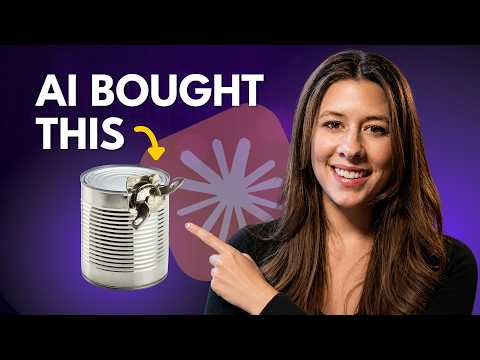
“Why would you not automate the administrative work so that you can spend more time with your kids and your family and the people around you rather than the digital assistants that our life is made of navigating?” — Nicole Ruiz, 0:51
Clip command
yt-dlp --download-sections "*0:51-1:30" "https://www.youtube.com/watch?v=OOPganyUinE" --force-keyframes-at-cuts --merge-output-format mp4 -o "automate-admin-work.mp4"The “anti-to-do list” — making invisible checklists visible
“I call this sort of like the anti-to-do list… my invisible checklist is now a visible checklist in a Claude project that I can use over and over and over again is just going to like reduce the mental overhead of this task little by little and it happens probably multiple times a week.” — Claire Vo, 7:43
Clip command
yt-dlp --download-sections "*7:43-9:00" "https://www.youtube.com/watch?v=OOPganyUinE" --force-keyframes-at-cuts --merge-output-format mp4 -o "anti-to-do-list.mp4"Brand died two years ago — Claude knows
“Even yesterday, I put something into Claude and it basically surfaced that this brand got taken over two years ago and ever since then all the reviews have been abysmal. Before then it was great, now it’s not, don’t buy from them. And that’s so helpful, that’s exactly what I want to know.” — Nicole Ruiz, 6:00
Clip command
yt-dlp --download-sections "*6:00-7:00" "https://www.youtube.com/watch?v=OOPganyUinE" --force-keyframes-at-cuts --merge-output-format mp4 -o "brand-takeover-check.mp4"AI as a force leveler for heritage brands with terrible websites
“Even disproportionately, I would say like some of the oldest manufacturers of quality items, their websites are the worst websites… this could be a great force leveler, essentially, for people who are still doing the thing they’ve been doing for a hundred years, but maybe they haven’t hired a new web designer in the last decade.” — Nicole Ruiz, 16:50
Clip command
yt-dlp --download-sections "*16:50-17:42" "https://www.youtube.com/watch?v=OOPganyUinE" --force-keyframes-at-cuts --merge-output-format mp4 -o "force-leveler.mp4"Holding brands accountable for their quality promises
“The ability for a consumer to hold sort of a company to account on their quality promises is again like something that’s technically possible but practically annoying. And so you have made it both technically possible and practically less annoying.” — Claire Vo, 21:26
Clip command
yt-dlp --download-sections "*21:26-22:31" "https://www.youtube.com/watch?v=OOPganyUinE" --force-keyframes-at-cuts --merge-output-format mp4 -o "consumer-accountability.mp4"”Private equity!” — spotting the brand quality dip
“Private equity! They’ve gotten some really bad reviews. Not that just private equity alone is like the end of the world, but often it can go in hand in hand with some scaling challenges…” — Nicole Ruiz, 27:17
Clip command
yt-dlp --download-sections "*27:00-27:50" "https://www.youtube.com/watch?v=OOPganyUinE" --force-keyframes-at-cuts --merge-output-format mp4 -o "private-equity-flag.mp4"Key Points
- The mental overload of household shopping (0:17) - Every purchase requires running through an “invisible checklist”: natural fiber, local sourcing, delivery time, returnability
- The Amazon problem (3:09) - Knockoff brands, third-party sellers, and accidentally buying the crappy plastic version
- Why a separate Claude Project (5:18) - Project-scoped instructions keep purchasing memory isolated from other queries so Claude doesn’t overfit when you’re not shopping
- Project formatting rules (6:00) - Surface name, photo, price, materials, care/maintenance, link, and brand history for every item
- Avoiding trendy DTC brands (6:00) - Explicit instructions to skip brands paying heavily for ads while underinvesting in quality
- The “anti-to-do list” concept (7:43) - Move recurring household decision criteria from mental overhead to a written, reusable system
- Move vetting upstream (9:16) - Living in space-constrained Brooklyn forces optimizing for durable items so you don’t maintain them later
- Drop-shipping detection (9:16) - Explicit prompts to sniff out AI-written reviews and drop-shipping operations
- Can opener demo (11:32) - Surfaces Kuhn Rikon (nearly 100-year-old brand) from Boston General Store with price upfront
- Feeding back what you bought (13:25) - Telling Claude what you actually purchased improves recommendations over time
- Force leveler for small artisans (15:54) - AI surfaces heritage brands and small shops to compete with Amazon’s logistics dominance
- “No UX is the best UX” (17:24) - Jason Levin’s quote — AI lets you bypass terrible websites of century-old manufacturers
- Claude Cowork for returns (19:18) - Take a photo of the failed item via Dispatch, have Claude find the receipt in Gmail and draft a refund request
- Using Whisper Flow for voice prompts (19:18) - Especially useful when nursing a baby or doing chores
- Holding brands accountable (20:29) - Not just within 30-day return windows — pursue refunds on quality promises
- Drafting persuasive refund emails (23:23) - Claude pulls item numbers, order details, and writes copy like “deterioration far beyond what I would expect from any garment at a J.Crew price point”
- Manufacturer-acknowledged defects (24:00) - Sometimes brands know a year’s run was bad and are waiting for customers to push back
- Gift card and budget-constrained shopping (25:12) - “I have $30 for L.L.Bean — what should I purchase?” surfaces classic items like the 80-year-old Maine-stitched tote
- Brand legitimacy analysis (25:12) - Drop URLs into Claude to vet whether a brand from a targeted ad is real or a drop-ship operation
- Amazon SKU swap scandal (28:46) - Amazon used to swap items with the same SKU in warehouses; recently changed policy but it shows the platform’s quality risk
- Prompting when Claude messes up (34:54) - Treat it like managing an employee — ask “why did you do that?” before correcting
Mentions
Companies
- Boston General Store (12:28) - Pre-vetted heritage goods store; both vets vendors and tests products
- Manufactum (12:28) - German purveyor of long-lasting goods; carries the same Kuhn Rikon can opener
- L.L.Bean (25:12) - Used as example for gift-card-constrained shopping; their Maine-stitched tote bag is highlighted
- Amazon (3:09) - The default that the system is designed to compete against; criticized for third-party sellers and SKU swapping
- J.Crew (19:18) - Pants that wore through quickly; example used for the Claude Cowork refund demo
- Costco (15:08) - Mentioned as target for future automated ordering
- Instacart (15:08) - Jesse Genet has an agent flow for it
- Orkes (1:02) - Sponsor; enterprise platform for agentic workflows
- Metaview (17:42) - Sponsor; agentic recruiting platform; customers include Riot Games, Brex, GitLab, Replit
Products & Technologies
- Claude Project (4:40) - Used to encode purchasing criteria with custom instructions and persistent memory
- Claude Cowork (18:53) - Connects Claude to Gmail to find receipts and draft return requests
- Apple Notes (4:25) - Where the original list of trusted vendors lived before being moved into Claude
- Notion (9:16) - Previously used to track product reviews and durability outcomes
- Dispatch (19:18) - Phone app for kicking off Claude tasks with photos
- Whisper Flow (19:18) - Voice dictation tool used on laptop while multi-tasking
- Kuhn Rikon can opener (31:03) - The actual product purchased from the demo
- Glassdoor (27:28) - Source for internal company quality signals when vetting brands
People
- Jesse Genet (15:08) - Previous How I AI guest with broader theory of household AI; runs 5 agents at home
- Jason Levin (17:24) - Built Memelord from a $6.90 newsletter to $3M API; source of “no UX is the best UX” quote
- Claire Vo (2:30) - Host of How I AI; founder of ChatPRD; based in San Francisco
- Nicole Ruiz (2:30) - Guest; writes The Third Oikos Substack about technology in the household; based in Brooklyn
Surprising Quotes
“Everybody’s like this lady’s letting robots raise their kids. And I think it’s just the total opposite of that.” — Claire Vo, 0:44
“Now I’m going to have to like buy not Amazon crap. You’re really making me feel bad about my lifestyle.” — Claire Vo, 28:34
“A team of craftspeople in Brunswick, Maine stitch between 3500 and 4000 totes a day. That’s so great. That’s exactly what I want.” — Nicole Ruiz, 25:12
“I want the kids to look like refined, elegant, but in a timeless way, you know? Like, I just don’t want to think about it.” — Nicole Ruiz, 31:03
“People always underestimate the amount you can just be like, you didn’t do what I wanted you to do. Why is that? … it is often like managing an employee.” — Nicole Ruiz, 34:54
Transcript
Nicole Ruiz: 0:00 The modern world is just rife with online administrative tasks where parents become the human link between all of these really, really hard to navigate systems where you’re constantly just doing these small tasks, returns, purchasing, navigating help emails and all this different stuff.
Claire Vo: 0:17 I totally have the mental overload of having to buy something for my kids or my family or myself and then going through this kind of invisible checklist of like, is it made of a natural fiber? Is it sourced locally? Can I get it delivered in the next week? Because otherwise I’ll just forget it.
Claire Vo: 0:32 Claude coworker’s created this. Every time you need to go buy something, you’re like, hey project, I need to buy this thing. Go make me recommendations. Claude does the web search and then comes back and makes some recommendations of you to purchase.
Claire Vo: 0:44 Everybody’s like this lady’s letting robots raise their kids. And I think it’s just the total opposite of that.
Nicole Ruiz: 0:51 Why would you not automate the administrative work so that you can spend more time with your kids and your family and the people around you rather than the digital assistants that our life is made of navigating?
Claire Vo: 1:02 Welcome back to How I AI. I’m Claire Vo, product leader and AI obsessed, here on a mission to help you build better with these new tools. Today I have Nicole Ruiz and she’s going to show us how she uses Claude to shop for everything, but not anything. She only wants high quality things that last and she’s using AI to make sure that the stuff that comes in her house is going to last for 100 years. I love her tips and tricks and this is a really useful one for all the parents out there trying to keep their kids in high quality items. Let’s get to it. This episode is brought to you by Orcas, the company behind open source Conductor, which powers complex workflows and process orchestration for modern enterprise apps and agentic workflows. Legacy business process automation tools are breaking down. Siloed low-code platforms, outdated process management systems and disconnected API management tools weren’t built for today’s AI-powered world. Orcas changes that. With Orcas Conductor, you get a modern orchestration layer that scales with high reliability and brings humans, AI and systems together in real time. It’s not just about tasks. It’s about orchestrating everything. APIs, microservices, data pipelines, human-in-the-loop actions and even autonomous agents. So build, test and debug complex workflows with ease, all while maintaining enterprise grade security, compliance and observability. Orcas. Orchestrate the future of work. Learn more and start building at orcas.io.
Claire Vo: 2:30 Nicole, I am excited to have you on How I AI because we are going to talk about something we have not in an entire year of the podcast talked about yet, which is how to buy better with AI. Tell me about the problem that you were having as a very busy mom.
Nicole Ruiz: 2:49 I often am buying baby stuff. This is now our second baby. We’re two months in and I think every parent knows the feeling of needing some sort of tool, some sort of item, some…
Nicole Ruiz: 3:00 …clothing and being so panicked and stressed and there’s just other things that feel way more important and so you put the thing in your Amazon cart and you click purchase. And then later you realize you really didn’t want that version of the thing. You did not want the crappy plastic version. You did not want the like brightly colored version or honestly it was just like made poorly or even more recently we’ve seen that like Amazon was sending stuff from from basically knockoff brands and so you also don’t want that for your children. You don’t want like random products made by a third-party seller. So I was thinking about how I could do this and how I could get more items in our home that were specifically thoughtfully made, that were made of natural materials which I think is a big trend right now broadly and also things that we could mend and take care of. We’ve been trying to do this a lot in the household but it takes a while to find the brands that you really like. It takes a while to find brands that will actually take returns which you need to do a lot as a parent as well if something doesn’t fit what you were looking for. And so often when I’m starting a query online I would just realize a ton of these are paid ads which has been a problem for forever. A ton of these are so highly indexed on your specific keyword and so they’re selling this one product and that’s not really what you want either. You really want either an incredibly trustworthy brand that has a history of like extraordinary craftsmanship or maybe you specifically want to support small brands and artisans and craftspeople and I also had that problem as well where I would have a website from like the farmers market by our house but I wouldn’t remember the one thing that they sold that I wanted to buy. And so when the time actually comes to buy the nice knit sweater that was handmade like you don’t remember where that website is or how to find that person. And so at the moment I had this long Apple notes list of like here’s where I would go to for a sweater, here’s who I would go to for like a wooden comb. But again I needed something between like the huge Amazon query center of all those shops and all those providers and the tiny tiny website that is inevitably impossible to search. And so I decided to make this household management project in Claude here where I started by just consolidating all of these shops. The shops that I ground level absolutely trusted. They had a history of either vetting their vendors very very highly or they themselves were people who were directly employing like crafts people. People had really really high standards of makership um and had been around for several years. So why I did this is this project in and of itself is going to hold a specific set of instructions, it’s going to hold specific memory. And so if I’m asking about buying something more broadly outside of this context, I don’t necessarily want Claude to actually overfit to all the constra- all of the instructions that I have for this project. And this just helps me keep this set of instructions and this memory of all of my purchasing separate from all of my other queries because I think it just keeps it organized. Basically I say first of all go through this list and I give it the criteria of how I chose these lists for all of the things that I mentioned. There’s decades of the business, there’s…
Nicole Ruiz: 6:00 Even been a sought out, um, for this product for a long time and that they’re made to last and repair. I’ve also found that Claude is very good at surfacing whether or not a brand stands behind return policies if things are made poorly, if your kid wears through them really quickly, who will actually take those returns and take them quickly and easily. So I have this long list of brands here, which I also had Claude just take straight from my Apple Notes, I dumped it in and asked it to help me organize this. Down here, I also just have some other quick rules, which are that once it gets through that list, it should look for another preferred vendor. It has a few different ways it should think about that. I also say we really want to avoid trendy direct-to-consumer brands that I think are paying a lot for advertising and probably underinvesting in quality. And I also talk a little bit about formatting the results that they get, uh, for each item that I’m searching for. So I want it to specifically surface the name of the product, I want it to surface a photo, I want it to surface price and then the materials that it’s made out of because often I’ll see something that’s really nice and then down exceptionally low is that it’s made mostly out of plastic and so I want that up front and center. And also any care and maintenance notes. So if I’m buying baby clothes but it says in a small thing like, oh, only hand wash this item your kid is going to be wearing every day, I want to know that. Maybe I’ll make that decision, but I want that to be upfront. A link to the purchasable item and then again, a brief note on why the brand has a trustworthy history. That is the part I love the most, the trustworthy history. Even yesterday, I put something into Claude and it basically surfaced that this brand got taken over two years ago and ever since then all the reviews have been abysmal. Before then it was great, now it’s not, don’t buy from them. And that’s so helpful, that’s exactly what I want to know.
Claire Vo: 7:43 What I love about what you’re showing us here is, yes, this is how I AI, so of course all these project instructions are in a Claude project and are going to be used by this AI to surface great purchases for you. But this is also how I life. And so just quick pause for folks, like keeping a list of vendors that you really like or think are high quality and then also just writing down how you make purchasing decisions. And I call this sort of like the anti-to-do list. It’s one of the things that should be on people’s personal anti-to-do list, which is I totally have the mental overhead of having to buy something for my kids or my family or myself and then going through this kind of invisible checklist of like, is it made of a natural fiber? Is it sourced locally? Like can I get it delivered in the next week because otherwise I’ll just forget it? Can it be returned? Can I buy it resale, which is also something I see in your prompt? And this is sort of like this invisible checklist that I go through every time I purchase something. And sitting down and just taking the effort to say like, my invisible checklist is now a visible checklist in a Claude project that I can use over and over and over again is just going to like reduce the mental overhead of this task little by little and it happens probably multiple times a week.
Claire Vo: 9:00 at least multiple times a week. And so just a general concept of doing this even if it’s not purchasing things, but it’s something else in your household that requires two or three checks of quality or process or whatever it might be, it’s a great use case for something like a Claude project.
Nicole Ruiz: 9:16 Totally. And I think this came out of noticing that I was doing a lot of household maintenance of items that were bought more poorly than I wanted them to be. And so I thought, why don’t I just try to move as much of this vetting upstream as possible? I really - we live in Brooklyn, we live in an apartment that is space constrained, and so whenever we’re buying something, I want it to be something that’s going to stand the test of time so I don’t have to maintain it more later, or if I do, that there’s a very simple policy to send it back to the manufacturer and make sure they’ll stand behind that and that they’ll also be behind that product for multiple decades. I also for a long time had a notion of all the items that I was purchasing because I was starting to write reviews of like did this stand up, did it get holes in it immediately, and so just being able to track this through Claude in more formal, um, really speeds up buying things that are very well vetted in a world where I think the internet is only going to get more noisy around brands that are actually trustworthy. I also have a line up out like please try to suss out AI reviews, please read a lot of reviews, but if it sounds like AI don’t listen to those reviews, please try to guess whether or not this brand is a drop shipping brand, just a lot of the modern shopping internet pitfalls that happen like let’s try to avoid those as quickly as possible and sort through from the noise to the actual quality indicators.
Claire Vo: 10:33 Well you go into the next step, I have to laugh about another use case people might think of, which is I have this pile of returns and I know we’re going to get to returns in a minute so everybody hold your horses, but I have a pile of returns for very specific reasons. And it’s because I always buy stuff in the wrong size. Like it is everything from I bought a throw pillow in the wrong size for my pillow to like I accidentally bought an outdoor patio furniture set that’s like teeny tiny, it did not look teeny tiny on the photos, but it was like it’s actually a very petite chair. And so again, it may not be quality, it could be I always get the size wrong, so like make sure I understand the size of what I’m buying, or remember when I’m buying shoes for my kids they run a half size large and so like look at size guides and and stuff like that. I think is really really interesting and helpful just to build yourself a little checklist. But let’s see this thing in in action. So what would you buy? And are we going to get a better result out of it?
Nicole Ruiz: 11:32 Oh let’s start. So I have been looking for a can opener. Our can openers always break, I think nobody knows how to design a can opener so let’s just say help me find a can opener. And I think one of the good things about this also is just that all of your context right are in those project instructions already and so you don’t have to spend a lot of time composing your prompt.
Claire Vo: 11:51 This is really funny for folks that didn’t see your screen, I feel like you and I are the same person because we were - not in the market for a can opener because ours works, but it is impossible to understand how to use. It is like a very advanced can opener in a non-standard design and everybody who comes to my house can’t open it but I also saw like cradle cap comb I’m looking for one of those uh kind of nice-looking soccer kit jersey because my kids will wear nothing but soccer kits but they are atrocious in every way like just an assault on the eyes um so I I am shopping for the exact same thing so I’m I’m really excited to see what this Claude project can do for me but let’s see what it got us from a can opener perspective
Nicole Ruiz: 12:28 So we’ve got a few pictures right away you can see that these two pictures are either exactly the same or something very similar. So you can tell right off the bat it’s searching through Boston General Store which I love because they’re a store that that vets vendors they go they test out all the products for you and then they put them on a website so it’s like layers of work just done they’re testing these brands they’ve tested the product actually works so it’s amazing they’re searching through that site for me so I don’t have to do that they’re looking at some other sites right away they come up with this nogent super kim can opener which is great they have the price front and center also great because the other thing I’ve been most stunned about this is a lot of websites that I would think are going to list much higher end things end up listing items that are like target prices so it really is just making it easier to shop for a quality thing for the same price range which I value really highly it’s actually changed since the last time I did the query the first time I did the query I came up with two results for this first can opener here I forget the other store that carried it so right away I was like you can see this brand was established almost a hundred years ago they’re known for specifically doing a lot of products like this um and it has great reviews and so right off the bat I’m interested in that when I first searched this it was clear cut because there was two reviews for the same place something that I might do is like are there any downsides in the reviews you see on the websites and you can sort of dig into the things you might be worried about and keep prompting and it’ll just search sort of the whole internet landscape for you which again just super nice when you’re a mom who doesn’t have a lot of time or you don’t really care about spending so much time to browse the internet but would you would like a nice thing and so it’ll just do that for you and you can come back to it and sort of just make a choice and then we’ll go to the website here as ready to purchase so it did actually find it on two different websites manufactum and boston general store so I could immediately just purchase that and we’re ready to go
Claire Vo: 13:22 Do you go back and tell it what you ended up buying?
Nicole Ruiz: 13:25 I do generally when I can not all the time especially searching out for clothing because they haven’t perfected the clothing buying process process yet partially because of what you’re talking about which is sizing I’m trying to get it to understand sizing very cohesively in our household and it is helpful for going through the website size guides which are often not standard to the sort of like general international sizing but yeah I try to tell it what I buy and it definitely gets definitely improves over time it will sometimes surface new vendors
Claire Vo: 15:00 Do you feel like you could get to a point where you would let this shop for you? Or do you still like to be in the middle of it?
Nicole Ruiz: 15:08 I’ve been working through this. I, so I interviewed Jesse Genet, who you had on your podcast a while ago, about her broader sort of theory of technology in the household. And then a bit ago, I like responded to one of her tweets about really wanting to standardize my Costco order and a few other really regular household orders. I haven’t quite gotten to a spot where there’s anything regular enough, I think it’ll take a little bit more of an iteration, like you’re saying, to have that full cohesive project and structure to let it buy for me, but I do want to get there. I want to try. I know she has a flow for how she lets her agents go through Instacart and I think like maybe Amazon as well. So I know it, I know it’s possible, but not yet. We’re not there yet.
Claire Vo: 15:54 What I love about what you’re showing here is, you know, people are really apprehensive about AI and artisans and creators and all this stuff. But if you look at something like this, this is a way for kind of like smaller creators and smaller artists, smaller shops, to get in front of larger audiences or to make it easier for you to access those. Because again, like the infrastructure of Amazon is very helpful, right? We’ve got the app, it has everything, I press one button, I have reviews. And so even if you can approximate that here, it’s really nice to just make it easier to shop the way you want to shop, which again benefits these like smaller companies, not just these big companies. So when people think about AI, I just want to say there are ways that AI can make small companies and individual creators and individual artists have a better time than a worse time.
Nicole Ruiz: 16:50 I will add one other thing, which is just that like even disproportionately, I would say like some of the oldest manufacturers of quality items, their websites are the worst websites. And so it actually takes disproportionately longer to purchase from those brands. And that’s when I started realizing like, oh, this could be a great force leveler, essentially, for people who are still doing the thing they’ve been doing for a hundred years, but maybe they haven’t hired a new web designer in the last decade. And so they’re at a disadvantage to everyone else, and especially Amazon.
Claire Vo: 17:24 We had Jason Levin on the podcast and he just kept saying, no UX is the best UX. So if we can just pass over all those terribly designed websites and get to the thing we want, which is buying the product, everybody’s happier. So just not even having to browse those is solving the problem for you.
Nicole Ruiz: 17:40 Yes.
Claire Vo: 17:42 This episode is brought to you by Metaview. Because who says hiring has to be unfair? Every founder, hiring manager, and recruiter I speak with feels the same pressure. Hire the right people as fast as possible. But recruiting is brutally time consuming, alignment is hard, and the competition for great talent keeps getting tougher. That’s why teams like Riot Games, Brex, GitLab, and Replit, plus 5,000 other organizations use Metaview. The agentic recruiting platform giving high-performance teams an unfair advantage in hiring. It works by giving you a suite of AI agents that behave like recruiting co-workers. Finding candidates based on your exact criteria, taking interview notes, reviewing every inbound application, gathering insights across your hiring process, and helping you identify the best candidates in your pipeline. Don’t let your competitors out-hire you. Metaview customers close roles 30% faster. Get started with Metaview today and get your first 100 candidates sourced for free at metaview.ai/howiai.
Claire Vo: 18:51 Okay, let’s talk about what happens when a product fails us.
Nicole Ruiz: 18:53 Yeah. So, to continue the shopping flow exactly. You’ve gotten the product to your home, maybe it actually does not hold up to standards. I think if you have kids you often see this loop spin-run basically. You see that the garment you bought four months ago that you thought would be great for really intense outdoor play does not stand up to your, your expectations, especially if you did want to invest in a more quality item. Essentially what I’m going to do is I’m going to go over and to Claude co-work over here because I want it to help me access my Gmail and a number of other things. I would often do this on my phone through Dispatch. So I’d take a picture of the item with my phone as I find it in my household because otherwise I’m going to forget to do it. I would pop it into Dispatch. In this case we have this picture of J.Crew pants that immediately wore through the butt. So, I’m sending them back. In reality I would press Whisper Flow on my laptop because I’m often doing something with other hands, it’s just a lot easier to talk to the laptop. I might even be nursing a baby so this has been a game changer to be able to just talk out loud. So I’d say something like: ‘I have this pair of pants of Rafa’s from the last six months, they’ve already worn through in the butt. I’m looking to return them to J.Crew and specifically get a refund. Can you help me draft an email and specifically start out by finding the receipt for the pants in my email, either from PayPal or J.Crew, with the item number and any other details you might need. Please include that context and draft up the request for refund to J.Crew’s customer service.’
Claire Vo: 20:29 So again, life hack here, which is you’re not like, ‘Oh, J.Crew says that I can return it in 30 days, so I’m going to return it.’ You’re like, ‘These pants were supposed to hold up, and so I’m getting them—I’m getting what I was promised, which is a good set of kids’ pants.’ And so you’re basically like bringing together the information you have in your email to go pursue that refund, which would be very, like, annoying to do otherwise.
Nicole Ruiz: 20:54 Totally. I think what I have often found is just that anytime where there is like finding an email that is stuck in some website like… I know everybody has their refund policy or their customer service email listed somewhere, but it’s hard to find and I’m doing it like at least five times a month if not more. If it’s just lowering the impetus to get starting on this—started on this like five-to-ten minute task, that’s really helpful to me. Even if I don’t take the email as it was drafted, helpful to get started and sort of like clear through some of the grunt work of navigating websites, which is Claude-cowork’s strength.
Claire Vo: 21:26 I also noticed yesterday while Co-worker is running, I appreciate your commitment to just having like high-quality things that last. Because so many people would, again, because of the friction involved, just like toss the pants and be like ‘I’m gonna get new pants’ and move on with their life. And again, like, figuring out how you can consume less by focusing on quality, getting AI to take away the toil of having only high-quality things in your house, I think ultimately, like again, just results in like less waste, less junk. Like, it’s just, it’s just way better. And I do think the ability for a consumer to hold sort of a—a company to account on their quality promises is again like something that’s technically possible but practically annoying. And so you have made it both technically possible and practically less annoying, which is—is I’m sure just changing your life in terms of how you can manage the stuff that’s in your house.
Nicole Ruiz: 22:31 Definitely. Yeah, I think it’s—it’s a big priority of ours and especially we would love to have a lot of children. And so I keep thinking of like what things can I do upfront that make it easier to like maintain that system for five years. And I think a lot of it is just like buying quality items I don’t have to maintain. I think that used to be much more normal, but we now have again the noise of drop-shipping, the noise of like plastic, quickly manufactured clothing that are like these direct-to-consumer brands that explode and then they die out in three years. And so trying to just like shove all of that to the side and get to the like, okay, what is the brand that has the strongest history here?
Claire Vo: 23:16 Maybe actually, I don’t—maybe we could jump backwards because there is some other things in the shopping query section where you can really drill down into like, what is this brand known for?
Nicole Ruiz: 23:21 Sure.
Claire Vo: 23:21 Let’s—let’s wrap this. Yeah, and then let’s look at that.
Nicole Ruiz: 23:23 Yeah, we pulled all the details. We’ve got the size, we’ve got item number, we’ve got the order number and when I originally purchased the item, which is helpful, so it’ll put all of that detail in the draft email. So basically Claude helped me draft this email which was great. They immediately mention all the item numbers, they put it in the header, they do all the relevant things that will make the person immediately email me back with a yes or no rather than a query for more information. And they make it sound compelling. ‘Degree of deterioration is far beyond what I would expect from any garment at a J.Crew price point.’ And what I have learned from this process is that actually sometimes it is a manufacturing— issue. Um, and the first time I pulled this up that what they actually said is that when you look, it’ll go and look at the URL of the item itself and a lot of people were saying the review on the website like this item had poor quality, like more so than any other year of this item, more so than anything else I’ve bought from this brand. So sometimes they know there’s a manufacturer’s issue and they’re just kind of waiting for you to be like this was not up to par and they’re like, oh yeah, you’re so right, um, you were paying attention and we’re happy to give you a refund if not like something even better to make up for your time and hope that you purchase in the brand again. So click, send that email, super easy, did that from my phone as I was walking through the house like tidying up, super, super fast. It just drafted it for me, I reviewed it and we were good to go. So I’ll often do that for this, I’ll do that for returns, I’ll have it pull up all the sort of relevant return information for a given vendor and it will tell me what I need to input and I’ll just tell it that and again it’ll draft any info I need or it’ll just email me the QR code or the receipt or whatever and that just clears through like another five minutes of administrative online purchasing related tasks.
Claire Vo: 25:07 I love it. Okay, tell me a little bit more about shopping because you said you wanted to show a few other things.
Nicole Ruiz: 25:12 Yeah. So one other thing that I might do that’s related is if you have a gift card or certain amount of money that you might want to use or clear through from a certain brand I might say, I have $30 for LL Bean, what item should I purchase that aligns with my purchasing criteria? And again you can, you can really drill down on all of the things you’re looking for when you start a purchase query. Normally I start very broad to get an idea of what’s out there but you could say, I want it to be easy to maintain and that will help it a lot, you could say, I want it to be $30 or more but not over $100, like all of those things just make it much easier to shop when you have this like set of values. So sometimes it’ll surface these items. What I’ve also found is that it’ll bring up from a given store some of the most classic items, which I really appreciate. American retail has been continuously made the same way, this tote, for over 80 years. Perfect fit for heritage criteria. It’ll compare against some other things. But I love this, a team of craftspeople in Brunswick, Maine stitch between 3500 and 4000 totes a day. That’s so great. That’s exactly what I want. These people have been doing this forever, like this really, really sounds like it’ll stand up to what I need. Okay. So the other thing I might do, if you see sort of like a targeted ad, I saw this item on another website but I really wanted to know if it was going to stand up well because I hope to use this for a long time. So I might say, what’s your analysis of this brand? Are they legitimate? Sometimes it can be really hard to parse from the website. I had like clicked into the about section of the website, there was not a lot to read. So I often I’ll get those websites and then wonder like, is this just going to be a dropshipped item that doesn’t even meet any of the search criteria online?
Claire Vo: 27:00 Oh no, it says do not add.
Nicole Ruiz: 27:02 Cause it looked nice? It looked super aligned with the type of thing I would buy. It’s like all natural materials which is great, but apparently they got an investment a little bit ago and they’ve been really trying to scale and they’ve…
Claire Vo: 27:16 Private equity!
Nicole Ruiz: 27:17 Private equity! They’ve gotten some really bad reviews. Not that just private equity alone is like the end of the world, but often it can go in hand in hand with some scaling challenges and so yeah, it’s not actually that old…
Claire Vo: 27:27 Right.
Nicole Ruiz: 27:28 …and I liked that it specifically brought up somewhere like it had like there’s controversy over the CEO’s management and there are reviews that the glassdoor internal quality is disorganized.
Claire Vo: 27:43 Oh boy.
Nicole Ruiz: 27:44 So yeah, all those things put together, the type of thing like I used to work in venture capital, I used to invest in startups, so part of it is me just thinking about like what are the signals we can get on whether or not this business is quality? And there are a lot of different signals that it’s not great. Again, they’re spending a lot on marketing. They’ve pulled up elsewhere, I think, that they have a lot of influencer reviews, like a lot of the… can’t remember for sure exactly what it had in here, but it’ll be like there’s a lot of paid placements on influencer accounts, which I’m like okay, good to know, that might not be exactly the brand that I’m looking for. To that can be really helpful too, to just know like anytime I want kids’ clothes I’ll go to these three websites and it’s not going to be this place if they say, you know, they’re manufacturing all over the world, again, not the end of the world but like maybe just a minor mark against the brand in terms of being like somebody who is making with the same manufacturer for a very long time.
Claire Vo: 28:34 I want to repeat for folks, this is such a like a powerful just shopping flow for high quality. Now I’m going to have to like buy not Amazon crap. You’re really making me feel bad about my lifestyle.
Nicole Ruiz: 28:46 It can also help you search through Amazon vendors, right? That’s the other thing. I think I just felt very motivated, I use Amazon a lot still, but I don’t know if you’ve followed recently that there actually was this big… for a long time you could buy makeup and you would get like a knockoff brand of makeup even though your purchase… you’re clicking purchase for an item that is from the actual brand because Amazon had this policy where in warehouses they would switch items with the same SKU. They just did away with this, but I think it just goes to show like the types of things you’re maybe like giving up for Amazon doing this very amazing logistical feat, which is that sometimes they just swap out items from other companies. So, that I was like, can’t buy makeup from them, that’s really frustrating. And then it made me think about other things too where I was like I really don’t know what’s in here. I’m not truly a like remove all plastic per se, but it is just harder to maintain plastic and it’s easier to maintain other things, so that got me thinking.
Claire Vo: 29:40 Okay, so I’m going to repeat for folks, you keep a list right now on your phone, but it’s moved to Claude chat, Claude project of brands that have multi-decade if not centuries long heritage that are created the way that you like them by artisans that are trusted, that are ethically sourced or made of natural materials or just really high quality that you’re happy with. You’ve put that in a project. Every time you need to go buy something, you’re like, ‘Hey project, I need to buy this thing, go make me recommendations.’ Claude does the, like, web search and comes back and makes some recommendations of you to purchase. You also take a couple different angles on that, which is, ‘I need to purchase something in this price range, maybe because you have a gift card or you just want to stay under budget on something,’ or ‘I found a new brand and I want to know if it aligns with these other brands that I’ve already decided are in line with what I want to buy.’ And use Claude to do that. So then the things that are coming into your tiny city apartment—and I appreciate it, I live in San Francisco, I have a tiny San Francisco house—are high quality, easy to maintain. And then, if they fail to hold up and the corduroy pants get a hole in the butt, which they do, then what you do is you use Claude Co-work, which is connected more to your email and can search through your email as a source of truth to say, ‘Go find the product that I bought from this picture and the manufacturer. Find the details, find the price, find the item name and SKU, draft an email to the manufacturer requesting a refund with all the details plus the picture. Send it off from your phone, and then you’re good to go.’
Claire Vo: 30:54 Yeah. No big deal. It’s great. Are there a couple products that have gone through this process that you’ve just really loved? We’ll put them in the show notes.
Nicole Ruiz: 31:03 Yes. Yes. Not for reviews, for just purchasing. The can opener was great. It was actually really funny because the first time I did this, I showed my husband and he was like, ‘That looks crazy. It looks like a crazy can opener because there’s no handle. It’s just like one really compact thing,’ which it surfaces in a small apartment. And it pulled up a video for me and we watched the video and he was skeptical and I was like, ‘Okay, we’re just going to try it.’ And he loves the can opener. So, Kuhn Rikon—it’s a bit of a weird design, but it’s a great product and it stands the test of time. I got a toddler crib blanket the other day because there are a lot of baby blankets which are one measurement to your point earlier about trying to find the right size thing and there are a lot of kids’ duvets which are huge and not multi-seasonal, but I wanted something that fit a toddler bed but was not a whole duvet system so that I’d constantly have to strip off the duvet cover and wash it because I don’t want to do that, I don’t have the time for that. And so it surfaced a few toddler-sized quilts that were like handmade items, very reasonably priced from a great brand, and again, it’s just lower maintenance but an item I could mend because I’ve been doing a lot of mending and that partially inspired this as well. But it would not be complicated to mend. And so that was great. Trying to think of anything else that I’ve bought from them. I often use them to purchase toddler shoes because I find a lot of kids’ shoes are just horribly made and again, I don’t want to have to worry about it. I just want to buy a shoe that I’m going to pass down to all the kids that are beautiful and timeless. I don’t want something silly. I just want the kids to look like refined, elegant, but in a timeless way, you know? Like, I just don’t want to think about it. That’s kind of like the motto as to what we’re talking about earlier.
Claire Vo: 33:00 raising American heritage kids, you know.
Nicole Ruiz: 33:02 They’re American heritage.
Claire Vo: 33:04 Manufactured in Maine for over 80
Nicole Ruiz: 33:07 Yeah, yeah.
Nicole Ruiz: 33:08 With the, yeah. A little, you know, sometimes you got the like Heg influence, sometimes you got like the Japanese influence because I feel like Brooklyn has a lot of that. So sometimes every now and then I’ll be like, okay, these are like my stylistic influences too and we put that in and that helps.
Claire Vo: 33:20 Okay, simple. This has been so, so fun, so helpful for all the parents out here. Everybody’s going to be shopping higher quality goods. Next two lightning round questions and then get you out of here. My first question is, just quick, how has this changed your relationship with parenting?
Nicole Ruiz: 33:34 The modern world is just rife with online administrative tasks where parents become the human link between all of these really, really hard to navigate systems where you’re constantly just doing these like small tasks, returns, purchasing, navigating like help emails and all this different stuff. And so Claude co-work is great at this. And I would say it makes you able to do the more human parts of parenting which are interacting with your kids while you automate some of the busy work which is like just doing returns online. And I think I like that order and organization of things because you’re not replacing an activity that would be done face to face, you’re getting rid of sort of like an email job type thing that you would be doing anyways but you would be doing it more slowly and ineffectively. So why would you not automate the administrative work so that you can spend more time with your kids and your family and the people around you rather than the digital systems that our life is made of navigating.
Claire Vo: 34:43 My last question for you and then we’ll get you back back to your your little ones is when Claude’s really not doing its job, what is your prompting technique? And do you yell? And I think this is very important because it’s a reflection on how people parent.
Nicole Ruiz: 34:54 I think when I’m talking to friends about using Claude, especially people who are first using it, they’ll be like Claude did not do what I wanted it to do. What do I do next? And I think you well, people always underestimate the amount you can just be like, you didn’t do what I wanted you to do. Why is that? And sort of like get a little bit of feedback first. And again, like as as you’ve talked with a lot of the people on your show about, like it is often like managing an employee. And so understanding where they’re coming from, giving them a little bit of space to explain so that you understand what what went wrong can be very helpful to then say, please don’t do that again. Here’s the new criteria and here are the new guidelines. But also you can just be really, really honest and say that was not what I wanted at all. I think you misunderstood. Where did we go wrong here?
Claire Vo: 35:37 Perfect. Love it. Well, Nicole, where can we find you and how can we be helpful?
Nicole Ruiz: 35:44 Yeah, you can find me on X at N Williams 030. You can also find me on Substack. I write an interview series about how technology is changing the household and it’s specifically meant for people who are looking to be ambitious in their household life, in their community life, in their family life, but even if you don’t have kids. mentor. You are not married talking about being ambitious in the realm of the household and the community more broadly. So you can subscribe to my Substack if you want tips for doing that. We talk a lot about integration of AI in the household, how we should do it, how we shouldn’t do it, the ways people are doing it, the way people don’t like how other people are doing it. So it’s a— it’s a live forum for this whole debate.
Claire Vo: 36:22 I love it. Well, thank you so much for joining How I AI.
Nicole Ruiz: 36:25 Amazing, thank you for having me, Claire.
Claire Vo: 36:27 Thanks so much for watching. If you enjoyed this show, please like and subscribe here on YouTube or even better, leave us a comment with your thoughts. You can also find this podcast on Apple Podcasts, Spotify or your favorite podcast app. Please consider leaving us a rating and review which will help others find the show. You can see all our episodes and learn more about the show at howiaipod.com. See you next time.