What Really Happened Behind Closed Doors at OpenAI
What Really Happened Behind Closed Doors at OpenAI
Summary
This episode of Hard Fork features Ronan Farrow and Andrew Marantz of The New Yorker discussing their 16,000-word profile of Sam Altman titled “Can Sam Altman Be Trusted?” The piece is the result of months of reporting in which the authors talked to many people in and around Sam’s orbit — friends, enemies, and people who have been both — to assemble what they describe as a “forensic” account of his career. The reporting produces what Kevin Roose calls “a really damning portrait” but one that also acknowledges Altman is the subject of legitimate smear campaigns by competitors, including Elon Musk’s intermediaries circulating “spicy and unsubstantiated material” in Silicon Valley.
The conversation surfaces several new findings: that Altman was not, as he has long claimed, leaving Y Combinator of his own volition; that his relationships with Emirati and Saudi royals are deeper than previously reported; and — most strikingly — that the WilmerHale law firm investigation conducted as a condition of his return to OpenAI never actually produced a written report. Farrow and Marantz quote a Microsoft executive saying there is “a small but real chance” Altman is eventually remembered as “a Bernie Madoff or Sam Bankman-Fried level scammer,” and an unnamed board member calling him “unconstrained by truth” with an “almost sociopathic lack of concern for the consequences” of deceiving people. The hosts and guests connect this pattern to a fresh report from The Information about CFO Sarah Friar reportedly being excluded from key meetings, suggesting the same dynamic is repeating in real time.
After the interview, Kevin and Casey switch gears for One Good Thing: Kevin gushes about NASA’s Artemis II moon mission and the four astronauts — Victor, Christina, Jeremy, and Reid — whom he calls his Mount Rushmore, while Casey praises Acme Weather, a new app from the team behind the beloved Dark Sky that uses Waze-style community reporting to send notifications about local rainbows, beautiful sunsets, and the Aurora Borealis.
Highlights
”Bernie Madoff or Sam Bankman-Fried level scammer”
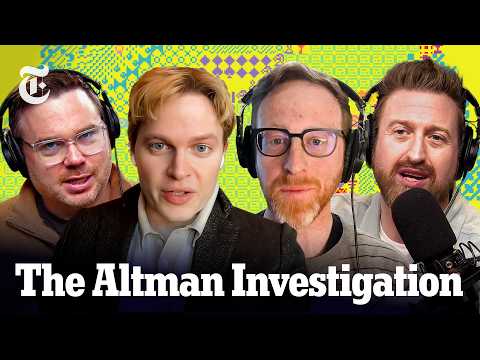
“There was a Microsoft executive quoted in your piece as saying that there’s a small but real chance he’s eventually remembered as a Bernie Madoff or Sam Bankman-Fried level scammer. There’s another unnamed board member who said, quote, ‘He’s unconstrained by truth’ and said that he has a, quote, ‘almost sociopathic lack of concern for the consequences that may come from deceiving someone.’” — Casey Newton, 12:59
Clip command
yt-dlp --download-sections "*12:59-13:59" "https://www.youtube.com/watch?v=z3u0GEbdcuY" --force-keyframes-at-cuts --merge-output-format mp4 -o "madoff-bankman-fried-scammer.mp4"”There wasn’t a report”
“And what we report in this piece for the first time is there wasn’t a report. For years, people were like, where’s the report? Where’s the report? There wasn’t a report because it was kept out of writing.” — Kevin Roose, 12:06
Clip command
yt-dlp --download-sections "*12:06-12:59" "https://www.youtube.com/watch?v=z3u0GEbdcuY" --force-keyframes-at-cuts --merge-output-format mp4 -o "no-written-report.mp4"”We’re having a discussion about AGI dictators at all is insane”
“It’s not like the point of the piece is Sam shouldn’t be AGI dictator, so Elon should or Demis should or whatever, right? It’s to point out the fact that we’re having a discussion about AGI dictators at all is insane. These guys know it’s insane and yet this seems to be the race that they see themselves being in.” — Casey Newton, 24:37
Clip command
yt-dlp --download-sections "*24:37-25:15" "https://www.youtube.com/watch?v=z3u0GEbdcuY" --force-keyframes-at-cuts --merge-output-format mp4 -o "agi-dictators-insane.mp4"The gray sweater contradiction
“Well, one of my favorites was when you quote him telling you that he wears a gray sweater every day to avoid… decision fatigue and then he shows up for his next interview in a green sweater.” — Casey Newton, 5:55
Clip command
yt-dlp --download-sections "*5:55-6:30" "https://www.youtube.com/watch?v=z3u0GEbdcuY" --force-keyframes-at-cuts --merge-output-format mp4 -o "gray-sweater-decision-fatigue.mp4"”The Uber crash on the way to dinner with Dario”
“The first time that Sam Altman and Dario Amodei were scheduled to meet, um, they were going to meet at an Indian restaurant for dinner. This was back in I guess 2015 and, uh, and Sam texted him and said that his Uber had gotten in a crash and he was going to be 10 minutes late to dinner.” — Casey Newton, 28:16
Clip command
yt-dlp --download-sections "*28:16-29:30" "https://www.youtube.com/watch?v=z3u0GEbdcuY" --force-keyframes-at-cuts --merge-output-format mp4 -o "uber-crash-dario-dinner.mp4"”There’s a rainbow in your neighborhood”
“Number two, and this is just in time for Pride. They will tell you when there is a rainbow in your neighborhood.” — Casey Newton, 36:50
Clip command
yt-dlp --download-sections "*36:50-37:30" "https://www.youtube.com/watch?v=z3u0GEbdcuY" --force-keyframes-at-cuts --merge-output-format mp4 -o "rainbow-in-your-neighborhood.mp4"Key Points
- The New Yorker’s 16,000-word profile (0:41) - Ronan Farrow and Andrew Marantz spent months on a forensic profile of Sam Altman titled “Can Sam Altman Be Trusted?”
- Disclosures via custom hats (2:08) - Farrow brought hand-printed hats reading “I work for the New York Times, which is suing OpenAI” and “my fiance works at Anthropic”
- No single smoking gun (6:15) - The case against Altman is a “subtle accumulation of facts” that only makes sense laid out together in narrative form
- Elon Musk circulating unsubstantiated material (7:54) - Musk has intermediaries circulating “pretty spicy and pretty unsubstantiated” material about Altman in Silicon Valley
- Altman didn’t leave Y Combinator voluntarily (10:10) - Despite Altman and Paul Graham’s longstanding claims, the reporting suggests he was pushed out
- Deeper Gulf relationships than known (10:10) - Altman’s relationships with Emirati and Saudi royals are “deeper than was previously realized”
- WilmerHale investigation produced no written report (12:06) - The outside investigation that brought Sam back to OpenAI was kept out of writing; the public got an 800-word press release citing a vague “breakdown in trust”
- Microsoft exec invokes Madoff/SBF comparison (12:59) - A Microsoft executive said there’s “a small but real chance” Altman is remembered as a Madoff/SBF-level scammer
- “Unconstrained by truth” (12:59) - An unnamed board member said Altman has an “almost sociopathic lack of concern for the consequences” of deceiving people
- Defenders shifted post-coup (15:33) - Prominent investors who gave Altman the benefit of the doubt during the firing now say they wouldn’t have if they’d known what they know now
- The original pitch as nonprofit safety lab (18:10) - Going back to OpenAI’s founding pitch as a nonprofit research lab makes the “normal competitive business” defense feel pressured
- OpenAI acquires TBPN (19:18) - The day after the piece closed, OpenAI acquired the tech chat show TBPN, a sign of buying up press infrastructure
- Why individual integrity matters (21:58) - OpenAI was founded on the premise that the person who reaches AGI first matters; Marantz says structures and regulatory guardrails matter even more
- Sarah Friar reportedly excluded from key meetings (23:32) - The Information reports CFO Sarah Friar has been awkwardly excluded from financial meetings amid IPO doubts
- OpenAI without Sam Altman is now imaginable (25:29) - Periodic “spasms” of senior executives discussing succession; Fidji Simo named as a possible candidate before going on medical leave
- Hiring sharp-elbowed former CEOs (27:00) - Sam has hired the former CEOs of Instacart, Nextdoor, and Slack as top lieutenants
- NASA Artemis II moon mission (30:33) - Kevin’s One Good Thing: 252,756 miles from Earth — equivalent to a chain of 2.37 billion Nathan’s hot dogs
- Acme Weather app (34:19) - Casey’s One Good Thing: $25/year iOS app from the Dark Sky team with notifications for lightning, sunsets, the Aurora Borealis, and rainbows
Mentions
Companies
- OpenAI (0:41) - Subject of the New Yorker investigation; founded as a nonprofit safety-focused research lab
- The New Yorker (0:54) - Published the 16,000-word Sam Altman profile
- The New York Times (2:42) - Suing OpenAI, Microsoft, and Perplexity for alleged copyright violations
- Anthropic (2:42) - Casey’s fiance works there; mentioned in disclosures
- Microsoft (13:00) - A Microsoft executive provided one of the most damning quotes in the piece
- Y Combinator (10:10) - Altman’s path through YC; Paul Graham’s claims about his departure now disputed
- TBPN (19:18) - Tech chat show acquired by OpenAI the day after the piece closed
- WilmerHale (10:54) - Law firm whose investigation of Altman never produced a written report (referenced as “outside investigation”)
- The Information (23:32) - Published the report on Sam Altman excluding CFO Sarah Friar from meetings
- NASA (30:33) - Running the Artemis II moon mission; Kevin says “we should give NASA whatever budget it needs”
- Apple (35:00) - Bought Dark Sky in 2020 and shut it down in 2022; Casey wonders if it’ll happen to Acme Weather
Products & Technologies
- ChatGPT (17:15) - Casey jokes that the only legit defender they found was an 11-year-old who used it to pass sixth grade
- Acme Weather (34:19) - $25/year iOS weather app from the Dark Sky team with community-sourced alerts
- Dark Sky (34:19) - Beloved weather app bought by Apple in 2020 and shut down in 2022
People
- Sam Altman (0:37) - OpenAI CEO; subject of the New Yorker profile examining whether he can be trusted
- Ronan Farrow (0:54) - Co-author of the profile; famous for the Harvey Weinstein investigation
- Andrew Marantz (0:54) - Co-author; longtime New Yorker writer and friend of Kevin’s
- Elon Musk (8:00) - Has intermediaries circulating unsubstantiated material about Altman in Silicon Valley
- Dario Amodei (7:13) - Anthropic CEO who once compiled notes on Altman while at OpenAI; subject of the famous Uber-crash dinner anecdote
- Ilya Sutskever (10:54) - Co-founder whose memos detailing concerns about Altman were partially revealed in the New Yorker piece
- Paul Graham (10:10) - Y Combinator co-founder; his claim that Altman left YC voluntarily is disputed
- Sarah Friar (23:32) - OpenAI CFO reportedly excluded from key meetings amid IPO doubts
- Fidji Simo (26:18) - Floated internally as a potential successor to Altman; recently went on medical leave
- Satya Nadella (18:30) - Microsoft CEO; cited as a contrast — no one tells these stories about him
- Sundar Pichai (18:30) - Google CEO; cited as a contrast
- Tim Cook (18:30) - Apple CEO; cited as a contrast and as the post-Jobs successor archetype
- Demis Hassabis (24:37) - Mentioned alongside Musk as another potential “AGI dictator”
- Christina Koch (32:44) - Artemis II mission specialist; communicating with Houston’s Jenny Gibbons made the mission pass the Bechdel test
- Adam Grossman, Josh Rees, Dan Abrutyn (34:19) - The team behind Acme Weather, formerly of Dark Sky
Surprising Quotes
“There is an extraordinary preponderance of people who emerge from interactions with Sam Altman, including close years-long ones, with really active complaints and allegations that he lies repeatedly about things big and small.” — Kevin Roose, 5:40
“Elon Musk in particular has intermediaries circulating some pretty spicy and pretty unsubstantiated material in Silicon Valley, and we talk about that.” — Kevin Roose, 7:54
“It’s not like even putting sort of the sci-fi Skynet stuff aside, you know, the economic pressures are unavoidable… It’s like how hyped up will the cycle get is a byproduct of how people like Sam go around the world talking about it.” — Casey Newton, 20:03
“We’re having a discussion about AGI dictators at all is insane. These guys know it’s insane and yet this seems to be the race that they see themselves being in.” — Casey Newton, 24:37
“Okay, if you are the Uber driver who was driving Sam Altman to dinner with Dario Amodei and you are listening to this show, we do want to hear from you. We do want to hear your side. hardfork@nytimes.com.” — Casey Newton, 29:11
Transcript
Kevin Roose: 0:00 I’m Kevin Roose, tech columnist at the New York Times.
Casey Newton: 0:02 I’m Casey Newton from Platformer.
Kevin Roose: 0:04 And this is Hard Fork. This week, New Yorker writers Ronan Farrow and Andrew Marantz join us to discuss their spicy new profile of Sam Altman. And then it’s time for one good thing. Well Casey, the talk of the town in San Francisco this week has been, well, there’ve been two talks of the town. One we already covered in our AI, that was the Claude 3 thing.
Casey Newton: 0:30 This town conducts multiple conversations at the same time. We’re amazing at multitasking.
Kevin Roose: 0:37 The other big talker this week has been this big piece in the New Yorker about Sam Altman.
Casey Newton: 0:41 Yes, more than 16,000 words devoted to a question that has come up once or twice on Hard Fork, Kevin, which is: can Sam Altman be trusted?
Kevin Roose: 0:54 Yes, the writers on the piece are Ronan Farrow, famous for his work on the Harvey Weinstein investigation and others, and Andrew Marantz, who is a good friend of mine and a long-time writer at the New Yorker. They worked on this piece for a very long time, talked to many, many people in and around Sam’s orbit, and tried to answer the question of like, who is this guy?
Casey Newton: 1:18 Yeah, and also why does that matter, right? We’re talking during a week where these systems have arguably experienced a step change in what they can do. And I think those kind of advances just naturally should draw more scrutiny onto the people running these companies. What do they know about who they are, how they operate, are they honest with each other? And this piece offers one of the more comprehensive portraits that we have had so far, I would say, on that question.
Kevin Roose: 1:43 You know, Ronan Farrow investigating you has to be one of the scariest experiences, you know, you pick up the phone, it’s like, ‘Hi, it’s Ronan.’
Casey Newton: 1:50 I know. It also seems hot too, you know? That’s what everyone wants, is just a really handsome man asking them a lot of questions, you know?
Kevin Roose: 1:58 Okay, so let’s bring in Ronan Farrow and Andrew Marantz. Ronan Farrow and Andrew Marantz, welcome to Hard Fork. Thank you guys.
Casey Newton: 2:07 Great to be here.
Kevin Roose: 2:08 I mean, truly long-time, first-time. And in fact, I brought receipts to that effect. I’m - this is your show, you can take or leave this in the edit, but I wanted to show what a devoted long-time fan I am of Hard Fork. I know the show well, I know you guys like merch, and I know you guys like disclosures, but you don’t have any disclosure merch to my knowledge, so I had these made for you.
Casey Newton: 2:22 One for each, one for you, one for you. I’m gonna put it in the mail after we get off, but… Come on!
Kevin Roose: 2:42 One of them says ‘I work for the New York Times, which is suing OpenAI, Microsoft, and Perplexity for alleged copyright violations.’ The other one says ‘and my fiance works at Anthropic.’
Casey Newton: 2:51 Oh my gosh!
Kevin Roose: 2:52 That is amazing.
Casey Newton: 2:55 So I mean, time limited, it’s gonna be a time capsule, but I mean, made at the print shop in Brooklyn.
Kevin Roose: 3:00 Brooklyn, one of a kind. Exists nowhere else on Earth.
Casey Newton: 3:01 Wow. That’s incredible.
Kevin Roose: 3:04 And I… and I also…
Casey Newton: 3:06 Is this payback for when I gave you a hat at your wedding?
Kevin Roose: 3:11 And I gave you one at your wedding, so I think we’re even.
Casey Newton: 3:13 That’s true. We have a sort of a theme going on here. Okay.
Kevin Roose: 3:16 Right. Well, and that’s also our disclosure, which is that Kevin and I are buds and have known each other forever. So actually, Casey, you can come to me anytime. I know you guys like to rib and roast on the show, so you can come to me behind the scenes for any roastable Kevin material.
Casey Newton: 3:30 My dream has been to get the New Yorker to investigate Kevin Roose. So you guys really could not have come along at a better time.
Kevin Roose: 3:36 We’re on. Don’t tempt us.
Casey Newton: 3:38 I’m not picking up the phone. Yeah. Okay, let’s talk about this big piece that you both just published in the New Yorker. The title of the piece is “Can Sam Altman be trusted?” Now, usually there’s this sort of folk rule about headlines that end with question marks, which is that the answer is always no. So, I want to put this question to you: can Sam Altman be trusted?
Kevin Roose: 4:09 Well, I think one important thing to note is the piece is really forensic and even. And actually to a point where I’ve been happy to see there’s a range of reactions, right? There’s people who have answered that question in a very severe way and looked at the fact pattern that is laid out here and the documentation that’s laid out and said, you know, this is someone who poses an acute danger and should be kept away from an authority position. And then there’s people who, I mean, hilariously enough, my mother called me and she’s like, “You know, I kind of like him.”
Casey Newton: 4:39 (laughs)
Kevin Roose: 4:41 And so I think that is a true reflection of our intentions. In this case, as you might imagine, there was deep consultation with all of the subjects of the reporting to really understand their feelings. And anytime we thought there was a persuasive argument from Sam or anyone else that, you know, something shouldn’t make it in or something would be sensationalist, we really carefully discussed that editorially. So the result is very even and I would say on the question itself, what we lay out is something that is remarkable, I’d say, even against the backdrop of the culture of mistrust in Silicon Valley, where everybody understands and expects, right, that being a founder means telling different audiences different things at times to some extent, where everyone understands that the entire enterprise is building based on hype long before there is actual actionable deliverable product. Even against that backdrop, there is an extraordinary preponderance of people who emerge from interactions with Sam Altman, including close years-long ones, with really active complaints and allegations that he lies repeatedly about things big and small.
Casey Newton: 5:55 Well, one of my favorites was when you quote him telling you that he wears a gray sweater every day to avoid…
Kevin Roose: 6:00 decision fatigue and then he shows up for his next interview in a green sweater.
Casey Newton: 6:04 That felt like a really satisfying detail.
Kevin Roose: 6:05 Thank you, I appreciated that.
Casey Newton: 6:06 I appreciated that eye for fashion that you so rarely get in these tech profiles.
Kevin Roose: 6:11 And Drew was our fashionista in the writers’ room.
Casey Newton: 6:13 Always. Always.
Kevin Roose: 6:15 But that’s the kind of thing where, you know, we didn’t want to make too much of that, right? Because it’s like, oh, we caught you in this deep hypocrisy of, you know, choosing a green sweater. Like, and this is consistent with a lot of the things people said throughout the piece and throughout the career of Altman and OpenAI, is that there isn’t this one smoking gun thing where he’s like caught, you know, with his hand in the cookie jar. It’s this sort of allegedly longer, more subtle accumulation of facts, which my kind of like glib and, you know, annoying way of describing it is like that the fabled memos and documents that were compiled that led to him being, you know, fired in 2023 and that have kind of dogged him throughout his career, they really shouldn’t have been like a secret bullet-pointed list. They should have been a 16,000-word New Yorker piece, because when it — they only really make sense when you like lay them all out together in narrative form.
Casey Newton: 7:13 Yeah, I mean you guys mention in your story that there have been sort of these rap sheets that have been circulated about Sam inside OpenAI and other parts of the AI industry for years. One of them was compiled by Dario Amodei when he worked at OpenAI under Sam Altman. One of them you said was maybe circulated by some allies of Elon Musk and people who are opposed to OpenAI. So give us some sort of behind-the-scenes details about what is being said by whom and how and to what end about Sam Altman in Silicon Valley.
Kevin Roose: 7:54 Well, it was really important to us to filter for the obvious competitive incentives out there. There are people who are massively incentivized to go after Sam Altman. And the reality is that there are very firmly evidence-based critiques, many of which are promulgated not just by the rivals, although they’re certainly amplified by them happily, but also by more neutral figures and people who are just kind of technologists who aren’t in the fight. And then there is the white-hot center of the rivalry, the stuff you mentioned that I think is in a very different category, which is, you know, Elon Musk and other direct competitors really amplifying everything they can come up with. And in some cases, we documented things that are inflated or trumped up or just seem to not be true. So Elon Musk in particular has intermediaries circulating some pretty spicy and pretty unsubstantiated material in Silicon Valley, and we talk about that.
Casey Newton: 8:57 I really appreciated that about the piece because this has become like more salient over the past year as these rivalries heat up and you hear more and more of these scurrilous rumors and while I do think this winds up being a pretty damning portrait of Sam on the whole, you do also point out that in some very real ways he’s the subject of legitimate smear campaigns.
Kevin Roose: 9:18 Oh yeah, I think that’s absolutely accurate. And we were trying not to go in, you know, with naivete of like can you believe business titans are being mean to each other? But like the level of this really does seem kind of shocking and unprecedented. And you know, it’s kind of consistent with people who think of this as like whoever gets the ring first will control the world. Like it just seems like all bets are off and so as a reporter it’s very challenging to be like, do you bring up the scurrilous rumors to knock them down? And so we had like months of conversations about how best to do that. So there’s been a lot of reporting on Sam Altman especially around the board coup a few years ago. Could you maybe give us like the two or three things that you think are new and important from your reporting that rise above the rest in terms of people’s understanding of Sam Altman and OpenAI?
Kevin Roose: 10:10 So I think there are things here that put to rest some of the long-standing rumors, right? I mean, you know, Altman has always said and Paul Graham at Y Combinator has always said he was not pushed out, he left of his own volition. It really seems from our reporting that that was not the case. Um, they have talked a lot about their um fundraising in the Gulf in the Middle East as innocuous, all businesses do this. It really seems from our reporting that the relationships that Sam has cultivated with some Emirati and Saudi royals is deeper than was previously realized. Um, Ronan, what am I missing? There are several things like this. We just didn’t really know in full what was in those Ilya Sutskever memos. Um, we didn’t really have the detailed multi-sourced heavily documented accounts of the individual proof points that were offered in those memos. We didn’t have the contents of those Dario Amodei notes. Um, and we didn’t have a lot of these people on the record yet. So I think actually in a way that was a disservice not only to Sam’s critics but also to Sam himself, there was a bit of a veil of mystery. And, and that wasn’t purely accidental. One of the things we document that’s new here is as a condition of the exit of the board members who had moved against Sam that he wanted out, um, they insisted on an outside investigation. What happened there is in my view quite extraordinary, which is yes, at private companies, sometimes reports of this type when a law firm is brought in to restore legitimacy can be kept out of writing. Often it’s to limit liability, um, and often legal experts say it’s a bit of a red flag. This is a different kind of case. This isn’t just any private company. This is a high-profile scandal that engulfed Silicon Valley when Sam was fired.
Casey Newton: 12:04 And ostensibly at a non-private at a nonprofit.
Kevin Roose: 12:06 At a 501(c)(3) exactly. And so there were stakeholders, not just in the public, but you know, within this company. That would be the bare minimum threshold, right? Where senior executives thought, okay, we’re going to get some kind of at least detailed summary of what this law firm investigation found when they invoke it to rubber-stamp Sam coming back. And instead what happened was an 800-word press release that said there had vaguely been a breakdown in trust and offered very few other details. And what we report in this piece for the first time is there wasn’t a report. For years, people were like, where’s the report? Where’s the report? There wasn’t a report because it was kept out of writing. And this is no longer just a speculative supposition. One of the two board members who Sam helped select, who oversaw this process, just explicitly says, well, you know, a written report was not needed is now their line on this.
Casey Newton: 12:59 Yeah, I’m glad you brought it up. It was actually my favorite detail in the piece because it was something I’d been curious about forever. The thing that I found most interesting from the piece were the people who spoke on the record or at least, you know, gave you quotes. Some of them were unattributed about Sam who I think previously might have supported him or at least felt like there was no upside in sort of, you know, talking about him in a negative way in public. There was a Microsoft executive quoted in your piece as saying that there’s a small but real chance he’s eventually remembered as a Bernie Madoff or Sam Bankman-Fried level scammer. There’s another unnamed board member who said, quote, “He’s unconstrained by truth” and said that he has a, quote, “almost sociopathic lack of concern for the consequences that may come from deceiving someone.” I haven’t been on a lot of corporate boards, but I think that is something that is quite rare to hear a board member say about a CEO of a company. I’m just curious, like, when you were weighing these statements, did you feel like there are people who used to be fans of Sam who have soured on him or are these people who have really held a grudge against him for a long time?
Kevin Roose: 13:59 The thing that you point out about people changing their tune over time, I think is an integral part of what we document in the piece, which is, you know, the fact that Sam Altman comes up through this Y Combinator world is not incidental. The fact that he has an investment portfolio in, by his own estimation, you know, about 400 other tech companies. The fact that he has sat on everyone’s board and everyone has sat on his board. I think our sort of line about this in the piece is like, we spoke to people who are Sam’s friends, Sam’s enemies, and given the mercenary nature of Silicon Valley, some people who have been both, right? So given that that’s the landscape, you are gonna have people who change their tune as the wind blows different ways, and that’s a lot of how Sam Altman’s been able to weather a lot of this stuff in the past.
Kevin Roose: 15:02 One thing that results from that spread of opinions is to your question about evolving takes on Sam. There’s definitely a class of nuts and bolts investors, prominent people in Silicon Valley who are really pragmatists, not just safetists, and who are growth and business oriented, who told us that at the time of Sam’s firing, of the blip, they gave him the benefit of the doubt, and especially because of the factor we talked about before, where there just was a dearth of clear information. In that void, a lot of prominent people gave him the benefit of the doubt and saw only upside in bringing him back and removing the board that tried to fire him. There are a number of those prominent people in that category now who say, I don’t know that I would have given him the benefit of the doubt if I knew everything then that I now know.
Casey Newton: 15:52 It just strikes me though that everyone who digs into this winds up coming back with essentially the same story. You know what I mean? It’s like there are not like 17 versions of Sam Altman out there like depending on which reporter calls which different source. I feel like we now sort of know like the broad outlines of this person’s psychology.
Kevin Roose: 16:13 I don’t know. I want to challenge that. Like I do talk to people who are big fans of Sam, some of whom work for him, some of whom don’t. Clearly this is a guy who has been able to at various points like lead very important technology projects and like rally people behind a vision. These people are not like mindless sheep, like they’re critical and discerning and thoughtful people. So I don’t want to like seem like I’m, you know, taking Sam’s side on anything, but I just like I think that there are a lot of people with very strong feelings about Sam Altman, positive and negative. I think the positive side tends to be more like people defending him in private, and the public side tends to be more people criticizing him. But I don’t know, I guess for Ronan and Andrew, like do you feel like there are vocal supporters who you came across in reporting the story who had sort of no direct employment relationship with OpenAI or Sam, or you know, weren’t leading companies that he’d invested in or something who were like, yeah, this guy seems pretty good and smart and talented?
Casey Newton: 17:15 Yeah, it was an 11-year-old who used ChatGPT to pass sixth grade.
Kevin Roose: 17:22 Oh my god. No, no, for, there, there were legit defenders of, of Sam on a number of these fronts who we talked to for sure. I mean, I think a lot of this has to do with like what baseline expectation are you starting from. Like if you think of this as a business and you start from the premise that people who run giant successful businesses have to say a lot of different things to a lot of different people, like why is anyone even, why is this a story? I, I think though there’s a kind of level setting here where one of the things you can do when you take a big sort of…
Casey Newton: 18:00 Putting everything in one place, narrative effort like this is you can start from the beginning and remember what the original pitch was. And when you go back to what the original pitch was, the defense of, ‘Why are you guys being so naive? This is a normal competitive business,’ like, okay. So, when you pitched this as a non-profit safety-focused research lab that would aggressively comply with all regulation, like, were the people who believed that naive to believe it at the time? Right? So that’s when the defenses start to feel a little more like pressured to me.
Kevin Roose: 18:30 Yeah, also, like for what it’s worth, you know, it’s like, oh, you know, is it really a story that this guy’s, you know, telling different things to so many different groups? It’s like, that’s not like really a story that gets told about Satya Nadella. It’s not really a story that gets told about Sundar Pichai. It’s not really a story that gets told about Tim Cook, right? Like there does seem to be something really unusual here. And my question for you guys, now that you’ve sort of spent some time immersed in this company, is what do you think it means for OpenAI?
Casey Newton: 18:58 Well, I mean luckily we have a really robust independent tech media to, you know, so I was going to tune into TBPN and see what their independent journalistic take on this would be.
Kevin Roose: 19:12 Do you want to give listeners who may not be familiar with what you’re talking about, some context here?
Casey Newton: 19:18 I think the day after our piece closed, Ronan, or something like, late last week, OpenAI acquired TBPN, which is this big sort of tech chat show. So that’s one aspect of this answer, right? That as OpenAI expands and grows, they seem to be sort of buying up more of the press infrastructure to tell their own stories. Relatedly by the way, a lot of announcements over there right concentrated around when they knew we were going to be running and right developed in the period where we were in these intensive conversations with them and many of them sort of pointed at the topics in the piece, you know, they announced this new safety fellowship that’s very airy, they announced this new governance plan that’s very sort of airy and ethereal, um, but are meant to I think, you know, occupy space in the conversation on the same topics. Sorry, go ahead, Ronan. And look I mean everyone, Ronan, you should say more about this but everyone including Altman and the OpenAI execs we spoke to recognizes the economic pressures here. I mean, I think you guys were there when he said, ‘Oh yeah, it’s definitely a bubble and someone’s going to lose a phenomenal amount of money,’ right? So, it’s not like even putting sort of the sci-fi Skynet stuff aside, you know, the economic pressures are unavoidable and… A lot of it has to do with this sort of pitchman rhetoric, the exact thing we’re talking about, right? Because these things are contingent. It’s not like oh will it be a bubble or not. It’s like how hyped up will the cycle get is a byproduct of how people like Sam go around the world talking about it.
Kevin Roose: 20:48 I want to ask sort of a basic question that I think people have probably raised with you, which is like, why does it matter who Sam Altman is? Like if what we’re talking about is a technology that could have profound implications on national security, the economy, potentially the future of humanity. It doesn’t seem obvious to a lot of people why it matters who is running these companies, because a very nice person who is very honest and very transparent in all their dealings could still release a rogue superintelligence that blows up the world, and a very, you know, manipulative person could release a very aligned model. And so what we should be paying attention to are the models themselves, not the people running the companies that make the models. I’m not saying I believe that, but I’m curious what do you make of that argument that we are focusing too much on the humans and not enough on the technology?
Casey Newton: 21:58 We probably both have thoughts on this. I, I think I have two. The first of which is it’s worth noting that while reasonable minds could perhaps differ on the question you just posed, the answer provided by Sam Altman and the founders of OpenAI was very clear, which is actually part of the way the entire enterprise was structured when it was founded as a nonprofit was they talked a lot about avoiding an AGI dictatorship. Um, they really believed that actually the person who gets there first and has the most power over this technology is pivotal. The individual integrity is formative to the way the technology goes and the way it’s controlled and the way it’s used. Um, the other thought that I have is in my mind, uh, you raise a valid point and more significant than any of this is the, the structures around these individuals. We have a technology emerging that could really affect us all in all of the existential ways you just mentioned, and we don’t have the regulatory guardrails to keep an eye on these folks. We are completely seeding the power to these individual companies and their whims, uh, the mudfight between them, uh, the quality control that each of them uh has or lacks. I think that to me is the big question. And the integrity of an individual figures in that and it’s important, but it reveals the weaknesses in the system. If you have someone who potentially lies all the time, uh, could in the eyes of many critics be a danger, the important thing is to have the structures that account for that.
Kevin Roose: 23:32 You, you, there’s a great quote um that you guys have in the piece from uh one of his former coworkers who talk about how Sam now has this track record of setting up these elaborate guardrails to keep him in check and then skillfully navigating around them. And it made me wonder if you had seen this piece in The Information this week about tensions uh that are being reported between Sam and his Chief Financial Officer, Sarah Friar. …Fryer. She’s reportedly expressed doubts that OpenAI will be ready for an IPO this year and, according to the story, Sam has noticeably and awkwardly excluded her from some conversations related to the company’s financial plans, kept her out of some key meetings. I read that and I was like, well, this is exactly what you guys are writing about in your piece, right? You sort of bring in somebody whose job it is to look over the finances of the entire company, get it ready for an IPO, but then for whatever reason, mmm, we’re going to sort of exclude her from some meetings. So anyway, I just sort of feel like we really are seeing the exact pattern that you guys are writing about now repeating in real time.
Casey Newton: 24:37 Yeah, and I mean just to, like, just to agree with all of this, I think the thing that Kevin’s bringing up about given the power of this, why are we focusing on one personality? Like, I think that’s very legitimate. I think that this is way beyond one person, this is way beyond one personality. It’s not like the point of the piece is Sam shouldn’t be AGI dictator, so Elon should or Demis should or whatever, right? It’s to point out the fact that we’re having a discussion about AGI dictators at all is insane. These guys know it’s insane and yet this seems to be the race that they see themselves being in.
Kevin Roose: 25:15 When he was fired, he was brought back in part because I think no one could really imagine an OpenAI without Sam Altman. Do you think that’s still the case?
Casey Newton: 25:29 I don’t think it’s unimaginable anymore. I think that part of reaching the scale that they’ve reached is that you can have a, you know, Steve Jobs figure be replaced by a Tim Cook figure. Right? It seems like it’s inseparable from reaching this scale that that becomes at least a possibility in people’s minds, right, Ryan? I mean, does that strike you that way? Absolutely. I think the landscape has changed substantially over the period of time we were reporting this story. The fact that gradually more and more people were talking openly about this critique is very telling. We report in the piece that there are periodic spasms of senior executives at OpenAI talking about succession again. Of course, naturally the company denies this, but also very interesting that in recent forms of that discussion, there has been talk about Fidji Simo being sort of the first potential successor candidate who could slot into any ideas of that type that circulate. Between our asking about that and the piece coming out, obviously Simo has now gone on leave for medical reasons. There’s a lot of reshuffling. We see it in the Sarah Fryer case. I think you’re right to link it to that quote that’s in the article about constraints being sidelined. And yet, I think these doubts and questions persist and are now much more out in the open.
Kevin Roose: 26:57 On the leadership question, it just strikes me that for somebody, you know, who I assume wants to
Casey Newton: 27:00 Stay CEO for a long time. It’s interesting to me that he’s hired so many former public company CEOs to be his top lieutenants, right? It’s like he has the former CEO of Instacart there, he has the former CEO of Nextdoor there, he has the former CEO of Slack there. So, you know, that’s… you’re bringing a lot of really sort of sharp and pointed elbows into the room when you do something like that. I’m trying to tell Sam that there’s danger here.
Kevin Roose: 27:24 Pro-tip… if you’re listening Sam. The… you know, uh, there are people in this piece talking about earlier tracts of Sam Altman’s career where they feel he was deliberately avoiding that. Actually part of what underpinned the terrible, terrible fumbling of the firing effort was a feeling that Sam had kind of stacked the board with, as one former member put it, uh, JV people, you know. Certainly, uh, if we’re being more charitable than that, people who were unprepared for the ruthless corporate warfare that ensued. Uh, and, you know, I think one thing that has accompanied the emergence of this as a more openly discussed critique is that there’s more people around this company, more stakeholders wanting, uh, you know, professionalizing influences in the mix.
Casey Newton: 28:21 I have to ask about one detail that I loved of the piece, which was that the first time that Sam Altman and Dario Amodei were scheduled to meet, um, they were going to meet at an Indian restaurant for dinner. This was back in I guess 2015 and, uh, and Sam texted him and said that his Uber had gotten in a crash and he was going to be 10 minutes late to dinner. Now you did not editorialize on that piece, but knowing you both, I’m sure that you went back through the… the Uber FOIA requests and found the… the logs of… of Sam Altman’s Uber ride that night. Is it your belief that Sam Altman’s Uber actually got in a crash?
Kevin Roose: 28:57 I think we’re just going to leave that as non-editorialized and let it stand right there by itself. I mean, I… we also, uh, I will say, uh, had this conversation and really liked just presenting that uninflected for consideration.
Casey Newton: 29:11 Okay, if you are the Uber driver who was driving Sam Altman to dinner with Dario Amodei and you are listening to this show, we do want to hear from you. We do want to hear your side. hardfork@nytimes.com. We will get to the bottom of this.
Kevin Roose: 29:28 We will. Well, it’s a- it’s a great piece. People should go read it. Uh, please do not investigate any other AI companies before my book comes out. Uh, it was- it was a very stressful week for me.
Casey Newton: 29:44 Yeah, why don’t you guys take a nice long spring-summer break before you get back to it. Yeah, look into some politicians or Hollywood executives or something.
Kevin Roose: 29:51 We’ll send you some names.
Casey Newton: 29:52 Yeah. Luckily it takes us as long to write a piece as it takes you to write a book. So I think you’re good- you’ll beat us if we do anything else.
Kevin Roose: 30:00 There’s two of you, should be faster.
Casey Newton: 30:02 Totally.
Kevin Roose: 30:03 Ronan, Andrew, thanks so much for coming.
Casey Newton: 30:05 Thanks guys.
Kevin Roose: 30:06 Thanks guys, your hats are in the mail. Bless you. Thank you for those, that’s amazing.
Casey Newton: 30:11 That’s very funny, I’m going to wear that.
Kevin Roose: 30:17 Well, Casey, it’s been a pretty heavy show today, so we thought we wanted to end on a positive note with our segment called One Good Thing.
Casey Newton: 30:27 One Good Thing, of course, our segment where we each talk about one thing that’s been tickling our fancy lately. All right, Kevin, why don’t you go first this time?
Kevin Roose: 30:33 Okay, Casey, I am in love with this space mission. Yes, the NASA Artemis 2 mission. I have been totally and earnestly obsessed. My wife was like, ‘You sure are talking about this space mission a lot.’ I have been glued to this thing. And I have been filled with a kind of childlike glee and wonder that I did not know I still had the capacity to feel.
Casey Newton: 31:05 Now what exactly are they doing on this mission?
Kevin Roose: 31:09 Orbiting the moon. They are going further than any humans have gone from Earth before. They have gone 252,756 miles from Earth. And if you’re wondering how many miles is that? Well, the New York Times had a helpful comparison list.
Casey Newton: 31:26 And what did they find?
Kevin Roose: 31:28 So you would need, you would need a chain of 2.37 billion of Nathan’s famous hot dogs to cover the distance that this spacecraft has gone from Earth.
Casey Newton: 31:41 That’s great. Something we can all easily visualize. Thank you for that comparison.
Kevin Roose: 31:47 Casey, I am learning things that I never expected to learn. I’ve been watching this with with my kid. I have become completely obsessed with like concepts and terms that I did not know a week ago, including corona structure, the terminator line, which I know what you’re wondering, that sounds scary. It’s actually the line that separates the sunlit side of the moon from the side that is dark. I also learned that we don’t call it the dark side of the moon. That’s not the preferred astronomical term.
Casey Newton: 32:15 What do we call it?
Kevin Roose: 32:16 The far side of the moon.
Casey Newton: 32:18 The far side of the moon.
Kevin Roose: 32:19 I am obsessed with all these astronauts that there are four of them up there. Victor, Christina, Jeremy, Reid. This is my Mount Rushmore. I love these people who I’ve never met. They are adorable. They are incredibly brave. And I think we should go to the moon every single year. I think we should give NASA whatever budget it needs to do because this has sort of reignited my faith in humanity.
Casey Newton: 32:44 Absolutely. You know, I also saw somebody on social media was posting that because the mission specialist Christina Koch had communicated with Houston’s Jenny Gibbons during the mission, this mission actually passed the Bechdel test, which you don’t often see in a moon mission. …on these missions. So I thought that was cool. I also, somebody pointed out, they said, you know, the the coolest thing about going on one of these missions, Kevin, would be leaving Florida at 5,000 miles an hour. So that resonated with me as well.
Kevin Roose: 33:29 Okay, you’re more interested in the jokes. I am filled with childlike wonder over here and I just think this is the coolest thing imaginable. It is very cool. You know, recently I had an opportunity to go stargazing, I’m not sure if you’ve been stargazing recently. I was up on Mauna Kea on the the island of Hawaii.
Casey Newton: 33:51 Flex.
Kevin Roose: 33:52 And uh and we had a really cool telescope there with our guide. And I got to stare at the face of the moon and it it inspired a childlike sense of wonder in me as well. But it did not make me want to go there because it looked quite bleak actually.
Casey Newton: 34:05 You wouldn’t go to the moon?
Kevin Roose: 34:06 No, there’s no Wi-Fi. Okay, Casey, what is your one good thing this week?
Casey Newton: 34:10 Today, Kevin, I want to talk about the only thing that can compete with the moon when it comes to inspiring childlike wonder in a person, and that is a weather app.
Kevin Roose: 34:17 Okay, I’m listening.
Casey Newton: 34:19 So, recently I was reading about these entrepreneurs, Adam Grossman, Josh Rees, and Dan Abrutyn, and they are the team behind Acme Weather, which you probably have not heard of yet, but I bet you’ve heard of Dark Sky.
Kevin Roose: 34:34 Yes.
Casey Newton: 34:35 Dark Sky was by consensus the best weather app on iOS and while it reigned during the 2010s, and I’m using reigned in the sort of…
Kevin Roose: 34:46 The non-meteorological sense.
Casey Newton: 34:48 The non-meteorological sense. It would tell you whenever it rained, and now I am using it in the meteorological sense. Very good app. RIP. Yeah, this app was bought by Apple in 2020, which was like kind of a head-scratcher. Apple already had a weather app, it was fine. And then Apple sort of integrated some of its forecasts and some of its other features into its weather app and then shut Dark Sky down in 2022. And this made people really sad because I think a lot of us feel, myself included, like the Apple Weather app has never lived up to what Dark Sky was in its heyday.
Kevin Roose: 35:14 It’s like a prediction market. It’s like, you know, maybe it’s going to rain.
Casey Newton: 35:18 Exactly. Well, so these guys get back together and they say, ‘Frick it, we’re doing weather apps again,’ and they make Acme Weather. And so you can download this now for iOS. It is apparently coming later to Android. And I know what you’re thinking, Kevin, which is, ‘What could you possibly build in 2024 in a weather app that could differentiate it from all the other weather apps that are already on the market, right?’
Kevin Roose: 35:37 Yes.
Casey Newton: 35:38 Are you wondering this?
Kevin Roose: 35:39 I am wondering this.
Casey Newton: 35:40 Well, let me tell you a few things. Number one, they don’t just tell you the weather, they show you a range of possibilities in a line chart. So most of the time it’ll be like, ‘Yeah, it’s going to be 63 degrees in San Francisco today,’ but every once in a while there’s a lot of volatility in all the different signals that they use to predict the weather and then you say okay I don’t actually know what I’m walking into today I better bring a couple of layers.
Kevin Roose: 36:07 This is the weather app for rationalists and other believers in Bayesian statistics.
Casey Newton: 36:11 Exactly. Some of the other things that this app does, they will send you a push notification if they think there’s going to be lightning in your neighborhood.
Kevin Roose: 36:18 Okay.
Casey Newton: 36:19 They will also do that when they think a sunset is going to be beautiful in wherever you happen to be.
Kevin Roose: 36:24 Wow.
Casey Newton: 36:25 They’ll send you an umbrella reminder if it’s going to precipitate in the next 12 hours and they’ll send you a sunscreen alert when the UV index is high. But I’ve saving my last two favorites for the end. Number one, they will send you an alert when the Aurora Borealis may be visible where you are.
Kevin Roose: 36:41 That’s beautiful.
Casey Newton: 36:43 I haven’t gotten that notification yet, but I wake up every day hoping I’m going to get my Aurora Borealis notification.
Kevin Roose: 36:48 Go to Scandinavia, I think.
Casey Newton: 36:50 Number two, and this is just in time for Pride. They will tell you when there is a rainbow in your neighborhood.
Kevin Roose: 36:57 Wow. Are you kidding me? This is such a good idea for a weather app. Who does not want to be sitting at your wage slave job, you haven’t been outside in like seven and a half hours, and then Acme Weather tells you, hey, guess what? There’s a rainbow in your neighborhood. You’re going to book it outdoors and you are going to behold the majesty of creation, Casey. How are they possibly collecting that data?
Casey Newton: 37:18 Well, interestingly, they’re taking this Waze-like approach where they’re inviting their community to submit reports and so if a bunch of people say hey, rainbow in my neighborhood, they’re going to go out and send out a notification.
Kevin Roose: 37:29 Wow.
Casey Newton: 37:31 So now look, this app does cost $25 a year and I know, you know, probably most people out there are perfectly content with the free weather app on their phone. That is fine for you. But as somebody who loves cool things, new ideas, people having fun, I just wanted to shout out Acme Weather because I think it’s a really cool thing.
Kevin Roose: 37:46 Now what is the likelihood that this app will be purchased by Apple and then shut down?
Casey Newton: 37:51 I mean, if that happens, I hope these guys get paid again because somebody has to move the weather app industry forward and these are the folks who are doing it.
Kevin Roose: 37:59 I love that. Like Grandpa, how did you make your fortune? Well, I built 17 weather apps that were identical and then sold them all to Apple.
Casey Newton: 38:08 I just also think it is inspiring that at a time when some companies are like, we’re going to make a system that is going to force the world to rewrite all software, there are other guys who are like, what if there’s a rainbow in my neighborhood? I want to find out about that. And those are the people that I want to highlight on today’s show, Kevin.
Kevin Roose: 38:24 Okay, well download Acme Weather before the heat death of the universe renders weather irrelevant.