Jonathan Haidt Brings New Evidence to the Battle Against Social Media | Hard Fork
Jonathan Haidt Brings New Evidence to the Battle Against Social Media | Hard Fork
Summary
This episode of Hard Fork features three major segments. First, Jonathan Haidt returns to the show with new research from his “Mountains of Evidence” paper, which aims to definitively prove causation — not just correlation — between social media use and harm to children. Haidt argues that seven different lines of evidence now demonstrate social media is hurting kids, including Meta’s own internal research, experiments with random assignment, and the testimony of children, parents, and teachers. He also discusses his meeting with French President Macron, the Australian social media ban for under-16s, and why he frames the issue as product safety rather than a historical population question.
The second segment showcases listener responses to the previous week’s Claude Code episode. Kevin and Casey share examples of non-coders building impressive software projects — from websites and small business tools to a wallpaper calculator and a family chore-tracking leaderboard. Kevin also announces the public release of his read-it-later app “Stash,” built entirely through vibe coding. Both hosts argue this represents a “ChatGPT moment” where millions of people are simultaneously realizing they can build functional software without coding experience.
The final segment covers updates on the Forkiverse, the Hard Fork and Search Engine Fediverse social network experiment. Over 4,000 users have joined in just one week, far exceeding the expected 2,000-person cap. PJ Vogt joins to discuss early content moderation challenges, including their first encounters with spam, racist users, and a Russian disinformation campaign called “Portal Combat” targeting open-registration Fediverse servers.
Highlights
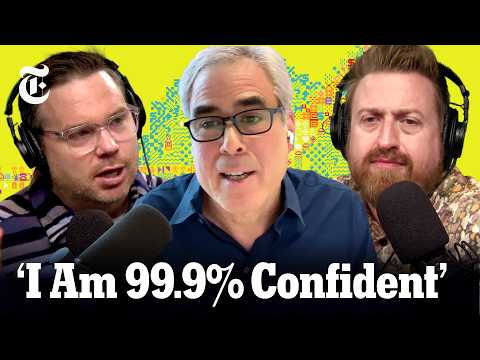
”I am 99.9% confident that social media is hurting kids by the millions”
Clip command
yt-dlp --download-sections "*10:07-10:20" "https://www.youtube.com/watch?v=tZSteN2g5yM" --force-keyframes-at-cuts --merge-output-format mp4 -o "tZSteN2g5yM-10m07s.mp4"“I can’t say that I’m certain that social media caused the big increase in 2012. But I can say I am 99.9% confident at this point that social media is hurting kids by the millions.” — Jonathan Haidt, 10:07
”It’s the whole goddamn environment”
Clip command
yt-dlp --download-sections "*7:21-7:34" "https://www.youtube.com/watch?v=tZSteN2g5yM" --force-keyframes-at-cuts --merge-output-format mp4 -o "tZSteN2g5yM-7m21s.mp4"“What I’ve realized is it’s the whole goddamn environment. It’s all the fish hooks dangled in front of boys. You want porn, gambling, vaping, sports betting. Even crypto investing is gamified.” — Jonathan Haidt, 7:21
”If we can’t win on social media, just give up on AI”
Clip command
yt-dlp --download-sections "*21:35-22:25" "https://www.youtube.com/watch?v=tZSteN2g5yM" --force-keyframes-at-cuts --merge-output-format mp4 -o "tZSteN2g5yM-21m35s.mp4"“If we can’t win on social media, if we can’t get consensus that this is bad and that government should do something, then I just give up on AI. Just say it’s game over. Our kids are gone. The boys are going to have sexy chatbots their whole lives. They’re never going to reproduce.” — Jonathan Haidt, 21:35
”I have honestly no idea what it will do”
Clip command
yt-dlp --download-sections "*30:20-31:10" "https://www.youtube.com/watch?v=tZSteN2g5yM" --force-keyframes-at-cuts --merge-output-format mp4 -o "tZSteN2g5yM-30m20s.mp4"“Somebody responded, ‘Will it parse my X bookmark graveyard?’ And you responded, ‘I have honestly no idea what it will do.’ And I laughed so hard. I thought, finally, an honest software developer who just admits that we don’t know how any of this stuff works.” — Casey Newton, 30:20
”A welder built his own business infrastructure from scratch with AI”
Clip command
yt-dlp --download-sections "*37:40-38:40" "https://www.youtube.com/watch?v=tZSteN2g5yM" --force-keyframes-at-cuts --merge-output-format mp4 -o "tZSteN2g5yM-37m40s.mp4"“I really want people in my demographic to understand that this isn’t ‘I asked ChatGPT to write an email.’ This is: I built my own business infrastructure from scratch with an AI pair programmer despite having zero formal training and a high school education.” — Listener Joe (read by Kevin Roose), 37:40
”I felt the little whisper of the demon that has driven Elon Musk”
Clip command
yt-dlp --download-sections "*57:50-58:40" "https://www.youtube.com/watch?v=tZSteN2g5yM" --force-keyframes-at-cuts --merge-output-format mp4 -o "tZSteN2g5yM-57m50s.mp4"“I was like, ‘Oh my god, this person’s not being very nice to me. I could ban them from the entire internet we’ve created.’ And I was proud. All I did was block them from my account. But I felt the little whisper of the demon that has driven Elon Musk into Planets Unknown.” — PJ Vogt, 57:50
Key Points
- Grok nudification scandal update (0:44) - The US Senate passed a bill allowing victims of non-consensual AI-generated images to sue, and Grok rolled back free image generation (making nudification a “premium feature”)
- Jonathan Haidt’s new research (3:52) - “Mountains of Evidence” paper with co-researcher Zachary Roush addresses the correlation vs. causation criticism of The Anxious Generation
- Seven lines of evidence for causation (4:12) - Including kids’ own testimony, parents, teachers, random assignment experiments, and Meta’s internal research showing harm
- Sextortion identified as clearest harm (5:50) - Kids on social media face sextortion, sexual harassment (15% weekly), bullying, violence, and hardcore pornography exposure
- Product safety vs. historical question (7:35) - Haidt decouples whether social media caused population-level mental health decline from whether these products are safe for children
- Meta’s internal research website (4:50) - Haidt launched MetasInternalResearch.org cataloging studies from attorney general lawsuits against Meta
- Collective action trap framing (10:40) - Haidt argues parents aren’t to blame because smartphone adoption creates collective action traps where individual parents can’t opt out
- Meeting with Macron (13:59) - Haidt describes a half-hour meeting with French President Macron who said “We will act” and pushed for EU-level social media regulation
- Australia’s under-16 social media ban (17:15) - Meta shut down 550,000 teen accounts; Haidt predicts benefits if 70% of kids actually stay off, and would accept being wrong if no improvement in 5 years
- AI companions as the next threat (21:00) - Kevin raises concern that AI companions for teens may be the next crisis, and Haidt acknowledges this but says winning on social media first is strategically necessary
- Claude Code as “ChatGPT moment” (27:30) - Kevin and Casey argue Claude Code represents the next evolution in AI where people can now build useful software without coding experience
- Kevin launches Stash app publicly (29:00) - Kevin’s vibe-coded read-it-later app is now downloadable at kevinroose.com/stash, including his first AI security breach (accidentally exposing credentials)
- Listener vibe coding projects (33:00) - Examples include Gina’s website with MySpace Easter egg, Sarah’s book recommendation site, a welder’s full business infrastructure, and a wallpaper calculator
- Handle replacement leaderboard (40:30) - A dad built a web app to gamify his kids replacing 70 kitchen handles, complete with a dollar-per-handle payment system and chocolate cashout option
- Forkiverse hits 4,000 users (48:00) - The Hard Fork/Search Engine Fediverse experiment doubled its expected 2,000-person cap in just one week
- First content moderation challenges (52:00) - Spam accounts (“Hello my beautiful lady”), racist slurs from federated users, and the discovery of a Russian disinformation network called “Portal Combat”
- Power of the ban hammer (56:30) - Casey admits to enjoying arbitrary moderation power, while PJ resists banning someone critical of him, feeling “the whisper of the demon”
- Sustainability concerns (62:00) - Kevin worries about letting users down if the experiment ends, while Casey notes they’ve “been letting people down for over three years on this podcast”
Mentions
Companies
- Meta/Instagram (3:52) - Internal research showing harm to children, sued by attorneys general, shut down 550,000 teen accounts in Australia
- Anthropic (27:30) - Claude Code creating an infrastructure crisis due to demand; released “Co-work” for non-coders
- OpenAI (27:30) - Mentioned for Codex as Claude Code equivalent; ChatGPT moment comparison
- Grok/xAI (0:44) - Nudification scandal, rolled back free image generation feature
- Masto.host (60:00) - Hosting platform for the Forkiverse Mastodon server
- Google (28:00) - Has a coding agent but Casey can’t remember its name due to “the ongoing disaster of Google Marketing”
- Goodreads (35:30) - Listener Sarah connected with the founder after building a book recommendation site
Products & Technologies
- Claude Code (27:30) - AI coding agent described as having a “ChatGPT moment”; causing infrastructure crisis at Anthropic
- Co-work by Anthropic (28:00) - New version of Claude Code for non-coders that sits in the Claude desktop app
- Stash (29:00) - Kevin’s vibe-coded read-it-later app, now publicly available at kevinroose.com/stash
- Codex (OpenAI) (28:00) - OpenAI’s equivalent of Claude Code
- Mastodon/Fediverse (48:00) - Decentralized social network protocol powering the Forkiverse experiment
- Blue Sky (54:00) - Mentioned as politics-dominant social network
- Threads (54:00) - Called “the gas leak social network” for its disconnected, surreal content
- MCP Server (37:00) - Listener Joe built one to turn Claude into a personal business assistant
People
- Jonathan Haidt (1:41) - Author of The Anxious Generation, social psychologist, returning guest with new research paper
- Zachary Roush (2:37) - Co-researcher on the new “Mountains of Evidence” paper
- Emmanuel Macron (13:59) - French President who met with Haidt and pledged action on social media regulation
- Katherine Price (3:25) - Co-author with Haidt of The Amazing Generation, aimed at kids and teens
- Arturo Behar (5:18) - Meta whistleblower who created the “Bad Experiences and Encounters” framework
- Mark Zuckerberg (4:08) - Cited as defending Meta by claiming “there’s no evidence of causation”
- PJ Vogt (0:25) - Host of Search Engine podcast, co-founder of the Forkiverse experiment
- Kevin Roose (0:00) - Hard Fork co-host, tech columnist at The New York Times, creator of Stash app
- Casey Newton (0:03) - Hard Fork co-host, writer at Platformer, boyfriend works at Anthropic
Surprising Quotes
“To commit a crime, that’s a premium feature now. That’s going to be behind the paywall.” — Casey Newton on Grok requiring paid subscription for image generation, 1:11
“I don’t blame the parents. I don’t blame the teachers. I blame the companies.” — Jonathan Haidt, 11:40
“No one has read a book since 2021 and they’re just lying about it.” — Kevin Roose, 24:30
“This is anti-slop. This is real people saying, ‘I have a need in my life, and I’m going to go make it with my own hands.’” — Casey Newton on listener vibe coding projects, 43:30
“You have to have a 401k before you can have a phone.” — Casey Newton on Forkiverse age restrictions, 62:00
Transcript
0:00 I’m Kevin Roose, a tech columnist at the New York Times. I’m Casey Newton from Platformer, and this is Hard Fork. This week, Anxious Generation author Jonathan Haidt returns to the show with new research on how social media is harming teens. Then, we asked you for your Claude Code experiments, and you blew us away. We’ll share some of our favorites. And finally, it’s a trip to the Forkiverse. Thousands of you have now joined our Fediverse experiment, and Search Engine host PJ Vogt is here to talk about what we’ve learned so far. For example, Vladimir Putin.
0:36 Well, Casey, we got a big show this week. Lots to talk about, but let’s start with social media because there’s been a lot happening in that world. Yeah, you know, last week we talked about the nudification scandal over at Grok, and there’s been a bunch more news about that this week. The US Senate managed to pass a bill on Tuesday that would allow victims of these sorts of non-consensual sexually explicit images to sue over the creation of those images. Yeah, and Grok also rolled back its image generation feature for free users. You now have to be a paid user to Grok to nudify people against their consent. To commit a crime, that’s a premium feature now. That’s going to be behind the paywall.
1:16 Yes, so they are not rolling that back fully, of course, because it is generating a huge amount of engagement for them. But they do seem to acknowledge that some people were taking it too far. That’s right, Kevin. And it is really this exact sort of phenomenon that is happening on social media that has led our guest this week to really lead a charge and say when it comes to younger people, we actually just need to keep them away from this stuff altogether.
1:41 Yes. This name of our guest today, Jonathan Haidt, will be familiar to longtime Hard Fork listeners. He came on the show back in March 2024 when his book The Anxious Generation came out. Since that time, that book has become a huge mega bestseller. Jonathan has become a leading advocate for things like phone bans in schools and these social media restrictions like the one we talked about in Australia that just went into effect. And there’s been a lot of discussion about Haidt’s thesis that social media and widespread smartphone use is harming mental health for kids and teens, and a lot of arguments about the science in that book, whether the studies that Haidt and others have cited as proof that social media is harming children are actually holding up under scrutiny.
2:31 And as a matter of fact, Kevin, Jonathan Haidt and his fellow researcher Zachary Roush have new research out this week which gave us an excuse to bring him back on the show. Yes. And this new research by Jonathan and Zachary is designed to address one of the primary criticisms that his book got, which was about the difference between correlation and causation. So, we’re going to talk about that research and we’re also going to talk about what’s been happening since his book came out.
2:59 Yeah, as he has become the world’s hater-in-chief of social media. So, let’s bring in Jonathan Haidt. Jonathan Haidt, welcome back to Hard Fork. Thank you guys, great to be back. You’ve been a busy man. You joined us originally just as your Anxious Generation book was going out into the world. The book has now spent 88 weeks on the New York Times bestseller list. That’s a lot of weeks. Sold a bunch of copies, led to discussions all around the world and follow-on projects like a book you and my friend Katherine Price just wrote called The Amazing Generation, which is aimed at kids and teens.
3:30 And now you are back with a new paper or papers about this issue of social media and mental health. You have a new post on your Substack called Mountains of Evidence and you’re here to talk about that today. So just give us the TLDR here, Jonathan. What is the most important new finding in your research since your book came out?
3:52 So when my book came out, I thought that the main problem was mental health and there’s a big debate in the academic world. Well, okay, people who use social media more are more depressed, but is that correlation or is it causation? And that has kind of defined the scope of the debate and that’s gone on for a couple of years now. And it’s what Mark Zuckerberg says to defend himself. “Oh, there’s no evidence of causation.” Well, guess what? There are tons and tons of evidence of causation and Meta did some of the best studies to show it.
4:19 There’s so many different kinds of evidence including what the kids themselves say, what the parents say, what the teachers say — like everybody sees it. That’s evidence. And then there are experiments with random assignment that show that when you get off social media for at least a week, depression gets less. So I was collecting all that evidence for this big review paper. That’s one of the two projects. And while we were working on that, there was additional dumps of studies from Meta that come out in the attorney general’s lawsuits against them. They post them online and there’s all kinds of information in the briefs.
4:50 So, we cataloged them at a new website we put up called MetasInternalResearch.org. And that includes a couple of true experiments. So, the evidence for causality is now overwhelming. People have to stop saying, “Oh, it’s just correlational.”
5:02 So when you say the evidence for causality is overwhelming, break that down for us a little bit. Like what is your understanding of the mechanisms by which social media is harmful to children?
5:18 Yes. So Arturo Behar, the whistleblower, did the bad experiences and encounters framework. So Meta itself, they’d done tons of research, they collected what are kids saying, what’s happening to them. What they found is they get very high rates of sexual harassment, around 15% each week. Each week they have some person approaching you sexually. So they get a lot of that. They get bullying. They see violence. They see hardcore porn. Oh, the biggest clearest one I think actually is sextortion. That’s the one that just stands out like a sore thumb.
5:58 You know, kids, if you’re on social media you can get sextorted. If you’re not, you can’t really. And the kids who get sextorted are deeply shamed. You know, they shared a picture of themselves, these teenage boys usually. And then their lives are ruined and some of them commit suicide. So, anyway, I’m just saying there’s so many different mechanisms by which kids are getting harmed. And depression and anxiety — those are just two of the pathways.
6:17 So, you’re saying that it’s not any one thing. You’re saying that the overall environment is so dangerous that it is difficult, maybe impossible, to use a social network like Instagram over an extended period of time and not have one or likely multiple of these harms hit you in some way. That answer somewhat surprises me because I feel like the usual answers we hear is like, well, it’s negative social comparison, right? Like it seems like my friends are living a more exciting life than I am and now I’m upset, or like the algorithm has driven me into a rabbit hole. So how has your understanding of the mechanisms of harm changed since you wrote your book?
7:04 Sure. So when I started the book, I thought that the story was going to be girls using social media get depressed in part by social comparison. That’s what everyone was talking about 5 years ago. And that’s definitely one of the mechanisms. And I didn’t know what the story was for boys when I started. And by the end of the book, and especially since the book came out, what I’ve realized is it’s the whole goddamn environment. It’s all the fish hooks dangled in front of boys. You want porn, gambling, vaping, sports betting. Even crypto investing is gamified.
7:35 In this paper, you’ve tried to sort of decouple two questions. One of them is what you call the historical population question. Basically, like the sort of restatement of the thesis of The Anxious Generation, which is this stuff is an entire generation raised on social media showing all these effects on their mental health. And the other is just the sort of product safety question. Are these products as currently constituted safe for children and teens? What are you trying to do by sort of decoupling these questions?
8:24 Yeah. Well, yes, you are reading it correctly. Except I wouldn’t use the word wobbly. So let me explain. My interest in separating the two questions came about because there was this report issued by the National Academies of Sciences, Engineering and Medicine in late 2023, and the report comes out and it has a chapter showing all these harms, all these ways that it’s harming kids. But yet in the summary of the report there was this sentence. It says our review “did not support the conclusion that social media causes changes in adolescent health at the population level.”
8:58 So I read this and I’m like, what the hell, guys? You have a whole chapter showing how it’s hurting kids. What does it mean, the population level? And what I realized by reading further, what they mean is we can’t — we’re not confident that this is what caused those big increases after 2012. And okay, that’s right, because how do you prove something happened in history? It’s very hard. You can’t run experiments. So I will grant that we can’t be 100% certain that what I said in The Anxious Generation is right. Can’t be 100% certain. I’d love to hear another hypothesis.
9:33 But the historical question is very hard to settle. But that’s not what people want to know. What parents want to know and what legislators want to know is: Is this consumer product which all kids are consuming massive quantities of — is this consumer product hurting kids? That’s what they want to know. And guess what? We have seven different lines of evidence saying yes, it’s hurting kids. The kids say it, the teachers say it, the experiments say it, the correlations say it, and Meta — I mean, my god, the data they have on harm is astonishing.
10:00 So that’s why I think it’s important to separate the two questions. In science and social science, we’re very careful about causality. We have to be certain about causality before we say X caused Y. And so I can’t say that I’m certain that social media caused the big increase in 2012. But I can say I am 99.9% confident at this point that social media is hurting kids by the millions.
10:21 Yeah, you’re understandably and I think appropriately very critical of the tech executives here. But I’d also note that parents gave kids these phones and schools allowed them and regulators did nothing for a decade. So if we’re assigning blame for this situation, how much falls on everyone else involved?
10:40 I would say close to zero for this reason. The whole key to solving this problem, the reason we didn’t solve it for so long, is that it’s a series of collective action traps. And as a social psychologist, what we do for a living is we look at the ways that we influence each other. And there are certain situations where, you know, yeah, I don’t want to give my 10-year-old a phone, but everyone else has one and she’s being left out. So the phones and social media, all these things, they put us in a trap. And so we feel we have to give in.
11:17 And so since that’s the situation, I can’t blame the people. My rule as a social psychologist: if one person does something really bad, that might be a bad person. If everybody in a situation is doing something bad, that’s guaranteed to be a bad situation. So, no, I don’t blame — I mean, look, of course, parents should stand up and parent. But look, so many of us are trying and it’s really, really hard. It’s really, really — everybody’s fighting all the time with their kids over this tech. We didn’t ask for these fights. So, I don’t blame the parents. I don’t blame the teachers. I blame the companies.
11:44 Jonathan, your life has changed quite a bit since we last talked to you. Your career has shifted from just being sort of more of a pure research and public intellectual to really being an activist on this issue. And I’m curious what that’s been like for you and what you’ve learned about advocacy in this new role of yours. What actually seems to change people’s minds who may be reluctant when they first encounter some of the ideas you’re pushing?
12:11 Yeah, it’s true. My life has changed a lot. I’ve been a scholar and a researcher for a very long time. And I’ve started multiple organizations that try to translate findings from behavioral sciences to help important institutions work better. That’s kind of my mission statement as an academic. And when The Anxious Generation came out in March of 2024, I thought I was going to promote it for a few months, take the summer off, recover, and then get back to work on the big book I’m supposed to write on democracy.
12:41 But because this whole thing blew up and because mothers around the world stood up and started saying, “Where do we sign up? Let’s go. Let’s change. We got to save our kids.” So many people were coming to me saying, “How can I help? What can we do?” Legislators were calling me. Governors were calling me. Because here’s the thing. If you’re a parent, you’ve seen it. Everybody has seen the problem and nobody really knew what to do about it because it’s a collective action trap. And so since the book proposed four norms to get out of the trap — no smartphone before high school, no social media before 16, phone-free schools, and more independence, free play and responsibility in the real world — I proposed these four norms and people are adopting them all around, in other countries that I haven’t even been to.
13:19 So I realized I’m 62. God knows how many years I have left with a brain that’s still functioning. I can’t count on more than 10. And so how am I going to spend those remaining good years? I could write another book on democracy, which will be out of date by the time it comes out because my god, things are changing fast. Or I could devote myself to pushing for phone-free schools and raising the age.
13:40 Yeah, I’m curious. I know you probably can’t tell us about all of the private meetings you’re having with lawmakers and heads of state and tech executives, but just give us the flavor of like one meeting with someone important or influential as you’ve been schlepping all over hawking your book and talking about this message.
13:59 Yeah, sure. So the surprise for me has been how easy this has been, that everywhere I go, I’m pushing on open doors because everyone who’s a parent has seen it. It’s very popular among voters. And so the best example is this: I did a quick trip to Paris, Amsterdam and London back in April of last year. And I worked with More in Common, a wonderful group that does all kinds of pro-democracy stuff. They set up a dinner party for me to talk to members of French society and psychiatrists. It was really interesting. And one of the people there was in the French parliament. And he said, “Oh, you should talk to Macron.” Oh, yeah, I’d love to, but I’m leaving in 2 days. He said, “I’ll call him.” And the next day, I get a call from Macron’s office. “Can you come in tomorrow?”
14:48 So I had a half-hour meeting with Macron in which I showed him the data because I was told in advance he loves data. So I went through it with him. I said, “Look, here’s what’s happening. Here’s what we know.” And he thought about it and as he was saying goodbye to me, he said, “We will act.” And he sure did. He’s really been pushing. What he said to me then was, “I’m going to push it. This should be an EU thing, and if we can’t get it through the EU, then I’ll do it in France.”
15:13 So that’s just — I mean, that was the most spectacular one. I was really surprised by that. But that’s what I’m getting at: everyone sees it. Everyone cares about this. John, there’s now this group of plaintiffs lawyers and law firms who go around the country sort of looking for evidence of social media harms, especially against children. They bring these big lawsuits, these class action suits. They sue the tech companies. They try to get these huge settlements out of them. I’m curious what your thoughts on that system are. It’s largely grown up since you published your book, and a lot of them cite your work as evidence that these companies should be held liable.
16:07 Well, I think it seems to be the only way that we have. Let’s imagine that there was a new consumer product introduced, some new toy or a new kind of candy bar with some new ingredient. And if we knew from internal reports from the companies that they deliberately designed it to be addictive. And then a couple years after introduction, 90% of kids are eating 10 candy bars a day, and diabetes is going up. At some point, there might be someone who says, “Maybe this is not a safe consumer product.” These companies have never faced a jury, ever. No one has succeeded in holding them responsible for what they did to their kids. So this is an outrage. And so these lawyers who are taking these cases — yeah, they’re heroes.
17:15 There’s this other dimension to it too, Jonathan, which is that your book understandably focuses on the crisis with children, but adults are very much living their own version of this. I was having coffee with some friends at the new year. Two of them are product managers in tech and I asked them, “Hey, what do you want your 2026 to be about?” And they said, “I need to change my relationship with my phone.” They’re putting it in black and white. They’re setting screen time limits. They’re leaving it in another room an hour before they go to bed. And this is among the people who are building the things on the phones.
18:00 Yeah. No, you’re absolutely right. And I think that’s why we’re winning. That’s why it’s so easy to get laws to protect kids all over the world, because we all see it. We adults, we’re all overwhelmed. I’m overwhelmed. I can’t read a book anymore. There’s too much other stuff coming in. I haven’t focused on adults only because I don’t want to legislate for adults. But damn it, I don’t want the companies sucking my children into toxic spaces without my knowledge or permission.
18:30 To speak a little bit about Australia — this week, Meta shut down about 550,000 accounts belonging to teens under this new Australian law that just went into effect banning social media for kids under 16. Jonathan, I’m curious if you have a prediction about what is about to happen in Australia. We have this great natural experiment now. What are you looking for? And how confident are you that your view that if you simply remove phones and social media from schools, kids’ mental health will improve?
19:10 Well, removing phones from schools, we know will help soon. Removing them seems to greatly improve attention, friendship, discipline problems go down. So on the phone-free schools, the data is pouring in. I’ve never heard of a school that was unhappy about it or that reversed it. So I’m sure we’re going to see that learning improves, friendship improves, fun in school improves, which means that truancy will go down and I think that will have a measurable impact on mental health.
19:50 Now what Australia did is even bolder, which is they said we’re going to put it on the companies. We’re going to say that you have to be 16 to open an account where you sign a contract to give away your data, your rights without your parents’ knowledge or permission. At 16, you can do whatever you want. But before 16, you can’t do that. And so here’s the question: what percentage of Australia’s kids will actually be off of social media? And we don’t know.
20:20 If the Australia bill is effective at getting social media use down below, say 20%, then I think we will see over time kids have to sort of remember how to do other things other than scroll. I think we will see benefits, especially if the Australians do the full program, which is, “Hey, go out and play,” which is what the prime minister keeps saying — “Go out on the footy field.” If we can succeed in restoring a play-based childhood, then we’re going to see big benefits to mental health.
20:55 And like how long should we let that natural experiment run? Like if 5 years from now there’s been no significant improvement in mental health among young people in Australia, would you conclude that this was a wrong hypothesis? First of all, tell me when we get to say 60 or 70% of kids actually being off. But once we get there, I think within a year, we’re going to start seeing lots of reports of different behavior. Will that show up in the national statistics? Not for a couple years. But 5 years, if we don’t see anything budge in 5 years, I would then have to conclude that I was wrong in thinking that reducing social media use would improve mental health. But here’s the thing — this whole debate has been framed around mental health. And so if it doesn’t improve mental health, does that mean we should undo it? I would say no. Tell me how many kids have been sextorted. Tell me how many kids have died from drug overdose deaths. Let’s look at all the other ancillary harms.
21:55 I’m curious because like Casey, I am also pretty high-pilled at this moment in time. I am pretty convinced of the arguments you’re making. But I would say the one criticism I might have is: to me it feels a little bit like you are fighting the last war. Because when I go to high schools now and meet high school students, they tell me, “We are talking with AI companions now. That is the thing that we are doing.” And I have this sort of fear in the back of my mind that you will succeed at getting social media banned for under 16s all over the world. And then it will be like there’s this new threat that we weren’t even paying attention to.
22:30 And we will pine for the days when teens were using social media — to at least, at least they were communicating with other people and not these AI companions. So do you worry at all that you have not kept pace with the state of the technology? No, this is a strategic move. AI is so new and it’s morphing so fast and in the research community, it takes us 5, 10, 20 years to figure anything out. So we’ve been arguing about social media for a long time. I think we’ve got it. I think I’m going to win on this issue.
23:00 If we can’t win on social media, if we can’t get consensus that this is bad and that government should do something, if we can’t win on that, then I just give up on AI. Just say it’s game over. Our kids are gone. They’re — we’re never going to see them again. The boys are going to have sexy chatbots their whole lives. They’re never going to reproduce. So if we can’t win on social media, then we definitely can’t win on AI.
23:35 And since we are winning on social media and since governments around the world are waking up to the fact that they have an obligation to protect kids — a lot of them have never done anything, especially our federal government has never done a single thing, ever, to protect kids on the internet. So governments are waking up and the faster we can win on social media and delaying phones and more play and phone-free schools, then we have a chance, a chance at least. We can try to make the case: just get it out of elementary school. Just don’t let kids be talking with chatbots when they’re little.
24:05 Do you miss your obscure academic life at all? Does it bother you to be a public intellectual, an advocate, a man of mystery, a man on a mission? Well, yes, in that I’m working all the time now and I really want to just take the summer off. I want to try reading books. I think if I read physical books, maybe I’ll be able to finish one. But I have had a feeling of efficacy, a feeling that I’ve been working on this for a long time. And I feel like now I’ve been gifted the chance to actually make a difference in the world. And it’s a kind of satisfaction beyond anything I’ve known in my life.
24:40 You know, I’ll tell you this story. When I was pitching my book early last year, I was going around to different publishers and every publisher wanted “The Anxious Generation but for AI.” And I was like, “No, it’s not really what I’m working on.” And they’re like, “Are you sure?” I was like, “Yes, I’m sure. Pretty sure John’s going to do that.” But anyway, you have made a splash, and if you have any tips on selling a book, I’ll use them this fall. I’d be happy to read your book if you want someone to read a copy. But you just told me you can’t read a book anymore, so I don’t trust you. Next summer I’ll try — send it to me electronically and I’ll feed it into ChatGPT and it’ll give me a chapter-by-chapter summary.
25:20 I have to say it’s actually very comforting to me that even Jonathan Haidt is having ChatGPT read books for him. Because obviously I do that as well and I feel bad about it. This is the thing: no one has read a book since 2021 and they’re just lying about it. They’re reading one kind of book which is romance. So if I ever wrote like a social science treatise, I would try to put it in a world where like dark fairies were having sex with each other. Have you thought about that? Actually, that is actually the way we open up our children’s book. It’s not sex, but it actually does open with a story about dark fairies, evil lizards.
26:00 By the way, I love the pandering of the adults. It’s The Anxious Generation. But when you want to talk directly to the kids, all of a sudden they’re Amazing. Yeah, but the kids better hold out some hope. All right, Jonathan. Thanks so much. Thanks, Jonathan. All right, guys. Thanks so much for having me back. Take care.
26:25 Well, Casey, it’s been another big week for Claude and Claude Code, which I think seems to be having kind of a ChatGPT moment. I texted you earlier this week and I said, “Is it crazy to say that Claude Code feels like the most important thing that has happened in AI since ChatGPT?” I realize that may sound crazy to some of our listeners, but I feel like we can make the case.
27:00 I think so too. I think this is a big, big moment, especially for people who are sort of code-inclined or code-curious. We’ve continued to see many, many posts on social media about people’s experiments with Claude Code. It seems like it is actually creating something of an infrastructure crisis for Anthropic, which is also something that happened to OpenAI during their original ChatGPT moment. They just could not keep up with the demand and the site kept going down.
27:30 But I would say the larger thing that has been going on is that non-coders are starting to experiment with this tool. Anthropic also released a version of Claude Code for non-coders this week called Co-work, which sort of sits in the Claude desktop app and allows you to attempt various tasks using the same agent-like framework that Claude Code uses, but in a way that’s slightly less intimidating than opening up a terminal app.
28:00 Yeah, and if you think about what the ChatGPT moment was, it was a time when millions and millions of people realized simultaneously that you can ask questions and get pretty good answers. The Claude Code moment I feel like is the next evolution where people are saying “I can now build something that is useful to me even though I don’t really know what I’m doing.” And whereas maybe 6 months ago the results I would have gotten were pretty bad or would have required a lot of technical know-how, I can now come in and type in a box and get basically exactly what I want. And that is actually huge.
28:45 And I had a version of that experience myself too in the past week because the read-it-later app that I built, Stash — we talked about my vibe coding experiment last week. I got so many responses from people saying, “Hey, can I use this thing? Are you going to distribute this and put it in the app store?” that I just decided, you know what, I’m going to do it. I’m going to release Stash to the world. And so I had Claude Code go in and prepare a version of this for the public, build me a little landing page. You can now download it and try it for yourself at kevinroose.com/stash. And it is working better than I ever expected and it remains sort of incredible to me that I did all of this as me, an idiot who does not know how to code. I was able to in a matter of hours build and release a working software product.
29:40 You know, first of all, congratulations for the launch of Stash. People have been really excited about this. My absolute favorite was you posted about this on X and somebody responded, “Will it parse my X bookmark graveyard?” And you responded, “I have honestly no idea what it will do.” And I laughed so hard. I thought, “Finally, an honest software developer who just admits that we don’t know how any of this stuff works.”
30:20 I have no idea how any of this works. I have no idea if it works. It works for me. But I am very delighted that I was just able to vibe launch this software product into the world with honestly not that much work. It was not that hard. I did not use any special prompting tricks. I’m not even that good at using Claude Code and yet I was able to conduct an act of software engineering that now other people are downloading and using for themselves.
30:50 I did have one incident that I want to tell you about, which is that I accidentally had what I believe is my first AI security breach. When I launched the version of this public Stash app that I was open-sourcing, it did inadvertently reveal my credentials on several of the sites that I use. So I had to go back to Claude and be like, “Hey, could you scrub my personal information out of there?” That’s — I didn’t know you had any credentials to do what you do.
31:15 But we want to talk about a few different things with Claude Code this week and we want to begin with listener responses because last week we asked you, “Hey, what are you building?” And we were absolutely delighted with the response. We have gotten so many messages from you all over the past few days. But we just wanted to highlight a few of our favorites because I think they speak to the breadth of what people are able to build and also how little experience folks had before they started trying these things.
31:50 Yes. And I think this is more than just a showand-tell segment because for me there is something different about trying to do this stuff yourself versus just listening to us talk about it on our podcast. I really think that our listeners who listened to our episode last week and then went out and tried to vibe code things for themselves were — a lot of them — shocked by how easy it was, by how good the results were.
32:20 And I think for you, I was joking with you over text this week that it seemed like you were feeling the AGI in a way that maybe you hadn’t before. So I think for our listeners maybe this past week has been an experience of starting to feel that — feel the progress, feel the capabilities improving, feel that things that were impossible even a few months ago are now becoming possible.
32:50 Absolutely. So as we get into what we heard from listeners, it is important that I make the following disclosure: my boyfriend works at Anthropic. And I would go a step further and say if you are feeling like this is edging into shill territory, I really do think you could probably do a lot of similar things with Codex, which is OpenAI’s Claude Code equivalent. I’m told Google has one as well, but due to the ongoing disaster of Google Marketing, I truly cannot remember what it’s called.
33:20 Okay, so first up, we got some great examples from our listeners of websites that they have been building. One of those came from our listener Gina, who had never vibe-coded before, but after last week’s episode told us that she had gone out and designed her own website. She says it took her about 2 and a half to 3 hours. Looks great, Gina. It’s got some nice animations. She even told us that it has an Easter egg on it — if you hit Ctrl+M, it pulls up what looks like a MySpace profile from the ’90s. Very cool. Congrats on your new website, Gina.
33:55 Another website that we got came in from Sarah Haggard. She built a book site for book recommendations. Over the winter break, she wanted to catalog her books so that she could give her husband a list of books she already has read so that he doesn’t accidentally buy her a duplicate. And she was able to do that, but then went a lot further and now has a website where you, the listener, can go on to sarahsbooks.com and she will make a book recommendation depending on what mood you’re in. It is a full-featured web app. And after she put it up, she got in touch with the founder of Goodreads and now they’re going to get together and have a fun conversation. So this is someone else who does not have a lot of technical experience, built something to scratch her own itch, and it is super cool.
34:45 And I’ll just say there’s something very romantic about vibe coding for your partner. Yeah. A lot of alpha there. Go to your partner today and say, “What would you like me to build you, sweetheart?” And then just see if you can whip it up.
35:10 One more website — we heard from a listener who turned his family’s Christmas letter into an ’80s text adventure inspired by the video game Zork. This is from listener David Phillips. He asked us not to read out the name of the website since it’s got information about his kids on it. But it’s got green text on a black screen, very much conjuring an ’80s CRT monitor. And a really fun detail: his stepfather actually worked on the original Zork game. So this is actually kind of a family tribute as much as it is a vibe coding project.
35:50 We also heard from several small business owners who told us that Claude Code and other agentic coding tools were allowing them to build tools that they otherwise would have had to pay a lot of money to someone else to build for them. My favorite of these was from Joe. He is a welder — great AI-proof job of the future, by the way. And he said that he has no experience programming, but over the past few months has been teaching himself to build tools for his business.
36:20 He said, “I built an MCP server that has turned my Claude chat window into a personal assistant.” He said it’s able to track jobs, help him create estimates, organize PDFs and contracts. He’s even connected Claude to the 3D modeling program that he uses, which has helped him build complex programs for CNC, which is the computerized cutting and etching technology that many builders use. He says he’s used Claude Code to make agents to search for potential work in his area and write a weekly lead generator for him.
37:00 So I just thought this was a really interesting example of what might seem like a low-technology business, but that is actually able to go out there and build some software that helps him get more business. And he ended his email in a way that really affected me. He said, “I really want people in my demographic to understand that this isn’t ‘I asked ChatGPT to write an email’ or ‘Can you generate an image that has the correct spelling.’ This is, to me, I built my own business infrastructure from scratch with an AI pair programmer despite having zero formal training and a high school education.” Pretty cool.
37:45 Another example we got was from Fay Bell, a listener who runs her own business selling wallpaper to interior designers. She told us about a special tool that she has been creating called the Wallpaper Calculator, which allows a potential client to calculate exactly how much wallpaper they need to cover a particular wall. This tool also generates a layout diagram so that clients can visualize what the wallpaper will look like in their space. She said this is something that she’s always been doing by hand in tools like Photoshop or InDesign, but now the clients could just do it themselves.
38:20 And Fay wanted to let us know that she had no previous coding experience and she loves that she can do this without having to pay any hosting costs. She doesn’t have to buy this software from some third-party provider. Those can be really expensive services, and she just did it for her damn self.
38:45 Yes. One more that caught our attention came from a dad who made a web app to track a hilariously specific chore he had asked his kids to complete. Simon wrote that it was the week before Christmas and his wife and he decided that their kitchen needed a tune-up. So they ordered new handles for the doors and drawers in their kitchen — 70 handles in all. And to motivate their children, they offered the kids a dollar per handle changed. He had noticed that in the past they had quickly lost interest when given the handle replacement task. So this time he spun up a web app to log their efforts.
39:20 The first thing it tells you when you open it is that the project is now complete and all 70 handles were replaced. So this was a success. There’s a leaderboard for his four children. You can see who made the most money. They were able to cash out their winnings via Apple Cash to the bank or via chocolates, which I love. And it was Ben who came in number one with 44 handles replaced. Vic came in at zero. So I guess Vic was holding out for a higher wage to get involved in the knob replacement business.
40:00 Just again, this is so wacky and was this necessary? Absolutely not. But what I love about this project is it speaks to a theme that I felt in so many of the things that listeners sent us, which is the joy of creation. It is fun to make things. It is fun to have a dream and to be able to quickly realize it.
40:30 What excites me is less the products themselves. It is that people, I think, are starting to understand the pace and trajectory of AI progress through using these tools. A year ago, you could not type into a box, “Make me a website for my family’s handle replacement project,” or “Make me a tool for my small business that allows people to estimate the wallpaper needs of their project.” And now you can.
41:00 And I think unless you have really spent time, even a couple minutes using one of these tools, you really do not understand the state of the art. And so I think a lot of people unfortunately are in the same position that they were in back when ChatGPT came out in 2022, which is like they are opining on a technology that they do not actually understand because they have not experienced it for themselves. And so for the listeners out there who are listening to this and saying, “Okay, well these projects sound great, but what does this have to do with me or my life?” I would just say there is no better way right now in 2026 to get a handle on what the frontier of AI progress looks like than to come up with a project, no matter how silly or trivial seeming, give it to one of these AI coding agents, and watch what it does.
41:50 I agree with that. You know what I would say, Kevin, is to me this stuff is the flip side of slop. This is anti-slop, right? If slop is about a world where every surface online seems like it’s being taken over by these digital creations that you didn’t ask for, that you find confusing, they blur the line between reality and fiction, and they just make you feel hypnotized and gross — this is the reverse of that. This is real people saying, “I have a need in my life, and I’m going to go make it with my own hands.” And we’ve always talked about AI as a dual-use technology.
42:25 We do spend a lot of time on the show talking about its many downsides, which are huge and real and scary. But there is also upside here, which is at least in this moment, this can be an empowering tool. And so to me I think one reason why I was so delighted to see all these listener responses was they spoke to the way that technology tools can still empower us.
42:50 Yes. And it also gave me an experience that I had not had before, which is that I now understand how annoying it is to build and release software products in the world, only to have users tell you everything that is wrong with them. Like 5 minutes after I made my Stash app public and put it up on GitHub so that people could download it, I started getting feature requests. It was like, “Are you not impressed by the app that I have made and released to you for free?” I understand in a more visceral and embodied way the pain of our listeners who are product managers at big tech companies.
43:20 Yes. But you also now just have a perfect thing you can say back to them, which is just “fork it and make the version yourself,” right? Go vibe code your own feature. Take it up with Claude. So Casey, when you were texting me about how amazed and impressed you were by this technology and how this felt like a ChatGPT moment, what has been the most surprising thing for you since our segment last week?
43:50 I just keep having new ideas for stuff to build. Like I assumed that I would run out after coming up with one or two things, but every time I have an idea and I could just make it, it just gives me the confidence to go out and build like three or four new things. So I’m moving away from thinking like this is a fun little proof of concept demo and thinking of it more as this is just a tool that I have now. And if I have some sort of itch when it comes to software, my default assumption now is I can probably quickly build some version of it.
44:20 Yeah, I’m finding that I’m having to retrain myself or rewire my brain a little bit because my impulse when I encounter something annoying or a problem that I’m having in my life is not to go build a piece of software to address that. It’s just not part of how I live my life. But now I’m finding that more and more times a day that sort of bell is going off in my head that, “Oh, I could probably build something, or Claude could probably build something to help me with this.”
44:50 So we are actually going to be doing a demo of how we vibe code with Claude Code. We’re going to be doing that on our YouTube channel. You’ll be able to see that next week. But if you are someone who has been maybe curious about this, maybe we’ve piqued your curiosity a little bit, but you’re still a little bit intimidated by it, hopefully that will give you the tools you need to get started.
45:10 Well, Casey, listeners to the Hard Fork podcast will know that we released an extra episode this week detailing our experiment with PJ Vogt of the great Search Engine podcast and the new social network that we started, the Forkiverse. That’s right, the Forkiverse has been up and running for just about a week now as you will hear this podcast episode, and I have to say, Kevin, the response has been overwhelming. Truly wild. One of the wildest things I’ve ever experienced in my career.
45:40 When you had this idea to run this experiment, the maximum amount of people that you can imagine wanting to join with us in this federated server that we set up was about 2,000 people. And today we can report here on the Hard Fork show that more than 4,000 souls have now joined us within the Forkiverse, threatening to overwhelm and perhaps destroy it. Yes, and we have already had our first content moderation scandal, some of our first technical hiccups. We were sort of speedrunning the life of a social media company in the year 2026.
46:10 And so today we wanted to give some updates on how the Forkiverse is going. So we’ve invited back our third co-founder with us, PJ Vogt from Search Engine is here virtually. Thank you for having me. I’ve been called a lot of things but never founder. How does it feel? Honestly, I’m surprised at how much I’m already learning about the internet by being a person who cares about even maintaining a very small community on it. I’ve only ever been a community member, not a community architect. It’s strange.
46:50 Well, so let’s talk about the flavor of the Forkiverse so far. I think one of the smart things that PJ did as we were setting up the Forkiverse was to give people a prompt. He said, “Hey, something you could do if you want is just post a picture of where you’re listening to this podcast episode from.” And so when I logged on, a lot of what I saw was just people posting really fun photos. And I think it contributed to this sense of, “Hey, we are not here to be super serious. We are not here to solve the great issues of the world. We just kind of want to hang out and meet each other.”
47:25 And I have actually been delighted at the flavor of the Forkiverse because it really has seemed like a bunch of people who like the same podcast coming together and saying hello to each other. Yes. And because PJ, you posted your version of the episode a couple days before we did, at first the people who were trickling in were mostly like Search Engine fans. So I got to observe some things about your audience, which is that many of your listeners live these bucolic lives on farms in British Columbia where they’re just listening to podcasts while they work in their woodworking studios.
48:00 I learned the same thing about my listeners. It was so cool, the amount of people who are like, “I’m in a cabin somewhere far away working on my ceramics.” And I was like, “That’s so cool.” I had no idea. And it solved for me one of the things that I don’t like about podcasting, which is that it’s so one-way. And I will say that in week one of the Forkiverse, meeting both Search Engine listeners and Hard Fork listeners — to me it does feel like community. It feels like a bunch of strangers politely, friendly, jokingly, kind of just being like, “Here’s who I am.”
48:35 I noticed over the past week that people were using it to talk to Kevin and me about the most recent episode of the show. We heard a lot about people’s vibe coding projects, which is something we had talked about in last week’s episode. And so that was something else that was fun for me — when I got to visit the site, I just got to see a lot of people saying, “Hey, check out this website that I made.” And it was really nice.
49:00 Yeah. I think for a lot of people, those sort of prompts or at least collective topics can serve the function that alcohol serves at a party, which is just kind of the social lubricant that makes everyone more likely to hang out and have a good time.
49:20 That’s kind of the fun stuff. Let’s talk about the tedious, sweaty behind-the-scenes work that goes into making the Fediverse possible. So Kevin, in the first few days of people joining the network, you are getting a notification every single time somebody requested to join. Have you figured out how to turn that off? No, I still get them, but now I’ve just filtered them out of my inbox because they were arriving at a rate of like several per minute.
49:50 One thing that I like about the Forkiverse is it makes people write a little blurb about why they want to join. And so it was actually kind of delightful to have those blurbs. I accepted every single request, even when they didn’t write anything in that box, but I did like it when they did. Give us some flavor. What sorts of things were people saying? Why did they say they wanted to join the Forkiverse?
50:15 Some people just said, “I’m a fan of the show and I heard about it on the podcast and wanted to see what all the fuss was about.” A lot of people were expressing how burnt out and exhausted they were by other social media experiences. Someone said just 11 minutes ago, “Just wanted to thank you for this platform because I’m one day in and already having a civil discussion about Gen AI art, whereas on Reddit, Blue Sky, and even Hacker News, I would probably be immediately shouted down.” So it does seem like people are grateful for just a new place to type that has a slightly different vibe to it.
50:50 Yeah, as you say, Kevin, we have had many hundreds, probably thousands of people logging on to have a good time. But the server is federated, which means that people can interact with us even if they have not joined the Forkiverse, right? People can follow us. And so we can hear from other people. And I would say that has resulted in some content moderation issues.
51:15 I was looking at the moderation reports. There was a user who showed up from another server. This person wasn’t a Forkivian, but they were causing trouble here. Who sent the following messages in quick succession, all to accounts that seem like they are held by women: “Hello, how are you doing today? Hello my beautiful lady, how are you doing today? Hello my beautiful lady, how are you doing? Hello my beautiful lady, how are you doing?” So somebody who really wanted to connect and meet new people in the Fediverse. A real Don Juan.
51:55 He was bothering users. There was also a virulently racist person. He was using all of the slurs right away. And I was just like, how did you find us? Like, we’re a community for sweet people. Yeah, it is amazing. I received the reports as well and I saw one and I thought, “Yeah, I have a moment. Let me see if I can take care of this.” And it was somebody who had used just one slur, but I’d say it was one of the bad ones, so I had to block them.
52:30 But I had the same reaction that you did, PJ, which is like truly why would you spend any time on this? The idea that you would use part of your one wild and precious life to come into the Forkiverse and say these things to our users — like what’s going on with you?
52:50 Now, I’m curious whether either of you felt the power of the so-called ban hammer. Did you feel like you became drunk with authority banning these users with no process for appeals? Honestly, yes. I think there are certain places where you want to have a very rigid, principles-based content moderation system. When it comes to a fun experiment that some friends put together to see what would happen, I feel no attachment to that idea whatsoever. So if I don’t like the vibe of your post and it bothered somebody else, by default you are just going to be gone, and there are not going to be appeals. Is that bad?
53:25 I agree with you. I just feel like this clubhouse is small enough that we can be arbitrary as long as we’re arbitrarily following some non-arbitrary rules. I had a moment where someone showed up from another instance, another part of the Fediverse, and they were like, “No one should go to the Forkiverse because PJ is problematic. He’s bad. This isn’t even real federated.” And it was a real moment where I was like, “Oh my god, this person’s not being very nice to me. I could ban them from the entire internet we’ve created.”
53:55 And I was proud. All I did was block them from my account. I was like, “You know what, there’s nothing in the rules that says that you can’t be mean to me. You can be mean to me.” But I felt the little whisper of the demon that has driven Elon Musk into Planets Unknown.
54:15 That is very principled of you to not ban them. I don’t know that I would have been so kind. Now, we’ve been avoiding the elephant in the room for too long. Kevin, tell us about the Russian disinformation campaign that the Forkiverse has been a part of. Yes, our one-week-old social network has already become entangled with a Russian disinformation campaign. This was an email I got from the Fediverse Trust and Safety team, which is sort of a group of people who oversee trust and safety in a decentralized way for the entire Fediverse, not just our servers.
54:50 They’re doing the Lord’s work over there. They truly are. And the executive director of IFTAS, whose name is Jazz, wanted to alert us to the fact that the Forkiverse is what’s called an open registration service — anyone can sign up and register. And they said that open registration services, especially on the Fediverse, are being targeted by a pro-Russia propaganda network that they are calling — and this is the most delightful part — Portal Combat.
55:20 Portal Combat! So this is what they have called a Russian network that is creating hundreds of accounts on servers including Blue Sky and Mastodon. And according to IFTAS and the French government, this network’s main aim seems to be to get onto these open registration platforms and start spreading misinformation about the war in Ukraine along with criticism of Western governments. They were just flagging this to us as a courtesy because our Mastodon server was growing very quickly.
55:55 Have you guys noticed in your moderation any posts or users that seem suspiciously pro-Kremlin? I haven’t, but I don’t follow all 4,000 people in the Forkiverse. And this is a challenge of running a big server — you typically are not seeing even a fraction of the content that is on the server. You’re relying on user reports. So unless a bunch of users said, “Hey, we’re seeing a bunch of suspiciously pro-Russian propaganda in our feeds,” we might be unaware of a problem like this.
56:25 I have a question for you guys. I’m just curious, like, to me the place where this has exceeded my modest expectations is it is just a website that I’m surprised to find how much I’m enjoying checking, which I honestly did not think we would clear that bar. I’m curious if it clears that bar for you guys, like if you’re just as a user liking it.
56:50 It has, and for this reason. I spend most of my time on social networks these days on Blue Sky and Threads. Blue Sky is a very politics-dominant network. Whatever the political story of the day is, it feels like everyone I follow only wants to talk about that. Threads, which some people call “the gas leak social network,” is a series of completely disconnected posts from people who just lost their husband or put on a dress for the first time in 30 years. I happen to enjoy the insanity of Threads, but I can’t always say I know what to do when I show up there.
57:20 When I go to the Forkiverse, I truly feel like I’m just interacting with people who like podcasts. And so I feel freer to just share silly little jokes. The other day I posted, “Good morning the Forkiverse. Another 200 people or so joined us overnight and now the fire marshal is here. He’s doing a sexy little dance. Wait a minute — does this guy even work at the fire department?” And here’s my point: I couldn’t have posted that on Blue Sky. No one would have even understood what that meant. But it felt really good to post in the Forkiverse.
58:00 I love that we’ve progressed to the phase where our podcast is just us reading a series of Forkiverse posts out loud. I got news for you — most content is just people reading the equivalent of tweets. PJ, did you post anything on the Forkiverse this week you’re especially proud of? I posted the dress. I was trying to choose engagement. So I posted the viral dress from 2014 that was either blue and black or white and gold. And I pretended like I just discovered it and I asked people to tell me what color it was.
58:30 Wow. So I thought I was going to be our resident growth goblin. But it turns out that you are actually our growth goblin. Oh, absolutely. It turns out I want — I also got in trouble because I had a post where I said “Make this go viral,” which I was kind of joking, but then people were jokingly boosting it. And a Fediverian showed up to tell me that the point of the Fediverse is not virality and it’s not attention and if I’m trying to go viral I’m misunderstanding the entire reason for being at the place where I got myself. And honestly it was fun to be scolded.
59:10 Well, that brings us to an important part of the conversation today, which is people who have been on the Fediverse for a long time who have opinions about how we should be doing the Fediverse. I got us embroiled in a bit of a controversy because one of these long-time folks sent a post basically saying, “You guys are being very irresponsible with the server. You have now brought on 4,000 people onto the Fediverse, but you have said that you are just doing this as an experiment and someday there might not be funding for the Forkiverse and it might go away and these 4,000 people are going to be left high and dry.”
59:50 You need to lay out your plan to fund the Forkiverse until the heat death of the universe, or shame on you. And I’m reading this and I’m losing my mind. The thing is 4 days old. Also, do you know what’s really easy to do? Create a new freaking account on the Fediverse, and it’ll take you five minutes. Like, worst case scenario is really not that bad.
60:15 One of the most frequent questions that we get over on the Forkiverse is about how many people can fit in the server before it explodes. We had originally told them, “We think there can only be 2,000. There are now 4,000.” So I dug into this a little bit. I reached out to Hugo, the very nice man who runs the Masto hosting platform that the Forkiverse uses. And he basically said, “No, it’s not like a hard cap, but if you exceed that number of active users for some sustained period of time, we will have to talk about upgrading your plan.”
60:50 So we are not yet at the point of having to shell out for an even bigger bespoke plan. And I will say our users on the Forkiverse are being very nice and courteous. Some of them heard what we said about the maximum file upload storage size that we have and they have been uploading very grainy, low-resolution photos. This is my favorite norm in the Forkiverse — people uploading downscaled black-and-white images to try to help us stay under our storage cap. Truly, every single person who has done that, you are a hero of the Forkiverse.
61:20 Can I offer maybe a little bit of a downer note on what has otherwise been a very exciting week for the Forkiverse, which is that all of this growth scares me. I see people showing up to this website having a great time and I just think we are going to invariably let these people down. I do not want people entrusting any part of their daily fulfillment and routine to our little stupid hobby project because we are not devoting our entire lives to this. And I just worry that somebody somewhere is going to be let down or hurt because of something that we have done or more likely failed to do.
62:00 I think that’s a fair point. I would also say, Kevin, you and I have now been letting people down for over three years on this podcast. They’re used to it. If you are running a small business and you’re thinking about maybe putting your Forkiverse handle on a business card or painting it onto the shop window, maybe give it a year, see if it’s still around. This absolutely is an experiment. Things could go wrong. But I think we can commit that if we decide to wind it down, we will have some kind of offboarding. We will explain to you how you can transfer your account onto another server.
62:30 Now, we spoke to Jonathan Haidt about the dangers of social media. Here we are promoting this social media platform for other people to use. So what is our feeling — if you are 16 and younger, should you be allowed to access the Forkiverse? No. And in fact, when we were setting up the server, there was a thing in there that says, “What is the minimum age for people on your server?” And I set it to 18. Because I’m a responsible person. Now, am I doing anything to verify that? Absolutely not. We are working on the honor system. But if I see you posting about your Roblox and your Minecraft server and your middle school day of homework, I’m kicking you off.
63:10 So you heard it here first. You do not access the Forkiverse if you’re under 18. Do not access it from school. Do your homework. Listen to your parents. Yeah, no phones till you’re 30. No phones till you’re 30. You heard it here first. You have to have a 401k before you can have a phone. If you don’t have lower back pain when you wake up in the morning, stay the hell off the Forkiverse.
63:35 All right, let’s move right along. We’ve had our first content moderation scandal, the Russian influence campaign, and the dress is generating a lot of discourse. I think the question now is, “What next, fellas?” We accidentally got 4,000 people in a room. What do we do?
64:00 Okay, so I’m looking for — are you guys familiar with the concept of a scissor statement? A sort of statement that neatly separates one group from another. Yeah, it’s a divisive piece of content that immediately everyone has to take a side. Obviously, we live in a country that is constantly producing things that are like that. What I am looking for this week are things like the dress — benign. “Is a hot dog a sandwich?” Like almost corny millennial era. I’m just trying to generate conversation that people want to participate in that goes beyond, “Hey, I’m here. Who are you?”
64:35 I think we should do a thing that’s like “Search Engine listeners are like this and Hard Fork listeners are like that.” You think we need beef between the shows? I don’t even know if it has to be a beef. It just has to be like stereotypes about the listeners. Like what kind of clothes do they wear and what kind of cars do they drive.
65:00 We’ve already learned that Search Engine listeners categorically live in the woods and on farms, whereas I think the Hard Fork listeners have a little bit more of an urban flavor to them. They’re part of the laptop class. Exactly.
65:20 Here’s a question: have we achieved our goals with the Fediverse? I want more growth. I want this to become a place that is beyond just a public community board for two podcasts. Even if it just means a public community board for three podcasts. We would take the Joe Rogan Show listeners if they want to sign up. I want to hear about their meat smoking tips. I want to hear about how they’re bow hunting elk. I want to know their peptide stack.
65:50 What are you injecting if you’re listening to that show? Do you worry that visiting the Forkiverse a lot could radicalize teenagers into listening to podcasts? God, I hope so. I hope so too.
66:05 Well, we will have further updates on the Forkiverse as events continue to transpire. But PJ, I want to thank you so much for helping us put this project together, for making such a great episode about it. If you haven’t listened to it yet, go listen to the Search Engine episode that they did. You can actually find a version of it right here in our feed. But yeah, we will be back at you at some point in the future once the Russians successfully conquer the Forkiverse. You’ll hear about it here.